Question bank

Q&A: practice questions with answers

Search questions on any topic. Filter by exam category, exam, subject and topic, try the question, then open the answer and explanation.

Courses – airGurukul

3,200 questions found.

Q1361.
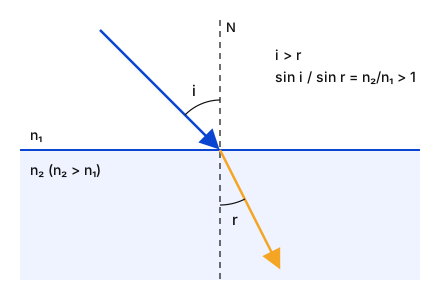
For a given colour and given pair of media, and light is going from rarer to denser media, the ratio of sine of the angle of incidence to the sine of angle of refraction is:
किसी दिए गए रंग और माध्यमों के दिए गए युग्म के लिए, जब प्रकाश विरल माध्यम से सघन माध्यम में जा रहा हो, तो आपतन कोण की ज्या (sine) और अपवर्तन कोण की ज्या का अनुपात होता है:
  1. Aalways zeroसदैव शून्य
  2. Ba constant greater than 11 से अधिक एक नियतांक
  3. Ca constant less than 11 से कम एक नियतांक
  4. Dalways 1सदैव 1
Show answer

Concept: Snell's law: for a given colour and pair of media, sinisinr=constant=n21.

  1. Going from rarer to denser medium, light bends towards the normal, so r<i.
  2. Hence sini>sinr, so sinisinr>1.
  3. This constant is the refractive index of the denser medium w.r.t. the rarer one.

Yaad rakhein: Rarer → denser: bends towards normal, ratio >1; denser → rarer: ratio <1.

Answer: (B) a constant greater than 1

अवधारणा: स्नेल नियम: किसी रंग और माध्यम-युग्म के लिए sinisinr=नियतांक=n21।

  1. विरल से सघन माध्यम में प्रकाश अभिलंब की ओर मुड़ता है, अतः r<i।
  2. इसलिए sini>sinr, यानी sinisinr>1।
  3. यह नियतांक विरल के सापेक्ष सघन माध्यम का अपवर्तनांक है।

याद रखें: विरल → सघन: अभिलंब की ओर, अनुपात >1; सघन → विरल: अनुपात <1।

उत्तर: (B) 1 से अधिक एक नियतांक

RRB Technician Grade IIIGeneral ScienceSnell's law of refractionRRB Technician Grade III 2024 · 26 Dec Shift 2 →
Q1362.
Sporangia blobs contain cells or spores that can eventually develop into new Rhizopus individuals. Such asexual reproduction is known as:
बीजाणुधानी (sporangia) के गोलकों में कोशिकाएँ या बीजाणु होते हैं जो अंततः नए राइजोपस जीवों में विकसित हो सकते हैं। ऐसे अलैंगिक जनन को क्या कहा जाता है?
  1. Abuddingमुकुलन (budding)
  2. Bvegetative propagationकायिक प्रवर्धन (vegetative propagation)
  3. Cspore formationबीजाणु समासंघ (spore formation)
  4. Dregenerationपुनरुद्भवन (regeneration)
Show answer

Concept: In Rhizopus (bread mould), the blob-like sporangia on hyphae contain many spores.

  1. Spores are covered by thick walls that protect them until they reach a moist surface.
  2. On a suitable surface each spore grows into a new Rhizopus.
  3. This asexual method is called spore formation.

Yaad rakhein: Rhizopus – spores; Hydra/yeast – budding; Spirogyra – fragmentation; Planaria – regeneration.

Answer: (C) spore formation

अवधारणा: राइजोपस (ब्रेड मोल्ड) के कवक तंतुओं पर बने गोल बीजाणुधानी (sporangia) में अनेक बीजाणु होते हैं।

  1. बीजाणु मोटी भित्ति से ढके रहते हैं जो नम सतह मिलने तक उनकी रक्षा करती है।
  2. उपयुक्त सतह पर हर बीजाणु नए राइजोपस में विकसित होता है।
  3. इस अलैंगिक विधि को बीजाणु निर्माण कहते हैं।

याद रखें: राइजोपस – बीजाणु; हाइड्रा/यीस्ट – मुकुलन; स्पाइरोगायरा – खंडन; प्लेनेरिया – पुनर्जनन।

उत्तर: (C) बीजाणु समासंघ (spore formation)

RRB Technician Grade IIIGeneral ScienceSpore formationRRB Technician Grade III 2024 · 26 Dec Shift 2 →
Q1363.
The rate of diffusion of liquids is higher than that of solids because:
द्रवों की विसरण दर ठोसों की तुलना में अधिक होती है, क्योंकि:
  1. Ain the liquid state, particles do not move freely, but have greater space between each otherद्रव अवस्था में, कण स्वतंत्र रूप से गति नहीं करते, परंतु उनके बीच अधिक रिक्त स्थान होता है
  2. Bin the liquid state, particles move freely and have greater space between each otherद्रव अवस्था में, कण स्वतंत्र रूप से गति करते हैं और उनके बीच अधिक रिक्त स्थान होता है
  3. Cin the liquid state, particles only move freely and do not have greater space between each otherद्रव अवस्था में, कण केवल स्वतंत्र रूप से गति करते हैं और उनके बीच अधिक रिक्त स्थान नहीं होता
  4. Din the liquid state, particles do not move freely and do not have greater space between each otherद्रव अवस्था में, कण न तो स्वतंत्र रूप से गति करते हैं और न ही उनके बीच अधिक रिक्त स्थान होता है
Show answer

Concept: Diffusion depends on how freely particles move and how much space lies between them.

  1. In solids, particles are tightly packed and only vibrate in place.
  2. In liquids, particles move freely and have more space between them.
  3. So particles of another substance mix faster in liquids – diffusion rate is higher.

Yaad rakhein: Diffusion rate: gas > liquid > solid (more space and freedom → faster).

Answer: (B) in the liquid state, particles move freely and have greater space between each other

अवधारणा: विसरण इस पर निर्भर है कि कण कितनी स्वतंत्रता से गति करते हैं और उनके बीच कितना स्थान है।

  1. ठोस में कण सघन रूप से बँधे होते हैं, केवल अपने स्थान पर कंपन करते हैं।
  2. द्रव में कण स्वतंत्र रूप से गति करते हैं और उनके बीच अधिक स्थान होता है।
  3. इसलिए द्रव में दूसरे पदार्थ के कण तेज़ी से मिलते हैं – विसरण दर अधिक।

याद रखें: विसरण दर: गैस > द्रव > ठोस (अधिक स्थान व स्वतंत्रता → तेज़)।

उत्तर: (B) द्रव अवस्था में, कण स्वतंत्र रूप से गति करते हैं और उनके बीच अधिक रिक्त स्थान होता है

RRB Technician Grade IIIGeneral ScienceDiffusion in liquids and solidsRRB Technician Grade III 2024 · 26 Dec Shift 2 →
Q1364.
Which of the following molecules is diatomic in nature?
निम्नलिखित में से कौन-सा अणु प्रकृति में द्विपरमाणुक है?
  1. AArgonआर्गन
  2. BOxygenऑक्सीजन
  3. CPhosphorusफॉस्फोरस
  4. DHeliumहीलियम
Show answer

Concept: Atomicity = number of atoms in one molecule of an element.

  1. Oxygen exists as O2 – two atoms, so diatomic.
  2. Argon and helium are noble gases – monoatomic (Ar, He).
  3. Phosphorus exists as P4 – tetra-atomic.

Yaad rakhein: Diatomic elements: H2,N2,O2,F2,Cl2,Br2,I2.

Answer: (B) Oxygen

अवधारणा: परमाणुकता = किसी तत्व के एक अणु में परमाणुओं की संख्या।

  1. ऑक्सीजन O2 रूप में रहती है – दो परमाणु, अतः द्विपरमाणुक।
  2. आर्गन और हीलियम उत्कृष्ट गैसें हैं – एकपरमाणुक (Ar, He)।
  3. फॉस्फोरस P4 रूप में – चतुःपरमाणुक।

याद रखें: द्विपरमाणुक तत्व: H2,N2,O2,F2,Cl2,Br2,I2।

उत्तर: (B) ऑक्सीजन

RRB Technician Grade IIIGeneral ScienceAtomicity of moleculesRRB Technician Grade III 2024 · 26 Dec Shift 2 →
Q1365.
The acceleration due to gravity on an object of mass m placed near the surface of the earth is:
पृथ्वी की सतह के निकट रखी m द्रव्यमान की किसी वस्तु पर गुरुत्वीय त्वरण होता है:
  1. Aindependent of mm पर निर्भर नहीं करता
  2. Blinearly proportional to mm के रैखिक रूप से समानुपाती
  3. Clinearly proportional to m2m2 के रैखिक रूप से समानुपाती
  4. Dinversely proportional to mm के व्युत्क्रमानुपाती
Show answer

Concept: Force on mass m near the earth: F=GMmR2, and F=mg.

  1. Equate: mg=GMmR2.
  2. m cancels: g=GMR2.
  3. g depends only on the earth's mass and radius, not on the object's mass.

Trick: A feather and a coin fall together in vacuum – proof that g is independent of m.

Answer: (A) independent of m

अवधारणा: पृथ्वी के पास द्रव्यमान m पर बल: F=GMmR2 तथा F=mg।

  1. बराबर करें: mg=GMmR2।
  2. m कट जाता है: g=GMR2।
  3. g केवल पृथ्वी के द्रव्यमान और त्रिज्या पर निर्भर है, वस्तु के द्रव्यमान पर नहीं।

ट्रिक: निर्वात में पंख और सिक्का साथ गिरते हैं – g, m से स्वतंत्र है।

उत्तर: (A) m पर निर्भर नहीं करता

RRB Technician Grade IIIGeneral ScienceAcceleration due to gravityRRB Technician Grade III 2024 · 26 Dec Shift 2 →
Q1366.
Select the correct pairs from the following options.
निम्नलिखित विकल्पों में से सही युग्मों का चयन कीजिए।
  1. A(a) Resistance - volt/ampere
    (b) Resistivity - ohm
    (a) प्रतिरोध - वोल्ट/ऐम्पियर
    (b) प्रतिरोधकता - ओम
  2. B(a) Resistance - ampere metre
    (b) Resistivity - volt/metre
    (a) प्रतिरोध - ऐम्पियर मीटर
    (b) प्रतिरोधकता - वोल्ट/मीटर
  3. C(a) Resistance - ohm
    (b) Resistivity - volt/metre
    (a) प्रतिरोध - ओम
    (b) प्रतिरोधकता - वोल्ट/मीटर
  4. D(a) Resistance - ohm
    (b) Resistivity - ohm metre
    (a) प्रतिरोध - ओम
    (b) प्रतिरोधकता - ओम मीटर
Show answer

Concept: R=VI, so unit of resistance = voltampere=Ω (ohm). Also R=ρlA.

  1. ρ=RAl → unit =Ω×m2m=Ωm.
  2. (A) is wrong as resistivity is not ohm; (C) is wrong as resistivity is not volt/metre.
  3. Only (D): resistance – ohm, resistivity – ohm metre.

Trick: Resistivity always carries an extra “metre”: ohm-metre.

Answer: (D) (a) Resistance - ohm (b) Resistivity - ohm metre

अवधारणा: R=VI, अतः प्रतिरोध का मात्रक =वोल्टऐम्पियर=Ω (ओम)। साथ ही R=ρlA।

  1. ρ=RAl → मात्रक =Ω×m2m=Ωm।
  2. (A) ग़लत – प्रतिरोधकता ओम नहीं; (C) ग़लत – प्रतिरोधकता वोल्ट/मीटर नहीं।
  3. केवल (D): प्रतिरोध – ओम, प्रतिरोधकता – ओम मीटर।

ट्रिक: प्रतिरोधकता में हमेशा एक अतिरिक्त “मीटर” होता है: ओम-मीटर।

उत्तर: (D) (a) प्रतिरोध - ओम (b) प्रतिरोधकता - ओम मीटर

RRB Technician Grade IIIGeneral ScienceSI units of resistance and resistivityRRB Technician Grade III 2024 · 26 Dec Shift 2 →
Q1367.
During meiosis, a cell divides to create _______ new cells.
अर्धसूत्री विभाजन (meiosis) के दौरान, एक कोशिका विभाजित होकर _______ नई कोशिकाएँ बनाती है।
  1. AFourचार
  2. BTwenty-fourचौबीस
  3. CSixteenसोलह
  4. DEightआठ
Show answer

Concept: Meiosis is reduction division that forms gametes with half the chromosome number.

  1. Meiosis I: 1 diploid cell → 2 cells.
  2. Meiosis II: each of these divides again → 4 cells.
  3. All four daughter cells are haploid.

Yaad rakhein: Mitosis → 2 identical cells; Meiosis → 4 haploid cells.

Answer: (A) Four

अवधारणा: अर्धसूत्री विभाजन (meiosis) न्यूनीकरण विभाजन है जिससे आधे गुणसूत्र वाले युग्मक बनते हैं।

  1. अर्धसूत्री I: 1 द्विगुणित कोशिका → 2 कोशिकाएँ।
  2. अर्धसूत्री II: प्रत्येक फिर विभाजित → 4 कोशिकाएँ।
  3. चारों संतति कोशिकाएँ अगुणित होती हैं।

याद रखें: समसूत्री → 2 समान कोशिकाएँ; अर्धसूत्री → 4 अगुणित कोशिकाएँ।

उत्तर: (A) चार

RRB Technician Grade IIIGeneral ScienceMeiosisRRB Technician Grade III 2024 · 26 Dec Shift 2 →
Q1368.
During the decomposition reaction of lead nitrate, the observed brown colour fumes are of which gas?
लेड नाइट्रेट की वियोजन अभिक्रिया के दौरान, दिखाई देने वाला भूरे रंग का धुआँ किस गैस का होता है?
  1. AHydrogen gasहाइड्रोजन गैस
  2. BNitrogen gasनाइट्रोजन गैस
  3. CNitrogen dioxide gasनाइट्रोजन डाइऑक्साइड गैस
  4. DOzone gasओज़ोन गैस
Show answer

Concept: Heating lead nitrate is a thermal decomposition reaction.

  1. 2Pb(NO3)2→Δ2PbO+4NO2+O2.
  2. NO2 (nitrogen dioxide) is a brown gas – the brown fumes seen.
  3. PbO remains as yellow residue; O2 is colourless.

Yaad rakhein: Brown fumes = NO2 (from heating nitrates like lead nitrate).

Answer: (C) Nitrogen dioxide gas

अवधारणा: लेड नाइट्रेट को गर्म करना ऊष्मीय अपघटन अभिक्रिया है।

  1. 2Pb(NO3)2→Δ2PbO+4NO2+O2।
  2. NO2 (नाइट्रोजन डाइऑक्साइड) भूरी गैस है – यही भूरा धुआँ है।
  3. PbO पीले अवशेष के रूप में बचता है; O2 रंगहीन है।

याद रखें: भूरा धुआँ = NO2 (लेड नाइट्रेट जैसे नाइट्रेट गर्म करने पर)।

उत्तर: (C) नाइट्रोजन डाइऑक्साइड गैस

RRB Technician Grade IIIGeneral ScienceDecomposition of lead nitrateRRB Technician Grade III 2024 · 26 Dec Shift 2 →
Q1369.
Select the correct pair from the following options based on the refractive defects of vision.
दृष्टि के अपवर्तन दोषों के आधार पर निम्नलिखित विकल्पों में से सही युग्म का चयन कीजिए।
  1. A(a) Presbyopia - near-sightedness
    (b) Myopia - far-sightedness
    (a) जरा-दूरदृष्टिता (Presbyopia) - निकट-दृष्टिता
    (b) निकट-दृष्टि दोष (Myopia) - दूर-दृष्टिता
  2. B(a) Myopia - near-sightedness
    (b) Hypermetropia - far-sightedness
    (a) निकट-दृष्टि दोष (Myopia) - निकट-दृष्टिता
    (b) दीर्घ-दृष्टि दोष (Hypermetropia) - दूर-दृष्टिता
  3. C(a) Hypermetropia - near-sightedness
    (b) Presbyopia - far-sightedness
    (a) दीर्घ-दृष्टि दोष (Hypermetropia) - निकट-दृष्टिता
    (b) जरा-दूरदृष्टिता (Presbyopia) - दूर-दृष्टिता
  4. D(a) Presbyopia - near-sightedness
    (b) Hypermetropia - far-sightedness
    (a) जरा-दूरदृष्टिता (Presbyopia) - निकट-दृष्टिता
    (b) दीर्घ-दृष्टि दोष (Hypermetropia) - दूर-दृष्टिता
Show answer

Concept: Common refractive defects: myopia, hypermetropia and presbyopia.

  1. Myopia = near-sightedness: near objects clear, far ones blurred; corrected by concave lens.
  2. Hypermetropia = far-sightedness: far objects clear, near ones blurred; corrected by convex lens.
  3. Presbyopia: loss of accommodation with age (often needs bifocals).

Trick: My-opia → My (near) world clear; Hyper → far clear.

Answer: (B) (a) Myopia - near-sightedness (b) Hypermetropia - far-sightedness

अवधारणा: सामान्य अपवर्तन दोष: निकट-दृष्टि, दूर-दृष्टि और जरा-दूरदर्शिता।

  1. मायोपिया = निकट-दृष्टि दोष: पास की वस्तु साफ़, दूर की धुंधली; अवतल लेंस से सुधार।
  2. हाइपरमेट्रोपिया = दूर-दृष्टि दोष: दूर की वस्तु साफ़, पास की धुंधली; उत्तल लेंस से सुधार।
  3. प्रेसबायोपिया: आयु के साथ समंजन क्षमता घटना (द्विफोकसी लेंस)।

ट्रिक: मायोपिया – पास साफ़ (निकट-दृष्टि); हाइपर – दूर साफ़।

उत्तर: (B) (a) निकट-दृष्टि दोष (Myopia) - निकट-दृष्टिता (b) दीर्घ-दृष्टि दोष (Hypermetropia) - दूर-दृष्टिता

RRB Technician Grade IIIGeneral ScienceDefects of visionRRB Technician Grade III 2024 · 26 Dec Shift 2 →
Q1370.
Which of the following is equal to the value of 1 Volt? (assume J-joule, C-coulomb, s-second)
निम्नलिखित में से कौन-सा 1 वोल्ट के मान के बराबर है? (मान लीजिए J-जूल, C-कूलॉम, s-सेकंड)
  1. A1 Cs
  2. B1 J/1C
  3. C1 Js
  4. D1 C/s
Show answer

Concept: Potential difference = work done per unit charge: V=WQ.

  1. Work in joule (J), charge in coulomb (C).
  2. So 1 V=1 J1 C.
  3. Note: Cs is ampere, not volt.

Trick: Volt = Joule per Coulomb; Ampere = Coulomb per second.

Answer: (B) 1 J/1C

अवधारणा: विभवांतर = प्रति एकांक आवेश किया गया कार्य: V=WQ।

  1. कार्य जूल (J) में, आवेश कूलॉम (C) में।
  2. अतः 1 V=1 J1 C।
  3. ध्यान दें: Cs ऐम्पियर है, वोल्ट नहीं।

ट्रिक: वोल्ट = जूल प्रति कूलॉम; ऐम्पियर = कूलॉम प्रति सेकंड।

उत्तर: (B) 1 J/1C

RRB Technician Grade IIIGeneral SciencePotential difference – voltRRB Technician Grade III 2024 · 26 Dec Shift 2 →
Q1371.
The diameter of the reflecting surface of a spherical mirror is same as its:
किसी गोलीय दर्पण के परावर्तक पृष्ठ का व्यास उसके किसके समान होता है?
  1. Afocal lengthफोकस दूरी
  2. Bradius of curvatureवक्रता त्रिज्या
  3. Cinverse of the powerक्षमता का व्युत्क्रम
  4. Dapertureद्वारक (aperture)
Show answer

Concept: The reflecting surface of a spherical mirror is part of a sphere; its edge forms a circle.

  1. The diameter of this circular reflecting surface is called the aperture.
  2. Radius of curvature is the radius of the full sphere.
  3. Focal length f=R2 – not related to the surface's diameter.

Yaad rakhein: Aperture = size (diameter) of the mirror; pole, centre, focus are points.

Answer: (D) aperture

अवधारणा: गोलीय दर्पण का परावर्तक पृष्ठ एक गोले का भाग है; उसका किनारा एक वृत्त बनाता है।

  1. इस वृत्ताकार परावर्तक पृष्ठ के व्यास को द्वारक (aperture) कहते हैं।
  2. वक्रता त्रिज्या पूरे गोले की त्रिज्या है।
  3. फोकस दूरी f=R2 – पृष्ठ के व्यास से संबंधित नहीं।

याद रखें: द्वारक = दर्पण का आकार (व्यास); ध्रुव, वक्रता केंद्र, फोकस बिंदु हैं।

उत्तर: (D) द्वारक (aperture)

RRB Technician Grade IIIGeneral ScienceSpherical mirror – apertureRRB Technician Grade III 2024 · 26 Dec Shift 2 →
Q1372.
Identify the correct match of plant hormones with their functions.
पादप हार्मोनों का उनके कार्यों के साथ सही मिलान पहचानिए।
  1. AGibberellins : Promote cell division
    Cytokinins : Help in the growth of the stem
    Abscisic acid : Inhibits growth
    जिबरेलिन : कोशिका विभाजन को बढ़ावा देते हैं
    साइटोकाइनिन : तने की वृद्धि में सहायता करते हैं
    एब्सिसिक अम्ल : वृद्धि का संदमन करता है
  2. BGibberellins : Help in the growth of the stem
    Cytokinins : Inhibits growth
    Abscisic acid : Promote cell division
    जिबरेलिन : तने की वृद्धि में सहायता करते हैं
    साइटोकाइनिन : वृद्धि का संदमन करते हैं
    एब्सिसिक अम्ल : कोशिका विभाजन को बढ़ावा देता है
  3. CGibberellins : Help in the growth of the stem
    Cytokinins : Promote cell division
    Abscisic acid : Inhibits growth
    जिबरेलिन : तने की वृद्धि में सहायता करते हैं
    साइटोकाइनिन : कोशिका विभाजन को बढ़ावा देते हैं
    एब्सिसिक अम्ल : वृद्धि का संदमन करता है
  4. DGibberellins : Inhibits growth
    Cytokinins : Promote cell division
    Abscisic acid : Help in the growth of the stem
    जिबरेलिन : वृद्धि का संदमन करते हैं
    साइटोकाइनिन : कोशिका विभाजन को बढ़ावा देते हैं
    एब्सिसिक अम्ल : तने की वृद्धि में सहायता करता है
Show answer

Concept: Plant hormones (phytohormones) coordinate growth and responses.

  1. Gibberellins – help in growth of the stem (elongation).
  2. Cytokinins – promote cell division (found in fruits, seeds).
  3. Abscisic acid – inhibits growth, causes wilting of leaves (stress hormone).

Trick: G – Grow stem, C – Cell division, A – Arrest growth.

Answer: (C) Gibberellins : Help in the growth of the stem Cytokinins : Promote cell division Abscisic acid : Inhibits growth

अवधारणा: पादप हॉर्मोन वृद्धि और अनुक्रियाओं का समन्वय करते हैं।

  1. जिबरेलिन – तने की वृद्धि (लंबाई) में सहायक।
  2. साइटोकाइनिन – कोशिका विभाजन को बढ़ावा (फलों, बीजों में अधिक)।
  3. एब्सिसिक अम्ल – वृद्धि रोकता है, पत्तियों का मुरझाना (तनाव हॉर्मोन)।

ट्रिक: G – तना बढ़ाओ, C – कोशिका विभाजन, A – वृद्धि रोको।

उत्तर: (C) जिबरेलिन : तने की वृद्धि में सहायता करते हैं साइटोकाइनिन : कोशिका विभाजन को बढ़ावा देते हैं एब्सिसिक अम्ल : वृद्धि का संदमन करता है

RRB Technician Grade IIIGeneral SciencePlant hormonesRRB Technician Grade III 2024 · 26 Dec Shift 2 →
Q1373.
Spirogyra a multi-cellular organism simply breaks up into smaller pieces upon maturation and these pieces or fragments grow into new individuals. Such a mode of reproduction is known as:
स्पाइरोगायरा, एक बहुकोशिकीय जीव, परिपक्व होने पर सरलता से छोटे-छोटे टुकड़ों में खंडित हो जाता है और ये टुकड़े या खंड नए जीवों में विकसित हो जाते हैं। जनन की ऐसी विधि को क्या कहा जाता है?
  1. Abuddingमुकुलन (budding)
  2. Bregenerationपुनरुद्भवन (regeneration)
  3. Cbinary fissionद्विविखंडन (binary fission)
  4. Dfragmentationखंडन (fragmentation)
Show answer

Concept: Simple multicellular organisms like Spirogyra reproduce asexually by fragmentation.

  1. On maturity the filament simply breaks into smaller pieces.
  2. Each fragment grows into a new individual.
  3. Budding (Hydra), binary fission (Amoeba) and regeneration (Planaria) are different methods.

Yaad rakhein: Breaks on its own and each piece grows → fragmentation; cut by injury and regrows → regeneration.

Answer: (D) fragmentation

अवधारणा: स्पाइरोगायरा जैसे सरल बहुकोशिकीय जीव खंडन द्वारा अलैंगिक जनन करते हैं।

  1. परिपक्व होने पर तंतु स्वतः छोटे टुकड़ों में टूट जाता है।
  2. प्रत्येक टुकड़ा नए जीव में विकसित होता है।
  3. मुकुलन (हाइड्रा), द्विविखंडन (अमीबा), पुनर्जनन (प्लेनेरिया) अलग विधियाँ हैं।

याद रखें: स्वयं टूटे और हर टुकड़ा बढ़े → खंडन; चोट से कटे और फिर बने → पुनर्जनन।

उत्तर: (D) खंडन (fragmentation)

RRB Technician Grade IIIGeneral ScienceFragmentationRRB Technician Grade III 2024 · 26 Dec Shift 2 →
Q1374.
Which metal pair starts to melt at room temperature?
कौन-सा धातु युग्म कमरे के तापमान पर पिघलना शुरू कर देता है?
  1. AIron and nickelलोहा और निकेल
  2. BZinc and copperजिंक और कॉपर
  3. CCopper and cobaltकॉपर और कोबाल्ट
  4. DGallium and cesiumगैलियम और सीज़ियम
Show answer

Concept: Most metals have high melting points, but a few melt near room temperature.

  1. Gallium melts at about 29.8∘C.
  2. Caesium melts at about 28.5∘C.
  3. Both melt even on the palm; iron, nickel, copper, zinc, cobalt melt at very high temperatures.

Yaad rakhein: Gallium and caesium melt in the palm; mercury is already liquid at room temperature.

Answer: (D) Gallium and cesium

अवधारणा: अधिकांश धातुओं का गलनांक उच्च होता है, पर कुछ कक्ष ताप के पास पिघल जाती हैं।

  1. गैलियम लगभग 29.8∘C पर पिघलता है।
  2. सीज़ियम लगभग 28.5∘C पर पिघलता है।
  3. दोनों हथेली पर भी पिघल जाते हैं; लोहा, निकेल, ताँबा, जिंक, कोबाल्ट बहुत उच्च ताप पर।

याद रखें: गैलियम और सीज़ियम हथेली पर पिघलते हैं; पारा कक्ष ताप पर पहले से द्रव है।

उत्तर: (D) गैलियम और सीज़ियम

RRB Technician Grade IIIGeneral ScienceMetals with low melting pointRRB Technician Grade III 2024 · 26 Dec Shift 2 →
Q1375.
What is the calculated molecular mass of oxygen?
ऑक्सीजन का परिकलित आण्विक द्रव्यमान क्या है?
  1. A26
  2. B28
  3. C30
  4. D32
Show answer

Concept: Molecular mass = sum of atomic masses of all atoms in a molecule.

  1. Oxygen gas is O2; atomic mass of O =16 u.
  2. Molecular mass =2×16=32 u.
  3. (28 u is N2.)

Trick: O2=32, N2=28, CO2=44, H2O=18.

Answer: (D) 32

अवधारणा: आणविक द्रव्यमान = अणु के सभी परमाणुओं के परमाणु द्रव्यमानों का योग।

  1. ऑक्सीजन गैस O2 है; O का परमाणु द्रव्यमान =16 u।
  2. आणविक द्रव्यमान =2×16=32 u।
  3. (28 u, N2 का है।)

ट्रिक: O2=32, N2=28, CO2=44, H2O=18।

उत्तर: (D) 32

RRB Technician Grade IIIGeneral ScienceMolecular massRRB Technician Grade III 2024 · 26 Dec Shift 2 →
Q1376.
Identify the best method to prepare washing soda from sodium bicarbonate.
सोडियम बाइकार्बोनेट से धोने का सोडा (washing soda) बनाने की सबसे अच्छी विधि पहचानिए।
  1. ABy adding sodium bicarbonate to vinegarसोडियम बाइकार्बोनेट को सिरके में मिलाकर
  2. BBy freezing sodium bicarbonateसोडियम बाइकार्बोनेट को जमाकर
  3. CBy heating sodium bicarbonateसोडियम बाइकार्बोनेट को गर्म करके
  4. DBy mixing sodium bicarbonate with waterसोडियम बाइकार्बोनेट को जल के साथ मिलाकर
Show answer

Concept: Washing soda is Na2CO3·10H2O; baking soda is NaHCO3.

  1. Heat sodium bicarbonate: 2NaHCO3→ΔNa2CO3+H2O+CO2.
  2. Recrystallise the sodium carbonate: Na2CO3+10H2O→Na2CO3·10H2O.
  3. Vinegar would only release CO2 and form sodium acetate.

Yaad rakhein: Baking soda + heat → soda ash → + water → washing soda.

Answer: (C) By heating sodium bicarbonate

अवधारणा: धावन सोडा Na2CO3·10H2O है; खाने का सोडा NaHCO3 है।

  1. सोडियम बाइकार्बोनेट को गर्म करें: 2NaHCO3→ΔNa2CO3+H2O+CO2।
  2. सोडियम कार्बोनेट का पुनःक्रिस्टलीकरण: Na2CO3+10H2O→Na2CO3·10H2O।
  3. सिरके से केवल CO2 और सोडियम एसीटेट बनेगा।

याद रखें: खाने का सोडा + ऊष्मा → सोडा ऐश → + जल → धावन सोडा।

उत्तर: (C) सोडियम बाइकार्बोनेट को गर्म करके

RRB Technician Grade IIIGeneral ScienceWashing soda preparationRRB Technician Grade III 2024 · 26 Dec Shift 2 →
Q1377.
If u, g, and h are the initial velocity, gravitational acceleration, and height, respectively, of an object falling under gravitational force, then its final velocity v can be obtained from:
यदि गुरुत्वाकर्षण बल के अधीन गिर रही किसी वस्तु का प्रारंभिक वेग, गुरुत्वीय त्वरण और ऊँचाई क्रमशः u, g और h हैं, तो उसका अंतिम वेग v किससे प्राप्त किया जा सकता है?
  1. Av2/u2=2gh
  2. Bv2u2=2gh
  3. Cv2+u2=2gh
  4. Dv2−u2=2gh
Show answer

Concept: Third equation of motion: v2−u2=2as.

  1. For a falling body, a=g and s=h.
  2. So v2−u2=2gh.
  3. If dropped from rest (u=0): v=2gh.

Trick: Remember “v square minus u square = 2as” – only option (D) has a minus sign.

Answer: (D) v2−u2=2gh

अवधारणा: गति का तीसरा समीकरण: v2−u2=2as।

  1. गिरती वस्तु के लिए a=g तथा s=h।
  2. अतः v2−u2=2gh।
  3. विराम से गिराने पर (u=0): v=2gh।

ट्रिक: “v वर्ग घटा u वर्ग = 2as” – केवल (D) में ऋण चिह्न है।

उत्तर: (D) v2−u2=2gh

RRB Technician Grade IIIGeneral ScienceEquations of motion under gravityRRB Technician Grade III 2024 · 26 Dec Shift 2 →
Q1378.
Name the mode of reproduction in Spirogyra.
स्पाइरोगायरा (Spirogyra) में जनन की विधि का नाम बताइए।
  1. AMultiple fissionबहुखंडन (Multiple fission)
  2. BBuddingमुकुलन (Budding)
  3. CBinary fissionद्विखंडन (Binary fission)
  4. DFragmentationखंडन (Fragmentation)
Show answer

Concept: Spirogyra is a filamentous green alga that reproduces asexually by fragmentation.

  1. The mature filament breaks into many small pieces.
  2. Each piece grows into a new filament.
  3. Fission (Amoeba, Plasmodium) and budding (Hydra, yeast) occur in other organisms.

Yaad rakhein: Spirogyra – Splits into fragments.

Answer: (D) Fragmentation

अवधारणा: स्पाइरोगायरा एक तंतुमय हरा शैवाल है जो खंडन द्वारा अलैंगिक जनन करता है।

  1. परिपक्व तंतु कई छोटे टुकड़ों में टूट जाता है।
  2. प्रत्येक टुकड़ा नए तंतु में विकसित होता है।
  3. विखंडन (अमीबा, प्लाज्मोडियम) और मुकुलन (हाइड्रा, यीस्ट) अन्य जीवों में।

याद रखें: स्पाइरोगायरा – टुकड़ों में टूटना (खंडन)।

उत्तर: (D) खंडन (Fragmentation)

RRB Technician Grade IIIGeneral ScienceFragmentation in SpirogyraRRB Technician Grade III 2024 · 26 Dec Shift 2 →
Q1379.
Which of the following would increase the resistance of a metallic conductor?
निम्नलिखित में से कौन-सा किसी धात्विक चालक का प्रतिरोध बढ़ाएगा?
  1. AUsing a material with higher conductivity.उच्च चालकता वाले पदार्थ का उपयोग करना।
  2. BDecreasing its length.उसकी लंबाई घटाना।
  3. CDecreasing the current flowing through the conductor.चालक से प्रवाहित धारा को घटाना।
  4. DDecreasing its area of cross-section.उसके अनुप्रस्थ काट का क्षेत्रफल घटाना।
Show answer

Concept: Resistance of a conductor: R=ρlA.

  1. R∝l: decreasing length decreases R.
  2. R∝1A: decreasing area of cross-section increases R.
  3. Higher conductivity lowers R; current does not change R (at constant temperature).

Trick: Thin and long wire → more resistance; thick and short → less.

Answer: (D) Decreasing its area of cross-section.

अवधारणा: चालक का प्रतिरोध: R=ρlA।

  1. R∝l: लंबाई घटाने पर R घटता है।
  2. R∝1A: अनुप्रस्थ काट का क्षेत्रफल घटाने पर R बढ़ता है।
  3. अधिक चालकता से R घटता है; धारा बदलने से R नहीं बदलता (स्थिर ताप पर)।

ट्रिक: पतला और लंबा तार → अधिक प्रतिरोध; मोटा और छोटा → कम।

उत्तर: (D) उसके अनुप्रस्थ काट का क्षेत्रफल घटाना।

RRB Technician Grade IIIGeneral ScienceFactors affecting resistanceRRB Technician Grade III 2024 · 26 Dec Shift 2 →
Q1380.
Buds produced in the notches along the leaf margin of Bryophyllum fall on the soil and develop into new plants. Such a mode of reproduction is known as:
ब्रायोफिलम (Bryophyllum) की पत्ती के किनारों पर बने खाँचों में उत्पन्न कलिकाएँ मिट्टी पर गिरकर नए पौधों में विकसित हो जाती हैं। जनन की इस विधि को क्या कहा जाता है?
  1. Afragmentationखंडन (fragmentation)
  2. Bvegetative propagationकायिक प्रवर्धन (vegetative propagation)
  3. Cregenerationपुनर्जनन (regeneration)
  4. Dbuddingमुकुलन (budding)
Show answer

Concept: When new plants arise from vegetative parts (root, stem, leaf), it is vegetative propagation.

  1. Bryophyllum leaves bear buds in the notches of their margins.
  2. These buds fall on soil and grow into new plants.
  3. Since the leaf (a vegetative part) gives rise to new plants, it is vegetative propagation.

Yaad rakhein: Leaf buds of Bryophyllum, eyes of potato, stem cuttings of rose – all vegetative propagation.

Answer: (B) vegetative propagation

अवधारणा: जब नए पौधे जड़, तना, पत्ती जैसे कायिक भागों से बनते हैं, तो यह कायिक प्रवर्धन है।

  1. ब्रायोफिलम की पत्ती के किनारे के खाँचों में कलिकाएँ बनती हैं।
  2. ये कलिकाएँ मिट्टी पर गिरकर नए पौधे बनाती हैं।
  3. पत्ती (कायिक भाग) से नया पौधा बनता है, अतः कायिक प्रवर्धन।

याद रखें: ब्रायोफिलम की पत्ती, आलू की आँख, गुलाब की कलम – सभी कायिक प्रवर्धन।

उत्तर: (B) कायिक प्रवर्धन (vegetative propagation)

RRB Technician Grade IIIGeneral ScienceVegetative propagationRRB Technician Grade III 2024 · 26 Dec Shift 2 →