Question bank

Q&A: practice questions with answers

Search questions on any topic. Filter by exam category, exam, subject and topic, try the question, then open the answer and explanation.

Courses – airGurukul

3,200 questions found.

Q1441.
P, Q, R, S, T, U, and V are sitting around a circular table facing the centre. Only 1 person sits between V and T when counted from the right of V. Q and R are both immediate neighbours of U. S is not an immediate neighbour of T. Only 1 person sits between P and R when counted from the left of R. Who sits third to the left of U?
P, Q, R, S, T, U और V एक वृत्ताकार मेज के चारों ओर केंद्र की ओर मुख करके बैठे हैं। V के दाईं ओर से गिनने पर V और T के बीच केवल 1 व्यक्ति बैठा है। Q और R दोनों U के निकटतम पड़ोसी हैं। S, T का निकटतम पड़ोसी नहीं है। R के बाईं ओर से गिनने पर P और R के बीच केवल 1 व्यक्ति बैठा है। U के बाईं ओर तीसरे स्थान पर कौन बैठा है?
  1. AT
  2. BP
  3. CS
  4. DV
Show answer

Concept: Facing the centre, left = clockwise and right = anticlockwise.
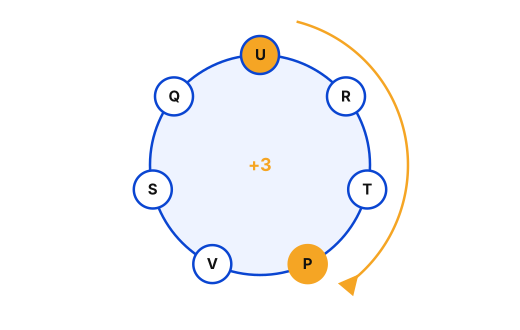
  1. U in middle of Q and R; try R to U's left. P is 2nd left of R
  2. V and T: T is 2nd to the right of V ⇒ order U, R, T, P, V, S, Q (clockwise)
  3. S's neighbours V and Q, not T ✓ (R on U's right fails – P's seat clashes with Q)
  4. Third to the left of U: R, T, P ⇒ P

Trick: Fix the 3-person block Q-U-R first, then place others.

Answer: (B) P

अवधारणा: केंद्र की ओर मुख होने पर बायाँ = दक्षिणावर्त और दायाँ = वामावर्त।

  1. U, Q और R के बीच; R को U के बाएँ रखें। P, R के बाएँ से दूसरा
  2. V और T: T, V के दाएँ से दूसरा ⇒ क्रम U, R, T, P, V, S, Q (दक्षिणावर्त)
  3. S के पड़ोसी V और Q, T नहीं ✓ (R को U के दाएँ रखने पर P की जगह Q से टकराती है)
  4. U के बाएँ से तीसरा: R, T, P ⇒ P

ट्रिक: पहले Q-U-R का 3-व्यक्ति खंड तय करें, फिर बाकी को रखें।

उत्तर: (B) P
RRB Technician Grade IIIGeneral Intelligence and ReasoningCircular seating arrangementRRB Technician Grade III 2024 · 26 Dec Shift 1 →
Q1442.
Based on the English alphabetical order, three of the following four letter-clusters are alike in a certain way and thus form a group. Which letter-cluster does not belong to that group?
(Note: The odd one out is not based on the number of consonants/vowels or their position in the letter-cluster.)
अंग्रेजी वर्णमाला क्रम के आधार पर, निम्नलिखित चार अक्षर-समूहों में से तीन किसी निश्चित प्रकार से एकसमान हैं और इस प्रकार एक समूह बनाते हैं। कौन-सा अक्षर-समूह उस समूह से संबंधित नहीं है?
(नोट: असंगत अक्षर-समूह, उस अक्षर-समूह में व्यंजनों/स्वरों की संख्या या उनके स्थान पर आधारित नहीं है।)
  1. AGDAX
  2. BKHEB
  3. CAXUR
  4. DOKJH
Show answer

Concept: Check the gap between successive letters (cyclic A–Z).

  1. GDAX: G→D→A→X, each −3
  2. KHEB: each −3; AXUR: A→X→U→R, each −3
  3. OKJH: O→K −4, K→J −1, J→H −2 ✗

Trick: Remember A −3 wraps to X (26 → 24).

Answer: (D) OKJH

अवधारणा: क्रमागत अक्षरों का अंतर देखें (A–Z चक्रीय)।

  1. GDAX: G→D→A→X, प्रत्येक −3
  2. KHEB: प्रत्येक −3; AXUR: A→X→U→R, प्रत्येक −3
  3. OKJH: O→K −4, K→J −1, J→H −2 ✗

ट्रिक: ध्यान दें A −3 घूमकर X बनता है।

उत्तर: (D) OKJH

RRB Technician Grade IIIGeneral Intelligence and ReasoningOdd one out (letter clusters)RRB Technician Grade III 2024 · 26 Dec Shift 1 →
Q1443.
Which of the following options should come in place of the question mark (?) in the given series based on the English alphabetical order?
HKN, ILO, JMP, KNQ, ?
अंग्रेजी वर्णमाला क्रम के आधार पर दी गई श्रृंखला में प्रश्न चिह्न (?) के स्थान पर निम्नलिखित में से कौन-सा विकल्प आना चाहिए?
HKN, ILO, JMP, KNQ, ?
  1. ALOR
  2. BLRO
  3. CORL
  4. DOLR
Show answer

Concept: Each letter position moves +1 from one term to the next.

  1. HKN → ILO → JMP → KNQ (each letter +1)
  2. Next: K→L, N→O, Q→R
  3. Answer term = LOR

Trick: Inside each term the gap is +3: L, O, R keeps it.

Answer: (A) LOR

अवधारणा: प्रत्येक स्थान का अक्षर अगले पद में +1 बढ़ता है।

  1. HKN → ILO → JMP → KNQ (प्रत्येक अक्षर +1)
  2. अगला: K→L, N→O, Q→R
  3. उत्तर = LOR

ट्रिक: हर पद के भीतर अंतर +3: L, O, R इसे बनाए रखता है।

उत्तर: (A) LOR

RRB Technician Grade IIIGeneral Intelligence and ReasoningLetter seriesRRB Technician Grade III 2024 · 26 Dec Shift 1 →
Q1444.
If ‘A’ stands for ‘÷’, ‘B’ stands for ‘×’, ‘C’ stands for ‘+’ and ‘D’ stands for ‘−’, what will come in place of the question mark ‘?’ in the following equation?
4 C 8 D 9 A 3 B 2 = ?
यदि ‘A’ का अर्थ ‘÷’, ‘B’ का अर्थ ‘×’, ‘C’ का अर्थ ‘+’ और ‘D’ का अर्थ ‘−’ है, तो निम्नलिखित समीकरण में प्रश्न चिह्न ‘?’ के स्थान पर क्या आएगा?
4 C 8 D 9 A 3 B 2 = ?
  1. A5
  2. B6
  3. C8
  4. D3
Show answer

Concept: Replace letters by signs, then apply BODMAS.

  1. A =÷, B =×, C =+, D =−
  2. 4+8−9÷3×2
  3. =4+8−3×2=4+8−6
  4. =6

Trick: Do ÷ and × left to right before + and −.

Answer: (B) 6

अवधारणा: अक्षरों के स्थान पर चिह्न रखें, फिर BODMAS लगाएँ।

  1. A =÷, B =×, C =+, D =−
  2. 4+8−9÷3×2
  3. =4+8−3×2=4+8−6
  4. =6

ट्रिक: + और − से पहले ÷ और × बाएँ से दाएँ करें।

उत्तर: (B) 6

RRB Technician Grade IIIGeneral Intelligence and ReasoningMathematical operations (letter symbols)RRB Technician Grade III 2024 · 26 Dec Shift 1 →
Q1445.
Seven boxes A, B, C, L, X, Y and Z are kept one over the other but not necessarily in the same order. Only three boxes are kept above X. Only one box is kept between Z and X. Only three boxes are kept between Z and A. A is kept at some place above X. C is kept immediately below A. L is kept at one of the places above Y. B is not kept immediately above or below Z.
Which box is kept at the lowermost position?
सात बक्से A, B, C, L, X, Y और Z एक के ऊपर एक रखे गए हैं, लेकिन जरूरी नहीं कि इसी क्रम में हों। X के ऊपर केवल तीन बक्से रखे गए हैं। Z और X के बीच केवल एक बक्सा रखा गया है। Z और A के बीच केवल तीन बक्से रखे गए हैं। A को X के ऊपर किसी स्थान पर रखा गया है। C को A के ठीक नीचे रखा गया है। L को Y के ऊपर किसी एक स्थान पर रखा गया है। B को Z के ठीक ऊपर या ठीक नीचे नहीं रखा गया है।
सबसे नीचे कौन-सा बक्सा रखा गया है?
  1. AY
  2. BZ
  3. CC
  4. DB
Show answer

Concept: Number positions 1 (top) to 7 (bottom) and fix the definite clues first.

  1. Three boxes above X ⇒ X =4; Z at 2 or 6
  2. A above X and three boxes between Z and A ⇒ Z =6, A =2; C =3
  3. Left: B, L, Y at 1,5,7; B not next to Z ⇒ B =1
  4. L above Y ⇒ L =5, Y =7 (lowermost)

Trick: Start with the clue that gives an exact position (X =4).

Answer: (A) Y

अवधारणा: स्थान 1 (ऊपर) से 7 (नीचे) मानें और पहले निश्चित संकेत लगाएँ।

  1. X के ऊपर तीन डिब्बे ⇒ X =4; Z, 2 या 6 पर
  2. A, X के ऊपर और Z-A के बीच तीन डिब्बे ⇒ Z =6, A =2; C =3
  3. बचे B, L, Y स्थान 1,5,7 पर; B, Z के पास नहीं ⇒ B =1
  4. L, Y के ऊपर ⇒ L =5, Y =7 (सबसे नीचे)

ट्रिक: उस संकेत से शुरू करें जो सटीक स्थान दे (X =4)।

उत्तर: (A) Y

RRB Technician Grade IIIGeneral Intelligence and ReasoningBox arrangementRRB Technician Grade III 2024 · 26 Dec Shift 1 →
Q1446.
In the following number-pairs, the second number is obtained by applying certain mathematical operations to the first number. Which numbers should replace X and Y so that the pattern followed by the two numbers on the left side of :: is the same as that on the right side of ::?
(NOTE: Operations should be performed on the whole numbers, without breaking down the numbers into its constituent digits. E.g. 13 - Operations on 13 such as adding/subtracting/multiplying etc. to 13 can be performed. Breaking down 13 into 1 and 3 and then performing mathematical operations on 1 and 3 is not allowed.)
X : 36 :: 15 : Y
निम्नलिखित संख्या-युग्मों में, पहली संख्या पर कुछ गणितीय संक्रियाएँ करके दूसरी संख्या प्राप्त की जाती है। X और Y के स्थान पर कौन-सी संख्याएँ आनी चाहिए ताकि :: के बाईं ओर की दोनों संख्याओं द्वारा अपनाया गया पैटर्न वही हो जो :: के दाईं ओर है?
(नोट: संक्रियाएँ पूर्ण संख्याओं पर की जानी चाहिए, संख्याओं को उनके घटक अंकों में विभाजित किए बिना। उदाहरण के लिए 13 – 13 पर संक्रियाएँ जैसे 13 में जोड़ना/घटाना/गुणा करना आदि की जा सकती हैं। 13 को 1 और 3 में विभाजित करना और फिर 1 और 3 पर गणितीय संक्रियाएँ करना वर्जित है।)
X : 36 :: 15 : Y
  1. AX = 9, Y = 42
  2. BX = 9, Y = 60
  3. CX = 12, Y = 50
  4. DX = 12, Y = 60
Show answer

Concept: Both pairs must follow the same rule; test options.

  1. Try rule ×4: 9×4=36 ✓
  2. 15×4=60 ⇒ Y =60
  3. Option (B): X =9, Y =60 fits; others fail (e.g. 12×3=36 but 15×3=45≠60)

Trick: Check each option with one rule for both sides.

Answer: (B) X = 9, Y = 60

अवधारणा: दोनों युग्मों पर एक ही नियम लगना चाहिए; विकल्प जाँचें।

  1. नियम ×4: 9×4=36 ✓
  2. 15×4=60 ⇒ Y =60
  3. विकल्प (B): X =9, Y =60 सही; बाकी असफल (जैसे 12×3=36 पर 15×3=45≠60)

ट्रिक: हर विकल्प को दोनों ओर एक ही नियम से जाँचें।

उत्तर: (B) X = 9, Y = 60

RRB Technician Grade IIIGeneral Intelligence and ReasoningNumber analogyRRB Technician Grade III 2024 · 26 Dec Shift 1 →
Q1447.
Shakti starts from Point A and drives 22 km towards South. He then takes a left turn, drives 20 km, turns left and drives 12 km. He then takes a left turn and drives 17 km. He takes a final right turn, drives 10 km and stops at Point P. How far (shortest distance) and towards which direction should he drive in order to reach Point A again?
(All turns are 90 degree turns only unless otherwise specified.)
शक्ति बिंदु A से चलना शुरू करता है और दक्षिण की ओर 22 km गाड़ी चलाता है। फिर वह बाएँ मुड़ता है, 20 km गाड़ी चलाता है, बाएँ मुड़ता है और 12 km गाड़ी चलाता है। फिर वह बाएँ मुड़ता है और 17 km गाड़ी चलाता है। वह अंतिम बार दाएँ मुड़ता है, 10 km गाड़ी चलाता है और बिंदु P पर रुक जाता है। बिंदु A पर फिर से पहुँचने के लिए उसे कितनी दूर (न्यूनतम दूरी) और किस दिशा में गाड़ी चलानी चाहिए?
(जब तक अन्यथा निर्दिष्ट न हो, सभी मोड़ केवल 90 डिग्री के मोड़ हैं।)
  1. A3 km towards Southदक्षिण की ओर 3 km
  2. B4 km towards Northउत्तर की ओर 4 km
  3. C3 km towards Westपश्चिम की ओर 3 km
  4. D2 km towards Eastपूर्व की ओर 2 km
Show answer

Concept: Track net East–West and North–South displacement from A.

  1. South 22 → left (East) 20 → left (North) 12 → left (West) 17 → right (North) 10
  2. East–West: 20−17=3 km East of A
  3. North–South: −22+12+10=0
  4. P is 3 km East of A ⇒ drive 3 km towards West

Trick: N–S cancels to 0, so only the E–W gap matters.

Answer: (C) 3 km towards West

अवधारणा: A से कुल पूर्व–पश्चिम और उत्तर–दक्षिण विस्थापन निकालें।

  1. दक्षिण 22 → बाएँ (पूर्व) 20 → बाएँ (उत्तर) 12 → बाएँ (पश्चिम) 17 → दाएँ (उत्तर) 10
  2. पूर्व–पश्चिम: 20−17=3 km, A के पूर्व
  3. उत्तर–दक्षिण: −22+12+10=0
  4. P, A से 3 km पूर्व ⇒ 3 km पश्चिम की ओर जाना होगा

ट्रिक: उत्तर–दक्षिण 0 हो गया, अतः केवल पूर्व–पश्चिम दूरी देखें।

उत्तर: (C) पश्चिम की ओर 3 km

RRB Technician Grade IIIGeneral Intelligence and ReasoningDirection senseRRB Technician Grade III 2024 · 26 Dec Shift 1 →
Q1448.
Refer to the given series and answer the question that follows (all numbers are single-digit numbers only, and all counting is to be done from left to right).
(Left) 3 4 8 5 6 9 2 2 1 6 6 9 3 2 4 8 9 1 6 8 3 2 2 3 8 3 2 1 (Right)
How many such even digits are there, each of which is immediately preceded by a perfect square and immediately followed by an odd digit? (Note: 1 will be considered as a perfect square.)
दी गई श्रृंखला को देखिए और उसके बाद दिए गए प्रश्न का उत्तर दीजिए (सभी संख्याएँ केवल एक अंक वाली संख्याएँ हैं, और सभी गणना बाएँ से दाएँ की जानी है)।
(बाएँ) 3 4 8 5 6 9 2 2 1 6 6 9 3 2 4 8 9 1 6 8 3 2 2 3 8 3 2 1 (दाएँ)
ऐसे कितने सम अंक हैं, जिनमें से प्रत्येक के ठीक पहले एक पूर्ण वर्ग है और ठीक बाद एक विषम अंक है? (नोट: 1 को पूर्ण वर्ग माना जाएगा।)
  1. A2
  2. B3
  3. C1
  4. D0
Show answer

Concept: Check each even digit: previous digit must be a perfect square (0,1,4,9) and next digit odd.

  1. …3 4 8 5… : 8 preceded by 4, followed by 5 ✓
  2. …2 4 8 9… : 8 preceded by 4, followed by 9 ✓
  3. Others fail, e.g. 9 2 2, 1 6 6, 1 6 8

Trick: Scan for 1, 4, 9 first, then check the two digits after it.

Answer: (A) 2

अवधारणा: प्रत्येक सम अंक जाँचें: पिछला अंक पूर्ण वर्ग (0,1,4,9) और अगला अंक विषम हो।

  1. …3 4 8 5… : 8 से पहले 4, बाद में 5 ✓
  2. …2 4 8 9… : 8 से पहले 4, बाद में 9 ✓
  3. बाकी असफल, जैसे 9 2 2, 1 6 6, 1 6 8

ट्रिक: पहले 1, 4, 9 खोजें, फिर उसके बाद के दो अंक जाँचें।

उत्तर: (A) 2

RRB Technician Grade IIIGeneral Intelligence and ReasoningNumber series – conditionsRRB Technician Grade III 2024 · 26 Dec Shift 1 →
Q1449.
A, B, E, G, P, L and M are sitting around a circular table facing the centre. Only L sits between A and P. P sits third to the left of E. G sits to the immediate left of E. B is not an immediate neighbour of P. Who sits fourth to the left of M?
A, B, E, G, P, L और M एक वृत्ताकार मेज के चारों ओर केंद्र की ओर मुख करके बैठे हैं। A और P के बीच केवल L बैठा है। P, E के बाईं ओर तीसरे स्थान पर बैठा है। G, E के ठीक बाईं ओर बैठा है। B, P का निकटतम पड़ोसी नहीं है। M के बाईं ओर चौथे स्थान पर कौन बैठा है?
  1. AB
  2. BE
  3. CL
  4. DA
Show answer

Concept: Facing the centre, left = clockwise. Fix E and place others by left-counts.

  1. G immediate left of E; P third to the left of E ⇒ clockwise E, G, _, P
  2. Only L between A and P ⇒ L next to P, then A: E, G, _, P, L, A, _
  3. B not next to P ⇒ B in last seat, M in the gap: E, G, M, P, L, A, B
  4. Fourth to the left of M: P, L, A, B ⇒ B

Trick: In a 7-seat circle, 4th left = 3rd right: M's 3rd right is also B.

Answer: (A) B

अवधारणा: केंद्र की ओर मुख होने पर बायाँ = दक्षिणावर्त। E को स्थिर कर बाकी रखें।

  1. G, E के ठीक बाएँ; P, E के बाएँ से तीसरा ⇒ दक्षिणावर्त E, G, _, P
  2. A और P के बीच केवल L ⇒ P के बाद L, फिर A: E, G, _, P, L, A, _
  3. B, P का पड़ोसी नहीं ⇒ B अंतिम सीट पर, M खाली जगह में: E, G, M, P, L, A, B
  4. M के बाएँ से चौथा: P, L, A, B ⇒ B

ट्रिक: 7 सीटों के वृत्त में बाएँ से चौथा = दाएँ से तीसरा: M के दाएँ से तीसरा भी B है।

उत्तर: (A) B

RRB Technician Grade IIIGeneral Intelligence and ReasoningCircular seating arrangementRRB Technician Grade III 2024 · 26 Dec Shift 1 →
Q1450.
SOTQ is related to PLQN in a certain way based on the English alphabetical order. In the same way, OKPM is related to LHMJ. To which of the following options is LHMJ related, following the same logic?
अंग्रेजी वर्णमाला क्रम के आधार पर SOTQ एक निश्चित प्रकार से PLQN से संबंधित है। उसी प्रकार, OKPM, LHMJ से संबंधित है। समान तर्क का अनुसरण करते हुए, LHMJ निम्नलिखित में से किस विकल्प से संबंधित है?
  1. AEIJG
  2. BIEJG
  3. CIEGJ
  4. DEIGJ
Show answer

Concept: Find the letter-wise shift in the example pairs.

  1. SOTQ → PLQN: each letter −3
  2. OKPM → LHMJ: each letter −3 ✓
  3. LHMJ −3: L→I, H→E, M→J, J→G = IEJG

Trick: The second pair's answer becomes the next question – just apply −3 once more.

Answer: (B) IEJG

अवधारणा: उदाहरण युग्मों में प्रत्येक अक्षर का खिसकाव देखें।

  1. SOTQ → PLQN: प्रत्येक अक्षर −3
  2. OKPM → LHMJ: प्रत्येक अक्षर −3 ✓
  3. LHMJ −3: L→I, H→E, M→J, J→G = IEJG

ट्रिक: दूसरे युग्म का उत्तर ही अब प्रश्न है – फिर से −3 लगाएँ।

उत्तर: (B) IEJG

RRB Technician Grade IIIGeneral Intelligence and ReasoningLetter analogyRRB Technician Grade III 2024 · 26 Dec Shift 1 →
Q1451.
According to the Newton’s third law of motion, to every action:
न्यूटन के गति के तीसरे नियम के अनुसार, प्रत्येक क्रिया की:
  1. Athere is an unequal and opposite reaction and they act on the same bodyएक असमान और विपरीत प्रतिक्रिया होती है और वे एक ही वस्तु पर कार्य करती हैं
  2. Bthere is an equal and opposite reaction and they act on two different bodiesएक समान और विपरीत प्रतिक्रिया होती है और वे दो भिन्न वस्तुओं पर कार्य करती हैं
  3. Cthere is an equal and opposite reaction and they act on the same bodyएक समान और विपरीत प्रतिक्रिया होती है और वे एक ही वस्तु पर कार्य करती हैं
  4. Dthere is an equal and perpendicular reaction and they act on two different bodiesएक समान और लंबवत प्रतिक्रिया होती है और वे दो भिन्न वस्तुओं पर कार्य करती हैं
Show answer

Concept: Newton's third law: forces always occur in pairs – action and reaction are equal in magnitude, opposite in direction and act on two different bodies.

  1. If body A pushes B with force F→, B pushes A with −F→.
  2. Since they act on different bodies, they never cancel each other.
  3. Example: a gun recoils backward when the bullet moves forward.

Yaad rakhein: Equal, opposite, different bodies – that is why a horse can still pull a cart.

Answer: (B) there is an equal and opposite reaction and they act on two different bodies

अवधारणा: न्यूटन का तीसरा नियम: बल हमेशा जोड़े में होते हैं – क्रिया और प्रतिक्रिया परिमाण में बराबर, दिशा में विपरीत और दो अलग-अलग वस्तुओं पर लगती हैं।

  1. यदि A, B पर F→ बल लगाता है तो B, A पर −F→ लगाता है।
  2. अलग-अलग वस्तुओं पर लगने के कारण ये एक-दूसरे को निरस्त नहीं करते।
  3. उदाहरण: गोली आगे जाती है, बंदूक पीछे धक्का देती है।

याद रखें: बराबर, विपरीत, अलग-अलग वस्तुएँ – इसीलिए घोड़ा गाड़ी खींच पाता है।

उत्तर: (B) एक समान और विपरीत प्रतिक्रिया होती है और वे दो भिन्न वस्तुओं पर कार्य करती हैं

RRB Technician Grade IIIGeneral ScienceNewton's Third LawRRB Technician Grade III 2024 · 26 Dec Shift 1 →
Q1452.
What is the strength of the magnetic field found inside a current carrying solenoid?
धारावाही परिनालिका (solenoid) के अंदर पाए जाने वाले चुंबकीय क्षेत्र की तीव्रता कैसी होती है?
  1. AMore at the ends than at the centreकेंद्र की तुलना में सिरों पर अधिक
  2. BMinimum in the middleमध्य में न्यूनतम
  3. CFound to increase from one end to the otherएक सिरे से दूसरे सिरे तक बढ़ती हुई पाई जाती है
  4. DSame at all pointsसभी बिंदुओं पर समान
Show answer

Concept: Inside a long current-carrying solenoid the magnetic field lines are parallel straight lines, showing a uniform field.

  1. Field strength inside: B=μ0nI (n = turns per unit length).
  2. B does not depend on position inside, so it is the same at all points.
  3. Outside, the field resembles that of a bar magnet.

Yaad rakhein: Parallel, equally spaced lines = uniform field. Solenoid inside → uniform.

Answer: (D) Same at all points

अवधारणा: धारावाही लंबी परिनालिका के अंदर चुंबकीय क्षेत्र रेखाएँ समांतर सीधी रेखाएँ होती हैं, अर्थात क्षेत्र एकसमान होता है।

  1. अंदर क्षेत्र: B=μ0nI (n = प्रति एकांक लंबाई फेरे)।
  2. B अंदर स्थिति पर निर्भर नहीं करता, इसलिए हर बिंदु पर समान है।
  3. बाहर का क्षेत्र छड़ चुंबक जैसा होता है।

याद रखें: समांतर, समान दूरी वाली रेखाएँ = एकसमान क्षेत्र।

उत्तर: (D) सभी बिंदुओं पर समान

RRB Technician Grade IIIGeneral ScienceMagnetic Field of a SolenoidRRB Technician Grade III 2024 · 26 Dec Shift 1 →
Q1453.
Which of the following pairs has the same unit?
निम्नलिखित में से किस युग्म का मात्रक समान है?
  1. A(i) Force and (ii) Inertia(i) बल और (ii) जड़त्व
  2. B(i) Energy and (ii) Inertia(i) ऊर्जा और (ii) जड़त्व
  3. C(i) Work and (ii) Energy(i) कार्य और (ii) ऊर्जा
  4. D(i) Force and (ii) Work(i) बल और (ii) कार्य
Show answer

Concept: Work is the energy transferred by a force, so work and energy are measured in the same unit, the joule (J).

  1. W=F×s → Nm=J.
  2. Energy (kinetic, potential, heat) is also in J.
  3. Force → N; inertia is measured by mass → kg. So other pairs differ.

Yaad rakhein: Work = energy spent → same unit joule (1J=1Nm).

Answer: (C) (i) Work and (ii) Energy

अवधारणा: कार्य, बल द्वारा स्थानांतरित ऊर्जा है, इसलिए कार्य और ऊर्जा का मात्रक एक ही है – जूल (J)।

  1. W=F×s → Nm=J।
  2. ऊर्जा (गतिज, स्थितिज, ऊष्मा) भी J में।
  3. बल → N; जड़त्व का माप द्रव्यमान → kg। अतः अन्य जोड़े अलग हैं।

याद रखें: कार्य = खर्च हुई ऊर्जा → मात्रक जूल (1J=1Nm)।

उत्तर: (C) (i) कार्य और (ii) ऊर्जा

RRB Technician Grade IIIGeneral ScienceUnits of Physical QuantitiesRRB Technician Grade III 2024 · 26 Dec Shift 1 →
Q1454.
CH3OH, C2H5OH, C3H7OH and C4H9OH compounds exhibit almost similar chemical properties because they belong to:
CH3OH, C2H5OH, C3H7OH और C4H9OH यौगिक लगभग समान रासायनिक गुण प्रदर्शित करते हैं क्योंकि वे संबंधित हैं:
  1. Aa homologous seriesएक समजातीय श्रेणी (homologous series) से
  2. Ba heterologous seriesएक विषमजातीय श्रेणी (heterologous series) से
  3. Ca periodic seriesएक आवर्त श्रेणी (periodic series) से
  4. Dan electrochemical seriesएक विद्युत-रासायनिक श्रेणी (electrochemical series) से
Show answer

Concept: A homologous series is a family of compounds with the same functional group, in which successive members differ by a CH2 unit.

  1. CH3OH, C2H5OH, C3H7OH, C4H9OH all have the –OH group (alcohols).
  2. Each differs from the next by CH2 (mass 14 u).
  3. Same functional group → similar chemical properties; physical properties change gradually.

Yaad rakhein: Same functional group + difference of CH2 = homologous series.

Answer: (A) a homologous series

अवधारणा: समजातीय श्रेणी ऐसे यौगिकों का समूह है जिनमें एक ही प्रकार्यात्मक समूह होता है और क्रमागत सदस्यों में CH2 का अंतर होता है।

  1. CH3OH, C2H5OH, C3H7OH, C4H9OH सभी में –OH समूह है (ऐल्कोहॉल)।
  2. क्रमागत सदस्यों में CH2 (14 u) का अंतर है।
  3. समान प्रकार्यात्मक समूह → समान रासायनिक गुण; भौतिक गुण क्रमशः बदलते हैं।

याद रखें: समान प्रकार्यात्मक समूह + CH2 का अंतर = समजातीय श्रेणी।

उत्तर: (A) एक समजातीय श्रेणी (homologous series) से

RRB Technician Grade IIIGeneral ScienceHomologous SeriesRRB Technician Grade III 2024 · 26 Dec Shift 1 →
Q1455.
Which of the following plant hormones helps in promoting growth?
निम्नलिखित में से कौन-से पादप हॉर्मोन वृद्धि को बढ़ावा देने में सहायता करते हैं?
  1. AAuxin, Cytokinins and Abscisic acidऑक्सिन, साइटोकाइनिन और एब्सिसिक अम्ल
  2. BAuxin, Cytokinins and Gibberellinsऑक्सिन, साइटोकाइनिन और जिबरेलिन
  3. CGibberellins, Cytokinins and Abscisic acidजिबरेलिन, साइटोकाइनिन और एब्सिसिक अम्ल
  4. DAuxin, Abscisic acid and Gibberellinsऑक्सिन, एब्सिसिक अम्ल और जिबरेलिन
Show answer

Concept: Plant hormones are either growth promoters or growth inhibitors.

  1. Auxin – cell elongation at shoot tip.
  2. Gibberellins – stem growth; cytokinins – cell division.
  3. Abscisic acid (ABA) – inhibits growth, causes wilting of leaves, so any option with ABA is wrong.

Yaad rakhein: ABA = 'stress hormone' / inhibitor; the other three (A-G-C) promote growth.

Answer: (B) Auxin, Cytokinins and Gibberellins

अवधारणा: पादप हॉर्मोन या तो वृद्धि को बढ़ाते हैं या रोकते हैं।

  1. ऑक्सिन – प्ररोह शीर्ष पर कोशिका दीर्घन।
  2. जिबरेलिन – तने की वृद्धि; साइटोकाइनिन – कोशिका विभाजन।
  3. एब्सिसिक अम्ल (ABA) – वृद्धि रोकता है, पत्तियों का मुरझाना; अतः ABA वाले विकल्प गलत।

याद रखें: ABA = 'तनाव हॉर्मोन' / अवरोधक; बाकी तीन वृद्धि बढ़ाते हैं।

उत्तर: (B) ऑक्सिन, साइटोकाइनिन और जिबरेलिन

RRB Technician Grade IIIGeneral SciencePlant HormonesRRB Technician Grade III 2024 · 26 Dec Shift 1 →
Q1456.
Which of the following statements is true for an ionic compound?
आयनिक यौगिक के लिए निम्नलिखित में से कौन-सा कथन सत्य है?
  1. AIn an ionic compound, the transfer of electrons takes place from a metal to a non-metal.आयनिक यौगिक में, इलेक्ट्रॉनों का स्थानांतरण धातु से अधातु की ओर होता है।
  2. BIn an ionic compound, the transfer of electrons takes place from a non-metal to a metal.आयनिक यौगिक में, इलेक्ट्रॉनों का स्थानांतरण अधातु से धातु की ओर होता है।
  3. CIn an ionic compound, the transfer of electrons takes place from a metal to a metal.आयनिक यौगिक में, इलेक्ट्रॉनों का स्थानांतरण धातु से धातु की ओर होता है।
  4. DIn an ionic compound, the transfer of electrons takes place from a non-metal to a non-metal.आयनिक यौगिक में, इलेक्ट्रॉनों का स्थानांतरण अधातु से अधातु की ओर होता है।
Show answer

Concept: Ionic bonds form by complete transfer of electrons from a metal (which loses electrons easily) to a non-metal (which gains electrons).

  1. Example: Na→Na++e− and Cl+e−→Cl−.
  2. Oppositely charged ions attract → NaCl.
  3. Non-metal + non-metal share electrons (covalent), not transfer.

Yaad rakhein: Metal gives, non-metal takes → ionic bond.

Answer: (A) In an ionic compound, the transfer of electrons takes place from a metal to a non-metal.

अवधारणा: आयनिक बंध धातु (जो आसानी से इलेक्ट्रॉन खोती है) से अधातु (जो इलेक्ट्रॉन ग्रहण करती है) को इलेक्ट्रॉनों के पूर्ण स्थानांतरण से बनता है।

  1. उदाहरण: Na→Na++e− तथा Cl+e−→Cl−।
  2. विपरीत आवेशित आयन आकर्षित होकर NaCl बनाते हैं।
  3. अधातु–अधातु इलेक्ट्रॉन साझा करते हैं (सहसंयोजक)।

याद रखें: धातु देती है, अधातु लेती है → आयनिक बंध।

उत्तर: (A) आयनिक यौगिक में, इलेक्ट्रॉनों का स्थानांतरण धातु से अधातु की ओर होता है।

RRB Technician Grade IIIGeneral ScienceIonic CompoundsRRB Technician Grade III 2024 · 26 Dec Shift 1 →
Q1457.
A resistor has current flowing through it. If its resistance is halved while the voltage across it is kept constant, what will be the change in current?
एक प्रतिरोधक में धारा प्रवाहित हो रही है। यदि इसके सिरों के बीच वोल्टता को स्थिर रखते हुए इसका प्रतिरोध आधा कर दिया जाए, तो धारा में क्या परिवर्तन होगा?
  1. AIt will remain the same.यह समान रहेगी।
  2. BIt will be halved.यह आधी हो जाएगी।
  3. CIt will be doubled.यह दोगुनी हो जाएगी।
  4. DIt will become zero.यह शून्य हो जाएगी।
Show answer

Concept: Ohm's law: V=IR, so at constant voltage the current is inversely proportional to resistance, I=VR.

  1. New resistance R′=R2.
  2. I′=VR/2=2VR=2I.
  3. So the current doubles.

Trick: At fixed V: I∝1R – halve R, double I.

Answer: (C) It will be doubled.

अवधारणा: ओम का नियम: V=IR, अतः नियत विभवांतर पर धारा प्रतिरोध के व्युत्क्रमानुपाती है, I=VR।

  1. नया प्रतिरोध R′=R2।
  2. I′=VR/2=2VR=2I।
  3. अतः धारा दोगुनी हो जाएगी।

ट्रिक: नियत V पर I∝1R – R आधा तो I दोगुना।

उत्तर: (C) यह दोगुनी हो जाएगी।

RRB Technician Grade IIIGeneral ScienceOhm's LawRRB Technician Grade III 2024 · 26 Dec Shift 1 →
Q1458.
Which of the following pairs is an example of a solid state of matter?
निम्नलिखित में से कौन-सा युग्म पदार्थ की ठोस अवस्था का उदाहरण है?
  1. AJuice and milkजूस और दूध
  2. BOil and sugarतेल और चीनी
  3. CWater and oxygenजल और ऑक्सीजन
  4. DSugar and spongeचीनी और स्पंज
Show answer

Concept: Solids have a definite shape and volume; liquids have definite volume but take the container's shape; gases have neither.

  1. Juice, milk, oil, water → liquids; oxygen → gas.
  2. Sugar has definite shape (crystals) → solid.
  3. Sponge is a solid with pores that hold air; it can be compressed but still keeps its shape.

Yaad rakhein: A sponge is compressible yet still a solid – a common trap.

Answer: (D) Sugar and sponge

अवधारणा: ठोस का निश्चित आकार व आयतन होता है; द्रव का निश्चित आयतन पर आकार पात्र जैसा; गैस का कुछ भी निश्चित नहीं।

  1. जूस, दूध, तेल, पानी → द्रव; ऑक्सीजन → गैस।
  2. चीनी के निश्चित क्रिस्टल → ठोस।
  3. स्पंज में छिद्र (हवा भरी) होते हैं; दबाने पर दबता है पर फिर भी ठोस है।

याद रखें: स्पंज दबता है फिर भी ठोस है – सामान्य भ्रम।

उत्तर: (D) चीनी और स्पंज

RRB Technician Grade IIIGeneral ScienceStates of MatterRRB Technician Grade III 2024 · 26 Dec Shift 1 →
Q1459.
Which of the following is NOT a subatomic particle?
निम्नलिखित में से कौन-सा एक उप-परमाण्विक कण नहीं है?
  1. ANeutronन्यूट्रॉन
  2. BMoleculeअणु
  3. CElectronइलेक्ट्रॉन
  4. DProtonप्रोटॉन
Show answer

Concept: Subatomic particles are particles smaller than an atom that make it up: electrons, protons and neutrons.

  1. Electron – negative, outside nucleus.
  2. Proton – positive; neutron – neutral; both in nucleus.
  3. A molecule is a group of two or more atoms – it is bigger than an atom, not subatomic.

Yaad rakhein: Order of size: subatomic particle < atom < molecule.

Answer: (B) Molecule

अवधारणा: उप-परमाणुक कण परमाणु से छोटे कण हैं जिनसे परमाणु बनता है: इलेक्ट्रॉन, प्रोटॉन और न्यूट्रॉन।

  1. इलेक्ट्रॉन – ऋणात्मक, नाभिक के बाहर।
  2. प्रोटॉन – धनात्मक; न्यूट्रॉन – उदासीन; दोनों नाभिक में।
  3. अणु दो या अधिक परमाणुओं का समूह है – परमाणु से बड़ा, उप-परमाणुक नहीं।

याद रखें: आकार क्रम: उप-परमाणुक कण < परमाणु < अणु।

उत्तर: (B) अणु

RRB Technician Grade IIIGeneral ScienceSubatomic ParticlesRRB Technician Grade III 2024 · 26 Dec Shift 1 →
Q1460.
Plaster of Paris is prepared when:
प्लास्टर ऑफ पेरिस तब बनता है जब:
  1. Asoda lime is heated at 373 K and it loses water moleculesसोडा लाइम को 373 K पर गर्म किया जाता है और यह जल के अणु खो देता है
  2. Bgypsum is heated at 373 K and it loses water moleculesजिप्सम को 373 K पर गर्म किया जाता है और यह जल के अणु खो देता है
  3. Cammonia is heated at 373 K and it loses water moleculesअमोनिया को 373 K पर गर्म किया जाता है और यह जल के अणु खो देता है
  4. Dbrine is heated at 373 K and it loses water moleculesब्राइन (लवण जल) को 373 K पर गर्म किया जाता है और यह जल के अणु खो देता है
Show answer

Concept: Plaster of Paris (calcium sulphate hemihydrate) is made by heating gypsum at 373 K.

  1. CaSO4·2H2O→373KCaSO4·12H2O+32H2O
  2. Gypsum loses 112 water molecules.
  3. On adding water it sets back into hard gypsum – used for plasters and casts.

Yaad rakhein: Gypsum has 2 water, POP has 12 – heat removes 112.

Answer: (B) gypsum is heated at 373 K and it loses water molecules

अवधारणा: प्लास्टर ऑफ पेरिस (कैल्शियम सल्फेट हेमीहाइड्रेट) जिप्सम को 373 K पर गर्म करके बनाया जाता है।

  1. CaSO4·2H2O→373KCaSO4·12H2O+32H2O
  2. जिप्सम 112 जल अणु खो देता है।
  3. पानी मिलाने पर फिर कठोर जिप्सम बन जाता है – प्लास्टर व हड्डी की पट्टी में उपयोग।

याद रखें: जिप्सम में 2 जल अणु, POP में 12 – गर्म करने पर 112 निकल जाते हैं।

उत्तर: (B) जिप्सम को 373 K पर गर्म किया जाता है और यह जल के अणु खो देता है

RRB Technician Grade IIIGeneral SciencePlaster of ParisRRB Technician Grade III 2024 · 26 Dec Shift 1 →