Question bank

Q&A: practice questions with answers

Search questions on any topic. Filter by exam category, exam, subject and topic, try the question, then open the answer and explanation.

Courses – airGurukul

3,200 questions found.

Q1541.
In a certain code language, ‘education gives knowledge’ is coded as ‘ta bi nu’ and ‘knowledge upgrades skill' is coded as ‘hi nu ch’. What is the code for ‘knowledge’ in the given code language?
एक निश्चित कूट भाषा में, ‘education gives knowledge’ को ‘ta bi nu’ के रूप में कूटबद्ध किया जाता है और ‘knowledge upgrades skill’ को ‘hi nu ch’ के रूप में कूटबद्ध किया जाता है। दी गई कूट भाषा में ‘knowledge’ के लिए कूट क्या है?
  1. Ata
  2. Bnu
  3. Cbi
  4. Dhi
Show answer

Concept: The word common to both sentences has the code common to both codes.

  1. Common word: “knowledge”.
  2. Common code in “ta bi nu” and “hi nu ch”: nu.

Trick: Common word ↔ common code.

Answer: (B) nu

अवधारणा: दोनों वाक्यों में उभयनिष्ठ शब्द का कूट दोनों कूटों में उभयनिष्ठ होता है।

  1. उभयनिष्ठ शब्द: “knowledge”।
  2. “ta bi nu” और “hi nu ch” में उभयनिष्ठ कूट: nu।

ट्रिक: उभयनिष्ठ शब्द ↔ उभयनिष्ठ कूट।

उत्तर: (B) nu
RRB Technician Grade IIIGeneral Intelligence and ReasoningCoding-DecodingRRB Technician Grade III 2024 · 24 Dec Shift 3 →
Q1542.
Which of the following options should come in place of the question mark (?) in the given series based on the English alphabetical order?
EIM, HLP, KOS, NRV, ?
अंग्रेज़ी वर्णमाला क्रम के आधार पर दी गई शृंखला में प्रश्न चिह्न (?) के स्थान पर निम्नलिखित में से कौन-सा विकल्प आना चाहिए?
EIM, HLP, KOS, NRV, ?
  1. AUYQ
  2. BUQY
  3. CQUY
  4. DQYU
Show answer

Concept: Move each letter position forward by the same step.

  1. EIM → HLP → KOS → NRV: every letter +3.
  2. N+3= Q, R+3= U, V+3= Y.
  3. Next term: QUY.

Trick: Inside each term the gap is also +4 (Q→U→Y) — a quick check.

Answer: (C) QUY

अवधारणा: हर अक्षर को समान चरण से आगे बढ़ाएँ।

  1. EIM → HLP → KOS → NRV: हर अक्षर +3।
  2. N+3= Q, R+3= U, V+3= Y।
  3. अगला पद: QUY।

ट्रिक: हर पद के भीतर अंतर +4 है (Q→U→Y) — त्वरित जाँच।

उत्तर: (C) QUY

RRB Technician Grade IIIGeneral Intelligence and ReasoningLetter SeriesRRB Technician Grade III 2024 · 24 Dec Shift 3 →
Q1543.
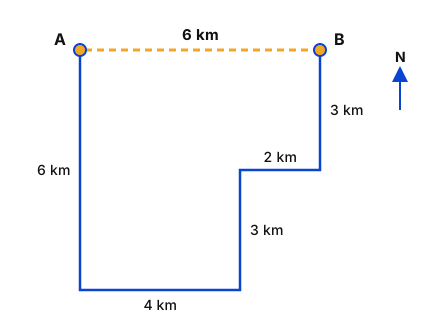
Namita starts from point A and drives 6 km towards the South. She takes two simultaneous left turns and drives 4 km and 3 km respectively. She takes a right turn and drives 2 km. She takes a final left turn and drives 3 km to reach point B. How far (shortest distance) and towards which direction should she drive to reach Point A again? (All turns are 90 degrees only unless specified.)
नमिता बिंदु A से चलना शुरू करती है और दक्षिण की ओर 6 km गाड़ी चलाती है। वह लगातार दो बार बाएँ मुड़ती है और क्रमशः 4 km और 3 km गाड़ी चलाती है। वह दाएँ मुड़ती है और 2 km गाड़ी चलाती है। वह अंतिम बार बाएँ मुड़ती है और बिंदु B पर पहुँचने के लिए 3 km गाड़ी चलाती है। बिंदु A पर फिर से पहुँचने के लिए उसे कितनी दूर (न्यूनतम दूरी) और किस दिशा में गाड़ी चलानी चाहिए? (जब तक निर्दिष्ट न हो, सभी मोड़ केवल 90 डिग्री के हैं।)
  1. A6 km West6 km पश्चिम
  2. B6 km South6 km दक्षिण
  3. C4 km West4 km पश्चिम
  4. D3 km South3 km दक्षिण
Show answer

Concept: Track the facing direction after every turn and plot the path.

  1. 6 km South. Left → East 4 km. Left → North 3 km.
  2. Right → East 2 km. Left → North 3 km to B.
  3. North–South: −6+3+3=0; East: 4+2=6 km.
  4. B is 6 km East of A, so she must drive 6 km West.

Trick: Net out N–S and E–W separately; here N–S cancels fully.

Answer: (A) 6 km West

अवधारणा: हर मोड़ के बाद मुख की दिशा ध्यान रखें और पथ बनाएँ।

  1. 6 किमी दक्षिण। बाएँ → पूर्व 4 किमी। बाएँ → उत्तर 3 किमी।
  2. दाएँ → पूर्व 2 किमी। बाएँ → उत्तर 3 किमी, B पर।
  3. उत्तर–दक्षिण: −6+3+3=0; पूर्व: 4+2=6 किमी।
  4. B, A से 6 किमी पूर्व में है, अतः 6 किमी पश्चिम जाना होगा।

ट्रिक: उ–द और पू–प को अलग-अलग जोड़ें; यहाँ उ–द पूरी तरह कट जाता है।

उत्तर: (A) 6 km पश्चिम

RRB Technician Grade IIIGeneral Intelligence and ReasoningDirection and DistanceRRB Technician Grade III 2024 · 24 Dec Shift 3 →
Q1544.
Which of the following options should come in place of the question mark (?) in the given series to make it logically complete?
6, 18, 30, 66, 126, ?
दी गई शृंखला को तार्किक रूप से पूर्ण करने के लिए प्रश्न चिह्न (?) के स्थान पर निम्नलिखित में से कौन-सा विकल्प आना चाहिए?
6, 18, 30, 66, 126, ?
  1. A258
  2. B270
  3. C266
  4. D242
Show answer

Concept: Each term =2× previous term, alternately +6 and −6.

  1. 6×2+6=18, 18×2−6=30.
  2. 30×2+6=66, 66×2−6=126.
  3. Next: 126×2+6=258.

Trick: Terms nearly double each time → test ×2±k.

Answer: (A) 258

अवधारणा: हर पद =2× पिछला पद, बारी-बारी से +6 और −6।

  1. 6×2+6=18, 18×2−6=30।
  2. 30×2+6=66, 66×2−6=126।
  3. अगला: 126×2+6=258।

ट्रिक: पद लगभग दोगुने हो रहे हों तो ×2±k जाँचें।

उत्तर: (A) 258

RRB Technician Grade IIIGeneral Intelligence and ReasoningNumber SeriesRRB Technician Grade III 2024 · 24 Dec Shift 3 →
Q1545.
Which of the following options should come in place of the question mark (?) in the given series based on the English alphabetical order?
DIN, FKP, HMR, JOT, ?
अंग्रेज़ी वर्णमाला क्रम के आधार पर दी गई शृंखला में प्रश्न चिह्न (?) के स्थान पर निम्नलिखित में से कौन-सा विकल्प आना चाहिए?
DIN, FKP, HMR, JOT, ?
  1. ALQV
  2. BKOX
  3. CKOU
  4. DKOV
Show answer

Concept: Move each letter position forward by the same step.

  1. DIN → FKP → HMR → JOT: every letter +2.
  2. J+2= L, O+2= Q, T+2= V.
  3. Next term: LQV.

Trick: Inside each term the gap is +5 (L→Q→V) — a quick check.

Answer: (A) LQV

अवधारणा: हर अक्षर को समान चरण से आगे बढ़ाएँ।

  1. DIN → FKP → HMR → JOT: हर अक्षर +2।
  2. J+2= L, O+2= Q, T+2= V।
  3. अगला पद: LQV।

ट्रिक: हर पद के भीतर अंतर +5 है (L→Q→V) — त्वरित जाँच।

उत्तर: (A) LQV

RRB Technician Grade IIIGeneral Intelligence and ReasoningLetter SeriesRRB Technician Grade III 2024 · 24 Dec Shift 3 →
Q1546.
In the following number-pairs, the second number is obtained by applying certain mathematical operations to the first number. Which numbers should replace X and Y so that the pattern followed by the two numbers on the left side of :: is the same as that on the right side of ::?
(NOTE: Operations should be performed on the whole numbers, without breaking down the numbers into its constituent digits. E.g. 13 - Operations on 13 such as adding/subtracting/multiplying etc. to 13 can be performed. Breaking down 13 into 1 and 3 and then performing mathematical operations on 1 and 3 is not allowed.)
X : 45 :: 16 : Y
निम्नलिखित संख्या-युग्मों में, पहली संख्या पर कुछ गणितीय संक्रियाएँ करके दूसरी संख्या प्राप्त की जाती है। X और Y के स्थान पर कौन-सी संख्याएँ आनी चाहिए ताकि :: के बाईं ओर की दोनों संख्याओं द्वारा अनुसरित पैटर्न वही हो जो :: के दाईं ओर है?
(ध्यान दें: संक्रियाएँ संख्याओं को उनके घटक अंकों में विभाजित किए बिना, पूर्ण संख्याओं पर की जानी चाहिए। उदाहरण के लिए 13 - 13 पर संक्रियाएँ जैसे 13 में जोड़ना/घटाना/गुणा करना आदि किया जा सकता है। 13 को 1 और 3 में विभाजित करना और फिर 1 और 3 पर गणितीय संक्रियाएँ करना वर्जित है।)
X : 45 :: 16 : Y
  1. AX = 14, Y = 85
  2. BX = 14, Y = 75
  3. CX = 10, Y = 65
  4. DX = 10, Y = 75
Show answer

Concept: Test each option to find one rule that fits both pairs.

  1. Try X =10, Y =75: rule “×5−5”.
  2. 10×5−5=45 ✓.
  3. 16×5−5=75 ✓.

Trick: With X and Y both unknown, plug options in — the right pair satisfies a single rule.

Answer: (D) X = 10, Y = 75

अवधारणा: हर विकल्प रखकर ऐसा एक नियम खोजें जो दोनों युग्मों पर लागू हो।

  1. X =10, Y =75 रखें: नियम “×5−5”।
  2. 10×5−5=45 ✓।
  3. 16×5−5=75 ✓।

ट्रिक: X और Y दोनों अज्ञात हों तो विकल्प रखें — सही जोड़ी एक ही नियम मानती है।

उत्तर: (D) X = 10, Y = 75

RRB Technician Grade IIIGeneral Intelligence and ReasoningNumber AnalogyRRB Technician Grade III 2024 · 24 Dec Shift 3 →
Q1547.
Based on the English alphabetical order, three of the following four letter-clusters are alike in a certain way and thus form a group. Which letter-cluster does not belong to that group?
(Note: The odd one out is not based on the number of consonants/vowels or their position in the letter-cluster.)
अंग्रेज़ी वर्णमाला क्रम के आधार पर, निम्नलिखित चार अक्षर-समूहों में से तीन किसी निश्चित प्रकार से एकसमान हैं और इस प्रकार एक समूह बनाते हैं। कौन-सा अक्षर-समूह उस समूह से संबंधित नहीं है?
(ध्यान दें: असंगत अक्षर-समूह, उस अक्षर-समूह में व्यंजनों/स्वरों की संख्या या उनके स्थान पर आधारित नहीं है।)
  1. AWYU
  2. BSNI
  3. CLGB
  4. DXSN
Show answer

Concept: Check the gaps between consecutive letters (A =1 … Z =26).

  1. SNI: S→N→I, each −5.
  2. LGB and XSN: each step −5.
  3. WYU: W→Y +2, Y→U −4 ✗.

Trick: Three clusters share a constant −5 step; the odd one breaks it.

Answer: (A) WYU

अवधारणा: क्रमागत अक्षरों का अंतर जाँचें (A =1 … Z =26)।

  1. SNI: S→N→I, प्रत्येक −5।
  2. LGB और XSN: प्रत्येक चरण −5।
  3. WYU: W→Y +2, Y→U −4 ✗।

ट्रिक: तीन समूहों में स्थिर −5 अंतर है; विषम समूह इसे तोड़ता है।

उत्तर: (A) WYU

RRB Technician Grade IIIGeneral Intelligence and ReasoningOdd One Out – LettersRRB Technician Grade III 2024 · 24 Dec Shift 3 →
Q1548.
In a certain code language,
A + B means ‘A is the sister of B’,
A − B means ‘A is the wife of B’,
A × B means ‘A is the father of B’,
and A ÷ B means ‘A is the brother of B’.
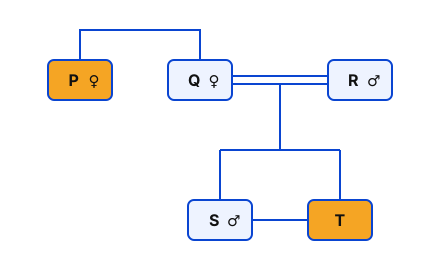
How is P related to T if ‘P + Q − R × S ÷ T’?
एक निश्चित कूट भाषा में,
A + B का अर्थ है ‘A, B की बहन है’,
A − B का अर्थ है ‘A, B की पत्नी है’,
A × B का अर्थ है ‘A, B का पिता है’,
और A ÷ B का अर्थ है ‘A, B का भाई है’।
यदि ‘P + Q − R × S ÷ T’ है, तो P का T से क्या संबंध है?
  1. AFather’s sisterपिता की बहन
  2. BMother’s motherमाता की माता
  3. CMother’s sisterमाता की बहन
  4. DFather’s motherपिता की माता
Show answer

Concept: Decode each symbol and draw the family tree.

  1. P + Q: P is the sister of Q (P female).
  2. Q − R: Q is the wife of R.
  3. R × S: R is the father of S; S ÷ T: S is the brother of T.
  4. So T is a child of R and Q → Q is T’s mother; P (Q’s sister) is T’s mother’s sister.

Trick: Read the chain pair by pair, left to right.

Answer: (C) Mother’s sister

अवधारणा: हर चिह्न को डिकोड करें और वंश-वृक्ष बनाएँ।

  1. P + Q: P, Q की बहन है (P स्त्री)।
  2. Q − R: Q, R की पत्नी है।
  3. R × S: R, S का पिता है; S ÷ T: S, T का भाई है।
  4. अतः T, R और Q की संतान है → Q, T की माँ; P (Q की बहन) T की मौसी (माँ की बहन) है।

ट्रिक: शृंखला को बाएँ से दाएँ, युग्म-दर-युग्म पढ़ें।

उत्तर: (C) माता की बहन

RRB Technician Grade IIIGeneral Intelligence and ReasoningBlood Relations (Coded)RRB Technician Grade III 2024 · 24 Dec Shift 3 →
Q1549.
Read the given statements and conclusions carefully. You have to take the given statements to be true even if they seem to be at variance from commonly known facts and decide which conclusion(s) logically follow(s) from the given statements.
Statements:
All bats are balls.
All balls are wickets.
No wickets are gloves.
Conclusions:
(I) Some balls are bats.
(II) Some wickets are balls.
दिए गए कथनों और निष्कर्षों को ध्यानपूर्वक पढ़िए। आपको दिए गए कथनों को सत्य मानना है, भले ही वे सामान्यतः ज्ञात तथ्यों से भिन्न प्रतीत होते हों, और निर्णय लीजिए कि कौन-सा/से निष्कर्ष दिए गए कथनों का तार्किक रूप से अनुसरण करता है/करते हैं।
कथन:
सभी बैट, बॉल हैं।
सभी बॉल, विकेट हैं।
कोई विकेट, ग्लव्स नहीं है।
निष्कर्ष:
(I) कुछ बॉल, बैट हैं।
(II) कुछ विकेट, बॉल हैं।
  1. AOnly conclusion (II) follows.केवल निष्कर्ष (II) अनुसरण करता है।
  2. BNeither conclusion (I) nor (II) follows.न तो निष्कर्ष (I) और न ही (II) अनुसरण करता है।
  3. COnly conclusion (I) follows.केवल निष्कर्ष (I) अनुसरण करता है।
  4. DBoth conclusions (I) and (II) follow.दोनों निष्कर्ष (I) और (II) अनुसरण करते हैं।
Show answer

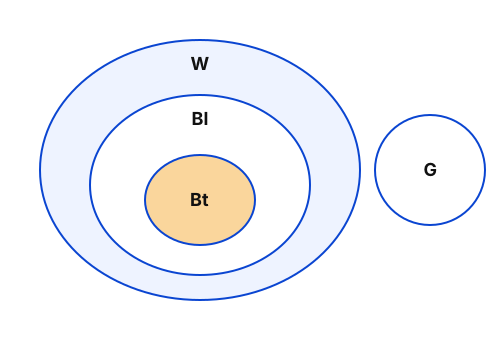
Concept: Draw the Venn diagram (Bt = bats, Bl = balls, W = wickets, G = gloves).

  1. Bt inside Bl, Bl inside W; G outside W.
  2. All bats are balls ⇒ some balls are bats → (I) ✓.
  3. All balls are wickets ⇒ some wickets are balls → (II) ✓.

Yaad rakhein: “All A are B” always gives “Some B are A”.

Answer: (D) Both conclusions (I) and (II) follow.

अवधारणा: वेन आरेख बनाएँ (Bt = बैट, Bl = गेंद, W = विकेट, G = दस्ताने)।

  1. Bt, Bl के अंदर; Bl, W के अंदर; G, W से बाहर।
  2. सभी बैट गेंद हैं ⇒ कुछ गेंदें बैट हैं → (I) ✓।
  3. सभी गेंदें विकेट हैं ⇒ कुछ विकेट गेंद हैं → (II) ✓।

याद रखें: “सभी A, B हैं” से हमेशा “कुछ B, A हैं” निकलता है।

उत्तर: (D) दोनों निष्कर्ष (I) और (II) अनुसरण करते हैं।

RRB Technician Grade IIIGeneral Intelligence and ReasoningSyllogismRRB Technician Grade III 2024 · 24 Dec Shift 3 →
Q1550.
NSQO is related to TYWU in a certain way based on the English alphabetical order. In the same way, JOMK is related to PUSQ. To which of the following options is LQOM related, following the same logic?
अंग्रेज़ी वर्णमाला क्रम के आधार पर NSQO एक निश्चित प्रकार से TYWU से संबंधित है। उसी प्रकार, JOMK, PUSQ से संबंधित है। समान तर्क का अनुसरण करते हुए, LQOM निम्नलिखित में से किस विकल्प से संबंधित है?
  1. AWRSU
  2. BWRUS
  3. CRWSU
  4. DRWUS
Show answer

Concept: Find the shift applied to each letter.

  1. NSQO → TYWU: N→T, S→Y, Q→W, O→U, each +6.
  2. JOMK → PUSQ: each +6 ✓.
  3. LQOM: L→R, Q→W, O→U, M→S → RWUS.

Trick: One constant shift for all letters — just add 6 to each.

Answer: (D) RWUS

अवधारणा: हर अक्षर पर लगा अंतर खोजें।

  1. NSQO → TYWU: N→T, S→Y, Q→W, O→U, प्रत्येक +6।
  2. JOMK → PUSQ: प्रत्येक +6 ✓।
  3. LQOM: L→R, Q→W, O→U, M→S → RWUS।

ट्रिक: सभी अक्षरों पर एक ही अंतर — प्रत्येक में 6 जोड़ें।

उत्तर: (D) RWUS

RRB Technician Grade IIIGeneral Intelligence and ReasoningLetter AnalogyRRB Technician Grade III 2024 · 24 Dec Shift 3 →
Q1551.
The following equation is an example of which type of reaction?
CuSO4+2NaOH→Cu(OH)2+Na2SO4
निम्नलिखित समीकरण किस प्रकार की अभिक्रिया का उदाहरण है?
CuSO4+2NaOH→Cu(OH)2+Na2SO4
  1. ANeutralisation reactionउदासीनीकरण अभिक्रिया (Neutralisation reaction)
  2. BCombination reactionसंयोजन अभिक्रिया (Combination reaction)
  3. CDouble displacement reactionद्विविस्थापन अभिक्रिया (Double displacement reaction)
  4. DCombustion reactionदहन अभिक्रिया (Combustion reaction)
Show answer

Concept: In a double displacement reaction, two compounds exchange their ions to form two new compounds.

  1. Reactants: CuSO4 and NaOH.
  2. Cu2+ pairs with OH− and Na+ pairs with SO42−.
  3. CuSO4+2NaOH→Cu(OH)2↓+Na2SO4 – ions swapped, blue precipitate forms.

Trick: Pattern AB+CD→AD+CB means double displacement.

Answer: (C) Double displacement reaction

अवधारणा: द्विविस्थापन अभिक्रिया में दो यौगिक आपस में आयनों का आदान-प्रदान करके दो नए यौगिक बनाते हैं।

  1. अभिकारक: CuSO4 और NaOH।
  2. Cu2+, OH− से तथा Na+, SO42− से जुड़ता है।
  3. CuSO4+2NaOH→Cu(OH)2↓+Na2SO4 – आयन बदल गए, नीला अवक्षेप बना।

ट्रिक: AB+CD→AD+CB वाला पैटर्न = द्विविस्थापन।

उत्तर: (C) द्विविस्थापन अभिक्रिया (Double displacement reaction)

RRB Technician Grade IIIGeneral ScienceTypes of chemical reactionsRRB Technician Grade III 2024 · 24 Dec Shift 3 →
Q1552.
Involuntary actions including blood pressure, salivation and vomiting are controlled by:
रक्तचाप, लार आना और वमन (उल्टी) सहित अनैच्छिक क्रियाएँ किसके द्वारा नियंत्रित होती हैं?
  1. Aonly the spinal cordकेवल मेरुरज्जु (spinal cord)
  2. Bthe medulla in the hind-brainपश्चमस्तिष्क (hind-brain) में स्थित मेडुला
  3. Cthe cerebellum in the fore-brainअग्रमस्तिष्क (fore-brain) में स्थित अनुमस्तिष्क (cerebellum)
  4. Donly the heartकेवल हृदय
Show answer

Concept: The hind-brain has the pons, cerebellum and medulla. The medulla controls involuntary actions.

  1. Blood pressure, salivation and vomiting happen without our will – they are involuntary.
  2. Such actions are controlled by the medulla oblongata of the hind-brain.
  3. Cerebellum is in the hind-brain (not fore-brain) and controls balance and posture.

Yaad rakhein: Medulla = BP, salivation, vomiting; Cerebellum = balance; Cerebrum = thinking.

Answer: (B) the medulla in the hind-brain

अवधारणा: पश्चमस्तिष्क में पोंस, अनुमस्तिष्क और मेडुला होते हैं। मेडुला अनैच्छिक क्रियाओं को नियंत्रित करता है।

  1. रक्तचाप, लार आना और उल्टी हमारी इच्छा के बिना होते हैं – ये अनैच्छिक क्रियाएँ हैं।
  2. इनका नियंत्रण पश्चमस्तिष्क का मेडुला ऑब्लांगेटा करता है।
  3. अनुमस्तिष्क (सेरिबेलम) पश्चमस्तिष्क में है, अग्रमस्तिष्क में नहीं; यह संतुलन बनाए रखता है।

याद रखें: मेडुला = रक्तचाप, लार, उल्टी; अनुमस्तिष्क = संतुलन; प्रमस्तिष्क = सोचना।

उत्तर: (B) पश्चमस्तिष्क (hind-brain) में स्थित मेडुला

RRB Technician Grade IIIGeneral ScienceHuman brainRRB Technician Grade III 2024 · 24 Dec Shift 3 →
Q1553.
A cart is moving with a uniform velocity and a retarding force F is applied in the opposite direction to stop the cart. The work done by the force is:
एक गाड़ी एकसमान वेग से गतिमान है और उसे रोकने के लिए विपरीत दिशा में एक मंदक बल (retarding force) F लगाया जाता है। बल द्वारा किया गया कार्य है:
  1. Apositiveधनात्मक
  2. Bzeroशून्य
  3. Cundeterminedअनिर्धारित
  4. Dnegativeऋणात्मक
Show answer

Concept: W=Fscosθ, where θ is the angle between force and displacement.

  1. The cart moves forward; the retarding force acts backward.
  2. So θ=180∘ and cos180∘=−1.
  3. W=Fs(−1)=−Fs, i.e. negative work.

Trick: Force opposite to motion (friction, brakes) always does negative work.

Answer: (D) negative

अवधारणा: W=Fscosθ, जहाँ θ बल और विस्थापन के बीच का कोण है।

  1. गाड़ी आगे चलती है, मंदक बल पीछे की ओर लगता है।
  2. अतः θ=180∘ तथा cos180∘=−1।
  3. W=Fs(−1)=−Fs, अर्थात कार्य ऋणात्मक है।

ट्रिक: गति के विपरीत बल (घर्षण, ब्रेक) सदैव ऋणात्मक कार्य करता है।

उत्तर: (D) ऋणात्मक

RRB Technician Grade IIIGeneral ScienceWork done by a forceRRB Technician Grade III 2024 · 24 Dec Shift 3 →
Q1554.
Animals like hydra and planaria can be cut into any number of pieces and each piece grows into a complete organism. This is known as:
हाइड्रा और प्लेनेरिया जैसे जंतुओं को कितने भी टुकड़ों में काटा जा सकता है और प्रत्येक टुकड़ा एक पूर्ण जीव में विकसित हो जाता है। इसे कहा जाता है:
  1. Aregenerationपुनरुद्भवन (regeneration)
  2. Bbinary fissionद्विखंडन (binary fission)
  3. Cbuddingमुकुलन (budding)
  4. Dfragmentationखंडन (fragmentation)
Show answer

Concept: Regeneration is the ability of a fully differentiated organism to give rise to new individuals from its body parts.

  1. When Hydra or Planaria is cut into many pieces, each piece forms a complete organism.
  2. This is carried out by specialised cells that divide and differentiate into all tissues.
  3. Fragmentation (e.g. Spirogyra) is breaking up on maturity; here the organism is cut, so it is regeneration.

Yaad rakhein: Planaria and Hydra = regeneration; Spirogyra = fragmentation; Amoeba = binary fission.

Answer: (A) regeneration

अवधारणा: पुनर्जनन वह क्षमता है जिसमें पूर्ण विकसित जीव अपने शरीर के किसी भाग से नया जीव बना लेता है।

  1. हाइड्रा या प्लेनेरिया को कई टुकड़ों में काटने पर हर टुकड़ा पूरा जीव बन जाता है।
  2. यह विशेष कोशिकाओं द्वारा होता है जो विभाजित होकर सभी ऊतक बनाती हैं।
  3. विखंडन (जैसे स्पाइरोगायरा) परिपक्व होने पर टूटना है; यहाँ जीव को काटा गया है, अतः पुनर्जनन।

याद रखें: प्लेनेरिया, हाइड्रा = पुनर्जनन; स्पाइरोगायरा = खंडन; अमीबा = द्विखंडन।

उत्तर: (A) पुनरुद्भवन (regeneration)

RRB Technician Grade IIIGeneral ScienceRegenerationRRB Technician Grade III 2024 · 24 Dec Shift 3 →
Q1555.
Which of the following forces is responsible for the tides, due to the Moon and the Sun?
चंद्रमा और सूर्य के कारण आने वाले ज्वार-भाटे के लिए निम्नलिखित में से कौन-सा बल उत्तरदायी है?
  1. AElectromagnetic forceविद्युतचुंबकीय बल
  2. BNuclear forceनाभिकीय बल
  3. CGravitation forceगुरुत्वाकर्षण बल
  4. DElectrostatic forceस्थिरवैद्युत बल
Show answer

Concept: Every two masses attract each other by the gravitational force F=Gm1m2r2.

  1. The Moon (and the Sun) pull the ocean water of the Earth.
  2. The side nearer to the Moon is pulled more, so water bulges – high tide.
  3. Thus tides are caused by the gravitational force of the Moon and the Sun.

Yaad rakhein: Tides, motion of planets, falling bodies – all due to gravitation.

Answer: (C) Gravitation force

अवधारणा: कोई भी दो द्रव्यमान एक-दूसरे को गुरुत्वाकर्षण बल F=Gm1m2r2 से आकर्षित करते हैं।

  1. चंद्रमा (और सूर्य) पृथ्वी के समुद्री जल को अपनी ओर खींचते हैं।
  2. चंद्रमा के निकट वाले भाग पर अधिक खिंचाव से जल ऊपर उठता है – ज्वार।
  3. अतः ज्वार-भाटा चंद्रमा व सूर्य के गुरुत्वाकर्षण बल के कारण होता है।

याद रखें: ज्वार-भाटा, ग्रहों की गति, वस्तुओं का गिरना – सब गुरुत्वाकर्षण से।

उत्तर: (C) गुरुत्वाकर्षण बल

RRB Technician Grade IIIGeneral ScienceGravitationRRB Technician Grade III 2024 · 24 Dec Shift 3 →
Q1556.
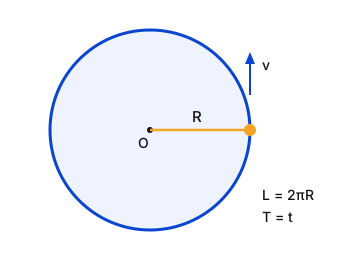
An athlete is moving with uniform speed in a circular track of radius R, and he completes one round in t s. The speed of the athlete is:
एक धावक R त्रिज्या वाले वृत्ताकार पथ पर एकसमान चाल से गतिमान है और वह t s में एक चक्कर पूरा करता है। धावक की चाल है:
  1. AπRt
  2. B2πRt
  3. CπR2t
  4. D3πRt
Show answer

Concept: Speed =distancetime. One round of a circle of radius R covers its circumference 2πR.

  1. Distance in one round =2πR.
  2. Time for one round =t.
  3. v=2πRt.

Trick: Speed on a circular path =circumferencetime period.

Answer: (B) 2πRt

अवधारणा: चाल =दूरीसमय। त्रिज्या R के वृत्त का एक चक्कर उसकी परिधि 2πR के बराबर है।

  1. एक चक्कर में दूरी =2πR।
  2. एक चक्कर का समय =t।
  3. v=2πRt।

ट्रिक: वृत्ताकार पथ पर चाल =परिधिआवर्तकाल।

उत्तर: (B) 2πRt

RRB Technician Grade IIIGeneral ScienceUniform circular motionRRB Technician Grade III 2024 · 24 Dec Shift 3 →
Q1557.
From the given following metals, which one is least reactive towards displacement reaction?
Copper, iron, zinc and lead.
दी गई निम्नलिखित धातुओं में से कौन-सी विस्थापन अभिक्रिया के प्रति सबसे कम अभिक्रियाशील है?
कॉपर (ताँबा), आयरन (लोहा), जिंक और लेड।
  1. ALeadलेड (Lead)
  2. BCopperकॉपर (Copper)
  3. CIronआयरन (Iron)
  4. DIron and zincआयरन और जिंक
Show answer

Concept: A more reactive metal displaces a less reactive metal from its salt solution. The least reactive metal is lowest in the reactivity series.

  1. Order: Zn>Fe>Pb>Cu.
  2. Copper is placed below hydrogen and below lead.
  3. So copper cannot displace Zn, Fe or Pb – it is the least reactive.

Yaad rakhein: K Na Ca Mg Al Zn Fe Pb H Cu Hg Ag Au – reactivity decreases left to right.

Answer: (B) Copper

अवधारणा: अधिक सक्रिय धातु कम सक्रिय धातु को उसके लवण विलयन से विस्थापित करती है। सबसे कम सक्रिय धातु श्रेणी में सबसे नीचे होती है।

  1. क्रम: Zn>Fe>Pb>Cu।
  2. कॉपर हाइड्रोजन और लेड दोनों से नीचे है।
  3. अतः कॉपर Zn, Fe या Pb को विस्थापित नहीं कर सकता – यह सबसे कम सक्रिय है।

याद रखें: K Na Ca Mg Al Zn Fe Pb H Cu Hg Ag Au – बाएँ से दाएँ सक्रियता घटती है।

उत्तर: (B) कॉपर (Copper)

RRB Technician Grade IIIGeneral ScienceReactivity seriesRRB Technician Grade III 2024 · 24 Dec Shift 3 →
Q1558.
Which of the following symptoms is related to myopia?
निम्नलिखित में से कौन-सा लक्षण निकट-दृष्टि दोष (myopia) से संबंधित है?
  1. AA person cannot see both nearby and distant objects distinctly.व्यक्ति निकट और दूर दोनों की वस्तुओं को स्पष्ट रूप से नहीं देख सकता।
  2. BA person can see nearby objects clearly but cannot see distant objects distinctly.व्यक्ति निकट की वस्तुओं को स्पष्ट देख सकता है, लेकिन दूर की वस्तुओं को स्पष्ट रूप से नहीं देख सकता।
  3. CA person can see distant objects clearly but cannot see nearby objects distinctly.व्यक्ति दूर की वस्तुओं को स्पष्ट देख सकता है, लेकिन निकट की वस्तुओं को स्पष्ट रूप से नहीं देख सकता।
  4. DA person can see both nearby and distant objects distinctly.व्यक्ति निकट और दूर दोनों की वस्तुओं को स्पष्ट रूप से देख सकता है।
Show answer

Concept: Myopia (near-sightedness): image of a distant object forms in front of the retina.

  1. Causes: elongated eyeball or excessive curvature of the eye lens.
  2. The person sees nearby objects clearly but distant objects look blurred.
  3. Corrected with a concave (diverging) lens.

Yaad rakhein: Myopia – near clear, far blurred, concave lens; Hypermetropia – far clear, near blurred, convex lens.

Answer: (B) A person can see nearby objects clearly but cannot see distant objects distinctly.

अवधारणा: निकट दृष्टि दोष (मायोपिया): दूर की वस्तु का प्रतिबिंब रेटिना के आगे बनता है।

  1. कारण: नेत्र गोलक का लंबा होना या लेंस की अधिक वक्रता।
  2. व्यक्ति पास की वस्तुएँ साफ देखता है, पर दूर की वस्तुएँ धुँधली दिखती हैं।
  3. सुधार: अवतल (अपसारी) लेंस से।

याद रखें: मायोपिया – पास साफ, दूर धुँधला, अवतल लेंस; हाइपरमेट्रोपिया – दूर साफ, पास धुँधला, उत्तल लेंस।

उत्तर: (B) व्यक्ति निकट की वस्तुओं को स्पष्ट देख सकता है, लेकिन दूर की वस्तुओं को स्पष्ट रूप से नहीं देख सकता।

RRB Technician Grade IIIGeneral ScienceDefects of vision – myopiaRRB Technician Grade III 2024 · 24 Dec Shift 3 →
Q1559.
Select the correct chemical reaction that represents the chlor-alkali process.
क्लोर-क्षार प्रक्रिया (chlor-alkali process) को दर्शाने वाली सही रासायनिक अभिक्रिया का चयन कीजिए।
  1. A2KCl(aq)+2H2O(l)→2KOH(aq)+Cl2(g)+H2(g)
  2. B2CaCl2(aq)+2H2O(l)→2Ca(OH)2(aq)+Cl2(g)+H2(g)
  3. C2NaCl(aq)+2H2O(l)→2NaOH(aq)+Cl2(g)+H2(g)
  4. D2MgCl2(aq)+2H2O(l)→2Mg(OH)2(aq)+Cl2(g)+H2(g)
Show answer

Concept: Electrolysis of brine (aqueous sodium chloride) is called the chlor-alkali process.

  1. Brine =NaCl(aq).
  2. 2NaCl(aq)+2H2O(l)→2NaOH(aq)+Cl2(g)+H2(g).
  3. Products: chlorine (chlor) and sodium hydroxide (alkali), plus hydrogen.

Trick: Name itself: chlor (Cl2) + alkali (NaOH) – from NaCl.

Answer: (C) 2NaCl(aq)+2H2O(l)→2NaOH(aq)+Cl2(g)+H2(g)

अवधारणा: ब्राइन (सोडियम क्लोराइड का जलीय विलयन) के विद्युत अपघटन को क्लोर-क्षार प्रक्रिया कहते हैं।

  1. ब्राइन =NaCl(aq)।
  2. 2NaCl(aq)+2H2O(l)→2NaOH(aq)+Cl2(g)+H2(g)।
  3. उत्पाद: क्लोरीन (क्लोर), सोडियम हाइड्रॉक्साइड (क्षार) तथा हाइड्रोजन।

ट्रिक: नाम से ही: क्लोर (Cl2) + क्षार (NaOH) – NaCl से।

उत्तर: (C) 2NaCl(aq)+2H2O(l)→2NaOH(aq)+Cl2(g)+H2(g)

RRB Technician Grade IIIGeneral ScienceChlor-alkali processRRB Technician Grade III 2024 · 24 Dec Shift 3 →
Q1560.
Which of the following statements is correct for a heterogeneous mixture?
विषमांगी मिश्रण (heterogeneous mixture) के लिए निम्नलिखित में से कौन-सा कथन सही है?
  1. AA clear solution is called a heterogeneous mixture.एक स्पष्ट विलयन को विषमांगी मिश्रण कहा जाता है।
  2. BThe composition of the mixture is non-uniform.मिश्रण का संघटन असमान होता है।
  3. CMixtures don't contain physically distinct parts.मिश्रणों में भौतिक रूप से भिन्न भाग नहीं होते।
  4. DThe composition of the mixture is uniform.मिश्रण का संघटन एकसमान होता है।
Show answer

Concept: A heterogeneous mixture has a non-uniform composition and physically distinct parts.

  1. Examples: sand + water, oil + water, salt + iron filings.
  2. Different samples of it have different compositions.
  3. A clear solution (salt in water) is homogeneous with uniform composition, so A, C, D are wrong.

Yaad rakhein: Homogeneous = uniform, one phase; Heterogeneous = non-uniform, visible boundaries.

Answer: (B) The composition of the mixture is non-uniform.

अवधारणा: विषमांगी मिश्रण का संघटन असमान होता है और उसके भाग अलग-अलग दिखाई देते हैं।

  1. उदाहरण: रेत + पानी, तेल + पानी, नमक + लौह चूर्ण।
  2. इसके अलग-अलग नमूनों का संघटन भिन्न होता है।
  3. स्पष्ट विलयन (पानी में नमक) समांगी है, अतः A, C, D गलत हैं।

याद रखें: समांगी = एकसमान संघटन; विषमांगी = असमान संघटन, अलग सीमाएँ दिखती हैं।

उत्तर: (B) मिश्रण का संघटन असमान होता है।

RRB Technician Grade IIIGeneral ScienceMixturesRRB Technician Grade III 2024 · 24 Dec Shift 3 →