Question bank

Q&A: practice questions with answers

Search questions on any topic. Filter by exam category, exam, subject and topic, try the question, then open the answer and explanation.

Courses – airGurukul

3,200 questions found.

Q1561.
An object is displaced horizontally because of the applied force. What is revealed by this action?
लगाए गए बल के कारण एक वस्तु क्षैतिज रूप से विस्थापित होती है। इस क्रिया से क्या पता चलता है?
  1. AWork is done by the force.बल द्वारा कार्य किया गया है।
  2. BThe force decreases the mass of the object.बल वस्तु के द्रव्यमान को घटाता है।
  3. CThe force increases the inertia of the object.बल वस्तु के जड़त्व को बढ़ाता है।
  4. DThe force increases the mass of the object.बल वस्तु के द्रव्यमान को बढ़ाता है।
Show answer

Concept: Work is done when a force acts on an object and the object is displaced in the direction of the force: W=F×s.

  1. Force is applied and the object moves horizontally, so s≠0.
  2. Hence W=F×s≠0 – work is done by the force.
  3. Force never changes mass or inertia of a body.

Yaad rakhein: Two conditions for work: a force acts and displacement occurs.

Answer: (A) Work is done by the force.

अवधारणा: जब बल लगाने पर वस्तु बल की दिशा में विस्थापित होती है, तब कार्य होता है: W=F×s।

  1. बल लगाया गया और वस्तु क्षैतिज रूप से खिसकी, अतः s≠0।
  2. इसलिए W=F×s≠0 – बल द्वारा कार्य किया गया।
  3. बल वस्तु का द्रव्यमान या जड़त्व नहीं बदलता।

याद रखें: कार्य की दो शर्तें: बल लगे और विस्थापन हो।

उत्तर: (A) बल द्वारा कार्य किया गया है।
RRB Technician Grade IIIGeneral ScienceWorkRRB Technician Grade III 2024 · 24 Dec Shift 3 →
Q1562.
Which of the following is INCORRECT about plant hormones?
पादप हॉर्मोनों के बारे में निम्नलिखित में से कौन-सा कथन गलत है?
  1. AAll plant hormones except cytokinins promote cell division.साइटोकाइनिन को छोड़कर सभी पादप हॉर्मोन कोशिका विभाजन को बढ़ावा देते हैं।
  2. BAll plant hormones except abscisic acid help in promoting growth.एब्सिसिक अम्ल को छोड़कर सभी पादप हॉर्मोन वृद्धि को बढ़ावा देने में सहायता करते हैं।
  3. CDifferent plant hormones help to coordinate growth and development.विभिन्न पादप हॉर्मोन वृद्धि और विकास के समन्वय में सहायता करते हैं।
  4. DDifferent plant hormones help to coordinate responses to the environment.विभिन्न पादप हॉर्मोन पर्यावरण के प्रति अनुक्रियाओं के समन्वय में सहायता करते हैं।
Show answer

Concept: Plant hormones (auxin, gibberellin, cytokinin, abscisic acid) coordinate growth, development and responses to the environment.

  1. Cytokinins actually promote cell division – so statement A is wrong.
  2. Abscisic acid inhibits growth while the others promote growth – statement B is correct.
  3. Statements C and D are correct roles of hormones.

Yaad rakhein: Cytokinin = cell division; Auxin = cell elongation; Gibberellin = stem growth; ABA = growth inhibitor (wilting).

Answer: (A) All plant hormones except cytokinins promote cell division.

अवधारणा: पादप हॉर्मोन (ऑक्सिन, जिबरेलिन, साइटोकाइनिन, एब्सिसिक अम्ल) वृद्धि, विकास और पर्यावरण के प्रति अनुक्रिया का समन्वय करते हैं।

  1. साइटोकाइनिन स्वयं कोशिका विभाजन को बढ़ावा देता है – अतः कथन A गलत है।
  2. एब्सिसिक अम्ल वृद्धि रोकता है, बाकी वृद्धि बढ़ाते हैं – कथन B सही है।
  3. कथन C और D हॉर्मोन के सही कार्य हैं।

याद रखें: साइटोकाइनिन = कोशिका विभाजन; ऑक्सिन = कोशिका दीर्घन; जिबरेलिन = तने की वृद्धि; ABA = वृद्धि अवरोधक।

उत्तर: (A) साइटोकाइनिन को छोड़कर सभी पादप हॉर्मोन कोशिका विभाजन को बढ़ावा देते हैं।

RRB Technician Grade IIIGeneral SciencePlant hormonesRRB Technician Grade III 2024 · 24 Dec Shift 3 →
Q1563.
According to the laws of refraction, which of the following is/are true?
(A) The incident ray, the refracted ray and the normal to the interface of two transparent media do not lie in the same plane.
(B) For a given colour of light and a given pair of media, the ratio of the sine of angle of incidence to sine of angle of refraction is a constant.
अपवर्तन के नियमों के अनुसार, निम्नलिखित में से कौन-सा/से सत्य है/हैं?
(A) आपतित किरण, अपवर्तित किरण और दो पारदर्शी माध्यमों के अंतरापृष्ठ पर अभिलंब एक ही तल में नहीं होते।
(B) प्रकाश के किसी दिए गए रंग और माध्यमों के किसी दिए गए युग्म के लिए, आपतन कोण की ज्या (sine) और अपवर्तन कोण की ज्या का अनुपात एक नियतांक होता है।
  1. A'A' is true and 'B' is false.'A' सत्य है और 'B' असत्य है।
  2. B'A' is false and 'B' is true.'A' असत्य है और 'B' सत्य है।
  3. CBoth 'A' and 'B' are false.'A' और 'B' दोनों असत्य हैं।
  4. DBoth 'A' and 'B' are true.'A' और 'B' दोनों सत्य हैं।
Show answer

Concept: Laws of refraction: (1) incident ray, refracted ray and normal lie in the same plane; (2) Snell's law sinisinr=constant.

  1. Statement A says they do NOT lie in the same plane – false.
  2. Statement B is Snell's law for a given colour and pair of media – true.
  3. So A is false and B is true.

Yaad rakhein: The constant sinisinr is the refractive index of the second medium w.r.t. the first.

Answer: (B) 'A' is false and 'B' is true.

अवधारणा: अपवर्तन के नियम: (1) आपतित किरण, अपवर्तित किरण और अभिलंब एक ही तल में होते हैं; (2) स्नेल का नियम sinisinr=नियतांक।

  1. कथन A कहता है वे एक तल में नहीं होते – असत्य।
  2. कथन B दिए गए रंग और माध्यम-युग्म के लिए स्नेल का नियम है – सत्य।
  3. अतः A असत्य और B सत्य है।

याद रखें: नियतांक sinisinr ही दूसरे माध्यम का पहले के सापेक्ष अपवर्तनांक है।

उत्तर: (B) 'A' असत्य है और 'B' सत्य है।

RRB Technician Grade IIIGeneral ScienceLaws of refractionRRB Technician Grade III 2024 · 24 Dec Shift 3 →
Q1564.
The refractive index is related to:
अपवर्तनांक (refractive index) किससे संबंधित है?
  1. Athe frequency of light in two different mediaदो भिन्न माध्यमों में प्रकाश की आवृत्ति
  2. Bthe dielectric polarizability of two mediaदो माध्यमों की परावैद्युत ध्रुवणीयता (dielectric polarizability)
  3. Cthe speed of propagation of light in two different mediaदो भिन्न माध्यमों में प्रकाश के संचरण की चाल
  4. Dthe magnetic moment of two different mediaदो भिन्न माध्यमों का चुंबकीय आघूर्ण
Show answer

Concept: Refractive index of medium 2 w.r.t. medium 1: n21=v1v2 (ratio of speeds of light).

  1. Light changes speed when it passes from one medium to another.
  2. Refractive index compares these speeds: n=cv for absolute refractive index.
  3. Frequency of light does not change on refraction, so option A is wrong.

Yaad rakhein: Larger refractive index = optically denser = slower light.

Answer: (C) the speed of propagation of light in two different media

अवधारणा: माध्यम 2 का माध्यम 1 के सापेक्ष अपवर्तनांक: n21=v1v2 (प्रकाश की चालों का अनुपात)।

  1. एक माध्यम से दूसरे में जाने पर प्रकाश की चाल बदलती है।
  2. अपवर्तनांक इन चालों की तुलना है: निरपेक्ष अपवर्तनांक n=cv।
  3. अपवर्तन में आवृत्ति नहीं बदलती, अतः विकल्प A गलत है।

याद रखें: अधिक अपवर्तनांक = प्रकाशतः सघन = प्रकाश की चाल कम।

उत्तर: (C) दो भिन्न माध्यमों में प्रकाश के संचरण की चाल

RRB Technician Grade IIIGeneral ScienceRefractive indexRRB Technician Grade III 2024 · 24 Dec Shift 3 →
Q1565.
The weight of an object was 60 N when measured on the surface of the earth.
What would be its weight when measured on the surface of the moon?
पृथ्वी की सतह पर मापे जाने पर किसी वस्तु का भार 60 N था।
चंद्रमा की सतह पर मापे जाने पर इसका भार कितना होगा?
  1. A10 N
  2. B60 N
  3. C39 N
  4. D30 N
Show answer

Concept: Gravity on the Moon is about 16 of that on the Earth, so weight on the Moon =16× weight on the Earth.

  1. Weight on the Earth =60N.
  2. Weight on the Moon =606=10N.
  3. Mass stays the same; only weight changes.

Trick: Moon weight = Earth weight ÷6.

Answer: (A) 10 N

अवधारणा: चंद्रमा पर गुरुत्व पृथ्वी का लगभग 16 है, अतः चंद्रमा पर भार =16× पृथ्वी पर भार।

  1. पृथ्वी पर भार =60N।
  2. चंद्रमा पर भार =606=10N।
  3. द्रव्यमान वही रहता है, केवल भार बदलता है।

ट्रिक: चंद्रमा पर भार = पृथ्वी पर भार ÷6।

उत्तर: (A) 10 N

RRB Technician Grade IIIGeneral ScienceWeight on the MoonRRB Technician Grade III 2024 · 24 Dec Shift 3 →
Q1566.
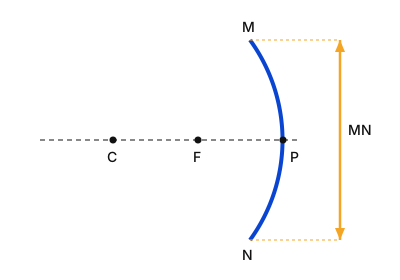
The aperture of a spherical mirror is:
गोलीय दर्पण का द्वारक (aperture) है:
  1. Athe distance between the object and the mirrorवस्तु और दर्पण के बीच की दूरी
  2. Bthe distance between the centre of curvature and the focusवक्रता केंद्र और फोकस के बीच की दूरी
  3. Cthe diameter of the reflecting surface of the mirrorदर्पण के परावर्तक पृष्ठ का व्यास
  4. Dthe distance between the image and the mirrorप्रतिबिंब और दर्पण के बीच की दूरी
Show answer

Concept: The aperture of a spherical mirror is the diameter of its reflecting surface (MN in the figure).

  1. P = pole, C = centre of curvature, F = focus.
  2. The circular outline of the reflecting surface has a diameter MN – this is the aperture.
  3. Distance CF is R2 (equal to f), not the aperture.

Yaad rakhein: Aperture = size of the reflecting surface; Focal length f=R2.

Answer: (C) the diameter of the reflecting surface of the mirror

अवधारणा: गोलीय दर्पण का द्वारक (अपर्चर) उसकी परावर्तक सतह का व्यास है (चित्र में MN)।

  1. P = ध्रुव, C = वक्रता केंद्र, F = फोकस।
  2. परावर्तक सतह की वृत्ताकार सीमा का व्यास MN – यही द्वारक है।
  3. दूरी CF =R2 (अर्थात f) है, द्वारक नहीं।

याद रखें: द्वारक = परावर्तक सतह का आकार; फोकस दूरी f=R2।

उत्तर: (C) दर्पण के परावर्तक पृष्ठ का व्यास

RRB Technician Grade IIIGeneral ScienceSpherical mirrorsRRB Technician Grade III 2024 · 24 Dec Shift 3 →
Q1567.
What will be the name of product that is formed when metals react with air?
जब धातुएँ वायु के साथ अभिक्रिया करती हैं, तो बनने वाले उत्पाद का नाम क्या होगा?
  1. AMetal hydrideधातु हाइड्राइड
  2. BMetal oxideधातु ऑक्साइड
  3. CMetal chlorideधातु क्लोराइड
  4. DMetal nitrateधातु नाइट्रेट
Show answer

Concept: Metals combine with oxygen of air to form metal oxides.

  1. Metal + oxygen → metal oxide.
  2. Example: 2Cu+O2→2CuO (black).
  3. Example: 4Al+3O2→2Al2O3; metal oxides are mostly basic.

Yaad rakhein: Metal oxides are basic; non-metal oxides are acidic.

Answer: (B) Metal oxide

अवधारणा: धातुएँ वायु की ऑक्सीजन से संयोग करके धातु ऑक्साइड बनाती हैं।

  1. धातु + ऑक्सीजन → धातु ऑक्साइड।
  2. उदाहरण: 2Cu+O2→2CuO (काला)।
  3. उदाहरण: 4Al+3O2→2Al2O3; धातु ऑक्साइड प्रायः क्षारीय होते हैं।

याद रखें: धातु ऑक्साइड क्षारीय; अधातु ऑक्साइड अम्लीय।

उत्तर: (B) धातु ऑक्साइड

RRB Technician Grade IIIGeneral ScienceReaction of metals with oxygenRRB Technician Grade III 2024 · 24 Dec Shift 3 →
Q1568.
Burning of coal is an example of which type of chemical reaction?
कोयले का जलना किस प्रकार की रासायनिक अभिक्रिया का उदाहरण है?
  1. AReduction reactionअपचयन अभिक्रिया
  2. BDecomposition reactionवियोजन अभिक्रिया
  3. CDouble decomposition reactionद्वि-अपघटन अभिक्रिया
  4. DCombination reactionसंयोजन अभिक्रिया
Show answer

Concept: In a combination reaction two or more reactants combine to form a single product.

  1. Coal is mainly carbon.
  2. On burning: C(s)+O2(g)→CO2(g) + heat.
  3. Two reactants give one product, so it is a combination (also exothermic) reaction.

Trick: Many reactants → one product = combination; one reactant → many products = decomposition.

Answer: (D) Combination reaction

अवधारणा: संयोजन अभिक्रिया में दो या अधिक अभिकारक मिलकर एक ही उत्पाद बनाते हैं।

  1. कोयला मुख्यतः कार्बन है।
  2. जलने पर: C(s)+O2(g)→CO2(g) + ऊष्मा।
  3. दो अभिकारक से एक उत्पाद, अतः संयोजन (साथ ही ऊष्माक्षेपी) अभिक्रिया।

ट्रिक: अनेक अभिकारक → एक उत्पाद = संयोजन; एक अभिकारक → अनेक उत्पाद = वियोजन।

उत्तर: (D) संयोजन अभिक्रिया

RRB Technician Grade IIIGeneral ScienceCombination reactionRRB Technician Grade III 2024 · 24 Dec Shift 3 →
Q1569.
The magnetic field lines produced inside a long current carrying solenoid is similar to that of a:
एक लंबी धारावाही परिनालिका (solenoid) के अंदर उत्पन्न चुंबकीय क्षेत्र रेखाएँ किसके समान होती हैं?
  1. Ahorseshoe magnetनाल चुंबक
  2. Bdisc magnetडिस्क चुंबक
  3. Cbar magnetछड़ चुंबक
  4. Dring magnetवलय चुंबक
Show answer

Concept: A solenoid is a long coil of many circular turns of insulated wire.

  1. Inside the solenoid the field lines are parallel straight lines – a uniform field.
  2. One end behaves like a north pole and the other like a south pole.
  3. This pattern is the same as the field of a bar magnet.

Yaad rakhein: Current-carrying solenoid = bar magnet; with a soft iron core it becomes an electromagnet.

Answer: (C) bar magnet

अवधारणा: परिनालिका विद्युतरोधी तार के अनेक वृत्ताकार फेरों वाली लंबी कुंडली है।

  1. परिनालिका के भीतर क्षेत्र रेखाएँ समांतर सरल रेखाएँ होती हैं – एकसमान क्षेत्र।
  2. एक सिरा उत्तरी ध्रुव और दूसरा दक्षिणी ध्रुव की तरह व्यवहार करता है।
  3. यह प्रतिरूप छड़ चुंबक के क्षेत्र जैसा ही है।

याद रखें: धारावाही परिनालिका = छड़ चुंबक; नरम लोहे की क्रोड डालने पर विद्युत चुंबक।

उत्तर: (C) छड़ चुंबक

RRB Technician Grade IIIGeneral ScienceMagnetic field of a solenoidRRB Technician Grade III 2024 · 24 Dec Shift 3 →
Q1570.
Match the cell organelles with their respective functions.
Cell organelles — Functions
1. Cell wall — a. Digests any foreign matter and worn-out cellular components
2. Ribosomes — b. Gives plants their structural strength
3. Lysosomes — c. Sites involved in protein manufacture
4. Golgi apparatus — d. Linked to the production of lysosomes
कोशिकांगों का उनके संबंधित कार्यों से मिलान कीजिए।
कोशिकांग — कार्य
1. कोशिका भित्ति (Cell wall) — a. किसी भी बाहरी पदार्थ तथा टूटे-फूटे कोशिकीय घटकों का पाचन करता है
2. राइबोसोम (Ribosomes) — b. पौधों को संरचनात्मक दृढ़ता प्रदान करती है
3. लाइसोसोम (Lysosomes) — c. प्रोटीन निर्माण में शामिल स्थल
4. गॉल्जी उपकरण (Golgi apparatus) — d. लाइसोसोम के निर्माण से संबंधित
  1. A1-b, 2-c, 3-a, 4-d
  2. B1-a, 2-b, 3-c, 4-d
  3. C1-b, 2-d, 3-c, 4-a
  4. D1-c, 2-a, 3-d, 4-b
Show answer

Concept: Each cell organelle has a specific function in the cell.

  1. Cell wall gives plants structural strength: 1-b.
  2. Ribosomes are sites of protein synthesis: 2-c.
  3. Lysosomes digest foreign matter and worn-out parts (suicide bags): 3-a.
  4. Golgi apparatus packages materials and helps form lysosomes: 4-d.

Yaad rakhein: Lysosome = suicide bag; Ribosome = protein factory; Mitochondria = powerhouse.

Answer: (A) 1-b, 2-c, 3-a, 4-d

अवधारणा: प्रत्येक कोशिकांग का कोशिका में एक विशेष कार्य होता है।

  1. कोशिका भित्ति पौधों को संरचनात्मक दृढ़ता देती है: 1-b।
  2. राइबोसोम प्रोटीन निर्माण के स्थल हैं: 2-c।
  3. लाइसोसोम बाहरी पदार्थ व पुराने भागों को पचाते हैं (आत्मघाती थैली): 3-a।
  4. गॉल्जी उपकरण पदार्थों का पैकेजिंग करता है और लाइसोसोम बनाता है: 4-d।

याद रखें: लाइसोसोम = आत्मघाती थैली; राइबोसोम = प्रोटीन कारखाना; माइटोकॉन्ड्रिया = ऊर्जा घर।

उत्तर: (A) 1-b, 2-c, 3-a, 4-d

RRB Technician Grade IIIGeneral ScienceCell organellesRRB Technician Grade III 2024 · 24 Dec Shift 3 →
Q1571.
The chemical reaction between an acid and base is termed as:
अम्ल और क्षार के बीच होने वाली रासायनिक अभिक्रिया को क्या कहा जाता है?
  1. Aendothermic reactionऊष्माशोषी अभिक्रिया (endothermic reaction)
  2. Bdecomposition reactionवियोजन अभिक्रिया (decomposition reaction)
  3. Ccondensation reactionसंघनन अभिक्रिया (condensation reaction)
  4. Dneutralisation reactionउदासीनीकरण अभिक्रिया (neutralisation reaction)
Show answer

Concept: An acid reacts with a base to give salt and water; this is neutralisation.

  1. Acid + base → salt + water.
  2. Example: HCl+NaOH→NaCl+H2O.
  3. The H+ of acid and OH− of base combine to form water; heat is released.

Yaad rakhein: Neutralisation is exothermic; antacids neutralise excess stomach acid.

Answer: (D) neutralisation reaction

अवधारणा: अम्ल और क्षारक की अभिक्रिया से लवण और जल बनते हैं; इसे उदासीनीकरण कहते हैं।

  1. अम्ल + क्षारक → लवण + जल।
  2. उदाहरण: HCl+NaOH→NaCl+H2O।
  3. अम्ल का H+ और क्षारक का OH− मिलकर जल बनाते हैं; ऊष्मा निकलती है।

याद रखें: उदासीनीकरण ऊष्माक्षेपी है; एंटासिड पेट के अतिरिक्त अम्ल को उदासीन करता है।

उत्तर: (D) उदासीनीकरण अभिक्रिया (neutralisation reaction)

RRB Technician Grade IIIGeneral ScienceNeutralisationRRB Technician Grade III 2024 · 24 Dec Shift 3 →
Q1572.
Which of the following is produced when barium chloride reacts with sodium sulphate?
जब बेरियम क्लोराइड, सोडियम सल्फेट के साथ अभिक्रिया करता है तो निम्नलिखित में से क्या उत्पन्न होता है?
  1. AWhite precipitate of BaSO4BaSO4 का सफ़ेद अवक्षेप
  2. BBlack precipitate of BaSO4BaSO4 का काला अवक्षेप
  3. CYellow precipitate of BaSO4BaSO4 का पीला अवक्षेप
  4. DBrown precipitate of BaSO4BaSO4 का भूरा अवक्षेप
Show answer

Concept: Barium chloride and sodium sulphate undergo double displacement, forming an insoluble precipitate.

  1. Na2SO4(aq)+BaCl2(aq)→BaSO4(s)+2NaCl(aq).
  2. BaSO4 is insoluble in water.
  3. It appears as a white precipitate.

Yaad rakhein: BaSO4 – white ppt; PbI2 – yellow ppt; Cu(OH)2 – blue ppt.

Answer: (A) White precipitate of BaSO4

अवधारणा: बेरियम क्लोराइड और सोडियम सल्फेट द्विविस्थापन अभिक्रिया करके अघुलनशील अवक्षेप बनाते हैं।

  1. Na2SO4(aq)+BaCl2(aq)→BaSO4(s)+2NaCl(aq)।
  2. BaSO4 जल में अघुलनशील है।
  3. यह सफेद अवक्षेप के रूप में दिखता है।

याद रखें: BaSO4 – सफेद; PbI2 – पीला; Cu(OH)2 – नीला अवक्षेप।

उत्तर: (A) BaSO4 का सफ़ेद अवक्षेप

RRB Technician Grade IIIGeneral SciencePrecipitation reactionRRB Technician Grade III 2024 · 24 Dec Shift 3 →
Q1573.
Which of the following is the correct unit mass of sodium?
निम्नलिखित में से कौन-सा सोडियम का सही इकाई द्रव्यमान (unit mass) है?
  1. A23u
  2. B18u
  3. C11u
  4. D20u
Show answer

Concept: Atomic mass unit (u) =112 of the mass of a carbon-12 atom. Atomic mass ≈ protons + neutrons.

  1. Sodium: atomic number 11 (protons =11).
  2. Neutrons =12.
  3. Mass =11+12=23u.

Yaad rakhein: Na: atomic number 11, mass 23u; don't confuse the two.

Answer: (A) 23u

अवधारणा: परमाणु द्रव्यमान इकाई (u) = कार्बन-12 परमाणु के द्रव्यमान का 112। परमाणु द्रव्यमान ≈ प्रोटॉन + न्यूट्रॉन।

  1. सोडियम: परमाणु क्रमांक 11 (प्रोटॉन =11)।
  2. न्यूट्रॉन =12।
  3. द्रव्यमान =11+12=23u।

याद रखें: Na: परमाणु क्रमांक 11, द्रव्यमान 23u; दोनों में भ्रमित न हों।

उत्तर: (A) 23u

RRB Technician Grade IIIGeneral ScienceAtomic massRRB Technician Grade III 2024 · 24 Dec Shift 3 →
Q1574.
Use of regenerative cells in the process of budding is present in:
मुकुलन (budding) की प्रक्रिया में पुनर्योजी कोशिकाओं का उपयोग किसमें होता है?
  1. ASpirogyraस्पाइरोगायरा
  2. BHydraहाइड्रा
  3. CPlanariaप्लेनेरिया
  4. DAmoebaअमीबा
Show answer

Concept: In budding, a new individual develops as an outgrowth (bud) from the parent body.

  1. Hydra has regenerative cells that divide repeatedly at one site.
  2. This forms a bud that grows into a tiny Hydra and detaches when mature.
  3. Spirogyra – fragmentation; Planaria – regeneration; Amoeba – binary fission.

Yaad rakhein: Hydra uses regenerative cells for budding; yeast also buds.

Answer: (B) Hydra

अवधारणा: मुकुलन में जनक शरीर से एक उभार (मुकुल) के रूप में नया जीव विकसित होता है।

  1. हाइड्रा में पुनर्जनन कोशिकाएँ एक स्थान पर बार-बार विभाजित होती हैं।
  2. इससे मुकुल बनता है जो छोटा हाइड्रा बनकर परिपक्व होने पर अलग हो जाता है।
  3. स्पाइरोगायरा – खंडन; प्लेनेरिया – पुनर्जनन; अमीबा – द्विखंडन।

याद रखें: हाइड्रा मुकुलन में पुनर्जनन कोशिकाओं का उपयोग करता है; यीस्ट भी मुकुलन करता है।

उत्तर: (B) हाइड्रा

RRB Technician Grade IIIGeneral ScienceBudding in HydraRRB Technician Grade III 2024 · 24 Dec Shift 3 →
Q1575.
Which of the following is the tiny blob-on-a-stick structures in fungi that are involved in reproduction?
निम्नलिखित में से कौन-सी कवकों (fungi) में पाई जाने वाली छड़ पर स्थित छोटी गोल घुंडी जैसी संरचनाएँ हैं, जो जनन में शामिल होती हैं?
  1. ASpermatogoniaशुक्राणुजन कोशिकाएँ (Spermatogonia)
  2. BSporangiaबीजाणुधानी (Sporangia)
  3. CGametophyteयुग्मकोद्भिद (Gametophyte)
  4. DSporophyteबीजाणुउद्भिद (Sporophyte)
Show answer

Concept: Fungi like Rhizopus (bread mould) reproduce by spore formation.

  1. Thread-like hyphae bear tiny blob-on-a-stick structures.
  2. These blobs are sporangia, containing cells (spores) that grow into new Rhizopus.
  3. Spores have thick walls that protect them until they reach a moist surface.

Yaad rakhein: Rhizopus – sporangia; spores spread by air.

Answer: (B) Sporangia

अवधारणा: राइजोपस (ब्रेड मोल्ड) जैसे कवक बीजाणु निर्माण द्वारा जनन करते हैं।

  1. धागे जैसे कवक तंतुओं पर छोटी गोल घुंडी-जैसी संरचनाएँ होती हैं।
  2. ये बीजाणुधानी (स्पोरेंजिया) हैं, जिनमें बीजाणु होते हैं जो नए राइजोपस बनाते हैं।
  3. बीजाणुओं की मोटी भित्ति नम सतह मिलने तक उनकी रक्षा करती है।

याद रखें: राइजोपस – बीजाणुधानी; बीजाणु हवा से फैलते हैं।

उत्तर: (B) बीजाणुधानी (Sporangia)

RRB Technician Grade IIIGeneral ScienceSpore formationRRB Technician Grade III 2024 · 24 Dec Shift 3 →
Q1576.
Ramu is working hard to push a huge rock by applying 1N force, but the rock does not move at all. The net work done by Ramu is:
रामू 1N बल लगाकर एक विशाल चट्टान को धकेलने के लिए कड़ी मेहनत कर रहा है, लेकिन चट्टान बिल्कुल भी नहीं हिलती। रामू द्वारा किया गया कुल कार्य है:
  1. A+1 J
  2. B1000 J
  3. C0 J
  4. D−1 J
Show answer

Concept: W=F×s; if displacement is zero, no work is done.

  1. Force F=1N.
  2. The rock does not move, so s=0.
  3. W=1×0=0J.

Trick: No displacement ⇒ zero work, however tired you get.

Answer: (C) 0 J

अवधारणा: W=F×s; यदि विस्थापन शून्य है तो कार्य नहीं होता।

  1. बल F=1N।
  2. चट्टान नहीं हिली, अतः s=0।
  3. W=1×0=0J।

ट्रिक: विस्थापन नहीं ⇒ कार्य शून्य, चाहे कितना भी थक जाएँ।

उत्तर: (C) 0 J

RRB Technician Grade IIIGeneral ScienceWork doneRRB Technician Grade III 2024 · 24 Dec Shift 3 →
Q1577.
Which of the following statements is/are correct related to the eco-system?
(i) Ozone is a molecule formed by three atoms of oxygen.
(ii) Oxygen (O2) is essential for all aerobic forms of life.
(iii) Ozone is non-poisonous.
पारितंत्र (eco-system) से संबंधित निम्नलिखित में से कौन-सा/से कथन सही है/हैं?
(i) ओज़ोन ऑक्सीजन के तीन परमाणुओं से बना एक अणु है।
(ii) ऑक्सीजन (O2) जीवन के सभी वायवीय (aerobic) रूपों के लिए आवश्यक है।
(iii) ओज़ोन विषैली नहीं है।
  1. AOnly (i) and (ii)केवल (i) और (ii)
  2. BOnly (i) and (iii)केवल (i) और (iii)
  3. COnly (i)केवल (i)
  4. D(i), (ii) and (iii)(i), (ii) और (iii)
Show answer

Concept: Ozone (O3) is a molecule of three oxygen atoms.

  1. (i) True – O3 has three O atoms.
  2. (ii) True – O2 is needed by all aerobic organisms.
  3. (iii) False – ozone is a deadly poison at ground level; in the upper atmosphere it shields us from UV rays.

Yaad rakhein: Ozone is depleted by CFCs; it absorbs harmful UV radiation.

Answer: (A) Only (i) and (ii)

अवधारणा: ओज़ोन (O3) ऑक्सीजन के तीन परमाणुओं से बना अणु है।

  1. (i) सत्य – O3 में तीन O परमाणु।
  2. (ii) सत्य – O2 सभी वायवीय जीवों के लिए आवश्यक।
  3. (iii) असत्य – ओज़ोन घातक विष है; ऊपरी वायुमंडल में यह UV किरणों से रक्षा करती है।

याद रखें: CFC ओज़ोन परत को क्षीण करते हैं; ओज़ोन हानिकारक UV विकिरण सोखती है।

उत्तर: (A) केवल (i) और (ii)

RRB Technician Grade IIIGeneral ScienceOzone layerRRB Technician Grade III 2024 · 24 Dec Shift 3 →
Q1578.
Which of the given substances is NOT biodegradable in nature?
A. Vegetable peels
B. Plastic bottles
C. Spoilt food
दिए गए पदार्थों में से कौन-सा प्रकृति में जैव-निम्नीकरणीय (biodegradable) नहीं है?
A. सब्ज़ियों के छिलके
B. प्लास्टिक की बोतलें
C. ख़राब भोजन
  1. AOnly Bकेवल B
  2. BBoth A and CA और C दोनों
  3. CA, B and CA, B और C
  4. DOnly Aकेवल A
Show answer

Concept: Biodegradable substances are broken down by microbes (bacteria, fungi); non-biodegradable ones are not.

  1. Vegetable peels – decomposed by microbes: biodegradable.
  2. Spoilt food – decomposed: biodegradable.
  3. Plastic bottles – not broken down by microbes: non-biodegradable.

Yaad rakhein: Plastic, glass, DDT, metals – non-biodegradable.

Answer: (A) Only B

अवधारणा: जैव निम्नीकरणीय पदार्थ सूक्ष्मजीवों (जीवाणु, कवक) द्वारा अपघटित हो जाते हैं; अजैव निम्नीकरणीय नहीं होते।

  1. सब्ज़ियों के छिलके – अपघटित होते हैं: जैव निम्नीकरणीय।
  2. खराब भोजन – अपघटित होता है: जैव निम्नीकरणीय।
  3. प्लास्टिक की बोतलें – अपघटित नहीं होतीं: अजैव निम्नीकरणीय।

याद रखें: प्लास्टिक, काँच, DDT, धातुएँ – अजैव निम्नीकरणीय।

उत्तर: (A) केवल B

RRB Technician Grade IIIGeneral ScienceBiodegradable substancesRRB Technician Grade III 2024 · 24 Dec Shift 3 →
Q1579.
According to Thomson's model of an atom, an atom is compared to which of the following fruits?
टॉमसन के परमाणु मॉडल के अनुसार, परमाणु की तुलना निम्नलिखित में से किस फल से की जाती है?
  1. AAppleसेब
  2. BMangoआम
  3. CWatermelonतरबूज़
  4. DBananaकेला
Show answer

Concept: Thomson proposed that an atom is a positively charged sphere with electrons embedded in it.

  1. Positive charge = red edible part of the watermelon.
  2. Electrons = seeds embedded in it.
  3. The atom is electrically neutral as charges are equal. Also called the plum pudding / Christmas pudding model.

Yaad rakhein: Thomson – watermelon / plum pudding; Rutherford – nuclear model; Bohr – fixed orbits.

Answer: (C) Watermelon

अवधारणा: थॉमसन के अनुसार परमाणु धन आवेशित गोला है जिसमें इलेक्ट्रॉन धँसे रहते हैं।

  1. धन आवेश = तरबूज़ का लाल खाने योग्य भाग।
  2. इलेक्ट्रॉन = उसमें धँसे बीज।
  3. धन व ऋण आवेश बराबर होने से परमाणु उदासीन है; इसे प्लम पुडिंग मॉडल भी कहते हैं।

याद रखें: थॉमसन – तरबूज़/प्लम पुडिंग; रदरफोर्ड – नाभिकीय मॉडल; बोर – निश्चित कक्षाएँ।

उत्तर: (C) तरबूज़

RRB Technician Grade IIIGeneral ScienceThomson's atomic modelRRB Technician Grade III 2024 · 24 Dec Shift 3 →
Q1580.
Identify the INCORRECT statement about complex permanent tissue.
जटिल स्थायी ऊतक (complex permanent tissue) के बारे में गलत कथन की पहचान कीजिए।
  1. ACells in a complex tissue work together to perform a common function.जटिल ऊतक की कोशिकाएँ एक सामान्य कार्य करने के लिए एक साथ मिलकर काम करती हैं।
  2. BVascular bundles are a characteristic feature of complex tissues.संवहन बंडल (vascular bundles) जटिल ऊतकों की एक विशिष्ट विशेषता हैं।
  3. CComplex tissue includes parenchyma and collenchyma.जटिल ऊतक में मृदूतक (parenchyma) और स्थूलकोण ऊतक (collenchyma) शामिल हैं।
  4. DThere is more than one type of cell in a complex tissue.जटिल ऊतक में एक से अधिक प्रकार की कोशिकाएँ होती हैं।
Show answer

Concept: Complex permanent tissues are made of more than one type of cell working together, e.g. xylem and phloem.

  1. A, B and D are true: many cell types, common function, vascular bundles.
  2. Parenchyma and collenchyma are simple permanent tissues (one cell type).
  3. So statement C is incorrect.

Yaad rakhein: Simple: parenchyma, collenchyma, sclerenchyma; Complex: xylem, phloem.

Answer: (C) Complex tissue includes parenchyma and collenchyma.

अवधारणा: जटिल स्थायी ऊतक एक से अधिक प्रकार की कोशिकाओं से बने होते हैं जो मिलकर कार्य करती हैं, जैसे जाइलम और फ्लोएम।

  1. A, B और D सही हैं: अनेक कोशिका प्रकार, एक साझा कार्य, संवहन बंडल।
  2. पैरेन्काइमा और कॉलेन्काइमा सरल स्थायी ऊतक हैं (एक ही प्रकार की कोशिका)।
  3. अतः कथन C गलत है।

याद रखें: सरल: पैरेन्काइमा, कॉलेन्काइमा, स्क्लेरेन्काइमा; जटिल: जाइलम, फ्लोएम।

उत्तर: (C) जटिल ऊतक में मृदूतक (parenchyma) और स्थूलकोण ऊतक (collenchyma) शामिल हैं।

RRB Technician Grade IIIGeneral SciencePlant tissuesRRB Technician Grade III 2024 · 24 Dec Shift 3 →