Question bank

Q&A: practice questions with answers

Search questions on any topic. Filter by exam category, exam, subject and topic, try the question, then open the answer and explanation.

Courses – airGurukul

3,200 questions found.

Q141.
Which of the following options should come in place of the question mark (?) in the given series to make it logically complete?
681, 607, 533, 459, 385, ?
दी गई श्रृंखला को तार्किक रूप से पूर्ण करने के लिए प्रश्न चिह्न (?) के स्थान पर निम्नलिखित में से कौन-सा विकल्प आना चाहिए?
681, 607, 533, 459, 385, ?
  1. A354
  2. B329
  3. C311
  4. D345
Show answer

Concept: Find the constant difference between consecutive terms.

  1. 681−607=74, 607−533=74, …
  2. Each term decreases by 74.
  3. 385−74=311

Trick: Check the last digit: 5−4 ends in 1 → only 311 fits.

Answer: (C) 311

अवधारणा: क्रमागत पदों का स्थिर अंतर खोजें।

  1. 681−607=74, 607−533=74, …
  2. हर पद 74 घटता है।
  3. 385−74=311

ट्रिक: अंतिम अंक देखें: 5−4 का अंत 1 → केवल 311 सही।

उत्तर: (C) 311
RRB Technician Grade IIIGeneral Intelligence and ReasoningNumber seriesRRB Technician Grade III 2024 · 30 Dec Shift 2 →
Q142.
If each consonant in the word RHYMING is changed to the letter immediately following it in the English alphabetical order and each vowel is changed to the letter immediately preceding it in the English alphabetical order, then which of the following letters will appear twice in the new letter-cluster thus formed?
यदि शब्द RHYMING के प्रत्येक व्यंजन को अंग्रेजी वर्णमाला क्रम में उसके ठीक बाद वाले अक्षर में और प्रत्येक स्वर को अंग्रेजी वर्णमाला क्रम में उसके ठीक पहले वाले अक्षर में बदल दिया जाए, तो इस प्रकार बने नए अक्षर-समूह में निम्नलिखित में से कौन-सा अक्षर दो बार आएगा?
  1. AO
  2. BH
  3. CI
  4. DS
Show answer

Concept: Consonants +1, vowels −1.

  1. R→S, H→I, Y→Z, M→N, I→H, N→O, G→H
  2. New cluster: S I Z N H O H
  3. H appears twice.

Trick: Y is treated as a consonant here; I (vowel) → H and G → H give the repeat.

Answer: (B) H

अवधारणा: व्यंजन +1, स्वर −1।

  1. R→S, H→I, Y→Z, M→N, I→H, N→O, G→H
  2. नया समूह: S I Z N H O H
  3. H दो बार आता है।

ट्रिक: यहाँ Y व्यंजन है; I (स्वर) → H और G → H से दोहराव होता है।

उत्तर: (B) H

RRB Technician Grade IIIGeneral Intelligence and ReasoningLetter codingRRB Technician Grade III 2024 · 30 Dec Shift 2 →
Q143.
Select the triad which follows the same pattern as that followed by the two triads given below. Both triads follow the same pattern.
BEST - SBET - TSEB
ROLE - LROE - ELOR
उस त्रिक का चयन कीजिए जो उसी पैटर्न का अनुसरण करता है जिसका अनुसरण नीचे दिए गए दो त्रिक करते हैं। दोनों त्रिक एक ही पैटर्न का अनुसरण करते हैं।
BEST - SBET - TSEB
ROLE - LROE - ELOR
  1. ARATE - ARTE - EATR
  2. BWEST - WSET - TSEW
  3. CDIVE - VDIE - EVID
  4. DTANG - NTAG - ANGT
Show answer

Concept: Number the letters 1234: 2nd term =3124, 3rd term =4321 (reverse).

  1. BEST → SBET (3124) → TSEB (reverse) ✓; ROLE → LROE → ELOR ✓
  2. DIVE → VDIE (V D I E =3124) ✓
  3. DIVE reversed = EVID ✓

Trick: Check the easy part first: the 3rd term must be the word written backwards — only DIVE and WEST qualify, and WSET is not 3124.

Answer: (C) DIVE - VDIE - EVID

अवधारणा: अक्षरों को 1234 क्रम दें: दूसरा पद =3124, तीसरा पद =4321 (उल्टा)।

  1. BEST → SBET (3124) → TSEB (उल्टा) ✓; ROLE → LROE → ELOR ✓
  2. DIVE → VDIE (V D I E =3124) ✓
  3. DIVE उल्टा = EVID ✓

ट्रिक: पहले आसान हिस्सा जाँचें: तीसरा पद शब्द का उल्टा होना चाहिए — केवल DIVE और WEST, और WSET 3124 नहीं है।

उत्तर: (C) DIVE - VDIE - EVID

RRB Technician Grade IIIGeneral Intelligence and ReasoningLetter triads – position patternRRB Technician Grade III 2024 · 30 Dec Shift 2 →
Q144.
Which of the following options should come in place of the question mark (?) in the given series based on the English alphabetical order?
EHL, GJN, ILP, KNR, ?
अंग्रेजी वर्णमाला क्रम के आधार पर दी गई श्रृंखला में प्रश्न चिह्न (?) के स्थान पर निम्नलिखित में से कौन-सा विकल्प आना चाहिए?
EHL, GJN, ILP, KNR, ?
  1. AMPT
  2. BPTM
  3. CMTP
  4. DPMT
Show answer

Concept: Each letter of the cluster moves +2 every step.

  1. E→G→I→K→M
  2. H→J→L→N→P
  3. L→N→P→R→T

Trick: Read each column separately; all columns jump by 2.

Answer: (A) MPT

अवधारणा: समूह का हर अक्षर हर चरण में +2 बढ़ता है।

  1. E→G→I→K→M
  2. H→J→L→N→P
  3. L→N→P→R→T

ट्रिक: हर स्तंभ अलग पढ़ें; सभी 2-2 से बढ़ते हैं।

उत्तर: (A) MPT

RRB Technician Grade IIIGeneral Intelligence and ReasoningLetter seriesRRB Technician Grade III 2024 · 30 Dec Shift 2 →
Q145.
Based on the English alphabetical order, three of the following four letter-clusters are alike in a certain way and thus form a group. Which letter-cluster does not belong to that group?
(Note: The odd one out is not based on the number of consonants/vowels or their position in the letter-cluster.)
अंग्रेजी वर्णमाला क्रम के आधार पर, निम्नलिखित चार अक्षर-समूहों में से तीन किसी निश्चित प्रकार से एकसमान हैं और इस प्रकार एक समूह बनाते हैं। कौन-सा अक्षर-समूह उस समूह से संबंधित नहीं है?
(नोट: असंगत अक्षर-समूह, व्यंजनों/स्वरों की संख्या या अक्षर-समूह में उनके स्थान पर आधारित नहीं है।)
  1. AMQL
  2. BEID
  3. COSN
  4. DIMG
Show answer

Concept: Pattern: 1st letter, then +4, then −1 from the 1st letter.

  1. MQL: M+4=Q, M−1=L ✓; EID: E+4=I, E−1=D ✓
  2. OSN: O+4=S, O−1=N ✓
  3. IMG: I+4=M but I−2=G ✗

Trick: Compare the 3rd letter with the 1st — it should be just before it.

Answer: (D) IMG

अवधारणा: पैटर्न: पहला अक्षर, फिर +4, फिर पहले अक्षर से −1।

  1. MQL: M+4=Q, M−1=L ✓; EID: E+4=I, E−1=D ✓
  2. OSN: O+4=S, O−1=N ✓
  3. IMG: I+4=M पर I−2=G ✗

ट्रिक: तीसरे अक्षर की तुलना पहले से करें — वह ठीक पहले वाला होना चाहिए।

उत्तर: (D) IMG

RRB Technician Grade IIIGeneral Intelligence and ReasoningOdd one out – letter clustersRRB Technician Grade III 2024 · 30 Dec Shift 2 →
Q146.
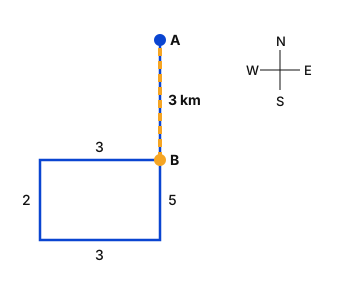
Charlie starts from point A and drives 5 km towards the South. He then takes two simultaneous right turns and drives 3 km and 2 km, respectively. He takes a final right turn and drives 3 km to reach point B. How far (shortest distance) and towards which direction should he drive to reach Point A again? (All turns are 90 degrees turns only. unless specified)
चार्ली बिंदु A से चलना शुरू करता है और दक्षिण की ओर 5 km गाड़ी चलाता है। फिर वह लगातार दो बार दाएँ मुड़ता है और क्रमशः 3 km और 2 km गाड़ी चलाता है। वह अंतिम बार दाएँ मुड़ता है और बिंदु B तक पहुँचने के लिए 3 km गाड़ी चलाता है। बिंदु A पर फिर से पहुँचने के लिए उसे कितनी दूर (न्यूनतम दूरी) और किस दिशा में गाड़ी चलानी चाहिए? (जब तक निर्दिष्ट न हो, सभी मोड़ केवल 90 डिग्री के हैं)
  1. A2 km East2 km पूर्व
  2. B3 km South3 km दक्षिण
  3. C2 km North2 km उत्तर
  4. D3 km North3 km उत्तर
Show answer

Concept: Track the facing direction at each turn; right turn from South faces West.

  1. A → 5 km South; right → West 3 km.
  2. Right → North 2 km; right → East 3 km to reach B.
  3. West 3 and East 3 cancel; net South =5−2=3 km → B is 3 km South of A.

Trick: Net displacement: South 5 − North 2 = 3 km; to return go 3 km North.

Answer: (D) 3 km North

अवधारणा: हर मोड़ पर मुख की दिशा पर ध्यान दें; दक्षिण से दाएँ मुड़ने पर पश्चिम।

  1. A → 5 km दक्षिण; दाएँ → पश्चिम 3 km।
  2. दाएँ → उत्तर 2 km; दाएँ → पूर्व 3 km चलकर B।
  3. पश्चिम 3 और पूर्व 3 कट जाते हैं; शुद्ध दक्षिण =5−2=3 km → B, A से 3 km दक्षिण।

ट्रिक: शुद्ध विस्थापन: दक्षिण 5 − उत्तर 2 = 3 km; लौटने के लिए 3 km उत्तर जाएँ।

उत्तर: (D) 3 km उत्तर

RRB Technician Grade IIIGeneral Intelligence and ReasoningDirection senseRRB Technician Grade III 2024 · 30 Dec Shift 2 →
Q147.
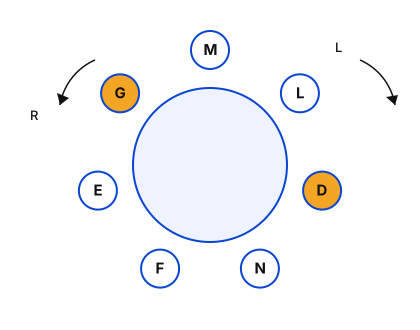
D, E, F, G, L, M and N are sitting around a circular table facing the centre. Only two people sit between F and L when counted from the left of L. N sits third to the left of M. G sits to the immediate right of M. G sits second to the left of F. E is not an immediate neighbour of N. Who sits third to the right of D?
D, E, F, G, L, M और N एक वृत्ताकार मेज के चारों ओर केंद्र की ओर मुख करके बैठे हैं। L के बाईं ओर से गिनने पर F और L के बीच केवल दो व्यक्ति बैठे हैं। N, M के बाईं ओर तीसरे स्थान पर बैठा है। G, M के ठीक दाईं ओर बैठा है। G, F के बाईं ओर दूसरे स्थान पर बैठा है। E, N का निकटतम पड़ोसी नहीं है। D के दाईं ओर तीसरे स्थान पर कौन बैठा है?
  1. AG
  2. BN
  3. CE
  4. DF
Show answer

Concept: Facing the centre: left = clockwise, right = anticlockwise.

  1. Fix M; G is immediate right of M; F is 2nd to the right of G (G is 2nd left of F).
  2. N is 3rd left of M; L is 3rd right of F (two between F and L from L's left) → L sits immediate left of M.
  3. Remaining seats: one beside N, one beside G. E is not next to N → E beside G, D beside N.
  4. Going right from D: L (1st), M (2nd), G (3rd).

Trick: Place the people with fixed 'immediate' links (M–G) first, then use the rest.

Answer: (A) G

अवधारणा: केंद्र की ओर मुख: बायाँ = दक्षिणावर्त, दायाँ = वामावर्त।

  1. M तय करें; G, M के ठीक दाएँ; G, F के बाएँ से दूसरा है।
  2. N, M के बाएँ से तीसरा; L, F के दाएँ से तीसरा (L के बाएँ से गिनने पर बीच में दो) → L, M के ठीक बाएँ।
  3. बचे स्थान: एक N के पास, एक G के पास। E, N का पड़ोसी नहीं → E, G के पास; D, N के पास।
  4. D के दाएँ से: L, M, G → तीसरा G।

ट्रिक: पहले 'ठीक बगल' वाले संबंध (M–G) लगाएँ, फिर बाकी।

उत्तर: (A) G

RRB Technician Grade IIIGeneral Intelligence and ReasoningCircular seating arrangementRRB Technician Grade III 2024 · 30 Dec Shift 2 →
Q148.
In a certain code language,
‘P + Q’ means ‘P is the daughter of Q’,
‘P – Q’ means ‘P is the wife of Q’,
‘P x Q’ means ‘P is the son of Q’ and
‘P ÷ Q’ means ‘P is the husband of Q’.
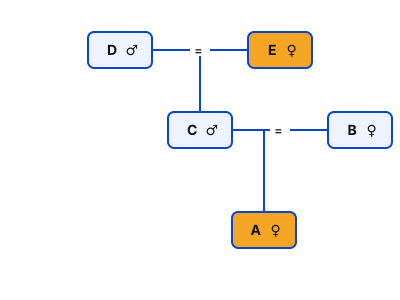
How is A related to E if ‘A + B – C x D ÷ E’?
एक निश्चित कूट भाषा में,
‘P + Q’ का अर्थ है ‘P, Q की पुत्री है’,
‘P – Q’ का अर्थ है ‘P, Q की पत्नी है’,
‘P x Q’ का अर्थ है ‘P, Q का पुत्र है’ और
‘P ÷ Q’ का अर्थ है ‘P, Q का पति है’।
यदि ‘A + B – C x D ÷ E’ है, तो A का E से क्या संबंध है?
  1. ASisterबहन
  2. BDaughter’s daughterपुत्री की पुत्री
  3. CDaughterपुत्री
  4. DSon's daughterपुत्र की पुत्री
Show answer

Concept: Decode each symbol and build the family tree.

  1. A + B: A is daughter of B; B − C: B is wife of C.
  2. C × D: C is son of D; D ÷ E: D is husband of E.
  3. So A is the daughter of C, and C is the son of E → A is E's son's daughter.

Trick: Read the chain step by step from A towards E; gender of A comes from 'daughter'.

Answer: (D) Son's daughter

अवधारणा: हर चिह्न का अर्थ लिखें और वंश वृक्ष बनाएँ।

  1. A + B: A, B की पुत्री; B − C: B, C की पत्नी।
  2. C × D: C, D का पुत्र; D ÷ E: D, E का पति।
  3. अतः A, C की पुत्री है और C, E का पुत्र → A, E के पुत्र की पुत्री (पोती) है।

ट्रिक: A से E तक कड़ी-दर-कड़ी पढ़ें; A का लिंग 'पुत्री' से मिलता है।

उत्तर: (D) पुत्र की पुत्री

RRB Technician Grade IIIGeneral Intelligence and ReasoningCoded blood relationsRRB Technician Grade III 2024 · 30 Dec Shift 2 →
Q149.
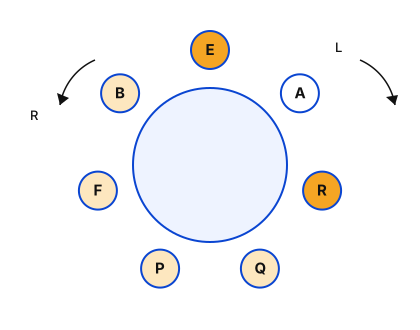
A, B, E, F, P, Q and R are sitting around a circular table facing the centre. A sits to the immediate left of E. Only three people sit between E and Q when counted from the right of E. Only one person sits between B and P when counted from the right of B. F sits to the immediate right of B. How many people sit between R and E when counted from the left of R?
A, B, E, F, P, Q और R एक वृत्ताकार मेज के चारों ओर केंद्र की ओर मुख करके बैठे हैं। A, E के ठीक बाईं ओर बैठा है। E के दाईं ओर से गिनने पर E और Q के बीच केवल तीन व्यक्ति बैठे हैं। B के दाईं ओर से गिनने पर B और P के बीच केवल एक व्यक्ति बैठा है। F, B के ठीक दाईं ओर बैठा है। R के बाईं ओर से गिनने पर R और E के बीच कितने व्यक्ति बैठे हैं?
  1. AOneएक
  2. BThreeतीन
  3. CFourचार
  4. DTwoदो
Show answer

Concept: Facing the centre: left = clockwise, right = anticlockwise.

  1. Fix E; A is immediate left of E; Q is 4th to the right of E (three between).
  2. F is immediate right of B, and P is 2nd to the right of B → B, F, P sit together going right.
  3. Only the 3 seats to E's right fit: B (next to E), F, P; R takes the last seat (between A and Q).
  4. From R going left: Q, P, F, B, then E → 4 people between.

Trick: In a 7-seat circle, '4th to the right' = '3rd to the left' — use whichever is shorter.

Answer: (C) Four

अवधारणा: केंद्र की ओर मुख: बायाँ = दक्षिणावर्त, दायाँ = वामावर्त।

  1. E तय करें; A, E के ठीक बाएँ; Q, E के दाएँ से चौथा (बीच में तीन)।
  2. F, B के ठीक दाएँ और P, B के दाएँ से दूसरा → B, F, P दाईं ओर लगातार।
  3. केवल E के दाईं ओर के 3 स्थान खाली क्रम में हैं: B (E के बगल), F, P; R अंतिम स्थान (A और Q के बीच)।
  4. R से बाईं ओर: Q, P, F, B, फिर E → बीच में 4 व्यक्ति।

ट्रिक: 7 सीटों के वृत्त में 'दाएँ से चौथा' = 'बाएँ से तीसरा' — जो छोटा हो वही लें।

उत्तर: (C) चार

RRB Technician Grade IIIGeneral Intelligence and ReasoningCircular seating arrangementRRB Technician Grade III 2024 · 30 Dec Shift 2 →
Q150.
Read the given statements and conclusions carefully. You have to take the given statements to be true even if they seem to be at variance from commonly known facts and decide which conclusion(s) logically follow(s) from the given statements.
Statements:
All planets are rocks.
All rocks are forests.
Conclusions:
(I) At least some rocks are planets.
(II) All planets are forests.
दिए गए कथनों और निष्कर्षों को ध्यानपूर्वक पढ़िए। आपको दिए गए कथनों को सत्य मानना है, भले ही वे सामान्य रूप से ज्ञात तथ्यों से भिन्न प्रतीत होते हों, और निर्णय लीजिए कि कौन-सा/से निष्कर्ष दिए गए कथनों का तार्किक रूप से अनुसरण करता है/करते हैं।
कथन:
सभी ग्रह, चट्टानें हैं।
सभी चट्टानें, वन हैं।
निष्कर्ष:
(I) कम से कम कुछ चट्टानें, ग्रह हैं।
(II) सभी ग्रह, वन हैं।
  1. ANeither conclusion I nor II followsन तो निष्कर्ष I और न ही II अनुसरण करता है
  2. BOnly conclusion II followsकेवल निष्कर्ष II अनुसरण करता है
  3. COnly conclusion I followsकेवल निष्कर्ष I अनुसरण करता है
  4. DBoth conclusions I and II followनिष्कर्ष I और II दोनों अनुसरण करते हैं
Show answer

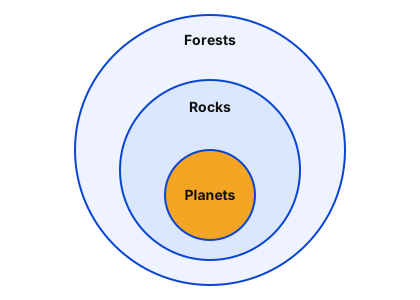
Concept: Draw the Venn diagram: Planets ⊂ Rocks ⊂ Forests.

  1. All planets are rocks → some rocks are planets (conversion) → I follows.
  2. All planets are rocks and all rocks are forests → all planets are forests → II follows.
  3. Both conclusions follow.

Yaad rakhein: 'All A are B' always gives 'Some B are A'; two 'All' statements chain: All A → B → C ⇒ All A are C.

Answer: (D) Both conclusions I and II follow

अवधारणा: वेन आरेख बनाएँ: ग्रह ⊂ चट्टान ⊂ वन।

  1. सभी ग्रह चट्टान हैं → कुछ चट्टानें ग्रह हैं (रूपांतरण) → I अनुसरण करता है।
  2. सभी ग्रह चट्टान और सभी चट्टानें वन → सभी ग्रह वन हैं → II अनुसरण करता है।
  3. दोनों निष्कर्ष अनुसरण करते हैं।

याद रखें: 'सभी A, B हैं' से हमेशा 'कुछ B, A हैं'; दो 'सभी' कथन जुड़ते हैं: सभी A → B → C ⇒ सभी A, C हैं।

उत्तर: (D) निष्कर्ष I और II दोनों अनुसरण करते हैं

RRB Technician Grade IIIGeneral Intelligence and ReasoningSyllogismRRB Technician Grade III 2024 · 30 Dec Shift 2 →
Q151.
A boy of weight 600 N climbs up a rope through a height of 10 m. He takes 20 s to accomplish this task. What is the power expended by him?
600 N भार वाला एक लड़का एक रस्सी पर 10 m की ऊँचाई तक चढ़ता है। इस कार्य को पूरा करने में उसे 20 s लगते हैं। उसके द्वारा व्यय की गई शक्ति कितनी है?
  1. A300 W
  2. B200 W
  3. C100 W
  4. D150 W
Show answer

Concept: Power is the rate of doing work: P=Wt. Climbing a height means work W=mgh = weight × height.

  1. Work done W=600×10=6000 J.
  2. Time t=20 s.
  3. P=600020=300 W.

Trick: Weight is already given in newtons, so do not multiply by g again — just P=weight×ht.

Answer: (A) 300 W

अवधारणा: शक्ति = कार्य करने की दर: P=Wt. ऊँचाई तक चढ़ने में किया गया कार्य = भार × ऊँचाई।

  1. कार्य W=600×10=6000 J.
  2. समय t=20 s.
  3. P=600020=300 W.

ट्रिक: भार पहले से न्यूटन में दिया है, इसलिए दोबारा g से गुणा न करें — सीधे P=भार×ht.

उत्तर: (A) 300 W

RRB Technician Grade IIIGeneral SciencePowerRRB Technician Grade III 2024 · 30 Dec Shift 2 →
Q152.
In an electric circuit, the device that acts as a variable resistor is called ________.
किसी विद्युत परिपथ में, परिवर्ती प्रतिरोधक के रूप में कार्य करने वाली युक्ति को ________ कहा जाता है।
  1. Agalvanometerगैल्वेनोमीटर (galvanometer)
  2. Bammeterऐमीटर (ammeter)
  3. Cvoltmeterवोल्टमीटर (voltmeter)
  4. Drheostatधारा नियंत्रक (rheostat)
Show answer

Concept: A rheostat is a variable resistor used to change the resistance (and hence the current) in a circuit.

  1. Galvanometer – detects small current.
  2. Ammeter – measures current; voltmeter – measures potential difference.
  3. Rheostat – resistance can be varied by sliding a contact.

Yaad rakhein: Rheo = flow, stat = control: rheostat controls the flow of current.

Answer: (D) rheostat

अवधारणा: रिओस्टेट एक परिवर्ती प्रतिरोधक है, जिससे परिपथ का प्रतिरोध (और इसलिए धारा) बदला जाता है।

  1. गैल्वेनोमीटर – कम धारा का पता लगाता है।
  2. एमीटर – धारा मापता है; वोल्टमीटर – विभवांतर मापता है।
  3. रिओस्टेट – स्लाइडिंग संपर्क से प्रतिरोध बदला जा सकता है।

याद रखें: Rheo = प्रवाह, stat = नियंत्रण: रिओस्टेट धारा के प्रवाह को नियंत्रित करता है।

उत्तर: (D) धारा नियंत्रक (rheostat)

RRB Technician Grade IIIGeneral ScienceRheostatRRB Technician Grade III 2024 · 30 Dec Shift 2 →
Q153.
When sodium hydroxide reacts with water, which of the following products is/are formed?
जब सोडियम हाइड्रॉक्साइड जल के साथ अभिक्रिया करता है, तो निम्नलिखित में से कौन-सा/कौन-से उत्पाद बनता है/बनते हैं?
  1. AOnly Na+(aq) ionsकेवल Na+(aq) आयन
  2. BBoth Na+(aq) and Cl2Na+(aq) और Cl2 दोनों
  3. COnly OH−(aq) ionsकेवल OH−(aq) आयन
  4. DBoth Na+(aq) and OH−(aq) ionsNa+(aq) और OH−(aq) दोनों आयन
Show answer

Concept: Bases dissolve in water and release hydroxide ions; NaOH is a strong base that dissociates completely.

  1. NaOH(s)→H2ONa+(aq)+OH−(aq)
  2. No chlorine is involved, so Cl2 is impossible.
  3. Both ions are produced together.

Trick: Every ionic compound in water gives BOTH its cation and anion — never only one.

Answer: (D) Both Na+(aq) and OH−(aq) ions

अवधारणा: क्षार जल में घुलकर हाइड्रॉक्साइड आयन देते हैं; NaOH प्रबल क्षार है जो पूर्णतः वियोजित होता है।

  1. NaOH(s)→H2ONa+(aq)+OH−(aq)
  2. इसमें क्लोरीन नहीं है, इसलिए Cl2 नहीं बन सकती।
  3. दोनों आयन साथ-साथ बनते हैं।

ट्रिक: कोई भी आयनिक यौगिक जल में धनायन और ऋणायन दोनों देता है — कभी केवल एक नहीं।

उत्तर: (D) Na+(aq) और OH−(aq) दोनों आयन

RRB Technician Grade IIIGeneral ScienceBases in waterRRB Technician Grade III 2024 · 30 Dec Shift 2 →
Q154.
Which of the following quantities determine the rate of work performed by a machine?
निम्नलिखित में से कौन-सी राशि किसी मशीन द्वारा किए गए कार्य की दर निर्धारित करती है?
  1. ATotal force exertedलगाया गया कुल बल
  2. BPowerशक्ति
  3. CRate of change of velocityवेग में परिवर्तन की दर
  4. DTotal energy consumedउपभोग की गई कुल ऊर्जा
Show answer

Concept: The rate of doing work is called power: P=Wt, SI unit watt.

  1. Force alone does not involve time.
  2. Rate of change of velocity is acceleration.
  3. Total energy consumed is work/energy, not its rate.
  4. Work per unit time = power.

Yaad rakhein: ‘Rate of work’ = ‘work per second’ = power; 1 W=1 J/s.

Answer: (B) Power

अवधारणा: कार्य करने की दर को शक्ति कहते हैं: P=Wt, SI मात्रक वाट।

  1. केवल बल में समय शामिल नहीं होता।
  2. वेग परिवर्तन की दर त्वरण है।
  3. कुल खपत ऊर्जा = कार्य/ऊर्जा, उसकी दर नहीं।
  4. प्रति इकाई समय कार्य = शक्ति।

याद रखें: ‘कार्य की दर’ = ‘प्रति सेकंड कार्य’ = शक्ति; 1 W=1 J/s.

उत्तर: (B) शक्ति

RRB Technician Grade IIIGeneral SciencePowerRRB Technician Grade III 2024 · 30 Dec Shift 2 →
Q155.
In plants, after fertilisation the ovary develops into a ______.
पौधों में, निषेचन के बाद अंडाशय ______ में विकसित होता है।
  1. ASeedबीज
  2. BFlowerफूल
  3. CSeedlingनवोद्भिद (अंकुर)
  4. DFruitफल
Show answer

Concept: After fertilisation, the parts of the flower change: the ovules form seeds and the ovary forms the fruit.

  1. Zygote → embryo.
  2. Ovule → seed.
  3. Ovary → fruit; petals, sepals and stamens usually fall off.

Yaad rakhein: Ovule → Seed, Ovary → Fruit (O-S, O-F: the ‘bigger’ part becomes the ‘bigger’ product).

Answer: (D) Fruit

अवधारणा: निषेचन के बाद फूल के भाग बदलते हैं: बीजांड बीज बनाता है और अंडाशय फल बनाता है।

  1. युग्मनज → भ्रूण।
  2. बीजांड → बीज।
  3. अंडाशय → फल; पंखुड़ियाँ, बाह्यदल व पुंकेसर प्रायः झड़ जाते हैं।

याद रखें: बीजांड → बीज, अंडाशय → फल (बड़ा भाग बड़ा उत्पाद बनाता है)।

उत्तर: (D) फल

RRB Technician Grade IIIGeneral ScienceFertilisation in plantsRRB Technician Grade III 2024 · 30 Dec Shift 2 →
Q156.
In which organelle of the plant cells does photosynthesis take place?
पादप कोशिकाओं के किस कोशिकांग में प्रकाश संश्लेषण होता है?
  1. AChloroplastहरितलवक (Chloroplast)
  2. BMitochondriaसूत्रकणिका (Mitochondria)
  3. CNucleusकेंद्रक (Nucleus)
  4. DRibosomeराइबोसोम (Ribosome)
Show answer

Concept: Photosynthesis needs chlorophyll, which is present in the chloroplasts of green plant cells.

  1. Chloroplast – traps light energy and makes glucose.
  2. Mitochondria – cellular respiration (energy release).
  3. Nucleus – genetic control; ribosome – protein synthesis.

Yaad rakhein: Chloroplast = kitchen of the cell; mitochondria = powerhouse.

Answer: (A) Chloroplast

अवधारणा: प्रकाश संश्लेषण के लिए क्लोरोफिल चाहिए, जो हरे पादप कोशिकाओं के क्लोरोप्लास्ट (हरितलवक) में होता है।

  1. क्लोरोप्लास्ट – प्रकाश ऊर्जा ग्रहण कर ग्लूकोज़ बनाता है।
  2. माइटोकॉन्ड्रिया – कोशिकीय श्वसन (ऊर्जा मुक्त करना)।
  3. केंद्रक – आनुवंशिक नियंत्रण; राइबोसोम – प्रोटीन संश्लेषण।

ट्रिक: क्लोरोप्लास्ट = कोशिका की रसोई; माइटोकॉन्ड्रिया = ऊर्जा घर।

उत्तर: (A) हरितलवक (Chloroplast)

RRB Technician Grade IIIGeneral SciencePhotosynthesisRRB Technician Grade III 2024 · 30 Dec Shift 2 →
Q157.
Which of the following is the melting point of ice?
निम्नलिखित में से कौन-सा बर्फ का गलनांक है?
  1. A273.15 K
  2. B373.15 K
  3. C200.15 K
  4. D300.15 K
Show answer

Concept: Ice melts at 0∘C. Kelvin temperature T=t(∘C)+273.15.

  1. T=0+273.15=273.15 K.
  2. 373.15 K is the boiling point of water (100∘C).

Yaad rakhein: Melting point of ice =273.15 K, boiling point of water =373.15 K — difference exactly 100.

Answer: (A) 273.15 K

अवधारणा: बर्फ 0∘C पर पिघलती है। केल्विन ताप T=t(∘C)+273.15.

  1. T=0+273.15=273.15 K.
  2. 373.15 K जल का क्वथनांक (100∘C) है।

याद रखें: बर्फ का गलनांक =273.15 K, जल का क्वथनांक =373.15 K — अंतर ठीक 100.

उत्तर: (A) 273.15 K

RRB Technician Grade IIIGeneral ScienceTemperature scalesRRB Technician Grade III 2024 · 30 Dec Shift 2 →
Q158.
Which of the following is NOT a unicellular organism?
निम्नलिखित में से कौन-सा एककोशिकीय जीव नहीं है?
  1. AParameciumपैरामीशियम
  2. BBacteriaजीवाणु (Bacteria)
  3. CFungiकवक (Fungi)
  4. DChlamydomonasक्लैमाइडोमोनास
Show answer

Concept: Unicellular organisms consist of a single cell; most fungi (moulds, mushrooms) are multicellular.

  1. Paramecium – unicellular protozoan.
  2. Bacteria – unicellular prokaryotes.
  3. Chlamydomonas – unicellular green alga.
  4. Fungi – mostly multicellular (yeast is an exception).

Yaad rakhein: Fungi as a group (Rhizopus, Penicillium, mushroom) are multicellular; only yeast is a unicellular fungus.

Answer: (C) Fungi

अवधारणा: एककोशिकीय जीव केवल एक कोशिका के होते हैं; अधिकतर कवक (फफूँद, मशरूम) बहुकोशिकीय होते हैं।

  1. पैरामीशियम – एककोशिकीय प्रोटोज़ोआ।
  2. जीवाणु – एककोशिकीय प्रोकैरियोट।
  3. क्लैमाइडोमोनास – एककोशिकीय हरा शैवाल।
  4. कवक – प्रायः बहुकोशिकीय (यीस्ट अपवाद)।

याद रखें: कवक समूह (राइज़ोपस, पेनिसिलियम, मशरूम) बहुकोशिकीय है; केवल यीस्ट एककोशिकीय कवक है।

उत्तर: (C) कवक (Fungi)

RRB Technician Grade IIIGeneral ScienceUnicellular organismsRRB Technician Grade III 2024 · 30 Dec Shift 2 →
Q159.
Which of the following is obtained when dilute HCl is added to a beaker that contains copper oxide?
जब कॉपर ऑक्साइड युक्त बीकर में तनु HCl मिलाया जाता है, तो निम्नलिखित में से क्या प्राप्त होता है?
  1. AThe blue-green colour of copper (II) chlorideकॉपर (II) क्लोराइड का नीला-हरा रंग
  2. BThe red colour of copper (II) chlorideकॉपर (II) क्लोराइड का लाल रंग
  3. CThe blue-green colour of copper (III) chlorideकॉपर (III) क्लोराइड का नीला-हरा रंग
  4. DThe colourless solution of copper (II) chlorideकॉपर (II) क्लोराइड का रंगहीन विलयन
Show answer

Concept: Metal oxides are basic; they react with acids to form salt and water.

  1. CuO+2HCl→CuCl2+H2O
  2. Copper is in +2 state, so the salt is copper(II) chloride.
  3. The black CuO dissolves and the solution turns blue-green.

Yaad rakhein: NCERT activity: black CuO + dil. HCl → blue-green CuCl2 solution.

Answer: (A) The blue-green colour of copper (II) chloride

अवधारणा: धातु ऑक्साइड क्षारकीय होते हैं; अम्ल से अभिक्रिया कर लवण और जल बनाते हैं।

  1. CuO+2HCl→CuCl2+H2O
  2. कॉपर +2 अवस्था में है, इसलिए लवण कॉपर(II) क्लोराइड है।
  3. काला CuO घुल जाता है और विलयन नीला-हरा हो जाता है।

याद रखें: NCERT क्रियाकलाप: काला CuO + तनु HCl → नीला-हरा CuCl2 विलयन।

उत्तर: (A) कॉपर (II) क्लोराइड का नीला-हरा रंग

RRB Technician Grade IIIGeneral ScienceMetal oxides with acidsRRB Technician Grade III 2024 · 30 Dec Shift 2 →
Q160.
What will happen if a plant cell is placed in a medium having higher water concentration than the cell?
यदि किसी पादप कोशिका को ऐसे माध्यम में रखा जाए जिसमें कोशिका की तुलना में जल की सांद्रता अधिक हो, तो क्या होगा?
  1. AIt will probably shrinkयह संभवतः सिकुड़ जाएगी
  2. BIt will burstयह फट जाएगी
  3. CNo change will be seen in itइसमें कोई परिवर्तन दिखाई नहीं देगा
  4. DIt will probably swellयह संभवतः फूल जाएगी
Show answer

Concept: In osmosis water moves from higher water concentration to lower water concentration across a membrane.

  1. Medium has more water than the cell → hypotonic solution.
  2. Water enters the cell, so the cell swells.
  3. The rigid cell wall prevents the plant cell from bursting (it becomes turgid).

Yaad rakhein: Hypotonic → plant cell swells (turgid); animal cell may burst. Hypertonic → cell shrinks (plasmolysis).

Answer: (D) It will probably swell

अवधारणा: परासरण में जल झिल्ली के पार अधिक जल-सांद्रता से कम जल-सांद्रता की ओर जाता है।

  1. माध्यम में कोशिका से अधिक जल → अल्पपरासरी (hypotonic) विलयन।
  2. जल कोशिका में जाता है, कोशिका फूल जाती है।
  3. दृढ़ कोशिका भित्ति के कारण पादप कोशिका फटती नहीं (स्फीत हो जाती है)।

याद रखें: अल्पपरासरी → पादप कोशिका फूलती है; जंतु कोशिका फट सकती है। अतिपरासरी → कोशिका सिकुड़ती है (जीवद्रव्यकुंचन)।

उत्तर: (D) यह संभवतः फूल जाएगी

RRB Technician Grade IIIGeneral ScienceOsmosisRRB Technician Grade III 2024 · 30 Dec Shift 2 →