- A
- B
- C
- D
Show answer
Concept: Take the LCM and use .
- Sum .
- Numerator .
- Sum .
Trick: Put : , and only among the options.
Answer: (B)
अवधारणा: LCM लें और का प्रयोग करें।
- योग ।
- अंश ।
- योग ।
ट्रिक: रखें: , और विकल्पों में केवल है।
उत्तर: (B)
Question bank
Search questions on any topic. Filter by exam category, exam, subject and topic, try the question, then open the answer and explanation.
Concept: Take the LCM and use .
Trick: Put : , and only among the options.
Answer: (B)
अवधारणा: LCM लें और का प्रयोग करें।
ट्रिक: रखें: , और विकल्पों में केवल है।
उत्तर: (B)
Concept: .
Trick: of 620 , ; discount , so .
Answer: (B) ₹527
अवधारणा: ।
ट्रिक: 620 का , ; बट्टा , अतः ।
उत्तर: (B) ₹527
Concept: To test a number , check divisibility by primes up to .
Yaad rakhein: 91 looks prime but is ; similar traps: , .
Answer: (C) 91
अवधारणा: किसी संख्या की जाँच के लिए तक की अभाज्य संख्याओं से विभाज्यता देखें।
याद रखें: 91 अभाज्य जैसी दिखती है पर है; ऐसे ही: , ।
उत्तर: (C) 91
Concept: The difference of ratio parts equals the actual age difference.
Trick: Here 1 part = 1 year, so the ratio terms are the ages themselves (5 and 8).
Answer: (C) 8 years
अवधारणा: अनुपात भागों का अंतर = वास्तविक आयु का अंतर।
ट्रिक: यहाँ 1 भाग = 1 वर्ष, अतः अनुपात के पद ही आयु हैं (5 और 8)।
उत्तर: (C) 8 वर्ष
Concept: Successive increase of for years: .
Trick: Two increases : .
Answer: (C) ₹25,410
अवधारणा: की क्रमिक वृद्धि वर्षों तक: ।
ट्रिक: दो बार वृद्धि : ।
उत्तर: (C) ₹25,410
Concept: (+ for profit, − for loss).
Trick: Compare totals: CP , SP , so profit ₹100.
Answer: (D) Profit, ₹100
अवधारणा: (लाभ में +, हानि में −)।
ट्रिक: कुल तुलना: CP , SP , अतः लाभ ₹100।
उत्तर: (D) लाभ, ₹100
Concept: Use alphabet positions and find the rule between the pairs.
Trick: First letters fall by 2; second letters go then .
Answer: (C) UP-SN-QR
अवधारणा: अक्षरों की स्थिति लेकर युग्मों के बीच नियम ज्ञात करें।
ट्रिक: पहले अक्षर 2-2 घटते हैं; दूसरे अक्षर फिर ।
उत्तर: (C) UP-SN-QR
Concept: Swap the signs first, then solve using BODMAS.
Trick: Rewrite the whole expression after swapping before calculating anything.
Answer: (B) 8
अवधारणा: पहले चिह्न बदलें, फिर BODMAS से हल करें।
ट्रिक: गणना से पहले चिह्न बदलकर पूरा व्यंजक दोबारा लिखें।
उत्तर: (B) 8
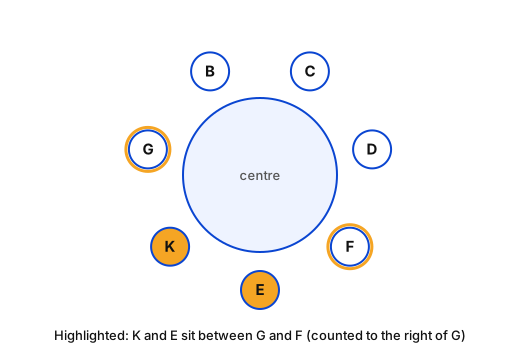
Concept: Facing the centre, “left” means moving clockwise and “right” means anticlockwise.
Trick: Draw the circle and place the fixed person first; test both cases for “only E between K and F”.
Answer: (A) Two
अवधारणा: केंद्र की ओर मुख होने पर “बाएँ” = दक्षिणावर्त और “दाएँ” = वामावर्त।
ट्रिक: वृत्त बनाकर पहले स्थिर व्यक्ति रखें; “K और F के बीच केवल E” के दोनों विकल्प जाँचें।
उत्तर: (A) दो
Concept: Check the gaps between alphabet positions (wrap around after Z).
Trick: Gap of 7 each time: G-N-U, K-R-Y, Y-F-M.
Answer: (C) BGT
अवधारणा: अक्षरों की स्थितियों के अंतर देखें (Z के बाद फिर A से गिनें)।
ट्रिक: हर बार 7 का अंतर: G-N-U, K-R-Y, Y-F-M।
उत्तर: (C) BGT
Concept: Position from left total position from right .
Trick: Convert both to the same end, then between difference .
Answer: (D) 5
अवधारणा: बाएँ से स्थान कुल दाएँ से स्थान ।
ट्रिक: दोनों को एक ही छोर से बदलें, फिर बीच में अंतर ।
उत्तर: (D) 5
Concept: Replace letters with signs, then use BODMAS.
Trick: Do ÷ and × first: , .
Answer: (C) 37
अवधारणा: अक्षरों के स्थान पर चिह्न रखें, फिर BODMAS लगाएँ।
ट्रिक: पहले ÷ और ×: , ।
उत्तर: (C) 37
Concept: Test each option and find one rule that fits both pairs.
Trick: Factor the given number: hints at “multiply by 9”.
Answer: (C) X = 12, Y = 81
अवधारणा: हर विकल्प जाँचें और ऐसा एक नियम खोजें जो दोनों युग्मों पर लागू हो।
ट्रिक: से “9 से गुणा” का संकेत मिलता है।
उत्तर: (C) X = 12, Y = 81
Concept: Track each letter position separately.
Trick: Every letter moves back by 2, so PSL → NQJ.
Answer: (B) NQJ
अवधारणा: हर स्थान के अक्षर को अलग-अलग देखें।
ट्रिक: हर अक्षर 2 पीछे जाता है, अतः PSL → NQJ।
उत्तर: (B) NQJ
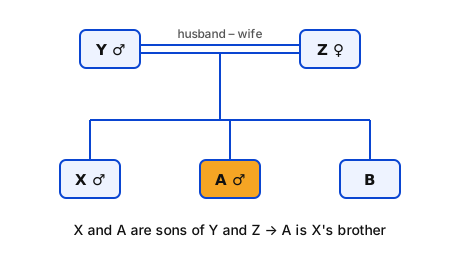
Concept: Decode each symbol step by step and draw a family tree.
Trick: Gender comes from “brother”: A is male, so A is X’s brother.
Answer: (C) Brother
अवधारणा: हर चिह्न को क्रम से खोलें और वंश-वृक्ष बनाएँ।
ट्रिक: लिंग “भाई” से पता चलता है: A पुरुष है, अतः A, X का भाई है।
उत्तर: (C) भाई
Concept: Compare the matching letters of the two clusters in each pair.
Trick: Also inside each cluster the gap is 5 (VQ, ID, LG, RM); the break is in the second cluster.
Answer: (C) LG-JM
अवधारणा: हर युग्म के दोनों समूहों के संगत अक्षरों की तुलना करें।
ट्रिक: हर पहले समूह में अंतर 5 है (VQ, ID, LG, RM); अंतर दूसरे समूह में टूटता है।
उत्तर: (C) LG-JM
Concept: Count positions carefully from the required end.
Trick: Mark digits in groups of 5 while counting to avoid slips.
Answer: (A) 13
अवधारणा: आवश्यक छोर से स्थान ध्यान से गिनें।
ट्रिक: गिनते समय 5-5 के समूह बनाएँ ताकि गलती न हो।
उत्तर: (A) 13
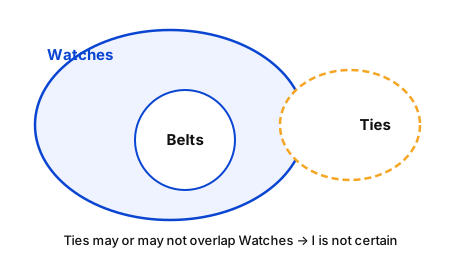
Concept: “All A are B” always gives “Some B are A”; negative statements do not pass through to the bigger set.
Yaad rakhein: Conversion of “All A are B” = “Some B are A” — always true.
Answer: (B) Only conclusion II follows
अवधारणा: “सभी A, B हैं” से सदैव “कुछ B, A हैं” निकलता है; नकारात्मक कथन बड़े समूह पर लागू नहीं होता।
याद रखें: “सभी A, B हैं” का रूपांतरण = “कुछ B, A हैं” — सदैव सत्य।
उत्तर: (B) केवल निष्कर्ष II अनुसरण करता है
Concept: Compare sentences with common words to match common codes.
Trick: Eliminate known codes one by one; the leftover is the answer.
Answer: (D) Hi
अवधारणा: समान शब्दों वाले वाक्यों की तुलना करके समान कोड मिलाएँ।
ट्रिक: ज्ञात कोड एक-एक कर हटाएँ; जो बचे वही उत्तर है।
उत्तर: (D) Hi
Concept: Count from each end as asked and add.
Trick: For counting from the right, read the series backwards from the last digit.
Answer: (C) 11
अवधारणा: पूछे गए छोर से गिनकर जोड़ें।
ट्रिक: दाएँ से गिनने के लिए अंतिम अंक से उल्टा पढ़ें।
उत्तर: (C) 11