Question bank

Q&A: practice questions with answers

Search questions on any topic. Filter by exam category, exam, subject and topic, try the question, then open the answer and explanation.

Courses – airGurukul

3,200 questions found.

Q1641.
Refer to the given series and answer the question that follows (all numbers are single-digit numbers only, and all counting is to be done from left to right).
(Left) 5 7 8 9 6 7 7 5 8 9 2 5 5 9 5 5 9 5 4 6 7 2 8 3 5 8 3 9 7 9 (Right)
How many such even digits are there, each of which is immediately preceded by an even digit and also immediately followed by an odd digit?
दी गई श्रृंखला को देखिए और उसके बाद आने वाले प्रश्न का उत्तर दीजिए (सभी संख्याएँ केवल एक-अंकीय संख्याएँ हैं, और सभी गणना बाएँ से दाएँ की जानी है)।
(बाएँ) 5 7 8 9 6 7 7 5 8 9 2 5 5 9 5 5 9 5 4 6 7 2 8 3 5 8 3 9 7 9 (दाएँ)
ऐसे कितने सम अंक हैं, जिनमें से प्रत्येक के ठीक पहले एक सम अंक है और ठीक बाद एक विषम अंक भी है?
  1. A3
  2. B0
  3. C2
  4. D1
Show answer

Concept: Look for the pattern Even–Even–Odd, where the middle even digit is counted.

  1. Scan for two consecutive even digits followed by an odd digit.
  2. “4 6 7”: 6 is preceded by 4 (even) and followed by 7 (odd) ✓.
  3. “2 8 3”: 8 is preceded by 2 (even) and followed by 3 (odd) ✓.
  4. No other place fits, so the count is 2.

Trick: First locate the even digits that are followed by an odd one, then check their left neighbour.

Answer: (C) 2

अवधारणा: Even–Even–Odd ढाँचा खोजें; बीच वाला सम अंक गिना जाता है।

  1. दो लगातार सम अंक जिनके बाद विषम अंक हो, खोजें।
  2. “4 6 7”: 6 से पहले 4 (सम) और बाद में 7 (विषम) ✓।
  3. “2 8 3”: 8 से पहले 2 (सम) और बाद में 3 (विषम) ✓।
  4. और कोई स्थान नहीं, अतः संख्या 2 है।

ट्रिक: पहले वे सम अंक खोजें जिनके बाद विषम हो, फिर उनका बायाँ पड़ोसी जाँचें।

उत्तर: (C) 2
RRB Technician Grade IIIGeneral Intelligence and ReasoningNumber Series – ConditionsRRB Technician Grade III 2024 · 24 Dec Shift 2 →
Q1642.
Select the triad which follows the same pattern as that followed by the two triads given below. Both triads follow the same pattern.
LH-KG-JI
VR-UQ-TS
उस त्रयी का चयन कीजिए जो उसी पैटर्न का अनुसरण करती है जिसका अनुसरण नीचे दी गई दो त्रयी करती हैं। दोनों त्रयी एक ही पैटर्न का अनुसरण करती हैं।
LH-KG-JI
VR-UQ-TS
  1. AUP-SN-RQ
  2. BTP-SO-RQ
  3. CUP-SO-RT
  4. DTP-SN-RT
Show answer

Concept: Use alphabet positions and find the rule between the pairs.

  1. LH-KG-JI: L(12)→K(11)→J(10) is −1 each; H(8)→G(7) is −1, G(7)→I(9) is +2.
  2. VR-UQ-TS follows the same: −1,−1 and −1,+2.
  3. TP-SO-RQ: T→S→R is −1; P(16)→O(15) is −1, O(15)→Q(17) is +2 ✓.

Trick: First letters fall by 1; second letters go −1 then +2.

Answer: (B) TP-SO-RQ

अवधारणा: अक्षरों की स्थिति लेकर युग्मों के बीच नियम ज्ञात करें।

  1. LH-KG-JI: L(12)→K(11)→J(10) हर बार −1; H(8)→G(7) −1, G(7)→I(9) +2।
  2. VR-UQ-TS भी यही: −1,−1 और −1,+2।
  3. TP-SO-RQ: T→S→R −1; P(16)→O(15) −1, O(15)→Q(17) +2 ✓।

ट्रिक: पहले अक्षर 1-1 घटते हैं; दूसरे अक्षर −1 फिर +2।

उत्तर: (B) TP-SO-RQ

RRB Technician Grade IIIGeneral Intelligence and ReasoningLetter TriadsRRB Technician Grade III 2024 · 24 Dec Shift 2 →
Q1643.
Which of the following options should come in place of the question mark (?) in the given series to make it logically complete?
429, 534, 452, 557, 475, ?
दी गई श्रृंखला को तार्किक रूप से पूर्ण करने के लिए प्रश्न चिह्न (?) के स्थान पर निम्नलिखित में से कौन-सा विकल्प आना चाहिए?
429, 534, 452, 557, 475, ?
  1. A574
  2. B555
  3. C580
  4. D592
Show answer

Concept: Find the differences between consecutive terms.

  1. 534−429=+105, 452−534=−82.
  2. 557−452=+105, 475−557=−82.
  3. Next: 475+105=580.

Trick: Alternating pattern +105,−82 repeats.

Answer: (C) 580

अवधारणा: क्रमागत पदों के बीच अंतर ज्ञात करें।

  1. 534−429=+105, 452−534=−82।
  2. 557−452=+105, 475−557=−82।
  3. अगला: 475+105=580।

ट्रिक: एकांतर ढाँचा +105,−82 दोहराया जाता है।

उत्तर: (C) 580

RRB Technician Grade IIIGeneral Intelligence and ReasoningNumber SeriesRRB Technician Grade III 2024 · 24 Dec Shift 2 →
Q1644.
Jimmy starts from point A and drives 6 km towards the South. He then takes two simultaneous left turns and drives 4 km and 6 km, respectively. He then takes a final right turn and drives 4 km to reach point B. How far (shortest distance) and towards which direction should he drive to reach Point A again? (All turns are 90 degrees only unless specified.)
जिमी बिंदु A से शुरू करता है और दक्षिण की ओर 6 km गाड़ी चलाता है। फिर वह लगातार दो बार बाएँ मुड़ता है और क्रमशः 4 km और 6 km गाड़ी चलाता है। फिर वह अंतिम बार दाएँ मुड़ता है और बिंदु B पर पहुँचने के लिए 4 km गाड़ी चलाता है। बिंदु A पर फिर से पहुँचने के लिए उसे कितनी दूर (न्यूनतम दूरी) और किस दिशा में गाड़ी चलानी चाहिए? (जब तक निर्दिष्ट न हो, सभी मोड़ केवल 90 डिग्री के हैं।)
  1. A6 km West6 km पश्चिम
  2. B6 km South6 km दक्षिण
  3. C4 km west4 km पश्चिम
  4. D8 km West8 km पश्चिम
Show answer

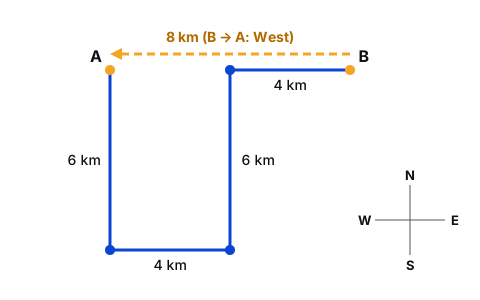
Concept: Plot each move; a left turn while facing South points East, and so on.

  1. A → 6 km South.
  2. Left (now East) 4 km; left again (now North) 6 km — back on A’s level, 4 km East of A.
  3. Right (now East) 4 km to B, so B is 8 km East of A.
  4. To return, drive 8 km West.

Trick: The two 6 km legs (South and North) cancel; only East moves remain: 4+4=8 km.

Answer: (D) 8 km West

अवधारणा: हर चाल को चित्र में बनाएँ; दक्षिण की ओर मुख होने पर बायाँ मोड़ = पूर्व, आदि।

  1. A से 6 km दक्षिण।
  2. बाएँ (अब पूर्व) 4 km; फिर बाएँ (अब उत्तर) 6 km — A के स्तर पर, A से 4 km पूर्व।
  3. दाएँ (अब पूर्व) 4 km चलकर B, अतः B, A से 8 km पूर्व है।
  4. वापस जाने के लिए 8 km पश्चिम।

ट्रिक: 6 km की दोनों चालें (दक्षिण और उत्तर) कट जाती हैं; केवल पूर्व की चालें बचती हैं: 4+4=8 km।

उत्तर: (D) 8 km पश्चिम

RRB Technician Grade IIIGeneral Intelligence and ReasoningDirection SenseRRB Technician Grade III 2024 · 24 Dec Shift 2 →
Q1645.
Read the given statements and conclusions carefully. You have to take the given statements to be true even if they seem to be at variance from commonly known facts and decide which conclusion(s) logically follow(s) from the given statements.
Statements:
No statue is a book.
No book is a copy.
Conclusions:
(I) No copy is a statue.
(II) Some books are statues.
दिए गए कथनों और निष्कर्षों को ध्यानपूर्वक पढ़िए। आपको दिए गए कथनों को सत्य मानना है, भले ही वे सामान्य रूप से ज्ञात तथ्यों से भिन्न प्रतीत होते हों, और निर्णय लीजिए कि कौन-सा/से निष्कर्ष तार्किक रूप से दिए गए कथनों का अनुसरण करता/करते है/हैं।
कथन:
कोई मूर्ति, पुस्तक नहीं है।
कोई पुस्तक, कॉपी नहीं है।
निष्कर्ष:
(I) कोई कॉपी, मूर्ति नहीं है।
(II) कुछ पुस्तकें, मूर्तियाँ हैं।
  1. ANeither conclusion (I) nor (II) followsन तो निष्कर्ष (I) और न ही (II) अनुसरण करता है
  2. BOnly conclusion (I) followsकेवल निष्कर्ष (I) अनुसरण करता है
  3. COnly conclusion (II) followsकेवल निष्कर्ष (II) अनुसरण करता है
  4. DBoth conclusions (I) and (II) followनिष्कर्ष (I) और (II) दोनों अनुसरण करते हैं
Show answer

Concept: Two negative statements give no definite conclusion between the end terms.

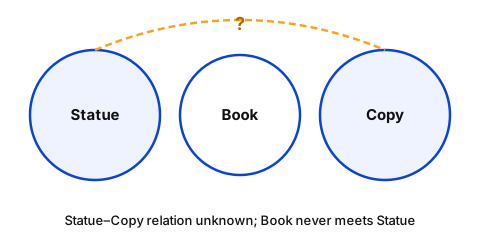
  1. Statue and Copy are both separate from Book, but their mutual relation is unknown — I does not follow.
  2. “No statue is a book” directly contradicts “Some books are statues” — II does not follow.

Yaad rakhein: Two negative premises → no definite conclusion.

Answer: (A) Neither conclusion (I) nor (II) follows

अवधारणा: दो नकारात्मक कथनों से अंतिम पदों के बीच कोई निश्चित निष्कर्ष नहीं निकलता।

  1. मूर्ति और कॉपी दोनों पुस्तक से अलग हैं, पर आपस का संबंध अज्ञात है — I अनुसरण नहीं करता।
  2. “कोई मूर्ति पुस्तक नहीं है” सीधे “कुछ पुस्तकें मूर्तियाँ हैं” का खंडन करता है — II अनुसरण नहीं करता।

याद रखें: दो नकारात्मक कथन → कोई निश्चित निष्कर्ष नहीं।

उत्तर: (A) न तो निष्कर्ष (I) और न ही (II) अनुसरण करता है

RRB Technician Grade IIIGeneral Intelligence and ReasoningSyllogismRRB Technician Grade III 2024 · 24 Dec Shift 2 →
Q1646.
In a certain code language, 'whispering wind dances' is coded as 'snxk rkwg vzod', and 'wind dances gracefully' is coded as 'snxk vzod lwon'. What is the code for 'gracefully' in the given code language?
एक निश्चित कूट भाषा में, 'whispering wind dances' को 'snxk rkwg vzod' के रूप में कूटबद्ध किया जाता है, और 'wind dances gracefully' को 'snxk vzod lwon' के रूप में कूटबद्ध किया जाता है। दी गई कूट भाषा में 'gracefully' का कूट क्या है?
  1. Arkwg
  2. Blwon
  3. Csnxk
  4. Dvzod
Show answer

Concept: Common words in two sentences share the common codes.

  1. Common words: “wind”, “dances”; common codes: snxk, vzod.
  2. In sentence 2, the remaining word “gracefully” gets the remaining code.
  3. gracefully = lwon.

Trick: Remove the shared codes; the unique word takes the unique code.

Answer: (B) lwon

अवधारणा: दो वाक्यों के समान शब्दों के कोड भी समान होते हैं।

  1. समान शब्द: “wind”, “dances”; समान कोड: snxk, vzod।
  2. वाक्य 2 में बचा शब्द “gracefully” बचा कोड लेगा।
  3. gracefully = lwon।

ट्रिक: समान कोड हटाएँ; अलग शब्द को अलग कोड मिलता है।

उत्तर: (B) lwon

RRB Technician Grade IIIGeneral Intelligence and ReasoningCoding-Decoding – WordsRRB Technician Grade III 2024 · 24 Dec Shift 2 →
Q1647.
In this question, two statements, I and II, have been given. These statements may be independent causes, or effects of independent causes or a common cause. One of the statements may be the effect of the other statement. Read both the statements and select the correct answer.
I. Consumption of sugar has been found out as the main reason for people having diabetes
II. People are avoiding having foods with more sugar content
इस प्रश्न में, दो कथन I और II दिए गए हैं। ये कथन स्वतंत्र कारण, या स्वतंत्र कारणों के प्रभाव या किसी एक सामान्य कारण के प्रभाव हो सकते हैं। एक कथन दूसरे कथन का प्रभाव हो सकता है। दोनों कथनों को पढ़िए और सही उत्तर का चयन कीजिए।
I. लोगों में मधुमेह होने का मुख्य कारण चीनी का सेवन पाया गया है
II. लोग अधिक चीनी वाले खाद्य पदार्थ खाने से बच रहे हैं
  1. AI is the cause and II is its possible effectI कारण है और II इसका संभावित प्रभाव है
  2. BBoth I and II are independent causesI और II दोनों स्वतंत्र कारण हैं
  3. CII is the cause and I is its possible effectII कारण है और I इसका संभावित प्रभाव है
  4. DBoth I and II are effects of independent causesI और II दोनों स्वतंत्र कारणों के प्रभाव हैं
Show answer

Concept: An effect is a reaction or result that follows from a cause.

  1. Statement I: sugar is found to be the main reason for diabetes — a finding (cause).
  2. Statement II: people avoiding sugary foods is a reaction to that finding (effect).

Trick: Ask “which statement explains why the other happened?” — that one is the cause.

Answer: (A) I is the cause and II is its possible effect

अवधारणा: प्रभाव वह प्रतिक्रिया या परिणाम है जो किसी कारण के बाद होता है।

  1. कथन I: चीनी को मधुमेह का मुख्य कारण पाया गया — यह खोज (कारण) है।
  2. कथन II: लोग अधिक चीनी वाले भोजन से बच रहे हैं — यह उस खोज की प्रतिक्रिया (प्रभाव) है।

ट्रिक: पूछें “कौन-सा कथन दूसरे के होने का कारण बताता है?” — वही कारण है।

उत्तर: (A) I कारण है और II इसका संभावित प्रभाव है

RRB Technician Grade IIIGeneral Intelligence and ReasoningCause and EffectRRB Technician Grade III 2024 · 24 Dec Shift 2 →
Q1648.
Seven people, A, B, C, L, X, Y and Z are sitting in a row, facing north. Only two people sit to the left of A. Only three people sit between A and Y. L sits second to the right of A. Only two people sit between L and Z. C sits at some place to the right of B but at some place to the left of X.
How many people sit to the right of C?
सात व्यक्ति A, B, C, L, X, Y और Z एक पंक्ति में उत्तर की ओर मुख करके बैठे हैं। A के बाईं ओर केवल दो व्यक्ति बैठे हैं। A और Y के बीच केवल तीन व्यक्ति बैठे हैं। L, A के दाईं ओर दूसरे स्थान पर बैठा है। L और Z के बीच केवल दो व्यक्ति बैठे हैं। C, B के दाईं ओर किसी स्थान पर, लेकिन X के बाईं ओर किसी स्थान पर बैठा है।
C के दाईं ओर कितने व्यक्ति बैठे हैं?
  1. ATwoदो
  2. BFourचार
  3. CThreeतीन
  4. DOneएक
Show answer

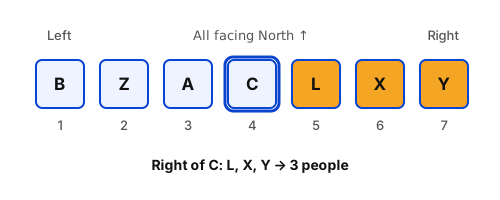
Concept: Number the seats 1 to 7 from left to right (all face North).

  1. Two people left of A → A is at 3.
  2. Three between A and Y → Y at 7; L second to the right of A → L at 5.
  3. Two between L and Z → Z at 2.
  4. Seats 1, 4, 6 remain with B left of C left of X → B = 1, C = 4, X = 6. Right of C: L, X, Y = 3.

Trick: Place the definite clues (A, Y, L) first; the “between” clue then fixes the rest.

Answer: (C) Three

अवधारणा: सीटों को बाएँ से दाएँ 1 से 7 तक क्रमांकित करें (सभी उत्तर की ओर मुख)।

  1. A के बाएँ दो व्यक्ति → A स्थान 3 पर।
  2. A और Y के बीच तीन → Y स्थान 7 पर; L, A के दाएँ दूसरे → L स्थान 5 पर।
  3. L और Z के बीच दो → Z स्थान 2 पर।
  4. स्थान 1, 4, 6 बचे; B, C के बाएँ और C, X के बाएँ → B = 1, C = 4, X = 6। C के दाएँ: L, X, Y = 3।

ट्रिक: पहले निश्चित संकेत (A, Y, L) रखें; फिर “बीच में” वाला संकेत बाकी तय करता है।

उत्तर: (C) तीन

RRB Technician Grade IIIGeneral Intelligence and ReasoningLinear Seating ArrangementRRB Technician Grade III 2024 · 24 Dec Shift 2 →
Q1649.
In the following number-pairs, the second number is obtained by applying certain mathematical operations to the first number. Which numbers should replace X and Y so that the pattern followed by the two numbers on the left side of :: is the same as that on the right side of ::?
(NOTE: Operations should be performed on the whole numbers, without breaking down the numbers into its constituent digits. E.g. 13 - Operations on 13 such as adding/subtracting/multiplying etc. to 13 can be performed. Breaking down 13 into 1 and 3 and then performing mathematical operations on 1 and 3 is not allowed.)
X : 116 :: 16 : Y
निम्नलिखित संख्या-युग्मों में, दूसरी संख्या पहली संख्या पर कुछ गणितीय संक्रियाएँ करके प्राप्त की जाती है। X और Y के स्थान पर कौन-सी संख्याएँ आनी चाहिए ताकि :: के बाईं ओर की दो संख्याओं द्वारा अनुसरण किया जाने वाला पैटर्न वही हो जो :: के दाईं ओर की संख्याओं द्वारा अनुसरण किया जाता है?
(नोट: संख्याओं को उनके घटक अंकों में विभाजित किए बिना, संक्रियाएँ पूर्ण संख्याओं पर की जानी चाहिए। उदाहरण के लिए 13 - 13 पर संक्रियाएँ जैसे 13 में जोड़ना/घटाना/गुणा करना आदि किया जा सकता है। 13 को 1 और 3 में विभाजित करना और फिर 1 और 3 पर गणितीय संक्रियाएँ करना वर्जित है।)
X : 116 :: 16 : Y
  1. AX = 13, Y = 145
  2. BX = 11, Y = 143
  3. CX = 13, Y = 143
  4. DX = 13, Y = 144
Show answer

Concept: Test the options to find one rule that fits both pairs.

  1. Try X=13: 13×9−1=117−1=116 ✓.
  2. Apply the same rule to 16: 16×9−1=144−1=143.
  3. So X=13, Y=143.

Trick: Rule: multiply by 9, then subtract 1. Options with 145 or 144 break the rule.

Answer: (C) X = 13, Y = 143

अवधारणा: विकल्प जाँचकर ऐसा नियम खोजें जो दोनों युग्मों पर लागू हो।

  1. X=13 लें: 13×9−1=117−1=116 ✓।
  2. यही नियम 16 पर: 16×9−1=144−1=143।
  3. अतः X=13, Y=143।

ट्रिक: नियम: 9 से गुणा करके 1 घटाएँ। 145 या 144 वाले विकल्प नियम तोड़ते हैं।

उत्तर: (C) X = 13, Y = 143

RRB Technician Grade IIIGeneral Intelligence and ReasoningNumber Pair AnalogyRRB Technician Grade III 2024 · 24 Dec Shift 2 →
Q1650.
Which of the following options should come in place of the question mark (?) in the given series based on the English alphabetical order?
DZM, GYL, JXK, MWJ, ?
अंग्रेजी वर्णमाला क्रम के आधार पर दी गई श्रृंखला में प्रश्न चिह्न (?) के स्थान पर निम्नलिखित में से कौन-सा विकल्प आना चाहिए?
DZM, GYL, JXK, MWJ, ?
  1. AOVI
  2. BORI
  3. CRVI
  4. DPVI
Show answer

Concept: Track each letter position separately.

  1. 1st letters: D, G, J, M, P (each +3).
  2. 2nd letters: Z, Y, X, W, V (each −1).
  3. 3rd letters: M, L, K, J, I (each −1).

Trick: Only the first letter jumps by 3; the other two step back by 1.

Answer: (D) PVI

अवधारणा: हर स्थान के अक्षर को अलग-अलग देखें।

  1. पहले अक्षर: D, G, J, M, P (हर बार +3)।
  2. दूसरे अक्षर: Z, Y, X, W, V (हर बार −1)।
  3. तीसरे अक्षर: M, L, K, J, I (हर बार −1)।

ट्रिक: केवल पहला अक्षर 3 आगे बढ़ता है; बाकी दो 1-1 पीछे जाते हैं।

उत्तर: (D) PVI

RRB Technician Grade IIIGeneral Intelligence and ReasoningLetter SeriesRRB Technician Grade III 2024 · 24 Dec Shift 2 →
Q1651.
Which of the following are parts of the male reproductive system?
निम्नलिखित में से कौन-से पुरुष जनन तंत्र के भाग हैं?
  1. AUterus and Vaginaगर्भाशय (Uterus) और योनि (Vagina)
  2. BFallopian tube and penisअंडवाहिनी (Fallopian tube) और शिश्न (penis)
  3. CVas deferens and scrotumशुक्रवाहक (Vas deferens) और वृषणकोष (scrotum)
  4. DVas deferens and oviductशुक्रवाहक (Vas deferens) और अंडवाहिका (oviduct)
Show answer

Concept: The male reproductive system includes testes (inside the scrotum), vas deferens, urethra, penis and accessory glands (seminal vesicles, prostate).

  1. Uterus, vagina, fallopian tube (oviduct) belong to the female system.
  2. Options (A), (B), (D) each contain a female organ.
  3. Vas deferens carries sperms from testis; scrotum holds the testes outside the body for lower temperature.

Yaad rakhein: Oviduct = fallopian tube = female; vas deferens = sperm duct = male.

Answer: (C) Vas deferens and scrotum

अवधारणा: नर जनन तंत्र में वृषण (वृषणकोष के अंदर), शुक्रवाहिका (vas deferens), मूत्रमार्ग, शिश्न तथा सहायक ग्रंथियाँ (शुक्राशय, प्रोस्टेट) होती हैं।

  1. गर्भाशय, योनि, अंडवाहिनी (फैलोपियन नलिका) मादा तंत्र के अंग हैं।
  2. विकल्प (A), (B), (D) में कोई न कोई मादा अंग है।
  3. शुक्रवाहिका वृषण से शुक्राणु ले जाती है; वृषणकोष वृषण को शरीर के बाहर कम ताप पर रखता है।

याद रखें: अंडवाहिनी = फैलोपियन नलिका = मादा; शुक्रवाहिका = नर।

उत्तर: (C) शुक्रवाहक (Vas deferens) और वृषणकोष (scrotum)

RRB Technician Grade IIIGeneral ScienceHuman reproductive systemRRB Technician Grade III 2024 · 24 Dec Shift 2 →
Q1652.
The gravitational force between two objects:
दो वस्तुओं के बीच गुरुत्वाकर्षण बल:
  1. Aonly depends on the masses of the objectsकेवल वस्तुओं के द्रव्यमानों पर निर्भर करता है
  2. Bdepends on the masses of the objects and the distance between themवस्तुओं के द्रव्यमानों और उनके बीच की दूरी पर निर्भर करता है
  3. Cdoes not depend on either the masses of the objects or the distance between themन तो वस्तुओं के द्रव्यमानों पर और न ही उनके बीच की दूरी पर निर्भर करता है
  4. Donly depends on the distance between the objectsकेवल वस्तुओं के बीच की दूरी पर निर्भर करता है
Show answer

Concept: Newton's law: F=Gm1m2d2. Force is directly proportional to the product of masses and inversely proportional to the square of the distance.

  1. Doubling one mass doubles F.
  2. Doubling distance makes F one-fourth, i.e. F4.
  3. So the force depends on both masses and distance.

Yaad rakhein: Inverse square law: F∝1d2; G=6.67×10⁻¹¹ N m2kg−2.

Answer: (B) depends on the masses of the objects and the distance between them

अवधारणा: न्यूटन का नियम: F=Gm1m2d2। बल द्रव्यमानों के गुणनफल के अनुक्रमानुपाती तथा दूरी के वर्ग के व्युत्क्रमानुपाती होता है।

  1. एक द्रव्यमान दोगुना करने पर F दोगुना।
  2. दूरी दोगुनी करने पर F एक-चौथाई, अर्थात् F4।
  3. अतः बल द्रव्यमान और दूरी दोनों पर निर्भर है।

याद रखें: व्युत्क्रम वर्ग नियम: F∝1d2; G=6.67×10⁻¹¹ N m2kg−2।

उत्तर: (B) वस्तुओं के द्रव्यमानों और उनके बीच की दूरी पर निर्भर करता है

RRB Technician Grade IIIGeneral ScienceUniversal law of gravitationRRB Technician Grade III 2024 · 24 Dec Shift 2 →
Q1653.
Which of the following factors decreases the rate of evaporation?
निम्नलिखित में से कौन-सा कारक वाष्पन की दर को घटाता है?
  1. AIncrease in temperatureतापमान में वृद्धि
  2. BIncrease in wind speedपवन की गति में वृद्धि
  3. CIncrease in surface areaपृष्ठीय क्षेत्रफल में वृद्धि
  4. DIncrease in humidityआर्द्रता में वृद्धि
Show answer

Concept: Evaporation is the change of liquid into vapour at any temperature below the boiling point, taking place at the surface.

  1. Higher temperature, larger surface area and higher wind speed all increase evaporation.
  2. Humidity means air already holds a lot of water vapour.
  3. Such air cannot take in more vapour, so the rate of evaporation decreases.

Trick: Wet clothes dry slowly on a humid (rainy) day – humidity is the only 'decreasing' factor here.

Answer: (D) Increase in humidity

अवधारणा: वाष्पीकरण क्वथनांक से कम किसी भी ताप पर द्रव की सतह से वाष्प में बदलने की प्रक्रिया है।

  1. ताप, सतह क्षेत्रफल और वायु की गति बढ़ने से वाष्पीकरण बढ़ता है।
  2. आर्द्रता का अर्थ है वायु में पहले से अधिक जलवाष्प।
  3. ऐसी वायु और वाष्प नहीं ले पाती, अतः वाष्पीकरण की दर घटती है।

ट्रिक: बरसात (आर्द्र) के दिन गीले कपड़े देर से सूखते हैं – यहाँ केवल आर्द्रता दर घटाती है।

उत्तर: (D) आर्द्रता में वृद्धि

RRB Technician Grade IIIGeneral ScienceEvaporationRRB Technician Grade III 2024 · 24 Dec Shift 2 →
Q1654.
The rate of change of momentum is proportional to the applied unbalanced:
संवेग में परिवर्तन की दर लगाए गए असंतुलित ______ के समानुपाती होती है:
  1. Aforceबल
  2. Btorqueबल आघूर्ण (torque)
  3. Cangular momentumकोणीय संवेग
  4. Dmoment of inertiaजड़त्व आघूर्ण
Show answer

Concept: Second law: the rate of change of momentum of a body is directly proportional to the applied unbalanced force, in the direction of the force: F∝Δpt.

  1. Momentum p=mv.
  2. F=m(v−u)t=ma.
  3. Torque relates to rate of change of angular momentum, not linear momentum.

Yaad rakhein: Second law gives F=ma; unit 1 N=1 kg m s−2.

Answer: (A) force

अवधारणा: द्वितीय नियम: किसी वस्तु के संवेग परिवर्तन की दर लगाए गए असंतुलित बल के अनुक्रमानुपाती होती है और बल की दिशा में होती है: F∝Δpt।

  1. संवेग p=mv।
  2. F=m(v−u)t=ma।
  3. बल-आघूर्ण (torque) कोणीय संवेग परिवर्तन से जुड़ा है, रैखिक संवेग से नहीं।

याद रखें: द्वितीय नियम से F=ma; मात्रक 1 N=1 kg m s−2।

उत्तर: (A) बल

RRB Technician Grade IIIGeneral ScienceNewton's second lawRRB Technician Grade III 2024 · 24 Dec Shift 2 →
Q1655.
The first law of motion is known as the:
गति के पहले नियम को ______ के रूप में जाना जाता है:
  1. Alaw of linear momentumरैखिक संवेग का नियम
  2. Blaw of inertiaजड़त्व का नियम
  3. Claw of torqueबल आघूर्ण का नियम
  4. Dlaw of angular momentumकोणीय संवेग का नियम
Show answer

Concept: First law: a body stays at rest or in uniform straight-line motion unless an unbalanced external force acts on it.

  1. The tendency of a body to resist a change in its state is called inertia.
  2. Because the first law describes this property, it is called the law of inertia.
  3. Mass is the measure of inertia.

Trick: 1st law → inertia, 2nd law → F = ma (momentum), 3rd law → action–reaction.

Answer: (B) law of inertia

अवधारणा: प्रथम नियम: कोई वस्तु विराम या एकसमान सरल रेखीय गति में बनी रहती है जब तक उस पर असंतुलित बाह्य बल न लगे।

  1. वस्तु की अपनी अवस्था बदलने का विरोध करने की प्रवृत्ति जड़त्व कहलाती है।
  2. प्रथम नियम इसी गुण को बताता है, इसलिए इसे जड़त्व का नियम कहते हैं।
  3. द्रव्यमान जड़त्व का माप है।

ट्रिक: पहला नियम → जड़त्व, दूसरा → संवेग/बल, तीसरा → क्रिया–प्रतिक्रिया।

उत्तर: (B) जड़त्व का नियम

RRB Technician Grade IIIGeneral ScienceNewton's first lawRRB Technician Grade III 2024 · 24 Dec Shift 2 →
Q1656.
________ plays a crucial role in the long-term survival of species.
________ प्रजातियों के दीर्घकालिक अस्तित्व में महत्वपूर्ण भूमिका निभाती है।
  1. AGrowth and developmentवृद्धि एवं विकास
  2. BFragmentationविखंडन (Fragmentation)
  3. CVariationविभिन्नता (Variation)
  4. DReproductionजनन (Reproduction)
Show answer

Concept: Variation means differences among individuals of a species, arising mainly during sexual reproduction and DNA copying.

  1. Environments change (heat, drought, disease).
  2. If all individuals were identical, one change could wipe out the whole population.
  3. Individuals with useful variations survive and pass them on – so variation ensures long-term survival of the species.

Yaad rakhein: Variation is the raw material for evolution and natural selection.

Answer: (C) Variation

अवधारणा: विभिन्नता का अर्थ है एक ही जाति के जीवों में अंतर, जो मुख्यतः लैंगिक जनन और DNA प्रतिकृति के दौरान उत्पन्न होते हैं।

  1. पर्यावरण बदलता रहता है (गर्मी, सूखा, रोग)।
  2. यदि सभी जीव एक जैसे हों, तो एक बदलाव पूरी समष्टि को नष्ट कर सकता है।
  3. उपयोगी विभिन्नता वाले जीव बचते हैं – अतः विभिन्नता जाति के दीर्घकालिक अस्तित्व में सहायक है।

याद रखें: विभिन्नता विकास और प्राकृतिक चयन का आधार है।

उत्तर: (C) विभिन्नता (Variation)

RRB Technician Grade IIIGeneral ScienceVariation and survivalRRB Technician Grade III 2024 · 24 Dec Shift 2 →
Q1657.
When a decomposition reaction of Limestone is carried out by heating, it is called ______.
जब चूना पत्थर (Limestone) की वियोजन अभिक्रिया गर्म करके की जाती है, तो इसे ______ कहा जाता है।
  1. Acombination reactionसंयोजन अभिक्रिया
  2. Bthermal decompositionऊष्मीय वियोजन (thermal decomposition)
  3. Cdouble displacement reactionद्विविस्थापन अभिक्रिया
  4. Dexothermic reactionऊष्माक्षेपी अभिक्रिया
Show answer

Concept: A decomposition reaction in which a single compound breaks down on heating is called thermal decomposition.

  1. Heating limestone: CaCO3(s)→heatCaO(s)+CO2(g).
  2. One reactant gives two products → decomposition.
  3. Energy supplied as heat → thermal decomposition (it is endothermic, not exothermic).

Yaad rakhein: Heat → thermal, light → photolytic, electricity → electrolytic decomposition.

Answer: (B) thermal decomposition

अवधारणा: जिस वियोजन अभिक्रिया में एक यौगिक गर्म करने पर टूटता है, उसे ऊष्मीय वियोजन कहते हैं।

  1. चूना-पत्थर गर्म करने पर: CaCO3(s)→heatCaO(s)+CO2(g)।
  2. एक अभिकारक से दो उत्पाद → वियोजन।
  3. ऊर्जा ऊष्मा के रूप में दी गई → ऊष्मीय वियोजन (यह ऊष्माशोषी है, ऊष्माक्षेपी नहीं)।

याद रखें: ऊष्मा → ऊष्मीय, प्रकाश → प्रकाश-अपघटन, विद्युत → विद्युत-अपघटन।

उत्तर: (B) ऊष्मीय वियोजन (thermal decomposition)

RRB Technician Grade IIIGeneral ScienceTypes of chemical reactionsRRB Technician Grade III 2024 · 24 Dec Shift 2 →
Q1658.
Which of the following plant cells have large membranous organelles that help in photosynthesis?
निम्नलिखित में से किन पादप कोशिकाओं में बड़े झिल्लीयुक्त कोशिकांग होते हैं जो प्रकाश संश्लेषण में सहायता करते हैं?
  1. ANucleusकेंद्रक (Nucleus)
  2. BGolgi bodyगॉल्जी काय (Golgi body)
  3. CLysosomesलयनकाय (Lysosomes)
  4. DPlastidsलवक (Plastids)
Show answer

Concept: Plastids are large membrane-bound organelles found only in plant cells; chloroplasts (green plastids) contain chlorophyll and carry out photosynthesis.

  1. Nucleus controls cell activities.
  2. Golgi body packages and transports materials.
  3. Lysosomes digest waste (suicide bags).
  4. Only plastids (chloroplasts) trap sunlight for photosynthesis.

Yaad rakhein: Chloroplasts and mitochondria both have their own DNA and ribosomes.

Answer: (D) Plastids

अवधारणा: लवक बड़े झिल्ली-युक्त कोशिकांग हैं जो केवल पादप कोशिकाओं में होते हैं; हरितलवक (क्लोरोप्लास्ट) में क्लोरोफिल होता है और ये प्रकाश-संश्लेषण करते हैं।

  1. केन्द्रक कोशिका क्रियाओं का नियंत्रण करता है।
  2. गॉल्जी काय पदार्थों का पैकेजिंग व परिवहन करता है।
  3. लाइसोसोम अपशिष्ट पचाते हैं (आत्मघाती थैली)।
  4. केवल लवक (हरितलवक) प्रकाश-संश्लेषण हेतु सूर्य प्रकाश ग्रहण करते हैं।

याद रखें: हरितलवक और माइटोकॉन्ड्रिया दोनों में अपना DNA और राइबोसोम होते हैं।

उत्तर: (D) लवक (Plastids)

RRB Technician Grade IIIGeneral SciencePlastidsRRB Technician Grade III 2024 · 24 Dec Shift 2 →
Q1659.
Which of the following statements is NOT correct?
निम्नलिखित में से कौन-सा कथन सही नहीं है?
  1. AThe power of concave lens is negative.अवतल लेंस की क्षमता ऋणात्मक होती है।
  2. BLarger the focal length, larger the power.फोकस दूरी जितनी अधिक होगी, क्षमता उतनी ही अधिक होगी।
  3. CLarger the focal length, smaller is the power.फोकस दूरी जितनी अधिक होगी, क्षमता उतनी ही कम होगी।
  4. DThe power of convex lens is positive.उत्तल लेंस की क्षमता धनात्मक होती है।
Show answer

Concept: Power of a lens P=1f (f in metre), unit dioptre (D). So power is inversely related to focal length.

  1. f=0.5 m⇒P=2 D; f=2 m⇒P=0.5 D.
  2. Larger focal length → smaller power, so statement (B) is wrong.
  3. Convex lens: f positive → P positive; concave lens: P negative.

Trick: Short focal length = strong (powerful) lens.

Answer: (B) Larger the focal length, larger the power.

अवधारणा: लेंस की क्षमता P=1f (f मीटर में), मात्रक डायॉप्टर (D)। अतः क्षमता फोकस दूरी के व्युत्क्रमानुपाती है।

  1. f=0.5 m⇒P=2 D; f=2 m⇒P=0.5 D।
  2. फोकस दूरी अधिक → क्षमता कम, अतः कथन (B) गलत है।
  3. उत्तल लेंस: f धनात्मक → P धनात्मक; अवतल लेंस: P ऋणात्मक।

ट्रिक: कम फोकस दूरी = अधिक शक्तिशाली लेंस।

उत्तर: (B) फोकस दूरी जितनी अधिक होगी, क्षमता उतनी ही अधिक होगी।

RRB Technician Grade IIIGeneral SciencePower of a lensRRB Technician Grade III 2024 · 24 Dec Shift 2 →
Q1660.
Which of the following statements is/are correct related to eco-system?
(i) Food we eat is digested by various enzymes in our body.
(ii) Enzyme is specific in their action.
(iii) Specific enzymes are needed for the breakdown of a particular substance.
पारितंत्र (eco-system) से संबंधित निम्नलिखित में से कौन-सा/से कथन सही है/हैं?
(i) हमारे द्वारा खाया गया भोजन हमारे शरीर में विभिन्न एंजाइमों द्वारा पचाया जाता है।
(ii) एंजाइम अपनी क्रिया में विशिष्ट होते हैं।
(iii) किसी विशेष पदार्थ के विघटन के लिए विशिष्ट एंजाइमों की आवश्यकता होती है।
  1. AOnly (i) and (ii)केवल (i) और (ii)
  2. BOnly (ii) and (iii)केवल (ii) और (iii)
  3. COnly (i)केवल (i)
  4. D(i), (ii) and (iii)(i), (ii) और (iii)
Show answer

Concept: Enzymes are biological catalysts that break down complex food into simple, absorbable substances.

  1. (i) Food is digested by enzymes like amylase, pepsin, trypsin, lipase – correct.
  2. (ii) Each enzyme acts on a particular substrate (lock-and-key) – correct.
  3. (iii) Hence a specific enzyme is needed for a specific substance, e.g. cellulose needs cellulase, which humans lack – correct.

Yaad rakhein: Amylase → starch, pepsin/trypsin → proteins, lipase → fats.

Answer: (D) (i), (ii) and (iii)

अवधारणा: एंजाइम जैव उत्प्रेरक हैं जो जटिल भोजन को सरल, अवशोषण योग्य पदार्थों में तोड़ते हैं।

  1. (i) भोजन एमाइलेज, पेप्सिन, ट्रिप्सिन, लाइपेज जैसे एंजाइमों से पचता है – सही।
  2. (ii) प्रत्येक एंजाइम एक विशेष पदार्थ पर कार्य करता है (ताला-चाबी) – सही।
  3. (iii) अतः विशेष पदार्थ के लिए विशेष एंजाइम चाहिए, जैसे सेलुलोज़ के लिए सेलुलेज़ (मनुष्य में नहीं) – सही।

याद रखें: एमाइलेज → मंड, पेप्सिन/ट्रिप्सिन → प्रोटीन, लाइपेज → वसा।

उत्तर: (D) (i), (ii) और (iii)

RRB Technician Grade IIIGeneral ScienceEnzymes and digestionRRB Technician Grade III 2024 · 24 Dec Shift 2 →