Question bank

Q&A: practice questions with answers

Search questions on any topic. Filter by exam category, exam, subject and topic, try the question, then open the answer and explanation.

Courses – airGurukul

3,200 questions found.

Q1661.
Which of the following is NOT a property of a colloidal solution?
निम्नलिखित में से कौन-सा कोलॉइडी विलयन का गुण नहीं है?
  1. AThe components of a colloidal solution are only the dispersed phase and the dispersion medium.कोलॉइडी विलयन के घटक केवल परिक्षिप्त प्रावस्था (dispersed phase) और परिक्षेपण माध्यम (dispersion medium) होते हैं।
  2. BA colloid is big enough to scatter a beam of light passing through it and make its path visible.कोलॉइड इतना बड़ा होता है कि वह अपने से होकर गुजरने वाले प्रकाश के किरणपुंज को प्रकीर्णित कर उसके पथ को दृश्य बना देता है।
  3. CThe size of the particles of a colloid is very large.कोलॉइड के कणों का आकार बहुत बड़ा होता है।
  4. DA colloid is a heterogeneous mixture.कोलॉइड एक विषमांगी मिश्रण है।
Show answer

Concept: A colloid is a heterogeneous mixture with particle size about 1 to 1000 nm – larger than in a true solution but too small to see or settle.

  1. It has two components: dispersed phase and dispersion medium – true.
  2. Particles scatter light (Tyndall effect) – true.
  3. It is heterogeneous – true.
  4. Particles are not 'very large'; very large particles (>1000 nm) form a suspension.

Yaad rakhein: Size order: solution <1 nm < colloid < suspension >1000 nm.

Answer: (C) The size of the particles of a colloid is very large.

अवधारणा: कोलॉइड एक विषमांगी मिश्रण है जिसके कणों का आकार लगभग 1 से 1000 nm होता है – वास्तविक विलयन से बड़े पर दिखाई न देने वाले।

  1. इसके दो घटक हैं: परिक्षिप्त प्रावस्था और परिक्षेपण माध्यम – सही।
  2. कण प्रकाश का प्रकीर्णन करते हैं (टिंडल प्रभाव) – सही।
  3. यह विषमांगी है – सही।
  4. कण 'बहुत बड़े' नहीं होते; बहुत बड़े कण (>1000 nm) निलंबन बनाते हैं।

याद रखें: आकार क्रम: विलयन <1 nm < कोलॉइड < निलंबन >1000 nm।

उत्तर: (C) कोलॉइड के कणों का आकार बहुत बड़ा होता है।

RRB Technician Grade IIIGeneral ScienceColloidsRRB Technician Grade III 2024 · 24 Dec Shift 2 →
Q1662.
What is the energy consumed when 1 watt of power is used for 1 hour?
जब 1 वाट शक्ति का उपयोग 1 घंटे के लिए किया जाता है, तो उपभोग की गई ऊर्जा कितनी होती है?
  1. A1 kilowatt hour1 किलोवाट घंटा
  2. B1 watt hour1 वाट घंटा
  3. C6 kilowatt hour6 किलोवाट घंटा
  4. D60 watt hour60 वाट घंटा
Show answer

Concept: Energy =Power×Time.

  1. E=1 W×1 h=1 Wh (watt hour).
  2. In joules: 1 Wh=1×3600=3600 J.
  3. 1 kWh=1000 Wh, so option (A) is 1000 times bigger.

Yaad rakhein: 1 kWh=1 unit=3.6×10⁶ J.

Answer: (B) 1 watt hour

अवधारणा: ऊर्जा=शक्ति×समय।

  1. E=1 W×1 h=1 Wh (वाट घंटा)।
  2. जूल में: 1 Wh=1×3600=3600 J।
  3. 1 kWh=1000 Wh, अतः विकल्प (A) 1000 गुना बड़ा है।

याद रखें: 1 kWh=1 यूनिट=3.6×10⁶ J।

उत्तर: (B) 1 वाट घंटा

RRB Technician Grade IIIGeneral ScienceElectrical energyRRB Technician Grade III 2024 · 24 Dec Shift 2 →
Q1663.
The temperature at which a liquid starts boiling at atmospheric pressure is known as ______.
वह ताप जिस पर कोई द्रव वायुमंडलीय दाब पर उबलना प्रारंभ करता है, ______ कहलाता है।
  1. Atriple pointत्रिक बिंदु (triple point)
  2. Bboiling pointक्वथनांक (boiling point)
  3. Cmelting pointगलनांक (melting point)
  4. Dfusion pointसंगलन बिंदु (fusion point)
Show answer

Concept: The temperature at which a liquid starts boiling (its vapour pressure equals atmospheric pressure) is its boiling point.

  1. Water boils at 100∘C (373 K) at 1 atm.
  2. Melting/fusion point: solid → liquid.
  3. Triple point: solid, liquid and gas coexist.

Yaad rakhein: Boiling is a bulk phenomenon; evaporation is a surface phenomenon.

Answer: (B) boiling point

अवधारणा: जिस ताप पर द्रव वायुमंडलीय दाब पर उबलने लगता है (वाष्प दाब = वायुमंडलीय दाब), उसे क्वथनांक कहते हैं।

  1. 1 atm पर जल 100∘C (373 K) पर उबलता है।
  2. गलनांक: ठोस → द्रव।
  3. त्रिक बिंदु: ठोस, द्रव और गैस तीनों साथ रहते हैं।

याद रखें: क्वथन पूरे द्रव में होता है; वाष्पीकरण केवल सतह पर।

उत्तर: (B) क्वथनांक (boiling point)

RRB Technician Grade IIIGeneral ScienceChange of stateRRB Technician Grade III 2024 · 24 Dec Shift 2 →
Q1664.
Identify the body part that does NOT contain involuntary muscles.
शरीर के उस भाग की पहचान कीजिए जिसमें अनैच्छिक पेशियाँ नहीं होती हैं।
  1. ALungsफेफड़े (Lungs)
  2. BBicepsद्विशिर पेशी (Biceps)
  3. CStomachआमाशय (Stomach)
  4. DHeartहृदय (Heart)
Show answer

Concept: Voluntary (striated/skeletal) muscles move by our will; involuntary (smooth) and cardiac muscles work automatically.

  1. Biceps is a skeletal muscle of the arm – voluntary.
  2. Stomach and lung airways have smooth (involuntary) muscle.
  3. Heart has cardiac muscle – involuntary.
  4. So biceps contains no involuntary muscle.

Yaad rakhein: Skeletal → voluntary, striated; smooth → involuntary, unstriated; cardiac → involuntary, striated.

Answer: (B) Biceps

अवधारणा: ऐच्छिक (रेखित/कंकाल) पेशियाँ हमारी इच्छा से चलती हैं; अनैच्छिक (चिकनी) और हृदय पेशियाँ स्वतः कार्य करती हैं।

  1. बाइसेप्स भुजा की कंकाल पेशी है – ऐच्छिक।
  2. आमाशय और फेफड़ों की वायुनलियों में चिकनी (अनैच्छिक) पेशी है।
  3. हृदय में हृदय पेशी है – अनैच्छिक।
  4. अतः बाइसेप्स में अनैच्छिक पेशी नहीं होती।

याद रखें: कंकाल → ऐच्छिक, रेखित; चिकनी → अनैच्छिक, अरेखित; हृदय → अनैच्छिक, रेखित।

उत्तर: (B) द्विशिर पेशी (Biceps)

RRB Technician Grade IIIGeneral ScienceMuscle tissueRRB Technician Grade III 2024 · 24 Dec Shift 2 →
Q1665.
Select the correct statement related to sexual reproduction in flowering plants.
पुष्पी पादपों में लैंगिक जनन से संबंधित सही कथन का चयन कीजिए।
  1. AAfter fertilisation, ovary develops into a seed.निषेचन के बाद, अंडाशय बीज में विकसित हो जाता है।
  2. BAfter fertilisation, ovule develops into fruit.निषेचन के बाद, बीजांड फल में विकसित हो जाता है।
  3. COn a suitable stigma pollen tubes grow out of the pollen grain and travel through the style and reach the ovary.उपयुक्त वर्तिकाग्र पर परागकण से पराग नलिकाएँ निकलती हैं और वर्तिका से होकर अंडाशय तक पहुँचती हैं।
  4. DAfter fertilisation, an embryo is formed without any division in zygote.निषेचन के बाद, युग्मनज में बिना किसी विभाजन के भ्रूण बन जाता है।
Show answer

Concept: After pollination, the pollen grain on a suitable stigma grows a pollen tube that carries the male gamete to the ovule.

  1. Pollen tube grows through the style and reaches the ovary – (C) correct.
  2. After fertilisation the ovary becomes the fruit, not seed – (A) wrong.
  3. Ovule becomes the seed, not fruit – (B) wrong.
  4. Zygote divides repeatedly to form the embryo – (D) wrong.

Trick: Ovule → seed, ovary → fruit (O-S, O-F).

Answer: (C) On a suitable stigma pollen tubes grow out of the pollen grain and travel through the style and reach the ovary.

अवधारणा: परागण के बाद उपयुक्त वर्तिकाग्र पर परागकण से पराग नलिका निकलती है जो नर युग्मक को बीजांड तक ले जाती है।

  1. पराग नलिका वर्तिका से होकर अंडाशय तक पहुँचती है – (C) सही।
  2. निषेचन के बाद अंडाशय फल बनता है, बीज नहीं – (A) गलत।
  3. बीजांड बीज बनता है, फल नहीं – (B) गलत।
  4. युग्मनज बार-बार विभाजित होकर भ्रूण बनाता है – (D) गलत।

ट्रिक: बीजांड → बीज, अंडाशय → फल।

उत्तर: (C) उपयुक्त वर्तिकाग्र पर परागकण से पराग नलिकाएँ निकलती हैं और वर्तिका से होकर अंडाशय तक पहुँचती हैं।

RRB Technician Grade IIIGeneral ScienceSexual reproduction in flowering plantsRRB Technician Grade III 2024 · 24 Dec Shift 2 →
Q1666.
A constant force is acting on a body of mass 2 kg for 4 s and its velocity changes from 8 m/s to 12 m/s. The magnitude of the applied force is:
2 kg द्रव्यमान की एक वस्तु पर 4 s तक एक नियत बल कार्य करता है और उसका वेग 8 m/s से 12 m/s में परिवर्तित हो जाता है। लगाए गए बल का परिमाण है:
  1. A3 N
  2. B1 N
  3. C2 N
  4. D4 N
Show answer

Concept: Force = rate of change of momentum: F=m(v−u)t.

  1. m=2 kg, u=8 m/s, v=12 m/s, t=4 s
  2. Change in momentum =2×(12−8)=8 kg m/s
  3. F=84=2 N

Trick: Find acceleration first: a=12−84=1 m/s2, then F=2×1=2 N.

Answer: (C) 2 N

अवधारणा: बल = संवेग परिवर्तन की दर: F=m(v−u)t।

  1. m=2 kg, u=8 m/s, v=12 m/s, t=4 s
  2. संवेग में परिवर्तन =2×(12−8)=8 kg m/s
  3. F=84=2 N

ट्रिक: पहले त्वरण: a=12−84=1 m/s2, फिर F=2×1=2 N।

उत्तर: (C) 2 N

RRB Technician Grade IIIGeneral ScienceForce and momentumRRB Technician Grade III 2024 · 24 Dec Shift 2 →
Q1667.
Which pair in the reactivity series represents the most and least reactive metal pairs?
सक्रियता श्रेणी में कौन-सा युग्म सबसे अधिक और सबसे कम अभिक्रियाशील धातु युग्म को दर्शाता है?
  1. ASodium and goldसोडियम और सोना
  2. BPotassium and goldपोटैशियम और सोना
  3. CMagnesium and goldमैग्नीशियम और सोना
  4. DCalcium and goldकैल्शियम और सोना
Show answer

Concept: The reactivity series arranges metals in decreasing order of reactivity: K > Na > Ca > Mg > Al > Zn > Fe > Pb > H > Cu > Hg > Ag > Au.

  1. Top (most reactive) metal: potassium (K).
  2. Bottom (least reactive) metal: gold (Au).
  3. Sodium, calcium, magnesium are reactive but below potassium.

Trick: Mnemonic: 'Please Send Cats Monkeys And Zebras In Large Hired Cages Made Silver Gold' (K, Na, Ca, Mg, Al, Zn, Fe, Pb, H, Cu, Hg, Ag, Au).

Answer: (B) Potassium and gold

अवधारणा: सक्रियता श्रेणी में धातुएँ घटती सक्रियता के क्रम में होती हैं: K > Na > Ca > Mg > Al > Zn > Fe > Pb > H > Cu > Hg > Ag > Au।

  1. सबसे ऊपर (सर्वाधिक सक्रिय): पोटैशियम (K)।
  2. सबसे नीचे (न्यूनतम सक्रिय): सोना (Au)।
  3. सोडियम, कैल्शियम, मैग्नीशियम सक्रिय हैं पर पोटैशियम से नीचे।

ट्रिक: याद-सूत्र: K, Na, Ca, Mg, Al, Zn, Fe, Pb, H, Cu, Hg, Ag, Au – पहला K, अंतिम Au।

उत्तर: (B) पोटैशियम और सोना

RRB Technician Grade IIIGeneral ScienceReactivity seriesRRB Technician Grade III 2024 · 24 Dec Shift 2 →
Q1668.
Which of the following statements about Thomson’s model of an atom is INCORRECT?
परमाणु के टॉमसन मॉडल के बारे में निम्नलिखित में से कौन-सा कथन गलत है?
  1. AThe negative and positive charges are not equal in magnitude. So, the atom as a whole is not electrically neutral.ऋणात्मक और धनात्मक आवेश परिमाण में बराबर नहीं होते हैं। इसलिए, परमाणु समग्र रूप से विद्युत उदासीन नहीं होता है।
  2. BAn atom consists of a positively charged sphere and the electrons are embedded in it.परमाणु धनावेशित गोले का बना होता है और इलेक्ट्रॉन उसमें धँसे होते हैं।
  3. CThe positive charge in the atom is spread all over like the red edible part of a watermelon, while the electrons are studded in the positively charged sphere, like the seeds in the watermelon.परमाणु में धनावेश तरबूज के खाने योग्य लाल भाग की तरह चारों ओर फैला होता है, जबकि इलेक्ट्रॉन धनावेशित गोले में तरबूज के बीजों की तरह जड़े होते हैं।
  4. DThe negative and positive charges are equal in magnitude. So, the atom as a whole is electrically neutral.ऋणात्मक और धनात्मक आवेश परिमाण में बराबर होते हैं। इसलिए, परमाणु समग्र रूप से विद्युत उदासीन होता है।
Show answer

Concept: Thomson's 'plum pudding' / watermelon model: an atom is a positively charged sphere with electrons embedded in it.

  1. Positive charge spread like the red part of a watermelon; electrons like seeds – correct.
  2. Negative and positive charges are equal in magnitude.
  3. Hence the atom as a whole is electrically neutral.
  4. Statement (A) says the atom is not neutral – incorrect.

Yaad rakhein: Thomson discovered the electron; his model could not explain Rutherford's α-scattering result.

Answer: (A) The negative and positive charges are not equal in magnitude. So, the atom as a whole is not electrically neutral.

अवधारणा: टॉमसन का 'प्लम पुडिंग'/तरबूज मॉडल: परमाणु धनावेशित गोला है जिसमें इलेक्ट्रॉन धँसे होते हैं।

  1. धनावेश तरबूज के लाल भाग जैसा फैला; इलेक्ट्रॉन बीजों जैसे – सही।
  2. ऋणावेश और धनावेश परिमाण में बराबर होते हैं।
  3. अतः परमाणु पूर्ण रूप से विद्युत उदासीन होता है।
  4. कथन (A) कहता है परमाणु उदासीन नहीं – गलत।

याद रखें: टॉमसन ने इलेक्ट्रॉन की खोज की; उनका मॉडल रदरफोर्ड के α-प्रकीर्णन को नहीं समझा सका।

उत्तर: (A) ऋणात्मक और धनात्मक आवेश परिमाण में बराबर नहीं होते हैं। इसलिए, परमाणु समग्र रूप से विद्युत उदासीन नहीं होता है।

RRB Technician Grade IIIGeneral ScienceThomson's atomic modelRRB Technician Grade III 2024 · 24 Dec Shift 2 →
Q1669.
When an object of mass 'm' falls freely to the ground from a height 'h', at what point is the object's kinetic energy maximum?
जब 'm' द्रव्यमान की कोई वस्तु 'h' ऊँचाई से भूमि पर मुक्त रूप से गिरती है, तो किस बिंदु पर वस्तु की गतिज ऊर्जा अधिकतम होती है?
  1. AAt one-fourth way through the fall.गिरने के एक-चौथाई मार्ग पर।
  2. BAt halfway through the fall.गिरने के आधे मार्ग पर।
  3. CWhen it is about to hit the ground.जब वह भूमि से टकराने वाली होती है।
  4. DAt the start of the fall.गिरने के प्रारंभ में।
Show answer

Concept: In free fall, potential energy mgh converts into kinetic energy 12mv2; total mechanical energy stays constant.

  1. At the start: KE = 0, PE = mgh (maximum).
  2. As it falls, speed increases, so KE increases.
  3. Just before hitting the ground: PE ≈ 0 and KE =mgh (maximum), with v=2gh.

Yaad rakhein: At half height: KE=PE=mgh2.

Answer: (C) When it is about to hit the ground.

अवधारणा: मुक्त पतन में स्थितिज ऊर्जा mgh गतिज ऊर्जा 12mv2 में बदलती है; कुल यांत्रिक ऊर्जा स्थिर रहती है।

  1. आरंभ में: गतिज ऊर्जा = 0, स्थितिज ऊर्जा = mgh (अधिकतम)।
  2. गिरते समय चाल बढ़ती है, अतः गतिज ऊर्जा बढ़ती है।
  3. ज़मीन से टकराने से ठीक पहले: स्थितिज ≈ 0 तथा गतिज =mgh (अधिकतम), v=2gh।

याद रखें: आधी ऊँचाई पर: KE=PE=mgh2।

उत्तर: (C) जब वह भूमि से टकराने वाली होती है।

RRB Technician Grade IIIGeneral ScienceFree fall and energyRRB Technician Grade III 2024 · 24 Dec Shift 2 →
Q1670.
Which tissue is a distinctive feature of complex plants, one that has made possible their survival in the terrestrial environment?
कौन-सा ऊतक जटिल पादपों की एक विशिष्ट विशेषता है, जिसने स्थलीय पर्यावरण में उनके अस्तित्व को संभव बनाया है?
  1. AVascular tissueसंवहनी ऊतक (Vascular tissue)
  2. BConnective tissueसंयोजी ऊतक (Connective tissue)
  3. CEpithelial tissueउपकला ऊतक (Epithelial tissue)
  4. DMeristematic tissueविभज्योतक ऊतक (Meristematic tissue)
Show answer

Concept: Vascular (conducting) tissue – xylem and phloem – is a distinctive feature of complex plants and made their survival on land possible.

  1. Xylem carries water and minerals from roots upward.
  2. Phloem carries food from leaves to other parts.
  3. This allows plants to grow tall and live away from water.
  4. Connective and epithelial tissues are animal tissues.

Yaad rakhein: Xylem → water (one way, up); phloem → food (both ways).

Answer: (A) Vascular tissue

अवधारणा: संवहनी (चालक) ऊतक – जाइलम और फ्लोएम – जटिल पौधों की विशेषता है जिसने उन्हें स्थल पर जीवित रहना संभव बनाया।

  1. जाइलम जल और खनिज जड़ से ऊपर ले जाता है।
  2. फ्लोएम पत्तियों से भोजन अन्य भागों तक ले जाता है।
  3. इससे पौधे ऊँचे बढ़ सकते हैं और जल से दूर रह सकते हैं।
  4. संयोजी और उपकला ऊतक जंतु ऊतक हैं।

याद रखें: जाइलम → जल (ऊपर की ओर); फ्लोएम → भोजन (दोनों दिशाओं में)।

उत्तर: (A) संवहनी ऊतक (Vascular tissue)

RRB Technician Grade IIIGeneral SciencePlant tissuesRRB Technician Grade III 2024 · 24 Dec Shift 2 →
Q1671.
Which of the following is a common drawback of using soap in hard water?
कठोर जल में साबुन का उपयोग करने की एक सामान्य कमी निम्नलिखित में से कौन-सी है?
  1. ASoap loses its colour in hard water.कठोर जल में साबुन अपना रंग खो देता है।
  2. BSoap creates too much lather.साबुन बहुत अधिक झाग बनाता है।
  3. CFormation of soap scum due to the reaction with calcium and magnesium ions.कैल्शियम और मैग्नीशियम आयनों के साथ अभिक्रिया के कारण साबुन के मैल (scum) का निर्माण।
  4. DSoap dissolves too quickly in hard water.साबुन कठोर जल में बहुत जल्दी घुल जाता है।
Show answer

Concept: Hard water contains Ca2+ and Mg2+ ions, which react with soap.

  1. Soap (sodium salt of fatty acid) reacts with these ions.
  2. An insoluble precipitate called scum forms.
  3. Much soap is wasted and little lather forms – so (B) is wrong.

Yaad rakhein: Detergents work well even in hard water because they do not form scum.

Answer: (C) Formation of soap scum due to the reaction with calcium and magnesium ions.

अवधारणा: कठोर जल में Ca2+ और Mg2+ आयन होते हैं जो साबुन से अभिक्रिया करते हैं।

  1. साबुन (वसा अम्ल का सोडियम लवण) इन आयनों से अभिक्रिया करता है।
  2. एक अघुलनशील अवक्षेप – स्कम (मैल) – बनता है।
  3. बहुत साबुन व्यर्थ होता है और झाग कम बनता है – अतः (B) गलत।

याद रखें: अपमार्जक (डिटर्जेंट) कठोर जल में भी अच्छा काम करते हैं क्योंकि वे स्कम नहीं बनाते।

उत्तर: (C) कैल्शियम और मैग्नीशियम आयनों के साथ अभिक्रिया के कारण साबुन के मैल (scum) का निर्माण।

RRB Technician Grade IIIGeneral ScienceSoaps and hard waterRRB Technician Grade III 2024 · 24 Dec Shift 2 →
Q1672.
In which of the following phenomena is solid state directly transformed into gaseous state without changing into liquid state?
निम्नलिखित में से किस परिघटना में ठोस अवस्था, द्रव अवस्था में परिवर्तित हुए बिना सीधे गैसीय अवस्था में परिवर्तित हो जाती है?
  1. ADepositionनिक्षेपण (Deposition)
  2. BSublimationऊर्ध्वपातन (Sublimation)
  3. CFusionसंगलन (Fusion)
  4. DSolidificationठोसीकरण (Solidification)
Show answer

Concept: Sublimation is the direct change of a solid into vapour (gas) without passing through the liquid state.

  1. Examples: camphor, naphthalene, ammonium chloride, iodine, dry ice.
  2. Deposition is the reverse: gas → solid directly.
  3. Fusion: solid → liquid; solidification: liquid → solid.

Yaad rakhein: Solid → gas = sublimation; gas → solid = deposition.

Answer: (B) Sublimation

अवधारणा: ऊर्ध्वपातन ठोस का द्रव अवस्था में आए बिना सीधे वाष्प (गैस) में बदलना है।

  1. उदाहरण: कपूर, नैफ्थलीन, अमोनियम क्लोराइड, आयोडीन, शुष्क बर्फ।
  2. निक्षेपण इसका उल्टा है: गैस → ठोस सीधे।
  3. संगलन: ठोस → द्रव; जमना: द्रव → ठोस।

याद रखें: ठोस → गैस = ऊर्ध्वपातन; गैस → ठोस = निक्षेपण।

उत्तर: (B) ऊर्ध्वपातन (Sublimation)

RRB Technician Grade IIIGeneral ScienceSublimationRRB Technician Grade III 2024 · 24 Dec Shift 2 →
Q1673.
Which of the following parts of a plant does NOT take part in vegetative propagation?
पादप का निम्नलिखित में से कौन-सा भाग कायिक प्रवर्धन में भाग नहीं लेता है?
  1. AStemतना
  2. BRootजड़
  3. CFlowerपुष्प
  4. DLeavesपत्तियाँ
Show answer

Concept: Vegetative propagation is the formation of new plants from vegetative parts – root, stem and leaves.

  1. Stem: potato tuber, ginger, sugarcane.
  2. Root: sweet potato, dahlia.
  3. Leaves: Bryophyllum (buds on leaf margin).
  4. The flower is a reproductive part (sexual reproduction), not vegetative.

Yaad rakhein: Vegetative = non-flower parts; flower = sexual reproduction.

Answer: (C) Flower

अवधारणा: कायिक प्रवर्धन में नए पौधे कायिक भागों – जड़, तना और पत्ती – से बनते हैं।

  1. तना: आलू, अदरक, गन्ना।
  2. जड़: शकरकंद, डहेलिया।
  3. पत्ती: ब्रायोफिलम (पत्ती के किनारे की कलिकाएँ)।
  4. फूल जनन अंग है (लैंगिक जनन), कायिक नहीं।

याद रखें: कायिक = फूल के अलावा भाग; फूल = लैंगिक जनन।

उत्तर: (C) पुष्प

RRB Technician Grade IIIGeneral ScienceVegetative propagationRRB Technician Grade III 2024 · 24 Dec Shift 2 →
Q1674.
Which of the following is the rod-shaped structure found in the nucleus only when the cell is about to divide?
निम्नलिखित में से कौन-सी छड़ के आकार की संरचना केंद्रक में केवल तभी पाई जाती है जब कोशिका विभाजित होने वाली होती है?
  1. AChromosomesगुणसूत्र (Chromosomes)
  2. BChromatinक्रोमैटिन (Chromatin)
  3. CMitochondriaसूत्रकणिका (Mitochondria)
  4. DLysosomesलयनकाय (Lysosomes)
Show answer

Concept: In a non-dividing nucleus, DNA and protein exist as a thread-like network called chromatin.

  1. When the cell is about to divide, chromatin condenses.
  2. It becomes compact rod-shaped structures called chromosomes.
  3. Chromosomes carry genes and pass them to daughter cells.

Yaad rakhein: Chromatin (thread, interphase) → chromosomes (rods, division).

Answer: (A) Chromosomes

अवधारणा: विभाजित न होने वाले केन्द्रक में DNA और प्रोटीन धागेनुमा जाल – क्रोमैटिन – के रूप में होते हैं।

  1. जब कोशिका विभाजित होने वाली होती है, क्रोमैटिन संघनित होता है।
  2. यह छड़ के आकार की संरचनाएँ – गुणसूत्र – बन जाता है।
  3. गुणसूत्र जीन ले जाते हैं और संतति कोशिकाओं को देते हैं।

याद रखें: क्रोमैटिन (धागा, अंतरावस्था) → गुणसूत्र (छड़, विभाजन)।

उत्तर: (A) गुणसूत्र (Chromosomes)

RRB Technician Grade IIIGeneral ScienceChromosomesRRB Technician Grade III 2024 · 24 Dec Shift 2 →
Q1675.
Carbon monoxide reacts with hydrogen molecule to yield which of the following compounds?
कार्बन मोनोऑक्साइड हाइड्रोजन अणु के साथ अभिक्रिया करके निम्नलिखित में से कौन-सा यौगिक बनाता है?
  1. ACH4(g)+O2(g)
  2. BC(S)+H2O(l)
  3. CCH3OH(I)
  4. DH2O(l)
Show answer

Concept: Carbon monoxide combines with hydrogen (catalyst, high pressure) to form methanol – a combination reaction.

  1. CO(g)+2H2(g)→CH3OH(l)
  2. Atoms: C = 1, O = 1, H = 4 on both sides – balanced.
  3. Other options contain O or extra products that cannot come only from CO and H₂ without balance.

Yaad rakhein: Methanol is made industrially from 'syn gas' (CO + H₂).

Answer: (C) CH3OH(I)

अवधारणा: कार्बन मोनोऑक्साइड हाइड्रोजन से (उत्प्रेरक, उच्च दाब) संयोग करके मेथेनॉल बनाती है – संयोजन अभिक्रिया।

  1. CO(g)+2H2(g)→CH3OH(l)
  2. परमाणु: C = 1, O = 1, H = 4 दोनों ओर – संतुलित।
  3. अन्य विकल्प संतुलित रूप से केवल CO और H₂ से नहीं बन सकते।

याद रखें: मेथेनॉल उद्योग में 'सिन गैस' (CO + H₂) से बनाया जाता है।

उत्तर: (C) CH3OH(I)

RRB Technician Grade IIIGeneral ScienceCombination reactionRRB Technician Grade III 2024 · 24 Dec Shift 2 →
Q1676.
Which of the following statements is true with respect to regeneration?
पुनर्जनन (regeneration) के संबंध में निम्नलिखित में से कौन-सा कथन सत्य है?
  1. ARegeneration and reproduction are the same process with different names in all organisms.सभी जीवों में पुनर्जनन और जनन (reproduction) अलग-अलग नामों वाली एक ही प्रक्रिया हैं।
  2. BRegeneration is not the same as reproduction.पुनर्जनन, जनन के समान नहीं है।
  3. CNo organism on earth has the ability to regenerate.पृथ्वी पर किसी भी जीव में पुनर्जनन की क्षमता नहीं होती है।
  4. DRegeneration gives rise to a totally new organism.पुनर्जनन से एक पूर्णतः नए जीव की उत्पत्ति होती है।
Show answer

Concept: Regeneration is the ability of an organism to regrow lost or cut body parts (e.g. Planaria, Hydra).

  1. Reproduction is the normal process of producing new individuals.
  2. Regeneration is carried out by specialised cells and is not the usual way most organisms reproduce.
  3. So regeneration is not the same as reproduction; many organisms can regenerate, so (C) is wrong.

Yaad rakhein: Planaria cut into pieces – each piece grows into a complete Planaria.

Answer: (B) Regeneration is not the same as reproduction.

अवधारणा: पुनरुद्भवन जीव की खोए या कटे अंगों को फिर से उगाने की क्षमता है (जैसे प्लेनेरिया, हाइड्रा)।

  1. जनन नए जीव उत्पन्न करने की सामान्य प्रक्रिया है।
  2. पुनरुद्भवन विशिष्ट कोशिकाओं द्वारा होता है और अधिकांश जीवों के जनन का सामान्य तरीका नहीं है।
  3. अतः पुनरुद्भवन जनन के समान नहीं; कई जीव पुनरुद्भवन कर सकते हैं, अतः (C) गलत।

याद रखें: प्लेनेरिया को टुकड़ों में काटें – हर टुकड़ा पूरा प्लेनेरिया बन जाता है।

उत्तर: (B) पुनर्जनन, जनन के समान नहीं है।

RRB Technician Grade IIIGeneral ScienceRegenerationRRB Technician Grade III 2024 · 24 Dec Shift 2 →
Q1677.
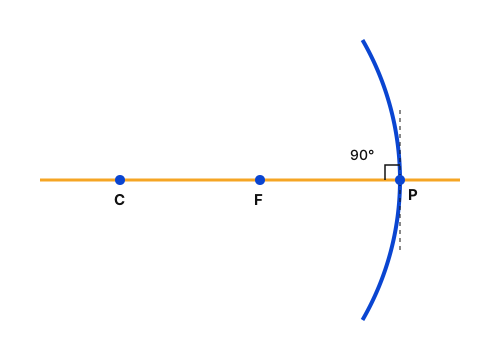
Which of the following is true regarding the principal axis of a spherical mirror?
गोलीय दर्पण के मुख्य अक्ष (principal axis) के संबंध में निम्नलिखित में से कौन-सा सत्य है?
  1. AIt is located at the edge of the mirror.यह दर्पण के किनारे पर स्थित होता है।
  2. BIt is normal to the mirror at its pole.यह दर्पण के ध्रुव (pole) पर दर्पण के अभिलंबवत (normal) होता है।
  3. CIt intersects the surface of the mirror at an angle of 45 degrees.यह दर्पण की सतह को 45 डिग्री के कोण पर प्रतिच्छेदित करता है।
  4. DIt is parallel to the surface of the mirror.यह दर्पण की सतह के समांतर होता है।
Show answer

Concept: The principal axis is the straight line passing through the pole (P) and the centre of curvature (C) of a spherical mirror.

  1. Any radius (line from C) meets the mirror surface at right angles.
  2. The principal axis is the radius through P.
  3. So it is normal to the mirror at its pole, making 90∘ with the surface there.

Yaad rakhein: P, F and C all lie on the principal axis; F is midway between P and C.

Answer: (B) It is normal to the mirror at its pole.

अवधारणा: मुख्य अक्ष गोलीय दर्पण के ध्रुव (P) और वक्रता केन्द्र (C) से गुज़रने वाली सरल रेखा है।

  1. C से खींची कोई भी त्रिज्या दर्पण की सतह पर लंबवत होती है।
  2. मुख्य अक्ष P से होकर जाने वाली त्रिज्या है।
  3. अतः यह ध्रुव पर दर्पण के अभिलंब है, सतह से 90∘ बनाती है।

याद रखें: P, F और C तीनों मुख्य अक्ष पर होते हैं; F, P और C के बीच में।

उत्तर: (B) यह दर्पण के ध्रुव (pole) पर दर्पण के अभिलंबवत (normal) होता है।

RRB Technician Grade IIIGeneral ScienceSpherical mirrorsRRB Technician Grade III 2024 · 24 Dec Shift 2 →
Q1678.
Which technique is useful for the separation of colloidal particles?
कोलॉइडी कणों (colloidal particles) को पृथक करने के लिए कौन-सी तकनीक उपयोगी है?
  1. AFiltration techniqueनिस्यंदन (filtration) तकनीक
  2. BCentrifugation techniqueअपकेंद्रण (centrifugation) तकनीक
  3. CRecrystallisation techniqueपुनःक्रिस्टलन (recrystallisation) तकनीक
  4. DSublimation techniqueऊर्ध्वपातन (sublimation) तकनीक
Show answer

Concept: Colloidal particles are too small to be stopped by filter paper and do not settle on standing; they are separated by centrifugation.

  1. In a centrifuge, the mixture is spun very fast.
  2. Denser particles are forced to the bottom; lighter liquid stays on top.
  3. Examples: separating cream from milk, blood tests, butter making.

Yaad rakhein: Filtration → suspension; sublimation → camphor/NH₄Cl; centrifugation → colloid (cream from milk).

Answer: (B) Centrifugation technique

अवधारणा: कोलॉइडी कण फ़िल्टर पेपर से नहीं रुकते और रखने पर नीचे नहीं बैठते; इन्हें अपकेन्द्रण (सेंट्रीफ्यूगेशन) से अलग करते हैं।

  1. अपकेन्द्रण यंत्र में मिश्रण को तेज़ी से घुमाया जाता है।
  2. भारी कण नीचे चले जाते हैं; हल्का द्रव ऊपर रहता है।
  3. उदाहरण: दूध से क्रीम अलग करना, रक्त जाँच, मक्खन बनाना।

याद रखें: निस्पंदन → निलंबन; ऊर्ध्वपातन → कपूर/NH₄Cl; अपकेन्द्रण → कोलॉइड (दूध से क्रीम)।

उत्तर: (B) अपकेंद्रण (centrifugation) तकनीक

RRB Technician Grade IIIGeneral ScienceSeparation techniquesRRB Technician Grade III 2024 · 24 Dec Shift 2 →
Q1679.
Which of the following terms is used for the impurities found in ores mining ?
अयस्कों के खनन में पाई जाने वाली अशुद्धियों के लिए निम्नलिखित में से किस शब्द का प्रयोग किया जाता है?
  1. AGangueगैंग / आधात्री (Gangue)
  2. BRoastingभर्जन (Roasting)
  3. CAnode mudएनोड पंक (Anode mud)
  4. DCalcinationsनिस्तापन (Calcinations)
Show answer

Concept: Ores mined from the earth contain large amounts of impurities such as soil, sand and rock; these impurities are called gangue.

  1. Gangue is removed first (concentration/enrichment of ore).
  2. Roasting: heating sulphide ore in excess air.
  3. Calcination: heating carbonate ore in limited air.
  4. Anode mud: impurities settling below the anode in electrolytic refining.

Yaad rakhein: Gangue + flux → slag.

Answer: (A) Gangue

अवधारणा: पृथ्वी से निकाले गए अयस्कों में मिट्टी, रेत, चट्टान जैसी अशुद्धियाँ होती हैं; इन्हें गैंग (आधात्री) कहते हैं।

  1. सबसे पहले गैंग हटाया जाता है (अयस्क का सांद्रण)।
  2. भर्जन: सल्फाइड अयस्क को अधिक वायु में गर्म करना।
  3. निस्तापन: कार्बोनेट अयस्क को सीमित वायु में गर्म करना।
  4. एनोड पंक: विद्युत-अपघटनी परिष्करण में एनोड के नीचे जमी अशुद्धियाँ।

याद रखें: गैंग + फ्लक्स → धातुमल (स्लैग)।

उत्तर: (A) गैंग / आधात्री (Gangue)

RRB Technician Grade IIIGeneral ScienceMetallurgyRRB Technician Grade III 2024 · 24 Dec Shift 2 →
Q1680.
Identify the INCORRECT statement related to transportation in plants.
a. Phloem helps in mineral and water absorption from the soil.
b. Root hair increases the root's surface area for water and mineral absorption.
c. Special vascular tissue in plants transports water and nutrients from the soil.
d. Roots and leaves are joined by a continuous network of xylem channels.
पौधों में परिवहन से संबंधित गलत कथन की पहचान कीजिए।
a. फ्लोएम (phloem) मृदा से खनिज और जल के अवशोषण में सहायता करता है।
b. मूल रोम (root hair) जल और खनिज अवशोषण के लिए जड़ के पृष्ठीय क्षेत्रफल को बढ़ाते हैं।
c. पौधों में विशेष संवहन ऊतक (vascular tissue) मृदा से जल और पोषक तत्वों का परिवहन करते हैं।
d. जड़ें और पत्तियाँ जाइलम (xylem) वाहिकाओं के एक सतत जाल द्वारा जुड़ी होती हैं।
  1. AOnly dकेवल d
  2. Bc and dc और d
  3. COnly aकेवल a
  4. Db and cb और c
Show answer

Concept: In plants, xylem carries water and minerals absorbed by roots; phloem carries food (translocation).

  1. a. Phloem absorbs water and minerals from soil – incorrect (this is xylem's role with root hairs).
  2. b. Root hairs increase surface area for absorption – correct.
  3. c. Vascular tissue transports water and nutrients – correct.
  4. d. Xylem forms a continuous channel from roots to leaves – correct.

Yaad rakhein: Xylem = water up; phloem = food (sugar) everywhere.

Answer: (C) Only a

अवधारणा: पौधों में जाइलम जड़ों द्वारा अवशोषित जल व खनिज ले जाता है; फ्लोएम भोजन ले जाता है (स्थानांतरण)।

  1. a. फ्लोएम मिट्टी से जल और खनिज अवशोषित करता है – गलत (यह जाइलम/मूलरोम का कार्य है)।
  2. b. मूलरोम अवशोषण के लिए सतह क्षेत्र बढ़ाते हैं – सही।
  3. c. संवहनी ऊतक जल और पोषक तत्व पहुँचाता है – सही।
  4. d. जाइलम जड़ से पत्ती तक सतत नलिका बनाता है – सही।

याद रखें: जाइलम = जल ऊपर; फ्लोएम = भोजन (शर्करा) सब ओर।

उत्तर: (C) केवल a

RRB Technician Grade IIIGeneral ScienceTransportation in plantsRRB Technician Grade III 2024 · 24 Dec Shift 2 →