Question bank

Q&A: practice questions with answers

Search questions on any topic. Filter by exam category, exam, subject and topic, try the question, then open the answer and explanation.

Courses – airGurukul

3,200 questions found.

Q1721.
The average of the first 10 natural numbers is:
प्रथम 10 प्राकृत संख्याओं का औसत है:
  1. A5
  2. B6
  3. C5.5
  4. D6.5
Show answer

Concept: Average of first n natural numbers =n+12.

  1. n=10
  2. Average =10+12=5.5

Trick: For any equally spaced list, average =first+last2=1+102.

Answer: (C) 5.5

अवधारणा: प्रथम n प्राकृत संख्याओं का औसत =n+12।

  1. n=10
  2. औसत =10+12=5.5

ट्रिक: समान अंतर वाली सूची का औसत =पहला+अंतिम2=1+102।

उत्तर: (C) 5.5

RRB Technician Grade IIIMathematicsAverage of natural numbersRRB Technician Grade III 2024 · 24 Dec Shift 1 →
Q1722.
If 30% of a number exceeds 20% of it by 12, then the number is:
यदि किसी संख्या का 30%, उसके 20% से 12 अधिक है, तो वह संख्या है:
  1. A200
  2. B120
  3. C150
  4. D180
Show answer

Concept: The difference between two percentages of the same number is itself a percentage of that number.

  1. 30%−20%=10% of number =12
  2. Number =12×10010=120

Trick: 10%=12 ⇒ 100%=120 – just shift the decimal.

Answer: (B) 120

अवधारणा: एक ही संख्या के दो प्रतिशतों का अंतर भी उसी संख्या का प्रतिशत होता है।

  1. संख्या का 30%−20%=10%=12
  2. संख्या =12×10010=120

ट्रिक: 10%=12 ⇒ 100%=120 – बस दशमलव खिसकाएँ।

उत्तर: (B) 120

RRB Technician Grade IIIMathematicsPercentage of a numberRRB Technician Grade III 2024 · 24 Dec Shift 1 →
Q1723.
The product (a+b)(a−b)(a2−ab+b2)(a2+ab+b2) is equal to :
गुणनफल (a+b)(a−b)(a2−ab+b2)(a2+ab+b2) किसके बराबर है?
  1. Aa3−b3
  2. Ba3+b3
  3. Ca6+b6
  4. Da6−b6
Show answer

Concept: Use (a−b)(a2+ab+b2)=a3−b3, (a+b)(a2−ab+b2)=a3+b3 and (x−y)(x+y)=x2−y2.

  1. (a+b)(a2−ab+b2)=a3+b3
  2. (a−b)(a2+ab+b2)=a3−b3
  3. (a3+b3)(a3−b3)=a6−b6

Trick: Check with a=2,b=1: 3×1×3×7=63=26−16.

Answer: (D) a6−b6

अवधारणा: (a−b)(a2+ab+b2)=a3−b3, (a+b)(a2−ab+b2)=a3+b3 और (x−y)(x+y)=x2−y2 का प्रयोग करें।

  1. (a+b)(a2−ab+b2)=a3+b3
  2. (a−b)(a2+ab+b2)=a3−b3
  3. (a3+b3)(a3−b3)=a6−b6

ट्रिक: a=2,b=1 रखकर जाँचें: 3×1×3×7=63=26−16।

उत्तर: (D) a6−b6

RRB Technician Grade IIIMathematicsAlgebraic identitiesRRB Technician Grade III 2024 · 24 Dec Shift 1 →
Q1724.
The following observations are arranged in ascending order.
29, 32, 48, 50, x, x+2, 72, 78, 84, 95
If the median is 63, then the value of x is:
निम्नलिखित प्रेक्षण आरोही क्रम में व्यवस्थित हैं।
29, 32, 48, 50, x, x+2, 72, 78, 84, 95
यदि माध्यिका 63 है, तो x का मान है:
  1. A63
  2. B62
  3. C51
  4. D41
Show answer

Concept: For 10 (even) observations in ascending order, median = average of the 5th and 6th values.

  1. 5th=x, 6th=x+2.
  2. x+(x+2)2=63⇒2x+2=126⇒x=62.
  3. Check: 50<62<64<72, so the order stays ascending.

Yaad rakhein: Even n: median =12[(n2)th+(n2+1)th] value.

Answer: (B) 62

अवधारणा: आरोही क्रम में 10 (सम) प्रेक्षणों की माध्यिका = 5वें और 6वें मान का औसत।

  1. 5वाँ =x, 6वाँ =x+2।
  2. x+(x+2)2=63⇒2x+2=126⇒x=62।
  3. जाँच: 50<62<64<72, अतः क्रम आरोही ही रहता है।

याद रखें: सम n: माध्यिका =12[(n2)वाँ+(n2+1)वाँ] मान।

उत्तर: (B) 62

RRB Technician Grade IIIMathematicsMedianRRB Technician Grade III 2024 · 24 Dec Shift 1 →
Q1725.
The difference in the measures of two complementary angles is 18∘. Find the measure of the smaller angle.
दो पूरक कोणों की मापों का अंतर 18∘ है। छोटे कोण की माप ज्ञात कीजिए।
  1. A36∘
  2. B34∘
  3. C38∘
  4. D35∘
Show answer

Concept: Complementary angles add up to 90∘.

  1. x+y=90∘, x−y=18∘
  2. Smaller y=90∘−18∘2=36∘
  3. Larger =54∘

Trick: Smaller =sum−difference2, larger =sum+difference2.

Answer: (A) 36∘

अवधारणा: पूरक कोणों का योग 90∘ होता है।

  1. x+y=90∘, x−y=18∘
  2. छोटा y=90∘−18∘2=36∘
  3. बड़ा =54∘

ट्रिक: छोटा =योग−अंतर2, बड़ा =योग+अंतर2।

उत्तर: (A) 36∘

RRB Technician Grade IIIMathematicsComplementary anglesRRB Technician Grade III 2024 · 24 Dec Shift 1 →
Q1726.
The greatest natural number by which the product of three consecutive even natural numbers is always divisible is:
वह सबसे बड़ी प्राकृत संख्या, जिससे तीन क्रमागत सम प्राकृत संख्याओं का गुणनफल सदैव विभाज्य होता है, है:
  1. A16
  2. B48
  3. C24
  4. D96
Show answer

Concept: Three consecutive even numbers can be written 2n(2n+2)(2n+4)=8n(n+1)(n+2).

  1. n(n+1)(n+2) – three consecutive numbers – is always divisible by 3!=6
  2. So product is divisible by 8×6=48
  3. Check: 2×4×6=48, so nothing larger always works

Trick: Smallest case 2×4×6=48 is itself the answer – the greatest always-divisor can't exceed it.

Answer: (B) 48

अवधारणा: तीन क्रमागत सम संख्याएँ 2n(2n+2)(2n+4)=8n(n+1)(n+2) लिखी जा सकती हैं।

  1. n(n+1)(n+2) – तीन क्रमागत संख्याएँ – सदैव 3!=6 से विभाज्य
  2. अतः गुणनफल 8×6=48 से विभाज्य
  3. जाँच: 2×4×6=48, इससे बड़ी संख्या हमेशा नहीं बँटेगी

ट्रिक: सबसे छोटा उदाहरण 2×4×6=48 ही उत्तर है – सबसे बड़ा भाजक इससे अधिक नहीं हो सकता।

उत्तर: (B) 48

RRB Technician Grade IIIMathematicsDivisibilityRRB Technician Grade III 2024 · 24 Dec Shift 1 →
Q1727.
Refer to the given series and answer the question that follows (all numbers are single-digit numbers only).
(Left) 7 0 6 0 6 7 7 2 7 6 1 5 0 1 9 2 9 2 2 6 5 9 2 4 0 0 7 7 3 8 (Right)
What is the sum of the 5th digit from the left and the 10th digit from the right?
दी गई श्रृंखला को देखिए और उसके बाद आने वाले प्रश्न का उत्तर दीजिए (सभी संख्याएँ केवल एक-अंकीय संख्याएँ हैं)।
(बाएँ) 7 0 6 0 6 7 7 2 7 6 1 5 0 1 9 2 9 2 2 6 5 9 2 4 0 0 7 7 3 8 (दाएँ)
बाएँ से 5th अंक और दाएँ से 10th अंक का योग क्या है?
  1. A9
  2. B13
  3. C10
  4. D11
Show answer

Concept: Total digits =30. kth from right =(30−k+1)th from left.

  1. 5th from left =6
  2. 10th from right =21st from left =5
  3. Sum =6+5=11

Trick: Position from left =n−k+1; count in groups of five to avoid slips.

Answer: (D) 11

अवधारणा: कुल अंक =30। दाएँ से kवाँ = बाएँ से (30−k+1)वाँ।

  1. बाएँ से 5th =6
  2. दाएँ से 10th = बाएँ से 21st =5
  3. योग =6+5=11

ट्रिक: बाएँ से स्थान =n−k+1; गलती से बचने के लिए पाँच-पाँच के समूह में गिनें।

उत्तर: (D) 11

RRB Technician Grade IIIGeneral Intelligence and ReasoningNumber series – positionRRB Technician Grade III 2024 · 24 Dec Shift 1 →
Q1728.
Which of the following options should come in place of the question mark (?) in the given series based on the English alphabetical order?
EGK, HJN, KMQ, NPT, ?
अंग्रेजी वर्णमाला क्रम के आधार पर दी गई श्रृंखला में प्रश्न चिह्न (?) के स्थान पर निम्नलिखित में से कौन-सा विकल्प आना चाहिए?
EGK, HJN, KMQ, NPT, ?
  1. ASQW
  2. BQWS
  3. CQSW
  4. DSWQ
Show answer

Concept: Each letter of a term moves +3 to give the next term.

  1. E→H→K→N→Q
  2. G→J→M→P→S
  3. K→N→Q→T→W

Trick: Check just the first letters (E, H, K, N → Q) to eliminate options quickly.

Answer: (C) QSW

अवधारणा: हर पद का प्रत्येक अक्षर +3 आगे बढ़ता है।

  1. E→H→K→N→Q
  2. G→J→M→P→S
  3. K→N→Q→T→W

ट्रिक: केवल पहले अक्षर (E, H, K, N → Q) देखकर विकल्प जल्दी हटाएँ।

उत्तर: (C) QSW

RRB Technician Grade IIIGeneral Intelligence and ReasoningLetter seriesRRB Technician Grade III 2024 · 24 Dec Shift 1 →
Q1729.
Based on the English alphabetical order, three of the following four letter-cluster pairs are alike in a certain way and thus form a group. Which pair does not belong to that group?
(Note: The odd one out is not based on the number of consonants/vowels or their position in the letter cluster.)
अंग्रेजी वर्णमाला क्रम के आधार पर, निम्नलिखित चार अक्षर-समूह युग्मों में से तीन किसी निश्चित प्रकार से एक समान हैं और इस प्रकार एक समूह बनाते हैं। कौन-सा युग्म उस समूह से संबंधित नहीं है?
(ध्यान दें: असंगत युग्म, व्यंजनों/स्वरों की संख्या या अक्षर-समूह में उनके स्थान पर आधारित नहीं है।)
  1. AJN-IM
  2. BRV-QU
  3. CMQ-LO
  4. DPT-OS
Show answer

Concept: In each pair, compare corresponding letters of the two clusters.

  1. JN-IM: J −1=I, N −1=M
  2. RV-QU: −1, −1; PT-OS: −1, −1
  3. MQ-LO: M −1=L but Q −2=O

Trick: Also, the first cluster has a gap of 4 (J–N) and so must the second; L–O has gap 3.

Answer: (C) MQ-LO

अवधारणा: हर युग्म में दोनों समूहों के संगत अक्षरों की तुलना करें।

  1. JN-IM: J −1=I, N −1=M
  2. RV-QU: −1, −1; PT-OS: −1, −1
  3. MQ-LO: M −1=L पर Q −2=O

ट्रिक: पहले समूह में अंतर 4 (J–N) है, दूसरे में भी होना चाहिए; L–O में अंतर 3 है।

उत्तर: (C) MQ-LO

RRB Technician Grade IIIGeneral Intelligence and ReasoningOdd one out – letter pairsRRB Technician Grade III 2024 · 24 Dec Shift 1 →
Q1730.
Refer to the given series and answer the question that follows (all numbers are single-digit numbers only, and all counting is to be done from left to right).
(Left) 8 3 2 3 8 8 4 7 9 6 2 3 3 8 2 6 6 2 5 6 4 7 9 7 7 6 7 8 (Right)
How many such odd digits are there, each of which is immediately preceded by a perfect square and immediately followed by an even digit? (Note: 1 will be considered as a perfect square.)
दी गई श्रृंखला को देखिए और उसके बाद आने वाले प्रश्न का उत्तर दीजिए (सभी संख्याएँ केवल एक-अंकीय संख्याएँ हैं, और सभी गिनती बाएँ से दाएँ की जानी है)।
(बाएँ) 8 3 2 3 8 8 4 7 9 6 2 3 3 8 2 6 6 2 5 6 4 7 9 7 7 6 7 8 (दाएँ)
ऐसे कितने विषम अंक हैं, जिनमें से प्रत्येक के ठीक पहले एक पूर्ण वर्ग है और ठीक बाद एक सम अंक है? (ध्यान दें: 1 को पूर्ण वर्ग माना जाएगा।)
  1. A3
  2. B0
  3. C1
  4. D2
Show answer

Concept: Find odd digits whose left neighbour is 0,1,4 or 9 and right neighbour is even.

  1. Odd digits preceded by a perfect square: 7 (after 4, pos. 8), 7 (after 4, pos. 22), 7 (after 9, pos. 24)
  2. Their next digits: 9, 9, 7 – all odd
  3. No digit satisfies both conditions ⇒0

Trick: Locate the perfect squares (4, 9) first and check only the digit after them.

Answer: (B) 0

अवधारणा: ऐसे विषम अंक खोजें जिनके बाएँ 0,1,4 या 9 हो और दाएँ सम अंक हो।

  1. पूर्ण वर्ग के बाद आने वाले विषम अंक: 7 (4 के बाद, स्थान 8), 7 (4 के बाद, स्थान 22), 7 (9 के बाद, स्थान 24)
  2. इनके बाद के अंक: 9, 9, 7 – सभी विषम
  3. कोई अंक दोनों शर्तें पूरी नहीं करता ⇒0

ट्रिक: पहले पूर्ण वर्ग (4, 9) ढूँढें और केवल उनके बाद वाला अंक जाँचें।

उत्तर: (B) 0

RRB Technician Grade IIIGeneral Intelligence and ReasoningNumber series – conditionsRRB Technician Grade III 2024 · 24 Dec Shift 1 →
Q1731.
If ‘A’ stands for ‘÷’, ‘B’ stands for ‘+’, ‘C’ stands for ‘×’ and ‘D’ stands for ‘−’, what will come in place of the question mark ‘?’ in the following equation?
15 A 3 B 9 D 2 C 4 = ?
यदि ‘A’ का अर्थ ‘÷’, ‘B’ का अर्थ ‘+’, ‘C’ का अर्थ ‘×’ और ‘D’ का अर्थ ‘−’ है, तो निम्नलिखित समीकरण में प्रश्न चिह्न ‘?’ के स्थान पर क्या आएगा?
15 A 3 B 9 D 2 C 4 = ?
  1. A6
  2. B8
  3. C2
  4. D11
Show answer

Concept: Replace letters by signs, then apply BODMAS.

  1. 15÷3+9−2×4
  2. =5+9−8
  3. =6

Trick: Write the converted expression fully before solving – most errors come from mis-substitution.

Answer: (A) 6

अवधारणा: अक्षरों को चिह्नों से बदलें, फिर BODMAS लगाएँ।

  1. 15÷3+9−2×4
  2. =5+9−8
  3. =6

ट्रिक: हल करने से पहले बदला हुआ व्यंजक पूरा लिखें – ज़्यादातर गलती प्रतिस्थापन में होती है।

उत्तर: (A) 6

RRB Technician Grade IIIGeneral Intelligence and ReasoningMathematical operations – symbolsRRB Technician Grade III 2024 · 24 Dec Shift 1 →
Q1732.
Select the triad which follows the same pattern as that followed by the two triads given below. Both triads follow the same pattern.
GL-IF-JM
JO-LI-MP
उस त्रिक का चयन कीजिए जो उसी पैटर्न का अनुसरण करता है जिसका अनुसरण नीचे दिए गए दो त्रिक करते हैं। दोनों त्रिक एक ही पैटर्न का अनुसरण करते हैं।
GL-IF-JM
JO-LI-MP
  1. AKP-MJ-NO
  2. BNS-PM-QR
  3. CLQ-NK-OP
  4. DMR-OL-PS
Show answer

Concept: Track first and second letters of each pair separately.

  1. GL-IF-JM: G +2 I +1 J; L −6 F +7 M
  2. JO-LI-MP: J +2 L +1 M; O −6 I +7 P
  3. MR-OL-PS: M +2 O +1 P; R −6 L +7 S ✓

Trick: Check the first letters (+2,+1) to cut options, then verify the second letters.

Answer: (D) MR-OL-PS

अवधारणा: हर युग्म के पहले और दूसरे अक्षर को अलग-अलग देखें।

  1. GL-IF-JM: G +2 I +1 J; L −6 F +7 M
  2. JO-LI-MP: J +2 L +1 M; O −6 I +7 P
  3. MR-OL-PS: M +2 O +1 P; R −6 L +7 S ✓

ट्रिक: पहले अक्षरों (+2,+1) से विकल्प घटाएँ, फिर दूसरे अक्षर जाँचें।

उत्तर: (D) MR-OL-PS

RRB Technician Grade IIIGeneral Intelligence and ReasoningLetter triads – patternRRB Technician Grade III 2024 · 24 Dec Shift 1 →
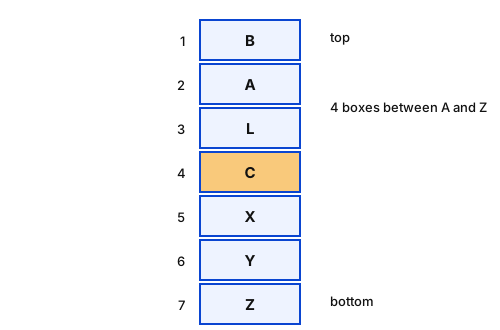
Q1733.
Seven boxes A, B, C, L, X, Y and Z are kept one over the other but not necessarily in the same order. Only four boxes are kept between A and Z. Only B is kept above A. Only two boxes are kept between L and Y. C is kept immediately above X. Y is not kept immediately above C.
Which box is kept fourth from the top?
सात बक्से A, B, C, L, X, Y और Z एक के ऊपर एक रखे गए हैं, लेकिन जरूरी नहीं कि इसी क्रम में हों। A और Z के बीच केवल चार बक्से रखे गए हैं। A के ऊपर केवल B रखा गया है। L और Y के बीच केवल दो बक्से रखे गए हैं। C को X के ठीक ऊपर रखा गया है। Y को C के ठीक ऊपर नहीं रखा गया है।
ऊपर से चौथे स्थान पर कौन-सा बक्सा रखा गया है?
  1. AC
  2. BL
  3. CA
  4. DX
Show answer

Concept: Fix definite positions first (1 = top, 7 = bottom).

  1. Only B above A ⇒ B =1, A =2
  2. 4 boxes between A and Z ⇒ Z =7
  3. L, Y two apart in 3–6 ⇒ positions 3 and 6; C, X take 4, 5
  4. Y not just above C ⇒ Y =6, L =3: B, A, L, C, X, Y, Z

Trick: 'Only one box above' instantly fixes positions 1 and 2.

Answer: (A) C

अवधारणा: पहले निश्चित स्थान तय करें (1 = सबसे ऊपर, 7 = सबसे नीचे)।

  1. केवल B, A के ऊपर ⇒ B =1, A =2
  2. A और Z के बीच 4 डिब्बे ⇒ Z =7
  3. L, Y के बीच दो डिब्बे (3–6 में) ⇒ स्थान 3 और 6; C, X को 4, 5
  4. Y, C के ठीक ऊपर नहीं ⇒ Y =6, L =3: B, A, L, C, X, Y, Z

ट्रिक: 'केवल एक डिब्बा ऊपर' से स्थान 1 और 2 तुरंत तय होते हैं।

उत्तर: (A) C

RRB Technician Grade IIIGeneral Intelligence and ReasoningBox arrangementRRB Technician Grade III 2024 · 24 Dec Shift 1 →
Q1734.
Given below is a statement followed by two possible reasons numbered I and II. Read the statement carefully and decide which of the two explains the event/observation/information given in the statement.
Statement - Despite having a highly skilled workforce, Company A has not been profitable for the past three years.
I. The company is located in a region where the cost of functioning is extremely high.
II. The CEO of Company A is a well-known philanthropist.
नीचे एक कथन और उसके बाद I और II क्रमांकित दो संभावित कारण दिए गए हैं। कथन को ध्यानपूर्वक पढ़िए और निर्णय लीजिए कि दोनों में से कौन-सा कारण कथन में दी गई घटना/अवलोकन/सूचना की व्याख्या करता है।
कथन - अत्यधिक कुशल कार्यबल होने के बावजूद, कंपनी A पिछले तीन वर्षों से लाभ में नहीं रही है।
I. कंपनी ऐसे क्षेत्र में स्थित है जहाँ संचालन की लागत अत्यधिक ऊँची है।
II. कंपनी A का CEO एक प्रसिद्ध परोपकारी है।
  1. AOnly I is a possible reasonकेवल I एक संभावित कारण है
  2. BOnly II is a possible reasonकेवल II एक संभावित कारण है
  3. CNeither I nor II is a possible reasonन तो I और न ही II एक संभावित कारण है
  4. DBoth I and II are possible reasonsI और II दोनों संभावित कारण हैं
Show answer

Concept: A valid reason must directly explain why the company is not profitable.

  1. I: Very high operating cost reduces profit – directly explains losses
  2. II: The CEO's philanthropy is personal and does not affect company profit

Trick: Ask: 'Does this reason affect the company's income or expenses?' If not, reject it.

Answer: (A) Only I is a possible reason

अवधारणा: मान्य कारण को सीधे बताना चाहिए कि कंपनी लाभ में क्यों नहीं है।

  1. I: बहुत अधिक परिचालन लागत लाभ घटाती है – हानि को सीधे समझाता है
  2. II: CEO का परोपकार निजी है, कंपनी के लाभ पर असर नहीं

ट्रिक: पूछें: 'क्या यह कारण कंपनी की आय या खर्च पर असर डालता है?' नहीं तो अस्वीकार करें।

उत्तर: (A) केवल I एक संभावित कारण है

RRB Technician Grade IIIGeneral Intelligence and ReasoningStatement and reasonsRRB Technician Grade III 2024 · 24 Dec Shift 1 →
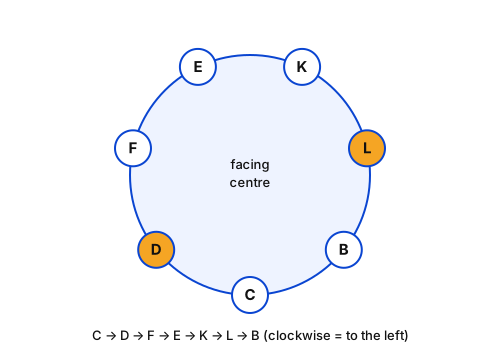
Q1735.
B, C, D, E, F, K and L are sitting around a circular table, facing the centre. F sits second to the left of C. Only E sits between K and F. B sits third to the left of E. D is not an immediate neighbour of B. Who sits fourth to the right of L?
B, C, D, E, F, K और L एक वृत्ताकार मेज के चारों ओर केंद्र की ओर मुख करके बैठे हैं। F, C के बाएँ से दूसरे स्थान पर बैठा है। K और F के बीच केवल E बैठा है। B, E के बाएँ से तीसरे स्थान पर बैठा है। D, B का निकटतम पड़ोसी नहीं है। L के दाएँ से चौथे स्थान पर कौन बैठा है?
  1. AD
  2. BC
  3. CE
  4. DF
Show answer

Concept: Facing the centre, 'left' means clockwise and 'right' means anticlockwise.

  1. Fix C; F is 2nd to the left of C
  2. Only E between K and F ⇒ order C, _, F, E, K (clockwise)
  3. B 3rd to left of E; remaining seats for D, L – D not next to B ⇒ D next to C
  4. Clockwise: C, D, F, E, K, L, B; 4th to right of L = D

Trick: 7 people: 4th to the right = 3rd to the left – count the shorter way to check.

Answer: (A) D

अवधारणा: केंद्र की ओर मुख होने पर 'बाएँ' = दक्षिणावर्त और 'दाएँ' = वामावर्त।

  1. C तय करें; F, C के बाएँ दूसरा
  2. K और F के बीच केवल E ⇒ क्रम C, _, F, E, K (दक्षिणावर्त)
  3. B, E के बाएँ तीसरा; शेष स्थान D, L के लिए – D, B के पास नहीं ⇒ D, C के पास
  4. दक्षिणावर्त: C, D, F, E, K, L, B; L के दाएँ चौथा = D

ट्रिक: 7 लोग: दाएँ चौथा = बाएँ तीसरा – छोटे रास्ते से गिनकर जाँचें।

उत्तर: (A) D

RRB Technician Grade IIIGeneral Intelligence and ReasoningCircular seating arrangementRRB Technician Grade III 2024 · 24 Dec Shift 1 →
Q1736.
Refer to the given series and answer the question that follows (all numbers are single-digit numbers only).
(Left) 6 3 0 4 7 5 5 6 8 3 6 6 9 6 1 1 0 8 7 8 5 0 4 0 3 2 1 3 0 6 (Right)
What is the sum of the 12th digit from the left and the 2nd digit from the right?
दी गई श्रृंखला को देखिए और उसके बाद आने वाले प्रश्न का उत्तर दीजिए (सभी संख्याएँ केवल एक-अंकीय संख्याएँ हैं)।
(बाएँ) 6 3 0 4 7 5 5 6 8 3 6 6 9 6 1 1 0 8 7 8 5 0 4 0 3 2 1 3 0 6 (दाएँ)
बाएँ से 12th अंक और दाएँ से 2nd अंक का योग क्या है?
  1. A7
  2. B5
  3. C6
  4. D4
Show answer

Concept: Count carefully from the given end.

  1. 12th from left =6
  2. 2nd from right =0
  3. Sum =6+0=6

Trick: Count left digits in groups of five: (63047)(55683)(66…) – the 12th is the second digit of the third group.

Answer: (C) 6

अवधारणा: दिए गए सिरे से ध्यानपूर्वक गिनें।

  1. बाएँ से 12th =6
  2. दाएँ से 2nd =0
  3. योग =6+0=6

ट्रिक: पाँच-पाँच के समूह बनाएँ: (63047)(55683)(66…) – 12th तीसरे समूह का दूसरा अंक है।

उत्तर: (C) 6

RRB Technician Grade IIIGeneral Intelligence and ReasoningNumber series – positionRRB Technician Grade III 2024 · 24 Dec Shift 1 →
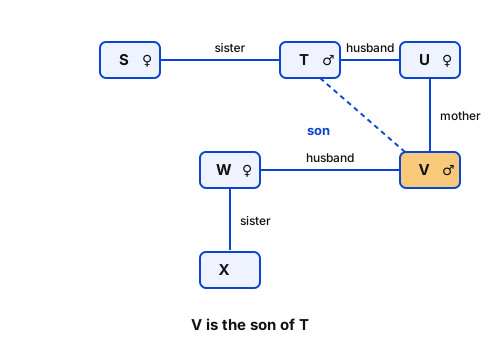
Q1737.
In a certain code language,
'A + B' means ‘A is the sister of B’,
'A – B' means ‘A is the husband of B’,
'A x B' means ‘A is the mother of B’
and 'A ÷ B' means ‘A is the son of B’.
How is V related to T if ‘S + T – U x V – W + X’?
एक निश्चित कूट भाषा में,
'A + B' का अर्थ है ‘A, B की बहन है’,
'A – B' का अर्थ है ‘A, B का पति है’,
'A x B' का अर्थ है ‘A, B की माँ है’
और 'A ÷ B' का अर्थ है ‘A, B का पुत्र है’।
यदि ‘S + T – U x V – W + X’ है, तो V का T से क्या संबंध है?
  1. AFatherपिता
  2. BBrotherभाई
  3. CSonपुत्र
  4. DSon's sonपुत्र का पुत्र
Show answer

Concept: Decode each symbol step by step and draw the tree.

  1. S + T: S is sister of T
  2. T − U: T is husband of U (T male)
  3. U × V: U is mother of V
  4. V − W: V is husband of W ⇒ V is male; so V is the son of T

Trick: Gender comes from the later link: '−' (husband) shows V is male.

Answer: (C) Son

अवधारणा: हर प्रतीक को क्रम से खोलें और वंशवृक्ष बनाएँ।

  1. S + T: S, T की बहन है
  2. T − U: T, U का पति है (T पुरुष)
  3. U × V: U, V की माँ है
  4. V − W: V, W का पति है ⇒ V पुरुष; अतः V, T का पुत्र है

ट्रिक: लिंग बाद के संबंध से मिलता है: '−' (पति) से V पुरुष है।

उत्तर: (C) पुत्र

RRB Technician Grade IIIGeneral Intelligence and ReasoningCoded blood relationsRRB Technician Grade III 2024 · 24 Dec Shift 1 →
Q1738.
In a certain code language, ‘BEAR’ is coded as ‘7912’ and ‘EARN’ is coded as ‘1296’. What is the code for ‘N’ in the given code language?
एक निश्चित कूट भाषा में, ‘BEAR’ को ‘7912’ के रूप में कूटबद्ध किया जाता है और ‘EARN’ को ‘1296’ के रूप में कूटबद्ध किया जाता है। उस कूट भाषा में ‘N’ के लिए कूट क्या है?
  1. A1
  2. B6
  3. C9
  4. D2
Show answer

Concept: Letters common to both words share the common digits; the leftover letter gets the leftover digit.

  1. BEAR = 7912, EARN = 1296
  2. Common letters E, A, R ↔ common digits 1, 2, 9
  3. Left: B ↔ 7 and N ↔ 6

Trick: Strike out common letters and common digits – what remains pairs up directly.

Answer: (B) 6

अवधारणा: दोनों शब्दों में उभयनिष्ठ अक्षरों के कोड भी उभयनिष्ठ होते हैं; बचा अक्षर बचे अंक से जुड़ता है।

  1. BEAR = 7912, EARN = 1296
  2. उभयनिष्ठ अक्षर E, A, R ↔ उभयनिष्ठ अंक 1, 2, 9
  3. शेष: B ↔ 7 और N ↔ 6

ट्रिक: उभयनिष्ठ अक्षर और अंक काट दें – जो बचे वे सीधे जुड़ते हैं।

उत्तर: (B) 6

RRB Technician Grade IIIGeneral Intelligence and ReasoningCoding – common lettersRRB Technician Grade III 2024 · 24 Dec Shift 1 →
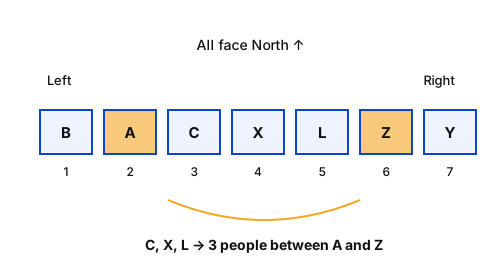
Q1739.
Seven people, A, B, C, L, X, Y and Z are sitting in a row, facing north. No one sits to the right of Y. Only three people sit between Y and C. Only two people sit between C and Z. B sits third to the left of X. L sits to the immediate right of X.
How many people sit between A and Z?
सात व्यक्ति, A, B, C, L, X, Y और Z एक पंक्ति में उत्तर की ओर मुख करके बैठे हैं। Y के दाईं ओर कोई नहीं बैठा है। Y और C के बीच में केवल तीन व्यक्ति बैठे हैं। C और Z के बीच में केवल दो व्यक्ति बैठे हैं। B, X के बाएँ से तीसरे स्थान पर बैठा है। L, X के ठीक दाएँ बैठा है।
A और Z के बीच में कितने व्यक्ति बैठे हैं?
  1. AOneएक
  2. BThreeतीन
  3. CTwoदो
  4. DFourचार
Show answer

Concept: Facing north, left and right are the solver's left and right. Number seats 1–7 from left.

  1. No one right of Y ⇒ Y =7; C =3; Z =6
  2. L just right of X and B 3rd left of X: only X =4 fits ⇒ L =5, B =1
  3. A =2: B, A, C, X, L, Z, Y
  4. Between A and Z: C, X, L =3

Trick: Fix the extreme end person first; 'third to the left' means 2 people in between.

Answer: (B) Three

अवधारणा: उत्तर की ओर मुख होने पर बाएँ-दाएँ हमारे बाएँ-दाएँ ही हैं। बाएँ से स्थान 1–7।

  1. Y के दाएँ कोई नहीं ⇒ Y =7; C =3; Z =6
  2. L, X के ठीक दाएँ और B, X के बाएँ तीसरा: केवल X =4 संभव ⇒ L =5, B =1
  3. A =2: B, A, C, X, L, Z, Y
  4. A और Z के बीच: C, X, L =3

ट्रिक: पहले छोर वाला व्यक्ति तय करें; 'बाएँ तीसरा' मतलब बीच में 2 लोग।

उत्तर: (B) तीन

RRB Technician Grade IIIGeneral Intelligence and ReasoningLinear seating arrangementRRB Technician Grade III 2024 · 24 Dec Shift 1 →
Q1740.
What will come in the place of ‘?’ in the following equation, if ‘×’ and ‘÷’ are interchanged and ‘−’ and ‘+’ are interchanged?
12×12÷12−12+15=?
यदि ‘×’ और ‘÷’ को आपस में बदल दिया जाए तथा ‘−’ और ‘+’ को आपस में बदल दिया जाए, तो निम्नलिखित समीकरण में ‘?’ के स्थान पर क्या आएगा?
12×12÷12−12+15=?
  1. A69
  2. B99
  3. C9
  4. D39
Show answer

Concept: Swap the signs first, then solve using BODMAS.

  1. After swapping: 12÷12×12+12−15
  2. =1×12+12−15
  3. =12+12−15=9

Trick: Rewrite the whole expression with new signs before calculating.

Answer: (C) 9

अवधारणा: पहले चिह्न बदलें, फिर BODMAS से हल करें।

  1. बदलने के बाद: 12÷12×12+12−15
  2. =1×12+12−15
  3. =12+12−15=9

ट्रिक: गणना से पहले पूरा व्यंजक नए चिह्नों के साथ लिखें।

उत्तर: (C) 9

RRB Technician Grade IIIGeneral Intelligence and ReasoningInterchanging signsRRB Technician Grade III 2024 · 24 Dec Shift 1 →