Question bank

Q&A: practice questions with answers

Search questions on any topic. Filter by exam category, exam, subject and topic, try the question, then open the answer and explanation.

Courses – airGurukul

3,200 questions found.

Q1761.
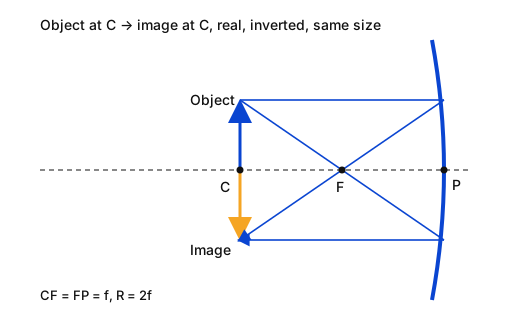
The image formed by a concave mirror is real, inverted and with the same size as the object. The position of the object is kept:
एक अवतल दर्पण (concave mirror) द्वारा बना प्रतिबिंब वास्तविक, उल्टा और वस्तु के समान आकार का है। वस्तु की स्थिति रखी गई है:
  1. Afar away from the centre of curvatureवक्रता केंद्र से बहुत दूर
  2. Bat the centre of curvatureवक्रता केंद्र पर
  3. Cbetween the focus and the centre of curvatureफोकस और वक्रता केंद्र के बीच
  4. Dat the focusफोकस पर
Show answer

Concept: For a concave mirror, the image position depends on where the object is placed relative to F and C (radius R=2f).

  1. Object beyond C → image between F and C, diminished.
  2. Object at C → image also at C, real, inverted and of the same size.
  3. Object between F and C → image beyond C, enlarged; object at F → image at infinity.

Yaad rakhein: Same size real image only when object is at C (u=−2f⇒v=−2f, m=−1).

Answer: (B) at the centre of curvature

अवधारणा: अवतल दर्पण में प्रतिबिंब की स्थिति इस पर निर्भर करती है कि वस्तु F और C (त्रिज्या R=2f) के सापेक्ष कहाँ है।

  1. वस्तु C से परे → प्रतिबिंब F और C के बीच, छोटा।
  2. वस्तु C पर → प्रतिबिंब भी C पर, वास्तविक, उल्टा और समान आकार का।
  3. वस्तु F और C के बीच → प्रतिबिंब C से परे, बड़ा; वस्तु F पर → प्रतिबिंब अनंत पर।

याद रखें: समान आकार का वास्तविक प्रतिबिंब केवल तब जब वस्तु C पर हो (u=−2f⇒v=−2f, m=−1)।

उत्तर: (B) वक्रता केंद्र पर

RRB Technician Grade IIIGeneral ScienceConcave mirror – object at CRRB Technician Grade III 2024 · 24 Dec Shift 1 →
Q1762.
Which of the following options is correct in the relation between mass and inertia?
द्रव्यमान और जड़त्व के बीच संबंध के विषय में निम्नलिखित में से कौन-सा विकल्प सही है?
  1. AThe data provided here is not adequate to draw any conclusion.यहाँ दिए गए आँकड़े कोई निष्कर्ष निकालने के लिए पर्याप्त नहीं हैं।
  2. BInertia is inversely proportional to mass.जड़त्व द्रव्यमान के व्युत्क्रमानुपाती होता है।
  3. CInertia is proportional to mass.जड़त्व द्रव्यमान के समानुपाती होता है।
  4. DInertia is independent of mass.जड़त्व द्रव्यमान से स्वतंत्र होता है।
Show answer

Concept: Inertia is the tendency of a body to resist a change in its state of rest or uniform motion. Mass is the measure of inertia.

  1. A heavier body (more mass) is harder to start, stop or turn.
  2. Pushing a loaded truck vs. an empty cart shows greater mass → greater inertia.
  3. So inertia increases directly with mass: inertia ∝ mass.

Yaad rakhein: Mass = measure of inertia; more mass, more inertia.

Answer: (C) Inertia is proportional to mass.

अवधारणा: जड़त्व किसी वस्तु की विराम या एकसमान गति की अवस्था में परिवर्तन का विरोध करने की प्रवृत्ति है। द्रव्यमान जड़त्व का माप है।

  1. भारी वस्तु (अधिक द्रव्यमान) को चलाना, रोकना या मोड़ना कठिन होता है।
  2. भरे ट्रक व खाली ठेले को धकेलने से स्पष्ट है – अधिक द्रव्यमान → अधिक जड़त्व।
  3. अतः जड़त्व ∝ द्रव्यमान।

याद रखें: द्रव्यमान = जड़त्व का माप; द्रव्यमान अधिक तो जड़त्व अधिक।

उत्तर: (C) जड़त्व द्रव्यमान के समानुपाती होता है।

RRB Technician Grade IIIGeneral ScienceInertia and massRRB Technician Grade III 2024 · 24 Dec Shift 1 →
Q1763.
Which of the following phenomena is the reason behind wearing cotton clothes in summer?
गर्मियों में सूती कपड़े पहनने के पीछे निम्नलिखित में से कौन-सी परिघटना कारण है?
  1. ASublimationऊर्ध्वपातन (Sublimation)
  2. BCondensationसंघनन (Condensation)
  3. CEvaporationवाष्पीकरण (Evaporation)
  4. DFusionसंगलन (Fusion)
Show answer

Concept: Evaporation takes latent heat from the surface, producing cooling.

  1. In summer we sweat more.
  2. Cotton absorbs sweat and exposes it to the air, so it evaporates quickly.
  3. The evaporating sweat takes heat from the body → body feels cool.

Yaad rakhein: Sweat + cotton + evaporation = cooling (same reason earthen pots keep water cool).

Answer: (C) Evaporation

अवधारणा: वाष्पन सतह से गुप्त ऊष्मा लेता है, जिससे ठंडक होती है।

  1. गर्मियों में पसीना अधिक आता है।
  2. सूती कपड़े पसीना सोखकर उसे हवा के संपर्क में लाते हैं, जिससे वह जल्दी वाष्पित होता है।
  3. वाष्पित होता पसीना शरीर से ऊष्मा लेता है → शरीर ठंडा महसूस होता है।

याद रखें: पसीना + सूती कपड़ा + वाष्पन = शीतलन (मटके का पानी भी इसी कारण ठंडा रहता है)।

उत्तर: (C) वाष्पीकरण (Evaporation)

RRB Technician Grade IIIGeneral ScienceEvaporation causes coolingRRB Technician Grade III 2024 · 24 Dec Shift 1 →
Q1764.
Which of the following is an example of an ionic compound?
निम्नलिखित में से कौन-सा आयनिक यौगिक (ionic compound) का उदाहरण है?
  1. AGlucoseग्लूकोज़
  2. BSugarशर्करा
  3. CTable saltखाने का नमक
  4. DTurmericहल्दी
Show answer

Concept: Ionic compounds are formed by transfer of electrons between a metal and a non-metal.

  1. Table salt NaCl = Na+ and Cl− ions → ionic.
  2. Glucose (C6H12O6) and sugar (sucrose) are covalent compounds of C, H, O.
  3. Turmeric is a natural mixture (mainly the organic compound curcumin), not ionic.

Trick: Metal + non-metal → usually ionic; only non-metals (C, H, O) → covalent.

Answer: (C) Table salt

अवधारणा: आयनिक यौगिक धातु और अधातु के बीच इलेक्ट्रॉन स्थानांतरण से बनते हैं।

  1. साधारण नमक NaCl = Na+ व Cl− आयन → आयनिक।
  2. ग्लूकोज़ (C6H12O6) और चीनी (सुक्रोज़) C, H, O के सहसंयोजक यौगिक हैं।
  3. हल्दी एक प्राकृतिक मिश्रण है (मुख्यतः कार्बनिक यौगिक करक्यूमिन), आयनिक नहीं।

ट्रिक: धातु + अधातु → प्रायः आयनिक; केवल अधातुएँ (C, H, O) → सहसंयोजक।

उत्तर: (C) खाने का नमक

RRB Technician Grade IIIGeneral ScienceIonic compoundsRRB Technician Grade III 2024 · 24 Dec Shift 1 →
Q1765.
Which of the following constant values given in the options is equal to the universal gravitational constant 'G'?
विकल्पों में दिए गए निम्नलिखित स्थिरांक मानों में से कौन-सा सार्वत्रिक गुरुत्वाकर्षण स्थिरांक 'G' के बराबर है?
  1. A9.1×10−31kg
  2. B9.8ms−2
  3. C6.7×10−11Nm2kg−2
  4. D1.6×10−19C
Show answer

Concept: From F=Gm1m2r2, G=Fr2m1m2, so its unit is N m2kg−2.

  1. G=6.7×10⁻¹¹ N m2kg−2 – option (C).
  2. 9.1×10⁻³¹ kg = mass of an electron; 1.6×10⁻¹⁹ C = charge of an electron.
  3. 9.8 m s−2 = g, acceleration due to gravity (not G).

Trick: Match by unit: only G has N m2kg−2.

Answer: (C) 6.7×10⁻¹¹Nm2kg−2

अवधारणा: F=Gm1m2r2 से G=Fr2m1m2, अतः इसका मात्रक N m2kg−2 है।

  1. G=6.7×10⁻¹¹ N m2kg−2 – विकल्प (C)।
  2. 9.1×10⁻³¹ kg = इलेक्ट्रॉन का द्रव्यमान; 1.6×10⁻¹⁹ C = इलेक्ट्रॉन का आवेश।
  3. 9.8 m s−2 = g, गुरुत्वीय त्वरण (G नहीं)।

ट्रिक: मात्रक से पहचानें: केवल G का मात्रक N m2kg−2 है।

उत्तर: (C) 6.7×10⁻¹¹Nm2kg−2

RRB Technician Grade IIIGeneral ScienceUniversal gravitational constantRRB Technician Grade III 2024 · 24 Dec Shift 1 →
Q1766.
Select the option that completes the given sentence correctly.
The pH scale is used to measure the level of ______ of a solution.
उस विकल्प का चयन कीजिए जो दिए गए वाक्य को सही ढंग से पूरा करता है।
pH पैमाने का उपयोग किसी विलयन की ______ के स्तर को मापने के लिए किया जाता है।
  1. Apollutionप्रदूषण
  2. Bacidity or basicityअम्लता या क्षारकता
  3. Cdensityघनत्व
  4. Dvolumeआयतन
Show answer

Concept: pH scale (0 to 14) measures the hydrogen-ion concentration, i.e. how acidic or basic a solution is.

  1. pH <7 → acidic; pH =7 → neutral; pH >7 → basic.
  2. Lower pH = stronger acid; higher pH = stronger base.
  3. It does not measure pollution, density or volume.

Yaad rakhein: 'p' = potenz (power) of H+; 7 is neutral.

Answer: (B) acidity or basicity

अवधारणा: pH पैमाना (0 से 14) हाइड्रोजन आयन सांद्रता, अर्थात विलयन कितना अम्लीय या क्षारीय है, मापता है।

  1. pH <7 → अम्लीय; pH =7 → उदासीन; pH >7 → क्षारीय।
  2. कम pH = प्रबल अम्ल; अधिक pH = प्रबल क्षार।
  3. यह प्रदूषण, घनत्व या आयतन नहीं मापता।

याद रखें: 'p' = पोटेंज़ (शक्ति), H+ की; 7 उदासीन।

उत्तर: (B) अम्लता या क्षारकता

RRB Technician Grade IIIGeneral SciencepH scaleRRB Technician Grade III 2024 · 24 Dec Shift 1 →
Q1767.
Formation of the mixture is a _______ change whereas formation of a compound is a _______ change, respectively.
मिश्रण का बनना एक _______ परिवर्तन है जबकि यौगिक का बनना एक _______ परिवर्तन है, क्रमशः।
  1. Aphysical, physicalभौतिक, भौतिक
  2. Bphysical, chemicalभौतिक, रासायनिक
  3. Cchemical, chemicalरासायनिक, रासायनिक
  4. Dchemical, physicalरासायनिक, भौतिक
Show answer

Concept: In a mixture components keep their own properties; in a compound elements combine chemically in a fixed ratio to form a new substance.

  1. Mixture (e.g. iron filings + sulphur powder): no new substance → physical change.
  2. Compound (heating Fe + S → FeS): new substance with new properties → chemical change.
  3. So the answer is physical, chemical.

Yaad rakhein: Mixture = separable by physical methods; compound = new substance, needs chemical methods.

Answer: (B) physical, chemical

अवधारणा: मिश्रण में घटक अपने गुण बनाए रखते हैं; यौगिक में तत्व निश्चित अनुपात में रासायनिक रूप से जुड़कर नया पदार्थ बनाते हैं।

  1. मिश्रण (जैसे लोहे का बुरादा + सल्फर चूर्ण): कोई नया पदार्थ नहीं → भौतिक परिवर्तन।
  2. यौगिक (Fe + S गर्म करने पर → FeS): नए गुणों वाला नया पदार्थ → रासायनिक परिवर्तन।
  3. अतः उत्तर: भौतिक, रासायनिक।

याद रखें: मिश्रण = भौतिक विधियों से पृथक्करण; यौगिक = नया पदार्थ, रासायनिक विधियाँ आवश्यक।

उत्तर: (B) भौतिक, रासायनिक

RRB Technician Grade IIIGeneral ScienceMixture vs compoundRRB Technician Grade III 2024 · 24 Dec Shift 1 →
Q1768.
Which of the following endocrine glands secretes growth hormone?
निम्नलिखित में से कौन-सी अंतःस्रावी ग्रंथि वृद्धि हॉर्मोन (growth hormone) स्रावित करती है?
  1. AAdrenalअधिवृक्क (Adrenal)
  2. BPituitaryपीयूष (Pituitary)
  3. CPancreasअग्न्याशय (Pancreas)
  4. DThyroidअवटु (Thyroid)
Show answer

Concept: The pituitary gland (at the base of the brain) secretes growth hormone, which regulates growth and development of the body.

  1. Deficiency in childhood → dwarfism; excess → gigantism.
  2. Adrenal → adrenaline; pancreas → insulin; thyroid → thyroxin.
  3. So growth hormone comes from the pituitary.

Yaad rakhein: Pituitary = 'master gland' and source of growth hormone.

Answer: (B) Pituitary

अवधारणा: पीयूष ग्रंथि (मस्तिष्क के आधार पर) वृद्धि हॉर्मोन स्रावित करती है, जो शरीर की वृद्धि व विकास नियंत्रित करता है।

  1. बचपन में कमी → बौनापन; अधिकता → अतिकायता (भीमकायता)।
  2. अधिवृक्क → एड्रिनलीन; अग्न्याशय → इंसुलिन; थायरॉइड → थायरॉक्सिन।
  3. अतः वृद्धि हॉर्मोन पीयूष ग्रंथि से आता है।

याद रखें: पीयूष = 'मास्टर ग्रंथि' और वृद्धि हॉर्मोन का स्रोत।

उत्तर: (B) पीयूष (Pituitary)

RRB Technician Grade IIIGeneral SciencePituitary gland – growth hormoneRRB Technician Grade III 2024 · 24 Dec Shift 1 →
Q1769.
A ball is dropped from the top of a tower. At the midpoint of the motion of the ball, the energy possessed by the ball is:
एक गेंद को एक मीनार के शीर्ष से गिराया जाता है। गेंद की गति के मध्य बिंदु पर, गेंद में निहित ऊर्जा है:
  1. AKineticगतिज
  2. BSoundध्वनि
  3. CPotentialस्थितिज
  4. DBoth Potential and Kineticस्थितिज और गतिज दोनों
Show answer

Concept: For a freely falling body, total mechanical energy (PE + KE) remains constant; PE changes into KE as it falls.

  1. At the top: all potential energy mgh, KE =0.
  2. At the midpoint: height h2, so PE =mgh2 and KE =mgh2.
  3. Just before the ground: almost all KE. So at the midpoint it has both PE and KE.

Yaad rakhein: Midway in free fall: PE = KE = half of total energy.

Answer: (D) Both Potential and Kinetic

अवधारणा: स्वतंत्र रूप से गिरती वस्तु की कुल यांत्रिक ऊर्जा (स्थितिज + गतिज) नियत रहती है; गिरते समय स्थितिज ऊर्जा गतिज में बदलती है।

  1. शीर्ष पर: पूरी स्थितिज ऊर्जा mgh, गतिज =0।
  2. मध्य बिंदु पर: ऊँचाई h2, अतः स्थितिज =mgh2 और गतिज =mgh2।
  3. भूमि से ठीक पहले: लगभग पूरी गतिज। अतः मध्य बिंदु पर दोनों ऊर्जाएँ।

याद रखें: मुक्त पतन के मध्य में: स्थितिज = गतिज = कुल ऊर्जा का आधा।

उत्तर: (D) स्थितिज और गतिज दोनों

RRB Technician Grade IIIGeneral ScienceConservation of mechanical energyRRB Technician Grade III 2024 · 24 Dec Shift 1 →
Q1770.
The phenomenon of scattering of light by the colloidal particles gives rise to:
कोलॉइडी कणों द्वारा प्रकाश के प्रकीर्णन की परिघटना से क्या उत्पन्न होता है?
  1. Arainbowइंद्रधनुष
  2. Bdelay in sunsetसूर्यास्त में विलंब
  3. Ctwinkling of starsतारों का टिमटिमाना
  4. DTyndall effectटिंडल प्रभाव (Tyndall effect)
Show answer

Concept: Colloidal particles are large enough to scatter a beam of light, making its path visible. This is the Tyndall effect.

  1. Examples: sunlight beam in a dusty room or through a forest canopy; headlight beam in fog.
  2. Rainbow – dispersion + refraction + total internal reflection in droplets.
  3. Twinkling of stars and delayed sunset – atmospheric refraction.

Yaad rakhein: Colloid + visible light path = Tyndall effect (true solutions show no Tyndall effect).

Answer: (D) Tyndall effect

अवधारणा: कोलॉइडी कण इतने बड़े होते हैं कि प्रकाश पुंज को प्रकीर्णित कर देते हैं, जिससे उसका मार्ग दिखाई देता है। यही टिंडल प्रभाव है।

  1. उदाहरण: धूल भरे कमरे या घने जंगल में सूर्य-किरणें; कोहरे में हेडलाइट का पुंज।
  2. इंद्रधनुष – बूँदों में विक्षेपण + अपवर्तन + पूर्ण आंतरिक परावर्तन।
  3. तारों का टिमटिमाना व सूर्यास्त में देरी – वायुमंडलीय अपवर्तन।

याद रखें: कोलॉइड + दिखता प्रकाश मार्ग = टिंडल प्रभाव (वास्तविक विलयन में नहीं)।

उत्तर: (D) टिंडल प्रभाव (Tyndall effect)

RRB Technician Grade IIIGeneral ScienceTyndall effectRRB Technician Grade III 2024 · 24 Dec Shift 1 →
Q1771.
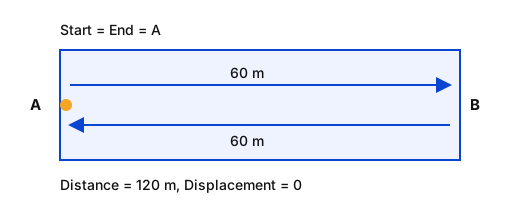
Uma swims in a 60 m long pool. She covers 120 m in one minute by swimming from one end to the other and back along the same straight path. The average velocity of Uma is:
उमा 60 m लंबे तरणताल में तैरती है। वह एक सिरे से दूसरे सिरे तक और उसी सीधे पथ पर वापस तैरकर एक मिनट में 120 m की दूरी तय करती है। उमा का औसत वेग है:
  1. A3 m/s
  2. B2 m/s
  3. C1 m/s
  4. D0 m/s
Show answer

Concept: Average velocity =total displacementtotal time; average speed uses total distance.

  1. Uma goes A → B (60 m) and returns B → A (60 m): distance =120 m.
  2. Start and end points are the same, so displacement =0.
  3. Average velocity =060 s=0 m s−1 (average speed would be 2 m s−1).

Trick: Back to the starting point → displacement 0 → average velocity 0.

Answer: (D) 0 m/s

अवधारणा: औसत वेग =कुल विस्थापनकुल समय; औसत चाल में कुल दूरी ली जाती है।

  1. उमा A → B (60 m) जाती है और B → A (60 m) लौटती है: दूरी =120 m।
  2. आरंभ व अंत बिंदु एक ही हैं, अतः विस्थापन =0।
  3. औसत वेग =060 s=0 m s−1 (औसत चाल 2 m s−1 होती)।

ट्रिक: प्रारंभिक बिंदु पर वापसी → विस्थापन 0 → औसत वेग 0।

उत्तर: (D) 0 m/s

RRB Technician Grade IIIGeneral ScienceAverage velocity – displacementRRB Technician Grade III 2024 · 24 Dec Shift 1 →
Q1772.
Select the INCORRECT pair.
गलत युग्म का चयन कीजिए।
  1. APlastic glass – non-biodegradableप्लास्टिक का गिलास – जैव-निम्नीकरणीय नहीं (non-biodegradable)
  2. BKulhad – non-biodegradableकुल्हड़ – जैव-निम्नीकरणीय नहीं (non-biodegradable)
  3. CPaper cup – biodegradableकागज़ का कप – जैव-निम्नीकरणीय (biodegradable)
  4. DVegetable – biodegradableसब्ज़ी – जैव-निम्नीकरणीय (biodegradable)
Show answer

Concept: Biodegradable substances are broken down by microorganisms (bacteria, fungi); non-biodegradable ones are not.

  1. Plastic glass – not decomposed by microbes → non-biodegradable (correct pair).
  2. Kulhad is made of baked clay and returns to soil → biodegradable, so 'Kulhad – non-biodegradable' is wrong.
  3. Paper cup and vegetables – decomposed by microbes → biodegradable (correct).

Yaad rakhein: Kulhad, paper, food waste → biodegradable; plastic, polythene → non-biodegradable.

Answer: (B) Kulhad – non-biodegradable

अवधारणा: जैव-निम्नीकरणीय पदार्थ सूक्ष्मजीवों (जीवाणु, कवक) द्वारा अपघटित होते हैं; अजैव-निम्नीकरणीय नहीं।

  1. प्लास्टिक गिलास – सूक्ष्मजीव अपघटित नहीं करते → अजैव-निम्नीकरणीय (सही युग्म)।
  2. कुल्हड़ पकी मिट्टी का बना होता है और मिट्टी में मिल जाता है → जैव-निम्नीकरणीय; अतः 'कुल्हड़ – अजैव-निम्नीकरणीय' गलत।
  3. कागज़ का कप और सब्ज़ियाँ – जैव-निम्नीकरणीय (सही)।

याद रखें: कुल्हड़, कागज़, खाद्य अपशिष्ट → जैव-निम्नीकरणीय; प्लास्टिक, पॉलिथीन → अजैव-निम्नीकरणीय।

उत्तर: (B) कुल्हड़ – जैव-निम्नीकरणीय नहीं (non-biodegradable)

RRB Technician Grade IIIGeneral ScienceBiodegradable vs non-biodegradableRRB Technician Grade III 2024 · 24 Dec Shift 1 →
Q1773.
What is the name of the phenomenon that causes white light to split into seven colours as it passes through a glass prism?
उस परिघटना का नाम क्या है जिसके कारण काँच के प्रिज़्म से गुजरते समय श्वेत प्रकाश सात रंगों में विभक्त हो जाता है?
  1. ADiffractionविवर्तन (Diffraction)
  2. BRefractionअपवर्तन (Refraction)
  3. CScatteringप्रकीर्णन (Scattering)
  4. DDispersionविक्षेपण (Dispersion)
Show answer

Concept: Splitting of white light into its seven component colours (VIBGYOR) by a prism is called dispersion.

  1. Different colours have different speeds in glass, so they bend through different angles.
  2. Red bends the least and violet bends the most.
  3. Refraction is the bending itself; dispersion is the splitting into colours due to it.

Yaad rakhein: Prism + white light → spectrum VIBGYOR = dispersion.

Answer: (D) Dispersion

अवधारणा: प्रिज़्म द्वारा श्वेत प्रकाश का सात घटक रंगों (बैंनीआहपनाला) में विभाजन विक्षेपण कहलाता है।

  1. विभिन्न रंगों की काँच में चाल भिन्न होती है, अतः वे अलग-अलग कोणों पर मुड़ते हैं।
  2. लाल सबसे कम और बैंगनी सबसे अधिक मुड़ता है।
  3. अपवर्तन केवल मुड़ना है; उसके कारण रंगों में बँटना विक्षेपण है।

याद रखें: प्रिज़्म + श्वेत प्रकाश → स्पेक्ट्रम बैंनीआहपनाला = विक्षेपण।

उत्तर: (D) विक्षेपण (Dispersion)

RRB Technician Grade IIIGeneral ScienceDispersion of lightRRB Technician Grade III 2024 · 24 Dec Shift 1 →
Q1774.
In which of the following life processes is the creation of a DNA copy, a basic event?
निम्नलिखित में से किस जैव प्रक्रम में DNA की प्रतिकृति बनाना एक मूल घटना है?
  1. ARespirationश्वसन
  2. BReproductionजनन
  3. CCirculationपरिसंचरण
  4. DExcretionउत्सर्जन
Show answer

Concept: Reproduction produces new individuals similar to the parent; the basic event is making a copy of DNA.

  1. DNA in the nucleus carries the information for making proteins and body design.
  2. During reproduction the cell copies its DNA (DNA replication) and the two copies separate into two cells.
  3. Slight copying variations lead to variation – the basis of evolution.

Yaad rakhein: Reproduction = DNA copying + cell division.

Answer: (B) Reproduction

अवधारणा: जनन से जनक के समान नए जीव बनते हैं; इसकी मूल घटना DNA की प्रतिकृति बनाना है।

  1. केंद्रक में DNA प्रोटीन निर्माण व शरीर की रूपरेखा की सूचना रखता है।
  2. जनन में कोशिका अपने DNA की प्रतिकृति बनाती है और दोनों प्रतियाँ दो कोशिकाओं में बँट जाती हैं।
  3. प्रतिकृति में सूक्ष्म अंतर से विभिन्नता आती है – विकास का आधार।

याद रखें: जनन = DNA प्रतिकृति + कोशिका विभाजन।

उत्तर: (B) जनन

RRB Technician Grade IIIGeneral ScienceDNA copying in reproductionRRB Technician Grade III 2024 · 24 Dec Shift 1 →
Q1775.
Which of the following is the dispersed phase of butter?
निम्नलिखित में से कौन-सी मक्खन की परिक्षिप्त प्रावस्था (dispersed phase) है?
  1. AOnly liquidकेवल द्रव
  2. BOnly solidकेवल ठोस
  3. CBoth solid and liquidठोस और द्रव दोनों
  4. DOnly gasकेवल गैस
Show answer

Concept: A colloid has a dispersed phase (scattered particles) and a dispersion medium. Liquid dispersed in a solid is called a gel.

  1. Butter: tiny droplets of water (liquid) are dispersed in solid fat.
  2. Dispersed phase = liquid; dispersion medium = solid → gel.
  3. Other gels: cheese, jelly.

Yaad rakhein: Gel = liquid in solid; emulsion = liquid in liquid (milk); foam = gas in liquid.

Answer: (A) Only liquid

अवधारणा: कोलॉइड में परिक्षिप्त प्रावस्था (बिखरे कण) और परिक्षेपण माध्यम होते हैं। ठोस में परिक्षिप्त द्रव को जेल कहते हैं।

  1. मक्खन: ठोस वसा में जल (द्रव) की सूक्ष्म बूँदें परिक्षिप्त होती हैं।
  2. परिक्षिप्त प्रावस्था = द्रव; परिक्षेपण माध्यम = ठोस → जेल।
  3. अन्य जेल: पनीर, जेली।

याद रखें: जेल = ठोस में द्रव; पायस = द्रव में द्रव (दूध); झाग = द्रव में गैस।

उत्तर: (A) केवल द्रव

RRB Technician Grade IIIGeneral ScienceColloids – gel (butter)RRB Technician Grade III 2024 · 24 Dec Shift 1 →
Q1776.
Plant cells have cell walls because __________.
पादप कोशिकाओं में कोशिका भित्ति होती है क्योंकि __________।
  1. Athey defend plant cells from a variety of external effectsवे पादप कोशिकाओं की विभिन्न बाहरी प्रभावों से रक्षा करती हैं
  2. Bthey do not have proper genetic materialउनमें उचित आनुवंशिक पदार्थ नहीं होता
  3. Cthey do not have cytoplasmउनमें कोशिकाद्रव्य (cytoplasm) नहीं होता
  4. Dthey are required for photosynthesisवे प्रकाश-संश्लेषण के लिए आवश्यक हैं
Show answer

Concept: Plant cells have a rigid cell wall (mainly cellulose) outside the plasma membrane.

  1. It gives structural strength and shape to the cell.
  2. It protects the cell against external effects, e.g. bursting in dilute (hypotonic) solutions and mechanical injury.
  3. Cell walls are not needed for photosynthesis (chloroplasts do that); plant cells do have genetic material and cytoplasm.

Yaad rakhein: Cell wall = cellulose 'armour' for protection and rigidity.

Answer: (A) they defend plant cells from a variety of external effects

अवधारणा: पादप कोशिकाओं में प्लाज़्मा झिल्ली के बाहर एक दृढ़ कोशिका भित्ति (मुख्यतः सेलुलोज़) होती है।

  1. यह कोशिका को संरचनात्मक मज़बूती और आकार देती है।
  2. यह बाहरी प्रभावों से रक्षा करती है, जैसे तनु (अल्पपरासरी) विलयन में फटने और यांत्रिक क्षति से।
  3. प्रकाश संश्लेषण क्लोरोप्लास्ट करता है, भित्ति नहीं; पादप कोशिकाओं में आनुवंशिक पदार्थ व कोशिकाद्रव्य होते हैं।

याद रखें: कोशिका भित्ति = सुरक्षा और दृढ़ता के लिए सेलुलोज़ का 'कवच'।

उत्तर: (A) वे पादप कोशिकाओं की विभिन्न बाहरी प्रभावों से रक्षा करती हैं

RRB Technician Grade IIIGeneral SciencePlant cell wallRRB Technician Grade III 2024 · 24 Dec Shift 1 →
Q1777.
In human beings, air is taken into the body through the nostrils and from here the air passes through the throat and into the lungs. Which of the following ensures that the air-passage does NOT collapse in the throat?
मनुष्यों में, वायु नासाद्वारों के माध्यम से शरीर में ली जाती है और यहाँ से वायु गले से होकर फुफ्फुसों में जाती है। निम्नलिखित में से कौन यह सुनिश्चित करता है कि गले में वायु-मार्ग पिचके नहीं?
  1. ARings of cartilageउपास्थि के वलय (Rings of cartilage)
  2. BNostrils large poresनासाद्वारों के बड़े छिद्र
  3. CNostrils large hairsनासाद्वारों के बड़े बाल
  4. DSize of mouth cavityमुख गुहा का आकार
Show answer

Concept: Air passes from the nostrils through the throat into the trachea (windpipe) and then to the lungs.

  1. The trachea is supported by C-shaped rings of cartilage.
  2. These rings keep the air passage open and stop it from collapsing when air pressure inside drops.
  3. Hairs and mucus in the nostrils only filter the air; they do not support the passage.

Yaad rakhein: Cartilage rings = 'support hoops' of the windpipe.

Answer: (A) Rings of cartilage

अवधारणा: वायु नासाद्वार से गले होकर श्वासनली (ट्रैकिया) और फिर फेफड़ों में जाती है।

  1. श्वासनली C-आकार के उपास्थि (कार्टिलेज) वलयों से सधी होती है।
  2. ये वलय वायु मार्ग को खुला रखते हैं और अंदर हवा कम होने पर इसे पिचकने नहीं देते।
  3. नासाद्वार के बाल व श्लेष्मा केवल वायु को छानते हैं; मार्ग को सहारा नहीं देते।

याद रखें: उपास्थि वलय = श्वासनली के 'सहारा छल्ले'।

उत्तर: (A) उपास्थि के वलय (Rings of cartilage)

RRB Technician Grade IIIGeneral ScienceTrachea – rings of cartilageRRB Technician Grade III 2024 · 24 Dec Shift 1 →
Q1778.
In which of the following organisms can individuals change sex, indicating that sex is NOT genetically determined?
निम्नलिखित में से किस जीव में व्यष्टि लिंग परिवर्तन कर सकते हैं, जो दर्शाता है कि लिंग आनुवंशिक रूप से निर्धारित नहीं होता है?
  1. ALizardsछिपकली
  2. BSnailsघोंघा
  3. COstrichesशुतुरमुर्ग
  4. DFrogsमेंढक
Show answer

Concept: In some animals sex is not decided by genes but by other factors, and individuals can even change sex.

  1. In snails, individuals can change sex – sex is not genetically determined.
  2. In some reptiles (e.g. many turtles, crocodiles) the incubation temperature of eggs decides the sex.
  3. In humans, sex is genetically determined by sex chromosomes (XX female, XY male).

Yaad rakhein: Snail = sex change; reptile eggs = temperature; humans = X/Y chromosomes.

Answer: (B) Snails

अवधारणा: कुछ जंतुओं में लिंग जीन से नहीं बल्कि अन्य कारकों से तय होता है, और जीव लिंग बदल भी सकते हैं।

  1. घोंघे में जीव लिंग बदल सकते हैं – लिंग आनुवंशिक रूप से निर्धारित नहीं।
  2. कुछ सरीसृपों (जैसे कई कछुए, मगरमच्छ) में अंडों के निषेचन/ऊष्मायन ताप से लिंग तय होता है।
  3. मनुष्य में लिंग लिंग-गुणसूत्रों (XX मादा, XY नर) से तय होता है।

याद रखें: घोंघा = लिंग परिवर्तन; सरीसृप अंडे = ताप; मनुष्य = X/Y गुणसूत्र।

उत्तर: (B) घोंघा

RRB Technician Grade IIIGeneral ScienceSex determination – snailsRRB Technician Grade III 2024 · 24 Dec Shift 1 →
Q1779.
Which of the following is correct about fertilisation in plants?
पौधों में निषेचन के बारे में निम्नलिखित में से कौन-सा कथन सही है?
  1. AThe male germ-cell produced by pollen grain fuses with the female gamete present in the ovule.परागकण द्वारा उत्पन्न नर जनन-कोशिका, बीजांड में उपस्थित मादा युग्मक से संलयित होती है।
  2. BThe male germ-cell produced by pollen grain fuses with the female gamete present in the stigma.परागकण द्वारा उत्पन्न नर जनन-कोशिका, वर्तिकाग्र में उपस्थित मादा युग्मक से संलयित होती है।
  3. CThe male germ-cell produced by the ovary fuses with the female gamete present in the ovule.अंडाशय द्वारा उत्पन्न नर जनन-कोशिका, बीजांड में उपस्थित मादा युग्मक से संलयित होती है।
  4. DThe male germ-cell produced by the ovule fuses with the female gamete present in the pollen tube.बीजांड द्वारा उत्पन्न नर जनन-कोशिका, पराग नलिका में उपस्थित मादा युग्मक से संलयित होती है।
Show answer

Concept: After pollination, the pollen grain on the stigma grows a pollen tube that carries the male germ-cell to the ovule.

  1. Pollen grain → produces the male germ-cell.
  2. Pollen tube grows through the style and reaches the ovule in the ovary.
  3. The male germ-cell fuses with the female gamete (egg) present in the ovule → zygote.

Yaad rakhein: Male gamete from pollen, female gamete in ovule; the ovule later becomes the seed.

Answer: (A) The male germ-cell produced by pollen grain fuses with the female gamete present in the ovule.

अवधारणा: परागण के बाद वर्तिकाग्र पर पड़ा परागकण पराग नलिका बनाता है जो नर युग्मक को बीजांड तक ले जाती है।

  1. परागकण → नर युग्मक बनाता है।
  2. पराग नलिका वर्तिका से होकर अंडाशय में बीजांड तक पहुँचती है।
  3. नर युग्मक बीजांड में उपस्थित मादा युग्मक (अंड) से संलयित होता है → युग्मनज।

याद रखें: नर युग्मक परागकण से, मादा युग्मक बीजांड में; बीजांड बाद में बीज बनता है।

उत्तर: (A) परागकण द्वारा उत्पन्न नर जनन-कोशिका, बीजांड में उपस्थित मादा युग्मक से संलयित होती है।

RRB Technician Grade IIIGeneral ScienceFertilisation in flowering plantsRRB Technician Grade III 2024 · 24 Dec Shift 1 →
Q1780.
Which of the following holds for the parallel combination of resistors?
प्रतिरोधकों के पार्श्वक्रम (समांतर) संयोजन के लिए निम्नलिखित में से कौन-सा सत्य है?
  1. AThe total resistance is always less than the smallest resistance.कुल प्रतिरोध सदैव सबसे छोटे प्रतिरोध से कम होता है।
  2. BThe total resistance is equal to the highest resistance.कुल प्रतिरोध सबसे बड़े प्रतिरोध के बराबर होता है।
  3. CThe total resistance is always greater than the smallest resistance.कुल प्रतिरोध सदैव सबसे छोटे प्रतिरोध से अधिक होता है।
  4. DThe total resistance is equal to the smallest resistance.कुल प्रतिरोध सबसे छोटे प्रतिरोध के बराबर होता है।
Show answer

Concept: In parallel, 1Rp=1R1+1R2+…

  1. Each extra path lets more current flow, so total resistance decreases.
  2. Example: 2 Ω and 3 Ω → Rp=2×32+3=1.2 Ω, less than 2 Ω.
  3. Hence Rp is always less than the smallest resistance.

Trick: Series → more than the largest; parallel → less than the smallest.

Answer: (A) The total resistance is always less than the smallest resistance.

अवधारणा: समांतर क्रम में 1Rp=1R1+1R2+…

  1. हर अतिरिक्त मार्ग से अधिक धारा बहती है, अतः कुल प्रतिरोध घटता है।
  2. उदाहरण: 2 Ω और 3 Ω → Rp=2×32+3=1.2 Ω, जो 2 Ω से कम है।
  3. अतः Rp सदैव सबसे छोटे प्रतिरोध से भी कम होता है।

ट्रिक: श्रेणी → सबसे बड़े से अधिक; समांतर → सबसे छोटे से कम।

उत्तर: (A) कुल प्रतिरोध सदैव सबसे छोटे प्रतिरोध से कम होता है।

RRB Technician Grade IIIGeneral ScienceResistors in parallelRRB Technician Grade III 2024 · 24 Dec Shift 1 →