Question bank

Q&A: practice questions with answers

Search questions on any topic. Filter by exam category, exam, subject and topic, try the question, then open the answer and explanation.

Courses – airGurukul

3,200 questions found.

Q1821.
Study the following pie-chart and answer the question that follows.
The following pie-chart shows the breakup of the percentage sale of motorcycles by different companies in India the year 2021.
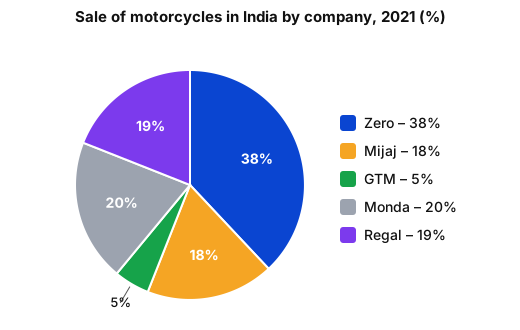
If the total motorcycles sold in India in the year 2021 was 25,00,000, then what was the number of motorcycles sold by GTM in India in the year 2021?
निम्नलिखित पाई-चार्ट का अध्ययन कीजिए और उसके बाद आने वाले प्रश्न का उत्तर दीजिए।
निम्नलिखित पाई-चार्ट वर्ष 2021 में भारत में विभिन्न कंपनियों द्वारा मोटरसाइकिलों की प्रतिशत बिक्री का विवरण दर्शाता है।

यदि वर्ष 2021 में भारत में बेची गई कुल मोटरसाइकिलें 25,00,000 थीं, तो वर्ष 2021 में भारत में GTM द्वारा बेची गई मोटरसाइकिलों की संख्या कितनी थी?
  1. A2,00,000
  2. B1,75,000
  3. C1,25,000
  4. D1,50,000
Show answer

Concept: Value of a sector =its %×total.

  1. From the chart, GTM’s share =5%.
  2. GTM =5100×25,00,000=1,25,000.

Trick: 5%=120; 25,00,000÷20=1,25,000.

Answer: (C) 1,25,000

अवधारणा: किसी खंड का मान =उसका %×कुल।

  1. चार्ट से GTM का हिस्सा =5%।
  2. GTM =5100×25,00,000=1,25,000।

ट्रिक: 5%=120; 25,00,000÷20=1,25,000।

उत्तर: (C) 1,25,000

RRB Technician Grade IIIMathematicsData Interpretation (Pie Chart)RRB Technician Grade III 2024 · 23 Dec Shift 3 →
Q1822.
Mr. Saxena bought some pens at the rate of ₹150 per dozen. He sold them for ₹15 each. What is his profit/loss percentage?
श्री सक्सेना ने ₹150 प्रति दर्जन की दर से कुछ पेन खरीदे। उन्होंने उन्हें ₹15 प्रति पेन की दर से बेचा। उनका लाभ/हानि प्रतिशत क्या है?
  1. A20% profit20% लाभ
  2. B18.5% profit18.5% लाभ
  3. C28% loss28% हानि
  4. D37.5% loss37.5% हानि
Show answer

Concept: Profit%=SP−CPCP×100.

  1. CP of one pen =15012=12.5.
  2. SP =15; profit =2.5.
  3. Profit% =2.512.5×100=20%.

Trick: Compare per dozen: SP =15×12=180 vs CP 150 → 30150=20% profit.

Answer: (A) 20% profit

अवधारणा: लाभ%=विक्रय मूल्य−क्रय मूल्यक्रय मूल्य×100।

  1. एक पेन का क्रय मूल्य =15012=12.5।
  2. विक्रय मूल्य =15; लाभ =2.5।
  3. लाभ% =2.512.5×100=20%।

ट्रिक: दर्जन के हिसाब से: विक्रय =15×12=180, क्रय 150 → 30150=20% लाभ।

उत्तर: (A) 20% लाभ

RRB Technician Grade IIIMathematicsProfit and LossRRB Technician Grade III 2024 · 23 Dec Shift 3 →
Q1823.
The area of a square is 4096 sq cm. Find the ratio of the breadth and the length of a rectangle whose length is twice the side of the square and breadth is 24 cm less than the side of the square.
एक वर्ग का क्षेत्रफल 4096 वर्ग cm है। उस आयत की चौड़ाई और लंबाई का अनुपात ज्ञात कीजिए जिसकी लंबाई वर्ग की भुजा की दोगुनी है और चौड़ाई वर्ग की भुजा से 24 cm कम है।
  1. A5:16
  2. B18:5
  3. C7:16
  4. D5:32
Show answer

Concept: Side of square =area.

  1. Side =4096=64 cm.
  2. Length =2×64=128 cm; breadth =64−24=40 cm.
  3. Breadth : length =40:128=5:16.

Trick: 4096=642 (since 212); then cancel by 8: 40:128=5:16.

Answer: (A) 5:16

अवधारणा: वर्ग की भुजा =क्षेत्रफल।

  1. भुजा =4096=64 सेमी।
  2. लंबाई =2×64=128 सेमी; चौड़ाई =64−24=40 सेमी।
  3. चौड़ाई : लंबाई =40:128=5:16।

ट्रिक: 4096=642 (212); फिर 8 से काटें: 40:128=5:16।

उत्तर: (A) 5:16

RRB Technician Grade IIIMathematicsMensuration (Square and Rectangle)RRB Technician Grade III 2024 · 23 Dec Shift 3 →
Q1824.
A policeman and a thief start from the same place and walk at the rate of 5 km/h and 5.5 km/h, respectively. How much time will they take to be 9.5 km apart, if they walk in the same direction?
एक पुलिसकर्मी और एक चोर एक ही स्थान से चलना शुरू करते हैं और क्रमशः 5 km/h और 5.5 km/h की दर से चलते हैं। यदि वे एक ही दिशा में चलते हैं, तो उन्हें 9.5 km की दूरी पर होने में कितना समय लगेगा?
  1. A17 hrs17 घंटे
  2. B4 hrs 15 min4 घंटे 15 मिनट
  3. C2 hrs 55 min2 घंटे 55 मिनट
  4. D19 hrs19 घंटे
Show answer

Concept: Same direction: relative speed = difference of speeds; time =gaprelative speed.

  1. Relative speed =5.5−5=0.5 km/h.
  2. Time =9.50.5=19 hours.

Trick: Gap grows by 0.5 km each hour; 9.5÷0.5=19.

Answer: (D) 19 hrs

अवधारणा: एक ही दिशा: सापेक्ष चाल = चालों का अंतर; समय =दूरीसापेक्ष चाल।

  1. सापेक्ष चाल =5.5−5=0.5 km/h।
  2. समय =9.50.5=19 घंटे।

ट्रिक: हर घंटे दूरी 0.5 km बढ़ती है; 9.5÷0.5=19।

उत्तर: (D) 19 घंटे

RRB Technician Grade IIIMathematicsRelative SpeedRRB Technician Grade III 2024 · 23 Dec Shift 3 →
Q1825.
Pipes A and B can fill a tank for 8 hours and 10 hours, respectively, and pipe C can empty the full tank in 12 hours. All three pipes are opened together, but pipe A is closed after 4 hours. In how many hours will the remaining part of tank be filled?
पाइप A और B एक टंकी को क्रमशः 8 घंटे और 10 घंटे में भर सकते हैं, और पाइप C भरी हुई टंकी को 12 घंटे में खाली कर सकता है। तीनों पाइप एक साथ खोले जाते हैं, परंतु 4 घंटे बाद पाइप A बंद कर दिया जाता है। टंकी का शेष भाग कितने घंटों में भरेगा?
  1. A30
  2. B22
  3. C24
  4. D26
Show answer

Concept: Take tank capacity =LCM(8,10,12)=120 units.

  1. A =+15, B =+12, C =−10 units/h.
  2. 4 h with all three: 4×(15+12−10)=68 units.
  3. Remaining =120−68=52 units.
  4. B and C together: 12−10=2 units/h → 522=26 hours.

Trick: LCM-unit method avoids fractions: just add/subtract rates.

Answer: (D) 26

अवधारणा: टंकी की क्षमता =LCM(8,10,12)=120 इकाई मानें।

  1. A =+15, B =+12, C =−10 इकाई/घंटा।
  2. तीनों 4 घंटे: 4×(15+12−10)=68 इकाई।
  3. शेष =120−68=52 इकाई।
  4. B और C: 12−10=2 इकाई/घंटा → 522=26 घंटे।

ट्रिक: LCM-इकाई विधि से भिन्न नहीं आते: बस दरें जोड़ें/घटाएँ।

उत्तर: (D) 26

RRB Technician Grade IIIMathematicsPipes and CisternRRB Technician Grade III 2024 · 23 Dec Shift 3 →
Q1826.
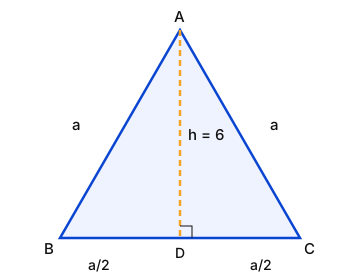
The area (in cm2) of an equilateral triangle whose height is 6 cm, is:
उस समबाहु त्रिभुज का क्षेत्रफल (cm2 में) क्या है, जिसकी ऊँचाई 6 cm है?
  1. A934
  2. B63
  3. C332
  4. D123
Show answer

Concept: Equilateral triangle of side a: height h=32a, area =34a2=h23.

  1. 32a=6⇒a=123=43 cm.
  2. Area =34×(43)2=34×48=123 cm2.

Trick: Direct: area =h23=363=123.

Answer: (D) 123

अवधारणा: भुजा a वाला समबाहु त्रिभुज: ऊँचाई h=32a, क्षेत्रफल =34a2=h23।

  1. 32a=6⇒a=123=43 सेमी।
  2. क्षेत्रफल =34×(43)2=34×48=123 सेमी2।

ट्रिक: सीधे: क्षेत्रफल =h23=363=123।

उत्तर: (D) 123

RRB Technician Grade IIIMathematicsMensuration (Equilateral Triangle)RRB Technician Grade III 2024 · 23 Dec Shift 3 →
Q1827.
Refer to the given number and symbol series and answer the question that follows. Counting to be done from left to right only.
(Left) # 1 * £ 5 3 2 9 + % 8 4 6 @ $ 7 & Ω (Right)
How many such symbols are there, each of which is immediately preceded by a number and also immediately followed by another symbol?
दी गई संख्या और प्रतीक श्रृंखला को देखिए और उसके बाद आने वाले प्रश्न का उत्तर दीजिए। गिनती केवल बाएँ से दाएँ की जानी है।
(बाएँ) # 1 * £ 5 3 2 9 + % 8 4 6 @ $ 7 & Ω (दाएँ)
ऐसे कितने प्रतीक हैं, जिनमें से प्रत्येक के ठीक पहले एक संख्या है और ठीक बाद एक अन्य प्रतीक है?
  1. A5
  2. B3
  3. C2
  4. D4
Show answer

Concept: Check each symbol: the item just before must be a number and the item just after must be a symbol.

  1. * : before 1 (number), after £ (symbol) ✓.
  2. + : before 9, after % ✓.
  3. @ : before 6, after $ ✓.
  4. & : before 7, after Ω ✓. Others fail (e.g. £ is followed by 5).
  5. Total =4.

Trick: Scan for the pattern "number–symbol–symbol" and count the middle symbols.

Answer: (D) 4

अवधारणा: हर प्रतीक जाँचें: ठीक पहले संख्या और ठीक बाद में प्रतीक होना चाहिए।

  1. * : पहले 1 (संख्या), बाद में £ (प्रतीक) ✓।
  2. + : पहले 9, बाद में % ✓।
  3. @ : पहले 6, बाद में $ ✓।
  4. & : पहले 7, बाद में Ω ✓। बाकी असफल (जैसे £ के बाद 5)।
  5. कुल =4।

ट्रिक: "संख्या–प्रतीक–प्रतीक" पैटर्न खोजें और बीच वाले प्रतीक गिनें।

उत्तर: (D) 4

RRB Technician Grade IIIGeneral Intelligence and ReasoningSymbol-Number SeriesRRB Technician Grade III 2024 · 23 Dec Shift 3 →
Q1828.
In a certain code language, ‘PIER’ is coded as ‘1524’ and ‘RILE’ is coded as ‘5321’. What is the code for ‘P’ in the given code language?
एक निश्चित कूट भाषा में, ‘PIER’ को ‘1524’ के रूप में कूटबद्ध किया जाता है और ‘RILE’ को ‘5321’ के रूप में कूटबद्ध किया जाता है। उस कूट भाषा में ‘P’ के लिए कूट क्या है?
  1. A2
  2. B4
  3. C1
  4. D5
Show answer

Concept: Letters common to both words share the common digits; the leftover letter gets the leftover digit.

  1. PIER → 1, 5, 2, 4 and RILE → 5, 3, 2, 1.
  2. Common letters I, E, R ↔ common digits 1, 2, 5.
  3. P is only in PIER, and the only digit of PIER not in RILE is 4.
  4. So P = 4.

Trick: Codes are jumbled, so match by elimination, not by position.

Answer: (B) 4

अवधारणा: दोनों शब्दों में समान अक्षरों के कोड भी समान अंक होते हैं; बचा अक्षर बचे अंक से जुड़ता है।

  1. PIER → 1, 5, 2, 4 और RILE → 5, 3, 2, 1।
  2. समान अक्षर I, E, R ↔ समान अंक 1, 2, 5।
  3. P केवल PIER में है, और PIER का वह अंक जो RILE में नहीं है = 4।
  4. अतः P = 4।

ट्रिक: कोड क्रम में नहीं हैं, इसलिए स्थान से नहीं, विलोपन से मिलाएँ।

उत्तर: (B) 4

RRB Technician Grade IIIGeneral Intelligence and ReasoningCoding-DecodingRRB Technician Grade III 2024 · 23 Dec Shift 3 →
Q1829.
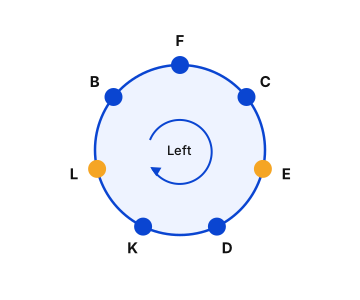
B, C, D, E, F, K and L are sitting around a circular table, facing the centre. Only two people sit between F and K when counted from the right of F. Only two people sit between K and C. Only three people sit between F and D. B sits to the immediate left of L.
Who sits third to the left of E?
B, C, D, E, F, K और L एक वृत्ताकार मेज के चारों ओर केंद्र की ओर मुख करके बैठे हैं। F के दाएँ से गिनने पर F और K के बीच केवल दो व्यक्ति बैठे हैं। K और C के बीच केवल दो व्यक्ति बैठे हैं। F और D के बीच केवल तीन व्यक्ति बैठे हैं। B, L के ठीक बाएँ बैठा है।
E के बाएँ से तीसरे स्थान पर कौन बैठा है?
  1. AB
  2. BL
  3. CF
  4. DK
Show answer

Concept: Facing the centre: left = clockwise, right = anticlockwise. With 7 seats, “two people between” means 3 seats apart.

  1. Fix F. K is 3rd to the right (anticlockwise) of F.
  2. C is 3 seats from K (the other way would land on F); D is 4 seats from F (3 between) on the free side, next to K.
  3. Left gaps: B immediately left of L fits only as the adjacent pair before F; E takes the last seat next to C.
  4. Clockwise from F: F, C, E, D, K, L, B. Third to the left of E: D, K, L → L.

Trick: Always place the person with the most fixed clues (F) first, then fill pairs like “B immediate left of L”.

Answer: (B) L

अवधारणा: केंद्र की ओर मुख: बायाँ = दक्षिणावर्त, दायाँ = वामावर्त। 7 सीटों में “बीच में दो व्यक्ति” = 3 सीट दूर।

  1. F को स्थिर करें। K, F के दाएँ (वामावर्त) तीसरा।
  2. C, K से 3 सीट दूर (दूसरी ओर F आता); D, F से 4 सीट दूर (बीच में 3), K के बगल में।
  3. B, L के ठीक बाएँ – यह जोड़ी केवल F से पहले की दो सीटों में बैठती है; E, C के बगल वाली बची सीट पर।
  4. F से दक्षिणावर्त: F, C, E, D, K, L, B। E के बाएँ तीसरा: D, K, L → L।

ट्रिक: सबसे अधिक सूचना वाले व्यक्ति (F) को पहले रखें, फिर “B, L के ठीक बाएँ” जैसी जोड़ियाँ भरें।

उत्तर: (B) L

RRB Technician Grade IIIGeneral Intelligence and ReasoningCircular Seating ArrangementRRB Technician Grade III 2024 · 23 Dec Shift 3 →
Q1830.
Read the given statements and conclusions carefully. You have to take the given statements to be true even if they seem to be at variance from commonly known facts and decide which conclusion(s) logically follow(s) from the given statements.
Statements:
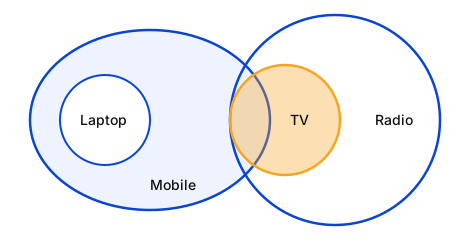
All laptops are mobiles.
Some mobiles are televisions.
All televisions are radios.
Conclusions:
(I) Some radios are televisions.
(II) All televisions are mobiles.
दिए गए कथनों और निष्कर्षों को ध्यानपूर्वक पढ़िए। आपको दिए गए कथनों को सत्य मानना है, भले ही वे सामान्यतः ज्ञात तथ्यों से भिन्न प्रतीत होते हों, और निर्णय लेना है कि कौन-सा/से निष्कर्ष तार्किक रूप से दिए गए कथनों का अनुसरण करता है/करते हैं।
कथन:
सभी लैपटॉप, मोबाइल हैं।
कुछ मोबाइल, टेलीविजन हैं।
सभी टेलीविजन, रेडियो हैं।
निष्कर्ष:
(I) कुछ रेडियो, टेलीविजन हैं।
(II) सभी टेलीविजन, मोबाइल हैं।
  1. ANeither conclusion (I) nor (II) follows.न तो निष्कर्ष (I) और न ही (II) अनुसरण करता है।
  2. BBoth conclusions (I) and (II) follow.दोनों निष्कर्ष (I) और (II) अनुसरण करते हैं।
  3. COnly conclusion (I) follows.केवल निष्कर्ष (I) अनुसरण करता है।
  4. DOnly conclusion (II) follows.केवल निष्कर्ष (II) अनुसरण करता है।
Show answer

Concept: “All A are B” also means “Some B are A”. A conclusion follows only if it is true in every possible diagram.

  1. All televisions are radios ⇒ some radios are televisions. So (I) follows.
  2. Only some mobiles are televisions; televisions may lie partly outside mobiles (as drawn). So (II) “All televisions are mobiles” is not certain.

Yaad rakhein: “All” can be reversed only as “Some” – never as “All”.

Answer: (C) Only conclusion (I) follows.

अवधारणा: “सभी A, B हैं” का अर्थ “कुछ B, A हैं” भी है। निष्कर्ष तभी अनुसरण करता है जब हर संभव आरेख में सत्य हो।

  1. सभी टेलीविज़न रेडियो हैं ⇒ कुछ रेडियो टेलीविज़न हैं। अतः (I) अनुसरण करता है।
  2. केवल कुछ मोबाइल टेलीविज़न हैं; टेलीविज़न का कुछ भाग मोबाइल से बाहर हो सकता है (जैसा चित्र में)। अतः (II) निश्चित नहीं।

याद रखें: “सभी” को उलटने पर केवल “कुछ” बनता है – कभी “सभी” नहीं।

उत्तर: (C) केवल निष्कर्ष (I) अनुसरण करता है।

RRB Technician Grade IIIGeneral Intelligence and ReasoningSyllogismRRB Technician Grade III 2024 · 23 Dec Shift 3 →
Q1831.
Refer to the given number and symbol series and answer the question that follows. Counting to be done from left to right only.
(Left) 9 + Ω 6 £ * $ 1 & 8 4 7 2 % 5 3 @ # (Right)
How many such numbers are there, each of which is immediately preceded by a symbol and also immediately followed by another number?
दी गई संख्या और प्रतीक श्रृंखला को देखिए और उसके बाद आने वाले प्रश्न का उत्तर दीजिए। गिनती केवल बाएँ से दाएँ की जानी है।
(बाएँ) 9 + Ω 6 £ * $ 1 & 8 4 7 2 % 5 3 @ # (दाएँ)
ऐसी कितनी संख्याएँ हैं, जिनमें से प्रत्येक के ठीक पहले एक प्रतीक है और ठीक बाद एक अन्य संख्या है?
  1. A1
  2. B2
  3. C3
  4. D0
Show answer

Concept: Check each number: the item before must be a symbol and the item after must be a number.

  1. 9: nothing before ✗; 6: after £ ✗; 1: after & ✗.
  2. 8: before & (symbol), after 4 (number) ✓.
  3. 5: before % (symbol), after 3 (number) ✓.
  4. 4, 7, 2, 3 are preceded by numbers ✗. Total =2.

Trick: Look for “symbol–number–number” and count the middle number.

Answer: (B) 2

अवधारणा: हर संख्या जाँचें: पहले प्रतीक और बाद में संख्या होनी चाहिए।

  1. 9: पहले कुछ नहीं ✗; 6: बाद में £ ✗; 1: बाद में & ✗।
  2. 8: पहले & (प्रतीक), बाद में 4 (संख्या) ✓।
  3. 5: पहले % (प्रतीक), बाद में 3 (संख्या) ✓।
  4. 4, 7, 2, 3 से पहले संख्या है ✗। कुल =2।

ट्रिक: “प्रतीक–संख्या–संख्या” खोजें और बीच वाली संख्या गिनें।

उत्तर: (B) 2

RRB Technician Grade IIIGeneral Intelligence and ReasoningSymbol-Number SeriesRRB Technician Grade III 2024 · 23 Dec Shift 3 →
Q1832.
Which of the following options should come in place of the question mark (?) in the given series based on the English alphabetical order?
DBL, IEN, NHP, SKR, ?
अंग्रेज़ी वर्णमाला क्रम के आधार पर दी गई श्रृंखला में प्रश्न चिह्न (?) के स्थान पर निम्नलिखित में से कौन-सा विकल्प आना चाहिए?
DBL, IEN, NHP, SKR, ?
  1. AXNT
  2. BYMT
  3. CYNT
  4. DSMX
Show answer

Concept: Track each letter position separately using alphabet numbers.

  1. 1st letters: D, I, N, S → +5 each → X.
  2. 2nd letters: B, E, H, K → +3 each → N.
  3. 3rd letters: L, N, P, R → +2 each → T.
  4. Next term: XNT.

Trick: Learn positions: D = 4, I = 9, N = 14, S = 19, X = 24.

Answer: (A) XNT

अवधारणा: प्रत्येक स्थान के अक्षर को अलग-अलग वर्णमाला क्रमांक से देखें।

  1. पहले अक्षर: D, I, N, S → हर बार +5 → X।
  2. दूसरे अक्षर: B, E, H, K → +3 → N।
  3. तीसरे अक्षर: L, N, P, R → +2 → T।
  4. अगला पद: XNT।

ट्रिक: स्थान याद रखें: D = 4, I = 9, N = 14, S = 19, X = 24।

उत्तर: (A) XNT

RRB Technician Grade IIIGeneral Intelligence and ReasoningLetter SeriesRRB Technician Grade III 2024 · 23 Dec Shift 3 →
Q1833.
In the following number-pairs, the second number is obtained by applying certain mathematical operations to the first number. Which numbers should replace X and Y so that the pattern followed by the two numbers on the left side of :: is the same as that on the right side of ::?
(NOTE: Operations should be performed on the whole numbers, without breaking down the numbers into its constituent digits. E.g. 13 - Operations on 13 such as adding/subtracting/multiplying etc. to 13 can be performed. Breaking down 13 into 1 and 3 and then performing mathematical operations on 1 and 3 is not allowed.)
X : 83 :: 17 : Y
निम्नलिखित संख्या-युग्मों में, दूसरी संख्या पहली संख्या पर कुछ गणितीय संक्रियाएँ करके प्राप्त की जाती है। X और Y के स्थान पर कौन-सी संख्याएँ आनी चाहिए ताकि :: के बाईं ओर की दो संख्याओं द्वारा अनुसरित पैटर्न वही हो जो :: के दाईं ओर की संख्याओं द्वारा अनुसरित है?
(ध्यान दें: संक्रियाएँ संख्याओं को उनके घटक अंकों में विभाजित किए बिना, पूर्ण संख्याओं पर की जानी चाहिए। उदाहरण के लिए 13 - 13 पर संक्रियाएँ जैसे 13 में जोड़ना/घटाना/गुणा करना आदि किया जा सकता है। 13 को 1 और 3 में विभाजित करना और फिर 1 और 3 पर गणितीय संक्रियाएँ करना वर्जित है।)
X : 83 :: 17 : Y
  1. AX = 11, Y = 119
  2. BX = 12, Y = 119
  3. CX = 11, Y = 118
  4. DX = 12, Y = 118
Show answer

Concept: Find one rule that works for an option on both sides.

  1. Try X = 12: 12×7−1=84−1=83 ✓.
  2. Apply to 17: 17×7−1=119−1=118.
  3. So X = 12, Y = 118.

Trick: Test each option on the left pair first; only X = 12 gives 83 with a rule that also yields an option for Y.

Answer: (D) X = 12, Y = 118

अवधारणा: ऐसा एक नियम खोजें जो विकल्प में दोनों ओर लागू हो।

  1. X = 12 लें: 12×7−1=84−1=83 ✓।
  2. 17 पर लागू: 17×7−1=119−1=118।
  3. अतः X = 12, Y = 118।

ट्रिक: पहले बाएँ जोड़े पर विकल्प जाँचें; X = 12 से 83 बनता है और वही नियम Y का विकल्प देता है।

उत्तर: (D) X = 12, Y = 118

RRB Technician Grade IIIGeneral Intelligence and ReasoningNumber AnalogyRRB Technician Grade III 2024 · 23 Dec Shift 3 →
Q1834.
What will come in the place of ‘?’ in the following equation, if ‘+’ and ‘−’ are interchanged and ‘×’ and ‘÷’ are interchanged?
25+15−9÷10×5=?
यदि ‘+’ और ‘−’ को आपस में बदल दिया जाए तथा ‘×’ और ‘÷’ को आपस में बदल दिया जाए, तो निम्नलिखित समीकरण में ‘?’ के स्थान पर क्या आएगा?
25+15−9÷10×5=?
  1. A55
  2. B82
  3. C28
  4. D−22
Show answer

Concept: Swap the signs as told, then apply BODMAS.

  1. After swapping: 25−15+9×10÷5.
  2. 9×10÷5=90÷5=18.
  3. 25−15+18=28.

Trick: Rewrite the whole expression first; do not swap mentally while solving.

Answer: (C) 28

अवधारणा: बताए अनुसार चिह्न बदलें, फिर BODMAS लगाएँ।

  1. बदलने के बाद: 25−15+9×10÷5।
  2. 9×10÷5=90÷5=18।
  3. 25−15+18=28।

ट्रिक: पहले पूरा व्यंजक दोबारा लिखें; हल करते समय मन में चिह्न न बदलें।

उत्तर: (C) 28

RRB Technician Grade IIIGeneral Intelligence and ReasoningMathematical OperationsRRB Technician Grade III 2024 · 23 Dec Shift 3 →
Q1835.
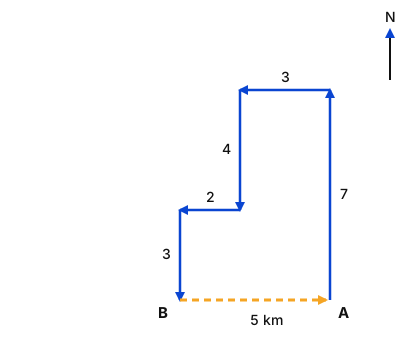
Ginny starts from point A and drives 7 km towards the North. She takes two simultaneous left turns and drives 3 km and 4 km, respectively. She then takes a right turn and drives 2 km. She takes a final left turn and drives 3 km to reach point B. How far (shortest distance) and towards which direction should she drive to reach Point A again? (All turns are 90 degrees only unless specified.)
जिनी बिंदु A से चलना शुरू करती है और उत्तर की ओर 7 km गाड़ी चलाती है। वह लगातार दो बार बाएँ मुड़ती है और क्रमशः 3 km और 4 km गाड़ी चलाती है। फिर वह दाएँ मुड़ती है और 2 km गाड़ी चलाती है। वह अंतिम बार बाएँ मुड़ती है और 3 km गाड़ी चलाकर बिंदु B पर पहुँचती है। बिंदु A पर फिर से पहुँचने के लिए उसे कितनी दूरी (न्यूनतम दूरी) और किस दिशा में गाड़ी चलानी चाहिए? (जब तक निर्दिष्ट न हो, सभी मोड़ केवल 90 डिग्री के हैं।)
  1. A3 km East3 km पूर्व
  2. B3 km West3 km पश्चिम
  3. C4 km East4 km पूर्व
  4. D5 km East5 km पूर्व
Show answer

Concept: Track position on a grid (East =+x, North =+y); a left turn rotates heading anticlockwise.

  1. A(0, 0) → 7 km North → (0, 7).
  2. Left (West) 3 km → (−3, 7); left again (South) 4 km → (−3, 3).
  3. Right (West) 2 km → (−5, 3); left (South) 3 km → B(−5, 0).
  4. B is 5 km due West of A, so she must drive 5 km East.

Trick: Net North =7−4−3=0; net West =3+2=5 → straight 5 km back East.

Answer: (D) 5 km East

अवधारणा: ग्रिड पर स्थिति देखें (पूर्व =+x, उत्तर =+y); बायाँ मोड़ दिशा को वामावर्त घुमाता है।

  1. A(0, 0) → 7 km उत्तर → (0, 7)।
  2. बाएँ (पश्चिम) 3 km → (−3, 7); फिर बाएँ (दक्षिण) 4 km → (−3, 3)।
  3. दाएँ (पश्चिम) 2 km → (−5, 3); बाएँ (दक्षिण) 3 km → B(−5, 0)।
  4. B, A से 5 km पश्चिम है, अतः 5 km पूर्व जाना होगा।

ट्रिक: कुल उत्तर =7−4−3=0; कुल पश्चिम =3+2=5 → सीधे 5 km पूर्व।

उत्तर: (D) 5 km पूर्व

RRB Technician Grade IIIGeneral Intelligence and ReasoningDirection SenseRRB Technician Grade III 2024 · 23 Dec Shift 3 →
Q1836.
Which of the following options should come in place of the question mark (?) in the given series to make it logically complete?
10, 18, 38, 74, 150, ?
दी गई श्रृंखला को तार्किक रूप से पूर्ण करने के लिए प्रश्न चिह्न (?) के स्थान पर निम्नलिखित में से कौन-सा विकल्प आना चाहिए?
10, 18, 38, 74, 150, ?
  1. A274
  2. B298
  3. C300
  4. D280
Show answer

Concept: Each term is double the previous with alternate −2 and +2.

  1. 10×2−2=18, 18×2+2=38.
  2. 38×2−2=74, 74×2+2=150.
  3. Next: 150×2−2=298.

Trick: When terms roughly double, check ×2± small number.

Answer: (B) 298

अवधारणा: हर पद पिछले का दोगुना, बारी-बारी से −2 और +2।

  1. 10×2−2=18, 18×2+2=38।
  2. 38×2−2=74, 74×2+2=150।
  3. अगला: 150×2−2=298।

ट्रिक: जब पद लगभग दोगुने हों, ×2± छोटी संख्या जाँचें।

उत्तर: (B) 298

RRB Technician Grade IIIGeneral Intelligence and ReasoningNumber SeriesRRB Technician Grade III 2024 · 23 Dec Shift 3 →
Q1837.
Based on the English alphabetical order, three of the following four letter-clusters are alike in a certain way and thus form a group. Which letter-cluster does not belong to that group?
(Note: The odd one out is not based on the number of consonants/vowels or their position in the letter-cluster.)
अंग्रेज़ी वर्णमाला क्रम के आधार पर, निम्नलिखित चार अक्षर-समूहों में से तीन किसी निश्चित प्रकार से एकसमान हैं और इस प्रकार एक समूह बनाते हैं। कौन-सा अक्षर-समूह उस समूह से संबंधित नहीं है?
(ध्यान दें: असंगत अक्षर-समूह, उस अक्षर-समूह में व्यंजनों/स्वरों की संख्या या उनके स्थान पर आधारित नहीं है।)
  1. AWZC
  2. BNQT
  3. CTWY
  4. DYBE
Show answer

Concept: Compare gaps between consecutive letters (alphabet wraps around after Z).

  1. WZC: W→Z +3, Z→C +3.
  2. NQT: +3, +3; YBE: +3, +3.
  3. TWY: T→W +3, W→Y +2 ✗.

Trick: After Z continue from A: Z(26) +3 → C.

Answer: (C) TWY

अवधारणा: क्रमागत अक्षरों का अंतर देखें (Z के बाद फिर A से गिनती)।

  1. WZC: W→Z +3, Z→C +3।
  2. NQT: +3, +3; YBE: +3, +3।
  3. TWY: T→W +3, W→Y +2 ✗।

ट्रिक: Z के बाद A से गिनें: Z(26) +3 → C।

उत्तर: (C) TWY

RRB Technician Grade IIIGeneral Intelligence and ReasoningOdd One Out (Letters)RRB Technician Grade III 2024 · 23 Dec Shift 3 →
Q1838.
In a certain code system, 'sparkling stars twinkle' is coded as 'lajv epvz apxv', and 'stars twinkle brightly' is coded as 'epvz rkpx apxv'. What is the code for 'brightly' in the given code language?
एक निश्चित कूट प्रणाली में, 'sparkling stars twinkle' को 'lajv epvz apxv' के रूप में कूटबद्ध किया जाता है, और 'stars twinkle brightly' को 'epvz rkpx apxv' के रूप में कूटबद्ध किया जाता है। दी गई कूट भाषा में 'brightly' का कूट क्या है?
  1. Aepvz
  2. Blajv
  3. Capxv
  4. Drkpx
Show answer

Concept: Words common to two sentences share common codes.

  1. Common words: stars, twinkle ↔ common codes epvz, apxv.
  2. Second sentence leftover word: brightly; leftover code: rkpx.
  3. So brightly = rkpx (and sparkling = lajv).

Trick: Remove the common words and codes – what remains pairs up.

Answer: (D) rkpx

अवधारणा: दो वाक्यों के समान शब्दों के कोड भी समान होते हैं।

  1. समान शब्द: stars, twinkle ↔ समान कोड epvz, apxv।
  2. दूसरे वाक्य में बचा शब्द brightly; बचा कोड rkpx।
  3. अतः brightly = rkpx (और sparkling = lajv)।

ट्रिक: समान शब्द और कोड हटाएँ – जो बचता है, वही जोड़ी है।

उत्तर: (D) rkpx

RRB Technician Grade IIIGeneral Intelligence and ReasoningCoding-Decoding (Word Codes)RRB Technician Grade III 2024 · 23 Dec Shift 3 →
Q1839.
Given below is a statement followed by two possible reasons numbered I and II. Read the statement carefully and decide which of the two explains the event/observation/information given in the statement.
Statement - Even though Town B has a rich history and many ancient landmarks, it is not a popular tourist destination.
I. The town has poor public transportation and limited accommodation options.
II. Town B is located near a popular beach destination.
नीचे एक कथन और उसके बाद I और II क्रमांकित दो संभावित कारण दिए गए हैं। कथन को ध्यानपूर्वक पढ़िए और निर्णय कीजिए कि दोनों में से कौन-सा कारण कथन में दी गई घटना/अवलोकन/सूचना की व्याख्या करता है।
कथन - यद्यपि नगर B का इतिहास समृद्ध है और वहाँ कई प्राचीन स्थल हैं, फिर भी यह एक लोकप्रिय पर्यटन स्थल नहीं है।
I. नगर में सार्वजनिक परिवहन खराब है और ठहरने के विकल्प सीमित हैं।
II. नगर B एक लोकप्रिय समुद्र तट गंतव्य के निकट स्थित है।
  1. ABoth I and II are possible reasonsI और II दोनों संभावित कारण हैं
  2. BOnly II is a possible reasonकेवल II एक संभावित कारण है
  3. COnly I is a possible reasonकेवल I एक संभावित कारण है
  4. DNeither I nor II is a possible reasonन तो I और न ही II संभावित कारण है
Show answer

Concept: A valid reason must directly explain why the event happens.

  1. I: Poor transport and few places to stay discourage tourists – directly explains low tourism ✓.
  2. II: Being near a popular beach would, if anything, bring more visitors; it does not explain the lack of tourists ✗.

Trick: Ask “does this cause the effect stated?” – reject neutral or opposite effects.

Answer: (C) Only I is a possible reason

अवधारणा: मान्य कारण घटना को सीधे समझाना चाहिए।

  1. I: खराब परिवहन और कम ठहरने की व्यवस्था पर्यटकों को रोकती है – सीधे कारण ✓।
  2. II: लोकप्रिय समुद्र-तट के पास होना तो पर्यटक बढ़ा सकता है; यह कम पर्यटन नहीं समझाता ✗।

ट्रिक: पूछें “क्या यह बताया गया प्रभाव पैदा करता है?” – तटस्थ या उलटे प्रभाव वाले कथन अस्वीकार करें।

उत्तर: (C) केवल I एक संभावित कारण है

RRB Technician Grade IIIGeneral Intelligence and ReasoningStatement and ReasonsRRB Technician Grade III 2024 · 23 Dec Shift 3 →
Q1840.
Vaibhav ranked 7th from the top and 32nd from the bottom in his class. How many students are there in the class?
वैभव अपनी कक्षा में ऊपर से 7वें और नीचे से 32वें स्थान पर है। कक्षा में कितने विद्यार्थी हैं?
  1. A36
  2. B38
  3. C39
  4. D37
Show answer

Concept: Total =rank from top+rank from bottom−1.

  1. Total =7+32−1.
  2. Total =38.

Yaad rakhein: Subtract 1 because the person is counted in both ranks.

Answer: (B) 38

अवधारणा: कुल =ऊपर से रैंक+नीचे से रैंक−1।

  1. कुल =7+32−1।
  2. कुल =38।

याद रखें: 1 घटाते हैं क्योंकि वही व्यक्ति दोनों रैंक में गिना गया है।

उत्तर: (B) 38

RRB Technician Grade IIIGeneral Intelligence and ReasoningRankingRRB Technician Grade III 2024 · 23 Dec Shift 3 →