Question bank

Q&A: practice questions with answers

Search questions on any topic. Filter by exam category, exam, subject and topic, try the question, then open the answer and explanation.

Courses – airGurukul

3,200 questions found.

Q1841.
Which of the following options should come in place of the question mark (?) in the given series based on the English alphabetical order?
JTQ, HRS, FPU, DNW, ?
अंग्रेजी वर्णमाला क्रम के आधार पर दी गई श्रृंखला में प्रश्नचिह्न (?) के स्थान पर निम्नलिखित में से कौन-सा विकल्प आना चाहिए?
JTQ, HRS, FPU, DNW, ?
  1. ABMZ
  2. BALZ
  3. CBLY
  4. DZAL
Show answer

Concept: Track each letter position separately.

  1. 1st: J, H, F, D → −2 → B.
  2. 2nd: T, R, P, N → −2 → L.
  3. 3rd: Q, S, U, W → +2 → Y.
  4. Next term: BLY.

Trick: Two positions move backward by 2, the last forward by 2.

Answer: (C) BLY

अवधारणा: प्रत्येक स्थान के अक्षर को अलग देखें।

  1. पहला: J, H, F, D → −2 → B।
  2. दूसरा: T, R, P, N → −2 → L।
  3. तीसरा: Q, S, U, W → +2 → Y।
  4. अगला पद: BLY।

ट्रिक: दो स्थान 2 पीछे, अंतिम 2 आगे।

उत्तर: (C) BLY
RRB Technician Grade IIIGeneral Intelligence and ReasoningLetter SeriesRRB Technician Grade III 2024 · 23 Dec Shift 3 →
Q1842.
Read the given statements and conclusions carefully. You have to take the given statements to be true even if they seem to be at variance from commonly known facts and decide which conclusion(s) logically follow(s) from the given statements.
Statements:
Some shirts are pants.
Some pants are coats.
Conclusions:
(I) Some pants are not shirts.
(II) Some shirts are coats.
दिए गए कथनों और निष्कर्षों को ध्यानपूर्वक पढ़िए। आपको दिए गए कथनों को सत्य मानना है, भले ही वे सामान्यतः ज्ञात तथ्यों से भिन्न प्रतीत होते हों, और निर्णय लेना है कि कौन-सा/से निष्कर्ष तार्किक रूप से दिए गए कथनों का अनुसरण करता/करते है/हैं।
कथन:
कुछ शर्ट, पैंट हैं।
कुछ पैंट, कोट हैं।
निष्कर्ष:
(I) कुछ पैंट, शर्ट नहीं हैं।
(II) कुछ शर्ट, कोट हैं।
  1. ABoth conclusions I and II followनिष्कर्ष I और II दोनों अनुसरण करते हैं
  2. BOnly conclusion II followsकेवल निष्कर्ष II अनुसरण करता है
  3. CNeither conclusion I nor II followsन तो निष्कर्ष I और न ही II अनुसरण करता है
  4. DOnly conclusion I followsकेवल निष्कर्ष I अनुसरण करता है
Show answer

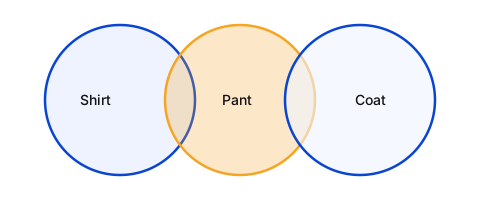
Concept: Draw the minimum diagram; a conclusion follows only if it must be true.

  1. Some shirts are pants; some pants are coats – the diagram can be drawn with all pants inside shirts, so (I) “Some pants are not shirts” is not certain.
  2. Shirts and coats need not overlap (as drawn), so (II) does not follow.
  3. Two “Some” statements give no definite conclusion.

Yaad rakhein: Some + Some = no conclusion.

Answer: (C) Neither conclusion I nor II follows

अवधारणा: न्यूनतम आरेख बनाएँ; निष्कर्ष तभी अनुसरण करता है जब निश्चित रूप से सत्य हो।

  1. कुछ शर्ट पैंट हैं; कुछ पैंट कोट हैं – सभी पैंट को शर्ट के भीतर भी दिखाया जा सकता है, अतः (I) निश्चित नहीं।
  2. शर्ट और कोट का मिलना आवश्यक नहीं (चित्र अनुसार), अतः (II) भी नहीं।
  3. दो “कुछ” कथनों से कोई निश्चित निष्कर्ष नहीं।

याद रखें: कुछ + कुछ = कोई निष्कर्ष नहीं।

उत्तर: (C) न तो निष्कर्ष I और न ही II अनुसरण करता है

RRB Technician Grade IIIGeneral Intelligence and ReasoningSyllogismRRB Technician Grade III 2024 · 23 Dec Shift 3 →
Q1843.
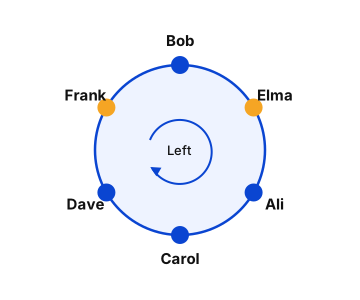
Ali, Bob, Carol, Dave, Elma and Frank are sitting around a circular table facing the centre. Ali sits second to the left of Bob. Carol sits third to the right of Bob. Dave sits to the immediate left of Carol. Elma sits to the immediate left of Bob.
How many people sit between Elma and Frank when counted from the right of Elma ?
Ali, Bob, Carol, Dave, Elma और Frank एक वृत्ताकार मेज़ के चारों ओर केंद्र की ओर मुख करके बैठे हैं। Ali, Bob के बाएँ से दूसरे स्थान पर बैठा है। Carol, Bob के दाएँ से तीसरे स्थान पर बैठी है। Dave, Carol के ठीक बाएँ बैठा है। Elma, Bob के ठीक बाएँ बैठी है।
Elma के दाएँ से गिनने पर Elma और Frank के बीच कितने व्यक्ति बैठे हैं?
  1. ATwoदो
  2. BZeroशून्य
  3. COneएक
  4. DThreeतीन
Show answer

Concept: Facing the centre: left = clockwise, right = anticlockwise.

  1. Fix Bob. Elma is immediately left of Bob; Ali is second to the left of Bob.
  2. Carol is third to the right of Bob (opposite him); Dave is immediately left of Carol.
  3. Frank takes the remaining seat, between Dave and Bob.
  4. Counting right (anticlockwise) from Elma: Bob, then Frank → one person.

Trick: In a 6-seat table, “third to the left/right” is the seat directly opposite.

Answer: (C) One

अवधारणा: केंद्र की ओर मुख: बायाँ = दक्षिणावर्त, दायाँ = वामावर्त।

  1. Bob को स्थिर करें। Elma, Bob के ठीक बाएँ; Ali, Bob के बाएँ दूसरा।
  2. Carol, Bob के दाएँ तीसरा (ठीक सामने); Dave, Carol के ठीक बाएँ।
  3. Frank बची सीट पर, Dave और Bob के बीच।
  4. Elma के दाएँ (वामावर्त) गिनती: Bob, फिर Frank → एक व्यक्ति।

ट्रिक: 6 सीटों में “बाएँ/दाएँ तीसरा” = ठीक सामने वाली सीट।

उत्तर: (C) एक

RRB Technician Grade IIIGeneral Intelligence and ReasoningCircular Seating ArrangementRRB Technician Grade III 2024 · 23 Dec Shift 3 →
Q1844.
Select the triad which follows the same pattern as that followed by the two triads given below. Both triads follow the same pattern.
PU-RN-ST
SX-UQ-VW
उस त्रय का चयन कीजिए जो उसी पैटर्न का अनुसरण करता है जिसका अनुसरण नीचे दिए गए दो त्रय करते हैं। दोनों त्रय एक ही पैटर्न का अनुसरण करते हैं।
PU-RN-ST
SX-UQ-VW
  1. AHM-JF-KN
  2. BQV-SO-TW
  3. CEJ-GC-HK
  4. DKP-MI-NO
Show answer

Concept: Find the letter gaps inside each pair and between the first letters of pairs.

  1. PU-RN-ST: P→U +5, R→N −4, S→T +1; first letters P→R→S: +2, +1.
  2. SX-UQ-VW follows the same: +5, −4, +1; S→U→V.
  3. KP-MI-NO: K→P +5, M→I −4, N→O +1; K→M→N ✓.
  4. Others fail at the third pair (e.g. HM-JF-KN: K→N =+3).

Trick: Check the third pair (gap +1) first – it eliminates options fastest.

Answer: (D) KP-MI-NO

अवधारणा: हर जोड़ी के भीतर और जोड़ियों के पहले अक्षरों के बीच अंतर देखें।

  1. PU-RN-ST: P→U +5, R→N −4, S→T +1; पहले अक्षर P→R→S: +2, +1।
  2. SX-UQ-VW भी यही: +5, −4, +1; S→U→V।
  3. KP-MI-NO: K→P +5, M→I −4, N→O +1; K→M→N ✓।
  4. अन्य विकल्प तीसरी जोड़ी पर असफल (जैसे HM-JF-KN: K→N =+3)।

ट्रिक: पहले तीसरी जोड़ी (+1) जाँचें – विकल्प जल्दी कटते हैं।

उत्तर: (D) KP-MI-NO

RRB Technician Grade IIIGeneral Intelligence and ReasoningLetter Triads (Analogy)RRB Technician Grade III 2024 · 23 Dec Shift 3 →
Q1845.
Refer to the given series and answer the question that follows (all numbers are single-digit numbers only, and all counting is to be done from left to right).
(Left) 5 1 6 6 2 4 9 3 5 3 7 1 8 5 2 7 8 1 8 4 5 1 5 7 6 9 2 9 (Right)
How many such even digits are there, each of which is immediately preceded by an odd digit and also immediately followed by an odd digit?
दी गई श्रृंखला का संदर्भ लीजिए और उसके बाद आने वाले प्रश्न का उत्तर दीजिए (सभी संख्याएँ केवल एक-अंकीय संख्याएँ हैं, और सभी गणना बाएँ से दाएँ की जानी है)।
(बाएँ) 5 1 6 6 2 4 9 3 5 3 7 1 8 5 2 7 8 1 8 4 5 1 5 7 6 9 2 9 (दाएँ)
ऐसे कितने सम अंक हैं, जिनमें से प्रत्येक के ठीक पहले एक विषम अंक है और ठीक बाद में भी एक विषम अंक है?
  1. A2
  2. B4
  3. C3
  4. D5
Show answer

Concept: Find each even digit with an odd digit on both sides (odd–even–odd).

  1. 1 8 5 ✓ (13th digit), 5 2 7 ✓, 7 8 1 ✓.
  2. 7 6 9 ✓, 9 2 9 ✓.
  3. Others fail, e.g. 1 6 6, 1 8 4, 8 4 5.
  4. Total =5.

Trick: Mark only even digits, then glance left and right of each.

Answer: (D) 5

अवधारणा: हर सम अंक खोजें जिसके दोनों ओर विषम अंक हों (विषम–सम–विषम)।

  1. 1 8 5 ✓ (13वाँ अंक), 5 2 7 ✓, 7 8 1 ✓।
  2. 7 6 9 ✓, 9 2 9 ✓।
  3. बाकी असफल, जैसे 1 6 6, 1 8 4, 8 4 5।
  4. कुल =5।

ट्रिक: केवल सम अंकों पर निशान लगाएँ, फिर उनके दाएँ-बाएँ देखें।

उत्तर: (D) 5

RRB Technician Grade IIIGeneral Intelligence and ReasoningNumber Series (Digit Counting)RRB Technician Grade III 2024 · 23 Dec Shift 3 →
Q1846.
Based on the English alphabetical order, three of the following four letter-clusters are alike in a certain way and thus form a group. Which letter-cluster does not belong to that group?
(Note: The odd one out is not based on the number of consonants/vowels or their position in the letter-cluster.)
अंग्रेजी वर्णमाला क्रम के आधार पर, निम्नलिखित चार अक्षर-समूहों में से तीन किसी निश्चित प्रकार से एक समान हैं और इस प्रकार एक समूह बनाते हैं। कौन-सा अक्षर-समूह उस समूह से संबंधित नहीं है?
(ध्यान दें: असंगत अक्षर-समूह, व्यंजनों/स्वरों की संख्या या अक्षर-समूह में उनके स्थान पर आधारित नहीं है।)
  1. AKUP
  2. BUZE
  3. CBGL
  4. DPUZ
Show answer

Concept: Compare gaps between consecutive letters (wrap after Z).

  1. UZE: U→Z +5, Z→E +5.
  2. BGL: +5, +5; PUZ: +5, +5.
  3. KUP: K→U +10, U→P −5 ✗.

Trick: Positions: K = 11, U = 21, P = 16 – gaps not equal.

Answer: (A) KUP

अवधारणा: क्रमागत अक्षरों का अंतर देखें (Z के बाद A)।

  1. UZE: U→Z +5, Z→E +5।
  2. BGL: +5, +5; PUZ: +5, +5।
  3. KUP: K→U +10, U→P −5 ✗।

ट्रिक: स्थान: K = 11, U = 21, P = 16 – अंतर समान नहीं।

उत्तर: (A) KUP

RRB Technician Grade IIIGeneral Intelligence and ReasoningOdd One Out (Letters)RRB Technician Grade III 2024 · 23 Dec Shift 3 →
Q1847.
If A means +, B means −, C means ×, D means ÷, then what will come in place of the question mark (?) in the following equation?
14 D 2 A 10 B 3 C 5 = ?
यदि A का अर्थ +, B का अर्थ −, C का अर्थ ×, D का अर्थ ÷ है, तो निम्नलिखित समीकरण में प्रश्नचिह्न (?) के स्थान पर क्या आएगा?
14 D 2 A 10 B 3 C 5 = ?
  1. A1
  2. B3
  3. C2
  4. D0
Show answer

Concept: Replace letters by signs, then apply BODMAS.

  1. 14÷2+10−3×5.
  2. =7+10−15.
  3. =2.

Trick: Do ÷ and × before + and −.

Answer: (C) 2

अवधारणा: अक्षरों को चिह्नों से बदलें, फिर BODMAS लगाएँ।

  1. 14÷2+10−3×5।
  2. =7+10−15।
  3. =2।

ट्रिक: + और − से पहले ÷ और × करें।

उत्तर: (C) 2

RRB Technician Grade IIIGeneral Intelligence and ReasoningMathematical OperationsRRB Technician Grade III 2024 · 23 Dec Shift 3 →
Q1848.
In the following number-pairs, the second number is obtained by applying certain mathematical operations to the first number. Which numbers should replace X and Y so that the pattern followed by the two numbers on the left side of :: is the same as that on the right side of ::?
(NOTE: Operations should be performed on the whole numbers, without breaking down the numbers into its constituent digits. E.g. 13 - Operations on 13 such as adding/subtracting/multiplying etc. to 13 can be performed. Breaking down 13 into 1 and 3 and then performing mathematical operations on 1 and 3 is not allowed.)
X : 30 :: 12 : Y
निम्नलिखित संख्या-युग्मों में, पहली संख्या पर कुछ गणितीय संक्रियाएँ करके दूसरी संख्या प्राप्त की जाती है। X और Y के स्थान पर कौन-सी संख्याएँ आनी चाहिए ताकि :: के बाईं ओर की दो संख्याओं द्वारा अनुसरित पैटर्न वही हो जो :: के दाईं ओर है?
(ध्यान दें: संक्रियाएँ पूर्ण संख्याओं पर की जानी चाहिए, संख्याओं को उनके घटक अंकों में तोड़े बिना। उदाहरण: 13 - 13 पर संक्रियाएँ जैसे 13 में जोड़ना/घटाना/गुणा करना आदि किया जा सकता है। 13 को 1 और 3 में तोड़कर फिर 1 और 3 पर गणितीय संक्रियाएँ करने की अनुमति नहीं है।)
X : 30 :: 12 : Y
  1. AX=9,Y=36
  2. BX=10,Y=42
  3. CX=10,Y=39
  4. DX=9,Y=39
Show answer

Concept: Find one rule that works for an option on both sides.

  1. Try X = 9: 9×3+3=30 ✓.
  2. Apply to 12: 12×3+3=39.
  3. So X = 9, Y = 39 (option D).

Trick: X = 10 with ×3 would give Y=36, but that pair (10, 36) is not an option – so test option pairs, not single values.

Answer: (D) X=9,Y=39

अवधारणा: ऐसा एक नियम खोजें जो विकल्प में दोनों ओर लागू हो।

  1. X = 9 लें: 9×3+3=30 ✓।
  2. 12 पर लागू: 12×3+3=39।
  3. अतः X = 9, Y = 39 (विकल्प D)।

ट्रिक: X = 10 और ×3 से Y=36 आता, पर (10, 36) विकल्प नहीं – इसलिए पूरे विकल्प-युग्म जाँचें।

उत्तर: (D) X=9,Y=39

RRB Technician Grade IIIGeneral Intelligence and ReasoningNumber AnalogyRRB Technician Grade III 2024 · 23 Dec Shift 3 →
Q1849.
In a certain code language,
'A + B' means ‘A is the sister of B’,
'A – B' means ‘A is the husband of B’,
'A x B' means ‘A is the mother of B’
and 'A ÷ B' means ‘A is the son of B’.
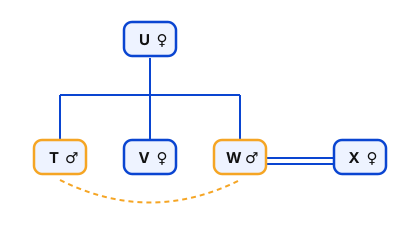
How is T related to W if ‘T ÷ U x V + W – X'?
एक निश्चित कूट भाषा में,
'A + B' का अर्थ है ‘A, B की बहन है’,
'A – B' का अर्थ है ‘A, B का पति है’,
'A x B' का अर्थ है ‘A, B की माँ है’
और 'A ÷ B' का अर्थ है ‘A, B का पुत्र है’।
यदि ‘T ÷ U x V + W – X' है, तो T का W से क्या संबंध है?
  1. ABrotherभाई
  2. BFatherपिता
  3. CFather's fatherपिता के पिता
  4. DFather's brotherपिता के भाई
Show answer

Concept: Decode each symbol one by one and draw the family tree.

  1. T ÷ U: T is the son of U (T male).
  2. U × V: U is the mother of V.
  3. V + W: V is the sister of W; so W is also U’s child.
  4. W − X: W is the husband of X, so W is male.
  5. T and W are both sons of U ⇒ T is W’s brother.

Trick: Mark genders as you decode (T ♂, W ♂) – siblings of the same parent give brother/sister directly.

Answer: (A) Brother

अवधारणा: हर चिह्न को एक-एक करके डिकोड करें और वंश-वृक्ष बनाएँ।

  1. T ÷ U: T, U का पुत्र (T पुरुष)।
  2. U × V: U, V की माता।
  3. V + W: V, W की बहन; अतः W भी U की संतान।
  4. W − X: W, X का पति, अतः W पुरुष।
  5. T और W दोनों U के पुत्र ⇒ T, W का भाई।

ट्रिक: डिकोड करते समय लिंग लिखते जाएँ (T ♂, W ♂) – एक ही माता-पिता की संतानें भाई/बहन होती हैं।

उत्तर: (A) भाई

RRB Technician Grade IIIGeneral Intelligence and ReasoningBlood Relations (Coded)RRB Technician Grade III 2024 · 23 Dec Shift 3 →
Q1850.
Select the triad which follows the same pattern as that followed by the two triads given below. Both triads follow the same pattern.
EA-GC-IK
HD-JF-LN
उस त्रय का चयन कीजिए जो उसी पैटर्न का अनुसरण करता है जिसका अनुसरण नीचे दिए गए दो त्रय करते हैं। दोनों त्रय एक ही पैटर्न का अनुसरण करते हैं।
EA-GC-IK
HD-JF-LN
  1. AKG-MI-OQ
  2. BLG-NI-OQ
  3. CLG-MI-OR
  4. DKG-NI-OR
Show answer

Concept: Find the letter gaps inside each pair and between first letters.

  1. EA-GC-IK: E→A −4, G→C −4, I→K +2; E→G→I: +2 each.
  2. HD-JF-LN: −4, −4, +2; H→J→L ✓ same.
  3. KG-MI-OQ: K→G −4, M→I −4, O→Q +2; K→M→O ✓.
  4. Others break the pattern (e.g. LG: L→G =−5).

Trick: The first-pair gap (−4) removes B and C at once; D fails at N→I (−5).

Answer: (A) KG-MI-OQ

अवधारणा: हर जोड़ी के भीतर और पहले अक्षरों के बीच अंतर देखें।

  1. EA-GC-IK: E→A −4, G→C −4, I→K +2; E→G→I: हर बार +2।
  2. HD-JF-LN: −4, −4, +2; H→J→L ✓।
  3. KG-MI-OQ: K→G −4, M→I −4, O→Q +2; K→M→O ✓।
  4. अन्य पैटर्न तोड़ते हैं (जैसे LG: L→G =−5)।

ट्रिक: पहली जोड़ी का अंतर (−4) B और C को तुरंत हटाता है; D में N→I (−5) गलत है।

उत्तर: (A) KG-MI-OQ

RRB Technician Grade IIIGeneral Intelligence and ReasoningLetter Triads (Analogy)RRB Technician Grade III 2024 · 23 Dec Shift 3 →
Q1851.
A resistor whose value R = 10 Ω is connected to a 10-volt battery. What will be the power P and the amount of heat H generated in one minute?
एक प्रतिरोधक जिसका मान R = 10 Ω है, एक 10-वोल्ट की बैटरी से जुड़ा है। एक मिनट में उत्पन्न शक्ति P और ऊष्मा H की मात्रा क्या होगी?
  1. AP=100 W,H=6000 J
  2. BP=1 W,H=60 J
  3. CP=20 W,H=1200 J
  4. DP=10 W,H=600 J
Show answer

Concept: Power in a resistor is P=V2R and heat produced in time t is H=P×t (Joule's law of heating).

  1. P=10210=10010=10 W
  2. Time t=1 min=60 s
  3. H=10×60=600 J

Trick: Heat in one minute is simply 60×P; first find P, then multiply by 60.

Answer: (D) P=10 W,H=600 J

अवधारणा: प्रतिरोधक में शक्ति P=V2R तथा समय t में उत्पन्न ऊष्मा H=P×t (जूल का तापन नियम) होती है।

  1. P=10210=10010=10 W
  2. समय t=1 मिनट=60 s
  3. H=10×60=600 J

ट्रिक: एक मिनट की ऊष्मा = 60×P; पहले P निकालें, फिर 60 से गुणा करें।

उत्तर: (D) P=10 W,H=600 J

RRB Technician Grade IIIGeneral ScienceElectric power and heatingRRB Technician Grade III 2024 · 23 Dec Shift 3 →
Q1852.
Decomposition of limestone to quick lime and carbon dioxide is an example of which of the following types of reaction?
चूना पत्थर (limestone) का बिना बुझा चूना (quick lime) और कार्बन डाइऑक्साइड में अपघटन निम्नलिखित में से किस प्रकार की अभिक्रिया का उदाहरण है?
  1. AReduction reactionअपचयन अभिक्रिया
  2. BThermal decompositionऊष्मीय अपघटन
  3. CPhotochemical decompositionप्रकाश-रासायनिक अपघटन
  4. DOxidation reactionऑक्सीकरण अभिक्रिया
Show answer

Concept: When heat breaks one compound into simpler substances, it is a thermal decomposition reaction.

  1. CaCO3→heatCaO+CO2
  2. Limestone (CaCO3) gives quick lime (CaO) and carbon dioxide.
  3. One reactant → two products using heat, so it is thermal decomposition.

Yaad rakhein: Heat → thermal decomposition; light → photolytic; electricity → electrolytic decomposition.

Answer: (B) Thermal decomposition

अवधारणा: जब ऊष्मा से एक यौगिक सरल पदार्थों में टूटता है, तो वह ऊष्मीय वियोजन अभिक्रिया कहलाती है।

  1. CaCO3→ऊष्माCaO+CO2
  2. चूना पत्थर (CaCO3) से बिना बुझा चूना (CaO) और कार्बन डाइऑक्साइड बनते हैं।
  3. एक अभिकारक, ऊष्मा से दो उत्पाद — अतः ऊष्मीय वियोजन।

याद रखें: ऊष्मा → ऊष्मीय वियोजन; प्रकाश → प्रकाशीय वियोजन; विद्युत → विद्युत अपघटन।

उत्तर: (B) ऊष्मीय अपघटन

RRB Technician Grade IIIGeneral ScienceTypes of chemical reactionsRRB Technician Grade III 2024 · 23 Dec Shift 3 →
Q1853.
Which of the following statements is/are correct about reduction?
a) Loss of oxygen
b) Gain of hydrogen
c) Gain of oxygen
d) Loss of hydrogen
अपचयन (reduction) के बारे में निम्नलिखित में से कौन-सा/से कथन सही है/हैं?
a) ऑक्सीजन का ह्रास
b) हाइड्रोजन की प्राप्ति
c) ऑक्सीजन की प्राप्ति
d) हाइड्रोजन का ह्रास
  1. AOnly a and dकेवल a और d
  2. BOnly a and bकेवल a और b
  3. COnly b and cकेवल b और c
  4. DOnly dकेवल d
Show answer

Concept: Reduction means loss of oxygen or gain of hydrogen; oxidation is the opposite (gain of oxygen or loss of hydrogen).

  1. a) Loss of oxygen → reduction ✔
  2. b) Gain of hydrogen → reduction ✔
  3. c) and d) describe oxidation ✘

Trick: Reduction = 'O out, H in'. Oxidation = 'O in, H out'.

Answer: (B) Only a and b

अवधारणा: अपचयन का अर्थ है ऑक्सीजन का ह्रास या हाइड्रोजन की प्राप्ति; ऑक्सीकरण इसका उल्टा है (ऑक्सीजन की प्राप्ति या हाइड्रोजन का ह्रास)।

  1. a) ऑक्सीजन का ह्रास → अपचयन ✔
  2. b) हाइड्रोजन की प्राप्ति → अपचयन ✔
  3. c) और d) ऑक्सीकरण दर्शाते हैं ✘

ट्रिक: अपचयन = 'O बाहर, H अंदर'। ऑक्सीकरण = 'O अंदर, H बाहर'।

उत्तर: (B) केवल a और b

RRB Technician Grade IIIGeneral ScienceOxidation and reductionRRB Technician Grade III 2024 · 23 Dec Shift 3 →
Q1854.
Which of the following substances experiences the least change in shape when subjected to a change in pressure?
दाब में परिवर्तन किए जाने पर निम्नलिखित में से किस पदार्थ के आकार में सबसे कम परिवर्तन होता है?
  1. APlasmaप्लाज्मा
  2. BLiquidद्रव
  3. CGasगैस
  4. DSolidठोस
Show answer

Concept: Solids have tightly packed particles with strong forces of attraction, so they have a fixed shape and are almost incompressible.

  1. Gases and plasma are highly compressible; their shape changes easily.
  2. Liquids are nearly incompressible but take the shape of the container.
  3. Solids keep a definite shape — the least change under pressure.

Yaad rakhein: Rigidity and fixed shape: solid > liquid > gas.

Answer: (D) Solid

अवधारणा: ठोस के कण बहुत पास-पास होते हैं और उनके बीच प्रबल आकर्षण बल होता है, इसलिए उनका आकार निश्चित होता है और वे लगभग असंपीड्य होते हैं।

  1. गैस और प्लाज्मा अत्यधिक संपीड्य हैं; आकार आसानी से बदलता है।
  2. द्रव लगभग असंपीड्य हैं पर पात्र का आकार ले लेते हैं।
  3. ठोस का आकार निश्चित रहता है — दाब से सबसे कम परिवर्तन।

याद रखें: दृढ़ता व निश्चित आकार: ठोस > द्रव > गैस।

उत्तर: (D) ठोस

RRB Technician Grade IIIGeneral ScienceStates of matterRRB Technician Grade III 2024 · 23 Dec Shift 3 →
Q1855.
Which of the following statements is correct about transport in plants?
पौधों में परिवहन के बारे में निम्नलिखित में से कौन-सा कथन सही है?
  1. AThe phloem moves water and minerals obtained from the soil.फ्लोएम मिट्टी से प्राप्त जल और खनिजों का परिवहन करता है।
  2. BPlants have low energy needs and use relatively slow transport systems.पौधों की ऊर्जा आवश्यकताएँ कम होती हैं और वे अपेक्षाकृत धीमी परिवहन प्रणालियों का उपयोग करते हैं।
  3. CThe xylem transports products of photosynthesis from the leaves where they are synthesised to other parts of the plant.जाइलम प्रकाश संश्लेषण के उत्पादों को पत्तियों से, जहाँ वे संश्लेषित होते हैं, पौधे के अन्य भागों तक पहुँचाता है।
  4. DIn herbs and shrubs, the distances over which transport systems have to operate are very large.शाकों (herbs) और झाड़ियों (shrubs) में, परिवहन प्रणालियों को जिन दूरियों पर कार्य करना पड़ता है, वे बहुत अधिक होती हैं।
Show answer

Concept: Plants do not move, have many dead cells and therefore have low energy needs; so they use relatively slow transport systems (NCERT).

  1. Option A wrong: water and minerals move through xylem, not phloem.
  2. Option C wrong: food (products of photosynthesis) moves through phloem.
  3. Option D wrong: distances are large in tall trees, not in herbs and shrubs.

Yaad rakhein: Xylem → water up (X = 'eXtra water'); Phloem → food (P = 'Products of photosynthesis').

Answer: (B) Plants have low energy needs and use relatively slow transport systems.

अवधारणा: पौधे गति नहीं करते, उनमें बहुत-सी मृत कोशिकाएँ होती हैं, इसलिए उनकी ऊर्जा आवश्यकता कम होती है; अतः वे अपेक्षाकृत धीमे परिवहन तंत्र का उपयोग करते हैं (NCERT)।

  1. विकल्प A गलत: जल व खनिज जाइलम से जाते हैं, फ्लोएम से नहीं।
  2. विकल्प C गलत: प्रकाश-संश्लेषण के उत्पाद (भोजन) फ्लोएम से जाते हैं।
  3. विकल्प D गलत: लंबी दूरी ऊँचे वृक्षों में होती है, शाक व झाड़ियों में नहीं।

याद रखें: जाइलम → जल; फ्लोएम → भोजन।

उत्तर: (B) पौधों की ऊर्जा आवश्यकताएँ कम होती हैं और वे अपेक्षाकृत धीमी परिवहन प्रणालियों का उपयोग करते हैं।

RRB Technician Grade IIIGeneral ScienceTransport in plantsRRB Technician Grade III 2024 · 23 Dec Shift 3 →
Q1856.
A solution contains 20 g of common salt in 280 g of water. What is the concentration in terms of mass by mass percentage of the solution?
एक विलयन में 280 g जल में 20 g साधारण नमक है। विलयन की सांद्रता द्रव्यमान द्वारा द्रव्यमान प्रतिशत के रूप में क्या है?
  1. A0.66%
  2. B11.1%
  3. C66.6%
  4. D6.66%
Show answer

Concept: Mass % =mass of solutemass of solution×100, where solution = solute + solvent.

  1. Mass of solution =20+280=300 g
  2. 20300×100=203%
  3. =6.66%

Trick: Never divide by the solvent (280 g) — always by the total solution (300 g).

Answer: (D) 6.66%

अवधारणा: द्रव्यमान % =विलेय का द्रव्यमानविलयन का द्रव्यमान×100, जहाँ विलयन = विलेय + विलायक।

  1. विलयन का द्रव्यमान =20+280=300 g
  2. 20300×100=203%
  3. =6.66%

ट्रिक: विलायक (280 g) से नहीं, हमेशा कुल विलयन (300 g) से भाग दें।

उत्तर: (D) 6.66%

RRB Technician Grade IIIGeneral ScienceConcentration of solutionRRB Technician Grade III 2024 · 23 Dec Shift 3 →
Q1857.
Which of the following would help a few variants of bacteria in a population living in temperate waters to survive and grow further, if the water temperature were to be increased by global warming?
यदि वैश्विक तापन (global warming) के कारण जल का तापमान बढ़ जाए, तो शीतोष्ण जल में रहने वाली जीवाणुओं की एक समष्टि के कुछ रूपों (variants) को जीवित रहने और आगे बढ़ने में निम्नलिखित में से कौन-सा गुण सहायता करेगा?
  1. AResistant to heatऊष्मा के प्रति प्रतिरोधी
  2. BResistant to cold wavesशीत लहरों के प्रति प्रतिरोधी
  3. CResistant to waterजल के प्रति प्रतिरोधी
  4. DResistant to wind pressureवायु दाब के प्रति प्रतिरोधी
Show answer

Concept: Variations in a population help some individuals survive when the environment changes; this is the basis of natural selection.

  1. Global warming raises the water temperature.
  2. Bacteria variants that can tolerate heat will survive and reproduce.
  3. Cold, water or wind resistance gives no advantage in hotter water.

Trick: Match the variation to the new stress: more heat → heat resistance.

Answer: (A) Resistant to heat

अवधारणा: जनसंख्या में विभिन्नताएँ पर्यावरण बदलने पर कुछ जीवों को जीवित रहने में मदद करती हैं; यही प्राकृतिक चयन का आधार है।

  1. वैश्विक तापन से जल का तापमान बढ़ता है।
  2. जो जीवाणु ऊष्मा सह सकते हैं, वही जीवित रहकर बढ़ेंगे।
  3. ठंड, जल या हवा का प्रतिरोध गर्म जल में कोई लाभ नहीं देता।

ट्रिक: नए तनाव से मिलान करें: अधिक ऊष्मा → ऊष्मा-प्रतिरोधी।

उत्तर: (A) ऊष्मा के प्रति प्रतिरोधी

RRB Technician Grade IIIGeneral ScienceVariation and natural selectionRRB Technician Grade III 2024 · 23 Dec Shift 3 →
Q1858.
Which law states that the current flowing through a conductor is directly proportional to the voltage applied across it, provided the temperature and other physical conditions remain constant?
कौन-सा नियम बताता है कि किसी चालक से प्रवाहित धारा उसके सिरों पर लगाए गए विभवांतर (वोल्टेज) के अनुक्रमानुपाती होती है, बशर्ते ताप और अन्य भौतिक अवस्थाएँ स्थिर रहें?
  1. AJoule’s lawजूल का नियम
  2. BOhm's lawओम का नियम
  3. CFaraday's lawफैराडे का नियम
  4. DNewton's lawन्यूटन का नियम
Show answer

Concept: Ohm's law: at constant temperature, current through a conductor is directly proportional to the potential difference across it: V∝I, i.e. V=IR.

  1. Joule's law → heat produced H=I2Rt.
  2. Faraday's law → electromagnetic induction / electrolysis.
  3. Newton's laws → motion and force.

Yaad rakhein: Ohm → V=IR (graph of V vs I is a straight line).

Answer: (B) Ohm's law

अवधारणा: ओम का नियम: नियत ताप पर चालक में बहने वाली धारा उसके सिरों के विभवांतर के अनुक्रमानुपाती होती है: V∝I, अर्थात V=IR।

  1. जूल का नियम → ऊष्मा H=I2Rt।
  2. फैराडे का नियम → विद्युत-चुंबकीय प्रेरण / विद्युत अपघटन।
  3. न्यूटन के नियम → गति और बल।

याद रखें: ओम → V=IR (V–I ग्राफ सीधी रेखा)।

उत्तर: (B) ओम का नियम

RRB Technician Grade IIIGeneral ScienceOhm's lawRRB Technician Grade III 2024 · 23 Dec Shift 3 →
Q1859.
Which of the following pigments is present in the red blood corpuscles of human beings?
मनुष्यों की लाल रक्त कणिकाओं में निम्नलिखित में से कौन-सा वर्णक उपस्थित होता है?
  1. AXanthophyllज़ैंथोफिल
  2. BChlorophyllक्लोरोफिल
  3. CHaemoglobinहीमोग्लोबिन
  4. DMelaninमेलानिन
Show answer

Concept: Red blood corpuscles contain the iron-containing red pigment haemoglobin, which carries oxygen.

  1. Chlorophyll – green pigment of plants.
  2. Xanthophyll – yellow pigment of plants.
  3. Melanin – skin and hair colour pigment.

Yaad rakhein: Haemoglobin has high affinity for oxygen and contains iron (Fe).

Answer: (C) Haemoglobin

अवधारणा: लाल रक्त कणिकाओं में लौह युक्त लाल वर्णक हीमोग्लोबिन होता है, जो ऑक्सीजन का परिवहन करता है।

  1. क्लोरोफिल – पौधों का हरा वर्णक।
  2. ज़ैंथोफिल – पौधों का पीला वर्णक।
  3. मेलेनिन – त्वचा व बालों का रंग देने वाला वर्णक।

याद रखें: हीमोग्लोबिन में लोहा (Fe) होता है और ऑक्सीजन के प्रति उच्च बंधुता होती है।

उत्तर: (C) हीमोग्लोबिन

RRB Technician Grade IIIGeneral ScienceBlood – haemoglobinRRB Technician Grade III 2024 · 23 Dec Shift 3 →
Q1860.
If future shoot hidden in a germinating seed is called plumule, then future root of the germinating seed would be ________.
यदि अंकुरित बीज में छिपे भावी प्ररोह को प्रांकुर (plumule) कहा जाता है, तो अंकुरित बीज की भावी जड़ ________ होगी।
  1. Acotyledonबीजपत्र (cotyledon)
  2. Bsepalबाह्यदल (sepal)
  3. Cpetalदल (petal)
  4. Dradicleमूलांकुर (radicle)
Show answer

Concept: A seed contains the embryo: plumule (future shoot), radicle (future root) and cotyledons (stored food).

  1. Plumule → shoot
  2. Radicle → root
  3. Cotyledon → food store; sepal and petal are flower parts.

Trick: Radicle sounds like 'radish' — a root!

Answer: (D) radicle

अवधारणा: बीज में भ्रूण होता है: प्रांकुर (भावी प्ररोह), मूलांकुर (भावी जड़) और बीजपत्र (संचित भोजन)।

  1. प्रांकुर (plumule) → प्ररोह
  2. मूलांकुर (radicle) → जड़
  3. बीजपत्र → भोजन संचय; बाह्यदल व पंखुड़ी फूल के भाग हैं।

ट्रिक: 'मूल' = जड़ → मूलांकुर = भावी जड़।

उत्तर: (D) मूलांकुर (radicle)

RRB Technician Grade IIIGeneral ScienceParts of a seedRRB Technician Grade III 2024 · 23 Dec Shift 3 →