Question bank

Q&A: practice questions with answers

Search questions on any topic. Filter by exam category, exam, subject and topic, try the question, then open the answer and explanation.

Courses – airGurukul

3,200 questions found.

Q1861.
Face cream belongs to which type of colloid form?
फेस क्रीम किस प्रकार के कोलॉइड रूप से संबंधित है?
  1. ASolidठोस
  2. BFoamफोम (झाग)
  3. CGelजेल
  4. DEmulsionइमल्शन (पायस)
Show answer

Concept: An emulsion is a colloid in which a liquid is dispersed in another liquid (dispersed phase liquid, medium liquid).

  1. Face cream = oil and water mixed as fine droplets.
  2. Liquid in liquid → emulsion (like milk).
  3. Gel = liquid in solid; foam = gas in liquid.

Yaad rakhein: Emulsion examples: milk, face cream, mayonnaise.

Answer: (D) Emulsion

अवधारणा: पायस (इमल्शन) वह कोलॉइड है जिसमें एक द्रव दूसरे द्रव में परिक्षिप्त होता है।

  1. फेस क्रीम = तेल और जल की सूक्ष्म बूँदों का मिश्रण।
  2. द्रव में द्रव → पायस (जैसे दूध)।
  3. जेल = ठोस में द्रव; झाग = द्रव में गैस।

याद रखें: पायस के उदाहरण: दूध, फेस क्रीम, मेयोनीज़।

उत्तर: (D) इमल्शन (पायस)
RRB Technician Grade IIIGeneral ScienceColloidsRRB Technician Grade III 2024 · 23 Dec Shift 3 →
Q1862.
A student took iron nails and dipped them in solution ‘X’ for twenty minutes. After some time he noticed that the colour of the iron nails became brownish.
Identify solution ‘X’ in which the nail was dipped.
एक छात्र ने लोहे की कीलें लीं और उन्हें बीस मिनट के लिए विलयन ‘X’ में डुबोया। कुछ समय बाद उसने देखा कि लोहे की कीलों का रंग भूरा हो गया।
उस विलयन ‘X’ की पहचान कीजिए जिसमें कील डुबोई गई थी।
  1. AIron sulphateआयरन सल्फेट
  2. BCopper sulphateकॉपर सल्फेट
  3. CLead sulphateलेड सल्फेट
  4. DZinc sulphateजिंक सल्फेट
Show answer

Concept: A more reactive metal displaces a less reactive metal from its salt solution.

  1. Iron is more reactive than copper.
  2. Fe+CuSO4→FeSO4+Cu
  3. Brown copper deposits on the nail; blue solution turns light green.

Yaad rakhein: Reactivity: Zn > Fe > Pb > Cu — iron can displace only Pb and Cu here, and brown coating means copper.

Answer: (B) Copper sulphate

अवधारणा: अधिक क्रियाशील धातु कम क्रियाशील धातु को उसके लवण के विलयन से विस्थापित कर देती है।

  1. लोहा, ताँबे से अधिक क्रियाशील है।
  2. Fe+CuSO4→FeSO4+Cu
  3. कील पर भूरा ताँबा जमता है; नीला विलयन हल्का हरा हो जाता है।

याद रखें: क्रियाशीलता: Zn > Fe > Pb > Cu — भूरी परत = ताँबा।

उत्तर: (B) कॉपर सल्फेट

RRB Technician Grade IIIGeneral ScienceDisplacement reactionRRB Technician Grade III 2024 · 23 Dec Shift 3 →
Q1863.
What kind of energy is acquired by a stretched rubber band?
खिंचे हुए रबर बैंड द्वारा किस प्रकार की ऊर्जा अर्जित की जाती है?
  1. ALight energyप्रकाश ऊर्जा
  2. BKinetic energyगतिज ऊर्जा
  3. CPotential energyस्थितिज ऊर्जा
  4. DThermal energyऊष्मीय ऊर्जा
Show answer

Concept: Energy stored in a body due to its position or change in shape (configuration) is potential energy.

  1. Stretching changes the shape of the rubber band.
  2. Work done in stretching gets stored in it.
  3. On release, it converts to kinetic energy.

Yaad rakhein: Stretched band, compressed spring, wound clock spring → potential (elastic) energy.

Answer: (C) Potential energy

अवधारणा: किसी वस्तु की स्थिति या आकार (विन्यास) में परिवर्तन के कारण संचित ऊर्जा स्थितिज ऊर्जा कहलाती है।

  1. खींचने से रबर बैंड का आकार बदलता है।
  2. खींचने में किया गया कार्य उसमें संचित हो जाता है।
  3. छोड़ने पर यह गतिज ऊर्जा में बदलती है।

याद रखें: खिंचा रबर बैंड, दबी स्प्रिंग → स्थितिज (प्रत्यास्थ) ऊर्जा।

उत्तर: (C) स्थितिज ऊर्जा

RRB Technician Grade IIIGeneral SciencePotential energyRRB Technician Grade III 2024 · 23 Dec Shift 3 →
Q1864.
Find the correct number of atoms for a glucose molecule.
ग्लूकोज़ के एक अणु में परमाणुओं की सही संख्या ज्ञात कीजिए।
  1. A6
  2. B24
  3. C12
  4. D18
Show answer

Concept: Glucose has the molecular formula C6H12O6; add atoms of each element.

  1. Carbon = 6
  2. Hydrogen = 12
  3. Oxygen = 6
  4. Total =6+12+6=24

Trick: Glucose 6-12-6: just add the subscripts.

Answer: (B) 24

अवधारणा: ग्लूकोज़ का अणुसूत्र C6H12O6 है; प्रत्येक तत्व के परमाणु जोड़ें।

  1. कार्बन = 6
  2. हाइड्रोजन = 12
  3. ऑक्सीजन = 6
  4. कुल =6+12+6=24

ट्रिक: ग्लूकोज़ 6-12-6: बस सबस्क्रिप्ट जोड़ें।

उत्तर: (B) 24

RRB Technician Grade IIIGeneral ScienceAtomicity of moleculesRRB Technician Grade III 2024 · 23 Dec Shift 3 →
Q1865.
In a situation where we are injured and start bleeding, the bleeding could lead to a loss of pressure that could reduce the efficiency of the pumping system. To avoid this, which cells mainly help to clot blood at the injury point?
ऐसी स्थिति में जब हम घायल हो जाते हैं और रक्तस्राव शुरू हो जाता है, तो रक्तस्राव से दाब में कमी हो सकती है जिससे पंपिंग तंत्र की दक्षता कम हो सकती है। इससे बचने के लिए, मुख्यतः कौन-सी कोशिकाएँ चोट के स्थान पर रक्त का थक्का बनाने में सहायता करती हैं?
  1. ABlood plateletsरक्त प्लेटलेट्स (बिंबाणु)
  2. BWhite blood corpusclesश्वेत रक्त कणिकाएँ
  3. CLymphलसीका
  4. DRed blood corpusclesलाल रक्त कणिकाएँ
Show answer

Concept: Blood platelets circulate in the body and plug leaks by helping blood to clot at the point of injury, preventing loss of pressure.

  1. RBCs carry oxygen.
  2. WBCs fight infection.
  3. Lymph carries digested fat and drains excess fluid.
  4. Platelets → clotting.

Yaad rakhein: Platelets = 'plugs'; vitamin K is also needed for clotting.

Answer: (A) Blood platelets

अवधारणा: रक्त प्लेटलेट्स पूरे शरीर में घूमती हैं और चोट के स्थान पर रक्त का थक्का बनाकर रिसाव रोकती हैं, जिससे दाब कम नहीं होता।

  1. RBC ऑक्सीजन ले जाती हैं।
  2. WBC संक्रमण से लड़ती हैं।
  3. लसीका पचा हुआ वसा ले जाती है और अतिरिक्त द्रव लौटाती है।
  4. प्लेटलेट्स → थक्का।

याद रखें: प्लेटलेट्स = 'प्लग'; थक्का बनने में विटामिन K भी आवश्यक है।

उत्तर: (A) रक्त प्लेटलेट्स (बिंबाणु)

RRB Technician Grade IIIGeneral ScienceBlood clottingRRB Technician Grade III 2024 · 23 Dec Shift 3 →
Q1866.
The force exerted by an object perpendicular to the surface is called:
किसी वस्तु द्वारा सतह के लंबवत लगाया गया बल कहलाता है:
  1. Apressureदाब
  2. Bthrustप्रणोद
  3. Cweightभार
  4. Dbuoyancyउत्प्लावकता
Show answer

Concept: Thrust is the net force acting perpendicular to a surface; pressure is thrust per unit area.

  1. Pressure=ThrustArea
  2. Thrust is a force → SI unit newton (N).
  3. Pressure → SI unit pascal (N/m2).

Yaad rakhein: Thrust = force (N); pressure = force ÷ area (Pa).

Answer: (B) thrust

अवधारणा: किसी सतह के लंबवत लगने वाला कुल बल प्रणोद कहलाता है; प्रति इकाई क्षेत्रफल पर प्रणोद दाब है।

  1. दाब=प्रणोदक्षेत्रफल
  2. प्रणोद एक बल है → SI मात्रक न्यूटन (N)।
  3. दाब → SI मात्रक पास्कल (N/m2)।

याद रखें: प्रणोद = बल (N); दाब = बल ÷ क्षेत्रफल (Pa)।

उत्तर: (B) प्रणोद

RRB Technician Grade IIIGeneral ScienceThrust and pressureRRB Technician Grade III 2024 · 23 Dec Shift 3 →
Q1867.
What similarities do plastids share with mitochondria?
लवक (plastids) और माइटोकॉन्ड्रिया में क्या समानताएँ हैं?
  1. ABoth contain chlorophyll.दोनों में क्लोरोफिल होता है।
  2. BBoth contain their own DNA and ribosomes.दोनों में उनका अपना DNA और राइबोसोम होते हैं।
  3. CBoth produce ATPs.दोनों ATP उत्पन्न करते हैं।
  4. DBoth are present only in plant cells.दोनों केवल पादप कोशिकाओं में उपस्थित होते हैं।
Show answer

Concept: Plastids and mitochondria are semi-autonomous organelles: they have their own DNA and ribosomes.

  1. Only chloroplasts (a type of plastid) contain chlorophyll — not mitochondria.
  2. Mitochondria are found in both plant and animal cells.
  3. Common feature: own DNA and ribosomes, so they can make some of their own proteins.

Yaad rakhein: Organelles with own DNA = mitochondria and plastids (double-membrane bound).

Answer: (B) Both contain their own DNA and ribosomes.

अवधारणा: लवक (प्लास्टिड) और माइटोकॉन्ड्रिया अर्ध-स्वायत्त कोशिकांग हैं: इनका अपना DNA और राइबोसोम होता है।

  1. क्लोरोफिल केवल हरितलवक में होता है — माइटोकॉन्ड्रिया में नहीं।
  2. माइटोकॉन्ड्रिया पादप व जंतु दोनों कोशिकाओं में होते हैं।
  3. समानता: अपना DNA व राइबोसोम, अतः कुछ प्रोटीन स्वयं बनाते हैं।

याद रखें: अपना DNA वाले कोशिकांग = माइटोकॉन्ड्रिया और लवक (दोहरी झिल्ली)।

उत्तर: (B) दोनों में उनका अपना DNA और राइबोसोम होते हैं।

RRB Technician Grade IIIGeneral ScienceCell organellesRRB Technician Grade III 2024 · 23 Dec Shift 3 →
Q1868.
What is the value of the radius of the earth?
पृथ्वी की त्रिज्या का मान क्या है?
  1. A7400 km
  2. B6400 km
  3. C8400 km
  4. D5400 km
Show answer

Concept: The radius of the Earth used in NCERT gravitation problems is R=6.4×10⁶ m.

  1. 6.4×10⁶ m=6400 km
  2. Mass of Earth M=6×1024 kg

Yaad rakhein: Earth: R≈6400 km, g=9.8 m/s2, M=6×1024 kg.

Answer: (B) 6400 km

अवधारणा: NCERT गुरुत्वाकर्षण प्रश्नों में पृथ्वी की त्रिज्या R=6.4×10⁶ m ली जाती है।

  1. 6.4×10⁶ m=6400 km
  2. पृथ्वी का द्रव्यमान M=6×1024 kg

याद रखें: पृथ्वी: R≈6400 km, g=9.8 m/s2, M=6×1024 kg।

उत्तर: (B) 6400 km

RRB Technician Grade IIIGeneral ScienceGravitation – Earth dataRRB Technician Grade III 2024 · 23 Dec Shift 3 →
Q1869.
The oesophagus and the lining of the mouth are also covered with:
ग्रसिका (oesophagus) और मुख का अस्तर भी किससे ढका होता है?
  1. Acuboidal epitheliumघनाकार उपकला
  2. Bsquamous epitheliumशल्की उपकला
  3. Cciliated columnar epitheliumपक्ष्माभी स्तंभाकार उपकला
  4. Dglandular epitheliumग्रंथिल उपकला
Show answer

Concept: Squamous epithelium is made of thin, flat cells forming a delicate lining.

  1. Lining of mouth and oesophagus → squamous epithelium.
  2. Cuboidal → kidney tubules, salivary gland ducts.
  3. Ciliated columnar → respiratory tract.

Yaad rakhein: Squamous = flat 'tiles'; also seen in skin and alveoli (stratified squamous in skin).

Answer: (B) squamous epithelium

अवधारणा: शल्की (squamous) उपकला पतली, चपटी कोशिकाओं से बनी कोमल परत होती है।

  1. मुँह और ग्रासनली का अस्तर → शल्की उपकला।
  2. घनाकार → वृक्क नलिकाएँ, लार ग्रंथि की वाहिनियाँ।
  3. पक्ष्माभी स्तंभाकार → श्वसन मार्ग।

याद रखें: शल्की = चपटी 'टाइलें'; त्वचा में स्तरित शल्की उपकला होती है।

उत्तर: (B) शल्की उपकला

RRB Technician Grade IIIGeneral ScienceEpithelial tissueRRB Technician Grade III 2024 · 23 Dec Shift 3 →
Q1870.
Solid CO2 gets converted directly into gaseous state on decrease of pressure to:
ठोस CO2 दाब को घटाकर कितना करने पर सीधे गैसीय अवस्था में परिवर्तित हो जाता है?
  1. A1 atmosphere1 वायुमंडल
  2. B5 atmosphere5 वायुमंडल
  3. C20 atmosphere20 वायुमंडल
  4. D10 atmosphere10 वायुमंडल
Show answer

Concept: Solid CO2 (dry ice) is stored under high pressure. When pressure decreases to 1 atmosphere, it changes directly into gas without becoming liquid (sublimation).

  1. High pressure keeps CO2 solid.
  2. Lowering pressure to 1 atm → direct solid → gas.
  3. Hence called 'dry ice'.

Yaad rakhein: Dry ice → 1 atmosphere → sublimation.

Answer: (A) 1 atmosphere

अवधारणा: ठोस CO2 (शुष्क बर्फ) उच्च दाब पर रखी जाती है। दाब घटकर 1 वायुमंडल होने पर यह द्रव बने बिना सीधे गैस बन जाती है (ऊर्ध्वपातन)।

  1. उच्च दाब CO2 को ठोस रखता है।
  2. दाब 1 atm करने पर → सीधे ठोस से गैस।
  3. इसलिए इसे 'शुष्क बर्फ' कहते हैं।

याद रखें: शुष्क बर्फ → 1 वायुमंडल → ऊर्ध्वपातन।

उत्तर: (A) 1 वायुमंडल

RRB Technician Grade IIIGeneral ScienceSublimation of dry iceRRB Technician Grade III 2024 · 23 Dec Shift 3 →
Q1871.
Which of the following is INCORRECTLY matched related to the excretory system of humans?
मानव उत्सर्जन तंत्र से संबंधित निम्नलिखित में से कौन-सा युग्म गलत सुमेलित है?
  1. AUrethra – a pairमूत्रमार्ग (Urethra) – एक जोड़ी
  2. BUrinary bladder – unpairedमूत्राशय (Urinary bladder) – अयुग्मित
  3. CUreter – a pairमूत्रवाहिनी (Ureter) – एक जोड़ी
  4. DKidney – a pairवृक्क (Kidney) – एक जोड़ी
Show answer

Concept: Human excretory system: a pair of kidneys, a pair of ureters, one urinary bladder and one urethra.

  1. Kidney – a pair ✔
  2. Ureter – a pair ✔
  3. Urinary bladder – unpaired ✔
  4. Urethra – single, not a pair ✘

Trick: Count '2-2-1-1': kidneys 2, ureters 2, bladder 1, urethra 1.

Answer: (A) Urethra – a pair

अवधारणा: मानव उत्सर्जन तंत्र: एक जोड़ी वृक्क, एक जोड़ी मूत्रवाहिनी, एक मूत्राशय और एक मूत्रमार्ग।

  1. वृक्क – एक जोड़ी ✔
  2. मूत्रवाहिनी – एक जोड़ी ✔
  3. मूत्राशय – अयुग्मित ✔
  4. मूत्रमार्ग – एक ही, जोड़ी नहीं ✘

ट्रिक: '2-2-1-1' याद रखें: वृक्क 2, मूत्रवाहिनी 2, मूत्राशय 1, मूत्रमार्ग 1।

उत्तर: (A) मूत्रमार्ग (Urethra) – एक जोड़ी

RRB Technician Grade IIIGeneral ScienceHuman excretory systemRRB Technician Grade III 2024 · 23 Dec Shift 3 →
Q1872.
An electric bulb is connected to a 200 V generator. The current drawn by the bulb is 0.1 A. What is the power of the bulb?
एक विद्युत बल्ब 200 V के जनित्र (generator) से जुड़ा है। बल्ब द्वारा ली गई धारा 0.1 A है। बल्ब की शक्ति कितनी है?
  1. A10 W
  2. B20 W
  3. C2 W
  4. D200 W
Show answer

Concept: Electric power P=V×I.

  1. V=200 V, I=0.1 A
  2. P=200×0.1=20 W

Trick: Multiplying by 0.1 just shifts the decimal one place: 200→20.

Answer: (B) 20 W

अवधारणा: विद्युत शक्ति P=V×I।

  1. V=200 V, I=0.1 A
  2. P=200×0.1=20 W

ट्रिक: 0.1 से गुणा = दशमलव एक स्थान खिसकाना: 200→20।

उत्तर: (B) 20 W

RRB Technician Grade IIIGeneral ScienceElectric powerRRB Technician Grade III 2024 · 23 Dec Shift 3 →
Q1873.
Which of the following changes is NOT specific to teenage?
निम्नलिखित में से कौन-सा परिवर्तन किशोरावस्था के लिए विशिष्ट नहीं है?
  1. AThinner hair on legs and armsपैरों और भुजाओं पर पतले बाल
  2. BIncrease in heightलंबाई में वृद्धि
  3. CThick hair in armpitsकाँख (armpits) में घने बाल
  4. DIncrease in breast sizeस्तनों के आकार में वृद्धि
Show answer

Concept: Puberty brings specific changes caused by sex hormones, such as new hair growth in armpits, thinner hair on arms and legs, and breast development in girls.

  1. Thick hair in armpits, thinner hair on legs/arms, increase in breast size → puberty-specific.
  2. Increase in height happens throughout childhood as well.
  3. So height increase is not specific to teenage.

Yaad rakhein: Puberty-specific = hormone-driven secondary sexual characters; general growth is not.

Answer: (B) Increase in height

अवधारणा: किशोरावस्था में लिंग हार्मोनों के कारण विशिष्ट परिवर्तन होते हैं, जैसे काँख में घने बाल, हाथ-पैरों पर पतले बाल, लड़कियों में स्तनों का विकास।

  1. काँख में घने बाल, हाथ-पैर पर पतले बाल, स्तन आकार में वृद्धि → किशोरावस्था-विशिष्ट।
  2. लंबाई में वृद्धि बचपन में भी होती रहती है।
  3. अतः लंबाई बढ़ना केवल किशोरावस्था-विशिष्ट नहीं है।

याद रखें: किशोर-विशिष्ट = हार्मोन जनित द्वितीयक लैंगिक लक्षण; सामान्य वृद्धि नहीं।

उत्तर: (B) लंबाई में वृद्धि

RRB Technician Grade IIIGeneral ScienceChanges at pubertyRRB Technician Grade III 2024 · 23 Dec Shift 3 →
Q1874.
Which gas is given out when metals react with dilute hydrochloric acid?
जब धातुएँ तनु हाइड्रोक्लोरिक अम्ल के साथ अभिक्रिया करती हैं, तो कौन-सी गैस निकलती है?
  1. AChlorineक्लोरीन
  2. BNitrogenनाइट्रोजन
  3. COxygenऑक्सीजन
  4. DHydrogenहाइड्रोजन
Show answer

Concept: Metals react with dilute acids to form a salt and hydrogen gas.

  1. Metal+dil. HCl→Metal chloride+H2
  2. e.g. Zn+2HCl→ZnCl2+H2
  3. Test: gas burns with a 'pop' sound.

Yaad rakhein: Pop sound with burning splinter = hydrogen.

Answer: (D) Hydrogen

अवधारणा: धातुएँ तनु अम्लों से अभिक्रिया करके लवण और हाइड्रोजन गैस बनाती हैं।

  1. धातु+तनु HCl→धातु क्लोराइड+H2
  2. जैसे Zn+2HCl→ZnCl2+H2
  3. परीक्षण: गैस 'पॉप' ध्वनि के साथ जलती है।

याद रखें: जलती तीली से 'पॉप' ध्वनि = हाइड्रोजन।

उत्तर: (D) हाइड्रोजन

RRB Technician Grade IIIGeneral ScienceMetals and acidsRRB Technician Grade III 2024 · 23 Dec Shift 3 →
Q1875.
A constant force F acts on a box of mass 10 kg for a duration of 2 s. It increases the object’s velocity from 6 m/s to 10 m/s. The magnitude of the applied force F is:
एक नियत बल F, 10 kg द्रव्यमान वाले एक बक्से पर 2 s की अवधि तक कार्य करता है। यह वस्तु के वेग को 6 m/s से 10 m/s तक बढ़ा देता है। लगाए गए बल F का परिमाण है:
  1. A25 N
  2. B50 N
  3. C20 N
  4. D40 N
Show answer

Concept: Force F=ma, where acceleration a=v−ut.

  1. a=10−62=2 m/s2
  2. F=10×2=20 N

Trick: F=m(v−u)t=10×42=20 — change in momentum per second.

Answer: (C) 20 N

अवधारणा: बल F=ma, जहाँ त्वरण a=v−ut।

  1. a=10−62=2 m/s2
  2. F=10×2=20 N

ट्रिक: F=m(v−u)t=10×42=20 — प्रति सेकंड संवेग परिवर्तन।

उत्तर: (C) 20 N

RRB Technician Grade IIIGeneral ScienceNewton's second lawRRB Technician Grade III 2024 · 23 Dec Shift 3 →
Q1876.
Which statement is correct for unsaturated hydrocarbons?
असंतृप्त हाइड्रोकार्बनों के लिए कौन-सा कथन सही है?
  1. AMethane, ethane and butane are unsaturated hydrocarbons.मेथेन, एथेन और ब्यूटेन असंतृप्त हाइड्रोकार्बन हैं।
  2. BAlkane, alkenes and alkynes are unsaturated hydrocarbons.एल्केन, एल्कीन और एल्काइन असंतृप्त हाइड्रोकार्बन हैं।
  3. CAlkenes and alkynes are unsaturated hydrocarbons.एल्कीन और एल्काइन असंतृप्त हाइड्रोकार्बन हैं।
  4. DCyclo pentane and hexane are unsaturated hydrocarbons.साइक्लोपेंटेन और हेक्सेन असंतृप्त हाइड्रोकार्बन हैं।
Show answer

Concept: Unsaturated hydrocarbons contain at least one carbon–carbon double or triple bond.

  1. Alkenes have C=C; alkynes have C≡C → unsaturated.
  2. Alkanes (methane, ethane, butane) have only single bonds → saturated.
  3. Cyclopentane and cyclohexane also have only single bonds → saturated.

Yaad rakhein: '-ane' = saturated; '-ene' and '-yne' = unsaturated.

Answer: (C) Alkenes and alkynes are unsaturated hydrocarbons.

अवधारणा: असंतृप्त हाइड्रोकार्बन में कम-से-कम एक कार्बन–कार्बन द्वि-बंध या त्रि-बंध होता है।

  1. एल्कीन में C=C; एल्काइन में C≡C → असंतृप्त।
  2. एल्केन (मेथेन, एथेन, ब्यूटेन) में केवल एकल बंध → संतृप्त।
  3. साइक्लोपेंटेन व साइक्लोहेक्सेन में भी केवल एकल बंध → संतृप्त।

याद रखें: '-ane' = संतृप्त; '-ene' व '-yne' = असंतृप्त।

उत्तर: (C) एल्कीन और एल्काइन असंतृप्त हाइड्रोकार्बन हैं।

RRB Technician Grade IIIGeneral ScienceHydrocarbonsRRB Technician Grade III 2024 · 23 Dec Shift 3 →
Q1877.
Which hormone helps in development of the female sex organs and regulates the menstrual cycle?
कौन-सा हॉर्मोन स्त्री जनन अंगों के विकास में सहायता करता है और मासिक धर्म चक्र (menstrual cycle) को नियंत्रित करता है?
  1. AAdrenalineएड्रीनलीन
  2. BThyroxinथायरॉक्सिन
  3. COestrogenएस्ट्रोजन
  4. DTestosteroneटेस्टोस्टेरोन
Show answer

Concept: Oestrogen, secreted by the ovaries, controls development of female sex organs, secondary sexual characters and regulates the menstrual cycle.

  1. Adrenaline – emergency (fight or flight) hormone.
  2. Thyroxin – regulates metabolism.
  3. Testosterone – male hormone from testes.

Yaad rakhein: Ovary → oestrogen (female); testis → testosterone (male).

Answer: (C) Oestrogen

अवधारणा: अंडाशय से स्रावित एस्ट्रोजन मादा जनन अंगों के विकास, द्वितीयक लैंगिक लक्षणों तथा मासिक चक्र का नियमन करता है।

  1. एड्रिनलीन – आपातकालीन हार्मोन।
  2. थायरॉक्सिन – उपापचय का नियमन।
  3. टेस्टोस्टेरोन – वृषण से नर हार्मोन।

याद रखें: अंडाशय → एस्ट्रोजन (मादा); वृषण → टेस्टोस्टेरोन (नर)।

उत्तर: (C) एस्ट्रोजन

RRB Technician Grade IIIGeneral ScienceHormonesRRB Technician Grade III 2024 · 23 Dec Shift 3 →
Q1878.
Which metals produce hydrogen gas when treated with very dilute nitric acid?
अति तनु नाइट्रिक अम्ल के साथ अभिक्रिया कराने पर कौन-सी धातुएँ हाइड्रोजन गैस उत्पन्न करती हैं?
  1. AMagnesium (Mg) and manganese (Mn)मैग्नीशियम (Mg) और मैंगनीज़ (Mn)
  2. BCopper (Cu) and cobalt (Co)कॉपर (Cu) और कोबाल्ट (Co)
  3. CManganese (Mn) and cobalt (Co)मैंगनीज़ (Mn) और कोबाल्ट (Co)
  4. DMagnesium (Mg) and copper (Cu)मैग्नीशियम (Mg) और कॉपर (Cu)
Show answer

Concept: Nitric acid is a strong oxidising agent: it oxidises the H2 formed to water, so usually no hydrogen is evolved. Only Mg and Mn give H2 with very dilute HNO3.

  1. Mg+2HNO3→Mg(NO3)2+H2
  2. Mn+2HNO3→Mn(NO3)2+H2
  3. Copper is below hydrogen in reactivity — gives no H2 with dilute acids.

Trick: 'M-M' rule: Magnesium and Manganese with very dilute nitric acid.

Answer: (A) Magnesium (Mg) and manganese (Mn)

अवधारणा: नाइट्रिक अम्ल प्रबल ऑक्सीकारक है: बनी H2 को जल में ऑक्सीकृत कर देता है, अतः सामान्यतः हाइड्रोजन नहीं निकलती। केवल Mg और Mn अति तनु HNO3 से H2 देते हैं।

  1. Mg+2HNO3→Mg(NO3)2+H2
  2. Mn+2HNO3→Mn(NO3)2+H2
  3. ताँबा क्रियाशीलता में हाइड्रोजन से नीचे है — तनु अम्ल से H2 नहीं देता।

ट्रिक: 'M-M' नियम: मैग्नीशियम और मैंगनीज़ — अति तनु नाइट्रिक अम्ल।

उत्तर: (A) मैग्नीशियम (Mg) और मैंगनीज़ (Mn)

RRB Technician Grade IIIGeneral ScienceMetals and nitric acidRRB Technician Grade III 2024 · 23 Dec Shift 3 →
Q1879.
What determines the colour of scattered light in the Tyndall effect?
टिंडल प्रभाव में प्रकीर्णित प्रकाश का रंग किससे निर्धारित होता है?
  1. AThe angle of refraction of the emerging light.निर्गत प्रकाश के अपवर्तन कोण से।
  2. BThe distance between the source of light and the scattering particles.प्रकाश स्रोत और प्रकीर्णन करने वाले कणों के बीच की दूरी से।
  3. CThe size of the scattering particles.प्रकीर्णन करने वाले कणों के आकार से।
  4. DThe angle of incidence of the incoming light.आपतित प्रकाश के आपतन कोण से।
Show answer

Concept: The colour of scattered light depends on the size of the scattering particles.

  1. Very fine particles scatter mainly blue light (shorter wavelength).
  2. Larger particles scatter longer wavelengths too.
  3. Very large particles scatter all colours → light looks white (e.g. clouds).

Yaad rakhein: Blue sky = tiny air molecules; white clouds = big water droplets.

Answer: (C) The size of the scattering particles.

अवधारणा: प्रकीर्णित प्रकाश का रंग प्रकीर्णन करने वाले कणों के आकार पर निर्भर करता है।

  1. अति सूक्ष्म कण मुख्यतः नीला प्रकाश (कम तरंगदैर्घ्य) प्रकीर्णित करते हैं।
  2. बड़े कण अधिक तरंगदैर्घ्य को भी प्रकीर्णित करते हैं।
  3. बहुत बड़े कण सभी रंग प्रकीर्णित करते हैं → प्रकाश सफ़ेद दिखता है (जैसे बादल)।

याद रखें: नीला आकाश = सूक्ष्म वायु अणु; सफ़ेद बादल = बड़ी जल बूँदें।

उत्तर: (C) प्रकीर्णन करने वाले कणों के आकार से।

RRB Technician Grade IIIGeneral ScienceTyndall effect and scatteringRRB Technician Grade III 2024 · 23 Dec Shift 3 →
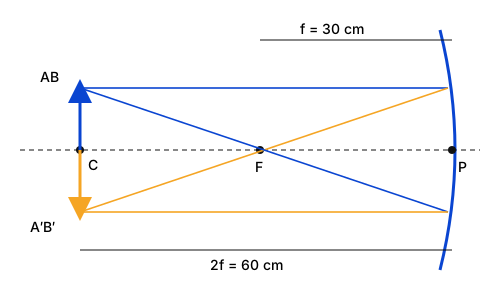
Q1880.
Rays of the Sun converge at a point of 30 cm in front of a concave mirror. Where should the object be placed so that the size of the image is equal to the size of the object?
सूर्य की किरणें एक अवतल दर्पण के सामने 30 cm पर एक बिंदु पर अभिसरित होती हैं। वस्तु को कहाँ रखा जाना चाहिए ताकि प्रतिबिंब का आकार वस्तु के आकार के बराबर हो?
  1. A60 cm in front of the mirrorदर्पण के सामने 60 cm पर
  2. BBetween 30 and 60 cm in front of the mirrorदर्पण के सामने 30 और 60 cm के बीच
  3. CMore than 30 cm in front of the mirrorदर्पण के सामने 30 cm से अधिक दूरी पर
  4. D30 cm in front of the mirrorदर्पण के सामने 30 cm पर
Show answer

Concept: Sun rays (parallel) converge at the principal focus, so f=30 cm. For a concave mirror, an object at the centre of curvature C (2f) gives a real, inverted image of the same size at C.

  1. f=30 cm
  2. R=2f=60 cm
  3. Object at C → image at C, same size.

Yaad rakhein: Same size image in a concave mirror only when object is at C (u=2f).

Answer: (A) 60 cm in front of the mirror

अवधारणा: सूर्य की समांतर किरणें मुख्य फोकस पर मिलती हैं, अतः f=30 cm। अवतल दर्पण में वस्तु वक्रता केंद्र C (2f) पर हो तो C पर ही समान आकार का वास्तविक, उल्टा प्रतिबिंब बनता है।

  1. f=30 cm
  2. R=2f=60 cm
  3. वस्तु C पर → प्रतिबिंब C पर, समान आकार।

याद रखें: अवतल दर्पण में समान आकार का प्रतिबिंब तभी जब वस्तु C (u=2f) पर हो।

उत्तर: (A) दर्पण के सामने 60 cm पर

RRB Technician Grade IIIGeneral ScienceConcave mirror image formationRRB Technician Grade III 2024 · 23 Dec Shift 3 →