Question bank

Q&A: practice questions with answers

Search questions on any topic. Filter by exam category, exam, subject and topic, try the question, then open the answer and explanation.

Courses – airGurukul

3,200 questions found.

Q1961.
Which of the following is a property of liquids?
निम्नलिखित में से कौन-सा द्रवों का गुण है?
  1. ALiquids are rigid.द्रव दृढ़ होते हैं।
  2. BLiquids have fixed shape.द्रवों का आकार निश्चित होता है।
  3. CLiquids have no fixed volume.द्रवों का आयतन निश्चित नहीं होता।
  4. DThe rate of diffusion of liquids is higher than that of solids.द्रवों की विसरण दर ठोसों की तुलना में अधिक होती है।
Show answer

Concept: Liquids have a fixed volume but no fixed shape; their particles move more freely than those of solids.

  1. Liquids flow and take the shape of the container – not rigid, no fixed shape: (A), (B) wrong.
  2. Liquids do have a fixed volume – (C) wrong.
  3. Particles of liquids have more space and kinetic energy than solids, so diffusion in liquids is faster than in solids – (D) correct.

Yaad rakhein: Diffusion rate: gas > liquid > solid.

Answer: (D) The rate of diffusion of liquids is higher than that of solids.

अवधारणा: द्रवों का निश्चित आयतन होता है पर निश्चित आकार नहीं; इनके कण ठोस की तुलना में अधिक स्वतंत्र चलते हैं।

  1. द्रव बहते हैं और पात्र का आकार लेते हैं – न दृढ़, न निश्चित आकार: (A), (B) गलत।
  2. द्रवों का आयतन निश्चित होता है – (C) गलत।
  3. द्रव कणों के बीच अधिक स्थान व ऊर्जा होती है, अतः द्रवों में विसरण ठोसों से तेज़ – (D) सही।

याद रखें: विसरण दर: गैस > द्रव > ठोस।

उत्तर: (D) द्रवों की विसरण दर ठोसों की तुलना में अधिक होती है।
RRB Technician Grade IIIGeneral ScienceStates of MatterRRB Technician Grade III 2024 · 23 Dec Shift 2 →
Q1962.
Modes of reproduction in various organisms depend on the __________.
विभिन्न जीवों में जनन की विधियाँ __________ पर निर्भर करती हैं।
  1. Arespiratory pigments of the organismsजीवों के श्वसन वर्णकों
  2. Bnervous system of the organismsजीवों के तंत्रिका तंत्र
  3. Cnutritive strategy of the organismsजीवों की पोषण रणनीति
  4. Dbody design of the organismsजीवों के शारीरिक अभिकल्प (body design)
Show answer

Concept: NCERT: the modes of reproduction used by different organisms depend on their body design.

  1. Simple unicellular organisms (Amoeba) reproduce by fission.
  2. Simple multicellular organisms like Hydra use budding or regeneration; Planaria regenerates from pieces.
  3. Complex organisms with specialised organs use sexual reproduction. Thus body design decides the mode.

Trick: Simple body → simple method (fission); complex body → sexual reproduction.

Answer: (D) body design of the organisms

अवधारणा: NCERT: विभिन्न जीवों में जनन की विधि उनके शरीर की अभिकल्पना (बॉडी डिज़ाइन) पर निर्भर करती है।

  1. सरल एककोशिकीय जीव (अमीबा) विखंडन से जनन करते हैं।
  2. हाइड्रा जैसे सरल बहुकोशिकीय जीव मुकुलन या पुनर्जनन करते हैं; प्लेनेरिया टुकड़ों से पुनर्जनन करता है।
  3. विशेष अंगों वाले जटिल जीव लैंगिक जनन करते हैं। अतः शरीर की अभिकल्पना विधि तय करती है।

ट्रिक: सरल शरीर → सरल विधि (विखंडन); जटिल शरीर → लैंगिक जनन।

उत्तर: (D) जीवों के शारीरिक अभिकल्प (body design)

RRB Technician Grade IIIGeneral ScienceReproductionRRB Technician Grade III 2024 · 23 Dec Shift 2 →
Q1963.
Cotton clothes are preferred in summer season because:
गर्मी के मौसम में सूती कपड़ों को प्राथमिकता दी जाती है क्योंकि:
  1. Acotton does not absorb sweatसूती कपड़ा पसीना अवशोषित नहीं करता
  2. Bcotton is unable to expose sweat to the atmosphere for evaporationसूती कपड़ा पसीने को वाष्पन के लिए वायुमंडल के संपर्क में नहीं ला पाता
  3. Ccotton is a good absorber of water and exposes sweat to atmosphere for evaporationसूती कपड़ा जल का अच्छा अवशोषक है और पसीने को वाष्पन के लिए वायुमंडल के संपर्क में लाता है
  4. Dcotton is a bad absorber of water and exposes sweat to atmosphere for evaporationसूती कपड़ा जल का खराब अवशोषक है और पसीने को वाष्पन के लिए वायुमंडल के संपर्क में लाता है
Show answer

Concept: Evaporation causes cooling; the faster sweat evaporates, the cooler we feel.

  1. In summer we sweat more.
  2. Cotton is a good absorber of water; it soaks up sweat.
  3. It spreads the sweat and exposes it to air, so it evaporates quickly, absorbing latent heat from the body and cooling it.

Yaad rakhein: Cotton = absorb + evaporate = cooling.

Answer: (C) cotton is a good absorber of water and exposes sweat to atmosphere for evaporation

अवधारणा: वाष्पीकरण से ठंडक होती है; पसीना जितनी तेज़ी से वाष्पित हो, उतनी अधिक ठंडक।

  1. गर्मी में पसीना अधिक आता है।
  2. सूती कपड़ा जल का अच्छा अवशोषक है; यह पसीना सोख लेता है।
  3. यह पसीने को हवा के संपर्क में फैलाता है, जिससे वह तेज़ी से वाष्पित होकर शरीर से गुप्त ऊष्मा लेता है और ठंडक देता है।

याद रखें: सूती = अवशोषण + वाष्पीकरण = ठंडक।

उत्तर: (C) सूती कपड़ा जल का अच्छा अवशोषक है और पसीने को वाष्पन के लिए वायुमंडल के संपर्क में लाता है

RRB Technician Grade IIIGeneral ScienceEvaporationRRB Technician Grade III 2024 · 23 Dec Shift 2 →
Q1964.
Consider the following statements about a mixture and determine which of the statements is/are correct.
1. A mixture has a variable composition.
2. In compounds, the composition of each new substance is always fixed.
3. A mixture shows the properties of the constituent substances.
मिश्रण के बारे में निम्नलिखित कथनों पर विचार कीजिए और निर्धारित कीजिए कि कौन-सा/से कथन सही है/हैं।
1. मिश्रण का संघटन परिवर्तनशील होता है।
2. यौगिकों में, प्रत्येक नए पदार्थ का संघटन सदैव निश्चित होता है।
3. मिश्रण अपने घटक पदार्थों के गुण दर्शाता है।
  1. AOnly 1 and 2केवल 1 और 2
  2. B1, 2 and 31, 2 और 3
  3. COnly 1केवल 1
  4. DOnly 2 and 3केवल 2 और 3
Show answer

Concept: A mixture is a physical combination; a compound is a chemical combination in a fixed ratio.

  1. Statement 1: a mixture has variable composition (e.g. sugar solution of any strength) – correct.
  2. Statement 2: a compound always has fixed composition (water: H and O in mass ratio 1:8) – correct.
  3. Statement 3: a mixture shows properties of its constituents (iron in iron–sulphur mixture is still magnetic) – correct.

Yaad rakhein: Mixture: variable, keeps properties. Compound: fixed, new properties.

Answer: (B) 1, 2 and 3

अवधारणा: मिश्रण भौतिक संयोजन है; यौगिक निश्चित अनुपात में रासायनिक संयोजन है।

  1. कथन 1: मिश्रण का संघटन परिवर्ती होता है (जैसे किसी भी सांद्रता का चीनी घोल) – सही।
  2. कथन 2: यौगिक का संघटन सदैव निश्चित (जल में H और O का द्रव्यमान अनुपात 1:8) – सही।
  3. कथन 3: मिश्रण अपने घटकों के गुण दर्शाता है (लोहा-गंधक मिश्रण में लोहा चुंबकीय रहता है) – सही।

याद रखें: मिश्रण: परिवर्ती, गुण बने रहते हैं। यौगिक: निश्चित, नए गुण।

उत्तर: (B) 1, 2 और 3

RRB Technician Grade IIIGeneral ScienceMixtures and CompoundsRRB Technician Grade III 2024 · 23 Dec Shift 2 →
Q1965.
The term _______ refers to the densely packed kidney filtration unit.
_______ शब्द सघन रूप से संकुलित वृक्क निस्यंदन इकाई को संदर्भित करता है।
  1. ANeuroneन्यूरॉन (Neurone)
  2. BNephronवृक्काणु (Nephron)
  3. CCapillaryकेशिका (Capillary)
  4. DGlomerulusग्लोमेरुलस (Glomerulus)
Show answer

Concept: The kidney's basic filtration unit is the nephron; each kidney has a large number of them packed closely.

  1. Each nephron has a cup-shaped Bowman's capsule enclosing a capillary cluster (glomerulus) and a long tubule.
  2. The glomerulus is only a part of the nephron, not the whole unit.
  3. Neurone is the unit of the nervous system.

Yaad rakhein: Kidney → nephron; nerve → neurone.

Answer: (B) Nephron

अवधारणा: वृक्क की मूल निस्यंदन इकाई नेफ्रॉन है; प्रत्येक वृक्क में बहुत से नेफ्रॉन सघन रूप से भरे होते हैं।

  1. प्रत्येक नेफ्रॉन में बोमन संपुट होता है जो केशिका-गुच्छ (ग्लोमेरुलस) को घेरता है, और एक लंबी नलिका।
  2. ग्लोमेरुलस नेफ्रॉन का केवल एक भाग है, पूरी इकाई नहीं।
  3. न्यूरॉन तंत्रिका तंत्र की इकाई है।

याद रखें: वृक्क → नेफ्रॉन; तंत्रिका → न्यूरॉन।

उत्तर: (B) वृक्काणु (Nephron)

RRB Technician Grade IIIGeneral ScienceExcretionRRB Technician Grade III 2024 · 23 Dec Shift 2 →
Q1966.
Which of the following transports food, carbon dioxide and nitrogenous wastes in a dissolved form?
निम्नलिखित में से कौन भोजन, कार्बन डाइऑक्साइड और नाइट्रोजनी अपशिष्टों का विलेय रूप में परिवहन करता है?
  1. ALymphलसीका (Lymph)
  2. BPlasmaप्लाज़्मा (Plasma)
  3. CBlood plateletsरुधिर पट्टिकाणु (Blood platelets)
  4. DRed blood corpusclesलाल रुधिर कणिकाएँ (Red blood corpuscles)
Show answer

Concept: Blood has a fluid medium (plasma) in which cells are suspended.

  1. Plasma transports food, carbon dioxide and nitrogenous wastes in dissolved form.
  2. RBCs carry oxygen (haemoglobin); platelets help in clotting.
  3. Lymph carries digested fat and drains excess tissue fluid.

Yaad rakhein: Dissolved transport → plasma; oxygen → RBC.

Answer: (B) Plasma

अवधारणा: रुधिर में एक तरल माध्यम (प्लाज़्मा) होता है जिसमें कोशिकाएँ निलंबित रहती हैं।

  1. प्लाज़्मा भोजन, कार्बन डाइऑक्साइड और नाइट्रोजनी अपशिष्ट को घुली अवस्था में ले जाता है।
  2. RBC ऑक्सीजन ले जाती हैं (हीमोग्लोबिन); प्लेटलेट्स थक्का बनाने में सहायक।
  3. लसीका पचे हुए वसा का वहन करती है और अतिरिक्त ऊतक द्रव लौटाती है।

याद रखें: घुली अवस्था में परिवहन → प्लाज़्मा; ऑक्सीजन → RBC।

उत्तर: (B) प्लाज़्मा (Plasma)

RRB Technician Grade IIIGeneral ScienceBloodRRB Technician Grade III 2024 · 23 Dec Shift 2 →
Q1967.
Which of the following is/are the example/s of double displacement reaction?
(1) C (s)+O2 (g)→CO2 (g)
(2) Na2SO4 (aq)+BaCl2 (aq)→BaSO4 (s)+2NaCl(aq)
(3) Pb(s)+CuCl2 (aq)→PbCl2 (aq)+Cu(s)
(4) CaCO3 (s)→CaO (s)+CO2 (g)
निम्नलिखित में से कौन-सी द्विविस्थापन अभिक्रिया का/के उदाहरण है/हैं?
(1) C (s)+O2 (g)→CO2 (g)
(2) Na2SO4 (aq)+BaCl2 (aq)→BaSO4 (s)+2NaCl(aq)
(3) Pb(s)+CuCl2 (aq)→PbCl2 (aq)+Cu(s)
(4) CaCO3 (s)→CaO (s)+CO2 (g)
  1. A1 and 4 onlyकेवल 1 और 4
  2. B1, 2 and 3 onlyकेवल 1, 2 और 3
  3. COnly 2केवल 2
  4. D2 and 3 onlyकेवल 2 और 3
Show answer

Concept: In a double displacement reaction, two compounds exchange ions: AB+CD→AD+CB (often a precipitate forms).

  1. (1) C+O2→CO2: combination.
  2. (2) Na2SO4+BaCl2→BaSO4↓+2NaCl: ions exchanged – double displacement.
  3. (3) Pb+CuCl2→PbCl2+Cu: single displacement.
  4. (4) CaCO3→CaO+CO2: decomposition.

Trick: Two compounds in, two compounds out with partner swap = double displacement.

Answer: (C) Only 2

अवधारणा: द्विविस्थापन अभिक्रिया में दो यौगिक आयनों की अदला-बदली करते हैं: AB+CD→AD+CB (प्रायः अवक्षेप बनता है)।

  1. (1) C+O2→CO2: संयोजन।
  2. (2) Na2SO4+BaCl2→BaSO4↓+2NaCl: आयनों का आदान-प्रदान – द्विविस्थापन।
  3. (3) Pb+CuCl2→PbCl2+Cu: विस्थापन।
  4. (4) CaCO3→CaO+CO2: वियोजन।

ट्रिक: दो यौगिक अंदर, साथी बदलकर दो यौगिक बाहर = द्विविस्थापन।

उत्तर: (C) केवल 2

RRB Technician Grade IIIGeneral ScienceTypes of Chemical ReactionsRRB Technician Grade III 2024 · 23 Dec Shift 2 →
Q1968.
Many nerve fibres are bound together by which tissue and make up a nerve?
अनेक तंत्रिका तंतु किस ऊतक द्वारा आपस में बँधकर एक तंत्रिका बनाते हैं?
  1. AVascular tissueसंवहनी ऊतक
  2. BConnective tissueसंयोजी ऊतक
  3. CEpithelial tissueउपकला ऊतक
  4. DMeristematic tissueविभज्योतक ऊतक
Show answer

Concept: A nerve is a bundle of many nerve fibres (axons) held together by connective tissue.

  1. Nerve cells (neurons) have long fibres.
  2. Many such fibres are bound together by connective tissue to form a nerve.
  3. Vascular and meristematic tissues are plant tissues; epithelial tissue covers surfaces.

Yaad rakhein: Connective tissue binds and joins – bones, ligaments, and nerve fibres.

Answer: (B) Connective tissue

अवधारणा: तंत्रिका कई तंत्रिका तंतुओं (एक्सॉन) का समूह है जिन्हें संयोजी ऊतक बांधे रखता है।

  1. तंत्रिका कोशिकाओं (न्यूरॉन) के तंतु लंबे होते हैं।
  2. ऐसे कई तंतु संयोजी ऊतक द्वारा बंधकर एक तंत्रिका बनाते हैं।
  3. संवहनी व विभज्योतक पादप ऊतक हैं; उपकला ऊतक सतहों को ढकता है।

याद रखें: संयोजी ऊतक जोड़ता व बांधता है – अस्थि, स्नायु और तंत्रिका तंतु।

उत्तर: (B) संयोजी ऊतक

RRB Technician Grade IIIGeneral ScienceNervous TissueRRB Technician Grade III 2024 · 23 Dec Shift 2 →
Q1969.
The pollen needs to be transferred from the stamen to the stigma. If this transfer of pollen occurs in the same flower, this phenomenon is known as:
परागकणों को पुंकेसर से वर्तिकाग्र तक स्थानांतरित होना आवश्यक है। यदि परागकणों का यह स्थानांतरण उसी पुष्प में होता है, तो इस परिघटना को कहा जाता है:
  1. Aspore formationबीजाणु निर्माण
  2. Bself-pollinationस्वपरागण
  3. Ccross-pollinationपरपरागण
  4. Dfertilisationनिषेचन
Show answer

Concept: Pollination is the transfer of pollen from the anther (stamen) to the stigma.

  1. If pollen reaches the stigma of the same flower – self-pollination.
  2. If it reaches the stigma of another flower – cross-pollination (by wind, water, insects).
  3. Fertilisation is the later fusion of male and female gametes.

Yaad rakhein: Same flower = self; different flower = cross.

Answer: (B) self-pollination

अवधारणा: परागण = परागकणों का परागकोश (पुंकेसर) से वर्तिकाग्र तक स्थानांतरण।

  1. यदि पराग उसी फूल के वर्तिकाग्र पर पहुँचे – स्व-परागण।
  2. यदि दूसरे फूल के वर्तिकाग्र पर पहुँचे – पर-परागण (वायु, जल, कीट द्वारा)।
  3. निषेचन बाद में नर व मादा युग्मकों का संलयन है।

याद रखें: वही फूल = स्व; दूसरा फूल = पर।

उत्तर: (B) स्वपरागण

RRB Technician Grade IIIGeneral SciencePollinationRRB Technician Grade III 2024 · 23 Dec Shift 2 →
Q1970.
Which of the following terms defines the ability of metals to be drawn into thin wires?
निम्नलिखित में से कौन-सा पद धातुओं के पतले तारों में खींचे जा सकने के गुण को परिभाषित करता है?
  1. ADuctilityतन्यता (Ductility)
  2. BNeither malleability nor ductilityन तो आघातवर्ध्यता और न ही तन्यता
  3. CBoth malleability and ductilityआघातवर्ध्यता और तन्यता दोनों
  4. DMalleabilityआघातवर्ध्यता (Malleability)
Show answer

Concept: Ductility is the ability of a metal to be drawn into thin wires; malleability is the ability to be beaten into thin sheets.

  1. Wires → ductility (gold and silver are the most ductile; copper, aluminium wires).
  2. Sheets/foils → malleability (aluminium foil, silver foil).

Trick: Ductile → Drawn into wires; Malleable → hammered into sheets.

Answer: (A) Ductility

अवधारणा: तन्यता (डक्टिलिटी) = धातु को पतले तारों में खींचने का गुण; आघातवर्धनीयता = पीटकर पतली चादर बनाने का गुण।

  1. तार → तन्यता (सोना व चाँदी सबसे अधिक तन्य; तांबे, एल्युमिनियम के तार)।
  2. चादर/पन्नी → आघातवर्धनीयता (एल्युमिनियम पन्नी, चाँदी का वर्क)।

ट्रिक: तन्यता → तार; आघातवर्धनीयता → चादर।

उत्तर: (A) तन्यता (Ductility)

RRB Technician Grade IIIGeneral ScienceProperties of MetalsRRB Technician Grade III 2024 · 23 Dec Shift 2 →
Q1971.
One atmosphere is equal to _______.
एक वायुमंडल (atmosphere) _______ के बराबर होता है।
  1. A1.01×105 Pa
  2. B1.01×106 Pa
  3. C1.01×10−5 Pa
  4. D1.01×10−6 Pa
Show answer

Concept: Atmospheric pressure at sea level is called 1 atmosphere (atm).

  1. 1 atm=1.01×10⁵ Pa (about 101.3 kPa).
  2. This equals the pressure of a 76 cm column of mercury.

Yaad rakhein: 1 atm≈105 Pa=1 bar approximately.

Answer: (A) 1.01×10⁵ Pa

अवधारणा: समुद्र तल पर वायुमंडलीय दाब को 1 वायुमंडल (atm) कहते हैं।

  1. 1 atm=1.01×10⁵ Pa (लगभग 101.3 kPa)।
  2. यह 76 cm पारे के स्तंभ के दाब के बराबर है।

याद रखें: 1 atm≈105 Pa, लगभग 1 bar।

उत्तर: (A) 1.01×10⁵ Pa

RRB Technician Grade IIIGeneral SciencePressureRRB Technician Grade III 2024 · 23 Dec Shift 2 →
Q1972.
Which of the following are small-sized in animal cells while in plant cells these are very large in size?
निम्नलिखित में से कौन-से जंतु कोशिकाओं में छोटे आकार के होते हैं, जबकि पादप कोशिकाओं में ये बहुत बड़े आकार के होते हैं?
  1. AVacuolesरिक्तिकाएँ (Vacuoles)
  2. BLysosomesलयनकाय (Lysosomes)
  3. CGolgi apparatusगॉल्जी उपकरण (Golgi apparatus)
  4. DPlastidsलवक (Plastids)
Show answer

Concept: Vacuoles are storage sacs: small in animal cells but very large in plant cells.

  1. A mature plant cell often has one large central vacuole occupying 50–90% of the cell volume.
  2. It gives turgidity and rigidity to the plant cell and stores sap, water and wastes.
  3. Animal cells have small (often temporary) vacuoles; plastids are absent in animal cells.

Yaad rakhein: Plant cell = big central vacuole + cell wall + plastids.

Answer: (A) Vacuoles

अवधारणा: रिक्तिकाएँ भंडारण थैलियाँ हैं: जंतु कोशिका में छोटी, पादप कोशिका में बहुत बड़ी।

  1. परिपक्व पादप कोशिका में प्रायः एक बड़ी केंद्रीय रिक्तिका होती है जो कोशिका आयतन का 50–90% घेरती है।
  2. यह पादप कोशिका को स्फीति व दृढ़ता देती है तथा रस, जल और अपशिष्ट संचित करती है।
  3. जंतु कोशिका में रिक्तिकाएँ छोटी होती हैं; लवक जंतु कोशिका में नहीं होते।

याद रखें: पादप कोशिका = बड़ी केंद्रीय रिक्तिका + कोशिका भित्ति + लवक।

उत्तर: (A) रिक्तिकाएँ (Vacuoles)

RRB Technician Grade IIIGeneral ScienceCell OrganellesRRB Technician Grade III 2024 · 23 Dec Shift 2 →
Q1973.
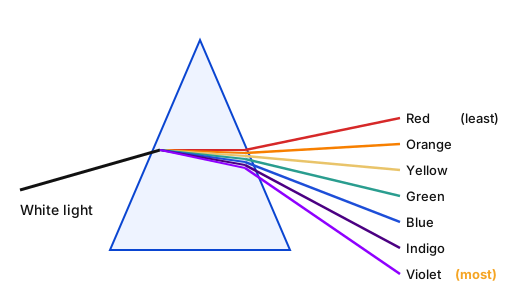
Among all the seven-coloured lights, which colour deviates the most after falling on a prism?
सात रंगों वाले सभी प्रकाशों में से, प्रिज़्म पर पड़ने के बाद कौन-सा रंग सबसे अधिक विचलित होता है?
  1. AYellowपीला
  2. BIndigoजामुनी (Indigo)
  3. CVioletबैंगनी (Violet)
  4. DRedलाल
Show answer

Concept: White light splits into seven colours in a prism because each colour bends by a different amount (dispersion). Deviation is greater for smaller wavelength.

  1. Order VIBGYOR: violet has the shortest wavelength, red the longest.
  2. Refractive index of glass is highest for violet, so violet bends (deviates) the most.
  3. Red bends the least and appears at the top of the spectrum.

Yaad rakhein: VIBGYOR: V = most deviated, R = least deviated.

Answer: (C) Violet

अवधारणा: प्रिज़्म में श्वेत प्रकाश सात रंगों में बँट जाता है क्योंकि हर रंग अलग कोण से मुड़ता है (विक्षेपण)। कम तरंगदैर्घ्य वाला रंग अधिक विचलित होता है।

  1. क्रम VIBGYOR (बैंजानीहपीनाला): बैंगनी की तरंगदैर्घ्य सबसे कम, लाल की सबसे अधिक।
  2. काँच का अपवर्तनांक बैंगनी के लिए सबसे अधिक, अतः बैंगनी सबसे अधिक मुड़ता है।
  3. लाल सबसे कम मुड़ता है और स्पेक्ट्रम में सबसे ऊपर दिखता है।

याद रखें: VIBGYOR: V (बैंगनी) = सर्वाधिक विचलन, R (लाल) = न्यूनतम।

उत्तर: (C) बैंगनी (Violet)

RRB Technician Grade IIIGeneral ScienceDispersion of LightRRB Technician Grade III 2024 · 23 Dec Shift 2 →
Q1974.
Which of the following statements is/are correct related to transportation?
(i) Arteries are the vessels which carry blood away from the heart to various organs of the body.
(ii) The arteries have thin and elastic walls.
(iii) Veins have valves that ensure that blood flows only in one direction.
परिवहन से संबंधित निम्नलिखित में से कौन-सा/से कथन सही है/हैं?
(i) धमनियाँ (Arteries) वे वाहिकाएँ हैं जो रुधिर को हृदय से शरीर के विभिन्न अंगों तक ले जाती हैं।
(ii) धमनियों की भित्तियाँ पतली और लचीली होती हैं।
(iii) शिराओं (Veins) में वाल्व होते हैं जो यह सुनिश्चित करते हैं कि रुधिर केवल एक ही दिशा में प्रवाहित हो।
  1. AOnly (i)केवल (i)
  2. BOnly (i) and (iii)केवल (i) और (iii)
  3. C(i), (ii) and (iii)(i), (ii) और (iii)
  4. DOnly (i) and (ii)केवल (i) और (ii)
Show answer

Concept: Arteries carry blood away from the heart under high pressure; veins bring blood back to the heart.

  1. (i) Arteries carry blood from the heart to organs – correct.
  2. (ii) Since blood in arteries is under high pressure, arteries have thick elastic walls – statement says thin, so wrong.
  3. (iii) Veins have valves so blood flows only towards the heart – correct.

Yaad rakhein: Artery = Away + thick wall; Vein = to heart + valves.

Answer: (B) Only (i) and (iii)

अवधारणा: धमनियाँ उच्च दाब पर रक्त को हृदय से दूर ले जाती हैं; शिराएँ रक्त को हृदय तक वापस लाती हैं।

  1. (i) धमनियाँ हृदय से अंगों तक रक्त ले जाती हैं – सही।
  2. (ii) धमनियों में रक्त उच्च दाब पर होता है, इसलिए उनकी भित्ति मोटी व लचीली होती है – 'पतली' गलत।
  3. (iii) शिराओं में वाल्व होते हैं जिससे रक्त एक ही दिशा में (हृदय की ओर) बहता है – सही।

याद रखें: धमनी = हृदय से दूर + मोटी भित्ति; शिरा = हृदय की ओर + वाल्व।

उत्तर: (B) केवल (i) और (iii)

RRB Technician Grade IIIGeneral ScienceTransportation in HumansRRB Technician Grade III 2024 · 23 Dec Shift 2 →
Q1975.
An organism simply splits into two equal halves during cell division. What is it known as?
कोशिका विभाजन के दौरान एक जीव साधारण रूप से दो समान भागों में विभाजित हो जाता है। इसे क्या कहा जाता है?
  1. ARegenerationपुनर्जनन (Regeneration)
  2. BSpore formationबीजाणु समासंघ (Spore formation)
  3. CBuddingमुकुलन (Budding)
  4. DBinary fissionद्विखंडन (Binary fission)
Show answer

Concept: Binary fission: a unicellular organism divides into two equal daughter cells.

  1. Example: Amoeba, Paramecium, bacteria – the nucleus divides, then the cytoplasm.
  2. Budding (Hydra, yeast) gives a small outgrowth, not two equal halves.
  3. Spore formation (Rhizopus) and regeneration (Planaria) are different methods.

Yaad rakhein: Binary = two equal halves.

Answer: (D) Binary fission

अवधारणा: द्विखंडन: एककोशिकीय जीव दो बराबर संतति कोशिकाओं में बँट जाता है।

  1. उदाहरण: अमीबा, पैरामीशियम, जीवाणु – पहले केंद्रक, फिर कोशिकाद्रव्य विभाजित होता है।
  2. मुकुलन (हाइड्रा, यीस्ट) में छोटा उभार बनता है, दो बराबर भाग नहीं।
  3. बीजाणु निर्माण (राइज़ोपस) और पुनर्जनन (प्लेनेरिया) अलग विधियाँ हैं।

याद रखें: द्वि = दो बराबर भाग।

उत्तर: (D) द्विखंडन (Binary fission)

RRB Technician Grade IIIGeneral ScienceAsexual ReproductionRRB Technician Grade III 2024 · 23 Dec Shift 2 →
Q1976.
Select the INCORRECT statement from the following options.
निम्नलिखित विकल्पों में से गलत कथन का चयन कीजिए।
  1. AThe kinetic energy of an object increases with the increase of its mass.किसी वस्तु की गतिज ऊर्जा उसके द्रव्यमान में वृद्धि के साथ बढ़ती है।
  2. BThe kinetic energy is the energy possessed by an object due to its position.गतिज ऊर्जा वह ऊर्जा है जो किसी वस्तु में उसकी स्थिति के कारण होती है।
  3. CThe kinetic energy is the energy possessed by an object due to its motion.गतिज ऊर्जा वह ऊर्जा है जो किसी वस्तु में उसकी गति के कारण होती है।
  4. DThe kinetic energy of an object increases with the increase of its velocity.किसी वस्तु की गतिज ऊर्जा उसके वेग में वृद्धि के साथ बढ़ती है।
Show answer

Concept: Kinetic energy is the energy due to motion: KE=12mv2.

  1. KE increases with mass m and with velocity v – (A), (C), (D) are correct.
  2. Energy due to position or configuration is potential energy (PE=mgh), not kinetic energy.
  3. So statement (B) is incorrect.

Yaad rakhein: Kinetic → motion; Potential → position.

Answer: (B) The kinetic energy is the energy possessed by an object due to its position.

अवधारणा: गतिज ऊर्जा गति के कारण ऊर्जा है: KE=12mv2।

  1. KE द्रव्यमान m और वेग v बढ़ने पर बढ़ती है – (A), (C), (D) सही।
  2. स्थिति के कारण ऊर्जा स्थितिज ऊर्जा है (PE=mgh), गतिज नहीं।
  3. अतः कथन (B) गलत है।

याद रखें: गतिज → गति; स्थितिज → स्थिति।

उत्तर: (B) गतिज ऊर्जा वह ऊर्जा है जो किसी वस्तु में उसकी स्थिति के कारण होती है।

RRB Technician Grade IIIGeneral ScienceKinetic EnergyRRB Technician Grade III 2024 · 23 Dec Shift 2 →
Q1977.
An object weighs 60 N when measured on the Earth. What would be its weight when measured on the moon? (Given, acceleration due to gravity (g) of the moon is 1/6 th of the g of the earth)
पृथ्वी पर मापे जाने पर एक वस्तु का भार 60 N है। चंद्रमा पर मापे जाने पर इसका भार कितना होगा? (दिया गया है, चंद्रमा का गुरुत्वीय त्वरण (g), पृथ्वी के g का 1/6 वाँ भाग है)
  1. A70 N
  2. B10 N
  3. C40 N
  4. D60 N
Show answer

Concept: Weight W=mg; mass stays the same everywhere, so weight changes in proportion to g.

  1. On the moon, gmoon=16gearth.
  2. Wmoon=16×60=10 N.

Trick: Moon weight = Earth weight ÷6.

Answer: (B) 10 N

अवधारणा: भार W=mg; द्रव्यमान हर जगह समान रहता है, इसलिए भार g के अनुपात में बदलता है।

  1. चंद्रमा पर gmoon=16gearth।
  2. Wmoon=16×60=10 N।

ट्रिक: चंद्रमा पर भार = पृथ्वी पर भार ÷6।

उत्तर: (B) 10 N

RRB Technician Grade IIIGeneral ScienceGravitationRRB Technician Grade III 2024 · 23 Dec Shift 2 →
Q1978.
Starting from rest, Raju attains a velocity of 24 m/s in a minute with his bicycle. The acceleration of the bicycle is:
विरामावस्था से शुरू करके, राजू अपनी साइकिल से एक मिनट में 24 m/s का वेग प्राप्त कर लेता है। साइकिल का त्वरण है:
  1. A0 m/s2
  2. B0.6 m/s2
  3. C0.4 m/s2
  4. D0.2 m/s2
Show answer

Concept: Acceleration a=v−ut, with time in seconds.

  1. Starting from rest: u=0, v=24 m/s.
  2. t=1 minute=60 s.
  3. a=24−060=0.4 m/s2.

Trick: Always convert minutes to seconds before dividing.

Answer: (C) 0.4 m/s2

अवधारणा: त्वरण a=v−ut, समय सेकंड में।

  1. विराम से प्रारंभ: u=0, v=24 m/s।
  2. t=1 मिनट=60 s।
  3. a=24−060=0.4 m/s2।

ट्रिक: भाग देने से पहले मिनट को सेकंड में बदलें।

उत्तर: (C) 0.4 m/s2

RRB Technician Grade IIIGeneral ScienceAccelerationRRB Technician Grade III 2024 · 23 Dec Shift 2 →
Q1979.
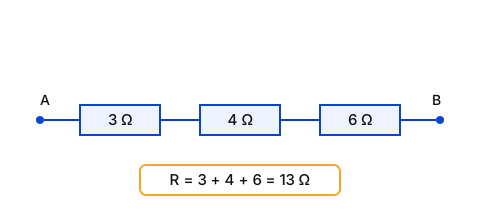
How are three resistances 3 Ω, 4 Ω, and 6 Ω connected in combination, so that their total resistance will be 13 Ω?
तीन प्रतिरोधों 3 Ω, 4 Ω और 6 Ω को किस संयोजन में जोड़ा जाए ताकि उनका कुल प्रतिरोध 13 Ω हो?
  1. A3 Ω in series with 6 Ω and 4 Ω in parallel3 Ω, समांतर क्रम में जुड़े 6 Ω और 4 Ω के साथ श्रेणीक्रम में
  2. BAll in parallelसभी समांतर क्रम (पार्श्वक्रम) में
  3. CAll in seriesसभी श्रेणीक्रम में
  4. DDoes not depend on any combinationकिसी भी संयोजन पर निर्भर नहीं करता
Show answer

Concept: In series, resistances add: Rs=R1+R2+R3. In parallel, the total is less than the smallest resistance.

  1. Series: 3+4+6=13 Ω – matches.
  2. All parallel: 1R=13+14+16=34, so R=43 Ω.
  3. Option (A): 3+4×64+6=5.4 Ω.

Trick: Total equals the plain sum (13) only in series.

Answer: (C) All in series

अवधारणा: श्रेणी क्रम में प्रतिरोध जुड़ते हैं: Rs=R1+R2+R3। समांतर क्रम में कुल प्रतिरोध सबसे छोटे से भी कम होता है।

  1. श्रेणी: 3+4+6=13 Ω – मेल खाता है।
  2. सभी समांतर: 1R=13+14+16=34, अतः R=43 Ω।
  3. विकल्प (A): 3+4×64+6=5.4 Ω।

ट्रिक: कुल प्रतिरोध साधारण योग (13) के बराबर केवल श्रेणी क्रम में होता है।

उत्तर: (C) सभी श्रेणीक्रम में

RRB Technician Grade IIIGeneral ScienceCombination of ResistorsRRB Technician Grade III 2024 · 23 Dec Shift 2 →
Q1980.
Which of the following expressions gives the correct formula for mass by mass percentage of a solution?
निम्नलिखित में से कौन-सा व्यंजक किसी विलयन के द्रव्यमान द्वारा द्रव्यमान प्रतिशत का सही सूत्र देता है?
  1. A((Mass of solvent)/(Mass of solution)) × 100((विलायक का द्रव्यमान)/(विलयन का द्रव्यमान)) × 100
  2. B((Volume of solute)/(Mass of solution)) × 100((विलेय का आयतन)/(विलयन का द्रव्यमान)) × 100
  3. C((Mass of solute)/(Volume of solution)) × 100((विलेय का द्रव्यमान)/(विलयन का आयतन)) × 100
  4. D((Mass of solute)/(Mass of solution)) × 100((विलेय का द्रव्यमान)/(विलयन का द्रव्यमान)) × 100
Show answer

Concept: Concentration of a solution can be expressed as mass by mass percentage.

  1. Mass % =Mass of soluteMass of solution×100.
  2. Mass of solution = mass of solute + mass of solvent.
  3. Mixing mass with volume gives mass by volume %, not mass by mass.

Trick: Mass by mass → both numerator and denominator in mass; numerator is always the solute.

Answer: (D) ((Mass of solute)/(Mass of solution)) × 100

अवधारणा: विलयन की सांद्रता को द्रव्यमान द्वारा द्रव्यमान प्रतिशत में व्यक्त कर सकते हैं।

  1. द्रव्यमान % =विलेय का द्रव्यमानविलयन का द्रव्यमान×100।
  2. विलयन का द्रव्यमान = विलेय + विलायक का द्रव्यमान।
  3. द्रव्यमान और आयतन मिलाने पर द्रव्यमान/आयतन % बनता है।

ट्रिक: द्रव्यमान/द्रव्यमान → अंश व हर दोनों द्रव्यमान में; अंश में सदैव विलेय।

उत्तर: (D) ((विलेय का द्रव्यमान)/(विलयन का द्रव्यमान)) × 100

RRB Technician Grade IIIGeneral ScienceConcentration of SolutionsRRB Technician Grade III 2024 · 23 Dec Shift 2 →