Question bank

Q&A: practice questions with answers

Search questions on any topic. Filter by exam category, exam, subject and topic, try the question, then open the answer and explanation.

Courses – airGurukul

4,800 questions found.

Q2041.
The Uniform Civil Code (UCC) in India aims to provide a common set of laws for which of the following matters?
भारत में समान नागरिक संहिता (UCC) निम्न में से किन विषयों पर एकसमान कानून देना चाहती है?
  1. AEnvironmental regulationsपर्यावरण नियम
  2. BProperty transactionsसंपत्ति लेन-देन
  3. CCriminal offencesआपराधिक अपराध
  4. DPersonal matters governed by religion-specific laws, such as marriage, divorce and inheritanceविवाह, तलाक और उत्तराधिकार जैसे धर्म-आधारित व्यक्तिगत विषय
Show answer

Concept: UCC is about personal laws, which today differ by religion.

  1. Article 44 (DPSP) directs the State to secure a UCC.
  2. It covers marriage, divorce, inheritance, adoption, maintenance.
  3. Criminal law is already common to all, so (C) is wrong.

Yaad rakhein: Uttarakhand became the first state to implement a UCC (January 2025); Goa already had a common civil code.

Answer: (D) Personal matters governed by religion-specific laws, such as marriage, divorce and inheritance

अवधारणा: UCC व्यक्तिगत कानूनों से जुड़ी है, जो आज धर्म के अनुसार अलग हैं।

हल:

  1. अनुच्छेद 44 (नीति-निदेशक तत्व) में UCC का उल्लेख है।
  2. इसमें विवाह, तलाक, उत्तराधिकार, गोद लेना, भरण-पोषण आते हैं।
  3. आपराधिक कानून पहले से सबके लिए समान है, अतः (C) गलत।

याद रखें: उत्तराखंड UCC लागू करने वाला पहला राज्य बना (जनवरी 2025); गोवा में पहले से समान नागरिक संहिता है।

उत्तर: (D) विवाह, तलाक और उत्तराधिकार जैसे धर्म-आधारित व्यक्तिगत विषय
SSC CGLGeneral AwarenessPolity – Uniform Civil CodeSSC CGL 2025 · 20 Sep Shift 1 →
Q2042.
What is the main objective of the Soil Health Card Scheme in India?
भारत में मृदा स्वास्थ्य कार्ड योजना का मुख्य उद्देश्य क्या है?
  1. ATo enhance the quality of seedsबीजों की गुणवत्ता सुधारना
  2. BTo encourage organic farming practicesजैविक खेती को बढ़ावा देना
  3. CTo evaluate the nutrient content and fertility of soilमिट्टी के पोषक तत्त्व और उर्वरता का आकलन करना
  4. DTo stop land acquisition for industrial purposesऔद्योगिक भूमि अधिग्रहण रोकना
Show answer

Concept: The scheme tests farm soil and advises on fertiliser.

  1. Soil samples are tested for nutrients (N, P, K, micronutrients), pH, organic carbon etc.
  2. The card tells the farmer the soil's fertility and the right nutrient dose.
  3. It does not deal with seeds or land acquisition.

Yaad rakhein: Launched in 2015 at Suratgarh (Rajasthan); 5 December is World Soil Day.

Answer: (C) To evaluate the nutrient content and fertility of soil

अवधारणा: योजना खेत की मिट्टी की जाँच कर उर्वरक की सलाह देती है।

हल:

  1. मिट्टी के नमूनों में पोषक तत्त्व (N, P, K, सूक्ष्म पोषक), pH, जैविक कार्बन आदि जाँचे जाते हैं।
  2. कार्ड किसान को मिट्टी की उर्वरता और सही खुराक बताता है।
  3. बीज या भूमि अधिग्रहण से इसका संबंध नहीं।

याद रखें: 2015 में सूरतगढ़ (राजस्थान) से शुरू; 5 दिसंबर विश्व मृदा दिवस है।

उत्तर: (C) मिट्टी के पोषक तत्त्व और उर्वरता का आकलन करना

SSC CGLGeneral AwarenessSchemes – Soil Health CardSSC CGL 2025 · 20 Sep Shift 1 →
Q2043.
What is Baikuntha Shukla historically known for in the context of India's freedom movement?
भारत के स्वतंत्रता आंदोलन के संदर्भ में बैकुंठ शुक्ल किस लिए जाने जाते हैं?
  1. AHe led the Home Rule movementउन्होंने होम रूल आंदोलन का नेतृत्व किया
  2. BHe assassinated a government approverउन्होंने एक सरकारी मुखबिर की हत्या की
  3. CHe represented India in the Round Table Conferenceउन्होंने गोलमेज सम्मेलन में भारत का प्रतिनिधित्व किया
  4. DHe founded the Jugantar Partyउन्होंने जुगांतर पार्टी की स्थापना की
Show answer

Concept: A Bihar revolutionary linked to the Lahore Conspiracy Case.

  1. Phanindra Nath Ghosh turned approver and testified against Bhagat Singh, Sukhdev and Rajguru.
  2. Baikuntha Shukla killed him in 1932 and was hanged in Gaya jail in 1934.

Yaad rakhein: Jugantar was linked to Aurobindo Ghosh and Barindra Ghosh; Home Rule was led by Tilak and Annie Besant.

Answer: (B) He assassinated a government approver

अवधारणा: लाहौर षड्यंत्र केस से जुड़े बिहार के क्रांतिकारी।

हल:

  1. फणींद्रनाथ घोष सरकारी गवाह (मुखबिर) बना और भगत सिंह, सुखदेव, राजगुरु के विरुद्ध गवाही दी।
  2. बैकुंठ शुक्ल ने 1932 में उसकी हत्या की; 1934 में गया जेल में फाँसी हुई।

याद रखें: जुगांतर – अरविंद व बारींद्र घोष; होम रूल – तिलक व एनी बेसेंट।

उत्तर: (B) उन्होंने एक सरकारी मुखबिर की हत्या की

SSC CGLGeneral AwarenessFreedom struggle – Baikuntha ShuklaSSC CGL 2025 · 20 Sep Shift 1 →
Q2044.
Consider the following statements about the Dangi tribal dance:
1. It is a traditional dance of the Dangi community in Gujarat's Dang district.
2. The dance is a solo performance that imitates movements of farm activities and tools.
Which of the above statements is/are correct?
डांगी जनजातीय नृत्य के संबंध में निम्न कथनों पर विचार कीजिए:
1. यह गुजरात के डांग ज़िले के डांगी समुदाय का पारंपरिक नृत्य है।
2. यह एकल प्रस्तुति है जो खेती के कार्यों और औज़ारों की गतियों की नकल करती है।
उपर्युक्त में से कौन-सा/से कथन सही है/हैं?
  1. AOnly 1 is correctकेवल 1 सही है
  2. BOnly 2 is correctकेवल 2 सही है
  3. CBoth 1 and 2 are correct1 और 2 दोनों सही हैं
  4. DNeither 1 nor 2 is correctन 1 न 2 सही है
Show answer

Concept: Check each statement separately.

  1. Dangi is a tribal dance of the Dang district of Gujarat — 1 correct.
  2. It is performed by large groups of men and women in rows and circles, not solo — 2 wrong.

Yaad rakhein: Other Gujarat dances – Garba, Dandiya Raas, Tippani, Padhar, Siddi Dhamal.

Answer: (A) Only 1 is correct

अवधारणा: हर कथन को अलग से जाँचें।

हल:

  1. डांगी, गुजरात के डांग ज़िले का जनजातीय नृत्य है — 1 सही।
  2. इसे स्त्री-पुरुषों के बड़े समूह पंक्ति व घेरे में करते हैं, एकल नहीं — 2 गलत।

याद रखें: गुजरात के अन्य नृत्य – गरबा, डांडिया रास, टिप्पणी, पढार, सिद्दी धमाल।

उत्तर: (A) केवल 1 सही है

SSC CGLGeneral AwarenessFolk dance – Dangi (Gujarat)SSC CGL 2025 · 20 Sep Shift 1 →
Q2045.
Which of the following correctly explains the economic concept of opportunity cost?
अवसर लागत की आर्थिक अवधारणा को निम्न में से कौन सही बताता है?
  1. AThe total expense incurred in productionउत्पादन में हुआ कुल व्यय
  2. BThe value of the next best alternative that is given upत्यागे गए अगले सर्वोत्तम विकल्प का मूल्य
  3. CThe cost of employing labourश्रम नियोजन की लागत
  4. DThe overall money spent on a project or activityकिसी परियोजना पर खर्च कुल धन
Show answer

Concept: Resources are scarce, so choosing one use means losing another.

  1. Opportunity cost = value of the next best alternative sacrificed.
  2. E.g., if land growing wheat could have earned ₹10,000 from rice, the opportunity cost of wheat is ₹10,000.
  3. (A), (C), (D) describe money costs, not opportunity cost.

Trick: Think 'what did I give up?' — that is opportunity cost.

Answer: (B) The value of the next best alternative that is given up

अवधारणा: संसाधन सीमित हैं, इसलिए एक उपयोग चुनने पर दूसरा छोड़ना पड़ता है।

हल:

  1. अवसर लागत = त्यागे गए अगले सर्वोत्तम विकल्प का मूल्य।
  2. जैसे गेहूँ वाली भूमि से चावल उगाकर ₹10,000 मिलते, तो गेहूँ की अवसर लागत ₹10,000।
  3. (A), (C), (D) मौद्रिक खर्च हैं, अवसर लागत नहीं।

ट्रिक: सोचें 'मैंने क्या छोड़ा?' — वही अवसर लागत है।

उत्तर: (B) त्यागे गए अगले सर्वोत्तम विकल्प का मूल्य

SSC CGLGeneral AwarenessEconomics – opportunity costSSC CGL 2025 · 20 Sep Shift 1 →
Q2046.
In the Global Firepower (GFP) ranking system, why are special modifiers such as bonuses and penalties applied in the calculation?
ग्लोबल फायरपावर (GFP) रैंकिंग प्रणाली में बोनस और दंड जैसे विशेष संशोधक क्यों लगाए जाते हैं?
  1. ATo adjust rankings fairly between technologically advanced and less-developed militariesतकनीकी रूप से उन्नत और कम विकसित सेनाओं के बीच रैंकिंग को निष्पक्ष बनाने हेतु
  2. BTo give extra weight to nations with large nuclear arsenalsबड़े परमाणु भंडार वाले देशों को अतिरिक्त भार देने हेतु
  3. CTo exclude countries without armed forcesबिना सशस्त्र बल वाले देशों को बाहर रखने हेतु
  4. DTo compute the ratio of GDP to defence spendingGDP और रक्षा व्यय का अनुपात निकालने हेतु
Show answer

Concept: GFP gives each country a PowerIndex from 60+ factors.

  1. Bonuses and penalties adjust for things like technology, geography and logistics.
  2. This lets small but advanced forces be compared fairly with large, less-developed ones.
  3. Nuclear stockpiles are not added to the score, so (B) is wrong.

Yaad rakhein: In the GFP PowerIndex, a lower score means a stronger military (0.0000 is the ideal).

Answer: (A) To adjust rankings fairly between technologically advanced and less-developed militaries

अवधारणा: GFP 60 से अधिक कारकों से हर देश का PowerIndex बनाता है।

हल:

  1. बोनस और दंड तकनीक, भूगोल, रसद आदि के अनुसार समायोजन करते हैं।
  2. इससे छोटी पर उन्नत सेनाओं की तुलना बड़ी पर कम विकसित सेनाओं से निष्पक्ष होती है।
  3. परमाणु भंडार स्कोर में नहीं जोड़े जाते, अतः (B) गलत।

याद रखें: GFP PowerIndex में कम स्कोर = अधिक शक्तिशाली सेना (0.0000 आदर्श)।

उत्तर: (A) तकनीकी रूप से उन्नत और कम विकसित सेनाओं के बीच रैंकिंग को निष्पक्ष बनाने हेतु

SSC CGLGeneral AwarenessDefence – Global Firepower indexSSC CGL 2025 · 20 Sep Shift 1 →
Q2047.
Who was the prominent leader of the Khongjom battle (1891) resisting British control over Manipur?
मणिपुर पर ब्रिटिश नियंत्रण का विरोध करने वाले खोंगजोम युद्ध (1891) के प्रमुख नेता कौन थे?
  1. ARani Gaidinliuरानी गाइदिन्ल्यू
  2. BU Kiang Nangbahयू कियांग नांगबाह
  3. CTikendrajit Singhटिकेंद्रजीत सिंह
  4. DVeer Surendra Saiवीर सुरेंद्र साय
Show answer

Concept: The Battle of Khongjom was the last stand of Manipur against the British.

  1. Prince Tikendrajit Singh, commander of the Manipuri forces, led the resistance.
  2. He and General Thangal were hanged in August 1891.
  3. Rani Gaidinliu (Naga), U Kiang Nangbah (Jaintia), Surendra Sai (Sambalpur) belong to other revolts.

Yaad rakhein: Khongjom Day is observed in Manipur on 23 April.

Answer: (C) Tikendrajit Singh

अवधारणा: खोंगजोम का युद्ध अंग्रेज़ों के विरुद्ध मणिपुर का अंतिम प्रतिरोध था।

हल:

  1. मणिपुरी सेना के सेनापति युवराज टिकेंद्रजीत सिंह ने नेतृत्व किया।
  2. अगस्त 1891 में उन्हें जनरल थांगल के साथ फाँसी दी गई।
  3. गाइदिन्ल्यू (नागा), यू कियांग नांगबाह (जयंतिया), सुरेंद्र साय (संबलपुर) अन्य विद्रोहों से जुड़े हैं।

याद रखें: मणिपुर में 23 अप्रैल को खोंगजोम दिवस मनाया जाता है।

उत्तर: (C) टिकेंद्रजीत सिंह

SSC CGLGeneral AwarenessResistance movements – Anglo-Manipur War 1891SSC CGL 2025 · 20 Sep Shift 1 →
Q2048.
During the first seven Five-Year Plans, why did India adopt a policy of import substitution?
पहली सात पंचवर्षीय योजनाओं में भारत ने आयात प्रतिस्थापन की नीति क्यों अपनाई?
  1. ATo boost imports from developed countriesविकसित देशों से आयात बढ़ाने हेतु
  2. BTo attract multinational corporationsबहुराष्ट्रीय कंपनियाँ आकर्षित करने हेतु
  3. CTo develop and protect emerging domestic industries from foreign competitionउभरते घरेलू उद्योगों को विदेशी प्रतिस्पर्धा से बचाने और विकसित करने हेतु
  4. DTo focus primarily on export-oriented growthमुख्यतः निर्यात-उन्मुख वृद्धि पर ध्यान देने हेतु
Show answer

Concept: An inward-looking trade policy followed till 1991.

  1. Goods earlier imported were to be made at home.
  2. Tariffs and quotas protected young (infant) domestic industries from foreign competition.
  3. Goal: self-reliance — so (A), (B), (D) contradict it.

Trick: 'Import substitution' = substitute imports with home production — the name itself gives the answer.

Answer: (C) To develop and protect emerging domestic industries from foreign competition

अवधारणा: 1991 तक अपनाई गई अंतर्मुखी व्यापार नीति।

हल:

  1. पहले आयात होने वाली वस्तुएँ देश में ही बनाई जाएँ।
  2. शुल्क और कोटा से नवोदित घरेलू उद्योगों को विदेशी प्रतिस्पर्धा से बचाया गया।
  3. लक्ष्य: आत्मनिर्भरता — (A), (B), (D) इसके विपरीत हैं।

ट्रिक: 'आयात प्रतिस्थापन' = आयात की जगह घरेलू उत्पादन — नाम में ही उत्तर है।

उत्तर: (C) उभरते घरेलू उद्योगों को विदेशी प्रतिस्पर्धा से बचाने और विकसित करने हेतु

SSC CGLGeneral AwarenessIndian economy – import substitutionSSC CGL 2025 · 20 Sep Shift 1 →
Q2049.
The Green Credit Programme launched by the Ministry of Environment provides incentives for which of the following activities?
पर्यावरण मंत्रालय द्वारा शुरू किया गया ग्रीन क्रेडिट कार्यक्रम किन गतिविधियों को प्रोत्साहन देता है?
  1. AAfforestation and ecological restoration effortsवनरोपण और पारिस्थितिक पुनर्स्थापन प्रयास
  2. BAdoption of renewable energy devices like solar panelsसौर पैनल जैसे नवीकरणीय ऊर्जा उपकरण अपनाना
  3. CTracking and reporting air qualityवायु गुणवत्ता की निगरानी और रिपोर्टिंग
  4. DExclusive focus on water-saving initiativesकेवल जल-बचत पहलों पर ध्यान
Show answer

Concept: A market-based scheme (Green Credit Rules, 2023) that rewards voluntary green actions.

  1. Credits are earned mainly for tree plantation/afforestation on degraded land and ecological restoration.
  2. Water conservation is one activity, not the exclusive focus — (D) wrong.
  3. Credits can be traded on a dedicated platform.

Yaad rakhein: The programme is administered by ICFRE (Indian Council of Forestry Research and Education), Dehradun.

Answer: (A) Afforestation and ecological restoration efforts

अवधारणा: बाज़ार-आधारित योजना (ग्रीन क्रेडिट नियम, 2023) जो स्वैच्छिक हरित कार्यों पर पुरस्कार देती है।

हल:

  1. मुख्यतः बंजर/क्षरित भूमि पर वृक्षारोपण और पारिस्थितिक पुनर्स्थापन से क्रेडिट मिलते हैं।
  2. जल संरक्षण एक गतिविधि है, 'केवल' उसी पर ध्यान नहीं — (D) गलत।
  3. क्रेडिट का व्यापार एक विशेष प्लेटफ़ॉर्म पर हो सकता है।

याद रखें: इसका प्रशासक ICFRE (भारतीय वानिकी अनुसंधान एवं शिक्षा परिषद), देहरादून है।

उत्तर: (A) वनरोपण और पारिस्थितिक पुनर्स्थापन प्रयास

SSC CGLGeneral AwarenessEnvironment – Green Credit ProgrammeSSC CGL 2025 · 20 Sep Shift 1 →
Q2050.
Consider the following statements regarding the distribution of subjects between the Union and the States in India:
1. Criminal law is exclusively a state subject.
2. Agriculture is primarily a State subject.
3. Trade and commerce occurring within a State fall under the Union List.
Which of the statements is/are correct?
भारत में संघ और राज्यों के बीच विषयों के विभाजन के संबंध में निम्न कथनों पर विचार कीजिए:
1. आपराधिक विधि अनन्य रूप से राज्य का विषय है।
2. कृषि मुख्यतः राज्य का विषय है।
3. राज्य के भीतर होने वाला व्यापार और वाणिज्य संघ सूची में आता है।
कौन-सा/से कथन सही है/हैं?
  1. A2 onlyकेवल 2
  2. B2 and 3 onlyकेवल 2 और 3
  3. C1 and 3 onlyकेवल 1 और 3
  4. D1, 2 and 31, 2 और 3
Show answer

Concept: Union, State and Concurrent Lists divide legislative subjects.

  1. Criminal law and criminal procedure — Concurrent List ✗ (1 wrong).
  2. Agriculture — State List ✓ (2 correct).
  3. Trade and commerce within a State — State List, not Union ✗ (3 wrong).

Trick: Words like 'exclusively' and 'within a State' signal traps; 'inter-state' trade is Union, 'intra-state' is State.

Answer: (A) 2 only

अवधारणा: संघ, राज्य और समवर्ती सूचियाँ विधायी विषय बाँटती हैं।

हल:

  1. आपराधिक विधि व प्रक्रिया — समवर्ती सूची ✗ (1 गलत)।
  2. कृषि — राज्य सूची ✓ (2 सही)।
  3. राज्य के भीतर व्यापार-वाणिज्य — राज्य सूची, संघ नहीं ✗ (3 गलत)।

ट्रिक: अंतर-राज्यीय व्यापार = संघ; राज्य के भीतर व्यापार = राज्य। 'अनन्य रूप से' जैसे शब्द जाल होते हैं।

उत्तर: (A) केवल 2

SSC CGLGeneral AwarenessPolity – Seventh Schedule listsSSC CGL 2025 · 20 Sep Shift 1 →
Q2051.
Find the value of x in the given equation:
5+x+5−x5+x−5−x = 7
दिए गए समीकरण में x का मान ज्ञात कीजिए:
5+x+5−x5+x−5−x = 7
  1. A125
  2. B75
  3. C65
  4. D85
Show answer

Concept: If a+ba−b=k, then ab=k+1k−1.

  1. Here a=5+x,b=5−x,k=7.
  2. 5+x5−x=86=43.
  3. Square: 5+x5−x=169⇒45+9x=80−16x.
  4. 25x=35⇒x=75.

Trick: Apply C–D twice: 5+x5−x=169⇒x=5×16−916+9=3525=75.

Answer: (B) 75

अवधारणा: यदि a+ba−b=k, तो ab=k+1k−1।

हल:

  1. यहाँ a=5+x,b=5−x,k=7
  2. 5+x5−x=86=43
  3. वर्ग करें: 5+x5−x=169⇒45+9x=80−16x
  4. 25x=35⇒x=75

ट्रिक: योगांतरानुपात दोबारा: x=5×16−916+9=75।

उत्तर: (B) 75

SSC CGLQuantitative AptitudeAlgebra – componendo and dividendo with surdsSSC CGL 2025 · 20 Sep Shift 1 →
Q2052.
A dealer first sells a dining table for ₹X, making a 20% profit. Later the marked price of the same table is raised to ₹1.8X and a festive discount of 30% is given on it. What is the new profit percentage?
एक विक्रेता पहले एक डाइनिंग टेबल ₹X में बेचकर 20% लाभ कमाता है। बाद में उसी टेबल का अंकित मूल्य ₹1.8X कर दिया जाता है और उस पर 30% त्योहारी छूट दी जाती है। नया लाभ प्रतिशत क्या है?
  1. A56%
  2. B51.2%
  3. C42%
  4. D70%
Show answer

Concept: Fix CP using the first sale, then find the new SP after discount.

  1. 20% profit ⇒ X=1.2×CP. Let CP=100, so X=120.
  2. New MP = 1.8×120=216.
  3. SP after 30% off = 216×0.7=151.2.
  4. Profit % = 151.2−100=51.2%.

Trick: Multiply factors directly: 1.2×1.8×0.7=1.512 ⇒ 51.2% profit.

Answer: (B) 51.2%

अवधारणा: पहली बिक्री से क्रय मूल्य तय करें, फिर छूट के बाद नया विक्रय मूल्य निकालें।

हल:

  1. 20% लाभ ⇒ X=1.2×CP. CP=100 मानें, तो X=120
  2. नया अंकित मूल्य = 1.8×120=216
  3. 30% छूट के बाद SP = 216×0.7=151.2
  4. लाभ % = 151.2−100=51.2%

ट्रिक: गुणक सीधे गुणा करें: 1.2×1.8×0.7=1.512 ⇒ 51.2% लाभ।

उत्तर: (B) 51.2%

SSC CGLQuantitative AptitudeProfit and discount – new profit %SSC CGL 2025 · 20 Sep Shift 1 →
Q2053.
What is the compound interest on a sum of ₹31,250 at 18% p.a. in 2 years, if the interest is compounded 8-monthly?
₹31,250 पर 18% वार्षिक दर से 2 वर्ष का चक्रवृद्धि ब्याज क्या होगा, यदि ब्याज 8-माही चक्रवृद्धि हो?
  1. A₹12,654
  2. B₹12,664
  3. C₹12,754
  4. D₹13,654
Show answer

Concept: For compounding every k months: rate per period = R×k12, periods = total months ÷ k.

  1. Rate per period = 18×812=12%.
  2. Periods = 24÷8=3.
  3. Amount = 31,250×(1.12)3=31,250×1.404928=43,904.
  4. CI = 43,904−31,250= ₹12,654.

Trick: 31,250=56×2 and 1.12=2825: 31,250×283253=2×283=43,904 — no decimals needed.

Answer: (A) ₹12,654

अवधारणा: हर k महीने पर चक्रवृद्धि: प्रति अवधि दर = R×k12, अवधियाँ = कुल महीने ÷ k।

हल:

  1. प्रति अवधि दर = 18×812=12%
  2. अवधियाँ = 24÷8=3
  3. मिश्रधन = 31,250×(1.12)3=43,904
  4. CI = 43,904−31,250= ₹12,654

ट्रिक: 1.12=2825 और 31,250=2×253, तो मिश्रधन = 2×283=43,904।

उत्तर: (A) ₹12,654

SSC CGLQuantitative AptitudeCompound interest – 8-monthly compoundingSSC CGL 2025 · 20 Sep Shift 1 →
Q2054.
A contractor employs 20 men to complete a work in 28 days, working 7 hours per day. After seven days he adds six more men but reduces the working hours to five per day from the eighth day onwards. If all men work with the same efficiency, how many more days will be required to finish the remaining work?
एक ठेकेदार 20 आदमियों से 28 दिनों में, प्रतिदिन 7 घंटे काम कराकर एक कार्य पूरा कराता है। सात दिन बाद वह छह आदमी और लगा देता है, पर आठवें दिन से काम के घंटे घटाकर 5 कर देता है। सभी की कार्यक्षमता समान हो, तो शेष कार्य पूरा करने में कितने दिन और लगेंगे?
  1. A24
  2. B19
  3. C27
  4. D23
Show answer

Concept: Total work = men × days × hours (man-hours).

  1. Original plan has 28−7=21 days of work left after day 7.
  2. Remaining work = 20 men×21 days×7 h=2940 man-hours.
  3. New rate = 26×5=130 man-hours per day.
  4. 2940÷130≈22.6 ⇒ 23 more days.

Trick: Remaining work =34 of total (21 of 28 days left), so days = 20×21×7÷130≈22.6 → round up to 23.

Answer: (D) 23

अवधारणा: कुल कार्य = आदमी × दिन × घंटे (मानव-घंटे)।

हल:

  1. कुल = 20×28×7=3920 मानव-घंटे
  2. 7 दिन में हुआ = 20×7×7=980; शेष = 2940
  3. नई दर = 26×5=130 मानव-घंटे प्रतिदिन
  4. 2940÷130≈22.6 ⇒ 23 दिन और

ट्रिक: भिन्न में दिन आए तो पूरा कार्य करने के लिए अगला पूर्ण दिन लें (22.6 → 23)।

उत्तर: (D) 23

SSC CGLQuantitative AptitudeWork – men, days and hoursSSC CGL 2025 · 20 Sep Shift 1 →
Q2055.
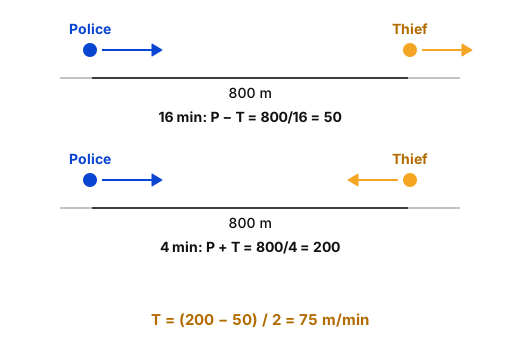
A thief and a police officer are 800 metres apart. If they run in the same direction, the officer catches the thief in 16 minutes. If they run towards each other, they meet in 4 minutes. What is the speed of the thief in metres per minute?
एक चोर और एक पुलिसकर्मी 800 मीटर की दूरी पर हैं। एक ही दिशा में दौड़ने पर पुलिसकर्मी चोर को 16 मिनट में पकड़ लेता है। एक-दूसरे की ओर दौड़ने पर वे 4 मिनट में मिलते हैं। चोर की चाल (मीटर प्रति मिनट) क्या है?
  1. A50 m/min50 मी/मिनट
  2. B120 m/min120 मी/मिनट
  3. C75 m/min75 मी/मिनट
  4. D125 m/min125 मी/मिनट
Show answer

Concept: Same direction: speeds subtract; opposite direction: speeds add.

  1. Police − thief = 80016=50 m/min.
  2. Police + thief = 8004=200 m/min.
  3. Thief = 200−502=75 m/min.

Trick: Slower speed = sum−difference2; faster = sum+difference2=125 (police).

Answer: (C) 75 m/min

अवधारणा: एक दिशा में चालें घटती हैं; विपरीत दिशा में जुड़ती हैं।

हल:

  1. पुलिस − चोर = 80016=50 मी/मिनट
  2. पुलिस + चोर = 8004=200 मी/मिनट
  3. चोर = 200−502=75 मी/मिनट

ट्रिक: धीमी चाल = योग−अंतर2; तेज़ चाल = योग+अंतर2=125 (पुलिस)।

उत्तर: (C) 75 मी/मिनट

SSC CGLQuantitative AptitudeRelative speed – chase and meetSSC CGL 2025 · 20 Sep Shift 1 →
Q2056.
What type of number is obtained when a rational number is added to an irrational number?
जब किसी परिमेय संख्या में अपरिमेय संख्या जोड़ी जाए तो किस प्रकार की संख्या मिलती है?
  1. AAlways Rationalसदैव परिमेय
  2. BAlways Irrationalसदैव अपरिमेय
  3. CAlways Integerसदैव पूर्णांक
  4. DSometimes Rational, Sometimes Irrationalकभी परिमेय, कभी अपरिमेय
Show answer

Concept: Rationals are closed under subtraction.

  1. Let r (rational) + i (irrational) = s.
  2. If s were rational, i=s−r would be rational — impossible.
  3. So the sum is always irrational, e.g. 3+2.

Yaad rakhein: Rational × irrational is irrational too, except when the rational is 0.

Answer: (B) Always Irrational

अवधारणा: दो परिमेय संख्याओं का अंतर हमेशा परिमेय होता है।

हल:

  1. मानें r (परिमेय) + i (अपरिमेय) = s
  2. यदि s परिमेय हो, तो i=s−r भी परिमेय होगा — असंभव।
  3. अतः योग सदैव अपरिमेय, जैसे 3+2।

याद रखें: परिमेय × अपरिमेय भी अपरिमेय होता है, सिवाय तब जब परिमेय संख्या 0 हो।

उत्तर: (B) सदैव अपरिमेय

SSC CGLQuantitative AptitudeNumber system – rational + irrationalSSC CGL 2025 · 20 Sep Shift 1 →
Q2057.
Three metallic spheres with radii 4 cm, 2 cm and 7 cm respectively are melted together and recast into a single solid sphere. What is the radius of the new sphere?
4 cm, 2 cm और 7 cm त्रिज्या वाले तीन धातु के गोलों को पिघलाकर एक ठोस गोला बनाया जाता है। नए गोले की त्रिज्या क्या है?
  1. A12.5 cm
  2. B9.5 cm
  3. C6.5 cm
  4. D7.5 cm
Show answer

Concept: Volume is conserved: R3=r13+r23+r33 (43π cancels).

  1. R3=43+23+73=64+8+343=415.
  2. 73=343 and 83=512, so R is between 7 and 8.
  3. 7.53=421.9≈415⇒R≈7.5 cm.

Trick: Bracket the cube root between known cubes — only one option (7.5) lies between 7 and 8.

Answer: (D) 7.5 cm

अवधारणा: आयतन संरक्षित रहता है: R3=r13+r23+r33 (43π कट जाता है)।

हल:

  1. R3=64+8+343=415
  2. 73=343, 83=512, अतः R, 7 और 8 के बीच
  3. 7.53≈421.9≈415⇒R≈7.5 cm

ट्रिक: घनमूल को ज्ञात घनों के बीच रखें — 7 और 8 के बीच केवल 7.5 है।

उत्तर: (D) 7.5 cm

SSC CGLQuantitative AptitudeMensuration – recasting spheresSSC CGL 2025 · 20 Sep Shift 1 →
Q2058.
A car runs 27.6 km using 3.75 litres of petrol. What is the mileage in km per litre (rounded to 2 decimals)?
एक कार 3.75 लीटर पेट्रोल में 27.6 km चलती है। माइलेज (km प्रति लीटर, दो दशमलव तक) क्या है?
  1. A7.98
  2. B7.66
  3. C7.54
  4. D7.36
Show answer

Concept: Mileage = distance ÷ fuel used.

  1. 27.6÷3.75=2760÷375.
  2. 375×7=2625; remainder 135 ⇒ 135375=0.36.
  3. Mileage = 7.36 km/L.

Trick: 3.75=154, so 27.6×415=110.415=7.36.

Answer: (D) 7.36

अवधारणा: माइलेज = दूरी ÷ खर्च ईंधन।

हल:

  1. 27.6÷3.75=2760÷375
  2. 375×7=2625; शेष 135 ⇒ 135375=0.36
  3. माइलेज = 7.36 km/लीटर

ट्रिक: 3.75=154, तो 27.6×415=110.415=7.36।

उत्तर: (D) 7.36

SSC CGLQuantitative AptitudeDecimals – mileageSSC CGL 2025 · 20 Sep Shift 1 →
Q2059.
In a three-way joint venture the partners share profits in the ratio 5 : 6 : 3. If the venture earns ₹2,80,000 in the first year, how much should the strategist (second partner) receive?
एक त्रिपक्षीय संयुक्त उद्यम में साझेदार लाभ 5 : 6 : 3 के अनुपात में बाँटते हैं। यदि पहले वर्ष ₹2,80,000 का लाभ होता है, तो रणनीतिकार (दूसरे साझेदार) को कितना मिलना चाहिए?
  1. A₹1,40,000
  2. B₹1,65,000
  3. C₹1,20,000
  4. D₹1,55,000
Show answer

Concept: Share = (own ratio part ÷ total parts) × profit.

  1. Total parts = 5+6+3=14.
  2. 1 part = 2,80,000÷14= ₹20,000.
  3. Second partner = 6×20,000= ₹1,20,000.

Trick: Find the value of 1 part first — every share is then a quick multiple.

Answer: (C) ₹1,20,000

अवधारणा: हिस्सा = (अपना भाग ÷ कुल भाग) × लाभ।

हल:

  1. कुल भाग = 5+6+3=14
  2. 1 भाग = 2,80,000÷14= ₹20,000
  3. दूसरा साझेदार = 6×20,000= ₹1,20,000

ट्रिक: पहले 1 भाग का मान निकालें — फिर हर हिस्सा सीधा गुणा है।

उत्तर: (C) ₹1,20,000

SSC CGLQuantitative AptitudePartnership – sharing profit in ratioSSC CGL 2025 · 20 Sep Shift 1 →
Q2060.
A wire is cut into three pieces in the ratio 3 : 4 : 8. If the length of the longest piece is 40 cm, what is the total length of the wire?
एक तार को 3 : 4 : 8 के अनुपात में तीन टुकड़ों में काटा जाता है। यदि सबसे लंबा टुकड़ा 40 cm का है, तो तार की कुल लंबाई क्या है?
  1. A40 cm
  2. B50 cm
  3. C75 cm
  4. D85 cm
Show answer

Concept: Use the known piece to find the value of 1 part.

  1. Pieces are 3k, 4k, 8k with 8k=40⇒k=5.
  2. Pieces: 15 cm, 20 cm, 40 cm.
  3. Whole wire = 15+20+40=75 cm.

Trick: Total = 40×158=75 — one line.

Answer: (C) 75 cm

अवधारणा: ज्ञात टुकड़े से 1 भाग का मान निकालें।

हल:

  1. सबसे लंबा = 8 भाग = 40 cm ⇒ 1 भाग = 5 cm
  2. कुल भाग = 3+4+8=15
  3. कुल लंबाई = 15×5=75 cm

ट्रिक: कुल = 40×158=75 — एक पंक्ति में।

उत्तर: (C) 75 cm

SSC CGLQuantitative AptitudeRatio – total from one partSSC CGL 2025 · 20 Sep Shift 1 →