Question bank

Q&A: practice questions with answers

Search questions on any topic. Filter by exam category, exam, subject and topic, try the question, then open the answer and explanation.

Courses – airGurukul

4,800 questions found.

Q2361.
A solid ball is placed inside a cube such that it touches all six faces. What percentage of the cube's volume is occupied by the ball?
एक ठोस गेंद घन के भीतर इस प्रकार रखी है कि वह छहों फलकों को स्पर्श करती है। घन के आयतन का कितना प्रतिशत गेंद घेरती है?
  1. A47.67%
  2. B48.56%
  3. C49.28%
  4. D52.33%
Show answer

Concept: Ball touching all faces ⇒ diameter = side of cube.
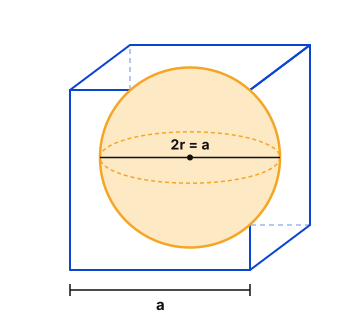
  1. Side = a, radius = a2.
  2. Ball volume = 43π(a2)3=πa36.
  3. Fraction = π6≈0.5236 → about 52.3% (≈ 52.33% given).

Trick: Remember π6≈52% of the cube – only (D) is above 50%.

Answer: (D) 52.33%

अवधारणा: गेंद सभी फलकों को छुए ⇒ व्यास = घन की भुजा।

  1. भुजा = a, त्रिज्या = a2।
  2. गेंद का आयतन = 43π(a2)3=πa36।
  3. भाग = π6≈0.5236 → लगभग 52.3% (विकल्प 52.33%)।

ट्रिक: π6≈52% – 50% से ऊपर केवल (D) है।

उत्तर: (D) 52.33%
SSC CGLQuantitative AptitudeSphere inscribed in a cubeSSC CGL 2025 · 19 Sep Shift 1 →
Q2362.
The sides of a rectangular prism are in the ratio 2 : 5 : 3. If the volume of the prism is 240 cm³, what is the length of its longest side?
एक घनाभ की भुजाएँ 2 : 5 : 3 के अनुपात में हैं। यदि उसका आयतन 240 cm³ है, तो सबसे लंबी भुजा की लंबाई क्या है?
  1. A12 cm
  2. B10 cm
  3. C8 cm
  4. D16 cm
Show answer

Concept: Write sides as multiples of x and use V=l×b×h.

  1. Sides 2x, 5x, 3x → V=30x3=240.
  2. x3=8→x=2.
  3. Longest side = 5x=10 cm.

Trick: 240÷(2×5×3)=8, a perfect cube → x=2 in one step.

Answer: (B) 10 cm

अवधारणा: भुजाएँ x के गुणज में लिखें और V=l×b×h लगाएँ।

  1. भुजाएँ 2x, 5x, 3x → V=30x3=240।
  2. x3=8→x=2।
  3. सबसे लंबी भुजा = 5x=10 सेमी।

ट्रिक: 240÷30=8, पूर्ण घन → x=2 तुरंत।

उत्तर: (B) 10 cm

SSC CGLQuantitative AptitudeCuboid sides from ratio and volumeSSC CGL 2025 · 19 Sep Shift 1 →
Q2363.
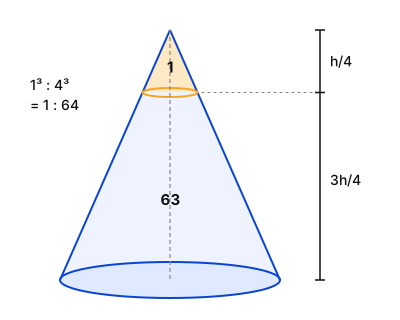
A conical bucket is cut at one-fourth its height from the top. What is the ratio of the volumes of the two parts (top part to bottom part)?
एक शंक्वाकार बाल्टी को शीर्ष से उसकी ऊँचाई के एक-चौथाई पर काटा जाता है। दोनों भागों (ऊपरी : निचला) के आयतनों का अनुपात क्या है?
  1. A1 : 64
  2. B1 : 63
  3. C1 : 27
  4. D1 : 7
Show answer

Concept: Similar cones: volume ratio = (height ratio)3.

  1. Top cone height : full height = 1 : 4.
  2. Volumes = 13:43=1:64.
  3. Bottom frustum = 64−1=63 → ratio 1 : 63.

Trick: Don't stop at 1 : 64 – that compares top with WHOLE cone; subtract for the frustum.

Answer: (B) 1 : 63

अवधारणा: समरूप शंकु: आयतन अनुपात = (ऊँचाई अनुपात)3।

  1. ऊपरी शंकु की ऊँचाई : पूरी ऊँचाई = 1 : 4।
  2. आयतन = 13:43=1:64।
  3. निचला छिन्नक = 64−1=63 → अनुपात 1 : 63।

ट्रिक: 1 : 64 पर न रुकें – वह पूरे शंकु से तुलना है; छिन्नक के लिए घटाएँ।

उत्तर: (B) 1 : 63

SSC CGLQuantitative AptitudeCone cut parallel to baseSSC CGL 2025 · 19 Sep Shift 1 →
Q2364.
If sinA + cosA = 75 and A ∈ (0, π2), then what is sinA cosA?
यदि sinA + cosA = 75 और A ∈ (0, π2) है, तो sinA cosA क्या है?
  1. A1
  2. B2
  3. C1225
  4. DCannot be determinedज्ञात नहीं किया जा सकता
Show answer

Concept: (sinA+cosA)2=1+2sinAcosA.

  1. Square: (75)2=4925=1+2sinAcosA.
  2. 2sinAcosA=4925−1=2425.
  3. sinAcosA=1225 (check: sinA=35, cosA=45 gives 75 ✓).

Trick: Formula: sinAcosA=(sinA+cosA)2−12.

Answer: (C) 1225

अवधारणा: (sinA+cosA)2=1+2sinAcosA।

  1. वर्ग करें: (75)2=4925=1+2sinAcosA।
  2. 2sinAcosA=4925−1=2425।
  3. sinAcosA=1225 (जाँच: sinA=35, cosA=45 से योग 75 ✓)।

ट्रिक: सूत्र: sinAcosA=(sinA+cosA)2−12।

उत्तर: (C) 1225

SSC CGLQuantitative AptitudeTrigonometry – sinA cosA from sinA + cosASSC CGL 2025 · 19 Sep Shift 1 →
Q2365.
What is the value of sin40° cos20° + cos40° sin20°?
sin40° cos20° + cos40° sin20° का मान क्या है?
  1. A12
  2. B34
  3. C32
  4. D78
Show answer

Concept: sinA cosB + cosA sinB = sin(A + B).

  1. Here A=40∘, B=20∘.
  2. Expression = sin60∘=32.

Trick: Pattern 'sin cos + cos sin' → add the angles; 'cos cos − sin sin' → cos of the sum.

Answer: (C) 32

अवधारणा: sinA cosB + cosA sinB = sin(A + B)।

  1. यहाँ A=40∘, B=20∘।
  2. व्यंजक = sin60∘=32।

ट्रिक: 'sin cos + cos sin' → कोण जोड़ें; 'cos cos − sin sin' → योग का cos।

उत्तर: (C) 32

SSC CGLQuantitative AptitudeCompound angle – sin(A + B)SSC CGL 2025 · 19 Sep Shift 1 →
Q2366.
The graph of −x + y = 2 passes through which point?
−x + y = 2 का ग्राफ किस बिंदु से होकर जाता है?
  1. A(1, 3)
  2. B(2, 4)
  3. C(0, 2)
  4. DAll the aboveउपर्युक्त सभी
Show answer

Concept: A point lies on a line if it satisfies the equation.

  1. (1, 3): −1 + 3 = 2 ✓.
  2. (2, 4): −2 + 4 = 2 ✓.
  3. (0, 2): 0 + 2 = 2 ✓ → all three.

Trick: −x + y = 2 means y = x + 2: in every option y is 2 more than x.

Answer: (D) All the above

अवधारणा: बिंदु रेखा पर है यदि वह समीकरण को संतुष्ट करे।

  1. (1, 3): −1 + 3 = 2 ✓।
  2. (2, 4): −2 + 4 = 2 ✓।
  3. (0, 2): 0 + 2 = 2 ✓ → तीनों।

ट्रिक: −x + y = 2 यानी y = x + 2: हर विकल्प में y, x से 2 अधिक है।

उत्तर: (D) उपर्युक्त सभी

SSC CGLQuantitative AptitudePoint on a lineSSC CGL 2025 · 19 Sep Shift 1 →
Q2367.
A sector of a circle has a central angle of 45° and a radius of 9 cm. Another sector of the same circle has a central angle of π4 radians. What is the ratio of the area of the first sector to the area of the second sector?
एक वृत्त के त्रिज्यखंड का केंद्रीय कोण 45° और त्रिज्या 9 cm है। उसी वृत्त के दूसरे त्रिज्यखंड का केंद्रीय कोण π4 रेडियन है। पहले और दूसरे त्रिज्यखंड के क्षेत्रफलों का अनुपात क्या है?
  1. A1 : 1
  2. B2 : 3
  3. C3 : 5
  4. D5 : 6
Show answer

Concept: Sector area = θ360∘×πr2; same circle means same r.

  1. π4 rad =180∘4=45∘.
  2. Both sectors: same angle, same radius.
  3. Areas equal → 1 : 1.

Trick: π rad =180∘: convert first; the radius value 9 cm is not needed.

Answer: (A) 1 : 1

अवधारणा: त्रिज्यखंड क्षेत्रफल = θ360∘×πr2; एक ही वृत्त = समान r।

  1. π4 रेडियन =180∘4=45∘।
  2. दोनों का कोण और त्रिज्या समान।
  3. क्षेत्रफल बराबर → 1 : 1।

ट्रिक: π रेडियन =180∘; त्रिज्या 9 सेमी की ज़रूरत ही नहीं।

उत्तर: (A) 1 : 1

SSC CGLQuantitative AptitudeSector area – degrees vs radiansSSC CGL 2025 · 19 Sep Shift 1 →
Q2368.
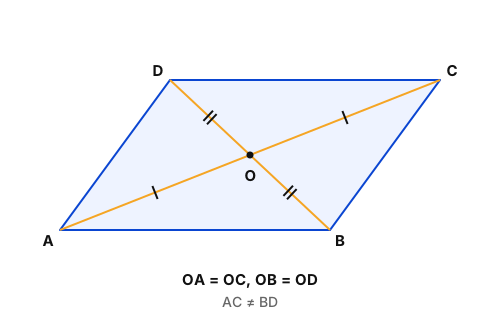
In a parallelogram:
समांतर चतुर्भुज में:
  1. AOnly one diagonal is equal.केवल एक विकर्ण बराबर होता है।
  2. BThe diagonals are equal.विकर्ण बराबर होते हैं।
  3. CThe diagonals bisect each other.विकर्ण एक-दूसरे को समद्विभाजित करते हैं।
  4. DAll angles are equal.सभी कोण बराबर होते हैं।
Show answer

Concept: Diagonals of every parallelogram bisect each other.

  1. Diagonals bisect each other – true for all parallelograms.
  2. Equal diagonals → only rectangle/square.
  3. All angles equal (90°) → only rectangle/square.

Yaad rakhein: Diagonals: parallelogram – bisect; rhombus – bisect at 90°; rectangle – equal; square – equal and at 90°.

Answer: (C) The diagonals bisect each other.

अवधारणा: हर समांतर चतुर्भुज के विकर्ण एक-दूसरे को समद्विभाजित करते हैं।

  1. विकर्ण एक-दूसरे को समद्विभाजित करते हैं – सभी समांतर चतुर्भुजों में।
  2. बराबर विकर्ण → केवल आयत/वर्ग।
  3. सभी कोण बराबर (90°) → केवल आयत/वर्ग।

याद रखें: समांतर चतुर्भुज – समद्विभाजन; समचतुर्भुज – 90° पर; आयत – बराबर; वर्ग – बराबर व 90° पर।

उत्तर: (C) विकर्ण एक-दूसरे को समद्विभाजित करते हैं।

SSC CGLQuantitative AptitudeProperties of a parallelogramSSC CGL 2025 · 19 Sep Shift 1 →
Q2369.
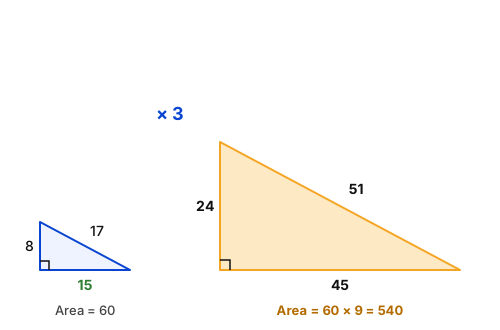
A right-angled triangle has a hypotenuse of 17 cm and one leg of 8 cm. A second right-angled triangle is similar to the first, and its hypotenuse is 51 cm. What is the area of the second triangle?
एक समकोण त्रिभुज का कर्ण 17 cm और एक भुजा 8 cm है। दूसरा समकोण त्रिभुज पहले के समरूप है और उसका कर्ण 51 cm है। दूसरे त्रिभुज का क्षेत्रफल क्या है?
  1. A390 cm²
  2. B460 cm²
  3. C260 cm²
  4. D540 cm²
Show answer

Concept: Area ratio of similar triangles = (side ratio)2.

  1. 8, 15, 17 is a triplet → other leg = 15 cm; area = 12×8×15=60 cm².
  2. Scale = 5117=3 → area scale = 9.
  3. Second area = 60×9=540 cm².

Trick: Or scale the legs: 24 and 45 → 12×24×45=540.

Answer: (D) 540 cm²

अवधारणा: समरूप त्रिभुजों का क्षेत्रफल अनुपात = (भुजा अनुपात)2।

  1. 8, 15, 17 त्रिक है → दूसरी भुजा 15; क्षेत्रफल = 12×8×15=60।
  2. अनुपात = 5117=3 → क्षेत्रफल ×9।
  3. दूसरा क्षेत्रफल = 60×9=540 वर्ग सेमी।

ट्रिक: या भुजाएँ 24 और 45 लें → 12×24×45=540।

उत्तर: (D) 540 cm²

SSC CGLQuantitative AptitudeSimilar triangles – area ratioSSC CGL 2025 · 19 Sep Shift 1 →
Q2370.
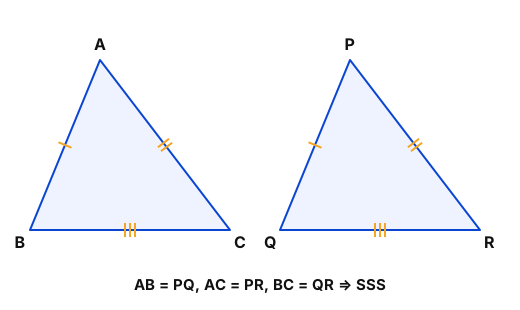
In triangles ABC and PQR, if AB = PQ, AC = PR, and BC = QR, by which congruence rule are they congruent?
त्रिभुज ABC और PQR में यदि AB = PQ, AC = PR और BC = QR है, तो वे किस सर्वांगसमता नियम से सर्वांगसम हैं?
  1. AYes, by SSSहाँ, SSS से
  2. BYes, by SASहाँ, SAS से
  3. CYes, by ASAहाँ, ASA से
  4. DNo, they are not congruentनहीं, वे सर्वांगसम नहीं हैं
Show answer

Concept: Three pairs of equal corresponding sides ⇒ congruent by SSS.

  1. AB=PQ, AC=PR, BC=QR – all three sides match.
  2. No angle is given, so SAS/ASA do not apply.
  3. Hence congruent by SSS.

Yaad rakhein: Valid rules: SSS, SAS, ASA/AAS, RHS. AAA and SSA do NOT prove congruence.

Answer: (A) Yes, by SSS

अवधारणा: तीनों संगत भुजाएँ बराबर ⇒ SSS से सर्वांगसम।

  1. AB=PQ, AC=PR, BC=QR – तीनों भुजाएँ बराबर।
  2. कोई कोण नहीं दिया, अतः SAS/ASA नहीं।
  3. इसलिए SSS से सर्वांगसम।

याद रखें: मान्य नियम: SSS, SAS, ASA/AAS, RHS। AAA और SSA से सर्वांगसमता सिद्ध नहीं होती।

उत्तर: (A) हाँ, SSS से

SSC CGLQuantitative AptitudeCongruence – SSSSSC CGL 2025 · 19 Sep Shift 1 →
Q2371.
17³ + 20³ − 19³ + 346 is equal to:
17³ + 20³ − 19³ + 346 किसके बराबर है?
  1. A0
  2. B6400
  3. C−4860
  4. D5200
Show answer

Concept: Compute each cube and combine.

  1. 173=4913, 203=8000, 193=6859.
  2. 4913+8000−6859=6054.
  3. 6054+346=6400.

Trick: Unit digits: 3+0−9+6=0 → answer ends in 0; and clearly positive → 6400 or 5200; exact sum gives 6400.

Answer: (B) 6400

अवधारणा: हर घन निकालकर जोड़ें-घटाएँ।

  1. 173=4913, 203=8000, 193=6859।
  2. 4913+8000−6859=6054।
  3. 6054+346=6400।

ट्रिक: इकाई अंक: 3+0−9+6=0 → उत्तर 0 पर खत्म और धनात्मक; गणना से 6400।

उत्तर: (B) 6400

SSC CGLQuantitative AptitudeArithmetic with cubesSSC CGL 2025 · 19 Sep Shift 1 →
Q2372.
If sinx = 725 and x ∈ (0, π2), then find 1+tanx1−tanx.
यदि sinx = 725 और x ∈ (0, π2) है, तो 1+tanx1−tanx ज्ञात कीजिए।
  1. A6
  2. B3117
  3. C2417
  4. D9
Show answer

Concept: Use the triplet to get tanx, then substitute.

  1. sinx=725 → 7, 24, 25 triplet → tanx=724.
  2. 1+7241−724=31241724.
  3. = 3117.

Trick: 1+tanx1−tanx=adj+oppadj−opp=24+724−7 directly.

Answer: (B) 3117

अवधारणा: त्रिक से tanx निकालें, फिर रखें।

  1. sinx=725 → 7, 24, 25 त्रिक → tanx=724।
  2. 1+7241−724=31241724।
  3. = 3117।

ट्रिक: सीधे आधार+लंबआधार−लंब = 24+724−7।

उत्तर: (B) 3117

SSC CGLQuantitative AptitudeTrigonometric ratio – (1 + tan x)/(1 − tan x)SSC CGL 2025 · 19 Sep Shift 1 →
Q2373.
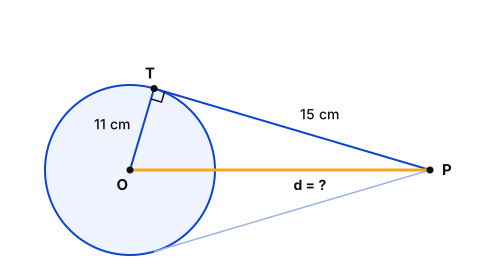
The length of each of two tangents drawn from an external point to a circle is 15 cm. What is the approximate distance from the external point to the centre of the circle, if the radius is 11 cm?
किसी बाह्य बिंदु से वृत्त पर खींची गई दोनों स्पर्श रेखाओं में से प्रत्येक की लंबाई 15 cm है। यदि त्रिज्या 11 cm है, तो बाह्य बिंदु से केंद्र की अनुमानित दूरी क्या है?
  1. A24 cm
  2. B15 cm
  3. C19 cm
  4. D16 cm
Show answer

Concept: Radius ⟂ tangent, so d2=tangent2+r2.

  1. d2=152+112=225+121=346.
  2. d=346≈18.6≈19 cm.

Trick: 182=324, 192=361 → 346 lies between, nearer 19.

Answer: (C) 19 cm

अवधारणा: त्रिज्या स्पर्शरेखा पर लंब होती है, अतः d2= स्पर्शरेखा² +r2।

  1. d2=152+112=225+121=346।
  2. d=346≈18.6≈19 सेमी।

ट्रिक: 182=324, 192=361 → 346 बीच में, 19 के निकट।

उत्तर: (C) 19 cm

SSC CGLQuantitative AptitudeTangent length and distance to centreSSC CGL 2025 · 19 Sep Shift 1 →
Q2374.
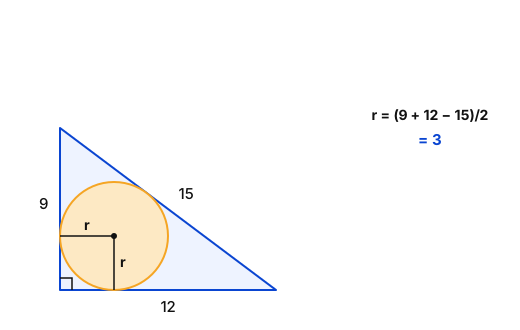
A circle is inscribed in a right triangle with legs of length 9 and 12. What is the radius of the circle?
9 और 12 लंबाई की भुजाओं वाले समकोण त्रिभुज में एक वृत्त अंकित है। वृत्त की त्रिज्या क्या है?
  1. A2
  2. B3
  3. C4
  4. D5
Show answer

Concept: For a right triangle, r=a+b−c2.

  1. Hypotenuse = 81+144=15.
  2. r=9+12−152=62=3.

Trick: Check with r=Areas: area 54, semi-perimeter 18 → r = 3.

Answer: (B) 3

अवधारणा: समकोण त्रिभुज में r=a+b−c2।

  1. कर्ण = 81+144=15।
  2. r=9+12−152=62=3।

ट्रिक: जाँच: r= क्षेत्रफल/अर्धपरिमाप =5418=3।

उत्तर: (B) 3

SSC CGLQuantitative AptitudeInradius of a right triangleSSC CGL 2025 · 19 Sep Shift 1 →
Q2375.
What is the result of (0.4³ + 0.3³ − 0.7³) ÷ (3 × 0.4 × 0.3 × 0.7)?
(0.4³ + 0.3³ − 0.7³) ÷ (3 × 0.4 × 0.3 × 0.7) का परिणाम क्या है?
  1. A−1
  2. B79
  3. C89
  4. D69
Show answer

Concept: If a+b+c=0, then a3+b3+c3=3abc.

  1. Write −0.73 as (−0.7)3; then 0.4+0.3+(−0.7)=0.
  2. Numerator = 3×0.4×0.3×(−0.7).
  3. Denominator = 3×0.4×0.3×0.7 → ratio = −1.

Trick: Numerator and denominator differ only in the sign of 0.7 → answer −1 without any calculation.

Answer: (A) −1

अवधारणा: यदि a+b+c=0, तो a3+b3+c3=3abc।

  1. a=0.4, b=0.3, c=−0.7 लें → योग = 0।
  2. अंश = 3×0.4×0.3×(−0.7)।
  3. हर = 3×0.4×0.3×0.7 → अनुपात = −1।

ट्रिक: अंश और हर में केवल 0.7 का चिह्न अलग है → बिना गणना −1।

उत्तर: (A) −1

SSC CGLQuantitative AptitudeIdentity – a³ + b³ + c³ when a + b + c = 0SSC CGL 2025 · 19 Sep Shift 1 →
Q2376.
Select the correct indirect/direct form of the given sentence.
The scientist noted that were the temperature to drop any further, the chemical reaction would cease immediately.
  1. A"If the temperature dropped further, the chemical reaction would cease immediately," the scientist said.
  2. B"Were the temperature to drop any further, the chemical reaction would cease immediately," noted the scientist.
  3. C"If the temperature was drop any further, the reaction will stop immediately," said he.
  4. D"Had the temperature been dropped, the reaction ceased immediately," said the scientist.
Show answer

Concept: A hypothetical 'were … to' conditional keeps the same form in both speeches.

  1. 'Were the temperature to drop … would cease' is already unreal/hypothetical – no tense change needed.
  2. Direct speech simply puts that clause inside quotes: "Were the temperature to drop any further, … would cease immediately," noted the scientist.
  3. (C) and (D) are ungrammatical; (A) alters the wording.

Trick: Subjunctive 'were' and 'would' do not shift between direct and indirect speech.

Answer: (B) "Were the temperature to drop any further, the chemical reaction would cease immediately," noted the scientist.

अवधारणा: 'were … to' वाला काल्पनिक शर्त वाक्य दोनों कथनों में एक जैसा रहता है।

  1. 'Were the temperature to drop … would cease' पहले से काल्पनिक है – काल नहीं बदलता।
  2. प्रत्यक्ष कथन में वही वाक्य उद्धरण चिह्नों में आता है, reporting verb 'noted'।
  3. (C) और (D) व्याकरण की दृष्टि से गलत; (A) शब्द-रचना बदल देता है।

ट्रिक: Subjunctive 'were' और 'would' direct/indirect में नहीं बदलते।

उत्तर: (B) "Were the temperature to drop any further, the chemical reaction would cease immediately," noted the scientist.

SSC CGLEnglish ComprehensionIndirect to direct – inverted conditionalSSC CGL 2025 · 19 Sep Shift 1 →
Q2377.
Sentences of a paragraph are given below in jumbled order. Arrange the sentences in the correct order to form a meaningful and coherent paragraph.
1. The digestive system breaks down food into nutrients that the body can absorb.
2. These nutrients provide the energy and materials needed for growth and repair.
3. The process starts in the mouth, where enzymes in saliva begin breaking down carbohydrates.
4. The food then passes through the stomach and intestines, where further digestion and absorption occur.
  1. A1, 3, 4, 2
  2. B3, 1, 2, 4
  3. C3, 4, 1, 2
  4. D1, 4, 2, 3
Show answer

Concept: General statement → process in order → result.

  1. 1 introduces the digestive system (opening).
  2. 3 'The process starts in the mouth', then 4 'The food then passes…' – sequence.
  3. 2 'These nutrients…' refers back and concludes.

Trick: Pronoun links: 'These nutrients' in 2 needs 'nutrients' mentioned earlier; 'then' in 4 must follow 3.

Answer: (A) 1, 3, 4, 2

अवधारणा: सामान्य कथन → क्रमवार प्रक्रिया → परिणाम।

  1. 1 पाचन तंत्र का परिचय देता है (आरंभ)।
  2. 3 'The process starts in the mouth', फिर 4 'The food then passes…'।
  3. 2 'These nutrients…' पीछे की बात से जुड़कर समापन करता है।

ट्रिक: 'These nutrients' और 'then' जैसे जोड़ने वाले शब्द क्रम तय करते हैं।

उत्तर: (A) 1, 3, 4, 2

SSC CGLEnglish ComprehensionPara jumble – digestionSSC CGL 2025 · 19 Sep Shift 1 →
Q2378.
Select the most appropriate meaning of the highlighted idiom.
The corrupt officer was hoist with his own petard.
  1. ABeing destroyed by one's own trap or scheme
  2. BSucceeding through luck
  3. CGaining praise without effort
  4. DRising by dishonest means
Show answer

Concept: Harmed by the very plan one made to harm others.

  1. A 'petard' was a small bomb; 'hoist' = blown up.
  2. So the idiom = caught in one's own trap.
  3. The corrupt officer's scheme backfired on him.

Trick: Hindi parallel: 'जो दूसरों के लिए गड्ढा खोदता है, वह खुद उसमें गिरता है'.

Answer: (A) Being destroyed by one's own trap or scheme

अवधारणा: दूसरों के लिए बनाई योजना से खुद ही नुकसान उठाना।

  1. 'Petard' एक छोटा विस्फोटक था; 'hoist' = उड़ जाना।
  2. अर्थ = अपने ही जाल में फँसना।
  3. भ्रष्ट अधिकारी की चाल उसी पर उलटी पड़ी।

ट्रिक: हिंदी समान: 'जो दूसरों के लिए गड्ढा खोदता है, वह खुद उसमें गिरता है'।

उत्तर: (A) Being destroyed by one's own trap or scheme

SSC CGLEnglish ComprehensionIdiom – hoist with one's own petardSSC CGL 2025 · 19 Sep Shift 1 →
Q2379.
Select the correct spelling to complete the sentence.
He is such a ____ that he avoids all kinds of work.
  1. ASluggard
  2. BSluggerd
  3. CSluggart
  4. DSlugerd
Show answer

Concept: Sluggard = a lazy, idle person.

  1. Root 'slug' + '-gard' → s-l-u-g-g-a-r-d.
  2. Double 'g' and ending '-ard' like laggard, drunkard.

Trick: Lazy-person words end in '-ard': laggard, sluggard, dullard.

Answer: (A) Sluggard

अवधारणा: Sluggard = आलसी, निकम्मा व्यक्ति।

  1. 'slug' + '-gard' → s-l-u-g-g-a-r-d।
  2. दो 'g' और अंत '-ard', जैसे laggard, drunkard।

ट्रिक: आलसी व्यक्ति वाले शब्द '-ard' पर खत्म: laggard, sluggard, dullard।

उत्तर: (A) Sluggard

SSC CGLEnglish ComprehensionSpelling – SluggardSSC CGL 2025 · 19 Sep Shift 1 →
Q2380.
Select the correct spelling to complete the sentence.
The policy was guided by ____ which focuses on outcomes and overall benefit.
  1. AUtilitarienism
  2. BUtiliterianism
  3. CUtilitarianism
  4. DUtillitarianism
Show answer

Concept: Utilitarianism = doctrine of the greatest good for the greatest number.

  1. utility → utilitarian (-arian) → + ism.
  2. Correct: u-t-i-l-i-t-a-r-i-a-n-i-s-m (single 'l', '-arian').
  3. Others change vowels (-erian, -arien) or double 'l'.

Trick: Build it from 'utility': util + itarian + ism.

Answer: (C) Utilitarianism

अवधारणा: Utilitarianism = अधिकतम लोगों का अधिकतम हित (उपयोगितावाद)।

  1. utility → utilitarian (-arian) → + ism।
  2. सही: u-t-i-l-i-t-a-r-i-a-n-i-s-m (एक 'l', '-arian')।
  3. बाकी में स्वर बदले हैं या 'l' दोहरा है।

ट्रिक: 'utility' से बनाएँ: util + itarian + ism।

उत्तर: (C) Utilitarianism

SSC CGLEnglish ComprehensionSpelling – UtilitarianismSSC CGL 2025 · 19 Sep Shift 1 →