Question bank

Q&A: practice questions with answers

Search questions on any topic. Filter by exam category, exam, subject and topic, try the question, then open the answer and explanation.

Courses – airGurukul

4,800 questions found.

Q2401.
Select the letter-cluster from among the given options that can replace the question mark (?) in the following series.
INS, NSX, SXC, XCH, ?
दी गई शृंखला में प्रश्न चिह्न (?) के स्थान पर आने वाला अक्षर-समूह चुनिए।
INS, NSX, SXC, XCH, ?
  1. ACHN
  2. BENM
  3. CFHM
  4. DCHM
Show answer

Concept: Each position of the cluster jumps the same number of letters.

  1. Look at position 1: I(9) → N(14) → S(19) → X(24); gap = +5.
  2. Positions 2 and 3 show the same +5 jump (N→S→X→C, S→X→C→H).
  3. After X(24): 24 + 5 = 29 − 26 = 3 → C. Next: C+5 = H, H+5 = M → CHM.

Trick: Each new cluster is just the previous one's last two letters + one new letter: XCH → CH_ ; only (A) and (D) begin with CH, and H+5 = M picks (D).

Answer: (D) CHM

अवधारणा: समूह के हर स्थान का अक्षर एक समान संख्या से आगे बढ़ता है।

  1. पहला स्थान: I(9) → N(14) → S(19) → X(24); हर बार +5।
  2. दूसरे और तीसरे स्थान पर भी यही +5 का नियम है।
  3. X(24) + 5 = 29 − 26 = 3 → C; फिर C+5 = H, H+5 = M → CHM।

ट्रिक: अगला समूह पिछले समूह के अंतिम दो अक्षरों से शुरू होता है: XCH → CH_ ; विकल्प (A) व (D) में से H+5 = M वाला (D) सही।

उत्तर: (D) CHM
SSC CGLGeneral Intelligence & ReasoningLetter-cluster series – constant +5 shiftSSC CGL 2025 · 18 Sep Shift 3 →
Q2402.
If 4 @ 2 = 4, 15 @ 3 = 125, then 8 @ 4 = ?
यदि 4 @ 2 = 4, 15 @ 3 = 125 है, तो 8 @ 4 = ?
  1. A4
  2. B8
  3. C16
  4. D10
Show answer

Concept: Find one rule that links both given pairs, then apply it.

  1. 4 @ 2: 4÷2=2, and 22=4 ✓.
  2. 15 @ 3: 15÷3=5, and 53=125 ✓.
  3. 8 @ 4: 8÷4=2, so 24=16.

Trick: 125 is a perfect cube (53) and the second number is 3 — a strong hint that the second number is the power.

Answer: (C) 16

अवधारणा: दोनों दिए गए जोड़ों पर लागू होने वाला एक नियम खोजें।

  1. 4 @ 2: 4÷2=2, 22=4 ✓
  2. 15 @ 3: 15÷3=5, 53=125 ✓
  3. 8 @ 4: 8÷4=2, 24=16

ट्रिक: 125=53 और दूसरी संख्या 3 है — इससे संकेत मिलता है कि दूसरी संख्या घात (power) है।

उत्तर: (C) 16

SSC CGLGeneral Intelligence & ReasoningMathematical operation – (a ÷ b) raised to bSSC CGL 2025 · 18 Sep Shift 3 →
Q2403.
Choose the correct signs to swap.
31 ÷ 48 × 7 − 322 + 23 = 353
आपस में बदले जाने वाले सही चिह्न चुनिए।
31 ÷ 48 × 7 − 322 + 23 = 353
  1. A÷ and −÷ और −
  2. B− and ×− और ×
  3. C÷ and +÷ और +
  4. D× and +× और +
Show answer

Concept: Swap the two signs in each option and test with BODMAS until LHS = 353.

  1. Swap ÷ and +: 31+48×7−322÷23.
  2. Multiply/divide first: 48×7=336; 322÷23=14.
  3. 31+336−14=353 = RHS ✓

Trick: Spot the 'nice' division first: 322÷23=14 exactly, so ÷ should sit between 322 and 23 — only option (C) puts it there.

Answer: (C) ÷ and +

अवधारणा: हर विकल्प के दो चिह्न बदलकर BODMAS से हल करें; जहाँ LHS = 353 हो वही उत्तर।

  1. ÷ और + बदलें: 31+48×7−322÷23
  2. पहले गुणा/भाग: 48×7=336, 322÷23=14
  3. 31+336−14=353 ✓

ट्रिक: 322÷23=14 पूरा-पूरा बँटता है, इसलिए ÷ चिह्न 322 और 23 के बीच आना चाहिए — यह सिर्फ़ (C) में होता है।

उत्तर: (C) ÷ और +

SSC CGLGeneral Intelligence & ReasoningSign interchange – BODMAS checkSSC CGL 2025 · 18 Sep Shift 3 →
Q2404.
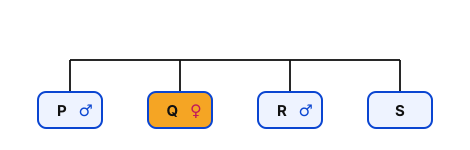
P is the brother of Q. Q is the sister of R. R is the brother of S. How is Q related to S?
P, Q का भाई है। Q, R की बहन है। R, S का भाई है। Q का S से क्या संबंध है?
  1. ASisterबहन
  2. BAuntचाची/मौसी
  3. CNieceभतीजी
  4. DCan't sayकह नहीं सकते
Show answer

Concept: Brother/sister links keep everyone in the same generation.

  1. P, Q, R, S are all linked only by brother/sister words → all are siblings.
  2. Q is called 'sister' of R, so Q is female.
  3. A female sibling of S is S's sister.

Trick: When gender of the person asked about (Q) is known, the gender of the other person (S) does not matter.

Answer: (A) Sister

अवधारणा: भाई/बहन के संबंध से सभी एक ही पीढ़ी में रहते हैं।

  1. P, Q, R, S आपस में केवल भाई-बहन शब्दों से जुड़े हैं → सभी सहोदर।
  2. Q को R की 'बहन' कहा गया है, यानी Q स्त्री है।
  3. इसलिए Q, S की बहन है।

ट्रिक: जिसके बारे में पूछा है (Q) उसका लिंग पता हो तो S का लिंग जानना ज़रूरी नहीं।

उत्तर: (A) बहन

SSC CGLGeneral Intelligence & ReasoningBlood relation – siblings chainSSC CGL 2025 · 18 Sep Shift 3 →
Q2405.
Solve: GE : LI :: SN : ?
हल कीजिए: GE : LI :: SN : ?
  1. AXQ
  2. BWT
  3. CXR
  4. DVR
Show answer

Concept: Apply the same position shifts from the first pair to the second.

  1. G(7) → L(12): +5; E(5) → I(9): +4.
  2. S(19) + 5 = 24 → X.
  3. N(14) + 4 = 18 → R. Answer pair: XR.

Trick: Use EJOTY (5, 10, 15, 20, 25) to get positions fast: S = 19 (T−1), X = 24 (Y−1).

Answer: (C) XR

अवधारणा: पहले जोड़े में जो अंतर है, वही दूसरे जोड़े पर लगाएँ।

  1. G(7) → L(12): +5; E(5) → I(9): +4
  2. S(19) + 5 = 24 → X
  3. N(14) + 4 = 18 → R, अतः XR

ट्रिक: EJOTY (5, 10, 15, 20, 25) से स्थान तुरंत निकालें: S = 19, X = 24।

उत्तर: (C) XR

SSC CGLGeneral Intelligence & ReasoningLetter analogy – +5, +4SSC CGL 2025 · 18 Sep Shift 3 →
Q2406.
What comes next: 16, 21, 30, 45, 68, ?
आगे क्या आएगा: 16, 21, 30, 45, 68, ?
  1. A80
  2. B105
  3. C102
  4. D101
Show answer

Concept: Differences grow by consecutive even numbers.

  1. Gaps: 21−16 = 5, 30−21 = 9, 45−30 = 15, 68−45 = 23.
  2. Gaps of gaps: 4, 6, 8 → next is 10.
  3. Next gap = 23 + 10 = 33; 68 + 33 = 101.

Trick: When first differences rise slowly and unevenly, always check the second difference — here it is 4, 6, 8, 10.

Answer: (D) 101

अवधारणा: अंतरों में भी एक क्रम है।

  1. अंतर: 5, 9, 15, 23
  2. अंतरों का अंतर: 4, 6, 8 → अगला 10
  3. अगला अंतर = 33; 68 + 33 = 101

ट्रिक: पहले अंतर असमान बढ़ें तो दूसरा अंतर ज़रूर देखें — यहाँ 4, 6, 8, 10।

उत्तर: (D) 101

SSC CGLGeneral Intelligence & ReasoningNumber series – second-level differencesSSC CGL 2025 · 18 Sep Shift 3 →
Q2407.
Read the following statement carefully and identify the conclusion that follows.
Statement: Increased air pollution in cities is linked to higher rates of respiratory diseases.
Conclusions:
I. Urban residents are more prone to respiratory diseases.
II. Reducing air pollution can help decrease respiratory diseases.
निम्न कथन को ध्यानपूर्वक पढ़कर अनुसरण करने वाला निष्कर्ष पहचानिए।
कथन: शहरों में बढ़ता वायु प्रदूषण श्वसन रोगों की अधिक दर से जुड़ा है।
निष्कर्ष:
I. शहरी निवासी श्वसन रोगों के प्रति अधिक संवेदनशील हैं।
II. वायु प्रदूषण घटाने से श्वसन रोग कम हो सकते हैं।
  1. AOnly I followsकेवल I अनुसरण करता है
  2. BOnly II followsकेवल II अनुसरण करता है
  3. CBoth followदोनों अनुसरण करते हैं
  4. DNeither followsकोई नहीं
Show answer

Concept: If a statement shows a link, conclusions that directly use that link follow.

  1. Cities have more pollution, and pollution is tied to respiratory illness → city dwellers face higher risk. I follows.
  2. If pollution drives the illness, lowering it should lower illness rates. II follows.

Trick: A conclusion 'follows' when it is a direct, reasonable result of the statement — neither needs extra outside facts here.

Answer: (C) Both follow

अवधारणा: कथन में बताया गया संबंध सीधे जिस निष्कर्ष तक ले जाए, वह निष्कर्ष सही है।

  1. शहरों में प्रदूषण ज़्यादा है और इससे साँस की बीमारी जुड़ी है → शहरवासियों को खतरा ज़्यादा। I सही।
  2. प्रदूषण घटेगा तो बीमारियाँ भी घटेंगी। II सही।

ट्रिक: जो निष्कर्ष बिना बाहरी तथ्य के कथन से सीधे निकले, वही 'follow' करता है।

उत्तर: (C) दोनों अनुसरण करते हैं

SSC CGLGeneral Intelligence & ReasoningStatement & conclusion – cause-effectSSC CGL 2025 · 18 Sep Shift 3 →
Q2408.
Identify the odd one out:
असंगत पहचानिए:
  1. A121
  2. B232
  3. C555
  4. D766
Show answer

Concept: Three numbers read the same from both ends.

  1. 121 ↔ 121, 232 ↔ 232, 555 ↔ 555 — all palindromes.
  2. 766 reversed = 667 ≠ 766.

Trick: For 3-digit palindromes just compare first and last digit: 7 ≠ 6 in 766.

Answer: (D) 766

अवधारणा: तीन संख्याएँ आगे-पीछे दोनों ओर से एक जैसी पढ़ी जाती हैं।

  1. 121, 232, 555 उलटने पर भी वही रहती हैं।
  2. 766 उलटने पर 667 बनती है — अलग।

ट्रिक: 3 अंकों वाली संख्या में पहला और आखिरी अंक मिलाएँ: 766 में 7 ≠ 6।

उत्तर: (D) 766

SSC CGLGeneral Intelligence & ReasoningOdd one out – palindrome numbersSSC CGL 2025 · 18 Sep Shift 3 →
Q2409.
Identify the assumptions that must hold for the statement to be valid, then choose the correct option.
Statement: The integration of renewable energy sources into power grids can reduce carbon emissions, but its large-scale adoption may lead to grid stability issues.
Assumptions:
I. Renewable energy sources can decrease carbon emissions.
II. The technical challenges of integrating renewable energy into power grids are substantial.
III. Renewable energy will completely replace fossil fuels in the near future.
कथन को वैध बनाने हेतु आवश्यक पूर्वधारणाओं की पहचान कर सही विकल्प चुनिए।
कथन: विद्युत ग्रिड में नवीकरणीय ऊर्जा स्रोतों का एकीकरण कार्बन उत्सर्जन घटा सकता है, परंतु इसके बड़े पैमाने पर अपनाने से ग्रिड स्थिरता की समस्याएँ आ सकती हैं।
पूर्वधारणाएँ:
I. नवीकरणीय ऊर्जा स्रोत कार्बन उत्सर्जन घटा सकते हैं।
II. नवीकरणीय ऊर्जा को ग्रिड में जोड़ने की तकनीकी चुनौतियाँ पर्याप्त बड़ी हैं।
III. निकट भविष्य में नवीकरणीय ऊर्जा जीवाश्म ईंधन को पूरी तरह प्रतिस्थापित कर देगी।
  1. AOnly I and II are implicitकेवल I और II अंतर्निहित हैं
  2. BOnly II and III are implicitकेवल II और III अंतर्निहित हैं
  3. CAll I, II and III are implicitI, II और III सभी अंतर्निहित हैं
  4. DOnly I is implicitकेवल I अंतर्निहित है
Show answer

Concept: An assumption is what the writer must take for granted; extreme claims are usually not assumed.

  1. The statement says renewables can cut carbon emissions → I is assumed.
  2. It warns of grid-stability problems → it takes the integration challenge as serious → II is assumed.
  3. Nothing says fossil fuels will be fully replaced soon → III is not assumed.

Trick: Words like 'completely', 'always', 'all' in an assumption usually make it non-implicit.

Answer: (A) Only I and II are implicit

अवधारणा: पूर्वधारणा वह है जिसे लेखक मानकर चल रहा है; अतिशयोक्ति वाले कथन प्रायः नहीं माने जाते।

  1. कथन मानता है कि नवीकरणीय ऊर्जा उत्सर्जन घटा सकती है → I निहित।
  2. ग्रिड स्थिरता की चिंता बताती है कि तकनीकी चुनौतियाँ बड़ी हैं → II निहित।
  3. जीवाश्म ईंधन पूरी तरह बदलने की बात कहीं नहीं → III निहित नहीं।

ट्रिक: 'पूरी तरह', 'हमेशा', 'सभी' जैसे शब्द वाली पूर्वधारणा प्रायः निहित नहीं होती।

उत्तर: (A) केवल I और II अंतर्निहित हैं

SSC CGLGeneral Intelligence & ReasoningStatement & assumptionsSSC CGL 2025 · 18 Sep Shift 3 →
Q2410.
Read the following statement carefully and identify the conclusion that follows.
Statement: All public libraries have internet access for their patrons.
Conclusions:
I. Patrons can use the internet for research at these libraries.
II. All patrons are experts in using the internet.
निम्न कथन को ध्यानपूर्वक पढ़कर अनुसरण करने वाला निष्कर्ष पहचानिए।
कथन: सभी सार्वजनिक पुस्तकालयों में पाठकों के लिए इंटरनेट सुविधा है।
निष्कर्ष:
I. पाठक इन पुस्तकालयों में शोध हेतु इंटरनेट का उपयोग कर सकते हैं।
II. सभी पाठक इंटरनेट के उपयोग में निपुण हैं।
  1. AOnly Conclusion I followsकेवल निष्कर्ष I अनुसरण करता है
  2. BOnly Conclusion II followsकेवल निष्कर्ष II अनुसरण करता है
  3. CBoth I and II followI और II दोनों अनुसरण करते हैं
  4. DNeither I nor II followsन I न II अनुसरण करता है
Show answer

Concept: Having a facility means it can be used; it says nothing about expertise.

  1. Libraries give internet to patrons → patrons can use it for research. I follows.
  2. Access does not mean every patron is an expert. II is an overreach.

Trick: Reject conclusions that add new qualities (like 'experts') not present in the statement.

Answer: (A) Only Conclusion I follows

अवधारणा: सुविधा होने का अर्थ है उसका उपयोग संभव है, कुशलता नहीं।

  1. पुस्तकालयों में इंटरनेट है → पाठक शोध में उपयोग कर सकते हैं। I सही।
  2. सुविधा होने से सभी विशेषज्ञ नहीं बन जाते। II गलत।

ट्रिक: जो निष्कर्ष कथन से बाहर की नई बात ('विशेषज्ञ') जोड़े, उसे छोड़ दें।

उत्तर: (A) केवल निष्कर्ष I अनुसरण करता है

SSC CGLGeneral Intelligence & ReasoningStatement & conclusion – facility vs skillSSC CGL 2025 · 18 Sep Shift 3 →
Q2411.
Study the information carefully and answer the given question.
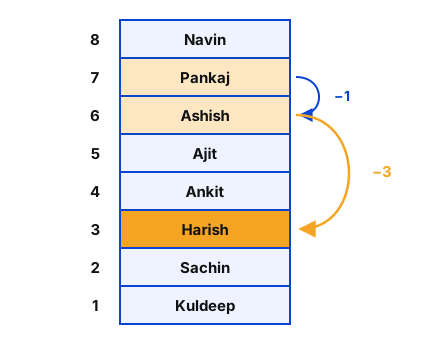
Eight people — Ankit, Pankaj, Kuldeep, Navin, Sachin, Ashish, Harish and Ajit — live in an eight-storey building, but not necessarily in the same order. The ground floor is numbered 1 and the floor above it 2, and so on up to the topmost floor numbered 8.
Kuldeep lives on the lowermost floor. Only three people live between Kuldeep and Ajit. Ankit lives on the 4th floor. Only two people live between Ankit and Pankaj. Only five people live between Navin and Sachin. Harish lives on an odd numbered floor. Only one person lives between Ashish and Navin.
Who lives three floors below the one who lives immediately below Pankaj?
सूचना का ध्यानपूर्वक अध्ययन कर प्रश्न का उत्तर दीजिए।
आठ व्यक्ति — अंकित, पंकज, कुलदीप, नवीन, सचिन, आशीष, हरीश और अजीत — एक आठ मंज़िला इमारत में रहते हैं, आवश्यक नहीं कि इसी क्रम में। भूतल की संख्या 1 है और उसके ऊपर की मंज़िल 2, इसी प्रकार सबसे ऊपर की मंज़िल 8 है।
कुलदीप सबसे निचली मंज़िल पर रहता है। कुलदीप और अजीत के बीच केवल तीन व्यक्ति रहते हैं। अंकित चौथी मंज़िल पर रहता है। अंकित और पंकज के बीच केवल दो व्यक्ति रहते हैं। नवीन और सचिन के बीच केवल पाँच व्यक्ति रहते हैं। हरीश विषम संख्या वाली मंज़िल पर रहता है। आशीष और नवीन के बीच केवल एक व्यक्ति रहता है।
पंकज के ठीक नीचे रहने वाले से तीन मंज़िल नीचे कौन रहता है?
  1. AHarishहरीश
  2. BAnkitअंकित
  3. CKuldeepकुलदीप
  4. DSachinसचिन
Show answer

Concept: Fix the certain positions first, then place the rest.

  1. Kuldeep = 1, Ankit = 4; three between Kuldeep and Ajit → Ajit = 5.
  2. Two between Ankit(4) and Pankaj → Pankaj = 7 (floor 1 is taken).
  3. Five between Navin and Sachin → (2, 8). One between Ashish and Navin: Navin 2 needs Ashish 4 (taken), so Navin = 8, Ashish = 6, Sachin = 2.
  4. Harish gets the odd floor left = 3. Below Pankaj(7) is 6; three floors under 6 = floor 3 → Harish.

Trick: 'Five people between' in an 8-floor building allows only pairs (1,7) or (2,8) — test these two quickly.

Answer: (A) Harish

अवधारणा: पहले पक्की जगहें तय करें, फिर बाकी लोग रखें।

  1. कुलदीप = 1, अंकित = 4; कुलदीप-अजीत के बीच तीन → अजीत = 5।
  2. अंकित(4) व पंकज के बीच दो → पंकज = 7।
  3. नवीन-सचिन के बीच पाँच → (2, 8)। आशीष-नवीन के बीच एक: नवीन = 8, आशीष = 6, सचिन = 2।
  4. हरीश = 3 (विषम)। पंकज(7) के ठीक नीचे 6; उससे तीन नीचे = 3 → हरीश।

ट्रिक: 8 मंज़िलों में 'बीच में पाँच' का अर्थ केवल (1,7) या (2,8) — इन्हीं दो को जाँचें।

उत्तर: (A) हरीश

SSC CGLGeneral Intelligence & ReasoningFloor-based puzzle – 8 floorsSSC CGL 2025 · 18 Sep Shift 3 →
Q2412.
Read the following statements carefully and identify the conclusion that follows.
Statements:
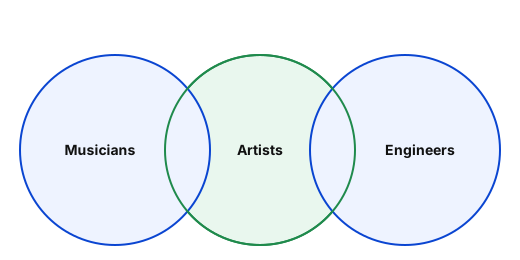
No musicians are engineers.
Some artists are engineers.
Some musicians are artists.
Conclusions:
I. Some musicians are engineers.
II. Some engineers are not musicians.
निम्न कथनों को ध्यानपूर्वक पढ़कर अनुसरण करने वाला निष्कर्ष पहचानिए।
कथन:
कोई संगीतकार अभियंता नहीं है।
कुछ कलाकार अभियंता हैं।
कुछ संगीतकार कलाकार हैं।
निष्कर्ष:
I. कुछ संगीतकार अभियंता हैं।
II. कुछ अभियंता संगीतकार नहीं हैं।
  1. AOnly I followsकेवल I अनुसरण करता है
  2. BOnly II followsकेवल II अनुसरण करता है
  3. CBoth I and II followI और II दोनों अनुसरण करते हैं
  4. DNeither I nor II followsन I न II अनुसरण करता है
Show answer

Concept: 'No A is B' makes 'Some A is B' false and makes 'Some B is not A' true.

  1. 'No musicians are engineers' → the two circles never touch.
  2. I (Some musicians are engineers) contradicts this → false.
  3. Since no engineer is a musician, 'Some engineers are not musicians' is definitely true → II follows.

Trick: 'No A is B' ⇒ 'Some A is not B' and 'Some B is not A' both follow automatically.

Answer: (B) Only II follows

अवधारणा: 'कोई A, B नहीं' होने पर 'कुछ A, B हैं' गलत और 'कुछ B, A नहीं' सही होता है।

  1. संगीतकार और इंजीनियर के वृत्त अलग-अलग हैं।
  2. I (कुछ संगीतकार इंजीनियर हैं) कथन के विरुद्ध → गलत।
  3. कोई इंजीनियर संगीतकार नहीं, अतः 'कुछ इंजीनियर संगीतकार नहीं' सही → II।

ट्रिक: 'No A is B' से 'Some A not B' और 'Some B not A' दोनों अपने-आप निकलते हैं।

उत्तर: (B) केवल II अनुसरण करता है

SSC CGLGeneral Intelligence & ReasoningSyllogism – universal negativeSSC CGL 2025 · 18 Sep Shift 3 →
Q2413.
Find the odd one out:
Amazon, Nile, Ganges, Mississippi, Sahara
असंगत चुनिए:
अमेज़न, नील, गंगा, मिसिसिपी, सहारा
  1. AAmazonअमेज़न
  2. BNileनील
  3. CGangesगंगा
  4. DSaharaसहारा
Show answer

Concept: Group the words by category.

  1. Amazon, Nile, Ganges, Mississippi → rivers.
  2. Sahara → a desert in North Africa.

Yaad rakhein: Sahara is the largest hot desert; the largest desert overall is Antarctica (cold desert).

Answer: (D) Sahara

अवधारणा: शब्दों को श्रेणी के अनुसार बाँटें।

  1. अमेज़न, नील, गंगा, मिसिसिपी → नदियाँ।
  2. सहारा → उत्तरी अफ्रीका का मरुस्थल।

याद रखें: सहारा सबसे बड़ा गर्म मरुस्थल है; कुल मिलाकर सबसे बड़ा मरुस्थल अंटार्कटिका (ठंडा) है।

उत्तर: (D) सहारा

SSC CGLGeneral Intelligence & ReasoningOdd one out – rivers vs desertSSC CGL 2025 · 18 Sep Shift 3 →
Q2414.
If STORM is coded as RSNQL, how is RAINY written?
यदि STORM का कूट RSNQL है, तो RAINY कैसे लिखा जाएगा?
  1. AQZHMX
  2. BQZHLX
  3. CQZHLW
  4. DQZHMV
Show answer

Concept: Compare word and code letter by letter.

  1. S→R, T→S, O→N, R→Q, M→L: every letter shifts one place back.
  2. RAINY: R→Q, A→Z (wraps), I→H, N→M, Y→X.
  3. Code = QZHMX.

Trick: Only N→M separates (A) from (B)/(C); check that single letter instead of all five.

Answer: (A) QZHMX

अवधारणा: शब्द और कोड को अक्षर-दर-अक्षर मिलाएँ।

  1. S→R, T→S, O→N, R→Q, M→L: हर अक्षर एक पीछे।
  2. RAINY: R→Q, A→Z, I→H, N→M, Y→X
  3. कोड = QZHMX

ट्रिक: विकल्पों में फ़र्क केवल चौथे-पाँचवें अक्षर का है; N→M और Y→X जाँचते ही (A) मिल जाता है।

उत्तर: (A) QZHMX

SSC CGLGeneral Intelligence & ReasoningCoding-decoding – each letter −1SSC CGL 2025 · 18 Sep Shift 3 →
Q2415.
In each of the following questions, a specific alphabetical pattern is applied to the first set of letters to form the second. Apply the same logic to find the missing term.
BFGK : LPQU :: ? : QUVZ
पहले अक्षर-समूह पर एक विशेष पैटर्न लगाकर दूसरा बनाया गया है। वही तर्क लगाकर लुप्त पद ज्ञात कीजिए।
BFGK : LPQU :: ? : QUVZ
  1. AFLKP
  2. BGLKP
  3. CGKLP
  4. DFKLP
Show answer

Concept: Find the shift in the first pair; reverse it to get the missing term.

  1. B(2)→L(12), F(6)→P(16), G(7)→Q(17), K(11)→U(21): all +10.
  2. So ? + 10 = QUVZ → subtract 10 from each.
  3. Q(17)→G, U(21)→K, V(22)→L, Z(26)→P → GKLP.

Trick: Inner gaps also match: BFGK has gaps +4, +1, +4, so the answer must too — GKLP (+4, +1, +4) is the only fit.

Answer: (C) GKLP

अवधारणा: पहले जोड़े का अंतर निकालें और उलटा लगाएँ।

  1. B→L, F→P, G→Q, K→U: सब +10।
  2. इसलिए QUVZ के हर अक्षर से 10 घटाएँ।
  3. Q→G, U→K, V→L, Z→P → GKLP

ट्रिक: BFGK में अक्षरों के अंतर +4, +1, +4 हैं; विकल्पों में यही ढाँचा सिर्फ़ GKLP में है।

उत्तर: (C) GKLP

SSC CGLGeneral Intelligence & ReasoningLetter analogy – each letter +10SSC CGL 2025 · 18 Sep Shift 3 →
Q2416.
CHEF is to KITCHEN as ARTIST is to:
CHEF का KITCHEN से जो संबंध है, वही ARTIST का किससे है?
  1. ABRUSHब्रश
  2. BCANVASकैनवास
  3. CPAINTपेंट
  4. DSTUDIOस्टूडियो
Show answer

Concept: Identify the pair type: person and the place where he works.

  1. A chef cooks in a kitchen (workplace).
  2. An artist creates art in a studio (workplace).
  3. Brush, canvas, paint are tools/materials, not places.

Trick: Make a sentence: 'A chef works in a ___' → reuse it: 'An artist works in a studio'.

Answer: (D) STUDIO

अवधारणा: संबंध पहचानें: व्यक्ति और उसका कार्यस्थल।

  1. रसोइया (chef) रसोई (kitchen) में काम करता है।
  2. कलाकार (artist) स्टूडियो में काम करता है।
  3. ब्रश, कैनवास, पेंट औज़ार हैं, जगह नहीं।

ट्रिक: वाक्य बनाएँ: 'शेफ ___ में काम करता है' — यही वाक्य दूसरे जोड़े पर लगाएँ।

उत्तर: (D) स्टूडियो

SSC CGLGeneral Intelligence & ReasoningWord analogy – professional : workplaceSSC CGL 2025 · 18 Sep Shift 3 →
Q2417.
What is the sum of the first 20 terms of the series 1, 3, 5, 7, …?
शृंखला 1, 3, 5, 7, … के प्रथम 20 पदों का योग क्या है?
  1. A450
  2. B400
  3. C350
  4. D300
Show answer

Concept: 1+3+5+… (n terms) =n2.

  1. The series is the first 20 odd numbers.
  2. Sum = 202=400.
  3. Check with AP: S=n2×(first+last)=202×(1+39)=400.

Trick: Sum of first n odd numbers =n2; sum of first n even numbers =n(n+1).

Answer: (B) 400

अवधारणा: 1+3+5+… (n पद) =n2

  1. यह पहली 20 विषम संख्याएँ हैं।
  2. योग = 202=400
  3. AP से जाँच: 202×(1+39)=400

ट्रिक: पहली n विषम संख्याओं का योग =n2; पहली n सम संख्याओं का योग =n(n+1)।

उत्तर: (B) 400

SSC CGLGeneral Intelligence & ReasoningSum of first n odd numbersSSC CGL 2025 · 18 Sep Shift 3 →
Q2418.
What comes next?
BYD, DWF, FUH, HSJ, ?
आगे क्या आएगा?
BYD, DWF, FUH, HSJ, ?
  1. AJQL
  2. BIQK
  3. CHQJ
  4. DJQM
Show answer

Concept: Track each letter position separately.

  1. 1st letters: B, D, F, H → +2 → J.
  2. 2nd letters: Y, W, U, S → −2 → Q.
  3. 3rd letters: D, F, H, J → +2 → L. Next = JQL.

Trick: The 3rd letter is always 2 ahead of the 1st (B→D, D→F…), so after J comes L — only JQL fits.

Answer: (A) JQL

अवधारणा: हर स्थान के अक्षर अलग-अलग देखें।

  1. पहले अक्षर: B, D, F, H → +2 → J
  2. दूसरे अक्षर: Y, W, U, S → −2 → Q
  3. तीसरे अक्षर: D, F, H, J → +2 → L; उत्तर JQL

ट्रिक: तीसरा अक्षर हमेशा पहले से 2 आगे है (B-D, D-F…), इसलिए J के बाद L — केवल JQL।

उत्तर: (A) JQL

SSC CGLGeneral Intelligence & ReasoningLetter-cluster series – +2, −2, +2SSC CGL 2025 · 18 Sep Shift 3 →
Q2419.
Find the odd one out from the given alternatives:
दिए गए विकल्पों में से असंगत चुनिए:
  1. ATroposphereक्षोभमंडल
  2. BStratosphereसमतापमंडल
  3. CMesosphereमध्यमंडल
  4. DAsthenosphereदुर्बलतामंडल
Show answer

Concept: Classify each layer by where it lies.

  1. Troposphere, stratosphere, mesosphere → layers of the atmosphere.
  2. Asthenosphere → the weak, partly molten zone of the upper mantle, inside the Earth.

Yaad rakhein: Atmosphere order from ground up: Troposphere → Stratosphere → Mesosphere → Thermosphere → Exosphere.

Answer: (D) Asthenosphere

अवधारणा: हर परत कहाँ स्थित है, उसके आधार पर बाँटें।

  1. क्षोभमंडल, समतापमंडल, मध्यमंडल → वायुमंडल की परतें।
  2. दुर्बलतामंडल (Asthenosphere) → ऊपरी मेंटल का भाग, पृथ्वी के अंदर।

याद रखें: वायुमंडल का क्रम: क्षोभमंडल → समतापमंडल → मध्यमंडल → तापमंडल → बाह्यमंडल।

उत्तर: (D) दुर्बलतामंडल

SSC CGLGeneral Intelligence & ReasoningOdd one out – atmosphere vs Earth's interiorSSC CGL 2025 · 18 Sep Shift 3 →
Q2420.
Find the odd one out from the given alternatives:
दिए गए विकल्पों में से असंगत चुनिए:
  1. ACorneaकॉर्निया
  2. BLensलेंस
  3. CRetinaरेटिना
  4. DPonsपॉन्स
Show answer

Concept: Three are structures of the eye; one is in the brain.

  1. Cornea, lens, retina → focus light and form the image in the eye.
  2. Pons → part of the brainstem (controls breathing rhythm, relays signals).

Yaad rakhein: Brainstem = midbrain + pons + medulla oblongata.

Answer: (D) Pons

अवधारणा: तीन आँख के भाग हैं, एक मस्तिष्क का।

  1. कॉर्निया, लेंस, रेटिना → आँख में प्रकाश केंद्रित कर प्रतिबिंब बनाते हैं।
  2. पोंस (Pons) → मस्तिष्क स्तंभ (brainstem) का भाग।

याद रखें: मस्तिष्क स्तंभ = मध्य मस्तिष्क + पोंस + मेडुला ऑब्लोंगाटा।

उत्तर: (D) पॉन्स

SSC CGLGeneral Intelligence & ReasoningOdd one out – parts of the eyeSSC CGL 2025 · 18 Sep Shift 3 →