Question bank

Q&A: practice questions with answers

Search questions on any topic. Filter by exam category, exam, subject and topic, try the question, then open the answer and explanation.

Courses – airGurukul

4,800 questions found.

Q2541.
Fill in the blank:
The folk dance Tippani traditionally originates from the ____ region of Gujarat.
रिक्त स्थान भरिए:
लोक नृत्य टिप्पणी परंपरागत रूप से गुजरात के ____ क्षेत्र से आता है।
  1. ASuratसूरत
  2. BVadodaraवडोदरा
  3. CSaurashtraसौराष्ट्र
  4. DKutchकच्छ
Show answer

Concept: Tippani is a work-song dance of Gujarat's Saurashtra region (Chorwad area).

  1. Women beat lime-concrete floors with long sticks having a wooden block at the end (tippani).
  2. The beating rhythm with songs developed into a group dance.
  3. Garba and Dandiya are other Gujarati dances, popular across the state.

Yaad rakhein: Tippani = the stick used for floor-beating — so the dance is linked to construction work.

Answer: (C) Saurashtra

अवधारणा: टिप्पणी गुजरात के सौराष्ट्र क्षेत्र (चोरवाड) का श्रम-नृत्य है।

हल:

  1. महिलाएँ चूने के फर्श को लंबी लकड़ी (टिप्पणी) से कूटती थीं।
  2. कूटने की लय और गीत से यह सामूहिक नृत्य बना।
  3. गरबा और डांडिया गुजरात के अन्य प्रसिद्ध नृत्य हैं।

याद रखें: टिप्पणी = फर्श कूटने की छड़ी — यह नृत्य निर्माण-कार्य से जुड़ा है।

उत्तर: (C) सौराष्ट्र
SSC CGLGeneral AwarenessFolk dances of Gujarat – TippaniSSC CGL 2025 · 18 Sep Shift 2 →
Q2542.
Which of the following functions reflects a major economic role of the government common to both developed and developing nations?
निम्न में से कौन-सा कार्य विकसित और विकासशील दोनों देशों में सरकार की प्रमुख आर्थिक भूमिका दर्शाता है?
  1. AEngaging solely in currency exchangeकेवल मुद्रा विनिमय करना
  2. BRegulating private enterprises onlyकेवल निजी उद्यमों का नियमन
  3. CEstablishing laws and ensuring justiceकानून बनाना और न्याय सुनिश्चित करना
  4. DFocusing exclusively on export promotionकेवल निर्यात संवर्धन पर ध्यान
Show answer

Concept: Some government roles are universal, whatever the level of development.

  1. Markets work only when contracts are enforced and property rights are protected.
  2. So making laws and providing justice is a basic economic role in every country.
  3. Other options use 'solely', 'only', 'exclusively' — too narrow.

Trick: Words like 'solely/only/exclusively' in options usually signal a wrong choice.

Answer: (C) Establishing laws and ensuring justice

अवधारणा: कुछ सरकारी भूमिकाएँ हर देश में समान होती हैं, चाहे वह विकसित हो या विकासशील।

हल:

  1. बाज़ार तभी चलता है जब अनुबंध लागू हों और संपत्ति सुरक्षित हो।
  2. इसलिए कानून बनाना और न्याय देना हर देश में सरकार की मूल आर्थिक भूमिका है।
  3. बाकी विकल्पों में 'केवल', 'सिर्फ' जैसे सीमित शब्द हैं।

ट्रिक: 'solely/only/exclusively' वाले विकल्प अक्सर गलत होते हैं।

उत्तर: (C) कानून बनाना और न्याय सुनिश्चित करना

SSC CGLGeneral AwarenessEconomic role of governmentSSC CGL 2025 · 18 Sep Shift 2 →
Q2543.
According to the Global Peace Index 2025, the overall state of peace across the world is observed to be on a:
ग्लोबल पीस इंडेक्स 2025 के अनुसार विश्व में शांति की समग्र स्थिति किस दिशा में देखी गई?
  1. AStable and unchanged pathस्थिर और अपरिवर्तित
  2. BGradual downward trendक्रमिक गिरावट
  3. CStrongly improving trendतेज़ सुधार
  4. DRapid upward surgeतीव्र उछाल
Show answer

Concept: The Global Peace Index (GPI) is released yearly by the Institute for Economics & Peace (IEP), Sydney.

  1. GPI 2025 shows world peacefulness continuing to worsen slowly.
  2. More conflicts and growing militarisation are key reasons — hence a gradual downward trend.

Yaad rakhein: Iceland has topped the GPI as the most peaceful country every year since 2008.

Answer: (B) Gradual downward trend

अवधारणा: वैश्विक शांति सूचकांक (GPI) हर वर्ष Institute for Economics & Peace (सिडनी) जारी करता है।

हल:

  1. GPI 2025 के अनुसार विश्व में शांति धीरे-धीरे घट रही है।
  2. बढ़ते संघर्ष और सैन्यीकरण इसके मुख्य कारण हैं — यानी क्रमिक गिरावट।

याद रखें: आइसलैंड 2008 से लगातार सबसे शांत देश है।

उत्तर: (B) क्रमिक गिरावट

SSC CGLGeneral AwarenessGlobal Peace Index 2025SSC CGL 2025 · 18 Sep Shift 2 →
Q2544.
In which year was the first Industrial Policy of independent India officially announced?
स्वतंत्र भारत की पहली औद्योगिक नीति की आधिकारिक घोषणा किस वर्ष हुई?
  1. A1951
  2. B1952
  3. C1948
  4. D1950
Show answer

Concept: India's first Industrial Policy Resolution came on 6 April 1948.

  1. It was presented by Dr. Syama Prasad Mookerjee, the then Industries Minister.
  2. It laid the base of a mixed economy, dividing industries into four categories.
  3. The second resolution came in 1956; the liberalising New Industrial Policy in 1991.

Yaad rakhein: Policy years to remember: 1948 → 1956 → 1977 → 1980 → 1991.

Answer: (C) 1948

अवधारणा: भारत का पहला औद्योगिक नीति प्रस्ताव 6 अप्रैल 1948 को आया।

हल:

  1. इसे तत्कालीन उद्योग मंत्री डॉ. श्यामा प्रसाद मुखर्जी ने प्रस्तुत किया।
  2. इसने मिश्रित अर्थव्यवस्था की नींव रखी और उद्योगों को चार श्रेणियों में बाँटा।
  3. दूसरा प्रस्ताव 1956 में और उदारीकरण वाली नई नीति 1991 में आई।

याद रखें: नीति वर्ष क्रम: 1948 → 1956 → 1977 → 1980 → 1991।

उत्तर: (C) 1948

SSC CGLGeneral AwarenessIndustrial Policy Resolution 1948SSC CGL 2025 · 18 Sep Shift 2 →
Q2545.
Examine the following statements and select the correct option regarding the relationship between Assertion (A) and Reason (R):
Assertion (A): Globalization has contributed to rising inequality within India.
Reason (R): The benefits of economic growth have been concentrated mainly among the urban elite and skilled workforce.
अभिकथन (A) और कारण (R) के संबंध में सही विकल्प चुनिए:
अभिकथन (A): वैश्वीकरण ने भारत में असमानता बढ़ाने में योगदान दिया है।
कारण (R): आर्थिक वृद्धि के लाभ मुख्यतः शहरी संभ्रांत वर्ग और कुशल कार्यबल तक सीमित रहे।
  1. ABoth A and R are correct, and R logically explains A.A और R दोनों सही हैं और R, A की तार्किक व्याख्या करता है।
  2. BBoth A and R are correct, but R does not explain A.A और R दोनों सही हैं, परंतु R व्याख्या नहीं करता।
  3. CA is correct, but R is incorrect.A सही है, परंतु R गलत है।
  4. DA is incorrect, but R is correct.A गलत है, परंतु R सही है।
Show answer

Concept: Check A and R separately, then see if R gives the reason for A.

  1. A: after 1991 liberalisation, income gaps within India widened — true.
  2. R: gains went mostly to urban, skilled and service-sector workers — true.
  3. Because gains were concentrated, inequality rose — R explains A.

Trick: Join A and R with 'because': 'Inequality rose because benefits went to a small group' — it reads naturally, so R explains A.

Answer: (A) Both A and R are correct, and R logically explains A.

अवधारणा: A और R को अलग-अलग जाँचें, फिर देखें कि R, A का कारण है या नहीं।

हल:

  1. A: 1991 के बाद भारत में आय का अंतर बढ़ा — सही।
  2. R: विकास का लाभ मुख्यतः शहरी, कुशल और सेवा क्षेत्र के लोगों को मिला — सही।
  3. लाभ कुछ लोगों तक सीमित रहा, इसलिए असमानता बढ़ी — R, A की व्याख्या करता है।

ट्रिक: A और R को 'क्योंकि' से जोड़ें — वाक्य सही लगे तो R व्याख्या है।

उत्तर: (A) A और R दोनों सही हैं और R, A की तार्किक व्याख्या करता है।

SSC CGLGeneral AwarenessGlobalisation and inequality – A/RSSC CGL 2025 · 18 Sep Shift 2 →
Q2546.
Disinvestment in India primarily refers to the process of reducing government shareholding in:
भारत में विनिवेश मुख्यतः किसमें सरकारी हिस्सेदारी घटाने की प्रक्रिया है?
  1. ATrade unionsश्रमिक संघ
  2. BPublic sector enterprisesसार्वजनिक क्षेत्र के उपक्रम
  3. CPrivate companiesनिजी कंपनियाँ
  4. DNon-governmental organizationsगैर-सरकारी संगठन
Show answer

Concept: Disinvestment = the government selling its shares in companies it owns.

  1. Such companies are public sector enterprises (PSEs/PSUs).
  2. Aim: raise funds and improve efficiency.
  3. In India it is handled by DIPAM under the Ministry of Finance.

Trick: Dis-invest = take back investment; government can only take back from firms it owns — PSUs.

Answer: (B) Public sector enterprises

अवधारणा: विनिवेश = सरकार द्वारा अपनी कंपनियों में हिस्सेदारी बेचना।

हल:

  1. ये कंपनियाँ सार्वजनिक क्षेत्र के उपक्रम (PSU) हैं।
  2. उद्देश्य: धन जुटाना और कार्यक्षमता बढ़ाना।
  3. भारत में यह काम वित्त मंत्रालय का DIPAM विभाग करता है।

ट्रिक: Dis-invest = निवेश वापस लेना; सरकार केवल अपनी कंपनियों (PSU) से ही निवेश वापस ले सकती है।

उत्तर: (B) सार्वजनिक क्षेत्र के उपक्रम

SSC CGLGeneral AwarenessDisinvestment – meaningSSC CGL 2025 · 18 Sep Shift 2 →
Q2547.
Identify the correctly matched pair from the following National Park-State combinations:
निम्न राष्ट्रीय उद्यान-राज्य युग्मों में से सही सुमेलित युग्म पहचानिए:
  1. ABandipur National Park - Andhra Pradeshबांदीपुर राष्ट्रीय उद्यान - आंध्र प्रदेश
  2. BVansda National Park - Rajasthanवंसदा राष्ट्रीय उद्यान - राजस्थान
  3. CSimilipal National Park - Odishaसिमलीपाल राष्ट्रीय उद्यान - ओडिशा
  4. DNamdapha National Park - Nagalandनामदफा राष्ट्रीय उद्यान - नागालैंड
Show answer

Concept: Match each park with its correct state.

  1. Similipal — Mayurbhanj, Odisha ✓ (tiger reserve and biosphere reserve).
  2. Bandipur — Karnataka; Vansda — Gujarat.
  3. Namdapha — Arunachal Pradesh, not Nagaland.

Yaad rakhein: Namdapha is the only park in India with four big cats: tiger, leopard, clouded leopard and snow leopard.

Answer: (C) Similipal National Park - Odisha

अवधारणा: हर उद्यान को सही राज्य से मिलाएँ।

हल:

  1. सिमलीपाल — मयूरभंज, ओडिशा ✓ (टाइगर रिज़र्व व बायोस्फीयर रिज़र्व)।
  2. बांदीपुर — कर्नाटक; वांसदा — गुजरात।
  3. नामदफा — अरुणाचल प्रदेश, नागालैंड नहीं।

याद रखें: नामदफा में चारों बड़ी बिल्लियाँ हैं: बाघ, तेंदुआ, क्लाउडेड लेपर्ड और हिम तेंदुआ।

उत्तर: (C) सिमलीपाल राष्ट्रीय उद्यान - ओडिशा

SSC CGLGeneral AwarenessNational parks and statesSSC CGL 2025 · 18 Sep Shift 2 →
Q2548.
The judicial doctrine of "reasonable classification" as a permissible restriction on the Right to Equality under Article 14 was laid down in which landmark case?
अनुच्छेद 14 के अंतर्गत समानता के अधिकार पर अनुमेय प्रतिबंध के रूप में "युक्तियुक्त वर्गीकरण" का सिद्धांत किस ऐतिहासिक वाद में प्रतिपादित हुआ?
  1. AGolaknath v. State of Punjab & Othersगोलकनाथ बनाम पंजाब राज्य
  2. BManeka Gandhi v. Union of Indiaमेनका गांधी बनाम भारत संघ
  3. CState of West Bengal v. Anwar Ali Sarkarपश्चिम बंगाल राज्य बनाम अनवर अली सरकार
  4. DKesavananda Bharati v. State of Keralaकेशवानंद भारती बनाम केरल राज्य
Show answer

Concept: Article 14 allows classification if it is reasonable, not arbitrary.

  1. The twin test was laid down by the Supreme Court in the Anwar Ali Sarkar case (1952): intelligible differentia + rational nexus with the law's object.
  2. Golaknath (1967) and Kesavananda (1973) — power to amend; Maneka Gandhi (1978) — Article 21.

Trick: Twin test = 'difference must be clear, and linked to the purpose'.

Answer: (C) State of West Bengal v. Anwar Ali Sarkar

अवधारणा: अनुच्छेद 14 उचित वर्गीकरण की अनुमति देता है, मनमाने की नहीं।

हल:

  1. अनवर अली सरकार वाद (1952) में सुप्रीम कोर्ट ने दो शर्तें दीं: स्पष्ट अंतर (intelligible differentia) और कानून के उद्देश्य से तार्किक संबंध।
  2. गोलकनाथ (1967) व केशवानंद (1973) — संशोधन शक्ति; मेनका गांधी (1978) — अनुच्छेद 21।

ट्रिक: दो शर्तें: 'अंतर साफ हो और उद्देश्य से जुड़ा हो'।

उत्तर: (C) पश्चिम बंगाल राज्य बनाम अनवर अली सरकार

SSC CGLGeneral AwarenessArticle 14 – reasonable classificationSSC CGL 2025 · 18 Sep Shift 2 →
Q2549.
Which of the following folk dances is/are correctly paired with its originating tribe/community?
1. Kalbelia - Performed by the snake-charmer nomadic community of Rajasthan
2. Panthi - Closely associated with the Satnami community of Chhattisgarh
3. Dangi Nritya - Linked to Bhil-origin tribal groups of the Dang region
4. Paika - Traditionally performed by the Khandayat warrior community of Odisha
Select the correct answer using the code given below:
निम्न लोक नृत्यों में से कौन-सा/से अपनी मूल जनजाति/समुदाय से सही सुमेलित है/हैं?
1. कालबेलिया - राजस्थान के सपेरा घुमंतू समुदाय द्वारा
2. पंथी - छत्तीसगढ़ के सतनामी समुदाय से घनिष्ठ रूप से जुड़ा
3. डांगी नृत्य - डांग क्षेत्र के भील-मूल जनजातीय समूहों से संबद्ध
4. पाइका - ओडिशा के खंडायत योद्धा समुदाय द्वारा
नीचे दिए कूट से सही उत्तर चुनिए:
  1. A1 and 2 onlyकेवल 1 और 2
  2. B1, 2 and 3 onlyकेवल 1, 2 और 3
  3. C1, 2, 3 and 41, 2, 3 और 4
  4. D2 and 4 onlyकेवल 2 और 4
Show answer

Concept: Check each dance with its community.

  1. Kalbelia — snake-charmer Kalbelia community, Rajasthan ✓ (UNESCO list, 2010).
  2. Panthi — Satnami community, Chhattisgarh ✓.
  3. Dangi — Bhil-origin tribes of the Dang region ✓; Paika — Khandayat warriors of Odisha ✓.

Trick: Paika is a martial dance — 'paika' were the foot-soldiers of Odisha, famous for the Paika Rebellion of 1817.

Answer: (C) 1, 2, 3 and 4

अवधारणा: हर नृत्य को उसके समुदाय से मिलाएँ।

हल:

  1. कालबेलिया — राजस्थान का सपेरा समुदाय ✓ (UNESCO सूची, 2010)।
  2. पंथी — छत्तीसगढ़ का सतनामी समुदाय ✓।
  3. डांगी — डांग क्षेत्र की भील मूल जनजातियाँ ✓; पाइका — ओडिशा के खंडायत योद्धा ✓।

ट्रिक: पाइका युद्ध-नृत्य है — 'पाइक' ओडिशा के पैदल सैनिक थे (पाइक विद्रोह 1817)।

उत्तर: (C) 1, 2, 3 और 4

SSC CGLGeneral AwarenessFolk dances and communitiesSSC CGL 2025 · 18 Sep Shift 2 →
Q2550.
Which one of the following pairs of satellite type and its primary application is incorrect?
उपग्रह के प्रकार और उसके प्रमुख अनुप्रयोग का कौन-सा युग्म गलत है?
  1. ARemote sensing satellite - Land use mappingसुदूर संवेदन उपग्रह - भू-उपयोग मानचित्रण
  2. BCommunication satellite - Television broadcastingसंचार उपग्रह - टेलीविज़न प्रसारण
  3. CWeather satellite - Monitoring cyclonic systemsमौसम उपग्रह - चक्रवात निगरानी
  4. DNavigation satellite - Forest fire monitoringनौवहन उपग्रह - वनाग्नि निगरानी
Show answer

Concept: Each satellite type has a specific job.

  1. Remote sensing → land use; communication → TV; weather → cyclones — all correct.
  2. Navigation satellites (GPS, NavIC) give position and time, not fire data.
  3. Forest fires are detected by remote-sensing / earth-observation satellites.

Trick: Navigation = 'Where am I?'; remote sensing = 'What is on the ground?'

Answer: (D) Navigation satellite - Forest fire monitoring

अवधारणा: हर उपग्रह का अपना खास काम होता है।

हल:

  1. रिमोट सेंसिंग → भूमि उपयोग; संचार → टीवी; मौसम → चक्रवात — सभी सही।
  2. नेविगेशन उपग्रह (GPS, NavIC) स्थान और समय बताते हैं, आग की जानकारी नहीं।
  3. जंगल की आग रिमोट सेंसिंग उपग्रहों से पकड़ी जाती है।

ट्रिक: नेविगेशन = 'मैं कहाँ हूँ?'; रिमोट सेंसिंग = 'ज़मीन पर क्या है?'

उत्तर: (D) नौवहन उपग्रह - वनाग्नि निगरानी

SSC CGLGeneral AwarenessSatellite types and applicationsSSC CGL 2025 · 18 Sep Shift 2 →
Q2551.
If 44% of P is equal to 24% of Q, what is the ratio P : Q?
यदि P का 44%, Q के 24% के बराबर है, तो अनुपात P : Q क्या है?
  1. A6 : 11
  2. B6 : 13
  3. C13 : 7
  4. D11 : 6
Show answer

Concept: If a% of P = b% of Q, then P : Q = b : a.

  1. 0.44P=0.24Q.
  2. PQ=2444=611.
  3. P : Q = 6 : 11.

Trick: Cross-swap the percentages: P : Q = 24 : 44 = 6 : 11.

Answer: (A) 6 : 11

अवधारणा: यदि P का a% = Q का b%, तो P : Q = b : a।

हल:

  1. 0.44P=0.24Q।
  2. PQ=2444=611।
  3. P : Q = 6 : 11।

ट्रिक: प्रतिशत उलटकर रखें: P : Q = 24 : 44 = 6 : 11।

उत्तर: (A) 6 : 11

SSC CGLQuantitative AptitudePercentage – ratio from equal partsSSC CGL 2025 · 18 Sep Shift 2 →
Q2552.
Find the value of 711+303+441
मान ज्ञात कीजिए: 711+303+441
  1. A44
  2. B37
  3. C27
  4. D33
Show answer

Concept: Simplify from the innermost root outwards.

  1. 441=21.
  2. 303+21=324=18.
  3. 711+18=729=27.

Trick: Squares to know: 212=441,182=324,272=729.

Answer: (C) 27

अवधारणा: सबसे अंदर वाले मूल से बाहर की ओर हल करें।

हल:

  1. 441=21।
  2. 303+21=324=18।
  3. 711+18=729=27।

ट्रिक: याद रखें: 212=441,182=324,272=729।

उत्तर: (C) 27

SSC CGLQuantitative AptitudeNested square rootsSSC CGL 2025 · 18 Sep Shift 2 →
Q2553.
Identify the incorrect relationship(s) from the list below:
(i) 5 + 6 = 7 + 4
(ii) 5 + 6 < 7 + 4
(iii) 5 + 6 > 7 + 4
नीचे दी गई सूची में से गलत संबंध पहचानिए:
(i) 5 + 6 = 7 + 4
(ii) 5 + 6 < 7 + 4
(iii) 5 + 6 > 7 + 4
  1. A(ii)
  2. B(i)
  3. C(i) and (ii)(i) और (ii)
  4. D(ii) and (iii)(ii) और (iii)
Show answer

Concept: To compare a+b with c+d when a+b=c+d, compare the products ab and cd.

  1. (5+6)2=11+230; (7+4)2=11+228.
  2. 30>28, so 5+6>7+4 → (iii) true.
  3. So (i) and (ii) are incorrect.

Trick: Equal sums (5+6=7+4=11)? The pair with numbers closer together (bigger product) has the bigger root-sum.

Answer: (C) (i) and (ii)

अवधारणा: जब a+b=c+d हो, तो a+b और c+d की तुलना के लिए ab और cd की तुलना करें।

हल:

  1. (5+6)2=11+230; (7+4)2=11+228।
  2. 30>28, अतः 5+6>7+4 → (iii) सही।
  3. इसलिए (i) और (ii) गलत हैं।

ट्रिक: योग बराबर हो तो जिन संख्याओं का गुणनफल बड़ा (पास-पास की संख्याएँ), उनका मूल-योग बड़ा।

उत्तर: (C) (i) और (ii)

SSC CGLQuantitative AptitudeComparing sums of surdsSSC CGL 2025 · 18 Sep Shift 2 →
Q2554.
A bookseller purchases 8 novels at the marked price of 6 novels from a distributor. If he then sells these novels to customers, offering a discount of 15% on the marked price, what is his profit percentage?
एक पुस्तक विक्रेता वितरक से 6 उपन्यासों के अंकित मूल्य पर 8 उपन्यास खरीदता है। यदि वह इन्हें अंकित मूल्य पर 15% छूट देकर बेचता है, तो उसका लाभ प्रतिशत क्या है?
  1. A11%
  2. B21.75%
  3. C19.62%
  4. D13.34%
Show answer

Concept: Take marked price of one novel = ₹100.

  1. Cost of 8 novels = price of 6 = ₹600.
  2. Selling price per novel = 85% of 100 = ₹85 → 8 novels = ₹680.
  3. Profit = 80 on 600 → 80600×100=13.33%≈13.34%.

Trick: Profit% = (items got × SP% − items paid) ÷ items paid = 8×0.85−66=0.86=13.3%.

Answer: (D) 13.34%

अवधारणा: एक उपन्यास का अंकित मूल्य ₹100 मानें।

हल:

  1. 8 उपन्यासों का क्रय मूल्य = 6 का दाम = ₹600।
  2. 15% छूट पर एक का विक्रय मूल्य = ₹85 → 8 का = ₹680।
  3. लाभ = 80; लाभ% = 80600×100=13.33%≈13.34%।

ट्रिक: लाभ% = 8×0.85−66=0.86≈13.3% — सीधा एक लाइन में।

उत्तर: (D) 13.34%

SSC CGLQuantitative AptitudeProfit – buy 8 for price of 6, with discountSSC CGL 2025 · 18 Sep Shift 2 →
Q2555.
A and B can finish a certain job in 24 and 30 days, respectively. They started working together, but A left after a while, and B managed to complete the remaining work in 3 days. How many days did A work before leaving?
A और B किसी कार्य को क्रमशः 24 और 30 दिनों में पूरा करते हैं। वे साथ काम शुरू करते हैं, पर A कुछ समय बाद छोड़ देता है और B शेष कार्य 3 दिनों में पूरा करता है। A ने छोड़ने से पहले कितने दिन काम किया?
  1. A18 days18 दिन
  2. B15 days15 दिन
  3. C12 days12 दिन
  4. D17 days17 दिन
Show answer

Concept: Use total work = LCM of days; find what B finished alone.

  1. Total = LCM(24,30)=120 units; A = 5/day, B = 4/day.
  2. B alone in last 3 days = 12 units → 108 units done together.
  3. Together = 9 units/day → 108÷9=12 days.

Trick: Work backwards: remove the solo part first, then divide by the combined rate.

Answer: (C) 12 days

अवधारणा: कुल कार्य = दिनों का LCM; पहले B का अकेला काम घटाएँ।

हल:

  1. कुल = LCM(24,30)=120 इकाई; A = 5/दिन, B = 4/दिन।
  2. अंतिम 3 दिन B ने = 12 इकाई → साथ में 108 इकाई।
  3. साथ की दर = 9/दिन → 108÷9=12 दिन।

ट्रिक: पीछे से हल करें: अकेले का काम घटाएँ, फिर संयुक्त दर से भाग दें।

उत्तर: (C) 12 दिन

SSC CGLQuantitative AptitudeTime and work – one person leavesSSC CGL 2025 · 18 Sep Shift 2 →
Q2556.
Given y + 1y = 3, find the value of: y⁵ + 1y⁵ − 3(y³ + 1y³) + 4(y + 1y)
यदि y + 1y = 3 है, तो मान ज्ञात कीजिए: y⁵ + 1y⁵ − 3(y³ + 1y³) + 4(y + 1y)
  1. A81
  2. B91
  3. C88
  4. D96
Show answer

Concept: Build higher powers from y+1y=3.

  1. y2+1y2=32−2=7; y3+1y3=33−3×3=18.
  2. y5+1y5=(y2+1y2)(y3+1y3)−(y+1y)=126−3=123.
  3. Value = 123−3×18+4×3=123−54+12=81.

Trick: Formula: am+n=am×an−am−n, where ak=yk+1yk.

Answer: (A) 81

अवधारणा: y+1y=3 से ऊँची घातें बनाएँ।

हल:

  1. y2+1y2=9−2=7; y3+1y3=27−9=18।
  2. y5+1y5=7×18−3=123।
  3. मान = 123−54+12=81।

ट्रिक: सूत्र: am+n=am×an−am−n, जहाँ ak=yk+1yk।

उत्तर: (A) 81

SSC CGLQuantitative AptitudeAlgebraic identities – powers of y + 1/ySSC CGL 2025 · 18 Sep Shift 2 →
Q2557.
Reena borrowed ₹1,156 at simple interest for a number of years equal to the rate of interest. At the end of the loan term, she paid ₹289 in interest. What was the interest rate?
रीना ने ₹1,156 साधारण ब्याज पर उतने वर्षों के लिए उधार लिए जितनी ब्याज दर थी। अवधि के अंत में उसने ₹289 ब्याज चुकाया। ब्याज दर क्या थी?
  1. A7%
  2. B5%
  3. C18%
  4. D10%
Show answer

Concept: When R = T, SI=P×R2100.

  1. 289=1156×R2100.
  2. R2=289001156=25.
  3. R = 5%.

Trick: SIP=2891156=14=R2100→R2=25→R=5. (1156=4×289.)

Answer: (B) 5%

अवधारणा: जब दर = समय, तो SI=P×R2100।

हल:

  1. 289=1156×R2100।
  2. R2=289001156=25।
  3. R = 5%।

ट्रिक: 2891156=14=R2100→R=5 (1156=4×289)।

उत्तर: (B) 5%

SSC CGLQuantitative AptitudeSimple interest – rate equals timeSSC CGL 2025 · 18 Sep Shift 2 →
Q2558.
A person invested ₹30,000 in two different schemes. He invested one part for 5 years at 6% simple interest and the other part for the same duration at 9% simple interest. If the interest earned from the second part was ₹1,950 more than the interest earned from the first part, how much money was invested in the first scheme?
एक व्यक्ति ने ₹30,000 दो योजनाओं में निवेश किए — एक भाग 5 वर्ष के लिए 6% और दूसरा उतनी ही अवधि के लिए 9% साधारण ब्याज पर। यदि दूसरे भाग से मिला ब्याज पहले से ₹1,950 अधिक है, तो पहली योजना में कितनी राशि निवेश की गई?
  1. A₹9,000
  2. B₹10,500
  3. C₹13,000
  4. D₹15,400
Show answer

Concept: Write both interests and use the given difference.

  1. Let first part = x; second =30000−x. In 5 years, rates give 30% and 45% of each part.
  2. 0.45(30000−x)−0.30x=1950.
  3. 13500−0.75x=1950→0.75x=11550→x= ₹15,400.

Trick: Check: 15400×30%=4620; 14600×45%=6570; difference = 1950 ✓.

Answer: (D) ₹15,400

अवधारणा: दोनों ब्याज लिखें और दिए अंतर का प्रयोग करें।

हल:

  1. पहला भाग = x, दूसरा =30000−x। 5 वर्ष में ब्याज = 30% और 45%।
  2. 0.45(30000−x)−0.30x=1950।
  3. 13500−0.75x=1950→x= ₹15,400।

ट्रिक: जाँच: 15400 का 30% = 4620; 14600 का 45% = 6570; अंतर 1950 ✓।

उत्तर: (D) ₹15,400

SSC CGLQuantitative AptitudeSimple interest – sum split in two partsSSC CGL 2025 · 18 Sep Shift 2 →
Q2559.
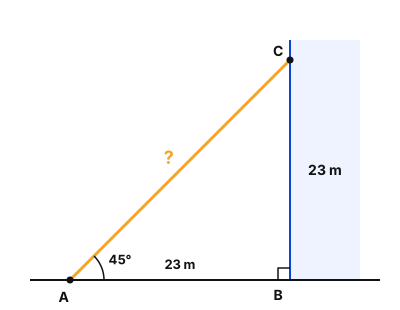
A rock climber uses a rope to ascend a cliff. If the vertical height of the cliff is 23 metres and the rope makes an angle of 45° with the level ground, what is the minimum length of the rope required to reach the top?
एक पर्वतारोही रस्सी से चट्टान चढ़ता है। यदि चट्टान की ऊर्ध्वाधर ऊँचाई 23 मीटर है और रस्सी ज़मीन से 45° का कोण बनाती है, तो शीर्ष तक पहुँचने हेतु न्यूनतम रस्सी की लंबाई क्या होगी?
  1. A46 m
  2. B232 m
  3. C60 m
  4. D462 m
Show answer

Concept: The rope is the hypotenuse; height is the side opposite 45°.

  1. sin45∘=heightrope=12.
  2. Rope = 23×2=232 m.

Trick: At 45°, hypotenuse = side ×2 (the 1:1:2 triangle).

Answer: (B) 232 m

अवधारणा: रस्सी कर्ण है; ऊँचाई 45° के सामने की भुजा है।

हल:

  1. sin45∘= ऊँचाई/रस्सी =12।
  2. रस्सी = 23×2=232 m।

ट्रिक: 45° पर कर्ण = भुजा ×2 (1:1:2 त्रिभुज)।

उत्तर: (B) 232 m

SSC CGLQuantitative AptitudeHeights – rope at 45°SSC CGL 2025 · 18 Sep Shift 2 →
Q2560.
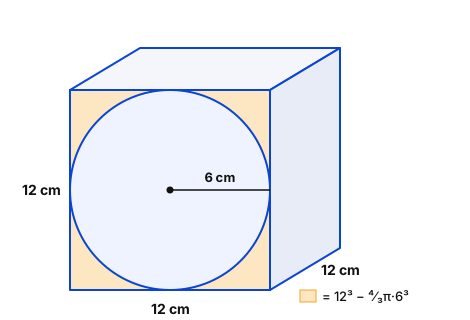
A tile is spherical in shape with a radius of 6 cm. If the tile is placed inside a cube with side length 12 cm, what is the volume of the cube that is not occupied by the tile?
एक गोलाकार टाइल की त्रिज्या 6 cm है। यदि उसे 12 cm भुजा वाले घन के भीतर रखा जाए, तो घन का कितना आयतन टाइल से नहीं भरा रहेगा?
  1. A459 cm³
  2. B798.16 cm³
  3. C350 cm³
  4. D822.86 cm³
Show answer

Concept: Empty space = volume of cube − volume of sphere.

  1. Cube = 123=1728 cm³.
  2. Sphere = 43×227×63=43×227×216≈905.14 cm³.
  3. Empty = 1728−905.14=822.86 cm³.

Trick: Sphere fitting exactly in a cube fills π6≈52.4% of it; so empty ≈ 47.6% of 1728 ≈ 823.

Answer: (D) 822.86 cm³

अवधारणा: खाली स्थान = घन का आयतन − गोले का आयतन।

हल:

  1. घन = 123=1728 cm³।
  2. गोला = 43×227×216≈905.14 cm³।
  3. खाली = 1728−905.14=822.86 cm³।

ट्रिक: घन में ठीक समाया गोला उसका π6≈52.4% भरता है; खाली ≈ 47.6%×1728≈823।

उत्तर: (D) 822.86 cm³

SSC CGLQuantitative AptitudeMensuration – cube minus sphereSSC CGL 2025 · 18 Sep Shift 2 →