Question bank

Q&A: practice questions with answers

Search questions on any topic. Filter by exam category, exam, subject and topic, try the question, then open the answer and explanation.

Courses – airGurukul

4,800 questions found.

Q241.
In which high-jump technique does an athlete arch their back, clear the bar while facing upwards and backwards, and land mainly on the shoulders?
ऊँची कूद की किस तकनीक में खिलाड़ी पीठ मोड़कर, ऊपर और पीछे की ओर मुँह करके बार पार करता है और मुख्यतः कंधों पर गिरता है?
  1. AScissor Jumpसिज़र जंप
  2. BStraddle Techniqueस्ट्रैडल तकनीक
  3. CWestern Rollवेस्टर्न रोल
  4. DFosbury Flopफॉस्बरी फ्लॉप
Show answer

Concept: The back-first, face-up jump over the bar is the Fosbury Flop.

  1. Introduced by American Dick Fosbury, who won gold at the 1968 Mexico City Olympics.
  2. Straddle and Western Roll cross the bar face-down/sideways; scissor jump is upright with legs crossing.

Yaad rakhein: Fosbury Flop is the standard technique of modern high jumpers; landing on the back/shoulders became possible with foam landing mats.

Answer: (D) Fosbury Flop

अवधारणा: पीठ के बल, चेहरा ऊपर रखकर बार पार करना फॉस्बरी फ्लॉप है।

  1. अमेरिकी डिक फॉस्बरी ने इसे अपनाया और 1968 मेक्सिको सिटी ओलंपिक में स्वर्ण जीता।
  2. स्ट्रैडल व वेस्टर्न रोल में चेहरा नीचे/बगल में रहता है; सिज़र जंप में शरीर सीधा रहता है।

याद रखें: आज के लगभग सभी ऊँची कूद खिलाड़ी फॉस्बरी फ्लॉप ही करते हैं; फोम मैट आने से पीठ/कंधे पर उतरना संभव हुआ।

उत्तर: (D) फॉस्बरी फ्लॉप
SSC CGLGeneral AwarenessAthletics – high jump techniquesSSC CGL 2025 · 26 Sep Shift 1 →
Q242.
What was the main reason the British administration was initially hesitant to prohibit the practice of Sati in India?
ब्रिटिश प्रशासन आरंभ में भारत में सती प्रथा पर रोक लगाने से क्यों हिचकिचाया?
  1. AThey considered Sati an essential Indian cultural practiceवे सती को भारतीय संस्कृति का अनिवार्य अंग मानते थे
  2. BThey were concerned about religious uprisings and preferred to rely on local opinionउन्हें धार्मिक विद्रोह की आशंका थी और वे स्थानीय मत पर निर्भर रहना चाहते थे
  3. CThey did not possess legislative power for social reformsउनके पास सामाजिक सुधार हेतु विधायी शक्ति नहीं थी
  4. DThey believed that only Hindu clergy should decide on such mattersउनका मानना था कि ऐसे विषय केवल हिंदू पुरोहित तय करें
Show answer

Concept: The Company avoided interfering in religious customs for fear of revolt.

  1. Early British rulers feared that banning Sati would be seen as attacking Hinduism and spark unrest.
  2. They waited for Indian reformist opinion; Raja Ram Mohan Roy's campaign gave that support.
  3. Governor-General Lord William Bentinck finally banned Sati by Regulation XVII of 1829 (Bengal).

Yaad rakhein: Sati ban 1829 – Bentinck; Widow Remarriage Act 1856 – Dalhousie/Canning period, pushed by Ishwar Chandra Vidyasagar.

Answer: (B) They were concerned about religious uprisings and preferred to rely on local opinion

अवधारणा: कंपनी विद्रोह के डर से धार्मिक रीतियों में दखल से बचती थी।

  1. आरंभिक ब्रिटिश शासकों को डर था कि सती पर रोक को हिंदू धर्म पर हमला माना जाएगा और अशांति फैलेगी।
  2. वे भारतीय सुधारकों के समर्थन की प्रतीक्षा में थे; राजा राममोहन राय के अभियान ने यह समर्थन दिया।
  3. गवर्नर-जनरल लॉर्ड विलियम बेंटिक ने 1829 के रेगुलेशन XVII से सती पर रोक लगाई।

याद रखें: सती निषेध 1829 – बेंटिक; विधवा पुनर्विवाह अधिनियम 1856 – ईश्वरचंद्र विद्यासागर के प्रयास से।

उत्तर: (B) उन्हें धार्मिक विद्रोह की आशंका थी और वे स्थानीय मत पर निर्भर रहना चाहते थे

SSC CGLGeneral AwarenessSocial reforms – abolition of SatiSSC CGL 2025 · 26 Sep Shift 1 →
Q243.
The novel "The Inheritance of Loss" received the Booker Prize. Who is the author of this award-winning work?
उपन्यास "द इनहेरिटेंस ऑफ लॉस" को बुकर पुरस्कार मिला। इस पुरस्कृत कृति के लेखक कौन हैं?
  1. AAnita Desaiअनीता देसाई
  2. BKiran Desaiकिरण देसाई
  3. CJhumpa Lahiriझुम्पा लाहिड़ी
  4. DChitra Banerjeeचित्रा बनर्जी
Show answer

Concept: 'The Inheritance of Loss' is by Kiran Desai, Booker Prize 2006.

  1. Kiran Desai was then the youngest woman to win the Booker.
  2. Anita Desai is her mother – shortlisted many times but never won.
  3. Jhumpa Lahiri won the Pulitzer (Interpreter of Maladies).

Yaad rakhein: Indian-origin Booker winners: Salman Rushdie (1981), Arundhati Roy (1997), Kiran Desai (2006), Aravind Adiga (2008).

Answer: (B) Kiran Desai

अवधारणा: 'द इनहेरिटेंस ऑफ़ लॉस' किरण देसाई की कृति है, बुकर पुरस्कार 2006।

  1. किरण देसाई उस समय बुकर जीतने वाली सबसे कम आयु की महिला थीं।
  2. अनीता देसाई उनकी माँ हैं – कई बार शॉर्टलिस्ट हुईं पर जीतीं नहीं।
  3. झुम्पा लाहिड़ी को पुलित्ज़र (Interpreter of Maladies) मिला।

याद रखें: भारतीय मूल के बुकर विजेता: सलमान रुश्दी (1981), अरुंधति रॉय (1997), किरण देसाई (2006), अरविंद अडिगा (2008)।

उत्तर: (B) किरण देसाई

SSC CGLGeneral AwarenessBooks and authors – Booker PrizeSSC CGL 2025 · 26 Sep Shift 1 →
Q244.
With reference to Pranav Soorma's achievement at the Khelo India Para Games 2023, consider the following statements:
1. He surpassed his earlier club throw distance of 30.01 metres.
2. His throw of 33.54 metres established a new Asian record.
Which of the above statements is/are correct?
खेलो इंडिया पैरा गेम्स 2023 में प्रणव सूरमा की उपलब्धि के संदर्भ में निम्न कथनों पर विचार कीजिए:
1. उन्होंने क्लब थ्रो में अपनी पिछली 30.01 मीटर की दूरी को पीछे छोड़ा।
2. उनके 33.54 मीटर के थ्रो ने नया एशियाई रिकॉर्ड बनाया।
उपर्युक्त में से कौन-सा/से कथन सही है/हैं?
  1. A1 onlyकेवल 1
  2. B2 onlyकेवल 2
  3. CBoth 1 and 21 और 2 दोनों
  4. DNeither 1 nor 2न 1 न 2
Show answer

Concept: Pranav Soorma set a new Asian record in men's club throw (F51).

  1. At the first Khelo India Para Games (Delhi, December 2023) he threw 33.54 m.
  2. This bettered his own earlier best of 30.01 m → Statement 1 correct.
  3. The 33.54 m mark was an Asian record → Statement 2 correct.

Yaad rakhein: Club throw is a para-athletics event for athletes with high-level impairment (F51 class); India's Dharambir and Pranav Soorma are leading names.

Answer: (C) Both 1 and 2

अवधारणा: प्रणव सूरमा ने पुरुष क्लब थ्रो (F51) में नया एशियाई रिकॉर्ड बनाया।

  1. पहले खेलो इंडिया पैरा गेम्स (दिल्ली, दिसंबर 2023) में उन्होंने 33.54 मी. फेंका।
  2. यह उनके पिछले 30.01 मी. से बेहतर था → कथन 1 सही।
  3. 33.54 मी. एशियाई रिकॉर्ड बना → कथन 2 सही।

याद रखें: क्लब थ्रो उच्च स्तर की दिव्यांगता वाले खिलाड़ियों (F51 वर्ग) का पैरा-एथलेटिक्स इवेंट है; धरमबीर और प्रणव सूरमा इसके प्रमुख भारतीय नाम हैं।

उत्तर: (C) 1 और 2 दोनों

SSC CGLGeneral AwarenessSports – Khelo India Para Games 2023SSC CGL 2025 · 26 Sep Shift 1 →
Q245.
The imposition of President's Rule in any Indian State is carried out under which Article of the Constitution?
भारत के किसी राज्य में राष्ट्रपति शासन संविधान के किस अनुच्छेद के अंतर्गत लगाया जाता है?
  1. A352
  2. B356
  3. C360
  4. D371
Show answer

Concept: President's Rule = failure of constitutional machinery in a State (Art. 356).

  1. Art. 352 – National Emergency (war, external aggression, armed rebellion).
  2. Art. 356 – President's Rule in a State.
  3. Art. 360 – Financial Emergency; Art. 371 – special provisions for some States.

Trick: Emergency trio in ascending order: 352 (National) → 356 (State) → 360 (Financial).

Answer: (B) 356

अवधारणा: राष्ट्रपति शासन = राज्य में संवैधानिक तंत्र की विफलता (अनु. 356)।

  1. अनु. 352 – राष्ट्रीय आपातकाल (युद्ध, बाहरी आक्रमण, सशस्त्र विद्रोह)।
  2. अनु. 356 – राज्य में राष्ट्रपति शासन।
  3. अनु. 360 – वित्तीय आपातकाल; अनु. 371 – कुछ राज्यों हेतु विशेष प्रावधान।

ट्रिक: आपातकाल तिकड़ी बढ़ते क्रम में: 352 (राष्ट्रीय) → 356 (राज्य) → 360 (वित्तीय)।

उत्तर: (B) 356

SSC CGLGeneral AwarenessEmergency provisions – Article 356SSC CGL 2025 · 26 Sep Shift 1 →
Q246.
Matangini Hazra holds a significant place in India's freedom movement for which of the following reasons?
मातंगिनी हाजरा भारत के स्वतंत्रता आंदोलन में किस कारण महत्वपूर्ण स्थान रखती हैं?
  1. AShe authored a renowned literary workउन्होंने एक प्रसिद्ध साहित्यिक कृति लिखी
  2. BShe was a ruling queen in Eastern Indiaवे पूर्वी भारत की शासक रानी थीं
  3. CShe courageously participated in the struggle for independenceउन्होंने स्वतंत्रता संग्राम में साहसपूर्वक भाग लिया
  4. DShe gained fame by winning an important court caseउन्होंने एक महत्वपूर्ण मुकदमा जीतकर ख्याति पाई
Show answer

Concept: Matangini Hazra was a brave freedom fighter of Bengal.

  1. During the Quit India Movement (29 Sept 1942) she, aged about 73, led a march to the Tamluk police station in Midnapore.
  2. She was shot dead while still holding the national flag; people called her 'Gandhi Buri'.

Yaad rakhein: Other women martyrs/leaders of 1942: Aruna Asaf Ali hoisted the flag at Gowalia Tank; Kanaklata Barua (Assam) was shot carrying the tricolour.

Answer: (C) She courageously participated in the struggle for independence

अवधारणा: मातंगिनी हाजरा बंगाल की साहसी स्वतंत्रता सेनानी थीं।

  1. भारत छोड़ो आंदोलन (29 सितंबर 1942) में लगभग 73 वर्ष की आयु में उन्होंने मिदनापुर के तामलुक थाने की ओर जुलूस का नेतृत्व किया।
  2. तिरंगा थामे हुए उन्हें गोली मार दी गई; लोग उन्हें 'गांधी बूढ़ी' कहते थे।

याद रखें: 1942 की अन्य वीरांगनाएँ: अरुणा आसफ़ अली ने गोवालिया टैंक पर झंडा फहराया; कनकलता बरुआ (असम) तिरंगा लेकर शहीद हुईं।

उत्तर: (C) उन्होंने स्वतंत्रता संग्राम में साहसपूर्वक भाग लिया

SSC CGLGeneral AwarenessFreedom struggle – Matangini HazraSSC CGL 2025 · 26 Sep Shift 1 →
Q247.
On India's Mars Orbiter Mission (MOM), which scientific instrument was responsible for capturing full-disk colour photographs of Mars?
भारत के मंगल ऑर्बिटर मिशन (MOM) में मंगल की पूर्ण-डिस्क रंगीन तस्वीरें किस उपकरण ने लीं?
  1. ALAM
  2. BM3
  3. CTMC
  4. DMCC
Show answer

Concept: MCC = Mars Colour Camera, which took the full-disc colour images of Mars.

  1. MOM (Mangalyaan, launched 2013) carried 5 payloads incl. MCC, TIS, MSM, MENCA, LAP.
  2. LAM = Liquid Apogee Motor (engine), M3 = Moon Mineralogy Mapper on Chandrayaan-1, TMC = Terrain Mapping Camera (Chandrayaan).

Trick: Expand the abbreviation – only 'Mars Colour Camera' literally contains both 'Mars' and 'Colour'.

Answer: (D) MCC

अवधारणा: MCC = मार्स कलर कैमरा, जिसने मंगल की पूर्ण-डिस्क रंगीन तस्वीरें लीं।

  1. मंगलयान (2013 प्रक्षेपित) में 5 उपकरण थे – MCC, TIS, MSM, MENCA, LAP।
  2. LAM = लिक्विड एपोजी मोटर (इंजन), M3 = चंद्रयान-1 का मून मिनरलॉजी मैपर, TMC = टेरेन मैपिंग कैमरा (चंद्रयान)।

ट्रिक: संक्षिप्त रूप खोलें – केवल 'Mars Colour Camera' में Mars और Colour दोनों हैं।

उत्तर: (D) MCC

SSC CGLGeneral AwarenessSpace – Mars Orbiter Mission payloadsSSC CGL 2025 · 26 Sep Shift 1 →
Q248.
In the post-independence period, which objective of land reforms was mainly directed toward promoting social justice in land ownership?
स्वतंत्रता के बाद भूमि सुधारों का कौन-सा उद्देश्य मुख्यतः भूस्वामित्व में सामाजिक न्याय से जुड़ा था?
  1. AImport substitution in the economyअर्थव्यवस्था में आयात प्रतिस्थापन
  2. BIncreasing credit availability for industriesउद्योगों हेतु ऋण उपलब्धता बढ़ाना
  3. CEnding intermediary control and enforcing land ceiling limitsमध्यस्थों का नियंत्रण समाप्त करना और भूमि सीमा लागू करना
  4. DProviding benefits to existing landlordsमौजूदा ज़मींदारों को लाभ पहुँचाना
Show answer

Concept: Equity in landholding came from abolishing intermediaries and fixing ceilings.

  1. Zamindari abolition removed rent-collecting middlemen between the state and the cultivator.
  2. Land ceiling laws capped holdings; surplus land was given to landless farmers – 'land to the tiller'.

Yaad rakhein: Land reforms had three parts: abolition of intermediaries, tenancy reform, and land ceiling (plus consolidation of holdings).

Answer: (C) Ending intermediary control and enforcing land ceiling limits

अवधारणा: भूमि स्वामित्व में समानता मध्यस्थ हटाने और भूमि सीमा तय करने से आई।

  1. ज़मींदारी उन्मूलन से सरकार और किसान के बीच के लगान वसूलने वाले मध्यस्थ हटे।
  2. भूमि सीमा कानूनों ने अधिकतम जोत तय की; अतिरिक्त भूमि भूमिहीनों को दी गई – 'जोतने वाले को ज़मीन'।

याद रखें: भूमि सुधार के भाग: मध्यस्थ उन्मूलन, काश्तकारी सुधार, भूमि सीमा (और चकबंदी)।

उत्तर: (C) मध्यस्थों का नियंत्रण समाप्त करना और भूमि सीमा लागू करना

SSC CGLGeneral AwarenessLand reforms – social justiceSSC CGL 2025 · 26 Sep Shift 1 →
Q249.
India adopted major economic liberalisation measures — including LPG reforms — in which year?
भारत ने उदारीकरण के बड़े कदम — LPG सुधार — किस वर्ष अपनाए?
  1. A1991
  2. B1984
  3. C2001
  4. D1977
Show answer

Concept: LPG reforms (Liberalisation, Privatisation, Globalisation) began in 1991.

  1. A balance-of-payments crisis forced the New Economic Policy of July 1991.
  2. PM P. V. Narasimha Rao and Finance Minister Dr Manmohan Singh led it: delicensing, rupee devaluation, opening to foreign investment.

Yaad rakhein: 1991 = reforms year; also the year the rupee was devalued and gold was pledged to raise foreign exchange.

Answer: (A) 1991

अवधारणा: LPG सुधार (उदारीकरण, निजीकरण, वैश्वीकरण) 1991 में शुरू हुए।

  1. भुगतान संतुलन संकट के कारण जुलाई 1991 में नई आर्थिक नीति लाई गई।
  2. प्रधानमंत्री पी. वी. नरसिम्हा राव और वित्त मंत्री डॉ. मनमोहन सिंह: लाइसेंस राज में ढील, रुपये का अवमूल्यन, विदेशी निवेश के लिए द्वार खोलना।

याद रखें: 1991 = सुधार वर्ष; इसी वर्ष रुपये का अवमूल्यन हुआ और विदेशी मुद्रा हेतु सोना गिरवी रखा गया।

उत्तर: (A) 1991

SSC CGLGeneral AwarenessIndian economy – 1991 reformsSSC CGL 2025 · 26 Sep Shift 1 →
Q250.
Under Article 356 of the Indian Constitution, what power does the President hold regarding a State, and what safeguard is applied to this provision?
भारतीय संविधान के अनुच्छेद 356 के अंतर्गत राष्ट्रपति को किसी राज्य के संबंध में कौन-सी शक्ति प्राप्त है, और इस प्रावधान पर कौन-सा सुरक्षा-उपाय लागू है?
  1. ADissolve Parliament without seeking further approvalबिना और स्वीकृति के संसद भंग करना
  2. BRemove a State government, with Parliamentary approval required within two monthsराज्य सरकार हटाना, जिसकी संसदीय स्वीकृति दो माह में आवश्यक
  3. CAnnounce a Financial Emergency with only the Rajya Sabha’s consentकेवल राज्य सभा की सहमति से वित्तीय आपातकाल घोषित करना
  4. DSuspend Fundamental Rights after permission from the Supreme Courtउच्चतम न्यायालय की अनुमति से मौलिक अधिकार निलंबित करना
Show answer

Concept: Under Art. 356 the President can take over a State's government; Parliament must approve it.

  1. Proclamation (usually on the Governor's report) lets the President dismiss the State ministry.
  2. It must be approved by both Houses within 2 months, else it lapses.
  3. Once approved it lasts 6 months; extension beyond 1 year needs special conditions (44th Amendment).

Yaad rakhein: Approval time: National Emergency (352) – 1 month; President's Rule (356) – 2 months; Financial Emergency (360) – 2 months.

Answer: (B) Remove a State government, with Parliamentary approval required within two months

अवधारणा: अनु. 356 के तहत राष्ट्रपति राज्य सरकार को हटाकर शासन अपने हाथ में ले सकते हैं; संसद की स्वीकृति आवश्यक है।

  1. उद्घोषणा (प्रायः राज्यपाल की रिपोर्ट पर) से राज्य मंत्रिपरिषद हटाई जाती है।
  2. दोनों सदनों से 2 माह के भीतर स्वीकृति आवश्यक, वरना उद्घोषणा समाप्त।
  3. स्वीकृति के बाद 6 माह तक; 1 वर्ष से आगे बढ़ाने हेतु विशेष शर्तें (44वाँ संशोधन)।

याद रखें: स्वीकृति अवधि: राष्ट्रीय आपातकाल (352) – 1 माह; राष्ट्रपति शासन (356) – 2 माह; वित्तीय आपातकाल (360) – 2 माह।

उत्तर: (B) राज्य सरकार हटाना, जिसकी संसदीय स्वीकृति दो माह में आवश्यक

SSC CGLGeneral AwarenessArticle 356 – safeguardsSSC CGL 2025 · 26 Sep Shift 1 →
Q251.
If the radius of a cylinder is doubled, what happens to its volume (assuming the height remains constant)?
यदि किसी बेलन की त्रिज्या दोगुनी कर दी जाए (ऊँचाई अपरिवर्तित रहे), तो उसके आयतन का क्या होगा?
  1. AVolume is halvedआयतन आधा हो जाएगा
  2. BVolume is doubledआयतन दोगुना हो जाएगा
  3. CVolume becomes four timesआयतन चार गुना हो जाएगा
  4. DVolume remains the sameआयतन अपरिवर्तित रहेगा
Show answer

Concept: V=πr2h, so with fixed height V∝r2.

  1. New radius = 2r → new V=π(2r)2h=4πr2h.
  2. Ratio new : old = 4 : 1.

Trick: Volume follows the square of the radius: ×2 radius → ×4 volume; ×3 radius → ×9 volume.

Answer: (C) Volume becomes four times

अवधारणा: V=πr2h, ऊँचाई स्थिर हो तो V∝r2।

  1. नई त्रिज्या = 2r → नया V=π(2r)2h=4πr2h।
  2. नया : पुराना = 4 : 1।

ट्रिक: त्रिज्या ×2 → आयतन ×4; त्रिज्या ×3 → आयतन ×9 (वर्ग के अनुपात में)।

उत्तर: (C) आयतन चार गुना हो जाएगा

SSC CGLQuantitative AptitudeCylinder – effect of radius on volumeSSC CGL 2025 · 26 Sep Shift 1 →
Q252.
What is the least square number that is divisible by 6, 9 and 15?
वह छोटी से छोटी वर्ग संख्या कौन-सी है जो 6, 9 और 15 से विभाज्य हो?
  1. A1800
  2. B900
  3. C400
  4. D1600
Show answer

Concept: Take the LCM, then multiply by primes having odd powers.

  1. LCM of 6, 9, 15 = 90=21×32×51
  2. 2 and 5 have odd powers → multiply by 2×5=10
  3. Least square = 90×10=900=302

Trick: Check options from smallest: 400 is not divisible by 9; 900÷90=10 ✓ and 900 is a square.

Answer: (B) 900

अवधारणा: पहले LCM लें, फिर विषम घात वाले अभाज्य से गुणा करें।

  1. 6, 9, 15 का LCM = 90=21×32×51
  2. 2 और 5 की घात विषम → 2×5=10 से गुणा
  3. सबसे छोटा वर्ग = 90×10=900=302

ट्रिक: छोटे विकल्प से जाँचें: 400, 9 से विभाज्य नहीं; 900÷90=10 ✓ और 900 पूर्ण वर्ग है।

उत्तर: (B) 900

SSC CGLQuantitative AptitudeLCM – least perfect square multipleSSC CGL 2025 · 26 Sep Shift 1 →
Q253.
If the amount is ₹700 and the principal is ₹500, compounded yearly for 1 year, calculate the rate of interest.
यदि राशि ₹700 और मूलधन ₹500 है, तथा ब्याज 1 वर्ष के लिए वार्षिक रूप से संयोजित है, तो ब्याज दर ज्ञात कीजिए।
  1. A40%
  2. B35%
  3. C33.33%
  4. D25%
Show answer

Concept: For one year compounded yearly, CI = SI, so R=IP×100.

  1. Interest = ₹700 − ₹500 = ₹200
  2. Rate = 200500×100=40%

Trick: Amount/Principal = 700500=1.4 → growth of 0.4 = 40% in one year.

Answer: (A) 40%

अवधारणा: वार्षिक चक्रवृद्धि में 1 वर्ष का CI = SI, अतः R = (ब्याज/मूलधन) × 100।

  1. ब्याज = ₹700 − ₹500 = ₹200
  2. दर = 200500×100=40%

ट्रिक: मिश्रधन/मूलधन = 700500=1.4 → एक वर्ष में 0.4 यानी 40% वृद्धि।

उत्तर: (A) 40%

SSC CGLQuantitative AptitudeCompound interest – one year rateSSC CGL 2025 · 26 Sep Shift 1 →
Q254.
If P = ₹2,500, R = 11.5% and T = 2.5 years, find the simple interest.
यदि P = ₹2,500, R = 11.5% और T = 2.5 वर्ष है, तो साधारण ब्याज ज्ञात कीजिए।
  1. A₹775
  2. B₹715
  3. C₹718.75
  4. D₹700.75
Show answer

Concept: SI=P×R×T100.

  1. Rate for 2.5 years = 11.5×2.5=28.75%
  2. SI = 28.75% of ₹2,500 = 2500×0.2875= ₹718.75

Trick: Combine R×T first (total %), then take that % of P – 1% of 2500 is 25, so 28.75×25=718.75.

Answer: (C) ₹718.75

अवधारणा: SI=P×R×T100।

  1. 2.5 वर्ष की कुल दर = 11.5×2.5=28.75%
  2. SI = ₹2,500 का 28.75% = 2500×0.2875= ₹718.75

ट्रिक: पहले R×T (कुल %) निकालें, फिर P का उतना %: 2500 का 1% = 25, अतः 28.75×25=718.75।

उत्तर: (C) ₹718.75

SSC CGLQuantitative AptitudeSimple interest – formulaSSC CGL 2025 · 26 Sep Shift 1 →
Q255.
A person crosses a 600 m long street in 8 minutes. What is his speed in km per hour?
एक व्यक्ति 600 मीटर लंबी सड़क 8 मिनट में पार करता है। उसकी चाल किलोमीटर प्रति घंटा में क्या है?
  1. A7.3 km/h
  2. B4.5 km/h
  3. C6 km/h
  4. D5.4 km/h
Show answer

Concept: Speed in m/s ×185 = speed in km/h.

  1. Time = 8 min = 480 s
  2. Speed = 600÷480=1.25 m/s
  3. 1.25×185=4.5 km/h

Trick: Metres per minute ×0.06 = km/h: 6008=75 m/min → 75×0.06=4.5.

Answer: (B) 4.5 km/h

अवधारणा: m/s में चाल ×185 = km/h में चाल।

  1. समय = 8 मिनट = 480 s
  2. चाल = 600÷480=1.25 m/s
  3. 1.25×185=4.5 km/h

ट्रिक: मीटर/मिनट ×0.06 = km/h: 6008=75 m/min → 75×0.06=4.5।

उत्तर: (B) 4.5 km/h

SSC CGLQuantitative AptitudeSpeed – unit conversionSSC CGL 2025 · 26 Sep Shift 1 →
Q256.
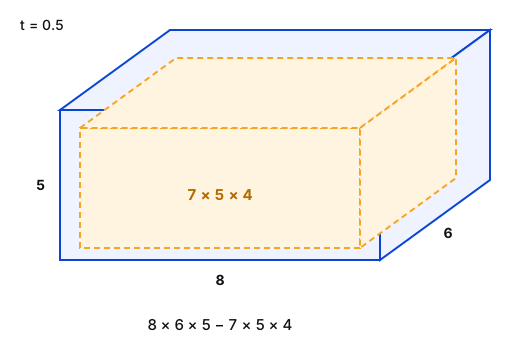
A hollow rectangular parallelepiped has external dimensions 8 cm × 6 cm × 5 cm and a thickness of 0.5 cm. Find the volume of the material in it.
एक खोखले आयताकार समांतर षट्फलक की बाहरी विमाएँ 8 cm × 6 cm × 5 cm और मोटाई 0.5 cm है। उसमें प्रयुक्त सामग्री का आयतन ज्ञात कीजिए।
  1. A100 cm³
  2. B120 cm³
  3. C160 cm³
  4. D240 cm³
Show answer

Concept: Material volume = outer volume − inner volume; each inner side = outer side − 2 × thickness.

  1. Outer: 8×6×5=240 cm³
  2. Inner sides: 8−1, 6−1, 5−1=7, 5, 4 → 7×5×4=140 cm³
  3. Material = 240−140=100 cm³

Trick: Thickness is on both walls, so subtract 2t (here 1 cm) from every dimension – not just t.

Answer: (A) 100 cm³

अवधारणा: पदार्थ का आयतन = बाहरी आयतन − आंतरिक आयतन; हर आंतरिक भुजा = बाहरी − 2 × मोटाई।

  1. बाहरी: 8×6×5=240 cm³
  2. आंतरिक भुजाएँ: 8−1, 6−1, 5−1=7, 5, 4 → 7×5×4=140 cm³
  3. पदार्थ = 240−140=100 cm³

ट्रिक: मोटाई दोनों दीवारों पर होती है, इसलिए हर माप से 2t (यहाँ 1 cm) घटाएँ, केवल t नहीं।

उत्तर: (A) 100 cm³

SSC CGLQuantitative AptitudeMensuration – hollow cuboidSSC CGL 2025 · 26 Sep Shift 1 →
Q257.
A sector of radius 7 cm has an area of 38.5 cm². Find the angle of the sector.
7 cm त्रिज्या वाले एक त्रिज्यखंड का क्षेत्रफल 38.5 cm² है। त्रिज्यखंड का कोण ज्ञात कीजिए।
  1. A90°
  2. B60°
  3. C30°
  4. D75°
Show answer

Concept: Sector area = θ360∘×πr2.

  1. Full circle area = 227×7×7=154 cm²
  2. Fraction = 38.5154=14
  3. θ=360∘×14=90∘

Trick: 38.5×4=154 – the sector is a quarter-circle, so the angle is a right angle.

Answer: (A) 90°

अवधारणा: त्रिज्यखंड क्षेत्रफल = θ360∘×πr2।

  1. पूरे वृत्त का क्षेत्रफल = 227×7×7=154 cm²
  2. भाग = 38.5154=14
  3. θ=360∘×14=90∘

ट्रिक: 38.5×4=154 – यह चौथाई वृत्त है, अतः कोण 90°।

उत्तर: (A) 90°

SSC CGLQuantitative AptitudeCircle – sector angle from areaSSC CGL 2025 · 26 Sep Shift 1 →
Q258.
The difference between 30% of a number and 15% of the same number is 90. What is the number?
किसी संख्या के 30% और उसी संख्या के 15% का अंतर 90 है। संख्या क्या है?
  1. A600
  2. B800
  3. C1000
  4. D1200
Show answer

Concept: Difference of percentages of the same number = (difference %) of that number.

  1. 30%−15% = 15% of the number = 90
  2. 1%=90÷15=6
  3. 100%=600

Trick: Find 1% first, then scale to 100% – avoids fractions.

Answer: (A) 600

अवधारणा: एक ही संख्या के दो प्रतिशतों का अंतर = संख्या का (अंतर)%।

  1. 30%−15% = संख्या का 15% = 90
  2. 1%=90÷15=6
  3. 100%=600

ट्रिक: पहले 1% निकालें, फिर 100% – भिन्न की ज़रूरत नहीं।

उत्तर: (A) 600

SSC CGLQuantitative AptitudePercentage – difference of two percentsSSC CGL 2025 · 26 Sep Shift 1 →
Q259.
The average age of 5 students in a class increases by 2 years when a 40-year-old teacher joins them. What was the original average age of the students?
एक कक्षा के 5 विद्यार्थियों की औसत आयु 40 वर्ष के शिक्षक के जुड़ने पर 2 वर्ष बढ़ जाती है। विद्यार्थियों की मूल औसत आयु क्या थी?
  1. A24
  2. B26
  3. C28
  4. D30
Show answer

Concept: New member's age = old average + (new count × increase).

  1. Let old average = a. Teacher = a+6×2=a+12
  2. a+12=40⇒a=28 years

Trick: Teacher gives 2 extra years to each of 6 people (12 years) beyond the old average: 40−12=28.

Answer: (C) 28

अवधारणा: नए सदस्य की आयु = पुराना औसत + (नई संख्या × वृद्धि)।

  1. माना पुराना औसत = a। शिक्षक = a+6×2=a+12
  2. a+12=40⇒a=28 वर्ष

ट्रिक: शिक्षक ने 6 लोगों में हर एक को 2 वर्ष दिए (कुल 12): 40−12=28।

उत्तर: (C) 28

SSC CGLQuantitative AptitudeAverage – new member joinsSSC CGL 2025 · 26 Sep Shift 1 →
Q260.
A buyer gets two successive discounts of 20% and 10% on a ₹800 item. What is the price paid?
एक खरीदार को ₹800 की वस्तु पर 20% और 10% की दो क्रमिक छूट मिलती है। उसे कितना देना होगा?
  1. A₹500
  2. B₹420
  3. C₹540
  4. D₹576
Show answer

Concept: Two discounts a% and b% equal a single discount of (a+b−ab100)%.

  1. Net discount = 20+10−20×10100=28%
  2. Price paid = 72% of ₹800 = ₹576

Trick: Multiply the 'pay' parts: 0.8×0.9=0.72 → 800×0.72=576.

Answer: (D) ₹576

अवधारणा: a% और b% की दो छूट = एकल छूट (a+b−ab100)%।

  1. कुल छूट = 20+10−20×10100=28%
  2. भुगतान = ₹800 का 72% = ₹576

ट्रिक: 'देय' भाग गुणा करें: 0.8×0.9=0.72 → 800×0.72=576।

उत्तर: (D) ₹576

SSC CGLQuantitative AptitudeSuccessive discountsSSC CGL 2025 · 26 Sep Shift 1 →