Question bank

Q&A: practice questions with answers

Search questions on any topic. Filter by exam category, exam, subject and topic, try the question, then open the answer and explanation.

Courses – airGurukul

4,800 questions found.

Q2641.
The Kudremukh mines in Karnataka are primarily associated with the extraction of which mineral?
कर्नाटक की कुद्रेमुख खदानें मुख्यतः किस खनिज के निष्कर्षण से जुड़ी हैं?
  1. AManganeseमैंगनीज़
  2. BIron oreलौह अयस्क
  3. CCopperताँबा
  4. DNickelनिकल
Show answer

Concept: Kudremukh (Chikkamagaluru, Karnataka) in the Western Ghats is an iron-ore belt.

  1. It has large magnetite iron-ore deposits, mined by KIOCL.
  2. Ore slurry was sent by pipeline to Mangaluru port for export.
  3. Mining stopped in 2005 to protect Kudremukh National Park.

Yaad rakhein: Other Karnataka iron-ore areas: Bellary–Hospet and Bababudan Hills.

Answer: (B) Iron ore

अवधारणा: कुद्रेमुख (चिकमगलूर, कर्नाटक) पश्चिमी घाट में लौह-अयस्क क्षेत्र है।

  1. यहाँ मैग्नेटाइट लौह अयस्क के बड़े भंडार हैं (KIOCL)।
  2. अयस्क को पाइपलाइन से मंगलुरु बंदरगाह भेजा जाता था।

याद रखें: कर्नाटक के अन्य लौह क्षेत्र: बेल्लारी–होस्पेट, बाबाबुदन पहाड़ियाँ।

उत्तर: (B) लौह अयस्क
SSC CGLGeneral AwarenessMineral regions – KudremukhSSC CGL 2025 · 18 Sep Shift 1 →
Q2642.
Which of the following statements correctly explains the weighted voting system in the GST Council under Article 279A(9) of the Indian Constitution?
भारतीय संविधान के अनुच्छेद 279A(9) के अंतर्गत GST परिषद की भारित मतदान प्रणाली को कौन-सा कथन सही बताता है?
  1. AThe Union government holds 75% of the total votes, and States hold 25% collectively.संघ सरकार के पास कुल मतों का 75% और राज्यों के पास सामूहिक रूप से 25% हैं।
  2. BA decision can be passed with the support of the Centre and any single State.केंद्र और किसी एक राज्य के समर्थन से निर्णय पारित हो सकता है।
  3. CEach State has the same voting weight as the Centre.प्रत्येक राज्य का मत-भार केंद्र के बराबर है।
  4. DThe States collectively have twice the voting weight of the Centre in the GST Council.GST परिषद में राज्यों का सामूहिक मत-भार केंद्र के दोगुने के बराबर है।
Show answer

Concept: Article 279A(9): every decision needs at least three-fourths of the weighted votes present and voting.

  1. Centre's vote = one-third (1/3) of total votes cast.
  2. All States together = two-thirds (2/3).
  3. 2/3 is twice 1/3 → States collectively have twice the Centre's weight.

Yaad rakhein: Neither side alone reaches 3/4: Centre (33%) has a veto, and States need the Centre to pass anything.

Answer: (D) The States collectively have twice the voting weight of the Centre in the GST Council.

अवधारणा: अनुच्छेद 279A(9): हर निर्णय के लिए उपस्थित भारित मतों का कम से कम 3/4 चाहिए।

  1. केंद्र का मत = कुल का 1/3।
  2. सभी राज्य मिलकर = 2/3।
  3. 2/3, 1/3 का दोगुना → राज्यों का भार केंद्र का दोगुना।

याद रखें: कोई पक्ष अकेले 3/4 नहीं पा सकता — केंद्र के पास प्रभावी वीटो है।

उत्तर: (D) GST परिषद में राज्यों का सामूहिक मत-भार केंद्र के दोगुने के बराबर है।

SSC CGLGeneral AwarenessGST Council – weighted votingSSC CGL 2025 · 18 Sep Shift 1 →
Q2643.
Consider the following statements about the properties of an ideal gas:
1. The volume of ideal gas molecules is negligible compared to the total volume of the container.
2. Collisions between ideal gas molecules are perfectly elastic.
3. Strong attractive forces exist between the ideal gas molecules.
Which of the above statements are correct?
आदर्श गैस के गुणों के संबंध में निम्न कथनों पर विचार कीजिए:
1. आदर्श गैस अणुओं का आयतन पात्र के कुल आयतन की तुलना में नगण्य होता है।
2. आदर्श गैस अणुओं के बीच टक्करें पूर्णतः प्रत्यास्थ होती हैं।
3. आदर्श गैस अणुओं के बीच प्रबल आकर्षण बल होते हैं।
उपर्युक्त में से कौन-से कथन सही हैं?
  1. A1 and 2 onlyकेवल 1 और 2
  2. B1 and 3 onlyकेवल 1 और 3
  3. C2 and 3 onlyकेवल 2 और 3
  4. D1, 2 and 31, 2 और 3
Show answer

Concept: An ideal gas assumes tiny, non-interacting molecules.

  1. Volume of molecules is negligible compared to the container → 1 correct.
  2. Collisions are perfectly elastic (no loss of kinetic energy) → 2 correct.
  3. No intermolecular attraction exists in an ideal gas → 3 wrong.

Yaad rakhein: Real gases behave nearly ideal at high temperature and low pressure.

Answer: (A) 1 and 2 only

अवधारणा: आदर्श गैस में अणु बहुत छोटे और परस्पर बल रहित माने जाते हैं।

  1. अणुओं का आयतन पात्र के आयतन की तुलना में नगण्य → 1 सही।
  2. टक्करें पूर्णतः प्रत्यास्थ → 2 सही।
  3. अणुओं के बीच कोई आकर्षण बल नहीं → 3 गलत।

याद रखें: वास्तविक गैसें उच्च ताप और निम्न दाब पर आदर्श जैसा व्यवहार करती हैं।

उत्तर: (A) केवल 1 और 2

SSC CGLGeneral AwarenessKinetic theory – ideal gasSSC CGL 2025 · 18 Sep Shift 1 →
Q2644.
Under the Bharatiya Nagarik Suraksha Sanhita (BNSS), which judicial authority can grant default bail if the prescribed time limit for detention is exceeded?
भारतीय नागरिक सुरक्षा संहिता (BNSS) के अंतर्गत, निर्धारित हिरासत अवधि पार होने पर डिफ़ॉल्ट जमानत कौन-सा न्यायिक प्राधिकारी दे सकता है?
  1. ASupreme Courtउच्चतम न्यायालय
  2. BMagistrateमजिस्ट्रेट
  3. CLokpalलोकपाल
  4. DVillage Court (Gram Nyayalaya)ग्राम न्यायालय
Show answer

Concept: Default (statutory) bail arises when the investigation is not completed within the legal time limit.

  1. Under Section 187 BNSS (old Sec 167 CrPC), the Magistrate authorises detention up to 60 or 90 days.
  2. Once that limit passes without a charge-sheet, the accused (if ready to furnish bail) gets an indefeasible right to release, granted by the Magistrate.

Yaad rakhein: BNSS replaced the CrPC from 1 July 2024, along with BNS (for IPC) and BSA (for Evidence Act).

Answer: (B) Magistrate

अवधारणा: जांच तय समय में पूरी न हो तो आरोपी को डिफ़ॉल्ट (वैधानिक) जमानत का अधिकार है।

  1. धारा 187 BNSS (पुरानी CrPC धारा 167) में मजिस्ट्रेट 60 या 90 दिन तक हिरासत दे सकता है।
  2. इस अवधि में आरोप-पत्र न आए तो मजिस्ट्रेट जमानत देता है।

याद रखें: BNSS 1 जुलाई 2024 से CrPC की जगह लागू हुई।

उत्तर: (B) मजिस्ट्रेट

SSC CGLGeneral AwarenessBNSS – default bailSSC CGL 2025 · 18 Sep Shift 1 →
Q2645.
Among the following schemes, which one differs in its primary sectoral focus compared to the others?
निम्न योजनाओं में से कौन-सी अपने प्राथमिक क्षेत्रीय फोकस में शेष से भिन्न है?
  1. ANSWS
  2. BPMFBY
  3. CGati Shaktiगति शक्ति
  4. DLEADS
Show answer

Concept: Group schemes by the sector they mainly serve.

  1. NSWS (National Single Window System), PM Gati Shakti and LEADS (logistics ease index) all target industry, infrastructure and logistics.
  2. PMFBY (Pradhan Mantri Fasal Bima Yojana, 2016) is crop insurance for farmers → agriculture, the odd one.

Yaad rakhein: PMFBY farmer premium: 2% for Kharif, 1.5% for Rabi, 5% for commercial/horticultural crops.

Answer: (B) PMFBY

अवधारणा: योजनाओं को उनके मुख्य क्षेत्र के अनुसार बाँटें।

  1. NSWS, पीएम गति शक्ति और LEADS — उद्योग, अवसंरचना और लॉजिस्टिक्स से जुड़ी हैं।
  2. PMFBY (2016) — किसानों के लिए फसल बीमा → कृषि क्षेत्र, अलग।

याद रखें: PMFBY प्रीमियम: खरीफ 2%, रबी 1.5%, वाणिज्यिक/बागवानी 5%।

उत्तर: (B) PMFBY

SSC CGLGeneral AwarenessGovernment schemes – sector focusSSC CGL 2025 · 18 Sep Shift 1 →
Q2646.
In which year was the traditional Rajasthani dance Ghoomar recognized among the world's top local dances?
पारंपरिक राजस्थानी नृत्य घूमर को किस वर्ष विश्व के शीर्ष स्थानीय नृत्यों में शामिल किया गया?
  1. A2011
  2. B2014
  3. C2013
  4. D2019
Show answer

Concept: Ghoomar is a women's folk dance of Rajasthan known for its graceful twirls.

  1. In 2013 it was placed among the world's top local dances in an international travel listing.
  2. Dancers in long flowing ghagras spin in circles; it began with the Bhil community and was adopted by Rajput royals.

Yaad rakhein: Ghoomar is performed on occasions like Teej, Gangaur and weddings.

Answer: (C) 2013

अवधारणा: घूमर राजस्थान का महिलाओं द्वारा किया जाने वाला लोक नृत्य है।

  1. 2013 में इसे विश्व के शीर्ष स्थानीय नृत्यों में स्थान मिला।
  2. घेरदार घाघरे में गोल घूमकर किया जाता है; भील समुदाय से शुरू होकर राजपूत घरानों ने अपनाया।

याद रखें: घूमर तीज, गणगौर और विवाह पर किया जाता है।

उत्तर: (C) 2013

SSC CGLGeneral AwarenessFolk dance – GhoomarSSC CGL 2025 · 18 Sep Shift 1 →
Q2647.
According to Transparency International, what is a key concern regarding the EU's citizenship-by-investment and golden visa programs?
ट्रांसपेरेंसी इंटरनेशनल के अनुसार, EU की निवेश-द्वारा-नागरिकता और गोल्डन वीज़ा योजनाओं को लेकर मुख्य चिंता क्या है?
  1. AThey facilitate legal migration and create jobsये वैध प्रवास को सुगम बनाकर रोज़गार सृजित करती हैं
  2. BThey promote cultural and educational exchange within the EUये EU में सांस्कृतिक व शैक्षिक आदान-प्रदान बढ़ाती हैं
  3. CThey allow corrupt individuals to misuse residency or citizenship schemes for personal benefitये भ्रष्ट व्यक्तियों को निवास/नागरिकता योजनाओं के दुरुपयोग का अवसर देती हैं
  4. DThey encourage tourism through easier visa accessये आसान वीज़ा से पर्यटन बढ़ाती हैं
Show answer

Concept: Citizenship-by-investment ("golden passport") and residency-by-investment ("golden visa") schemes sell legal status for investment.

  1. Transparency International's concern: weak background checks let corrupt people and money launderers buy residency or citizenship.
  2. This gives them EU-wide travel rights and a safe haven for illicit money.

Yaad rakhein: Transparency International publishes the Corruption Perceptions Index (CPI); it is headquartered in Berlin.

Answer: (C) They allow corrupt individuals to misuse residency or citizenship schemes for personal benefit

अवधारणा: निवेश के बदले नागरिकता/निवास देने वाली योजनाएँ।

  1. ट्रांसपेरेंसी इंटरनेशनल की चिंता: कमजोर जाँच के कारण भ्रष्ट लोग और मनी-लॉन्डरर्स नागरिकता/निवास खरीद लेते हैं।
  2. इससे उन्हें पूरे EU में आवाजाही और अवैध धन के लिए सुरक्षित ठिकाना मिलता है।

याद रखें: ट्रांसपेरेंसी इंटरनेशनल भ्रष्टाचार बोध सूचकांक (CPI) जारी करता है; मुख्यालय बर्लिन।

उत्तर: (C) ये भ्रष्ट व्यक्तियों को निवास/नागरिकता योजनाओं के दुरुपयोग का अवसर देती हैं

SSC CGLGeneral AwarenessGolden visas – corruption riskSSC CGL 2025 · 18 Sep Shift 1 →
Q2648.
In the Swachh Vayu Survekshan 2024, which Indian city ranked first among cities with a population exceeding 10 lakh?
स्वच्छ वायु सर्वेक्षण 2024 में 10 लाख से अधिक जनसंख्या वाले शहरों में कौन-सा भारतीय शहर प्रथम रहा?
  1. APuneपुणे
  2. BMumbaiमुंबई
  3. CIndoreइंदौर
  4. DAhmedabadअहमदाबाद
Show answer

Concept: Swachh Vayu Survekshan ranks NCAP cities on steps taken to improve air quality.

  1. In the 2024 edition, Indore ranked first among cities with population above 10 lakh.
  2. The survey is conducted by the Ministry of Environment, Forest and Climate Change under the National Clean Air Programme (NCAP, 2019).

Yaad rakhein: Indore has also topped the cleanliness survey (Swachh Survekshan) many years in a row.

Answer: (C) Indore

अवधारणा: स्वच्छ वायु सर्वेक्षण NCAP शहरों को वायु गुणवत्ता सुधार के प्रयासों पर रैंक करता है।

  1. 2024 में 10 लाख से अधिक आबादी वाले शहरों में इंदौर प्रथम।
  2. यह पर्यावरण मंत्रालय द्वारा राष्ट्रीय स्वच्छ वायु कार्यक्रम (NCAP, 2019) के तहत होता है।

याद रखें: इंदौर स्वच्छ सर्वेक्षण में भी लगातार प्रथम रहा है।

उत्तर: (C) इंदौर

SSC CGLGeneral AwarenessSwachh Vayu Survekshan 2024SSC CGL 2025 · 18 Sep Shift 1 →
Q2649.
The Aditya-L1 solar mission is positioned in a halo orbit around which type of gravitationally stable point in space?
आदित्य-L1 सौर मिशन अंतरिक्ष में किस प्रकार के गुरुत्वीय रूप से स्थिर बिंदु के चारों ओर प्रभामंडल (halo) कक्षा में स्थित है?
  1. ALagrangianलैग्रेंजियन
  2. BPolar orbitध्रुवीय कक्षा
  3. CSun-synchronous orbitसूर्य-तुल्यकालिक कक्षा
  4. DGeostationary orbitभूस्थिर कक्षा
Show answer

Concept: Lagrangian points are positions where a small body stays balanced relative to the Sun and Earth.

  1. Aditya-L1 is in a halo orbit around Sun–Earth L1, about 1.5 million km from Earth.
  2. From L1 the Sun is seen continuously without eclipse or occultation.
  3. Polar, sun-synchronous and geostationary are Earth orbits, not stable points.

Yaad rakhein: Aditya-L1 was launched on 2 September 2023 by PSLV-C57 and reached L1 on 6 January 2024.

Answer: (A) Lagrangian

अवधारणा: लैग्रेंज बिंदु वे स्थान हैं जहाँ छोटा पिंड सूर्य और पृथ्वी के सापेक्ष संतुलित रहता है।

  1. आदित्य-L1, सूर्य–पृथ्वी L1 के चारों ओर हेलो कक्षा में है, पृथ्वी से लगभग 15 लाख km।
  2. यहाँ से सूर्य बिना ग्रहण के लगातार दिखता है।

याद रखें: आदित्य-L1: प्रक्षेपण 2 सितंबर 2023 (PSLV-C57), L1 पर पहुँचा 6 जनवरी 2024।

उत्तर: (A) लैग्रेंजियन

SSC CGLGeneral AwarenessAditya-L1 – Lagrange pointSSC CGL 2025 · 18 Sep Shift 1 →
Q2650.
Consider the following statements regarding Goods and Services Tax (GST) in India:
1. The GST Council provides recommendations on tax rates that are generally binding.
2. Article 246A does not empower States to make laws on intra-state supply of goods and services.
Which of the above statements is/are incorrect?
भारत में वस्तु एवं सेवा कर (GST) के संबंध में निम्न कथनों पर विचार कीजिए:
1. GST परिषद कर दरों पर सिफ़ारिशें देती है जो सामान्यतः बाध्यकारी होती हैं।
2. अनुच्छेद 246A राज्यों को राज्य के भीतर वस्तु व सेवा आपूर्ति पर कानून बनाने की शक्ति नहीं देता।
उपर्युक्त में से कौन-सा/से कथन गलत है/हैं?
  1. AOnly 1केवल 1
  2. BOnly 2केवल 2
  3. CBoth 1 and 21 और 2 दोनों
  4. DNeither 1 nor 2न 1 न 2
Show answer

Concept: Check each statement against the Constitution and the Supreme Court's view.

  1. Supreme Court (Mohit Minerals, 2022): GST Council recommendations are persuasive, not binding → Statement 1 incorrect.
  2. Article 246A(1) lets Parliament and every State Legislature legislate on GST; States therefore can tax supplies within their own territory → Statement 2 incorrect.

Yaad rakhein: Inter-state supply is taxed only by Parliament (IGST) under Art. 246A(2); GST came via the 101st Amendment (2016).

Answer: (C) Both 1 and 2

अवधारणा: दोनों कथनों को संविधान और सर्वोच्च न्यायालय के निर्णय से जाँचें।

  1. सर्वोच्च न्यायालय (मोहित मिनरल्स, 2022): परिषद की सिफारिशें बाध्यकारी नहीं, केवल प्रेरक → कथन 1 गलत।
  2. अनु. 246A संसद और राज्य दोनों को GST कानून (राज्य के भीतर आपूर्ति सहित) बनाने की शक्ति देता है → कथन 2 गलत।

याद रखें: अंतर-राज्यीय आपूर्ति पर केवल संसद (IGST) कानून बनाती है; GST 101वें संशोधन (2016) से आया।

उत्तर: (C) 1 और 2 दोनों

SSC CGLGeneral AwarenessGST – Council recommendations and Art. 246ASSC CGL 2025 · 18 Sep Shift 1 →
Q2651.
What will come in place of ? to satisfy the equation: (5 + 3)² = ? + 65
समीकरण संतुष्ट करने हेतु ? के स्थान पर क्या आएगा: (5 + 3)² = ? + 65
  1. A17
  2. B16
  3. C15
  4. D14
Show answer

Concept: (a+b)2=a2+b2+2ab.

  1. (5+3)2=(5)2+32+2×5×3
  2. =5+9+65=14+65
  3. Compare with ?+65→?=14

Trick: The rational part = sum of squares only: 5+9=14; the 2ab term is the √ part.

Answer: (D) 14

अवधारणा: (a+b)2=a2+b2+2ab।

  1. (5+3)2=5+9+2×3×5
  2. =14+65
  3. ?+65 से तुलना → ?=14

ट्रिक: परिमेय भाग = केवल वर्गों का योग: 5+9=14।

उत्तर: (D) 14

SSC CGLQuantitative AptitudeSurds – square of a binomialSSC CGL 2025 · 18 Sep Shift 1 →
Q2652.
Solve: (7396 − 1156) × 12
हल कीजिए: (7396 − 1156) × 12
  1. A22
  2. B23
  3. C26
  4. D27
Show answer

Concept: Find each square root, subtract, then multiply by 12.

  1. 7396=86 (862=7396)
  2. 1156=34 (342=1156)
  3. (86−34)×12=52×12=26

Trick: 7396 ends in 6 → root ends in 4 or 6; 852=7225, so root is 86.

Answer: (C) 26

अवधारणा: वर्गमूल निकालें, घटाएँ, फिर 12 से गुणा करें।

  1. 7396=86
  2. 1156=34
  3. (86−34)×12=522=26

ट्रिक: 7396 का अंतिम अंक 6 → मूल 4 या 6 पर खत्म; 852=7225 से थोड़ा बड़ा → 86।

उत्तर: (C) 26

SSC CGLQuantitative AptitudeSquare roots – simplificationSSC CGL 2025 · 18 Sep Shift 1 →
Q2653.
If 20% of (A + B) = 60% of (A − B), then find the ratio A : B.
यदि (A + B) का 20%, (A − B) के 60% के बराबर है, तो अनुपात A : B ज्ञात कीजिए।
  1. A1 : 2
  2. B2 : 1
  3. C1 : 3
  4. D3 : 1
Show answer

Concept: Convert percentages to a simple equation and solve for AB.

  1. Divide both sides by 20%: (A+B)=3×(A−B).
  2. Opening the bracket: 2A=4B.
  3. So A is twice B → 2 : 1.

Trick: Use componendo-dividendo: A+BA−B=31→A:B=(3+1):(3−1)=4:2=2:1.

Answer: (B) 2 : 1

अवधारणा: प्रतिशत को सरल समीकरण में बदलें।

  1. दोनों ओर 20% से भाग दें: (A + B) = 3 गुना (A − B)।
  2. कोष्ठक खोलने पर 2A=4B।
  3. अर्थात A, B का दोगुना → 2 : 1।

ट्रिक: योगांतरानुपात: A+BA−B=31→A:B=4:2=2:1।

उत्तर: (B) 2 : 1

SSC CGLQuantitative AptitudePercentage – ratio from equationSSC CGL 2025 · 18 Sep Shift 1 →
Q2654.
A bag contains ₹5, ₹2, and ₹1 coins in the ratio 2 : 3 : 5. If the total amount of money in the bag is ₹252, find the number of coins of each kind.
एक थैले में ₹5, ₹2 और ₹1 के सिक्के 2 : 3 : 5 के अनुपात में हैं। यदि कुल राशि ₹252 है, तो प्रत्येक प्रकार के सिक्कों की संख्या ज्ञात कीजिए।
  1. A16 coins of ₹5, 24 of ₹2, and 40 of ₹1₹5 के 16, ₹2 के 24, ₹1 के 40 सिक्के
  2. B20 coins of ₹5, 30 of ₹2, and 50 of ₹1₹5 के 20, ₹2 के 30, ₹1 के 50 सिक्के
  3. C24 coins of ₹5, 36 of ₹2, and 60 of ₹1₹5 के 24, ₹2 के 36, ₹1 के 60 सिक्के
  4. D18 coins of ₹5, 27 of ₹2, and 45 of ₹1₹5 के 18, ₹2 के 27, ₹1 के 45 सिक्के
Show answer

Concept: Value of each type = number of coins × coin value.

  1. Coins: 2x, 3x, 5x
  2. Value: 5(2x) + 2(3x) + 1(5x) = 21x
  3. 21x = 252 → x = 12
  4. Coins: 24 of ₹5, 36 of ₹2, 60 of ₹1

Trick: Option check: (C) gives 120 + 72 + 60 = ₹252 ✓.

Answer: (C) 24 coins of ₹5, 36 of ₹2, and 60 of ₹1

अवधारणा: प्रत्येक प्रकार का मूल्य = सिक्कों की संख्या × सिक्के का मान।

  1. सिक्के: 2x, 3x, 5x
  2. मूल्य: 10x + 6x + 5x = 21x
  3. 21x = 252 → x = 12
  4. ₹5 के 24, ₹2 के 36, ₹1 के 60

ट्रिक: विकल्प जाँच: 120 + 72 + 60 = ₹252 ✓।

उत्तर: (C) ₹5 के 24, ₹2 के 36, ₹1 के 60 सिक्के

SSC CGLQuantitative AptitudeRatio – coins in a bagSSC CGL 2025 · 18 Sep Shift 1 →
Q2655.
A shopkeeper marked a mobile phone at ₹800. He sold it at a 15% discount. If his profit on the sale was 20%, what was the mobile phone's purchase price?
एक दुकानदार ने मोबाइल फोन ₹800 अंकित किया और 15% छूट पर बेचा। यदि उसे 20% लाभ हुआ, तो फोन का क्रय मूल्य क्या था?
  1. A₹550.36
  2. B₹555.47
  3. C₹566.67
  4. D₹570.34
Show answer

Concept: SP=MP×100−d100 and CP=SP×100100+profit%.

  1. SP=800×85100= ₹680
  2. CP=680×100120=680×56
  3. CP = ₹566.67

Trick: MP:CP=(100+P%):(100−D%)=120:85→CP=800×85120= ₹566.67.

Answer: (C) ₹566.67

अवधारणा: SP=MP×100−छूट100, CP=SP×100100+लाभ%।

  1. SP=800×85100= ₹680
  2. CP=680×100120
  3. CP = ₹566.67

ट्रिक: MPCP =100+लाभ%100−छूट%= 12085→CP=800×85120।

उत्तर: (C) ₹566.67

SSC CGLQuantitative AptitudeProfit & discount – cost priceSSC CGL 2025 · 18 Sep Shift 1 →
Q2656.
A product is sold at a 20% discount on its marked price. This transaction results in a profit of 8% on its cost price. If the profit earned is ₹224, what would have been the selling price if the product was sold at a 33.33% discount on its marked price?
एक उत्पाद अंकित मूल्य पर 20% छूट देकर बेचा जाता है, जिससे क्रय मूल्य पर 8% लाभ होता है। यदि लाभ ₹224 है, तो अंकित मूल्य पर 33.33% छूट देने पर विक्रय मूल्य क्या होता?
  1. A₹2587.50
  2. B₹3000.20
  3. C₹2520.00
  4. D₹2510.00
Show answer

Concept: Find CP from profit, then MP from the first discount, then apply the new discount.

  1. 8% of CP = ₹224 → CP = ₹2800; SP = ₹3024
  2. SP = 80% of MP → MP=3024×10080= ₹3780
  3. 33.33%=13 discount → new SP = 3780×23= ₹2520

Trick: Directly: new SP = old SP×2345=3024×56= ₹2520.

Answer: (C) ₹2520.00

अवधारणा: लाभ से CP, फिर पहली छूट से MP, फिर नई छूट लगाएँ।

  1. CP का 8% = ₹224 → CP = ₹2800; SP = ₹3024
  2. SP = MP का 80% → MP = ₹3780
  3. 13 छूट → नया SP = 3780×23= ₹2520

ट्रिक: सीधे: नया SP = 3024×23÷45=3024×56= ₹2520।

उत्तर: (C) ₹2520.00

SSC CGLQuantitative AptitudeDiscount – new selling priceSSC CGL 2025 · 18 Sep Shift 1 →
Q2657.
If the cubic equation a³ − 8a² + 10a − 4 = 0 has the roots x, y, z then find the value of x + y + z.
यदि त्रिघात समीकरण a³ − 8a² + 10a − 4 = 0 के मूल x, y, z हैं, तो x + y + z का मान ज्ञात कीजिए।
  1. A5
  2. B6
  3. C7
  4. D8
Show answer

Concept: For ax3+bx2+cx+d=0, sum of roots = −ba.

  1. Here a=1,b=−8.
  2. x+y+z=−−81=8

Trick: Sum of roots = negative of the a2 coefficient when the leading coefficient is 1; product = −da=4.

Answer: (D) 8

अवधारणा: ax3+bx2+cx+d=0 में मूलों का योग = −ba।

  1. यहाँ a=1,b=−8।
  2. x+y+z=−−81=8

ट्रिक: जब a=1 हो, योग = a2 के गुणांक का ऋणात्मक; गुणनफल = −da=4।

उत्तर: (D) 8

SSC CGLQuantitative AptitudePolynomials – sum of roots of a cubicSSC CGL 2025 · 18 Sep Shift 1 →
Q2658.
Amar borrowed ₹6,000 from Shankar on March 15, 2025, at 12% per annum simple interest. Amar decided to repay the loan on September 15, 2025. What is the total amount Amar must repay Shankar?
अमर ने 15 मार्च 2025 को शंकर से ₹6,000 उधार लिए, ब्याज दर 12% वार्षिक साधारण ब्याज। अमर ने 15 सितंबर 2025 को ऋण चुकाने का निर्णय लिया। उसे कुल कितनी राशि लौटानी होगी?
  1. A₹6200.90
  2. B₹6362.96
  3. C₹6162.66
  4. D₹6862.56
Show answer

Concept: For dated loans, count days (exclude the first day, include the last) and use time=days365.

  1. Days: Mar 16 + Apr 30 + May 31 + Jun 30 + Jul 31 + Aug 31 + Sep 15 = 184
  2. SI=6000×12×184100×365=720×184365≈ ₹362.96
  3. Amount = 6000+362.96= ₹6362.96

Trick: 6 months would give ₹360; 184 days is a little more than half a year, so SI is just above 360 → only ₹6362.96 fits.

Answer: (B) ₹6362.96

अवधारणा: तिथि वाले ऋण में दिन गिनें (पहला दिन छोड़ें, अंतिम जोड़ें), समय = दिन/365।

  1. दिन: मार्च 16 + अप्रैल 30 + मई 31 + जून 30 + जुलाई 31 + अगस्त 31 + सितंबर 15 = 184
  2. SI=720×184365≈ ₹362.96
  3. मिश्रधन = ₹6362.96

ट्रिक: 6 माह का ब्याज ₹360; 184 दिन आधे वर्ष से थोड़ा अधिक → SI 360 से थोड़ा ज्यादा।

उत्तर: (B) ₹6362.96

SSC CGLQuantitative AptitudeSimple interest – exact daysSSC CGL 2025 · 18 Sep Shift 1 →
Q2659.
Gaurav invested a total of ₹4,400 in three different simple interest schemes at 4%, 5%, and 10% per annum for one year. At the end of one year, he received the same interest from all three schemes. How much money (in ₹) did he invest in the scheme with a 5% interest rate?
गौरव ने कुल ₹4,400 तीन अलग साधारण ब्याज योजनाओं में क्रमशः 4%, 5% और 10% वार्षिक दर पर एक वर्ष के लिए निवेश किए। एक वर्ष बाद तीनों से समान ब्याज मिला। 5% दर वाली योजना में उसने कितनी राशि निवेश की?
  1. A₹1000
  2. B₹1600
  3. C₹2000
  4. D₹800
Show answer

Concept: For equal SI over the same time, principal∝1rate.

  1. P1:P2:P3=14:15:110=5:4:2 (LCM 20)
  2. Total 11 parts = ₹4400 → 1 part = ₹400
  3. 5% scheme = 4 parts = ₹1600

Trick: Check: 4% of 2000 = 5% of 1600 = 10% of 800 = ₹80 each ✓.

Answer: (B) ₹1600

अवधारणा: समान समय में समान ब्याज हो तो मूलधन ∝ 1/दर।

  1. मूलधन अनुपात = 14:15:110=5:4:2
  2. 11 भाग = ₹4400 → 1 भाग = ₹400
  3. 5% योजना = 4 भाग = ₹1600

ट्रिक: जाँच: 2000 का 4% = 1600 का 5% = 800 का 10% = ₹80 ✓।

उत्तर: (B) ₹1600

SSC CGLQuantitative AptitudeSimple interest – equal interestSSC CGL 2025 · 18 Sep Shift 1 →
Q2660.
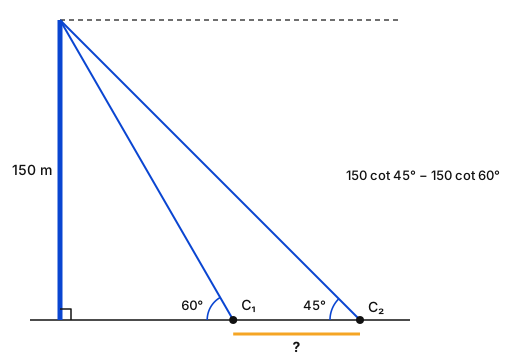
A man standing on the top of a 150 m high tower observes the angles of depression of two cars on the same side of the tower to be 45° and 60°. What is the distance between the two cars?
150 मीटर ऊँची मीनार के शीर्ष पर खड़ा व्यक्ति मीनार की एक ही ओर खड़ी दो कारों के अवनमन कोण 45° और 60° मापता है। दोनों कारों के बीच की दूरी क्या है?
  1. A150(3 − 1) m
  2. B1503 m
  3. C150(1 − 13) m
  4. D150(1 + 13) m
Show answer

Concept: Horizontal distance = height ÷ tan(angle of depression).

  1. 45°: distance = 150tan45∘=150 m
  2. 60°: distance = 150tan60∘=1503 m
  3. Gap = 150−1503=150(1−13) m

Trick: Larger angle = nearer car; gap = h(cot45∘−cot60∘).

Answer: (C) 150(1 − 13) m

अवधारणा: क्षैतिज दूरी = ऊँचाई ÷ tan(अवनमन कोण)।

  1. 45° वाली कार: 150 m
  2. 60° वाली कार: 1503 m
  3. अंतर = 150(1−13) m

ट्रिक: बड़ा कोण = पास वाली कार; अंतर = h(cot45∘−cot60∘)।

उत्तर: (C) 150(1 − 13) m

SSC CGLQuantitative AptitudeHeights & distances – two carsSSC CGL 2025 · 18 Sep Shift 1 →