Question bank

Q&A: practice questions with answers

Search questions on any topic. Filter by exam category, exam, subject and topic, try the question, then open the answer and explanation.

Courses – airGurukul

4,800 questions found.

Q2741.
Tippani dance uses which tools to pound the floor?
टिप्पणी नृत्य में फर्श कूटने के लिए किन उपकरणों का प्रयोग होता है?
  1. AIron rodsलोहे की छड़ें
  2. BBamboo polesबाँस के डंडे
  3. CWooden sticksलकड़ी की छड़ें
  4. DPlastic sticksप्लास्टिक की छड़ें
Show answer

Concept: Tippani is a women's folk dance of the Chorwad (Saurashtra) region of Gujarat.

  1. It came from labourers ramming lime-and-concrete floors.
  2. The 'tippani' is a long wooden stick with a block at the end, used to pound the floor in rhythm with songs.

Yaad rakhein: Tippani = the stick itself – so the tool is wooden sticks.

Answer: (C) Wooden sticks

अवधारणा: टिप्पणी गुजरात के सौराष्ट्र (चोरवाड़) क्षेत्र का महिलाओं का लोकनृत्य है।

  1. फ़र्श कूटने वाली मज़दूर महिलाओं के काम से उत्पन्न।
  2. 'टिप्पणी' = लंबी लकड़ी की छड़ी जिसके सिरे पर गुटका लगा होता है; गीतों के साथ ताल पर फ़र्श कूटते हैं।

याद रखें: नृत्य का नाम ही छड़ी के नाम पर है – लकड़ी की छड़ी।

उत्तर: (C) लकड़ी की छड़ें
SSC CGLGeneral AwarenessTippani dance – GujaratSSC CGL 2025 · 17 Sep Shift 3 →
Q2742.
Which Swiss institution is responsible for publishing the yearly World Competitiveness Index?
वार्षिक विश्व प्रतिस्पर्धात्मकता सूचकांक प्रकाशित करने वाला स्विस संस्थान कौन-सा है?
  1. AIMD Business SchoolIMD बिज़नेस स्कूल
  2. BGeneva School of Economicsजिनेवा स्कूल ऑफ इकोनॉमिक्स
  3. CSwiss School of Managementस्विस स्कूल ऑफ मैनेजमेंट
  4. DUniversity of Baselयूनिवर्सिटी ऑफ बासेल
Show answer

Concept: The yearly World Competitiveness Yearbook/Ranking is published by IMD, Lausanne.

  1. IMD = International Institute for Management Development, a Swiss business school.
  2. Its World Competitiveness Center ranks economies on four pillars: economic performance, government efficiency, business efficiency, infrastructure.

Yaad rakhein: Don't confuse with WEF's Global Competitiveness Report (Geneva-based forum).

Answer: (A) IMD Business School

अवधारणा: वार्षिक विश्व प्रतिस्पर्धात्मकता रैंकिंग IMD (लुसाने, स्विट्ज़रलैंड) जारी करता है।

  1. IMD = International Institute for Management Development, स्विस बिज़नेस स्कूल।
  2. चार स्तंभ: आर्थिक प्रदर्शन, सरकारी दक्षता, व्यावसायिक दक्षता, अवसंरचना।

याद रखें: WEF की Global Competitiveness Report से भ्रमित न हों।

उत्तर: (A) IMD बिज़नेस स्कूल

SSC CGLGeneral AwarenessWorld Competitiveness Ranking – IMDSSC CGL 2025 · 17 Sep Shift 3 →
Q2743.
When the price of a commodity increases by 10% leading to a 20% drop in demand, the demand can be described as -
जब किसी वस्तु की कीमत 10% बढ़ने पर माँग 20% घट जाती है, तो माँग को कहा जाएगा -
  1. APerfectly inelasticपूर्णतः बेलोचदार
  2. BElastic demand (elasticity > 1)लोचदार माँग (लोच > 1)
  3. CUnitary elastic demandइकाई लोचदार माँग
  4. DPerfectly elastic demandपूर्णतः लोचदार माँग
Show answer

Concept: Ed = % change in quantity demanded ÷ % change in price.

  1. Ed = 20% ÷ 10% = 2.
  2. Since 2 > 1, demand is relatively elastic.

Trick: Quantity changes MORE than price → elastic; LESS → inelastic; EQUAL → unitary.

Answer: (B) Elastic demand (elasticity > 1)

अवधारणा: माँग की लोच = माँग में % परिवर्तन ÷ कीमत में % परिवर्तन

  1. लोच = 20 ÷ 10 = 2
  2. 2 > 1, अतः माँग लोचदार है।

ट्रिक: माँग का बदलाव कीमत से ज़्यादा → लोचदार; कम → बेलोचदार; बराबर → इकाई लोच।

उत्तर: (B) लोचदार माँग (लोच > 1)

SSC CGLGeneral AwarenessPrice elasticity of demandSSC CGL 2025 · 17 Sep Shift 3 →
Q2744.
In which of India's Five-Year Plans was the Mahalanobis Model adopted as the main framework?
भारत की किस पंचवर्षीय योजना में महालनोबिस मॉडल को मुख्य ढाँचे के रूप में अपनाया गया?
  1. ASecond Five-Year Planद्वितीय पंचवर्षीय योजना
  2. BFirst Five-Year Planप्रथम पंचवर्षीय योजना
  3. CFifth Five-Year Planपाँचवीं पंचवर्षीय योजना
  4. DSixth Five-Year Planछठी पंचवर्षीय योजना
Show answer

Concept: P.C. Mahalanobis's model was the base of the Second Five-Year Plan (1956–61).

  1. Focus: rapid industrialisation through heavy and basic industries in the public sector.
  2. First Plan (1951–56) used the Harrod–Domar model and prioritised agriculture.

Yaad rakhein: 1st = Harrod–Domar (agriculture), 2nd = Mahalanobis (industry).

Answer: (A) Second Five-Year Plan

अवधारणा: पी.सी. महालनोबिस का मॉडल दूसरी पंचवर्षीय योजना (1956–61) का आधार था।

  1. लक्ष्य: सार्वजनिक क्षेत्र में भारी व आधारभूत उद्योगों से तीव्र औद्योगीकरण।
  2. पहली योजना हैरोड–डोमर मॉडल पर, कृषि पर केंद्रित।

याद रखें: पहली = हैरोड–डोमर (कृषि), दूसरी = महालनोबिस (उद्योग)।

उत्तर: (A) द्वितीय पंचवर्षीय योजना

SSC CGLGeneral AwarenessMahalanobis model – Second PlanSSC CGL 2025 · 17 Sep Shift 3 →
Q2745.
Which 2025 initiative seeks to marry mangrove restoration with rural employment through the MGNREGS framework?
2025 की कौन-सी पहल मनरेगा ढाँचे के माध्यम से मैंग्रोव पुनर्स्थापन को ग्रामीण रोज़गार से जोड़ना चाहती है?
  1. ACoastal Livelihoods Missionकोस्टल लाइवलीहुड्स मिशन
  2. BMission Mangrove Mitraमिशन मैंग्रोव मित्र
  3. CGreen Shores Employment Schemeग्रीन शोर्स एम्प्लॉयमेंट स्कीम
  4. DBlue Coastal Restore Programmeब्लू कोस्टल रिस्टोर प्रोग्राम
Show answer

Concept: The 2025 scheme that ties mangrove restoration to MGNREGS wage work is Mission Mangrove Mitra.

  1. Villagers are hired under MGNREGS to plant, protect and maintain mangroves as 'Mangrove Mitras'.
  2. It complements MISHTI (Mangrove Initiative for Shoreline Habitats & Tangible Incomes, 2023).

Yaad rakhein: The word 'Mitra' (friend) signals community participation – a giveaway among the invented-sounding names.

Answer: (B) Mission Mangrove Mitra

अवधारणा: 2025 की वह पहल जो मैंग्रोव पुनर्स्थापन को मनरेगा रोज़गार से जोड़ती है – मिशन मैंग्रोव मित्र।

  1. ग्रामीणों को मनरेगा के तहत मैंग्रोव लगाने व सुरक्षा का काम।
  2. यह MISHTI (2023) योजना का पूरक है।

याद रखें: MISHTI = Mangrove Initiative for Shoreline Habitats & Tangible Incomes।

उत्तर: (B) मिशन मैंग्रोव मित्र

SSC CGLGeneral AwarenessMission Mangrove MitraSSC CGL 2025 · 17 Sep Shift 3 →
Q2746.
The Balance of Payments crisis of 1991 in India was primarily caused by a shortage of -
भारत में 1991 का भुगतान संतुलन संकट मुख्यतः किसकी कमी के कारण हुआ?
  1. AFood grainsखाद्यान्न
  2. BForeign exchangeविदेशी मुद्रा
  3. CIndustrial goodsऔद्योगिक वस्तुएँ
  4. DDomestic savingsघरेलू बचत
Show answer

Concept: A BoP crisis means the country cannot pay for imports/debt – i.e., a shortage of foreign exchange.

  1. Reserves fell to barely enough for about two weeks of imports.
  2. Gulf War oil price shock, fall in remittances and high external debt deepened it.
  3. India pledged gold and took IMF help, leading to LPG reforms.

Yaad rakhein: 'Balance of Payments' always relates to foreign currency – eliminates food, goods and savings.

Answer: (B) Foreign exchange

अवधारणा: भुगतान संतुलन संकट = आयात/कर्ज़ चुकाने के लिए विदेशी मुद्रा की कमी।

  1. भंडार लगभग दो सप्ताह के आयात लायक रह गया।
  2. खाड़ी युद्ध से तेल महँगा, प्रेषण घटे, विदेशी कर्ज़ बढ़ा।
  3. सोना गिरवी रखा और IMF से मदद ली – फिर LPG सुधार।

याद रखें: BoP हमेशा विदेशी मुद्रा से जुड़ा है – बाकी विकल्प तुरंत हटें।

उत्तर: (B) विदेशी मुद्रा

SSC CGLGeneral Awareness1991 Balance of Payments crisisSSC CGL 2025 · 17 Sep Shift 3 →
Q2747.
Study the given statements and identify the correct relationship between Assertion (A) and Reason (R).
Assertion (A): India was compelled to seek a bailout loan from the IMF and World Bank in 1991.
Reason (R): The foreign exchange reserves had depleted to a level adequate for just two weeks of imports.
दिए गए कथनों का अध्ययन कर अभिकथन (A) और कारण (R) के बीच सही संबंध पहचानिए।
अभिकथन (A): भारत को 1991 में IMF और विश्व बैंक से राहत ऋण लेना पड़ा।
कारण (R): विदेशी मुद्रा भंडार घटकर केवल दो सप्ताह के आयात जितना रह गया था।
  1. ABoth A and R are true, and R explains A.A और R दोनों सत्य हैं और R, A की व्याख्या करता है।
  2. BBoth A and R are true, but R does not explain A.A और R दोनों सत्य हैं, परंतु R व्याख्या नहीं करता।
  3. CA is true, R is false.A सत्य है, R असत्य है।
  4. DA is false, R is true.A असत्य है, R सत्य है।
Show answer

Concept: Judge A and R separately, then ask: 'Is A true BECAUSE of R?'

  1. A ✓ – India borrowed from the IMF and World Bank in 1991.
  2. R ✓ – reserves had shrunk to about two weeks' import cover.
  3. Low reserves are exactly why the loan was needed → R explains A.

Trick: Put 'because' between A and R: 'India sought a loan because reserves covered only 2 weeks' – reads right.

Answer: (A) Both A and R are true, and R explains A.

अवधारणा: A और R को अलग-अलग जाँचें, फिर देखें – क्या A, R के कारण हुआ?

  1. A सही – 1991 में IMF व विश्व बैंक से ऋण लिया।
  2. R सही – भंडार सिर्फ़ दो सप्ताह के आयात लायक था।
  3. भंडार की कमी ही ऋण का कारण थी → R, A की व्याख्या करता है।

ट्रिक: A और R के बीच 'क्योंकि' लगाकर पढ़ें – वाक्य सार्थक हो तो R व्याख्या है।

उत्तर: (A) A और R दोनों सत्य हैं और R, A की व्याख्या करता है।

SSC CGLGeneral Awareness1991 IMF loan – Assertion and ReasonSSC CGL 2025 · 17 Sep Shift 3 →
Q2748.
Why is Chhau considered a syncretic dance tradition of India?
छऊ को भारत की समन्वयवादी (syncretic) नृत्य परंपरा क्यों माना जाता है?
  1. AIt blends tribal, folk, and classical Hindu cultural traitsयह जनजातीय, लोक और शास्त्रीय हिंदू सांस्कृतिक तत्त्वों का मिश्रण है
  2. BIt follows Vedic chanting styles exclusivelyयह केवल वैदिक मंत्रोच्चार शैली का पालन करता है
  3. CIt originated only from temple worship practicesयह केवल मंदिर पूजा परंपराओं से उत्पन्न हुआ
  4. DIt restricts the use of masks and dramaयह मुखौटों और नाट्य के प्रयोग को सीमित करता है
Show answer

Concept: 'Syncretic' = mixing several traditions; Chhau mixes tribal, folk, martial and classical Hindu elements.

  1. Found in Odisha (Mayurbhanj), Jharkhand (Seraikela) and West Bengal (Purulia).
  2. Stories come from the Ramayana, Mahabharata and Puranas; movements draw on martial and tribal practices; Purulia and Seraikela styles use masks.
  3. UNESCO Intangible Cultural Heritage list – 2010.

Trick: Syncretic = blend; only option (A) talks about blending.

Answer: (A) It blends tribal, folk, and classical Hindu cultural traits

अवधारणा: 'समन्वयकारी' = कई परंपराओं का मेल; छऊ में जनजातीय, लोक, युद्ध-कला और शास्त्रीय हिंदू तत्व मिलते हैं।

  1. ओडिशा (मयूरभंज), झारखंड (सरायकेला), पश्चिम बंगाल (पुरुलिया)।
  2. कथाएँ रामायण-महाभारत से; पुरुलिया व सरायकेला शैली में मुखौटे।
  3. 2010 में UNESCO सूची में शामिल।

ट्रिक: Syncretic = मिश्रण; केवल (A) में मिश्रण की बात है।

उत्तर: (A) यह जनजातीय, लोक और शास्त्रीय हिंदू सांस्कृतिक तत्त्वों का मिश्रण है

SSC CGLGeneral AwarenessChhau – syncretic danceSSC CGL 2025 · 17 Sep Shift 3 →
Q2749.
Arrange the following in the correct chronological order:
1. Berubari Union case
2. Indra Sawhney case
3. Minerva Mills case
निम्न को सही कालक्रम में व्यवस्थित कीजिए:
1. बेरुबाड़ी यूनियन वाद
2. इंद्रा साहनी वाद
3. मिनर्वा मिल्स वाद
  1. A1-3-2
  2. B3-2-1
  3. C1-2-3
  4. D2-3-1
Show answer

Concept: Place each case by its year of judgement.

  1. Berubari Union – 1960 (Preamble not part of the Constitution; ceding territory needs an amendment).
  2. Minerva Mills – 1980 (basic structure; balance of FRs and DPSPs).
  3. Indra Sawhney – 1992 (OBC reservation, 50% cap, creamy layer).
  4. Order: 1 → 3 → 2.

Trick: Mandal case (Indra Sawhney) came after the 1990 Mandal implementation – so it must be last.

Answer: (A) 1-3-2

अवधारणा: हर मामले को उसके निर्णय-वर्ष से रखें।

  1. बेरुबारी – 1960
  2. मिनर्वा मिल्स – 1980 (मूल ढाँचा)
  3. इंद्रा साहनी – 1992 (OBC आरक्षण, 50% सीमा)
  4. क्रम: 1 → 3 → 2

ट्रिक: इंद्रा साहनी (मंडल केस) 1990 के मंडल लागू होने के बाद आया – सबसे अंत में।

उत्तर: (A) 1-3-2

SSC CGLGeneral AwarenessLandmark Supreme Court cases – chronologySSC CGL 2025 · 17 Sep Shift 3 →
Q2750.
Which of the following effects is associated with space weather phenomena such as solar flares or coronal mass ejections (CMEs)?
सौर ज्वालाओं या कोरोनल मास इजेक्शन (CME) जैसी अंतरिक्ष-मौसम परिघटनाओं से निम्न में से कौन-सा प्रभाव जुड़ा है?
  1. AWeather effectमौसम पर प्रभाव
  2. BRadio signal blackoutsरेडियो सिग्नल ब्लैकआउट
  3. CChanges in ocean currentsमहासागरीय धाराओं में परिवर्तन
  4. DVolcanic eruptionज्वालामुखी विस्फोट
Show answer

Concept: Solar flares and CMEs disturb Earth's ionosphere and magnetosphere.

  1. X-rays and charged particles ionise the upper atmosphere → HF radio blackouts, GPS errors, satellite and power-grid trouble, auroras.
  2. Ocean currents and volcanoes are driven by processes on/inside Earth, not by the Sun's outbursts.

Trick: Space weather hits 'signals and electricity' – radio, GPS, satellites, grids.

Answer: (B) Radio signal blackouts

अवधारणा: सौर ज्वाला और CME पृथ्वी के आयनमंडल व चुंबकमंडल को प्रभावित करते हैं।

  1. X-किरणें व आवेशित कण → रेडियो ब्लैकआउट, GPS त्रुटि, उपग्रह/बिजली ग्रिड पर असर, ध्रुवीय ज्योति।
  2. महासागरीय धाराएँ व ज्वालामुखी पृथ्वी की आंतरिक/सतही प्रक्रियाओं से होते हैं।

ट्रिक: अंतरिक्ष मौसम = सिग्नल और बिजली पर असर – रेडियो, GPS, उपग्रह।

उत्तर: (B) रेडियो सिग्नल ब्लैकआउट

SSC CGLGeneral AwarenessSpace weather effectsSSC CGL 2025 · 17 Sep Shift 3 →
Q2751.
A gardener plants his trees in equal rows to form a square, but finds that 16 trees are left out. If the total number of trees is 4112, then what is the number of trees in each row?
एक माली अपने पेड़ों को समान पंक्तियों में लगाकर वर्ग बनाना चाहता है, पर 16 पेड़ बच जाते हैं। यदि कुल पेड़ों की संख्या 4112 है, तो प्रत्येक पंक्ति में कितने पेड़ हैं?
  1. A42
  2. B54
  3. C64
  4. D65
Show answer

Concept: Trees in a square = n2, where n = trees per row.

  1. Trees used = 4112−16=4096.
  2. n2=4096→n=4096=64.

Trick: 4096=212 → √ =26=64. Or: unit digit 6 → root ends in 4 or 6; 642=4096.

Answer: (C) 64

अवधारणा: वर्ग में पेड़ = n2, जहाँ n = प्रति पंक्ति पेड़।

  1. उपयोग हुए पेड़ = 4112−16=4096
  2. n=4096=64

ट्रिक: 4096=212 → वर्गमूल 26=64।

उत्तर: (C) 64

SSC CGLQuantitative AptitudeSquare arrangement – perfect squareSSC CGL 2025 · 17 Sep Shift 3 →
Q2752.
If P is 25% more than Q, and Q is 20% more than R, then what is P : R?
यदि P, Q से 25% अधिक है और Q, R से 20% अधिक है, तो P : R क्या है?
  1. A3 : 2
  2. B4 : 3
  3. C7 : 4
  4. D3 : 4
Show answer

Concept: Convert each % into a ratio and chain them.

  1. Q is 20% more than R → R : Q = 5 : 6.
  2. P is 25% more than Q → Q : P = 4 : 5.
  3. PR=(65)×(54)=64=32→P:R=3:2.

Trick: Multiply the factors: 1.2×1.25=1.5=32.

Answer: (A) 3 : 2

अवधारणा: प्रतिशत को गुणक में बदलकर जोड़ें।

  1. Q=1.2R
  2. P=1.25Q=1.25×1.2R=1.5R
  3. P : R = 3 : 2

ट्रिक: 1.2×1.25=1.5=32 – सीधा उत्तर।

उत्तर: (A) 3 : 2

SSC CGLQuantitative AptitudeSuccessive percentage – ratioSSC CGL 2025 · 17 Sep Shift 3 →
Q2753.
Evaluate 30+30+30+…
मान ज्ञात कीजिए: 30+30+30+…
  1. A3
  2. B5
  3. C4
  4. D6
Show answer

Concept: For n+n+n+…, let x = value; then x2=n+x.

  1. x2−x−30=0.
  2. (x−6)(x+5)=0→x=6 (value must be positive).

Trick: Split n as k(k+1): 30=5×6. With '+' signs take the larger factor (6); with '−' signs take the smaller.

Answer: (D) 6

अवधारणा: n+n+…=x मानें, तब x2=n+x।

  1. x2−x−30=0
  2. (x−6)(x+5)=0→x=6 (धनात्मक)

ट्रिक: 30=5×6 (क्रमागत गुणनखंड); '+' चिह्न में बड़ा (6), '−' में छोटा लें।

उत्तर: (D) 6

SSC CGLQuantitative AptitudeInfinite nested square rootSSC CGL 2025 · 17 Sep Shift 3 →
Q2754.
The cost price of an article is ₹200. A shopkeeper sells it at a discount of 20% on the marked price. If the marked price is ₹400, what is the shopkeeper's profit or loss percentage?
एक वस्तु का क्रय मूल्य ₹200 है। दुकानदार उसे अंकित मूल्य पर 20% छूट देकर बेचता है। यदि अंकित मूल्य ₹400 है, तो लाभ/हानि प्रतिशत क्या है?
  1. A60% Profit60% लाभ
  2. B60% Loss60% हानि
  3. C30% Profit30% लाभ
  4. D30% Loss30% हानि
Show answer

Concept: SP=MP×100−d100; profit% is on CP.

  1. SP=400×80100= ₹320.
  2. Profit = 320−200= ₹120.
  3. Profit% = 120200×100=60%.

Trick: MP is 2×CP; 80% of 2 = 1.6 → 60% profit straight away.

Answer: (A) 60% Profit

अवधारणा: विक्रय मूल्य=अंकित मूल्य×100−छूट100; लाभ% क्रय मूल्य पर।

  1. SP=400×80100= ₹320
  2. लाभ = 320−200= ₹120
  3. लाभ% = 120200×100=60%

ट्रिक: MP=2×CP; 2 का 80% = 1.6 → 60% लाभ।

उत्तर: (A) 60% लाभ

SSC CGLQuantitative AptitudeDiscount and profit percentSSC CGL 2025 · 17 Sep Shift 3 →
Q2755.
Pipes A and B can fill a tank in 15 minutes and 30 minutes, respectively. Meanwhile, a drainpipe C can empty the tank in 60 minutes. If all three pipes are opened simultaneously, how long will it take to fill the tank?
पाइप A और B एक टंकी को क्रमशः 15 और 30 मिनट में भरते हैं। निकासी पाइप C उसे 60 मिनट में खाली करता है। यदि तीनों एक साथ खोले जाएँ, तो टंकी भरने में कितना समय लगेगा?
  1. A12 min12 मिनट
  2. B20 min20 मिनट
  3. C25 min25 मिनट
  4. D10 min10 मिनट
Show answer

Concept: Use LCM as tank capacity; outlet's rate is subtracted.

  1. Capacity = LCM(15,30,60)=60 units.
  2. A=6015=4,B=6030=2,C=−6060=−1 unit/min.
  3. Net = 5 units/min → time = 60÷5=12 min.

Trick: Combined time must be less than A's 15 min alone – only 12 and 10 qualify; check 12.

Answer: (A) 12 min

अवधारणा: LCM को टंकी की क्षमता लें; निकास नल की दर घटाएँ।

  1. क्षमता = LCM(15,30,60)=60 इकाई
  2. A = 4, B = 2, C = −1 इकाई/मिनट
  3. कुल = 5 → समय = 60÷5=12 मिनट

ट्रिक: उत्तर A के अकेले 15 मिनट से कम होगा – 12 या 10; जाँचें।

उत्तर: (A) 12 मिनट

SSC CGLQuantitative AptitudePipes and cistern – with outletSSC CGL 2025 · 17 Sep Shift 3 →
Q2756.
Given a + b + c = 0, and a³ + b³ + c³ = 3abc, evaluate (a − b)³ + (b − c)³ + (c − a)³.
यदि a + b + c = 0 और a³ + b³ + c³ = 3abc है, तो (a − b)³ + (b − c)³ + (c − a)³ का मान ज्ञात कीजिए।
  1. A27abc
  2. B9(a − b)(b − c)(c − a)
  3. C0
  4. D3(a − b)(b − c)(c − a)
Show answer

Concept: If x+y+z=0, then x3+y3+z3=3xyz.

  1. Take x=a−b,y=b−c,z=c−a.
  2. x+y+z=a−b+b−c+c−a=0.
  3. So the sum of cubes = 3(a−b)(b−c)(c−a).

Trick: Spot that the three brackets cancel out – then apply 3xyz directly, no expansion.

Answer: (D) 3(a − b)(b − c)(c − a)

अवधारणा: यदि x+y+z=0 तो x3+y3+z3=3xyz।

  1. x=a−b,y=b−c,z=c−a
  2. इनका योग = 0
  3. अतः मान = 3(a−b)(b−c)(c−a)

ट्रिक: तीनों कोष्ठकों का योग शून्य दिखते ही सीधे 3xyz लिखें।

उत्तर: (D) 3(a − b)(b − c)(c − a)

SSC CGLQuantitative AptitudeAlgebraic identity – sum of cubesSSC CGL 2025 · 17 Sep Shift 3 →
Q2757.
A sum of ₹9,000 is lent out in two parts, one at 6% simple interest and the other at 9% simple interest. If the annual interest is ₹630, the sum lent at 6% is:
₹9,000 दो भागों में उधार दिए जाते हैं — एक 6% और दूसरा 9% साधारण ब्याज पर। यदि वार्षिक ब्याज ₹630 है, तो 6% पर दी गई राशि क्या है?
  1. A₹6000
  2. B₹6500
  3. C₹3000
  4. D₹3500
Show answer

Concept: Let the part at 6% be x; total yearly interest = ₹630.

  1. 6% of x + 9% of (9000−x)=630.
  2. 0.06x+810−0.09x=630→0.03x=180.
  3. x = ₹6000.

Trick: Average rate = 6309000=7%. Distance from 9 is 2, from 6 is 1 → shares 2 : 1 → 6% part = 23×9000.

Answer: (A) ₹6000

अवधारणा: 6% वाली राशि x मानें; कुल वार्षिक ब्याज ₹630।

  1. 0.06x+0.09(9000−x)=630
  2. 810−0.03x=630→0.03x=180
  3. x = ₹6000

ट्रिक: औसत दर 7%; मिश्रण से 6% : 9% = 2 : 1 → 23×9000=6000।

उत्तर: (A) ₹6000

SSC CGLQuantitative AptitudeSimple interest – sum split in two ratesSSC CGL 2025 · 17 Sep Shift 3 →
Q2758.
Ramesh has ₹15,000. He lends a part of it to Asha for 3 years at 10% simple interest and the remaining to Meena for 3 years at 12% simple interest. If the total interest received from both after 3 years is ₹4,950, find the amount lent to Asha.
रमेश के पास ₹15,000 हैं। वह एक भाग आशा को 3 वर्ष के लिए 10% और शेष मीना को 3 वर्ष के लिए 12% साधारण ब्याज पर देता है। यदि 3 वर्ष बाद कुल ब्याज ₹4,950 है, तो आशा को दी गई राशि ज्ञात कीजिए।
  1. A₹9,000
  2. B₹7,500
  3. C₹8,000
  4. D₹6,500
Show answer

Concept: Let Asha get x; SI=P×R×T100.

  1. Asha: x×10×3100=0.3x; Meena: (15000−x)×12×3100=0.36(15000−x).
  2. 0.3x+5400−0.36x=4950→0.06x=450.
  3. x= ₹7,500.

Trick: Average rate = 4950÷3÷15000=11%, exactly midway between 10% and 12% → equal halves.

Answer: (B) ₹7,500

अवधारणा: आशा को x दिए मानें; SI=P×R×T100।

  1. आशा: 0.3x, मीना: 0.36(15000−x)
  2. 0.3x+5400−0.36x=4950→0.06x=450
  3. x= ₹7,500

ट्रिक: औसत दर = 11%, ठीक 10% और 12% के बीच → राशि आधी-आधी।

उत्तर: (B) ₹7,500

SSC CGLQuantitative AptitudeSimple interest – two borrowersSSC CGL 2025 · 17 Sep Shift 3 →
Q2759.
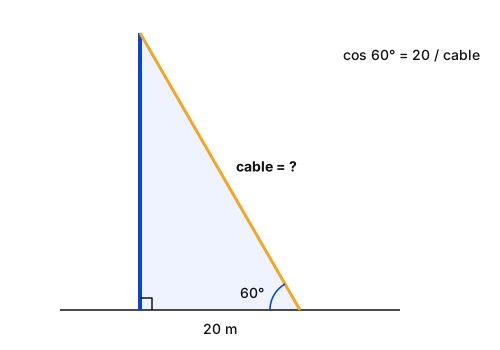
A steel cable is tied from the top of a vertical flagpole to a point on the ground 20 metres away from its base. If the cable makes an angle of 60° with the ground, find the length of the cable.
एक इस्पात की केबल ऊर्ध्वाधर ध्वजदंड के शीर्ष से आधार से 20 मीटर दूर ज़मीन के एक बिंदु तक बँधी है। यदि केबल ज़मीन से 60° का कोण बनाती है, तो केबल की लंबाई ज्ञात कीजिए।
  1. A10 m
  2. B103 m
  3. C40 m
  4. D203 m
Show answer

Concept: Ground distance is adjacent to the 60° angle; cable is the hypotenuse → use cos.

  1. cos60∘=basecable→12=20cable.
  2. Cable = 40 m.

Trick: In a 30-60-90 triangle the side next to 60° is half the hypotenuse.

Answer: (C) 40 m

अवधारणा: ज़मीन की दूरी 60° कोण के संलग्न भुजा है, केबल कर्ण → cos लें।

  1. cos60∘= आधार/केबल →12= 20/केबल
  2. केबल = 40 m

ट्रिक: 30-60-90 त्रिभुज में 60° के पास वाली भुजा कर्ण की आधी होती है।

उत्तर: (C) 40 m

SSC CGLQuantitative AptitudeHeights and distances – cable lengthSSC CGL 2025 · 17 Sep Shift 3 →
Q2760.
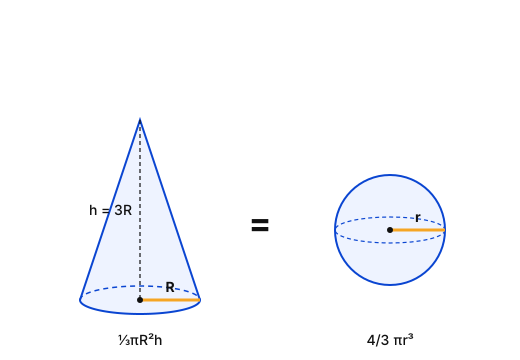
A cone and a sphere have equal volumes. If the cone's height is thrice its radius, what is the ratio of the cone's radius to the sphere's radius?
एक शंकु और एक गोले के आयतन बराबर हैं। यदि शंकु की ऊँचाई उसकी त्रिज्या की तिगुनी है, तो शंकु की त्रिज्या और गोले की त्रिज्या का अनुपात क्या है?
  1. A∛2 : ∛3
  2. B∛4 : ∛3
  3. C∛4 : ∛2
  4. D∛3 : ∛4
Show answer

Concept: Equate 13πR2h with 43πr3.

  1. h=3R→cone volume=13πR2×3R=πR3.
  2. πR3=43πr3→R3r3=43.
  3. R:r=43:33.

Trick: Cone with h=3R has volume exactly πR3 – remember it.

Answer: (B) ∛4 : ∛3

अवधारणा: 13πR2h=43πr3 रखें।

  1. h=3R → शंकु का आयतन = πR3
  2. πR3=43πr3→R3:r3=4:3
  3. R:r=43:33

ट्रिक: h=3R वाले शंकु का आयतन सीधे πR3 होता है।

उत्तर: (B) ∛4 : ∛3

SSC CGLQuantitative AptitudeCone and sphere – equal volumeSSC CGL 2025 · 17 Sep Shift 3 →