Q261.A container has 100 litres of a mixture of acid and water in the ratio 3 : 2. 10% of the mixture is taken out and replaced with water. This operation is repeated once more. What is the final percentage of acid in the mixture?
एक पात्र में 100 लीटर अम्ल-जल मिश्रण 3 : 2 के अनुपात में है। मिश्रण का 10% निकालकर उतना पानी मिलाया जाता है। यह क्रिया एक बार और दोहराई जाती है। अंत में अम्ल का प्रतिशत क्या होगा?
- A54.8%
- B41.2%
- C43.7%
- D48.6%
Show answer
Concept: After n replacements, remaining acid = initial acid .
- Initial acid = of 100 L = 60 L
- Each operation keeps 90% of the acid: L
- Volume stays 100 L → acid = 48.6%
Trick: Acid % directly: – no need to track litres.
Answer: (D) 48.6%
अवधारणा: n बार प्रतिस्थापन के बाद बचा अम्ल = आरंभिक अम्ल ।
- आरंभिक अम्ल = 100 L का = 60 L
- हर बार 90% अम्ल बचता है: L
- कुल आयतन 100 L ही रहता है → अम्ल = 48.6%
ट्रिक: सीधे प्रतिशत में: – लीटर गिनने की ज़रूरत नहीं।
उत्तर: (D) 48.6%
Q262.The efficiencies of Ashish, Navin and Harish are in the ratio 2 : 3 : 5. Ashish alone can complete the work in 40 days. All three worked together for 5 days and then Harish left. In how many days can Ashish and Navin together complete the remaining work?
आशीष, नवीन और हरीश की कार्यक्षमताएँ 2 : 3 : 5 के अनुपात में हैं। आशीष अकेला कार्य 40 दिन में पूरा करता है। तीनों ने 5 दिन साथ काम किया, फिर हरीश चला गया। शेष कार्य आशीष और नवीन मिलकर कितने दिनों में पूरा करेंगे?
- A4 days4 दिन
- B12 days12 दिन
- C8 days8 दिन
- D6 days6 दिन
Show answer
Concept: Total work = efficiency × days; use efficiencies as units per day.
- Ashish: 2 units/day for 40 days → total = 80 units
- All three: units/day → 5 days = 50 units; left = 30
- Ashish + Navin: 5 units/day → days
Trick: Take the efficiency ratio itself as daily units – the whole problem becomes simple division.
Answer: (D) 6 days
अवधारणा: कुल कार्य = दक्षता × दिन; दक्षता को प्रतिदिन की इकाइयाँ मानें।
- आशीष: 2 इकाई/दिन × 40 दिन → कुल = 80 इकाई
- तीनों: इकाई/दिन → 5 दिन में 50; बचा = 30
- आशीष + नवीन: 5 इकाई/दिन → दिन
ट्रिक: दक्षता अनुपात को ही प्रतिदिन का काम मान लें – पूरा प्रश्न सीधे भाग से हल।
उत्तर: (D) 6 दिन
Q263.A triangular prism has base side lengths 3 cm, 4 cm and 5 cm and height 8 cm. What is its lateral surface area?
एक त्रिभुजाकार प्रिज़्म के आधार की भुजाएँ 3 cm, 4 cm और 5 cm तथा ऊँचाई 8 cm है। उसका पार्श्व पृष्ठीय क्षेत्रफल क्या है?
- A84 cm²
- B90 cm²
- C96 cm²
- D100 cm²
Show answer
Concept: Lateral surface area of a prism = base perimeter × height.
- Base perimeter = cm
- LSA = cm²
Trick: Lateral faces are three rectangles: . Base area (6 cm² each) is not included.
Answer: (C) 96 cm²
अवधारणा: प्रिज़्म का पार्श्व पृष्ठीय क्षेत्रफल = आधार परिमाप × ऊँचाई।
- आधार परिमाप = cm
- LSA = cm²
ट्रिक: तीन आयताकार फलक: ; आधार (6 cm² प्रत्येक) नहीं जोड़ते।
उत्तर: (C) 96 cm²
Q264.A cone of radius 6 cm and height 9 cm is cut into two parts by a plane parallel to its base, at a height of 6 cm from the vertex. Find the volume of the frustum formed.
6 cm त्रिज्या और 9 cm ऊँचाई वाले शंकु को आधार के समांतर तल द्वारा शीर्ष से 6 cm की ऊँचाई पर दो भागों में काटा जाता है। बने छिन्नक का आयतन ज्ञात कीजिए।
- A43π cm³
- B76π cm³
- C68π cm³
- D72π cm³
Show answer
Concept: Frustum volume = big cone − small (similar) cone cut from the top.
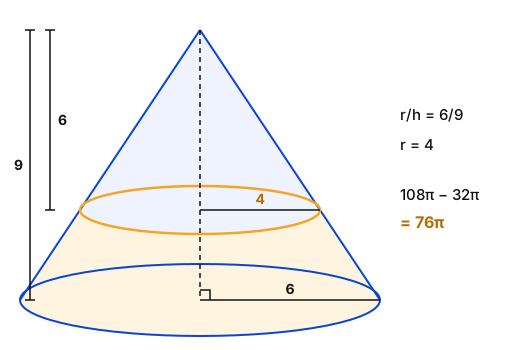
- Similar cones: r/h same → small cone radius = cm, height 6 cm
- Big cone = ; small cone =
- Frustum = cm³
Trick: Volumes of similar cones scale as : → frustum = .
Answer: (B) 76π cm³
अवधारणा: छिन्नक का आयतन = बड़ा शंकु − ऊपर से कटा छोटा (समरूप) शंकु।
- समरूप शंकु: छोटे की त्रिज्या = cm, ऊँचाई 6 cm
- बड़ा शंकु = ; छोटा =
- छिन्नक = cm³
ट्रिक: समरूप शंकुओं के आयतन में: → छिन्नक = ।
उत्तर: (B) 76π cm³
Q265.If 4 tanA = 3, then find the value of (3 sinA − 4 cosA).
यदि 4 tanA = 3 है, तो (3 sinA − 4 cosA) का मान ज्ञात कीजिए।
- A−
- B−
- C
- D
Show answer
Concept: ; complete the triangle with Pythagoras.
- → sides 3, 4, hypotenuse 5
- ,
Trick: Divide by : .
Answer: (A) −
अवधारणा: ; पाइथागोरस से त्रिभुज पूरा करें।
- → भुजाएँ 3, 4, कर्ण 5
- ,
ट्रिक: बाहर निकालें: ।
उत्तर: (A) −
Q266.Convert 3.5 radians to degrees. (Take π = 3.14)
3.5 रेडियन को डिग्री में बदलिए। (π = 3.14 लीजिए)
- A190.56°
- B120°
- C200.63°
- D80°
Show answer
Concept: Degrees = radians .
Trick: 1 radian , so 3.5 rad – only option (C) is near 200.
Answer: (C) 200.63°
अवधारणा: डिग्री = रेडियन ।
ट्रिक: 1 रेडियन , अतः 3.5 रेडियन – केवल विकल्प (C) पास है।
उत्तर: (C) 200.63°
Q267.If sin 2x = cos(3x − 20°), what is the value of x?
यदि sin 2x = cos(3x − 20°) है, तो x का मान क्या है?
- A35°
- B37.5°
- C22°
- D25.8°
Show answer
Concept: If sin P = cos Q (acute angles), then P + Q = 90°.
- 2x + 3x − 20° = 90°
- 5x = 110° → x = 22°
Trick: Check: 2x = 44°, 3x − 20° = 46°, and 44° + 46° = 90° ✓.
Answer: (C) 22°
अवधारणा: यदि sin P = cos Q (न्यून कोण), तो P + Q = 90°।
- 2x + 3x − 20° = 90°
- 5x = 110° → x = 22°
ट्रिक: जाँच: 2x = 44°, 3x − 20° = 46°, योग 90° ✓।
उत्तर: (C) 22°
Q268.In a right triangle, one of the acute angles is 60°. What is the measure of the exterior angle at the right-angled vertex?
एक समकोण त्रिभुज में एक न्यून कोण 60° है। समकोण वाले शीर्ष पर बाह्य कोण का माप क्या है?
- A45°
- B30°
- C60°
- D90°
Show answer
Concept: Exterior angle at a vertex = 180° − interior angle at that vertex.
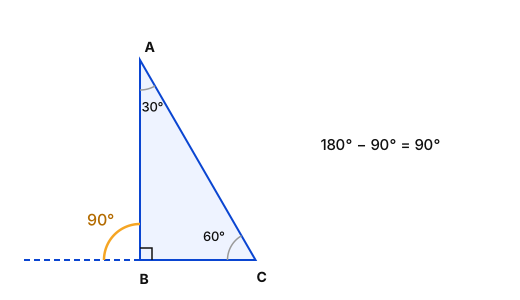
- Interior angle at the right-angled vertex = 90°
- Exterior = 180° − 90° = 90°
Trick: The 60° is a distractor – the exterior angle at the right angle is always 90°, whatever the other angles.
Answer: (D) 90°
अवधारणा: किसी शीर्ष पर बाह्य कोण = 180° − उस शीर्ष का अंतः कोण।
- समकोण वाले शीर्ष पर अंतः कोण = 90°
- बाह्य कोण = 180° − 90° = 90°
ट्रिक: 60° केवल भ्रमित करने के लिए है – समकोण पर बाह्य कोण सदा 90° होता है।
उत्तर: (D) 90°
Q269.A triangle has one angle measuring 105°. Its orthocentre is located where?
एक त्रिभुज का एक कोण 105° है। उसका लंबकेंद्र कहाँ स्थित होगा?
- AInside the triangleत्रिभुज के भीतर
- BOutside the triangleत्रिभुज के बाहर
- COn one of the sides of the triangleत्रिभुज की किसी भुजा पर
- DOn one of the vertices of the triangleत्रिभुज के किसी शीर्ष पर
Show answer
Concept: Orthocentre position depends on the type of triangle.
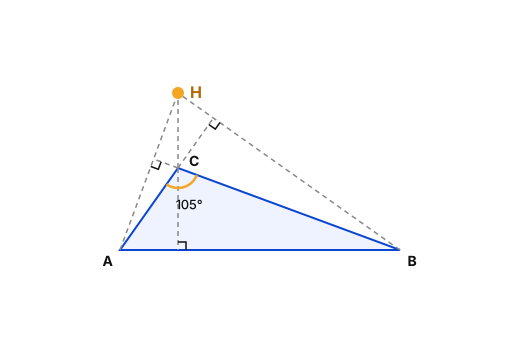
- 105° > 90° → obtuse triangle.
- Acute: inside; right: at the right-angle vertex; obtuse: outside.
Trick: Orthocentre and circumcentre both go outside for an obtuse triangle; centroid and incentre always stay inside.
Answer: (B) Outside the triangle
अवधारणा: लंबकेंद्र की स्थिति त्रिभुज के प्रकार पर निर्भर है।
- 105° > 90° → अधिककोण त्रिभुज।
- न्यूनकोण: भीतर; समकोण: समकोण वाले शीर्ष पर; अधिककोण: बाहर।
ट्रिक: अधिककोण त्रिभुज में लंबकेंद्र और परिकेंद्र दोनों बाहर; केंद्रक और अंतःकेंद्र सदा भीतर।
उत्तर: (B) त्रिभुज के बाहर
Q270.Rationalise:
परिमेयकरण कीजिए:
- A13 + 2
- B−13 − 2
- C13 − 2
- D−13 + 2
Show answer
Concept: Multiply by the conjugate of the denominator: .
- Top: ; bottom:
- Result =
Trick: Estimate: , → ; only is close.
Answer: (B) −13 − 2
अवधारणा: हर के संयुग्मी से गुणा करें: ।
- अंश: ; हर:
- परिणाम =
ट्रिक: अनुमान: , → ; केवल इसके पास है।
उत्तर: (B) −13 − 2
Q271.In triangle PQR, ST is drawn parallel to QR, intersecting PQ and PR at S and T respectively. If PS = 5 cm, SQ = 15 cm and PT = 4 cm, find TR.
त्रिभुज PQR में ST को QR के समांतर खींचा गया है, जो PQ और PR को क्रमशः S और T पर काटता है। यदि PS = 5 cm, SQ = 15 cm और PT = 4 cm है, तो TR ज्ञात कीजिए।
- A14 cm
- B16 cm
- C18 cm
- D12 cm
Show answer
Concept: A line parallel to one side divides the other two sides in the same ratio.
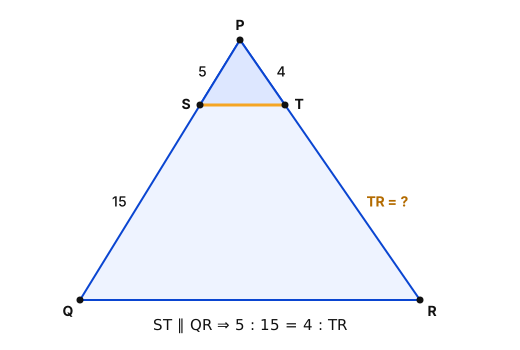
- PS : SQ = PT : TR
- 5 : 15 = 4 : TR → 1 : 3 = 4 : TR
- TR = 12 cm
Trick: SQ is 3 times PS, so TR is 3 times PT: .
Answer: (D) 12 cm
अवधारणा: एक भुजा के समांतर रेखा बाकी दो भुजाओं को समान अनुपात में बाँटती है।
- PS : SQ = PT : TR
- 5 : 15 = 4 : TR → 1 : 3 = 4 : TR
- TR = 12 cm
ट्रिक: SQ, PS का 3 गुना है, अतः TR भी PT का 3 गुना: ।
उत्तर: (D) 12 cm
Q272.If the angle subtended by arc AB at the centre is 105°, what is the reflex angle made by this arc at the centre?
यदि चाप AB केंद्र पर 105° का कोण बनाता है, तो यह चाप केंद्र पर कितना प्रतिवर्ती कोण बनाएगा?
- A255°
- B210°
- C105°
- D245°
Show answer
Concept: Reflex angle = 360° − given angle (it is the larger angle, between 180° and 360°).
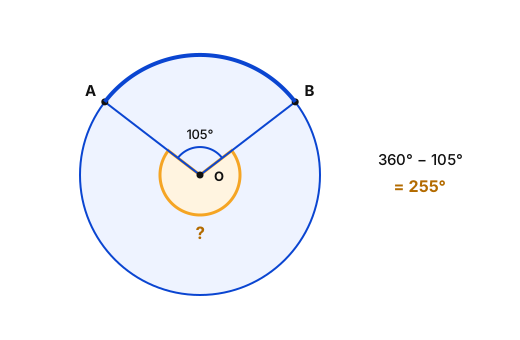
- Angle at centre = 105°
- Reflex angle = 360° − 105° = 255°
Trick: A reflex angle is always more than 180° – of the options only 255°, 210° and 245° qualify; then just subtract.
Answer: (A) 255°
अवधारणा: प्रतिवर्ती कोण = 360° − दिया गया कोण (यह 180° से 360° के बीच बड़ा कोण है)।
- केंद्र पर कोण = 105°
- प्रतिवर्ती कोण = 360° − 105° = 255°
ट्रिक: प्रतिवर्ती कोण सदा 180° से अधिक – फिर बस 360° से घटाएँ।
उत्तर: (A) 255°
Q273.If tanA + secA = 5, find tanA.
यदि tanA + secA = 5 है, तो tanA ज्ञात कीजिए।
- A
- B
- C
- D
Show answer
Concept: .
- Subtract:
Trick: Shortcut: if , then .
Answer: (C)
अवधारणा: ।
- घटाने पर:
ट्रिक: सूत्र: यदि , तो ।
उत्तर: (C)
Q274.In a circle of diameter d, a chord subtends an angle θ (in radians) at the centre. Which expression represents the length of the minor arc?
d व्यास वाले वृत्त में एक जीवा केंद्र पर θ (रेडियन में) का कोण बनाती है। लघु चाप की लंबाई कौन-सा व्यंजक दर्शाता है?
- A
- B
- Cd sin
- Dπd
Show answer
Concept: Arc length = radius × angle (angle in radians).
- Radius =
- Arc =
Trick: Check with : , which is the full circumference ✓.
Answer: (A)
अवधारणा: चाप की लंबाई = त्रिज्या × कोण (कोण रेडियन में)।
- त्रिज्या =
- चाप =
ट्रिक: रखकर जाँचें: , जो पूरी परिधि है ✓।
उत्तर: (A)
Q275.P, Q and R together can complete a task in 6 days. If P alone takes 12 days and Q alone takes 18 days, how long will R alone take?
P, Q और R मिलकर एक कार्य 6 दिन में पूरा करते हैं। यदि P अकेला 12 दिन और Q अकेला 18 दिन लेता है, तो R अकेला कितने दिन लेगा?
- A15 days15 दिन
- B20 days20 दिन
- C18 days18 दिन
- D36 days36 दिन
Show answer
Concept: Take total work = LCM of days and subtract known efficiencies.
- Total work = units
- units/day; P = 3, Q = 2
- unit/day → 36 days
Trick: LCM method avoids fractions: efficiencies 6, 3, 2 leave just 1 for R.
Answer: (D) 36 days
अवधारणा: कुल कार्य = दिनों का LCM मानें और ज्ञात दक्षताएँ घटाएँ।
- कुल कार्य = इकाई
- इकाई/दिन; P = 3, Q = 2
- इकाई/दिन → 36 दिन
ट्रिक: LCM विधि से भिन्न नहीं आते: दक्षता 6, 3, 2 → R के लिए केवल 1।
उत्तर: (D) 36 दिन
Directions (Qs. 76-80): Read the following passage carefully and answer the questions that follow.
Once dismissed as a hobby for tech enthusiasts, podcasting has evolved into a sophisticated and highly strategic medium for both entertainment and professional communication. Beyond the casual image of informal chats, successful podcasters must negotiate an intricate ecosystem of audio production quality, listener analytics, content licensing, sponsorship deals and social media amplification. The accessibility of podcasting seemingly offers an egalitarian platform — anyone with a microphone can, in principle, reach a global audience. Yet the reality is considerably more selective. Sustained success requires not only compelling storytelling but also expertise in audio editing, marketing strategies, audience engagement and trend analysis. Regular scheduling, careful interaction with listeners and adaptation to changes in distribution policies have become essential competencies. Moreover, the psychological consequences of relying on listener metrics for professional validation cannot be overlooked. Podcasters frequently face stress, performance anxiety and fluctuating motivation. Unlike conventional employment, the field offers minimal institutional support; creators must independently negotiate contracts, manage finances and address health considerations. Nonetheless, for those who can navigate this challenging terrain, the rewards are substantial — creatively and financially. The medium allows exceptional independence, providing a direct channel between the creator and the audience, largely free from traditional editorial oversight. In a rapidly evolving media landscape, podcasting represents more than a passing fad; it signals a transformation in how content is produced, distributed and consumed.
Q276.Identify the grammatical function of the phrase "providing a direct channel between the creator and the audience" in the sentence:
"The medium allows exceptional independence, providing a direct channel between the creator and the audience, largely free from traditional editorial oversight."
- AAdjective phrase
- BPresent participial phrase functioning as an adverb
- CNoun phrase acting as an object
- DAbsolute phrase modifying the subject
Show answer
Concept: An -ing phrase after a main clause that shows the manner/result of the action is an adverbial participial phrase.
- 'providing…' starts with the present participle of provide.
- It explains in what way the medium allows independence – it modifies the whole action 'allows', not a noun.
- It is not an absolute phrase (no separate subject of its own).
Trick: Ask 'How / with what result?' of the main verb – if the -ing phrase answers it, it is adverbial.
Answer: (B) Present participial phrase functioning as an adverb
अवधारणा: मुख्य उपवाक्य के बाद आने वाला -ing वाक्यांश, जो क्रिया का ढंग/परिणाम बताए, adverbial participial phrase होता है।
- 'providing…' क्रिया provide के present participle से शुरू होता है।
- यह बताता है कि medium किस प्रकार independence देता है – यह क्रिया 'allows' को modify करता है, किसी noun को नहीं।
- इसका अपना अलग subject नहीं है, इसलिए absolute phrase नहीं।
ट्रिक: मुख्य क्रिया से 'कैसे / किस परिणाम से?' पूछें – -ing वाक्यांश उत्तर दे तो वह adverbial है।
उत्तर: (B) Present participial phrase functioning as an adverb
Directions (Qs. 76-80): Read the following passage carefully and answer the questions that follow.
Once dismissed as a hobby for tech enthusiasts, podcasting has evolved into a sophisticated and highly strategic medium for both entertainment and professional communication. Beyond the casual image of informal chats, successful podcasters must negotiate an intricate ecosystem of audio production quality, listener analytics, content licensing, sponsorship deals and social media amplification. The accessibility of podcasting seemingly offers an egalitarian platform — anyone with a microphone can, in principle, reach a global audience. Yet the reality is considerably more selective. Sustained success requires not only compelling storytelling but also expertise in audio editing, marketing strategies, audience engagement and trend analysis. Regular scheduling, careful interaction with listeners and adaptation to changes in distribution policies have become essential competencies. Moreover, the psychological consequences of relying on listener metrics for professional validation cannot be overlooked. Podcasters frequently face stress, performance anxiety and fluctuating motivation. Unlike conventional employment, the field offers minimal institutional support; creators must independently negotiate contracts, manage finances and address health considerations. Nonetheless, for those who can navigate this challenging terrain, the rewards are substantial — creatively and financially. The medium allows exceptional independence, providing a direct channel between the creator and the audience, largely free from traditional editorial oversight. In a rapidly evolving media landscape, podcasting represents more than a passing fad; it signals a transformation in how content is produced, distributed and consumed.
Q277.In the sentence "Beyond the casual image of informal chats, successful podcasters must negotiate an intricate ecosystem of audio production quality, listener analytics...", what is the function of the introductory phrase "Beyond the casual image of informal chats"?
- AAppositive phrase
- BAdverbial phrase modifying "must negotiate"
- CPrepositional phrase functioning as a noun
- DAbsolute phrase with implied verb
Show answer
Concept: A prepositional phrase that sets the circumstance for the verb works as an adverb.
- 'Beyond the casual image…' begins with the preposition beyond.
- It tells under what condition/context podcasters 'must negotiate' – so it modifies that verb phrase.
- It does not rename a noun (not appositive) and does not act as a subject/object (not a noun).
Trick: Remove the phrase: the sentence stays complete – a sign it is a modifier (adverbial), not a core noun part.
Answer: (B) Adverbial phrase modifying "must negotiate"
अवधारणा: जो prepositional phrase क्रिया की परिस्थिति बताए, वह adverb का काम करता है।
- 'Beyond the casual image…' preposition beyond से शुरू होता है।
- यह बताता है कि podcasters किस संदर्भ में 'must negotiate' करते हैं – अतः उसी verb phrase को modify करता है।
- यह किसी noun का दूसरा नाम नहीं (appositive नहीं), न subject/object है (noun नहीं)।
ट्रिक: वाक्यांश हटाकर देखें: वाक्य पूरा रहता है – यानी यह modifier (adverbial) है।
उत्तर: (B) Adverbial phrase modifying "must negotiate"
Directions (Qs. 76-80): Read the following passage carefully and answer the questions that follow.
Once dismissed as a hobby for tech enthusiasts, podcasting has evolved into a sophisticated and highly strategic medium for both entertainment and professional communication. Beyond the casual image of informal chats, successful podcasters must negotiate an intricate ecosystem of audio production quality, listener analytics, content licensing, sponsorship deals and social media amplification. The accessibility of podcasting seemingly offers an egalitarian platform — anyone with a microphone can, in principle, reach a global audience. Yet the reality is considerably more selective. Sustained success requires not only compelling storytelling but also expertise in audio editing, marketing strategies, audience engagement and trend analysis. Regular scheduling, careful interaction with listeners and adaptation to changes in distribution policies have become essential competencies. Moreover, the psychological consequences of relying on listener metrics for professional validation cannot be overlooked. Podcasters frequently face stress, performance anxiety and fluctuating motivation. Unlike conventional employment, the field offers minimal institutional support; creators must independently negotiate contracts, manage finances and address health considerations. Nonetheless, for those who can navigate this challenging terrain, the rewards are substantial — creatively and financially. The medium allows exceptional independence, providing a direct channel between the creator and the audience, largely free from traditional editorial oversight. In a rapidly evolving media landscape, podcasting represents more than a passing fad; it signals a transformation in how content is produced, distributed and consumed.
Q278.What is the closest meaning of the word "intricate" as used in the passage?
- ASimple and straightforward
- BComplex and detailed
- CPredictable and repetitive
- DSuperficial and careless
Show answer
Concept: Intricate = having many connected parts; complicated.
- The passage follows the word with a long list: production quality, analytics, licensing, sponsorship, social media.
- Such a many-part 'ecosystem' is complex and detailed.
Yaad rakhein: Intricate ≈ complicated, elaborate, convoluted; antonym – simple, plain.
Answer: (B) Complex and detailed
अवधारणा: Intricate = अनेक जुड़े हुए भागों वाला; जटिल।
- Passage में इस शब्द के बाद लंबी सूची है: production quality, analytics, licensing, sponsorship, social media।
- इतने भागों वाला 'ecosystem' जटिल और विस्तृत (complex and detailed) है।
याद रखें: Intricate ≈ complicated, elaborate; विलोम – simple, plain।
उत्तर: (B) Complex and detailed
Directions (Qs. 76-80): Read the following passage carefully and answer the questions that follow.
Once dismissed as a hobby for tech enthusiasts, podcasting has evolved into a sophisticated and highly strategic medium for both entertainment and professional communication. Beyond the casual image of informal chats, successful podcasters must negotiate an intricate ecosystem of audio production quality, listener analytics, content licensing, sponsorship deals and social media amplification. The accessibility of podcasting seemingly offers an egalitarian platform — anyone with a microphone can, in principle, reach a global audience. Yet the reality is considerably more selective. Sustained success requires not only compelling storytelling but also expertise in audio editing, marketing strategies, audience engagement and trend analysis. Regular scheduling, careful interaction with listeners and adaptation to changes in distribution policies have become essential competencies. Moreover, the psychological consequences of relying on listener metrics for professional validation cannot be overlooked. Podcasters frequently face stress, performance anxiety and fluctuating motivation. Unlike conventional employment, the field offers minimal institutional support; creators must independently negotiate contracts, manage finances and address health considerations. Nonetheless, for those who can navigate this challenging terrain, the rewards are substantial — creatively and financially. The medium allows exceptional independence, providing a direct channel between the creator and the audience, largely free from traditional editorial oversight. In a rapidly evolving media landscape, podcasting represents more than a passing fad; it signals a transformation in how content is produced, distributed and consumed.
Q279.Choose the most appropriate antonym for the word "egalitarian" as used in the passage.
- AExclusive
- BDemocratic
- CInclusive
- DAccessible
Show answer
Concept: Egalitarian = based on equality; open to everyone.
- The passage explains it: 'anyone with a microphone can… reach a global audience'.
- Opposite idea = limited to a few → exclusive.
- Democratic, inclusive, accessible are near-synonyms, not opposites.
Trick: Three options mean the same thing – the odd one in meaning (exclusive) is the antonym.
Answer: (A) Exclusive
अवधारणा: Egalitarian = समानता पर आधारित; सबके लिए खुला।
- Passage स्वयं बताता है: 'anyone with a microphone can… reach a global audience'।
- विपरीत भाव = कुछ ही लोगों तक सीमित → exclusive।
- Democratic, inclusive, accessible समानार्थी हैं, विलोम नहीं।
ट्रिक: तीन विकल्प एक ही अर्थ के हों तो अलग अर्थ वाला (exclusive) ही विलोम है।
उत्तर: (A) Exclusive
Directions (Qs. 76-80): Read the following passage carefully and answer the questions that follow.
Once dismissed as a hobby for tech enthusiasts, podcasting has evolved into a sophisticated and highly strategic medium for both entertainment and professional communication. Beyond the casual image of informal chats, successful podcasters must negotiate an intricate ecosystem of audio production quality, listener analytics, content licensing, sponsorship deals and social media amplification. The accessibility of podcasting seemingly offers an egalitarian platform — anyone with a microphone can, in principle, reach a global audience. Yet the reality is considerably more selective. Sustained success requires not only compelling storytelling but also expertise in audio editing, marketing strategies, audience engagement and trend analysis. Regular scheduling, careful interaction with listeners and adaptation to changes in distribution policies have become essential competencies. Moreover, the psychological consequences of relying on listener metrics for professional validation cannot be overlooked. Podcasters frequently face stress, performance anxiety and fluctuating motivation. Unlike conventional employment, the field offers minimal institutional support; creators must independently negotiate contracts, manage finances and address health considerations. Nonetheless, for those who can navigate this challenging terrain, the rewards are substantial — creatively and financially. The medium allows exceptional independence, providing a direct channel between the creator and the audience, largely free from traditional editorial oversight. In a rapidly evolving media landscape, podcasting represents more than a passing fad; it signals a transformation in how content is produced, distributed and consumed.
Q280.Which of the following best captures the primary tension described in the passage?
- AThe tension between the casual perception of podcasting and the professional demands of the medium
- BThe tension between sponsorship deals and creative freedom
- CThe tension between global audiences and local content restrictions
- DThe tension between audio quality and listener engagement
Show answer
Concept: The main tension is the gap between how podcasting looks and what it really demands.
- Opening: podcasting was 'once dismissed as a hobby' and has a 'casual image'.
- Body: success needs editing, marketing, analytics, contracts, finance – professional demands.
- Sponsorship, local restrictions or audio vs engagement are only details, not the main conflict.
Trick: Look for contrast words – 'Beyond the casual image', 'Yet the reality' – they point to the core tension.
Answer: (A) The tension between the casual perception of podcasting and the professional demands of the medium
अवधारणा: मुख्य तनाव: podcasting की दिखने वाली छवि और उसकी असली माँगों के बीच का अंतर।
- शुरुआत: podcasting को 'hobby' माना गया, उसकी 'casual image' है।
- आगे: सफलता के लिए editing, marketing, analytics, contracts, finance – पेशेवर माँगें।
- Sponsorship, local restriction या audio vs engagement केवल छोटे बिंदु हैं, मुख्य संघर्ष नहीं।
ट्रिक: विरोध दर्शाने वाले शब्द देखें – 'Beyond the casual image', 'Yet the reality' – यही मुख्य तनाव बताते हैं।
उत्तर: (A) The tension between the casual perception of podcasting and the professional demands of the medium

