Question bank

Q&A: practice questions with answers

Search questions on any topic. Filter by exam category, exam, subject and topic, try the question, then open the answer and explanation.

Courses – airGurukul

4,800 questions found.

Q3761.
A dress is marked at ₹4,500. A discount offer changes from 12% to 17%. How much extra discount does a customer get?
एक पोशाक का अंकित मूल्य ₹4,500 है। छूट 12% से बदलकर 17% हो जाती है। ग्राहक को कितनी अतिरिक्त छूट मिलती है?
  1. A₹225
  2. B₹185
  3. C₹195
  4. D₹200
Show answer

Concept: Extra discount = (new rate − old rate)% of marked price.

  1. 17% − 12% = 5%.
  2. 5% of ₹4,500 = ₹225.

Trick: 1% of 4500 = 45, so 5% = 225.

Answer: (A) ₹225

अवधारणा: अतिरिक्त छूट = (नई दर − पुरानी दर)% × अंकित मूल्य।

  1. 17% − 12% = 5%
  2. ₹4,500 का 5% = ₹225

ट्रिक: 4500 का 1% = 45, तो 5% = 225।

उत्तर: (A) ₹225
SSC CGLQuantitative AptitudeDiscount – change in rateSSC CGL 2025 · 14 Sep Shift 2 →
Q3762.
Rohan ordered 5 kg of premium coffee and some additional kilograms of ordinary coffee. The price of the premium coffee per kg was three times that of the ordinary coffee. When the order was delivered, it was found that the quantities of premium and ordinary coffee had been swapped. This change increased his bill by 40%. Find the ratio of the original quantity of premium coffee to the original quantity of ordinary coffee.
रोहन ने 5 kg प्रीमियम कॉफी और कुछ kg साधारण कॉफी मंगाई। प्रीमियम कॉफी का प्रति kg मूल्य साधारण कॉफी का तीन गुना था। डिलीवरी में दोनों की मात्राएँ आपस में बदल गईं, जिससे बिल 40% बढ़ गया। प्रीमियम और साधारण कॉफी की मूल मात्राओं का अनुपात ज्ञात कीजिए।
  1. A4 : 1
  2. B1 : 4
  3. C1 : 2
  4. D5 : 1
Show answer

Concept: Form bills before and after the swap and use the 40% increase.

  1. Let ordinary = ₹1/kg, premium = ₹3/kg, ordinary quantity = q kg.
  2. Original bill = 15+q; swapped bill = 3q+5.
  3. 3q+5=1.4(15+q)→1.6q=16→q=10; ratio 5 : 10 = 1 : 2.

Trick: Test option C: q=10 → bills 25 and 35, and 35 is 40% more than 25 ✓.

Answer: (C) 1 : 2

अवधारणा: अदला-बदली से पहले और बाद के बिल बनाकर 40% वृद्धि लगाएँ।

  1. साधारण = ₹1/kg, प्रीमियम = ₹3/kg, साधारण मात्रा = q kg
  2. मूल बिल = 15+q; बदला बिल = 3q+5
  3. 3q+5=1.4(15+q)→q=10; अनुपात 5 : 10 = 1 : 2

ट्रिक: विकल्प C जाँचें: q=10 → बिल 25 और 35, 35 = 25 का 140% ✓।

उत्तर: (C) 1 : 2

SSC CGLQuantitative AptitudePrice & quantity – swapped orderSSC CGL 2025 · 14 Sep Shift 2 →
Q3763.
A certain amount grows to ₹7400 in 2 years and ₹8140 in 3 years. Determine the interest rate.
कोई राशि 2 वर्षों में ₹7400 और 3 वर्षों में ₹8140 हो जाती है। ब्याज दर ज्ञात कीजिए।
  1. A10%
  2. B9%
  3. C8%
  4. D11%
Show answer

Concept: Next year's amount = this year's amount × (1+r100).

  1. Interest in 3rd year = 8140−7400 = ₹740.
  2. Rate = 7407400×100=10%.

Trick: Rate = (difference of consecutive amounts ÷ earlier amount) × 100.

Answer: (A) 10%

अवधारणा: अगले वर्ष का मिश्रधन = इस वर्ष का मिश्रधन × (1+r100)।

  1. तीसरे वर्ष का ब्याज = 8140−7400 = ₹740
  2. दर = 7407400×100=10%

ट्रिक: दर = (क्रमागत मिश्रधनों का अंतर ÷ पहला मिश्रधन) × 100।

उत्तर: (A) 10%

SSC CGLQuantitative AptitudeCompound interest – consecutive amountsSSC CGL 2025 · 14 Sep Shift 2 →
Q3764.
A bookseller sells 12 pens for ₹240, but in doing so, he incurs a loss equal to the cost price of 6 pens. The loss percent is:
एक पुस्तक विक्रेता 12 पेन ₹240 में बेचता है, पर ऐसा करने में उसे 6 पेनों के क्रय मूल्य के बराबर हानि होती है। हानि प्रतिशत है:
  1. A40%
  2. B70%
  3. C60%
  4. D50%
Show answer

Concept: Loss% = loss ÷ CP × 100, with both in 'pens'.

  1. CP of 12 pens − SP of 12 pens = CP of 6 pens.
  2. So SP of 12 = CP of 6 → loss = 6 pens' CP on 12 pens' CP.
  3. Loss% = 612×100=50%.

Trick: Loss% = (pens lost ÷ pens sold) × 100 = 612×100; the ₹240 is not needed.

Answer: (D) 50%

अवधारणा: हानि% = हानि ÷ क्रय मूल्य × 100; दोनों को 'पेन' में लें।

  1. 12 पेन का CP − 12 पेन का SP = 6 पेन का CP
  2. हानि = 6 पेन का CP, कुल CP = 12 पेन का
  3. हानि% = 612×100=50%

ट्रिक: हानि% = (हानि वाले पेन ÷ बेचे गए पेन) × 100; ₹240 की ज़रूरत नहीं।

उत्तर: (D) 50%

SSC CGLQuantitative AptitudeProfit & loss – loss in terms of CPSSC CGL 2025 · 14 Sep Shift 2 →
Q3765.
A fruit seller buys three varieties of mangoes. The first variety is bought at 8 for ₹20, the second at 10 for ₹24, and the third at 4 for ₹10. He mixes them in the ratio 2 : 3 : 1 respectively. If he sells all the mangoes at 6 for ₹14, what is his approximate gain or loss percentage?
एक फल विक्रेता आम की तीन किस्में खरीदता है — पहली 8 आम ₹20 में, दूसरी 10 आम ₹24 में और तीसरी 4 आम ₹10 में। वह इन्हें 2 : 3 : 1 के अनुपात में मिलाता है। यदि वह सभी आम 6 आम ₹14 में बेचता है, तो उसका अनुमानित लाभ या हानि प्रतिशत क्या है?
  1. AProfit of 4.76%4.76% लाभ
  2. BLoss of 4.76%4.76% हानि
  3. CLoss of 6%6% हानि
  4. DProfit of 6%6% लाभ
Show answer

Concept: Find CP of one mixed lot and compare with its SP.

  1. CP per mango: 208= ₹2.50, 2410= ₹2.40, 104= ₹2.50.
  2. Lot of 6 (2 : 3 : 1): 5+7.2+2.5= ₹14.70.
  3. SP of 6 = ₹14 → loss 0.70; loss% = 0.714.7×100≈4.76%.

Trick: Pick 6 mangoes because the SP is given for 6 and 2+3+1=6; 0.714.7=121≈4.76%.

Answer: (B) Loss of 4.76%

अवधारणा: मिश्रित एक लॉट का क्रय मूल्य निकालकर विक्रय मूल्य से तुलना करें।

  1. प्रति आम CP: ₹2.50, ₹2.40, ₹2.50
  2. 2 : 3 : 1 के 6 आम: 5+7.2+2.5= ₹14.70
  3. SP = ₹14 → हानि 0.70; हानि% = 0.714.7×100≈4.76%

ट्रिक: 6 आम लें (2+3+1=6 और SP भी 6 का दिया है); 0.714.7=121।

उत्तर: (B) 4.76% हानि

SSC CGLQuantitative AptitudeProfit & loss – mixing varietiesSSC CGL 2025 · 14 Sep Shift 2 →
Q3766.
A dealer sets the marked price of a television 40% higher than its cost price. If he gives a discount of 25% and makes a profit of ₹600, what is the cost price of the television?
एक डीलर टेलीविजन का अंकित मूल्य क्रय मूल्य से 40% अधिक रखता है। यदि वह 25% छूट देकर ₹600 का लाभ कमाता है, तो टेलीविजन का क्रय मूल्य क्या है?
  1. A₹10,000
  2. B₹12,500
  3. C₹12,000
  4. D₹18,000
Show answer

Concept: SP = CP × (1 + markup) × (1 − discount).

  1. SP=CP×1.40×0.75=1.05CP.
  2. Profit = 5% of CP = ₹600.
  3. CP=600×1005= ₹12,000.

Trick: +40% then −25% → net +40−25−40×25100=+5%.

Answer: (C) ₹12,000

अवधारणा: SP = CP × (1 + markup) × (1 − छूट)।

  1. SP=CP×1.40×0.75=1.05CP
  2. लाभ = CP का 5% = ₹600
  3. CP=600×20= ₹12,000

ट्रिक: +40% फिर −25% → शुद्ध +40−25−10=+5%।

उत्तर: (C) ₹12,000

SSC CGLQuantitative AptitudeMarked price & discount – find CPSSC CGL 2025 · 14 Sep Shift 2 →
Q3767.
A merchant marked an article such that its price was 30% above its cost price. He offered two consecutive discounts of 20% and 12.5% to a buyer. If he incurred a loss of ₹540, what was the marked price of the article?
एक व्यापारी ने एक वस्तु का अंकित मूल्य क्रय मूल्य से 30% अधिक रखा। उसने क्रेता को 20% और 12.5% की दो क्रमिक छूटें दीं। यदि उसे ₹540 की हानि हुई, तो वस्तु का अंकित मूल्य क्या था?
  1. A₹7800
  2. B₹5000
  3. C₹7500
  4. D₹6800
Show answer

Concept: SP=MP×(1−d1)×(1−d2).

  1. Let CP = 100 → MP = 130.
  2. SP = 130×0.8×0.875=91 → loss = 9 units.
  3. 9 units = ₹540 → 1 unit = 60; MP = 130×60= ₹7,800.

Trick: 12.5%=18 and 20%=15: SP = 130×45×78=91 – easy with fractions.

Answer: (A) ₹7800

अवधारणा: SP=MP×(1−d1)×(1−d2)।

  1. CP = 100 मानें → MP = 130
  2. SP = 130×0.8×0.875=91 → हानि 9 इकाई
  3. 9 इकाई = ₹540 → 1 इकाई = 60; MP = 130×60= ₹7,800

ट्रिक: 20%=15, 12.5%=18: SP = 130×45×78=91।

उत्तर: (A) ₹7800

SSC CGLQuantitative AptitudeSuccessive discounts – find marked priceSSC CGL 2025 · 14 Sep Shift 2 →
Q3768.
A drum contains a blend of three chemicals: P, Q, and R, in the ratio of 3 : 5 : 2. 60 litres of this blend are removed, and then 12 litres of chemical P and 8 litres of chemical Q are poured into the drum. If the resultant quantity of chemical Q is 40 litres more than the resultant quantity of chemical P, what was the initial total quantity of the mixture in the drum (in litres)?
एक ड्रम में तीन रसायन P, Q और R का मिश्रण 3 : 5 : 2 के अनुपात में है। 60 लीटर मिश्रण निकाला जाता है, फिर 12 लीटर P और 8 लीटर Q डाला जाता है। यदि परिणामी Q की मात्रा परिणामी P से 40 लीटर अधिक है, तो ड्रम में मिश्रण की प्रारंभिक कुल मात्रा (लीटर में) क्या थी?
  1. A300
  2. B320
  3. C280
  4. D380
Show answer

Concept: The removed portion has the same ratio as the mixture.

  1. Let total = 10x: P = 3x, Q = 5x. 60 L removed takes P = 18, Q = 30.
  2. New P = 3x − 18 + 12 = 3x − 6; new Q = 5x − 30 + 8 = 5x − 22.
  3. (5x − 22) − (3x − 6) = 40 → 2x = 56 → x = 28; total = 280 L.

Trick: Check C: 280 → P 84, Q 140; after: P 78, Q 118 → difference 40 ✓.

Answer: (C) 280

अवधारणा: निकाले गए भाग में भी वही अनुपात होता है।

  1. कुल = 10x: P = 3x, Q = 5x; 60 L में P = 18, Q = 30
  2. नया P = 3x − 6, नया Q = 5x − 22
  3. 2x − 16 = 40 → x = 28; कुल = 280 L

ट्रिक: विकल्प C जाँचें: 280 → P 78, Q 118 → अंतर 40 ✓।

उत्तर: (C) 280

SSC CGLQuantitative AptitudeMixture – removal and additionSSC CGL 2025 · 14 Sep Shift 2 →
Q3769.
Mohan borrowed a sum of money at simple interest of 7% per annum for the first 3 years, 5% per annum for the next 5 years, and 11% per annum for the period beyond 8 years. If he pays a total of ₹6800 as interest only at the end of 10 years, how much money did he borrow?
मोहन ने साधारण ब्याज पर धन उधार लिया — पहले 3 वर्षों के लिए 7% वार्षिक, अगले 5 वर्षों के लिए 5% वार्षिक और 8 वर्ष के बाद की अवधि के लिए 11% वार्षिक। यदि वह 10 वर्ष के अंत में कुल ₹6800 केवल ब्याज चुकाता है, तो उसने कितना धन उधार लिया था?
  1. A₹8000
  2. B₹9000
  3. C₹10000
  4. D₹12000
Show answer

Concept: Total SI% = sum of (rate × years) for each slab.

  1. 3×7+5×5+2×11=21+25+22=68%.
  2. 68% of P = ₹6800 → P = ₹10,000.

Trick: Total interest % is 68 and interest is 6800 → principal is simply 6800×10068=10,000.

Answer: (C) ₹10000

अवधारणा: कुल SI% = हर चरण के (दर × वर्ष) का योग।

  1. 3×7+5×5+2×11=68%
  2. P का 68% = ₹6800 → P = ₹10,000

ट्रिक: 68% = 6800 हो तो 100% = 10,000।

उत्तर: (C) ₹10000

SSC CGLQuantitative AptitudeSimple interest – different rates for periodsSSC CGL 2025 · 14 Sep Shift 2 →
Q3770.
A cone is such that the area of its base equals its lateral surface area. If slant height is l, find the radius r.
एक शंकु ऐसा है कि उसके आधार का क्षेत्रफल उसके पार्श्व पृष्ठीय क्षेत्रफल के बराबर है। यदि तिर्यक ऊँचाई l है, तो त्रिज्या r ज्ञात कीजिए।
  1. Al
  2. B2l
  3. C3l
  4. D4l
Show answer

Concept: Base area = πr2, curved surface area = πrl.

  1. πr2=πrl.
  2. Divide by πr: r=l.

Yaad rakhein: Since l2=r2+h2, r=l would make h=0 – a flat cone; the algebra still gives r=l.

Answer: (A) l

अवधारणा: आधार क्षेत्रफल = πr2, वक्र पृष्ठीय क्षेत्रफल = πrl।

  1. πr2=πrl
  2. दोनों ओर πr से भाग: r=l

याद रखें: l2=r2+h2 से r=l का अर्थ h=0 (चपटा शंकु) – फिर भी बीजगणित से उत्तर r=l।

उत्तर: (A) l

SSC CGLQuantitative AptitudeCone – base area equals curved surfaceSSC CGL 2025 · 14 Sep Shift 2 →
Q3771.
A square field of side 24 m has a square pond in the center. If the area of the pond is 484 m², what is the area of the remaining field?
24 m भुजा वाले एक वर्गाकार मैदान के बीच में एक वर्गाकार तालाब है। यदि तालाब का क्षेत्रफल 484 m² है, तो शेष मैदान का क्षेत्रफल क्या है?
  1. A48 m²
  2. B92 m²
  3. C78 m²
  4. D82 m²
Show answer

Concept: Remaining area = square area − pond area.

  1. Square = 242=576 m².
  2. Remaining = 576−484=92 m².

Trick: Remember 242=576 and 222=484 – squares up to 30 save time.

Answer: (B) 92 m²

अवधारणा: शेष क्षेत्रफल = वर्ग का क्षेत्रफल − तालाब का क्षेत्रफल।

  1. वर्ग = 242=576 m²
  2. शेष = 576−484=92 m²

ट्रिक: 242=576, 222=484 जैसे वर्ग याद रखें।

उत्तर: (B) 92 m²

SSC CGLQuantitative AptitudeMensuration – area left after a pondSSC CGL 2025 · 14 Sep Shift 2 →
Q3772.
If the height of a right prism is increased by 60% and base area remains the same, what is the percentage increase in volume?
यदि किसी लंब प्रिज़्म की ऊँचाई 60% बढ़ा दी जाए और आधार का क्षेत्रफल वही रहे, तो आयतन में कितने प्रतिशत की वृद्धि होगी?
  1. A25%
  2. B60%
  3. C75%
  4. D100%
Show answer

Concept: Volume of a prism = base area × height.

  1. Base area fixed → volume ∝ height.
  2. Height × 1.6 → volume × 1.6 → 60% increase.

Trick: Single-factor change: percentage change in volume = percentage change in that factor.

Answer: (B) 60%

अवधारणा: प्रिज़्म का आयतन = आधार क्षेत्रफल × ऊँचाई।

  1. आधार स्थिर → आयतन ∝ ऊँचाई
  2. ऊँचाई × 1.6 → आयतन × 1.6 → 60% वृद्धि

ट्रिक: केवल एक राशि बदले तो आयतन में भी उतना ही % बदलाव।

उत्तर: (B) 60%

SSC CGLQuantitative AptitudePrism – volume changeSSC CGL 2025 · 14 Sep Shift 2 →
Q3773.
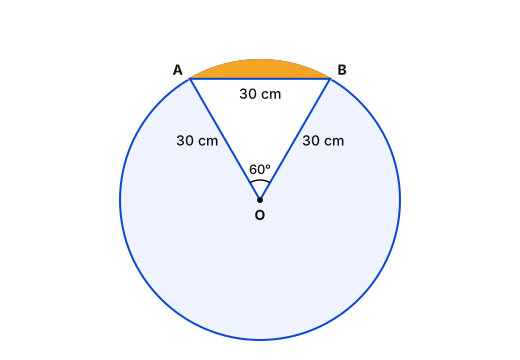
A circular decorative wall clock with a radius of 30 cm has a design where a chord connects two points on the circumference. This chord, along with two radii, forms an equilateral triangle at the center of the clock face. The smaller segment created by this chord is painted in a contrasting color. What percentage of the clock's total area does this smaller painted segment represent? (Use π = 3.14, 3 ≈ 1.732)
30 cm त्रिज्या वाली एक वृत्ताकार सजावटी दीवार घड़ी में एक जीवा परिधि के दो बिंदुओं को जोड़ती है। यह जीवा दो त्रिज्याओं के साथ केंद्र पर एक समबाहु त्रिभुज बनाती है। जीवा से बना छोटा खंड विपरीत रंग में रंगा जाता है। यह छोटा खंड घड़ी के कुल क्षेत्रफल का कितना प्रतिशत है? (π = 3.14, 3 ≈ 1.732 लीजिए)
  1. A2.88%
  2. B5.6%
  3. C9.08%
  4. D12.5%
Show answer

Concept: Segment = sector − triangle; equilateral triangle means central angle 60°.

  1. Sector = (60360)×3.14×900=471 cm².
  2. Triangle = (34)×900=0.433×900=389.7 cm².
  3. Segment = 81.3 cm²; circle = 2826 cm² → 81.32826×100≈2.88%.

Trick: Radius cancels: % = (16−34π)×100=(0.1667−0.1379)×100≈2.88%.

Answer: (A) 2.88%

अवधारणा: वृत्तखंड = त्रिज्यखंड − त्रिभुज; समबाहु त्रिभुज → केंद्रीय कोण 60°।

  1. त्रिज्यखंड = (60360)×3.14×900=471 cm²
  2. त्रिभुज = (34)×900=389.7 cm²
  3. वृत्तखंड = 81.3; वृत्त = 2826 → 81.32826×100≈2.88%

ट्रिक: त्रिज्या कट जाती है: % = (16−34π)×100≈2.88%।

उत्तर: (A) 2.88%

SSC CGLQuantitative AptitudeCircle – minor segment percentageSSC CGL 2025 · 14 Sep Shift 2 →
Q3774.
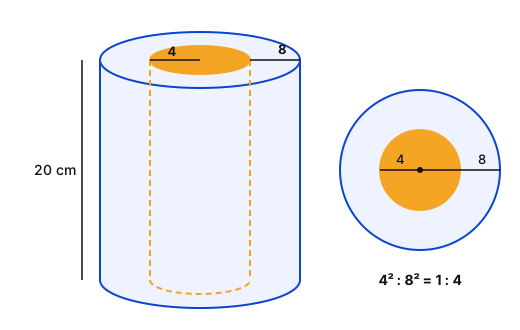
A cylinder (r = 8 cm, h = 20 cm) is bored through by a hole (r = 4 cm, full height). What percentage of original volume is removed?
एक बेलन (r = 8 cm, h = 20 cm) में पूरी ऊँचाई तक एक छेद (r = 4 cm) किया जाता है। मूल आयतन का कितना प्रतिशत हटाया गया?
  1. A25%
  2. B50%
  3. C75%
  4. D37.5%
Show answer

Concept: Same height → volume ratio = ratio of r2.

  1. Removed/original = 4282=1664=14.
  2. 14=25%.

Trick: Half the radius → one-fourth the volume (same height).

Answer: (A) 25%

अवधारणा: ऊँचाई समान → आयतनों का अनुपात = r2 का अनुपात।

  1. निकला/मूल = 4282=1664=14
  2. 14=25%

ट्रिक: त्रिज्या आधी → आयतन एक-चौथाई (ऊँचाई समान)।

उत्तर: (A) 25%

SSC CGLQuantitative AptitudeCylinder – volume removed by a holeSSC CGL 2025 · 14 Sep Shift 2 →
Q3775.
A sector of a circle with a radius of 12 cm has a central angle of 60°. Another sector of the same circle has a central angle of π3 radians. What is the ratio of the areas of the two sectors?
12 cm त्रिज्या वाले वृत्त के एक त्रिज्यखंड का केंद्रीय कोण 60° है। उसी वृत्त के एक अन्य त्रिज्यखंड का केंद्रीय कोण π3 रेडियन है। दोनों त्रिज्यखंडों के क्षेत्रफलों का अनुपात क्या है?
  1. A1 : 2
  2. B2 : 3
  3. C1 : 1
  4. D3 : 4
Show answer

Concept: π radians =180∘; in one circle, sector area ∝ angle.

  1. π3rad=180∘3=60∘.
  2. Both sectors have 60° in the same circle → equal areas → 1 : 1.

Trick: Radius 12 cm is a distractor – equal angles in the same circle always give 1 : 1.

Answer: (C) 1 : 1

अवधारणा: π रेडियन =180∘; एक ही वृत्त में त्रिज्यखंड क्षेत्रफल ∝ कोण।

  1. π3 रेडियन =180∘3=60∘
  2. दोनों 60°, एक ही वृत्त → क्षेत्रफल बराबर → 1 : 1

ट्रिक: 12 cm त्रिज्या भटकाने के लिए है; समान कोण → 1 : 1।

उत्तर: (C) 1 : 1

SSC CGLQuantitative AptitudeSector area – degrees vs radiansSSC CGL 2025 · 14 Sep Shift 2 →
Q3776.
Select the most appropriate synonym of the given word:
Inexperienced
  1. AExperienced
  2. BCallow
  3. CClever
  4. DMature
Show answer

Concept: Callow = lacking experience or maturity (usually of a young person).

  1. 'Inexperienced' means not having much practice or knowledge of life.
  2. 'Callow' carries the same idea, e.g. a callow recruit.
  3. Experienced and Mature are opposites; Clever means intelligent, not related.

Yaad rakhein: Callow ≈ 'raw, green, naive' – remember 'a callow youth'.

Answer: (B) Callow

अवधारणा: Callow = अनुभवहीन, अपरिपक्व (प्रायः युवा के लिए)।

  1. Inexperienced = जिसे अनुभव कम हो।
  2. Callow का भी यही अर्थ है, जैसे a callow recruit।
  3. Experienced, Mature विलोम हैं; Clever = चतुर।

याद रखें: Callow के समान शब्द: raw, green, naive।

उत्तर: (B) Callow

SSC CGLEnglish ComprehensionSynonym – InexperiencedSSC CGL 2025 · 14 Sep Shift 2 →
Q3777.
Choose the idiom that means: To change one's mind constantly about something.
  1. Apiece of cake
  2. Bapple of discord
  3. Cblow hot and cold
  4. Dcup of tea
Show answer

Concept: 'Blow hot and cold' = to keep switching between being for and against something.

  1. It fits 'changing one's mind constantly'.
  2. Piece of cake = very easy; apple of discord = root of a quarrel; cup of tea = what one likes.

Trick: Hot ↔ cold = two opposite states → changing opinions again and again.

Answer: (C) blow hot and cold

अवधारणा: 'Blow hot and cold' = कभी पक्ष में, कभी विरोध में – बार-बार मन बदलना।

  1. यही अर्थ प्रश्न में दिया है।
  2. Piece of cake = बहुत आसान; apple of discord = झगड़े की जड़; cup of tea = पसंद की चीज़।

ट्रिक: गर्म ↔ ठंडा = दो उल्टी अवस्थाएँ → बार-बार राय बदलना।

उत्तर: (C) blow hot and cold

SSC CGLEnglish ComprehensionIdiom – blow hot and coldSSC CGL 2025 · 14 Sep Shift 2 →
Q3778.
Select the most appropriate antonym of the highlighted word:
Her new book has received fulsome praise from the critics.
  1. AOverdone
  2. BSincere
  3. CAbundant
  4. DLavish
Show answer

Concept: Fulsome praise = flattering to excess, so it sounds insincere.

  1. Opposite of insincere, overdone praise = sincere (genuine).
  2. Overdone, Abundant, Lavish all describe excess – close to fulsome, not opposite.

Trick: Three options share one idea (too much); the odd one out is usually the antonym.

Answer: (B) Sincere

अवधारणा: Fulsome praise = ज़रूरत से ज़्यादा, बनावटी प्रशंसा।

  1. बनावटी का विलोम = Sincere (सच्चा, हार्दिक)।
  2. Overdone, Abundant, Lavish – सब 'अधिकता' बताते हैं, विलोम नहीं।

ट्रिक: जब तीन विकल्प एक ही भाव बताएँ, अलग वाला प्रायः विलोम होता है।

उत्तर: (B) Sincere

SSC CGLEnglish ComprehensionAntonym – fulsomeSSC CGL 2025 · 14 Sep Shift 2 →
Q3779.
Select the correct indirect/direct form of the given sentence.
The officer said to the guard, "Do not allow anyone to enter without permission."
  1. AThe officer told the guard not to allow anyone to enter without permission.
  2. BThe officer said the guard not to allow anyone to enter without permission.
  3. CThe officer forbade the guard to not allow anyone to enter without permission.
  4. DThe officer instructed that the guard does not allow anyone to enter without permission.
Show answer

Concept: Negative command → told/ordered + object + not to + V1.

  1. 'said to' becomes 'told'; 'Do not allow' becomes 'not to allow'.
  2. So the reporting verb becomes told, followed by the guard + not to allow.
  3. B: 'said the guard' is wrong; C: 'forbade … not to' is a double negative; D: wrong structure.

Trick: Imperative in indirect speech always uses an infinitive (to / not to) – look for 'told … not to'.

Answer: (A) The officer told the guard not to allow anyone to enter without permission.

अवधारणा: नकारात्मक आज्ञा → told/ordered + कर्म + not to + V1।

  1. 'said to' → 'told'; 'Do not allow' → 'not to allow'
  2. रूप होगा: told + the guard + not to allow …
  3. B में 'said the guard' गलत; C में forbade + not = दोहरा निषेध; D की संरचना गलत।

ट्रिक: आज्ञावाचक वाक्य के indirect में to/not to + V1 आता है।

उत्तर: (A) The officer told the guard not to allow anyone to enter without permission.

SSC CGLEnglish ComprehensionNarration – negative imperativeSSC CGL 2025 · 14 Sep Shift 2 →
Q3780.
Choose the correct one-word substitute for the following sentence.
The statement seemed to contradict itself at first, but on closer thought it revealed a deeper truth.
  1. AAxiom
  2. BMaxim
  3. CParadox
  4. DIrony
Show answer

Concept: Paradox = a statement that seems self-contradictory but holds a truth.

  1. Example: 'Less is more.'
  2. Axiom = an accepted truth; Maxim = a short rule of conduct; Irony = outcome opposite to what is expected.

Trick: Para (against) + dox (opinion) → seems to go against common sense.

Answer: (C) Paradox

अवधारणा: Paradox = ऐसा कथन जो विरोधाभासी लगे पर उसमें सत्य छिपा हो।

  1. उदाहरण: 'Less is more.'
  2. Axiom = स्वयंसिद्ध सत्य; Maxim = सूक्ति/नियम; Irony = अपेक्षा के विपरीत परिणाम।

ट्रिक: Para (विरुद्ध) + dox (मत) → सामान्य धारणा के विरुद्ध लगने वाला।

उत्तर: (C) Paradox

SSC CGLEnglish ComprehensionOne-word substitution – paradoxSSC CGL 2025 · 14 Sep Shift 2 →