Question bank

Q&A: practice questions with answers

Search questions on any topic. Filter by exam category, exam, subject and topic, try the question, then open the answer and explanation.

Courses – airGurukul

4,800 questions found.

Q361.
Due to an error, a shopkeeper increases the selling price of a ₹400 item by 12.5% instead of decreasing it by 12.5%. What is the percentage increase in the price due to this error?
एक भूल के कारण दुकानदार ₹400 की वस्तु का मूल्य 12.5% घटाने के बजाय 12.5% बढ़ा देता है। इस भूल से मूल्य में कितने प्रतिशत की वृद्धि हुई?
  1. A18.22%
  2. B24.22%
  3. C25.22%
  4. D28.57%
Show answer

Concept: Error % is measured on the correct (intended) price.

  1. Correct price = 400×78= ₹350.
  2. Wrong price = 400×98= ₹450.
  3. Error = 100350×100=28.57%.

Trick: Ratio of factors: 9/87/8=97⇒27=28.57% (price itself is not needed).

Answer: (D) 28.57%

अवधारणा: त्रुटि % सही (इच्छित) मूल्य पर निकाली जाती है।

  1. सही मूल्य = 400×78= ₹350।
  2. गलत मूल्य = 400×98= ₹450।
  3. त्रुटि = 100350×100=28.57%।

ट्रिक: गुणकों का अनुपात: 97⇒27=28.57% (मूल्य की ज़रूरत नहीं)।

उत्तर: (D) 28.57%
SSC CGLQuantitative AptitudePercentage error – increase vs decreaseSSC CGL 2025 · 25 Sep Shift 3 →
Q362.
A man buys 10 shirts for ₹5,000 and sells 8 of them for ₹4,900. If he discards the remaining 2 shirts, what is his overall gain or loss?
एक व्यक्ति 10 कमीज़ें ₹5,000 में खरीदता है और उनमें से 8 को ₹4,900 में बेच देता है। शेष 2 कमीज़ें वह फेंक देता है। उसे कुल कितना लाभ या हानि हुई?
  1. A₹100 loss₹100 हानि
  2. B₹50 loss₹50 हानि
  3. C₹100 profit₹100 लाभ
  4. D₹50 profit₹50 लाभ
Show answer

Concept: Overall result = total revenue − total cost.

  1. Cost of 10 shirts = ₹5,000.
  2. Revenue = ₹4,900 (the 2 discarded shirts earn nothing).
  3. Loss = 5,000 − 4,900 = ₹100.

Trick: Don't compute per-shirt prices; compare only the totals.

Answer: (A) ₹100 loss

अवधारणा: कुल परिणाम = कुल आय − कुल लागत।

  1. 10 शर्ट की लागत = ₹5,000।
  2. आय = ₹4,900 (फेंकी गई 2 शर्ट से कुछ नहीं)।
  3. हानि = 5,000 − 4,900 = ₹100।

ट्रिक: प्रति शर्ट भाव निकालने की ज़रूरत नहीं; केवल कुल राशियाँ मिलाएँ।

उत्तर: (A) ₹100 हानि

SSC CGLQuantitative AptitudeProfit & loss – unsold itemsSSC CGL 2025 · 25 Sep Shift 3 →
Q363.
The average of 10 numbers is 64. If two of them are removed and the new average becomes 62, what is the average of the two removed numbers?
10 संख्याओं का औसत 64 है। यदि उनमें से दो हटा दी जाएँ और नया औसत 62 हो जाए, तो हटाई गई दो संख्याओं का औसत क्या है?
  1. A70
  2. B71
  3. C72
  4. D73
Show answer

Concept: Sum = average × count.

  1. Sum of 10 = 640; sum of 8 = 496.
  2. Removed sum = 144; average = 1442=72.

Trick: Deviation method: 8 numbers each lost 2 ⇒ 16 extra; removed avg = 64+162=72.

Answer: (C) 72

अवधारणा: योग = औसत × संख्या।

  1. 10 का योग = 640; 8 का योग = 496।
  2. हटाई गई संख्याओं का योग = 144; औसत = 72।

ट्रिक: विचलन विधि: 8 संख्याओं में 2-2 की कमी = 16; हटाई गई का औसत = 64+162=72।

उत्तर: (C) 72

SSC CGLQuantitative AptitudeAverage – numbers removedSSC CGL 2025 · 25 Sep Shift 3 →
Q364.
A large storage box in the shape of a right prism with a square base is 2 m tall. If the box holds 720 L of water, what is the side of the base (in cm)?
वर्गाकार आधार वाले लंब प्रिज़्म के आकार का एक बड़ा भंडारण बक्सा 2 m ऊँचा है। यदि उसमें 720 लीटर पानी आता है, तो आधार की भुजा (cm में) कितनी है?
  1. A40 cm
  2. B45 cm
  3. C60 cm
  4. D50 cm
Show answer

Concept: 1m3=1000L; volume = base area × height.

  1. 720L=720×1000cm3=7,20,000cm3; height = 200 cm.
  2. Base area = 7,20,000÷200=3600cm2.
  3. Side = 3600=60 cm.

Trick: In metres: 0.72÷2 gives base 0.36m2, whose root is 0.6 m – the same 60 cm.

Answer: (C) 60 cm

अवधारणा: 1m3=1000L; आयतन = आधार क्षेत्रफल × ऊँचाई।

  1. 720L=0.72m3।
  2. आधार = 0.72÷2=0.36m2।
  3. भुजा = 0.36=0.6 m =60 cm।

ट्रिक: m में: 0.72m3÷2m=0.36m2 → भुजा 0.6 m = 60 cm।

उत्तर: (C) 60 cm

SSC CGLQuantitative AptitudePrism – volume in litresSSC CGL 2025 · 25 Sep Shift 3 →
Q365.
A departmental store marked up the price of an electronic gadget by 40% above its cost price. During a clearance sale it offered two successive discounts of 20% and 10%. If the final selling price was ₹2,520, what was the cost price of the gadget?
एक डिपार्टमेंटल स्टोर ने एक इलेक्ट्रॉनिक उपकरण का मूल्य क्रय मूल्य से 40% अधिक अंकित किया। क्लीयरेंस सेल में उसने 20% और 10% की दो क्रमिक छूट दीं। यदि अंतिम विक्रय मूल्य ₹2,520 था, तो उपकरण का क्रय मूल्य क्या था?
  1. A₹2,000
  2. B₹2,250
  3. C₹2,180
  4. D₹2,500
Show answer

Concept: SP = CP×(1+markup)×(1−d1)×(1−d2).

  1. Use fractions: SP=CP×75×45×910=252250CP.
  2. 252250 of CP=2520⇒CP=2520×250252= ₹2,500.

Trick: Net effect is +0.8%, so CP is just below 2520 – check 2500×1.008=2520 ✓.

Answer: (D) ₹2,500

अवधारणा: विक्रय मूल्य = CP×(1+markup)×(1−d1)×(1−d2)।

  1. भिन्न में: SP=CP×75×45×910=252250CP।
  2. CP=2520×250252= ₹2,500।

ट्रिक: कुल प्रभाव +0.8% है, तो CP 2520 से थोड़ा कम – 2500×1.008=2520 ✓।

उत्तर: (D) ₹2,500

SSC CGLQuantitative AptitudeMarkup with successive discountsSSC CGL 2025 · 25 Sep Shift 3 →
Q366.
A class of 50 students has an average score of 65. If 10 new students are added and the class average decreases by 1, what is the average score of the 10 new students?
50 विद्यार्थियों की एक कक्षा का औसत अंक 65 है। यदि 10 नए विद्यार्थी जुड़ जाएँ और कक्षा का औसत 1 घट जाए, तो नए 10 विद्यार्थियों का औसत अंक क्या है?
  1. A59
  2. B60
  3. C58
  4. D62
Show answer

Concept: Total = average × number; new total − old total = newcomers' sum.

  1. Old total = 50×65=3250.
  2. New total = 60×64=3840.
  3. New students' sum = 590; average = 59.

Trick: Deviation: new avg 64; old 50 each 1 above ⇒ +50 surplus, so newcomers avg = 64−5010=59.

Answer: (A) 59

अवधारणा: योग = औसत × संख्या; नया योग − पुराना योग = नए छात्रों का योग।

  1. पुराना योग = 50×65=3250।
  2. नया योग = 60×64=3840।
  3. नए छात्रों का योग = 590; औसत = 59।

ट्रिक: विचलन: नया औसत 64; पुराने 50 छात्र 1-1 अधिक ⇒ +50; नए का औसत = 64−5010=59।

उत्तर: (A) 59

SSC CGLQuantitative AptitudeAverage – new students addedSSC CGL 2025 · 25 Sep Shift 3 →
Q367.
If secA − cosA = 2, then find the value of cosA.
यदि secA − cosA = 2 है, तो cosA का मान ज्ञात कीजिए।
  1. A−1 + 2
  2. B3 + 2
  3. C3 + 2
  4. DNo real valueकोई वास्तविक मान नहीं
Show answer

Concept: Write secA=1cosA and solve; keep −1≤cosA≤1.

  1. Let c=cosA: 1c−c=2⇒1−c2=2c.
  2. c2+2c−1=0⇒c=−2±82=−1±2.
  3. −1−2≈−2.41 is impossible, so c=−1+2≈0.414.

Yaad rakhein: Reject any root outside [−1,1] – cos can never be below −1.

Answer: (A) −1 + 2

अवधारणा: secA=1cosA लिखकर हल करें; −1≤cosA≤1 रखें।

  1. c=cosA: 1c−c=2⇒1−c2=2c।
  2. c2+2c−1=0⇒c=−1±2।
  3. −1−2≈−2.41 असंभव, अतः c=−1+2≈0.414।

याद रखें: जो मूल [−1,1] से बाहर हो उसे छोड़ दें – cos कभी −1 से कम नहीं होता।

उत्तर: (A) −1 + 2

SSC CGLQuantitative AptitudeTrigonometry – quadratic in cos ASSC CGL 2025 · 25 Sep Shift 3 →
Q368.
If cosθ = −817 and θ lies in the 3rd quadrant, find sinθ.
यदि cosθ = −817 है और θ तीसरे चतुर्थांश में है, तो sinθ ज्ञात कीजिए।
  1. A−1517
  2. B1217
  3. C1417
  4. D−1217
Show answer

Concept: sin2θ+cos2θ=1; the quadrant decides the sign.

  1. 8, 15, 17 is a Pythagorean triplet ⇒ |sinθ|=1517.
  2. In the 3rd quadrant sin and cos are both negative.
  3. sinθ=−1517.

Trick: ASTC (All–Sin–Tan–Cos): 3rd quadrant → only Tan (and cot) positive.

Answer: (A) −1517

अवधारणा: sin2θ+cos2θ=1; चिह्न चतुर्थांश से तय होता है।

  1. 8, 15, 17 पाइथागोरस त्रिक ⇒ |sinθ|=1517।
  2. तीसरे चतुर्थांश में sin और cos दोनों ऋणात्मक।
  3. sinθ=−1517।

ट्रिक: ASTC (All–Sin–Tan–Cos): तीसरे चतुर्थांश में केवल tan (और cot) धनात्मक।

उत्तर: (A) −1517

SSC CGLQuantitative AptitudeTrigonometry – sign in 3rd quadrantSSC CGL 2025 · 25 Sep Shift 3 →
Q369.
If an angle θ = 3 radians, what percentage of the full circle does it represent?
यदि कोण θ = 3 रेडियन है, तो वह पूरे वृत्त का कितना प्रतिशत है?
  1. A45.74%
  2. B47.74%
  3. C50.8%
  4. D46.83%
Show answer

Concept: Full circle = 2π radians.

  1. Fraction = 32π=36.2832≈0.4775.
  2. Percentage ≈ 47.74%.

Trick: 1 radian ≈ 57.3°; 3 rad ≈ 171.9°, and 171.9360≈47.7%.

Answer: (B) 47.74%

अवधारणा: पूरा वृत्त = 2π रेडियन।

  1. भाग = 32π=36.2832≈0.4775।
  2. प्रतिशत ≈ 47.74%।

ट्रिक: 1 रेडियन ≈ 57.3°; 3 रेडियन ≈ 171.9°, और 171.9360≈47.7%।

उत्तर: (B) 47.74%

SSC CGLQuantitative AptitudeRadian measure – fraction of circleSSC CGL 2025 · 25 Sep Shift 3 →
Q370.
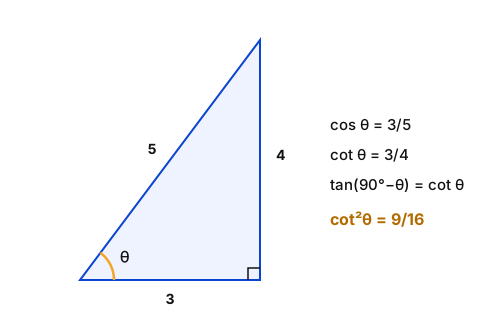
If cosθ = 35 and θ is acute, then find the value of cotθ × tan(90° − θ).
यदि cosθ = 35 है और θ न्यून कोण है, तो cotθ × tan(90° − θ) का मान ज्ञात कीजिए।
  1. A1
  2. B916
  3. C1625
  4. D2516
Show answer

Concept: tan(90∘−θ)=cotθ.

  1. Expression = cotθ×cotθ=cot2θ.
  2. cosθ=35 ⇒ triplet 3-4-5, sinθ=45, cotθ=34.
  3. cot2θ=916.

Trick: Change tan(90∘−θ) to cotθ at once – the product becomes a square.

Answer: (B) 916

अवधारणा: tan(90∘−θ)=cotθ।

  1. व्यंजक = cotθ×cotθ=cot2θ।
  2. cosθ=35 ⇒ त्रिक 3-4-5, sinθ=45, cotθ=34।
  3. cot2θ=916।

ट्रिक: tan(90∘−θ) को तुरंत cotθ लिखें – गुणनफल वर्ग बन जाता है।

उत्तर: (B) 916

SSC CGLQuantitative AptitudeTrigonometry – complementary angleSSC CGL 2025 · 25 Sep Shift 3 →
Q371.
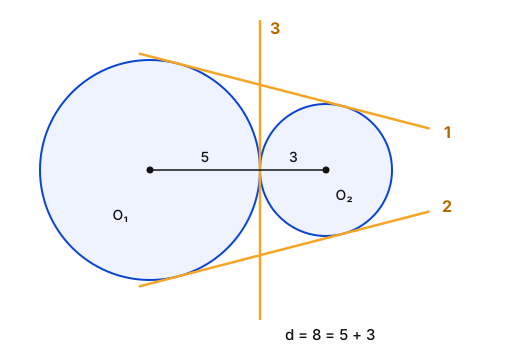
Two circles of radii 5 cm and 3 cm are such that the distance between their centres is 8 cm. How many common tangents can be drawn?
5 cm और 3 cm त्रिज्या वाले दो वृत्तों के केंद्रों के बीच की दूरी 8 cm है। कितनी उभयनिष्ठ स्पर्श रेखाएँ खींची जा सकती हैं?
  1. A1
  2. B0
  3. C2
  4. D3
Show answer

Concept: Compare distance d between centres with r₁ + r₂ and r₁ − r₂.

  1. r₁ + r₂ = 5 + 3 = 8 = d ⇒ circles touch externally.
  2. Externally touching circles have 2 direct tangents + 1 at the contact point = 3.

Trick: d > r₁ + r₂ → 4; d = r₁ + r₂ → 3; intersecting → 2; internal touch → 1; one inside other → 0.

Answer: (D) 3

अवधारणा: केंद्रों की दूरी d की तुलना r₁ + r₂ व r₁ − r₂ से करें।

  1. r₁ + r₂ = 5 + 3 = 8 = d ⇒ वृत्त बाहर से स्पर्श करते हैं।
  2. बाह्य स्पर्श में 2 सीधी + 1 स्पर्श बिंदु पर = 3 स्पर्श रेखाएँ।

ट्रिक: d > r₁ + r₂ → 4; d = r₁ + r₂ → 3; प्रतिच्छेद → 2; आंतरिक स्पर्श → 1; एक अंदर → 0।

उत्तर: (D) 3

SSC CGLQuantitative AptitudeCircles – number of common tangentsSSC CGL 2025 · 25 Sep Shift 3 →
Q372.
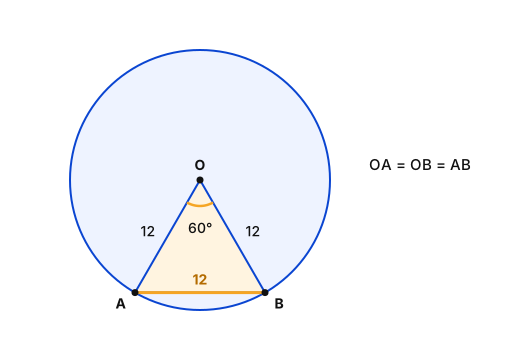
A circle has a radius of 12 cm, and a chord makes a 60° angle at the centre. What is the length of that chord?
एक वृत्त की त्रिज्या 12 cm है और एक जीवा केंद्र पर 60° का कोण बनाती है। उस जीवा की लंबाई क्या है?
  1. A6 cm
  2. B12 cm
  3. C123 cm
  4. D122 cm
Show answer

Concept: Chord length = 2rsin(θ2).

  1. Chord = 2×12×sin30∘=24×12=12 cm.
  2. (The two radii and chord form an equilateral triangle.)

Trick: A 60∘ central angle always gives chord = radius.

Answer: (B) 12 cm

अवधारणा: जीवा की लंबाई = 2rsin(θ2)।

  1. जीवा = 2×12×sin30∘=12 cm।
  2. (दोनों त्रिज्याएँ व जीवा समबाहु त्रिभुज बनाती हैं।)

ट्रिक: केंद्र पर 60∘ कोण हो तो जीवा = त्रिज्या।

उत्तर: (B) 12 cm

SSC CGLQuantitative AptitudeCircle – chord at 60° angleSSC CGL 2025 · 25 Sep Shift 3 →
Q373.
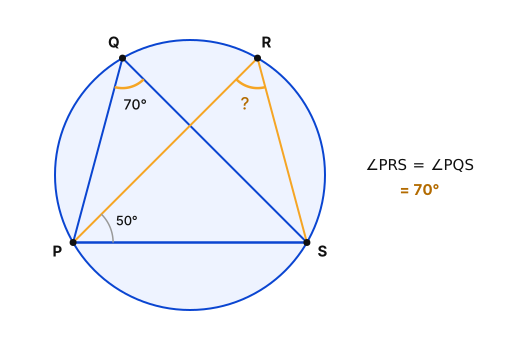
Points P, Q, R and S are located on the circumference of a circle. If ∠RPS = 50° and ∠PQS = 70°, what is the measure of ∠PRS?
बिंदु P, Q, R और S एक वृत्त की परिधि पर स्थित हैं। यदi ∠RPS = 50° और ∠PQS = 70° है, तो ∠PRS का माप क्या है?
  1. A60°
  2. B90°
  3. C50°
  4. D70°
Show answer

Concept: Angles subtended by the same chord on the same side are equal.

  1. ∠PQS and ∠PRS both stand on chord PS.
  2. So ∠PRS = ∠PQS = 70° (∠RPS = 50° is extra data).

Trick: Read the end letters: P_S in both ∠PQS and ∠PRS ⇒ same chord PS ⇒ equal.

Answer: (D) 70°

अवधारणा: किसी जीवा के एक ही तरफ़ परिधि पर बनने वाले सभी कोण समान होते हैं।

  1. Q और R दोनों बिंदुओं से जीवा PS देखी जा रही है (∠PQS, ∠PRS)।
  2. अतः ∠PRS = ∠PQS = 70° (∠RPS = 50° अतिरिक्त जानकारी है)।

ट्रिक: सिरे के अक्षर देखें: दोनों में P_S ⇒ एक ही जीवा PS ⇒ बराबर।

उत्तर: (D) 70°

SSC CGLQuantitative AptitudeCircle – angles in the same segmentSSC CGL 2025 · 25 Sep Shift 3 →
Q374.
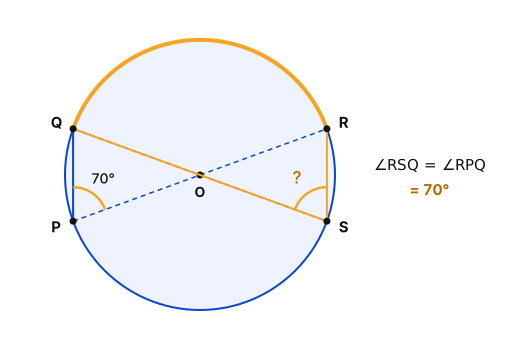
In a circle, points P, Q, R and S lie on the circumference such that chords PR and QS intersect at the centre, and both ∠RPQ and ∠RSQ are subtended by the same arc RQ. If ∠RPQ = 70°, what is the measure of ∠RSQ?
एक वृत्त में बिंदु P, Q, R और S परिधि पर इस प्रकार हैं कि जीवाएँ PR और QS केंद्र पर प्रतिच्छेद करती हैं, तथा ∠RPQ और ∠RSQ दोनों एक ही चाप RQ द्वारा बनते हैं। यदि ∠RPQ = 70° है, तो ∠RSQ का माप क्या है?
  1. A80°
  2. B70°
  3. C100°
  4. D110°
Show answer

Concept: Inscribed angles standing on the same arc are equal.

  1. ∠RPQ and ∠RSQ both stand on arc RQ.
  2. ∠RSQ = ∠RPQ = 70°.

Trick: Since PR and QS are diameters, PQRS is a rectangle-type figure – but just the 'same arc' rule is enough.

Answer: (B) 70°

अवधारणा: परिधि पर बने जो कोण समान चाप को अंतरित करते हैं, वे आपस में समान होते हैं।

  1. P और S दोनों से चाप RQ अंतरित हो रहा है।
  2. इसलिए ∠RSQ भी ∠RPQ जितना = 70°।

ट्रिक: PR और QS व्यास होने से PQRS आयत बनता है – पर 'एक ही चाप' नियम ही काफ़ी है।

उत्तर: (B) 70°

SSC CGLQuantitative AptitudeCircle – angles on the same arcSSC CGL 2025 · 25 Sep Shift 3 →
Q375.
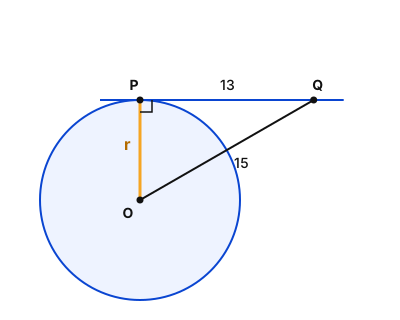
A circle with radius r has a tangent line at a point P on the circle. The distance along the tangent from P to the external point Q is 13 cm. The distance from the centre of the circle to point Q is 15 cm. Find the radius of the circle.
r त्रिज्या वाले एक वृत्त की बिंदु P पर स्पर्श रेखा है। P से बाहरी बिंदु Q तक स्पर्श रेखा की लंबाई 13 cm है। वृत्त के केंद्र से बिंदु Q की दूरी 15 cm है। वृत्त की त्रिज्या ज्ञात कीजिए।
  1. A56 cm
  2. B26 cm
  3. C36 cm
  4. D59 cm
Show answer

Concept: Radius ⊥ tangent at point of contact ⇒ OPQ is right-angled at P.

  1. OQ2=OP2+PQ2⇒152=r2+132.
  2. r2=225−169=56⇒r=56=214 cm.

Trick: Difference of squares: 152−132=(15+13)(15−13)=28×2=56.

Answer: (A) 56 cm

अवधारणा: स्पर्श बिंदु पर त्रिज्या ⊥ स्पर्श रेखा ⇒ OPQ, P पर समकोण।

  1. OQ2=OP2+PQ2⇒152=r2+132।
  2. r2=225−169=56⇒r=56=214 cm।

ट्रिक: वर्गों का अंतर: 152−132=(15+13)(15−13)=28×2=56।

उत्तर: (A) 56 cm

SSC CGLQuantitative AptitudeTangent – radius perpendicularSSC CGL 2025 · 25 Sep Shift 3 →
Q376.
Select the most appropriate antonym of the given word: EXACERBATE
  1. AIntensify
  2. BAmeliorate
  3. CAggravate
  4. DHeighten
Show answer

Concept: Antonym = word of opposite meaning.

  1. Exacerbate = to make a problem or pain worse.
  2. Ameliorate = to make a bad situation better – the opposite.
  3. Intensify, aggravate, heighten are all synonyms (make worse/stronger).

Trick: Three options mean the same thing – the odd one out (Ameliorate) is the antonym.

Answer: (B) Ameliorate

अवधारणा: Antonym = विपरीत अर्थ वाला शब्द।

  1. Exacerbate = समस्या या दर्द को और बिगाड़ देना।
  2. Ameliorate = बुरी स्थिति को सुधारना – यही विपरीत है।
  3. Intensify, aggravate, heighten सभी समानार्थी हैं (और बढ़ाना/बिगाड़ना)।

ट्रिक: तीन विकल्प एक ही अर्थ के हैं – जो अलग है (Ameliorate) वही विलोम है।

उत्तर: (B) Ameliorate

SSC CGLEnglish ComprehensionAntonym – ExacerbateSSC CGL 2025 · 25 Sep Shift 3 →
Q377.
Select the most appropriate meaning of the given idiom.
Throw caution to the wind
  1. ATo destroy evidence of a past crime
  2. BTo do something without worrying about the risk or negative results
  3. CTo make a dramatic entrance
  4. DTo sever all connections with friends
Show answer

Concept: Idioms carry a fixed figurative meaning.

  1. 'Throw caution to the wind' = to act boldly or recklessly, ignoring possible risks.
  2. E.g. He threw caution to the wind and invested all his savings.

Trick: Picture it: your 'caution' is tossed away into the wind – nothing left to hold you back.

Answer: (B) To do something without worrying about the risk or negative results

अवधारणा: मुहावरों का एक तय लाक्षणिक अर्थ होता है।

  1. 'Throw caution to the wind' = जोखिम की परवाह किए बिना साहसी/लापरवाह काम करना।
  2. उदाहरण: He threw caution to the wind and invested all his savings.

ट्रिक: कल्पना करें: अपनी 'सावधानी' को हवा में उड़ा दिया – अब कोई रोक नहीं।

उत्तर: (B) To do something without worrying about the risk or negative results

SSC CGLEnglish ComprehensionIdiom – Throw caution to the windSSC CGL 2025 · 25 Sep Shift 3 →
Q378.
Select the correct spelling of a word meaning 'proportionate' or 'corresponding in amount or degree'.
  1. ACommensurate
  2. BCommensuratte
  3. CCommenserate
  4. DCommensuret
Show answer

Concept: Correct spelling of the word meaning 'in proportion to'.

  1. Correct: C-O-M-M-E-N-S-U-R-A-T-E (double m, 'su', ending '-ate').
  2. Usage: Salary will be commensurate with experience.
  3. Other options double the t, use 'se' or drop '-ate'.

Trick: Split it: com + mensur (measure) + ate – 'measured together'.

Answer: (A) Commensurate

अवधारणा: 'अनुपात में / उसी स्तर का' अर्थ वाले शब्द की सही वर्तनी।

  1. सही: C-O-M-M-E-N-S-U-R-A-T-E (दो m, 'su', अंत '-ate')।
  2. प्रयोग: Salary will be commensurate with experience.
  3. अन्य विकल्पों में t दोहरा, 'se' या '-ate' गायब है।

ट्रिक: तोड़कर याद करें: com + mensur (measure/माप) + ate।

उत्तर: (A) Commensurate

SSC CGLEnglish ComprehensionSpelling – CommensurateSSC CGL 2025 · 25 Sep Shift 3 →
Q379.
Sentences of a paragraph are given below in jumbled order. Arrange the sentences in the correct order to form a meaningful and coherent paragraph.
1. These robots collect data and explore dangerous areas.
2. Space agencies often use robotic probes for exploration.
3. This keeps human astronauts safe from risks.
4. They can travel far beyond where humans have gone.
  1. A2-1-4-3
  2. B4-2-3-1
  3. C2-3-1-4
  4. D3-4-2-1
Show answer

Concept: Start with the sentence that introduces the subject; pronouns follow their noun.

  1. 2 introduces 'robotic probes' – opener (1 begins with 'These robots', so it cannot start).
  2. 1 tells what they do; 4 ('They can travel…') adds their reach.
  3. 3 ('This keeps astronauts safe') gives the final benefit → 2-1-4-3.

Trick: Only (A) and (C) start with 2; 'This keeps…' needs an action before it, so 3 cannot come second → (A).

Answer: (A) 2-1-4-3

अवधारणा: विषय का परिचय देने वाला वाक्य पहले; सर्वनाम (These/They) अपने संज्ञा के बाद आते हैं।

  1. वाक्य 2 'robotic probes' का परिचय देता है – शुरुआत (1 'These robots' से शुरू, अतः पहला नहीं)।
  2. 1 बताता है वे क्या करते हैं; 4 ('They can travel…') उनकी पहुँच जोड़ता है।
  3. 3 ('This keeps astronauts safe') अंतिम लाभ → 2-1-4-3।

ट्रिक: केवल (A) और (C) 2 से शुरू; 'This keeps…' से पहले कोई काम आना चाहिए, अतः 3 दूसरे स्थान पर नहीं → (A)।

उत्तर: (A) 2-1-4-3

SSC CGLEnglish ComprehensionPara jumble – robotic probesSSC CGL 2025 · 25 Sep Shift 3 →
Q380.
Select the option that can be used as a one-word substitute for the given group of words:
A form of government in which power is held by the nobility.
  1. AMonarchy
  2. BGerontocracy
  3. CAristocracy
  4. DAuthoritarianism
Show answer

Concept: Forms of government named by who holds power.

  1. Aristocracy = rule by nobles / a privileged upper class.
  2. Monarchy = rule by a king/queen; Gerontocracy = rule by old people; Authoritarianism = strict rule with little freedom.

Yaad rakhein: Plutocracy – the rich; Theocracy – religious leaders; Oligarchy – a small group; Kleptocracy – thieves/corrupt.

Answer: (C) Aristocracy

अवधारणा: शासन के प्रकार – सत्ता किसके हाथ में है।

  1. Aristocracy = कुलीन/उच्च वर्ग का शासन।
  2. Monarchy = राजा/रानी का शासन; Gerontocracy = वृद्धों का शासन; Authoritarianism = कम स्वतंत्रता वाला कठोर शासन।

याद रखें: Plutocracy – धनिकों का; Theocracy – धर्मगुरुओं का; Oligarchy – छोटे समूह का; Kleptocracy – भ्रष्ट लोगों का शासन।

उत्तर: (C) Aristocracy

SSC CGLEnglish ComprehensionOne-word substitution – AristocracySSC CGL 2025 · 25 Sep Shift 3 →