Question bank

Q&A: practice questions with answers

Search questions on any topic. Filter by exam category, exam, subject and topic, try the question, then open the answer and explanation.

Courses – airGurukul

4,800 questions found.

Q3861.
Two varieties of rice are sold at ₹72 per kg and ₹60 per kg respectively, with profit percentages of 20% and 25%. When they are mixed in the ratio 2 : 1 and sold at ₹70 per kg, what is the profit or loss percentage?
चावल की दो किस्में क्रमशः ₹72 प्रति kg और ₹60 प्रति kg पर, 20% और 25% लाभ के साथ बेची जाती हैं। जब उन्हें 2 : 1 के अनुपात में मिलाकर ₹70 प्रति kg पर बेचा जाता है, तो लाभ या हानि प्रतिशत क्या है?
  1. AProfit of 50%50% लाभ
  2. BLoss of 25%25% हानि
  3. CProfit of 25%25% लाभ
  4. DLoss of 50%50% हानि
Show answer

Concept: Get the cost price of each variety, then the mixture's cost.

  1. CP1=72÷1.2= ₹60; CP2=60÷1.25= ₹48.
  2. Mixture CP = 2×60+1×483=1683= ₹56.
  3. Profit = 70−56=14→1456×100=25% profit.

Trick: Profit 14 on 56 = 14=25% — remember 14=25%.

Answer: (C) Profit of 25%

अवधारणा: पहले हर किस्म का क्रय मूल्य, फिर मिश्रण का क्रय मूल्य निकालें।

  1. CP1=72÷1.2= ₹60; CP2=60÷1.25= ₹48।
  2. मिश्रण CP = 2×60+1×483=1683= ₹56।
  3. लाभ = 70−56=14→1456×100=25% लाभ।

ट्रिक: 56 पर 14 = 14=25%।

उत्तर: (C) 25% लाभ

SSC CGLQuantitative AptitudeProfit & loss – mixtureSSC CGL 2025 · 14 Sep Shift 1 →
Q3862.
A clothing store sold three dresses, D1, D2, and D3, whose selling prices were in the ratio 12 : 6 : 3. They made a profit of 20% on D1, a loss of 10% on D2, and a profit of 5% on D3. What was their approximate total profit or loss percentage for the entire sale?
एक कपड़ा स्टोर ने तीन पोशाकें D1, D2 और D3 बेचीं, जिनके विक्रय मूल्य 12 : 6 : 3 के अनुपात में थे। D1 पर 20% लाभ, D2 पर 10% हानि और D3 पर 5% लाभ हुआ। पूरी बिक्री पर उनका अनुमानित कुल लाभ या हानि प्रतिशत क्या था?
  1. Aprofit of 7.58%7.58% लाभ
  2. Bloss of 10.78%10.78% हानि
  3. Cprofit of 10.78%10.78% लाभ
  4. Dloss of 7.58%7.58% हानि
Show answer

Concept: Find each CP from SP, then compare total SP with total CP.

  1. Take SP = 12, 6, 3 (total 21).
  2. CP = 121.2=10; 60.9≈6.667; 31.05≈2.857; total ≈ 19.52.
  3. Profit ≈ 1.48 → 1.4819.52×100≈7.6% profit (nearest option 7.58%).

Trick: Total SP > total CP, so it must be a profit — options (B) and (D) go at once; 10.78% is too big for a profit of 1.48 on ~19.5.

Answer: (A) profit of 7.58%

अवधारणा: SP से हर CP निकालें, फिर कुल SP और कुल CP की तुलना करें।

  1. SP = 12, 6, 3 मानें (कुल 21)।
  2. CP = 121.2=10; 60.9≈6.667; 31.05≈2.857; कुल ≈ 19.52।
  3. लाभ ≈ 1.48 → 1.4819.52×100≈7.6% लाभ (निकटतम विकल्प 7.58%)।

ट्रिक: कुल SP > कुल CP, अतः लाभ ही होगा — (B), (D) तुरंत हटें; 19.5 पर 1.48 का लाभ 10.78% नहीं हो सकता।

उत्तर: (A) 7.58% लाभ

SSC CGLQuantitative AptitudeProfit & loss – overall percentageSSC CGL 2025 · 14 Sep Shift 1 →
Q3863.
A wholesaler marks up the price of a microwave oven by 50% above its cost price. He gives a 15% trade discount to a retailer. The retailer, in turn, marks up the price by 20% above his purchase price and offers a 10% festival discount to the customer. If the customer finally pays ₹12,200 for the microwave, what is the original approximate cost price of the oven to the wholesaler?
एक थोक विक्रेता माइक्रोवेव ओवन का मूल्य अपनी लागत से 50% अधिक अंकित करता है। वह खुदरा विक्रेता को 15% व्यापारिक छूट देता है। खुदरा विक्रेता अपने क्रय मूल्य से 20% अधिक मूल्य अंकित कर ग्राहक को 10% त्योहारी छूट देता है। यदि ग्राहक अंततः ₹12,200 देता है, तो थोक विक्रेता के लिए ओवन की मूल अनुमानित लागत क्या है?
  1. A₹8860
  2. B₹8,500
  3. C₹8,000
  4. D₹8650
Show answer

Concept: Multiply all the percentage factors on the cost.

  1. Factors: +50% → 1.5, −15% → 0.85, +20% → 1.2, −10% → 0.9.
  2. Net factor = 1.5×0.85×1.2×0.9=1.377.
  3. CP = 12,200÷1.377≈ ₹8,860.

Trick: Check backward: 8,860×1.377≈12,200 ✓ — the other options give much lower prices (8,000×1.377=11,016).

Answer: (A) ₹8860

अवधारणा: लागत पर सभी प्रतिशत गुणक गुणा करें।

  1. गुणक: +50% → 1.5, −15% → 0.85, +20% → 1.2, −10% → 0.9।
  2. कुल गुणक = 1.5×0.85×1.2×0.9=1.377।
  3. CP = 12,200÷1.377≈ ₹8,860।

ट्रिक: उल्टा जाँचें: 8,860×1.377≈12,200 ✓; 8,000×1.377=11,016 — बहुत कम।

उत्तर: (A) ₹8860

SSC CGLQuantitative AptitudeProfit & loss – successive markup and discountSSC CGL 2025 · 14 Sep Shift 1 →
Q3864.
A 30-litre solution of alcohol and water has 20% water. How many litres of alcohol must be added to the solution to make the water content 15%?
ऐल्कोहल और पानी के 30 लीटर विलयन में 20% पानी है। पानी की मात्रा 15% करने के लिए कितने लीटर ऐल्कोहल मिलाना होगा?
  1. A10 litres10 लीटर
  2. B20 litres20 लीटर
  3. C30 litres30 लीटर
  4. D40 litres40 लीटर
Show answer

Concept: Water stays fixed when only alcohol is added.

  1. Water = 20% of 30 = 6 L.
  2. New mixture: 6 L must be 15% → total = 6÷0.15=40 L.
  3. Alcohol to add = 40−30=10 L.

Trick: Fixed part ÷ new % = new total; subtract the old total.

Answer: (A) 10 litres

अवधारणा: केवल अल्कोहल मिलाने पर पानी की मात्रा वही रहती है।

  1. पानी = 30 का 20% = 6 लीटर।
  2. नए मिश्रण में 6 लीटर = 15% → कुल = 6÷0.15=40 लीटर।
  3. मिलाया जाने वाला अल्कोहल = 40−30=10 लीटर।

ट्रिक: स्थिर भाग ÷ नया % = नया कुल; पुराना कुल घटाएँ।

उत्तर: (A) 10 लीटर

SSC CGLQuantitative AptitudeMixture – adding one componentSSC CGL 2025 · 14 Sep Shift 1 →
Q3865.
A can do work in 4 days and B in 8 days. They work together for 2 days. What part of the work is left?
A एक कार्य 4 दिनों में और B, 8 दिनों में कर सकता है। वे 2 दिन साथ काम करते हैं। कितना कार्य शेष रहेगा?
  1. A14
  2. B58
  3. C38
  4. D724
Show answer

Concept: Work done = days × combined one-day work.

  1. One day (A + B) = 14+18=38.
  2. 2 days = 2×38=34.
  3. Left = 1−34=14.

Trick: LCM method: total work 8 units; A = 2, B = 1 per day → 3×2=6 done, 2 of 8 =14 left.

Answer: (A) 14

अवधारणा: किया गया कार्य = दिन × एक दिन का संयुक्त कार्य।

  1. (A + B) का 1 दिन का कार्य = 14+18=38।
  2. 2 दिन में = 2×38=34।
  3. शेष = 1−34=14।

ट्रिक: LCM विधि: कुल कार्य 8 इकाई; A = 2, B = 1 प्रतिदिन → 2 दिन में 6, शेष 28=14।

उत्तर: (A) 14

SSC CGLQuantitative AptitudeTime & work – work leftSSC CGL 2025 · 14 Sep Shift 1 →
Q3866.
A shopkeeper mixes 50 kg of sugar costing ₹60 per kg with a certain quantity of sugar costing ₹90 per kg. If he sells the mixture at ₹84 per kg and makes a 20% profit, find the quantity of the ₹90 per kg sugar.
एक दुकानदार ₹60 प्रति kg वाली 50 kg चीनी में ₹90 प्रति kg वाली कुछ मात्रा मिलाता है। यदि वह मिश्रण ₹84 प्रति kg पर बेचकर 20% लाभ कमाता है, तो ₹90 वाली चीनी की मात्रा ज्ञात कीजिए।
  1. A30 kg
  2. B25 kg
  3. C20 kg
  4. D15 kg
Show answer

Concept: Find the mixture's cost price first, then use alligation.

  1. Mixture CP = 84÷1.2= ₹70 per kg.
  2. Cheap : costly = (90−70):(70−60)=20:10=2:1.
  3. 50 kg is 2 parts → 1 part = 25 kg of ₹90 sugar.

Trick: Never apply alligation on selling price — convert SP to CP first.

Answer: (B) 25 kg

अवधारणा: पहले मिश्रण का क्रय मूल्य निकालें, फिर एलीगेशन लगाएँ।

  1. मिश्रण CP = 84÷1.2= ₹70 प्रति किग्रा।
  2. सस्ती : महँगी = (90−70):(70−60)=2:1।
  3. 50 किग्रा = 2 भाग → 1 भाग = 25 किग्रा (₹90 वाली)।

ट्रिक: एलीगेशन हमेशा क्रय मूल्य पर लगाएँ, विक्रय मूल्य पर नहीं।

उत्तर: (B) 25 kg

SSC CGLQuantitative AptitudeAlligation – quantity of second varietySSC CGL 2025 · 14 Sep Shift 1 →
Q3867.
A and B can complete a task together in 24 days, while B and C can finish it in 32 days. After A works on it for 10 days and B for 14 days, C takes the remaining 26 days to finish the work. How many days would it take for C to complete the work alone?
A और B मिलकर एक कार्य 24 दिनों में कर सकते हैं, जबकि B और C उसे 32 दिनों में कर सकते हैं। A ने 10 दिन और B ने 14 दिन काम किया, फिर C ने शेष कार्य 26 दिनों में पूरा किया। C अकेला कार्य कितने दिनों में पूरा करेगा?
  1. A48 days48 दिन
  2. B46 days46 दिन
  3. C40 days40 दिन
  4. D38 days38 दिन
Show answer

Concept: Split the work so that pairs (A+B) and (B+C) appear.

  1. 10A+14B+26C=10(A+B)+4(B+C)+22C.
  2. =1024+432+22C=512+18+22C=1324+22C.
  3. 22C=1−1324=1124⇒C=148.
  4. C alone takes 48 days.

Trick: Regroup the days into known pairs: 10 days of (A+B), 4 days of (B+C), and C alone for the remaining 22 days.

Answer: (A) 48 days

अवधारणा: कार्य को इस तरह बाँटें कि (A+B) और (B+C) की जोड़ियाँ बनें।

  1. 10A+14B+26C=10(A+B)+4(B+C)+22C।
  2. =1024+432+22C=1324+22C।
  3. 22C=1−1324=1124⇒C=148।
  4. C अकेला 48 दिन लेगा।

ट्रिक: दिनों को ज्ञात जोड़ियों में बाँटें: 10 दिन (A+B), 4 दिन (B+C), बाकी 22 दिन C अकेला।

उत्तर: (A) 48 दिन

SSC CGLQuantitative AptitudeTime & work – three workersSSC CGL 2025 · 14 Sep Shift 1 →
Q3868.
A cyclist travels from City A to City B at an average speed of 40 km/h and takes 8 hours. If they want to complete the same journey in 5 hours, by what amount (in km/h) must the average speed be increased?
एक साइकिल चालक शहर A से शहर B तक 40 km/h की औसत चाल से 8 घंटे में पहुँचता है। यदि वही यात्रा 5 घंटों में पूरी करनी हो, तो औसत चाल कितनी (km/h) बढ़ानी होगी?
  1. A24 km/h
  2. B20 km/h
  3. C25 km/h
  4. D18 km/h
Show answer

Concept: Distance stays the same; speed ∝1time.

  1. Distance = 40×8=320 km.
  2. New speed = 320÷5=64 km/h.
  3. Increase = 64−40=24 km/h.

Trick: Time 8 → 5, so speed ×85: 40×85=64 → increase 24.

Answer: (A) 24 km/h

अवधारणा: दूरी समान; चाल ∝ 1/समय।

  1. दूरी = 40×8=320 किमी।
  2. नई चाल = 320÷5=64 किमी/घंटा।
  3. वृद्धि = 64−40=24 किमी/घंटा।

ट्रिक: समय 8 → 5, तो चाल ×85: 40×85=64 → वृद्धि 24।

उत्तर: (A) 24 km/h

SSC CGLQuantitative AptitudeSpeed – required increaseSSC CGL 2025 · 14 Sep Shift 1 →
Q3869.
A train leaves Station P at 5:00 AM and travels towards Station Q at a constant speed of 60 km/h. Another train leaves Station Q at 7:00 AM and travels towards Station P at a constant speed of 90 km/h. The distance between the two stations is 540 km. At what time will the two trains meet?
एक रेलगाड़ी स्टेशन P से सुबह 5:00 बजे चलकर 60 km/h की स्थिर चाल से स्टेशन Q की ओर जाती है। दूसरी रेलगाड़ी स्टेशन Q से सुबह 7:00 बजे चलकर 90 km/h की चाल से P की ओर जाती है। दोनों स्टेशनों के बीच की दूरी 540 km है। दोनों रेलगाड़ियाँ किस समय मिलेंगी?
  1. A12:45 PM
  2. B10:45 AM
  3. C11:48 AM
  4. D9:48 AM
Show answer

Concept: Account for the head start, then use relative speed.

  1. 5 to 7 AM: first train runs 2×60=120 km; gap = 540−120=420 km.
  2. Approaching speed = 60+90=150 km/h.
  3. Time = 420150=2.8 h = 2 h 48 min → 7:00 + 2:48 = 9:48 AM.

Trick: 0.8h×60=48 min — convert decimal hours by multiplying by 60.

Answer: (D) 9:48 AM

अवधारणा: पहले बढ़त की दूरी घटाएँ, फिर सापेक्ष चाल लगाएँ।

  1. 5 से 7 बजे तक पहली ट्रेन 2×60=120 किमी चली; शेष दूरी = 420 किमी।
  2. आमने-सामने की सापेक्ष चाल = 60+90=150 किमी/घंटा।
  3. समय = 420150=2.8 घंटे = 2 घंटे 48 मिनट → सुबह 9:48।

ट्रिक: 0.8 घंटा ×60=48 मिनट — दशमलव घंटे को 60 से गुणा करें।

उत्तर: (D) 9:48 AM

SSC CGLQuantitative AptitudeTrains – meeting timeSSC CGL 2025 · 14 Sep Shift 1 →
Q3870.
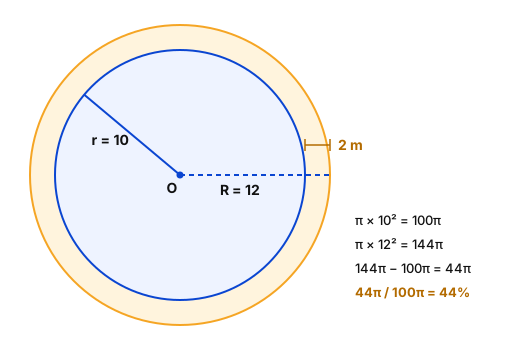
A circular garden having a diameter of 20 m is surrounded by a concrete path that is 2 m wide. Calculate the percentage increase in area resulting from the addition of the path.
20 m व्यास वाले एक वृत्ताकार उद्यान के चारों ओर 2 m चौड़ा कंक्रीट पथ है। पथ जुड़ने से क्षेत्रफल में प्रतिशत वृद्धि ज्ञात कीजिए।
  1. A24%
  2. B20%
  3. C44%
  4. D54%
Show answer

Concept: Area ∝r2, so compare squares of radii.

  1. Inner r=10 m; outer R=10+2=12 m.
  2. Areas: 100π and 144π.
  3. Increase = 44π100π×100=44%.

Trick: Radius rises 20% → area rises 20+20+20×20100=44%.

Answer: (C) 44%

अवधारणा: क्षेत्रफल ∝r2, अतः त्रिज्याओं के वर्गों की तुलना करें।

  1. अंदर r=10 मी; बाहर R=12 मी।
  2. क्षेत्रफल: 100π और 144π।
  3. वृद्धि = 44π100π×100=44%।

ट्रिक: त्रिज्या 20% बढ़ी → क्षेत्रफल 20+20+20×20100=44% बढ़ा।

उत्तर: (C) 44%

SSC CGLQuantitative AptitudeMensuration – circular pathSSC CGL 2025 · 14 Sep Shift 1 →
Q3871.
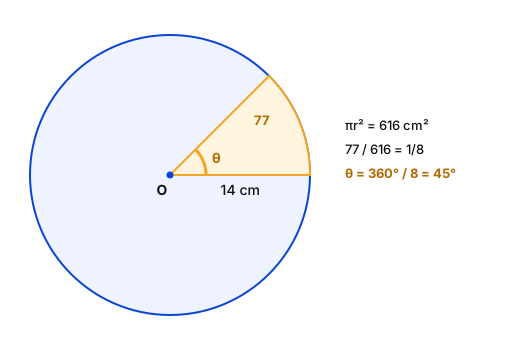
A sector of a circle having a radius 14 cm has area 77 cm². Find the angle of the sector.
14 cm त्रिज्या वाले वृत्त के एक त्रिज्यखंड का क्षेत्रफल 77 cm² है। त्रिज्यखंड का कोण ज्ञात कीजिए।
  1. A90°
  2. B45°
  3. C60°
  4. D180°
Show answer

Concept: Sector area = (θ360)×πr2.

  1. πr2=227×14×14=616 cm².
  2. θ360=77616=18.
  3. θ=3608=45∘.

Trick: 616=8×77, so the sector is 18 of the circle → 45°.

Answer: (B) 45°

अवधारणा: त्रिज्यखंड क्षेत्रफल = (θ360)×πr2।

  1. πr2=227×14×14=616 सेमी²।
  2. θ360=77616=18।
  3. θ=3608=45∘।

ट्रिक: 616=8×77, यानी वृत्त का 18 → 45°।

उत्तर: (B) 45°

SSC CGLQuantitative AptitudeMensuration – sector angleSSC CGL 2025 · 14 Sep Shift 1 →
Q3872.
A circular signboard has a radius of 4 m. If painting costs ₹30 per m² and 80% of the board is painted, what is the total painting cost? [use π = 3.14]
एक वृत्ताकार साइनबोर्ड की त्रिज्या 4 m है। यदि पेंटिंग की लागत ₹30 प्रति m² है और बोर्ड का 80% भाग पेंट किया जाता है, तो कुल पेंटिंग लागत क्या होगी? [π = 3.14 लीजिए]
  1. A₹1658.2
  2. B₹1205.7
  3. C₹1206.7
  4. D₹1681.2
Show answer

Concept: Cost = painted area × rate.

  1. Full area = 3.14×42=50.24 m².
  2. Painted = 80%×50.24=40.192 m².
  3. Cost = 40.192×30= ₹1,205.76 ≈ ₹1,205.7.

Trick: Combine first: 0.8×30=24 → 50.24×24=1,205.76.

Answer: (B) ₹1205.7

अवधारणा: खर्च = रंगा गया क्षेत्रफल × दर।

  1. पूरा क्षेत्रफल = 3.14×42=50.24 मी²।
  2. रंगा भाग = 50.24 का 80% = 40.192 मी²।
  3. खर्च = 40.192×30= ₹1,205.76 ≈ ₹1,205.7।

ट्रिक: पहले 0.8×30=24 → 50.24×24=1,205.76।

उत्तर: (B) ₹1205.7

SSC CGLQuantitative AptitudeMensuration – painting costSSC CGL 2025 · 14 Sep Shift 1 →
Q3873.
Find the y-intercept of 2x + 3y = 18.
2x + 3y = 18 का y-अंतःखंड ज्ञात कीजिए।
  1. A3
  2. B4
  3. C5
  4. D6
Show answer

Concept: y-intercept = value of y when x=0.

  1. Put x=0: 3y=18.
  2. y=6.
  3. The line cuts the y-axis at (0, 6).

Trick: For ax+by=c, y-intercept = cb=183=6; x-intercept = ca=9.

Answer: (D) 6

अवधारणा: y-अंतःखंड = x=0 रखने पर y का मान।

  1. x=0 रखें: 3y=18।
  2. y=6।
  3. रेखा y-अक्ष को (0, 6) पर काटती है।

ट्रिक: ax+by=c में y-अंतःखंड = cb=183=6; x-अंतःखंड = ca=9।

उत्तर: (D) 6

SSC CGLQuantitative AptitudeCoordinate geometry – y-interceptSSC CGL 2025 · 14 Sep Shift 1 →
Q3874.
Given, x + 1x = 5, find the value of x³ + 1x³.
यदि x + 1x = 5 है, तो x³ + 1x³ का मान ज्ञात कीजिए।
  1. A110
  2. B120
  3. C100
  4. D130
Show answer

Concept: x3+1x3=(x+1x)3−3(x+1x).

  1. x+1x=5.
  2. 53=125; 3×5=15.
  3. 125−15=110.

Trick: If x+1x=a, then x3+1x3=a3−3a. For a = 5: 125−15.

Answer: (A) 110

अवधारणा: x3+1x3=(x+1x)3−3(x+1x)।

  1. x+1x=5।
  2. 53=125; 3×5=15।
  3. 125−15=110।

ट्रिक: यदि x+1x=a, तो x3+1x3=a3−3a। a = 5 पर 125−15।

उत्तर: (A) 110

SSC CGLQuantitative AptitudeAlgebra – x³ + 1/x³SSC CGL 2025 · 14 Sep Shift 1 →
Q3875.
0.2 + 0.02 + 0.002 = ?
  1. A0.223
  2. B0.111
  3. C0.221
  4. D0.222
Show answer

Concept: Align decimal points before adding.

  1. 0.200 + 0.020 + 0.002.
  2. Thousandths: 200 + 20 + 2 = 222.
  3. Sum = 0.222.

Trick: Each term puts a 2 in a new place (tenths, hundredths, thousandths) → 0.222.

Answer: (D) 0.222

अवधारणा: जोड़ने से पहले दशमलव बिंदु एक सीध में रखें।

  1. 0.200 + 0.020 + 0.002।
  2. हज़ारवें भाग में: 200 + 20 + 2 = 222।
  3. योग = 0.222।

ट्रिक: हर पद अगले स्थान (दशांश, शतांश, सहस्रांश) पर 2 रखता है → 0.222।

उत्तर: (D) 0.222

SSC CGLQuantitative AptitudeDecimals – additionSSC CGL 2025 · 14 Sep Shift 1 →
Q3876.
Sentences of a paragraph are given below in jumbled order. Arrange the sentences in the correct order to form a meaningful and coherent paragraph.
1. These large predatory fish are known for their speed and sharp teeth, making them apex predators in their marine habitats.
2. Sharks are a fascinating group of cartilaginous fish found in oceans all over the world.
3. Their skeletons are made of cartilage rather than bone, a feature that distinguishes them from most other fish.
4. From the massive whale shark, the largest fish in the world, to the small dwarf lanternshark, they display remarkable diversity.
  1. A2, 4, 3, 1
  2. B4, 3, 2, 1
  3. C3, 2, 1, 4
  4. D2, 1, 4, 3
Show answer

Concept: Move from general introduction to specific details.

  1. 2 names the topic (sharks) — a natural opener.
  2. 4 shows their range of sizes (whale shark to lanternshark); 3 adds the cartilage feature.
  3. 1 ends with their role as top predators → 2-4-3-1.

Trick: Only two options start with 2; 'they display' in 4 needs the subject 'sharks' right before it, so 2-4 wins.

Answer: (A) 2, 4, 3, 1

अवधारणा: सामान्य परिचय से विशिष्ट विवरण की ओर बढ़ें।

  1. वाक्य 2 विषय (sharks) बताता है — शुरुआत यहीं से।
  2. 4 उनकी विविधता (whale shark से dwarf lanternshark तक) बताता है; 3 cartilage वाली विशेषता जोड़ता है।
  3. 1 उन्हें apex predator बताकर समाप्त करता है → 2-4-3-1।

ट्रिक: केवल दो विकल्प 2 से शुरू होते हैं; 4 का 'they' ठीक पहले 'sharks' चाहता है, अतः 2-4।

उत्तर: (A) 2, 4, 3, 1

SSC CGLEnglish ComprehensionPara jumble – sharksSSC CGL 2025 · 14 Sep Shift 1 →
Q3877.
Select the most appropriate meaning of the highlighted idiom.
After years of disagreement, they decided to bury the hatchet.
  1. AEnding a conflict and making peace
  2. BIncreasing bitterness
  3. CLeaving the situation suddenly
  4. DForgetting someone's identity
Show answer

Concept: Idiom = fixed phrase with a non-literal meaning.

  1. 'Bury the hatchet' = stop quarrelling and become friendly again.
  2. 'After years of disagreement' signals reconciliation.
  3. Bitterness or leaving suddenly are the opposite / unrelated.

Yaad rakhein: Similar idioms: 'make up', 'let bygones be bygones', 'extend an olive branch'.

Answer: (A) Ending a conflict and making peace

अवधारणा: मुहावरा = ऐसा वाक्यांश जिसका अर्थ शाब्दिक नहीं होता।

  1. 'Bury the hatchet' = झगड़ा खत्म करके सुलह कर लेना।
  2. 'After years of disagreement' से सुलह का संकेत मिलता है।
  3. कड़वाहट बढ़ना या अचानक चले जाना अर्थ से मेल नहीं खाते।

याद रखें: समान अर्थ: 'make up', 'let bygones be bygones', 'extend an olive branch'।

उत्तर: (A) Ending a conflict and making peace

SSC CGLEnglish ComprehensionIdiom – bury the hatchetSSC CGL 2025 · 14 Sep Shift 1 →
Q3878.
Select the INCORRECTLY spelt word.
  1. ARendezvous
  2. BHarassment
  3. CCamouflage
  4. DIndespensable
Show answer

Concept: Spot the misspelt word.

  1. Correct form: in-DIS-pensable (dis-, like 'dispense').
  2. 'Indespensable' wrongly uses 'des'.
  3. Rendezvous, Harassment (one r, double s) and Camouflage are correct.

Trick: Think: in + dispense + able → indispensable.

Answer: (D) Indespensable

अवधारणा: गलत वर्तनी वाला शब्द पहचानें।

  1. सही रूप: in-DIS-pensable ('dispense' की तरह dis)।
  2. 'Indespensable' में 'des' गलत है।
  3. Rendezvous, Harassment (एक r, दो s) और Camouflage सही हैं।

ट्रिक: सोचें: in + dispense + able → indispensable।

उत्तर: (D) Indespensable

SSC CGLEnglish ComprehensionSpelling – indispensableSSC CGL 2025 · 14 Sep Shift 1 →
Q3879.
Select the option that expresses the given sentence in the Active/Passive voice.
The reports are being reviewed by the committee before publication.
  1. AThe committee reviews the reports before publication.
  2. BThe committee is reviewing the reports before publication.
  3. CThe reports were reviewed by the committee before publication.
  4. DThe committee has reviewed the reports before publication.
Show answer

Concept: Passive 'is/are being + V3' ↔ active 'is/are + V-ing'.

  1. 'are being reviewed' → present continuous.
  2. Active: The committee (singular) is reviewing the reports before publication.
  3. (A) simple present, (C) past, (D) present perfect — tense changed.

Trick: 'being' in passive = '-ing' in active; pick the option with 'is/are …-ing'.

Answer: (B) The committee is reviewing the reports before publication.

अवधारणा: Passive 'is/are being + V3' का Active 'is/are + V-ing' होता है।

  1. 'are being reviewed' → present continuous।
  2. Active: The committee is reviewing the reports before publication।
  3. (A) simple present, (C) past, (D) present perfect — काल बदल गया।

ट्रिक: Passive में 'being' दिखे तो Active में '-ing' वाला विकल्प चुनें।

उत्तर: (B) The committee is reviewing the reports before publication.

SSC CGLEnglish ComprehensionVoice – present continuous passiveSSC CGL 2025 · 14 Sep Shift 1 →
Q3880.
Select the correct spelling to fill in the blank.
____ is a key component in modern gunpowder.
  1. ANitroselulose
  2. BNitrocellulous
  3. CNitrocellulose
  4. DNitrosellullose
Show answer

Concept: Compound word: nitro + cellulose.

  1. Cellulose: c-e-l-l-u-l-o-s-e (double l, ends in -ose).
  2. Nitroselulose uses 's' and a single l; Nitrocellulous ends wrongly in -ous.
  3. Correct: Nitrocellulose.

Trick: Chemistry names of sugars end in '-ose': glucose, sucrose, cellulose.

Answer: (C) Nitrocellulose

अवधारणा: संयुक्त शब्द: nitro + cellulose।

  1. Cellulose: c-e-l-l-u-l-o-s-e (दो l, अंत -ose)।
  2. Nitroselulose में s और एक l; Nitrocellulous का अंत -ous गलत।
  3. सही: Nitrocellulose।

ट्रिक: शर्कराओं के नाम '-ose' पर खत्म होते हैं: glucose, sucrose, cellulose।

उत्तर: (C) Nitrocellulose

SSC CGLEnglish ComprehensionSpelling – nitrocelluloseSSC CGL 2025 · 14 Sep Shift 1 →