Question bank

Q&A: practice questions with answers

Search questions on any topic. Filter by exam category, exam, subject and topic, try the question, then open the answer and explanation.

Courses – airGurukul

4,800 questions found.

Q3961.
Vinay and Ram can complete a task in 12 days and 18 days respectively. They begin the work together, but Ram leaves 4 days before the completion of the work. In how many days will the work finish?
विनय और राम एक कार्य क्रमशः 12 दिन और 18 दिन में पूरा करते हैं। दोनों साथ काम शुरू करते हैं, पर काम पूरा होने से 4 दिन पहले राम चला जाता है। कार्य कितने दिनों में पूरा होगा?
  1. A515 days515 दिन
  2. B835 days835 दिन
  3. C115 days115 दिन
  4. D845 days845 दिन
Show answer

Concept: Use LCM as total work; the leaver works (n−4) days.

  1. Work = LCM(12,18)=36 units; Vinay 3/day, Ram 2/day.
  2. 3n+2(n−4)=36→5n=44.
  3. n=445=845 days.

Trick: Assume Ram stays: Vinay alone does last 4 days = 12 units; remaining 24 units at 5/day = 4.8 days; total 4.8+4=8.8 days.

Answer: (D) 845 days

अवधारणा: कुल कार्य LCM लें; छोड़ने वाला (n−4) दिन काम करता है।

हल:

  1. कार्य = 36 इकाई; विनय 3/दिन, राम 2/दिन।
  2. 3n+2(n−4)=36→5n=44।
  3. n=845 दिन।

ट्रिक: अंतिम 4 दिन विनय अकेले = 12 इकाई; बाकी 24÷5=4.8 दिन; कुल 8.8 दिन।

उत्तर: (D) 845 दिन

SSC CGLQuantitative AptitudeTime and work – one leaves earlySSC CGL 2025 · 14 Oct Shift 3 →
Q3962.
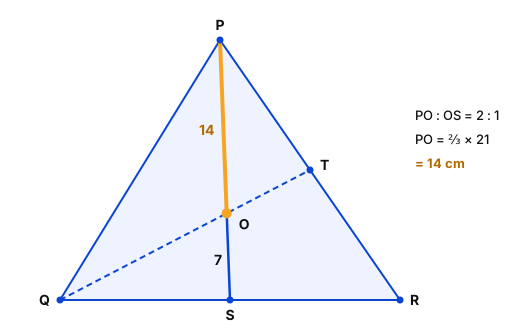
In a triangle PQR, medians PS and QT intersect at O. If the length of median PS is 21 cm, what is the length of the segment PO?
त्रिभुज PQR में माध्यिकाएँ PS और QT बिंदु O पर मिलती हैं। यदि माध्यिका PS की लंबाई 21 cm है, तो खंड PO की लंबाई क्या है?
  1. A14 cm
  2. B16 cm
  3. C10 cm
  4. D12 cm
Show answer

Concept: Medians meet at the centroid, which divides each median 2 : 1 from the vertex.

  1. O is the centroid of △PQR.
  2. PO=23×PS=23×21=14 cm.

Trick: Vertex part = 23 of median; OS = 7 cm.

Answer: (A) 14 cm

अवधारणा: माध्यिकाएँ केंद्रक पर मिलती हैं, जो उन्हें शीर्ष से 2 : 1 में बाँटता है।

हल:

  1. O, △PQR का केंद्रक है।
  2. PO=23×21=14 cm।

ट्रिक: शीर्ष वाला भाग = माध्यिका का 23; OS = 7 cm।

उत्तर: (A) 14 cm

SSC CGLQuantitative AptitudeCentroid divides medians 2 : 1SSC CGL 2025 · 14 Oct Shift 3 →
Q3963.
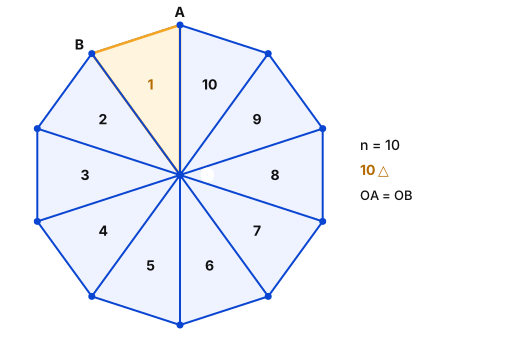
A regular decagon can be divided into how many isosceles triangles by joining its vertices to its centre?
एक सम दशभुज को उसके शीर्षों को केंद्र से जोड़कर कितने समद्विबाहु त्रिभुजों में बाँटा जा सकता है?
  1. A8
  2. B10
  3. C12
  4. D5
Show answer

Concept: Joining the centre to all vertices gives one triangle per side.

  1. Decagon has 10 sides → 10 triangles.
  2. Two sides of each are equal radii → isosceles (apex angle 360°/10 = 36°).

Trick: n-sided regular polygon → n congruent isosceles triangles from the centre.

Answer: (B) 10

अवधारणा: केंद्र को सभी शीर्षों से जोड़ने पर हर भुजा पर एक त्रिभुज बनता है।

हल:

  1. दशभुज की 10 भुजाएँ → 10 त्रिभुज।
  2. हर त्रिभुज की दो भुजाएँ त्रिज्या (बराबर) → समद्विबाहु।

ट्रिक: n भुजाओं वाला सम बहुभुज → केंद्र से n सर्वांगसम समद्विबाहु त्रिभुज।

उत्तर: (B) 10

SSC CGLQuantitative AptitudeRegular polygon – triangles from centreSSC CGL 2025 · 14 Oct Shift 3 →
Q3964.
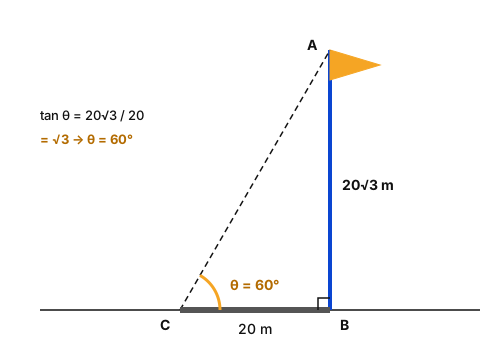
A flagpole casts a shadow measuring 20 metres. Given that the height of the flagpole is 203 metres, at what angle is the sun elevated?
एक ध्वजदंड की छाया 20 मीटर लंबी है। यदि ध्वजदंड की ऊँचाई 203 मीटर हो, तो सूर्य का उन्नयन कोण क्या है?
  1. A30°
  2. B45°
  3. C60°
  4. D75°
Show answer

Concept: tanθ = height ÷ shadow.

  1. Height = 203 m, shadow = 20 m.
  2. tanθ=20320=3→θ=60∘.

Trick: Height = 3× shadow → 60°; shadow = 3× height → 30°; equal → 45°.

Answer: (C) 60°

अवधारणा: tanθ = ऊँचाई ÷ छाया।

हल:

  1. ऊँचाई = 203 m, छाया = 20 m।
  2. tanθ=3→θ=60∘।

ट्रिक: ऊँचाई = 3× छाया → 60°; छाया = 3× ऊँचाई → 30°; बराबर → 45°।

उत्तर: (C) 60°

SSC CGLQuantitative AptitudeHeights and distancesSSC CGL 2025 · 14 Oct Shift 3 →
Q3965.
A spherical ball is submerged in water in a cylindrical container. The radius of the cylindrical container is 8 cm and its height is 35 cm. What is the volume of water displaced by the ball if its radius is 7 cm?
एक गोलाकार गेंद बेलनाकार पात्र के पानी में पूरी डुबोई जाती है। पात्र की त्रिज्या 8 cm और ऊँचाई 35 cm है। यदि गेंद की त्रिज्या 7 cm हो, तो उसके द्वारा विस्थापित जल का आयतन क्या होगा?
  1. A18423π cm³
  2. B16223π cm³
  3. C17623π cm³
  4. D13723π cm³
Show answer

Concept: A fully submerged body displaces water equal to its own volume; the container size only confirms the ball fits.

  1. V=43πr3 with r=7 cm.
  2. V=43×343×π=13723π cm3

Trick: Only the ball's radius matters: 73=343 and 343×4=1372.

Answer: (D) 13723π cm³

अवधारणा: पूरी डूबी वस्तु अपने आयतन के बराबर पानी हटाती है; पात्र का माप केवल यह बताता है कि गेंद उसमें समा जाती है।

  1. V=43πr3, r=7 cm।
  2. V=43×343×π=13723π cm3

ट्रिक: केवल गेंद की त्रिज्या काम की है: 73=343, 343×4=1372।

उत्तर: (D) 13723π cm³

SSC CGLQuantitative AptitudeVolume of sphere – displacementSSC CGL 2025 · 14 Oct Shift 3 →
Q3966.
Given x + y + z = 0, evaluate (x − y)³ + (y − z)³ + (z − x)³.
यदि x + y + z = 0 है, तो (x − y)³ + (y − z)³ + (z − x)³ का मान ज्ञात कीजिए।
  1. A0
  2. B9(x − y)(y − z)(z − x)
  3. C27xyz
  4. D3(x − y)(y − z)(z − x)
Show answer

Concept: Whenever three quantities add to zero, the sum of their cubes equals 3 × their product.

  1. Put a=x−y, b=y−z, c=z−x.
  2. a+b+c=0 always (x+y+z=0 is not even needed).
  3. Sum of cubes = 3(x−y)(y−z)(z−x).

Trick: Put x=1, y=0, z=−1: LHS=1+1−8=−6; option D = 3(1)(1)(−2)=−6 ✓.

Answer: (D) 3(x − y)(y − z)(z − x)

अवधारणा: यदि a+b+c=0, तो a3+b3+c3=3abc।

हल:

  1. a=x−y, b=y−z, c=z−x लें।
  2. इनका योग हमेशा 0।
  3. उत्तर = 3(x−y)(y−z)(z−x)।

ट्रिक: x=1, y=0, z=−1 रखें: बायाँ पक्ष −6, विकल्प D भी −6 ✓।

उत्तर: (D) 3(x − y)(y − z)(z − x)

SSC CGLQuantitative AptitudeIdentity – a + b + c = 0SSC CGL 2025 · 14 Oct Shift 3 →
Q3967.
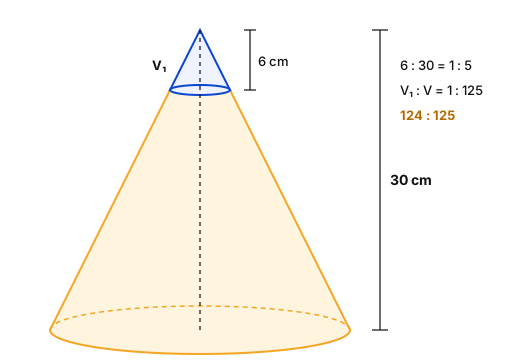
A right circular cone is cut parallel to its base, forming a frustum. The height of the original cone is 30 cm and the cut is made 6 cm from the top. What is the ratio of the volume of the frustum to the volume of the entire cone?
एक लंब वृत्तीय शंकु को आधार के समांतर काटकर छिन्नक बनाया जाता है। मूल शंकु की ऊँचाई 30 cm है और कटाव शीर्ष से 6 cm पर किया गया है। छिन्नक और पूरे शंकु के आयतन का अनुपात क्या है?
  1. A124 : 125
  2. B125 : 124
  3. C125 : 126
  4. D126 : 125
Show answer

Concept: Similar cones: volume ratio = (height ratio)3.

  1. Top cone height 6, full cone 30 → ratio 1 : 5.
  2. Volumes 1 : 125 → frustum = 125−1=124.
  3. Frustum : cone = 124 : 125.

Trick: Frustum is part of the cone, so the ratio must be less than 1 → only 124 : 125.

Answer: (A) 124 : 125

अवधारणा: समरूप शंकु: आयतन अनुपात = (ऊँचाई अनुपात)3।

हल:

  1. ऊपरी शंकु 6, पूरा 30 → 1 : 5।
  2. आयतन 1 : 125 → छिन्नक = 124।
  3. छिन्नक : शंकु = 124 : 125।

ट्रिक: छिन्नक शंकु का भाग है, अनुपात 1 से कम → केवल 124 : 125।

उत्तर: (A) 124 : 125

SSC CGLQuantitative AptitudeFrustum – volume ratioSSC CGL 2025 · 14 Oct Shift 3 →
Q3968.
If tanA = 12 and tanB = 13, with A and B in (0, π2), find tan(A − B).
यदि tanA = 12 और tanB = 13 है, तथा A और B (0, π2) में हैं, तो tan(A − B) ज्ञात कीजिए।
  1. A27
  2. B17
  3. C37
  4. D47
Show answer

Concept: tan(A−B)=tanA−tanB1+tanAtanB.

  1. tanA=12, tanB=13.
  2. Numerator =12−13=16; denominator =1+16=76.
  3. tan(A−B)=17.

Trick: For tanA=1a, tanB=1b: tan(A−B)=b−aab+1=17.

Answer: (B) 17

अवधारणा: tan(A−B)=tanA−tanB1+tanAtanB।

हल:

  1. tanA=12, tanB=13।
  2. अंश =16; हर =76।
  3. tan(A−B)=17।

ट्रिक: tanA=1a, tanB=1b हो तो उत्तर = b−aab+1=17।

उत्तर: (B) 17

SSC CGLQuantitative AptitudeTrigonometry – tan(A − B)SSC CGL 2025 · 14 Oct Shift 3 →
Q3969.
Find the slope of the line 3x + 4y = 10.
रेखा 3x + 4y = 10 की प्रवणता ज्ञात कीजिए।
  1. A−34
  2. B34
  3. C−43
  4. D43
Show answer

Concept: For ax+by=c, slope =−ab.

  1. a=3, b=4.
  2. Slope =−34 (y=−3x4+52).

Trick: −coefficient of xcoefficient of y – no rearranging needed.

Answer: (A) −34

अवधारणा: ax+by=c के लिए ढलान =−ab।

हल:

  1. a=3, b=4।
  2. ढलान =−34।

ट्रिक: −x का गुणांकy का गुणांक।

उत्तर: (A) −34

SSC CGLQuantitative AptitudeSlope of a lineSSC CGL 2025 · 14 Oct Shift 3 →
Q3970.
If 75% of P = 60% of Q = 30% of R, find P : Q : R.
यदि P का 75% = Q का 60% = R का 30% है, तो P : Q : R ज्ञात कीजिए।
  1. A4 : 5 : 10
  2. B10 : 5 : 4
  3. C5 : 4 : 10
  4. D2 : 3 : 5
Show answer

Concept: If a% of P = b% of Q, then P:Q=1a:1b.

  1. P:Q:R=175:160:130.
  2. Multiply by 300 (LCM): 4 : 5 : 10.

Trick: Smallest percentage gives the largest quantity → R biggest, P smallest → only 4 : 5 : 10.

Answer: (A) 4 : 5 : 10

अवधारणा: a% of P = b% of Q हो तो P:Q=1a:1b।

हल:

  1. P:Q:R=175:160:130।
  2. 300 से गुणा: 4 : 5 : 10।

ट्रिक: सबसे कम प्रतिशत वाली राशि सबसे बड़ी → R बड़ा, P छोटा → 4 : 5 : 10।

उत्तर: (A) 4 : 5 : 10

SSC CGLQuantitative AptitudeRatio from equal percentagesSSC CGL 2025 · 14 Oct Shift 3 →
Q3971.
If a³ + b³ = 189 and ab = 20, find the value of a + b.
यदि a³ + b³ = 189 और ab = 20 है, तो a + b का मान ज्ञात कीजिए।
  1. A9
  2. B6
  3. C7
  4. D8
Show answer

Concept: a3+b3=(a+b)3−3ab(a+b).

  1. Let s=a+b: s3−60s=189.
  2. s=9: 729−540=189 ✓.

Trick: ab=20 → try a=4, b=5: 64+125=189 ✓ → a+b=9.

Answer: (A) 9

अवधारणा: a3+b3=(a+b)3−3ab(a+b)।

हल:

  1. s=a+b: s3−60s=189।
  2. s=9: 729−540=189 ✓।

ट्रिक: ab=20 → a=4, b=5 लें: 64+125=189 ✓ → 9।

उत्तर: (A) 9

SSC CGLQuantitative AptitudeAlgebra – sum of cubesSSC CGL 2025 · 14 Oct Shift 3 →
Q3972.
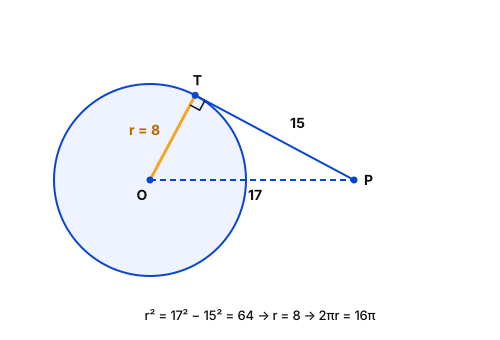
A point P is 17 cm away from the centre of a circle. A tangent drawn from P to the circle has a length of 15 cm. What is the circumference of the circle?
एक बिंदु P वृत्त के केंद्र से 17 cm दूर है। P से खींची गई स्पर्श रेखा की लंबाई 15 cm है। वृत्त की परिधि क्या है?
  1. A12π cm
  2. B15π cm
  3. C16π cm
  4. D18π cm
Show answer

Concept: Radius ⊥ tangent at the point of contact → right triangle.

  1. r2=172−152=289−225=64→r=8 cm.
  2. Circumference = 2π×8=16π cm.

Trick: 8-15-17 is a Pythagorean triplet.

Answer: (C) 16π cm

अवधारणा: स्पर्श बिंदु पर त्रिज्या ⊥ स्पर्श रेखा → समकोण त्रिभुज।

हल:

  1. r2=289−225=64→r=8 cm।
  2. परिधि = 2π×8=16π cm।

ट्रिक: 8-15-17 पाइथागोरस त्रिक है।

उत्तर: (C) 16π cm

SSC CGLQuantitative AptitudeTangent length and radiusSSC CGL 2025 · 14 Oct Shift 3 →
Q3973.
A furniture shop first sells a dining chair for ₹X, thereby making a 25% profit. Later, for a festive period, the marked price of the same chair is raised to ₹1.8X and a discount of 20% is then given on this new marked price. What is the percentage profit earned by the store during the festive sale?
एक फर्नीचर दुकान पहले एक कुर्सी ₹X में बेचकर 25% लाभ कमाती है। बाद में त्योहारी अवधि हेतु उसी कुर्सी का अंकित मूल्य ₹1.8X कर दिया जाता है और उस नए अंकित मूल्य पर 20% छूट दी जाती है। त्योहारी बिक्री में दुकान को कितने प्रतिशत लाभ हुआ?
  1. A40%
  2. B80%
  3. C42%
  4. D70%
Show answer

Concept: Find CP from the first sale, then the new SP.

  1. 25% profit → CP=X1.25=0.8X.
  2. New SP = 1.8X×0.8=1.44X.
  3. Profit% = 1.44−0.80.8×100=80%.

Trick: Take X=100: CP = 80, new SP = 144 → profit 64 on 80 = 80%.

Answer: (B) 80%

अवधारणा: पहली बिक्री से CP निकालकर नया SP देखें।

हल:

  1. 25% लाभ → CP=0.8X।
  2. नया SP = 1.8X×0.8=1.44X।
  3. लाभ% = 0.640.8×100=80%।

ट्रिक: X=100 लें: CP 80, नया SP 144 → 6480=80%।

उत्तर: (B) 80%

SSC CGLQuantitative AptitudeProfit after mark-up and discountSSC CGL 2025 · 14 Oct Shift 3 →
Q3974.
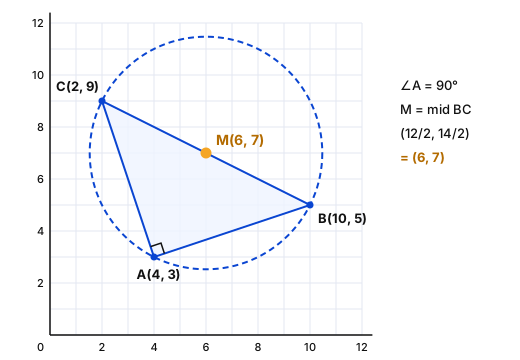
A right triangle has vertices at A(4, 3), B(10, 5) and C(2, 9). What are the coordinates of its circumcentre?
एक समकोण त्रिभुज के शीर्ष A(4, 3), B(10, 5) और C(2, 9) हैं। उसके परिकेंद्र के निर्देशांक क्या हैं?
  1. A(6, 4)
  2. B(4, 7)
  3. C(4, 4)
  4. D(6, 7)
Show answer

Concept: In a right triangle, the circumcentre is the midpoint of the hypotenuse.

  1. AB=(10−4,5−3)=(6,2); AC=(2−4,9−3)=(−2,6).
  2. AB·AC=6×(−2)+2×6=0 → right angle at A, so BC is the hypotenuse.
  3. Midpoint of BC = (10+22,5+92)=(6,7).

Trick: Hypotenuse midpoint rule – no perpendicular bisectors needed.

Answer: (D) (6, 7)

अवधारणा: समकोण त्रिभुज में परिकेंद्र कर्ण का मध्य-बिंदु होता है।

  1. AB=(6,2), AC=(−2,6)।
  2. AB·AC=−12+12=0 → A पर समकोण, अतः BC कर्ण है।
  3. BC का मध्य-बिंदु = (10+22,5+92)=(6,7)।

ट्रिक: कर्ण के मध्य-बिंदु का नियम – लंब समद्विभाजक की ज़रूरत नहीं।

उत्तर: (D) (6, 7)

SSC CGLQuantitative AptitudeCircumcentre of a right triangleSSC CGL 2025 · 14 Oct Shift 3 →
Q3975.
Which of the following numbers is an integer but NOT a natural number?
निम्न में से कौन-सी संख्या पूर्णांक है परंतु प्राकृत संख्या नहीं?
  1. A3
  2. B0
  3. C6
  4. D9
Show answer

Concept: Natural numbers start at 1; integers also include 0 and negatives.

  1. 0 is an integer but not a natural number.
  2. 3, 6, 9 are both natural numbers and integers.

Yaad rakhein: 0 is the smallest whole number; 1 is the smallest natural number.

Answer: (B) 0

अवधारणा: प्राकृत संख्याएँ 1 से शुरू; पूर्णांकों में 0 और ऋणात्मक भी आते हैं।

हल:

  1. 0 पूर्णांक है, पर प्राकृत संख्या नहीं।
  2. 3, 6, 9 दोनों हैं।

याद रखें: 0 सबसे छोटी पूर्ण संख्या; 1 सबसे छोटी प्राकृत संख्या।

उत्तर: (B) 0

SSC CGLQuantitative AptitudeNumber system – integers vs natural numbersSSC CGL 2025 · 14 Oct Shift 3 →
Q3976.
Sentences of a paragraph are given below in jumbled order. Arrange the sentences in the correct order to form a meaningful and coherent paragraph.
1. This adaptability enables ecosystems to recover from disturbances and maintain long-term stability.
2. Ecosystem resilience refers to the capacity of a natural system to absorb stress and reorganize while undergoing change.
3. In the context of climate change, resilience is a crucial factor determining the survival of many species.
4. It involves complex interactions among biotic and abiotic components that allow systems to withstand external pressures.
  1. A2, 4, 1, 3
  2. B4, 2, 1, 3
  3. C2, 1, 3, 4
  4. D3, 2, 4, 1
Show answer

Concept: Open with the definition, then pronoun/connector links, then the broader context.

  1. 2 introduces and defines 'ecosystem resilience' → first.
  2. 4 begins with 'It involves…' → 'It' refers to resilience in 2.
  3. 1 'This adaptability…' sums up 4's idea of withstanding pressure; 3 widens it to climate change → 2-4-1-3.

Trick: A sentence starting with 'It' or 'This' can never open the paragraph – removes B; only A and C start with 2, and 'This adaptability' needs 4 before it.

Answer: (A) 2, 4, 1, 3

अवधारणा: परिभाषा से शुरुआत, फिर सर्वनाम/जोड़ने वाले शब्दों से कड़ी, अंत में व्यापक संदर्भ।

हल:

  1. वाक्य 2 'ecosystem resilience' की परिभाषा देता है → पहला।
  2. वाक्य 4 'It involves…' – 'It' = resilience।
  3. वाक्य 1 'This adaptability…' फिर वाक्य 3 (climate change) → 2-4-1-3।

ट्रिक: 'It'/'This' से शुरू होने वाला वाक्य पहला नहीं हो सकता; 'This adaptability' से पहले 4 चाहिए।

उत्तर: (A) 2, 4, 1, 3

SSC CGLEnglish ComprehensionPara jumble – ecosystem resilienceSSC CGL 2025 · 14 Oct Shift 3 →
Q3977.
Select the option that expresses the given sentence in the Passive voice.
The gardener waters the plants every morning.
  1. AThe plants water the gardener every morning.
  2. BThe garden is watered by plants every morning.
  3. CThe plants are watered by the gardener every morning.
  4. DThe plants watering the gardener every morning.
Show answer

Concept: Simple present passive: object + is/are + V3 + by + agent.

  1. Object 'the plants' (plural) becomes the subject → 'are'.
  2. 'waters' → 'are watered'; agent → 'by the gardener'.
  3. Result: The plants are watered by the gardener every morning.

Trick: Doer and receiver must not swap meaning – A and B make the plants water the gardener.

Answer: (C) The plants are watered by the gardener every morning.

अवधारणा: सामान्य वर्तमान का कर्मवाच्य: object + is/are + V3 + by + कर्ता।

हल:

  1. 'the plants' (बहुवचन) कर्ता बनेगा → 'are'।
  2. 'waters' → 'are watered'; 'by the gardener'।
  3. वाक्य: The plants are watered by the gardener every morning.

ट्रिक: A और B में अर्थ उल्टा हो जाता है; D में सहायक क्रिया नहीं।

उत्तर: (C) The plants are watered by the gardener every morning.

SSC CGLEnglish ComprehensionPassive voice – simple presentSSC CGL 2025 · 14 Oct Shift 3 →
Q3978.
Select the correct direct form of the given sentence.
He said that he was returning the borrowed book the next day.
  1. AHe said, "I return the borrowed book tomorrow."
  2. BHe said, "I am returning the borrowed book tomorrow."
  3. CHe said, "I was returning the borrowed book the next day."
  4. DHe said, "I will return the borrowed book the next day."
Show answer

Concept: To go back to direct speech, undo the tense shift and time words.

  1. 'was returning' (past continuous) ← 'am returning' (present continuous).
  2. 'he' (speaker) → 'I'; 'the next day' → 'tomorrow'.
  3. He said, "I am returning the borrowed book tomorrow."

Trick: Reported tense one step back → direct tense one step forward: was + ing → am + ing.

Answer: (B) He said, "I am returning the borrowed book tomorrow."

अवधारणा: प्रत्यक्ष कथन बनाने के लिए काल और समय-सूचक शब्द वापस बदलें।

हल:

  1. 'was returning' ← 'am returning'।
  2. 'he' → 'I'; 'the next day' → 'tomorrow'।
  3. He said, "I am returning the borrowed book tomorrow."

ट्रिक: Indirect में काल एक कदम पीछे होता है, direct में एक कदम आगे करें: was + ing → am + ing।

उत्तर: (B) He said, "I am returning the borrowed book tomorrow."

SSC CGLEnglish ComprehensionNarration – indirect to directSSC CGL 2025 · 14 Oct Shift 3 →
Q3979.
Select the correct spelling of a word meaning 'a personal peculiarity or habit'.
  1. AIdiosyncracy
  2. BIdiosyncrasy
  3. CIdiosyncresy
  4. DIdiosyncrosy
Show answer

Concept: Correct spelling: i-d-i-o-s-y-n-c-r-a-s-y.

  1. Meaning: a peculiar habit or way of behaving special to a person.
  2. It ends in '-crasy' (from Greek 'krasis' = mixture), not '-cracy'.

Trick: Split it: idio + syn + crasy – unlike 'democracy', it ends with an 's'.

Answer: (B) Idiosyncrasy

अवधारणा: सही वर्तनी: Idiosyncrasy।

हल:

  1. अर्थ: किसी व्यक्ति की अपनी विशेष आदत/सनक।
  2. अंत '-crasy' (ग्रीक 'krasis' = मिश्रण) है, '-cracy' नहीं।

ट्रिक: democracy वाला '-cracy' यहाँ नहीं; यहाँ 's' वाला '-crasy'।

उत्तर: (B) Idiosyncrasy

SSC CGLEnglish ComprehensionSpelling – IdiosyncrasySSC CGL 2025 · 14 Oct Shift 3 →
Q3980.
Select the option which contains the most appropriate HOMONYM of the word given in bold/underline.
The botanist noted that the plant would yield more sap in warmer conditions.
  1. AThe miners expected the new site to yield a rich vein of ore.
  2. BHeavy traffic forced the drivers to yield at the junction.
  3. CThe negotiations will yield results by the end of the month.
  4. DFarmers hope the land will yield more wheat this season.
Show answer

Concept: Homonyms: same spelling, different meaning.

  1. In the sentence, 'yield' = produce/give (sap).
  2. A (ore), C (results), D (wheat) use the same 'produce' sense.
  3. B: 'yield at the junction' = give way to other traffic → different meaning.

Trick: Find the odd one out – three options share a meaning, the fourth is the homonym.

Answer: (B) Heavy traffic forced the drivers to yield at the junction.

अवधारणा: Homonym: वर्तनी एक, अर्थ अलग।

हल:

  1. दिए वाक्य में 'yield' = उत्पन्न करना (रस देना)।
  2. A, C, D में भी यही अर्थ (उत्पादन/परिणाम देना)।
  3. B में 'yield' = दूसरे वाहनों को रास्ता देना → अलग अर्थ।

ट्रिक: तीन विकल्प एक ही अर्थ के हों तो चौथा अलग वाला उत्तर है।

उत्तर: (B) Heavy traffic forced the drivers to yield at the junction.

SSC CGLEnglish ComprehensionHomonyms – yieldSSC CGL 2025 · 14 Oct Shift 3 →