Question bank

Q&A: practice questions with answers

Search questions on any topic. Filter by exam category, exam, subject and topic, try the question, then open the answer and explanation.

Courses – airGurukul

4,800 questions found.

Q401.
A north-east development forum met in Lucknow on 10th April and in Bengaluru three days after. What was Bengaluru's date?
एक पूर्वोत्तर विकास मंच की बैठक लखनऊ में 10 अप्रैल को और बेंगलुरु में उसके तीन दिन बाद हुई। बेंगलुरु की तिथि क्या थी?
  1. A12th April12 अप्रैल
  2. B13th April13 अप्रैल
  3. C7th April7 अप्रैल
  4. D10th April10 अप्रैल
Show answer

Concept: A date 'n days after' is found by simply adding n to the day number (within the same month).

  1. Lucknow meeting: 10 April.
  2. Bengaluru meeting = 10 + 3 = 13 April (April has 30 days, so no month change).

Trick: 'After' means add, 'before' means subtract — just check the month does not overflow.

Answer: (B) 13th April

अवधारणा: किसी तारीख के 'n दिन बाद' की तारीख = दिन संख्या + n (महीना न बदले तो)।

हल:

  1. लखनऊ बैठक: 10 अप्रैल।
  2. बेंगलुरु बैठक = 10 + 3 = 13 अप्रैल (अप्रैल में 30 दिन, महीना नहीं बदलता)।

ट्रिक: 'बाद' = जोड़ें, 'पहले' = घटाएँ; बस महीने की अंतिम तारीख पर ध्यान दें।

उत्तर: (B) 13 अप्रैल
SSC CGLGeneral Intelligence & ReasoningCalendar – counting days forwardSSC CGL 2025 · 25 Sep Shift 2 →
Q402.
Choose the address that is the same as the one given below.
203, Orchid Towers, Viman Nagar, Pune, Maharashtra - 411014
नीचे दिए गए पते के समान पता चुनिए।
203, Orchid Towers, Viman Nagar, Pune, Maharashtra - 411014
  1. A203, Orchid Tower, Viman Nagar, Pune, Maharashtra - 411014
  2. B203, Orchid Towers, Viman Nagar, Pune, Maharashtra - 411014
  3. C203, Orchid Towers, Viman Nagar, Puna, Maharashtra - 411014
  4. D203, Orchid Towers, Viman Nagar, Pune, Maharastra - 411014
Show answer

Concept: Compare the given address part by part (number, building, area, city, state, PIN) with each option.

  1. (A) 'Tower' – the final s is missing.
  2. (C) 'Puna' instead of Pune; (D) 'Maharastra' – letter h missing.
  3. (B) agrees with the original in every part.

Trick: Check the longest words first (state, building name) — spelling slips usually hide there.

Answer: (B) 203, Orchid Towers, Viman Nagar, Pune, Maharashtra - 411014

अवधारणा: दिए गए पते को हिस्सों में (नंबर, बिल्डिंग, क्षेत्र, शहर, राज्य, पिन) हर विकल्प से मिलाएँ।

हल:

  1. (A) में 'Tower' – अंत का s गायब।
  2. (C) में Pune की जगह 'Puna'; (D) में 'Maharastra' – h गायब।
  3. (B) हर हिस्से में मूल पते जैसा है।

ट्रिक: लंबे शब्द (राज्य, बिल्डिंग का नाम) पहले जाँचें — गलती अक्सर वहीं छिपी होती है।

उत्तर: (B) 203, Orchid Towers, Viman Nagar, Pune, Maharashtra - 411014

SSC CGLGeneral Intelligence & ReasoningAddress matching – spot the differenceSSC CGL 2025 · 25 Sep Shift 2 →
Q403.
What should come in place of the question mark '?' in the following number series?
6, 0, −6, −12, ?, −24
निम्न संख्या शृंखला में प्रश्न चिह्न के स्थान पर क्या आना चाहिए?
6, 0, −6, −12, ?, −24
  1. A−16
  2. B−18
  3. C−21
  4. D−24
Show answer

Concept: When consecutive terms differ by the same amount, the series is an AP.

  1. Differences: 0−6=−6, −6−0=−6, −12−(−6)=−6.
  2. Missing term = −12−6=−18.
  3. Check: −18−6=−24 ✓ (matches the last term).

Trick: Use the last given term to verify: the blank must sit exactly midway between −12 and −24, i.e. −18.

Answer: (B) −18

अवधारणा: जब लगातार पदों का अंतर एक-सा हो, तो श्रेणी AP होती है।

हल:

  1. अंतर: 0−6=−6, −6−0=−6, −12−(−6)=−6।
  2. लुप्त पद = −12−6=−18।
  3. जाँच: −18−6=−24 ✓

ट्रिक: रिक्त स्थान −12 और −24 के ठीक बीच होगा: −12−242=−18।

उत्तर: (B) −18

SSC CGLGeneral Intelligence & ReasoningNumber series – constant differenceSSC CGL 2025 · 25 Sep Shift 2 →
Q404.
If 4 * 3 = 19, 5 * 6 = 31 and 7 * 4 = 53, then 6 * 3 = ?
यदि 4 * 3 = 19, 5 * 6 = 31 और 7 * 4 = 53 है, तो 6 * 3 = ?
  1. A32
  2. B41
  3. C37
  4. D39
Show answer

Concept: Find one rule linking the two numbers that fits every example, then apply it.

  1. 4 * 3: 16+3=19 ✓
  2. 5 * 6: 25+6=31 ✓; 7 * 4: 49+4=53 ✓ → rule is (first)2+second.
  3. 6 * 3 = 36+3=39.

Trick: Results 19, 31, 53 sit just above 16, 25, 49 (squares of the first numbers) — the gap is the second number.

Answer: (D) 39

अवधारणा: ऐसा एक नियम खोजें जो सभी उदाहरणों पर लागू हो, फिर उसे प्रश्न पर लगाएँ।

हल:

  1. 4 * 3: 16+3=19 ✓
  2. 5 * 6: 25+6=31 ✓; 7 * 4: 49+4=53 ✓ → नियम: (पहली संख्या)² + दूसरी।
  3. 6 * 3 = 36+3=39।

ट्रिक: 19, 31, 53 पहली संख्या के वर्ग (16, 25, 49) से थोड़ा बड़े हैं — अंतर ठीक दूसरी संख्या है।

उत्तर: (D) 39

SSC CGLGeneral Intelligence & ReasoningSymbol operation – a² + bSSC CGL 2025 · 25 Sep Shift 2 →
Q405.
A statement is given followed by two conclusions. Find which conclusion is FALSE based on the given statement.
Statement: A ≥ E; B = C ≥ F; G ≥ C > D; E ≥ B
Conclusions:
I. G ≥ B
II. A > D
एक कथन और उसके बाद दो निष्कर्ष दिए गए हैं। बताइए कौन-सा निष्कर्ष असत्य है।
कथन: A ≥ E; B = C ≥ F; G ≥ C > D; E ≥ B
निष्कर्ष:
I. G ≥ B
II. A > D
  1. AEither I or IIया तो I या II
  2. BOnly Iकेवल I
  3. CNeither I nor IIन I न II
  4. DOnly IIकेवल II
Show answer

Concept: Join the statements into one chain; a conclusion is true only if the chain links the two letters in that direction.

  1. Chain: G ≥ C = B ≤ E ≤ A and C > D.
  2. I: G ≥ C = B ⇒ G ≥ B — true.
  3. II: A ≥ E ≥ B = C > D ⇒ A > D (one strict sign makes the result strict) — true.
  4. No conclusion is false.

Trick: Read the question word — here it asks for FALSE. Both are true, so the answer is 'Neither'.

Answer: (C) Neither I nor II

अवधारणा: सभी कथनों को एक श्रृंखला में जोड़ें; निष्कर्ष तभी सत्य है जब श्रृंखला दोनों अक्षरों को सही दिशा में जोड़े।

हल:

  1. श्रृंखला: A ≥ E ≥ B = C ≤ G तथा C > D।
  2. I: G ≥ C = B ⇒ G ≥ B — सत्य।
  3. II: A ≥ E ≥ B = C > D ⇒ A > D (एक भी '>' हो तो परिणाम '>') — सत्य।
  4. कोई भी निष्कर्ष असत्य नहीं।

ट्रिक: प्रश्न 'FALSE' पूछ रहा है — दोनों सत्य हैं, इसलिए उत्तर 'न तो I न II'।

उत्तर: (C) न I न II

SSC CGLGeneral Intelligence & ReasoningInequality – finding the false conclusionSSC CGL 2025 · 25 Sep Shift 2 →
Q406.
Which roll number has only composite digits?
किस अनुक्रमांक में केवल भाज्य अंक हैं?
  1. A123
  2. B468
  3. C257
  4. D309
Show answer

Concept: A composite number has more than two factors; among digits 0–9 only 4, 6, 8, 9 are composite.

  1. 123: 1 is neither prime nor composite; 2, 3 are prime ✗
  2. 257: all prime ✗; 309: 3 prime, 0 neither ✗
  3. 468: 4, 6, 8 are all composite ✓

Trick: Any number containing 0, 1, 2, 3, 5 or 7 is out at once — only 4, 6, 8, 9 can appear.

Answer: (B) 468

अवधारणा: भाज्य संख्या के दो से अधिक गुणनखंड होते हैं; 0–9 में केवल 4, 6, 8, 9 भाज्य हैं।

हल:

  1. 123: 1 न अभाज्य न भाज्य; 2, 3 अभाज्य ✗
  2. 257: सभी अभाज्य ✗; 309: 3 अभाज्य, 0 कुछ नहीं ✗
  3. 468: 4, 6, 8 तीनों भाज्य ✓

ट्रिक: जिस संख्या में 0, 1, 2, 3, 5 या 7 हो, वह तुरंत बाहर — केवल 4, 6, 8, 9 चलेंगे।

उत्तर: (B) 468

SSC CGLGeneral Intelligence & ReasoningComposite digitsSSC CGL 2025 · 25 Sep Shift 2 →
Q407.
Select the odd one.
असंगत चुनिए।
  1. ACowगाय
  2. BPigeonकबूतर
  3. CLionशेर
  4. DSheepभेड़
Show answer

Concept: Group the words by biological class.

  1. Cow, lion, sheep – mammals (give birth, feed young on milk).
  2. Pigeon – a bird (lays eggs, has feathers).

Trick: Three of them have four legs; the pigeon has two legs and wings.

Answer: (B) Pigeon

अवधारणा: शब्दों को जैविक वर्ग के अनुसार बाँटें।

हल:

  1. गाय, शेर, भेड़ – स्तनधारी (बच्चे को जन्म देते, दूध पिलाते हैं)।
  2. कबूतर – पक्षी (अंडे देता है, पंख होते हैं)।

ट्रिक: तीन चार पैरों वाले हैं; कबूतर के दो पैर और पंख हैं।

उत्तर: (B) कबूतर

SSC CGLGeneral Intelligence & ReasoningOdd one out – animal classSSC CGL 2025 · 25 Sep Shift 2 →
Q408.
In a certain code language, 'BAKE' is coded as '4523', 'RICE' as '1298', 'BORE' as '5927' and 'CALB' as '8465'. What is the code for 'LKO' in that language?
एक कूट भाषा में 'BAKE' का कूट '4523', 'RICE' का '1298', 'BORE' का '5927' और 'CALB' का '8465' है। उसी भाषा में 'LKO' का कूट क्या होगा?
  1. A678
  2. B637
  3. C622
  4. D645
Show answer

Concept: Letters common to two words share the digits common to their codes (order may be jumbled).

  1. BAKE (4523) & BORE (5927): common B, E ↔ 5, 2. RICE (1298) & BORE: common R, E ↔ 9, 2 ⇒ E = 2, B = 5, R = 9, O = 7.
  2. CALB (8465) & BAKE: common A, B ↔ 4, 5 ⇒ A = 4, so K = 3.
  3. RICE leaves I, C ↔ 1, 8; CALB leaves C, L ↔ 8, 6 ⇒ C = 8, L = 6.
  4. LKO = 6, 3, 7.

Trick: You only need L, K, O: K = 3 alone rules out options A and C; O = 7 then picks 637.

Answer: (B) 637

अवधारणा: दो शब्दों में समान अक्षर, उनके कोड के समान अंकों से मेल खाते हैं (क्रम बदला हो सकता है)।

हल:

  1. BAKE (4523) व BORE (5927): समान B, E ↔ 5, 2; RICE (1298) व BORE: समान R, E ↔ 9, 2 ⇒ E = 2, B = 5, R = 9, O = 7।
  2. CALB (8465) व BAKE: समान A, B ↔ 4, 5 ⇒ A = 4, अतः K = 3।
  3. RICE में बचे I, C ↔ 1, 8; CALB में बचे C, L ↔ 8, 6 ⇒ C = 8, L = 6।
  4. LKO = 6, 3, 7।

ट्रिक: केवल L, K, O चाहिए: K = 3 से विकल्प A व C हटते हैं, O = 7 से 637 मिलता है।

उत्तर: (B) 637

SSC CGLGeneral Intelligence & ReasoningCoding – matching letters with digitsSSC CGL 2025 · 25 Sep Shift 2 →
Q409.
Solve: GH : IJ :: MN : ?
हल कीजिए: GH : IJ :: MN : ?
  1. AOP
  2. BON
  3. CPN
  4. DPQ
Show answer

Concept: Find the shift from the first pair and repeat it on the second.

  1. G → I and H → J: each letter moves 2 places ahead.
  2. M + 2 = O, N + 2 = P ⇒ OP.

Trick: Both pairs are consecutive letters, so the answer must also be a consecutive pair — only OP and PQ qualify; M+2 = O picks OP.

Answer: (A) OP

अवधारणा: पहले युग्म में खिसकाव देखें और वही दूसरे पर लगाएँ।

हल:

  1. G → I, H → J: हर अक्षर 2 स्थान आगे।
  2. M + 2 = O, N + 2 = P ⇒ OP।

ट्रिक: दोनों युग्म लगातार अक्षर हैं, अतः उत्तर भी लगातार अक्षर — OP या PQ; M+2 = O से OP।

उत्तर: (A) OP

SSC CGLGeneral Intelligence & ReasoningLetter analogy – +2 shiftSSC CGL 2025 · 25 Sep Shift 2 →
Q410.
Find the missing number:
27 : 64 :: 125 : ?
लुप्त संख्या ज्ञात कीजिए:
27 : 64 :: 125 : ?
  1. A215
  2. B210
  3. C218
  4. D216
Show answer

Concept: Spot that the numbers are perfect cubes of consecutive integers.

  1. 27=33, 64=43 → n3:(n+1)3.
  2. 125=53 → next is 63=216.

Trick: Learn cubes 1–20; 125 → 216 is the well-known 53→63 pair.

Answer: (D) 216

अवधारणा: पहचानें कि संख्याएँ क्रमागत पूर्णांकों के घन हैं।

हल:

  1. 27=33, 64=43 → n3:(n+1)3।
  2. 125=53 → अगला 63=216।

ट्रिक: 1 से 20 तक के घन याद रखें; 53=125, 63=216।

उत्तर: (D) 216

SSC CGLGeneral Intelligence & ReasoningNumber analogy – consecutive cubesSSC CGL 2025 · 25 Sep Shift 2 →
Q411.
Find the missing number:
16 : 4112 :: 14 : ?
लुप्त संख्या ज्ञात कीजिए:
16 : 4112 :: 14 : ?
  1. A2758
  2. B2772
  3. C2744
  4. D2786
Show answer

Concept: Compare the second number with powers of the first.

  1. 163=4096; 4112−4096=16 ⇒ rule: n3+n.
  2. 143=2744; 2744+14=2758.

Trick: Unit digit check: 143 ends in 4, adding 14 makes it end in 8 — only 2758 ends in 8.

Answer: (A) 2758

अवधारणा: दूसरी संख्या की तुलना पहली संख्या की घातों से करें।

हल:

  1. 163=4096; 4112−4096=16 ⇒ नियम: n3+n।
  2. 143=2744; 2744+14=2758।

ट्रिक: इकाई अंक: 143 का अंत 4, उसमें 14 जोड़ें तो अंत 8 — केवल 2758 बचता है।

उत्तर: (A) 2758

SSC CGLGeneral Intelligence & ReasoningNumber analogy – n³ + nSSC CGL 2025 · 25 Sep Shift 2 →
Q412.
Read the following statement carefully and identify the action that follows.
Statement: Air pollution levels in large cities have increased rapidly.
Course of Action:
1. Provide incentives to encourage the use of public transport.
2. Relocate all industries and vehicles outside the cities.
निम्न कथन को ध्यानपूर्वक पढ़कर अनुसरण करने वाली कार्यवाही पहचानिए।
कथन: बड़े शहरों में वायु प्रदूषण का स्तर तेज़ी से बढ़ा है।
कार्यवाही:
1. सार्वजनिक परिवहन के प्रयोग को प्रोत्साहित करने हेतु रियायतें दी जाएँ।
2. सभी उद्योग और वाहन शहरों से बाहर स्थानांतरित कर दिए जाएँ।
  1. AOnly 1 followsकेवल 1 अनुसरण करती है
  2. BOnly 2 followsकेवल 2 अनुसरण करती है
  3. CBoth followदोनों अनुसरण करती हैं
  4. DNeither followsकोई नहीं
Show answer

Concept: A valid course of action is practical, reasonable and actually reduces the problem.

  1. 1: Incentives for public transport reduce private vehicles and emissions — practical ✓
  2. 2: Moving ALL industries and vehicles out of cities is impossible and would cripple city life ✗

Trick: Words like 'all', 'ban', 'shut down completely' usually signal an extreme, non-following action.

Answer: (A) Only 1 follows

अवधारणा: सही कार्यवाही व्यावहारिक हो और समस्या को सच में कम करे।

हल:

  1. 1: सार्वजनिक परिवहन के लिए प्रोत्साहन से निजी वाहन व प्रदूषण घटेंगे — व्यावहारिक ✓
  2. 2: सभी उद्योग व वाहन शहर से बाहर करना असंभव है और शहर ठप हो जाएगा ✗

ट्रिक: 'सभी', 'पूर्ण प्रतिबंध' जैसे शब्द प्रायः अतिवादी कदम दर्शाते हैं — वे अनुसरण नहीं करते।

उत्तर: (A) केवल 1 अनुसरण करती है

SSC CGLGeneral Intelligence & ReasoningCourse of action – practical stepSSC CGL 2025 · 25 Sep Shift 2 →
Q413.
Read the information given below and answer the question that follows.
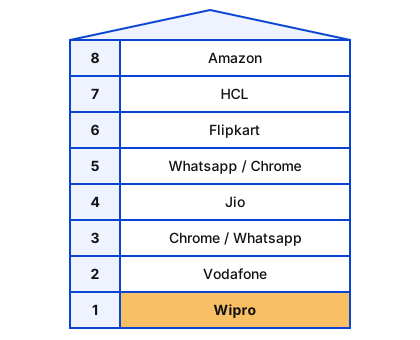
Offices of eight companies — Vodafone, Amazon, Whatsapp, Flipkart, Chrome, HCL, Wipro and Jio — are on different floors of an 8-storey building. The bottommost floor is numbered 1 and the topmost 8.
At least two companies have offices above Flipkart. Neither Whatsapp nor Chrome is adjacent to HCL. Flipkart is two floors above Jio. Vodafone is on an even-numbered floor. HCL is on the 7th floor and is not adjacent to Vodafone. Wipro is on neither an even-numbered nor a prime-numbered floor. There is one floor between Whatsapp and Chrome.
The office of ____ is on the 1st floor.
नीचे दी गई सूचना पढ़कर प्रश्न का उत्तर दीजिए।
आठ कंपनियों — वोडाफ़ोन, अमेज़न, व्हाट्सएप, फ्लिपकार्ट, क्रोम, HCL, विप्रो और जियो — के कार्यालय 8 मंज़िला इमारत की अलग-अलग मंज़िलों पर हैं। सबसे नीचे की मंज़िल 1 और सबसे ऊपर की 8 है।
फ्लिपकार्ट के ऊपर कम से कम दो कंपनियाँ हैं। न व्हाट्सएप न क्रोम, HCL के निकट है। फ्लिपकार्ट, जियो से दो मंज़िल ऊपर है। वोडाफ़ोन सम संख्या वाली मंज़िल पर है। HCL 7वीं मंज़िल पर है और वोडाफ़ोन के निकट नहीं है। विप्रो न सम और न अभाज्य संख्या वाली मंज़िल पर है। व्हाट्सएप और क्रोम के बीच एक मंज़िल का अंतर है।
____ का कार्यालय पहली मंज़िल पर है।
  1. AJioजियो
  2. BChromeक्रोम
  3. CWiproविप्रो
  4. DFlipkartफ्लिपकार्ट
Show answer

Concept: Start with the clue that fixes a floor directly, then fill the rest.

  1. Wipro: floor neither even nor prime → among 1–8 only 1 (1 is not prime). So Wipro = 1.
  2. HCL = 7, Vodafone even and not on 6 or 8 → 2 or 4. Flipkart = Jio + 2 with ≥ 2 floors above ⇒ Flipkart ≤ 6.
  3. Jio 4, Flipkart 6, Vodafone 2; Whatsapp/Chrome on 3 & 5; Amazon 8.

Trick: Odd non-prime numbers up to 8 are only 1 — the 'neither even nor prime' clue answers this question instantly.

Answer: (C) Wipro

अवधारणा: जो सूत्र सीधे मंजिल तय करे, वहीं से शुरू करें।

हल:

  1. विप्रो: न सम न अभाज्य → 1–8 में केवल 1 (1 अभाज्य नहीं है)। अतः विप्रो = 1।
  2. HCL = 7, वोडाफोन सम पर व 6/8 पर नहीं → 2 या 4; फ्लिपकार्ट = जियो + 2, ऊपर कम से कम 2 मंजिलें ⇒ फ्लिपकार्ट ≤ 6।
  3. जियो 4, फ्लिपकार्ट 6, वोडाफोन 2; व्हाट्सऐप/क्रोम 3 व 5; अमेज़न 8।

ट्रिक: 8 तक केवल 1 ही ऐसी विषम संख्या है जो अभाज्य नहीं — यह सूत्र सीधा उत्तर देता है।

उत्तर: (C) विप्रो

SSC CGLGeneral Intelligence & ReasoningFloor puzzle – 8 storeysSSC CGL 2025 · 25 Sep Shift 2 →
Q414.
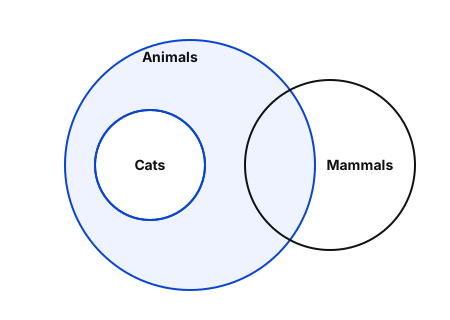
Read the following statements carefully and identify the conclusion that follows.
Statements:
All cats are animals.
Some animals are mammals.
Conclusions:
I. Some cats are mammals.
II. All mammals are animals.
निम्न कथनों को ध्यानपूर्वक पढ़कर अनुसरण करने वाला निष्कर्ष पहचानिए।
कथन:
सभी बिल्लियाँ जानवर हैं।
कुछ जानवर स्तनधारी हैं।
निष्कर्ष:
I. कुछ बिल्लियाँ स्तनधारी हैं।
II. सभी स्तनधारी जानवर हैं।
  1. AOnly I followsकेवल I अनुसरण करता है
  2. BOnly II followsकेवल II अनुसरण करता है
  3. CBoth I and II followI और II दोनों अनुसरण करते हैं
  4. DNeither I nor II followsन I न II अनुसरण करता है
Show answer

Concept: A conclusion follows only if it is true in every possible diagram.

  1. Cats lie fully inside animals; mammals overlap animals only partly — the mammal part can avoid cats, so I is not definite.
  2. Some animals are mammals ⇒ only 'some mammals are animals'; 'All mammals are animals' cannot be derived. II fails.

Trick: Draw one counter-diagram: mammals touching animals but outside cats, and partly outside animals — both conclusions break.

Answer: (D) Neither I nor II follows

अवधारणा: निष्कर्ष तभी अनुसरण करता है जब वह हर संभव आरेख में सत्य हो।

हल:

  1. बिल्लियाँ पूरी तरह जानवरों में; स्तनधारी जानवरों से केवल आंशिक रूप से जुड़े — वह भाग बिल्लियों से अलग हो सकता है, अतः I निश्चित नहीं।
  2. 'कुछ जानवर स्तनधारी हैं' से केवल 'कुछ स्तनधारी जानवर हैं' मिलता है; 'सभी स्तनधारी जानवर हैं' नहीं। II गलत।

ट्रिक: एक उल्टा आरेख बनाइए — स्तनधारी, बिल्लियों से बाहर और कुछ भाग जानवरों से भी बाहर — दोनों निष्कर्ष टूट जाते हैं।

उत्तर: (D) न I न II अनुसरण करता है

SSC CGLGeneral Intelligence & ReasoningSyllogism – 'some' does not pass onSSC CGL 2025 · 25 Sep Shift 2 →
Q415.
Read the following statements carefully and identify the conclusion that follows.
Statements:
Some A are B.
All B are C.
No C is D.
Conclusions:
I. Some A are C.
II. Some B are not D.
निम्न कथनों को ध्यानपूर्वक पढ़कर अनुसरण करने वाला निष्कर्ष पहचानिए।
कथन:
कुछ A, B हैं।
सभी B, C हैं।
कोई C, D नहीं है।
निष्कर्ष:
I. कुछ A, C हैं।
II. कुछ B, D नहीं हैं।
  1. AOnly I followsकेवल I अनुसरण करता है
  2. BOnly II followsकेवल II अनुसरण करता है
  3. CBoth I and II followI और II दोनों अनुसरण करते हैं
  4. DNeither I nor II followsन I न II अनुसरण करता है
Show answer

Concept: Some + All gives Some; All + No gives No.

  1. Some A are B + All B are C ⇒ Some A are C. I ✓
  2. All B are C + No C is D ⇒ No B is D, hence some B are surely not D. II ✓

Trick: Rule table: Some + All = Some; All + No = No. 'No B is D' always implies 'Some B are not D'.

Answer: (C) Both I and II follow

अवधारणा: कुछ + सभी = कुछ; सभी + कोई नहीं = कोई नहीं।

हल:

  1. कुछ A, B हैं + सभी B, C हैं ⇒ कुछ A, C हैं। I ✓
  2. सभी B, C हैं + कोई C, D नहीं ⇒ कोई B, D नहीं; अतः कुछ B निश्चित रूप से D नहीं। II ✓

ट्रिक: 'कोई B, D नहीं' से 'कुछ B, D नहीं' अपने-आप सत्य होता है।

उत्तर: (C) I और II दोनों अनुसरण करते हैं

SSC CGLGeneral Intelligence & ReasoningSyllogism – chain of 'all' and 'no'SSC CGL 2025 · 25 Sep Shift 2 →
Q416.
Look at the following series of landmarks:
Eiffel Tower, Leaning Tower of Pisa, Taj Mahal, Great Wall of China.
Which of them does not belong to the group?
निम्न स्मारकों को देखिए:
एफिल टॉवर, पीसा की झुकी मीनार, ताजमहल, चीन की महान दीवार।
इनमें से कौन-सा समूह में नहीं आता?
  1. AEiffel Towerएफिल टॉवर
  2. BLeaning Tower of Pisaपीसा की झुकी मीनार
  3. CGreat Wall of Chinaचीन की महान दीवार
  4. DTaj Mahalताजमहल
Show answer

Concept: Find the common category shared by three of the landmarks.

  1. Taj Mahal and Great Wall of China are in the New Seven Wonders list (2007); the Leaning Tower of Pisa appears in the traditional 'Seven Wonders of the Middle Ages'.
  2. The Eiffel Tower (Paris, 1889) is in no such wonders list.

Yaad rakhein: Taj Mahal is India's only entry in the New 7 Wonders (2007).

Answer: (A) Eiffel Tower

अवधारणा: तीन स्मारकों में समान श्रेणी खोजें।

हल:

  1. ताजमहल व चीन की महान दीवार 'नए सात अजूबों' (2007) में हैं; पीसा की झुकी मीनार पारंपरिक 'मध्यकाल के सात अजूबों' में गिनी जाती है।
  2. एफ़िल टॉवर (पेरिस, 1889) किसी अजूबा सूची में नहीं है।

याद रखें: नए 7 अजूबों (2007) में भारत से केवल ताजमहल शामिल है।

उत्तर: (A) एफिल टॉवर

SSC CGLGeneral Intelligence & ReasoningOdd one out – world wondersSSC CGL 2025 · 25 Sep Shift 2 →
Q417.
What is the 11th term of 10, 15, 20, …?
10, 15, 20, … का 11वाँ पद क्या है?
  1. A60
  2. B65
  3. C70
  4. D75
Show answer

Concept: nth term of an AP: an=a+(n−1)d.

  1. a=10, d=5.
  2. a11=10+(11−1)×5=10+50=60.

Trick: Every term here is 5×(n+1), so the 11th term =5×12=60.

Answer: (A) 60

अवधारणा: AP का n वाँ पद: an=a+(n−1)d।

हल:

  1. a=10, d=5।
  2. a11=10+10×5=60।

ट्रिक: हर पद = 5×(n+1), अतः 11वाँ पद =5×12=60।

उत्तर: (A) 60

SSC CGLGeneral Intelligence & ReasoningAP – nth termSSC CGL 2025 · 25 Sep Shift 2 →
Q418.
What comes next?
DE, GH, JK, MN, ?
आगे क्या आएगा?
DE, GH, JK, MN, ?
  1. AOQ
  2. BPR
  3. CPQ
  4. DOR
Show answer

Concept: Track the first and second letters of each pair separately.

  1. First letters D, G, J, M (+3) → P.
  2. Second letters E, H, K, N (+3) → Q. Answer: PQ.

Trick: Each pair is two consecutive letters, so only PQ (consecutive) can fit among the options.

Answer: (C) PQ

अवधारणा: हर युग्म के पहले व दूसरे अक्षर को अलग-अलग देखें।

हल:

  1. पहले अक्षर D, G, J, M (+3) → P।
  2. दूसरे अक्षर E, H, K, N (+3) → Q। उत्तर: PQ।

ट्रिक: हर युग्म में लगातार अक्षर हैं — विकल्पों में केवल PQ ऐसा है।

उत्तर: (C) PQ

SSC CGLGeneral Intelligence & ReasoningLetter series – +3 pairsSSC CGL 2025 · 25 Sep Shift 2 →
Q419.
Complete the series.
18, 36, 34, 68, 66, 132, ____
शृंखला पूरी कीजिए।
18, 36, 34, 68, 66, 132, ____
  1. A130
  2. B132
  3. C128
  4. D134
Show answer

Concept: Two operations repeat alternately.

  1. 18 ×2 = 36, −2 = 34, ×2 = 68, −2 = 66, ×2 = 132.
  2. Next step is −2: 132−2=130.

Trick: Even positions are doubles; after a doubled term the series always drops by 2.

Answer: (A) 130

अवधारणा: दो संक्रियाएँ बारी-बारी से दोहराई जाती हैं।

हल:

  1. 18 ×2 = 36, −2 = 34, ×2 = 68, −2 = 66, ×2 = 132।
  2. अगला चरण −2: 132−2=130।

ट्रिक: हर दुगुने पद के बाद अगला पद 2 कम होता है।

उत्तर: (A) 130

SSC CGLGeneral Intelligence & ReasoningNumber series – alternate ×2, −2SSC CGL 2025 · 25 Sep Shift 2 →
Q420.
If CAT is coded as DBU, how is MAT written?
यदि CAT का कूट DBU है, तो MAT कैसे लिखा जाएगा?
  1. ANBU
  2. BNCU
  3. CNBV
  4. DNCS
Show answer

Concept: Each letter of the word is replaced by the next letter of the alphabet.

  1. C→D, A→B, T→U (+1 each).
  2. MAT: M→N, A→B, T→U ⇒ NBU.

Trick: CAT and MAT share 'AT', so the code must end in 'BU' like DBU — only NBU fits.

Answer: (A) NBU

अवधारणा: शब्द का हर अक्षर वर्णमाला के अगले अक्षर से बदला गया है।

हल:

  1. C→D, A→B, T→U (हर एक +1)।
  2. MAT: M→N, A→B, T→U ⇒ NBU।

ट्रिक: CAT और MAT में 'AT' समान है, अतः कोड का अंत 'BU' होगा — केवल NBU।

उत्तर: (A) NBU

SSC CGLGeneral Intelligence & ReasoningCoding – +1 letter shiftSSC CGL 2025 · 25 Sep Shift 2 →