Question bank

Q&A: practice questions with answers

Search questions on any topic. Filter by exam category, exam, subject and topic, try the question, then open the answer and explanation.

Courses – airGurukul

4,800 questions found.

Q541.
When an object is placed at the centre of curvature of a concave mirror, what type of image is produced?
अवतल दर्पण के वक्रता केंद्र पर वस्तु रखने पर किस प्रकार का प्रतिबिंब बनता है?
  1. AReal, inverted and of the same sizeवास्तविक, उल्टा और समान आकार का
  2. BVirtual, erect and enlargedआभासी, सीधा और बड़ा
  3. CReal, erect and diminishedवास्तविक, सीधा और छोटा
  4. DVirtual, inverted and of the same sizeआभासी, उल्टा और समान आकार का
Show answer

Concept: Image formation depends on object position.
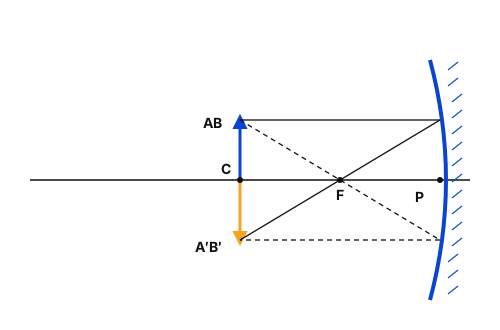
  1. Object at C ⇒ image also at C.
  2. Image is real, inverted and same size (magnification = −1).

Trick: Only a concave mirror between P and F gives virtual image; at C, 'same size' + 'real' always go together.

Answer: (A) Real, inverted and of the same size

अवधारणा: प्रतिबिंब वस्तु की स्थिति पर निर्भर है।

हल:

  1. वस्तु C पर ⇒ प्रतिबिंब भी C पर।
  2. प्रतिबिंब वास्तविक, उल्टा और समान आकार का (आवर्धन = −1)।

ट्रिक: आभासी प्रतिबिंब केवल तब जब वस्तु P और F के बीच हो; C पर 'वास्तविक + समान आकार'।

उत्तर: (A) वास्तविक, उल्टा और समान आकार का
SSC CGLGeneral AwarenessConcave mirror – object at CSSC CGL 2025 · 25 Sep Shift 1 →
Q542.
According to the law of demand in microeconomics, which statement is correct?
सूक्ष्म अर्थशास्त्र के माँग के नियम के अनुसार कौन-सा कथन सही है?
  1. AWhen the price rises, demand also risesमूल्य बढ़ने पर माँग भी बढ़ती है
  2. BWhen the price falls, demand fallsमूल्य घटने पर माँग घटती है
  3. CDemand remains unchanged despite changes in priceमूल्य बदलने पर भी माँग अपरिवर्तित रहती है
  4. DWhen the price rises, demand falls, other factors remaining constantअन्य बातें समान रहने पर मूल्य बढ़ने पर माँग घटती है
Show answer

Concept: Price and quantity demanded move in opposite directions, ceteris paribus.

  1. Price ↑ ⇒ demand ↓; price ↓ ⇒ demand ↑.
  2. The condition 'other things remaining constant' is part of the law.

Yaad rakhein: Inverse relation ⇒ downward-sloping demand curve. Exceptions: Giffen and Veblen goods.

Answer: (D) When the price rises, demand falls, other factors remaining constant

अवधारणा: अन्य बातें समान रहने पर कीमत और माँग विपरीत दिशा में चलते हैं।

हल:

  1. कीमत ↑ ⇒ माँग ↓; कीमत ↓ ⇒ माँग ↑।
  2. 'अन्य कारक स्थिर' (ceteris paribus) इस नियम की शर्त है।

याद रखें: विपरीत संबंध ⇒ माँग वक्र नीचे की ओर ढलान वाला। अपवाद: गिफ़ेन और वेब्लेन वस्तुएँ।

उत्तर: (D) अन्य बातें समान रहने पर मूल्य बढ़ने पर माँग घटती है

SSC CGLGeneral AwarenessLaw of demandSSC CGL 2025 · 25 Sep Shift 1 →
Q543.
Examine the following statements and choose the correct answer:
Assertion (A): Revenue receipts of the government do not create any obligation of repayment.
Reason (R): Such receipts mainly come from taxes and other recurring income sources.
निम्न कथनों की जाँच कर सही उत्तर चुनिए:
अभिकथन (A): सरकार की राजस्व प्राप्तियाँ कोई चुकौती दायित्व नहीं बनातीं।
कारण (R): ऐसी प्राप्तियाँ मुख्यतः करों और अन्य आवर्ती आय स्रोतों से आती हैं।
  1. ABoth A and R are true, and R correctly explains AA और R दोनों सत्य हैं और R, A की सही व्याख्या करता है
  2. BBoth A and R are true, but R does not explain A correctlyA और R दोनों सत्य हैं, परंतु R सही व्याख्या नहीं करता
  3. CA is true, but R is falseA सत्य है, परंतु R असत्य है
  4. DA is false, but R is trueA असत्य है, परंतु R सत्य है
Show answer

Concept: Revenue receipts are non-debt, non-asset-reducing income.

  1. They don't create liability – nothing to repay – A true.
  2. Sources: tax revenue + non-tax revenue (interest, dividends, fees) – R true.
  3. Since it is the government's own earned income, not a loan, R explains A.

Trick: Capital receipt = creates liability (borrowing) OR reduces asset (disinvestment). If neither ⇒ revenue receipt.

Answer: (A) Both A and R are true, and R correctly explains A

अवधारणा: राजस्व प्राप्तियाँ न देनदारी बनाती हैं, न संपत्ति घटाती हैं।

हल:

  1. इन्हें लौटाना नहीं पड़ता – A सत्य।
  2. स्रोत: कर राजस्व + गैर-कर राजस्व (ब्याज, लाभांश, शुल्क) – R सत्य।
  3. यह सरकार की अपनी आय है, उधार नहीं; अतः R, A को समझाता है।

ट्रिक: पूँजीगत प्राप्ति = देनदारी बनाए (उधार) या संपत्ति घटाए (विनिवेश)। दोनों न हों ⇒ राजस्व प्राप्ति।

उत्तर: (A) A और R दोनों सत्य हैं और R, A की सही व्याख्या करता है

SSC CGLGeneral AwarenessBudget – revenue receiptsSSC CGL 2025 · 25 Sep Shift 1 →
Q544.
The person credited with formulating the foundation of India's Five-Year Plans is:
भारत की पंचवर्षीय योजनाओं की नींव रखने का श्रेय किसे दिया जाता है?
  1. AB.R. Ambedkarबी.आर. अंबेडकर
  2. BJawaharlal Nehruजवाहरलाल नेहरू
  3. CP.C. Mahalanobisपी.सी. महालनोबिस
  4. DK.C. Neogiके.सी. नियोगी
Show answer

Concept: The statistician behind Indian planning models.

  1. P.C. Mahalanobis founded the Indian Statistical Institute (1931).
  2. His model became the basis of the Second Five-Year Plan (1956–61); he is called the architect of Indian planning.
  3. Nehru chaired the Planning Commission but did not frame the model.

Yaad rakhein: 29 June (Mahalanobis's birthday) is celebrated as National Statistics Day.

Answer: (C) P.C. Mahalanobis

अवधारणा: भारतीय योजना मॉडल के पीछे के सांख्यिकीविद्।

हल:

  1. पी.सी. महालनोबिस ने भारतीय सांख्यिकी संस्थान (1931) बनाया।
  2. उनका मॉडल दूसरी पंचवर्षीय योजना (1956–61) का आधार बना।
  3. नेहरू योजना आयोग के अध्यक्ष थे, मॉडल के निर्माता नहीं।

याद रखें: 29 जून (महालनोबिस जयंती) को राष्ट्रीय सांख्यिकी दिवस मनाया जाता है।

उत्तर: (C) पी.सी. महालनोबिस

SSC CGLGeneral AwarenessIndian planning – MahalanobisSSC CGL 2025 · 25 Sep Shift 1 →
Q545.
The Climate Change Performance Index (CCPI) 2025 is jointly released by which organization(s)?
जलवायु परिवर्तन प्रदर्शन सूचकांक (CCPI) 2025 किन संगठनों द्वारा संयुक्त रूप से जारी किया जाता है?
  1. AUNEP and UNESCOUNEP और UNESCO
  2. BIPCC and IMFIPCC और IMF
  3. CWWF and WHOWWF और WHO
  4. DGermanwatch and NewClimate Instituteजर्मनवॉच और न्यूक्लाइमेट इंस्टीट्यूट
Show answer

Concept: CCPI is an NGO-led climate ranking.

  1. It is published by Germanwatch and NewClimate Institute (with Climate Action Network).
  2. UN bodies (UNEP, IPCC) or IMF/WHO do not publish it.

Yaad rakhein: CCPI keeps the top three ranks empty, as no country is judged to be doing enough on climate.

Answer: (D) Germanwatch and NewClimate Institute

अवधारणा: CCPI गैर-सरकारी संस्थाओं की जलवायु रैंकिंग है।

हल:

  1. इसे Germanwatch और NewClimate Institute (Climate Action Network के साथ) जारी करते हैं।
  2. UNEP, IPCC, IMF, WHO इसे जारी नहीं करते।

याद रखें: CCPI में पहले तीन स्थान खाली रखे जाते हैं क्योंकि कोई देश पर्याप्त प्रदर्शन नहीं कर रहा।

उत्तर: (D) जर्मनवॉच और न्यूक्लाइमेट इंस्टीट्यूट

SSC CGLGeneral AwarenessClimate Change Performance IndexSSC CGL 2025 · 25 Sep Shift 1 →
Q546.
Read the statements carefully and choose the correct answer:
Assertion (A): Alluri Sitarama Raju was the leader of the Rampa Rebellion against British authority.
Reason (R): The revolt aimed to oppose forest regulations that deprived tribals of their traditional rights.
कथनों को ध्यानपूर्वक पढ़कर सही उत्तर चुनिए:
अभिकथन (A): अल्लूरी सीताराम राजू ब्रिटिश सत्ता के विरुद्ध रम्पा विद्रोह के नेता थे।
कारण (R): यह विद्रोह उन वन कानूनों के विरोध में था जिन्होंने जनजातियों को उनके पारंपरिक अधिकारों से वंचित किया।
  1. ABoth A and R are true, and R is the correct explanation of AA और R दोनों सत्य हैं और R, A की सही व्याख्या है
  2. BBoth A and R are true, but R is not the correct explanation of AA और R दोनों सत्य हैं, परंतु R सही व्याख्या नहीं है
  3. CA is true, but R is falseA सत्य है, परंतु R असत्य है
  4. DA is false, but R is trueA असत्य है, परंतु R सत्य है
Show answer

Concept: Rampa revolt (1922–24) in the Godavari agency of Andhra.

  1. Alluri Sitarama Raju led the tribals with guerrilla raids on police stations – A true.
  2. Cause: Madras Forest Act curbed podu (shifting) cultivation and forest use – R true.
  3. That loss of forest rights directly caused the revolt ⇒ R explains A.

Yaad rakhein: Alluri was captured and killed by the British in May 1924; he is called 'Manyam Veerudu' (hero of the jungle).

Answer: (A) Both A and R are true, and R is the correct explanation of A

अवधारणा: रम्पा विद्रोह (1922–24) आंध्र के गोदावरी क्षेत्र में हुआ।

हल:

  1. अल्लूरी सीताराम राजू ने आदिवासियों का नेतृत्व किया – A सत्य।
  2. कारण: मद्रास वन अधिनियम ने पोडु (झूम) खेती और वनों के उपयोग पर रोक लगाई – R सत्य।
  3. यही असंतोष विद्रोह का कारण ⇒ R, A की सही व्याख्या।

याद रखें: अल्लूरी को 'मन्यम वीरुडु' (जंगल का नायक) कहा जाता है; मई 1924 में अंग्रेज़ों ने उन्हें मार दिया।

उत्तर: (A) A और R दोनों सत्य हैं और R, A की सही व्याख्या है

SSC CGLGeneral AwarenessTribal revolts – Rampa RebellionSSC CGL 2025 · 25 Sep Shift 1 →
Q547.
What is Aruna Asaf Ali remembered for in Indian history?
भारतीय इतिहास में अरुणा आसफ अली किसके लिए याद की जाती हैं?
  1. AHoisting the national flag during the Quit India Movementभारत छोड़ो आंदोलन के दौरान राष्ट्रीय ध्वज फहराने के लिए
  2. BBecoming India's first woman Governorभारत की पहली महिला राज्यपाल बनने के लिए
  3. CLeading the women’s wing of the INAआज़ाद हिंद फ़ौज की महिला शाखा के नेतृत्व के लिए
  4. DPresiding over the Constituent Assembly debatesसंविधान सभा की बहसों की अध्यक्षता के लिए
Show answer

Concept: Recall her role in 1942.

  1. On 9 August 1942 she unfurled the Congress flag at Gowalia Tank Maidan, Bombay, after top leaders were arrested.
  2. First woman Governor = Sarojini Naidu; INA women's regiment = Captain Lakshmi Sehgal; Constituent Assembly president = Dr Rajendra Prasad.

Yaad rakhein: Aruna Asaf Ali is called the 'Grand Old Lady of the Independence Movement'; she became Delhi's first Mayor (1958).

Answer: (A) Hoisting the national flag during the Quit India Movement

अवधारणा: 1942 में उनकी भूमिका याद करें।

हल:

  1. 9 अगस्त 1942 को बड़े नेताओं की गिरफ़्तारी के बाद उन्होंने बंबई के गोवालिया टैंक मैदान में झंडा फहराया।
  2. पहली महिला राज्यपाल = सरोजिनी नायडू; INA महिला रेजिमेंट = लक्ष्मी सहगल; संविधान सभा अध्यक्ष = डॉ. राजेंद्र प्रसाद।

याद रखें: अरुणा आसफ़ अली को 'स्वतंत्रता आंदोलन की ग्रैंड ओल्ड लेडी' कहा जाता है; वे दिल्ली की पहली महापौर (1958) बनीं।

उत्तर: (A) भारत छोड़ो आंदोलन के दौरान राष्ट्रीय ध्वज फहराने के लिए

SSC CGLGeneral AwarenessWomen in freedom struggle – Aruna Asaf AliSSC CGL 2025 · 25 Sep Shift 1 →
Q548.
In the Mahalanobis model of economic planning, the main emphasis was placed on investment in the:
महालनोबिस के आर्थिक नियोजन मॉडल में निवेश का मुख्य बल किस क्षेत्र पर था?
  1. AAgricultural and rural development sectorकृषि एवं ग्रामीण विकास क्षेत्र
  2. BCapital goods and heavy industries sectorपूँजीगत वस्तु एवं भारी उद्योग क्षेत्र
  3. CExport-oriented consumer goods sectorनिर्यातोन्मुख उपभोक्ता वस्तु क्षेत्र
  4. DInfrastructure and service industriesअवसंरचना एवं सेवा उद्योग
Show answer

Concept: The model aimed at long-term industrial growth.

  1. Investment was directed to capital goods (machines, steel) and heavy industry.
  2. This shaped the Second Plan – steel plants at Bhilai, Rourkela, Durgapur.

Trick: 1st Plan (Harrod-Domar) = agriculture; 2nd Plan (Mahalanobis) = heavy industry.

Answer: (B) Capital goods and heavy industries sector

अवधारणा: मॉडल का लक्ष्य दीर्घकालीन औद्योगिक विकास था।

हल:

  1. निवेश पूँजीगत वस्तुओं (मशीन, इस्पात) और भारी उद्योग पर केंद्रित।
  2. इसी से दूसरी योजना में भिलाई, राउरकेला, दुर्गापुर इस्पात संयंत्र बने।

ट्रिक: पहली योजना (हैरोड-डोमर) = कृषि; दूसरी योजना (महालनोबिस) = भारी उद्योग।

उत्तर: (B) पूँजीगत वस्तु एवं भारी उद्योग क्षेत्र

SSC CGLGeneral AwarenessMahalanobis model – focusSSC CGL 2025 · 25 Sep Shift 1 →
Q549.
Tippani, a popular folk dance performed mostly by women using wooden sticks, originates from which Indian state?
टिप्पणी, जो मुख्यतः महिलाएँ लकड़ी की छड़ों से करती हैं, किस भारतीय राज्य का लोक नृत्य है?
  1. AGujaratगुजरात
  2. BHaryanaहरियाणा
  3. CMadhya Pradeshमध्य प्रदेश
  4. DWest Bengalपश्चिम बंगाल
Show answer

Concept: Tippani belongs to the Saurashtra region.

  1. It is a women's dance of Chorwad area in Gujarat.
  2. Women beat the floor with long sticks (tippani) – originally done while making floors firm.

Yaad rakhein: Other Gujarat dances: Garba, Dandiya Raas, Padhar, Bhavai.

Answer: (A) Gujarat

अवधारणा: टिप्पणी नृत्य सौराष्ट्र क्षेत्र से है।

हल:

  1. यह गुजरात के चोरवाड़ क्षेत्र की महिलाओं का नृत्य है।
  2. महिलाएँ लंबी लकड़ियों (टिप्पणी) से फ़र्श पीटती हैं – पहले फ़र्श पक्का करने का काम।

याद रखें: गुजरात के अन्य नृत्य: गरबा, डांडिया रास, पढार, भवाई।

उत्तर: (A) गुजरात

SSC CGLGeneral AwarenessFolk dances – TippaniSSC CGL 2025 · 25 Sep Shift 1 →
Q550.
The reforms introduced in India in 1991 to liberalize and modernize the economy are collectively referred to as:
भारत में 1991 में अर्थव्यवस्था के उदारीकरण और आधुनिकीकरण हेतु लाए गए सुधार सामूहिक रूप से क्या कहलाते हैं?
  1. ANew Economic Policyनई आर्थिक नीति
  2. BEconomic Revival Schemeआर्थिक पुनरुद्धार योजना
  3. CIndustrial Development Actऔद्योगिक विकास अधिनियम
  4. DFiscal Reform Programmeराजकोषीय सुधार कार्यक्रम
Show answer

Concept: The 1991 package is called the New Economic Policy (NEP).

  1. Introduced by PM P.V. Narasimha Rao and FM Manmohan Singh after the balance-of-payments crisis.
  2. Its three pillars are Liberalisation, Privatisation, Globalisation (LPG).

Yaad rakhein: In 1991 India pledged its gold reserves to raise foreign exchange – the trigger for NEP.

Answer: (A) New Economic Policy

अवधारणा: 1991 के सुधार-पैकेज को नई आर्थिक नीति (NEP) कहा जाता है।

हल:

  1. भुगतान संतुलन संकट के बाद PM नरसिंह राव और वित्त मंत्री मनमोहन सिंह ने लागू की।
  2. तीन स्तंभ: उदारीकरण, निजीकरण, वैश्वीकरण (LPG)।

याद रखें: 1991 में विदेशी मुद्रा जुटाने के लिए भारत को सोना गिरवी रखना पड़ा – यही NEP का कारण बना।

उत्तर: (A) नई आर्थिक नीति

SSC CGLGeneral Awareness1991 economic reformsSSC CGL 2025 · 25 Sep Shift 1 →
Q551.
Calculate the compound interest on ₹6,400 for 1 year at 25% per annum when compounded half-yearly.
₹6,400 पर 25% वार्षिक दर से 1 वर्ष का चक्रवृद्धि ब्याज ज्ञात कीजिए, जब ब्याज अर्धवार्षिक संयोजित हो।
  1. A₹2,300
  2. B₹1,700
  3. C₹2,250
  4. D₹1,300
Show answer

Concept: Half-yearly: rate ÷2 and time ×2.

  1. Rate per half-year = 252=12.5%=18; periods = 2.
  2. A=6400×(98)×(98)=100×81= ₹8,100.
  3. CI=8100−6400= ₹1,700.

Trick: Effective rate for 12.5% twice = 12.5+12.5+12.5×12.5100=26.5625%. 6400×26.5625%= ₹1,700.

Answer: (B) ₹1,700

अवधारणा: अर्धवार्षिक: दर ÷2 और समय ×2.

हल:

  1. छमाही दर = 252=12.5%=18; अवधियाँ = 2.
  2. मिश्रधन = 6400×(98)×(98)=100×81= ₹8,100.
  3. CI=8100−6400= ₹1,700.

ट्रिक: 12.5% दो बार की प्रभावी दर = 12.5+12.5+12.5×12.5100=26.5625%; 6400 का 26.5625% = ₹1,700.

उत्तर: (B) ₹1,700

SSC CGLQuantitative AptitudeCompound interest – half-yearlySSC CGL 2025 · 25 Sep Shift 1 →
Q552.
Which set includes numbers like −7, 4 and 0?
−7, 4 और 0 जैसी संख्याएँ किस समुच्चय में आती हैं?
  1. ANatural Numbersप्राकृत संख्याएँ
  2. BWhole Numbersपूर्ण संख्याएँ
  3. CIrrational Numbersअपरिमेय संख्याएँ
  4. DIntegersपूर्णांक
Show answer

Concept: Pick the smallest set containing negatives, zero and positives.

  1. Natural numbers: 1, 2, 3 … (no 0, no negatives).
  2. Whole numbers: 0, 1, 2 … (no negatives).
  3. Integers: … −2, −1, 0, 1, 2 … → contain −7, 0 and 4.

Trick: Negative sign seen ⇒ Natural and Whole are out immediately; −7, 4, 0 are not irrational either.

Answer: (D) Integers

अवधारणा: ऋणात्मक, शून्य और धनात्मक – तीनों वाला समूह चुनें।

हल:

  1. प्राकृत संख्याएँ: 1, 2, 3 … (0 और ऋणात्मक नहीं)।
  2. पूर्ण संख्याएँ: 0, 1, 2 … (ऋणात्मक नहीं)।
  3. पूर्णांक: … −2, −1, 0, 1, 2 … → −7, 0, 4 तीनों शामिल।

ट्रिक: ऋण चिह्न दिखते ही प्राकृत और पूर्ण संख्याएँ बाहर; −7, 4, 0 अपरिमेय भी नहीं।

उत्तर: (D) पूर्णांक

SSC CGLQuantitative AptitudeNumber system – integersSSC CGL 2025 · 25 Sep Shift 1 →
Q553.
A car travelling at a speed of 45 km/h can complete a journey in 9 hours. How long will it take to travel the same distance at 27 km/h?
45 km/h की चाल से चलती एक कार यात्रा 9 घंटे में पूरी करती है। वही दूरी 27 km/h की चाल से तय करने में कितना समय लगेगा?
  1. A19 h19 घंटे
  2. B16 h16 घंटे
  3. C15 h15 घंटे
  4. D25 h25 घंटे
Show answer

Concept: For a fixed distance, speed × time stays constant.

  1. Distance = 45×9=405 km.
  2. At 27 km/h: 405÷27=15 h.

Trick: S1T1=S2T2⇒T2=9×4527=9×53=15 h.

Answer: (C) 15 h

अवधारणा: दूरी स्थिर हो तो चाल × समय स्थिर रहता है।

हल:

  1. दूरी = 45×9=405 km.
  2. 27 km/h पर: 405÷27=15 घंटे।

ट्रिक: S1T1=S2T2⇒T2=9×4527=9×53=15 घंटे।

उत्तर: (C) 15 घंटे

SSC CGLQuantitative AptitudeSpeed and time – inverse proportionSSC CGL 2025 · 25 Sep Shift 1 →
Q554.
The volume of a sphere is 36π cm³. If the radius is tripled, what is the new volume?
एक गोले का आयतन 36π cm³ है। यदि त्रिज्या तीन गुनी कर दी जाए, तो नया आयतन क्या होगा?
  1. A972π cm³
  2. B729π cm³
  3. C1296π cm³
  4. D1881π cm³
Show answer

Concept: V=43πr3, so V∝r3.

  1. Radius ×3 ⇒ volume ×33=27.
  2. New V = 36π×27=972πcm3.

Trick: Length ×k ⇒ area ×k2, volume ×k3 – no need to find r.

Answer: (A) 972π cm³

अवधारणा: V=43πr3, अतः V∝r3.

हल:

  1. त्रिज्या ×3 ⇒ आयतन ×33=27.
  2. नया आयतन = 36π×27=972πcm3.

ट्रिक: लंबाई ×k ⇒ क्षेत्रफल ×k2, आयतन ×k3 – r निकालने की ज़रूरत नहीं।

उत्तर: (A) 972π cm³

SSC CGLQuantitative AptitudeSphere – volume scalingSSC CGL 2025 · 25 Sep Shift 1 →
Q555.
A rectangular room measures 10 m long and 8 m wide. Its floor is to be covered with square tiles of side 50 cm. If 15% extra tiles are purchased for cutting and breakage, how many tiles are needed in total?
एक आयताकार कमरा 10 m लंबा और 8 m चौड़ा है। उसके फ़र्श पर 50 cm भुजा की वर्गाकार टाइलें लगनी हैं। यदि कटाई-टूट-फूट हेतु 15% अतिरिक्त टाइलें खरीदी जाएँ, तो कुल कितनी टाइलें चाहिए?
  1. A400
  2. B350
  3. C468
  4. D368
Show answer

Concept: Tiles = floor area ÷ tile area, then add the extra %.

  1. Floor = 10×8=80m2; tile = 0.5×0.5=0.25m2.
  2. Tiles needed = 80÷0.25=320.
  3. With 15% extra: 320×1.15=368.

Trick: Count along edges: 10m÷0.5=20 tiles, 8m÷0.5=16 tiles ⇒ 20×16=320.

Answer: (D) 368

अवधारणा: टाइलें = फ़र्श क्षेत्रफल ÷ एक टाइल का क्षेत्रफल, फिर अतिरिक्त % जोड़ें।

हल:

  1. फ़र्श = 10×8=80m2; टाइल = 0.5×0.5=0.25m2.
  2. आवश्यक टाइलें = 80÷0.25=320.
  3. 15% अधिक: 320×1.15=368.

ट्रिक: किनारों से गिनें: 10÷0.5=20, 8÷0.5=16 ⇒ 20×16=320.

उत्तर: (D) 368

SSC CGLQuantitative AptitudeArea – tiles with wastageSSC CGL 2025 · 25 Sep Shift 1 →
Q556.
A's salary is 25% more than B's. If B's salary increases by 30% and A's increases by y%, then A's new salary becomes 10% more than B's new salary. What is the value of y?
A का वेतन B से 25% अधिक है। यदि B का वेतन 30% बढ़े और A का y% बढ़े, तो A का नया वेतन B के नए वेतन से 10% अधिक हो जाता है। y का मान क्या है?
  1. A12.4%
  2. B8.5%
  3. C14.4%
  4. D16.6%
Show answer

Concept: Assume B = 100 and track both salaries.

  1. B=100⇒A=125.
  2. B after +30% = 130; A must become 130×1.1=143.
  3. y=143−125125×100=18×0.8=14.4%.

Trick: Use multipliers: A's factor = 1.3×1.1÷1.25=1.144 ⇒ +14.4%.

Answer: (C) 14.4%

अवधारणा: B = 100 मानकर दोनों वेतन देखें।

हल:

  1. B=100⇒A=125.
  2. B में 30% वृद्धि = 130; A बनेगा 130×1.1=143.
  3. y=143−125125×100=14.4%.

ट्रिक: गुणक से: 1.3×1.1÷1.25=1.144 ⇒ 14.4% वृद्धि।

उत्तर: (C) 14.4%

SSC CGLQuantitative AptitudePercentage – salary comparisonSSC CGL 2025 · 25 Sep Shift 1 →
Q557.
Three friends A, B and C invested in a start-up in the ratio 3 : 4 : 1. C managed the business and was entitled to an additional 20% of the total annual profit as a management fee. If the profit at the end of the year was ₹5,00,000, how much did B receive?
तीन मित्रों A, B और C ने एक स्टार्ट-अप में 3 : 4 : 1 के अनुपात में निवेश किया। C ने व्यवसाय सँभाला और उसे प्रबंधन शुल्क के रूप में कुल वार्षिक लाभ का 20% अतिरिक्त मिलना था। यदि वर्ष के अंत में लाभ ₹5,00,000 था, तो B को कितना मिला?
  1. A₹2,00,000
  2. B₹2,12,000
  3. C₹1,10,000
  4. D₹1,20,000
Show answer

Concept: Deduct the manager's fee first, then share the rest in the investment ratio.

  1. Fee to C = 20% of ₹5,00,000 = ₹1,00,000.
  2. Left = ₹4,00,000 in ratio 3 : 4 : 1 (8 parts).
  3. B's share = 48×4,00,000= ₹2,00,000.

Trick: B holds 4 of 8 parts = exactly half of the remaining 80% ⇒ 40% of 5 lakh = ₹2 lakh.

Answer: (A) ₹2,00,000

अवधारणा: पहले प्रबंधक का शुल्क घटाएँ, फिर शेष लाभ निवेश अनुपात में बाँटें।

हल:

  1. C का शुल्क = ₹5,00,000 का 20% = ₹1,00,000.
  2. शेष ₹4,00,000 का अनुपात 3 : 4 : 1 (कुल 8 भाग)।
  3. B = 48×4,00,000= ₹2,00,000.

ट्रिक: B के 8 में 4 भाग = शेष 80% का आधा = 5 लाख का 40% = ₹2 लाख।

उत्तर: (A) ₹2,00,000

SSC CGLQuantitative AptitudePartnership – management feeSSC CGL 2025 · 25 Sep Shift 1 →
Q558.
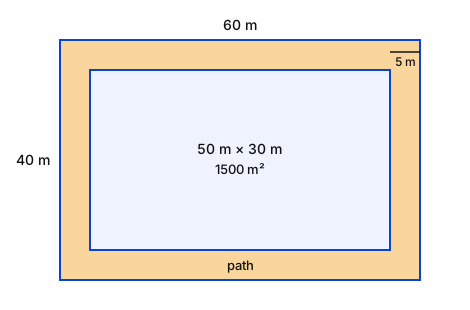
A rectangular lawn measures 60 m by 40 m. A 5 m wide path is constructed all around the inside of the lawn. What percentage of the lawn's area is occupied by the path?
एक आयताकार लॉन 60 m × 40 m का है। लॉन के भीतर चारों ओर 5 m चौड़ा रास्ता बनाया जाता है। लॉन के क्षेत्रफल का कितना प्रतिशत रास्ता घेरता है?
  1. A35%
  2. B37.5%
  3. C16.67%
  4. D47.5%
Show answer

Concept: Path area = outer area − inner area (inner sides reduce by 2 × width).

  1. Lawn = 60×40=2400m2.
  2. Inner part = 50×30=1500m2 ⇒ path = 900 m².
  3. Share = 9002400=38=37.5%.

Trick: Inside path area = 2w(l+b−2w)=10×(100−10)=900 m².

Answer: (B) 37.5%

अवधारणा: रास्ते का क्षेत्रफल = बाहरी − भीतरी (भीतरी भुजाएँ 2 × चौड़ाई से घटती हैं)।

हल:

  1. लॉन = 60×40=2400m2.
  2. भीतरी भाग = 50×30=1500m2 ⇒ रास्ता = 900 m².
  3. प्रतिशत = 9002400=38=37.5%.

ट्रिक: अंदर के रास्ते का क्षेत्रफल = 2w(l+b−2w)=10×90=900 m².

उत्तर: (B) 37.5%

SSC CGLQuantitative AptitudeArea – path inside a rectangleSSC CGL 2025 · 25 Sep Shift 1 →
Q559.
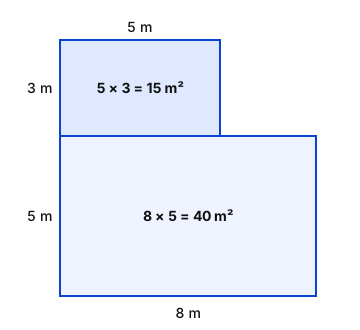
An L-shaped floor is formed by adjoining an 8 m × 5 m and a 5 m × 3 m rectangle. Tiles cost ₹200 per m². What is the total cost to tile the floor?
एक L-आकार का फ़र्श 8 m × 5 m और 5 m × 3 m के दो आयत जोड़कर बना है। टाइल की कीमत ₹200 प्रति m² है। फ़र्श पर टाइल लगाने की कुल लागत क्या होगी?
  1. A₹19,600
  2. B₹21,700
  3. C₹22,000
  4. D₹11,000
Show answer

Concept: Split the L-shape into two rectangles and add.

  1. Areas: 8×5=40m2 and 5×3=15m2 ⇒ 55 m².
  2. Cost = 55× ₹200 = ₹11,000.

Trick: Estimate: area is about 55 m², and 55×200≈11,000 – the other options are about double, so they drop out.

Answer: (D) ₹11,000

अवधारणा: L-आकार को दो आयतों में बाँटकर जोड़ें।

हल:

  1. क्षेत्रफल: 8×5=40m2 और 5×3=15m2 ⇒ 55 m².
  2. लागत = 55× ₹200 = ₹11,000.

ट्रिक: अनुमान: क्षेत्रफल लगभग 55 m², 55×200≈11,000; बाकी विकल्प लगभग दोगुने हैं – तुरंत बाहर।

उत्तर: (D) ₹11,000

SSC CGLQuantitative AptitudeArea – composite floor costSSC CGL 2025 · 25 Sep Shift 1 →
Q560.
An equilateral triangle and a square have equal perimeters. What is the ratio of their sides?
एक समबाहु त्रिभुज और एक वर्ग के परिमाप बराबर हैं। उनकी भुजाओं का अनुपात क्या है?
  1. A3 : 4
  2. B1 : 2
  3. C4 : 3
  4. D2 : 1
Show answer

Concept: Equal perimeters ⇒ side is inversely proportional to the number of sides.

  1. Triangle side a, square side b: 3a = 4b.
  2. a : b = 4 : 3.

Trick: Fewer sides ⇒ longer side. Triangle (3 sides) side > square side, so ratio > 1 → 4 : 3.

Answer: (C) 4 : 3

अवधारणा: परिमाप बराबर ⇒ भुजा, भुजाओं की संख्या के व्युत्क्रमानुपाती।

हल:

  1. त्रिभुज की भुजा a, वर्ग की b: 3a = 4b.
  2. a : b = 4 : 3.

ट्रिक: कम भुजाएँ ⇒ लंबी भुजा। त्रिभुज की भुजा बड़ी, अतः 4 : 3.

उत्तर: (C) 4 : 3

SSC CGLQuantitative AptitudePerimeter – triangle and squareSSC CGL 2025 · 25 Sep Shift 1 →