Question bank

Q&A: practice questions with answers

Search questions on any topic. Filter by exam category, exam, subject and topic, try the question, then open the answer and explanation.

Courses – airGurukul

4,800 questions found.

Q661.
Two similar hexagons have their perimeters in the ratio 3 : 4. If the smaller hexagon has an area of 90 cm², what is the area of the larger hexagon?
दो समरूप षट्भुजों के परिमाप 3 : 4 के अनुपात में हैं। यदि छोटे षट्भुज का क्षेत्रफल 90 cm² है, तो बड़े का क्षेत्रफल क्या होगा?
  1. A140 cm²
  2. B155 cm²
  3. C160 cm²
  4. D175 cm²
Show answer

Concept: For similar figures, area ratio = (ratio of perimeters/sides)2.

  1. Area ratio = 32:42=9:16.
  2. 9 units = 90 cm² ⇒ 1 unit = 10 cm².
  3. Larger area = 16×10=160 cm².

Trick: Larger = 90×169=160; it must be more than 90×43=120, which also removes nothing near 120.

Answer: (C) 160 cm²

अवधारणा: समरूप आकृतियों में क्षेत्रफल का अनुपात = (परिमाप/भुजा के अनुपात)2।

हल:

  1. क्षेत्रफल अनुपात = 32:42=9:16।
  2. 9 इकाई = 90 cm² ⇒ 1 इकाई = 10 cm²।
  3. बड़ा क्षेत्रफल = 16×10=160 cm²।

ट्रिक: बड़ा = 90×169=160 cm² – सीधे एक लाइन में।

उत्तर: (C) 160 cm²
SSC CGLQuantitative AptitudeSimilar figures – area ratioSSC CGL 2025 · 24 Sep Shift 3 →
Q662.
A shopkeeper bought 200 toys at ₹50 each. He sold 80% of the toys at a 10% profit and the rest at a 10% loss. What is the overall profit or loss percentage?
एक दुकानदार ने ₹50 प्रति की दर से 200 खिलौने खरीदे। उसने 80% खिलौने 10% लाभ पर और शेष 10% हानि पर बेचे। कुल लाभ या हानि प्रतिशत क्या है?
  1. A8% profit8% लाभ
  2. B6% profit6% लाभ
  3. C5% loss5% हानि
  4. D6% loss6% हानि
Show answer

Concept: Overall % = weighted average of the individual profit/loss %.

  1. CP = 200×50= ₹10,000.
  2. 80% sold at +10%, 20% at −10%.
  3. Net = 0.8×10−0.2×10=8−2=6% profit.

Trick: Weighted method skips all rupee work: 80×10−20×10100=6%.

Answer: (B) 6% profit

अवधारणा: कुल % = अलग-अलग लाभ/हानि % का भारित औसत।

हल:

  1. क्रय मूल्य = 200×50= ₹10,000।
  2. 80% पर +10%, 20% पर −10%।
  3. कुल = 0.8×10−0.2×10=8−2=6% लाभ।

ट्रिक: भारित विधि से रुपये की गणना की ज़रूरत नहीं: 80×10−20×10100=6%।

उत्तर: (B) 6% लाभ

SSC CGLQuantitative AptitudeProfit and loss – part salesSSC CGL 2025 · 24 Sep Shift 3 →
Q663.
The average of 15 results is 80. If the top two results are excluded, the average becomes 78. What is the average of the top two results?
15 परिणामों का औसत 80 है। यदि शीर्ष दो परिणाम हटा दिए जाएँ, तो औसत 78 हो जाता है। शीर्ष दो परिणामों का औसत क्या है?
  1. A90
  2. B100
  3. C93
  4. D83
Show answer

Concept: Sum = average × count; removed sum = old sum − new sum.

  1. 15×80=1200; 13×78=1014.
  2. Top two = 1200−1014=186.
  3. Their average = 186÷2=93.

Trick: Deviation method: the 13 others are 2 below 80, a total of 26; the two share +26 ⇒ each averages 80+13=93.

Answer: (C) 93

अवधारणा: योग = औसत × संख्या; हटाए गए का योग = पुराना योग − नया योग।

हल:

  1. 15×80=1200; 13×78=1014।
  2. शीर्ष दो = 1200−1014=186।
  3. उनका औसत = 186÷2=93।

ट्रिक: विचलन विधि: बाकी 13 में से हर एक 80 से 2 कम = कुल 26; यह 2 पर बँटता है ⇒ 80+13=93।

उत्तर: (C) 93

SSC CGLQuantitative AptitudeAverage – excluded valuesSSC CGL 2025 · 24 Sep Shift 3 →
Q664.
A seller gives a 10% discount and charges 10% GST on the discounted price. On a ₹5,000 item, how much is payable?
एक विक्रेता 10% छूट देता है और छूट के बाद के मूल्य पर 10% GST लगाता है। ₹5,000 की वस्तु पर कुल कितना देना होगा?
  1. A₹4,900
  2. B₹4,950
  3. C₹4,980
  4. D₹5,000
Show answer

Concept: GST is charged on the price after discount.

  1. After 10% discount: 5,000×0.9= ₹4,500.
  2. Add 10% GST: 4,500×1.1= ₹4,950.

Trick: −10% then +10% always gives a net 1% fall: 5,000 − 1% = ₹4,950.

Answer: (B) ₹4,950

अवधारणा: GST छूट के बाद वाले मूल्य पर लगता है।

हल:

  1. 10% छूट के बाद: 5,000×0.9= ₹4,500।
  2. 10% GST जोड़ें: 4,500×1.1= ₹4,950।

ट्रिक: −10% फिर +10% = कुल 1% कमी: 5,000 का 1% घटाएँ = ₹4,950।

उत्तर: (B) ₹4,950

SSC CGLQuantitative AptitudeDiscount followed by GSTSSC CGL 2025 · 24 Sep Shift 3 →
Q665.
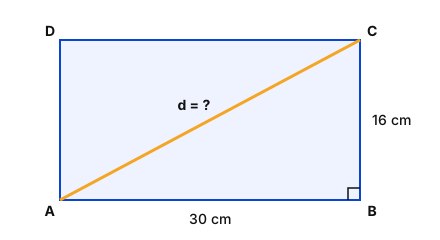
What is the length of a diagonal of a rectangle with length 30 cm and width 16 cm?
30 cm लंबाई और 16 cm चौड़ाई वाले आयत के विकर्ण की लंबाई क्या है?
  1. A32 cm
  2. B38 cm
  3. C36 cm
  4. D34 cm
Show answer

Concept: Diagonal = l2+b2 by Pythagoras.

  1. 302+162=900+256=1156.
  2. 1156=34 cm.

Trick: 30, 16 = 2 × (15, 8); 8–15–17 is a triplet, so diagonal = 2×17=34.

Answer: (D) 34 cm

अवधारणा: पाइथागोरस से विकर्ण = l2+b2।

हल:

  1. 302+162=900+256=1156।
  2. 1156=34 cm।

ट्रिक: 30, 16 = 2 × (15, 8); 8–15–17 त्रिक है, तो विकर्ण = 2×17=34।

उत्तर: (D) 34 cm

SSC CGLQuantitative AptitudeDiagonal of a rectangleSSC CGL 2025 · 24 Sep Shift 3 →
Q666.
A shopkeeper offers a festival deal: "Flat ₹175 off on every purchase above ₹1,100." What is the effective discount percentage if a buyer purchases an item marked ₹1,400?
एक दुकानदार त्योहारी ऑफ़र देता है: "₹1,100 से अधिक की हर खरीद पर सीधे ₹175 की छूट।" यदि ग्राहक ₹1,400 अंकित मूल्य की वस्तु खरीदे, तो प्रभावी छूट प्रतिशत क्या होगा?
  1. A12.5%
  2. B15.5%
  3. C10.25%
  4. D11.25%
Show answer

Concept: Effective discount % = discount ÷ marked price ×100.

  1. ₹1,400 is above ₹1,100, so ₹175 off applies.
  2. 1751400×100=18×100=12.5%.

Trick: 175×8=1400, so the fraction is 18=12.5%.

Answer: (A) 12.5%

अवधारणा: प्रभावी छूट % = छूट ÷ अंकित मूल्य ×100।

हल:

  1. ₹1,400 > ₹1,100, इसलिए ₹175 छूट मिलेगी।
  2. 1751400×100=18×100=12.5%।

ट्रिक: 175×8=1400, यानी भिन्न 18=12.5%।

उत्तर: (A) 12.5%

SSC CGLQuantitative AptitudeFlat discount as a percentageSSC CGL 2025 · 24 Sep Shift 3 →
Q667.
Ankit can copy 50 pages in 10 hours; Ankit and Pankaj together can copy 300 pages in 40 hours. In how much time can Pankaj copy 25 pages?
अंकित 50 पृष्ठ 10 घंटे में नकल कर सकता है; अंकित और पंकज मिलकर 300 पृष्ठ 40 घंटे में। पंकज अकेला 25 पृष्ठ कितने समय में नकल करेगा?
  1. A10 hours10 घंटे
  2. B12 hours12 घंटे
  3. C15 hours15 घंटे
  4. D8 hours8 घंटे
Show answer

Concept: Rates add up when people work together.

  1. Ankit = 5010=5 pages/h; together = 30040=7.5 pages/h.
  2. Pankaj = 7.5−5=2.5 pages/h.
  3. 25 pages ÷2.5=10 hours.

Trick: Pankaj is half as fast as Ankit, who does 25 pages in 5 h – so Pankaj needs 10 h.

Answer: (A) 10 hours

अवधारणा: साथ काम करने पर दरें जुड़ती हैं।

हल:

  1. अंकित = 5010=5 पृष्ठ/घंटा; दोनों = 30040=7.5 पृष्ठ/घंटा।
  2. पंकज = 7.5−5=2.5 पृष्ठ/घंटा।
  3. 25÷2.5=10 घंटे।

ट्रिक: पंकज की दर अंकित की आधी है; अंकित 25 पृष्ठ 5 घंटे में करता है, तो पंकज 10 घंटे में।

उत्तर: (A) 10 घंटे

SSC CGLQuantitative AptitudeWork rate – pages per hourSSC CGL 2025 · 24 Sep Shift 3 →
Q668.
The average of three numbers is 44. The first number is 25% more than the second, and the third is 25% less than the second. What is the second number?
तीन संख्याओं का औसत 44 है। पहली संख्या दूसरी से 25% अधिक है और तीसरी दूसरी से 25% कम। दूसरी संख्या क्या है?
  1. A44
  2. B45
  3. C48
  4. D50
Show answer

Concept: Express all numbers in terms of the second one.

  1. Let second = x; first = 1.25x, third = 0.75x.
  2. Sum = 3x=3×44=132⇒x=44.

Trick: +25% and −25% cancel in the sum, so the second number equals the average itself: 44.

Answer: (A) 44

अवधारणा: सभी संख्याओं को दूसरी संख्या के रूप में लिखें।

हल:

  1. दूसरी = x; पहली = 1.25x, तीसरी = 0.75x।
  2. योग = 3x=3×44=132⇒x=44।

ट्रिक: +25% और −25% योग में कट जाते हैं, इसलिए दूसरी संख्या = औसत = 44।

उत्तर: (A) 44

SSC CGLQuantitative AptitudeAverage – numbers in percentage relationSSC CGL 2025 · 24 Sep Shift 3 →
Q669.
If secA − tanA = 14, then what is the value of secA + tanA?
यदि secA − tanA = 14 है, तो secA + tanA का मान क्या है?
  1. A8
  2. B6
  3. C4
  4. D2
Show answer

Concept: sec2A−tan2A=1⇒(secA−tanA)(secA+tanA)=1.

  1. secA−tanA=14.
  2. secA+tanA=1÷(14)=4.

Trick: secA+tanA and secA−tanA are always reciprocals – just flip the given value.

Answer: (C) 4

अवधारणा: sec2A−tan2A=1⇒(secA−tanA)(secA+tanA)=1।

हल:

  1. secA−tanA=14।
  2. secA+tanA=1÷(14)=4।

ट्रिक: secA+tanA और secA−tanA हमेशा एक-दूसरे के व्युत्क्रम हैं – दिया मान उलट दें।

उत्तर: (C) 4

SSC CGLQuantitative AptitudeTrigonometric identity – sec and tanSSC CGL 2025 · 24 Sep Shift 3 →
Q670.
A 40-litre mixture of milk and water contains them in the ratio 3 : 1. Some quantity of water is added, changing the ratio to 3 : 5. What is the quantity of water added?
40 लीटर दूध-पानी के मिश्रण में उनका अनुपात 3 : 1 है। कुछ पानी मिलाने पर अनुपात 3 : 5 हो जाता है। कितना पानी मिलाया गया?
  1. A20 L
  2. B40 L
  3. C35 L
  4. D25 L
Show answer

Concept: Milk stays fixed when only water is added.

  1. Milk = 34×40=30 L, water = 10 L.
  2. New ratio 3 : 5 means water = 30×53=50 L in the final mixture.
  3. Extra water = final 50 L − initial 10 L = 40 L.

Trick: Milk part '3' is the same in both ratios, so water goes from 1 part to 5 parts: +4 parts = 4×10=40 L.

Answer: (B) 40 L

अवधारणा: केवल पानी मिलाने पर दूध की मात्रा नहीं बदलती।

हल:

  1. दूध = 34×40=30 L, पानी = 10 L।
  2. नया अनुपात 3 : 5 ⇒ अंतिम पानी = 30×53=50 L।
  3. मिलाया गया पानी = 50L−10L=40L।

ट्रिक: दोनों अनुपातों में दूध 3 भाग ही है, पानी 1 से 5 भाग हुआ: +4 भाग = 4×10=40 L।

उत्तर: (B) 40 L

SSC CGLQuantitative AptitudeMixture – adding waterSSC CGL 2025 · 24 Sep Shift 3 →
Q671.
What is 5π4 radians in degrees?
5π4 रेडियन डिग्री में कितने होंगे?
  1. A175°
  2. B120°
  3. C225°
  4. D135°
Show answer

Concept: π radians =180∘, so degrees = radians ×180π.

  1. 5π4×180π=5×45=225∘.

Trick: Put π=180∘ directly: 5×1804=225∘.

Answer: (C) 225°

अवधारणा: π रेडियन =180∘, इसलिए डिग्री = रेडियन ×180π।

हल:

  1. 5π4×180π=5×45=225∘।

ट्रिक: सीधे π=180∘ रखें: 5×1804=225∘।

उत्तर: (C) 225°

SSC CGLQuantitative AptitudeRadian to degreeSSC CGL 2025 · 24 Sep Shift 3 →
Q672.
If sin(2x) = cos(3x − 60°), what is the value of x?
यदि sin(2x) = cos(3x − 60°) है, तो x का मान क्या है?
  1. A30°
  2. B25°
  3. C18°
  4. D20°
Show answer

Concept: If sin θ = cos φ (acute angles), then θ + φ = 90°.

  1. 2x + 3x − 60° = 90°.
  2. 5x = 150° ⇒ x = 30°.

Trick: Check options: x = 30° gives sin60° = cos30° ✓.

Answer: (A) 30°

अवधारणा: यदि sin θ = cos φ (न्यून कोण), तो θ + φ = 90°।

हल:

  1. 2x + 3x − 60° = 90°।
  2. 5x = 150° ⇒ x = 30°।

ट्रिक: विकल्प जाँचें: x = 30° पर sin60° = cos30° ✓।

उत्तर: (A) 30°

SSC CGLQuantitative Aptitudesin θ = cos φ – complementary anglesSSC CGL 2025 · 24 Sep Shift 3 →
Q673.
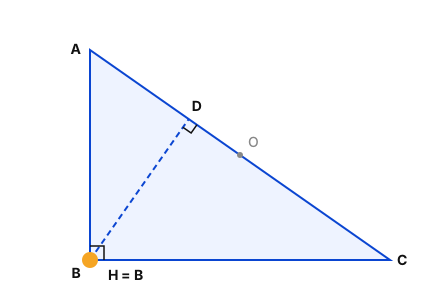
If a triangle has a right angle, where is its orthocentre located?
यदि किसी त्रिभुज में समकोण हो, तो उसका लंबकेंद्र कहाँ स्थित होता है?
  1. AOutside the triangleत्रिभुज के बाहर
  2. BOn the midpoint of the hypotenuseकर्ण के मध्यबिंदु पर
  3. CAt the vertex of the right angleसमकोण वाले शीर्ष पर
  4. DInside the triangleत्रिभुज के भीतर
Show answer

Concept: The orthocentre is the meeting point of the three altitudes.

  1. In a right triangle, each leg is perpendicular to the other, so each leg is an altitude.
  2. Two altitudes meet at the right-angle vertex ⇒ orthocentre lies there.

Yaad rakhein: Right triangle: orthocentre at the right-angle vertex, circumcentre at the midpoint of the hypotenuse (option B is the circumcentre trap).

Answer: (C) At the vertex of the right angle

अवधारणा: लंबकेंद्र तीनों शीर्षलंबों का मिलन बिंदु है।

हल:

  1. समकोण त्रिभुज में दोनों भुजाएँ (पाद और लंब) एक-दूसरे पर लंब हैं, अतः वे स्वयं शीर्षलंब हैं।
  2. ये समकोण वाले शीर्ष पर मिलती हैं ⇒ लंबकेंद्र वहीं।

याद रखें: समकोण त्रिभुज: लंबकेंद्र समकोण शीर्ष पर, परिकेंद्र कर्ण के मध्य बिंदु पर (विकल्प B परिकेंद्र का जाल है)।

उत्तर: (C) समकोण वाले शीर्ष पर

SSC CGLQuantitative AptitudeOrthocentre of a right triangleSSC CGL 2025 · 24 Sep Shift 3 →
Q674.
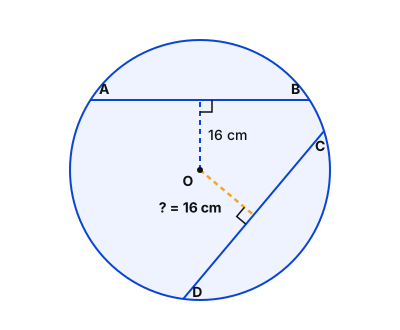
In a circle with centre O, chords AB and CD are equal in length. If the distance from O to AB is 16 cm, what is the distance from O to CD?
केंद्र O वाले एक वृत्त में जीवाएँ AB और CD बराबर लंबाई की हैं। यदि O से AB की दूरी 16 cm है, तो O से CD की दूरी क्या होगी?
  1. A4 cm
  2. B8 cm
  3. C16 cm
  4. D12 cm
Show answer

Concept: Equal chords of a circle are at equal distances from the centre.

  1. AB = CD.
  2. So distance of CD from O = distance of AB from O = 16 cm.

Yaad rakhein: Converse is also true: chords equidistant from the centre are equal. A longer chord is closer to the centre.

Answer: (C) 16 cm

अवधारणा: वृत्त की समान जीवाएँ केंद्र से समान दूरी पर होती हैं।

हल:

  1. AB = CD।
  2. अतः O से CD की दूरी = O से AB की दूरी = 16 cm।

याद रखें: विलोम भी सत्य है: केंद्र से समान दूरी वाली जीवाएँ बराबर होती हैं। बड़ी जीवा केंद्र के ज़्यादा पास होती है।

उत्तर: (C) 16 cm

SSC CGLQuantitative AptitudeCircle – equal chordsSSC CGL 2025 · 24 Sep Shift 3 →
Q675.
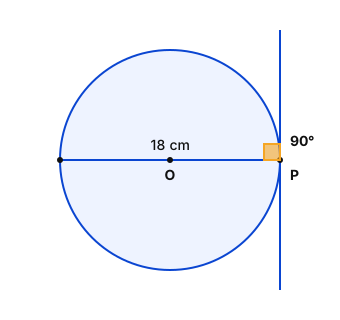
A circle has a diameter of 18 centimetres. A line is tangent to the circle. What is the angle between the tangent and the diameter at the point of contact?
एक वृत्त का व्यास 18 सेंटीमीटर है। एक रेखा वृत्त की स्पर्श रेखा है। स्पर्श बिंदु पर स्पर्श रेखा और व्यास के बीच का कोण क्या होगा?
  1. A30°
  2. B45°
  3. C90°
  4. D180°
Show answer

Concept: A tangent is perpendicular to the radius at the point of contact.

  1. The diameter through the point of contact lies along that radius.
  2. So the angle between tangent and diameter = 90° (the 18 cm size is irrelevant).

Yaad rakhein: From an external point, two tangents to a circle are equal in length.

Answer: (C) 90°

अवधारणा: स्पर्श बिंदु पर स्पर्श रेखा त्रिज्या पर लंब होती है।

हल:

  1. स्पर्श बिंदु से जाने वाला व्यास उसी त्रिज्या की दिशा में है।
  2. अतः स्पर्श रेखा और व्यास के बीच कोण = 90° (18 cm का माप अप्रासंगिक है)।

याद रखें: बाहरी बिंदु से खींची गई दोनों स्पर्श रेखाएँ बराबर लंबाई की होती हैं।

उत्तर: (C) 90°

SSC CGLQuantitative AptitudeTangent and radiusSSC CGL 2025 · 24 Sep Shift 3 →
Q676.
Select the correct spelling of a word meaning a short, witty saying expressing a general truth or observation.
  1. AAphorism
  2. BApherism
  3. CApharism
  4. DAphorasm
Show answer

Concept: A short, pithy saying that states a general truth is an aphorism.

  1. Correct form: A-P-H-O-R-I-S-M (ph + o, ending -ism).
  2. Apherism / Apharism use the wrong vowel; Aphorasm spoils the -ism ending.

Yaad rakhein: Example aphorism: 'Actions speak louder than words.' Related words: maxim, adage, proverb.

Answer: (A) Aphorism

अवधारणा: सामान्य सत्य बताने वाली छोटी, चुटीली उक्ति को aphorism (सूक्ति) कहते हैं।

हल:

  1. सही स्पेलिंग: A-P-H-O-R-I-S-M (ph के बाद o, अंत में -ism)।
  2. Apherism/Apharism में स्वर गलत है; Aphorasm में -ism अंत बिगड़ा है।

याद रखें: उदाहरण: 'Actions speak louder than words.' समान शब्द: maxim, adage, proverb।

उत्तर: (A) Aphorism

SSC CGLEnglish ComprehensionSpelling – AphorismSSC CGL 2025 · 24 Sep Shift 3 →
Q677.
Select the option that can be used as a one-word substitute for the given group of words:
A person who finds joy in the pain or suffering of others.
  1. APessimist
  2. BSadist
  3. CMasochist
  4. DNarcissist
Show answer

Concept: Someone who gets pleasure from causing or seeing others' pain is a sadist.

  1. Masochist – enjoys one's own pain (opposite direction).
  2. Pessimist – always expects the worst; Narcissist – excessively in love with oneself.

Trick: Sadist hurts others; Masochist hurts himself – 'M = Me'.

Answer: (B) Sadist

अवधारणा: दूसरों को कष्ट देकर या उनका दुख देखकर आनंद लेने वाला – sadist (परपीड़क)।

हल:

  1. Masochist – अपनी ही पीड़ा में आनंद लेने वाला।
  2. Pessimist – निराशावादी; Narcissist – आत्ममुग्ध।

ट्रिक: Sadist दूसरों को कष्ट देता है; Masochist स्वयं को – 'M = Me' याद रखें।

उत्तर: (B) Sadist

SSC CGLEnglish ComprehensionOne-word substitution – SadistSSC CGL 2025 · 24 Sep Shift 3 →
Q678.
Select the correct spelling to fill in the blank.
Her ____ wit often left her opponents speechless.
  1. Atrenchent
  2. Btrenchantt
  3. Ctrenchant
  4. Dtrenchaunt
Show answer

Concept: Trenchant means sharp, keen and forceful (of wit, criticism or style).

  1. Correct spelling: T-R-E-N-C-H-A-N-T – ending -ant, single t.
  2. trenchent (-ent), trenchantt (double t), trenchaunt (extra u) are wrong.

Trick: Think of 'trench' (a cut/ditch) + -ant: a trenchant remark 'cuts' deep.

Answer: (C) trenchant

अवधारणा: Trenchant का अर्थ है – तीखा, धारदार, प्रभावशाली (बुद्धि या आलोचना)।

हल:

  1. सही स्पेलिंग: T-R-E-N-C-H-A-N-T – अंत में -ant, एक ही t।
  2. trenchent (-ent), trenchantt (दो t), trenchaunt (अतिरिक्त u) गलत हैं।

ट्रिक: 'trench' (खाई/काट) + -ant: trenchant बात गहराई तक 'काटती' है।

उत्तर: (C) trenchant

SSC CGLEnglish ComprehensionSpelling – trenchantSSC CGL 2025 · 24 Sep Shift 3 →
Q679.
Select the most appropriate antonym of the given word: OBSTINACY
  1. AStubbornness
  2. BFlexibility
  3. CTenacity
  4. DFirmness
Show answer

Concept: Obstinacy = stubborn refusal to change one's opinion or behaviour.

  1. Stubbornness, tenacity and firmness are close in meaning to it (synonym-type).
  2. Flexibility = willingness to adapt and change – the opposite.

Trick: In antonym questions, first strike out options that mean the same as the given word; three here are synonyms.

Answer: (B) Flexibility

अवधारणा: Obstinacy = अपनी बात या रवैये पर ज़िद से अड़े रहना (हठ)।

हल:

  1. Stubbornness, tenacity, firmness – इसके समानार्थी जैसे हैं।
  2. Flexibility = लचीलापन, बदलने को तैयार रहना – विपरीत अर्थ।

ट्रिक: विलोम प्रश्न में पहले समानार्थी विकल्प काटें; यहाँ तीन समानार्थी हैं, बचा हुआ उत्तर है।

उत्तर: (B) Flexibility

SSC CGLEnglish ComprehensionAntonym – ObstinacySSC CGL 2025 · 24 Sep Shift 3 →
Q680.
Select the most appropriate meaning of the given idiom:
To bite the hand that feeds you
  1. ATo show ingratitude towards a benefactor
  2. BTo harm someone physically
  3. CTo refuse help when offered
  4. DTo struggle against oppression
Show answer

Concept: This idiom means harming or being ungrateful to the person who supports or helps you.

  1. Example: After all the help his mentor gave, criticising him publicly was biting the hand that fed him.
  2. It is not about physical harm (B) or refusing help (C).

Yaad rakhein: Hindi equivalent: 'जिस थाली में खाना, उसी में छेद करना'.

Answer: (A) To show ingratitude towards a benefactor

अवधारणा: इस मुहावरे का अर्थ है – जो आपकी मदद करता है, उसी को नुकसान पहुँचाना या उसके प्रति कृतघ्न होना।

हल:

  1. उदाहरण: गुरु की इतनी मदद के बाद उनकी सार्वजनिक आलोचना करना – biting the hand that feeds you।
  2. यह शारीरिक चोट (B) या मदद ठुकराने (C) के बारे में नहीं है।

याद रखें: हिंदी समकक्ष: 'जिस थाली में खाना, उसी में छेद करना'।

उत्तर: (A) To show ingratitude towards a benefactor

SSC CGLEnglish ComprehensionIdiom – bite the hand that feeds youSSC CGL 2025 · 24 Sep Shift 3 →