Question bank

Q&A: practice questions with answers

Search questions on any topic. Filter by exam category, exam, subject and topic, try the question, then open the answer and explanation.

Courses – airGurukul

4,800 questions found.

Q741.
How many rays are minimally required to locate the image formed by a spherical mirror?
गोलीय दर्पण द्वारा बने प्रतिबिंब की स्थिति ज्ञात करने हेतु न्यूनतम कितनी किरणें आवश्यक हैं?
  1. A1
  2. B3
  3. C2
  4. D4
Show answer

Concept: An image point is where reflected rays meet (or appear to meet); two lines fix one point.
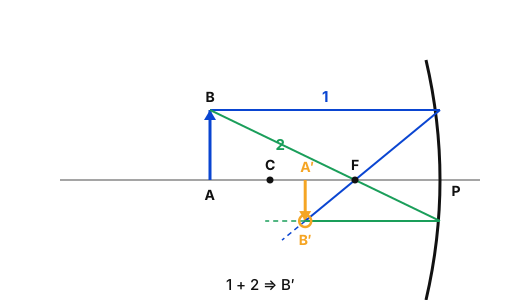
  1. Draw any two standard rays (parallel to axis, through focus, through centre of curvature, or to the pole).
  2. Their intersection after reflection locates the image; a third ray only confirms it.

Trick: Two lines intersect at exactly one point – so minimum two rays.

Answer: (C) 2

अवधारणा: प्रतिबिंब वहाँ बनता है जहाँ परावर्तित किरणें मिलती हैं (या मिलती प्रतीत होती हैं); दो रेखाएँ एक बिंदु तय कर देती हैं।

  1. कोई दो मानक किरणें लें (अक्ष के समांतर, फोकस से, वक्रता केंद्र से, या ध्रुव पर)।
  2. परावर्तन के बाद इनका कटान बिंदु प्रतिबिंब है; तीसरी किरण केवल जाँच हेतु।

ट्रिक: दो रेखाएँ ठीक एक बिंदु पर कटती हैं – इसलिए न्यूनतम दो किरणें।

उत्तर: (C) 2
SSC CGLGeneral AwarenessRay diagrams – spherical mirrorsSSC CGL 2025 · 24 Sep Shift 2 →
Q742.
Regarding the Karma festival, consider the following statements:
1. The festival involves honouring the Karam tree on Bhadra Ekadashi in Chhattisgarh.
2. The drum most closely associated with the festival is the Madal.
करमा पर्व के संबंध में निम्न कथनों पर विचार कीजिए:
1. छत्तीसगढ़ में भाद्र एकादशी को करम वृक्ष की पूजा की जाती है।
2. इस पर्व से सबसे अधिक जुड़ा वाद्य मादल है।
  1. AOnly 2 is correctकेवल 2 सही है
  2. BOnly 1 is correctकेवल 1 सही है
  3. CBoth 1 and 2 are correct1 और 2 दोनों सही हैं
  4. DNeither 1 nor 2 is correctन 1 न 2 सही है
Show answer

Concept: Karma honours the Karam tree; its main drum is the Mandar.

  1. Held on Bhadra Shukla Ekadashi; a Karam branch is planted and worshipped – 1 correct.
  2. The drum linked with Karma dance is the Mandar, not the Madal – 2 wrong.

Yaad rakhein: Karma is celebrated by tribal communities of Jharkhand, Chhattisgarh and Odisha for prosperity and brothers' well-being.

Answer: (B) Only 1 is correct

अवधारणा: करमा पर्व में करम वृक्ष की पूजा होती है; इसका मुख्य ढोल मांदर है।

  1. भाद्र शुक्ल एकादशी को करम की डाल गाड़कर पूजा – 1 सही।
  2. करमा नृत्य का वाद्य मांदर है, मादल नहीं – 2 गलत।

याद रखें: करमा झारखंड, छत्तीसगढ़ व ओडिशा के जनजातीय समुदाय समृद्धि व भाइयों की मंगलकामना हेतु मनाते हैं।

उत्तर: (B) केवल 1 सही है

SSC CGLGeneral AwarenessKarma festivalSSC CGL 2025 · 24 Sep Shift 2 →
Q743.
Which of the following most accurately defines Capital Receipts of the government?
निम्न में से कौन सरकार की पूँजीगत प्राप्तियों को सबसे सही परिभाषित करता है?
  1. AFunds received that permanently add to the government's revenue poolऐसी प्राप्तियाँ जो स्थायी रूप से सरकार के राजस्व कोष में जुड़ती हैं
  2. BInflows that either create new obligations or lead to a reduction in government assetsऐसी आवक जो या तो नई देनदारी बनाती है या सरकारी परिसंपत्ति घटाती है
  3. CCollections that directly lower the government's outstanding liabilitiesऐसी वसूली जो सरकार की बकाया देनदारियाँ सीधे घटाती है
  4. DReceipts that have no effect on the government's financial positionऐसी प्राप्तियाँ जिनका सरकार की वित्तीय स्थिति पर कोई असर नहीं
Show answer

Concept: A capital receipt either creates a liability or reduces an asset of the government.

  1. Creates liability: market borrowings, external loans, small savings.
  2. Reduces asset: disinvestment, recovery of loans given.
  3. Taxes and fees do neither – they are revenue receipts.

Trick: Test any receipt with two questions: Does it add a liability? Does it cut an asset? Yes to either ⇒ capital.

Answer: (B) Inflows that either create new obligations or lead to a reduction in government assets

अवधारणा: पूँजीगत प्राप्ति से सरकार की देनदारी बनती है या परिसंपत्ति घटती है।

  1. देनदारी बनाती है: बाज़ार उधार, विदेशी ऋण, लघु बचत।
  2. परिसंपत्ति घटाती है: विनिवेश, दिए गए ऋणों की वसूली।
  3. कर व शुल्क में ऐसा नहीं होता – वे राजस्व प्राप्तियाँ हैं।

ट्रिक: दो सवाल पूछें: देनदारी बढ़ी? परिसंपत्ति घटी? किसी का भी उत्तर 'हाँ' ⇒ पूँजीगत।

उत्तर: (B) ऐसी आवक जो या तो नई देनदारी बनाती है या सरकारी परिसंपत्ति घटाती है

SSC CGLGeneral AwarenessBudget – capital receiptsSSC CGL 2025 · 24 Sep Shift 2 →
Q744.
Which of the following statements regarding factors influencing the Money Multiplier (MM) are correct?
1. Cash held by the public acts as a leakage, reducing the money multiplier.
2. An increase in reserves held by banks with the RBI boosts the money multiplier.
3. A higher Cash Reserve Ratio (CRR) limits the banking system’s ability to create money.
मुद्रा गुणक (MM) को प्रभावित करने वाले कारकों के संबंध में कौन-से कथन सही हैं?
1. जनता द्वारा रखी गई नकदी रिसाव का काम करती है और मुद्रा गुणक घटाती है।
2. RBI के पास बैंकों के आरक्षित कोष बढ़ने से मुद्रा गुणक बढ़ता है।
3. ऊँचा नकद आरक्षित अनुपात (CRR) बैंकिंग तंत्र की मुद्रा-सृजन क्षमता सीमित करता है।
  1. AOnly 1 and 2केवल 1 और 2
  2. BAll 1, 2 and 31, 2 और 3 सभी
  3. COnly 1 and 3केवल 1 और 3
  4. DOnly 2 and 3केवल 2 और 3
Show answer

Concept: Money multiplier falls when less money stays with banks for lending.

  1. Cash with the public is a leakage – 1 correct.
  2. Higher CRR locks more deposits – 3 correct.
  3. More reserves kept with RBI means less lending, so the multiplier falls – 2 wrong.

Trick: Simple form: money multiplier ≈ 1/CRR (e.g. CRR 10% ⇒ multiplier 10). Anything raising reserves or cash holding lowers it.

Answer: (C) Only 1 and 3

अवधारणा: जितना कम पैसा बैंकों के पास उधार देने को बचे, मुद्रा गुणक उतना घटता है।

  1. जनता के पास नकदी = रिसाव – 1 सही।
  2. CRR बढ़ने से अधिक जमा रुक जाती है – 3 सही।
  3. RBI के पास अधिक रिज़र्व = कम उधार, गुणक घटेगा – 2 गलत।

ट्रिक: सरल सूत्र: मुद्रा गुणक ≈ 1/CRR (CRR 10% ⇒ गुणक 10)। रिज़र्व या नकदी बढ़े तो गुणक घटे।

उत्तर: (C) केवल 1 और 3

SSC CGLGeneral AwarenessMoney multiplier – factorsSSC CGL 2025 · 24 Sep Shift 2 →
Q745.
Which pair of universities is responsible for producing the Environmental Performance Index (EPI)?
पर्यावरण प्रदर्शन सूचकांक (EPI) किन दो विश्वविद्यालयों द्वारा तैयार किया जाता है?
  1. APrinceton & MITप्रिंसटन और MIT
  2. BCambridge & Oxfordकैम्ब्रिज और ऑक्सफ़ोर्ड
  3. CUniversity of Chicago & Stanfordशिकागो विश्वविद्यालय और स्टैनफोर्ड
  4. DYale & Columbiaयेल और कोलंबिया
Show answer

Concept: EPI is prepared by Yale University and Columbia University.

  1. Yale Center for Environmental Law & Policy + Columbia's CIESIN produce it.
  2. Released every two years; ranks countries on climate, environmental health and ecosystem vitality.

Yaad rakhein: India ranked near the bottom in recent EPI editions – a frequent exam angle.

Answer: (D) Yale & Columbia

अवधारणा: पर्यावरण प्रदर्शन सूचकांक का प्रकाशन Yale और Columbia (दोनों अमेरिकी विश्वविद्यालय) संयुक्त रूप से करते हैं।

  1. येल का पर्यावरण कानून व नीति केंद्र + कोलंबिया का CIESIN।
  2. हर दो वर्ष में जारी; जलवायु, पर्यावरणीय स्वास्थ्य व पारितंत्र पर देशों की रैंकिंग।

याद रखें: हाल के EPI में भारत निचली रैंकों में रहा है – परीक्षा में यह भी पूछा जाता है।

उत्तर: (D) येल और कोलंबिया

SSC CGLGeneral AwarenessEnvironmental Performance IndexSSC CGL 2025 · 24 Sep Shift 2 →
Q746.
Thakkar Bapa, the noted social reformer and freedom fighter, devoted his life to the upliftment of which segment of Indian society?
प्रसिद्ध समाज सुधारक एवं स्वतंत्रता सेनानी ठक्कर बापा ने अपना जीवन भारतीय समाज के किस वर्ग के उत्थान को समर्पित किया?
  1. ATribal (Adivasi) communitiesजनजातीय (आदिवासी) समुदाय
  2. BRural womenग्रामीण महिलाएँ
  3. CUrban labourersशहरी श्रमिक
  4. DSchool-aged childrenविद्यालयी बच्चे
Show answer

Concept: Amritlal V. Thakkar (Thakkar Bapa) worked for the welfare of Adivasis.

  1. He set up the Bhil Seva Mandal (1922) in Gujarat's Panchmahal region.
  2. He was also general secretary of Gandhi's Harijan Sevak Sangh.

Yaad rakhein: He is called the 'father of tribal welfare work' in India; the Thakkar Bapa Adarsh Vasti scheme of Maharashtra is named after him.

Answer: (A) Tribal (Adivasi) communities

अवधारणा: अमृतलाल वि. ठक्कर (ठक्कर बापा) ने आदिवासियों के उत्थान के लिए कार्य किया।

  1. उन्होंने गुजरात के पंचमहाल में भील सेवा मंडल (1922) स्थापित किया।
  2. वे गांधीजी के हरिजन सेवक संघ के महासचिव भी रहे।

याद रखें: उन्हें भारत में आदिवासी कल्याण कार्य का अग्रदूत माना जाता है।

उत्तर: (A) जनजातीय (आदिवासी) समुदाय

SSC CGLGeneral AwarenessThakkar Bapa – tribal welfareSSC CGL 2025 · 24 Sep Shift 2 →
Q747.
Which statement most accurately captures the leadership and contributions of Sidhu and Kanhu Murmu during the Santhal Rebellion of 1855?
1855 के संथाल विद्रोह में सिद्धू और कान्हू मुर्मू के नेतृत्व और योगदान को कौन-सा कथन सबसे सही दर्शाता है?
  1. AReligious figures who motivated the rebellion solely through spiritual guidance, avoiding direct actionधार्मिक व्यक्ति जिन्होंने केवल आध्यात्मिक मार्गदर्शन से विद्रोह को प्रेरित किया, सीधी कार्रवाई से बचे
  2. BDiplomats who sought to mediate peace between the British and Santhals without armed struggleराजनयिक जिन्होंने बिना सशस्त्र संघर्ष के अंग्रेज़ों और संथालों में शांति कराने का प्रयास किया
  3. CCharismatic and strategic tribal leaders who mobilized the Santhal community to fiercely resist oppressionकरिश्माई और रणनीतिक जनजातीय नेता जिन्होंने संथाल समुदाय को उत्पीड़न के विरुद्ध संगठित किया
  4. DSelf-interested zamindars who betrayed the British only to lead the revolt for personal gainस्वार्थी ज़मींदार जिन्होंने निजी लाभ हेतु विद्रोह का नेतृत्व किया
Show answer

Concept: Sidhu and Kanhu were the fighting leaders of the Santhal revolt.

  1. The revolt began on 30 June 1855 at Bhognadih against moneylenders (dikus), zamindars and British rule.
  2. They raised thousands of Santhals in armed resistance – not mere spiritual or diplomatic roles.

Yaad rakhein: After the Hul the British created the Santhal Pargana district; 30 June is observed as Hul Diwas.

Answer: (C) Charismatic and strategic tribal leaders who mobilized the Santhal community to fiercely resist oppression

अवधारणा: सिद्धू और कान्हू संथाल विद्रोह के संघर्षशील नेता थे।

  1. 30 जून 1855 को भोगनाडीह से महाजनों (दिकू), ज़मींदारों और अंग्रेज़ों के विरुद्ध विद्रोह शुरू हुआ।
  2. उन्होंने हज़ारों संथालों को सशस्त्र प्रतिरोध हेतु संगठित किया – केवल आध्यात्मिक/कूटनीतिक भूमिका नहीं।

याद रखें: हूल के बाद अंग्रेज़ों ने संथाल परगना ज़िला बनाया; 30 जून को हूल दिवस मनाया जाता है।

उत्तर: (C) करिश्माई और रणनीतिक जनजातीय नेता जिन्होंने संथाल समुदाय को उत्पीड़न के विरुद्ध संगठित किया

SSC CGLGeneral AwarenessSanthal Hul 1855SSC CGL 2025 · 24 Sep Shift 2 →
Q748.
In which year was the Lead Bank Scheme introduced in India?
भारत में अग्रणी बैंक योजना किस वर्ष शुरू हुई?
  1. A1976
  2. B1969
  3. C1970
  4. D1967
Show answer

Concept: The RBI launched the Lead Bank Scheme in 1969.

  1. Based on the Gadgil Study Group and the Nariman Committee recommendations.
  2. Same year as nationalisation of 14 banks; each district got one lead bank for credit planning.

Trick: Link the year: 1969 = bank nationalisation + Lead Bank Scheme. 1975 = Regional Rural Banks.

Answer: (B) 1969

अवधारणा: RBI ने अग्रणी बैंक योजना 1969 में शुरू की।

  1. गाडगिल अध्ययन दल व नरीमन समिति की सिफ़ारिशों पर आधारित।
  2. उसी वर्ष 14 बैंकों का राष्ट्रीयकरण; हर ज़िले को ऋण योजना हेतु एक अग्रणी बैंक।

ट्रिक: वर्ष जोड़कर याद रखें: 1969 = बैंक राष्ट्रीयकरण + अग्रणी बैंक योजना; 1975 = क्षेत्रीय ग्रामीण बैंक।

उत्तर: (B) 1969

SSC CGLGeneral AwarenessLead Bank SchemeSSC CGL 2025 · 24 Sep Shift 2 →
Q749.
Which Five-Year Plan in India is credited with laying the foundation for a socialist pattern of society?
भारत में किस पंचवर्षीय योजना को समाजवादी ढाँचे के समाज की नींव रखने का श्रेय दिया जाता है?
  1. ASecond Planदूसरी योजना
  2. BFirst Planपहली योजना
  3. CFifth Planपाँचवीं योजना
  4. DThird Planतीसरी योजना
Show answer

Concept: The Second Plan (1956–61) aimed at a socialistic pattern of society.

  1. Based on the Mahalanobis model – focus on heavy and basic industries in the public sector.
  2. Supported by the Industrial Policy Resolution, 1956.

Yaad rakhein: First Plan (1951–56) – agriculture, Harrod–Domar model; Third Plan – self-reliance; Fifth Plan – 'Garibi Hatao'.

Answer: (A) Second Plan

अवधारणा: दूसरी योजना (1956–61) का लक्ष्य समाजवादी ढाँचे का समाज था।

  1. महालनोबिस मॉडल पर आधारित – सार्वजनिक क्षेत्र में भारी व आधारभूत उद्योग।
  2. औद्योगिक नीति प्रस्ताव 1956 इसका आधार बना।

याद रखें: पहली योजना – कृषि, हैरोड-डोमर मॉडल; तीसरी – आत्मनिर्भरता; पाँचवीं – 'गरीबी हटाओ'।

उत्तर: (A) दूसरी योजना

SSC CGLGeneral AwarenessFive-Year Plans – Second PlanSSC CGL 2025 · 24 Sep Shift 2 →
Q750.
After the economic reforms of 1991, which of the following industries continued to require special government approval and were largely excluded from the general industrial licensing reforms?
1991 के आर्थिक सुधारों के बाद किन उद्योगों के लिए विशेष सरकारी स्वीकृति अब भी आवश्यक रही और जो सामान्य लाइसेंसिंग सुधारों से बाहर रखे गए?
  1. ASoftware and IT servicesसॉफ़्टवेयर और आईटी सेवाएँ
  2. BRenewable energy and solar powerनवीकरणीय ऊर्जा और सौर विद्युत
  3. CAlcohol, cigarettes, explosivesशराब, सिगरेट, विस्फोटक
  4. DEducation and skill developmentशिक्षा और कौशल विकास
Show answer

Concept: After 1991, licensing stayed only for industries harmful to health, safety or security.

  1. The New Industrial Policy, 1991 abolished licensing for most sectors.
  2. Still licensed: alcoholic drinks, tobacco/cigarettes, defence & aerospace items, industrial explosives, hazardous chemicals.
  3. IT, solar or education never needed such licences.

Trick: Mnemonic for licensed list: 'Drink, Smoke, Blast, Poison, Defence'.

Answer: (C) Alcohol, cigarettes, explosives

अवधारणा: 1991 के बाद लाइसेंस केवल स्वास्थ्य, सुरक्षा या रक्षा की दृष्टि से संवेदनशील उद्योगों पर रहा।

  1. नई औद्योगिक नीति 1991 ने अधिकांश क्षेत्रों से लाइसेंस हटाया।
  2. अब भी लाइसेंस: शराब, तंबाकू/सिगरेट, रक्षा व एयरोस्पेस, औद्योगिक विस्फोटक, खतरनाक रसायन।
  3. IT, सौर ऊर्जा या शिक्षा को ऐसे लाइसेंस की ज़रूरत नहीं।

ट्रिक: याद रखें: 'पीना, धूम्रपान, धमाका, ज़हर, रक्षा' – यही लाइसेंस सूची।

उत्तर: (C) शराब, सिगरेट, विस्फोटक

SSC CGLGeneral Awareness1991 reforms – compulsory licensingSSC CGL 2025 · 24 Sep Shift 2 →
Q751.
Arya lent Siya ₹10,000 for three years at 5% annual compound interest. What will be the total amount Arya will receive after 3 years?
आर्या ने सिया को ₹10,000 तीन वर्ष के लिए 5% वार्षिक चक्रवृद्धि ब्याज पर उधार दिए। 3 वर्ष बाद आर्या को कुल कितनी राशि मिलेगी?
  1. A₹11,576.25
  2. B₹11,750.25
  3. C₹11,749.25
  4. D₹11,649.25
Show answer

Concept: Amount A=P(1+R100)n.

  1. A=10,000×(1.05)3.
  2. (1.05)2=1.1025; ×1.05=1.157625.
  3. A= ₹11,576.25.

Trick: Successive % method: 5% for 3 years = 15.7625% total; 10,000+1,576.25= ₹11,576.25.

Answer: (A) ₹11,576.25

अवधारणा: मिश्रधन A=P(1+R100)n।

  1. A=10,000×(1.05)3।
  2. (1.05)2=1.1025; ×1.05=1.157625।
  3. A= ₹11,576.25।

ट्रिक: 5% की 3 वर्ष की प्रभावी दर = 15.7625%; 10,000+1,576.25= ₹11,576.25।

उत्तर: (A) ₹11,576.25

SSC CGLQuantitative AptitudeCompound interest – amount for 3 yearsSSC CGL 2025 · 24 Sep Shift 2 →
Q752.
Which of the following statements is CORRECT about Whole Numbers?
पूर्ण संख्याओं के संबंध में निम्न में से कौन-सा कथन सही है?
  1. AWhole numbers are the same as natural numbersपूर्ण संख्याएँ प्राकृत संख्याओं के समान हैं
  2. BWhole numbers include all positive integers and zeroपूर्ण संख्याओं में सभी धनात्मक पूर्णांक और शून्य शामिल हैं
  3. CWhole numbers include both positive and negative integersपूर्ण संख्याओं में धनात्मक और ऋणात्मक दोनों पूर्णांक शामिल हैं
  4. DWhole numbers include all fractions and decimalsपूर्ण संख्याओं में सभी भिन्न और दशमलव शामिल हैं
Show answer

Concept: Whole numbers W={0,1,2,3,…}.

  1. Natural numbers start from 1; adding 0 gives whole numbers – so (A) is wrong.
  2. No negatives (those are integers) and no fractions/decimals (rationals).

Yaad rakhein: Smallest whole number = 0; smallest natural number = 1. N⊂W⊂Z⊂Q⊂R.

Answer: (B) Whole numbers include all positive integers and zero

अवधारणा: पूर्ण संख्याएँ W={0,1,2,3,…}।

  1. प्राकृत संख्याएँ 1 से शुरू; उनमें 0 जोड़ने पर पूर्ण संख्याएँ – अतः (A) गलत।
  2. ऋणात्मक संख्याएँ (पूर्णांक) व भिन्न/दशमलव (परिमेय) इसमें शामिल नहीं।

याद रखें: सबसे छोटी पूर्ण संख्या = 0; सबसे छोटी प्राकृत संख्या = 1। N⊂W⊂Z⊂Q⊂R।

उत्तर: (B) पूर्ण संख्याओं में सभी धनात्मक पूर्णांक और शून्य शामिल हैं

SSC CGLQuantitative AptitudeNumber system – whole numbersSSC CGL 2025 · 24 Sep Shift 2 →
Q753.
Aarav travels from his home to the library at a speed of 4.5 km/h and returns at 3 km/h. If the total journey time is 5 hours and 6 minutes, what is the distance between his home and the library?
आरव घर से पुस्तकालय 4.5 km/h की चाल से जाता है और 3 km/h से लौटता है। यदि कुल यात्रा समय 5 घंटे 6 मिनट है, तो घर और पुस्तकालय के बीच की दूरी क्या है?
  1. A9.33 km
  2. B9.18 km
  3. C8.71 km
  4. D7.62 km
Show answer

Concept: Same distance d each way: ds1+ds2 = total time.

  1. Total time = 5 h 6 min = 5.1 h.
  2. d4.5+d3=5.1⇒d(29+39)=5.1⇒5d9=5.1.
  3. d=5.1×95=9.18 km.

Trick: d=s1×s2×Ts1+s2=4.5×3×5.17.5=1.8×5.1=9.18 km.

Answer: (B) 9.18 km

अवधारणा: दोनों ओर समान दूरी d: ds1+ds2 = कुल समय।

  1. कुल समय = 5 घंटे 6 मिनट = 5.1 घंटे।
  2. d4.5+d3=5.1⇒5d9=5.1।
  3. d=5.1×95=9.18 km।

ट्रिक: d=s1×s2×Ts1+s2=4.5×3×5.17.5=9.18 km।

उत्तर: (B) 9.18 km

SSC CGLQuantitative AptitudeTime & distance – to and fro journeySSC CGL 2025 · 24 Sep Shift 2 →
Q754.
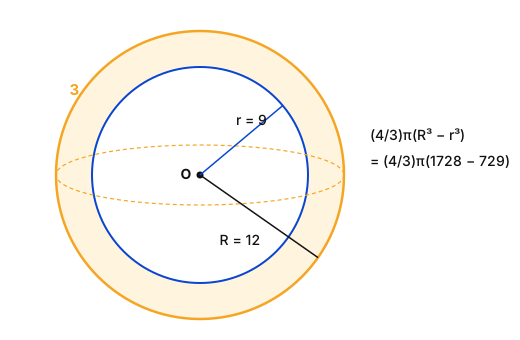
A spherical shell has an outer diameter of 24 cm and is 3 cm thick. What is the volume of the material in the shell? (Use π = 3.14)
एक गोलीय खोल का बाहरी व्यास 24 cm है और मोटाई 3 cm है। खोल की सामग्री का आयतन क्या है? (π = 3.14 लीजिए)
  1. A4,782.48 cm³
  2. B4,182.48 cm³
  3. C2,182.48 cm³
  4. D3,182.58 cm³
Show answer

Concept: Material volume = 43π(R3−r3).

  1. R=242=12 cm; r=12−3=9 cm.
  2. R3−r3=1728−729=999.
  3. V=43×3.14×999=4×3.14×333=4,182.48cm3.

Trick: 999 is divisible by 3, so do 9993=333 first; then 333×12.56=4,182.48.

Answer: (B) 4,182.48 cm³

अवधारणा: धातु का आयतन = 43π(R3−r3)।

  1. R=12 cm; r=12−3=9 cm।
  2. R3−r3=1728−729=999।
  3. V=4×3.14×333=4,182.48cm3।

ट्रिक: पहले 999÷3=333 करें; फिर 333×12.56=4,182.48।

उत्तर: (B) 4,182.48 cm³

SSC CGLQuantitative AptitudeMensuration – hollow sphereSSC CGL 2025 · 24 Sep Shift 2 →
Q755.
A rectangular tank measuring 80 cm long and 40 cm wide contains water with an initial level of 15 cm. If 5 identical metal spheres, each 10 cm in diameter, are gently lowered into the tank, how much does the water level rise? (All spheres are completely submerged.)
80 cm लंबी और 40 cm चौड़ी एक आयताकार टंकी में 15 cm ऊँचाई तक पानी है। यदि 10 cm व्यास की 5 एक जैसी धातु की गेंदें उसमें डाल दी जाएँ, तो जल-स्तर कितना बढ़ेगा? (सभी गेंदें पूरी तरह डूबी हैं।)
  1. A25π86 cm
  2. B24π93 cm
  3. C25π96 cm
  4. D25π cm
Show answer

Concept: Rise in level = volume of immersed solids ÷ base area of tank.

  1. One sphere (r=5): 43π×125=500π3cm3; five spheres = 2500π3.
  2. Base area = 80×40=3200cm2.
  3. Rise = 2500π3×3200=25π96 cm.

Trick: Initial level (15 cm) is extra data – rise never depends on it as long as water does not overflow.

Answer: (C) 25π96 cm

अवधारणा: जल-स्तर वृद्धि = डुबोई वस्तुओं का आयतन ÷ टंकी का आधार क्षेत्रफल।

  1. एक गोला (r=5): 500π3cm3; पाँच = 2500π3।
  2. आधार = 80×40=3200cm2।
  3. वृद्धि = 2500π9600=25π96 cm।

ट्रिक: प्रारंभिक स्तर 15 cm अनावश्यक आँकड़ा है – वृद्धि उस पर निर्भर नहीं।

उत्तर: (C) 25π96 cm

SSC CGLQuantitative AptitudeMensuration – rise in water levelSSC CGL 2025 · 24 Sep Shift 2 →
Q756.
P, Q and R started a textile business with ₹12,00,000, ₹8,00,000 and ₹10,00,000 respectively. After four months P added ₹2,00,000 and R withdrew ₹1,00,000, while Q kept his investment unchanged. The partnership lasted 12 months. What was the ratio of their profits?
P, Q और R ने क्रमशः ₹12,00,000, ₹8,00,000 और ₹10,00,000 से वस्त्र व्यवसाय शुरू किया। चार माह बाद P ने ₹2,00,000 और मिलाए तथा R ने ₹1,00,000 निकाल लिए, जबकि Q का निवेश अपरिवर्तित रहा। साझेदारी 12 माह चली। उनके लाभ का अनुपात क्या था?
  1. A10 : 4 : 15
  2. B16 : 15 : 7
  3. C10 : 7 : 5
  4. D10 : 6 : 7
Show answer

Concept: Profit share ∝ capital × time (in months).

  1. P: 12×4+14×8=48+112=160 (in lakh-months).
  2. Q: 8×12=96. R: 10×4+9×8=40+72=112.
  3. 160 : 96 : 112 ÷ 16 = 10 : 6 : 7.

Trick: Work in lakhs and divide by the HCF (16) at the end to keep numbers small.

Answer: (D) 10 : 6 : 7

अवधारणा: लाभ का अनुपात ∝ पूँजी × समय (महीने)।

  1. P: 12×4+14×8=160 (लाख-महीने)।
  2. Q: 8×12=96। R: 10×4+9×8=112।
  3. 160 : 96 : 112 = 10 : 6 : 7।

ट्रिक: लाख में गणना करें और अंत में HCF (16) से भाग दें।

उत्तर: (D) 10 : 6 : 7

SSC CGLQuantitative AptitudePartnership – changing capitalSSC CGL 2025 · 24 Sep Shift 2 →
Q757.
The price of a refrigerator is increased by y% and then decreased by y%. The final price is 20% less than the original price. What is the value of y?
एक रेफ्रिजरेटर का मूल्य पहले y% बढ़ाया जाता है और फिर y% घटाया जाता है। अंतिम मूल्य मूल से 20% कम है। y का मान क्या है?
  1. A255
  2. B205
  3. C223
  4. D202
Show answer

Concept: Increase y% then decrease y% always gives a net loss of y2100%.

  1. y2100=20⇒y2=2000.
  2. y=2000=400×5=205 (≈44.7).

Trick: Net effect formula: a+b+ab100 with a=y, b=−y gives −y2100 directly.

Answer: (B) 205

अवधारणा: y% वृद्धि फिर y% कमी से सदैव y2100% की शुद्ध कमी होती है।

  1. y2100=20⇒y2=2000।
  2. y=2000=205 (≈44.7)।

ट्रिक: शुद्ध प्रभाव सूत्र a+b+ab100 में a=y, b=−y रखें: −y2100।

उत्तर: (B) 205

SSC CGLQuantitative AptitudePercentage – equal rise and fallSSC CGL 2025 · 24 Sep Shift 2 →
Q758.
A warehouse floor is 16.5 metres long and 16 metres wide. If 2.5 m × 2.2 m rectangular tiles are used to completely cover the floor, how many tiles will be needed?
एक गोदाम का फ़र्श 16.5 मीटर लंबा और 16 मीटर चौड़ा है। यदि 2.5 m × 2.2 m की आयताकार टाइलें बिछाई जाएँ, तो कितनी टाइलें चाहिए?
  1. A48
  2. B68
  3. C72
  4. D80
Show answer

Concept: Number of tiles = floor area ÷ area of one tile.

  1. Floor = 16.5×16=264m2.
  2. Tile = 2.5×2.2=5.5m2.
  3. Tiles = 264÷5.5=48.

Trick: Divide without decimals: 264÷5.5=2640÷55=48.

Answer: (A) 48

अवधारणा: टाइलों की संख्या = फ़र्श का क्षेत्रफल ÷ एक टाइल का क्षेत्रफल।

  1. फ़र्श = 16.5×16=264m2।
  2. टाइल = 2.5×2.2=5.5m2।
  3. टाइलें = 264÷5.5=48।

ट्रिक: 2645.5=264055=48 – दशमलव हटाकर भाग दें।

उत्तर: (A) 48

SSC CGLQuantitative AptitudeMensuration – number of tilesSSC CGL 2025 · 24 Sep Shift 2 →
Q759.
A large advertisement board is made on a 10 m × 6 m rectangle. From this, a 3 m × 2 m rectangular portion is cut out and removed. If painting the remaining area costs ₹250 per square metre, what is the total cost?
एक बड़ा विज्ञापन बोर्ड 10 m × 6 m के आयत पर बना है। उसमें से 3 m × 2 m का आयताकार भाग काटकर हटा दिया जाता है। यदि शेष भाग की रंगाई ₹250 प्रति वर्ग मीटर है, तो कुल लागत क्या होगी?
  1. A₹13,240
  2. B₹13,500
  3. C₹13,960
  4. D₹14,200
Show answer

Concept: Remaining area = full rectangle − cut-out; cost = area × rate.

  1. Board = 10×6=60m2; cut-out = 3×2=6m2.
  2. Remaining = 54 m².
  3. Cost = 54×250= ₹13,500.

Trick: ×250=×1000÷4: 54,000÷4=13,500.

Answer: (B) ₹13,500

अवधारणा: शेष क्षेत्रफल = पूरा आयत − काटा भाग; खर्च = क्षेत्रफल × दर।

  1. बोर्ड = 60 m²; कटा भाग = 6 m²।
  2. शेष = 54 m²।
  3. खर्च = 54×250= ₹13,500।

ट्रिक: ×250=×1000÷4: 54,000÷4=13,500।

उत्तर: (B) ₹13,500

SSC CGLQuantitative AptitudeArea – cost of painting remaining partSSC CGL 2025 · 24 Sep Shift 2 →
Q760.
A regular hexagonal nut has an outer side of 8 cm and an inner hollow side of 4 cm. What is the approximate area of the material in the cross-section?
एक सम षट्भुजाकार नट की बाहरी भुजा 8 cm और भीतरी खोखली भुजा 4 cm है। अनुप्रस्थ काट में सामग्री का लगभग क्षेत्रफल क्या है?
  1. A124.7 cm²
  2. B120.2 cm²
  3. C121.1 cm²
  4. D125.6 cm²
Show answer

Concept: Area of a regular hexagon of side a = 332a2.

  1. Outer = 332×64=963.
  2. Inner = 332×16=243.
  3. Material = 723=72×1.732≈124.7cm2.

Trick: Subtract first: 332(82−42)=332×48=723 – one multiplication only.

Answer: (A) 124.7 cm²

अवधारणा: भुजा a वाले सम षट्भुज का क्षेत्रफल = 332a2।

  1. बाहरी = 332×64=963।
  2. भीतरी = 332×16=243।
  3. धातु = 723≈124.7cm2।

ट्रिक: पहले घटाएँ: 332(64−16)=723 – केवल एक गुणा।

उत्तर: (A) 124.7 cm²

SSC CGLQuantitative AptitudeMensuration – regular hexagon ringSSC CGL 2025 · 24 Sep Shift 2 →