Question bank

Q&A: practice questions with answers

Search questions on any topic. Filter by exam category, exam, subject and topic, try the question, then open the answer and explanation.

Courses – airGurukul

4,800 questions found.

Q941.
Consider the following statements and select the correct relationship between them:
Assertion (A): Under the Bharatiya Sakshya Adhiniyam, electronic records are legally admissible as primary evidence in court.
Reason (R): According to Section 62, electronic records are treated only as secondary evidence.
निम्न कथनों पर विचार कर उनके बीच सही संबंध चुनिए:
अभिकथन (A): भारतीय साक्ष्य अधिनियम के अंतर्गत इलेक्ट्रॉनिक अभिलेख न्यायालय में प्राथमिक साक्ष्य के रूप में विधिक रूप से ग्राह्य हैं।
कारण (R): धारा 62 के अनुसार इलेक्ट्रॉनिक अभिलेख केवल द्वितीयक साक्ष्य माने जाते हैं।
  1. ABoth A and R are true, and R correctly explains AA और R दोनों सत्य हैं और R, A की सही व्याख्या करता है
  2. BA is true, but R is falseA सत्य है, परंतु R असत्य है
  3. CBoth A and R are true, but R does not explain AA और R दोनों सत्य हैं, परंतु R व्याख्या नहीं करता
  4. DA is false, but R is trueA असत्य है, परंतु R सत्य है
Show answer

Concept: Bharatiya Sakshya Adhiniyam, 2023 (replaced the Indian Evidence Act, 1872) widened 'primary evidence'.

  1. Electronic/digital records, when properly stored, count as primary evidence ⇒ A true.
  2. R says they are only secondary evidence – the reverse of the law ⇒ R false.

Trick: If R directly contradicts a true A, R must be false.

Answer: (B) A is true, but R is false

अवधारणा: भारतीय साक्ष्य अधिनियम, 2023 (पुराने Evidence Act 1872 की जगह) ने 'प्राथमिक साक्ष्य' का दायरा बढ़ाया।

  1. इलेक्ट्रॉनिक/डिजिटल रिकॉर्ड प्राथमिक साक्ष्य माने जाते हैं ⇒ A सही।
  2. R कहता है केवल द्वितीयक साक्ष्य – उल्टा ⇒ R गलत।

ट्रिक: यदि R सही A का सीधा विरोध करे, तो R गलत होगा।

उत्तर: (B) A सत्य है, परंतु R असत्य है
SSC CGLGeneral AwarenessLaw – electronic evidence under BSA 2023SSC CGL 2025 · 23 Sep Shift 3 →
Q942.
Consider the following statements regarding the Dumhal folk dance of Kashmir:
1. The Dumhal is performed exclusively by the Wattal community, who first plant a ceremonial banner before starting the dance.
2. This dance is primarily associated with celebrating apple harvests in the valley.
Which of the above statements is/are correct?
कश्मीर के दुम्हाल लोक नृत्य के संबंध में निम्न कथनों पर विचार कीजिए:
1. दुम्हाल केवल वट्टल समुदाय करता है, जो नृत्य शुरू करने से पहले एक अनुष्ठानिक ध्वज गाड़ते हैं।
2. यह नृत्य मुख्यतः घाटी में सेब की फसल के उत्सव से जुड़ा है।
उपर्युक्त में से कौन-सा/से कथन सही है/हैं?
  1. AOnly 2 is correctकेवल 2 सही है
  2. BOnly 1 is correctकेवल 1 सही है
  3. CBoth 1 and 2 are correct1 और 2 दोनों सही हैं
  4. DNeither 1 nor 2 is correctन 1 न 2 सही है
Show answer

Concept: Dumhal is a ceremonial men's dance of the Wattal community of Kashmir.

  1. 1 ✓: Only Wattal men perform it, beginning by fixing a ceremonial flag/banner and then dancing in a circle around it.
  2. 2 ✗: It is linked to set community occasions, not to apple-harvest celebrations.
  3. Costume: long, bright robes with tall pointed caps.

Yaad rakhein: Other Kashmiri dances: Rouf (women), Bhand Pather (folk theatre), Hafiza.

Answer: (B) Only 1 is correct

अवधारणा: दुमहल कश्मीर के वट्टल समुदाय के पुरुषों का औपचारिक नृत्य है।

  1. 1 ✓: वट्टल पुरुष पहले ज़मीन में झंडा गाड़ते हैं, फिर उसके चारों ओर नाचते हैं।
  2. 2 ✗: यह सेब की फसल के उत्सव से नहीं जुड़ा।
  3. नर्तक लंबे रंगीन चोगे और ऊँची शंकु टोपी पहनते हैं।

याद रखें: कश्मीर के अन्य नृत्य: रऊफ (महिलाएँ), भांड पाथेर।

उत्तर: (B) केवल 1 सही है

SSC CGLGeneral AwarenessFolk dance – Dumhal (J&K)SSC CGL 2025 · 23 Sep Shift 3 →
Q943.
Why are government grants given for creating assets still classified as Revenue Expenditure?
परिसंपत्ति निर्माण हेतु दिए गए सरकारी अनुदान फिर भी राजस्व व्यय क्यों माने जाते हैं?
  1. ABecause they are routed through government loansक्योंकि वे सरकारी ऋणों के माध्यम से जाते हैं
  2. BBecause they do not directly result in the creation of central government assetsक्योंकि उनसे सीधे केंद्र सरकार की परिसंपत्ति नहीं बनती
  3. CBecause they are used exclusively by private sector organizationsक्योंकि उनका उपयोग केवल निजी क्षेत्र की संस्थाएँ करती हैं
  4. DBecause they are excluded from any budgetary allocationक्योंकि वे किसी बजट आवंटन में शामिल नहीं होते
Show answer

Concept: Capital expenditure must create an asset (or cut a liability) of the Union government itself.

  1. A grant to states/other bodies may build an asset, but that asset belongs to the receiver.
  2. The Centre's books gain no asset ⇒ the grant is shown as revenue expenditure.

Trick: Ask: 'Whose balance sheet gets the asset?' Not the Centre's ⇒ revenue expenditure.

Answer: (B) Because they do not directly result in the creation of central government assets

अवधारणा: पूँजीगत व्यय वही है जिससे केंद्र सरकार की अपनी संपत्ति बने (या देनदारी घटे)।

  1. राज्यों/संस्थाओं को दिया अनुदान संपत्ति बना सकता है, पर वह प्राप्तकर्ता की होती है।
  2. केंद्र के खाते में संपत्ति नहीं जुड़ती ⇒ राजस्व व्यय।

ट्रिक: पूछें: संपत्ति किसकी बनी? केंद्र की नहीं ⇒ राजस्व व्यय।

उत्तर: (B) क्योंकि उनसे सीधे केंद्र सरकार की परिसंपत्ति नहीं बनती

SSC CGLGeneral AwarenessBudget – grants as revenue expenditureSSC CGL 2025 · 23 Sep Shift 3 →
Q944.
Consider the following statements and choose the correct relationship:
Assertion (A): Cash Reserve Ratio (CRR) and Statutory Liquidity Ratio (SLR) requirements increase the lending capacity of commercial banks.
Reason (R): Higher CRR and SLR requirements reduce the funds available with banks for lending.
निम्न कथनों पर विचार कर सही संबंध चुनिए:
अभिकथन (A): नकद आरक्षित अनुपात (CRR) और सांविधिक तरलता अनुपात (SLR) की अपेक्षाएँ वाणिज्यिक बैंकों की ऋण देने की क्षमता बढ़ाती हैं।
कारण (R): ऊँचे CRR और SLR से बैंकों के पास ऋण देने योग्य धन घट जाता है।
  1. ABoth A and R are true, and R correctly explains AA और R दोनों सत्य हैं और R, A की सही व्याख्या करता है
  2. BBoth A and R are true, but R does not explain AA और R दोनों सत्य हैं, परंतु R व्याख्या नहीं करता
  3. CA is false, but R is trueA असत्य है, परंतु R सत्य है
  4. DA is true, but R is falseA सत्य है, परंतु R असत्य है
Show answer

Concept: CRR (cash with RBI) and SLR (liquid assets kept by banks) block part of deposits.

  1. Blocked money cannot be lent ⇒ these ratios reduce lending capacity ⇒ A false.
  2. Raising them shrinks loanable funds ⇒ R true.

Trick: CRR/SLR ↑ ⇒ credit ↓ (tight money); CRR/SLR ↓ ⇒ credit ↑.

Answer: (C) A is false, but R is true

अवधारणा: CRR (RBI के पास नकद) और SLR (बैंक के पास तरल संपत्ति) जमा का हिस्सा रोकते हैं।

  1. रुका हुआ धन उधार नहीं दिया जा सकता ⇒ ऋण क्षमता घटती है ⇒ A गलत।
  2. इन्हें बढ़ाने से उधार योग्य धन घटता है ⇒ R सही।

ट्रिक: CRR/SLR ↑ ⇒ ऋण ↓; CRR/SLR ↓ ⇒ ऋण ↑.

उत्तर: (C) A असत्य है, परंतु R सत्य है

SSC CGLGeneral AwarenessMonetary policy – CRR & SLRSSC CGL 2025 · 23 Sep Shift 3 →
Q945.
The UN Sustainable Development Report 2024 primarily monitors global progress in achieving which set of international objectives?
संयुक्त राष्ट्र सतत विकास रिपोर्ट 2024 मुख्यतः किन अंतरराष्ट्रीय लक्ष्यों की प्रगति की निगरानी करती है?
  1. AGlobal Climate Action Targetsवैश्विक जलवायु कार्रवाई लक्ष्य
  2. BWorld Health Organization Guidelinesविश्व स्वास्थ्य संगठन के दिशानिर्देश
  3. CInternational Labour Standardsअंतरराष्ट्रीय श्रम मानक
  4. DSustainable Development Goalsसतत विकास लक्ष्य
Show answer

Concept: The Sustainable Development Report tracks the 17 SDGs.

  1. SDGs = Agenda 2030, adopted by the UN in 2015.
  2. The report scores and ranks countries on an SDG Index (prepared by the UN Sustainable Development Solutions Network).

Trick: The report's name itself says 'Sustainable Development' – match it to the 'Goals'.

Answer: (D) Sustainable Development Goals

अवधारणा: सतत विकास रिपोर्ट 17 सतत विकास लक्ष्यों (SDGs) की प्रगति मापती है।

  1. SDGs – 2015 में अपनाए गए, लक्ष्य वर्ष 2030।
  2. देशों को SDG सूचकांक पर अंक व रैंक दी जाती है (UN SDSN द्वारा)।

ट्रिक: रिपोर्ट के नाम में ही 'Sustainable Development' है – उत्तर 'Goals'।

उत्तर: (D) सतत विकास लक्ष्य

SSC CGLGeneral AwarenessReports – Sustainable Development ReportSSC CGL 2025 · 23 Sep Shift 3 →
Q946.
The Chapekar Brothers — Damodar, Balkrishna and Vasudeo — are historically remembered for assassinating a British official in retaliation for harsh measures during the plague epidemic in which Indian city?
चापेकर बंधु — दामोदर, बालकृष्ण और वासुदेव — प्लेग महामारी के दौरान कठोर उपायों के प्रतिशोध में एक ब्रिटिश अधिकारी की हत्या हेतु किस भारतीय शहर से जुड़े हैं?
  1. AKolkataकोलकाता
  2. BPuneपुणे
  3. CAhmedabadअहमदाबाद
  4. DLucknowलखनऊ
Show answer

Concept: The Chapekar brothers acted against plague-time excesses in Pune (1897).

  1. Plague Commissioner W.C. Rand's house searches and forced removals angered the people.
  2. On 22 June 1897 Rand and Lt. Ayerst were shot in Pune.

Yaad rakhein: This was among the first revolutionary political killings in British India; Tilak was jailed in 1897 over related writings in 'Kesari'.

Answer: (B) Pune

अवधारणा: चापेकर बंधुओं ने 1897 में पुणे में प्लेग के दौरान हुई ज़्यादतियों का बदला लिया।

  1. प्लेग आयुक्त डब्ल्यू.सी. रैंड की कठोर तलाशियों से जनता नाराज़ थी।
  2. 22 जून 1897 को पुणे में रैंड और लेफ्टिनेंट आयर्स्ट को गोली मारी गई।

याद रखें: इसी प्रसंग से जुड़े लेखों के लिए तिलक को 1897 में जेल हुई ('केसरी')।

उत्तर: (B) पुणे

SSC CGLGeneral AwarenessNational movement – Chapekar brothersSSC CGL 2025 · 23 Sep Shift 3 →
Q947.
Consider the following statements and choose the correct relationship:
Assertion (A): After the death of Jadonang, Rani Gaidinliu took over leadership of the Heraka movement.
Reason (R): She intended to transform the movement into a widespread literacy initiative among Naga tribes.
निम्न कथनों पर विचार कर सही संबंध चुनिए:
अभिकथन (A): जादोनांग की मृत्यु के बाद रानी गाइदिन्ल्यू ने हेराका आंदोलन का नेतृत्व सँभाला।
कारण (R): वे इस आंदोलन को नागा जनजातियों के बीच व्यापक साक्षरता अभियान में बदलना चाहती थीं।
  1. ABoth A and R are true, and R correctly explains AA और R दोनों सत्य हैं और R, A की सही व्याख्या करता है
  2. BBoth A and R are true, but R does not explain AA और R दोनों सत्य हैं, परंतु R व्याख्या नहीं करता
  3. CA is false, but R is trueA असत्य है, परंतु R सत्य है
  4. DA is true, but R is falseA सत्य है, परंतु R असत्य है
Show answer

Concept: Assertion–Reason: test each statement, then the link.

  1. A ✓: After Jadonang was hanged (1931), Gaidinliu led the Heraka movement.
  2. R ✗: She made it an anti-British revolt with religious revival – not a literacy campaign.
  3. She was arrested in 1932; Nehru called her 'Rani'.

Yaad rakhein: Gaidinliu was from the Zeliangrong Naga tribe (Manipur).

Answer: (D) A is true, but R is false

अवधारणा: अभिकथन-कारण: दोनों कथन जाँचें, फिर संबंध।

  1. A ✓: जादोनांग की फाँसी (1931) के बाद गाइदिन्ल्यू ने हेराका आंदोलन संभाला।
  2. R ✗: उन्होंने इसे अंग्रेज़-विरोधी विद्रोह बनाया, साक्षरता अभियान नहीं।
  3. 1932 में गिरफ़्तार; नेहरू ने उन्हें 'रानी' कहा।

याद रखें: गाइदिन्ल्यू ज़ेलियांग्रोंग नागा जनजाति (मणिपुर) की थीं।

उत्तर: (D) A सत्य है, परंतु R असत्य है

SSC CGLGeneral AwarenessTribal movements – Rani GaidinliuSSC CGL 2025 · 23 Sep Shift 3 →
Q948.
The concept of the rolling plan in India was introduced during the tenure of which Prime Minister?
भारत में रोलिंग प्लान की अवधारणा किस प्रधानमंत्री के कार्यकाल में लाई गई?
  1. AP.V. Narasimha Raoपी.वी. नरसिम्हा राव
  2. BMorarji Desaiमोरारजी देसाई
  3. CAtal Bihari Vajpayeeअटल बिहारी वाजपेयी
  4. DLal Bahadur Shastriलाल बहादुर शास्त्री
Show answer

Concept: Rolling Plan (1978–80) was adopted by the Janata government.

  1. Morarji Desai's government cut the Fifth Five-Year Plan short in 1978.
  2. Under a rolling plan, targets are revised every year instead of fixing them for 5 years.

Yaad rakhein: Rolling plan concept is credited to economist Gunnar Myrdal; plan holidays were 1966–69.

Answer: (B) Morarji Desai

अवधारणा: रोलिंग योजना (1978–80) जनता सरकार ने अपनाई।

  1. मोरारजी देसाई सरकार ने पाँचवीं पंचवर्षीय योजना 1978 में समय से पहले समाप्त की।
  2. इसमें लक्ष्य हर वर्ष संशोधित होते हैं।

याद रखें: रोलिंग योजना का विचार गुन्नार मिर्डल से जुड़ा; योजना अवकाश 1966–69.

उत्तर: (B) मोरारजी देसाई

SSC CGLGeneral AwarenessPlanning – Rolling planSSC CGL 2025 · 23 Sep Shift 3 →
Q949.
The Industrial Policy Resolution of 1956 primarily emphasized which approach?
1956 का औद्योगिक नीति संकल्प मुख्यतः किस दृष्टिकोण पर बल देता था?
  1. AEncouraging small-scale private entrepreneurshipलघु निजी उद्यमशीलता को प्रोत्साहन
  2. BState control over the commanding heights of the economyअर्थव्यवस्था की कमानडिंग हाइट्स पर राज्य का नियंत्रण
  3. CImport-led industrial expansionआयात-आधारित औद्योगिक विस्तार
  4. DFocusing exclusively on consumer goods productionकेवल उपभोक्ता वस्तुओं के उत्पादन पर ध्यान
Show answer

Concept: IPR 1956 gave the public sector the leading role.

  1. Industries were put in three schedules: A (17 industries, State only), B (State + private), C (private).
  2. Aim: State to occupy the 'commanding heights' – heavy and basic industries.

Yaad rakhein: IPR 1956 is called the 'Economic Constitution of India'; it followed the socialist pattern of society goal.

Answer: (B) State control over the commanding heights of the economy

अवधारणा: IPR 1956 ने सार्वजनिक क्षेत्र को प्रमुख भूमिका दी।

  1. उद्योग तीन अनुसूचियों में: A (17, केवल राज्य), B (राज्य + निजी), C (निजी)।
  2. लक्ष्य: अर्थव्यवस्था की 'कमांडिंग हाइट्स' पर राज्य का नियंत्रण।

याद रखें: IPR 1956 को 'भारत का आर्थिक संविधान' कहा जाता है।

उत्तर: (B) अर्थव्यवस्था की कमानडिंग हाइट्स पर राज्य का नियंत्रण

SSC CGLGeneral AwarenessEconomy – Industrial Policy Resolution 1956SSC CGL 2025 · 23 Sep Shift 3 →
Q950.
The primary short-term goal of the stabilization measures during the 1991 economic reforms in India was to:
भारत में 1991 के आर्थिक सुधारों के दौरान स्थिरीकरण उपायों का प्रमुख अल्पकालिक लक्ष्य क्या था?
  1. AControl inflation and restore the balance of paymentsमुद्रास्फीति नियंत्रित करना और भुगतान संतुलन बहाल करना
  2. BExpand healthcare and education expendituresस्वास्थ्य और शिक्षा व्यय बढ़ाना
  3. CBoost rural employment programsग्रामीण रोज़गार कार्यक्रमों को बढ़ावा देना
  4. DCompletely privatize state-owned enterprisesसरकारी उपक्रमों का पूर्ण निजीकरण
Show answer

Concept: 1991 reforms = short-term stabilisation + long-term structural reform.

  1. Stabilisation (short run): fix the balance-of-payments crisis and bring down inflation (high fiscal deficit, low forex).
  2. Structural reform (long run): liberalisation, privatisation, globalisation (LPG).

Trick: 'Stabilise' = calm the emergency: prices and forex. Anything 'complete/long-term' is structural.

Answer: (A) Control inflation and restore the balance of payments

अवधारणा: 1991 सुधार = अल्पकालीन स्थिरीकरण + दीर्घकालीन संरचनात्मक सुधार।

  1. स्थिरीकरण: भुगतान संतुलन संकट सुधारना और मुद्रास्फीति घटाना।
  2. संरचनात्मक सुधार: उदारीकरण, निजीकरण, वैश्वीकरण (LPG)।

ट्रिक: 'स्थिर करना' = तुरंत संकट संभालना – कीमतें और विदेशी मुद्रा।

उत्तर: (A) मुद्रास्फीति नियंत्रित करना और भुगतान संतुलन बहाल करना

SSC CGLGeneral AwarenessEconomy – 1991 stabilisation measuresSSC CGL 2025 · 23 Sep Shift 3 →
Q951.
A sum of money triples itself at compound interest in 10 years. In how many years will it become nine times?
चक्रवृद्धि ब्याज पर कोई राशि 10 वर्ष में तिगुनी हो जाती है। वह कितने वर्षों में नौ गुनी होगी?
  1. A20
  2. B25
  3. C30
  4. D15
Show answer

Concept: At CI, if P becomes k times in t years, it becomes kn times in n×t years.

  1. 3 times in 10 years.
  2. 9=32⇒n=2.
  3. Time = 2×10=20 years.

Trick: Write the new multiple as a power of the old one; multiply the time by that power.

Answer: (A) 20

अवधारणा: चक्रवृद्धि में यदि राशि t वर्षों में k गुना हो, तो n×t वर्षों में kn गुना होगी।

  1. 10 वर्ष में 3 गुना।
  2. 9=32⇒n=2.
  3. समय = 2×10=20 वर्ष।

ट्रिक: नए गुणक को पुराने गुणक की घात में लिखें, समय को उसी घात से गुणा करें।

उत्तर: (A) 20

SSC CGLQuantitative AptitudeCompound interest – time to become n timesSSC CGL 2025 · 23 Sep Shift 3 →
Q952.
Which of these numbers is neither Rational nor an Integer?
इनमें से कौन-सी संख्या न परिमेय है न पूर्णांक?
  1. A3
  2. B−5
  3. C0
  4. D4.5
Show answer

Concept: Rational = can be written as pq (q≠0); its decimal ends or repeats.

  1. −5=−51, 0=01, 4.5=92 ⇒ all rational.
  2. 3=1.7320508… never ends or repeats ⇒ irrational, and clearly not an integer.

Yaad rakhein: n is irrational whenever n is not a perfect square (2, 3, 5 …).

Answer: (A) 3

अवधारणा: परिमेय = pq (q≠0) रूप में लिखी जा सके; दशमलव रुकता है या दोहराता है।

  1. −5=−51, 0=01, 4.5=92 ⇒ सभी परिमेय।
  2. 3=1.7320508… न रुकता है न दोहराता ⇒ अपरिमेय, पूर्णांक भी नहीं।

याद रखें: जो n पूर्ण वर्ग नहीं, उसका n अपरिमेय होता है।

उत्तर: (A) 3

SSC CGLQuantitative AptitudeNumber system – irrational numbersSSC CGL 2025 · 23 Sep Shift 3 →
Q953.
A train starts from Mumbai at 6 a.m. and arrives at Kolhapur at 2:30 p.m. on the same day. If the speed of the train is 120 km per hour, find the distance travelled by the train.
एक रेलगाड़ी मुंबई से सुबह 6 बजे चलकर उसी दिन दोपहर 2:30 बजे कोल्हापुर पहुँचती है। यदि रेलगाड़ी की चाल 120 km प्रति घंटा है, तो तय की गई दूरी ज्ञात कीजिए।
  1. A900 km
  2. B980 km
  3. C1020 km
  4. D1000 km
Show answer

Concept: Distance = speed × time.

  1. 6:00 a.m. → 2:30 p.m. = 8 h 30 min = 8.5 h (172 h).
  2. Distance = 120×172=60×17=1020 km.

Trick: 120×8=960, plus 120×12=60 ⇒ 1020.

Answer: (C) 1020 km

अवधारणा: दूरी = चाल × समय।

  1. सुबह 6:00 से दोपहर 2:30 = 8 घंटे 30 मिनट = 8.5 घंटे।
  2. दूरी = 120×8.5=1020 किमी।

ट्रिक: 120×8=960, आधे घंटे के 60 जोड़ें ⇒ 1020.

उत्तर: (C) 1020 km

SSC CGLQuantitative AptitudeSpeed–distance – time from clock readingsSSC CGL 2025 · 23 Sep Shift 3 →
Q954.
A spherical tank is filled with water. The radius of the sphere is 12 metres. The tank is used to fill cylindrical containers, each with a radius of 2 metres and a height of 24 metres. How many containers can be filled?
एक गोलाकार टंकी पानी से भरी है। गोले की त्रिज्या 12 मीटर है। इससे बेलनाकार पात्र भरे जाते हैं, जिनमें प्रत्येक की त्रिज्या 2 मीटर और ऊँचाई 24 मीटर है। कितने पात्र भरे जा सकते हैं?
  1. A24
  2. B28
  3. C54
  4. D30
Show answer

Concept: Number of containers = volume of sphere ÷ volume of one cylinder.

  1. Sphere = 43π×123=43π×1728=2304πm3.
  2. One cylinder = π×22×24=96πm3.
  3. Count = 2304π÷96π=24.

Trick: π cancels: (43×123)÷(22×24)=(4×576)÷96=24.

Answer: (A) 24

अवधारणा: बेलनों की संख्या = गोले का आयतन ÷ एक बेलन का आयतन।

  1. गोला = 43π×123=2304πm3.
  2. एक बेलन = π×22×24=96πm3.
  3. संख्या = 2304÷96=24.

ट्रिक: π कट जाता है: (43×1728)÷96=24.

उत्तर: (A) 24

SSC CGLQuantitative AptitudeMensuration – sphere emptied into cylindersSSC CGL 2025 · 23 Sep Shift 3 →
Q955.
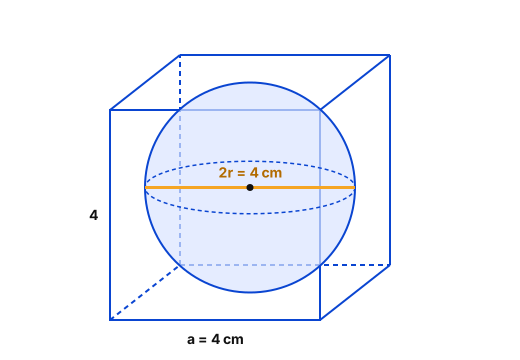
A perfect cube with a side length of 4 cm has the largest possible sphere fitted inside it. What is the volume of the empty space within the cube?
4 cm भुजा वाले एक पूर्ण घन के भीतर सबसे बड़ा संभव गोला रखा गया है। घन के भीतर खाली स्थान का आयतन क्या है?
  1. A64 − 32π3 cm³
  2. B12 − 64π3 cm³
  3. C64 − 56π3 cm³
  4. D256π3 cm³
Show answer

Concept: Largest sphere in a cube: diameter = edge of the cube.

  1. Cube volume = 43=64cm3.
  2. r=42=2 cm ⇒ sphere = 43π×8=32π3cm3.
  3. Empty space = 64−32π3cm3.

Trick: Answer must start with 64 (cube's volume) and subtract 43π(a2)3=πa36=64π6=32π3.

Answer: (A) 64 − 32π3 cm³

अवधारणा: घन में सबसे बड़ा गोला: व्यास = घन की भुजा।

  1. घन = 43=64cm3.
  2. r = 2 cm ⇒ गोला = 43π×8=32π3cm3.
  3. खाली स्थान = 64−32π3cm3.

ट्रिक: गोले का आयतन = πa36=64π6=32π3; उत्तर 64 से शुरू होगा।

उत्तर: (A) 64 − 32π3 cm³

SSC CGLQuantitative AptitudeMensuration – sphere inscribed in a cubeSSC CGL 2025 · 23 Sep Shift 3 →
Q956.
'A' and 'B' entered a joint venture. 'A' brought ₹3,00,000 and 'B' ₹4,00,000. 'A' also contributed skilled labour equivalent to ₹1,00,000. At the end of the year they earned ₹2,40,000 in profit. If they agreed to divide the profit in proportion to their effective contributions, what is A's share?
'A' और 'B' ने संयुक्त उद्यम शुरू किया। 'A' ने ₹3,00,000 और 'B' ने ₹4,00,000 लगाए। 'A' ने ₹1,00,000 के बराबर कुशल श्रम भी दिया। वर्ष के अंत में उन्हें ₹2,40,000 का लाभ हुआ। यदि लाभ प्रभावी योगदान के अनुपात में बाँटा जाए, तो A का हिस्सा क्या होगा?
  1. A₹1,10,000
  2. B₹1,20,000
  3. C₹1,24,500
  4. D₹1,50,000
Show answer

Concept: Profit is shared in the ratio of total contributions (money + valued labour).

  1. A = ₹3 lakh cash + ₹1 lakh labour = ₹4 lakh; B = ₹4 lakh.
  2. Ratio A : B = 4 : 4 = 1 : 1.
  3. A's share = 2,40,000÷2= ₹1,20,000.

Trick: Equal contributions ⇒ simply halve the profit.

Answer: (B) ₹1,20,000

अवधारणा: लाभ कुल योगदान (धन + श्रम का मूल्य) के अनुपात में बँटता है।

  1. A = ₹3 लाख नकद + ₹1 लाख श्रम = ₹4 लाख; B = ₹4 लाख।
  2. अनुपात 1 : 1.
  3. A का हिस्सा = 2,40,000÷2= ₹1,20,000.

ट्रिक: योगदान बराबर ⇒ लाभ आधा-आधा।

उत्तर: (B) ₹1,20,000

SSC CGLQuantitative AptitudePartnership – effective contributionSSC CGL 2025 · 23 Sep Shift 3 →
Q957.
A banner is shaped like a trapezium with parallel sides 10 m and 6 m, and height 8 m. If printing costs ₹500 per m², what is the total cost?
एक बैनर समलंब आकार का है जिसकी समांतर भुजाएँ 10 m और 6 m तथा ऊँचाई 8 m है। यदि छपाई ₹500 प्रति m² है, तो कुल लागत क्या होगी?
  1. A₹32,000
  2. B₹30,000
  3. C₹28,000
  4. D₹25,000
Show answer

Concept: Area of trapezium = 12×(a+b)×h.

  1. Area = 12×(10+6)×8=8×8=64m2.
  2. Cost = 64×500= ₹32,000.

Trick: 12(a+b) is just the mean of the parallel sides: 10+62=8, then ×8.

Answer: (A) ₹32,000

अवधारणा: समलंब का क्षेत्रफल = 12×(a+b)×h.

  1. क्षेत्रफल = 12×16×8=64m2.
  2. लागत = 64×500= ₹32,000.

ट्रिक: समांतर भुजाओं का औसत (8) × ऊँचाई (8) = 64.

उत्तर: (A) ₹32,000

SSC CGLQuantitative AptitudeMensuration – trapezium area & costSSC CGL 2025 · 23 Sep Shift 3 →
Q958.
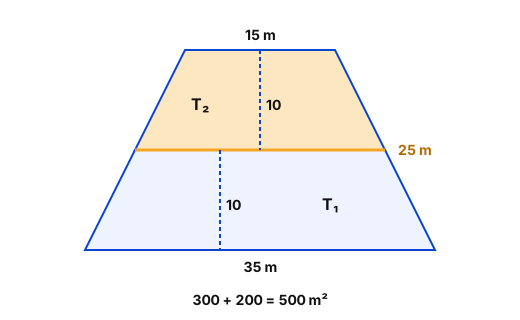
A farmer's land consists of two adjoining trapezoids: T₁ with parallel sides 35 m and 25 m and height 10 m; T₂ with parallel sides 25 m and 15 m and height 10 m. Land costs ₹30 per m². What is the total land cost?
एक किसान की भूमि दो सटे हुए समलंबों से बनी है: T₁ जिसकी समांतर भुजाएँ 35 m और 25 m तथा ऊँचाई 10 m; T₂ जिसकी समांतर भुजाएँ 25 m और 15 m तथा ऊँचाई 10 m है। भूमि की कीमत ₹30 प्रति m² है। कुल लागत क्या होगी?
  1. A₹15,000
  2. B₹30,000
  3. C₹24,000
  4. D₹25,000
Show answer

Concept: Total area = sum of the two trapezium areas; cost = area × rate.

  1. T1=12×(35+25)×10=300m2.
  2. T2=12×(25+15)×10=200m2.
  3. Total = 500 m² ⇒ cost = 500×30= ₹15,000.

Trick: Same height 10 ⇒ total = 5×(35+25+25+15)=5×100=500m2.

Answer: (A) ₹15,000

अवधारणा: कुल क्षेत्रफल = दोनों समलंबों का योग; लागत = क्षेत्रफल × दर।

  1. T1=12×60×10=300m2.
  2. T2=12×40×10=200m2.
  3. कुल 500 m² ⇒ 500×30= ₹15,000.

ट्रिक: ऊँचाई समान ⇒ 5×(35+25+25+15)=500m2.

उत्तर: (A) ₹15,000

SSC CGLQuantitative AptitudeMensuration – combined trapeziumsSSC CGL 2025 · 23 Sep Shift 3 →
Q959.
The ratio of areas of two regular polygons with the same number of sides is 16 : 25. What is the ratio of their side lengths?
समान भुजाओं वाले दो सम बहुभुजों के क्षेत्रफलों का अनुपात 16 : 25 है। उनकी भुजाओं की लंबाई का अनुपात क्या है?
  1. A5 : 4
  2. B4 : 5
  3. C2 : 3
  4. D4 : 5
Show answer

Concept: Regular polygons with equal number of sides are similar: area ratio = (side ratio)2.

  1. Side ratio = 1625.
  2. =45 ⇒ 4 : 5.

Trick: Area ratio → take square root; volume ratio → take cube root.

Answer: (B) 4 : 5

अवधारणा: समान भुजाओं वाले सम बहुभुज समरूप होते हैं: क्षेत्रफल अनुपात = (भुजा अनुपात)2.

  1. भुजा अनुपात = 1625.
  2. = 4 : 5.

ट्रिक: क्षेत्रफल अनुपात → वर्गमूल; आयतन अनुपात → घनमूल।

उत्तर: (B) 4 : 5

SSC CGLQuantitative AptitudeSimilar figures – area and side ratioSSC CGL 2025 · 23 Sep Shift 3 →
Q960.
A student scored 40% in one subject and 30% in another. Both subjects have equal maximum marks. What is the overall percentage?
एक विद्यार्थी ने एक विषय में 40% और दूसरे में 30% अंक पाए। दोनों विषयों के अधिकतम अंक समान हैं। कुल प्रतिशत क्या है?
  1. A30%
  2. B35%
  3. C32%
  4. D38%
Show answer

Concept: With equal maximum marks, the overall % is the simple average of the two %s.

  1. Overall = 40+302=35%.
  2. Check with 100 + 100: 40+30200×100=35%.

Trick: Equal weights ⇒ plain average; unequal maximums ⇒ weighted average.

Answer: (B) 35%

अवधारणा: अधिकतम अंक बराबर हों तो कुल % = दोनों % का साधारण औसत।

  1. कुल = 40+302=35%.
  2. जाँच: 70200×100=35%.

ट्रिक: भार बराबर ⇒ साधारण औसत; अलग हों ⇒ भारित औसत।

उत्तर: (B) 35%

SSC CGLQuantitative AptitudePercentage – overall scoreSSC CGL 2025 · 23 Sep Shift 3 →