Question bank

Q&A: practice questions with answers

Search questions on any topic. Filter by exam category, exam, subject and topic, try the question, then open the answer and explanation.

Courses – airGurukul

4,800 questions found.

Q1061.
A 30-litre solution contains acid and water in the ratio 2 : 1. How much water must be added to make the ratio 1 : 1?
30 लीटर घोल में अम्ल और पानी 2 : 1 के अनुपात में हैं। अनुपात 1 : 1 करने के लिए कितना पानी मिलाना होगा?
  1. A11 L
  2. B10 L
  3. C12 L
  4. D21 L
Show answer

Concept: The acid quantity does not change; only water is increased.

  1. Acid = 23×30=20 L; water = 10 L.
  2. For 1 : 1, water must equal acid = 20 L.
  3. Water to add = 20−10=10 L.

Trick: Ratio 2 : 1 → 1 : 1 means water goes from 1 part to 2 parts; 1 part = 10 L, so add 10 L.

Answer: (B) 10 L

अवधारणा: अम्ल की मात्रा नहीं बदलती; केवल पानी बढ़ता है।

हल:

  1. अम्ल = 23×30=20 L; पानी = 10 L।
  2. 1 : 1 के लिए पानी भी 20 L होना चाहिए।
  3. मिलाना है = 20−10=10 L।

ट्रिक: 2 : 1 → 1 : 1 यानी पानी 1 भाग से 2 भाग; 1 भाग = 10 L, अतः 10 L।

उत्तर: (B) 10 L
SSC CGLQuantitative AptitudeMixture – adding water to change ratioSSC CGL 2025 · 23 Sep Shift 2 →
Q1062.
If the selling price of an item is increased by 10% and the profit also increases from 15% to 20%, what is the percentage increase in the cost price?
यदि किसी वस्तु का विक्रय मूल्य 10% बढ़ा दिया जाए और लाभ भी 15% से बढ़कर 20% हो जाए, तो क्रय मूल्य में कितने प्रतिशत वृद्धि हुई?
  1. A3.5%
  2. B4.6%
  3. C1.28%
  4. D5.41%
Show answer

Concept: Assume CP = 100, find old SP, raise it, then get new CP from the new profit %.

  1. Old CP = 100, profit 15% → SP = 115.
  2. New SP = 115×1.1=126.5; this gives 20% profit.
  3. New CP = 126.5÷1.2=105.41 → CP rises by about 5.41%.

Trick: New CPold CP = 1.15×1.101.20=1.2651.2≈1.054 → about 5.4% – only (D) fits.

Answer: (D) 5.41%

अवधारणा: CP = 100 मानकर पुराना SP, फिर नया SP और नए लाभ% से नया CP निकालिए।

हल:

  1. पुराना CP = 100, लाभ 15% → SP = 115।
  2. नया SP = 115×1.1=126.5; इस पर 20% लाभ है।
  3. नया CP = 126.5÷1.2=105.41 → CP लगभग 5.41% बढ़ा।

ट्रिक: नया CP/पुराना CP = 1.15×1.101.20≈1.054 → लगभग 5.4% – केवल (D)।

उत्तर: (D) 5.41%

SSC CGLQuantitative AptitudeProfit – change in cost priceSSC CGL 2025 · 23 Sep Shift 2 →
Q1063.
A group of 5 students went on a trip and spent ₹1,000 in total. If one of them spent ₹400 while the rest spent equally, what was the average spending of the other 4 students?
5 विद्यार्थियों के समूह ने यात्रा पर कुल ₹1,000 खर्च किए। यदि उनमें से एक ने ₹400 खर्च किए और शेष ने बराबर-बराबर, तो अन्य 4 विद्यार्थियों का औसत खर्च क्या था?
  1. A₹150
  2. B₹180
  3. C₹210
  4. D₹230
Show answer

Concept: Average = total of the group ÷ number of members in it.

  1. Spent by the other 4 = 1000−400= ₹600.
  2. Their average = 600÷4= ₹150.

Trick: Options above ₹150 would make the 4 spend more than ₹600 – impossible, so (A).

Answer: (A) ₹150

अवधारणा: औसत = समूह का कुल योग ÷ सदस्यों की संख्या।

हल:

  1. बाकी 4 का खर्च = 1000−400= ₹600।
  2. उनका औसत = 600÷4= ₹150।

ट्रिक: ₹150 से अधिक वाले विकल्पों में 4 का खर्च ₹600 से ज़्यादा हो जाता – असंभव, अतः (A)।

उत्तर: (A) ₹150

SSC CGLQuantitative AptitudeAverage – of the remaining membersSSC CGL 2025 · 23 Sep Shift 2 →
Q1064.
A computer is sold at ₹6,800 after applying a 15% discount. What was its marked price?
15% छूट के बाद एक कंप्यूटर ₹6,800 में बिकता है। उसका अंकित मूल्य क्या था?
  1. A₹7,500
  2. B₹6,800
  3. C₹8,000
  4. D₹6,500
Show answer

Concept: SP = MP ×100−discount%100.

  1. 6800=MP×85100.
  2. MP=6800×10085=80×100= ₹8000.

Trick: 6800÷85=80 (since 85×8=680) → MP = ₹8000.

Answer: (C) ₹8,000

अवधारणा: विक्रय मूल्य = अंकित मूल्य × 100−छूट%100।

हल:

  1. 6800=MP×85100।
  2. MP=6800×10085= ₹8000।

ट्रिक: 85×8=680, अतः 6800÷85=80 → MP = ₹8000।

उत्तर: (C) ₹8,000

SSC CGLQuantitative AptitudeDiscount – marked price from SPSSC CGL 2025 · 23 Sep Shift 2 →
Q1065.
If 4 men or 6 women can complete a work in 18 days, how long will 2 men and 3 women take to complete the same work?
यदि 4 पुरुष या 6 महिलाएँ एक कार्य 18 दिनों में पूरा करें, तो 2 पुरुष और 3 महिलाएँ वही कार्य कितने दिनों में पूरा करेंगे?
  1. A12 days12 दिन
  2. B10 days10 दिन
  3. C18 days18 दिन
  4. D13 days13 दिन
Show answer

Concept: Convert everyone into one kind of worker using the given equality.

  1. 4 men = 6 women → 2 men = 3 women.
  2. So the team 2M + 3W equals 2M + 2M, i.e. a team of 4 men.
  3. 4 men take 18 days → answer 18 days.

Trick: 2M + 3W is exactly half of (4M) + half of (6W) = one full 'team' → same 18 days.

Answer: (C) 18 days

अवधारणा: दी गई समानता से सबको एक प्रकार के कर्मचारी में बदलिए।

हल:

  1. 4 पुरुष = 6 महिलाएँ → 2 पुरुष = 3 महिलाएँ।
  2. 2 पुरुष + 3 महिलाएँ = 2 + 2 = 4 पुरुष।
  3. 4 पुरुष 18 दिन लेते हैं → उत्तर 18 दिन।

ट्रिक: 2M + 3W = (4M का आधा) + (6W का आधा) = एक पूरी टीम → वही 18 दिन।

उत्तर: (C) 18 दिन

SSC CGLQuantitative AptitudeTime & work – men and women equivalenceSSC CGL 2025 · 23 Sep Shift 2 →
Q1066.
A square has a perimeter of 80 cm. What is the area of the square?
एक वर्ग का परिमाप 80 cm है। वर्ग का क्षेत्रफल क्या है?
  1. A352 cm²
  2. B692 cm²
  3. C400 cm²
  4. D425 cm²
Show answer

Concept: Side = perimeter ÷ 4; area = side2.

  1. Side = 80÷4=20 cm.
  2. Area = 202=400cm2.

Trick: Area =(P4)2=P216=640016=400cm2.

Answer: (C) 400 cm²

अवधारणा: भुजा = परिमाप ÷ 4; क्षेत्रफल = भुजा2।

हल:

  1. भुजा = 80÷4=20 cm।
  2. क्षेत्रफल = 202=400cm2।

ट्रिक: क्षेत्रफल = P216=640016=400cm2।

उत्तर: (C) 400 cm²

SSC CGLQuantitative AptitudeSquare – area from perimeterSSC CGL 2025 · 23 Sep Shift 2 →
Q1067.
A student took 6 tests and had an average of 52. If his average after 7 tests increased to 63, what was his score on the 7th test?
एक विद्यार्थी ने 6 परीक्षाएँ दीं जिनका औसत 52 रहा। यदि 7 परीक्षाओं के बाद औसत बढ़कर 63 हो गया, तो सातवीं परीक्षा में उसके कितने अंक थे?
  1. A178
  2. B128
  3. C129
  4. D181
Show answer

Concept: New score = new total − old total.

  1. Old total (6 tests) = 6×52=312.
  2. New total (7 tests) = 7×63=441.
  3. 7th test = 441−312=129.

Trick: New score = new avg + (old count × rise) = 63+6×11=129.

Answer: (C) 129

अवधारणा: नया अंक = नया कुल योग − पुराना कुल योग।

हल:

  1. पुराना योग (6 टेस्ट) = 6×52=312।
  2. नया योग (7 टेस्ट) = 7×63=441।
  3. 7वाँ टेस्ट = 441−312=129।

ट्रिक: नया अंक = नया औसत + (पुरानी संख्या × बढ़त) = 63+6×11=129।

उत्तर: (C) 129

SSC CGLQuantitative AptitudeAverage – new score from changed averageSSC CGL 2025 · 23 Sep Shift 2 →
Q1068.
A store announces a festive deal: "Get 20% off on purchases above ₹15,000, and an additional ₹2,000 off if the total after discount exceeds ₹20,000." A customer buys items worth ₹40,000. How much does the customer finally pay?
एक दुकान त्योहारी ऑफ़र देती है: "₹15,000 से अधिक की खरीद पर 20% छूट, और छूट के बाद कुल राशि ₹20,000 से अधिक हो तो ₹2,000 की अतिरिक्त छूट।" एक ग्राहक ₹40,000 का सामान खरीदता है। उसे अंत में कितना देना होगा?
  1. A₹30,000
  2. B₹18,500
  3. C₹19,000
  4. D₹16,000
Show answer

Concept: Apply the offers in the given order and check each condition.

  1. ₹40,000 > ₹15,000 → 20% off: 40,000×0.8= ₹32,000.
  2. ₹32,000 > ₹20,000 → extra ₹2,000 off.
  3. Final = 32,000−2,000= ₹30,000.

Trick: Options below ₹20,000 are impossible – after only 20% off the bill is already ₹32,000.

Answer: (A) ₹30,000

अवधारणा: ऑफ़र दिए गए क्रम में लगाइए और हर शर्त जाँचिए।

हल:

  1. ₹40,000 > ₹15,000 → 20% छूट: 40,000×0.8= ₹32,000।
  2. ₹32,000 > ₹20,000 → अतिरिक्त ₹2,000 छूट।
  3. अंतिम = 32,000−2,000= ₹30,000।

ट्रिक: ₹20,000 से कम वाले विकल्प असंभव – 20% छूट के बाद ही बिल ₹32,000 है।

उत्तर: (A) ₹30,000

SSC CGLQuantitative AptitudeDiscount – two-step offerSSC CGL 2025 · 23 Sep Shift 2 →
Q1069.
A solution of 150 litres has a 40% salt concentration. How many litres of water must be added to reduce the concentration to 20%, and then how much pure salt must be added to bring the concentration back to 50%?
150 लीटर घोल में नमक की सांद्रता 40% है। सांद्रता 20% करने हेतु कितना पानी मिलाना होगा, और फिर सांद्रता 50% पर लाने हेतु कितना शुद्ध नमक मिलाना होगा?
  1. AAdd 150 L of water, then 180 L of salt150 L पानी, फिर 180 L नमक
  2. BAdd 90 L of water, then 170 L of salt90 L पानी, फिर 170 L नमक
  3. CAdd 170 L of water, then 30 L of salt170 L पानी, फिर 30 L नमक
  4. DAdd 150 L of water, then 10 L of salt150 L पानी, फिर 10 L नमक
Show answer

Concept: Diluting keeps salt fixed; adding salt keeps water fixed.

  1. Salt = 40% of 150 = 60 L, water = 90 L.
  2. 20% salt: total = 60÷0.2=300 L → add 300−150=150 L water.
  3. Now water = 240 L. For 50% salt, salt must also be 240 L → add 240−60=180 L salt.

Trick: When adding pure salt, fix the water: at 50% salt = water, so salt needed = water amount.

Answer: (A) Add 150 L of water, then 180 L of salt

अवधारणा: पतला करने पर नमक स्थिर, नमक मिलाने पर पानी स्थिर रहता है।

हल:

  1. नमक = 150 का 40% = 60 L, पानी = 90 L।
  2. 20% के लिए कुल = 60÷0.2=300 L → 150 L पानी मिलाएँ।
  3. अब पानी = 240 L। 50% के लिए नमक भी 240 L → 240−60=180 L नमक मिलाएँ।

ट्रिक: शुद्ध नमक मिलाते समय पानी स्थिर रखें: 50% पर नमक = पानी।

उत्तर: (A) 150 L पानी, फिर 180 L नमक

SSC CGLQuantitative AptitudeMixture – dilution then concentrationSSC CGL 2025 · 23 Sep Shift 2 →
Q1070.
If cosθ = 513 and θ lies in the 2nd quadrant, find the value of (1 + sinθ)(1 − sinθ).
यदि cosθ = 513 है और θ दूसरे चतुर्थांश में है, तो (1 + sinθ)(1 − sinθ) का मान ज्ञात कीजिए।
  1. A−19125
  2. B26163
  3. C21159
  4. D25169
Show answer

Concept: (1+sinθ)(1−sinθ)=1−sin2θ=cos2θ.

  1. Given cosθ=513 (the 2nd-quadrant sign does not matter after squaring).
  2. cos2θ=25169.

Trick: Quadrant info is a distractor here: squaring removes the sign; no need to find sinθ.

Answer: (D) 25169

अवधारणा: (1+sinθ)(1−sinθ)=1−sin2θ=cos2θ।

हल:

  1. cosθ=513 (चिह्न कुछ भी हो) – वर्ग करने पर चिह्न हट जाता है।
  2. cos2θ=25169।

ट्रिक: चतुर्थांश की जानकारी यहाँ भ्रम है: वर्ग से चिह्न हट जाता है; sinθ निकालने की ज़रूरत नहीं।

उत्तर: (D) 25169

SSC CGLQuantitative AptitudeTrigonometry – 1 − sin²θSSC CGL 2025 · 23 Sep Shift 2 →
Q1071.
Convert 0.6 radians to degrees.
0.6 रेडियन को डिग्री में बदलिए।
  1. A35.7°
  2. B34.39°
  3. C25.24°
  4. D67.3°
Show answer

Concept: Degrees = radians ×180π.

  1. 0.6×180π=108π.
  2. Taking π≈3.14: 108÷3.14≈34.39∘.

Trick: 1 radian ≈57.3∘, so 0.6 rad ≈0.6×57.3≈34.4∘ – picks (B) instantly.

Answer: (B) 34.39°

अवधारणा: डिग्री = रेडियन ×180π।

हल:

  1. 0.6×180π=108π।
  2. π≈3.14 लेकर: 108÷3.14≈34.39∘।

ट्रिक: 1 रेडियन ≈57.3∘, अतः 0.6×57.3≈34.4∘ – सीधे (B)।

उत्तर: (B) 34.39°

SSC CGLQuantitative AptitudeRadian to degree conversionSSC CGL 2025 · 23 Sep Shift 2 →
Q1072.
If cos x = sin(3x − 10°), then what is the value of x?
यदि cos x = sin(3x − 10°) है, तो x का मान क्या है?
  1. A25°
  2. B35°
  3. C28°
  4. D10°
Show answer

Concept: If sinA=cosB (acute angles), then A+B=90∘.

  1. x+(3x−10∘)=90∘.
  2. 4x=100∘→x=25∘.

Trick: Check: 3×25−10=65∘, and 25∘+65∘=90∘ ✓.

Answer: (A) 25°

अवधारणा: यदि sinA=cosB (न्यून कोण), तो A+B=90∘।

हल:

  1. x+(3x−10∘)=90∘।
  2. 4x=100∘→x=25∘।

ट्रिक: जाँच: 3×25−10=65∘, और 25∘+65∘=90∘ ✓।

उत्तर: (A) 25°

SSC CGLQuantitative AptitudeTrigonometry – complementary anglesSSC CGL 2025 · 23 Sep Shift 2 →
Q1073.
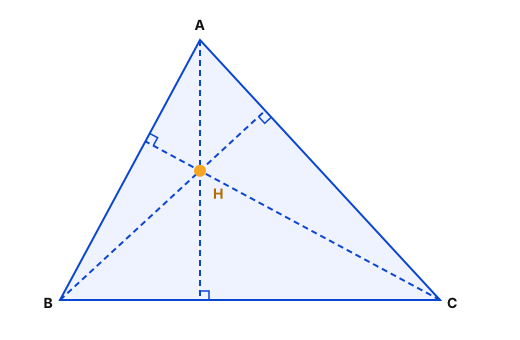
In an acute-angled triangle, the orthocentre lies at which position?
न्यूनकोण त्रिभुज में लंबकेंद्र किस स्थान पर होता है?
  1. AOn one of the sidesकिसी एक भुजा पर
  2. BOutside the triangleत्रिभुज के बाहर
  3. CInside the triangleत्रिभुज के भीतर
  4. DAt a vertexकिसी शीर्ष पर
Show answer

Concept: Orthocentre = meeting point of the three altitudes.

  1. Acute triangle: every altitude falls inside → orthocentre inside.
  2. Right triangle: at the vertex with the right angle.
  3. Obtuse triangle: outside the triangle.

Yaad rakhein: Orthocentre and circumcentre behave alike (inside / on / outside for acute / right / obtuse); incentre and centroid are always inside.

Answer: (C) Inside the triangle

अवधारणा: लंबकेंद्र = तीनों शीर्षलंबों का मिलन बिंदु।

हल:

  1. न्यूनकोण त्रिभुज: सभी शीर्षलंब अंदर → लंबकेंद्र अंदर।
  2. समकोण त्रिभुज: समकोण वाले शीर्ष पर।
  3. अधिककोण त्रिभुज: त्रिभुज के बाहर।

याद रखें: लंबकेंद्र और परिकेंद्र एक जैसे चलते हैं (न्यून/समकोण/अधिककोण: अंदर/पर/बाहर); अंतःकेंद्र और केंद्रक हमेशा अंदर।

उत्तर: (C) त्रिभुज के भीतर

SSC CGLQuantitative AptitudeTriangle centres – orthocentreSSC CGL 2025 · 23 Sep Shift 2 →
Q1074.
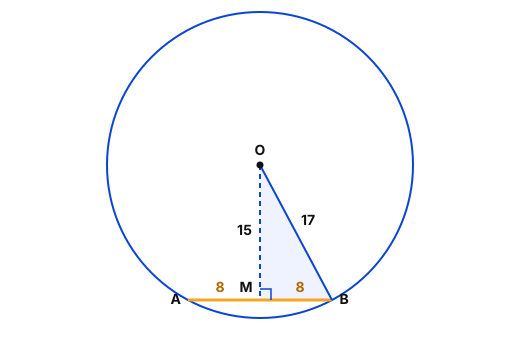
A chord is drawn in a circle with a radius of 17 cm. If the distance of the chord from the centre is 15 cm, what is the length of the chord?
17 cm त्रिज्या वाले वृत्त में एक जीवा खींची गई है। यदि केंद्र से जीवा की दूरी 15 cm है, तो जीवा की लंबाई क्या है?
  1. A13 cm
  2. B14 cm
  3. C16 cm
  4. D31 cm
Show answer

Concept: Perpendicular from centre bisects the chord: half-chord = r2−d2.

  1. Half of chord = r2−d2 with r = 17, d = 15: 172−152=32×2=64.
  2. So half-chord is 8 cm and full chord = 16 cm.

Trick: 8–15–17 is a Pythagorean triplet – the half-chord is 8 at once, so chord = 16.

Answer: (C) 16 cm

अवधारणा: केंद्र से डाला गया लंब जीवा को समद्विभाजित करता है: आधी जीवा = r2−d2।

हल:

  1. आधी जीवा = 172−152=64=8 cm।
  2. जीवा = 2×8=16 cm।

ट्रिक: 8–15–17 पाइथागोरस त्रिक है – आधी जीवा तुरंत 8, जीवा = 16।

उत्तर: (C) 16 cm

SSC CGLQuantitative AptitudeCircle – chord lengthSSC CGL 2025 · 23 Sep Shift 2 →
Q1075.
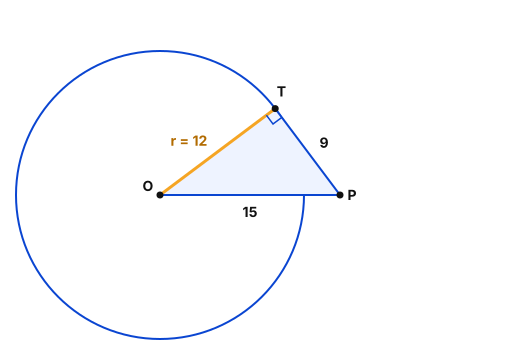
The tangent to a circle from a point P is 9 cm and the distance from P to the centre is 15 cm. Find the radius.
बिंदु P से वृत्त पर खींची गई स्पर्श रेखा 9 cm है और P से केंद्र की दूरी 15 cm है। त्रिज्या ज्ञात कीजिए।
  1. A12 cm
  2. B11 cm
  3. C3 cm
  4. D16 cm
Show answer

Concept: Radius ⟂ tangent at the point of contact, so (distance)2=r2+(tangent)2.

  1. 152=r2+92.
  2. r2=225−81=144.
  3. r = 12 cm.

Trick: 9–12–15 is 3× (3–4–5) – the radius is 12 without calculation.

Answer: (A) 12 cm

अवधारणा: स्पर्श बिंदु पर त्रिज्या ⟂ स्पर्शरेखा, अतः (दूरी)2=r2+(स्पर्शरेखा)2।

हल:

  1. 152=r2+92।
  2. r2=225−81=144।
  3. r = 12 cm।

ट्रिक: 9–12–15 = 3× (3–4–5) – बिना गणना त्रिज्या 12।

उत्तर: (A) 12 cm

SSC CGLQuantitative AptitudeCircle – tangent and radiusSSC CGL 2025 · 23 Sep Shift 2 →
Q1076.
Select the most appropriate antonym of the given word:
JOYOUS
  1. AHappy
  2. BCheerful
  3. CLugubrious
  4. DDelighted
Show answer

Concept: Antonym = word of opposite meaning.

  1. Joyous = full of joy, very happy.
  2. Lugubrious = gloomy, mournful, sad in a heavy way – the opposite.
  3. Happy, Cheerful, Delighted all mean the same as Joyous (synonyms).

Trick: Three options that mean the same thing are synonyms of the word – the odd one out is the antonym.

Answer: (C) Lugubrious

अवधारणा: Antonym = विपरीत अर्थ वाला शब्द।

हल:

  1. Joyous = आनंद से भरा, बहुत प्रसन्न।
  2. Lugubrious = उदास, शोकपूर्ण, मायूस – विपरीत अर्थ।
  3. Happy, Cheerful, Delighted सब Joyous के समानार्थी (synonyms) हैं।

ट्रिक: जब तीन विकल्प एक ही अर्थ के हों, तो वे synonyms हैं – अलग वाला ही antonym है।

उत्तर: (C) Lugubrious

SSC CGLEnglish ComprehensionAntonym – JoyousSSC CGL 2025 · 23 Sep Shift 2 →
Q1077.
Select the most appropriate meaning of the given idiom.
She finally broke her duck in the exam after repeated failures.
  1. AAbandon a hobby
  2. BSpoil a good start
  3. CAchieve a first success after previous failures
  4. DUndergo bankruptcy
Show answer

Concept: A cricket idiom: a 'duck' is a score of zero.

  1. To break one's duck = to get the first run, i.e. to achieve a first success after failing.
  2. In the sentence, after repeated failures she finally passed → first success.

Yaad rakhein: 'Duck' (0 runs) comes from the egg-like shape of zero – 'duck's egg'.

Answer: (C) Achieve a first success after previous failures

अवधारणा: यह क्रिकेट से आया मुहावरा है: 'duck' = शून्य रन।

हल:

  1. Break one's duck = पहला रन बनाना, यानी असफलताओं के बाद पहली सफलता पाना।
  2. वाक्य में बार-बार असफल होने के बाद वह आखिर पास हुई → पहली सफलता।

याद रखें: 'Duck' (0 रन) शून्य की अंडे जैसी आकृति से आया – 'duck's egg'।

उत्तर: (C) Achieve a first success after previous failures

SSC CGLEnglish ComprehensionIdiom – break one's duckSSC CGL 2025 · 23 Sep Shift 2 →
Q1078.
Select the most appropriate meaning of the given idiom.
She cut me dead in the corridor.
  1. AIgnored me deliberately
  2. BInsulted me openly
  3. CMisunderstood me accidentally
  4. DPraised me sarcastically
Show answer

Concept: To cut someone dead = to deliberately ignore a person you know.

  1. She passed him in the corridor and acted as if he did not exist.
  2. No words were spoken, so it is not an open insult or sarcastic praise – it is deliberate ignoring.

Yaad rakhein: Related: 'give someone the cold shoulder' – also means to ignore or treat coldly.

Answer: (A) Ignored me deliberately

अवधारणा: Cut someone dead = जान-पहचान वाले को जानबूझकर अनदेखा करना।

हल:

  1. गलियारे में वह ऐसे निकल गई जैसे उसे देखा ही न हो।
  2. कोई शब्द नहीं कहा, अतः यह खुला अपमान या व्यंग्य नहीं – जानबूझकर अनदेखी है।

याद रखें: समान अर्थ: 'give someone the cold shoulder' – रूखा व्यवहार/अनदेखा करना।

उत्तर: (A) Ignored me deliberately

SSC CGLEnglish ComprehensionIdiom – cut someone deadSSC CGL 2025 · 23 Sep Shift 2 →
Q1079.
Select the correct spelling.
  1. APhenomenologicl
  2. BPhenomenological
  3. CPhanomenollogical
  4. DPhenominonological
Show answer

Concept: Break the word into known parts: phenomeno + logical.

  1. Correct: PHE-NO-ME-NO-LO-GI-CAL.
  2. (A) misses 'a' in -cal; (C) has 'Pha' and double 'l'; (D) changes 'meno' to 'minono'.

Trick: Write 'phenomenon', drop the final 'n', add '-logical' → phenomeno-logical.

Answer: (B) Phenomenological

अवधारणा: शब्द को जाने-पहचाने हिस्सों में तोड़ें: phenomeno + logical।

हल:

  1. सही: PHE-NO-ME-NO-LO-GI-CAL।
  2. (A) में -cal का 'a' नहीं; (C) में 'Pha' और दोहरा 'l'; (D) में बीच का भाग बिगड़ा।

ट्रिक: 'phenomenon' लिखें, अंतिम 'n' हटाएँ, '-logical' जोड़ें → phenomeno-logical।

उत्तर: (B) Phenomenological

SSC CGLEnglish ComprehensionSpelling – PhenomenologicalSSC CGL 2025 · 23 Sep Shift 2 →
Q1080.
Select the correct spelling.
  1. ACircumlocution
  2. BCircumloction
  3. CCirumlocution
  4. DCircumlucution
Show answer

Concept: Circum (around) + locution (way of speaking) = talking around the point.

  1. Correct: CIR-CUM-LO-CU-TION.
  2. (B) drops the 'u' before -tion; (C) drops the 'c' in 'Cir'; (D) writes 'lu' instead of 'lo'.

Trick: Same root as circumference, circumstance (circum) and elocution (locution).

Answer: (A) Circumlocution

अवधारणा: Circum (चारों ओर) + locution (बोलने का ढंग) = घुमा-फिराकर बात करना।

हल:

  1. सही: CIR-CUM-LO-CU-TION।
  2. (B) में -tion से पहले 'u' नहीं; (C) में 'Cir' का 'c' गायब; (D) में 'lo' की जगह 'lu'।

ट्रिक: यही मूल circumference, circumstance (circum) और elocution (locution) में है।

उत्तर: (A) Circumlocution

SSC CGLEnglish ComprehensionSpelling – CircumlocutionSSC CGL 2025 · 23 Sep Shift 2 →