Question bank

Q&A: practice questions with answers

Search questions on any topic. Filter by exam category, exam, subject and topic, try the question, then open the answer and explanation.

Courses – airGurukul

4,800 questions found.

Q1241.
Fill in the blank:
After a Bill is passed by a State Legislature, the Governor may reserve it for consideration of the ____.
रिक्त स्थान भरिए:
राज्य विधानमंडल द्वारा विधेयक पारित होने के बाद राज्यपाल उसे ____ के विचारार्थ आरक्षित रख सकते हैं।
  1. AChief Ministerमुख्यमंत्री
  2. BSpeakerअध्यक्ष
  3. CPresidentराष्ट्रपति
  4. DPrime Ministerप्रधानमंत्री
Show answer

Concept: Options of the Governor on a State Bill.

  1. Under Article 200 the Governor may give assent, withhold assent, return it (non-money Bill), or reserve it for the President.
  2. The President decides on reserved Bills under Article 201.

Yaad rakhein: Remember the pair: Art. 200 (Governor) → Art. 201 (President on reserved Bills).

Answer: (C) President

अवधारणा: राज्य विधेयक पर राज्यपाल के विकल्प।

हल:

  1. अनुच्छेद 200: राज्यपाल स्वीकृति दे, रोके, (धन विधेयक को छोड़) लौटाए, या राष्ट्रपति के विचारार्थ आरक्षित करे।
  2. आरक्षित विधेयक पर राष्ट्रपति अनुच्छेद 201 के तहत निर्णय लेते हैं।

याद रखें: जोड़ी याद रखें: अनु. 200 (राज्यपाल) → अनु. 201 (राष्ट्रपति)।

उत्तर: (C) राष्ट्रपति
SSC CGLGeneral AwarenessGovernor's assent – Article 200SSC CGL 2025 · 22 Sep Shift 3 →
Q1242.
In a beta-plus (β⁺) decay process, which of the following changes occur within the nucleus?
बीटा-प्लस (β⁺) क्षय में नाभिक के भीतर कौन-सा परिवर्तन होता है?
  1. AProton number decreases by 1 while the mass number remains unchangedप्रोटॉन संख्या 1 घटती है जबकि द्रव्यमान संख्या अपरिवर्तित रहती है
  2. BProton number increases by 1 while the mass number remains unchangedप्रोटॉन संख्या 1 बढ़ती है जबकि द्रव्यमान संख्या अपरिवर्तित रहती है
  3. CBoth proton number and mass number decreaseप्रोटॉन और द्रव्यमान दोनों संख्याएँ घटती हैं
  4. DProton number decreases by 2 and mass number decreases by 4प्रोटॉन संख्या 2 घटती है और द्रव्यमान संख्या 4
Show answer

Concept: In β⁺ decay a proton changes into a neutron, emitting a positron (and a neutrino).

  1. Protons fall by 1 → atomic number Z − 1.
  2. Neutrons rise by 1, so total nucleons stay same → mass number A unchanged.
  3. (B) is β⁻ decay; (D) is α decay.

Trick: β⁺: Z − 1; β⁻: Z + 1; α: Z − 2, A − 4; γ: no change in Z or A.

Answer: (A) Proton number decreases by 1 while the mass number remains unchanged

अवधारणा: β⁺ क्षय में एक प्रोटॉन न्यूट्रॉन में बदलता है और पॉज़िट्रॉन (व न्यूट्रिनो) निकलता है।

हल:

  1. प्रोटॉन 1 घटता है → परमाणु क्रमांक Z − 1
  2. न्यूट्रॉन 1 बढ़ता है, कुल न्यूक्लियॉन वही → द्रव्यमान संख्या A अपरिवर्तित
  3. (B) β⁻ क्षय है; (D) α क्षय है।

ट्रिक: β⁺: Z − 1; β⁻: Z + 1; α: Z − 2, A − 4; γ: कोई परिवर्तन नहीं।

उत्तर: (A) प्रोटॉन संख्या 1 घटती है जबकि द्रव्यमान संख्या अपरिवर्तित रहती है

SSC CGLGeneral AwarenessRadioactivity – β⁺ decaySSC CGL 2025 · 22 Sep Shift 3 →
Q1243.
According to the World Economic Forum's 2025 Energy Transition Index (ETI), which trend most accurately reflects the current global energy landscape?
विश्व आर्थिक मंच के 2025 ऊर्जा संक्रमण सूचकांक (ETI) के अनुसार वर्तमान वैश्विक ऊर्जा परिदृश्य को कौन-सी प्रवृत्ति सबसे सही दर्शाती है?
  1. ADemand continues to rise because of electrification and cooling needsविद्युतीकरण और शीतलन आवश्यकताओं के कारण माँग बढ़ती जा रही है
  2. BSecurity of supply is improving while sustainability is decliningआपूर्ति सुरक्षा सुधर रही है जबकि संधारणीयता घट रही है
  3. CInvestment levels and readiness for transition are above averageनिवेश स्तर और संक्रमण की तैयारी औसत से ऊपर है
  4. DArtificial Intelligence has reduced demand and stabilized the power gridकृत्रिम बुद्धिमत्ता ने माँग घटाकर ग्रिड स्थिर कर दिया है
Show answer

Concept: Key trend reported by the World Economic Forum's ETI 2025.

  1. The report notes global energy demand is still rising, pushed by electrification and higher cooling needs.
  2. It flags transition investment and readiness as lagging, not above average – (C) wrong; AI is adding to demand, not reducing it – (D) wrong.

Yaad rakhein: Sweden has topped the ETI ranking for several years; the index is published by WEF (Geneva).

Answer: (A) Demand continues to rise because of electrification and cooling needs

अवधारणा: WEF की ETI 2025 रिपोर्ट का मुख्य निष्कर्ष।

हल:

  1. रिपोर्ट के अनुसार विद्युतीकरण और कूलिंग की ज़रूरत से वैश्विक ऊर्जा माँग बढ़ रही है।
  2. निवेश व तैयारी पिछड़ी बताई गई है – (C) गलत; AI से माँग घट नहीं, बढ़ रही है – (D) गलत।

याद रखें: ETI सूचकांक विश्व आर्थिक मंच (WEF) जारी करता है; स्वीडन कई वर्षों से शीर्ष पर है।

उत्तर: (A) विद्युतीकरण और शीतलन आवश्यकताओं के कारण माँग बढ़ती जा रही है

SSC CGLGeneral AwarenessWEF Energy Transition Index 2025SSC CGL 2025 · 22 Sep Shift 3 →
Q1244.
Regarding the traditional folk dance Ghoomar, consider the following:
A: It was originally performed by Bhil women before being adopted by Rajputs.
R: Ghoomar is listed as a UNESCO Intangible Cultural Heritage.
Which of the above is correct?
पारंपरिक लोक नृत्य घूमर के संबंध में विचार कीजिए:
A: यह मूलतः भील महिलाओं द्वारा किया जाता था, बाद में राजपूतों ने अपनाया।
R: घूमर यूनेस्को की अमूर्त सांस्कृतिक विरासत सूची में शामिल है।
उपर्युक्त में से क्या सही है?
  1. ABoth A and R are correctA और R दोनों सही हैं
  2. BA is correct, but R is incorrectA सही है, परंतु R गलत है
  3. CA is incorrect, but R is correctA गलत है, परंतु R सही है
  4. DBoth A and R are incorrectA और R दोनों गलत हैं
Show answer

Concept: Origin of Ghoomar and India's UNESCO intangible heritage list.

  1. Ghoomar began in the Bhil tribe and was later adopted by Rajput communities of Rajasthan – A is correct.
  2. Ghoomar is NOT on UNESCO's Intangible Cultural Heritage list – R is incorrect.

Yaad rakhein: Rajasthan's dance on the UNESCO list is Kalbelia (2010), not Ghoomar.

Answer: (B) A is correct, but R is incorrect

अवधारणा: घूमर की उत्पत्ति और यूनेस्को अमूर्त विरासत सूची।

हल:

  1. घूमर भील जनजाति में शुरू हुआ, बाद में राजपूतों ने अपनाया – A सही।
  2. यूनेस्को ने घूमर को अपनी Intangible Heritage सूची में शामिल नहीं किया है – R गलत।

याद रखें: यूनेस्को सूची में राजस्थान का नृत्य कालबेलिया (2010) है, घूमर नहीं।

उत्तर: (B) A सही है, परंतु R गलत है

SSC CGLGeneral AwarenessFolk dance – GhoomarSSC CGL 2025 · 22 Sep Shift 3 →
Q1245.
Which of the following is a capital receipt for the Government of India?
निम्न में से कौन भारत सरकार के लिए पूँजीगत प्राप्ति है?
  1. AIncome tax revenue collectedएकत्र किया गया आयकर राजस्व
  2. BDividend received from Public Sector Undertakings (PSUs)सार्वजनिक उपक्रमों (PSU) से प्राप्त लाभांश
  3. CLoan raised from the Reserve Bank of India (RBI)भारतीय रिज़र्व बैंक (RBI) से लिया गया ऋण
  4. DRevenue from public service chargesसार्वजनिक सेवा शुल्कों से आय
Show answer

Concept: Capital receipt = creates a liability or reduces an asset of the government.

  1. A loan from the RBI must be repaid → creates liability → capital receipt.
  2. Income tax, PSU dividends and service charges create no liability → revenue receipts.

Trick: Ask 'Will the government owe it back or lose an asset?' Yes → capital (borrowings, loan recovery, disinvestment).

Answer: (C) Loan raised from the Reserve Bank of India (RBI)

अवधारणा: पूंजीगत प्राप्ति = जिससे देनदारी बने या संपत्ति घटे।

हल:

  1. RBI से लिया ऋण चुकाना होगा → देनदारी → पूंजीगत प्राप्ति।
  2. आयकर, PSU लाभांश, सेवा शुल्क से कोई देनदारी नहीं → राजस्व प्राप्ति।

ट्रिक: पूछें – 'क्या लौटाना पड़ेगा या संपत्ति घटेगी?' हाँ → पूंजीगत (उधार, ऋण वसूली, विनिवेश)।

उत्तर: (C) भारतीय रिज़र्व बैंक (RBI) से लिया गया ऋण

SSC CGLGeneral AwarenessBudget – capital receiptsSSC CGL 2025 · 22 Sep Shift 3 →
Q1246.
V.O. Chidambaram Pillai, popularly honoured as 'Kappalottiya Thamizhan', played a key role in the Swadeshi movement by establishing which Indian-owned enterprise to challenge the British monopoly?
'कप्पलोट्टिया तमिऴन' के नाम से सम्मानित वी.ओ. चिदंबरम पिल्लै ने स्वदेशी आंदोलन में ब्रिटिश एकाधिकार को चुनौती देने हेतु कौन-सा भारतीय उद्यम स्थापित किया?
  1. ASwadeshi Cotton Millsस्वदेशी कॉटन मिल्स
  2. BSwadeshi Steam Navigation Companyस्वदेशी स्टीम नेविगेशन कंपनी
  3. CSwadeshi Bankस्वदेशी बैंक
  4. DSwadeshi Textile Millsस्वदेशी टेक्सटाइल मिल्स
Show answer

Concept: Swadeshi enterprises set up to challenge British business.

  1. In 1906 V.O.C. founded the Swadeshi Steam Navigation Company at Tuticorin (Thoothukudi).
  2. Its ships ran between Tuticorin and Colombo, against the British India Steam Navigation Company's monopoly.

Trick: 'Kappalottiya Thamizhan' = 'the Tamil who sailed ships' – the title itself points to shipping.

Answer: (B) Swadeshi Steam Navigation Company

अवधारणा: ब्रिटिश व्यापार को चुनौती देने वाले स्वदेशी उद्यम।

हल:

  1. 1906 में वी.ओ.सी. ने तूतीकोरिन में स्वदेशी स्टीम नेविगेशन कंपनी बनाई।
  2. इसके जहाज़ तूतीकोरिन–कोलंबो के बीच चले और ब्रिटिश एकाधिकार को चुनौती दी।

ट्रिक: 'कप्पलोट्टिय तमिऴन' = 'जहाज़ चलाने वाला तमिल' – उपाधि ही जहाज़रानी बताती है।

उत्तर: (B) स्वदेशी स्टीम नेविगेशन कंपनी

SSC CGLGeneral AwarenessSwadeshi movement – V.O. Chidambaram PillaiSSC CGL 2025 · 22 Sep Shift 3 →
Q1247.
In what way does the Indian planning process reflect responsiveness to feedback and public participation?
भारतीय योजना प्रक्रिया प्रतिक्रिया और जन-भागीदारी के प्रति किस प्रकार संवेदनशीलता दिखाती है?
  1. ABy finalizing plans before any public opinion is consideredजनमत पर विचार से पहले ही योजनाएँ अंतिम कर देकर
  2. BBy completely ignoring public and expert suggestionsजन और विशेषज्ञ सुझावों की पूरी तरह अनदेखी कर
  3. CBy revising plan drafts based on criticism and recommendations receivedप्राप्त आलोचना और सिफ़ारिशों के आधार पर मसौदों में संशोधन कर
  4. DBy consulting only foreign bodies while preparing plansयोजना बनाते समय केवल विदेशी संस्थाओं से परामर्श कर
Show answer

Concept: Democratic planning invites and uses feedback.

  1. Draft plans are circulated to ministries, states, experts and the public.
  2. Their criticism and suggestions are used to revise the draft before final approval.
  3. Options A, B and D describe ignoring feedback – the opposite of responsiveness.

Trick: Words like 'ignoring', 'only foreign', 'before any opinion' are extreme – eliminate them.

Answer: (C) By revising plan drafts based on criticism and recommendations received

अवधारणा: लोकतांत्रिक नियोजन में सुझाव लिए और अपनाए जाते हैं।

हल:

  1. योजना का मसौदा मंत्रालयों, राज्यों, विशेषज्ञों व जनता के बीच रखा जाता है।
  2. प्राप्त आलोचना व सुझावों से मसौदे में संशोधन होता है।
  3. A, B, D सुझावों की अनदेखी बताते हैं – यह उल्टा है।

ट्रिक: 'पूरी तरह अनदेखी', 'केवल विदेशी' जैसे अति-शब्दों वाले विकल्प हटाएँ।

उत्तर: (C) प्राप्त आलोचना और सिफ़ारिशों के आधार पर मसौदों में संशोधन कर

SSC CGLGeneral AwarenessIndian planning – participatory approachSSC CGL 2025 · 22 Sep Shift 3 →
Q1248.
Which of the following statements correctly highlights the contribution of Verghese Kurien to India?
वर्गीज कुरियन के योगदान को निम्न में से कौन-सा कथन सही दर्शाता है?
  1. AHe initiated a White Revolution in the IT sectorउन्होंने आईटी क्षेत्र में श्वेत क्रांति शुरू की
  2. BHe pioneered Operation Flood, transforming India's dairy industryउन्होंने ऑपरेशन फ्लड की अगुवाई कर भारत के डेयरी उद्योग को बदल दिया
  3. CHe invented the milk pasteurization technique used by Amulउन्होंने अमूल में प्रयुक्त दूध पाश्चुरीकरण तकनीक का आविष्कार किया
  4. DHe served as the first Chairman of the Indian Dairy Associationवे भारतीय डेयरी संघ के पहले अध्यक्ष रहे
Show answer

Concept: Personalities behind India's agricultural revolutions.

  1. Verghese Kurien led Operation Flood (from 1970) through NDDB, building the Amul cooperative model nationwide.
  2. It made India the world's largest milk producer; he is called the Father of the White Revolution.
  3. He did not invent pasteurisation – (C) wrong.

Yaad rakhein: 26 November (Kurien's birthday) is observed as National Milk Day.

Answer: (B) He pioneered Operation Flood, transforming India's dairy industry

अवधारणा: भारत की कृषि क्रांतियों के प्रमुख व्यक्तित्व।

हल:

  1. वर्गीज़ कुरियन ने NDDB के माध्यम से ऑपरेशन फ्लड (1970 से) चलाया और अमूल सहकारी मॉडल फैलाया।
  2. इससे भारत विश्व का सबसे बड़ा दुग्ध उत्पादक बना; वे 'श्वेत क्रांति के जनक' हैं।
  3. पाश्चुरीकरण की खोज उन्होंने नहीं की – (C) गलत।

याद रखें: 26 नवंबर (कुरियन का जन्मदिन) राष्ट्रीय दुग्ध दिवस है।

उत्तर: (B) उन्होंने ऑपरेशन फ्लड की अगुवाई कर भारत के डेयरी उद्योग को बदल दिया

SSC CGLGeneral AwarenessVerghese Kurien – White RevolutionSSC CGL 2025 · 22 Sep Shift 3 →
Q1249.
Why do Urban Heat Islands (UHIs) commonly form in large cities?
बड़े शहरों में शहरी ऊष्मा द्वीप (UHI) सामान्यतः क्यों बनते हैं?
  1. ABecause peri-urban regions have more humidityक्योंकि उपनगरीय क्षेत्रों में आर्द्रता अधिक होती है
  2. BDue to abundant trees and lakes that trap heatक्योंकि प्रचुर वृक्ष और झीलें ऊष्मा रोक लेती हैं
  3. CBecause concrete infrastructure and vehicles release and retain heat while greenery is limitedक्योंकि कंक्रीट ढाँचे और वाहन ऊष्मा छोड़ते व रोके रखते हैं जबकि हरियाली सीमित होती है
  4. DDue to the cooling influence of high-altitude rural surroundingsक्योंकि ऊँचाई वाले ग्रामीण परिवेश का शीतलन प्रभाव पड़ता है
Show answer

Concept: Cities become warmer than nearby rural areas due to man-made surfaces and heat.

  1. Concrete, asphalt and buildings store solar heat in daytime and give it back after sunset, keeping nights warm.
  2. Vehicles, ACs and industries add waste heat; few trees/water bodies means less cooling.
  3. Trees and lakes cool the air, so (B) is wrong.

Yaad rakhein: UHI fix = more green cover, cool/white roofs, water bodies.

Answer: (C) Because concrete infrastructure and vehicles release and retain heat while greenery is limited

अवधारणा: मानव-निर्मित सतहों व ऊष्मा के कारण शहर आसपास के गाँवों से गर्म रहते हैं।

हल:

  1. कंक्रीट, डामर व इमारतें दिन की धूप की गर्मी जमा करके सूर्यास्त के बाद लौटाती हैं, इसलिए रातें भी गर्म रहती हैं।
  2. वाहन, AC व उद्योग अतिरिक्त गर्मी देते हैं; हरियाली कम होने से ठंडक नहीं मिलती।
  3. पेड़ और झीलें ठंडक देते हैं – (B) गलत।

याद रखें: उपाय: अधिक हरियाली, सफ़ेद/कूल छतें, जलाशय।

उत्तर: (C) क्योंकि कंक्रीट ढाँचे और वाहन ऊष्मा छोड़ते व रोके रखते हैं जबकि हरियाली सीमित होती है

SSC CGLGeneral AwarenessUrban Heat IslandSSC CGL 2025 · 22 Sep Shift 3 →
Q1250.
Regarding the constitutional provisions of GST in India, consider the following statements:
1. Article 246A empowers Parliament with exclusive authority to legislate on GST matters.
2. States do not have the power to legislate on GST levied within their own territorial limits.
3. The GST Council is a constitutional body established under Article 279A.
Which of the statements given above is/are correct?
भारत में GST के संवैधानिक उपबंधों के संबंध में निम्न कथनों पर विचार कीजिए:
1. अनुच्छेद 246A संसद को GST पर कानून बनाने का अनन्य अधिकार देता है।
2. राज्यों को अपनी सीमा के भीतर लगाए गए GST पर कानून बनाने की शक्ति नहीं है।
3. GST परिषद अनुच्छेद 279A के अंतर्गत स्थापित संवैधानिक निकाय है।
उपर्युक्त में से कौन-सा/से कथन सही है/हैं?
  1. A2 onlyकेवल 2
  2. B1 onlyकेवल 1
  3. C3 onlyकेवल 3
  4. D1, 2 and 31, 2 और 3
Show answer

Concept: 101st Amendment (2016) added Articles 246A and 279A.

  1. Art. 246A gives BOTH Parliament and State Legislatures power to make GST laws (concurrent) – statement 1 wrong.
  2. So States can legislate on intra-state GST (SGST) – statement 2 wrong.
  3. Art. 279A creates the GST Council, a constitutional body – statement 3 correct.

Trick: GST is 'dual GST' – Centre (CGST) + State (SGST); the word 'exclusive' in statement 1 is the red flag.

Answer: (C) 3 only

अवधारणा: 101वाँ संशोधन (2016) – अनुच्छेद 246A व 279A जोड़े गए।

हल:

  1. अनु. 246A संसद और राज्य विधानमंडल दोनों को GST कानून बनाने की शक्ति देता है – कथन 1 गलत।
  2. इसलिए राज्य अपने भीतर GST (SGST) पर कानून बना सकते हैं – कथन 2 गलत।
  3. अनु. 279A से GST परिषद बनी – संवैधानिक निकाय – कथन 3 सही।

ट्रिक: GST 'दोहरा' है – CGST + SGST; कथन 1 में 'अनन्य (exclusive)' शब्द ही गलती का संकेत है।

उत्तर: (C) केवल 3

SSC CGLGeneral AwarenessGST – constitutional provisionsSSC CGL 2025 · 22 Sep Shift 3 →
Q1251.
What will be the amount to be paid at the end of 5 years on ₹4,000 at 20% per annum compounded annually?
₹4,000 पर 20% वार्षिक चक्रवृद्धि दर से 5 वर्ष बाद कितनी राशि चुकानी होगी?
  1. A₹9,265.3
  2. B₹9,545.3
  3. C₹9,953.2
  4. D₹9,145.3
Show answer

Concept: A=P(1+r100)n.

  1. 20%=15, so each year the multiplier is 65=1.2.
  2. 1.25=1.44×1.44×1.2=2.48832.
  3. A=4000×2.48832= ₹9,953.28 ≈ ₹9,953.2.

Trick: Only (C) is close to 4000×2.5=10,000 from below – pick it without full multiplication.

Answer: (C) ₹9,953.2

अवधारणा: मिश्रधन A=P(1+r100)n।

हल:

  1. 20%=15, अतः हर साल गुणक 65=1.2
  2. 1.25=1.44×1.44×1.2=2.48832
  3. A=4000×2.48832= ₹9,953.28 ≈ ₹9,953.2

ट्रिक: 4000×2.5=10,000 से थोड़ा कम वाला विकल्प (C) ही है – पूरा गुणा ज़रूरी नहीं।

उत्तर: (C) ₹9,953.2

SSC CGLQuantitative AptitudeCompound interest – amountSSC CGL 2025 · 22 Sep Shift 3 →
Q1252.
Which of the following numbers is both a Rational Number and a Terminating Decimal?
निम्न में से कौन-सी संख्या परिमेय भी है और सांत दशमलव भी?
  1. A23
  2. B75
  3. C5
  4. Dπ
Show answer

Concept: pq (lowest terms) terminates only if q has no prime factor other than 2 and 5.

  1. 75: denominator 5 → 75=1.4, terminates ✓
  2. 23: denominator 3 → 0.666… recurring.
  3. 5 and π are irrational – not rational at all.

Trick: Look only at the denominator: made of 2s and 5s → terminating.

Answer: (B) 75

अवधारणा: pq (न्यूनतम रूप) सांत होगा जब q में 2 और 5 के अलावा कोई अभाज्य गुणनखंड न हो।

हल:

  1. 75: हर 5 → 1.4, सांत ✓
  2. 23: हर 3 → 0.666… आवर्ती
  3. 5 व π अपरिमेय हैं।

ट्रिक: केवल हर देखें: 2 और 5 से बना हो तो सांत दशमलव।

उत्तर: (B) 75

SSC CGLQuantitative AptitudeTerminating decimalsSSC CGL 2025 · 22 Sep Shift 3 →
Q1253.
Amit walks at 10 km/h for 12 km and at 12 km/h for 16 km. What is his average speed?
अमित 12 km की दूरी 10 km/h से और 16 km की दूरी 12 km/h से चलता है। उसकी औसत चाल क्या है?
  1. A9.4 km/h
  2. B12 km/h
  3. C10 km/h
  4. D11.05 km/h
Show answer

Concept: Average speed = total distance ÷ total time (not the average of speeds).

  1. Time-1 = 1210=65 h; time-2 = 1612=43 h.
  2. Total time = 65+43=3815 h; distance = 28 km.
  3. Speed = 28×1538=42038≈11.05 km/h.

Trick: Answer must lie between 10 and 12 (strictly) – only 11.05 fits.

Answer: (D) 11.05 km/h

अवधारणा: औसत चाल = कुल दूरी ÷ कुल समय (चालों का औसत नहीं)।

हल:

  1. समय-1 = 1210=65 घं; समय-2 = 1612=43 घं
  2. कुल समय = 3815 घं; कुल दूरी = 28 किमी
  3. चाल = 28×1538=42038≈11.05 किमी/घं

ट्रिक: उत्तर 10 और 12 के बीच ही होगा – केवल 11.05 उपयुक्त है।

उत्तर: (D) 11.05 km/h

SSC CGLQuantitative AptitudeAverage speed – unequal distancesSSC CGL 2025 · 22 Sep Shift 3 →
Q1254.
The volume of a sphere is 288π cm³. If the radius of the sphere is tripled, by what percentage does the volume increase?
एक गोले का आयतन 288π cm³ है। यदि त्रिज्या तीन गुनी कर दी जाए, तो आयतन कितने प्रतिशत बढ़ेगा?
  1. A800%
  2. B2600%
  3. C900%
  4. D2700%
Show answer

Concept: V∝r3, so the given 288π is not needed.

  1. New r = 3r → new V = 27 × old V.
  2. Increase = 27−1=26 times the old volume.
  3. % increase = 26×100=2600%.

Trick: % increase when a length becomes k times: (k3−1)×100% for volume.

Answer: (B) 2600%

अवधारणा: V∝r3, इसलिए 288π की ज़रूरत नहीं।

हल:

  1. नई त्रिज्या 3r → नया आयतन 27 गुना
  2. वृद्धि = 27−1=26 गुना
  3. प्रतिशत वृद्धि = 2600%

ट्रिक: लंबाई k गुना हो तो आयतन वृद्धि = (k3−1)×100%।

उत्तर: (B) 2600%

SSC CGLQuantitative AptitudeSphere – volume changeSSC CGL 2025 · 22 Sep Shift 3 →
Q1255.
A rectangular plot has a length of 15.75 m and a width of 8.2 m. What is its area?
एक आयताकार भूखंड की लंबाई 15.75 m और चौड़ाई 8.2 m है। उसका क्षेत्रफल क्या है?
  1. A129.15 m²
  2. B128.9 m²
  3. C180.2 m²
  4. D181.5 m²
Show answer

Concept: Area = length × breadth.

  1. 15.75×8=126; 15.75×0.2=3.15.
  2. Area = 126+3.15=129.15 m².

Trick: Unit digit check: 5×2 ends in 0 and there are 3 decimal places → result ends '…150' → 129.15.

Answer: (A) 129.15 m²

अवधारणा: क्षेत्रफल = लंबाई × चौड़ाई।

हल:

  1. 15.75×8=126; 15.75×0.2=3.15
  2. क्षेत्रफल = 126+3.15=129.15 m²

ट्रिक: गुणा को 8 और 0.2 में तोड़ें – मानसिक गणना आसान हो जाती है।

उत्तर: (A) 129.15 m²

SSC CGLQuantitative AptitudeArea of rectangle – decimalsSSC CGL 2025 · 22 Sep Shift 3 →
Q1256.
A recipe requires 0.85 litres of milk for 15 servings. How many servings can be made with 4.25 litres of milk?
एक व्यंजन-विधि में 15 सर्विंग के लिए 0.85 लीटर दूध चाहिए। 4.25 लीटर दूध से कितनी सर्विंग बनेंगी?
  1. A78
  2. B70
  3. C72
  4. D75
Show answer

Concept: Servings are directly proportional to milk.

  1. 4.25÷0.85=425÷85=5 → milk is 5 times.
  2. Servings = 15×5=75.

Trick: Spot that 85×5=425 – no need to find milk per serving.

Answer: (D) 75

अवधारणा: सर्विंग्स दूध के सीधे अनुपात में हैं।

हल:

  1. 4.25÷0.85=425÷85=5 → दूध 5 गुना
  2. सर्विंग्स = 15×5=75

ट्रिक: 85×5=425 तुरंत दिखता है – प्रति सर्विंग दूध निकालने की ज़रूरत नहीं।

उत्तर: (D) 75

SSC CGLQuantitative AptitudeUnitary method – proportionSSC CGL 2025 · 22 Sep Shift 3 →
Q1257.
D and E start a business with equal investments. After 6 months D adds ₹15,000 more. At the end of 1 year the total profit is ₹35,000 and E's share is ₹10,000. What was their initial investment?
D और E समान निवेश से व्यवसाय शुरू करते हैं। 6 माह बाद D ₹15,000 और मिलाता है। एक वर्ष के अंत में कुल लाभ ₹35,000 है और E का हिस्सा ₹10,000। उनका आरंभिक निवेश कितना था?
  1. A₹6,000
  2. B₹4,000
  3. C₹5,000
  4. D₹7,000
Show answer

Concept: Profit is shared in the ratio of capital × time.

  1. Let each invest x. D: 12x+15000×6=12x+90,000; E: 12x.
  2. D's profit = 35,000−10,000=25,000 → D : E = 5 : 2.
  3. 2(12x+90,000)=5×12x→36x=1,80,000→x= ₹5,000.

Trick: Option check: x=5000 → D = 1,50,000, E = 60,000 → 5 : 2 ✓.

Answer: (C) ₹5,000

अवधारणा: लाभ (पूंजी × समय) के अनुपात में बँटता है।

हल:

  1. प्रत्येक का निवेश x; D: 12x+15000×6=12x+90,000; E: 12x
  2. D का लाभ = 25,000 → D : E = 5 : 2
  3. 2(12x+90,000)=60x→36x=1,80,000→x= ₹5,000

ट्रिक: विकल्प जाँच: x=5000 → D = 1,50,000, E = 60,000 → 5 : 2 ✓

उत्तर: (C) ₹5,000

SSC CGLQuantitative AptitudePartnership – additional investmentSSC CGL 2025 · 22 Sep Shift 3 →
Q1258.
If x : y = 3 : 7, then what is (2x + 3y) : (x + y)?
यदि x : y = 3 : 7 है, तो (2x + 3y) : (x + y) क्या होगा?
  1. A27 : 10
  2. B7 : 19
  3. C16 : 7
  4. D7 : 16
Show answer

Concept: When x : y is given, put x = 3, y = 7 directly.

  1. 2x + 3y = 6 + 21 = 27.
  2. x + y = 10.
  3. Required ratio = 27 : 10.

Trick: Expression ratios are homogeneous (degree 1), so plugging the ratio numbers always works.

Answer: (A) 27 : 10

अवधारणा: x : y दिया हो तो सीधे x = 3, y = 7 रखें।

हल:

  1. 2x + 3y = 6 + 21 = 27
  2. x + y = 10
  3. अनुपात = 27 : 10

ट्रिक: दोनों व्यंजक एक ही घात के हैं, इसलिए अनुपात के अंक रखना सही रहता है।

उत्तर: (A) 27 : 10

SSC CGLQuantitative AptitudeRatio – substitute valuesSSC CGL 2025 · 22 Sep Shift 3 →
Q1259.
A number is such that if you square it and then subtract five times the number, the result is 150. What is the number?
एक संख्या ऐसी है कि उसका वर्ग करके उसमें से संख्या का पाँच गुना घटाने पर 150 मिलता है। वह संख्या क्या है?
  1. A10
  2. B15
  3. C20
  4. D25
Show answer

Concept: Form the equation and factorise.

  1. x2−5x=150→x2−5x−150=0.
  2. (x−15)(x+10)=0→x=15 (or −10).
  3. Among the options, 15.

Trick: Option test: 152−5×15=225−75=150 ✓ – faster than solving.

Answer: (B) 15

अवधारणा: समीकरण बनाकर गुणनखंड करें।

हल:

  1. x2−5x−150=0
  2. (x−15)(x+10)=0→x=15 (या −10)
  3. विकल्पों में 15।

ट्रिक: विकल्प से जाँचें: 225−75=150 ✓

उत्तर: (B) 15

SSC CGLQuantitative AptitudeQuadratic equation – word problemSSC CGL 2025 · 22 Sep Shift 3 →
Q1260.
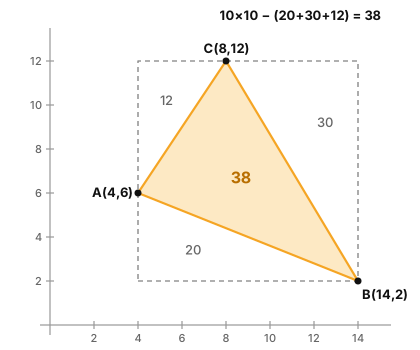
A triangle has vertices at A(4, 6), B(14, 2) and C(8, 12). What is its area?
एक त्रिभुज के शीर्ष A(4, 6), B(14, 2) और C(8, 12) हैं। उसका क्षेत्रफल क्या है?
  1. A30 square units30 वर्ग इकाई
  2. B38 square units38 वर्ग इकाई
  3. C15.5 square units15.5 वर्ग इकाई
  4. D33 square units33 वर्ग इकाई
Show answer

Concept: Area =12|x1(y2−y3)+x2(y3−y1)+x3(y1−y2)|.

  1. 4(2−12)=−40; 14(12−6)=84; 8(6−2)=32.
  2. Sum = 76.
  3. Area =762=38 sq units.

Trick: Shift origin to A: B(10, −4), C(4, 6) → 12|10×6−(−4)×4|=12×76=38.

Answer: (B) 38 square units

अवधारणा: क्षेत्रफल =12|x1(y2−y3)+x2(y3−y1)+x3(y1−y2)|

हल:

  1. 4(−10)=−40; 14(6)=84; 8(4)=32
  2. योग = 76
  3. क्षेत्रफल = 38 वर्ग इकाई

ट्रिक: मूलबिंदु A पर लाएँ: B(10, −4), C(4, 6) → 12|60+16|=38।

उत्तर: (B) 38 वर्ग इकाई

SSC CGLQuantitative AptitudeCoordinate geometry – area of triangleSSC CGL 2025 · 22 Sep Shift 3 →