Question bank

Q&A: practice questions with answers

Search questions on any topic. Filter by exam category, exam, subject and topic, try the question, then open the answer and explanation.

Courses – airGurukul

4,800 questions found.

Q1541.
Under a Financial Emergency, who has the authority to reduce the salaries of judges?
वित्तीय आपात के दौरान न्यायाधीशों के वेतन घटाने का अधिकार किसे है?
  1. APrime Ministerप्रधानमंत्री
  2. BPresidentराष्ट्रपति
  3. CChief Justiceमुख्य न्यायाधीश
  4. DGovernorराज्यपाल
Show answer

Concept: Article 360 gives special financial powers to the President.

  1. During Financial Emergency the President can order cuts in salaries of all Union employees.
  2. This includes judges of the Supreme Court and High Courts.
  3. It has never been imposed in India.

Yaad rakhein: Emergency articles: 352 National, 356 President's Rule, 360 Financial.

Answer: (B) President

अवधारणा: अनुच्छेद 360 राष्ट्रपति को विशेष वित्तीय शक्तियाँ देता है।

हल:

  1. वित्तीय आपातकाल में राष्ट्रपति सभी संघीय कर्मचारियों के वेतन घटाने का आदेश दे सकते हैं।
  2. इसमें सर्वोच्च न्यायालय और उच्च न्यायालयों के न्यायाधीश भी शामिल हैं।
  3. भारत में यह कभी लागू नहीं हुआ।

याद रखें: आपातकाल: 352 राष्ट्रीय, 356 राष्ट्रपति शासन, 360 वित्तीय।

उत्तर: (B) राष्ट्रपति
SSC CGLGeneral AwarenessPolity – Financial EmergencySSC CGL 2025 · 21 Sep Shift 3 →
Q1542.
Read the following statements and choose the correct option.
Assertion (A): ISRO increasingly employs Generative Design Software to enhance structural efficiency and weight optimization in aerospace components.
Reason (R): These generative design tools are exclusively designed for space agencies and cannot be used in any other industry.
निम्न कथनों को पढ़कर सही विकल्प चुनिए।
अभिकथन (A): इसरो एयरोस्पेस घटकों की संरचनात्मक दक्षता और भार अनुकूलन हेतु जनरेटिव डिज़ाइन सॉफ़्टवेयर का प्रयोग बढ़ा रहा है।
कारण (R): ये जनरेटिव डिज़ाइन उपकरण केवल अंतरिक्ष एजेंसियों के लिए बने हैं और किसी अन्य उद्योग में प्रयोग नहीं हो सकते।
  1. AA is true, but R is falseA सत्य है, परंतु R असत्य है
  2. BA is false, but R is trueA असत्य है, परंतु R सत्य है
  3. CBoth A and R are true, and R is the correct explanation of AA और R दोनों सत्य हैं और R, A की सही व्याख्या है
  4. DBoth A and R are true, but R is not the correct explanation of AA और R दोनों सत्य हैं, परंतु R व्याख्या नहीं करता
Show answer

Concept: Judge A and R separately.

  1. A: ISRO uses generative design to make lighter yet strong parts → true.
  2. R: such software is used in cars, aircraft, medical implants, buildings – not exclusive to space → false.

Trick: Words like 'exclusively', 'only', 'cannot be used in any' usually make a statement false.

Answer: (A) A is true, but R is false

अवधारणा: A और R को अलग-अलग जाँचें।

हल:

  1. A: ISRO हल्के पर मज़बूत पुर्ज़ों के लिए जनरेटिव डिज़ाइन अपनाता है → सत्य।
  2. R: यह सॉफ़्टवेयर कार, विमान, चिकित्सा, भवन निर्माण में भी प्रयोग होता है → असत्य।

ट्रिक: 'केवल', 'किसी अन्य में नहीं' जैसे निरपेक्ष शब्द प्रायः कथन को गलत बनाते हैं।

उत्तर: (A) A सत्य है, परंतु R असत्य है

SSC CGLGeneral AwarenessScience & tech – generative designSSC CGL 2025 · 21 Sep Shift 3 →
Q1543.
With reference to the borrowing powers of Indian States, consider the following statements:
1. A State must obtain the consent of the Central Government for internal borrowing if it is indebted to the Centre.
2. States cannot borrow from any foreign source without the prior approval of the Union Government.
Which of the above statements is/are correct?
भारतीय राज्यों की उधार लेने की शक्तियों के संदर्भ में निम्न कथनों पर विचार कीजिए:
1. यदि कोई राज्य केंद्र का ऋणी है, तो आंतरिक उधारी हेतु उसे केंद्र सरकार की सहमति लेनी होगी।
2. राज्य संघ सरकार की पूर्व स्वीकृति के बिना किसी विदेशी स्रोत से उधार नहीं ले सकते।
उपर्युक्त में से कौन-सा/से कथन सही है/हैं?
  1. AOnly statement 2 is correctकेवल कथन 2 सही है
  2. BOnly statement 1 is correctकेवल कथन 1 सही है
  3. CNeither statement 1 nor 2 is correctन कथन 1 न 2 सही है
  4. DBoth statements 1 and 2 are correctकथन 1 और 2 दोनों सही हैं
Show answer

Concept: Article 293 limits State borrowing.

  1. A State can borrow only within India (Art. 293(1)) → foreign loans only through the Union → 2 correct.
  2. If a State owes money to the Centre, it needs Central consent for fresh loans (Art. 293(3)) → 1 correct.

Yaad rakhein: Union borrowing is under Article 292; State borrowing under Article 293.

Answer: (D) Both statements 1 and 2 are correct

अवधारणा: अनुच्छेद 293 राज्यों के उधार को सीमित करता है।

हल:

  1. राज्य केवल भारत के भीतर उधार ले सकते हैं (293(1)) → विदेशी ऋण केवल संघ के माध्यम से → 2 सही।
  2. केंद्र का कर्ज़ बकाया हो तो नए ऋण हेतु केंद्र की सहमति ज़रूरी (293(3)) → 1 सही।

याद रखें: संघ का उधार अनुच्छेद 292, राज्य का अनुच्छेद 293।

उत्तर: (D) कथन 1 और 2 दोनों सही हैं

SSC CGLGeneral AwarenessPolity – borrowing by States (Art. 293)SSC CGL 2025 · 21 Sep Shift 3 →
Q1544.
Nichrome is widely used as a heating element in electric appliances because:
विद्युत उपकरणों में तापन तत्त्व के रूप में नाइक्रोम का व्यापक प्रयोग होता है क्योंकि:
  1. AIt has high resistivity and a high melting pointइसकी प्रतिरोधकता अधिक और गलनांक ऊँचा होता है
  2. BIt has low resistivity and a low melting pointइसकी प्रतिरोधकता कम और गलनांक नीचा होता है
  3. CIt has low resistivity and a high melting pointइसकी प्रतिरोधकता कम और गलनांक ऊँचा होता है
  4. DIt has high resistivity and a low melting pointइसकी प्रतिरोधकता अधिक और गलनांक नीचा होता है
Show answer

Concept: Heat produced H = I²Rt, so a heater needs high resistance and must not melt.

  1. Nichrome (nickel + chromium alloy) has high resistivity → more heat.
  2. High melting point and oxidation resistance → stays red-hot without melting or burning.

Trick: Fuse wire is the opposite: low melting point. Heater coil: high ρ + high melting point.

Answer: (A) It has high resistivity and a high melting point

अवधारणा: ऊष्मा H = I²Rt; हीटर को अधिक प्रतिरोध चाहिए और वह पिघलना नहीं चाहिए।

हल:

  1. नाइक्रोम (निकल + क्रोमियम मिश्रधातु) की प्रतिरोधकता अधिक → अधिक ऊष्मा।
  2. उच्च गलनांक व ऑक्सीकरण-रोधी → लाल-गर्म होकर भी नहीं पिघलता।

ट्रिक: फ़्यूज़ तार उल्टा: कम गलनांक। हीटर कॉइल: अधिक ρ + उच्च गलनांक।

उत्तर: (A) इसकी प्रतिरोधकता अधिक और गलनांक ऊँचा होता है

SSC CGLGeneral AwarenessPhysics – heating elementSSC CGL 2025 · 21 Sep Shift 3 →
Q1545.
Thoda, a traditional martial art form, is primarily performed by which community?
थोडा, एक पारंपरिक युद्ध-कला, मुख्यतः किस समुदाय द्वारा प्रस्तुत की जाती है?
  1. AJatsजाट
  2. BAhirsअहीर
  3. CRajputsराजपूत
  4. DBrahminsब्राह्मण
Show answer

Concept: Thoda is the archery-based martial game of Himachal Pradesh.

  1. Played around Baisakhi in Kullu, Shimla, Sirmaur regions, mainly by Rajput communities.
  2. Archers aim blunt arrows at the opponent's legs below the knee; teams are 'Pashis' and 'Saathis'.

Yaad rakhein: Other martial arts: Kalaripayattu (Kerala), Gatka (Punjab), Thang-Ta (Manipur), Silambam (Tamil Nadu).

Answer: (C) Rajputs

अवधारणा: थोडा हिमाचल प्रदेश का धनुर्विद्या आधारित युद्ध-खेल है।

हल:

  1. बैसाखी के आसपास कुल्लू, शिमला, सिरमौर में मुख्यतः राजपूत समुदाय द्वारा खेला जाता है।
  2. बिना धार वाले तीर घुटने के नीचे पैरों पर मारे जाते हैं; दल 'पाशी' और 'साठी' कहलाते हैं।

याद रखें: अन्य युद्ध कलाएँ: कलारीपयट्टु (केरल), गतका (पंजाब), थांग-टा (मणिपुर), सिलंबम (तमिलनाडु)।

उत्तर: (C) राजपूत

SSC CGLGeneral AwarenessMartial arts of India – ThodaSSC CGL 2025 · 21 Sep Shift 3 →
Q1546.
Read the following statements and choose the correct option.
Assertion (A): GDP alone cannot fully reflect the actual well-being of people in a country.
Reason (R): This is because GDP does not account for factors such as depreciation of capital, environmental degradation, or income inequality.
निम्न कथनों को पढ़कर सही विकल्प चुनिए।
अभिकथन (A): केवल GDP किसी देश के लोगों की वास्तविक भलाई को पूरी तरह नहीं दर्शा सकता।
कारण (R): इसका कारण यह है कि GDP पूँजी के मूल्यह्रास, पर्यावरणीय क्षरण या आय असमानता जैसे कारकों को नहीं गिनता।
  1. AA is false, but R is true.A असत्य है, परंतु R सत्य है।
  2. BA is true, but R is false.A सत्य है, परंतु R असत्य है।
  3. CBoth A and R are true, but R is not the correct explanation of A.A और R दोनों सत्य हैं, परंतु R सही व्याख्या नहीं है।
  4. DBoth A and R are true, and R is the correct explanation of A.A और R दोनों सत्य हैं और R, A की सही व्याख्या है।
Show answer

Concept: GDP is a measure of output, not of welfare.

  1. A: high GDP may still hide poverty or pollution → true.
  2. R: GDP ignores capital depreciation, environmental loss and unequal distribution – exactly why it misses well-being → true and explains A.

Trick: Ask 'A because R?' – if it reads naturally, R explains A.

Answer: (D) Both A and R are true, and R is the correct explanation of A.

अवधारणा: GDP उत्पादन का माप है, कल्याण का नहीं।

हल:

  1. A: ऊँचे GDP के बावजूद गरीबी या प्रदूषण छिपा रह सकता है → सत्य।
  2. R: GDP पूँजी ह्रास, पर्यावरण क्षति और असमान वितरण नहीं गिनता – इसी कारण यह कल्याण नहीं दिखाता → सत्य व सही व्याख्या।

ट्रिक: 'A क्योंकि R' पढ़कर देखें – वाक्य सही बैठे तो R, A की व्याख्या है।

उत्तर: (D) A और R दोनों सत्य हैं और R, A की सही व्याख्या है।

SSC CGLGeneral AwarenessEconomics – limits of GDPSSC CGL 2025 · 21 Sep Shift 3 →
Q1547.
Read the following statements and choose the correct option.
Assertion (A): An Air Quality Index (AQI) reading above 400 falls under the 'Severe' category.
Reason (R): At such pollution levels, even healthy individuals may experience respiratory problems.
निम्न कथनों को पढ़कर सही विकल्प चुनिए।
अभिकथन (A): वायु गुणवत्ता सूचकांक (AQI) 400 से ऊपर होने पर वह "गंभीर" श्रेणी में आता है।
कारण (R): इतने प्रदूषण स्तर पर स्वस्थ व्यक्तियों को भी श्वसन संबंधी समस्याएँ हो सकती हैं।
  1. AA is true, but R is false.A सत्य है, परंतु R असत्य है।
  2. BBoth A and R are true, and R is the correct explanation of A.A और R दोनों सत्य हैं और R, A की सही व्याख्या है।
  3. CBoth A and R are true, but R is not the correct explanation of A.A और R दोनों सत्य हैं, परंतु R सही व्याख्या नहीं है।
  4. DA is false, but R is true.A असत्य है, परंतु R सत्य है।
Show answer

Concept: India's AQI has six bands; 401–500 is 'Severe'.

  1. A: AQI above 400 = Severe → true.
  2. R: in this band even healthy people face breathing problems – that health impact is the basis of the label → true and explains A.

Yaad rakhein: Bands: Good 0–50, Satisfactory 51–100, Moderate 101–200, Poor 201–300, Very Poor 301–400, Severe 401–500.

Answer: (B) Both A and R are true, and R is the correct explanation of A.

अवधारणा: भारत के AQI में छह श्रेणियाँ हैं; 401–500 'गंभीर' है।

हल:

  1. A: 400 से अधिक AQI = गंभीर → सत्य।
  2. R: इस स्तर पर स्वस्थ लोगों को भी साँस की तकलीफ़ होती है – यही स्वास्थ्य प्रभाव श्रेणी का आधार है → सत्य व सही व्याख्या।

याद रखें: श्रेणियाँ: अच्छा 0–50, संतोषजनक 51–100, मध्यम 101–200, खराब 201–300, बहुत खराब 301–400, गंभीर 401–500।

उत्तर: (B) A और R दोनों सत्य हैं और R, A की सही व्याख्या है।

SSC CGLGeneral AwarenessEnvironment – Air Quality IndexSSC CGL 2025 · 21 Sep Shift 3 →
Q1548.
During the period 1960-1990, fertilizer subsidies in India were considered a double-edged policy tool because:
1960-1990 के दौर में भारत में उर्वरक सब्सिडी को दोधारी नीति-उपकरण क्यों माना गया?
  1. AThey promoted global tradeइससे वैश्विक व्यापार बढ़ा
  2. BThey reduced rural employmentइससे ग्रामीण रोज़गार घटा
  3. CThey discouraged the adoption of high-yielding variety (HYV) seedsइससे उच्च उपज वाले (HYV) बीजों को अपनाना हतोत्साहित हुआ
  4. DThey increased agricultural productivity but disproportionately benefited wealthy farmersइससे कृषि उत्पादकता तो बढ़ी, पर लाभ असमान रूप से संपन्न किसानों को मिला
Show answer

Concept: 'Double-edged' means one benefit plus one drawback.

  1. Benefit: cheap fertilizer, with HYV seeds, raised farm output in the Green Revolution.
  2. Drawback: big, irrigated farmers used most of it, so gains went unevenly to the rich.

Trick: Only (D) contains both a plus and a minus – the meaning of 'double-edged'.

Answer: (D) They increased agricultural productivity but disproportionately benefited wealthy farmers

अवधारणा: 'दोधारी' अर्थात एक लाभ और एक हानि।

हल:

  1. लाभ: सस्ते उर्वरक और HYV बीजों से हरित क्रांति में उत्पादन बढ़ा।
  2. हानि: अधिकांश लाभ बड़े, सिंचित खेतों वाले संपन्न किसानों को मिला।

ट्रिक: केवल (D) में लाभ और हानि दोनों हैं – यही 'दोधारी' का अर्थ है।

उत्तर: (D) इससे कृषि उत्पादकता तो बढ़ी, पर लाभ असमान रूप से संपन्न किसानों को मिला

SSC CGLGeneral AwarenessIndian economy – fertilizer subsidySSC CGL 2025 · 21 Sep Shift 3 →
Q1549.
With reference to India's National Green Hydrogen Mission, consider the following statements:
1. The mission aims to position India as a global centre for the production and export of green hydrogen.
2. Its target is to achieve a production capacity of 10 million metric tonnes (MMT) by 2030.
3. Green hydrogen is generated through electrolysis powered by renewable energy sources.
Which of the above statements is/are correct?
भारत के राष्ट्रीय हरित हाइड्रोजन मिशन के संदर्भ में निम्न कथनों पर विचार कीजिए:
1. मिशन का लक्ष्य भारत को हरित हाइड्रोजन के उत्पादन और निर्यात का वैश्विक केंद्र बनाना है।
2. इसका लक्ष्य 2030 तक 10 मिलियन मीट्रिक टन (MMT) उत्पादन क्षमता प्राप्त करना है।
3. हरित हाइड्रोजन नवीकरणीय ऊर्जा से संचालित विद्युत-अपघटन द्वारा बनाया जाता है।
उपर्युक्त में से कौन-से कथन सही हैं?
  1. AOnly 1 and 3 are correctकेवल 1 और 3 सही हैं
  2. BOnly 1 and 2 are correctकेवल 1 और 2 सही हैं
  3. COnly 2 and 3 are correctकेवल 2 और 3 सही हैं
  4. DAll 1, 2 and 3 are correct1, 2 और 3 सभी सही हैं
Show answer

Concept: Remember the mission's goal and its 2030 target.

  1. The mission wants India to lead the world in making and exporting green hydrogen → 1 correct.
  2. Splitting water by electrolysis with solar/wind electricity gives green hydrogen → 3 correct.
  3. The 2030 goal is a minimum of 5 MMT a year; '10 MMT' is wrong → 2 wrong.

Yaad rakhein: Mission approved January 2023; target 5 MMT ↔ about 125 GW of linked renewable capacity.

Answer: (A) Only 1 and 3 are correct

अवधारणा: मिशन का लक्ष्य और 2030 का आँकड़ा याद रखें।

हल:

  1. उद्देश्य: भारत को हरित हाइड्रोजन उत्पादन व निर्यात का वैश्विक केंद्र बनाना → 1 सही।
  2. हरित हाइड्रोजन = नवीकरणीय बिजली से पानी का विद्युत अपघटन → 3 सही।
  3. 2030 तक लक्ष्य कम से कम 5 MMT प्रति वर्ष है, 10 नहीं → 2 गलत।

याद रखें: मिशन जनवरी 2023 में स्वीकृत; 5 MMT लक्ष्य के साथ लगभग 125 GW नवीकरणीय क्षमता।

उत्तर: (A) केवल 1 और 3 सही हैं

SSC CGLGeneral AwarenessEnergy – National Green Hydrogen MissionSSC CGL 2025 · 21 Sep Shift 3 →
Q1550.
In the context of public sector reforms in India, the term 'Navratnas' refers to:
भारत में सार्वजनिक क्षेत्र सुधारों के संदर्भ में 'नवरत्न' शब्द किसे दर्शाता है?
  1. ASubsidy-supported rural enterprisesसब्सिडी आधारित ग्रामीण उद्यम
  2. BCompanies eligible for assistance under WTO regulationsWTO नियमों के तहत सहायता के पात्र कंपनियाँ
  3. CPublic enterprises that were fully privatizedपूरी तरह निजीकृत सार्वजनिक उद्यम
  4. DPublic enterprises granted enhanced autonomy to improve performanceप्रदर्शन सुधारने हेतु अधिक स्वायत्तता प्राप्त सार्वजनिक उद्यम
Show answer

Concept: Navratna is a status that gives top PSUs more freedom.

  1. Started in 1997 for profitable central PSUs.
  2. Their boards get financial and operational autonomy (e.g., investments without prior government nod).
  3. They remain government-owned – not privatised.

Yaad rakhein: Status ladder: Maharatna (highest) → Navratna → Miniratna.

Answer: (D) Public enterprises granted enhanced autonomy to improve performance

अवधारणा: नवरत्न एक दर्जा है जो श्रेष्ठ PSU को अधिक स्वतंत्रता देता है।

हल:

  1. 1997 में लाभकारी केंद्रीय सार्वजनिक उपक्रमों के लिए शुरू।
  2. इनके बोर्ड को वित्तीय व परिचालन स्वायत्तता मिलती है (जैसे बिना पूर्व सरकारी अनुमति निवेश)।
  3. ये सरकारी स्वामित्व में ही रहते हैं – निजीकृत नहीं।

याद रखें: दर्जा क्रम: महारत्न (सर्वोच्च) → नवरत्न → मिनीरत्न।

उत्तर: (D) प्रदर्शन सुधारने हेतु अधिक स्वायत्तता प्राप्त सार्वजनिक उद्यम

SSC CGLGeneral AwarenessPSU reforms – NavratnaSSC CGL 2025 · 21 Sep Shift 3 →
Q1551.
What will come in place of ? to satisfy the equation:
(8 − 1)² = ? − 28
समीकरण को संतुष्ट करने हेतु ? के स्थान पर क्या आएगा:
(8 − 1)² = ? − 28
  1. A9
  2. B3
  3. C5
  4. D4
Show answer

Concept: (a−b)2=a2+b2−2ab; read the equation as (8−1)2=?−28.

  1. (8)2+12=8+1=9.
  2. Middle term: 2×8×1=28.
  3. So (8−1)2=9−28→ ?=9.

Trick: The '? −' part always equals a2+b2; just add the squares: 8+1=9.

Answer: (A) 9

अवधारणा: (a−b)2=a2+b2−2ab; समीकरण (8−1)2=?−28 है।

हल:

  1. (8)2+12=8+1=9।
  2. मध्य पद: 2×8×1=28।
  3. अतः (8−1)2=9−28→ ?=9।

ट्रिक: '? −' वाला भाग हमेशा a2+b2 होता है; सीधे 8+1=9।

उत्तर: (A) 9

SSC CGLQuantitative AptitudeAlgebraic identity – (a − b)²SSC CGL 2025 · 21 Sep Shift 3 →
Q1552.
A vendor lends ₹84,000 at a rate of 12% compound interest per annum, compounded annually. Find the interest for the 3rd year.
एक विक्रेता ₹84,000, 12% वार्षिक चक्रवृद्धि ब्याज (वार्षिक संयोजन) पर उधार देता है। तीसरे वर्ष का ब्याज ज्ञात कीजिए।
  1. A10,000.35
  2. B11,000
  3. C12,644.35
  4. D12,000
Show answer

Concept: CI of the nth year = P×r×(1+r)n−1.

  1. 1st-year interest = 12% of 84,000 = ₹10,080.
  2. Each later year's interest grows by 12%: 10,080×1.12=11,289.6 (2nd year).
  3. 3rd year = 11,289.6×1.12= ₹12,644.35.

Trick: Year-wise CI forms a GP with ratio (1 + r): find year 1 and multiply by 1.12 twice.

Answer: (C) 12,644.35

अवधारणा: n-वें वर्ष का CI = P×r×(1+r)n−1।

हल:

  1. पहले वर्ष का ब्याज = 84,000 का 12% = ₹10,080।
  2. हर अगले वर्ष ब्याज 12% बढ़ता है: 10,080×1.12=11,289.6 (दूसरा वर्ष)।
  3. तीसरा वर्ष = 11,289.6×1.12= ₹12,644.35।

ट्रिक: वर्षवार CI गुणोत्तर श्रेणी है (अनुपात 1 + r): पहले वर्ष का ब्याज निकालकर दो बार 1.12 से गुणा करें।

उत्तर: (C) 12,644.35

SSC CGLQuantitative AptitudeCompound interest – interest of a particular yearSSC CGL 2025 · 21 Sep Shift 3 →
Q1553.
If the simple interest on a sum of ₹A at 12% per annum for 4 years is equal to the simple interest on ₹B at 8% per annum for 6 years, then what is the ratio of A to B?
यदि ₹A पर 12% वार्षिक दर से 4 वर्ष का साधारण ब्याज, ₹B पर 8% वार्षिक दर से 6 वर्ष के साधारण ब्याज के बराबर है, तो A और B का अनुपात क्या है?
  1. A1 : 1
  2. B2 : 3
  3. C2 : 1
  4. D1 : 2
Show answer

Concept: Equal SI ⇒ P×R×T equal on both sides.

  1. For A: rate × time = 12×4=48.
  2. For B: 8×6=48.
  3. Same R×T ⇒ principals must be equal ⇒ A : B = 1 : 1.

Trick: Principal ratio = inverse ratio of (R×T): 48 : 48 → 1 : 1.

Answer: (A) 1 : 1

अवधारणा: SI बराबर ⇒ दोनों ओर P×R×T बराबर।

हल:

  1. A के लिए: दर × समय = 12×4=48।
  2. B के लिए: 8×6=48।
  3. R×T समान ⇒ मूलधन भी समान ⇒ A : B = 1 : 1।

ट्रिक: मूलधन का अनुपात = (R×T) का उल्टा अनुपात: 48 : 48 → 1 : 1।

उत्तर: (A) 1 : 1

SSC CGLQuantitative AptitudeSimple interest – ratio of principalsSSC CGL 2025 · 21 Sep Shift 3 →
Q1554.
Which of these is a number that is real but NOT rational?
इनमें से कौन-सी संख्या वास्तविक है परंतु परिमेय नहीं है?
  1. A35
  2. B7
  3. CSquare root of 55 का वर्गमूल
  4. D−3
Show answer

Concept: Rational = can be written as pq (q≠0); irrational = non-terminating, non-repeating decimal.

  1. 35, 7 and −3 can all be written as pq → rational.
  2. 5=2.23606… never ends or repeats → irrational, but it lies on the number line → real.

Trick: n is irrational whenever n is not a perfect square (2, 3, 5…).

Answer: (C) Square root of 5

अवधारणा: परिमेय = pq रूप (q≠0); अपरिमेय = न रुकने वाला, न दोहराने वाला दशमलव।

हल:

  1. 35, 7 और −3 को pq रूप में लिख सकते हैं → परिमेय।
  2. 5=2.23606… न रुकता है न दोहराता है → अपरिमेय, पर संख्या रेखा पर है → वास्तविक।

ट्रिक: जब n पूर्ण वर्ग न हो तो n सदा अपरिमेय होता है (2, 3, 5…)।

उत्तर: (C) 5 का वर्गमूल

SSC CGLQuantitative AptitudeNumber system – irrational numbersSSC CGL 2025 · 21 Sep Shift 3 →
Q1555.
Manoj crosses an 800 m long street in 8 minutes. What is his speed in km per hour?
मनोज 800 मीटर लंबी एक सड़क 8 मिनट में पार करता है। उसकी चाल किलोमीटर प्रति घंटा में क्या है?
  1. A5.5 km/h
  2. B5 km/h
  3. C6 km/h
  4. D7 km/h
Show answer

Concept: Speed = distance ÷ time; convert to km and hours.

  1. 800 m = 0.8 km; 8 min = 860 h = 215 h.
  2. Speed = 0.8÷215=0.8×152=6 km/h.

Trick: Metres per minute ×601000 = km/h → 100×0.06=6.

Answer: (C) 6 km/h

अवधारणा: चाल = दूरी ÷ समय; km और घंटे में बदलें।

हल:

  1. 800 m = 0.8 km; 8 मिनट = 860 घंटा = 215 घंटा।
  2. चाल = 0.8÷215=0.8×152=6 km/h।

ट्रिक: मीटर प्रति मिनट × 0.06 = km/h → 100×0.06=6।

उत्तर: (C) 6 km/h

SSC CGLQuantitative AptitudeSpeed – unit conversionSSC CGL 2025 · 21 Sep Shift 3 →
Q1556.
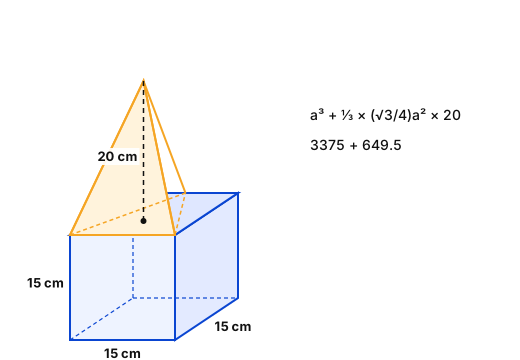
A pyramid with an equilateral triangular base of side 15 cm and height 20 cm is placed on top of a cube with side length 15 cm. Find the total volume of the composite solid.
15 cm भुजा वाले समबाहु त्रिभुजाकार आधार और 20 cm ऊँचाई का एक पिरामिड, 15 cm भुजा वाले घन के ऊपर रखा गया है। संयुक्त ठोस का कुल आयतन ज्ञात कीजिए।
  1. A2102.3 cm³
  2. B1202.5 cm³
  3. C4024.5 cm³
  4. D6202.3 cm³
Show answer

Concept: Total volume = cube (a3) + pyramid (13× base area × h).

  1. Cube: 15×15×15=3375cm3.
  2. Base (equilateral): 34×225≈97.43cm2.
  3. Pyramid: 13×97.43×20≈649.5cm3.
  4. Sum ≈ 4024.5 cm³.

Trick: Answer must exceed the cube alone (3375) – only 4024.5 and 6202.3 qualify; the pyramid is small, so 4024.5.

Answer: (C) 4024.5 cm³

अवधारणा: कुल आयतन = घन (a3) + पिरामिड (13× आधार क्षेत्रफल × h)।

हल:

  1. घन: 15×15×15=3375cm3।
  2. समबाहु आधार: 34×225≈97.43cm2।
  3. पिरामिड: 13×97.43×20≈649.5cm3।
  4. योग ≈ 4024.5 cm³।

ट्रिक: उत्तर अकेले घन (3375) से बड़ा होगा – 4024.5 या 6202.3; पिरामिड छोटा है, अतः 4024.5।

उत्तर: (C) 4024.5 cm³

SSC CGLQuantitative AptitudeMensuration – cube + pyramidSSC CGL 2025 · 21 Sep Shift 3 →
Q1557.
A and B invested ₹80,000 and ₹60,000 respectively for 12 months. A takes 10% of the profit for managing. The remaining profit of ₹1,40,000 is divided based on capital. What is B's share?
A और B ने क्रमशः ₹80,000 और ₹60,000, 12 माह के लिए निवेश किए। A प्रबंधन हेतु लाभ का 10% लेता है। शेष ₹1,40,000 का लाभ पूँजी के आधार पर बँटता है। B का हिस्सा क्या है?
  1. A₹60,000
  2. B₹30,000
  3. C₹40,000
  4. D₹35,000
Show answer

Concept: Same time period ⇒ profit is shared in capital ratio.

  1. Capital ratio = 80,000 : 60,000 = 4 : 3 (total 7 parts).
  2. Distributable profit ₹1,40,000 ⇒ 1 part = ₹20,000.
  3. B's share = 3×20,000= ₹60,000.

Trick: The 10% management cut is already removed – just split the given ₹1,40,000.

Answer: (A) ₹60,000

अवधारणा: समय समान ⇒ लाभ पूँजी के अनुपात में बँटता है।

हल:

  1. पूँजी अनुपात = 80,000 : 60,000 = 4 : 3 (कुल 7 भाग)।
  2. बाँटने योग्य लाभ ₹1,40,000 ⇒ 1 भाग = ₹20,000।
  3. B का हिस्सा = 3×20,000= ₹60,000।

ट्रिक: प्रबंधन का 10% पहले ही निकल चुका है – सीधे ₹1,40,000 बाँटें।

उत्तर: (A) ₹60,000

SSC CGLQuantitative AptitudePartnership – share of profitSSC CGL 2025 · 21 Sep Shift 3 →
Q1558.
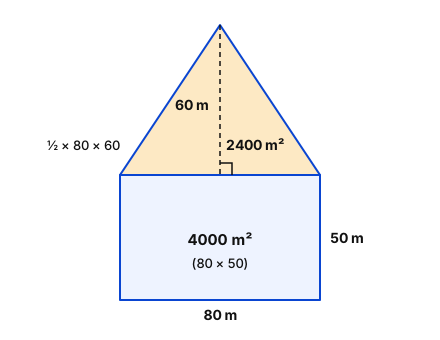
A triangular field with base 80 m and height 60 m shares a side with a rectangle of length 80 m and breadth 50 m. Find the combined area and the percentage of the triangle's area in the total.
80 m आधार और 60 m ऊँचाई वाला एक त्रिभुजाकार खेत, 80 m लंबाई और 50 m चौड़ाई वाले आयत के साथ एक भुजा साझा करता है। संयुक्त क्षेत्रफल और कुल में त्रिभुज के क्षेत्रफल का प्रतिशत ज्ञात कीजिए।
  1. A1,450 m² and 24.5%1,450 m² और 24.5%
  2. B2,450 m² and 25.5%2,450 m² और 25.5%
  3. C6,400 m² and 37.5%6,400 m² और 37.5%
  4. D2,500 m² and 25%2,500 m² और 25%
Show answer

Concept: Triangle = 12×b×h; rectangle = l×b.

  1. Triangle: 12×80×60=2,400m2.
  2. Rectangle: 80×50=4,000m2; total = 6,400 m².
  3. Triangle's share = 24006400=38=37.5%.

Trick: Total area alone (6,400) points to the single option with it.

Answer: (C) 6,400 m² and 37.5%

अवधारणा: त्रिभुज = 12× आधार × ऊँचाई; आयत = l×b।

हल:

  1. त्रिभुज: 12×80×60=2,400m2।
  2. आयत: 80×50=4,000m2; कुल = 6,400 m²।
  3. त्रिभुज का भाग = 24006400=38=37.5%।

ट्रिक: केवल कुल क्षेत्रफल 6,400 से ही विकल्प तय हो जाता है।

उत्तर: (C) 6,400 m² और 37.5%

SSC CGLQuantitative AptitudeMensuration – combined area and percentageSSC CGL 2025 · 21 Sep Shift 3 →
Q1559.
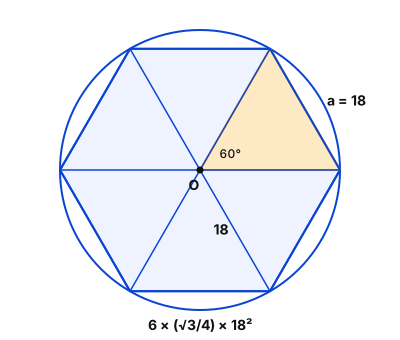
A regular hexagon is inscribed inside a circle of radius 18 cm. Find the area of the hexagon.
18 cm त्रिज्या वाले वृत्त के भीतर एक सम षट्भुज अंकित है। षट्भुज का क्षेत्रफल ज्ञात कीजिए।
  1. A438.5 cm²
  2. B841.8 cm²
  3. C598.4 cm²
  4. D638.7 cm²
Show answer

Concept: A regular hexagon in a circle has side = radius; area = 332a2.

  1. a=18 cm ⇒ a2=324.
  2. Area = 332×324=4863.
  3. 486×1.732≈841.8cm2.

Trick: Hexagon = 6 equilateral triangles of side r: 6×34r2.

Answer: (B) 841.8 cm²

अवधारणा: वृत्त में बने सम षट्भुज की भुजा = त्रिज्या; क्षेत्रफल = 332a2।

हल:

  1. a=18 cm ⇒ a2=324।
  2. क्षेत्रफल = 332×324=4863।
  3. 486×1.732≈841.8cm2।

ट्रिक: षट्भुज = r भुजा वाले 6 समबाहु त्रिभुज: 6×34r2।

उत्तर: (B) 841.8 cm²

SSC CGLQuantitative AptitudeMensuration – regular hexagonSSC CGL 2025 · 21 Sep Shift 3 →
Q1560.
Three numbers are such that the second is 160% of the first, and the third is 90% of the second. What is the ratio of the first to the third?
तीन संख्याएँ इस प्रकार हैं कि दूसरी पहली की 160% है और तीसरी दूसरी की 90% है। पहली और तीसरी का अनुपात क्या है?
  1. A25 : 36
  2. B22 : 23
  3. C25 : 14
  4. D15 : 8
Show answer

Concept: Express all numbers in terms of the first.

  1. Third = 90% of 160% of first = 1.6×0.9=1.44× first.
  2. First : Third = 1 : 1.44 = 100 : 144 = 25 : 36.

Trick: Multiply the percentage factors directly: 1.6×0.9=1.44=(1.2)2 → ratio 25 : 36 (squares of 5 and 6).

Answer: (A) 25 : 36

अवधारणा: सभी संख्याओं को पहली के रूप में लिखें।

हल:

  1. तीसरी = पहली का 160% का 90% = 1.6×0.9=1.44× पहली।
  2. पहली : तीसरी = 1 : 1.44 = 100 : 144 = 25 : 36।

ट्रिक: प्रतिशत गुणक सीधे गुणा करें: 1.6×0.9=1.44 → अनुपात 25 : 36 (52:62)।

उत्तर: (A) 25 : 36

SSC CGLQuantitative AptitudePercentage – successive comparisonSSC CGL 2025 · 21 Sep Shift 3 →