Question bank

Q&A: practice questions with answers

Search questions on any topic. Filter by exam category, exam, subject and topic, try the question, then open the answer and explanation.

Courses – airGurukul

5,000 questions found.

Q2441.
How many triangles are there in the given figure?
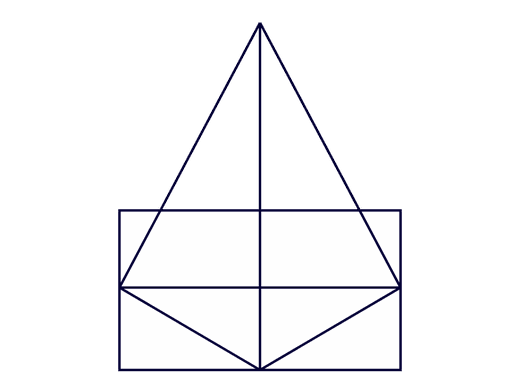
figure
दी गई आकृति में कितने त्रिभुज हैं?
figure
  1. A13
  2. B15
  3. C17
  4. D14
Show answer

Concept: Group triangles by a common vertex to avoid double counting.
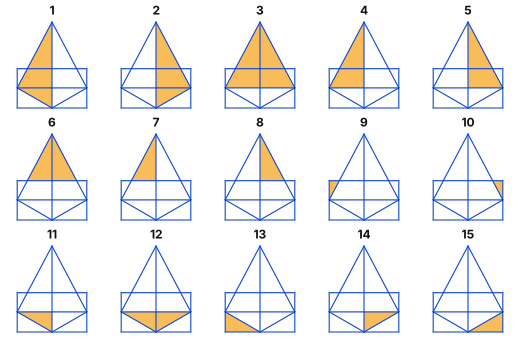
  1. Apex at top (lines left side, middle, right side cut by rectangle top edge, mid-line, and slant lines to bottom-centre): 3 + 3 + 2 = 8.
  2. Corner triangles between rectangle top edge and mid-line (left and right): 2.
  3. Below the mid-line, using the bottom-centre point: 2 small + 1 big upper + 2 corner = 5.
  4. Total = 8 + 2 + 5 = 15

Trick: Label points and list triangles vertex-wise – never count by eye.

Answer: (B) 15

अवधारणा: साझा शीर्ष के आधार पर समूह बनाकर गिनें ताकि दोहराव न हो।

हल:

  1. ऊपरी शीर्ष वाले त्रिभुज (बायाँ-मध्य, मध्य-दायाँ, बायाँ-दायाँ जोड़े): 3 + 3 + 2 = 8।
  2. आयत की ऊपरी भुजा और मध्य रेखा के बीच कोनों पर: 2।
  3. मध्य रेखा के नीचे, नीचे के मध्य बिंदु से: 2 छोटे + 1 बड़ा + 2 कोने वाले = 5।
  4. कुल = 8 + 2 + 5 = 15

ट्रिक: बिंदुओं को नाम दें और शीर्ष-वार सूची बनाएँ।

उत्तर: (B) 15
SSC CHSLGeneral IntelligenceCounting triangles – triangle over rectangleSSC CHSL 2025 · 21 Nov Shift 3 →
Q2442.
Heights of 5 students P, Q, R, S, and T are compared. No two students have the same height. Q is taller than S but shorter than P. T is taller than R. T is the second shortest. How many students are taller than Q?
5 विद्यार्थियों P, Q, R, S और T की लंबाइयों की तुलना की जाती है। किन्हीं दो विद्यार्थियों की लंबाई समान नहीं है। Q, S से लंबा है परंतु P से छोटा है। T, R से लंबा है। T दूसरे नंबर का सबसे छोटा है। कितने विद्यार्थी Q से लंबे हैं?
  1. A1
  2. B2
  3. C3
  4. D0
Show answer

Concept: Build the full order from the clues.

  1. P > Q > S.
  2. T is 2nd shortest and T > R → R is shortest, T next.
  3. Order (tallest first): P, Q, S, T, R → Q has just one person above him → 1

Trick: Fix the extreme positions (shortest/second shortest) first; the rest falls in place.

Answer: (A) 1

अवधारणा: सभी संकेतों से पूरा क्रम बनाएँ।

हल:

  1. P > Q > S।
  2. T दूसरा सबसे छोटा और T > R → R सबसे छोटा।
  3. क्रम: P > Q > S > T > R → Q से लंबा केवल P → 1

ट्रिक: पहले सिरों वाले स्थान (सबसे छोटा/दूसरा सबसे छोटा) तय करें।

उत्तर: (A) 1

SSC CHSLGeneral IntelligenceOrdering – heightsSSC CHSL 2025 · 21 Nov Shift 3 →
Q2443.
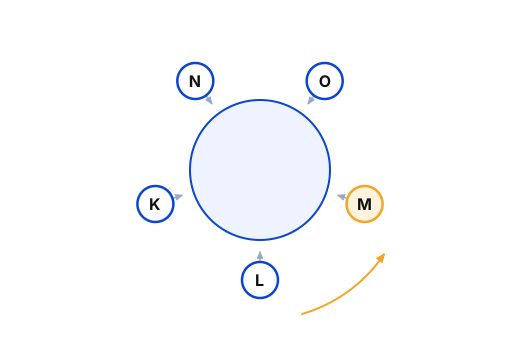
5 friends L, M, N, O, and K are sitting around a circular table facing the center. K is sitting to the immediate left of L. O is sitting third to the right of K. N is not an immediate neighbor of L. Who is sitting to the immediate right of L?
5 मित्र L, M, N, O और K एक वृत्ताकार मेज़ के चारों ओर केंद्र की ओर मुख करके बैठे हैं। K, L के ठीक बाईं ओर बैठा है। O, K के दाईं ओर तीसरे स्थान पर बैठा है। N, L का निकटतम पड़ोसी नहीं है। L के ठीक दाईं ओर कौन बैठा है?
  1. AN
  2. BM
  3. C0
  4. DK
Show answer

Concept: Facing centre: left = clockwise, right = anticlockwise.

  1. Clockwise: L, K (K immediate left of L).
  2. O third to right of K = 2 seats clockwise of K → L, K, _, O, _.
  3. N can't be next to L → N between K and O; M takes the seat beside L.
  4. Clockwise: L, K, N, O, M → immediate right of L (anticlockwise) = M

Trick: In a 5-seat circle, 3rd to the right = 2nd to the left.

Answer: (B) M

अवधारणा: केंद्र की ओर मुख: बायाँ = घड़ी की दिशा, दायाँ = विपरीत दिशा।

हल:

  1. घड़ी की दिशा में: L, K।
  2. O, K के तीसरे दाएँ = K से 2 सीट घड़ी की दिशा में → L, K, _, O, _।
  3. N, L का पड़ोसी नहीं → N, K और O के बीच; M, L के बगल में।
  4. क्रम: L, K, N, O, M → L के ठीक दाएँ = M

ट्रिक: 5 लोगों के वृत्त में तीसरा दाएँ = दूसरा बाएँ।

उत्तर: (B) M

SSC CHSLGeneral IntelligenceCircular seating – facing centreSSC CHSL 2025 · 21 Nov Shift 3 →
Q2444.
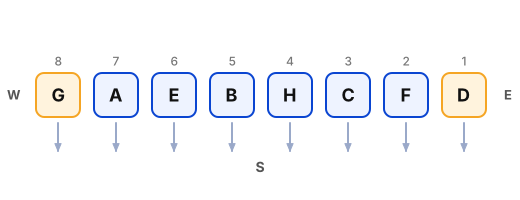
8 friends A, B, C, D, E, F, G, and H are sitting in a row facing south (not necessarily in the same order). A is immediately to the right of E.A is at the fifth position to the right of F. D is at the fifth position to the left of E. H is at the third position to the right of D. There are exactly two friends sitting between B and G. G is the immediate neighbour of A. Which friends are at the ends of the row?
8 मित्र A, B, C, D, E, F, G और H एक पंक्ति में दक्षिण की ओर मुख करके बैठे हैं (आवश्यक नहीं कि इसी क्रम में)। A, E के ठीक दाईं ओर है। A, F के दाईं ओर पाँचवें स्थान पर है। D, E के बाईं ओर पाँचवें स्थान पर है। H, D के दाईं ओर तीसरे स्थान पर है। B और G के बीच ठीक दो मित्र बैठे हैं। G, A का निकटतम पड़ोसी है। पंक्ति के दोनों सिरों पर कौन-से मित्र हैं?
  1. AA and GA और G
  2. BG and DG और D
  3. CB and EB और E
  4. DD and HD और H
Show answer

Concept: Number seats 1–8 from the row's left end and express positions relative to D.

  1. D = d, E = d + 5, A = d + 6, F = d + 1, H = d + 3 → d ≤ 2.
  2. d = 2 puts A at 8 and leaves no free seat for G (7 is E) → d = 1.
  3. D1, F2, H4, E6, A7, G8; B is two seats away from G → B5; C3.
  4. Ends: seat 1 = D, seat 8 = G → G and D

Trick: Use one person as the base (d) and write the others as d + k – fewer cases to test.

Answer: (B) G and D

अवधारणा: सीटों को 1–8 नंबर दें और सबकी स्थिति D के सापेक्ष लिखें।

हल:

  1. D = d, E = d + 5, A = d + 6, F = d + 1, H = d + 3 → d ≤ 2।
  2. d = 2 पर A = 8 और G के लिए जगह नहीं (7 पर E) → d = 1।
  3. D1, F2, H4, E6, A7, G8; B और G के बीच दो → B5; C3।
  4. सिरों पर: D और G → G and D

ट्रिक: एक व्यक्ति को आधार (d) मानकर बाकी को d + k में लिखें।

उत्तर: (B) G और D

SSC CHSLGeneral IntelligenceLinear seating – facing southSSC CHSL 2025 · 21 Nov Shift 3 →
Q2445.
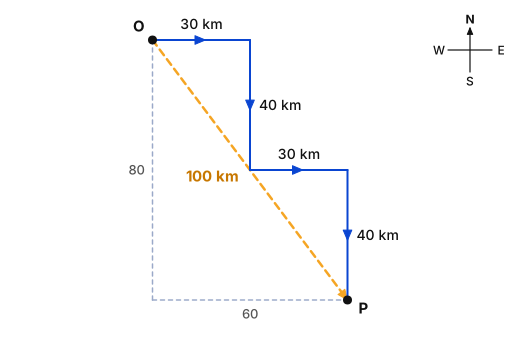
A person starts walking from his home. He walks 30 km towards East. He then turns right and walks 40 km. After that, he turns left and walks 30 km. Finally, he turns right and walks 40 km . How far (in km) and in which direction is he now from his starting point?
एक व्यक्ति अपने घर से चलना आरंभ करता है। वह पूर्व की ओर 30 km चलता है। फिर वह दाएँ मुड़कर 40 km चलता है। उसके बाद वह बाएँ मुड़कर 30 km चलता है। अंत में वह दाएँ मुड़कर 40 km चलता है। अब वह अपने प्रारंभिक बिंदु से कितनी दूर (km में) और किस दिशा में है?
  1. A60, South-East60, दक्षिण-पूर्व
  2. B80, South80, दक्षिण
  3. C100, South-East100, दक्षिण-पूर्व
  4. D60, East60, पूर्व
Show answer

Concept: Add all East moves and all South moves, then use Pythagoras.

  1. Turns: East → right = South → left = East → right = South.
  2. East total = 30+30=60 km; South total = 40+40=80 km.
  3. Distance = 602+802=10000= 100 km, towards South-East.

Trick: 60 : 80 : 100 is the 3 : 4 : 5 triplet × 20.

Answer: (C) 100, South-East

अवधारणा: सारी पूर्व और सारी दक्षिण दूरी जोड़कर पाइथागोरस लगाएँ।

हल:

  1. मोड़: पूर्व → दाएँ = दक्षिण → बाएँ = पूर्व → दाएँ = दक्षिण।
  2. पूर्व = 30+30=60 km; दक्षिण = 40+40=80 km।
  3. दूरी = 602+802=10000= 100 km, दक्षिण-पूर्व।

ट्रिक: 60 : 80 : 100 = (3 : 4 : 5) × 20।

उत्तर: (C) 100, दक्षिण-पूर्व

SSC CHSLGeneral IntelligenceDirection sense – distance and directionSSC CHSL 2025 · 21 Nov Shift 3 →
Q2446.
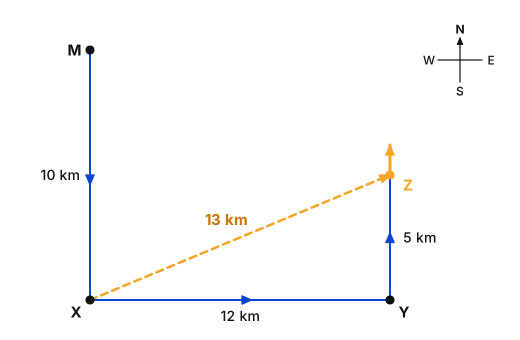
M walks 10 km towards South and reaches point X . He turns left and walks 12 km to reach point Y . He finally turns left and walks 5 km to reach point Z . How far (in km ) is point X from point Z and in which direction is M facing now?
M दक्षिण की ओर 10 km चलकर बिंदु X पर पहुँचता है। वह बाएँ मुड़कर 12 km चलकर बिंदु Y पर पहुँचता है। अंत में वह बाएँ मुड़कर 5 km चलकर बिंदु Z पर पहुँचता है। बिंदु X, बिंदु Z से कितनी दूर (km में) है तथा M अब किस दिशा में मुख किए हुए है?
  1. A13 , North13, उत्तर
  2. B17, North17, उत्तर
  3. C13, South13, दक्षिण
  4. D17, West17, पश्चिम
Show answer

Concept: Track the facing direction after each turn and use Pythagoras for distance.

  1. South → left = East (12 km) → left = North (5 km).
  2. From X: Z is 12 km east and 5 km north.
  3. XZ=122+52=169= 13 km; facing North.

Trick: 5, 12, 13 is a Pythagorean triplet – no calculation needed.

Answer: (A) 13 , North

अवधारणा: हर मोड़ के बाद मुख की दिशा लिखें; दूरी के लिए पाइथागोरस।

हल:

  1. दक्षिण → बाएँ = पूर्व (12 km) → बाएँ = उत्तर (5 km)।
  2. X से Z: 12 km पूर्व, 5 km उत्तर।
  3. XZ=144+25=169= 13 km; मुख उत्तर की ओर।

ट्रिक: 5, 12, 13 – पाइथागोरस त्रिक, सीधा उत्तर।

उत्तर: (A) 13, उत्तर

SSC CHSLGeneral IntelligenceDirection sense – distance and facingSSC CHSL 2025 · 21 Nov Shift 3 →
Q2447.
Three out of the following four are alike in a particular pattern and hence form a group. Find the one which does not belong to that group.
Windows, MacOS, Android, HTML
निम्नलिखित चार में से तीन एक निश्चित प्रकार से समान हैं और इस प्रकार एक समूह बनाते हैं। उस एक को ज्ञात कीजिए जो उस समूह से संबंधित नहीं है।
Windows, MacOS, Android, HTML
  1. AWindows
  2. BMacOS
  3. CAndroid
  4. DHTML
Show answer

Concept: Find the common category of three items.

  1. Windows, MacOS, Android are operating systems.
  2. HTML is a markup language for web pages, not an OS.

Trick: HTML ends with 'Language' (HyperText Markup Language) – a clear giveaway.

Answer: (D) HTML

अवधारणा: तीन वस्तुओं की साझा श्रेणी पहचानें।

हल:

  1. Windows, MacOS, Android – ऑपरेटिंग सिस्टम हैं।
  2. HTML वेब पेज बनाने की markup language है, OS नहीं।

ट्रिक: HTML का पूरा नाम HyperText Markup Language – तुरंत पहचान।

उत्तर: (D) HTML

SSC CHSLGeneral IntelligenceOdd one out – operating systemsSSC CHSL 2025 · 21 Nov Shift 3 →
Q2448.
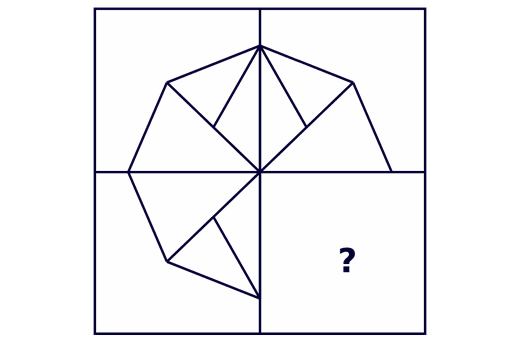
Which option figure will complete the pattern in the question figure? (Rotation is not allowed)
figure
कौन-सी विकल्प आकृति प्रश्न आकृति के प्रतिरूप को पूरा करेगी? (घुमाने की अनुमति नहीं है)
figure
  1. Afigure
  2. Bfigure
  3. Cfigure
  4. Dfigure
Show answer

Concept: The missing quarter must mirror the bottom-left quarter across the vertical line.

  1. Bottom-left part has: two octagon sides, a spoke from the centre to the vertex, and a line from the bottom vertex to the middle of that spoke.
  2. The bottom-right quarter must have the same lines reflected left-to-right.
  3. Option (A) shows exactly this mirror image.

Trick: Find the quarter that is a mirror image of its neighbour – check where the small inner triangle opens.

Answer: (A)

अवधारणा: खाली भाग, नीचे-बाएँ भाग का ऊर्ध्वाधर रेखा में दर्पण प्रतिबिंब होगा।

हल:

  1. नीचे-बाएँ भाग में: अष्टभुज की दो भुजाएँ, केंद्र से शीर्ष तक रेखा, और नीचे के शीर्ष से उस रेखा के मध्य तक रेखा।
  2. नीचे-दाएँ भाग में यही रेखाएँ उलटी दिशा में होंगी।
  3. विकल्प (A) ठीक यही दर्पण रूप दिखाता है।

ट्रिक: बगल वाले भाग का दर्पण रूप खोजें – छोटे भीतरी त्रिभुज की दिशा पर ध्यान दें।

उत्तर: (A)

SSC CHSLGeneral IntelligenceFigure completion – symmetrySSC CHSL 2025 · 21 Nov Shift 3 →
Q2449.
If ' P ' denotes ' x ', ' Q ' denotes ' ÷ ', ' R ' denotes '+' and ' S ' denotes ' - , then what is the value of the following expression ?
12 R 8 P 3 S 10 Q 2
यदि ‘ P ’ का अर्थ ‘ x ’ है, ‘ Q ’ का अर्थ ‘ ÷ ’ है, ‘ R ’ का अर्थ ‘+’ है और ‘ S ’ का अर्थ ‘-’ है, तो निम्नलिखित व्यंजक का मान क्या है?
12 R 8 P 3 S 10 Q 2
  1. A25
  2. B30
  3. C31
  4. D36
Show answer

Concept: Convert letters to signs, then apply BODMAS.

  1. P = ×, Q = ÷, R = +, S = − → 12+8×3−10÷2
  2. 8×3=24, 10÷2=5
  3. 12+24−5= 31

Trick: Do × and ÷ first; the answer here is odd, so options 30 and 36 drop at once (12 + even − 5 is odd).

Answer: (C) 31

अवधारणा: अक्षरों को चिह्नों में बदलकर BODMAS लगाएँ।

हल:

  1. P = ×, Q = ÷, R = +, S = − → 12+8×3−10÷2
  2. 8×3=24, 10÷2=5
  3. 12+24−5= 31

ट्रिक: 12 + सम − 5 = विषम, तो 30 और 36 तुरंत हटें।

उत्तर: (C) 31

SSC CHSLGeneral IntelligenceSymbol substitution – BODMASSSC CHSL 2025 · 21 Nov Shift 3 →
Q2450.
By interchanging the given two numbers (not digits) which of the following equation will be correct? 4 and 8
I. 3×8+4−10÷2=15
II. 4÷2+8×5−6=18
दी गई दो संख्याओं (अंकों को नहीं) को आपस में बदलने पर निम्नलिखित में से कौन-सा समीकरण सही होगा? 4 और 8
I. 3×8+4−10÷2=15
II. 4÷2+8×5−6=18
  1. AOnly Iकेवल I
  2. BOnly IIकेवल II
  3. CBoth I and III और II दोनों
  4. DNeither I nor IIन तो I और न ही II
Show answer

Concept: Swap every 4 with 8 (and 8 with 4), then check each equation by BODMAS.

  1. I: 3×4+8−10÷2=12+8−5=15 ✓
  2. II: 8÷2+4×5−6=4+20−6=18 ✓
  3. Both become correct.

Trick: Swap both numbers wherever they appear – changing only one is the common mistake.

Answer: (C) Both I and II

अवधारणा: हर 4 को 8 और हर 8 को 4 से बदलें, फिर BODMAS से जाँचें।

हल:

  1. I: 3×4+8−10÷2=12+8−5=15 ✓
  2. II: 8÷2+4×5−6=4+20−6=18 ✓
  3. दोनों सही हो जाते हैं।

ट्रिक: दोनों संख्याएँ हर जगह बदलें – केवल एक बदलना आम गलती है।

उत्तर: (C) I और II दोनों

SSC CHSLGeneral IntelligenceInterchanging numbers in equationsSSC CHSL 2025 · 21 Nov Shift 3 →
Q2451.
What is the square root of 53824?
53824 का वर्गमूल क्या है?
  1. A222
  2. B232
  3. C238
  4. D242
Show answer

Concept: Use the unit digit and the nearest known squares to bracket the root.

  1. Unit digit 4 → root ends in 2 or 8.
  2. 2302=52900 and 2402=57600 → root is between 230 and 240.
  3. 538 lies between 232=529 and 23×24=552 → closer to 230 → try 232: 2322=52900+920+4=53824 ✓

Trick: Drop the last two digits (538); 23×24=552>538 → take the smaller ending (2) → 232.

Answer: (B) 232

अवधारणा: इकाई अंक और पास के वर्गों से वर्गमूल का अनुमान लगाएँ।

हल:

  1. इकाई अंक 4 → वर्गमूल का अंतिम अंक 2 या 8।
  2. 2302=52900, 2402=57600 → उत्तर 230 और 240 के बीच।
  3. 538, 23×24=552 से कम → छोटा विकल्प 2 → 2322=52900+920+4=53824 ✓

ट्रिक: अंतिम दो अंक हटाएँ (538); 23×24=552 से कम → अंत में 2 → 232।

उत्तर: (B) 232

SSC CHSLQuantitative AptitudeSquare root of a perfect squareSSC CHSL 2025 · 21 Nov Shift 3 →
Q2452.
Find the value :
?+19=3364
मान ज्ञात कीजिए :
?+19=3364
  1. A1600
  2. B1444
  3. C1521
  4. D1296
Show answer

Concept: ?+19=3364; first find 3364, then square the result.

  1. 3364=58 (582=3364).
  2. ?=58−19=39.
  3. ?=392= 1521

Trick: Option check: 1521=39 and 39+19=58 ✓ – test options backwards.

Answer: (C) 1521

अवधारणा: ?+19=3364; पहले 3364 निकालें, फिर परिणाम का वर्ग करें।

हल:

  1. 3364=58 (582=3364)।
  2. ?=58−19=39।
  3. ?=392= 1521

ट्रिक: विकल्प जाँच: 1521=39, 39+19=58 ✓।

उत्तर: (C) 1521

SSC CHSLQuantitative AptitudeSquare roots – find the missing numberSSC CHSL 2025 · 21 Nov Shift 3 →
Q2453.
Simplify :
(168441)×(2255)×(644)
सरल कीजिए :
(168441)×(2255)×(644)
  1. A42
  2. B48
  3. C36
  4. D54
Show answer

Concept: Evaluate each square root, then each bracket.

  1. 441=21 → 168÷21=8
  2. 225=15 → 15÷5=3
  3. 64=8 → 8÷4=2
  4. 8×3×2= 48

Trick: Know squares up to 30 by heart: 212=441, 152=225.

Answer: (B) 48

अवधारणा: पहले हर वर्गमूल निकालें, फिर हर कोष्ठक।

हल:

  1. 441=21 → 168÷21=8
  2. 225=15 → 15÷5=3
  3. 64=8 → 8÷4=2
  4. 8×3×2= 48

ट्रिक: 30 तक के वर्ग याद रखें: 212=441, 152=225।

उत्तर: (B) 48

SSC CHSLQuantitative AptitudeSimplification with square rootsSSC CHSL 2025 · 21 Nov Shift 3 →
Q2454.
Average of 7 consecutive even numbers is 52 . Find the largest number.
7 क्रमागत सम संख्याओं का औसत 52 है। सबसे बड़ी संख्या ज्ञात कीजिए।
  1. A58
  2. B56
  3. C60
  4. D62
Show answer

Concept: For an odd count of evenly spaced numbers, average = middle term.

  1. 7 numbers → 4th number = 52.
  2. Largest is 3 steps after it: 52+3×2= 58

Trick: Largest=average+n−12×gap=52+3×2.

Answer: (A) 58

अवधारणा: समान अंतर वाली संख्याओं की विषम गिनती में औसत = बीच वाली संख्या।

हल:

  1. 7 संख्याएँ → चौथी संख्या = 52।
  2. सबसे बड़ी = 52+3×2= 58

ट्रिक: सबसे बड़ी=औसत+n−12×अंतर।

उत्तर: (A) 58

SSC CHSLQuantitative AptitudeAverage of consecutive even numbersSSC CHSL 2025 · 21 Nov Shift 3 →
Q2455.
The average score of a batsman in 4 innings is 60 runs. If the difference between his highest and lowest score is 40 runs and the other two scores are 55 and 65 , find the highest score.
एक बल्लेबाज़ का 4 पारियों में औसत स्कोर 60 रन है। यदि उसके उच्चतम और निम्नतम स्कोर का अंतर 40 रन है तथा शेष दो स्कोर 55 और 65 हैं, तो उच्चतम स्कोर ज्ञात कीजिए।
  1. A70
  2. B75
  3. C80
  4. D85
Show answer

Concept: Total=average×count; then use sum and difference.

  1. Total=4×60=240; other two = 55+65=120.
  2. Highest + Lowest = 120, Highest − Lowest = 40.
  3. Highest=(120+40)÷2= 80

Trick: Larger of two numbers = sum+difference2.

Answer: (C) 80

अवधारणा: कुल=औसत×संख्या; फिर योग और अंतर से हल करें।

हल:

  1. कुल=4×60=240; बाकी दो = 55+65=120।
  2. उच्चतम + न्यूनतम = 120, उच्चतम − न्यूनतम = 40।
  3. उच्चतम=(120+40)÷2= 80

ट्रिक: बड़ी संख्या = योग+अंतर2।

उत्तर: (C) 80

SSC CHSLQuantitative AptitudeAverage – highest scoreSSC CHSL 2025 · 21 Nov Shift 3 →
Q2456.
The price of an article increases from ₹ 500 to ₹ 650 . What is the percentage increase?
एक वस्तु का मूल्य ₹ 500 से बढ़कर ₹ 650 हो जाता है। प्रतिशत वृद्धि कितनी है?
  1. A20%
  2. B30%
  3. C15%
  4. D25%
Show answer

Concept: % increase=(increase÷original)×100.

  1. Increase = 650−500= ₹150.
  2. %=150500×100= 30%

Trick: Every ₹5 on ₹500 is 1% → 150÷5=30%.

Answer: (B) 30%

अवधारणा: प्रतिशत वृद्धि=(वृद्धि÷मूल)×100।

हल:

  1. वृद्धि = 650−500= ₹150।
  2. %=150500×100= 30%

ट्रिक: ₹500 पर हर ₹5 = 1% → 150÷5=30%।

उत्तर: (B) 30%

SSC CHSLQuantitative AptitudePercentage increaseSSC CHSL 2025 · 21 Nov Shift 3 →
Q2457.
A number is increased by 50% and then decreased by 40%. What is the net percentage change?
एक संख्या को पहले 50% बढ़ाया जाता है और फिर 40% घटाया जाता है। शुद्ध प्रतिशत परिवर्तन क्या है?
  1. A10% increase10% वृद्धि
  2. B10% decrease10% कमी
  3. C5% increase5% वृद्धि
  4. D20% decrease20% कमी
Show answer

Concept: Net change=a+b+ab100 (use − for decrease).

  1. a=+50, b=−40.
  2. Net = 50−40−50×40100=10−20=−10%
  3. So a 10% decrease.

Trick: Multiplying factors: 1.5×0.6=0.9 → 10% less.

Answer: (B) 10% decrease

अवधारणा: कुल परिवर्तन=a+b+ab100 (कमी को − लें)।

हल:

  1. a=+50, b=−40।
  2. कुल = 50−40−50×40100=10−20=−10%
  3. अर्थात् 10% कमी।

ट्रिक: गुणक विधि: 1.5×0.6=0.9 → 10% कम।

उत्तर: (B) 10% कमी

SSC CHSLQuantitative AptitudeSuccessive percentage changeSSC CHSL 2025 · 21 Nov Shift 3 →
Q2458.
A smartphone is marked at Rs. 20,000. A discount of 15% is offered during a sale. Find the selling price.
एक स्मार्टफोन का अंकित मूल्य Rs. 20,000 है। सेल के दौरान 15% की छूट दी जाती है। विक्रय मूल्य ज्ञात कीजिए।
  1. ARs. 16,500
  2. BRs. 17,000
  3. CRs. 17,500
  4. DRs. 18,000
Show answer

Concept: SP=MP×100−discount%100.

  1. SP=20000×85100
  2. = Rs. 17,000

Trick: 15% of 20000 = 3000 (10%=2000, 5%=1000) → 20000−3000.

Answer: (B) Rs. 17,000

अवधारणा: विक्रय मूल्य=अंकित मूल्य×100−छूट%100।

हल:

  1. SP=20000×85100
  2. = Rs. 17,000

ट्रिक: 20000 का 15% = 2000+1000=3000 → 20000−3000।

उत्तर: (B) Rs. 17,000

SSC CHSLQuantitative AptitudeDiscount – selling priceSSC CHSL 2025 · 21 Nov Shift 3 →
Q2459.
The marked price of a bicycle is Rs. 5,000. If the shopkeeper offers a discount of 20%, what is the selling price?
एक साइकिल का अंकित मूल्य Rs. 5,000 है। यदि दुकानदार 20% की छूट देता है, तो विक्रय मूल्य क्या होगा?
  1. ARs. 3,500
  2. BRs. 3,800
  3. CRs. 4,000
  4. DRs. 4,200
Show answer

Concept: After a d% discount, the customer pays (100−d)% of MP.

  1. 20% off → pay 80%.
  2. SP=5000×80100= Rs. 4,000

Trick: 20%=15 → 5000−1000=4000.

Answer: (C) Rs. 4,000

अवधारणा: d% छूट के बाद ग्राहक अंकित मूल्य का (100−d)% देता है।

हल:

  1. 20% छूट → 80% देना।
  2. SP=5000×80100= Rs. 4,000

ट्रिक: 20%=15 → 5000−1000=4000।

उत्तर: (C) Rs. 4,000

SSC CHSLQuantitative AptitudeDiscount – selling priceSSC CHSL 2025 · 21 Nov Shift 3 →
Q2460.
A product is marked at Rs. 8000 and sold at a discount of 15%. What is the selling price?
एक उत्पाद का अंकित मूल्य Rs. 8000 है और उसे 15% की छूट पर बेचा जाता है। विक्रय मूल्य क्या है?
  1. ARs. 6800
  2. BRs. 6900
  3. CRs. 7000
  4. DRs. 7200
Show answer

Concept: SP = MP − discount.

  1. Discount = 15% of 8000 = 800 + 400 = 1200.
  2. SP = 8000 − 1200 = Rs. 6800

Trick: Split 15% as 10% + 5% for quick mental maths.

Answer: (A) Rs. 6800

अवधारणा: विक्रय मूल्य = अंकित मूल्य − छूट।

हल:

  1. छूट = 8000 का 15% = 800 + 400 = 1200।
  2. SP = 8000 − 1200 = Rs. 6800

ट्रिक: 15% = 10% + 5% – मन में जल्दी गणना।

उत्तर: (A) Rs. 6800

SSC CHSLQuantitative AptitudeDiscount – selling priceSSC CHSL 2025 · 21 Nov Shift 3 →