Question bank

Q&A: practice questions with answers

Search questions on any topic. Filter by exam category, exam, subject and topic, try the question, then open the answer and explanation.

Courses – airGurukul

5,000 questions found.

Q241.
Which of the following letter cluster will come next to the series ?
WB, DW, KR, RM, ?
निम्नलिखित में से कौन-सा अक्षर-समूह दी गई शृंखला में आगे आएगा?
WB, DW, KR, RM, ?
  1. AVY
  2. BYX
  3. CYH
  4. DVR
Show answer

Concept: Follow first and second letters separately (wrap around after Z).

  1. 1st letters: W → D → K → R, each jump is +7 (after Z restart from A: W is 23rd, 23 + 7 − 26 = 4 = D). R is 18th, so next = 25th letter = Y.
  2. 2nd letters: B → W → R → M, each jump is −5 (going back from B wraps to W). M is 13th, so next = 8th letter = H.

Trick: R + 7 = Y leaves (B) and (C); M − 5 = H picks (C).

Answer: (C) YH

अवधारणा: पहले और दूसरे अक्षर को अलग-अलग देखें (Z के बाद फिर A)।

  1. पहले अक्षर: W → D → K → R, हर छलांग +7 (Z के बाद फिर A से गिनें)। R 18वाँ है, अगला 25वाँ अक्षर = Y।
  2. दूसरे अक्षर: B → W → R → M, हर छलांग −5 (B से पीछे जाने पर W)। M 13वाँ है, अगला 8वाँ अक्षर = H।

ट्रिक: R + 7 = Y से (B), (C) बचे; M − 5 = H से (C)।

उत्तर: (C) YH
SSC CHSLGeneral IntelligenceLetter-cluster series – +7 and −5SSC CHSL 2025 · 30 Nov Shift 1 →
Q242.
What comes next in the series:
96, 48, 24, 12, ?
शृंखला में आगे क्या आएगा:
96, 48, 24, 12, ?
  1. A6
  2. B5
  3. C7
  4. D6.5
Show answer

Concept: Check the ratio between consecutive terms.

  1. 96÷2=48, 48÷2=24, 24÷2=12.
  2. Next = 12÷2= 6.

Trick: If every term divides the one before it exactly, test ÷2 first.

Answer: (A) 6

अवधारणा: लगातार पदों का अनुपात देखें।

  1. 96÷2=48, 48÷2=24, 24÷2=12।
  2. अगला = 12÷2= 6।

ट्रिक: अगर हर पद पिछले को पूरा भाग दे, तो पहले ÷2 जाँचें।

उत्तर: (A) 6

SSC CHSLGeneral IntelligenceNumber series – halvingSSC CHSL 2025 · 30 Nov Shift 1 →
Q243.
If + means ÷ , - means × , × means +, and ÷ means -, find:
80+8−4×3÷2= ?
यदि + का अर्थ ÷ है, - का अर्थ × है, × का अर्थ + है, तथा ÷ का अर्थ - है, तो ज्ञात कीजिए:
80+8−4×3÷2= ?
  1. A38
  2. B39
  3. C41
  4. D42
Show answer

Concept: Replace the symbols first, then apply BODMAS.

  1. 80 + 8 − 4 × 3 ÷ 2 → 80÷8×4+3−2.
  2. 80÷8=10; 10×4=40.
  3. 40+3−2= 41.

Trick: Write the new expression on paper before solving – most errors come from solving with old signs.

Answer: (C) 41

अवधारणा: पहले चिह्न बदलें, फिर BODMAS लगाएँ।

  1. 80 + 8 − 4 × 3 ÷ 2 → 80÷8×4+3−2।
  2. 80÷8=10; 10×4=40।
  3. 40+3−2= 41।

ट्रिक: हल करने से पहले नया व्यंजक लिख लें – ज़्यादातर गलती पुराने चिह्नों से होती है।

उत्तर: (C) 41

SSC CHSLGeneral IntelligenceMathematical operations – symbol interchangeSSC CHSL 2025 · 30 Nov Shift 1 →
Q244.
Choose the related word from the given alternatives
Temperature : Kelvin :: Pressure : ?
दिए गए विकल्पों में से संबंधित शब्द चुनिए तापमान : केल्विन :: दाब : ?
  1. APascalपास्कल
  2. BJouleजूल
  3. CWattवाट
  4. DNewtonन्यूटन
Show answer

Concept: Physical quantity : its SI unit.

  1. Temperature → kelvin (K).
  2. Pressure → pascal (1Pa=1N/m2).
  3. Joule = energy/work, Watt = power, Newton = force.

Yaad rakhein: Pressure=ForceArea, so pascal = newton per square metre.

Answer: (A) Pascal

अवधारणा: भौतिक राशि : उसका SI मात्रक।

  1. तापमान → केल्विन (K)।
  2. दाब → पास्कल (1Pa=1N/m2)।
  3. जूल = ऊर्जा/कार्य, वाट = शक्ति, न्यूटन = बल।

याद रखें: दाब=बलक्षेत्रफल, इसलिए पास्कल = न्यूटन प्रति वर्ग मीटर।

उत्तर: (A) पास्कल

SSC CHSLGeneral IntelligenceAnalogy – quantity and SI unitSSC CHSL 2025 · 30 Nov Shift 1 →
Q245.
Choose the related word from the given alternatives
Swan : Cygnet :: ? : Kit
दिए गए विकल्पों में से संबंधित शब्द चुनिए हंस (Swan) : सिग्नेट (Cygnet) :: ? : किट (Kit)
  1. AGoatबकरी
  2. BDeerहिरण
  3. CSheepभेड़
  4. DFoxलोमड़ी
Show answer

Concept: Animal : name of its young.

  1. Young swan = cygnet.
  2. Young fox = kit (also called cub).
  3. Goat → kid, Deer → fawn, Sheep → lamb.

Yaad rakhein: Kangaroo → joey, Owl → owlet, Eagle → eaglet, Horse → foal.

Answer: (D) Fox

अवधारणा: जानवर : उसके बच्चे का नाम।

  1. हंस का बच्चा = cygnet।
  2. लोमड़ी का बच्चा = kit (cub भी)।
  3. बकरी → kid, हिरण → fawn, भेड़ → lamb।

याद रखें: कंगारू → joey, उल्लू → owlet, चील → eaglet, घोड़ा → foal।

उत्तर: (D) लोमड़ी

SSC CHSLGeneral IntelligenceAnalogy – animal and its young oneSSC CHSL 2025 · 30 Nov Shift 1 →
Q246.
What comes next ?
4, 14, 45, 139, 422, ?
आगे क्या आएगा?
4, 14, 45, 139, 422, ?
  1. A1270
  2. B1274
  3. C1272
  4. D1276
Show answer

Concept: Terms ≈ triple → test ×3 plus something.

  1. Triple each term and see the extra: 14 is 12 + 2, 45 is 42 + 3, 139 is 135 + 4, 422 is 417 + 5.
  2. Next = 422×3+6=1266+6= 1272.

Trick: 422×3=1266; the add-on keeps rising (2, 3, 4, 5 → 6), so answer is just above 1266 → 1272.

Answer: (C) 1272

अवधारणा: पद लगभग तीन गुने → ×3 + कुछ जाँचें।

  1. हर पद को तिगुना करके अतिरिक्त देखें: 14=12+2, 45=42+3, 139=135+4, 422=417+5।
  2. अगला = 422×3+6=1266+6= 1272।

ट्रिक: जोड़ी जाने वाली संख्या 2, 3, 4, 5 → 6; इसलिए 1266+6=1272।

उत्तर: (C) 1272

SSC CHSLGeneral IntelligenceNumber series – ×3 + increasing numberSSC CHSL 2025 · 30 Nov Shift 1 →
Q247.
Identify the pattern in the following sequence.
20, 42, 72, 110, 156, ?
What is the next number in the sequence?
निम्नलिखित अनुक्रम में पैटर्न पहचानिए।
20, 42, 72, 110, 156, ?
अनुक्रम में अगली संख्या क्या है?
  1. A210
  2. B198
  3. C204
  4. D216
Show answer

Concept: Write each term as a product of consecutive numbers.

  1. 20=4×5, 42=6×7, 72=8×9, 110=10×11, 156=12×13.
  2. Next = 14×15= 210.

Trick: Second differences: 22, 30, 38, 46 rise by 8 → next difference 54; 156+54=210.

Answer: (A) 210

अवधारणा: हर पद को लगातार दो संख्याओं के गुणनफल के रूप में लिखें।

  1. 20=4×5, 42=6×7, 72=8×9, 110=10×11, 156=12×13।
  2. अगला = 14×15= 210।

ट्रिक: अंतर 22, 30, 38, 46 (हर बार +8) → अगला 54; 156+54=210।

उत्तर: (A) 210

SSC CHSLGeneral IntelligenceNumber series – n(n + 1) formSSC CHSL 2025 · 30 Nov Shift 1 →
Q248.
Select the option that is related to the fifth number in the same way as the second number is related to the first number and fourth number is related to third number.
(NOTE: Operations should be performed on the whole numbers, without breaking down the numbers into its constituent digits. E.g. 13 - Operations on 13 such as adding /subtracting /multiplying etc. to 13 can be performed. Breaking down 13 into 1 and 3 and then performing mathematical operations on 1 and 3 is not allowed)
7551 : 8502 :: 3548 : 4499 :: 6264 : ?
उस विकल्प का चयन कीजिए जो पाँचवीं संख्या से उसी प्रकार संबंधित है जिस प्रकार दूसरी संख्या पहली संख्या से तथा चौथी संख्या तीसरी संख्या से संबंधित है।
(नोट: संक्रियाएँ पूर्ण संख्याओं पर की जानी चाहिए, संख्याओं को उनके अंकों में तोड़े बिना। उदाहरण के लिए 13 - 13 पर जोड़ने/घटाने/गुणा करने आदि जैसी संक्रियाएँ की जा सकती हैं। 13 को 1 और 3 में तोड़कर 1 और 3 पर गणितीय संक्रियाएँ करने की अनुमति नहीं है।)
7551 : 8502 :: 3548 : 4499 :: 6264 : ?
  1. A7215
  2. B7115
  3. C7315
  4. D7425
Show answer

Concept: Compare whole numbers in each pair.

  1. 8502 − 7551 = 951; 4499 − 3548 = 951.
  2. So ? = 6264 + 951 = 7215.

Trick: Last digits: 1 → 2 and 8 → 9 (each +1); 4 + 1 = 5 – all options end in 5, so check the hundreds: 6264 + 951 = 7215.

Answer: (A) 7215

अवधारणा: हर जोड़े में पूरी संख्याओं की तुलना करें।

  1. 8502 − 7551 = 951; 4499 − 3548 = 951।
  2. इसलिए ? = 6264 + 951 = 7215।

ट्रिक: 951 ≈ 1000 − 49: 6264 + 1000 = 7264, − 49 = 7215।

उत्तर: (A) 7215

SSC CHSLGeneral IntelligenceNumber analogy – constant differenceSSC CHSL 2025 · 30 Nov Shift 1 →
Q249.
Select the option that is related to the second number in the same way as the third number is related to the fourth number and fifth number is related to sixth number.
(NOTE: Operations should be performed on the whole numbers, without breaking down the numbers into its constituent digits. E.g. 13 - Operations on 13 such as adding /subtracting /multiplying etc. to 13 can be performed. Breaking down 13 into 1 and 3 and then performing mathematical operations on 1 and 3 is not allowed)
? : 5239 :: 187 :-803:: 1781 : 791
उस विकल्प का चयन कीजिए जो दूसरी संख्या से उसी प्रकार संबंधित है जिस प्रकार तीसरी संख्या चौथी संख्या से तथा पाँचवीं संख्या छठी संख्या से संबंधित है।
(नोट: संक्रियाएँ पूर्ण संख्याओं पर की जानी चाहिए, संख्याओं को उनके अंकों में तोड़े बिना। उदाहरण के लिए 13 - 13 पर जोड़ने/घटाने/गुणा करने आदि जैसी संक्रियाएँ की जा सकती हैं। 13 को 1 और 3 में तोड़कर 1 और 3 पर गणितीय संक्रियाएँ करने की अनुमति नहीं है।)
? : 5239 :: 187 :-803:: 1781 : 791
  1. A6229
  2. B6227
  3. C6228
  4. D6225
Show answer

Concept: Find the left − right relation in the complete pairs.

  1. 187 − (−803) = 187 + 803 = 990.
  2. 1781 − 791 = 990.
  3. ? − 5239 = 990 → ? = 6229.

Trick: 990 = 1000 − 10: 5239 + 1000 − 10 = 6229.

Answer: (A) 6229

अवधारणा: पूरे जोड़ों में बाएँ − दाएँ का संबंध खोजें।

  1. 187 − (−803) = 187 + 803 = 990।
  2. 1781 − 791 = 990।
  3. ? − 5239 = 990 → ? = 6229।

ट्रिक: 990 = 1000 − 10: 5239 + 1000 − 10 = 6229।

उत्तर: (A) 6229

SSC CHSLGeneral IntelligenceNumber analogy – difference with a negative numberSSC CHSL 2025 · 30 Nov Shift 1 →
Q250.
In the following question, four letter-number pairs are given. The letter-number on the left side of ( - ) is related to the letter-number on the right side of (-) with some Logic / Rule/Relation. Three pairs are similar on the basis of same Logic/Rule/Relation. Select the odd one out from the given alternatives.
(NOTE: Operations should be performed on the whole numbers, without breaking down the number into its constituent digits. E.g. 13 - Operations on 13 such as adding /subtracting /multiplying etc. to 13 can be performed. Breaking down 13 into 1 and 3 and then performing mathematical operations on 1 and 3 is not allowed)
निम्नलिखित प्रश्न में चार अक्षर-संख्या युग्म दिए गए हैं। ( - ) के बाईं ओर का अक्षर-संख्या (-) के दाईं ओर के अक्षर-संख्या से किसी तर्क/नियम/संबंध द्वारा संबंधित है। तीन युग्म समान तर्क/नियम/संबंध के आधार पर एक जैसे हैं। दिए गए विकल्पों में से असंगत युग्म का चयन कीजिए।
(नोट: संक्रियाएँ पूर्ण संख्याओं पर की जानी चाहिए, संख्या को उसके अंकों में तोड़े बिना। उदाहरण के लिए 13 - 13 पर जोड़ने/घटाने/गुणा करने आदि जैसी संक्रियाएँ की जा सकती हैं। 13 को 1 और 3 में तोड़कर 1 और 3 पर गणितीय संक्रियाएँ करने की अनुमति नहीं है।)
  1. ABD332 - D1498
  2. BCI440 - EN660
  3. CML556-0Q834
  4. DNA484 - PG726
Show answer

Concept: Check the number rule and the letter rule separately.

  1. Numbers: right=left×32 (332 → 498, 440 → 660, 556 → 834, 484 → 726) – true for all.
  2. Letters: B→D, D→I (+2, +5); C→E, I→N (+2, +5); M→O, L→Q (+2, +5).
  3. N→P (+2) but A→G is +6 – rule broken.

Trick: When the number rule fits all four, the odd one hides in the letters – count only the gaps.

Answer: (D) NA484 - PG726

अवधारणा: संख्या का नियम और अक्षर का नियम अलग-अलग जाँचें।

  1. संख्या: दायाँ=बायाँ×32 (332 → 498, 440 → 660, 556 → 834, 484 → 726) – सब पर लागू।
  2. अक्षर: B→D, D→I (+2, +5); C→E, I→N (+2, +5); M→O, L→Q (+2, +5)।
  3. N→P (+2) पर A→G = +6 – नियम टूटा।

ट्रिक: जब संख्या नियम चारों में सही हो, तो अलग वाला अक्षरों में छिपा होता है।

उत्तर: (D) NA484 - PG726

SSC CHSLGeneral IntelligenceOdd letter-number pairSSC CHSL 2025 · 30 Nov Shift 1 →
Q251.
Which of these number sets is NOT a subset of the Real Numbers?
इनमें से कौन-सा संख्या समुच्चय वास्तविक संख्याओं का उपसमुच्चय नहीं है?
  1. ARationalपरिमेय
  2. BIrrationalअपरिमेय
  3. CIntegersपूर्णांक
  4. DImaginaryकाल्पनिक
Show answer

Concept: Real numbers = rational + irrational numbers; they all lie on the number line.

  1. Integers ⊂ rationals ⊂ reals; irrationals (2, π) are also real.
  2. Imaginary numbers like 2i (i=−1) cannot be placed on the number line, so they are not real.

Yaad rakhein: Natural ⊂ Whole ⊂ Integers ⊂ Rational ⊂ Real ⊂ Complex.

Answer: (D) Imaginary

अवधारणा: वास्तविक संख्याएँ = परिमेय + अपरिमेय; ये सब संख्या रेखा पर होती हैं।

  1. पूर्णांक ⊂ परिमेय ⊂ वास्तविक; अपरिमेय (2, π) भी वास्तविक हैं।
  2. काल्पनिक संख्याएँ जैसे 2i (i=−1) संख्या रेखा पर नहीं आतीं, इसलिए वास्तविक नहीं।

याद रखें: प्राकृत ⊂ पूर्ण ⊂ पूर्णांक ⊂ परिमेय ⊂ वास्तविक ⊂ सम्मिश्र।

उत्तर: (D) काल्पनिक

SSC CHSLQuantitative AptitudeNumber system – real and imaginary numbersSSC CHSL 2025 · 30 Nov Shift 1 →
Q252.
A decimal number is called a pure recurring decimal if:
एक दशमलव संख्या को शुद्ध आवर्ती दशमलव कहा जाता है, यदि:
  1. AThe decimal terminates after some digitsदशमलव कुछ अंकों के बाद समाप्त हो जाता है
  2. BRepeating digits begin after some non-repeating digitsआवर्ती अंक कुछ अनावर्ती अंकों के बाद प्रारंभ होते हैं
  3. CRepeating digits start immediately after the decimal pointआवर्ती अंक दशमलव बिंदु के तुरंत बाद प्रारंभ होते हैं
  4. DThe number has no decimal partसंख्या का कोई दशमलव भाग नहीं होता
Show answer

Concept: Pure recurring: every digit after the decimal point is part of the repeating block.

  1. Example: 0.333… or 0.454545… – repetition starts right after the point.
  2. Mixed recurring: some digits come first, then repetition, e.g. 0.2777….
  3. Terminating (option A) and no decimal part (option D) are not recurring at all.

Yaad rakhein: 0.ab =ab99; 0.ab =ab−a90.

Answer: (C) Repeating digits start immediately after the decimal point

अवधारणा: शुद्ध आवर्ती: दशमलव के बाद के सभी अंक दोहराए जाने वाले समूह का हिस्सा हों।

  1. उदाहरण: 0.333… या 0.4545… – दोहराव दशमलव के तुरंत बाद शुरू।
  2. मिश्रित आवर्ती: पहले कुछ अंक, फिर दोहराव, जैसे 0.2777…।
  3. सांत दशमलव (A) और बिना दशमलव भाग (D) आवर्ती ही नहीं।

याद रखें: 0.ab =ab99; 0.ab =ab−a90।

उत्तर: (C) आवर्ती अंक दशमलव बिंदु के तुरंत बाद प्रारंभ होते हैं

SSC CHSLQuantitative AptitudeDecimals – pure recurring decimalSSC CHSL 2025 · 30 Nov Shift 1 →
Q253.
A grocer sells rice at a 10% loss. Had he sold it for ₹0.40 more per kg, he would have gained 8%. What is the cost price of rice per kg?
एक पंसारी चावल को 10% हानि पर बेचता है। यदि उसने उसे प्रति किग्रा ₹0.40 अधिक में बेचा होता, तो उसे 8% का लाभ होता। चावल का प्रति किग्रा क्रय मूल्य क्या है?
  1. A₹2.50
  2. B₹2.25
  3. C₹2.22
  4. D₹2.40
Show answer

Concept: The gap between two selling prices equals the gap in their percentages of CP.

  1. From −10% to +8% = 18% of CP.
  2. 18% of CP = ₹0.40 → CP=0.40×10018=4018.
  3. CP = ₹2.22 (approx.).

Trick: Loss%+Gain%=18 → CP=extra amount0.18=0.40÷0.18≈2.22.

Answer: (C) ₹2.22

अवधारणा: दो विक्रय मूल्यों का अंतर = CP के प्रतिशतों का अंतर।

  1. −10% से +8% तक = CP का 18%।
  2. CP का 18% = ₹0.40 → CP=0.40×10018=4018।
  3. CP ≈ ₹2.22।

ट्रिक: हानि%+लाभ%=18 → CP=अतिरिक्त राशि0.18=0.40÷0.18≈2.22।

उत्तर: (C) ₹2.22

SSC CHSLQuantitative AptitudeProfit and loss – CP from change in SPSSC CHSL 2025 · 30 Nov Shift 1 →
Q254.
In a science club, the average score of 20 students in a monthly test is 68.5. After including the scores of 4 more students, the overall average becomes 70.2 . If the scores of two of the new students are 72.5 and 75.5 , respectively, and the remaining two students have equal scores, find the score of each of the remaining two students.
एक विज्ञान क्लब में, एक मासिक परीक्षा में 20 विद्यार्थियों का औसत प्राप्तांक 68.5 है। 4 और विद्यार्थियों के प्राप्तांक सम्मिलित करने के बाद कुल औसत 70.2 हो जाता है। यदि दो नए विद्यार्थियों के प्राप्तांक क्रमशः 72.5 तथा 75.5 हैं, तथा शेष दो विद्यार्थियों के प्राप्तांक बराबर हैं, तो शेष दोनों विद्यार्थियों में से प्रत्येक का प्राप्तांक ज्ञात कीजिए।
  1. A84.5
  2. B87.5
  3. C83.4
  4. D85.4
Show answer

Concept: Work with totals: total=average×number.

  1. Old total = 20×68.5=1370; new total = 24×70.2=1684.8.
  2. 4 new students = 1684.8−1370=314.8.
  3. Other two = 314.8−(72.5+75.5)=314.8−148=166.8 → each = 166.82= 83.4.

Trick: New students total = 4×70.2+20×(70.2−68.5)=280.8+34=314.8.

Answer: (C) 83.4

अवधारणा: योग से काम करें: योग=औसत×संख्या।

  1. पुराना योग = 20×68.5=1370; नया योग = 24×70.2=1684.8।
  2. 4 नए छात्रों का योग = 1684.8−1370=314.8।
  3. बाकी दो = 314.8−(72.5+75.5)=166.8 → प्रत्येक = 166.82= 83.4।

ट्रिक: नए छात्रों का योग = 4×70.2+20×(70.2−68.5)=280.8+34=314.8।

उत्तर: (C) 83.4

SSC CHSLQuantitative AptitudeAverage – adding new membersSSC CHSL 2025 · 30 Nov Shift 1 →
Q255.
A contractor estimated that a project would cost ₹ 6,00,000. He planned to spend 50% of the cost on materials, 30% on labor, and the remaining amount on contingency. Later, due to price fluctuations, the material cost increased by 10%, the labor cost increased by 20%, while the contingency cost remained unchanged. What is the new total cost of the project?
एक ठेकेदार ने अनुमान लगाया कि एक परियोजना की लागत ₹ 6,00,000 होगी। उसने लागत का 50% भाग सामग्री पर, 30% भाग श्रम पर तथा शेष राशि आकस्मिक व्यय पर खर्च करने की योजना बनाई। बाद में मूल्यों में उतार-चढ़ाव के कारण सामग्री की लागत 10% बढ़ गई तथा श्रम की लागत 20% बढ़ गई, जबकि आकस्मिक व्यय अपरिवर्तित रहा। परियोजना की नई कुल लागत क्या है?
  1. A₹6,60,000
  2. B₹6,66,000
  3. C₹6,72,000
  4. D₹6,54,000
Show answer

Concept: Only the increases need to be added to the old total.

  1. Materials = 50% of 6,00,000 = ₹3,00,000 → +10% = ₹30,000.
  2. Labour = 30% = ₹1,80,000 → +20% = ₹36,000.
  3. Contingency (₹1,20,000) unchanged. New cost = 6,00,000 + 30,000 + 36,000 = ₹6,66,000.

Trick: Overall rise = 50% × 10% + 30% × 20% = 5% + 6% = 11% of 6,00,000 = 66,000.

Answer: (B) ₹6,66,000

अवधारणा: पुराने कुल में केवल बढ़ोतरी जोड़नी है।

  1. सामग्री = 6,00,000 का 50% = ₹3,00,000 → 10% वृद्धि = ₹30,000।
  2. मज़दूरी = 30% = ₹1,80,000 → 20% वृद्धि = ₹36,000।
  3. आकस्मिक (₹1,20,000) वही। नई लागत = 6,00,000 + 30,000 + 36,000 = ₹6,66,000।

ट्रिक: कुल वृद्धि = 50% × 10% + 30% × 20% = 5% + 6% = 11% → 66,000।

उत्तर: (B) ₹6,66,000

SSC CHSLQuantitative AptitudePercentage – increase in cost componentsSSC CHSL 2025 · 30 Nov Shift 1 →
Q256.
A right pentagonal prism has each side of its regular pentagonal base measuring 5.8 cm , and the height of the prism is 12 cm .If the area of the pentagonal base is approximately 58.0 cm2, find the total surface area of the prism.
एक लंब पंचभुजाकार प्रिज्म के सम पंचभुजाकार आधार की प्रत्येक भुजा 5.8 cm है तथा प्रिज्म की ऊँचाई 12 cm है। यदि पंचभुजाकार आधार का क्षेत्रफल लगभग 58.0 cm2 है, तो प्रिज्म का कुल पृष्ठीय क्षेत्रफल ज्ञात कीजिए।
  1. A464cm2
  2. B429cm2
  3. C437cm2
  4. D448cm2
Show answer

Concept: TSA of a right prism=(perimeter of base×height)+2×base area.

  1. Perimeter = 5×5.8=29 cm.
  2. Lateral area = 29×12=348cm2.
  3. TSA = 348+2×58=348+116= 464 cm².

Yaad rakhein: Same formula works for every right prism – triangular, hexagonal, etc.

Answer: (A) 464cm2

अवधारणा: लंब प्रिज़्म का TSA=(आधार का परिमाप×ऊँचाई)+2×आधार क्षेत्रफल।

  1. परिमाप = 5×5.8=29 cm।
  2. पार्श्व पृष्ठ = 29×12=348cm2।
  3. TSA = 348+2×58=348+116= 464 cm²।

याद रखें: यही सूत्र हर लंब प्रिज़्म (त्रिभुजाकार, षट्भुज आदि) पर लागू होता है।

उत्तर: (A) 464cm2

SSC CHSLQuantitative AptitudeMensuration – TSA of a pentagonal prismSSC CHSL 2025 · 30 Nov Shift 1 →
Q257.
The base of a right prism is a regular hexagon with each side equal to 6.5 cm . If the height of the prism is 20 cm and the area of the hexagonal base is approximately 109.60cm2, calculate the total surface area of the prism.
एक लंब प्रिज्म का आधार एक सम षट्भुज है जिसकी प्रत्येक भुजा 6.5 cm है। यदि प्रिज्म की ऊँचाई 20 cm है तथा षट्भुजाकार आधार का क्षेत्रफल लगभग 109.60cm2 है, तो प्रिज्म का कुल पृष्ठीय क्षेत्रफल परिकलित कीजिए।
  1. A999.20cm2
  2. B1014.40cm2
  3. C1036.80cm2
  4. D1049.60cm2
Show answer

Concept: TSA=perimeter×height+2×base area.

  1. Perimeter = 6×6.5=39 cm.
  2. Lateral area = 39×20=780cm2.
  3. TSA = 780+2×109.60=780+219.20= 999.20 cm².

Trick: Lateral area 780 is a whole number, so the decimal part comes only from 219.20 → answer must end in .20; only (A) does.

Answer: (A) 999.20cm2

अवधारणा: TSA=परिमाप×ऊँचाई+2×आधार क्षेत्रफल।

  1. परिमाप = 6×6.5=39 cm।
  2. पार्श्व पृष्ठ = 39×20=780cm2।
  3. TSA = 780+2×109.60=780+219.20= 999.20 cm²।

ट्रिक: 780 पूर्ण संख्या है, दशमलव भाग केवल 219.20 से आएगा → उत्तर .20 पर खत्म; केवल (A)।

उत्तर: (A) 999.20cm2

SSC CHSLQuantitative AptitudeMensuration – TSA of a hexagonal prismSSC CHSL 2025 · 30 Nov Shift 1 →
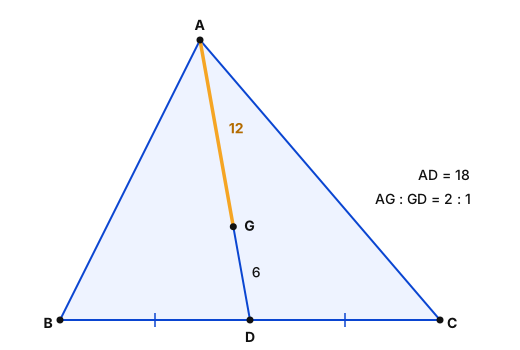
Q258.
Find the distance from the centroid to the vertex if the median is 18 cm .
यदि माध्यिका 18 cm है, तो केंद्रक से शीर्ष तक की दूरी ज्ञात कीजिए।
  1. A13 cm
  2. B16 cm
  3. C12 cm
  4. D18 cm
Show answer

Concept: Centroid divides each median in 2 : 1, the larger part towards the vertex.

  1. Vertex to centroid = 23 of median.
  2. =23×18= 12 cm (and centroid to side = 6 cm).

Trick: Split the median into 3 equal parts (18÷3=6); vertex side gets 2 parts = 12.

Answer: (C) 12 cm

अवधारणा: केन्द्रक हर माध्यिका को 2 : 1 में बाँटता है, बड़ा भाग शीर्ष की ओर।

  1. शीर्ष से केन्द्रक = माध्यिका का 23।
  2. =23×18= 12 cm (केन्द्रक से भुजा = 6 cm)।

ट्रिक: माध्यिका के 3 बराबर हिस्से (18÷3=6); शीर्ष की ओर 2 हिस्से = 12।

उत्तर: (C) 12 cm

SSC CHSLQuantitative AptitudeTriangle – centroid divides median 2:1SSC CHSL 2025 · 30 Nov Shift 1 →
Q259.
A sphere is melted and recast into smaller spheres each of radius one-third of the original sphere. How many small spheres can be formed ?
एक गोले को पिघलाकर छोटे गोलों में ढाला जाता है, जिनमें से प्रत्येक की त्रिज्या मूल गोले की त्रिज्या की एक-तिहाई है। कितने छोटे गोले बनाए जा सकते हैं?
  1. A28
  2. B27
  3. C25
  4. D34
Show answer

Concept: Volume stays the same; volume∝r3.

  1. Number of small spheres = (Rr)3.
  2. r=R3 → n=33= 27.

Trick: Radius becomes 1k → number of spheres =k3 (k=2 gives 8, k=3 gives 27).

Answer: (B) 27

अवधारणा: पिघलाने पर आयतन वही रहता है; आयतन∝r3।

  1. छोटे गोलों की संख्या = (Rr)3।
  2. r=R3 → n=33= 27।

ट्रिक: त्रिज्या 1k हो जाए तो गोलों की संख्या =k3 (k=2 → 8, k=3 → 27)।

उत्तर: (B) 27

SSC CHSLQuantitative AptitudeMensuration – melting and recasting spheresSSC CHSL 2025 · 30 Nov Shift 1 →
Q260.
Jiva invests a certain sum of money on simple interest at 6% p.a. for 20 years. If the interest earned by her is Rs. 58,410, then find the sum invested by her.
जीवा एक निश्चित धनराशि साधारण ब्याज पर 6% वार्षिक दर से 20 वर्षों के लिए निवेश करती है। यदि उसके द्वारा अर्जित ब्याज Rs. 58,410 है, तो उसके द्वारा निवेश की गई धनराशि ज्ञात कीजिए।
  1. A₹45,635
  2. B₹48,675
  3. C₹40,600
  4. D₹47,565
Show answer

Concept: SI=P×R×T100.

  1. Total rate = 6%×20=120% of P.
  2. 120% of P = 58,410 → P=58,410×100120.
  3. P=58,410÷1.2= ₹48,675.

Trick: Interest is more than the principal (120%), so P<58,410; 48,675×1.2=58,410 ✔.

Answer: (B) ₹48,675

अवधारणा: SI=P×R×T100।

  1. कुल दर = 6%×20= P का 120%।
  2. P का 120% = 58,410 → P=58,410×100120।
  3. P=58,410÷1.2= ₹48,675।

ट्रिक: ब्याज मूलधन का 120% है, यानी P, 58,410 से छोटा; जाँच: 48,675×1.2=58,410 ✔।

उत्तर: (B) ₹48,675

SSC CHSLQuantitative AptitudeSimple interest – finding principalSSC CHSL 2025 · 30 Nov Shift 1 →