Question bank

Q&A: practice questions with answers

Search questions on any topic. Filter by exam category, exam, subject and topic, try the question, then open the answer and explanation.

Courses – airGurukul

5,000 questions found.

Q2641.
Arrange the following words as per the order in the dictionary.
1. Magnet
2. Magic 3. Magnify
3. Magnesium 5. Magical
निम्नलिखित शब्दों को शब्दकोश के क्रम के अनुसार व्यवस्थित कीजिए।
1. Magnet
2. Magic 3. Magnify
3. Magnesium 5. Magical
  1. A45214
  2. B25413
  3. C22145
  4. D55241
Show answer

Concept: Compare letter by letter after the common part "MAG".

  1. MAGI- before MAGN-: Magic (2), Magical (5) – shorter word first.
  2. MAGNE- before MAGNI-: Magnesium (4) [s] before Magnet (1) [t], then Magnify (3).
  3. Order: 2, 5, 4, 1, 3

Trick: If one word is the start of another (Magic/Magical), the shorter one always comes first.

Answer: (B) 25413

अवधारणा: समान भाग "MAG" के बाद अक्षर-दर-अक्षर तुलना करें।

  1. MAGI- पहले, MAGN- बाद में: Magic (2), Magical (5) – छोटा शब्द पहले।
  2. MAGNE- फिर MAGNI-: Magnesium (4) [s], Magnet (1) [t], फिर Magnify (3)।
  3. क्रम: 2, 5, 4, 1, 3

ट्रिक: एक शब्द दूसरे की शुरुआत हो (Magic/Magical) तो छोटा शब्द पहले आता है।

उत्तर: (B) 25413
SSC CHSLGeneral IntelligenceDictionary orderSSC CHSL 2025 · 21 Nov Shift 1 →
Q2642.
For the question below, analyse the given information and conditions. Based on your understanding of relative positions and rankings, determine the correct order or position and answer the question.
Scenario: In a class Sumit's rank is 9th from the top and 38 th from the bottom. Question: How many total students are there in the class?
नीचे दिए गए प्रश्न के लिए दी गई सूचना तथा शर्तों का विश्लेषण कीजिए। सापेक्ष स्थिति तथा क्रम-निर्धारण की अपनी समझ के आधार पर सही क्रम अथवा स्थान निर्धारित कीजिए और प्रश्न का उत्तर दीजिए।
परिदृश्य: एक कक्षा में सुमित का क्रम ऊपर से 9वाँ तथा नीचे से 38वाँ है। प्रश्न: कक्षा में कुल कितने विद्यार्थी हैं?
  1. A45
  2. B46
  3. C47
  4. D48
Show answer

Concept: Total = rank from top + rank from bottom − 1.

  1. Total = 9 + 38 − 1
  2. = 46

Trick: Subtract 1 because the person is counted in both ranks.

Answer: (B) 46

अवधारणा: कुल = ऊपर से रैंक + नीचे से रैंक − 1।

  1. कुल = 9 + 38 − 1
  2. = 46

ट्रिक: 1 इसलिए घटाते हैं क्योंकि वही व्यक्ति दोनों गिनतियों में है।

उत्तर: (B) 46

SSC CHSLGeneral IntelligenceRanking – total from both endsSSC CHSL 2025 · 21 Nov Shift 1 →
Q2643.
For the question below, analyse the given information and conditions. Based on your understanding of relative positions and rankings, determine the correct order or position and answer the question.
Scenario: In a column of 25 boys, Ajit is 12th from the top.
Question: What is Ajit's position from the bottom?
नीचे दिए गए प्रश्न के लिए दी गई सूचना तथा शर्तों का विश्लेषण कीजिए। सापेक्ष स्थिति तथा क्रम-निर्धारण की अपनी समझ के आधार पर सही क्रम अथवा स्थान निर्धारित कीजिए और प्रश्न का उत्तर दीजिए।
परिदृश्य: 25 लड़कों की एक पंक्ति में अजित ऊपर से 12वें स्थान पर है।
प्रश्न: नीचे से अजित का स्थान क्या है?
  1. A12th12वाँ
  2. B11th11वाँ
  3. C14th14वाँ
  4. D10th10वाँ
Show answer

Concept: Rank from bottom = total − rank from top + 1.

  1. = 25 − 12 + 1
  2. = 14th

Trick: Check: 11 above + Ajit + 13 below = 25.

Answer: (C) 14th

अवधारणा: नीचे से स्थान = कुल − ऊपर से स्थान + 1।

  1. = 25 − 12 + 1
  2. = 14वाँ

ट्रिक: जाँच: ऊपर 11 + अजीत + नीचे 13 = 25।

उत्तर: (C) 14वाँ

SSC CHSLGeneral IntelligenceRanking – position from other endSSC CHSL 2025 · 21 Nov Shift 1 →
Q2644.
For the question below, analyse the given information and conditions. Based on your understanding of relative positions and rankings, determine the correct order or position and answer the question.
Scenario: In a class, Sandeep's rank is 10th from the top and 28th from the bottom.
Question: How many students are there in the class?
नीचे दिए गए प्रश्न के लिए दी गई सूचना तथा शर्तों का विश्लेषण कीजिए। सापेक्ष स्थिति तथा क्रम-निर्धारण की अपनी समझ के आधार पर सही क्रम अथवा स्थान निर्धारित कीजिए और प्रश्न का उत्तर दीजिए।
परिदृश्य: एक कक्षा में संदीप का क्रम ऊपर से 10वाँ तथा नीचे से 28वाँ है।
प्रश्न: कक्षा में कितने विद्यार्थी हैं?
  1. A35
  2. B36
  3. C37
  4. D38
Show answer

Concept: Total = rank from top + rank from bottom − 1.

  1. Total = 10 + 28 − 1
  2. = 37

Trick: Add the two ranks and subtract 1 – done in 5 seconds.

Answer: (C) 37

अवधारणा: कुल = ऊपर से रैंक + नीचे से रैंक − 1।

  1. कुल = 10 + 28 − 1
  2. = 37

ट्रिक: दोनों रैंक जोड़ें और 1 घटाएँ – 5 सेकंड का काम।

उत्तर: (C) 37

SSC CHSLGeneral IntelligenceRanking – total from both endsSSC CHSL 2025 · 21 Nov Shift 1 →
Q2645.
Which of the following will come next to the series?
A, C, F, J, O, ?
निम्नलिखित में से कौन-सा पद शृंखला में आगे आएगा?
A, C, F, J, O, ?
  1. AV
  2. BT
  3. CU
  4. DW
Show answer

Concept: Convert letters to positions and study the gaps.

  1. A1, C3, F6, J10, O15
  2. Gaps: +2, +3, +4, +5 → next +6
  3. 15 + 6 = 21 = U

Trick: Positions 1, 3, 6, 10, 15 are triangular numbers – next is 21 (U).

Answer: (C) U

अवधारणा: अक्षरों को स्थान-संख्या में बदलें और अंतर देखें।

  1. A1, C3, F6, J10, O15
  2. अंतर: +2, +3, +4, +5 → अगला +6
  3. 15 + 6 = 21 = U

ट्रिक: 1, 3, 6, 10, 15 त्रिकोणीय संख्याएँ हैं – अगली 21 (U)।

उत्तर: (C) U

SSC CHSLGeneral IntelligenceLetter series – increasing gapsSSC CHSL 2025 · 21 Nov Shift 1 →
Q2646.
Carefully examine the Reference Statement. Then, identify the single option among the four alternatives (a, b, c, d) that is an EXACT AND COMPLETE REPLICATION of the Reference Statement. Pay exceptionally close attention to every character, number, symbol, space, and punctuation mark.
Reference: Lucknow: 26th January, 2024.
संदर्भ कथन का सावधानीपूर्वक परीक्षण कीजिए। तत्पश्चात् चार विकल्पों (a, b, c, d) में से उस एक विकल्प की पहचान कीजिए जो संदर्भ कथन की पूर्णतः सटीक एवं संपूर्ण प्रतिकृति है। प्रत्येक अक्षर, अंक, चिह्न, रिक्त स्थान तथा विराम-चिह्न पर अत्यंत सूक्ष्मता से ध्यान दीजिए।
संदर्भ: Lucknow: 26th January, 2024.
  1. ALucknow: 25th January, 2024.
  2. BLucknow: 26th January, 2024.
  3. CLucknow: 26th January, 2025.
  4. DLucknow: 24th January, 2024.
Show answer

Concept: Compare only the parts that can differ – the date and the year.

  1. Reference: 26th January, 2024.
  2. A → 25th, D → 24th, C → 2025.
  3. Only B matches every character.

Trick: Scan numbers first – most "replication" traps are in digits.

Answer: (B) Lucknow: 26th January, 2024.

अवधारणा: केवल वे भाग मिलाएँ जो बदल सकते हैं – तारीख और वर्ष।

  1. मूल: 26th January, 2024।
  2. A → 25th, D → 24th, C → 2025।
  3. सभी अक्षर केवल B में मेल खाते हैं।

ट्रिक: पहले अंक देखें – ऐसे प्रश्नों में ज़्यादातर फँसाव अंकों में होता है।

उत्तर: (B) Lucknow: 26th January, 2024.

SSC CHSLGeneral IntelligenceExact copy matchingSSC CHSL 2025 · 21 Nov Shift 1 →
Q2647.
You are the principal of a school. A student is caught cheating in an exam, but it is proven that he was pressured by someone. What would be the appropriate decision?
आप एक विद्यालय के प्राचार्य हैं। एक विद्यार्थी परीक्षा में नकल करते हुए पकड़ा जाता है, किंतु यह सिद्ध हो जाता है कि उस पर किसी के द्वारा दबाव डाला गया था। उपयुक्त निर्णय क्या होगा?
  1. ATo expel the student immediatelyविद्यार्थी को तत्काल निष्कासित करना
  2. BTo forgive the student without investigationबिना जाँच किए विद्यार्थी को क्षमा कर देना
  3. CTo decide appropriate punishment after thorough investigation.गहन जाँच के पश्चात् उपयुक्त दंड निर्धारित करना।
  4. DIgnoring the person who puts pressure on youआप पर दबाव डालने वाले व्यक्ति की उपेक्षा करना
Show answer

Concept: A fair decision addresses both the offence and its cause.

  1. Cheating is an offence – cannot be simply forgiven (B ✘).
  2. Pressure was involved – investigate who pressured and how much.
  3. Then decide a fair punishment → option C.

Trick: Prefer the option with "investigation + proportionate action" over extreme options.

Answer: (C) To decide appropriate punishment after thorough investigation.

अवधारणा: उचित निर्णय अपराध और उसके कारण, दोनों पर ध्यान देता है।

  1. नकल अपराध है – बिना जाँच माफ़ नहीं (B ✘)।
  2. दबाव था – किसने और कितना दबाव डाला, इसकी जाँच।
  3. फिर उचित दंड → option C।

ट्रिक: अतिवादी विकल्पों की जगह "जाँच + संतुलित कार्रवाई" वाला option चुनें।

उत्तर: (C) गहन जाँच के पश्चात् उपयुक्त दंड निर्धारित करना।

SSC CHSLGeneral IntelligenceSituational judgement – cheating under pressureSSC CHSL 2025 · 21 Nov Shift 1 →
Q2648.
You are a police officer. A poor man is caught stealing medicine for his sick mother. What would you do?
आप एक पुलिस अधिकारी हैं। एक निर्धन व्यक्ति अपनी बीमार माँ के लिए दवा चुराते हुए पकड़ा जाता है। आप क्या करेंगे?
  1. AWill send him to jail immediately.उसे तत्काल जेल भेज देंगे।
  2. BWill register the case as per law but will try to provide humanitarian help considering his situation.कानून के अनुसार मामला दर्ज करेंगे, किंतु उसकी परिस्थिति को देखते हुए मानवीय सहायता उपलब्ध कराने का प्रयास करेंगे।
  3. CWill scold him and leave him and will ask the shopkeeper to forgive him.उसे डाँटकर छोड़ देंगे तथा दुकानदार से उसे क्षमा करने के लिए कहेंगे।
  4. DWill allow him to continue the theft.उसे चोरी जारी रखने देंगे।
Show answer

Concept: An officer must follow the law but can still act humanely.

  1. Theft is an offence → case must be registered.
  2. His situation is genuine → offer humanitarian help.
  3. Option B balances both; A ignores compassion, C/D ignore duty.

Trick: Officer-type questions: "follow rules + show empathy" is the usual winner.

Answer: (B) Will register the case as per law but will try to provide humanitarian help considering his situation.

अवधारणा: अधिकारी को कानून मानना होता है, पर वह मानवीय व्यवहार भी कर सकता है।

  1. चोरी अपराध है → मामला दर्ज होगा।
  2. उसकी स्थिति वास्तविक है → मानवीय मदद।
  3. B दोनों को संतुलित करता है; A में करुणा नहीं, C/D में कर्तव्य नहीं।

ट्रिक: अधिकारी वाले प्रश्नों में "नियम + सहानुभूति" वाला option प्रायः सही।

उत्तर: (B) कानून के अनुसार मामला दर्ज करेंगे, किंतु उसकी परिस्थिति को देखते हुए मानवीय सहायता उपलब्ध कराने का प्रयास करेंगे।

SSC CHSLGeneral IntelligenceSituational judgement – law with compassionSSC CHSL 2025 · 21 Nov Shift 1 →
Q2649.
Which of the following words can be formed using the letters of the word only once ?
REVOLUTIONARY
निम्नलिखित में से कौन-सा शब्द दिए गए शब्द के अक्षरों का केवल एक-एक बार प्रयोग करके बनाया जा सकता है?
REVOLUTIONARY
  1. AVOLUNTARY
  2. BVOLTMETER
  3. CNATION
  4. DREVOLVE
Show answer

Concept: Each letter can be used only as many times as it appears.

  1. REVOLUTIONARY: A, E, I, L, N, O×2, R×2, T, U, V, Y (no M).
  2. VOLTMETER needs M ✘; NATION needs 2 N ✘; REVOLVE needs 2 V ✘.
  3. VOLUNTARY: V, O, L, U, N, T, A, R, Y – all available ✔

Trick: Look for a missing letter (M) or a repeated letter (NN, VV) to reject fast.

Answer: (A) VOLUNTARY

अवधारणा: हर अक्षर उतनी ही बार प्रयोग हो सकता है जितनी बार वह दिए शब्द में है।

  1. REVOLUTIONARY: A, E, I, L, N, O×2, R×2, T, U, V, Y (M नहीं)।
  2. VOLTMETER में M ✘; NATION में दो N ✘; REVOLVE में दो V ✘।
  3. VOLUNTARY: V, O, L, U, N, T, A, R, Y – सब उपलब्ध ✔

ट्रिक: गायब अक्षर (M) या दोहराए अक्षर (NN, VV) देखकर जल्दी हटाएँ।

उत्तर: (A) VOLUNTARY

SSC CHSLGeneral IntelligenceWord formation from given lettersSSC CHSL 2025 · 21 Nov Shift 1 →
Q2650.
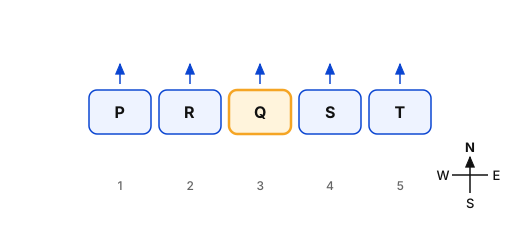
P, Q, R, S and T are sitting on a bench facing north. R is sitting to the immediate right of P. S sits immediate left of T. Only one person sits between Q and P. If T sits at one end of the row, then who sits in the middle?
P, Q, R, S और T एक बेंच पर उत्तर की ओर मुख करके बैठे हैं। R, P के ठीक दाईं ओर बैठा है। S, T के ठीक बाईं ओर बैठा है। Q और P के बीच केवल एक व्यक्ति बैठा है। यदि T पंक्ति के एक सिरे पर बैठा है, तो बीच में कौन बैठा है?
  1. AP
  2. BQ
  3. CR
  4. DS
Show answer

Concept: Facing north: right = east side. Fix the end person first.

  1. S is immediate left of T, so T must be at the right end: … S T.
  2. P–R adjacent (R right of P) in seats 1–3; one person between Q and P → P1, R2, Q3.
  3. Order: P R Q S T → middle = Q.

Trick: "X immediate left of Y" + "Y at an end" → Y is at the right end.

Answer: (B) Q

अवधारणा: उत्तर की ओर मुख: दायाँ = पूर्व। पहले छोर वाले को तय करें।

  1. S, T के ठीक बाएँ है, इसलिए T दाएँ छोर पर: … S T।
  2. P–R साथ (R, P के दाएँ) सीट 1–3 में; Q और P के बीच एक → P1, R2, Q3।
  3. क्रम: P R Q S T → बीच में = Q।

ट्रिक: "X, Y के ठीक बाएँ" + "Y छोर पर" → Y दाएँ छोर पर ही होगा।

उत्तर: (B) Q

SSC CHSLGeneral IntelligenceLinear seating – facing northSSC CHSL 2025 · 21 Nov Shift 1 →
Q2651.
Which of these fractions results in a non-terminating repeating decimal?
इनमें से किस भिन्न का परिणाम एक अनवसानी आवर्ती दशमलव होता है?
  1. A120
  2. B119
  3. C116
  4. D140
Show answer

Concept: A fraction (lowest terms) terminates only if its denominator has no prime factor other than 2 and 5.

  1. 20=22×5, 16=24, 40=23×5 → all terminate.
  2. 19 is a prime other than 2 or 5 → 119=0.052631… repeats.

Trick: Just factor the denominator: any 3, 7, 11, 13, 19… inside ⇒ non-terminating.

Answer: (B) 119

अवधारणा: न्यूनतम रूप की भिन्न तभी सांत होती है जब हर में 2 और 5 के अलावा कोई अभाज्य गुणनखंड न हो।

  1. 20=22×5, 16=24, 40=23×5 → सभी सांत।
  2. 19 अभाज्य है (2, 5 नहीं) → 119=0.052631… आवर्ती।

ट्रिक: केवल हर के गुणनखंड देखें: 3, 7, 11, 13, 19… हो तो असांत आवर्ती।

उत्तर: (B) 119

SSC CHSLQuantitative AptitudeTerminating vs repeating decimalsSSC CHSL 2025 · 21 Nov Shift 1 →
Q2652.
A man purchases a certain number of identical calculators at a rate of ₹1,800 per dozen. He sells them at ₹180 per piece. Find how many calculators he bought if his total profit is ₹420.
एक व्यक्ति ₹1,800 प्रति दर्जन की दर से कुछ समान कैलकुलेटर खरीदता है। वह उन्हें ₹180 प्रति नग की दर से बेचता है। यदि उसका कुल लाभ ₹420 है, तो ज्ञात कीजिए कि उसने कितने कैलकुलेटर खरीदे।
  1. A12
  2. B10
  3. C16
  4. D14
Show answer

Concept: Number of items=total profit÷profit per item.

  1. CP of one = 1800÷12= ₹150
  2. SP of one = ₹180 → profit per piece = ₹30
  3. Number = 420÷30= 14

Trick: Check options: 14×30=420 ✔ – multiply instead of solving.

Answer: (D) 14

अवधारणा: वस्तुओं की संख्या=कुल लाभ÷प्रति वस्तु लाभ।

  1. एक का क्रय मूल्य = 1800÷12= ₹150
  2. एक का विक्रय मूल्य = ₹180 → प्रति नग लाभ = ₹30
  3. संख्या = 420÷30= 14

ट्रिक: विकल्प जाँचें: 14×30=420 ✔ – हल करने की बजाय गुणा करें।

उत्तर: (D) 14

SSC CHSLQuantitative AptitudeProfit – number of articlesSSC CHSL 2025 · 21 Nov Shift 1 →
Q2653.
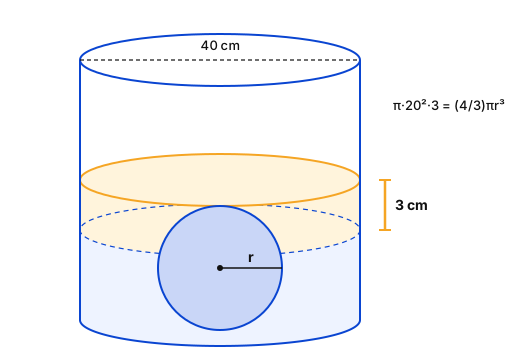
A metal sphere is dropped into a cylindrical container of diameter 40 cm partially filled with water. If the water rises by 3.0 cm , what is the radius of the sphere?
एक धातु का गोला 40 cm व्यास वाले एक बेलनाकार पात्र में डाला जाता है, जो आंशिक रूप से पानी से भरा है। यदि पानी का स्तर 3.0 cm बढ़ जाता है, तो गोले की त्रिज्या क्या है?
  1. A9.51 cm
  2. B9.65 cm
  3. C8.68 cm
  4. D7.76 cm
Show answer

Concept: Volume of sphere = volume of water raised in the cylinder.

  1. Cylinder radius = 40÷2=20 cm, rise = 3 cm
  2. Raised water = π×202×3=1200π
  3. 43πr3=1200π⇒r3=900
  4. r=9003≈ 9.65 cm

Trick: 9.63≈885 and 9.73≈913, so r lies between – only 9.65 fits.

Answer: (B) 9.65 cm

अवधारणा: गोले का आयतन = बेलन में चढ़े पानी का आयतन।

  1. बेलन की त्रिज्या = 40÷2=20 cm, ऊँचाई में वृद्धि = 3 cm
  2. चढ़ा पानी = π×202×3=1200π
  3. 43πr3=1200π⇒r3=900
  4. r=9003≈ 9.65 cm

ट्रिक: 9.63≈885 और 9.73≈913 – r इनके बीच, केवल 9.65 फिट।

उत्तर: (B) 9.65 cm

SSC CHSLQuantitative AptitudeMensuration – sphere displacing waterSSC CHSL 2025 · 21 Nov Shift 1 →
Q2654.
The marked price of a cupboard is ₹4,500, which is 25% above the cost price. It is sold at a discount of 20% on the marked price. Find the profit percentage.
एक अलमारी का अंकित मूल्य ₹4,500 है, जो क्रय मूल्य से 25% अधिक है। इसे अंकित मूल्य पर 20% की छूट पर बेचा जाता है। लाभ प्रतिशत ज्ञात कीजिए।
  1. A3.5%
  2. B0%
  3. C8.5%
  4. D4.5%
Show answer

Concept: Find CP from MP, find SP after discount, then compare.

  1. CP=4500×100125= ₹3600
  2. SP=4500×80100= ₹3600
  3. SP=CP → profit = 0%

Trick: Markup 25% then discount 20%: 1.25×0.8=1 → no profit, no loss.

Answer: (B) 0%

अवधारणा: MP से CP निकालें, छूट के बाद SP निकालें, फिर तुलना करें।

  1. CP=4500×100125= ₹3600
  2. SP=4500×80100= ₹3600
  3. SP=CP → लाभ = 0%

ट्रिक: 25% बढ़ाकर 20% छूट: 1.25×0.8=1 → न लाभ न हानि।

उत्तर: (B) 0%

SSC CHSLQuantitative AptitudeMarked price, discount and profitSSC CHSL 2025 · 21 Nov Shift 1 →
Q2655.
In a hostel, the average age of 40 students was 20 years. Later, 10 students left and 10 new students joined. The average age of the new group became 18.2 years. If the average age of the 10 students who left was 22.4 years, find the average age of the 10 students who joined.
एक छात्रावास में 40 विद्यार्थियों की औसत आयु 20 वर्ष थी। बाद में 10 विद्यार्थी चले गए और 10 नए विद्यार्थी सम्मिलित हो गए। नए समूह की औसत आयु 18.2 वर्ष हो गई। यदि जो 10 विद्यार्थी चले गए उनकी औसत आयु 22.4 वर्ष थी, तो सम्मिलित हुए 10 विद्यार्थियों की औसत आयु ज्ञात कीजिए।
  1. A13.8 years13.8 वर्ष
  2. B15.2 years15.2 वर्ष
  3. C14.2 years14.2 वर्ष
  4. D10.4 years10.4 वर्ष
Show answer

Concept: Work with totals: new total=old total−leavers+joiners.

  1. Old total = 40×20=800; new total = 40×18.2=728
  2. Leavers total = 10×22.4=224
  3. Joiners total = 728−800+224=152
  4. Average = 152÷10= 15.2 years

Trick: Shortcut: joiners avg = 22.4−40×(20−18.2)10=22.4−7.2=15.2.

Answer: (B) 15.2 years

अवधारणा: योग के साथ काम करें: नया योग=पुराना योग−जाने वाले+आने वाले।

  1. पुराना योग = 40×20=800; नया योग = 40×18.2=728
  2. जाने वालों का योग = 10×22.4=224
  3. आने वालों का योग = 728−800+224=152
  4. औसत = 152÷10= 15.2 वर्ष

ट्रिक: शॉर्टकट: नए का औसत = 22.4−40×(20−18.2)10=22.4−7.2=15.2।

उत्तर: (B) 15.2 वर्ष

SSC CHSLQuantitative AptitudeAverage – replacement of membersSSC CHSL 2025 · 21 Nov Shift 1 →
Q2656.
There are three machines A,B and C in a factory which have the same total output. The defect rate of machine A is 2.5% and that of B is 3.2%. If the total defective units of all three machines is 42 and each machine has produced 500 units, then what is the defect rate of machine C?
एक कारखाने में तीन मशीनें A,B तथा C हैं, जिनका कुल उत्पादन समान है। मशीन A की दोष दर 2.5% है तथा B की 3.2% है। यदि तीनों मशीनों की कुल दोषपूर्ण इकाइयाँ 42 हैं और प्रत्येक मशीन ने 500 इकाइयाँ उत्पादित की हैं, तो मशीन C की दोष दर क्या है?
  1. A2.1%
  2. B2.7%
  3. C3.0%
  4. D1.9%
Show answer

Concept: Defective units = rate × output; find C's share of the 42 defects.

  1. A: 2.5% of 500 = 12.5; B: 3.2% of 500 = 16
  2. C=42−28.5=13.5
  3. Rate of C = 13.5500×100= 2.7%

Trick: Equal outputs ⇒ rates simply add: total rate = 42500=8.4%; C=8.4−2.5−3.2=2.7%.

Answer: (B) 2.7%

अवधारणा: दोषपूर्ण इकाइयाँ = दर × उत्पादन; 42 में से C का हिस्सा निकालें।

  1. A: 500 का 2.5% = 12.5; B: 500 का 3.2% = 16
  2. C=42−28.5=13.5
  3. C की दर = 13.5500×100= 2.7%

ट्रिक: उत्पादन बराबर ⇒ दरें सीधे जुड़ती हैं: कुल दर = 42500=8.4%; C=8.4−2.5−3.2=2.7%।

उत्तर: (B) 2.7%

SSC CHSLQuantitative AptitudePercentage – defect rateSSC CHSL 2025 · 21 Nov Shift 1 →
Q2657.
In a digital learning centre, there are three types of online tests. The average score of a student in the first and second test is 84 . The average score in the second and third test is 82 . The average of the first and third test is 80 . If the student scored 4 marks less in the third test than in the first, find the marks obtained in the second test.
एक डिजिटल अधिगम केंद्र में तीन प्रकार की ऑनलाइन परीक्षाएँ होती हैं। किसी विद्यार्थी के प्रथम तथा द्वितीय परीक्षा के अंकों का औसत 84 है। द्वितीय तथा तृतीय परीक्षा के अंकों का औसत 82 है। प्रथम तथा तृतीय परीक्षा का औसत 80 है। यदि विद्यार्थी ने तृतीय परीक्षा में प्रथम परीक्षा की तुलना में 4 अंक कम प्राप्त किए, तो द्वितीय परीक्षा में प्राप्त अंक ज्ञात कीजिए।
  1. A85
  2. B86
  3. C84.5
  4. D87.2
Show answer

Concept: Convert each pair average into a sum and add all three.

  1. T1+T2=168, T2+T3=164, T1+T3=160
  2. Adding: 2(T1+T2+T3)=492⇒ total = 246
  3. T2=246−160= 86

Trick: Wanted term = (sum of the two pairs containing it − the other pair) ÷ 2 = 168+164−1602=86.

Answer: (B) 86

अवधारणा: हर जोड़े के औसत को योग में बदलें और तीनों जोड़ें।

  1. T1+T2=168, T2+T3=164, T1+T3=160
  2. जोड़ने पर: 2(T1+T2+T3)=492⇒ योग = 246
  3. T2=246−160= 86

ट्रिक: इच्छित पद = (उसे रखने वाले दोनों जोड़ों का योग − तीसरा जोड़ा) ÷ 2 = 168+164−1602=86।

उत्तर: (B) 86

SSC CHSLQuantitative AptitudeAverages – pairwise sumsSSC CHSL 2025 · 21 Nov Shift 1 →
Q2658.
A, B, and C invest ₹40,000, ₹60,000, and ₹70,000, respectively, in a business. The profit at the end of the year is ₹51,000. What is A's share of the profit?
A, B और C एक व्यवसाय में क्रमशः ₹40,000, ₹60,000 तथा ₹70,000 का निवेश करते हैं। वर्ष के अंत में लाभ ₹51,000 है। लाभ में A का हिस्सा कितना है?
  1. ARs. 8000
  2. BRs. 15000
  3. CRs. 12000
  4. DRs. 13000
Show answer

Concept: Same time period ⇒ profit is shared in the ratio of capitals.

  1. 40000:60000:70000=4:6:7 (total 17)
  2. One part = 51000÷17=3000
  3. A=4×3000= ₹12,000

Trick: 51000 is divisible by 17 (17×3=51) – a sign the ratio sum is 17.

Answer: (C) Rs. 12000

अवधारणा: समय समान ⇒ लाभ पूँजी के अनुपात में बँटता है।

  1. पूँजी अनुपात = 4 : 6 : 7 (₹40k, ₹60k, ₹70k; योग 17)
  2. एक भाग = 51000÷17=3000
  3. A=4×3000= ₹12,000

ट्रिक: 51000, 17 से विभाज्य (17×3=51) – अनुपात योग 17 का संकेत।

उत्तर: (C) Rs. 12000

SSC CHSLQuantitative AptitudePartnership – profit shareSSC CHSL 2025 · 21 Nov Shift 1 →
Q2659.
A factory produces cylindrical cans, and each day it slightly increases the size of the label printed on the cans to match a design upgrade. On the first day, the label height is 1.6 cm, and each day, the height increases by 0.4 cm to improve visibility. What will be the height of the label on the 10th day?
एक कारखाना बेलनाकार डिब्बे बनाता है और डिज़ाइन उन्नयन के अनुरूप प्रतिदिन डिब्बों पर छपे लेबल का आकार थोड़ा बढ़ा देता है। पहले दिन लेबल की ऊँचाई 1.6 cm है और दृश्यता बढ़ाने के लिए प्रतिदिन ऊँचाई 0.4 cm बढ़ जाती है। 10वें दिन लेबल की ऊँचाई क्या होगी?
  1. A3.4 cm
  2. B5.6 cm
  3. C5.2 cm
  4. D7.2 cm
Show answer

Concept: Equal daily increase ⇒ AP: an=a+(n−1)d.

  1. a=1.6, d=0.4, n=10
  2. Increase = 9×0.4=3.6
  3. a10=3.6+1.6= 5.2 cm

Trick: From day 1 to day 10 there are only 9 increases – avoid adding 10×0.4 (gives 5.6, a trap option).

Answer: (C) 5.2 cm

अवधारणा: रोज़ समान वृद्धि ⇒ AP: an=a+(n−1)d।

  1. a=1.6, d=0.4, n=10
  2. वृद्धि = 9×0.4=3.6
  3. a10=3.6+1.6= 5.2 cm

ट्रिक: दिन 1 से 10 तक केवल 9 बार वृद्धि – 10×0.4 जोड़ने पर 5.6 (फँसाने वाला विकल्प)।

उत्तर: (C) 5.2 cm

SSC CHSLQuantitative AptitudeArithmetic progression – nth termSSC CHSL 2025 · 21 Nov Shift 1 →
Q2660.
What is the radius of the circumscribed circle for a triangle with sides 13 cm , 14 cm , 15 cm ?
13 cm, 14 cm, 15 cm भुजाओं वाले त्रिभुज के परिवृत्त की त्रिज्या क्या है?
  1. A9 cm
  2. B6 cm
  3. C7.5 cm
  4. D8.1 cm
Show answer

Concept: R=abc4×Area; area by Heron's formula.

  1. s=13+14+152=21
  2. Area=21×8×7×6=7056=84
  3. R=13×14×154×84=2730336=8.125≈ 8.1 cm

Yaad rakhein: 13-14-15 triangle has area 84 – a favourite exam triangle worth memorising.

Answer: (D) 8.1 cm

अवधारणा: R=abc4×क्षेत्रफल; क्षेत्रफल हीरोन सूत्र से।

  1. s=13+14+152=21
  2. क्षेत्रफल=21×8×7×6=7056=84
  3. R=13×14×154×84=2730336=8.125≈ 8.1 cm

याद रखें: 13-14-15 त्रिभुज का क्षेत्रफल 84 – परीक्षा का पसंदीदा, याद रखें।

उत्तर: (D) 8.1 cm

SSC CHSLQuantitative AptitudeCircumradius of a triangleSSC CHSL 2025 · 21 Nov Shift 1 →