Question bank

Q&A: practice questions with answers

Search questions on any topic. Filter by exam category, exam, subject and topic, try the question, then open the answer and explanation.

Courses – airGurukul

5,000 questions found.

Q2761.
A person takes a loan of ₹45,000 for 3 years at a rate of interest of 10%. What will be the total amount to be paid after 3 years?
एक व्यक्ति 10% की ब्याज दर पर 3 वर्षों के लिए ₹45,000 का ऋण लेता है। 3 वर्ष बाद चुकाई जाने वाली कुल राशि कितनी होगी?
  1. A₹58,500
  2. B₹58,000
  3. C₹59,000
  4. D₹50,000
Show answer

Concept: Amount=P+SI, SI=P×R×T100.

  1. SI=45000×10×3100= ₹13,500.
  2. Amount = 45000+13500= ₹58,500.

Trick: Amount = P×(1+RT100)=45000×1.3= ₹58,500.

Answer: (A) ₹58,500

अवधारणा: मिश्रधन=P+SI, SI=P×R×T100।

हल:

  1. SI=45000×10×3100= ₹13,500।
  2. मिश्रधन = 45000+13500= ₹58,500।

ट्रिक: मिश्रधन = P×(1+RT100)=45000×1.3= ₹58,500।

उत्तर: (A) ₹58,500

SSC CHSLQuantitative AptitudeSimple interest – amountSSC CHSL 2025 · 20 Nov Shift 3 →
Q2762.
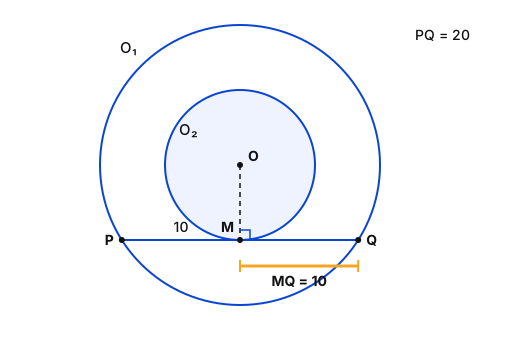
In two concentric circles, the radius of circle O2 is less than the radius of circle O1. If PQ is a chord of circle O1 of length 20 cm , touching circle O2 at point M , find the length of MQ .
दो संकेंद्रीय वृत्तों में, वृत्त O2 की त्रिज्या वृत्त O1 की त्रिज्या से कम है। यदि PQ, वृत्त O1 की 20 cm लंबी एक जीवा है, जो वृत्त O2 को बिंदु M पर स्पर्श करती है, तो MQ की लंबाई ज्ञात कीजिए।
  1. A40 cm
  2. B15 cm
  3. C10 cm
  4. D8 cm
Show answer

Concept: Radius ⊥ tangent; perpendicular from centre bisects a chord.

  1. OM⟂PQ (OM is radius of the small circle at the point of contact).
  2. For the big circle, OM is the perpendicular from centre to chord PQ → M is its midpoint.
  3. MQ=202=10 cm.

Trick: Point of contact = midpoint of the chord – always, in concentric circles.

Answer: (C) 10 cm

अवधारणा: त्रिज्या स्पर्श रेखा पर लंब होती है; केंद्र से जीवा पर लंब उसे समद्विभाजित करता है।

हल:

  1. OM⟂PQ (स्पर्श बिंदु पर छोटे वृत्त की त्रिज्या)।
  2. बड़े वृत्त में OM केंद्र से जीवा PQ पर लंब है → M मध्य-बिंदु।
  3. MQ=202=10 cm।

ट्रिक: संकेंद्रीय वृत्तों में स्पर्श बिंदु हमेशा जीवा का मध्य-बिंदु होता है।

उत्तर: (C) 10 cm

SSC CHSLQuantitative AptitudeConcentric circles – chord tangent to inner circleSSC CHSL 2025 · 20 Nov Shift 3 →
Q2763.
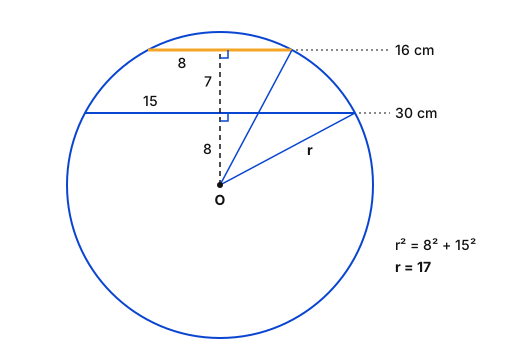
In a circle, there are two parallel chords of lengths 16 cm and 30 cm. Both chords are situated on the same side of the center. If the distance between them is 7 cm , find the area of the circle.
एक वृत्त में 16 cm और 30 cm लंबाई की दो समांतर जीवाएँ हैं। दोनों जीवाएँ केंद्र के एक ही ओर स्थित हैं। यदि उनके बीच की दूरी 7 cm है, तो वृत्त का क्षेत्रफल ज्ञात कीजिए।
  1. A289π square cm289π वर्ग cm
  2. B196π square cm196π वर्ग cm
  3. C189π square cm189π वर्ग cm
  4. D287π square cm287π वर्ग cm
Show answer

Concept: r2=(half chord)2+(distance from centre)2.

  1. Half chords: 15 and 8. Let distances be d (30 cm chord) and d + 7 (16 cm chord).
  2. d2+225=(d+7)2+64→14d=112→d=8.
  3. r2=82+152=289 → area = 289πcm2.

Trick: 8–15–17 triplet: r=17 directly once d=8.

Answer: (A) 289π square cm

अवधारणा: r2=(आधी जीवा)2+(केंद्र से दूरी)2।

हल:

  1. आधी जीवाएँ: 15 और 8; दूरियाँ d (30 cm जीवा) और d + 7 (16 cm जीवा)।
  2. d2+225=(d+7)2+64→14d=112→d=8।
  3. r2=82+152=289 → क्षेत्रफल = 289πcm2।

ट्रिक: 8–15–17 त्रिक: d=8 मिलते ही r=17।

उत्तर: (A) 289π वर्ग cm

SSC CHSLQuantitative AptitudeCircle – parallel chords on same sideSSC CHSL 2025 · 20 Nov Shift 3 →
Q2764.
When the radius of a hemisphere is increased by 14 cm , its surface area increases by 7,392cm2. Find the volume (in cm3 ) of the original hemisphere. (Take π=227 )
जब एक अर्धगोले की त्रिज्या 14 cm बढ़ा दी जाती है, तो उसका पृष्ठीय क्षेत्रफल 7,392cm2 बढ़ जाता है। मूल अर्धगोले का आयतन (cm3 में) ज्ञात कीजिए। (π=227 लीजिए)
  1. A19804cm3
  2. B38808cm3
  3. C19404cm3
  4. D18446cm3
Show answer

Concept: Total surface area of a solid hemisphere = 3πr2; volume = 23πr3.

  1. 3π[(r+14)2−r2]=7392→667(28r+196)=7392.
  2. 28r+196=784→r=21 cm.
  3. Volume = 23×227×213=44×441=19404cm3.

Trick: Volume must be a multiple of 22 with π=227; check last digits: 23·227·9261 ends in 4 → 19404.

Answer: (C) 19404cm3

अवधारणा: ठोस अर्धगोले का कुल पृष्ठीय क्षेत्रफल = 3πr2; आयतन = 23πr3।

हल:

  1. 3π[(r+14)2−r2]=7392→667(28r+196)=7392।
  2. 28r+196=784→r=21 cm।
  3. आयतन = 23×227×213=44×441=19404cm3।

ट्रिक: (a+b)2−a2=b(2a+b) से गणना छोटी हो जाती है: 14(2r+14)।

उत्तर: (C) 19404cm3

SSC CHSLQuantitative AptitudeHemisphere – surface area and volumeSSC CHSL 2025 · 20 Nov Shift 3 →
Q2765.
A rope is cut into two pieces. The first piece is 57 of the total length. The second piece is 10 meters long. What was the original length of the rope?
एक रस्सी को दो टुकड़ों में काटा जाता है। पहला टुकड़ा कुल लंबाई का 57 है। दूसरा टुकड़ा 10 मीटर लंबा है। रस्सी की मूल लंबाई कितनी थी?
  1. A45 meters45 मीटर
  2. B25 meters25 मीटर
  3. C50 meters50 मीटर
  4. D35 meters35 मीटर
Show answer

Concept: Remaining fraction × total = known length.

  1. First piece = 57 → second piece = 27 of the rope.
  2. 27×L=10→L=35 m.

Trick: 2 parts = 10 m → 1 part = 5 m → 7 parts = 35 m.

Answer: (D) 35 meters

अवधारणा: शेष भिन्न × कुल = ज्ञात लंबाई।

हल:

  1. पहला टुकड़ा = 57 → दूसरा = 27।
  2. 27×L=10→L=35 m।

ट्रिक: 2 भाग = 10 m → 1 भाग = 5 m → 7 भाग = 35 m।

उत्तर: (D) 35 मीटर

SSC CHSLQuantitative AptitudeFractions – remaining partSSC CHSL 2025 · 20 Nov Shift 3 →
Q2766.
Triangle ABC has an area of 13 cm2. A similar triangle, A′B′C′, has a perimeter that is twice the perimeter of Triangle ABC. What is the area of Triangle A′B′C′ ?
त्रिभुज ABC का क्षेत्रफल 13 cm2 है। एक समरूप त्रिभुज A′B′C′ का परिमाप, त्रिभुज ABC के परिमाप का दोगुना है। त्रिभुज A′B′C′ का क्षेत्रफल क्या है?
  1. A77cm2
  2. B54cm2
  3. C52cm2
  4. D46cm2
Show answer

Concept: Area ratio=(side or perimeter ratio)2.

  1. Perimeter ratio = 2 : 1.
  2. Area ratio = 4 : 1.
  3. Area of A′B′C′ = 4×13=52cm2.

Trick: Double the size → four times the area.

Answer: (C) 52cm2

अवधारणा: क्षेत्रफल अनुपात=(भुजा या परिमाप अनुपात)2।

हल:

  1. परिमाप अनुपात = 2 : 1।
  2. क्षेत्रफल अनुपात = 4 : 1।
  3. A′B′C′ का क्षेत्रफल = 4×13=52cm2।

ट्रिक: आकार दोगुना → क्षेत्रफल चार गुना।

उत्तर: (C) 52cm2

SSC CHSLQuantitative AptitudeSimilar triangles – area ratioSSC CHSL 2025 · 20 Nov Shift 3 →
Q2767.
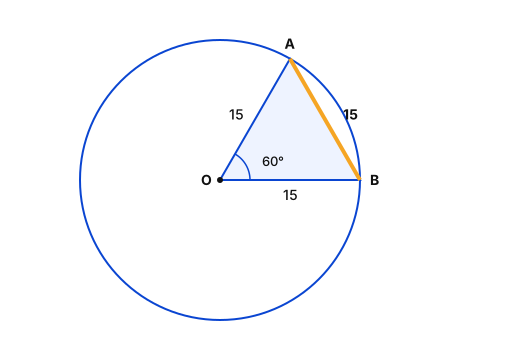
In a circle with radius of 15 cm, a chord forms a central angle of 60∘. What is the length of the chord?
15 cm त्रिज्या वाले एक वृत्त में, एक जीवा केंद्र पर 60∘ का कोण बनाती है। जीवा की लंबाई क्या है?
  1. A10 cm
  2. B15 cm
  3. C13 cm
  4. D16 cm
Show answer

Concept: Chord=2rsin(θ2).

  1. θ=60∘→chord=2×15×sin30∘=15 cm.
  2. Also: OA=OB and ∠O=60∘ make triangle OAB equilateral.

Trick: 60° at the centre → chord=radius, always.

Answer: (B) 15 cm

अवधारणा: जीवा=2rsin(θ2)।

हल:

  1. θ=60∘→जीवा=2×15×sin30∘=15 cm।
  2. OA=OB और ∠O=60∘ → त्रिभुज OAB समबाहु।

ट्रिक: केंद्र पर 60° हो तो जीवा=त्रिज्या, हमेशा।

उत्तर: (B) 15 cm

SSC CHSLQuantitative AptitudeCircle – chord with 60° central angleSSC CHSL 2025 · 20 Nov Shift 3 →
Q2768.
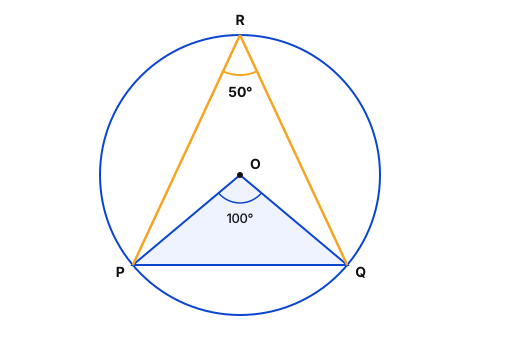
In a circle with center O, points P, Q, and R are on the circumference. If the angle ∠POQ=100∘, what is the measure of the angle ∠PRQ ?
केंद्र O वाले एक वृत्त में, बिंदु P, Q और R परिधि पर स्थित हैं। यदि कोण ∠POQ=100∘ है, तो कोण ∠PRQ का माप क्या है?
  1. A50°
  2. B55*
  3. C60°
  4. D45°
Show answer

Concept: Angle at centre = 2 × angle at the circumference on the same arc.

  1. ∠PRQ=∠POQ2=100∘2=50∘.

Trick: Halve the central angle (R on the major arc).

Answer: (A) 50°

अवधारणा: एक ही चाप पर केंद्र का कोण = परिधि के कोण का दोगुना।

हल:

  1. ∠PRQ=∠POQ2=100∘2=50∘।

ट्रिक: केंद्रीय कोण का आधा लें (R दीर्घ चाप पर)।

उत्तर: (A) 50°

SSC CHSLQuantitative AptitudeCircle – angle at centre vs circumferenceSSC CHSL 2025 · 20 Nov Shift 3 →
Q2769.
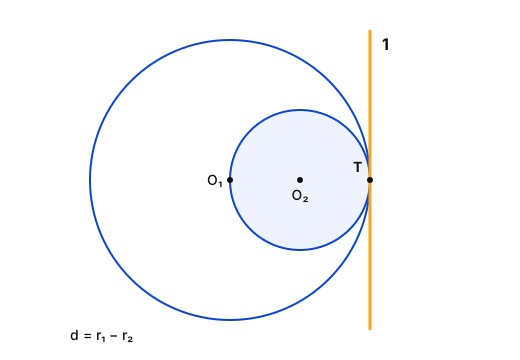
If two circles touch each other internally, what is the number of internal common tangents that can be drawn ?
यदि दो वृत्त एक-दूसरे को आंतरिक रूप से स्पर्श करते हैं, तो कितनी आंतरिक उभयनिष्ठ स्पर्श रेखाएँ खींची जा सकती हैं?
  1. A3
  2. B4
  3. C1
  4. D0
Show answer

Concept: Internal (transverse) tangents need a gap between the circles.

  1. Internally touching → small circle lies inside the bigger one.
  2. No line can pass between them → 0 internal tangents.
  3. Only 1 common tangent exists in total (at the contact point).

Trick: Common tangents: separate 4, touch externally 3, intersect 2, touch internally 1, one inside other 0.

Answer: (D) 0

अवधारणा: आंतरिक (अनुप्रस्थ) स्पर्श रेखा के लिए वृत्तों के बीच जगह चाहिए।

हल:

  1. अंतःस्पर्श → छोटा वृत्त बड़े के अंदर।
  2. बीच से कोई रेखा नहीं गुजर सकती → 0 आंतरिक स्पर्श रेखाएँ।
  3. कुल केवल 1 उभयनिष्ठ स्पर्श रेखा (स्पर्श बिंदु पर)।

ट्रिक: उभयनिष्ठ स्पर्श रेखाएँ: अलग 4, बाह्यस्पर्श 3, प्रतिच्छेद 2, अंतःस्पर्श 1, एक-दूसरे के अंदर 0।

उत्तर: (D) 0

SSC CHSLQuantitative AptitudeCommon tangents – internal touchingSSC CHSL 2025 · 20 Nov Shift 3 →
Q2770.
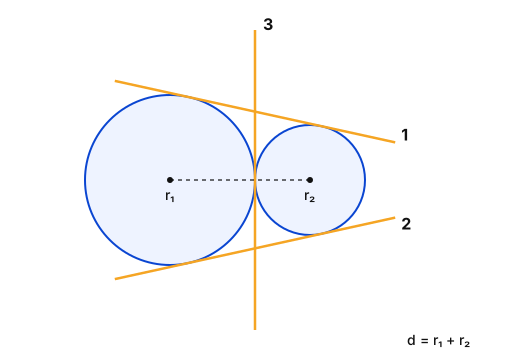
How many common tangents do two circles have when the distance between their centers equals the sum of their radii ?
जब दो वृत्तों के केंद्रों के बीच की दूरी उनकी त्रिज्याओं के योग के बराबर होती है, तो उनकी कितनी उभयनिष्ठ स्पर्श रेखाएँ होती हैं?
  1. A4
  2. B1
  3. C5
  4. D3
Show answer

Concept: d = r₁ + r₂ means the circles touch externally.

  1. 2 direct (external) common tangents.
  2. 1 transverse tangent at the point of contact.
  3. Total = 3.

Trick: 4 → 3 → 2 → 1 → 0 as the circles move from separate to one inside the other.

Answer: (D) 3

अवधारणा: d = r₁ + r₂ का अर्थ है वृत्त बाहर से स्पर्श करते हैं।

हल:

  1. 2 सीधी (बाह्य) उभयनिष्ठ स्पर्श रेखाएँ।
  2. स्पर्श बिंदु पर 1 अनुप्रस्थ स्पर्श रेखा।
  3. कुल = 3।

ट्रिक: वृत्त अलग से अंदर की ओर जाएँ तो संख्या 4 → 3 → 2 → 1 → 0।

उत्तर: (D) 3

SSC CHSLQuantitative AptitudeCommon tangents – external touchingSSC CHSL 2025 · 20 Nov Shift 3 →
Q2771.
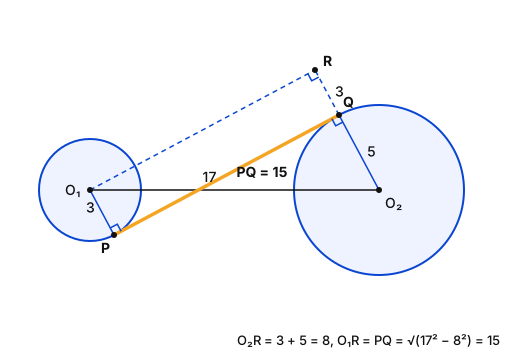
Two circles with radii of 3 cm and 5 cm have a distance of 17 cm between their centers. What is the length of the common internal tangent between the two circles?
3 cm और 5 cm त्रिज्या वाले दो वृत्तों के केंद्रों के बीच की दूरी 17 cm है। दोनों वृत्तों की उभयनिष्ठ आंतरिक स्पर्श रेखा की लंबाई क्या है?
  1. A12cm
  2. B16 cm
  3. C15 cm
  4. D13 cm
Show answer

Concept: Internal tangent = d2−(r1+r2)2.

  1. r1+r2=3+5=8, d=17.
  2. 289−64=225=15 cm.

Trick: 8–15–17 is a Pythagorean triplet – answer at sight.

Answer: (C) 15 cm

अवधारणा: आंतरिक स्पर्श रेखा = d2−(r1+r2)2।

हल:

  1. r1+r2=8, d=17।
  2. 289−64=225=15 cm।

ट्रिक: 8–15–17 पाइथागोरस त्रिक है – उत्तर तुरंत।

उत्तर: (C) 15 cm

SSC CHSLQuantitative AptitudeLength of internal common tangentSSC CHSL 2025 · 20 Nov Shift 3 →
Q2772.
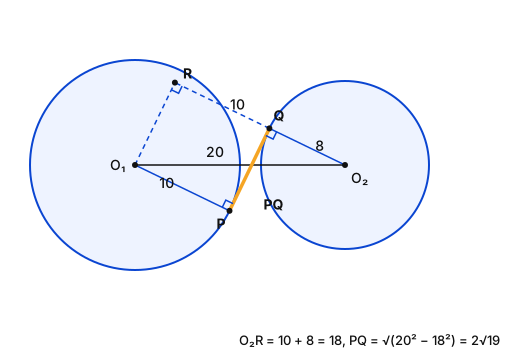
Two circles have radii 10 cm and 8 cm . The distance between their centers is 20 cm . What is the length of their common internal tangent segment?
दो वृत्तों की त्रिज्याएँ 10 cm और 8 cm हैं। उनके केंद्रों के बीच की दूरी 20 cm है। उनकी उभयनिष्ठ आंतरिक स्पर्श रेखा खंड की लंबाई क्या है?
  1. A219cm
  2. B19cm
  3. C19 cm
  4. D419cm
Show answer

Concept: Internal tangent = d2−(r1+r2)2.

  1. r1+r2=18, d=20.
  2. 400−324=76=4×19=219 cm.

Trick: d2−s2=(d−s)(d+s)=2×38=76 – quicker than squaring.

Answer: (A) 219cm

अवधारणा: आंतरिक स्पर्श रेखा = d2−(r1+r2)2।

हल:

  1. r1+r2=18, d=20।
  2. 400−324=76=4×19=219 cm।

ट्रिक: d2−s2=(d−s)(d+s)=2×38=76 – वर्ग करने से तेज़।

उत्तर: (A) 219cm

SSC CHSLQuantitative AptitudeLength of internal common tangentSSC CHSL 2025 · 20 Nov Shift 3 →
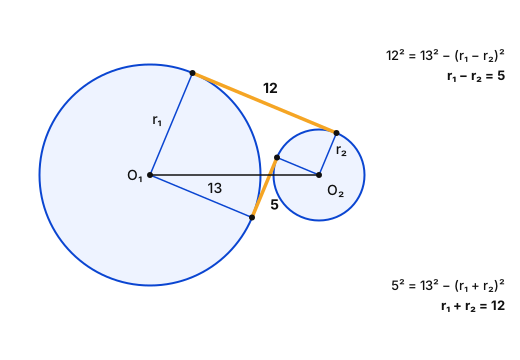
Q2773.
The lengths of a common external tangent and a common internal tangent to two circles are 12 cm and 5 cm , respectively. If the distance between the centers of the circles is 13 cm , find the radii of the two circles.
दो वृत्तों की एक उभयनिष्ठ बाह्य स्पर्श रेखा और एक उभयनिष्ठ आंतरिक स्पर्श रेखा की लंबाइयाँ क्रमशः 12 cm और 5 cm हैं। यदि वृत्तों के केंद्रों के बीच की दूरी 13 cm है, तो दोनों वृत्तों की त्रिज्याएँ ज्ञात कीजिए।
  1. A5.5 cm and 3.5 cm5.5 cm और 3.5 cm
  2. B7.5 cm and 1.5 cm7.5 cm और 1.5 cm
  3. C8 cm and 4 cm8 cm और 4 cm
  4. D8.5 cm and 3.5 cm8.5 cm और 3.5 cm
Show answer

Concept: External=d2−(r1−r2)2, Internal=d2−(r1+r2)2.

  1. 144=169−(r1−r2)2→r1−r2=5.
  2. 25=169−(r1+r2)2→r1+r2=12.
  3. r1=8.5 cm, r2=3.5 cm.

Trick: Check options: need sum 12 and difference 5 → only 8.5 and 3.5.

Answer: (D) 8.5 cm and 3.5 cm

अवधारणा: बाह्य=d2−(r1−r2)2, आंतरिक=d2−(r1+r2)2।

हल:

  1. 144=169−(r1−r2)2→r1−r2=5।
  2. 25=169−(r1+r2)2→r1+r2=12।
  3. r1=8.5 cm, r2=3.5 cm।

ट्रिक: विकल्प जाँचें: योग 12 और अंतर 5 – केवल 8.5 और 3.5।

उत्तर: (D) 8.5 cm और 3.5 cm

SSC CHSLQuantitative AptitudeRadii from external and internal tangentsSSC CHSL 2025 · 20 Nov Shift 3 →
Q2774.
A person walks at 7 km/h. If he increases his speed to 10km/h, he takes 36 minutes less to cover a distance. What is the distance?
एक व्यक्ति 7 km/h की चाल से चलता है। यदि वह अपनी चाल बढ़ाकर 10km/h कर देता है, तो एक निश्चित दूरी तय करने में उसे 36 मिनट कम लगते हैं। वह दूरी कितनी है?
  1. A2.0 km
  2. B2.4 km
  3. C14 km
  4. D3.5 km
Show answer

Concept: DS1−DS2=time saved.

  1. D7−D10=36min=35h.
  2. 3D70=35→D=14 km.

Trick: Distance=S1S2×tS2−S1=70×0.63=14 km.

Answer: (C) 14 km

अवधारणा: DS1−DS2=बचा समय।

  1. D7−D10=36मिनट=35घंटा।
  2. 3D70=35→D=14 km।

ट्रिक: दूरी=S1S2×tS2−S1=70×0.63=14 km।

उत्तर: (C) 14 km

SSC CHSLQuantitative AptitudeSpeed–time – time savedSSC CHSL 2025 · 20 Nov Shift 3 →
Q2775.
A 5 : 3 mixture of juice and soda is contained in a vessel. The ratio of juice to soda becomes 5:7 when 8 litres of the mixture is removed and the same volume of soda is added to the vessel.How much juice was there in the vessel at the beginning ?
एक बर्तन में जूस और सोडा का 5 : 3 का मिश्रण है। जब 8 लीटर मिश्रण निकाल लिया जाता है और उतनी ही मात्रा में सोडा बर्तन में मिला दिया जाता है, तो जूस और सोडा का अनुपात 5:7 हो जाता है। आरंभ में बर्तन में कितना जूस था?
  1. A12 litres12 लीटर
  2. B15 litres15 लीटर
  3. C18 litres18 लीटर
  4. D20 litres20 लीटर
Show answer

Concept: Removed mixture takes juice and soda in the original ratio.

  1. Juice 5x, soda 3x. 8 L removed = 5 L juice + 3 L soda.
  2. After adding 8 L soda: (5x − 5) : (3x + 5) = 5 : 7.
  3. 35x − 35 = 15x + 25 → x = 3 → juice = 15 L.

Trick: Test options: juice 15 → x = 3, total 24; after step juice 10, soda 14 → 5 : 7 ✓.

Answer: (B) 15 litres

अवधारणा: निकाला गया मिश्रण मूल अनुपात में जूस और सोडा ले जाता है।

हल:

  1. जूस 5x, सोडा 3x; 8 L निकालने पर 5 L जूस + 3 L सोडा गया।
  2. 8 L सोडा मिलाने पर: (5x − 5) : (3x + 5) = 5 : 7।
  3. 35x − 35 = 15x + 25 → x = 3 → जूस = 15 L।

ट्रिक: विकल्प जाँचें: जूस 15 → x = 3; बाद में जूस 10, सोडा 14 → 5 : 7 ✓।

उत्तर: (B) 15 लीटर

SSC CHSLQuantitative AptitudeMixture – removal and replacementSSC CHSL 2025 · 20 Nov Shift 3 →
Q2776.
Which Delhi Sultan is known for appointing people from humble and low social backgrounds to high administrative positions ?
किस दिल्ली सुल्तान को साधारण और निम्न सामाजिक पृष्ठभूमि के लोगों को उच्च प्रशासनिक पदों पर नियुक्त करने के लिए जाना जाता है?
  1. AMuhammad bin Tughlaq
  2. BAlauddin Khalji
  3. CFiroz Shah Tughlaq
  4. DSikandar Lodi
Show answer

Concept: Muhammad bin Tughlaq promoted men of low birth to high posts.

  1. He (r. 1325–1351) gave governorships and offices to people such as a barber, cook, gardener and wine-maker.
  2. Historian Ziauddin Barani, a noble, criticised this in Tarikh-i-Firoz Shahi.
  3. Aim: a bureaucracy loyal only to the Sultan, not to the old nobility.

Yaad rakhein: Muhammad bin Tughlaq is also known for the capital shift to Daulatabad and token (copper) currency.

Answer: (A) Muhammad bin Tughlaq

अवधारणा: मुहम्मद बिन तुगलक ने निम्न वर्ग के लोगों को ऊँचे पद दिए।

हल:

  1. उसने (1325–1351) नाई, रसोइया, माली, शराब बनाने वाले जैसे लोगों को गवर्नर व अधिकारी बनाया।
  2. कुलीन इतिहासकार ज़ियाउद्दीन बरनी ने 'तारीख-ए-फ़िरोज़शाही' में इसकी आलोचना की।
  3. उद्देश्य: पुराने अमीरों के बजाय केवल सुल्तान के प्रति वफ़ादार प्रशासन।

याद रखें: मुहम्मद बिन तुगलक – राजधानी दौलताबाद ले जाना और सांकेतिक (ताँबे की) मुद्रा भी इसी से जुड़े हैं।

उत्तर: (A) Muhammad bin Tughlaq

SSC CHSLGeneral AwarenessDelhi Sultanate – Muhammad bin TughlaqSSC CHSL 2025 · 20 Nov Shift 3 →
Q2777.
Which of the following regions was annexed by Emperor Akbar in 1568, marking a major milestone in Mughal expansion?
निम्नलिखित में से कौन-सा क्षेत्र 1568 में सम्राट अकबर द्वारा अपने साम्राज्य में मिलाया गया, जो मुगल विस्तार का एक प्रमुख पड़ाव था?
  1. AMalwaमालवा (b) सिंध (c) चित्तौड़ (d) कश्मीर
  2. BSindh
  3. CChittor
  4. DKashmir
Show answer

Concept: Akbar captured the Mewar fort of Chittor in 1568.

  1. Siege began in October 1567; fort fell in February 1568.
  2. Defenders Jaimal and Patta became legends; Rana Udai Singh had retreated to the hills.
  3. Malwa was taken earlier (1561); Kashmir and Sindh came later.

Yaad rakhein: Akbar's order: Malwa 1561 → Chittor 1568 → Ranthambore 1569 → Gujarat 1572–73.

Answer: (C) Chittor

अवधारणा: अकबर ने 1568 में मेवाड़ का चित्तौड़ दुर्ग जीता।

हल:

  1. घेरा अक्टूबर 1567 में शुरू, फरवरी 1568 में किला गिरा।
  2. जयमल और पत्ता की वीरता प्रसिद्ध है; राणा उदयसिंह पहाड़ियों में चले गए थे।
  3. मालवा पहले (1561) जीता गया; कश्मीर और सिंध बाद में।

याद रखें: अकबर का क्रम: मालवा 1561 → चित्तौड़ 1568 → रणथंभौर 1569 → गुजरात 1572–73।

उत्तर: (C) Chittor

SSC CHSLGeneral AwarenessMughal expansion – Chittor 1568SSC CHSL 2025 · 20 Nov Shift 3 →
Q2778.
Which of the following features of the Indian Constitution has been borrowed from the Constitution of Japan?
भारतीय संविधान की निम्नलिखित में से कौन-सी विशेषता जापान के संविधान से ली गई है?
  1. AConcept of "procedure established by Law*"विधि द्वारा स्थापित प्रक्रिया" की अवधारणा
  2. BDoctrine of separation of powersशक्तियों के पृथक्करण का सिद्धांत
  3. CFederal system with strong Centreसशक्त केंद्र वाली संघीय व्यवस्था
  4. DParliamentary form of governmentसरकार का संसदीय स्वरूप
Show answer

Concept: 'Procedure established by law' (Art. 21) comes from the Japanese Constitution.

  1. Life or liberty can be taken away only through a procedure laid down by a valid law.
  2. Parliamentary system – UK; Federation with strong Centre – Canada; separation of powers idea – USA.

Trick: Japan gave India just one feature – remember 'J = J-procedure' (procedure established by law).

Answer: (A) Concept of "procedure established by Law*

अवधारणा: 'विधि द्वारा स्थापित प्रक्रिया' (अनु. 21) जापान के संविधान से ली गई।

हल:

  1. जीवन या स्वतंत्रता केवल वैध कानून द्वारा तय प्रक्रिया से ही छीनी जा सकती है।
  2. संसदीय शासन – ब्रिटेन; मज़बूत केंद्र वाला संघ – कनाडा; शक्तियों का पृथक्करण – अमेरिका।

ट्रिक: जापान से केवल एक विशेषता – 'विधि द्वारा स्थापित प्रक्रिया'। अमेरिका का 'due process of law' नहीं अपनाया गया।

उत्तर: (A) "विधि द्वारा स्थापित प्रक्रिया" की अवधारणा

SSC CHSLGeneral AwarenessConstitution – borrowed from JapanSSC CHSL 2025 · 20 Nov Shift 3 →
Q2779.
Which of the following countries is a founding member of the Shanghai Cooperation Organisation (SCO), established in 2001?
निम्नलिखित में से कौन-सा देश 2001 में स्थापित शंघाई सहयोग संगठन (SCO) का संस्थापक सदस्य है?
  1. AAfghanistanअफ़गानिस्तान
  2. BSri Lankaश्रीलंका
  3. CNepalनेपाल
  4. DKazakhstanकज़ाख़िस्तान
Show answer

Concept: SCO was founded at Shanghai on 15 June 2001 by six nations.

  1. Founders: China, Russia, Kazakhstan, Kyrgyzstan, Tajikistan, Uzbekistan.
  2. India and Pakistan joined in 2017, Iran in 2023.
  3. Afghanistan – observer; Nepal, Sri Lanka – dialogue partners.

Trick: Founders = China + Russia + 4 'stans' (Kazakh, Kyrgyz, Tajik, Uzbek). Turkmenistan is NOT a member.

Answer: (D) Kazakhstan

अवधारणा: SCO 2001 में (15 जून) शंघाई में बना; संस्थापक देश छह थे।

हल:

  1. संस्थापक: चीन, रूस, कज़ाखस्तान, किर्गिज़स्तान, ताजिकिस्तान, उज़्बेकिस्तान।
  2. भारत व पाकिस्तान 2017 में, ईरान 2023 में शामिल हुए।
  3. अफ़ग़ानिस्तान – पर्यवेक्षक; नेपाल, श्रीलंका – संवाद साझेदार।

ट्रिक: संस्थापक = चीन + रूस + 4 'स्तान' (कज़ाख, किर्गिज़, ताजिक, उज़्बेक)।

उत्तर: (D) कज़ाख़िस्तान

SSC CHSLGeneral AwarenessSCO – founding membersSSC CHSL 2025 · 20 Nov Shift 3 →
Q2780.
The International Court of Justice (ICJ), the principal judicial organ of the United Nations, is headquartered at :
अंतर्राष्ट्रीय न्यायालय (ICJ), जो संयुक्त राष्ट्र का प्रमुख न्यायिक अंग है, का मुख्यालय कहाँ स्थित है :
  1. AHagueहेग
  2. BGenevaजिनेवा
  3. CViennaवियना
  4. DRomeरोम
Show answer

Concept: ICJ sits at the Peace Palace, The Hague (Netherlands).

  1. Set up in 1945 under the UN Charter; settles disputes between states.
  2. It is the only principal UN organ located outside New York.
  3. Geneva – WHO/ILO/WTO; Vienna – IAEA; Rome – FAO.

Yaad rakhein: ICJ has 15 judges elected for 9-year terms.

Answer: (A) Hague

अवधारणा: ICJ नीदरलैंड के हेग में 'पीस पैलेस' में स्थित है।

हल:

  1. 1945 में UN चार्टर से स्थापित; देशों के बीच विवाद सुलझाता है।
  2. UN का एकमात्र प्रमुख अंग जो न्यूयॉर्क से बाहर है।
  3. जिनेवा – WHO/ILO/WTO; वियना – IAEA; रोम – FAO।

याद रखें: ICJ में 15 न्यायाधीश, कार्यकाल 9 वर्ष।

उत्तर: (A) हेग

SSC CHSLGeneral AwarenessInternational Court of Justice – seatSSC CHSL 2025 · 20 Nov Shift 3 →