Directions (Qs. 19-23): Read the following passage carefully and answer the questions that follow.
In contemporary homes, cleaning products are stored in almost every room, from kitchens and bathrooms to storage cupboards. Detergents, disinfectants, floor cleaners, and insect repellents have become essential for maintaining hygiene. However, many of these substances contain chemicals that can be harmful if misused, especially by children. Their bright packaging and pleasant scents may attract young ones, who are often unable to distinguish between safe and dangerous substances.
Accidental ingestion or contact with cleaning agents can cause poisoning, burns, respiratory issues, or allergic reactions. Even products labelled as mild can be hazardous when combined or used improperly. Therefore, safeguarding children from such risks requires conscious effort. Storing chemicals in locked cabinets, using child-resistant
caps, and clearly labelling containers are fundamental safety practices. Avoiding the transfer of chemicals into food or drink containers is equally important. Beyond physical precautions, education remains a key component of safety. Teaching children to recognise warning symbols, explaining that certain items are not to be touched, and supervising them during cleaning activities can significantly reduce accidents. Awareness, coupled with responsible storage and handling, ensures that maintaining a clean home does not compromise the safety of its youngest occupants.
Q2921.Which of the following phrases from the passage best conveys the idea of preventing accidents before they occur ?
- AConscious effort
- BBright packaging
- CAccidental ingestion
- DPleasant scents
Show answer
Concept: Look for the phrase linked to safety measures taken in advance.
- Passage: 'safeguarding children… requires conscious effort'.
- It is followed by locked cabinets, safe caps, labels – prevention steps.
- Packaging and scents are dangers; 'accidental ingestion' is the accident itself.
Trick: Prevention = deliberate action → 'conscious effort'.
Answer: (A) Conscious effort
अवधारणा: वह वाक्यांश खोजें जो पहले से सावधानी बरतने से जुड़ा हो।
- गद्यांश: 'safeguarding children… requires conscious effort'।
- इसके बाद ताले, सुरक्षित ढक्कन, लेबल जैसे बचाव के उपाय दिए हैं।
- Packaging और scents खतरा हैं; 'accidental ingestion' स्वयं दुर्घटना है।
ट्रिक: बचाव = सोच-समझकर किया गया प्रयास।
उत्तर: (A) Conscious effort
Directions (Qs. 19-23): Read the following passage carefully and answer the questions that follow.
In contemporary homes, cleaning products are stored in almost every room, from kitchens and bathrooms to storage cupboards. Detergents, disinfectants, floor cleaners, and insect repellents have become essential for maintaining hygiene. However, many of these substances contain chemicals that can be harmful if misused, especially by children. Their bright packaging and pleasant scents may attract young ones, who are often unable to distinguish between safe and dangerous substances.
Accidental ingestion or contact with cleaning agents can cause poisoning, burns, respiratory issues, or allergic reactions. Even products labelled as mild can be hazardous when combined or used improperly. Therefore, safeguarding children from such risks requires conscious effort. Storing chemicals in locked cabinets, using child-resistant
caps, and clearly labelling containers are fundamental safety practices. Avoiding the transfer of chemicals into food or drink containers is equally important. Beyond physical precautions, education remains a key component of safety. Teaching children to recognise warning symbols, explaining that certain items are not to be touched, and supervising them during cleaning activities can significantly reduce accidents. Awareness, coupled with responsible storage and handling, ensures that maintaining a clean home does not compromise the safety of its youngest occupants.
Q2922.Which word from the passage means "harmful or dangerous" ?
- AEssential
- BHazardous
- CMild
- DResponsible
Show answer
Concept: Find the word meaning 'harmful or dangerous'.
- 'Hazardous' = risky, dangerous – used for mixed cleaning products.
- Essential = necessary; Mild = gentle; Responsible = accountable.
Trick: Hazard = danger → hazardous = dangerous.
Answer: (B) Hazardous
अवधारणा: 'हानिकारक या खतरनाक' अर्थ वाला शब्द खोजें।
- 'Hazardous' = खतरनाक।
- Essential = आवश्यक; Mild = हल्का; Responsible = ज़िम्मेदार।
ट्रिक: Hazard = खतरा → hazardous = खतरनाक।
उत्तर: (B) Hazardous
Directions (Qs. 19-23): Read the following passage carefully and answer the questions that follow.
In contemporary homes, cleaning products are stored in almost every room, from kitchens and bathrooms to storage cupboards. Detergents, disinfectants, floor cleaners, and insect repellents have become essential for maintaining hygiene. However, many of these substances contain chemicals that can be harmful if misused, especially by children. Their bright packaging and pleasant scents may attract young ones, who are often unable to distinguish between safe and dangerous substances.
Accidental ingestion or contact with cleaning agents can cause poisoning, burns, respiratory issues, or allergic reactions. Even products labelled as mild can be hazardous when combined or used improperly. Therefore, safeguarding children from such risks requires conscious effort. Storing chemicals in locked cabinets, using child-resistant
caps, and clearly labelling containers are fundamental safety practices. Avoiding the transfer of chemicals into food or drink containers is equally important. Beyond physical precautions, education remains a key component of safety. Teaching children to recognise warning symbols, explaining that certain items are not to be touched, and supervising them during cleaning activities can significantly reduce accidents. Awareness, coupled with responsible storage and handling, ensures that maintaining a clean home does not compromise the safety of its youngest occupants.
Q2923.According to the passage, why are children particularly at risk from cleaning products?
- AThey frequently help with household chores.
- BThey are attracted to colourful packaging and scents.
- CThey understand warning symbols poorly.
- DThey spend most of their time in kitchens and bathrooms.
Show answer
Concept: Locate the reason given in paragraph 1.
- The passage says bright packaging and pleasant scents attract young ones.
- Chores, kitchens, or poor knowledge of symbols are not given as the reason.
Trick: In detail questions, choose the option that echoes passage words.
Answer: (B) They are attracted to colourful packaging and scents.
अवधारणा: पहले अनुच्छेद में दिया कारण खोजें।
- गद्यांश के अनुसार चमकीली पैकिंग और सुगंध बच्चों को आकर्षित करती है।
- घरेलू काम या रसोई में समय बिताना कारण के रूप में नहीं दिया।
ट्रिक: तथ्य वाले प्रश्न में वही विकल्प चुनें जो गद्यांश के शब्दों से मेल खाए।
उत्तर: (B) They are attracted to colourful packaging and scents.
Q2924.Which of the following pairs of homonyms can be used to fill in the blanks most suitably ?
The volunteers will households to collect opinions, and the panel will later
the issue in detail before announcing its findings.
- Acanvass, canvas
- Bcanvas, canvass
- Ccanvas, canvas
- Dcanvass, canvass
Show answer
Concept: Canvass (verb) = seek opinions; also discuss thoroughly. Canvas (noun) = heavy cloth.
- After 'will', a verb is needed → canvass households.
- After 'will', again a verb with 'the issue' as object → canvass the issue.
- 'Canvas' is a noun, so it fits neither blank.
Trick: Double 's' = doing (verb); single 's' = the cloth (noun).
Answer: (D) canvass, canvass
अवधारणा: Canvass (क्रिया) = राय लेना / गहन चर्चा करना; Canvas (संज्ञा) = मोटा कपड़ा।
- 'will' के बाद क्रिया चाहिए → canvass households।
- दूसरे खाली स्थान में भी 'will' के बाद क्रिया → canvass the issue।
- 'Canvas' संज्ञा है, कहीं फिट नहीं होता।
ट्रिक: दो 's' = क्रिया; एक 's' = कपड़ा।
उत्तर: (D) canvass, canvass
Q2925.Which of the following pairs of homonyms can be used to fill in the blanks most suitably?
The knights prepared for a fierce . while the car featured a exhaust system for enhanced performance.
- Adual, duel
- Bduel, dual
- Cdule, dual
- Ddual, dule
Show answer
Concept: Duel (noun) = fight between two; Dual (adjective) = double.
- 'a fierce ___' needs a noun → duel.
- 'a ___ exhaust system' needs an adjective → dual.
- 'Dule' is not a word – removes (C), (D).
Trick: Think 'dual SIM' (two parts) vs 'a duel is fought'.
Answer: (B) duel, dual
अवधारणा: Duel (संज्ञा) = दो लोगों की लड़ाई; Dual (विशेषण) = दोहरा।
- 'a fierce ___' में संज्ञा → duel।
- 'a ___ exhaust system' में विशेषण → dual।
- 'Dule' कोई शब्द नहीं – (C), (D) हटें।
ट्रिक: Duel = लड़ाई; Dual = दोहरा (dual SIM)।
उत्तर: (B) duel, dual
Q2926.Select the related letter from the given alternatives.
Pen : Write :: Knife : ?
दिए गए विकल्पों में से संबंधित अक्षर चुनिए।
Pen : Write :: Knife : ?
- ACutकाटना
- BSharpतीक्ष्ण
- CSteelइस्पात
- DFoodभोजन
Show answer
Concept: First word is a tool, second is the job it does.
- Pen → used to write.
- Knife → used to cut.
- Sharp = quality, Steel = material, Food = thing cut – not the job.
Trick: Make a sentence: 'A pen is used to ___' – then fill the same blank for knife.
Answer: (A) Cut
अवधारणा: पहला शब्द औज़ार है, दूसरा उसका काम।
- Pen से लिखा जाता है।
- Knife से काटा जाता है।
- Sharp गुण है, Steel धातु है, Food वस्तु है – काम नहीं।
ट्रिक: वाक्य बनाइए: 'Pen का उपयोग ___ के लिए' – वही knife पर लगाइए।
उत्तर: (A) काटना
Q2927.A shopkeeper sells an article for ₹900, making a profit of 20%.
What was the cost price of the article ?
एक दुकानदार एक वस्तु को ₹900 में बेचकर 20% का लाभ अर्जित करता है।
उस वस्तु का क्रय मूल्य क्या था?
- A₹800
- B₹840
- C₹750
- D₹780
Show answer
Concept: With 20% profit, SP = 120% of CP.
- 120% of CP = ₹900
- CP = ₹750
Trick: → SP is 6 parts, CP 5 parts: .
Answer: (C) ₹750
अवधारणा: 20% लाभ पर SP = CP का 120%।
- CP का 120% = ₹900
- CP = ₹750
ट्रिक: → SP = 6 भाग, CP = 5 भाग: ।
उत्तर: (C) ₹750
Q2928.Find the next number in the series:
4, 9, 16, 25, 36 ,?
निम्नलिखित शृंखला में अगली संख्या ज्ञात कीजिए:
4, 9, 16, 25, 36 ,?
- A40
- B42
- C46
- D49
Show answer
Concept: Terms are squares of consecutive numbers.
- Next =
Trick: Differences 5, 7, 9, 11 → next +13: .
Answer: (D) 49
अवधारणा: पद क्रमागत संख्याओं के वर्ग हैं।
- अगला =
ट्रिक: अंतर 5, 7, 9, 11 → अगला +13: ।
उत्तर: (D) 49
Q2929.For each given equation, identify the correct interchange (of signs or numbers) from the options that makes the equation true.
दिए गए प्रत्येक समीकरण के लिए विकल्पों में से वह सही अदला-बदली (चिह्नों अथवा संख्याओं की) पहचानिए जो समीकरण को सत्य बना देती है।
- AInterchange 6 and 46 और 4 को आपस में बदलिए
- BInterchange - and x- और x को आपस में बदलिए
- CInterchange 4 and 24 और 2 को आपस में बदलिए
- DInterchange 3 and 43 और 4 को आपस में बदलिए
Show answer
Concept: Apply each interchange and solve using BODMAS.
- Given: .
- Swap 4 and 2: ✓
- Others: (A) , (B) , (D) .
Trick: To raise 8 to 16, make the product bigger () and the subtraction smaller (−2).
Answer: (C) Interchange 4 and 2
अवधारणा: हर विकल्प लगाकर BODMAS से हल करें।
- दिया: ।
- 4 और 2 बदलें: ✓
- बाकी: (A) 4, (B) 1, (D) 11।
ट्रिक: 8 को 16 करना है – गुणनफल बड़ा () और घटाई जाने वाली संख्या छोटी (−2) करें।
उत्तर: (C) 4 और 2 को आपस में बदलिए
Q2930.Select the related word from the given alternatives
Hand : Touch :: Nose : ?
दिए गए विकल्पों में से संबंधित शब्द चुनिए।
Hand : Touch :: Nose : ?
- ASmellगंध
- BTasteस्वाद
- CSeeदेखना
- DHearसुनना
Show answer
Concept: Organ : the sense it gives.
- Hand (skin) → touch.
- Nose → smell.
- Taste – tongue, See – eye, Hear – ear.
Yaad rakhein: Five senses: eye-sight, ear-hearing, nose-smell, tongue-taste, skin-touch.
Answer: (A) Smell
अवधारणा: अंग : उससे होने वाली अनुभूति।
- हाथ (त्वचा) → स्पर्श।
- नाक → गंध।
- स्वाद – जीभ, देखना – आँख, सुनना – कान।
याद रखें: पाँच ज्ञानेंद्रियाँ: आँख, कान, नाक, जीभ, त्वचा।
उत्तर: (A) गंध
Q2931.Find the next number in the series: 125, 216, 343, 512, 729, ?
निम्नलिखित शृंखला में अगली संख्या ज्ञात कीजिए: 125, 216, 343, 512, 729, ?
- A2744
- B1000
- C2197
- D1029
Show answer
Concept: Terms are cubes of consecutive numbers.
- Next =
Trick: Learn cubes 1–15: , – they are traps.
Answer: (B) 1000
अवधारणा: पद क्रमागत संख्याओं के घन हैं।
- अगला =
ट्रिक: 1 से 15 तक के घन याद रखें: , – ये जाल हैं।
उत्तर: (B) 1000
Q2932.Select the related letter from the given alternatives.
NQB : 14-17-2 :: ? : 5-15-20
दिए गए विकल्पों में से संबंधित अक्षर चुनिए।
NQB : 14-17-2 :: ? : 5-15-20
- ARJD
- BEOT
- CDAR
- DLJK
Show answer
Concept: Each letter is written as its alphabet position.
- N = 14, Q = 17, B = 2 ✓
- 5 = E, 15 = O, 20 = T
- So 5-15-20 = EOT.
Trick: Remember EJOTY: E5, J10, O15, T20, Y25.
Answer: (B) EOT
अवधारणा: हर अक्षर को उसकी वर्णमाला स्थिति से लिखा गया है।
- N = 14, Q = 17, B = 2 ✓
- 5 = E, 15 = O, 20 = T
- अतः 5-15-20 = EOT।
ट्रिक: EJOTY याद रखें: E5, J10, O15, T20, Y25।
उत्तर: (B) EOT
Q2933.What comes next in the following series?
Z 1 , Y8 , X27 , W64 , ?
निम्नलिखित शृंखला में आगे क्या आएगा?
Z 1 , Y8 , X27 , W64 , ?
- AU100
- BV125
- CT125
- DS125
Show answer
Concept: Check the letter part and the number part separately.
- Letters: Z, Y, X, W → V (one step back).
- Numbers: .
- Next term = V125.
Trick: Letter alone eliminates T125, S125 and U100 – done in 5 seconds.
Answer: (B) V125
अवधारणा: अक्षर और संख्या को अलग-अलग जाँचें।
- अक्षर: Z, Y, X, W → V।
- संख्या: ।
- अगला पद = V125।
ट्रिक: केवल अक्षर V देखकर ही बाकी विकल्प कट जाते हैं।
उत्तर: (B) V125
Q2934.You are given a Master Address (MA) from official records. Your task is to identify the correct candidate address that matches exactly with the master address in terms of formatting, punctuation, spelling, and structure.
Master Address (MA): 42, Sector III, Salt Lake City, Block AC, Kolkata - 700106
Candidate Addresses:
आपको आधिकारिक अभिलेखों से एक मास्टर पता (MA) दिया गया है। आपका कार्य उस सही अभ्यर्थी पते की पहचान करना है जो प्रारूप, विराम-चिह्न, वर्तनी तथा संरचना की दृष्टि से मास्टर पते से पूर्णतः मेल खाता हो।
मास्टर पता (MA): 42, Sector III, Salt Lake City, Block AC, Kolkata - 700106 अभ्यर्थी पते:
- A42, Sector III, Salt Lake City, Block AC, Kolkata - 700166
- B42, Sector III, Salt Lake City, Block DC, Kolkata - 700106
- C42, Sector III, Salt Lake City, Block AC, Kolkata - 700106
- D43, Sector III, Salt Lake City, Block AC, Kolkata - 700106
Show answer
Concept: Compare every field with the master address.
- (A) PIN 700166 ✗
- (B) Block DC ✗
- (D) House no. 43 ✗
- (C) matches fully ✓
Trick: Check numbers first (house no., PIN) – most errors hide there.
Answer: (C) 42, Sector III, Salt Lake City, Block AC, Kolkata - 700106
अवधारणा: हर भाग को master address से मिलाइए।
- (A) PIN 700166 ✗
- (B) Block DC ✗
- (D) मकान नं. 43 ✗
- (C) पूरा मेल ✓
ट्रिक: पहले संख्याएँ (मकान नं., PIN) जाँचें – गलती अक्सर वहीं होती है।
उत्तर: (C) 42, Sector III, Salt Lake City, Block AC, Kolkata - 700106
Q2935.You are given a Master Address (MA) from official records. Your task is to identify the correct candidate address that matches exactly with the master address in terms of formatting, punctuation, spelling, and structure.
Master Address (MA): Shop 7, Level 2, City Centre, Opposite Mall, Nashik - 422003
Candidate Addresses:
आपको आधिकारिक अभिलेखों से एक मास्टर पता (MA) दिया गया है। आपका कार्य उस सही अभ्यर्थी पते की पहचान करना है जो प्रारूप, विराम-चिह्न, वर्तनी तथा संरचना की दृष्टि से मास्टर पते से पूर्णतः मेल खाता हो।
मास्टर पता (MA): Shop 7, Level 2, City Centre, Opposite Mall, Nashik - 422003 अभ्यर्थी पते:
- AShop 8, Level 2, City Centre, Opposite Mall, Nashik - 422003
- BShop 7, Level 2, City Centre, Opposite Mall, Nashik - 422003
- CShop 7, Level 3, City Centre, Opposite Mall, Nashik - 422003
- DShop 7, Level 2, City Centre, Opposite Mall, Nashik - 422043
Show answer
Concept: Compare each part with the master address.
- (A) Shop 8 ✗
- (C) Level 3 ✗
- (D) PIN 422043 ✗
- (B) identical ✓
Trick: Scan digits only: 7, 2, 422003 – the option with all three is the answer.
Answer: (B) Shop 7, Level 2, City Centre, Opposite Mall, Nashik - 422003
अवधारणा: हर भाग को master address से मिलाइए।
- (A) Shop 8 ✗
- (C) Level 3 ✗
- (D) PIN 422043 ✗
- (B) पूरी तरह समान ✓
ट्रिक: सिर्फ़ अंक देखें: 7, 2, 422003 – तीनों जिसमें हों वही उत्तर।
उत्तर: (B) Shop 7, Level 2, City Centre, Opposite Mall, Nashik - 422003
Q2936.Choose different from the following:
निम्नलिखित में से भिन्न को चुनिए:
- Aeyeआँख
- Bearकान
- Cnoseनाक
- Dlungफेफड़ा
Show answer
Concept: Find the common category of three words.
- Eye, ear, nose = sense organs.
- Lung = organ of breathing (respiratory system), not a sense organ.
Trick: Group by function: sensing vs breathing.
Answer: (D) lung
अवधारणा: तीन शब्दों का साझा वर्ग खोजें।
- आँख, कान, नाक = ज्ञानेंद्रियाँ।
- फेफड़ा = श्वसन अंग, ज्ञानेंद्रिय नहीं।
ट्रिक: कार्य से वर्गीकरण करें: अनुभव करना बनाम साँस लेना।
उत्तर: (D) फेफड़ा
Q2937.A student is found repeatedly looking at his mobile phone during an exam, but you have not seen him copying. What should be done?
परीक्षा के दौरान एक छात्र बार-बार अपने मोबाइल फोन की ओर देखता हुआ पाया जाता है, किंतु आपने उसे नकल करते हुए नहीं देखा है। क्या किया जाना चाहिए?
- ACancel their paper immediatelyउसकी उत्तर-पुस्तिका तुरंत रद्द कर दीजिए
- BWarn them and ask them to take care furtherउसे चेतावनी दीजिए और आगे सावधान रहने के लिए कहिए
- CConfiscate the mobile and let the examination continueमोबाइल जब्त कर लीजिए और परीक्षा जारी रहने दीजिए
- Dinform the management immediatelyप्रबंधन को तुरंत सूचित कीजिए
Show answer
Concept: Action must match the evidence: suspicion, not proof.
- No copying seen → harsh penalty (cancel paper) is unfair.
- Confiscating or reporting is a later step if behaviour repeats.
- A warning stops the problem and is fair to the student.
Trick: In such questions, first choose the mildest step that still fixes the problem.
Answer: (B) Warn them and ask them to take care further
अवधारणा: कार्रवाई सबूत के अनुपात में हो – यहाँ केवल संदेह है।
- नकल करते नहीं देखा → पेपर रद्द करना अनुचित।
- मोबाइल ज़ब्त करना या प्रबंधन को बताना बाद का कदम है।
- चेतावनी देना समस्या रोकता है और न्यायपूर्ण है।
ट्रिक: ऐसे प्रश्नों में सबसे संतुलित (न ज़्यादा सख़्त, न ढीला) कदम चुनें।
उत्तर: (B) उसे चेतावनी दीजिए और आगे सावधान रहने के लिए कहिए
Q2938.From the given option figures, select the one in which the question figure is hidden/embedded. (Rotation is not allowed)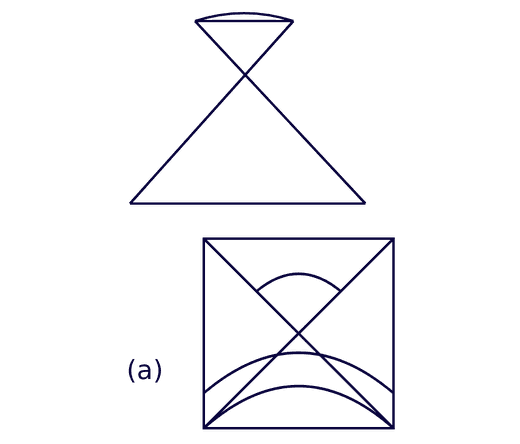
दी गई विकल्प आकृतियों में से उस आकृति का चयन कीजिए जिसमें प्रश्न आकृति छिपी/निहित है। (घुमाने की अनुमति नहीं है) - A
- B
- C
- D
Show answer
Concept: Find the option holding the same lines at the same tilt (no rotation).
- Question figure: a small arc on top, two lines crossing like an X, and a horizontal base.
- In option (C) the two diagonals form the X, the upper arc closes the top and a horizontal edge closes the base, in the same proportions.
Trick: Lock on the most unusual part (the arc) first, then check the X and base around it.
Answer: (C)
अवधारणा: ऐसा विकल्प खोजें जिसमें वही रेखाएँ उसी झुकाव में हों (घुमाना मना)।
- प्रश्न आकृति: ऊपर छोटा चाप, बीच में X जैसी कटती रेखाएँ, नीचे क्षैतिज आधार।
- विकल्प (C) में विकर्ण X बनाते हैं, ऊपर चाप और नीचे क्षैतिज रेखा उसी अनुपात में मिलती हैं।
ट्रिक: पहले सबसे अलग हिस्सा (चाप) ढूँढें, फिर उसके आसपास बाकी रेखाएँ जाँचें।
उत्तर: (C)
Q2939.From the given option figures, select the one in which the question figure is hidden/embedded. (Rotation is not allowed)
दी गई विकल्प आकृतियों में से उस आकृति का चयन कीजिए जिसमें प्रश्न आकृति छिपी/निहित है। (घुमाने की अनुमति नहीं है) - A

- B

- C

- D

Show answer
Concept: Match the exact slant of each line; rotation is not allowed.
- Question figure: two parallel lines rising to the right, cut by one line falling to the right.
- Option (C) has two parallel rising chords crossed by one falling chord in the same way.
- Other options lack the parallel pair or have different slants.
Trick: Count parallel lines first – it quickly removes wrong options.
Answer: (C)
अवधारणा: हर रेखा का झुकाव वैसा ही होना चाहिए; घुमाना मना है।
- प्रश्न आकृति: दाईं ओर ऊपर जाती दो समांतर रेखाएँ और उन्हें काटती एक नीचे जाती रेखा।
- विकल्प (C) में यही बनावट मौजूद है।
- बाकी विकल्पों में समांतर जोड़ी या झुकाव अलग है।
ट्रिक: पहले समांतर रेखाएँ गिनें – गलत विकल्प जल्दी हटते हैं।
उत्तर: (C)
Q2940.How many triangles are there in the given figure ?
दी गई आकृति में कितने त्रिभुज हैं? - A14
- B15
- C16
- D17
Show answer
Concept: Count in groups: inside the square, then the outside part.
- Smallest pieces around the centre: 6 (top and right quarters are split in two).
- Joined quarters (top, right): 2.
- Half-squares cut by each diagonal: 4.
- Outside wedge on the right: 3 (two small + one large).
Trick: Total = 6 + 2 + 4 + 3 = 15. A square with both diagonals alone always gives 8.
Answer: (B) 15
अवधारणा: समूह बनाकर गिनें: वर्ग के अंदर, फिर बाहर वाला भाग।
- केंद्र के चारों ओर सबसे छोटे त्रिभुज: 6।
- ऊपर और दाएँ वाले जोड़कर बने: 2।
- विकर्णों से बने आधे वर्ग: 4।
- दाईं ओर बाहर का हिस्सा: 3 (दो छोटे + एक बड़ा)।
ट्रिक: कुल = 6 + 2 + 4 + 3 = 15। दोनों विकर्ण वाला वर्ग अकेले 8 त्रिभुज देता है।
उत्तर: (B) 15

