Directions (Qs. 20-24): Read the following passage carefully and answer the questions that follow.
Electronic waste recycling is a critical but frequently neglected issue in the modern digital age. Households, offices, and factories discard huge numbers of devices every year, including old
smartphones, laptops, cables, and other gadgets that might be toxic. If not collected and processed correctly, this debris can cause severe damage to public health and the ecosystem.
Effective e-waste recycling involves dismantling, sorting, and responsibly recovering valuable materials from the scrap. Numerous recycling centers adhere to rigorous standards to guarantee that toxic components are not dumped with ordinary trash. Shredding, magnetic separation, and acid baths are some standard techniques utilized to recover metals like gold and copper.
Nevertheless, inadequate infrastructure and limited knowledge often result in dangerous dumping habits in many regions. Specialists argue that educating consumers, stringent application of laws, and corporate responsibility are vital to upgrading e-waste recycling and shielding populations from lingering danger.
Q3021.Identify the part of speech of the word "correctly" in the sentence:
"If not collected and processed correctly, this debris can cause severe damage to public health and the ecosystem."
- AAdjective
- BAdverb
- CPreposition
- DPronoun
Show answer
Concept: A word that tells 'how' an action is done is an adverb.
- 'correctly' describes the manner of 'collected and processed' (verbs).
- Adjective 'correct' + -ly → adverb of manner.
- It does not describe a noun, link nouns or replace a noun.
Trick: Ask 'How?' – if the word answers it for a verb, it is an adverb.
Answer: (B) Adverb
अवधारणा: जो शब्द बताए कि क्रिया 'कैसे' हुई, वह adverb (क्रिया-विशेषण) है।
हल:
- 'correctly' बताता है कि collect और process (verbs) कैसे करना है।
- adjective 'correct' + -ly = adverb of manner।
ट्रिक: क्रिया से 'कैसे?' पूछिए – उत्तर में आया शब्द adverb होगा।
उत्तर: (B) Adverb
Directions (Qs. 20-24): Read the following passage carefully and answer the questions that follow.
Electronic waste recycling is a critical but frequently neglected issue in the modern digital age. Households, offices, and factories discard huge numbers of devices every year, including old
smartphones, laptops, cables, and other gadgets that might be toxic. If not collected and processed correctly, this debris can cause severe damage to public health and the ecosystem.
Effective e-waste recycling involves dismantling, sorting, and responsibly recovering valuable materials from the scrap. Numerous recycling centers adhere to rigorous standards to guarantee that toxic components are not dumped with ordinary trash. Shredding, magnetic separation, and acid baths are some standard techniques utilized to recover metals like gold and copper.
Nevertheless, inadequate infrastructure and limited knowledge often result in dangerous dumping habits in many regions. Specialists argue that educating consumers, stringent application of laws, and corporate responsibility are vital to upgrading e-waste recycling and shielding populations from lingering danger.
Q3022.The word "toxic" means:
- AHealthy and safe
- BCleaned thoroughly
- CPoisonous or harmful
- DNewly manufactured
Show answer
Concept: Meaning of 'toxic' as used in the passage.
- The passage links toxic gadgets with damage to health and the ecosystem.
- Toxic = poisonous, harmful to living things.
- 'Healthy and safe' is the opposite; the other two are unrelated.
Yaad rakhein: Toxin = poison; detox = removing poison.
Answer: (C) Poisonous or harmful
अवधारणा: गद्यांश में 'toxic' का अर्थ।
हल:
- गद्यांश में toxic gadgets को स्वास्थ्य और पर्यावरण के लिए नुकसानदेह बताया है।
- Toxic = ज़हरीला, हानिकारक।
- 'Healthy and safe' उलटा अर्थ है; बाकी दो असंबंधित।
याद रखें: Toxin = विष; detox = शरीर से विष निकालना।
उत्तर: (C) Poisonous or harmful
Directions (Qs. 20-24): Read the following passage carefully and answer the questions that follow.
Electronic waste recycling is a critical but frequently neglected issue in the modern digital age. Households, offices, and factories discard huge numbers of devices every year, including old
smartphones, laptops, cables, and other gadgets that might be toxic. If not collected and processed correctly, this debris can cause severe damage to public health and the ecosystem.
Effective e-waste recycling involves dismantling, sorting, and responsibly recovering valuable materials from the scrap. Numerous recycling centers adhere to rigorous standards to guarantee that toxic components are not dumped with ordinary trash. Shredding, magnetic separation, and acid baths are some standard techniques utilized to recover metals like gold and copper.
Nevertheless, inadequate infrastructure and limited knowledge often result in dangerous dumping habits in many regions. Specialists argue that educating consumers, stringent application of laws, and corporate responsibility are vital to upgrading e-waste recycling and shielding populations from lingering danger.
Q3023.The word "severe" means:
- AMild and gentle
- BSerious and intense
- CEasily fixable
- DBeneficial
Show answer
Concept: Meaning of 'severe' in 'severe damage'.
- Severe = very serious, intense, harsh.
- The passage stresses heavy harm to health and environment.
- 'Mild and gentle' is the antonym; 'easily fixable' and 'beneficial' contradict the context.
Yaad rakhein: Common pairs: severe pain, severe weather, severe punishment – all mean 'very serious'.
Answer: (B) Serious and intense
अवधारणा: 'severe damage' में 'severe' का अर्थ।
हल:
- Severe = गंभीर, तीव्र, कठोर।
- गद्यांश स्वास्थ्य और पर्यावरण को भारी नुकसान की बात करता है।
- 'Mild and gentle' विलोम है; बाकी दो संदर्भ के विरुद्ध।
याद रखें: severe pain, severe weather – हमेशा 'बहुत गंभीर' का भाव।
उत्तर: (B) Serious and intense
Directions (Qs. 20-24): Read the following passage carefully and answer the questions that follow.
Electronic waste recycling is a critical but frequently neglected issue in the modern digital age. Households, offices, and factories discard huge numbers of devices every year, including old
smartphones, laptops, cables, and other gadgets that might be toxic. If not collected and processed correctly, this debris can cause severe damage to public health and the ecosystem.
Effective e-waste recycling involves dismantling, sorting, and responsibly recovering valuable materials from the scrap. Numerous recycling centers adhere to rigorous standards to guarantee that toxic components are not dumped with ordinary trash. Shredding, magnetic separation, and acid baths are some standard techniques utilized to recover metals like gold and copper.
Nevertheless, inadequate infrastructure and limited knowledge often result in dangerous dumping habits in many regions. Specialists argue that educating consumers, stringent application of laws, and corporate responsibility are vital to upgrading e-waste recycling and shielding populations from lingering danger.
Q3024.What is the main idea of the passage?
- AElectronic devices should never be used
- BE-waste recycling is essential to protect health and environment
- CHouseholds can throw old phones in the regular trash
- DAcid baths are the only way to clean metals
Show answer
Concept: A central theme should fit every paragraph, not a single point.
- Para 1: discarded devices harm health and environment.
- Para 2: proper recycling methods; Para 3: need for awareness, laws and responsibility.
- Common thread → recycling e-waste is essential for health and environment.
Trick: Reject extremes ('never', 'only') and statements the passage contradicts (throwing phones in trash).
Answer: (B) E-waste recycling is essential to protect health and environment
अवधारणा: मुख्य विचार पूरे गद्यांश को समेटता है, किसी एक बिंदु को नहीं।
हल:
- पहला अनुच्छेद: फेंके गए उपकरण स्वास्थ्य/पर्यावरण को नुकसान पहुँचाते हैं।
- दूसरा: सही रीसाइक्लिंग के तरीके; तीसरा: जागरूकता, कानून और ज़िम्मेदारी की ज़रूरत।
- सार: e-waste रीसाइक्लिंग स्वास्थ्य और पर्यावरण के लिए ज़रूरी है।
ट्रिक: 'never', 'only' जैसे अतिवादी शब्दों वाले विकल्प प्रायः गलत होते हैं।
उत्तर: (B) E-waste recycling is essential to protect health and environment
Q3025.What term describes a detailed analysis and assessment of something, especially a literary, philosophical, or political theory ?
- ASummary
- BAbstract
- CCritique
- DExcerpt
Show answer
Concept: Word for a detailed analysis plus judgement of a work or theory.
- Critique = a careful evaluation of a literary, philosophical or political work.
- Summary = brief restatement; Abstract = short overview of a paper; Excerpt = a quoted extract.
Trick: 'Assessment' in the definition = judging → critique (from 'critic').
Answer: (C) Critique
अवधारणा: किसी कृति या सिद्धांत के विस्तृत विश्लेषण और मूल्यांकन के लिए शब्द।
हल:
- Critique = समीक्षा, आलोचनात्मक मूल्यांकन।
- Summary = सारांश; Abstract = शोध-पत्र का संक्षिप्त परिचय; Excerpt = अंश/उद्धरण।
ट्रिक: परिभाषा में 'assessment' (मूल्यांकन) देखते ही critic → critique।
उत्तर: (C) Critique
Q3026.The ratio of the present ages of Anuj and Brijesh is 6 : 7. Six years from now, the ratio of their ages will be . What is the present age of Brijesh ?
अनुज और बृजेश की वर्तमान आयु का अनुपात 6 : 7 है। अब से छह वर्ष बाद उनकी आयु का अनुपात हो जाएगा। बृजेश की वर्तमान आयु कितनी है?
- A40 years40 वर्ष
- B42 years42 वर्ष
- C45 years45 वर्ष
- D48 years48 वर्ष
Show answer
Concept: Ages in ratio: take a common multiplier x; both ages grow by the same years.
- Now: Anuj = 6x, Brijesh = 7x.
- After 6 years: Anuj : Brijesh = .
- Cross-multiply: , so .
- Brijesh = 42 years.
Trick: Ratio 6:7 → 7:8 is a jump of 1 in each term, which took 6 years, so 1 part = 6 → Brijesh = . Or test options: only 42 is a multiple of 7 giving 36:42 → 42:48 = 7:8.
Answer: (B) 42 years
अवधारणा: अनुपात में आयु: एक common गुणक x लें; दोनों की आयु बराबर वर्ष बढ़ती है।
हल:
- अभी: अनुज = 6x, बृजेश = 7x।
- 6 वर्ष बाद: ।
- तिर्यक गुणा: , अतः ।
- बृजेश = 42 वर्ष।
ट्रिक: 6:7 से 7:8 – हर पद में 1 भाग बढ़ा और इसमें 6 वर्ष लगे, यानी 1 भाग = 6 → बृजेश = ।
उत्तर: (B) 42 वर्ष
Q3027.Your colleague is planning to quit their job impulsively due to temporary frustration. What is the most effective way to guide them without harming your relationship?
आपका सहकर्मी अस्थायी निराशा के कारण आवेश में आकर नौकरी छोड़ने की योजना बना रहा है। अपने संबंध को हानि पहुँचाए बिना उसका मार्गदर्शन करने का सर्वाधिक प्रभावी तरीका क्या है?
- ASupport the decision immediately without discussionबिना किसी चर्चा के तुरंत उसके निर्णय का समर्थन करना
- BCalmly listen to their reasons and suggest thinking it through before decidingशांतिपूर्वक उसके कारण सुनना और निर्णय लेने से पहले उस पर भली-भाँति विचार करने का सुझाव देना
- CWarn them strongly about future failureउसे भविष्य की असफलता के विषय में कठोरता से चेतावनी देना
- DDiscuss their situation negatively with other colleaguesअन्य सहकर्मियों के साथ उसकी स्थिति की नकारात्मक चर्चा करना
Show answer
Concept: Best response = empathy + help the person decide calmly, keeping trust intact.
- The frustration is temporary, so the danger is a hasty decision.
- Listening calmly shows respect; suggesting they reflect keeps the decision theirs.
- (A) encourages a rash step, (C) sounds threatening, (D) is gossip and breaks trust.
Trick: In such questions pick the option that is calm, respectful and solution-oriented; drop extreme or negative ones.
Answer: (B) Calmly listen to their reasons and suggest thinking it through before deciding
अवधारणा: सही प्रतिक्रिया = सहानुभूति + शांत निर्णय में मदद, भरोसा बना रहे।
हल:
- गुस्सा अस्थायी है, खतरा जल्दबाज़ी के फैसले का है।
- शांति से सुनना सम्मान दिखाता है; सोचने की सलाह से फैसला उन्हीं का रहता है।
- (A) जल्दबाज़ी बढ़ाता है, (C) धमकी जैसा है, (D) पीठ पीछे बात – भरोसा टूटता है।
ट्रिक: ऐसे प्रश्नों में शांत, सम्मानजनक और समाधान वाला विकल्प चुनें; अतिवादी/नकारात्मक विकल्प हटाएँ।
उत्तर: (B) शांतिपूर्वक उसके कारण सुनना और निर्णय लेने से पहले उस पर भली-भाँति विचार करने का सुझाव देना
Q3028.In this type of questions, question is provided with substitutes for various mathematical symbols, followed by a question involving calculation of an expression or choosing the correct/ incorrect equation. You have to put the real signs in the given equation and then solve the questions as required. If '~' stands for '+', '@' stands for '÷', '&' stands for ' - ', ' ' stands for ' , then find the value of: ?
इस प्रकार के प्रश्नों में विभिन्न गणितीय चिह्नों के स्थान पर प्रतीक दिए जाते हैं और उसके बाद कोई व्यंजक हल करने अथवा सही/गलत समीकरण चुनने से संबंधित प्रश्न पूछा जाता है। आपको दिए गए समीकरण में वास्तविक चिह्न रखकर प्रश्न को हल करना होता है। यदि '~' का अर्थ '+' है, '@' का अर्थ '÷' है, '&' का अर्थ ' - ' है, ' ' का अर्थ ' है, तो निम्नलिखित का मान ज्ञात कीजिए: ?
- A-72
- B-71
- C-70
- D-66
Show answer
Concept: Replace the coded symbols, then solve using BODMAS.
- & = −, ∗ = ×.
- 7 & 9 ∗ 8 & 6 → .
- Multiply first: .
- −71.
Trick: Unit digit check: 7 − 2 − 6 ends in …1 (as −71), so only −71 fits.
Answer: (B) -71
अवधारणा: कोड वाले चिह्न बदलकर BODMAS से हल करें।
हल:
- & = −, ∗ = ×।
- ।
- पहले गुणा: ।
- −71।
ट्रिक: पहले × और ÷, फिर + और −; ।
उत्तर: (B) -71
Q3029.There are 24 chairs in a row. Chair is 8th from the beginning and Chair B is 11 th from the end. Find the number of chairs between A and B.
एक पंक्ति में 24 कुर्सियाँ हैं। कुर्सी आरंभ से 8वीं है और कुर्सी B अंत से 11वीं है। A और B के बीच की कुर्सियों की संख्या ज्ञात कीजिए।
- A8
- B5
- C6
- D9
Show answer
Concept: Convert both positions to the same end, then count the gap.
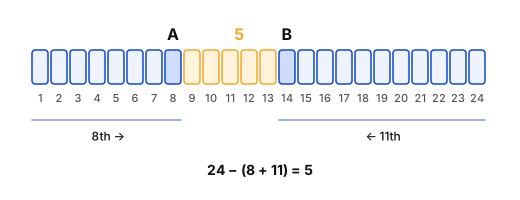
- B from beginning = 24 − 11 + 1 = 14th.
- A is 8th from beginning.
- Chairs between = 14 − 8 − 1 = 5.
Trick: Shortcut: between = total − (left rank + right rank) = 24 − (8 + 11) = 5 (works when positions do not overlap).
Answer: (B) 5
अवधारणा: दोनों स्थानों को एक ही सिरे से गिनें, फिर बीच का अंतर निकालें।
हल:
- B शुरू से = 24 − 11 + 1 = 14वाँ।
- A शुरू से 8वाँ है।
- बीच में कुर्सियाँ = 14 − 8 − 1 = 5।
ट्रिक: सीधा सूत्र: बीच वाले = कुल − (बाएँ से स्थान + दाएँ से स्थान) = 24 − 19 = 5।
उत्तर: (B) 5
Q3030.Few of the letters are given followed by a question mark (?) these letters are following a specific pattern you have to give the correct option which can replace question mark.
Which of the following continues the sequence: X, T, P, L, ?
कुछ अक्षर दिए गए हैं जिनके बाद एक प्रश्नवाचक चिह्न (?) है; ये अक्षर एक निश्चित प्रतिरूप का अनुसरण कर रहे हैं। आपको वह सही विकल्प चुनना है जो प्रश्नवाचक चिह्न के स्थान पर आ सके।
निम्नलिखित में से कौन-सा शृंखला को आगे बढ़ाता है: X, T, P, L, ?
- AF
- BG
- CH
- DI
Show answer
Concept: Use alphabet positions and find the pattern.
- X = 24, T = 20, P = 16, L = 12.
- Each step is −4, so next = 12 − 4 = 8.
- 8th letter = H.
Trick: Remember EJOTY (5, 10, 15, 20, 25) – T = 20 instantly helps place the rest.
Answer: (C) H
अवधारणा: अक्षरों के स्थानीय मान लेकर पैटर्न देखें।
हल:
- X = 24, T = 20, P = 16, L = 12।
- हर बार −4, अगला = 12 − 4 = 8।
- 8वाँ अक्षर = H।
ट्रिक: EJOTY (5, 10, 15, 20, 25) याद रखें – स्थान तुरंत निकलते हैं।
उत्तर: (C) H
Q3031.A mirror is placed on the line . Out of the option figures which figure will be the right image of the question figure?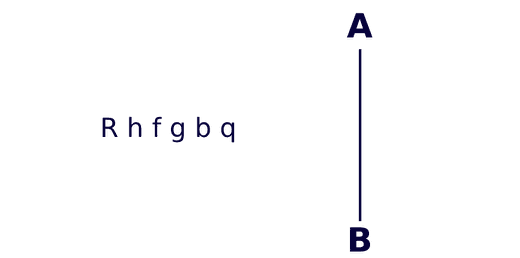
रेखा पर एक दर्पण रखा गया है। विकल्प आकृतियों में से कौन-सी आकृति प्रश्न आकृति का सही प्रतिबिंब होगी? - Ab ɡ ɐ ħ 木 ɟ
- BPd 6 + + Я
- CPd P ㄱ һ Я
- DPd P 7 ત Я
Show answer
Concept: Mirror on a vertical line AB: left and right swap, top and bottom stay.
- The letters 'R h f g b q' get reversed in order: the letter nearest the mirror (q) appears first.
- Each letter also flips sideways: q → p, b → d, R → Я, and h, f, g face the opposite way.
- So the image starts with 'p d' and ends with 'Я' – only option (D) has this with every letter flipped.
Trick: Check just the two ends: first letter should be the flipped last letter (q → p) and last should be flipped R (Я).
Answer: (D) Pd P 7 ત Я
अवधारणा: खड़े दर्पण (AB) में बायाँ-दायाँ बदलता है, ऊपर-नीचे वही रहता है।
हल:
- 'R h f g b q' का क्रम उलट जाता है – दर्पण के पास वाला q सबसे पहले दिखता है।
- हर अक्षर भी पलटता है: q → p, b → d, R → Я, और h, f, g उलटी दिशा में मुड़ते हैं।
- इसलिए प्रतिबिंब 'p d' से शुरू और 'Я' पर खत्म – यह केवल (D) में है।
ट्रिक: बस दोनों सिरे जाँचें: पहला अक्षर p और आखिरी Я होना चाहिए।
उत्तर: (D) Pd P 7 ત Я
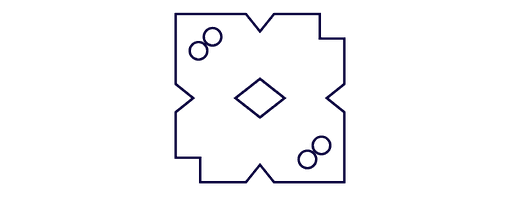
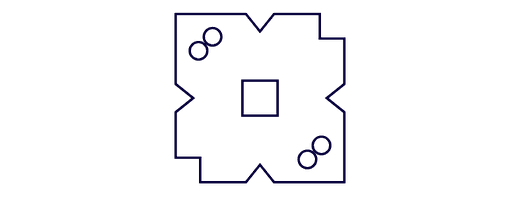
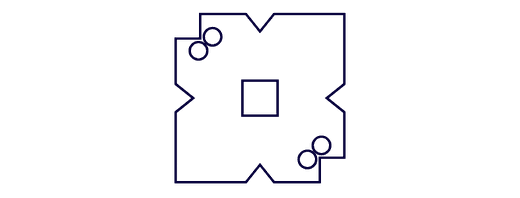
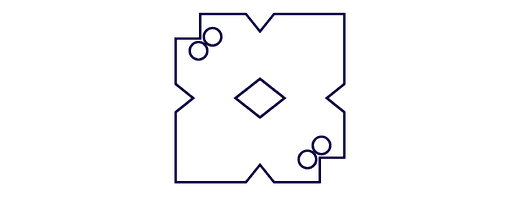
Q3032.A piece of paper is folded and punched as shown below in the question figures. From the given option figures, indicate how it will appear when opened.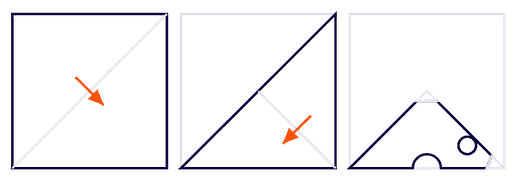
कागज़ के एक टुकड़े को नीचे प्रश्न आकृतियों में दर्शाए अनुसार मोड़ा और छेदा जाता है। दी गई विकल्प आकृतियों में से बताइए कि खोलने पर वह कैसा दिखाई देगा। - A
- B
- C
- D
Show answer
Concept: Unfold step by step: every cut on a fold line is mirrored across that fold.
- The sheet is folded along a diagonal, then folded again, leaving a triangle whose apex is the centre of the square.
- The cut at the apex (where both folds meet) opens into one square hole at the centre.
- Cuts on the slanting fold edges repeat on all four sides, and the circle near the corner side appears as a pair at two opposite corners.
- This matches option (C).
Trick: Count folds: 2 folds → each punch appears up to 4 times; a cut at the meeting point of folds becomes a single central shape.
Answer: (C)
अवधारणा: उलटे क्रम में खोलें: मोड़ (fold) पर किया हर कट उस मोड़ के दोनों ओर दर्पण-सा बनता है।
हल:
- कागज़ पहले विकर्ण पर, फिर दोबारा मोड़ा गया; बचा त्रिभुज जिसका शीर्ष वर्ग का केंद्र है।
- शीर्ष (जहाँ दोनों मोड़ मिलते हैं) का कट खुलकर बीच में एक वर्गाकार छेद बनाता है।
- किनारों के कट चारों भुजाओं पर दिखते हैं और गोल छेद दो आमने-सामने के कोनों पर जोड़ी में।
ट्रिक: 2 मोड़ → हर छेद अधिकतम 4 बार; मोड़ों के मिलन-बिंदु का कट बीच में एक ही आकृति बनाता है।
उत्तर: (C)
Q3033.Find out the missing number in the following sequence.
6, 5, 24, 20, 96, ?, 384, 320
निम्नलिखित शृंखला में लुप्त संख्या ज्ञात कीजिए।
6, 5, 24, 20, 96, ?, 384, 320
- A120
- B80
- C124
- D108
Show answer
Concept: Up-down movement suggests two interleaved series.
- Odd places: 6, 24, 96, 384 → ×4 each time.
- Even places: 5, 20, ?, 320 → also ×4.
- ? = 80; check ✔.
Trick: Check from the end: directly.
Answer: (B) 80
अवधारणा: संख्याएँ ऊपर-नीचे हों तो दो अलग श्रृंखलाएँ मिली होती हैं।
हल:
- विषम स्थान: 6, 24, 96, 384 → हर बार ×4।
- सम स्थान: 5, 20, ?, 320 → यहाँ भी ×4।
- ? = 80; जाँच ✔।
ट्रिक: पीछे से चलें: ।
उत्तर: (B) 80
Q3034.Find out the missing number in the following sequence.
2, 7, 7, 13, 12, ?, 17, 25
निम्नलिखित शृंखला में लुप्त संख्या ज्ञात कीजिए।
2, 7, 7, 13, 12, ?, 17, 25
- A15
- B19
- C17
- D21
Show answer
Concept: Split into odd-place and even-place terms.
- Odd places: 2, 7, 12, 17 → +5.
- Even places: 7, 13, ?, 25 → +6.
- ? = 13 + 6 = 19; 19 + 6 = 25 ✔.
Trick: Gap from 13 to 25 is 12 over two steps → 6 each → 19.
Answer: (B) 19
अवधारणा: विषम और सम स्थानों की संख्याएँ अलग करें।
हल:
- विषम स्थान: 2, 7, 12, 17 → +5।
- सम स्थान: 7, 13, ?, 25 → +6।
- ? = 13 + 6 = 19।
ट्रिक: 13 से 25 तक 12 का अंतर, दो कदम में → हर कदम 6 → 19।
उत्तर: (B) 19
Q3035.Select the related letter from the given alternatives.
DKN : HHR :: OSV : ?
दिए गए विकल्पों में से संबंधित अक्षर-समूह चुनिए।
DKN : HHR :: OSV : ?
- ASOA
- BRQZ
- CTPX
- DSPZ
Show answer
Concept: Compare each letter of the first pair by position change.
- D(4) → H(8): +4; K(11) → H(8): −3; N(14) → R(18): +4.
- Apply to OSV: O(15) + 4 = S, S(19) − 3 = P, V(22) + 4 = Z.
- Answer: SPZ.
Trick: Check only the 2nd letter first: S − 3 = P → options (B)/(C) out; then last letter Z gives SPZ.
Answer: (D) SPZ
अवधारणा: पहले जोड़े के हर अक्षर में स्थान का बदलाव देखें।
हल:
- D(4) → H(8): +4; K(11) → H(8): −3; N(14) → R(18): +4।
- OSV पर लागू: O + 4 = S, S − 3 = P, V + 4 = Z।
- उत्तर: SPZ।
ट्रिक: पहले बीच वाला अक्षर जाँचें: S − 3 = P → केवल SPZ में P और Z दोनों हैं।
उत्तर: (D) SPZ
Q3036.Pick the correct options from below.
28, 124, 344, ? , 1332, 2196
नीचे दिए गए विकल्पों में से सही विकल्प चुनिए।
28, 124, 344, ? , 1332, 2196
- A416
- B711
- C728
- D619
Show answer
Concept: Fast-growing terms near 27, 125, 343… suggest cubes of odd numbers.
- , , .
- Next: 728.
- Check: , ✔.
Trick: Know cubes up to 15: 729, 1331, 2197 make such series instant.
Answer: (C) 728
अवधारणा: तेज़ी से बढ़ती संख्याएँ जो 27, 125, 343 के पास हों → विषम संख्याओं के घन।
हल:
- , , ।
- अगला: 728।
- जाँच: , ✔।
ट्रिक: 15 तक के घन याद रखें: 729, 1331, 2197।
उत्तर: (C) 728
Q3037.A highly skilled employee often interrupts others and dismisses their ideas during meetings. What is the most appropriate managerial response?
एक अत्यंत कुशल कर्मचारी बैठकों में प्रायः दूसरों को बीच में टोकता है और उनके विचारों को अस्वीकार कर देता है। प्रबंधक की सर्वाधिक उपयुक्त प्रतिक्रिया क्या होनी चाहिए?
- AOverlook the behavior because of their strong performanceउनके उत्कृष्ट प्रदर्शन के कारण इस व्यवहार की अनदेखी करना
- BPublicly criticize them during a meetingबैठक के दौरान सार्वजनिक रूप से उनकी आलोचना करना
- CAddress the behavior privately, set clear expectations, and monitor improvementव्यक्तिगत रूप से इस व्यवहार पर बात करना, स्पष्ट अपेक्षाएँ निर्धारित करना और सुधार की निगरानी करना
- DRemove them from important projects immediatelyउन्हें तुरंत महत्त्वपूर्ण परियोजनाओं से हटा देना
Show answer
Concept: Correct the behaviour, keep the talent, protect dignity.
- A private talk avoids humiliation; clear expectations say exactly what must change.
- Monitoring ensures the improvement lasts.
- Ignoring (A) rewards rudeness, public criticism (B) embarrasses, sudden removal (D) punishes without warning.
Trick: Management answers usually follow 'private feedback → clear goals → follow-up'.
Answer: (C) Address the behavior privately, set clear expectations, and monitor improvement
अवधारणा: व्यवहार सुधारें, प्रतिभा बचाएँ, सम्मान बनाए रखें।
हल:
- अकेले में बात करने से अपमान नहीं होता; स्पष्ट अपेक्षाएँ बताती हैं क्या बदलना है।
- निगरानी से सुधार टिकता है।
- (A) अनदेखी से बदतमीज़ी बढ़ेगी, (B) सबके सामने आलोचना, (D) बिना चेतावनी सज़ा।
ट्रिक: प्रबंधन प्रश्नों में क्रम: अकेले में फीडबैक → स्पष्ट लक्ष्य → फॉलो-अप।
उत्तर: (C) व्यक्तिगत रूप से इस व्यवहार पर बात करना, स्पष्ट अपेक्षाएँ निर्धारित करना और सुधार की निगरानी करना
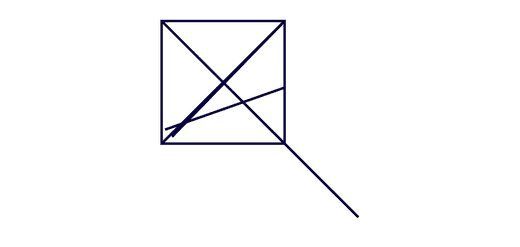
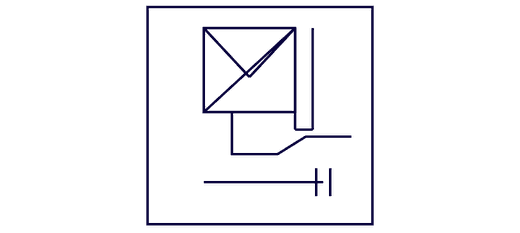
Q3038.From the given option figures, select the one in which the question figure is hidden/embedded. (Rotation is not allowed)
दी गई विकल्प आकृतियों में से उस आकृति का चयन कीजिए जिसमें प्रश्न आकृति छिपी/निहित है। (घुमाना मान्य नहीं है) - A
- B
- C
- D
Show answer
Concept: Find the exact question figure (same size, same direction) inside an option.
- Note the key parts: a short top line, a longer bottom line, two crossing slants (bow-tie) and one slant from the top-right end to the middle of the bottom line.
- Rotation is not allowed, so this orientation must appear unchanged.
- Only option (C) contains all these lines in the same position.
Trick: Track the most unusual line (here the extra slant from the top-right) – it eliminates options fastest.
Answer: (C)
अवधारणा: प्रश्न-आकृति को उसी आकार और दिशा में किसी विकल्प के अंदर ढूँढें।
हल:
- मुख्य भाग: ऊपर छोटी रेखा, नीचे लंबी रेखा, दो कटती तिरछी रेखाएँ और ऊपर-दाएँ सिरे से नीचे की रेखा के मध्य तक एक तिरछी रेखा।
- घुमाना मना है, इसलिए दिशा वही रहनी चाहिए।
- ये सभी रेखाएँ उसी स्थिति में केवल (C) में हैं।
ट्रिक: सबसे अनोखी रेखा पकड़ें – उससे विकल्प जल्दी हटते हैं।
उत्तर: (C)
Q3039.From the given option figures, select the one in which the question figure is hidden/embedded. (Rotation is not allowed)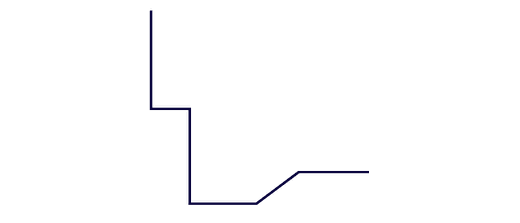
दी गई विकल्प आकृतियों में से उस आकृति का चयन कीजिए जिसमें प्रश्न आकृति छिपी/निहित है। (घुमाना मान्य नहीं है) - A

- B
- C

- D

Show answer
Concept: Trace the question figure's chain of strokes inside each option without rotating.
- The figure is an open zig-zag: tall vertical, short step, shorter vertical, horizontal, short upward slant, final horizontal.
- The short slant flanked by two horizontals is the rarest part – look for it first.
- Only option (B) holds the whole chain in the same direction.
Trick: Search for the rare stroke (the slant) first, then confirm the rest around it.
Answer: (B)
अवधारणा: बिना घुमाए प्रश्न-आकृति की रेखाओं की श्रृंखला विकल्पों में ढूँढें।
हल:
- आकृति: ऊँची खड़ी रेखा, छोटा कदम, छोटी खड़ी रेखा, क्षैतिज रेखा, छोटी तिरछी रेखा, फिर क्षैतिज रेखा।
- दो क्षैतिज रेखाओं के बीच छोटी तिरछी रेखा सबसे अलग हिस्सा है।
- पूरी श्रृंखला उसी दिशा में केवल (B) में है।
ट्रिक: पहले दुर्लभ हिस्सा (तिरछी रेखा) ढूँढें, फिर बाकी मिलाएँ।
उत्तर: (B)
Q3040.In the following question, select the number which can be placed at the sign of question mark (?) from the given alternatives.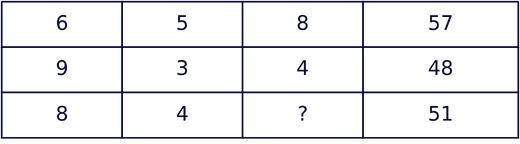
निम्नलिखित प्रश्न में, दिए गए विकल्पों में से वह संख्या चुनिए जिसे प्रश्नवाचक चिह्न (?) के स्थान पर रखा जा सकता है। - A4
- B6
- C5
- D3
Show answer
Concept: Relate the first three numbers of a row to the last one.
- Row 1: ✔.
- Row 2: ✔.
- Row 3: 5.
Trick: 57, 48, 51 are all multiples of 3 – a strong hint that the rule is 'sum × 3'.
Answer: (C) 5
अवधारणा: पंक्ति की पहली तीन संख्याओं का संबंध अंतिम संख्या से खोजें।
हल:
- पंक्ति 1: ✔।
- पंक्ति 2: ✔।
- पंक्ति 3: 5।
ट्रिक: 57, 48, 51 – सब 3 के गुणज हैं, यानी नियम 'योग × 3'।
उत्तर: (C) 5

