Question bank

Q&A: practice questions with answers

Search questions on any topic. Filter by exam category, exam, subject and topic, try the question, then open the answer and explanation.

Courses – airGurukul

5,000 questions found.

Q3041.
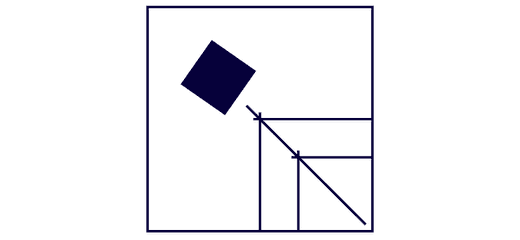
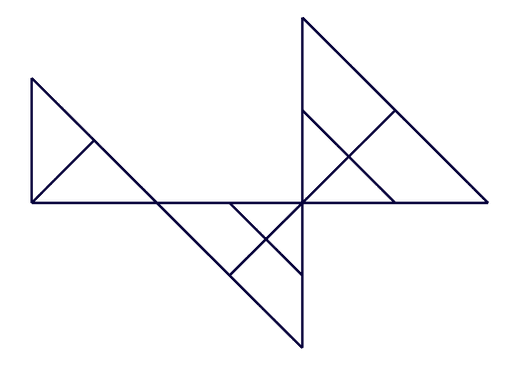
How many triangles are there in the given figure?
figure
दी गई आकृति में कितने त्रिभुज हैं?
figure
  1. A15
  2. B14
  3. C17
  4. D16
Show answer

Concept: Break the figure into its three right triangles and count each part.

  1. Left triangle with one line from the right angle to the hypotenuse: 2 small + 1 whole = 3.
  2. Top-right triangle with two inner lines crossing: whole 1 + two halves 2 + one cut-off triangle 1 + two tiny ones 2 = 6.
  3. Bottom triangle has the same two crossing lines → 6.
  4. Total = 3 + 6 + 6 = 15.

Trick: When two parts are drawn alike, count one and double it – saves time and errors.

Answer: (A) 15

अवधारणा: आकृति को तीन समकोण त्रिभुजों में बाँटकर अलग-अलग गिनें।

हल:

  1. बायाँ त्रिभुज (एक रेखा के साथ): 2 छोटे + 1 पूरा = 3।
  2. ऊपर-दायाँ त्रिभुज (दो कटती रेखाएँ): पूरा 1 + दो आधे 2 + एक कटा हुआ 1 + दो बहुत छोटे 2 = 6।
  3. नीचे वाला त्रिभुज भी वैसा ही → 6।
  4. कुल = 3 + 6 + 6 = 15।

ट्रिक: एक जैसे दो हिस्से हों तो एक गिनकर दोगुना करें।

उत्तर: (A) 15
SSC CHSLGeneral IntelligenceCounting trianglesSSC CHSL 2025 · 19 Nov Shift 3 →
Q3042.
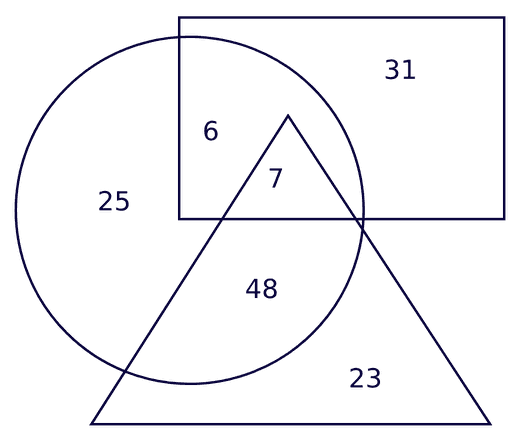
In the figure given below the triangle represents keys, the circle represents baskets and the rectangle represents drawer. The number in each area represents the number of the items in that area.
figure
How many baskets are keys?
नीचे दी गई आकृति में त्रिभुज चाबियों को, वृत्त टोकरियों को तथा आयत दराज़ को निरूपित करता है। प्रत्येक क्षेत्र में लिखी संख्या उस क्षेत्र की वस्तुओं की संख्या दर्शाती है।
figure
कितनी टोकरियाँ चाबियाँ हैं?
  1. A9
  2. B50
  3. C55
  4. D25
Show answer

Concept: 'Baskets that are keys' = region common to circle and triangle (rectangle may or may not include).

  1. Circle ∩ triangle inside the rectangle = 7.
  2. Circle ∩ triangle outside the rectangle = 48.
  3. Total = 7 + 48 = 55.

Trick: Unless the question says 'only' or 'not drawer', include every piece of the overlap.

Answer: (C) 55

अवधारणा: 'Baskets जो keys हैं' = वृत्त और त्रिभुज का साझा भाग (आयत में हो या न हो)।

हल:

  1. वृत्त ∩ त्रिभुज, आयत के अंदर = 7।
  2. वृत्त ∩ त्रिभुज, आयत के बाहर = 48।
  3. कुल = 7 + 48 = 55।

ट्रिक: जब तक 'only' न लिखा हो, साझा क्षेत्र के सभी टुकड़े जोड़ें।

उत्तर: (C) 55

SSC CHSLGeneral IntelligenceVenn diagram – reading regionsSSC CHSL 2025 · 19 Nov Shift 3 →
Q3043.
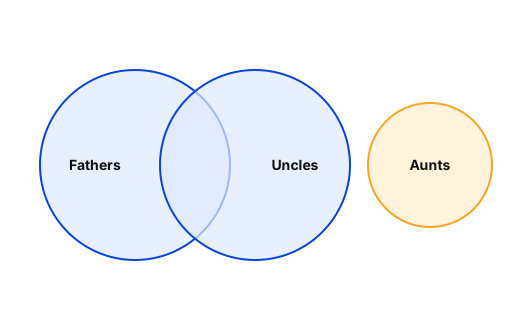
Identify the diagram that best represents the relationship among the given classes.
Fathers, Uncles, Aunts
उस आरेख की पहचान कीजिए जो दिए गए वर्गों के बीच के संबंध को सर्वोत्तम रूप से निरूपित करता है।
पिता, चाचा, चाची
  1. Afigure
  2. Bfigure
  3. Cfigure
  4. Dfigure
Show answer

Concept: Decide which classes overlap and which are separate.

  1. A man can be a father and also an uncle → Fathers and Uncles partly overlap.
  2. Aunts are women → no common member with fathers or uncles → separate circle.
  3. Diagram: two intersecting circles + one separate circle = option (C).

Trick: First check gender: male and female relations can never overlap.

Answer: (C)

अवधारणा: तय करें कौन-से वर्ग आपस में मिलते हैं और कौन अलग हैं।

हल:

  1. एक पुरुष पिता भी हो सकता है और चाचा/मामा भी → Fathers और Uncles आंशिक रूप से मिलते हैं।
  2. Aunts महिलाएँ हैं → पिता/चाचा से कोई साझा सदस्य नहीं → अलग वृत्त।
  3. आरेख: दो कटते वृत्त + एक अलग वृत्त = (C)।

ट्रिक: पहले लिंग देखें – पुरुष और महिला संबंध कभी overlap नहीं करते।

उत्तर: (C)

SSC CHSLGeneral IntelligenceVenn diagram – classesSSC CHSL 2025 · 19 Nov Shift 3 →
Q3044.
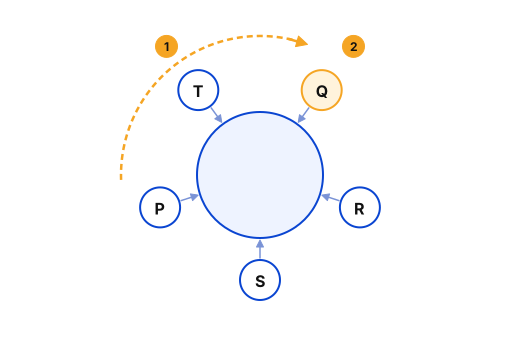
5 persons P, Q, R, S and T are sitting around a circular table facing towards the centre (not necessarily in the same order). Q is sitting second to the right of S. P is sitting second to the right of Q . R is not an immediate neighbour of P. Who is second to the left of P ?
5 व्यक्ति P, Q, R, S और T एक वृत्ताकार मेज़ के चारों ओर केंद्र की ओर मुख करके बैठे हैं (आवश्यक नहीं कि इसी क्रम में)। Q, S के दाईं ओर दूसरे स्थान पर बैठा है। P, Q के दाईं ओर दूसरे स्थान पर बैठा है। R, P का निकटतम पड़ोसी नहीं है। P के बाईं ओर दूसरे स्थान पर कौन है?
  1. AT
  2. BQ
  3. CR
  4. DS
Show answer

Concept: Facing the centre: right = anticlockwise, left = clockwise.

  1. Fix S; two seats anticlockwise (to S's right) = Q; two more = P.
  2. Remaining seats: one next to P and one not. R cannot be beside P → R takes the other seat, T sits next to P.
  3. Order clockwise from P: T, Q … so second to the left of P = Q.

Trick: In a 5-seat circle, 'second to the right' twice brings you back next to the start – so P sits beside S.

Answer: (B) Q

अवधारणा: केंद्र की ओर मुख: दायाँ = वामावर्त (anticlockwise), बायाँ = दक्षिणावर्त (clockwise)।

हल:

  1. S को रखें; उसके दाएँ दूसरा = Q; Q के दाएँ दूसरा = P।
  2. बची सीटें: एक P के बगल में, एक नहीं। R, P का पड़ोसी नहीं → T, P के बगल में बैठेगा।
  3. P से clockwise दो कदम = Q।

ट्रिक: 5 सीटों में 'दाएँ दूसरा' दो बार करने पर P, S के ठीक बगल में आता है।

उत्तर: (B) Q

SSC CHSLGeneral IntelligenceCircular seating – facing centreSSC CHSL 2025 · 19 Nov Shift 3 →
Q3045.
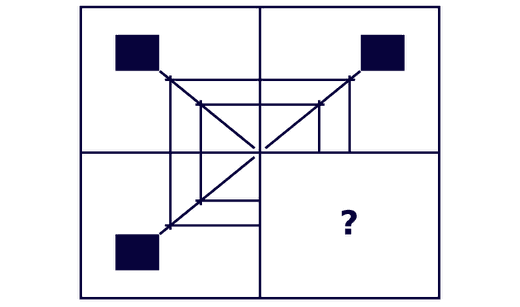
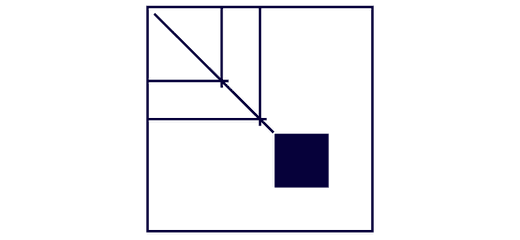
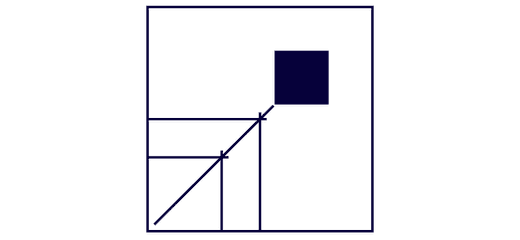
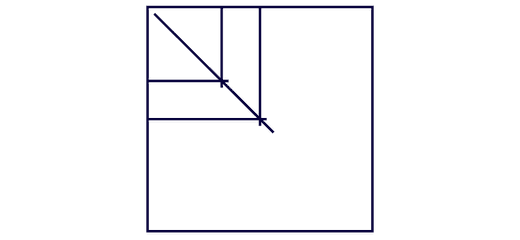
Which option figure will complete the pattern in the question figure? (Rotation is not allowed)
figure
कौन-सी विकल्प आकृति प्रश्न आकृति के पैटर्न को पूरा करेगी? (घुमाने की अनुमति नहीं है)
figure
  1. Afigure
  2. Bfigure
  3. Cfigure
  4. Dfigure
Show answer

Concept: The four quarters show the same design turned by 90° each time.

  1. Each quarter has a black square near its outer corner, a slant from it to the centre and two step-lines touching that slant.
  2. The step-lines always start on the two inner dividing lines of the quarter.
  3. The missing bottom-right quarter must have its slant from the centre down to a black square near the outer corner – option (A).

Trick: In 4-part rotating patterns, compare the missing quarter with the diagonally opposite one – it is usually its 180° turn.

Answer: (A)

अवधारणा: चारों भाग एक ही डिज़ाइन हैं, हर बार 90° घूमे हुए।

हल:

  1. हर भाग में बाहरी कोने के पास काला वर्ग, उससे केंद्र तक तिरछी रेखा और उस रेखा को छूती दो सीढ़ीनुमा रेखाएँ हैं।
  2. सीढ़ी रेखाएँ हमेशा भीतरी विभाजक रेखाओं से शुरू होती हैं।
  3. नीचे-दाएँ खाली भाग में केंद्र से बाहरी कोने के काले वर्ग तक तिरछी रेखा चाहिए – विकल्प (A)।

ट्रिक: खाली भाग की तुलना सामने वाले विकर्ण भाग से करें – वह प्रायः उसका 180° घुमाव होता है।

उत्तर: (A)

SSC CHSLGeneral IntelligencePattern completionSSC CHSL 2025 · 19 Nov Shift 3 →
Q3046.
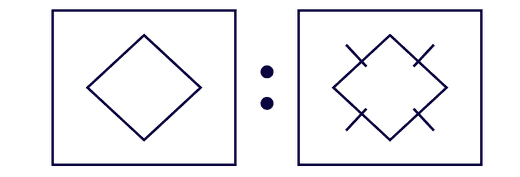
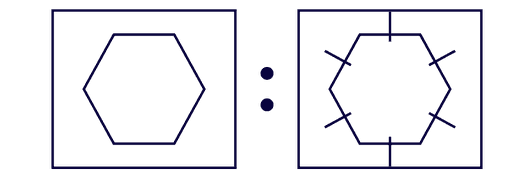
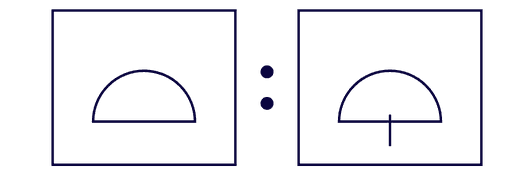
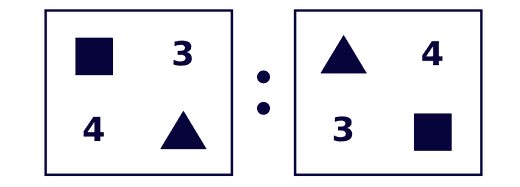
In the following question, in each option a pair of figures is given. In each pair the figure towards the left of (:) is related by some logic/rule/relation with the figure on the right of (:). Select the odd figure pair from the given alternatives.
निम्नलिखित प्रश्न में, प्रत्येक विकल्प में आकृतियों का एक युग्म दिया गया है। प्रत्येक युग्म में (:) के बाईं ओर की आकृति, (:) के दाईं ओर की आकृति से किसी तर्क/नियम/संबंध द्वारा संबंधित है। दिए गए विकल्पों में से भिन्न आकृति युग्म का चयन कीजिए।
  1. Afigure
  2. Bfigure
  3. Cfigure
  4. Dfigure
Show answer

Concept: Find the rule linking the two figures in most pairs.

  1. Rule: on the second figure, a short outward mark is added at the middle of every straight edge.
  2. Rhombus → 4 marks, hexagon → 6, D-shape (1 straight edge) → 1 – all follow it.
  3. In (D) the V-shape has 2 straight edges but gets only one mark, and it points inward – odd pair.

Trick: Count straight edges vs marks in each pair – the mismatch shows the odd one.

Answer: (D)

अवधारणा: अधिकांश युग्मों में दोनों आकृतियों का नियम खोजें।

हल:

  1. नियम: दूसरी आकृति में हर सीधी भुजा के मध्य पर बाहर की ओर छोटी रेखा जुड़ती है।
  2. समचतुर्भुज → 4, षट्भुज → 6, D-आकार (1 सीधी भुजा) → 1 – सब नियम मानते हैं।
  3. (D) में V-आकार की 2 सीधी भुजाएँ हैं पर निशान केवल 1 और वह भी अंदर की ओर – यही विषम।

ट्रिक: हर युग्म में सीधी भुजाएँ और निशान गिनें – जहाँ मेल न हो वही उत्तर।

उत्तर: (D)

SSC CHSLGeneral IntelligenceOdd figure pairSSC CHSL 2025 · 19 Nov Shift 3 →
Q3047.
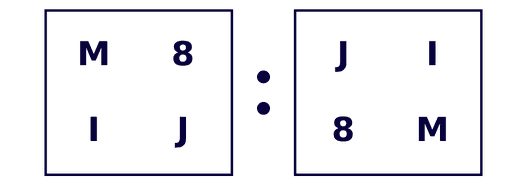
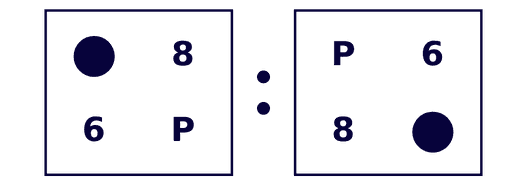
In the following question, in each option a pair of figures is given. In each pair the figure towards the left of (:) is related by some logic/rule/relation with the figure on the right of (:). Select the odd figure pair from the given alternatives.
निम्नलिखित प्रश्न में, प्रत्येक विकल्प में आकृतियों का एक युग्म दिया गया है। प्रत्येक युग्म में (:) के बाईं ओर की आकृति, (:) के दाईं ओर की आकृति से किसी तर्क/नियम/संबंध द्वारा संबंधित है। दिए गए विकल्पों में से भिन्न आकृति युग्म का चयन कीजिए।
  1. Afigure
  2. Bfigure
  3. Cfigure
  4. Dfigure
Show answer

Concept: Track where each corner element moves from the first box to the second.

  1. In (B), (C), (D) every element goes to the diagonally opposite corner (top-left ↔ bottom-right, top-right ↔ bottom-left).
  2. In (A) the letter K stays in the top-left corner – it has not moved.
  3. So (A) breaks the rule.

Trick: Follow just one element per pair; the pair where it lands in the 'wrong' corner is odd.

Answer: (A)

अवधारणा: पहले खाने से दूसरे खाने में हर कोने का तत्व कहाँ गया, देखें।

हल:

  1. (B), (C), (D) में हर तत्व विकर्ण के सामने वाले कोने में गया।
  2. (A) में K ऊपर-बाएँ कोने में ही रह गया – वह हिला ही नहीं।
  3. इसलिए (A) नियम तोड़ता है।

ट्रिक: हर युग्म में सिर्फ एक तत्व का पीछा करें – जिसमें वह गलत कोने पहुँचे वही विषम।

उत्तर: (A)

SSC CHSLGeneral IntelligenceOdd figure pair – diagonal swapSSC CHSL 2025 · 19 Nov Shift 3 →
Q3048.
In the following figure series, select the figure which can be placed at the sign of question mark (?) from the given alternatives.
figure
निम्नलिखित आकृति शृंखला में, दिए गए विकल्पों में से उस आकृति का चयन कीजिए जिसे प्रश्नवाचक चिह्न (?) के स्थान पर रखा जा सकता है।
figure
  1. Afigure
  2. Bfigure
  3. Cfigure
  4. Dfigure
Show answer

Concept: Check both the number of ovals and their shading pattern.

  1. Ovals: 2, 3, 5, 7 → after the 2nd figure +2 each time → next = 9.
  2. Shading alternates dark, light, dark… starting dark, so 9 ovals begin and end dark.
  3. Only (B) has 9 ovals with this alternation; (A) and (C) have 8, (D) breaks the alternation.

Trick: Fix the count first – it removes most options before you check shading.

Answer: (B)

अवधारणा: अंडाकारों की संख्या और छायांकन दोनों जाँचें।

हल:

  1. संख्या: 2, 3, 5, 7 → दूसरी आकृति के बाद हर बार +2 → अगली = 9।
  2. छायांकन गहरा-हल्का बारी-बारी, गहरे से शुरू → 9 हों तो शुरू और अंत दोनों गहरे।
  3. यह केवल (B) में है; (A), (C) में 8 हैं, (D) में क्रम टूटा है।

ट्रिक: पहले संख्या पक्की करें – ज़्यादातर विकल्प वहीं हट जाते हैं।

उत्तर: (B)

SSC CHSLGeneral IntelligenceFigure series – count and shadingSSC CHSL 2025 · 19 Nov Shift 3 →
Q3049.
In a certain coded language 'QSBN' is coded as 'LMWH' and 'EFOZ' is coded as 'ZZJT'. How will 'IBUT' be coded in the same code language?
एक निश्चित कूट भाषा में 'QSBN' को 'LMWH' के रूप में तथा 'EFOZ' को 'ZZJT' के रूप में कूटबद्ध किया जाता है। उसी कूट भाषा में 'IBUT' को किस प्रकार कूटबद्ध किया जाएगा?
  1. ADVPN
  2. BFWOM
  3. CCUQO
  4. DDVQP
Show answer

Concept: Find the shift for each position and apply it.

  1. QSBN → LMWH: 1st and 3rd letters go back 5, 2nd and 4th go back 6 (wrap Z after A).
  2. EFOZ → ZZJT also fits this −5, −6, −5, −6 rule ✔.
  3. Apply to IBUT (9, 2, 21, 20): 9−5 = 4 (D), 2−6 → 22 (V), 21−5 = 16 (P), 20−6 = 14 (N) → DVPN.

Trick: Only first letter needed: I − 5 = D leaves (A) and (D); second-last U − 5 = P vs Q → DVPN.

Answer: (A) DVPN

अवधारणा: हर स्थान का खिसकाव निकालकर लागू करें।

हल:

  1. QSBN → LMWH: पहला व तीसरा अक्षर 5 पीछे, दूसरा व चौथा 6 पीछे (A के बाद Z पर लौटें)।
  2. EFOZ → ZZJT भी इसी −5, −6, −5, −6 नियम से बनता है ✔।
  3. IBUT (9, 2, 21, 20) पर: 9−5 = 4 (D), 2−6 → 22 (V), 21−5 = 16 (P), 20−6 = 14 (N) → DVPN।

ट्रिक: I − 5 = D से (A) और (D) बचते हैं; U − 5 = P (Q नहीं) → DVPN।

उत्तर: (A) DVPN

SSC CHSLGeneral IntelligenceCoding – backward letter shiftsSSC CHSL 2025 · 19 Nov Shift 3 →
Q3050.
From the given alternatives, select the word that CANNOT be formed by using the letters of the given word. EARTHQUAKES
दिए गए विकल्पों में से उस शब्द का चयन कीजिए जिसे दिए गए शब्द के अक्षरों का प्रयोग करके नहीं बनाया जा सकता। EARTHQUAKES
  1. AEARTH
  2. BSEEK
  3. CRATHER
  4. DHEAR
Show answer

Concept: A word can be formed only if every letter is available in the needed number.

  1. EARTHQUAKES: E ×2, A ×2, R ×1, T, H, Q, U, K, S ×1 each.
  2. EARTH, HEAR, SEEK – all letters available.
  3. RATHER needs R twice, but only one R exists → cannot be formed.

Trick: Look first for doubled letters in the options and check them against the given word.

Answer: (C) RATHER

अवधारणा: शब्द तभी बनेगा जब हर अक्षर आवश्यक संख्या में मौजूद हो।

हल:

  1. EARTHQUAKES: E ×2, A ×2, R ×1, बाकी एक-एक।
  2. EARTH, HEAR, SEEK – सभी अक्षर उपलब्ध।
  3. RATHER में R दो बार चाहिए, पर R केवल एक है → नहीं बन सकता।

ट्रिक: विकल्पों में दोहराए गए अक्षर पहले जाँचें।

उत्तर: (C) RATHER

SSC CHSLGeneral IntelligenceWord formation – letter countSSC CHSL 2025 · 19 Nov Shift 3 →
Q3051.
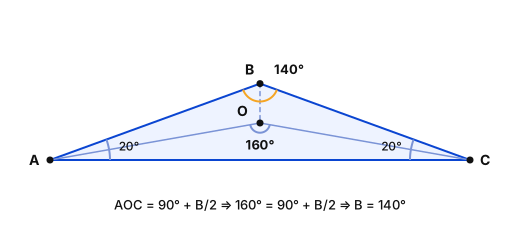
O is the incentre of triangle ABC. If angle AOC=160∘, find angle ABC .
O, त्रिभुज ABC का अंतःकेंद्र है। यदि कोण AOC=160∘ है, तो कोण ABC ज्ञात कीजिए।
  1. A70°
  2. B140°
  3. C130°
  4. D150°
Show answer

Concept: At the incentre O: ∠AOC=90∘+∠B2.

  1. 160∘=90∘+∠B2.
  2. ∠B2=70∘→∠B= 140°.
  3. Check: ∠A+∠C=40∘, so ∠AOC=180∘−20∘=160∘ ✔.

Trick: Quick: ∠B=2×(∠AOC−90∘)=2×70∘=140∘.

Answer: (B) 140°

अवधारणा: अंतःकेंद्र O पर: ∠AOC=90∘+∠B2।

हल:

  1. 160∘=90∘+∠B2।
  2. ∠B2=70∘→∠B= 140°।
  3. जाँच: ∠A+∠C=40∘, तो ∠AOC=180∘−20∘=160∘ ✔।

ट्रिक: सीधा: ∠B=2×(∠AOC−90∘)=140∘।

उत्तर: (B) 140°

SSC CHSLQuantitative AptitudeIncentre – angle at incentreSSC CHSL 2025 · 19 Nov Shift 3 →
Q3052.
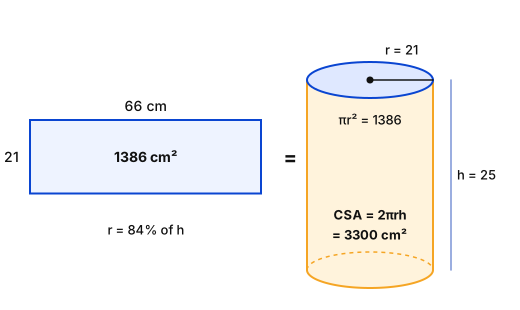
The length and breadth of a rectangle are in the ratio 22 : 7, respectively, and the perimeter of the rectangle is 174 cm . If the area of the rectangle is equal to the area of the top surface of a solid cylinder, then find the curved surface area of the cylinder given that its radius is 84% of its height.
एक आयत की लंबाई और चौड़ाई क्रमशः 22 : 7 के अनुपात में हैं तथा आयत का परिमाप 174 cm है। यदि आयत का क्षेत्रफल एक ठोस बेलन के ऊपरी पृष्ठ के क्षेत्रफल के बराबर है, तो बेलन का वक्र पृष्ठीय क्षेत्रफल ज्ञात कीजिए, जबकि उसकी त्रिज्या उसकी ऊँचाई का 84% है।
  1. A3330cm2
  2. B3560cm2
  3. C3120cm2
  4. D3300cm2
Show answer

Concept: Top of a cylinder is a circle (πr2); CSA=2πrh.

  1. Sides 22k, 7k: 2×29k=174→k=3 → 66 cm × 21 cm, area = 1386 cm².
  2. πr2=1386→r2=1386×722=441→r=21 cm.
  3. r = 84% of h → h=21÷0.84=25 cm.
  4. CSA=2×227×21×25=44×3×25= 3300 cm².

Trick: 1386=π×212 is a standard value worth remembering (also area of circle of radius 21).

Answer: (D) 3300cm2

अवधारणा: बेलन का ऊपरी तल वृत्त है (πr2); वक्र पृष्ठ=2πrh।

हल:

  1. भुजाएँ 22k, 7k: 2×29k=174→k=3 → 66 × 21, क्षेत्रफल = 1386 cm²।
  2. πr2=1386→r2=441→r=21 cm।
  3. r = h का 84% → h=21÷0.84=25 cm।
  4. वक्र पृष्ठ=2×227×21×25= 3300 cm²।

ट्रिक: 21 त्रिज्या वाले वृत्त का क्षेत्रफल 1386 – यह मान याद रखें।

उत्तर: (D) 3300cm2

SSC CHSLQuantitative AptitudeMensuration – rectangle to cylinder CSASSC CHSL 2025 · 19 Nov Shift 3 →
Q3053.
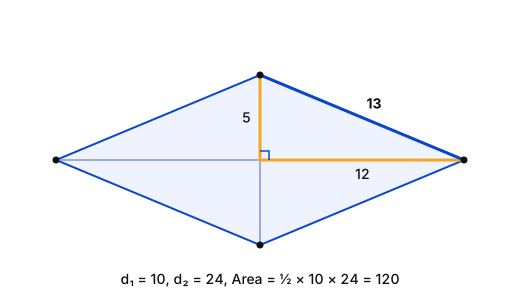
A rhombus has diagonals in the ratio 5 : 12. If the side length is 13 cm, find the exact lengths of the diagonals and hence the area of the rhombus.
एक समचतुर्भुज के विकर्ण 5 : 12 के अनुपात में हैं। यदि उसकी भुजा की लंबाई 13 cm है, तो विकर्णों की सटीक लंबाइयाँ तथा उससे समचतुर्भुज का क्षेत्रफल ज्ञात कीजिए।
  1. A16 cm and 25cm,200cm216 cm और 25cm,200cm2
  2. B10 cm and 24cm,120cm210 cm और 24cm,120cm2
  3. C14 cm and 20cm,140cm214 cm और 20cm,140cm2
  4. D10 cm and 20cm,160cm210 cm और 20cm,160cm2
Show answer

Concept: Diagonals of a rhombus bisect at 90°: side2=(d12)2+(d22)2.

  1. Take d1=10k, d2=24k (ratio 5 : 12), halves 5k and 12k.
  2. (5k)2+(12k)2=132→169k2=169→k=1.
  3. Diagonals = 10 cm and 24 cm; area = 12×10×24= 120 cm².

Trick: 5-12-13 is a Pythagorean triplet: side 13 → half-diagonals 5 and 12 directly.

Answer: (B) 10 cm and 24cm,120cm2

अवधारणा: समचतुर्भुज के विकर्ण एक-दूसरे को समकोण पर समद्विभाजित करते हैं: भुजा2=(d12)2+(d22)2।

हल:

  1. d1=10k, d2=24k लें, आधे 5k और 12k।
  2. (5k)2+(12k)2=132→k=1।
  3. विकर्ण 10 cm और 24 cm; क्षेत्रफल = 12×10×24= 120 cm²।

ट्रिक: 5-12-13 त्रिक: भुजा 13 हो तो आधे विकर्ण 5 और 12 तुरंत।

उत्तर: (B) 10 cm और 24cm,120cm2

SSC CHSLQuantitative AptitudeRhombus – diagonals from sideSSC CHSL 2025 · 19 Nov Shift 3 →
Q3054.
A and B invested Rs. 80,000 and Rs. 1,20,000, respectively. At the end of 8 months, the total profit is Rs. 60,000 . What is B's share in the profit?
A और B ने क्रमशः Rs. 80,000 तथा Rs. 1,20,000 निवेश किए। 8 महीने के अंत में कुल लाभ Rs. 60,000 है। लाभ में B का हिस्सा क्या है?
  1. ARs. 26,000
  2. BRs. 28,000
  3. CRs. 30,000
  4. DRs. 36,000
Show answer

Concept: Same time for both → profit shared in the ratio of capitals.

  1. 80,000 : 1,20,000 = 2 : 3.
  2. B's share = 35×60,000= ₹36,000.

Trick: B has the bigger capital, so B's share must exceed half (₹30,000) – only ₹36,000 qualifies.

Answer: (D) Rs. 36,000

अवधारणा: दोनों का समय बराबर हो तो लाभ पूँजी के अनुपात में बँटता है।

हल:

  1. 80,000 : 1,20,000 = 2 : 3।
  2. B का हिस्सा = 35×60,000= ₹36,000।

ट्रिक: B की पूँजी ज़्यादा है, तो उसका हिस्सा आधे (₹30,000) से अधिक होगा – केवल ₹36,000।

उत्तर: (D) Rs. 36,000

SSC CHSLQuantitative AptitudePartnership – equal timeSSC CHSL 2025 · 19 Nov Shift 3 →
Q3055.
The average score of 40 students is 42 . When a group of 16 new students joins, the average rises to 50 . Find the average score of the new students.
40 विद्यार्थियों का औसत प्राप्तांक 42 है। जब 16 नए विद्यार्थियों का एक समूह जुड़ता है, तो औसत बढ़कर 50 हो जाता है। नए विद्यार्थियों का औसत प्राप्तांक ज्ञात कीजिए।
  1. A70
  2. B66
  3. C68
  4. D74
Show answer

Concept: Total=average×count; difference of totals gives the new group's total.

  1. Old total = 40×42=1680.
  2. New total = 56×50=2800.
  3. New students' total = 1120 → average = 1120÷16= 70.

Trick: Deviation method: each of the 40 old students gains 8 → 320 extra; new average = 50+32016=50+20=70.

Answer: (A) 70

अवधारणा: कुल=औसत×संख्या; कुल का अंतर नए समूह का योग देता है।

हल:

  1. पुराना योग = 40×42=1680।
  2. नया योग = 56×50=2800।
  3. नए छात्रों का योग = 1120 → औसत = 1120÷16= 70।

ट्रिक: विचलन विधि: 40 छात्रों को 8-8 की कमी पूरी करनी → 320; नया औसत = 50+32016=70।

उत्तर: (A) 70

SSC CHSLQuantitative AptitudeAverage – new group joinsSSC CHSL 2025 · 19 Nov Shift 3 →
Q3056.
The average monthly salary of employees in a company is ₹ 60,000 . When 6 new employees with average salary ₹45,000 join, the average salary of the whole company decreases by ₹6,000. Find the original number of employees.
एक कंपनी के कर्मचारियों का औसत मासिक वेतन ₹ 60,000 है। जब ₹45,000 औसत वेतन वाले 6 नए कर्मचारी जुड़ते हैं, तो पूरी कंपनी का औसत वेतन ₹6,000 घट जाता है। कर्मचारियों की मूल संख्या ज्ञात कीजिए।
  1. A10
  2. B16
  3. C15
  4. D9
Show answer

Concept: Compare totals before and after joining.

  1. New average = 60,000−6,000=54,000.
  2. 60,000n+6×45,000=54,000(n+6).
  3. 60,000n+2,70,000=54,000n+3,24,000→6,000n=54,000→n= 9.

Trick: Deviation: each old employee loses 6,000 (n×6,000); each newcomer is 9,000 below the new average (6×9,000=54,000) → n = 9.

Answer: (D) 9

अवधारणा: जुड़ने से पहले और बाद का कुल वेतन बराबर करें।

हल:

  1. नया औसत = 60,000−6,000=54,000।
  2. 60,000n+6×45,000=54,000(n+6)।
  3. 6,000n=54,000→n= 9।

ट्रिक: विचलन: पुराने हर कर्मचारी की 6,000 कमी = नए 6 लोगों की 9,000 कमी × 6 → 6,000n=54,000→n=9।

उत्तर: (D) 9

SSC CHSLQuantitative AptitudeAverage – original countSSC CHSL 2025 · 19 Nov Shift 3 →
Q3057.
A cyclist covers a total distance of 54 km . After cycling for 3 hours and 30 minutes, he finds that the distance he has covered is 57 of the remaining distance. What is his speed in km/hr ?
एक साइकिल चालक कुल 54 km की दूरी तय करता है। 3 घंटे 30 मिनट साइकिल चलाने के बाद वह पाता है कि उसके द्वारा तय की गई दूरी, शेष दूरी की 57 है। उसकी चाल km/hr में क्या है?
  1. A7.8km/hr
  2. B6.42 km/hr
  3. C2.0km/hr
  4. D7.5 km/hr
Show answer

Concept: Covered : remaining = 5 : 7 → split the total in 12 parts.

  1. 1 part = 54÷12=4.5 km → covered = 22.5 km.
  2. Time = 3 h 30 min = 3.5 h.
  3. Speed = 22.5÷3.5=457≈ 6.43 km/h (listed as 6.42).

Trick: Covered = 512 of total directly: 54×512=22.5.

Answer: (B) 6.42 km/hr

अवधारणा: तय दूरी : शेष = 5 : 7 → कुल को 12 भागों में बाँटें।

हल:

  1. 1 भाग = 54÷12=4.5 km → तय दूरी = 22.5 km।
  2. समय = 3.5 घंटे।
  3. चाल = 22.5÷3.5=457≈ 6.43 km/h (विकल्प में 6.42)।

ट्रिक: तय दूरी = कुल का 512=22.5 km।

उत्तर: (B) 6.42 km/hr

SSC CHSLQuantitative AptitudeSpeed – fraction of remaining distanceSSC CHSL 2025 · 19 Nov Shift 3 →
Q3058.
A train is on a 140 km journey. After travelling for 3 hours and 20 minutes, the distance it has covered is 59 of the remaining distance. What is the speed of the train in m/s ?
एक ट्रेन 140 km की यात्रा पर है। 3 घंटे 20 मिनट चलने के बाद उसके द्वारा तय की गई दूरी, शेष दूरी की 59 है। ट्रेन की चाल m/s में क्या है?
  1. A5.21m/s
  2. B4.50 m/s
  3. C4.16m/s
  4. D6.25m/s
Show answer

Concept: Find distance covered, then speed, then convert using ×518.

  1. Covered : remaining = 5 : 9 → covered = 140×514=50 km.
  2. Time = 3 h 20 min = 103 h → speed = 50×310=15 km/h.
  3. 15×518=256≈ 4.16 m/s.

Trick: km/h → m/s: ×518; m/s → km/h: ×185.

Answer: (C) 4.16m/s

अवधारणा: तय दूरी, फिर चाल, फिर ×518 से m/s में बदलें।

हल:

  1. तय : शेष = 5 : 9 → तय दूरी = 140×514=50 km।
  2. समय = 103 घंटे → चाल = 15 km/h।
  3. 15×518=256≈ 4.16 m/s।

ट्रिक: km/h → m/s के लिए ×518।

उत्तर: (C) 4.16m/s

SSC CHSLQuantitative AptitudeSpeed – km/h to m/sSSC CHSL 2025 · 19 Nov Shift 3 →
Q3059.
A and B together can complete a task in 30 days. If A alone can complete the task in 50 days, how long will B take to complete the task alone?
A और B मिलकर एक कार्य को 30 दिनों में पूरा कर सकते हैं। यदि A अकेला उस कार्य को 50 दिनों में पूरा कर सकता है, तो B अकेला उस कार्य को पूरा करने में कितना समय लेगा?
  1. A41 days41 दिन
  2. B75 days75 दिन
  3. C80 days80 दिन
  4. D100 days100 दिन
Show answer

Concept: Use efficiency: work = LCM of the given days.

  1. Work = LCM(30, 50) = 150 units.
  2. (A + B) = 5 units/day, A = 3 units/day → B = 2 units/day.
  3. B alone = 150÷2= 75 days.

Trick: Formula: B=A×TA−T=50×3050−30=150020=75.

Answer: (B) 75 days

अवधारणा: दक्षता विधि: कुल कार्य = दिनों का LCM।

हल:

  1. कार्य = LCM(30, 50) = 150 इकाई।
  2. A + B = 5/दिन, A = 3/दिन → B = 2/दिन।
  3. B अकेला = 150÷2= 75 दिन।

ट्रिक: सूत्र: B=50×3050−30=75।

उत्तर: (B) 75 दिन

SSC CHSLQuantitative AptitudeTime and work – one person's timeSSC CHSL 2025 · 19 Nov Shift 3 →
Q3060.
A shopkeeper offers successive discounts of 25% and 20% on a bag and sells it for ₹1200. What was the original marked price of the bag?
एक दुकानदार एक बैग पर 25% और 20% की क्रमिक छूट देता है तथा उसे ₹1200 में बेचता है। बैग का मूल अंकित मूल्य क्या था?
  1. A₹2,000
  2. B₹1,500
  3. C₹1,406
  4. D₹1,800
Show answer

Concept: SP=MP×(1−d1)×(1−d2).

  1. MP×34×45=1200.
  2. MP×35=1200 → MP = ₹2,000.

Trick: Net discount of 25% and 20% = 25+20−25×20100=40% → 60% of MP = 1200 → MP = 2000.

Answer: (A) ₹2,000

अवधारणा: विक्रय मूल्य=अंकित मूल्य×(1−d1)×(1−d2)।

हल:

  1. MP×34×45=1200।
  2. MP×35=1200 → MP = ₹2,000।

ट्रिक: 25% और 20% की कुल छूट = 25+20−5=40% → MP का 60% = 1200 → 2000।

उत्तर: (A) ₹2,000

SSC CHSLQuantitative AptitudeSuccessive discounts – marked priceSSC CHSL 2025 · 19 Nov Shift 3 →