Directions (Qs. 21-25): Read the following passage carefully and answer the questions that follow.
In recent years, the importance of regular physical activity has gained widespread attention, especially among young adults. With increased screen time and sedentary routines, many individuals find it difficult to incorporate exercise into their daily lives. Convenience often takes precedence over movement, leading to a decline in overall fitness levels.
Health professionals highlight that engaging in consistent physical activity helps strengthen muscles, improve cardiovascular health, and enhance mental well-being. Activities such as walking, cycling, and stretching not only boost energy levels but also reduce stress and improve sleep quality. Moreover, developing an active lifestyle at a young age encourages long-term commitment to fitness.
Educational institutions and families share the responsibility of fostering active habits by creating supportive environments, organising sports activities, and encouraging balanced
routines. When young people adopt physical activity as a regular practice, they are more likely to maintain a healthier lifestyle throughout adulthood.
Q3221.Identify the tense of the verb "has gained" in the first sentence.
- ASimple Present
- BPresent Perfect
- CPresent Continuous
- DSimple Past
Show answer
Concept: has/have + V3 = Present Perfect.
- 'has gained' = has + past participle.
- Simple present would be 'gains'; continuous 'is gaining'; simple past 'gained'.
Trick: See 'has/have' + V3 → Present Perfect, no further thinking.
Answer: (B) Present Perfect
अवधारणा: has/have + V3 = Present Perfect।
हल:
- 'has gained' = has + V3।
- Simple Present = gains; Continuous = is gaining; Past = gained।
ट्रिक: has/have + V3 दिखे तो सीधे Present Perfect।
उत्तर: (B) Present Perfect
Directions (Qs. 21-25): Read the following passage carefully and answer the questions that follow.
In recent years, the importance of regular physical activity has gained widespread attention, especially among young adults. With increased screen time and sedentary routines, many individuals find it difficult to incorporate exercise into their daily lives. Convenience often takes precedence over movement, leading to a decline in overall fitness levels.
Health professionals highlight that engaging in consistent physical activity helps strengthen muscles, improve cardiovascular health, and enhance mental well-being. Activities such as walking, cycling, and stretching not only boost energy levels but also reduce stress and improve sleep quality. Moreover, developing an active lifestyle at a young age encourages long-term commitment to fitness.
Educational institutions and families share the responsibility of fostering active habits by creating supportive environments, organising sports activities, and encouraging balanced
routines. When young people adopt physical activity as a regular practice, they are more likely to maintain a healthier lifestyle throughout adulthood.
Q3222.Choose the option that correctly changes this sentence into passive voice:
"Health professionals highlight the benefits of regular physical activity."
- AHealth professionals are highlighted by the benefits of regular physical activity.
- BThe benefits of regular physical activity were highlighted by health professionals.
- CThe benefits of regular physical activity are highlighted by health professionals.
- DThe benefits of regular physical activity is highlighted by health professionals.
Show answer
Concept: Simple present passive: is/are + V3 + by + agent.
- New subject 'The benefits…' is plural → 'are'.
- highlight → are highlighted by health professionals.
- (B) wrong tense, (D) wrong number, (A) roles reversed.
Trick: Subject-verb agreement: head noun 'benefits' (plural) → 'are'.
Answer: (C) The benefits of regular physical activity are highlighted by health professionals.
अवधारणा: Simple present passive: is/are + V3 + by + कर्ता।
हल:
- नया subject 'The benefits…' बहुवचन → 'are'।
- highlight → are highlighted।
- (B) tense गलत, (D) वचन गलत, (A) कर्ता-कर्म उलटे।
ट्रिक: मुख्य संज्ञा 'benefits' बहुवचन है → 'are'।
उत्तर: (C) The benefits of regular physical activity are highlighted by health professionals.
Directions (Qs. 21-25): Read the following passage carefully and answer the questions that follow.
In recent years, the importance of regular physical activity has gained widespread attention, especially among young adults. With increased screen time and sedentary routines, many individuals find it difficult to incorporate exercise into their daily lives. Convenience often takes precedence over movement, leading to a decline in overall fitness levels.
Health professionals highlight that engaging in consistent physical activity helps strengthen muscles, improve cardiovascular health, and enhance mental well-being. Activities such as walking, cycling, and stretching not only boost energy levels but also reduce stress and improve sleep quality. Moreover, developing an active lifestyle at a young age encourages long-term commitment to fitness.
Educational institutions and families share the responsibility of fostering active habits by creating supportive environments, organising sports activities, and encouraging balanced
routines. When young people adopt physical activity as a regular practice, they are more likely to maintain a healthier lifestyle throughout adulthood.
Q3223.What does the word "sedentary" most nearly mean as used in the passage?
- AActive
- BEnergetic
- CInactive
- DRestless
Show answer
Concept: Sedentary = involving much sitting, little movement.
- Passage links it with screen time and lack of exercise.
- So it means inactive; Active, Energetic, Restless are opposite.
Trick: Sedentary ~ 'sedan' (sit) → sitting job/life.
Answer: (C) Inactive
अवधारणा: Sedentary = अधिकतर बैठे रहने वाला, कम हरकत वाला।
हल:
- गद्यांश में screen time और व्यायाम की कमी के साथ आया है।
- अतः अर्थ – निष्क्रिय (Inactive)।
ट्रिक: Sedentary lifestyle = बैठे-बैठे की जीवनशैली।
उत्तर: (C) Inactive
Directions (Qs. 21-25): Read the following passage carefully and answer the questions that follow.
In recent years, the importance of regular physical activity has gained widespread attention, especially among young adults. With increased screen time and sedentary routines, many individuals find it difficult to incorporate exercise into their daily lives. Convenience often takes precedence over movement, leading to a decline in overall fitness levels.
Health professionals highlight that engaging in consistent physical activity helps strengthen muscles, improve cardiovascular health, and enhance mental well-being. Activities such as walking, cycling, and stretching not only boost energy levels but also reduce stress and improve sleep quality. Moreover, developing an active lifestyle at a young age encourages long-term commitment to fitness.
Educational institutions and families share the responsibility of fostering active habits by creating supportive environments, organising sports activities, and encouraging balanced
routines. When young people adopt physical activity as a regular practice, they are more likely to maintain a healthier lifestyle throughout adulthood.
Q3224.What is the antonym of the word "consistent" as used in the passage?
- ARegular
- BSteady
- CSporadic
- DPersistent
Show answer
Concept: Consistent = regular, steady.
- Opposite = happening irregularly, now and then → Sporadic.
- Regular, Steady, Persistent are synonyms of consistent.
Trick: Three options mean the same thing – the odd one out is the antonym.
Answer: (C) Sporadic
अवधारणा: Consistent = नियमित, लगातार।
हल:
- विलोम = कभी-कभार, अनियमित → Sporadic।
- Regular, Steady, Persistent – समानार्थी हैं।
ट्रिक: तीन विकल्प एक जैसे अर्थ के हैं – अलग वाला ही विलोम।
उत्तर: (C) Sporadic
Directions (Qs. 21-25): Read the following passage carefully and answer the questions that follow.
In recent years, the importance of regular physical activity has gained widespread attention, especially among young adults. With increased screen time and sedentary routines, many individuals find it difficult to incorporate exercise into their daily lives. Convenience often takes precedence over movement, leading to a decline in overall fitness levels.
Health professionals highlight that engaging in consistent physical activity helps strengthen muscles, improve cardiovascular health, and enhance mental well-being. Activities such as walking, cycling, and stretching not only boost energy levels but also reduce stress and improve sleep quality. Moreover, developing an active lifestyle at a young age encourages long-term commitment to fitness.
Educational institutions and families share the responsibility of fostering active habits by creating supportive environments, organising sports activities, and encouraging balanced
routines. When young people adopt physical activity as a regular practice, they are more likely to maintain a healthier lifestyle throughout adulthood.
Q3225.According to the passage, how can institutions encourage physical activity among young people?
- ABy limiting recreational time
- BBy organising activities and supporting balanced routines
- CBy increasing academic workload
- DBy discouraging outdoor movement
Show answer
Concept: Locate the line on institutions in the last paragraph.
- Passage: institutions create supportive environments, organise sports and encourage balanced routines.
- Option (B) matches; others contradict the passage.
Trick: Negative-sounding options (limiting, increasing workload, discouraging) go against the passage's tone.
Answer: (B) By organising activities and supporting balanced routines
अवधारणा: अंतिम अनुच्छेद में institutions वाली पंक्ति देखें।
हल:
- संस्थाएँ – सहायक माहौल, खेल गतिविधियाँ और संतुलित दिनचर्या को बढ़ावा देती हैं।
- विकल्प (B) यही बताता है; बाकी गद्यांश के विरुद्ध हैं।
ट्रिक: नकारात्मक विकल्प (limiting, discouraging) गद्यांश के भाव के उलट हैं – हटाएँ।
उत्तर: (B) By organising activities and supporting balanced routines
Q3226.The sum of the ages of A and B is 45 years. A is 15 years older than B. What is the age of ?
A और B की आयु का योग 45 वर्ष है। A, B से 15 वर्ष बड़ा है। की आयु कितनी है ?
- A15 years15 वर्ष
- B20 years20 वर्ष
- C25 years25 वर्ष
- D30 years30 वर्ष
Show answer
Concept: When sum and difference of two ages are known: smaller = .
- Sum = 45, difference = 15.
- B (younger) = years.
- Check: A = 30; ✓
Trick: Smaller = , Larger = – no equation needed.
Answer: (A) 15 years
अवधारणा: दो संख्याओं का योग व अंतर पता हो तो छोटी = ।
हल:
- योग = 45, अंतर = 15।
- B (छोटा) = वर्ष।
- जाँच: A = 30, ✓
ट्रिक: छोटी = , बड़ी = – समीकरण की ज़रूरत नहीं।
उत्तर: (A) 15 वर्ष
Q3227.What is the simple interest on ₹6000 at 10% per annum for 4 years ?
₹6000 पर 10% वार्षिक दर से 4 वर्षों का साधारण ब्याज कितना होगा ?
- A₹2600
- B₹2400
- C₹2500
- D₹2800
Show answer
Concept: .
- P = ₹6000, R = 10%, T = 4 years.
- ₹2400.
Trick: 10% of 6000 = 600 per year; × 4 years = 2400.
Answer: (B) ₹2400
अवधारणा: ।
हल:
- P = ₹6000, R = 10%, T = 4 वर्ष।
- ₹2400।
ट्रिक: 6000 का 10% = 600 प्रति वर्ष; 4 वर्ष में ।
उत्तर: (B) ₹2400
Q3228.A person walks 7 km towards the north, then turns to his right and walks 5 km . He then turns to his right again and walks which direction is he now facing?
एक व्यक्ति उत्तर की ओर 7 km चलता है, फिर अपनी दाईं ओर मुड़कर 5 km चलता है। इसके बाद वह पुनः अपनी दाईं ओर मुड़ता है और अब उसका मुख किस दिशा में है?
- ANorthउत्तर
- BSouthदक्षिण
- CEastपूर्व
- DWestपश्चिम
Show answer
Concept: Each right turn = 90° clockwise.
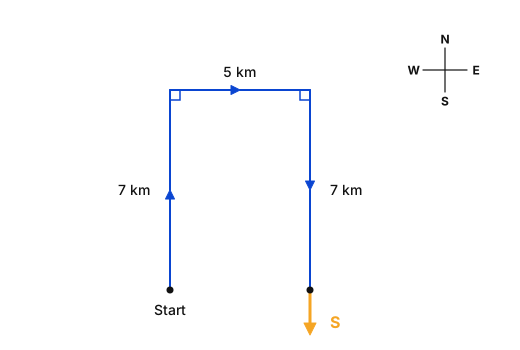
- Start: North.
- Right turn → East (walks 5 km).
- Right again → South (walks 7 km) – still facing South.
Trick: Two right turns = 180° → opposite of start: North → South.
Answer: (B) South
अवधारणा: हर right turn = 90° घड़ी की दिशा में।
हल:
- शुरुआत: उत्तर।
- दाएँ मुड़ा → पूर्व।
- फिर दाएँ → दक्षिण; अंत में मुख दक्षिण की ओर।
ट्रिक: दो बार दाएँ = 180° घूमना → शुरुआती दिशा का उल्टा।
उत्तर: (B) दक्षिण
Q3229.A person walks 20 km east, then 20 km north, and finally 20 km west. How far is he from his starting point?
एक व्यक्ति 20 km पूर्व की ओर चलता है, फिर 20 km उत्तर की ओर और अंत में 20 km पश्चिम की ओर चलता है। वह अपने प्रारंभिक बिंदु से कितनी दूर है?
- A10 km
- B15 km
- C20 km
- D5 km
Show answer
Concept: Opposite movements cancel; find net displacement.
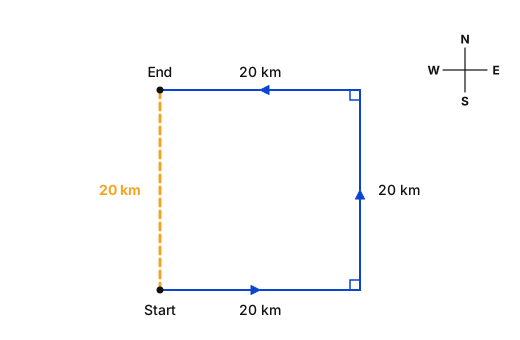
- East 20 and West 20 cancel → 0 horizontally.
- Only North 20 km remains.
- Distance from start = 20 km.
Trick: Cancel equal opposite legs first; whatever is left is the answer.
Answer: (C) 20 km
अवधारणा: विपरीत दिशाओं की दूरी आपस में कट जाती है।
हल:
- पूर्व 20 और पश्चिम 20 → कट गए।
- केवल उत्तर 20 km बचा।
- आरंभ से दूरी = 20 km।
ट्रिक: बराबर-उल्टी दूरियाँ काटें; जो बचे वही उत्तर।
उत्तर: (C) 20 km
Q3230.In the following questions some issues are provided to you. you have to mark the appropriate answer logically that can be taken in such circumstances. You notice a mistake in a report that has already been submitted to the client. What should you do ?
निम्नलिखित प्रश्न में आपको कुछ स्थितियाँ दी गई हैं। आपको तर्क के आधार पर वह उपयुक्त उत्तर चुनना है जो ऐसी परिस्थितियों में अपनाया जा सकता है। आप एक ऐसी रिपोर्ट में गलती देखते हैं जो पहले ही ग्राहक को सौंपी जा चुकी है। आपको क्या करना चाहिए ?
- AIgnore it since it is already submittedइसे अनदेखा कर दें, क्योंकि यह पहले ही सौंपी जा चुकी है
- BBlame another team member if questionedपूछे जाने पर किसी अन्य टीम-सदस्य पर दोष डाल दें
- CInform your senior immediately and suggest a correctionतुरंत अपने वरिष्ठ को सूचित करें और सुधार का सुझाव दें
- DWait for the client to point it outप्रतीक्षा करें कि ग्राहक स्वयं इस ओर ध्यान दिलाए
Show answer
Concept: Best action = honest, prompt and solution-oriented.
- A submitted report with an error can mislead the client.
- Telling the senior at once and proposing a fix owns the mistake and limits damage.
- Ignoring, waiting or blaming others is unethical/unprofessional.
Trick: In such questions pick the option showing honesty + responsibility + action.
Answer: (C) Inform your senior immediately and suggest a correction
अवधारणा: सबसे अच्छा कदम – ईमानदार, तुरंत और समाधान वाला।
हल:
- गलत रिपोर्ट से क्लाइंट गुमराह हो सकता है।
- वरिष्ठ को तुरंत बताना और सुधार सुझाना – ज़िम्मेदारी लेना है।
- अनदेखा करना, इंतज़ार करना या दोष डालना – गलत।
ट्रिक: ऐसे प्रश्नों में ईमानदारी + ज़िम्मेदारी + कार्रवाई वाला विकल्प चुनें।
उत्तर: (C) तुरंत अपने वरिष्ठ को सूचित करें और सुधार का सुझाव दें
Q3231.Select the related letter from the given alternatives.
PRS : CEF : : HST : ?
दिए गए विकल्पों में से संबंधित अक्षर-समूह का चयन कीजिए।
PRS : CEF : : HST : ?
- AUWF
- BUFG
- CVFG
- DUFH
Show answer
Concept: Find the place-value change for each letter.
- P(16) → C(3), R(18) → E(5), S(19) → F(6): each −13 (same as +13).
- H(8) + 13 = 21 = U; S(19) − 13 = 6 = F; T(20) − 13 = 7 = G.
- HST → UFG.
Trick: ±13 = opposite letter pairs: A–N, B–O, C–P … H–U, S–F, T–G.
Answer: (B) UFG
अवधारणा: हर अक्षर का स्थान-मान कितना बदला, देखें।
हल:
- P(16)→C(3), R(18)→E(5), S(19)→F(6): सबमें −13 (= +13)।
- H(8)+13 = U; S(19)−13 = F; T(20)−13 = G।
- HST → UFG।
ट्रिक: 13 का अंतर = जोड़ी: A–N, B–O, C–P … H–U, S–F, T–G।
उत्तर: (B) UFG
Q3232.Select the related letter from the given alternatives.
A:E:: O:?
दिए गए विकल्पों में से संबंधित अक्षर का चयन कीजिए।
A:E:: O:?
- AL
- BU
- CV
- DK
Show answer
Concept: A, E, I, O, U – take the next vowel.
- A → next vowel E.
- O → next vowel U.
Trick: Vowels in order: A E I O U – just step one forward.
Answer: (B) U
अवधारणा: स्वरों का क्रम: A, E, I, O, U।
हल:
- A के बाद अगला स्वर E।
- O के बाद अगला स्वर U।
ट्रिक: स्वर-क्रम में एक कदम आगे बढ़ें।
उत्तर: (B) U
Q3233.Select the correct options from the given alternatives 200220122022 .....?
दिए गए विकल्पों में से सही विकल्प का चयन कीजिए 200220122022 .....?
- A2041
- B2032
- C2029
- D2030
Show answer
Concept: Break the long string into 4-digit groups.
- 200220122022 → 2002, 2012, 2022.
- Each increases by 10.
- Next = 2022 + 10 = 2032.
Trick: Options are 4-digit numbers – so cut the string in 4-digit pieces.
Answer: (B) 2032
अवधारणा: लंबी संख्या को 4-4 अंकों में बाँटें।
हल:
- 2002, 2012, 2022।
- हर बार +10।
- अगला = 2022 + 10 = 2032।
ट्रिक: विकल्प 4 अंक के हैं – इसलिए 4-4 अंक के टुकड़े करें।
उत्तर: (B) 2032
Q3234.For the question below, carefully examine the Reference Statement. Then, identify the single option among the four alternatives (a, b, c, d) that is an EXACT AND COMPLETE REPLICATION of the Reference Statement. Pay exceptionally close attention to every character, number, symbol, space, and punctuation mark.
Reference: Mexico City: 14th February, 1929 CE.
नीचे दिए गए प्रश्न में संदर्भ कथन का ध्यानपूर्वक परीक्षण कीजिए। इसके बाद चार विकल्पों (a, b, c, d) में से उस एक विकल्प की पहचान कीजिए जो संदर्भ कथन की पूर्णतः सटीक एवं संपूर्ण प्रतिकृति है। प्रत्येक अक्षर, अंक, चिह्न, रिक्त स्थान और विराम-चिह्न पर अत्यंत सावधानी से ध्यान दीजिए।
संदर्भ: Mexico City: 14th February, 1929 CE.
- AMexico City: 14th February, 1929 CE.
- BMexico City: 14th February, 1929 C.E.
- CMexico Citi: 14th February, 1929 CE.
- DMexico City: 14th Februry, 1929 CE.
Show answer
Concept: Match spelling, numbers and punctuation character by character.
- (B) 'C.E.' has extra full stops.
- (C) 'Citi' – spelling changed.
- (D) 'Februry' – letter 'a' missing. Only (A) matches.
Trick: Check in chunks: name → date → month → era; drop an option at the first mismatch.
Answer: (A) Mexico City: 14th February, 1929 CE.
अवधारणा: वर्तनी, अंक और विराम चिह्न – एक-एक अक्षर मिलाएँ।
हल:
- (B) में 'C.E.' – अतिरिक्त बिंदु।
- (C) में 'Citi' – वर्तनी गलत।
- (D) में 'Februry' – 'a' गायब। केवल (A) सही।
ट्रिक: हिस्सों में जाँचें: नाम → तारीख → महीना → era; पहली गलती पर विकल्प हटाएँ।
उत्तर: (A) Mexico City: 14th February, 1929 CE.
Q3235.For the question below, carefully examine the Reference Statement. Then, identify the single option among the four alternatives (a, b, c, d) that is an EXACT AND COMPLETE REPLICATION of the Reference Statement. Pay exceptionally close attention to every character, number, symbol, space, and punctuation mark.
Reference: Accra (PG): Jun 5, 1952.
नीचे दिए गए प्रश्न में संदर्भ कथन का ध्यानपूर्वक परीक्षण कीजिए। इसके बाद चार विकल्पों (a, b, c, d) में से उस एक विकल्प की पहचान कीजिए जो संदर्भ कथन की पूर्णतः सटीक एवं संपूर्ण प्रतिकृति है। प्रत्येक अक्षर, अंक, चिह्न, रिक्त स्थान और विराम-चिह्न पर अत्यंत सावधानी से ध्यान दीजिए।
संदर्भ: Accra (PG): Jun 5, 1952.
- AAccra (PG): Jun 5,1952.
- BAccr_a (PG): Jun 5,1952.
- CAccra (PG): Jun. 5,1952.
- DAccra (PG): Jun 5, 1972.
Show answer
Concept: Compare every character; pick the closest copy as per the key.
- (B) 'Accr_a' – stray underscore.
- (C) 'Jun.' – extra full stop.
- (D) year changed to 1972.
- (A) has no wrong letter or number (only the space after the comma is missing), so it is the keyed match.
Yaad rakhein: Eliminate options with changed letters/numbers first – the one left is the answer.
Answer: (A) Accra (PG): Jun 5,1952.
अवधारणा: हर अक्षर/अंक की तुलना करें।
हल:
- (B) 'Accr_a' – अनावश्यक underscore।
- (C) 'Jun.' – अतिरिक्त बिंदु।
- (D) वर्ष 1972 – बदला हुआ।
- (A) में अक्षर/अंक सही (केवल comma के बाद space नहीं) – key के अनुसार यही।
याद रखें: पहले अक्षर/अंक बदले हुए विकल्प हटाएँ – बचा हुआ उत्तर।
उत्तर: (A) Accra (PG): Jun 5,1952.
Q3236.From the given option figures, select the one in which the question figure is hidden/embedded. (Rotation is not allowed)
दी गई विकल्प आकृतियों में से उस आकृति का चयन कीजिए, जिसमें प्रश्न आकृति छिपी/अंतर्निहित है। (घुमाने की अनुमति नहीं है) - A

- B

- C

- D

Show answer
Concept: The given shape must appear in the option in the same size and tilt (no rotation).
- Key feature: a quadrilateral with a sharp top peak, a long right side and a long sloping base.
- Option (A) contains exactly these four lines in the same orientation.
- In (B), (C), (D) the matching part is blunt or lacks the long sloping base.
Trick: Trace the most distinctive line (the long slanted base) first – it rejects options quickly.
Answer: (A)
अवधारणा: दी गई आकृति विकल्प में उसी आकार व झुकाव में होनी चाहिए (घुमाना मना)।
हल:
- पहचान: नुकीली चोटी, लंबी दाईं भुजा और लंबा तिरछा आधार।
- विकल्प (A) में ये चारों रेखाएँ उसी स्थिति में हैं।
- (B), (C), (D) में तिरछा लंबा आधार नहीं मिलता।
ट्रिक: सबसे अलग दिखने वाली रेखा (तिरछा आधार) पहले खोजें – विकल्प जल्दी हटते हैं।
उत्तर: (A)
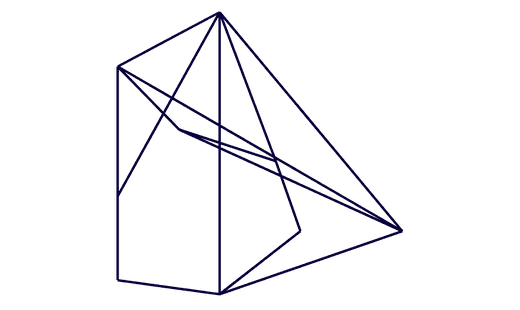
Q3237.From the given option figures, select the one in which the question figure is hidden/embedded. (Rotation is not allowed)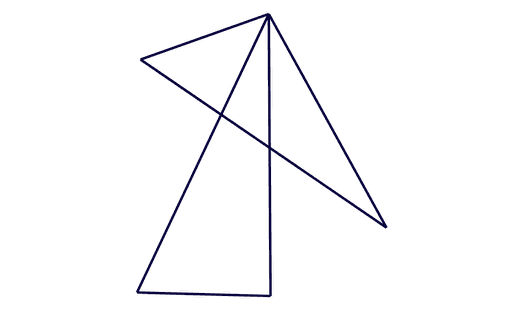
दी गई विकल्प आकृतियों में से उस आकृति का चयन कीजिए, जिसमें प्रश्न आकृति छिपी/अंतर्निहित है। (घुमाने की अनुमति नहीं है) - A
- B
- C
- D
Show answer
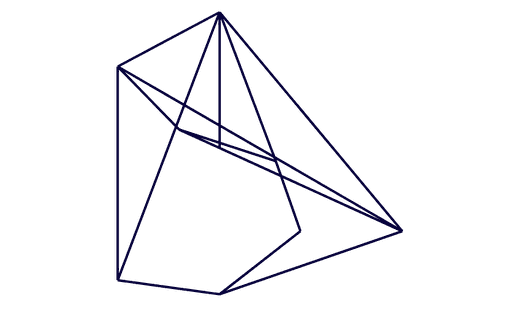
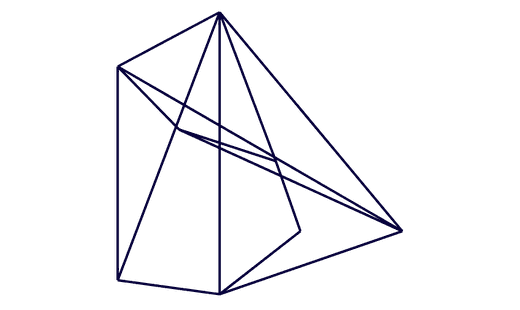
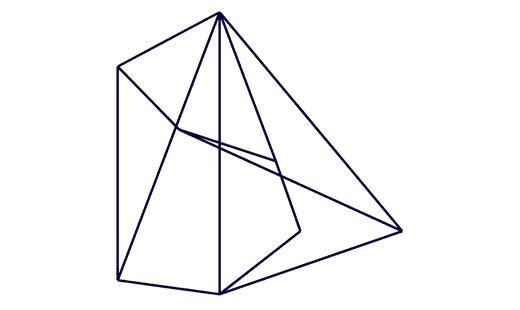
Concept: Every line of the question figure must be traceable in the option without turning.
- Key feature: two long slanting lines crossing each other with a full-height vertical between them.
- Option (C) has all these lines in place.
- (A) – a slant stops early; (B) – vertical is short; (D) – one crossing line is missing.
Trick: Check the crossing point and the full vertical – only one option keeps both.
Answer: (C)
अवधारणा: प्रश्न-आकृति की हर रेखा विकल्प में बिना घुमाए मिलनी चाहिए।
हल:
- पहचान: दो लंबी तिरछी रेखाएँ जो एक-दूसरे को काटती हैं, बीच में पूरी ऊँचाई की खड़ी रेखा।
- विकल्प (C) में सभी रेखाएँ मौजूद हैं।
- (A) में तिरछी रेखा अधूरी, (B) में खड़ी रेखा छोटी, (D) में एक रेखा गायब।
ट्रिक: काटने वाला बिंदु और पूरी खड़ी रेखा – दोनों केवल एक विकल्प में हैं।
उत्तर: (C)
Q3238.In the following question, select the number which can be placed at the sign of question mark (?) from the given alternatives.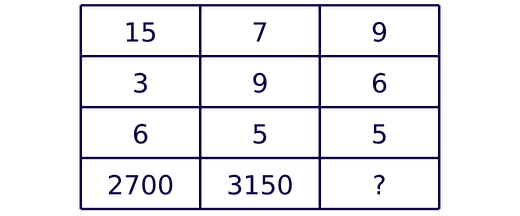
निम्नलिखित प्रश्न में, दिए गए विकल्पों में से उस संख्या का चयन कीजिए जिसे प्रश्नवाचक चिह्न (?) के स्थान पर रखा जा सकता है। - A2400
- B2600
- C2700
- D2900
Show answer
Concept: Bottom number = .
- Col 1: ✓
- Col 2: ✓
- Col 3: .
Trick: Results ending in '00'/'50' hint at '× 10' after a product.
Answer: (C) 2700
अवधारणा: नीचे की संख्या = ।
हल:
- स्तंभ 1: ✓
- स्तंभ 2: ✓
- स्तंभ 3: ।
ट्रिक: उत्तर 0 पर खत्म हों तो सोचें।
उत्तर: (C) 2700
Q3239.How many triangles are there in the given figure?
दी गई आकृति में कितने त्रिभुज हैं? - A26
- B22
- C24
- D34
Show answer
Concept: Count by sections using the centre point; use symmetry.
- Upper line has 5 points all joined to the centre → 5C2 = 10 triangles.
- Top tip with 3 points on that line → 3C2 = 3; tip–centre–petal corner → 2. Upper total = 15.
- Lower half by symmetry = 15.
- Left tip and right tip make 2 each with the centre → 4. Total = 15 + 15 + 4 = 34.
Trick: Points on one straight line all joined to a common vertex: triangles = nC2.
Answer: (D) 34
अवधारणा: केंद्र बिंदु के आधार पर भागों में गिनें; समरूपता का प्रयोग करें।
हल:
- ऊपरी रेखा पर 5 बिंदु, सब केंद्र से जुड़े → 5C2 = 10।
- ऊपरी नोक व उसी रेखा के 3 बिंदु → 3C2 = 3; नोक–केंद्र–कोने वाले 2। ऊपर कुल 15।
- नीचे भी समरूपता से 15।
- बाईं व दाईं नोक – 2 + 2 = 4। कुल = 15 + 15 + 4 = 34।
ट्रिक: एक रेखा के n बिंदु एक ही शीर्ष से जुड़े हों तो त्रिभुज = nC2।
उत्तर: (D) 34
Q3240.How many quadrilaterals are there in the given figure?
दी गई आकृति में कितने चतुर्भुज हैं? - A15
- B16
- C17
- D18
Show answer
Concept: Fix a pair of horizontal lines; count verticals spanning the whole strip → .
- Top strip: 3 verticals → 3; middle strip: 4 → 6; bottom strip: 3 → 3.
- Top + middle: 2 → 1; middle + bottom: 3 → 3; whole figure → 1.
- Total = .
Trick: Rectangles in a strip with k full verticals = .
Answer: (C) 17
अवधारणा: दो क्षैतिज रेखाएँ चुनें; पूरी पट्टी पार करने वाली खड़ी रेखाएँ गिनें → ।
हल:
- ऊपर: 3 रेखाएँ → 3; बीच: 4 → 6; नीचे: 3 → 3।
- ऊपर+बीच: 2 → 1; बीच+नीचे: 3 → 3; पूरा → 1।
- कुल = ।
ट्रिक: k खड़ी रेखाओं वाली पट्टी में आयत = ।
उत्तर: (C) 17

