Question bank

Q&A: practice questions with answers

Search questions on any topic. Filter by exam category, exam, subject and topic, try the question, then open the answer and explanation.

Courses – airGurukul

5,000 questions found.

Directions (Qs. 18-22): Read the following passage carefully and answer the questions that follow.

In the modern medical landscape, Artificial Intelligence (AI) systems assuming the functions of diagnostic tools and surgical assistants have increasingly revolutionized the traditionally human-centric domain. Despite systemic hurdles such as data privacy and ethical concerns, a growing array of AI applications is reshaping clinical workflows through predictive analytics and algorithmic precision.

The proliferation of AI diagnostics and robotics is indicative of radical shifts in medical and operational protocols, prioritizing efficiency and accuracy at critical intervention stages. Their implementation is often marked by a data-driven method, machine learning, and speed, which integrate effectively with medical expertise and patient care. However, these cutting-edge systems frequently encounter obstacles including insufficient access to diverse datasets,

integration costs, and algorithmic biases embedded within coding structures. The continuation of such issues highlights the requirement for regulatory frameworks designed for ensuring patient safety in digital health. Furthermore, the convergence of biology with computational power by AI developers has accelerated breakthrough discoveries across pathologies, emphasizing the intrinsic connection between digital innovation and curative outcomes. This model not only optimizes hospital operations but also advances global health targets associated with accessibility. In summary, the integration of AI as diagnostics and surgeons signals a sophisticated realignment of care delivery within the health sector, illustrating a horizon where human empathy and automation merge to drive longevity and wellness.
Q4021.
The phrase "sophisticated realignment" implies:
  1. Aa complex and subtle restructuring
  2. Ba simplistic rearrangement
  3. Ca chaotic disruption
  4. Dan immediate reversal
Show answer

Concept: Split a phrase into its words and combine their meanings.

  1. Sophisticated = advanced, complex, refined.
  2. Realignment = rearranging/restructuring into a new order.
  3. Together: a complex and subtle restructuring; 'simplistic' contradicts 'sophisticated', 'chaotic'/'immediate reversal' add ideas not present.

Trick: Reject any option whose adjective is the opposite of the given adjective (simplistic ≠ sophisticated).

Answer: (A) a complex and subtle restructuring

अवधारणा: वाक्यांश के शब्दों का अलग-अलग अर्थ लेकर जोड़ें।

  1. Sophisticated = उन्नत, जटिल, परिष्कृत।
  2. Realignment = नए क्रम में पुनर्गठन।
  3. मिलाकर: जटिल और सूक्ष्म पुनर्गठन; 'simplistic' उलटा है, 'chaotic'/'reversal' अर्थ में नहीं।

ट्रिक: जिस विकल्प का विशेषण दिए शब्द का उलटा हो, उसे तुरंत हटाएँ।

उत्तर: (A) a complex and subtle restructuring
SSC CHSLEnglish LanguageVocabulary in context – sophisticated realignmentSSC CHSL 2025 · 15 Nov Shift 2 →
Directions (Qs. 18-22): Read the following passage carefully and answer the questions that follow.

In the modern medical landscape, Artificial Intelligence (AI) systems assuming the functions of diagnostic tools and surgical assistants have increasingly revolutionized the traditionally human-centric domain. Despite systemic hurdles such as data privacy and ethical concerns, a growing array of AI applications is reshaping clinical workflows through predictive analytics and algorithmic precision.

The proliferation of AI diagnostics and robotics is indicative of radical shifts in medical and operational protocols, prioritizing efficiency and accuracy at critical intervention stages. Their implementation is often marked by a data-driven method, machine learning, and speed, which integrate effectively with medical expertise and patient care. However, these cutting-edge systems frequently encounter obstacles including insufficient access to diverse datasets,

integration costs, and algorithmic biases embedded within coding structures. The continuation of such issues highlights the requirement for regulatory frameworks designed for ensuring patient safety in digital health. Furthermore, the convergence of biology with computational power by AI developers has accelerated breakthrough discoveries across pathologies, emphasizing the intrinsic connection between digital innovation and curative outcomes. This model not only optimizes hospital operations but also advances global health targets associated with accessibility. In summary, the integration of AI as diagnostics and surgeons signals a sophisticated realignment of care delivery within the health sector, illustrating a horizon where human empathy and automation merge to drive longevity and wellness.
Q4022.
According to the passage, what is a major barrier faced by AI systems?
  1. AExcessive computational speed
  2. BLack of mechanical parts
  3. CInsufficient access to diverse datasets and integration costs
  4. DOverrepresentation in rural clinics
Show answer

Concept: Detail questions are answered by locating the exact line in the passage.

  1. The 'However…' sentence of paragraph 2 lists three hurdles: too little varied data, high cost of integration, and bias in the code.
  2. Option C repeats these barriers directly.
  3. Speed is presented as a strength; mechanical parts and rural clinics are never mentioned.

Trick: Scan for signal words like 'However… obstacles' — the barriers follow right after.

Answer: (C) Insufficient access to diverse datasets and integration costs

अवधारणा: तथ्य-प्रश्न का उत्तर गद्यांश की सटीक पंक्ति ढूँढकर मिलता है।

  1. दूसरे अनुच्छेद का 'However…' वाला वाक्य तीन बाधाएँ गिनाता है: विविध डेटा की कमी, जोड़ने की ऊँची लागत और कोड में पक्षपात।
  2. विकल्प C वही बाधाएँ बताता है।
  3. Speed को गद्यांश में खूबी बताया है; mechanical parts व rural clinics का ज़िक्र ही नहीं।

ट्रिक: 'However… obstacles' जैसे संकेत-शब्द ढूँढें — बाधाएँ ठीक उसके बाद लिखी हैं।

उत्तर: (C) Insufficient access to diverse datasets and integration costs

SSC CHSLEnglish LanguageReading comprehension – detailSSC CHSL 2025 · 15 Nov Shift 2 →
Q4023.
Rearrange the following sentence parts to form a meaningful and grammatically correct paragraph:
P. The tasty meal appeared on the app, so he clicked to order it for lunch.
Q. He typed in his street and building code, then checked out.
R. With a quick swipe, his order was paid and processed.
S. Now he waits for the driver to knock at his doorway.
  1. AP, Q, R, S
  2. BS, Q, P, S
  3. CQ, R, P, S
  4. DS, P, R, Q
Show answer

Concept: Arrange events in the order they actually happen.

  1. P: he picks the meal and clicks to order (first step).
  2. Q: enters address and checks out → R: payment processed.
  3. S: 'Now he waits' — natural ending. Order: P, Q, R, S.

Trick: Find the opener (first action) and the closer ('Now…'); the middle usually falls into place.

Answer: (A) P, Q, R, S

अवधारणा: घटनाओं को उसी क्रम में रखें जिसमें वे सच में होती हैं।

  1. P: खाना चुनकर order पर click — पहला कदम।
  2. Q: पता भरकर checkout → R: भुगतान पूरा।
  3. S: 'Now he waits' — अंत। क्रम: P, Q, R, S।

ट्रिक: पहला काम और 'Now…' वाला अंतिम वाक्य पहचानें, बीच का क्रम अपने-आप बनता है।

उत्तर: (A) P, Q, R, S

SSC CHSLEnglish LanguagePara jumble – sequence of actionsSSC CHSL 2025 · 15 Nov Shift 2 →
Q4024.
Rearrange the following sentences to form a meaningful and grammatically correct paragraph:
P. She improved her soil mix and pruning by tending her plants and shrubs daily.
Q. She read plant guides for hours, learning to grow blooms that got rarer and rarer.
R. She had mastered her green thumb and was now a gardener.
S. She grew a beautiful rose perfectly from seed while preparing for the contest.
  1. AP, Q, S, R
  2. BR, Q, S, P
  3. CQ, P, S, R
  4. DS, Q, P, R
Show answer

Concept: A growth story moves from learning → practice → achievement → final status.

  1. Q: she reads plant guides (learning starts).
  2. P: daily tending improves soil and pruning (practice).
  3. S: grows a perfect rose for the contest (achievement) → R: now a gardener (conclusion).

Trick: R contains 'had mastered… was now' — a clear concluding sentence; only options ending in R remain (A, C), and Q must precede P.

Answer: (C) Q, P, S, R

अवधारणा: विकास की कहानी: सीखना → अभ्यास → उपलब्धि → अंतिम स्थिति।

  1. Q: पौधों की किताबें पढ़ना (सीखने की शुरुआत)।
  2. P: रोज़ देखभाल से मिट्टी व छँटाई सुधरी (अभ्यास)।
  3. S: प्रतियोगिता के लिए सुंदर गुलाब (उपलब्धि) → R: अब माली बन गई (निष्कर्ष)।

ट्रिक: R में 'had mastered… was now' — स्पष्ट अंतिम वाक्य; R पर खत्म होने वाले A, C में से Q पहले आए वाला C।

उत्तर: (C) Q, P, S, R

SSC CHSLEnglish LanguagePara jumble – learning to resultSSC CHSL 2025 · 15 Nov Shift 2 →
Q4025.
Which of the following pairs of homonyms can be used to fill in the blanks most suitably ?
The city ____ decided to seek legal
____ regarding the new zoning laws.
  1. Acouncil, counsel
  2. Bcounsel, council
  3. Ccancel, conceal
  4. Dconceal, cancel
Show answer

Concept: Words that sound alike are chosen by meaning in context.

  1. Council = an elected governing body → city council.
  2. Counsel = advice (often legal) → legal counsel.
  3. Cancel/conceal don't fit either blank.

Trick: Counsel = advice from a lawyer (both have 's'); council = group of people (both have 'c').

Answer: (A) council, counsel

अवधारणा: समान उच्चारण वाले शब्द अर्थ के आधार पर चुने जाते हैं।

  1. Council = नगर की शासी परिषद → city council।
  2. Counsel = सलाह (विशेषकर कानूनी) → legal counsel।
  3. cancel/conceal किसी रिक्त स्थान में नहीं बैठते।

ट्रिक: counSel = Salah (सलाह); counCil = Committee (समिति)।

उत्तर: (A) council, counsel

SSC CHSLEnglish LanguageHomonyms – council / counselSSC CHSL 2025 · 15 Nov Shift 2 →
Q4026.
In a class of 42 students, Putin's rank is 15th from the top. What is her rank from the bottom?
42 विद्यार्थियों की एक कक्षा में Putin का स्थान ऊपर से 15वाँ है। नीचे से उसका स्थान क्या है?
  1. A32nd32वाँ
  2. B30th30वाँ
  3. C28th28वाँ
  4. D27th27वाँ
Show answer

Concept: Position from one end + position from other end = Total + 1.

  1. Rank from bottom = 42 − 15 + 1.
  2. = 28.

Trick: Top + Bottom = Total + 1 → 15 + 28 = 43 = 42 + 1 ✔. Forgetting '+1' gives the trap 27.

Answer: (C) 28th

अवधारणा: एक सिरे से स्थान + दूसरे सिरे से स्थान = कुल + 1।

  1. नीचे से रैंक = 42 − 15 + 1।
  2. = 28।

ट्रिक: जाँच: 15 + 28 = 43 = 42 + 1 ✔; '+1' भूलने पर 27 (गलत विकल्प)।

उत्तर: (C) 28वाँ

SSC CHSLGeneral IntelligenceRank – top to bottomSSC CHSL 2025 · 15 Nov Shift 2 →
Q4027.
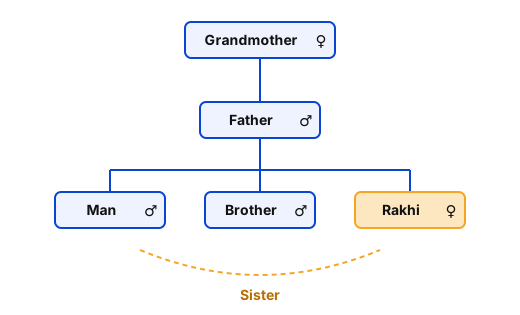
Pointing to a man, Rakhi said, "His brother's father is the only son of my grandmother." How is Rakhi related to the man?
एक व्यक्ति की ओर संकेत करते हुए Rakhi ने कहा, "इसके भाई के पिता, मेरी दादी के इकलौते पुत्र हैं।" Rakhi का उस व्यक्ति से क्या संबंध है?
  1. AGrand Motherदादी
  2. BSisterबहन
  3. Ccousin sisterचचेरी बहन
  4. DMotherमाता
Show answer

Concept: Decode the statement from the end that is closest to the speaker.

  1. Only son of Rakhi's grandmother = Rakhi's father.
  2. Man's brother's father = the man's own father.
  3. Same father → man and Rakhi are siblings; Rakhi is female → sister.

Trick: 'Only son of my grandmother/grandfather' = my father (in such questions). Spot it instantly.

Answer: (B) Sister

अवधारणा: कथन को वक्ता के सबसे पास वाले रिश्ते से खोलें।

  1. राखी की दादी का इकलौता बेटा = राखी के पिता।
  2. उस आदमी के भाई के पिता = उसी आदमी के पिता।
  3. दोनों के पिता एक → भाई-बहन; राखी स्त्री है → बहन।

ट्रिक: 'मेरी दादी का इकलौता बेटा' = मेरे पिता — इसे तुरंत पहचानें।

उत्तर: (B) बहन

SSC CHSLGeneral IntelligenceBlood relation – 'only son of grandmother'SSC CHSL 2025 · 15 Nov Shift 2 →
Q4028.
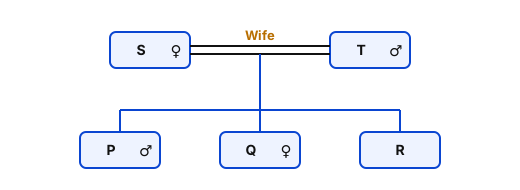
P is the brother of Q,Q is the sister of R. S is the mother of P. T is the father of R. How is S related to T ?
P, Q,Q का भाई है, R की बहन है। S, P की माता है। T, R का पिता है। S का T से क्या संबंध है?
  1. AMotherमाता
  2. BWifeपत्नी
  3. Ccousin sisterचचेरी बहन
  4. DAuntचाची
Show answer

Concept: Parents of one set of siblings are husband and wife.

  1. P, Q, R are siblings (P brother of Q, Q sister of R).
  2. S = mother of P → mother of all; T = father of R → father of all.
  3. Mother and father of the same children → S is T's wife.

Trick: Gender of S comes from 'mother' — so the answer must be a female relation; Wife is the only fit.

Answer: (B) Wife

अवधारणा: एक ही बच्चों के माता और पिता आपस में पति-पत्नी होते हैं।

  1. P, Q, R भाई-बहन हैं।
  2. S, P की माँ → सभी की माँ; T, R के पिता → सभी के पिता।
  3. इसलिए S, T की पत्नी है।

ट्रिक: S 'mother' है, अतः स्त्री — एक ही परिवार में माँ-पिता का संबंध = पति-पत्नी।

उत्तर: (B) पत्नी

SSC CHSLGeneral IntelligenceBlood relation – parents of siblingsSSC CHSL 2025 · 15 Nov Shift 2 →
Q4029.
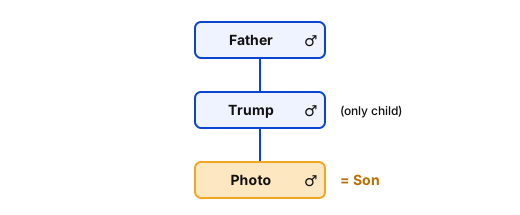
Pointing to a photo,Trump said, "I have no brother or sister but that man's father is my father's son." Who is in the photo?
एक फ़ोटो की ओर संकेत करते हुए Trump ने कहा, "मेरा कोई भाई या बहन नहीं है, किंतु उस व्यक्ति के पिता, मेरे पिता के पुत्र हैं।" फ़ोटो में कौन है?
  1. AHis Sonउसका पुत्र
  2. BHis Fatherउसके पिता
  3. CHis Grandfatherउसके दादा
  4. DHimselfस्वयं
Show answer

Concept: Replace 'my father's son' with 'me' when the speaker has no brother.

  1. No brother → my father's son = Trump himself.
  2. So: that man's father = Trump.
  3. Hence the man is Trump's son.

Trick: No brother + 'my father's son' = 'I'. Then read the sentence again — answer pops out.

Answer: (A) His Son

अवधारणा: जब वक्ता का कोई भाई न हो, तो 'मेरे पिता का बेटा' = 'मैं'।

  1. भाई नहीं → मेरे पिता का बेटा = ट्रम्प स्वयं।
  2. अब: उस आदमी के पिता = ट्रम्प।
  3. अतः फोटो वाला आदमी ट्रम्प का बेटा है।

ट्रिक: 'भाई नहीं + मेरे पिता का बेटा' = 'मैं' — वाक्य दोबारा पढ़ते ही उत्तर मिल जाता है।

उत्तर: (A) उसका पुत्र

SSC CHSLGeneral IntelligenceBlood relation – photo puzzleSSC CHSL 2025 · 15 Nov Shift 2 →
Q4030.
A box contains 54 Orange balls and 36 Black balls. What is the ratio of orange balls to Black balls in the simplest form?
एक डिब्बे में 54 नारंगी गेंदें और 36 काली गेंदें हैं। नारंगी गेंदों का काली गेंदों से सरलतम रूप में अनुपात क्या है?
  1. A3 : 2
  2. B2 : 3
  3. C4 : 6
  4. D3 : 4
Show answer

Concept: Divide both terms of a ratio by their HCF.

  1. Orange : Black = 54 : 36.
  2. HCF(54, 36) = 18.
  3. 5418:3618 = 3 : 2.

Trick: Keep the asked order (orange first); 2 : 3 is the reversed trap.

Answer: (A) 3 : 2

अवधारणा: अनुपात के दोनों पदों को उनके HCF से भाग दें।

  1. नारंगी : काली = 54 : 36।
  2. HCF(54, 36) = 18।
  3. 5418:3618 = 3 : 2।

ट्रिक: पूछा गया क्रम (नारंगी पहले) रखें; 2 : 3 उल्टा जाल है।

उत्तर: (A) 3 : 2

SSC CHSLGeneral IntelligenceRatio – simplest formSSC CHSL 2025 · 15 Nov Shift 2 →
Q4031.
A train travels at a speed of 160 km/hr. How much distance will it cover in 15 minutes?
एक रेलगाड़ी 160 km/hr की चाल से चलती है। यह 15 मिनट में कितनी दूरी तय करेगी?
  1. A35 km
  2. B45 km
  3. C40 km
  4. D50 km
Show answer

Concept: Distance=Speed×Time (time in hours when speed is in km/hr).

  1. 15 min =1560=14 hr.
  2. Distance = 160×14= 40 km.

Trick: 15 min is a quarter hour → just divide speed by 4.

Answer: (C) 40 km

अवधारणा: दूरी=चाल×समय (चाल km/hr में हो तो समय घंटे में)।

  1. 15 मिनट =1560=14 घंटा।
  2. दूरी = 160×14= 40 km।

ट्रिक: 15 मिनट = चौथाई घंटा → चाल को सीधे 4 से भाग दें।

उत्तर: (C) 40 km

SSC CHSLGeneral IntelligenceSpeed–distance – minutes to hoursSSC CHSL 2025 · 15 Nov Shift 2 →
Q4032.
If 10% of a number is 60 , what is 50% of that number ?
यदि किसी संख्या का 10%, 60 है, तो उस संख्या का 50% क्या होगा?
  1. A200
  2. B320
  3. C300
  4. D280
Show answer

Concept: If x% of a number is known, any other % is found by scaling.

  1. 10%=60 → 100%=600.
  2. 50% of 600 = 300.

Trick: 50% is 5 times 10% → 60×5=300 in one step.

Answer: (C) 300

अवधारणा: किसी संख्या का एक प्रतिशत पता हो, तो अनुपात से दूसरा प्रतिशत निकलता है।

  1. 10%=60 → 100%=600।
  2. 600 का 50% = 300।

ट्रिक: 50% = 10% का 5 गुना → 60×5=300।

उत्तर: (C) 300

SSC CHSLGeneral IntelligencePercentage – scalingSSC CHSL 2025 · 15 Nov Shift 2 →
Q4033.
Shyam is twice as old as Gita. If the sum of their ages is 90 years, how old is Shyam?
Shyam की आयु Gita की आयु से दोगुनी है। यदि उनकी आयु का योग 90 वर्ष है, तो Shyam की आयु कितनी है?
  1. A50 years50 वर्ष
  2. B45 years45 वर्ष
  3. C55 years55 वर्ष
  4. D60 years60 वर्ष
Show answer

Concept: Split the total in the ratio of ages.

  1. Shyam : Gita = 2 : 1, total parts = 3.
  2. 1 part = 90÷3=30.
  3. Shyam = 2×30= 60 years.

Trick: Shyam's share = 23 of 90=60.

Answer: (D) 60 years

अवधारणा: कुल योग को आयु के अनुपात में बाँटें।

  1. श्याम : गीता = 2 : 1, कुल भाग = 3।
  2. 1 भाग = 90÷3=30।
  3. श्याम = 2×30= 60 वर्ष।

ट्रिक: श्याम का हिस्सा = 90 का 23=60।

उत्तर: (D) 60 वर्ष

SSC CHSLGeneral IntelligenceAges – sum and ratioSSC CHSL 2025 · 15 Nov Shift 2 →
Q4034.
Find the next number in the series: 6, 18, 54, 162 , ?
शृंखला में अगली संख्या ज्ञात कीजिए: 6, 18, 54, 162 , ?
  1. A486
  2. B334
  3. C324
  4. D280
Show answer

Concept: Fast-growing terms usually follow a constant multiplier.

  1. 6×3=18, 18×3=54, 54×3=162.
  2. Next = 162×3= 486.

Trick: Unit digit check: 2×3 ends in 6 → only 486 ends in 6.

Answer: (A) 486

अवधारणा: तेज़ी से बढ़ते पद अक्सर एक नियत गुणक से बनते हैं।

  1. 6×3=18, 18×3=54, 54×3=162।
  2. अगला = 162×3= 486।

ट्रिक: इकाई अंक: 2×3=6 → केवल 486 का अंतिम अंक 6 है।

उत्तर: (A) 486

SSC CHSLGeneral IntelligenceNumber series – multiply by 3SSC CHSL 2025 · 15 Nov Shift 2 →
Q4035.
A cycle was bought for ₹1200 and sold for ₹1600. Calculate the profit percentage.
एक साइकिल ₹1200 में खरीदी गई और ₹1600 में बेची गई। लाभ प्रतिशत ज्ञात कीजिए।
  1. A16.66%
  2. B12.5%
  3. C37.5%
  4. D33.33%
Show answer

Concept: Profit%=(Profit÷CP)×100.

  1. Profit = 1600−1200= ₹400.
  2. Profit%=4001200×100=13×100= 33.33%.

Trick: 4001200=13 → 3313%. Fraction-to-% memory saves time.

Answer: (D) 33.33%

अवधारणा: Profit % हमेशा CP पर निकलता है: ProfitCP×100।

  1. लाभ = 1600−1200= ₹400।
  2. लाभ%=4001200×100=13×100= 33.33%।

ट्रिक: 4001200=13=3313% — भिन्न-प्रतिशत तालिका याद रखें।

उत्तर: (D) 33.33%

SSC CHSLGeneral IntelligenceProfit percentageSSC CHSL 2025 · 15 Nov Shift 2 →
Q4036.
The average of 5 numbers is 30 . If three of the numbers are 22, 26, and 34, then what is the average of the remaining two numbers ?
5 संख्याओं का औसत 30 है। यदि उनमें से तीन संख्याएँ 22, 26 और 34 हैं, तो शेष दो संख्याओं का औसत क्या है?
  1. A40
  2. B65
  3. C34
  4. D55
Show answer

Concept: Sum=Average×Count.

  1. Total of 5 = 30×5=150.
  2. Known three = 22+26+34=82.
  3. Other two = 150−82=68 → average = 682= 34.

Trick: Deviation method: 22, 26, 34 differ from 30 by −8, −4, +4=−8, so the other two must total +8 → each 30+4=34.

Answer: (C) 34

अवधारणा: योग=औसत×संख्या।

  1. पाँचों का कुल = 30×5=150।
  2. दी गई तीन का जोड़ = 22+26+34=82।
  3. शेष दो = 150−82=68 → औसत = 682= 34।

ट्रिक: विचलन विधि: 30 से अंतर −8, −4, +4=−8; शेष दोनों को +8 पूरा करना → प्रत्येक 30+4=34।

उत्तर: (C) 34

SSC CHSLGeneral IntelligenceAverage – missing numbersSSC CHSL 2025 · 15 Nov Shift 2 →
Q4037.
After an increase of 25%, a price of an item becomes ₹750. What was the original price of the item?
25% की वृद्धि के बाद किसी वस्तु का मूल्य ₹750 हो जाता है। वस्तु का मूल मूल्य क्या था?
  1. A₹680
  2. B₹600
  3. C₹640
  4. D₹620
Show answer

Concept: New value=Original×100+r100.

  1. 25% increase → multiply by 54.
  2. Original×54=750 → Original=750×45= ₹600.

Trick: 25%=14 → new = 5 parts = 750 → 1 part = 150 → original (4 parts) = 600.

Answer: (B) ₹600

अवधारणा: नया मूल्य=मूल×100+r100।

  1. 25% वृद्धि = 54 से गुणा।
  2. मूल×54=750 → मूल=750×45= ₹600।

ट्रिक: 25%=14 → नया = 5 भाग = 750 → 1 भाग = 150 → मूल (4 भाग) = 600।

उत्तर: (B) ₹600

SSC CHSLGeneral IntelligencePercentage increase – original valueSSC CHSL 2025 · 15 Nov Shift 2 →
Q4038.
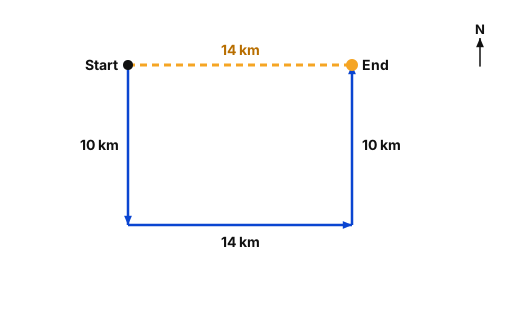
A person walks 10 km south, then 14 km east, and finally 10 km north. What is the shortest distance between his starting point and ending point?
एक व्यक्ति 10 km दक्षिण, फिर 14 km पूर्व और अंत में 10 km उत्तर चलता है। उसके प्रारंभिक बिंदु और अंतिम बिंदु के बीच न्यूनतम दूरी कितनी है?
  1. A14 km
  2. B15 km
  3. C16 km
  4. D17 km
Show answer

Concept: Equal moves in opposite directions cancel out.

  1. 10 km south and 10 km north cancel.
  2. Only 14 km east remains.
  3. Shortest distance = 14 km.

Trick: Net N–S and net E–W first; if one is zero, the other is the answer.

Answer: (A) 14 km

अवधारणा: विपरीत दिशाओं में बराबर चलना एक-दूसरे को रद्द कर देता है।

  1. 10 km दक्षिण और 10 km उत्तर कट जाते हैं।
  2. केवल 14 km पूर्व बचता है।
  3. न्यूनतम दूरी = 14 km।

ट्रिक: पहले शुद्ध उत्तर-दक्षिण और शुद्ध पूर्व-पश्चिम निकालें; एक शून्य हो तो दूसरा ही उत्तर।

उत्तर: (A) 14 km

SSC CHSLGeneral IntelligenceDirection – cancelling movesSSC CHSL 2025 · 15 Nov Shift 2 →
Q4039.
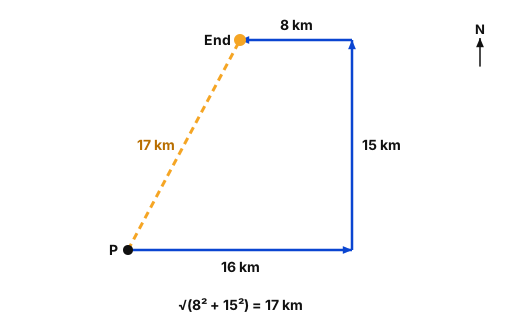
A man starts walking from point P and walks 16 km east, then 15 km north, and finally 8 km west. How far is he from point P ?
एक व्यक्ति बिंदु P से चलना आरंभ करता है और 16 km पूर्व, फिर 15 km उत्तर तथा अंत में 8 km पश्चिम चलता है। वह बिंदु P से कितनी दूर है?
  1. A14 km
  2. B17 km
  3. C18 km
  4. D12 km
Show answer

Concept: Distance=net E–W2+net N–S2.

  1. Net east = 16−8=8 km; net north = 15 km.
  2. Distance = 82+152=64+225=289= 17 km.

Trick: 8–15–17 is a Pythagorean triplet — no need to square.

Answer: (B) 17 km

अवधारणा: दूरी=शुद्ध पूर्व-पश्चिम2+शुद्ध उत्तर-दक्षिण2।

  1. शुद्ध पूर्व = 16−8=8 km; शुद्ध उत्तर = 15 km।
  2. दूरी = 64+225=289= 17 km।

ट्रिक: 8–15–17 पाइथागोरस त्रिक है — वर्ग करने की ज़रूरत नहीं।

उत्तर: (B) 17 km

SSC CHSLGeneral IntelligenceDirection – PythagorasSSC CHSL 2025 · 15 Nov Shift 2 →
Q4040.
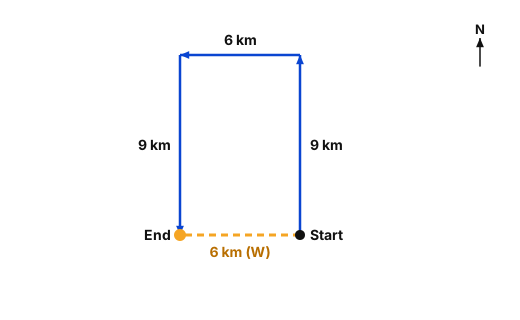
A person walks 9 km north, then 6 km west, and finally 9 km south. In which direction is he from his starting point?
एक व्यक्ति 9 km उत्तर, फिर 6 km पश्चिम और अंत में 9 km दक्षिण चलता है। वह अपने प्रारंभिक बिंदु से किस दिशा में है?
  1. ANorthउत्तर
  2. BSouthदक्षिण
  3. CEastपूर्व
  4. DWestपश्चिम
Show answer

Concept: After cancelling opposite moves, the leftover move gives the direction.

  1. 9 km north and 9 km south cancel.
  2. Remaining: 6 km west.
  3. So he is West of the start.

Trick: Only the un-cancelled leg decides the direction.

Answer: (D) West

अवधारणा: विपरीत चालें हटाने के बाद बची चाल ही दिशा बताती है।

  1. उत्तर में 9 जाकर दक्षिण में 9 लौटना = शून्य।
  2. बचा: 6 km पश्चिम।
  3. अतः वह आरंभ बिंदु से पश्चिम में है।

ट्रिक: जो चाल नहीं कटी, वही दिशा तय करती है।

उत्तर: (D) पश्चिम

SSC CHSLGeneral IntelligenceDirection – final positionSSC CHSL 2025 · 15 Nov Shift 2 →