Question bank

Q&A: practice questions with answers

Search questions on any topic. Filter by exam category, exam, subject and topic, try the question, then open the answer and explanation.

Courses – airGurukul

5,000 questions found.

Q4041.
A person walks 10 km east, then 17 km north, and finally 10 km west. How far is he from his starting point?
एक व्यक्ति 10 km पूर्व की ओर चलता है, फिर 17 km उत्तर की ओर तथा अंत में 10 km पश्चिम की ओर चलता है। वह अपने प्रारंभिक बिंदु से कितनी दूर है?
  1. A14 km
  2. B17 km
  3. C19 km
  4. D20 km
Show answer

Concept: Net displacement = combine moves on each axis.
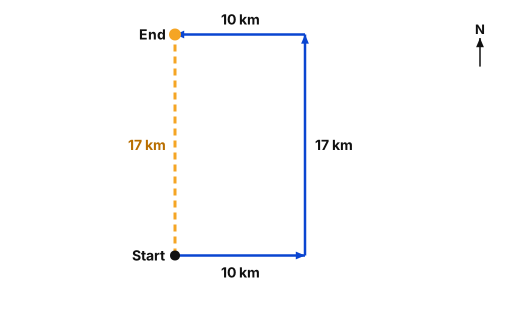
  1. East 10 and West 10 cancel → E–W = 0.
  2. North = 17 km.
  3. Distance from start = 17 km.

Trick: Same-length opposite legs → answer is simply the middle leg.

Answer: (B) 17 km

अवधारणा: हर अक्ष पर चालों को जोड़कर शुद्ध विस्थापन निकालें।

  1. 10 km पूर्व और 10 km पश्चिम कटे → 0।
  2. उत्तर = 17 km।
  3. आरंभ से दूरी = 17 km।

ट्रिक: बराबर विपरीत चालें हों तो बीच वाली चाल ही उत्तर है।

उत्तर: (B) 17 km
SSC CHSLGeneral IntelligenceDirection – net displacementSSC CHSL 2025 · 15 Nov Shift 2 →
Q4042.
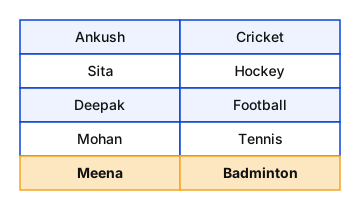
Five friends - Meena, Ankush, Mohan, Sita, and Deepak - play five different sports: Cricket, Badminton, Football, Tennis, and Hockey. Meena does not play Football or Tennis. Ankush plays Cricket. Sita plays Hockey. Mohan does not play Football. Deepak plays Football. Who plays Badminton?
पाँच मित्र - मीना, अंकुश, मोहन, सीता और दीपक - पाँच अलग-अलग खेल खेलते हैं: क्रिकेट, बैडमिंटन, फुटबॉल, टेनिस और हॉकी। मीना फुटबॉल या टेनिस नहीं खेलती है। अंकुश क्रिकेट खेलता है। सीता हॉकी खेलती है। मोहन फुटबॉल नहीं खेलता है। दीपक फुटबॉल खेलता है। बैडमिंटन कौन खेलता है?
  1. AMeenaमीना
  2. BMohanमोहन
  3. CSitaसीता
  4. DDeepakदीपक
Show answer

Concept: Fill fixed facts first, then use 'does not' clues to settle the rest.

  1. Fixed: Ankush–Cricket, Sita–Hockey, Deepak–Football.
  2. Left: Badminton, Tennis for Meena and Mohan.
  3. Meena does not play Tennis → Meena–Badminton, Mohan–Tennis.

Trick: Direct clues remove 3 of 5 items; one negative clue finishes the last pair.

Answer: (A) Meena

अवधारणा: पहले पक्की जानकारी भरें, फिर 'नहीं खेलता' वाले संकेत से बाकी तय करें।

  1. पक्का: अंकुश–क्रिकेट, सीता–हॉकी, दीपक–फुटबॉल।
  2. बचे: बैडमिंटन, टेनिस — मीना और मोहन के लिए।
  3. मीना टेनिस नहीं खेलती → मीना–बैडमिंटन, मोहन–टेनिस।

ट्रिक: सीधे संकेत 5 में से 3 हटा देते हैं; एक नकारात्मक संकेत से अंतिम जोड़ी तय।

उत्तर: (A) मीना

SSC CHSLGeneral IntelligencePuzzle – sports allotmentSSC CHSL 2025 · 15 Nov Shift 2 →
Q4043.
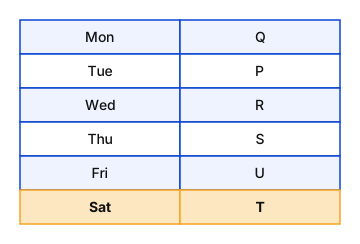
Six boys P, Q, R, S, T and U go to gym on Monday, Tuesday, Wednesday, Thursday, Friday and Saturday (not necessarily in the same order). No two boys go on the same day. S does not go on Wednesday and Saturday. Neither S nor T goes on Friday. P goes on Tuesday. R goes before S and after Q . Which of the following combination of boy and day is correct?
छह लड़के P, Q, R, S, T और U सोमवार, मंगलवार, बुधवार, गुरुवार, शुक्रवार तथा शनिवार को जिम जाते हैं (आवश्यक नहीं कि इसी क्रम में)। कोई भी दो लड़के एक ही दिन नहीं जाते। S बुधवार और शनिवार को नहीं जाता है। न तो S और न ही T शुक्रवार को जाता है। P मंगलवार को जाता है। R, S से पहले तथा Q के बाद जाता है। निम्नलिखित में से लड़के और दिन का कौन-सा संयोजन सही है?
  1. AU - WednesdayU - बुधवार
  2. BT - SaturdayT - शनिवार
  3. CQ - FridayQ - शुक्रवार
  4. DS - MondayS - सोमवार
Show answer

Concept: Place fixed people, then use 'before/after' chains to fix the rest.

  1. P = Tuesday. S cannot be Wed, Fri, Sat → S is Mon or Thu.
  2. Q before R before S → S needs two days before it → S = Thursday; Q = Monday, R = Wednesday.
  3. Fri, Sat left for T and U; T not Friday → T = Saturday, U = Friday.

Trick: Chains like Q→R→S push the last person late — test the latest allowed day first.

Answer: (B) T - Saturday

अवधारणा: पहले तय व्यक्ति रखें, फिर 'पहले/बाद' श्रृंखला से बाकी तय करें।

  1. P = मंगलवार। S बुध, शुक्र, शनि नहीं → S सोम या गुरु।
  2. Q, R से पहले और R, S से पहले → S से पहले दो दिन चाहिए → S = गुरुवार; Q = सोमवार, R = बुधवार।
  3. शुक्र, शनि बचे; T शुक्र नहीं → T = शनिवार, U = शुक्रवार।

ट्रिक: Q→R→S जैसी श्रृंखला में अंतिम व्यक्ति के लिए सबसे देर वाला मान्य दिन पहले जाँचें।

उत्तर: (B) T - शनिवार

SSC CHSLGeneral IntelligencePuzzle – days of the weekSSC CHSL 2025 · 15 Nov Shift 2 →
Q4044.
Identify the pair that does not belong to the group.
उस युग्म की पहचान कीजिए जो समूह से संबंधित नहीं है।
  1. ASun - Shine
  2. BMoon - Glow
  3. CStar - Twinkle
  4. DCloud - Fall
Show answer

Concept: Find the common link in most pairs, then spot the pair that breaks it.

  1. Sun–Shine, Moon–Glow, Star–Twinkle: second word = how the body gives light.
  2. A cloud gives no light, and 'fall' describes rain, not the cloud.
  3. Odd pair: Cloud – Fall.

Trick: Turn each pair into a sentence: 'The ___ ___s.' — 'The cloud falls' sounds wrong.

Answer: (D) Cloud - Fall

अवधारणा: अधिकतर युग्मों का साझा संबंध खोजें, फिर जो उसे तोड़े वह विषम।

  1. Sun–Shine, Moon–Glow, Star–Twinkle: दूसरा शब्द = प्रकाश देने का तरीका।
  2. बादल प्रकाश नहीं देता, और 'fall' बारिश के लिए है, बादल के लिए नहीं।
  3. विषम युग्म: Cloud – Fall।

ट्रिक: हर युग्म को वाक्य बनाकर पढ़ें: 'The cloud falls' अटपटा लगता है।

उत्तर: (D) Cloud - Fall

SSC CHSLGeneral IntelligenceOdd pair – object and its lightSSC CHSL 2025 · 15 Nov Shift 2 →
Q4045.
Find the odd sequence.
असंगत अनुक्रम ज्ञात कीजिए।
  1. AA - D - G - J
  2. BB−E−H−K
  3. CC−F−I−L
  4. DD−G−I−L
Show answer

Concept: Check the gap between letters in each option.

  1. A-D-G-J, B-E-H-K, C-F-I-L: each step +3.
  2. D-G-I-L: +3, +2, +3 → breaks the rule.

Trick: Use position values (D4 G7 I9 L12) — the uneven jump shows immediately.

Answer: (D) D−G−I−L

अवधारणा: हर विकल्प में अक्षरों के बीच का अंतर जाँचें।

  1. A-D-G-J, B-E-H-K, C-F-I-L: हर कदम +3।
  2. D-G-I-L: +3, +2, +3 → नियम टूटा।

ट्रिक: स्थान-मान लिखें (D4 G7 I9 L12) — असमान छलाँग तुरंत दिखती है।

उत्तर: (D) D−G−I−L

SSC CHSLGeneral IntelligenceOdd letter sequenceSSC CHSL 2025 · 15 Nov Shift 2 →
Q4046.
In the following analogy, find the option that does not conform to the same relationship.
निम्नलिखित सादृश्य में, उस विकल्प का चयन कीजिए जो समान संबंध का पालन नहीं करता है।
  1. ASchool : Students
  2. BHospital : Patients
  3. CMarket : Shopkeeper
  4. DBook : Page
Show answer

Concept: Find the shared relation, then pick the pair with a different relation.

  1. School–Students, Hospital–Patients, Market–Shopkeeper: place → people found there.
  2. Book–Page: whole → part (no people).
  3. So Book : Page does not conform.

Trick: Ask 'Who is found at the ___?' — it fails only for Book.

Answer: (D) Book : Page

अवधारणा: साझा संबंध पहचानें, फिर अलग संबंध वाला युग्म चुनें।

  1. School–Students, Hospital–Patients, Market–Shopkeeper: स्थान → वहाँ के लोग।
  2. Book–Page: पूर्ण → भाग (लोग नहीं)।
  3. अतः Book : Page मेल नहीं खाता।

ट्रिक: पूछें 'वहाँ कौन मिलता है?' — केवल Book पर यह प्रश्न असफल।

उत्तर: (D) Book : Page

SSC CHSLGeneral IntelligenceOdd analogy – place and peopleSSC CHSL 2025 · 15 Nov Shift 2 →
Q4047.
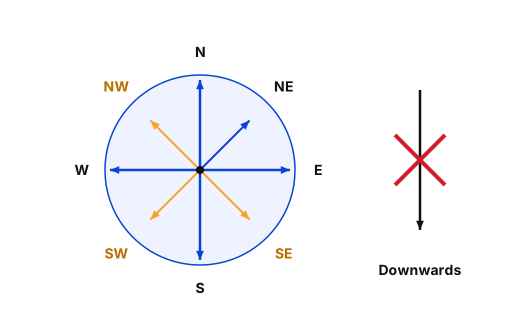
Which direction-based item is inconsistent with standard compass logic?
कौन-सी दिशा-आधारित मद मानक दिक्सूचक तर्क के अनुरूप नहीं है?
  1. ANorth- West
  2. BSouth- East
  3. CDownwards
  4. DSouth-West
Show answer

Concept: A compass shows only horizontal directions: 4 cardinal + 4 intermediate.

  1. North-West, South-East, South-West are intermediate (corner) directions.
  2. 'Downwards' is a vertical direction — not on a compass.
  3. Inconsistent item: Downwards.

Yaad rakhein: Compass = 8 flat directions (N, S, E, W, NE, NW, SE, SW); up/down never appear.

Answer: (C) Downwards

अवधारणा: कम्पास केवल क्षैतिज दिशाएँ दिखाता है: 4 मुख्य + 4 कोण दिशाएँ।

  1. NW, SE, SW — ये चारों कोनों वाली (intermediate) दिशाओं में आती हैं।
  2. 'Downwards' (नीचे की ओर) ऊर्ध्वाधर दिशा है — कम्पास पर नहीं।
  3. असंगत: Downwards।

याद रखें: कम्पास में 8 दिशाएँ (N, S, E, W, NE, NW, SE, SW) — ऊपर/नीचे नहीं।

उत्तर: (C) Downwards

SSC CHSLGeneral IntelligenceCompass directionsSSC CHSL 2025 · 15 Nov Shift 2 →
Q4048.
Identify the distinct number pattern.
भिन्न संख्या पैटर्न की पहचान कीजिए।
  1. A10-20-40
  2. B4-8 - 16
  3. C6-12-23
  4. D8−16−32
Show answer

Concept: Each term should be double the previous term.

  1. 10-20-40, 4-8-16, 8-16-32 → ×2 each step.
  2. 6-12-23: 12×2=24, not 23.
  3. Distinct pattern: 6-12-23.

Trick: Odd last term in a doubling pattern? Doubling always gives an even number → 23 is impossible.

Answer: (C) 6-12-23

अवधारणा: हर पद पिछले पद का दोगुना होना चाहिए।

  1. 10-20-40, 4-8-16, 8-16-32 → हर कदम ×2।
  2. 6-12-23: 12×2=24, 23 नहीं।
  3. अलग पैटर्न: 6-12-23।

ट्रिक: दोगुना करने पर संख्या हमेशा सम आती है → 23 (विषम) असंभव।

उत्तर: (C) 6-12-23

SSC CHSLGeneral IntelligenceOdd number pattern – doublingSSC CHSL 2025 · 15 Nov Shift 2 →
Q4049.
Two people have been caught on charges of theft.One of them has been caught earlier for theft, while there is no such information about the other one. No evidence has been found so far.. Which of the following would be the best and most appropriate decision ?
दो व्यक्तियों को चोरी के आरोप में पकड़ा गया है। उनमें से एक को पहले भी चोरी के लिए पकड़ा जा चुका है, जबकि दूसरे के विषय में ऐसी कोई सूचना नहीं है। अब तक कोई साक्ष्य नहीं मिला है। निम्नलिखित में से कौन-सा निर्णय सर्वोत्तम एवं सर्वाधिक उपयुक्त होगा?
  1. ASend both to jailदोनों को जेल भेज दिया जाए
  2. BTrust the new personनए व्यक्ति पर विश्वास किया जाए
  3. CWait until evidence is foundसाक्ष्य मिलने तक प्रतीक्षा की जाए
  4. DPunish only the previous offenderकेवल पूर्व अपराधी को दंड दिया जाए
Show answer

Concept: Without evidence, no one can be declared guilty or innocent.

  1. A past record only creates suspicion, not proof.
  2. Jailing both or punishing the old offender punishes without evidence.
  3. Trusting the new person clears him without evidence → best is to wait for evidence.

Trick: In decision questions, reject extreme actions (punish/trust blindly) and choose the fair, evidence-based step.

Answer: (C) Wait until evidence is found

अवधारणा: सबूत के बिना किसी को दोषी या निर्दोष नहीं ठहराया जा सकता।

  1. पुराना रिकॉर्ड सिर्फ़ शक पैदा करता है, सबूत नहीं।
  2. दोनों को जेल या पुराने अपराधी को सज़ा = बिना सबूत दंड।
  3. नए व्यक्ति पर भरोसा = बिना सबूत छोड़ना → सबसे अच्छा: सबूत का इंतज़ार।

ट्रिक: निर्णय प्रश्नों में अतिवादी कदम हटाएँ, निष्पक्ष और प्रमाण-आधारित विकल्प चुनें।

उत्तर: (C) साक्ष्य मिलने तक प्रतीक्षा की जाए

SSC CHSLGeneral IntelligenceDecision making – justiceSSC CHSL 2025 · 15 Nov Shift 2 →
Q4050.
If all the letters of the word 'EDUCATION' are arranged in alphabetical order from left to right, then position of how many letters remain unchanged after the re-arrangement ?
यदि शब्द 'EDUCATION' के सभी अक्षरों को बाएँ से दाएँ वर्णानुक्रम में व्यवस्थित किया जाए, तो पुनर्व्यवस्था के बाद कितने अक्षरों का स्थान अपरिवर्तित रहेगा?
  1. AOneएक
  2. BTwoदो
  3. CZeroशून्य
  4. DFourचार
Show answer

Concept: Write the word and its sorted form one below the other and compare positions.

  1. Original: EDUCATION.
  2. Sorted: ACDEINOTU.
  3. No position has the same letter → zero unchanged.

Trick: Check vowels/ends first: first letter E ≠ A, last N ≠ U — then scan the middle quickly.

Answer: (C) Zero

अवधारणा: शब्द और उसका क्रमबद्ध रूप एक-दूसरे के नीचे लिखकर स्थान मिलाएँ।

  1. मूल: EDUCATION।
  2. क्रमबद्ध: ACDEINOTU।
  3. किसी स्थान पर एक ही अक्षर नहीं → शून्य।

ट्रिक: पहले सिरों से जाँचें: E ≠ A, N ≠ U — फिर बीच के अक्षर जल्दी देखें।

उत्तर: (C) शून्य

SSC CHSLGeneral IntelligenceAlphabetical rearrangementSSC CHSL 2025 · 15 Nov Shift 2 →
Q4051.
Which number is NOT part of the natural numbers ?
कौन-सी संख्या प्राकृत संख्याओं का भाग नहीं है?
  1. A7
  2. B6
  3. C0
  4. D4
Show answer

Concept: Natural numbers are counting numbers: 1, 2, 3, …

  1. 7, 6 and 4 are counting numbers → natural.
  2. 0 is not used for counting → it is a whole number, not natural.

Yaad rakhein: Whole numbers = Natural numbers + 0. So 0 is the only whole number that is not natural.

Answer: (C) 0

अवधारणा: 1 से शुरू होने वाली counting numbers को Natural numbers कहते हैं।

  1. 7, 6, 4 — तीनों Natural हैं।
  2. 0 को Whole numbers में रखा जाता है, Natural में नहीं।

याद रखें: W = N + {0}; अतः Whole होकर भी Natural न होने वाला अकेला अंक 0 है।

उत्तर: (C) 0

SSC CHSLQuantitative AptitudeNumber system – natural numbersSSC CHSL 2025 · 15 Nov Shift 2 →
Q4052.
Which number is in both natural and integer sets ?
कौन-सी संख्या प्राकृत संख्याओं तथा पूर्णांकों, दोनों समुच्चयों में है?
  1. A0
  2. B8
  3. C-8
  4. DNoneकोई नहीं
Show answer

Concept: Every natural number is also an integer (N ⊂ W ⊂ Z).

  1. Integers include negatives and zero, so −8 and 0 qualify only as integers.
  2. 8 counts things → natural, and therefore also an integer.

Yaad rakhein: Any positive whole number like 8 sits in N, W, Z, Q and R all at once.

Answer: (B) 8

अवधारणा: N ⊂ W ⊂ Z — Natural समूह पूरा का पूरा Integer समूह में शामिल है।

  1. Integers में ऋणात्मक संख्याएँ व 0 भी आते हैं; −8 और 0 केवल Integer हैं।
  2. 8 गिनती की संख्या → Natural, इसलिए Integer भी।

याद रखें: 8 जैसी धनात्मक पूर्ण संख्या N, W, Z, Q, R सभी में होती है।

उत्तर: (B) 8

SSC CHSLQuantitative AptitudeNumber system – natural and integersSSC CHSL 2025 · 15 Nov Shift 2 →
Q4053.
A trader buys 220 mixed stationery boxes at a rate of ₹160 each. He spends ₹1,600 on transportation and packaging. He sells 120 boxes at ₹180 each and the remaining at ₹170 each. What is his total profit percentage?
एक व्यापारी ₹160 प्रति बक्से की दर से 220 मिश्रित स्टेशनरी बक्से खरीदता है। वह परिवहन तथा पैकेजिंग पर ₹1,600 व्यय करता है। वह 120 बक्से ₹180 प्रति बक्सा तथा शेष ₹170 प्रति बक्सा की दर से बेचता है। उसका कुल लाभ प्रतिशत कितना है?
  1. A4.2%
  2. B4.53 %
  3. C4.75%
  4. D44146%
Show answer

Concept: Transport/packing expenses are added to the cost price.

  1. CP=220×160+1600=35200+1600= ₹36,800.
  2. SP=120×180+100×170=21600+17000= ₹38,600.
  3. Profit = ₹1,800 → Profit % = 180036800×100=22546= 44146% (≈4.89%).

Trick: 1% of 36800 = 368; 1800÷368 is a little under 5 → only (D) lies between 4.8 and 5.

Answer: (D) 44146%

अवधारणा: ढुलाई/पैकिंग खर्च क्रय मूल्य में जोड़ा जाता है।

  1. CP=220×160+1600= ₹36,800।
  2. SP=120×180+100×170=21600+17000= ₹38,600।
  3. लाभ = ₹1,800 → लाभ % = 180036800×100=22546= 44146% (≈4.89%)।

ट्रिक: 36800 का 1% = 368; 1800÷368 = 5 से थोड़ा कम → केवल (D) 4.8 और 5 के बीच है।

उत्तर: (D) 44146%

SSC CHSLQuantitative AptitudeProfit % with overhead expensesSSC CHSL 2025 · 15 Nov Shift 2 →
Q4054.
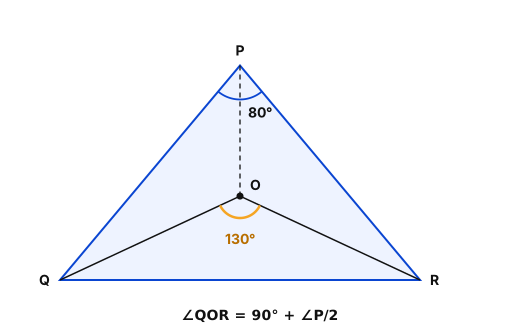
In triangle PQR,O is incenter. ∠QOR=130∘. Find ∠QPR.
त्रिभुज PQR,O अंतःकेंद्र है। ∠QOR=130∘। ∠QPR ज्ञात कीजिए।
  1. A40°
  2. B50°
  3. C80°
  4. D70°
Show answer

Concept: For incentre O: ∠QOR=90∘+∠P2.

  1. 130∘=90∘+∠P2.
  2. ∠P2=40∘ → ∠QPR= 80∘.

Trick: Incentre: 90+A2; Excentre: 90−A2; Circumcentre: 2A; Orthocentre: 180−A.

Answer: (C) 80°

अवधारणा: अंतःकेंद्र O के लिए: ∠QOR=90∘+∠P2।

  1. 130∘=90∘+∠P2।
  2. ∠P2=40∘ → ∠QPR= 80∘।

ट्रिक: अंतःकेंद्र: 90+A2; बाह्यकेंद्र: 90−A2; परिकेंद्र: 2A; लंबकेंद्र: 180−A।

उत्तर: (C) 80°

SSC CHSLQuantitative AptitudeIncentre angleSSC CHSL 2025 · 15 Nov Shift 2 →
Q4055.
Find the value of (tan⁡40∘)2(cosec50∘)2+ (cot⁡40∘)2(sec⁡50∘)2+2tan⁡35∘tan⁡45∘tan⁡55∘
(tan⁡40∘)2(cosec50∘)2+ (cot⁡40∘)2(sec⁡50∘)2+2tan⁡35∘tan⁡45∘tan⁡55∘ का मान ज्ञात कीजिए।
  1. A4
  2. B3
  3. C5
  4. D6
Show answer

Concept: For A+B=90∘: cscB=secA, secB=cscA, tanB=cotA.

  1. tan240∘csc250∘=tan240∘sec240∘=sin240∘.
  2. cot240∘sec250∘=cot240∘csc240∘=cos240∘.
  3. Sum = sin240∘+cos240∘=1; and 2·tan35∘·tan45∘·tan55∘=2×1×1=2.
  4. Total = 1+2= 3.

Trick: tanθ·tan(90∘−θ)=1 — pairs like 35∘–55∘ vanish to 1 instantly.

Answer: (B) 3

अवधारणा: A+B=90∘ हो तो: cscB=secA, secB=cscA, tanB=cotA।

  1. tan240∘csc250∘=tan240∘sec240∘=sin240∘।
  2. cot240∘sec250∘=cot240∘csc240∘=cos240∘।
  3. योग = 1; और 2·tan35∘·tan45∘·tan55∘=2×1×1=2।
  4. कुल = 1+2= 3।

ट्रिक: tanθ·tan(90∘−θ)=1 — 35∘–55∘ जैसी जोड़ी सीधे 1 बन जाती है।

उत्तर: (B) 3

SSC CHSLQuantitative AptitudeTrigonometry – complementary anglesSSC CHSL 2025 · 15 Nov Shift 2 →
Q4056.
If 2×sin⁡p×cos⁡(90∘−p)=1, where 0∘<p<90∘, then find the value of sin⁡(2p)+cos⁡(2p).
यदि 2×sin⁡p×cos⁡(90∘−p)=1, जहाँ 0∘<p<90∘, तो sin⁡(2p)+cos⁡(2p) का मान ज्ञात कीजिए।
  1. A3
  2. B4
  3. C1
  4. D0
Show answer

Concept: cos(90∘−p)=sinp.

  1. 2sinp·sinp=1 → sin2p=12 → sinp=12.
  2. p=45∘ → 2p=90∘.
  3. sin90∘+cos90∘=1+0= 1.

Trick: 2sin2p=1 is the standard signal for p=45∘.

Answer: (C) 1

अवधारणा: cos(90∘−p)=sinp।

  1. 2sinp·sinp=1 → sin2p=12 → sinp=12।
  2. p=45∘ → 2p=90∘।
  3. sin90∘+cos90∘=1+0= 1।

ट्रिक: 2sin2p=1 दिखते ही p=45∘ समझें।

उत्तर: (C) 1

SSC CHSLQuantitative AptitudeTrigonometric equationSSC CHSL 2025 · 15 Nov Shift 2 →
Q4057.
An amount invested on simple interest at 'R%' p.a. amounts to Rs. 10,504 and Rs. 13,384 in 4 years and 8 years, respectively. Find the value of 'R'.
साधारण ब्याज पर 'R%' वार्षिक दर से निवेश की गई एक राशि 4 वर्ष तथा 8 वर्ष में क्रमशः Rs. 10,504 तथा Rs. 13,384 हो जाती है। 'R' का मान ज्ञात कीजिए।
  1. A9.21%
  2. B8.44%
  3. C9.44%
  4. D8.33%
Show answer

Concept: Under SI, interest per year is constant; difference of amounts = interest for the gap years.

  1. Interest for 4 years = 13384−10504= ₹2,880 → 1 year = ₹720.
  2. Principal = 10504−2880= ₹7,624.
  3. R=7207624×100≈ 9.44%.

Trick: Since the gap (4 yrs) equals the first period (4 yrs), P=2×A1−A2=21008−13384=7624 directly.

Answer: (C) 9.44%

अवधारणा: साधारण ब्याज में हर वर्ष का ब्याज बराबर; मिश्रधनों का अंतर = बीच के वर्षों का ब्याज।

  1. 4 वर्ष का ब्याज = 13384−10504= ₹2,880 → 1 वर्ष = ₹720।
  2. मूलधन = 10504−2880= ₹7,624।
  3. R=7207624×100≈ 9.44%।

ट्रिक: अंतराल (4 वर्ष) = पहली अवधि (4 वर्ष) हो, तो P=2×A1−A2=21008−13384=7624।

उत्तर: (C) 9.44%

SSC CHSLQuantitative AptitudeSimple interest – rate from two amountsSSC CHSL 2025 · 15 Nov Shift 2 →
Q4058.
A sum of money becomes 340% of itself in 8 years at simple interest. Find the simple interest earned when Rs. 4000 is invested at the same rate for 3 years.
एक धनराशि साधारण ब्याज पर 8 वर्षों में स्वयं की 340% हो जाती है। इसी दर पर Rs. 4000 को 3 वर्षों के लिए निवेश करने पर अर्जित साधारण ब्याज ज्ञात कीजिए।
  1. ARs. 3600
  2. BRs. 4200
  3. CRs. 4400
  4. DRs. 4500
Show answer

Concept: Amount = 340% of P → SI = 240% of P.

  1. Rate = 240%÷8=30% per year.
  2. SI on ₹4000 for 3 years = 4000×30×3100= ₹3,600.

Trick: 3 years ×30%=90% → 90% of 4000 = 3600 in one line.

Answer: (A) Rs. 3600

अवधारणा: मिश्रधन = P का 340% → ब्याज = P का 240%।

  1. सालाना rate = 240÷8=30%।
  2. ₹4000 पर 3 वर्ष का SI = 4000×30×3100= ₹3,600।

ट्रिक: 3 वर्ष ×30%=90% → 4000 का 90% = 3600।

उत्तर: (A) Rs. 3600

SSC CHSLQuantitative AptitudeSimple interest – rate from growth %SSC CHSL 2025 · 15 Nov Shift 2 →
Q4059.
Mohit distributed 80% of the total money he had between Saroj and Sita in the ratio 7:9, respectively.Saroj and Sita deposited their respective shares at 7% and 11% simple interest per annum for 5 years. If the difference in the interest earned by Sita and Saroj is Rs. 3,304, find the total amount Mohit had.
मोहित ने अपने पास की कुल धनराशि का 80% सरोज और सीता के बीच क्रमशः 7:9 के अनुपात में वितरित किया। सरोज और सीता ने अपने-अपने हिस्से को क्रमशः 7% तथा 11% वार्षिक साधारण ब्याज की दर पर 5 वर्षों के लिए जमा किया। यदि सीता और सरोज द्वारा अर्जित ब्याज का अंतर Rs. 3,304 है, तो मोहित के पास कुल कितनी धनराशि थी?
  1. ARs. 22,400
  2. BRs. 26,432
  3. CRs. 24,900
  4. DRs, 29,200
Show answer

Concept: Interest=Share×Rate×Time100; compare the two interests.

  1. Shared money = 80% of x=4x5; Saroj = 716 of it =7x20, Sita =9x20.
  2. Saroj's SI=7x20×35%=49x400; Sita's SI=9x20×55%=99x400.
  3. Difference = 50x400=x8=3304 → x= ₹26,432.

Trick: Answer must be a multiple of 8 (x8=3304) — only 26432=8×3304.

Answer: (B) Rs. 26,432

अवधारणा: ब्याज=हिस्सा×दर×समय100; दोनों ब्याज की तुलना करें।

  1. बाँटी गई राशि = x का 80%=4x5; सरोज =7x20, सीता =9x20।
  2. सरोज का SI=7x20×35%=49x400; सीता का SI=9x20×55%=99x400।
  3. अंतर = 50x400=x8=3304 → x= ₹26,432।

ट्रिक: x8=3304 → उत्तर सीधे 3304×8=26432।

उत्तर: (B) Rs. 26,432

SSC CHSLQuantitative AptitudeSimple interest – ratio sharesSSC CHSL 2025 · 15 Nov Shift 2 →
Q4060.
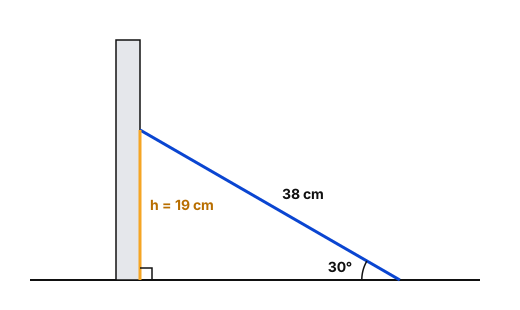
A stick of length 38 cm is at an inclination of 30° to the floor with its bottom touching the floor of the wall. Find the length from the floor to the point where the stick touches the wall.
38 cm लंबाई की एक छड़ फर्श से 30° के झुकाव पर है तथा उसका निचला सिरा दीवार के फर्श को स्पर्श कर रहा है। फर्श से उस बिंदु तक की लंबाई ज्ञात कीजिए जहाँ छड़ दीवार को स्पर्श करती है।
  1. A26 cm
  2. B143cm
  3. C19 cm
  4. D163cm
Show answer

Concept: Stick = hypotenuse; height on wall = hypotenuse × sin(angle with floor).

  1. Angle with the floor =30∘, so height =38×sin30∘.
  2. =38×12= 19 cm.

Trick: The side opposite 30∘ in a right triangle is half the hypotenuse.

Answer: (C) 19 cm

अवधारणा: छड़ = कर्ण; दीवार पर ऊँचाई = कर्ण × sin(फ़र्श से कोण)।

  1. फ़र्श से कोण =30∘, अतः ऊँचाई =38×sin30∘।
  2. =38×12= 19 cm।

ट्रिक: समकोण त्रिभुज में 30∘ के सामने की भुजा = कर्ण का आधा।

उत्तर: (C) 19 cm

SSC CHSLQuantitative AptitudeHeights – stick against a wallSSC CHSL 2025 · 15 Nov Shift 2 →