Question bank

Q&A: practice questions with answers

Search questions on any topic. Filter by exam category, exam, subject and topic, try the question, then open the answer and explanation.

Courses – airGurukul

5,000 questions found.

Q4061.
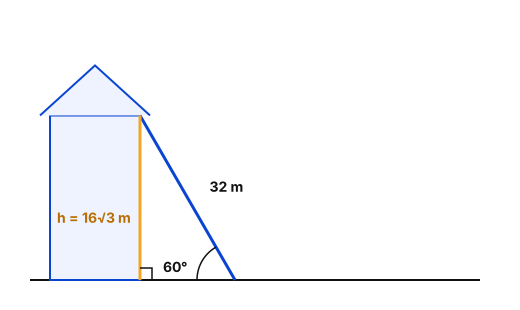
If a 32 metres long rope is stretched from the ground to the top of the house such that the rope makes an angle of 60∘ with the ground, then find the height of the house.
यदि 32 मीटर लंबी एक रस्सी भूमि से मकान की चोटी तक इस प्रकार तनी हुई है कि रस्सी भूमि के साथ 60∘ का कोण बनाती है, तो मकान की ऊँचाई ज्ञात कीजिए।
  1. A163 metres163 मीटर
  2. B(153) metres(153) मीटर
  3. C323 metres323 मीटर
  4. D15 metres15 मीटर
Show answer

Concept: Height=rope (hypotenuse)×sinθ.

  1. sin60∘=h32 → 32=h32.
  2. h=163 m.

Trick: 30-60-90 triangle sides are in ratio 1:3:2 → hypotenuse 32 gives sides 16 and 163.

Answer: (A) 163 metres

अवधारणा: ऊँचाई=रस्सी (कर्ण)×sinθ।

  1. sin60∘=h32 → 32=h32।
  2. h=163 m।

ट्रिक: 30-60-90 त्रिभुज की भुजाएँ 1:3:2 → कर्ण 32 तो भुजाएँ 16 और 163।

उत्तर: (A) 163 मीटर

SSC CHSLQuantitative AptitudeHeights – rope at 60°SSC CHSL 2025 · 15 Nov Shift 2 →
Q4062.
A tank has two pipes, one can fill it with water in 16 hours and the other can empty it in 10 hours. In how many hours will the tank be emptied if both the pipes are opened together when 15 th of the tank is already filled with water?
एक टंकी में दो पाइप हैं, इनमें से एक उसे 16 घंटे में पानी से भर सकता है तथा दूसरा उसे 10 घंटे में खाली कर सकता है। यदि टंकी का 15 भाग पहले से पानी से भरा हो और दोनों पाइप एक साथ खोल दिए जाएँ, तो टंकी कितने घंटे में खाली हो जाएगी?
  1. A6 hours 30 min6 घंटे 30 मिनट
  2. B5 hours 20 min5 घंटे 20 मिनट
  3. C3 hour 40 min3 घंटे 40 मिनट
  4. D4 hours 35 min4 घंटे 35 मिनट
Show answer

Concept: Use LCM as tank capacity and add/subtract pipe efficiencies.

  1. Capacity = LCM(16, 10) = 80 units; fill = +5/hr, empty = −8/hr → net −3/hr.
  2. Water present = 15×80=16 units.
  3. Time = 163=513 hr = 5 hours 20 min.

Trick: Net emptying fraction = 110−116=380; time = 15÷380=163 hr.

Answer: (B) 5 hours 20 min

अवधारणा: LCM को टंकी की क्षमता मानकर पाइपों की दक्षता जोड़ें/घटाएँ।

  1. क्षमता = LCM(16, 10) = 80 इकाई; भरने वाला +5/घंटा, खाली करने वाला −8/घंटा → शुद्ध −3/घंटा।
  2. पानी = 15×80=16 इकाई।
  3. समय = 163=513 घंटे = 5 घंटे 20 मिनट।

ट्रिक: 13 घंटा = 20 मिनट — भिन्न को तुरंत मिनट में बदलें।

उत्तर: (B) 5 घंटे 20 मिनट

SSC CHSLQuantitative AptitudePipes – emptying a partly filled tankSSC CHSL 2025 · 15 Nov Shift 2 →
Q4063.
If 5 women and 8 girls can do a piece of work in 16 days, while 14 women and 36 girls can do the same in 4 days, how much time will 4 women and 3 girls do the same type of work ?
यदि 5 महिलाएँ और 8 लड़कियाँ किसी कार्य को 16 दिनों में कर सकती हैं, जबकि 14 महिलाएँ और 36 लड़कियाँ उसी कार्य को 4 दिनों में कर सकती हैं, तो 4 महिलाएँ और 3 लड़कियाँ उसी प्रकार के कार्य को कितने समय में करेंगी?
  1. A40 days40 दिन
  2. B32 days 12 hours32 दिन 12 घंटे
  3. C32 days32 दिन
  4. D32 days 3 hours 38 min32 दिन 3 घंटे 38 मिनट
Show answer

Concept: Same work: (workers × days) on both sides are equal.

  1. Divide both sides by 4: 4(5W+8G)=14W+36G → 20W+32G=14W+36G → 6W=4G → W:G=2:3.
  2. Using group 2: work = 4×(14×2+36×3)=4×136=544 units.
  3. 4W+3G=8+9=17/day → 54417= 32 days.

Trick: Cancel the common factor of the day counts first — smaller numbers, fewer mistakes.

Answer: (C) 32 days

अवधारणा: काम समान हो तो (कामगार × दिन) दोनों ओर बराबर।

  1. दोनों ओर 4 से भाग: 20W+32G=14W+36G → 6W=4G → W:G=2:3।
  2. दूसरे समूह से: काम = 4×(14×2+36×3)=4×136=544 इकाई।
  3. 4W+3G=8+9=17/दिन → 54417= 32 दिन।

ट्रिक: दिनों का साझा गुणनखंड पहले काटें — छोटी संख्याएँ, कम गलती।

उत्तर: (C) 32 दिन

SSC CHSLQuantitative AptitudeTime and work – women and girlsSSC CHSL 2025 · 15 Nov Shift 2 →
Q4064.
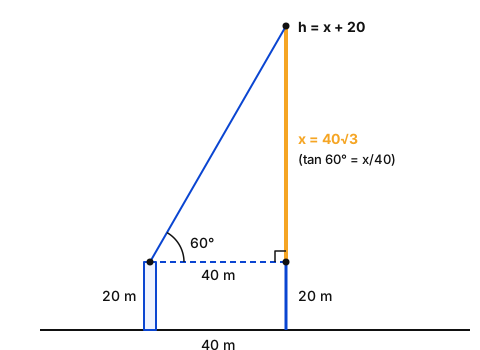
Two vertical poles stand on the ground, 40 meters apart. The height of the smaller pole is 20 meters. From the top of the smaller pole, the angle of elevation of the top of the taller pole is 60∘. Find the height of the taller pole.
दो ऊर्ध्वाधर खंभे भूमि पर एक-दूसरे से 40 मीटर की दूरी पर खड़े हैं। छोटे खंभे की ऊँचाई 20 मीटर है। छोटे खंभे की चोटी से बड़े खंभे की चोटी का उन्नयन कोण 60∘ है। बड़े खंभे की ऊँचाई ज्ञात कीजिए।
  1. A403+20m
  2. B423+20m
  3. C403+10m
  4. D405+20m
Show answer

Concept: Draw a horizontal from the top of the short pole; use tanθ=heightbase above it.

  1. Extra height x above 20 m: tan60∘=x40 → x=403.
  2. Taller pole =403+20 m.

Trick: Always add back the smaller pole's height after solving the upper triangle.

Answer: (A) 403+20m

अवधारणा: छोटे खंभे के शीर्ष से क्षैतिज रेखा खींचें; उसके ऊपर tanθ=ऊँचाईआधार।

  1. 20 m से ऊपर की ऊँचाई x: tan60∘=x40 → x=403।
  2. ऊँचा खंभा =403+20 m।

ट्रिक: ऊपरी त्रिभुज हल करने के बाद छोटे खंभे की ऊँचाई जोड़ना न भूलें।

उत्तर: (A) 403+20m

SSC CHSLQuantitative AptitudeHeights – two polesSSC CHSL 2025 · 15 Nov Shift 2 →
Q4065.
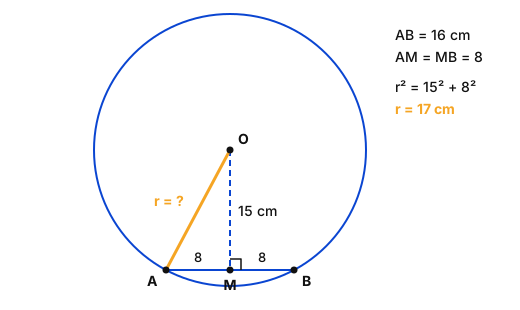
A chord of length 16 cm is 15 cm from the center. Find the radius.
16 cm लंबाई की एक जीवा केंद्र से 15 cm की दूरी पर है। त्रिज्या ज्ञात कीजिए।
  1. A21 cm
  2. B17 cm
  3. C18 cm
  4. D14 cm
Show answer

Concept: The perpendicular from the centre bisects a chord: r2=d2+(chord2)2.

  1. Half chord = 8 cm, distance = 15 cm.
  2. r=152+82=289= 17 cm.

Trick: 8–15–17 triplet — answer without squaring.

Answer: (B) 17 cm

अवधारणा: केंद्र से जीवा पर लंब उसे समद्विभाजित करता है: r2=d2+(जीवा2)2।

  1. आधी जीवा = 8 cm, दूरी = 15 cm।
  2. r=225+64=289= 17 cm।

ट्रिक: 8–15–17 त्रिक — वर्ग किए बिना उत्तर।

उत्तर: (B) 17 cm

SSC CHSLQuantitative AptitudeCircle – chord and radiusSSC CHSL 2025 · 15 Nov Shift 2 →
Q4066.
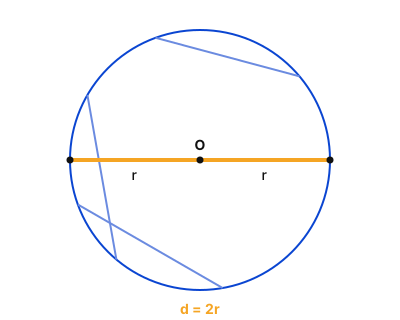
Which is the largest chord of a circle ?
वृत्त की सबसे बड़ी जीवा कौन-सी होती है?
  1. ARadiusत्रिज्या
  2. BDiameterव्यास
  3. CTangentस्पर्श रेखा
  4. DArcचाप
Show answer

Concept: A chord joins two points on a circle; the one through the centre is longest.

  1. Chord through the centre = diameter = 2r.
  2. Radius is not a chord (one end at centre); tangent touches at one point; arc is curved.

Yaad rakhein: Every diameter is a chord, but not every chord is a diameter.

Answer: (B) Diameter

अवधारणा: जीवा वृत्त के दो बिंदुओं को जोड़ती है; केंद्र से गुजरने वाली जीवा सबसे बड़ी।

  1. केंद्र से गुजरने वाली जीवा = व्यास = 2r।
  2. त्रिज्या जीवा नहीं (एक सिरा केंद्र पर); स्पर्श रेखा एक बिंदु छूती है; चाप वक्र है।

याद रखें: हर व्यास जीवा है, पर हर जीवा व्यास नहीं।

उत्तर: (B) व्यास

SSC CHSLQuantitative AptitudeCircle – largest chordSSC CHSL 2025 · 15 Nov Shift 2 →
Q4067.
The length and breadth of a rectangle are in the ratio 16 : 14, respectively, and the perimeter of the rectangle is 180 cm . If the area of the rectangle is equal to the area of the top surface of a solid cylinder, then find the curved surface area of the cylinder given that its radius is 110% of its height.
एक आयत की लंबाई और चौड़ाई क्रमशः 16 : 14 के अनुपात में हैं तथा आयत का परिमाप 180 cm है। यदि आयत का क्षेत्रफल एक ठोस बेलन के ऊपरी पृष्ठ के क्षेत्रफल के बराबर है, तो बेलन का वक्र पृष्ठीय क्षेत्रफल ज्ञात कीजिए, जबकि उसकी त्रिज्या उसकी ऊँचाई का 110% है।
  1. A3665.45cm2
  2. B3465.55cm2
  3. C3675.35cm2
  4. D3685.65cm2
Show answer

Concept: CSA=2πrh; top surface area = πr2.

  1. 16x+14x=90 → x=3 → 48×42=2016cm2=πr2.
  2. r=1.1h → h=r1.1.
  3. CSA=2πr×r1.1=2×20161.1=40321.1≈ 3665.45cm2.

Trick: No need to find r: CSA=2(πr2)1.1 — reuse the area directly.

Answer: (A) 3665.45cm2

अवधारणा: वक्र पृष्ठ = 2πrh; ऊपरी सतह = πr2।

  1. 16x+14x=90 → x=3 → 48×42=2016cm2=πr2।
  2. r=1.1h → h=r1.1।
  3. CSA=2πr×r1.1=40321.1≈ 3665.45cm2।

ट्रिक: r निकालने की ज़रूरत नहीं: CSA=2(πr2)1.1।

उत्तर: (A) 3665.45cm2

SSC CHSLQuantitative AptitudeCylinder – CSA from top areaSSC CHSL 2025 · 15 Nov Shift 2 →
Q4068.
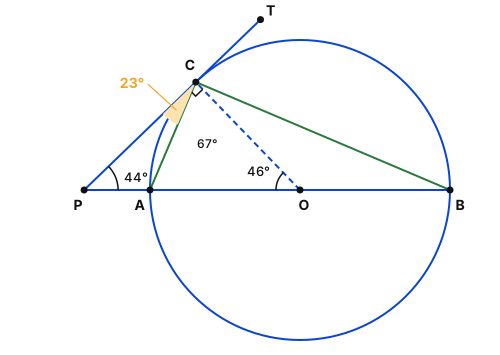
PT is a tangent at point C on a circle with centre O and AB is a diameter.
When BA is produced, it meets PT at point P . If ∠BPC=44∘, then what is the measure of ∠ACP ?
PT, केंद्र O वाले एक वृत्त पर बिंदु C पर स्पर्श रेखा है तथा AB एक व्यास है।
जब BA को आगे बढ़ाया जाता है, तो वह PT से बिंदु P पर मिलती है। यदि ∠BPC=44∘ है, तो ∠ACP का माप क्या है?
  1. A27°
  2. B23*
  3. C29*
  4. D38*
Show answer

Concept: Radius ⟂ tangent at the point of contact.

  1. ∠OCP=90∘ → ∠COP=180∘−90∘−44∘=46∘.
  2. OA=OC → ∠OCA=180∘−46∘2=67∘.
  3. ∠ACP=90∘−67∘= 23∘.

Trick: Shortcut: ∠ACP=∠ABC (alternate segment) =12∠AOC=46∘2=23∘.

Answer: (B) 23*

अवधारणा: Contact point तक खींची radius और tangent के बीच 90∘ बनता है।

  1. ∠OCP=90∘ → ∠COP=180∘−90∘−44∘=46∘।
  2. OA=OC → ∠OCA=180∘−46∘2=67∘।
  3. ∠ACP=90∘−67∘= 23∘।

ट्रिक: शॉर्टकट: ∠ACP=∠ABC (एकांतर खंड) =∠AOC2=23∘।

उत्तर: (B) 23*

SSC CHSLQuantitative AptitudeTangent and diameter angleSSC CHSL 2025 · 15 Nov Shift 2 →
Q4069.
Simplify. (20+45)÷5
सरल कीजिए। (20+45)÷5
  1. A10
  2. B12
  3. C5
  4. D8
Show answer

Concept: Take out perfect squares from each root.

  1. 20=25, 45=35.
  2. Sum =55.
  3. 55÷5= 5.

Trick: Divide term by term: 205+455=4+9=2+3=5.

Answer: (C) 5

अवधारणा: हर करणी को k5 के रूप में लिखें।

  1. 20=25, 45=35।
  2. योग =55।
  3. 55÷5= 5।

ट्रिक: अलग-अलग भाग दें: 4+9=2+3=5।

उत्तर: (C) 5

SSC CHSLQuantitative AptitudeSurds – simplifySSC CHSL 2025 · 15 Nov Shift 2 →
Q4070.
Simplify. (6+26)(6−26)
सरल कीजिए। (6+26)(6−26)
  1. A11
  2. B12
  3. C10
  4. D16
Show answer

Concept: (a+b)(a−b)=a2−b2.

  1. a=6, b=26.
  2. 62−(26)2=36−24= 12.

Trick: (kn)2=k2×n → (26)2=4×6=24.

Answer: (B) 12

अवधारणा: (a+b)(a−b)=a2−b2।

  1. a=6, b=26।
  2. 36−(26)2=36−24= 12।

ट्रिक: (kn)2=k2×n → (26)2=4×6=24।

उत्तर: (B) 12

SSC CHSLQuantitative AptitudeSurds – (a + b)(a − b)SSC CHSL 2025 · 15 Nov Shift 2 →
Q4071.
Find the value of 72+75+28+54+90+100
72+75+28+54+90+100 का मान ज्ञात कीजिए।
  1. A9
  2. B8
  3. C7
  4. D6
Show answer

Concept: Work from the innermost root outward.

  1. 100=10 → 90+10=10.
  2. 54+10=8 → 28+8=6.
  3. 75+6=9 → 72+9= 9.

Trick: Each step makes a perfect square — if it doesn't, recheck the arithmetic.

Answer: (A) 9

अवधारणा: सबसे भीतरी मूल से शुरू करके बाहर की ओर हल करें।

  1. 100=10 → 90+10=10।
  2. 54+10=8 → 28+8=6।
  3. 75+6=9 → 72+9= 9।

ट्रिक: हर चरण में पूर्ण वर्ग बनता है — न बने तो गणना दोबारा जाँचें।

उत्तर: (A) 9

SSC CHSLQuantitative AptitudeNested square rootsSSC CHSL 2025 · 15 Nov Shift 2 →
Q4072.
Rationalize. 1(7+2)
परिमेयकरण कीजिए। 1(7+2)
  1. A(7−2)5
  2. B(7+2))5
  3. C(7−3))5
  4. D(7+3))5
Show answer

Concept: Multiply numerator and denominator by the conjugate.

  1. Multiply by 7−27−2.
  2. Denominator = 7−2=5.
  3. Result = 7−25.

Trick: 1a+b=a−ba−b — sign flips, denominator = difference.

Answer: (A) (7−2)5

अवधारणा: अंश और हर को संयुग्मी (conjugate) से गुणा करें।

  1. 7−27−2 से गुणा।
  2. हर = 7−2=5।
  3. परिणाम = 7−25।

ट्रिक: 1a+b=a−ba−b — चिह्न बदलता है, हर = अंतर।

उत्तर: (A) (7−2)5

SSC CHSLQuantitative AptitudeRationalising the denominatorSSC CHSL 2025 · 15 Nov Shift 2 →
Q4073.
Simplify. (43+2)2
सरल कीजिए। (43+2)2
  1. A50+86
  2. B50−86
  3. C52+86
  4. D52−86
Show answer

Concept: (a+b)2=a2+b2+2ab.

  1. a=43 → a2=48; b=2 → b2=2.
  2. 2ab=2×43×2=86.
  3. Total =50+86.

Trick: Rational part = 48+2=50 and sign '+' → only option A.

Answer: (A) 50+86

अवधारणा: (a+b)2=a2+b2+2ab।

  1. a=43 → a2=48; b=2 → b2=2।
  2. 2ab=2×43×2=86।
  3. कुल =50+86।

ट्रिक: परिमेय भाग 50 और चिह्न '+' → केवल विकल्प A।

उत्तर: (A) 50+86

SSC CHSLQuantitative AptitudeSquare of a surd binomialSSC CHSL 2025 · 15 Nov Shift 2 →
Q4074.
Simplify the expression. (6+3)2+(6−3)2+2(6+3)(6− 3 )
व्यंजक को सरल कीजिए। (6+3)2+(6−3)2+2(6+3)(6− 3 )
  1. A25
  2. B20
  3. C28
  4. D24
Show answer

Concept: a2+b2+2ab=(a+b)2.

  1. a=6+3, b=6−3.
  2. a+b=26.
  3. (26)2= 24.

Trick: Spot the full-square pattern before expanding — the 3 terms cancel.

Answer: (D) 24

अवधारणा: a2+b2+2ab=(a+b)2।

  1. a=6+3, b=6−3।
  2. a+b=26।
  3. (26)2= 24।

ट्रिक: विस्तार से पहले पूर्ण वर्ग पहचानें — 3 वाले पद कट जाते हैं।

उत्तर: (D) 24

SSC CHSLQuantitative AptitudeIdentity a² + b² + 2abSSC CHSL 2025 · 15 Nov Shift 2 →
Q4075.
The average weight of 28 students is 65 kg . When the teacher's weight is included, the average becomes 67 kg . What is the weight of the teacher ?
28 विद्यार्थियों का औसत भार 65 kg है। शिक्षक का भार सम्मिलित करने पर औसत 67 kg हो जाता है। शिक्षक का भार क्या है?
  1. A121 kg
  2. B123 kg
  3. C109 kg
  4. D118 kg
Show answer

Concept: New person's value = new average + (old count × increase).

  1. Increase = 67−65=2 kg.
  2. Teacher = 67+28×2= 123 kg.
  3. Check: 29×67−28×65=1943−1820=123.

Trick: Newcomer brings the new average for himself plus 'rise × old count' for everyone else.

Answer: (B) 123 kg

अवधारणा: नए व्यक्ति का मान = नया औसत + (पुरानी संख्या × वृद्धि)।

  1. वृद्धि = 67−65=2 kg।
  2. शिक्षक = 67+28×2= 123 kg।
  3. जाँच: 1943−1820=123।

ट्रिक: नया सदस्य अपने लिए नया औसत और बाकी सबके लिए 'वृद्धि × पुरानी संख्या' लाता है।

उत्तर: (B) 123 kg

SSC CHSLQuantitative AptitudeAverage – new member addedSSC CHSL 2025 · 15 Nov Shift 2 →
Q4076.
What was the name of the locally issued coin used in Delhi under the Tomar and Chauhan rulers?
तोमर और चौहान शासकों के अधीन दिल्ली में प्रयुक्त स्थानीय रूप से जारी किए गए सिक्के का क्या नाम था?
  1. ARajatरजत
  2. BDehliwalदेहलीवाल
  3. CAshrafiअशरफी
  4. DNishkaनिष्क
Show answer

Concept: Coins of Rajput Delhi before the Sultanate.

  1. The Tomar and Chauhan rulers of Delhi issued local coins called Dehliwal.
  2. Early Sultans continued them until Iltutmish's silver tanka and copper jital became standard.
  3. Nishka is an ancient (Vedic) gold piece; Ashrafi is a later gold coin.

Yaad rakhein: Iltutmish introduced the Arabic coins tanka (silver) and jital (copper).

Answer: (B) Dehliwal

अवधारणा: सल्तनत से पहले दिल्ली के राजपूत शासकों के सिक्के।

  1. दिल्ली के तोमर व चौहान राजाओं के समय चलने वाला लोकल सिक्का = देहलीवाल।
  2. शुरुआती सुल्तानों ने भी इन्हें चलाया, बाद में इल्तुतमिश ने टंका (चाँदी) व जीतल (ताँबा) चलाए।
  3. Nishka = वैदिक युग की सोने की मुद्रा; Ashrafi = बाद के दौर की gold coin।

याद रखें: इल्तुतमिश ने अरबी सिक्के — चाँदी का टंका और ताँबे का जीतल — शुरू किए।

उत्तर: (B) देहलीवाल

SSC CHSLGeneral AwarenessMedieval coins – DehliwalSSC CHSL 2025 · 15 Nov Shift 2 →
Q4077.
In the Mughal Mansabdari system, the term Zat referred to which of the following?
मुगल मनसबदारी व्यवस्था में 'जात' (Zat) शब्द निम्नलिखित में से किसे संदर्भित करता था?
  1. AThe number of cavalrymen maintained by a mansabdarकिसी मनसबदार द्वारा रखे जाने वाले घुड़सवारों की संख्या
  2. BThe numerical rank that determined an officer's status and salaryवह संख्यात्मक पद जो किसी अधिकारी की स्थिति और वेतन निर्धारित करता था
  3. CThe land revenue assigned to a mansabdarकिसी मनसबदार को सौंपा गया भू-राजस्व
  4. DThe military weapons supplied by the Stateराज्य द्वारा प्रदान किए गए सैन्य हथियार
Show answer

Concept: Mughal officers held a dual rank: Zat and Sawar.

  1. Zat = personal numerical rank → fixed status and salary.
  2. Sawar = number of cavalrymen/horses to be kept (option A).
  3. Land assigned in lieu of salary = jagir (option C).

Yaad rakhein: Akbar introduced the Mansabdari system (1571); mansabs ranged from 10 to 10,000 for nobles.

Answer: (B) The numerical rank that determined an officer's status and salary

अवधारणा: मुगल अधिकारियों का दोहरा पद: ज़ात और सवार।

  1. ज़ात = व्यक्तिगत पद-संख्या → पद-प्रतिष्ठा और वेतन तय।
  2. सवार = रखने वाले घुड़सवारों की संख्या (विकल्प A)।
  3. वेतन के बदले मिली भूमि = जागीर (विकल्प C)।

याद रखें: मनसबदारी अकबर ने 1571 में शुरू की।

उत्तर: (B) वह संख्यात्मक पद जो किसी अधिकारी की स्थिति और वेतन निर्धारित करता था

SSC CHSLGeneral AwarenessMansabdari – Zat rankSSC CHSL 2025 · 15 Nov Shift 2 →
Q4078.
The Indian Ocean Rim Association (IORA) was established in which year to promote economic cooperation and regional stability among Indian Ocean countries?
हिंद महासागर के देशों के बीच आर्थिक सहयोग और क्षेत्रीय स्थिरता को बढ़ावा देने के लिए हिंद महासागर रिम एसोसिएशन (IORA) की स्थापना किस वर्ष में की गई थी?
  1. A1991
  2. B1995
  3. C1997
  4. D2001
Show answer

Concept: Regional grouping of Indian Ocean littoral states.

  1. IORA was set up in 1997 (first called IOR-ARC).
  2. Secretariat: Ebene, Mauritius; India is a founder member.

Yaad rakhein: IORA HQ is in Mauritius — 'M' for both Mauritius and Maritime grouping.

Answer: (C) 1997

अवधारणा: हिंद महासागर तटीय देशों का क्षेत्रीय संगठन।

  1. IORA की स्थापना 1997 में हुई (पहले नाम IOR-ARC)।
  2. सचिवालय: एबेने, मॉरीशस; भारत संस्थापक सदस्य है।

याद रखें: IORA का मुख्यालय मॉरीशस में है।

उत्तर: (C) 1997

SSC CHSLGeneral AwarenessIORA – founding yearSSC CHSL 2025 · 15 Nov Shift 2 →
Q4079.
Sucheta Kripalani was the first woman Chief Minister of which Indian state?
सुचेता कृपलानी किस भारतीय राज्य की पहली महिला मुख्यमंत्री थीं?
  1. AMadhya Pradeshमध्य प्रदेश
  2. BUttar Pradeshउत्तर प्रदेश
  3. CRajasthanराजस्थान
  4. DBiharबिहार
Show answer

Concept: Firsts among Indian women in politics.

  1. Sucheta Kripalani became CM of Uttar Pradesh in 1963 — India's first woman CM.
  2. Sarojini Naidu (also UP) was the first woman Governor.

Yaad rakhein: UP gave both firsts: first woman Governor (Sarojini Naidu) and first woman CM (Sucheta Kripalani).

Answer: (B) Uttar Pradesh

अवधारणा: राजनीति में भारतीय महिलाओं की 'पहली' उपलब्धियाँ।

  1. 1963 में Sucheta Kripalani UP की CM बनीं — देश की पहली महिला CM।
  2. सरोजिनी नायडू (UP) पहली महिला राज्यपाल थीं।

याद रखें: UP से दोनों 'पहली': पहली महिला राज्यपाल (सरोजिनी नायडू) और पहली महिला CM (सुचेता कृपलानी)।

उत्तर: (B) उत्तर प्रदेश

SSC CHSLGeneral AwarenessFirst woman Chief MinisterSSC CHSL 2025 · 15 Nov Shift 2 →
Q4080.
Which woman scientist was the first to receive the Shanti Swarup Bhatnagar Prize?
शांति स्वरूप भटनागर पुरस्कार प्राप्त करने वाली पहली महिला वैज्ञानिक कौन थीं?
  1. AAsima Chatterjeeअसीमा चटर्जी
  2. BJanaki Ammalजानकी अम्मल
  3. CKamala Sohonieकमला सोहोनी
  4. DTessy Thomasटेसी थॉमस
Show answer

Concept: Top Indian science award, given by CSIR.

  1. Asima Chatterjee won it in 1961 (chemical sciences) — first woman recipient.
  2. She worked on medicinal plant compounds (vinca alkaloids, anti-epileptic drugs).

Yaad rakhein: Tessy Thomas = 'Missile Woman of India' (Agni); Janaki Ammal = botanist (sugarcane hybrids).

Answer: (A) Asima Chatterjee

अवधारणा: CSIR द्वारा दिया जाने वाला शीर्ष भारतीय विज्ञान पुरस्कार।

  1. असीमा चटर्जी को 1961 में (रसायन विज्ञान) यह मिला — पहली महिला विजेता।
  2. उन्होंने औषधीय पौधों के यौगिकों (विंका एल्कलॉइड) पर काम किया।

याद रखें: टेसी थॉमस = 'मिसाइल वुमन' (अग्नि); जानकी अम्माल = वनस्पति वैज्ञानिक (गन्ना संकर)।

उत्तर: (A) असीमा चटर्जी

SSC CHSLGeneral AwarenessShanti Swarup Bhatnagar Prize – first womanSSC CHSL 2025 · 15 Nov Shift 2 →