Question bank

Q&A: practice questions with answers

Search questions on any topic. Filter by exam category, exam, subject and topic, try the question, then open the answer and explanation.

Courses – airGurukul

5,000 questions found.

Q4321.
Choose the most suitable option to replace the highlighted part of the sentence: The report highlighted the challenges faced by small businesses, particularly the financial unstable in many new ventures.
  1. Aunstability in
  2. Binstability in
  3. Cinstability of
  4. Dunstable to
Show answer

Concept: After 'the + adjective (financial)' a noun is needed, not another adjective.

  1. 'unstable' (adj) → noun instability; 'unstability' is not a word.
  2. The problem exists inside the ventures → preposition in.
  3. Correct: the financial instability in many new ventures.

Trick: un- vs in-: stable → instability (like able → inability).

Answer: (B) instability in

अवधारणा: 'the + विशेषण (financial)' के बाद संज्ञा चाहिए, विशेषण नहीं।

हल:

  1. 'unstable' (विशेषण) → संज्ञा instability; 'unstability' शब्द ही नहीं है।
  2. अस्थिरता नए उद्यमों के भीतर है → in।
  3. सही: the financial instability in many new ventures।

ट्रिक: able → inability की तरह stable → instability (un नहीं, in)।

उत्तर: (B) instability in
SSC CHSLEnglish LanguageSentence improvement – noun form + prepositionSSC CHSL 2025 · 14 Nov Shift 2 →
Q4322.
Choose the correct passive voice transformation of the sentence:
The students have written their final essays.
  1. ATheir final essays are written by the students.
  2. BTheir final essays have been written by the students.
  3. CTheir final essays are being written by the students.
  4. DTheir final essays were being written by the students.
Show answer

Concept: has/have + V3 (active) → has/have been + V3 (passive); tense stays same.

  1. Active: The students have written their final essays.
  2. Object 'their final essays' → subject; plural → have been.
  3. Passive: Their final essays have been written by the students.

Trick: Present perfect passive always contains 'been' without 'being' — only B fits.

Answer: (B) Their final essays have been written by the students.

अवधारणा: has/have + V3 (active) → has/have been + V3 (passive); काल नहीं बदलता।

हल:

  1. Active: The students have written their final essays.
  2. कर्म 'their final essays' कर्ता बनेगा; बहुवचन → have been।
  3. Passive: Their final essays have been written by the students.

ट्रिक: Present perfect passive में 'been' होता है, 'being' नहीं — केवल B।

उत्तर: (B) Their final essays have been written by the students.

SSC CHSLEnglish LanguageVoice – present perfect active to passiveSSC CHSL 2025 · 14 Nov Shift 2 →
Q4323.
Select the option that expresses the given sentence in direct voice.
The expert warned that the structure would collapse if the foundations were not reinforced, and that similar buildings had faced the same fate.
  1. AThe expert warned, "The structure will collapse if the foundations are not reinforced, and similar buildings faced the same fate. .
  2. BThe expert warned, 'The structure would collapse if the foundations were not reinforced, and similar buildings have faced the same fate."
  3. CThe expert warned, "The structure will collapse if the foundations were not reinforced, and similar buildings had faced the same fate."
  4. DThe expert warned, 'The structure will collapse if the foundations are not reinforced, and similar buildings have faced the same fate. .
Show answer

Concept: Going back to direct speech: reverse every back-shift and put the words in quotes.

  1. would collapse → will collapse.
  2. were not reinforced → are not reinforced.
  3. had faced → have faced. Only D has all three.

Trick: Direct speech = 'undo' rule: would→will, past→present, had→have.

Answer: (D) The expert warned, 'The structure will collapse if the foundations are not reinforced, and similar buildings have faced the same fate. .

अवधारणा: Direct में लौटते समय हर बदला हुआ काल वापस मूल रूप में करें और उद्धरण-चिह्न लगाएँ।

हल:

  1. would collapse → will collapse।
  2. were not reinforced → are not reinforced।
  3. had faced → have faced। तीनों केवल D में।

ट्रिक: उल्टा नियम: would→will, past→present, had→have।

उत्तर: (D) The expert warned, 'The structure will collapse if the foundations are not reinforced, and similar buildings have faced the same fate. .

SSC CHSLEnglish LanguageNarration – indirect to directSSC CHSL 2025 · 14 Nov Shift 2 →
Q4324.
Rearrange the following sentence parts to form a meaningful and grammatically correct paragraph:
P. He coordinated with the costume and music teams to support the theme of the play.
Q. He analysed the script carefully to understand the characters and plot.
R. He conducted multiple rehearsals to refine the performance of each character.
S. On the final day, the performance received appreciation from the audience.
  1. AQ, R, P, S
  2. BP, Q, R, S
  3. CR, Q, P, S
  4. DQ, P, S, R
Show answer

Concept: Arrange the steps of preparing a play in the natural working order.

  1. Q – first study the script and characters.
  2. R – then rehearse to polish each role.
  3. P – coordinate costumes and music; S – final-day applause ends it.

Trick: Result sentence (S, 'on the final day') always goes last; starting step (Q) first → only A fits.

Answer: (A) Q, R, P, S

अवधारणा: नाटक की तैयारी के चरण स्वाभाविक क्रम में लगाएँ।

हल:

  1. Q – पहले script पढ़कर पात्र समझे।
  2. R – फिर अभ्यास (rehearsal)।
  3. P – पोशाक व संगीत टीम से तालमेल; S – अंतिम दिन सराहना।

ट्रिक: परिणाम वाला वाक्य (S) अंत में, शुरुआती चरण (Q) पहले — केवल A बचता है।

उत्तर: (A) Q, R, P, S

SSC CHSLEnglish LanguagePara jumble – process orderSSC CHSL 2025 · 14 Nov Shift 2 →
Q4325.
Rearrange the following sentence parts to form a meaningful and grammatically correct paragraph:
P. It quickly became a vital medium for sharing news and opinions.
Q. The invention of the printing press marked a turning point in human history.
R. By making books affordable, it spread knowledge to a wider population.
S. This advancement greatly influenced education, religion, and social reform.
  1. AQ, P, R, S
  2. BP, Q, R, S
  3. CR, P, Q, S
  4. DS, R, P, Q
Show answer

Concept: The sentence that names the topic opens; pronouns follow their nouns.

  1. Q introduces 'the invention of the printing press' → opener.
  2. P starts with 'It' → refers to the press → after Q.
  3. R adds affordable books; S 'This advancement' sums up → last.

Trick: A sentence starting with 'It/This' can never be first — so B, C, D… only A starts with Q.

Answer: (A) Q, P, R, S

अवधारणा: जो वाक्य विषय का पूरा नाम बताए, वह पहले; सर्वनाम वाले वाक्य बाद में।

हल:

  1. Q – 'printing press का आविष्कार' → पहला वाक्य।
  2. P – 'It' = printing press → Q के बाद।
  3. R – सस्ती किताबें, ज्ञान फैलना; S – 'This advancement' सारांश → अंत में।

ट्रिक: 'It/This' से शुरू होने वाला वाक्य पहला नहीं हो सकता — Q से केवल A शुरू होता है।

उत्तर: (A) Q, P, R, S

SSC CHSLEnglish LanguagePara jumble – printing pressSSC CHSL 2025 · 14 Nov Shift 2 →
Q4326.
If PLEASURE is written as SOHDVXUH , how is UNIVERSE coded ?
यदि PLEASURE को SOHDVXUH लिखा जाता है, तो UNIVERSE का कूट क्या होगा ?
  1. AXQLXHVVH
  2. BXQJVHTWF
  3. CXQLYHUVH
  4. DWPKXGUUH
Show answer

Concept: Find the fixed shift between the word and its code, then apply it.

  1. P(16)→S(19), L(12)→O(15): every letter moves +3.
  2. Write UNIVERSE as U N I V E R S E and add 3 to each.
  3. Result: X Q L Y H U V H → XQLYHUVH.

Trick: Check only one or two tell-tale letters: V+3 = Y, so the 4th letter must be Y → only C has it.

Answer: (C) XQLYHUVH

अवधारणा: शब्द और कोड के बीच का स्थिर अंतर निकालें, फिर लागू करें।

हल:

  1. P(16)→S(19), L(12)→O(15): हर अक्षर +3।
  2. U N I V E R S E के हर अक्षर में 3 जोड़ें।
  3. परिणाम: X Q L Y H U V H → XQLYHUVH।

ट्रिक: चौथा अक्षर V+3 = Y होना चाहिए — यह केवल C में है।

उत्तर: (C) XQLYHUVH

SSC CHSLGeneral IntelligenceCoding – each letter +3SSC CHSL 2025 · 14 Nov Shift 2 →
Q4327.
In a certain code system, if COMPUTER is coded as DPNQVUFS and MICROWAVE is coded as NJDSPXBWF, then what is the code for ADMINISTRATION ?
एक निश्चित कूट प्रणाली में, यदि COMPUTER को DPNQVUFS के रूप में कूटबद्ध किया जाता है और MICROWAVE को NJDSPXBWF के रूप में कूटबद्ध किया जाता है, तो ADMINISTRATION का कूट क्या होगा ?
  1. ABENJOJTUSBUJPO
  2. BBENJOJTUSBUIPO
  3. CBENJOJNUSBUJRO
  4. DBENJOJTUBSUJPO
Show answer

Concept: Both examples replace each letter by the next letter of the alphabet.

  1. COMPUTER → DPNQVUFS; MICROWAVE → NJDSPXBWF: all +1.
  2. ADMINISTRATION +1 → B E N J O J T U S B U J P O.
  3. Code = BENJOJTUSBUJPO.

Trick: Options differ only near the end: …I-O-N +1 = J-P-O → only A ends in 'JPO' with 'TUSB' before it.

Answer: (A) BENJOJTUSBUJPO

अवधारणा: दोनों उदाहरणों में हर अक्षर अपने अगले अक्षर से बदला गया है।

हल:

  1. COMPUTER → DPNQVUFS; MICROWAVE → NJDSPXBWF: सब +1।
  2. ADMINISTRATION +1 → B E N J O J T U S B U J P O।
  3. कोड = BENJOJTUSBUJPO।

ट्रिक: विकल्प केवल अंत में अलग हैं: ION+1 = JPO और उससे पहले TUSB — केवल A।

उत्तर: (A) BENJOJTUSBUJPO

SSC CHSLGeneral IntelligenceCoding – next letter (+1)SSC CHSL 2025 · 14 Nov Shift 2 →
Q4328.
In a particular code language, if GOVERNMENT is coded as HPWFSONFOU and DEMOCRACY is coded as EFNPDSBDZ , then what is the code for DEVELOPMENT ?
एक विशेष कूट भाषा में, यदि GOVERNMENT को HPWFSONFOU के रूप में कूटबद्ध किया जाता है और DEMOCRACY को EFNPDSBDZ के रूप में कूटबद्ध किया जाता है, तो DEVELOPMENT का कूट क्या होगा ?
  1. AEFWFMPQNFOU
  2. BEFWFQPMNFOU
  3. CEFWFMPNQFOU
  4. DEFWFMPONFQU
Show answer

Concept: Each letter of the word is shifted one step forward.

  1. GOVERNMENT → HPWFSONFOU; DEMOCRACY → EFNPDSBDZ: rule +1.
  2. Letters D E V E L O P M E N T, each +1 → E F W F M P Q N F O U.
  3. Code = EFWFMPQNFOU.

Trick: Shift keeps the order of letters: L-O-P-M → M-P-Q-N in the same order; only A keeps it.

Answer: (A) EFWFMPQNFOU

अवधारणा: हर अक्षर एक स्थान आगे खिसकाया गया है।

हल:

  1. GOVERNMENT → HPWFSONFOU; DEMOCRACY → EFNPDSBDZ: नियम +1।
  2. D E V E L O P M E N T में हर अक्षर +1 → E F W F M P Q N F O U।
  3. कोड = EFWFMPQNFOU।

ट्रिक: अक्षरों का क्रम नहीं बदलता: LOPM → MPQN — यह क्रम केवल A में है।

उत्तर: (A) EFWFMPQNFOU

SSC CHSLGeneral IntelligenceCoding – next letter (+1)SSC CHSL 2025 · 14 Nov Shift 2 →
Q4329.
Below is a statement followed by some conclusions. You have to decide which conclusion(s) logically follow(s) from the given statement.
Statement:
Water scarcity has become a serious issue in many regions, leading authorities to promote rainwater harvesting and efficient irrigation methods. Although awareness about water conservation is increasing, many households hesitate to adopt such practices due to high installation costs and lack of technical knowledge. Overextraction of groundwater by industries and agriculture has also worsened the situation, indicating the need for coordinated action across multiple sectors.
Conclusions:
I. Household water use is the only major cause of water scarcity.
II. Adoption of water conservation methods is limited by practical challenges.
III. Addressing water scarcity requires coordinated efforts across different sectors.
Which conclusion necessarily follows?
नीचे एक कथन दिया गया है जिसके बाद कुछ निष्कर्ष दिए गए हैं। आपको यह निर्णय करना है कि दिए गए कथन से कौन-सा/से निष्कर्ष तार्किक रूप से अनुसरण करता है/करते हैं।
कथन:
जल की कमी कई क्षेत्रों में एक गंभीर समस्या बन गई है, जिसके कारण प्राधिकरण वर्षा जल संचयन और कुशल सिंचाई विधियों को बढ़ावा दे रहे हैं। यद्यपि जल संरक्षण के प्रति जागरूकता बढ़ रही है, फिर भी अधिक स्थापना लागत और तकनीकी जानकारी के अभाव के कारण कई घर ऐसी विधियों को अपनाने में हिचकिचाते हैं। उद्योगों और कृषि द्वारा भूजल के अत्यधिक दोहन ने भी स्थिति को और बिगाड़ दिया है, जो अनेक क्षेत्रों में समन्वित कार्रवाई की आवश्यकता को दर्शाता है।
निष्कर्ष:
I. जल की कमी का एकमात्र प्रमुख कारण घरेलू जल उपयोग है।
II. जल संरक्षण विधियों को अपनाना व्यावहारिक कठिनाइयों के कारण सीमित है।
III. जल की कमी का समाधान करने के लिए विभिन्न क्षेत्रों में समन्वित प्रयासों की आवश्यकता है।
कौन-सा निष्कर्ष अनिवार्य रूप से अनुसरण करता है?
  1. AOnly I followsकेवल I अनुसरण करता है
  2. BOnly II followsकेवल II अनुसरण करता है
  3. CBoth II and III followII और III दोनों अनुसरण करते हैं
  4. DAll three followतीनों अनुसरण करते हैं
Show answer

Concept: A conclusion follows only if it is directly supported by the statement — no extra assumptions.

  1. I: 'only major cause is household use' ✗ — statement also blames industries and agriculture.
  2. II: high cost and lack of know-how stop households ✓.
  3. III: statement itself says coordinated action across sectors is needed ✓.

Trick: Words like 'only', 'always', 'all' in a conclusion usually make it fail.

Answer: (C) Both II and III follow

अवधारणा: निष्कर्ष तभी मान्य है जब कथन उसे सीधे समर्थन दे — अपनी ओर से कुछ न जोड़ें।

हल:

  1. I: 'एकमात्र कारण घरेलू उपयोग' ✗ — कथन में उद्योग व कृषि भी दोषी हैं।
  2. II: अधिक लागत और तकनीकी जानकारी की कमी बाधा है ✓।
  3. III: कथन में ही बहु-क्षेत्रीय समन्वय की ज़रूरत लिखी है ✓।

ट्रिक: 'केवल', 'एकमात्र', 'सभी' जैसे शब्द वाले निष्कर्ष प्रायः अमान्य होते हैं।

उत्तर: (C) II और III दोनों अनुसरण करते हैं

SSC CHSLGeneral IntelligenceStatement & conclusionsSSC CHSL 2025 · 14 Nov Shift 2 →
Q4330.
Each item describes a situation and is followed by four possible responses. Indicate the response you find most appropriate. Choose only one response for each item. The responses will be evaluated based on the level of appropriateness for the given situation. A woman finds a mobile phone on the subway. It contains personal contacts and photos. What is the most ethical action?
प्रत्येक प्रश्न में एक परिस्थिति दी गई है जिसके बाद चार संभावित प्रतिक्रियाएँ दी गई हैं। जो प्रतिक्रिया आपको सर्वाधिक उपयुक्त लगे, उसे अंकित कीजिए। प्रत्येक प्रश्न के लिए केवल एक ही प्रतिक्रिया चुनिए। प्रतिक्रियाओं का मूल्यांकन दी गई परिस्थिति के लिए उनकी उपयुक्तता के स्तर के आधार पर किया जाएगा। एक महिला को subway में एक मोबाइल फोन मिलता है। उसमें व्यक्तिगत संपर्क और तस्वीरें हैं। सर्वाधिक नैतिक कार्य क्या है?
  1. ATake the phone and delete all dataफोन ले लें और उसका सारा डेटा हटा दें
  2. BKeep it until someone asks for itजब तक कोई माँगे नहीं, तब तक उसे अपने पास रखें
  3. CTry to contact the owner or hand it over to lost-and-found authoritiesस्वामी से संपर्क करने का प्रयास करें अथवा उसे खोया-पाया अधिकारियों को सौंप दें
  4. DIgnore it and leave it where it isउसे अनदेखा करें और जहाँ है वहीं छोड़ दें
Show answer

Concept: The best response returns property to its owner and respects privacy.

  1. Contacting the owner / giving it to lost-and-found returns it safely ✓.
  2. Deleting data (A) harms the owner; keeping it (B) is not returning it.
  3. Leaving it (D) lets someone else misuse it.

Trick: In ethics questions pick the option that is honest, lawful and helps the affected person.

Answer: (C) Try to contact the owner or hand it over to lost-and-found authorities

अवधारणा: सबसे अच्छा कदम वह है जो सामान मालिक तक पहुँचाए और उसकी निजता बचाए।

हल:

  1. मालिक से संपर्क या खोया-पाया विभाग को सौंपना ✓।
  2. डेटा मिटाना (A) नुकसान है; अपने पास रखना (B) लौटाना नहीं है।
  3. छोड़ देना (D) से कोई और दुरुपयोग कर सकता है।

ट्रिक: नैतिकता वाले प्रश्नों में ईमानदार, कानूनी और पीड़ित की मदद करने वाला विकल्प चुनें।

उत्तर: (C) स्वामी से संपर्क करने का प्रयास करें अथवा उसे खोया-पाया अधिकारियों को सौंप दें

SSC CHSLGeneral IntelligenceSituational judgement – found phoneSSC CHSL 2025 · 14 Nov Shift 2 →
Q4331.
In this type of questions, question is provided with substitutes for various mathematical symbols, followed by a question involving calculation of an expression or choosing the correct/incorrect equation. You have to put the real signs in the given equation and then solve the questions as required. If '*' stands for '÷', '%' stands for '+', '#' stands for ' - ', ' S ' stands for ' x ', then find the value of: 12 # 16 * 20 $ 5 = ?
इस प्रकार के प्रश्नों में विभिन्न गणितीय चिह्नों के स्थान पर प्रतीक दिए जाते हैं, जिसके बाद किसी व्यंजक की गणना करने अथवा सही/गलत समीकरण चुनने से संबंधित प्रश्न पूछा जाता है। आपको दिए गए समीकरण में वास्तविक चिह्न रखकर प्रश्न को आवश्यकतानुसार हल करना है। यदि '*' का अर्थ '÷' है, '%' का अर्थ '+' है, '#' का अर्थ ' - ' है, ' S ' का अर्थ ' x ' है, तो निम्नलिखित का मान ज्ञात कीजिए: 12 # 16 * 20 $ 5 = ?
  1. A10
  2. B8
  3. C4
  4. D-8
Show answer

Concept: Replace symbols by real signs, then solve with BODMAS (÷, × before −).

  1. # = −, * = ÷, last symbol = × → 12−16÷20×5.
  2. 16÷20=45; 45×5=4.
  3. 12−4= 8.

Trick: 16÷20×5=16×520=164=4 — cancel before dividing.

Answer: (B) 8

अवधारणा: चिह्नों की जगह असली चिह्न रखें, फिर BODMAS लगाएँ।

हल:

  1. # = −, * = ÷, अंतिम चिह्न = × → 12−16÷20×5।
  2. 16÷20=45; 45×5=4।
  3. 12−4= 8।

ट्रिक: 16×520=4 — पहले काटें, फिर हल करें।

उत्तर: (B) 8

SSC CHSLGeneral IntelligenceSymbol substitution – BODMASSSC CHSL 2025 · 14 Nov Shift 2 →
Q4332.
In this type of questions, question is provided with substitutes for various mathematical symbols, followed by a question involving calculation of an expression or choosing the correct/incorrect equation. You have to put the real signs in the given equation and then solve the questions as required. If '@' stands for '+', '%' stands for '-', '?' stands for ' × ', '&' stands for ' ÷ ', then find the value of: 5% 18 & 5 @ 16= ?
इस प्रकार के प्रश्नों में विभिन्न गणितीय चिह्नों के स्थान पर प्रतीक दिए जाते हैं, जिसके बाद किसी व्यंजक की गणना करने अथवा सही/गलत समीकरण चुनने से संबंधित प्रश्न पूछा जाता है। आपको दिए गए समीकरण में वास्तविक चिह्न रखकर प्रश्न को आवश्यकतानुसार हल करना है। यदि '@' का अर्थ '+' है, '%' का अर्थ '-' है, '?' का अर्थ ' × ' है, '&' का अर्थ ' ÷ ' है, तो निम्नलिखित का मान ज्ञात कीजिए: 5% 18 & 5 @ 16= ?
  1. A785
  2. B875
  3. C755
  4. D575
Show answer

Concept: Substitute signs and apply BODMAS; the answer may be a fraction.

  1. % = −, & = ÷, @ = + → 5−18÷5+16.
  2. 18÷5=185.
  3. 5+16−185=21−185=105−185= 875.

Trick: Options are fractions over 5 (shown as 785, 875…); compute the numerator 105−18=87.

Answer: (B) 875

अवधारणा: चिह्न बदलें और BODMAS लगाएँ; उत्तर भिन्न में आ सकता है।

हल:

  1. % = −, & = ÷, @ = + → 5−18÷5+16।
  2. 18÷5=185।
  3. 21−185=105−185= 875।

ट्रिक: सभी विकल्प ‘/5’ वाले भिन्न हैं; सिर्फ अंश निकालें: 105−18=87।

उत्तर: (B) 875

SSC CHSLGeneral IntelligenceSymbol substitution – fraction resultSSC CHSL 2025 · 14 Nov Shift 2 →
Q4333.
A student is being left out of the science project team because of an unverified comment. What is the socially responsible action?
एक अपुष्ट टिप्पणी के कारण एक विद्यार्थी को विज्ञान परियोजना टीम से बाहर रखा जा रहा है। सामाजिक रूप से उत्तरदायी कार्य क्या है?
  1. AAvoid getting involved in the situationइस स्थिति में शामिल होने से बचें
  2. BParticipate in excluding the student to remain popularलोकप्रिय बने रहने के लिए विद्यार्थी को बाहर रखने में भाग लें
  3. CShare another unverified comment about the studentउस विद्यार्थी के बारे में एक और अपुष्ट टिप्पणी साझा करें
  4. DTalk to the student privately, include them in the team, and discourage spreading unverified commentsविद्यार्थी से निजी तौर पर बात करें, उसे टीम में शामिल करें और अपुष्ट टिप्पणियाँ फैलाने को हतोत्साहित करें
Show answer

Concept: A responsible action undoes the unfairness and stops the rumour.

  1. D supports the student, brings them back into the team and checks gossip ✓.
  2. A stays silent while injustice continues.
  3. B and C actively join the unfair treatment.

Trick: Choose the option that is both kind to the victim and corrects the cause.

Answer: (D) Talk to the student privately, include them in the team, and discourage spreading unverified comments

अवधारणा: उत्तरदायी कदम वह है जो अन्याय को सुधारे और अफ़वाह को रोके।

हल:

  1. D: विद्यार्थी से बात, टीम में शामिल करना, अपुष्ट बातें रोकना ✓।
  2. A: चुप रहना — अन्याय चलता रहेगा।
  3. B, C: अन्याय में शामिल होना।

ट्रिक: जो विकल्प पीड़ित की मदद और कारण का समाधान दोनों करे, वही चुनें।

उत्तर: (D) विद्यार्थी से निजी तौर पर बात करें, उसे टीम में शामिल करें और अपुष्ट टिप्पणियाँ फैलाने को हतोत्साहित करें

SSC CHSLGeneral IntelligenceSituational judgement – exclusion by rumourSSC CHSL 2025 · 14 Nov Shift 2 →
Q4334.
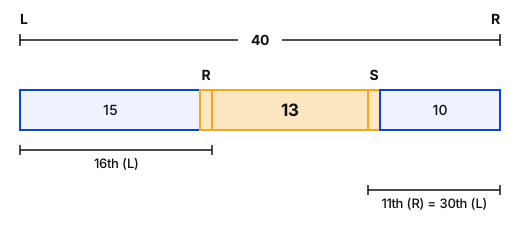
In a row of 40 players, Player R is placed 16th from the left end, and Player S is 11th from the right end. How many players stand between R and S ?
40 खिलाड़ियों की एक पंक्ति में, खिलाड़ी R बाएँ छोर से 16वें स्थान पर है और खिलाड़ी S दाएँ छोर से 11वें स्थान पर है। R और S के बीच कितने खिलाड़ी खड़े हैं ?
  1. A12
  2. B13
  3. C14
  4. D15
Show answer

Concept: Convert both positions to the same end, then between = difference − 1.

  1. S from left = 40 − 11 + 1 = 30.
  2. R from left = 16.
  3. Between = 30 − 16 − 1 = 13.

Trick: When left + right positions (16 + 11 = 27) < total, between = total − (sum) = 40 − 27 = 13.

Answer: (B) 13

अवधारणा: दोनों स्थान एक ही छोर से लें, फिर बीच वाले = अंतर − 1।

हल:

  1. S बाएँ से = 40 − 11 + 1 = 30।
  2. R बाएँ से = 16।
  3. बीच में = 30 − 16 − 1 = 13।

ट्रिक: जब 16 + 11 = 27 कुल से कम हो, तो बीच वाले = 40 − 27 = 13।

उत्तर: (B) 13

SSC CHSLGeneral IntelligenceRanking – persons between twoSSC CHSL 2025 · 14 Nov Shift 2 →
Q4335.
Decorative Lights are hung in a line. A yellow light is 8th from left, and a green light is 11th from right. If there are 25 lights total, how many of the lights are between yellow and green?
सजावटी लाइटें एक पंक्ति में लटकाई गई हैं। एक पीली लाइट बाएँ से 8वीं है और एक हरी लाइट दाएँ से 11वीं है। यदि कुल 25 लाइटें हैं, तो पीली और हरी लाइट के बीच कितनी लाइटें हैं?
  1. A6
  2. B9
  3. C7
  4. D10
Show answer

Concept: Bring both positions to the left end and subtract.

  1. Green from left = 25 − 11 + 1 = 15.
  2. Yellow from left = 8.
  3. Between = 15 − 8 − 1 = 6.

Trick: No overlap case: between = total − (left rank + right rank) = 25 − 19 = 6.

Answer: (A) 6

अवधारणा: दोनों स्थान बाएँ छोर से निकालें और घटाएँ।

हल:

  1. हरी लाइट बाएँ से = 25 − 11 + 1 = 15।
  2. पीली लाइट बाएँ से = 8।
  3. बीच में = 15 − 8 − 1 = 6।

ट्रिक: शॉर्टकट: कुल − (8 + 11) = 25 − 19 = 6।

उत्तर: (A) 6

SSC CHSLGeneral IntelligenceRanking – items between twoSSC CHSL 2025 · 14 Nov Shift 2 →
Q4336.
Each question given below consists of a statement followed by two arguments, I and II. You have to decide which of the arguments is strong and which is weak.
Statement: Should the use of single-use disposable materials be strictly regulated ?
Argument I: Yes, because excessive use of such materials leads to environmental degradation.
Argument II: No, because they are inexpensive and easily available for daily use.
नीचे दिए गए प्रत्येक प्रश्न में एक कथन और उसके बाद दो तर्क, I और II दिए गए हैं। आपको यह निर्णय करना है कि कौन-सा तर्क प्रबल है और कौन-सा दुर्बल।
कथन: क्या एकल-प्रयोग वाली डिस्पोजेबल सामग्रियों के उपयोग को कठोरता से विनियमित किया जाना चाहिए ?
तर्क I: हाँ, क्योंकि ऐसी सामग्रियों के अत्यधिक उपयोग से पर्यावरण का क्षरण होता है।
तर्क II: नहीं, क्योंकि वे सस्ती हैं और दैनिक उपयोग के लिए सरलता से उपलब्ध हैं।
  1. AOnly I is strongकेवल I प्रबल है
  2. BOnly II is strongकेवल II प्रबल है
  3. CBoth I and II are strongI और II दोनों प्रबल हैं
  4. DNeither I nor II is strongन तो I और न ही II प्रबल है
Show answer

Concept: A strong argument is relevant and points to a serious, long-term effect.

  1. I: environmental damage is a real, lasting harm → strong.
  2. II: cheapness/convenience is a minor short-term benefit → weak.
  3. So only I is strong.

Trick: Arguments based only on convenience, cost or habit are usually weak against public-interest harm.

Answer: (A) Only I is strong

अवधारणा: मज़बूत तर्क प्रासंगिक हो और गंभीर, दीर्घकालिक प्रभाव बताए।

हल:

  1. I: पर्यावरण क्षति — वास्तविक और स्थायी नुकसान → प्रबल।
  2. II: सस्ता और आसानी से उपलब्ध — छोटी सुविधा → दुर्बल।
  3. अतः केवल I प्रबल।

ट्रिक: केवल सुविधा या सस्तेपन पर टिका तर्क जनहित के सामने दुर्बल होता है।

उत्तर: (A) केवल I प्रबल है

SSC CHSLGeneral IntelligenceStatement & arguments – single-use materialsSSC CHSL 2025 · 14 Nov Shift 2 →
Q4337.
Each question below consists of a statement followed by two arguments, I and II. You have to decide which of the arguments is strong and which is weak.
Statement: Should online video-sharing platforms be strictly monitored to prevent harmful content ?
Argument I: Yes, harmful content can negatively influence viewers, especially children.
Argument II: No, strict monitoring may limit creative freedom and personal expression.
नीचे दिए गए प्रत्येक प्रश्न में एक कथन और उसके बाद दो तर्क, I और II दिए गए हैं। आपको यह निर्णय करना है कि कौन-सा तर्क प्रबल है और कौन-सा दुर्बल।
कथन: क्या हानिकारक सामग्री को रोकने के लिए ऑनलाइन वीडियो-साझाकरण प्लेटफ़ॉर्मों पर कठोर निगरानी रखी जानी चाहिए ?
तर्क I: हाँ, हानिकारक सामग्री दर्शकों को, विशेषकर बच्चों को, नकारात्मक रूप से प्रभावित कर सकती है।
तर्क II: नहीं, कठोर निगरानी रचनात्मक स्वतंत्रता और व्यक्तिगत अभिव्यक्ति को सीमित कर सकती है।
  1. AOnly I is strongकेवल I प्रबल है
  2. BOnly II is strongकेवल II प्रबल है
  3. CBoth I and II are strongI और II दोनों प्रबल हैं
  4. DNeither I nor II is strongन तो I और न ही II प्रबल है
Show answer

Concept: Judge whether each argument meets the real issue (harmful content).

  1. I: harmful videos can damage viewers, especially children → strong.
  2. II: monitoring targets only harmful content; freedom to post harmful material is not a valid right → weak.
  3. Only I is strong.

Trick: If an argument defends something the proposal does not actually stop, it is weak.

Answer: (A) Only I is strong

अवधारणा: देखें कि तर्क वास्तविक मुद्दे (हानिकारक सामग्री) से जुड़ा है या नहीं।

हल:

  1. I: नुकसानदेह content से लोग, विशेषतः बच्चे, ग़लत दिशा में जा सकते हैं → प्रबल।
  2. II: रोक सिर्फ़ नुकसानदेह content पर लगेगी; उसे डालने की आज़ादी कोई अधिकार नहीं → दुर्बल।
  3. केवल I प्रबल।

ट्रिक: जो तर्क ऐसी चीज़ बचाए जिसे प्रस्ताव रोकता ही नहीं, वह दुर्बल है।

उत्तर: (A) केवल I प्रबल है

SSC CHSLGeneral IntelligenceStatement & arguments – monitoring online contentSSC CHSL 2025 · 14 Nov Shift 2 →
Q4338.
Few of the letters are given followed by a question mark (?) these letters are following a specific pattern you have to give the correct option which can replace question mark. Find the next letter:
A,D,H,M,?
कुछ अक्षर दिए गए हैं जिनके बाद एक प्रश्नवाचक चिह्न (?) है। ये अक्षर एक विशिष्ट पैटर्न का अनुसरण कर रहे हैं; आपको वह सही विकल्प चुनना है जो प्रश्नवाचक चिह्न के स्थान पर आ सके। अगला अक्षर ज्ञात कीजिए:
A,D,H,M,?
  1. AS
  2. BT
  3. CV
  4. DP
Show answer

Concept: Convert letters to positions and check the differences.

  1. A=1, D=4, H=8, M=13.
  2. Gaps: +3, +4, +5 → next +6.
  3. 13 + 6 = 19 = S.

Trick: Remember EJOTY (5,10,15,20,25): 19 is just before T(20) → S.

Answer: (A) S

अवधारणा: अक्षरों को स्थान संख्या में बदलें और अंतर देखें।

हल:

  1. स्थान संख्या: 1, 4, 8, 13।
  2. अंतर: +3, +4, +5 → अगला +6।
  3. 13 + 6 = 19 = S।

ट्रिक: EJOTY (5,10,15,20,25) याद रखें: 19 = T से एक पहले = S।

उत्तर: (A) S

SSC CHSLGeneral IntelligenceLetter series – increasing gapsSSC CHSL 2025 · 14 Nov Shift 2 →
Q4339.
Few of the letters are given followed by a question mark (?) these letters are following a specific pattern you have to give the correct option which can replace question mark.
Find the next in series:
I,F,C,Z,?
कुछ अक्षर दिए गए हैं जिनके बाद एक प्रश्नवाचक चिह्न (?) है। ये अक्षर एक विशिष्ट पैटर्न का अनुसरण कर रहे हैं; आपको वह सही विकल्प चुनना है जो प्रश्नवाचक चिह्न के स्थान पर आ सके।
शृंखला में अगला पद ज्ञात कीजिए:
I,F,C,Z,?
  1. AS
  2. BT
  3. CW
  4. DV
Show answer

Concept: Each letter moves 3 places back; after A the count continues from Z.

  1. I(9) → F(6) → C(3) → Z (3 − 3 = 0 → 26).
  2. Z(26) − 3 = 23 = W.

Trick: Think of the alphabet as a circle: Z, Y, X, W — 3 steps back from Z is W.

Answer: (C) W

अवधारणा: हर अक्षर 3 स्थान पीछे जाता है; A के बाद गिनती Z से शुरू होती है।

हल:

  1. I(9) → F(6) → C(3) → Z (0 = 26)।
  2. Z(26) − 3 = 23 = W।

ट्रिक: वर्णमाला को गोल घेरा मानें: Z से 3 पीछे = W।

उत्तर: (C) W

SSC CHSLGeneral IntelligenceLetter series – backward with wrap-aroundSSC CHSL 2025 · 14 Nov Shift 2 →
Q4340.
In this question some conditions or circumstances is provided to you, you have to make logical judgement according to mentioned circumstances and mark the correct judgement for
question.
A municipal authority plans to widen a busy city road to reduce traffic congestion. However, several small shops and street stalls occupy part of the proposed area. The administration must decide how to implement the project.
इस प्रश्न में आपको कुछ शर्तें अथवा परिस्थितियाँ दी गई हैं; आपको उल्लिखित परिस्थितियों के अनुसार तार्किक निर्णय करना है और प्रश्न के लिए सही निर्णय अंकित करना है।
एक नगर निगम प्राधिकरण यातायात की भीड़ कम करने के लिए एक व्यस्त शहरी सड़क को चौड़ा करने की योजना बना रहा है। किंतु प्रस्तावित क्षेत्र के कुछ भाग पर कई छोटी दुकानें और सड़क किनारे के स्टॉल स्थित हैं। प्रशासन को यह निर्णय करना है कि परियोजना को किस प्रकार क्रियान्वित किया जाए।
  1. AStop the road-widening project completely.सड़क चौड़ीकरण परियोजना को पूर्णतः रोक दिया जाए।
  2. BDemolish the shops immediately and start construction.दुकानों को तुरंत ध्वस्त करके निर्माण आरंभ कर दिया जाए।
  3. CRelocate the shops to nearby spaces and proceed with the project.दुकानों को निकटवर्ती स्थानों पर स्थानांतरित करके परियोजना आगे बढ़ाई जाए।
  4. DBuild barriers around the shops to continue construction without relocation.स्थानांतरण के बिना निर्माण जारी रखने के लिए दुकानों के चारों ओर अवरोधक बना दिए जाएँ।
Show answer

Concept: A good decision completes the public project while protecting livelihoods.

  1. Relocating shops nearby lets the road be widened and traders keep earning ✓.
  2. A drops a needed public work; B is harsh and invites conflict.
  3. D leaves obstacles on the road, defeating the purpose.

Trick: Balanced option = 'public benefit + rehabilitation' — avoid both extremes (stop / demolish).

Answer: (C) Relocate the shops to nearby spaces and proceed with the project.

अवधारणा: अच्छा निर्णय सार्वजनिक काम पूरा करे और रोज़ी-रोटी भी बचाए।

हल:

  1. दुकानों को पास में स्थानांतरित करें — सड़क भी चौड़ी, व्यापार भी चालू ✓।
  2. A ज़रूरी काम रोक देता है; B कठोर है, विवाद बढ़ाएगा।
  3. D में अवरोध सड़क पर ही रहेंगे, उद्देश्य विफल।

ट्रिक: संतुलित विकल्प चुनें — न काम रोकें, न सीधे तोड़फोड़।

उत्तर: (C) दुकानों को निकटवर्ती स्थानों पर स्थानांतरित करके परियोजना आगे बढ़ाई जाए।

SSC CHSLGeneral IntelligenceDecision making – road wideningSSC CHSL 2025 · 14 Nov Shift 2 →