Question bank

Q&A: practice questions with answers

Search questions on any topic. Filter by exam category, exam, subject and topic, try the question, then open the answer and explanation.

Courses – airGurukul

5,000 questions found.

Q4421.
Choose the most suitable option to replace the highlighted part of the sentence:
In a strategic move to reduce operational costs, the board of directors unanimously rejecting the proposal submitting by the finance committee last week.
  1. Aunanimously rejecting the proposal submitted by the
  2. Bunanimously rejected the proposal submitting by the
  3. Cunanimously rejected the proposal submitted by the
  4. Dunanimously reject the proposal submitted by the
Show answer

Concept: A sentence needs a finite main verb; a passive modifier takes V3.

  1. 'rejecting' cannot be the main verb → need 'rejected' (past, 'last week').
  2. The proposal was submitted by the committee → 'submitted' (V3), not 'submitting'.
  3. → unanimously rejected the proposal submitted by the …

Trick: Fix two blanks: main verb tense + participle type; only C fixes both.

Answer: (C) unanimously rejected the proposal submitted by the

अवधारणा: वाक्य में मुख्य (finite) क्रिया चाहिए; passive अर्थ में V3 आता है।

  1. 'rejecting' मुख्य क्रिया नहीं बन सकती → 'rejected' ('last week' = भूतकाल)।
  2. प्रस्ताव समिति द्वारा प्रस्तुत किया गया → 'submitted' (V3)।
  3. → unanimously rejected the proposal submitted by the …

ट्रिक: दोनों गलतियाँ (क्रिया + participle) केवल C ठीक करता है।

उत्तर: (C) unanimously rejected the proposal submitted by the
SSC CHSLEnglish LanguageSentence improvement – finite verb & participleSSC CHSL 2025 · 14 Nov Shift 1 →
Q4422.
Choose the correct passive voice transformation of the sentence:
He writes a letter every week.
  1. AA letter was written by him every week.
  2. BA letter is written by him every week.
  3. CA letter has been written by him every week.
  4. DA letter is being written by him every week.
Show answer

Concept: Simple present active → is/am/are + V3 in passive.

  1. Object 'a letter' → subject (singular) → 'is'.
  2. writes → is written; he → by him.
  3. → A letter is written by him every week.

Trick: Tense never changes in voice change – 'writes' (present) can't become 'was'.

Answer: (B) A letter is written by him every week.

अवधारणा: Simple present active → passive में is/am/are + V3.

  1. 'a letter' कर्ता बनेगा (एकवचन) → 'is'.
  2. writes → is written; he → by him.
  3. → A letter is written by him every week.

ट्रिक: वाच्य बदलने पर काल नहीं बदलता – present ही रहेगा।

उत्तर: (B) A letter is written by him every week.

SSC CHSLEnglish LanguageVoice – simple present passiveSSC CHSL 2025 · 14 Nov Shift 1 →
Q4423.
Select the option that expresses the given sentence in direct voice.
The auditor asked the accountant how he had calculated those figures when the data was missing from the report.
  1. AThe auditor asked the accountant, "How have you calculated those figures when the data had been missing from the report?"
  2. BThe auditor asked the accountant, "How did you calculate these figures when the data was missing from the report?*
  3. CThe auditor asked the accountant, "How do you calculate these figures when the data is missing from the report?'
  4. DThe auditor asked the accountant, "How had you calculated these figures when the data has been missing from the report?"
Show answer

Concept: Reverse the back-shift and pronoun changes; restore question form.

  1. had calculated → did … calculate (simple past).
  2. he → you; those → these; was missing → was missing (already past, stays).
  3. Put the words in quotation marks and end with '?' → only B shows all these changes.

Trick: Past perfect in indirect → simple past in direct; eliminate options with 'have/had/has'.

Answer: (B) The auditor asked the accountant, "How did you calculate these figures when the data was missing from the report?*

अवधारणा: Tense का पीछे हटना उल्टा करें, सर्वनाम बदलें और प्रश्न रूप लाएँ।

  1. had calculated → did … calculate.
  2. he → you; those → these; 'was missing' वैसा ही रहेगा।
  3. उद्धरण चिह्न व '?' लगाएँ → विकल्प B.

ट्रिक: Indirect का past perfect → direct में simple past; have/had/has वाले विकल्प हटाएँ।

उत्तर: (B) The auditor asked the accountant, "How did you calculate these figures when the data was missing from the report?*

SSC CHSLEnglish LanguageNarration – indirect to directSSC CHSL 2025 · 14 Nov Shift 1 →
Q4424.
Rearrange the following sentence parts to form a meaningful and grammatically correct paragraph:
P. She sealed the envelope and pasted a stamp on the top right corner.
Q. She walked to the post office and dropped the letter in the mailbox.
R. She sat down at her desk and wrote a heartfelt letter to her friend.
S. Hoping for a quick reply, she walked back home with a smile.
  1. AR, P, Q, S
  2. BP, R, Q, S
  3. CR, Q, P, S
  4. DQ, P, R, S
Show answer

Concept: Arrange actions in the natural time order.

  1. R: writes the letter (first action).
  2. P: seals the envelope and adds a stamp.
  3. Q: posts it at the post office.
  4. S: returns home hoping for a reply → R P Q S.

Trick: Process passages follow real-life order – write → seal → post → wait.

Answer: (A) R, P, Q, S

अवधारणा: घटनाओं को समय के स्वाभाविक क्रम में रखें।

  1. R: पत्र लिखना (पहला काम)।
  2. P: लिफ़ाफ़ा बंद करके टिकट लगाना।
  3. Q: डाकघर जाकर पत्र डालना।
  4. S: जवाब की आशा में घर लौटना → R P Q S.

ट्रिक: क्रियाओं का असली क्रम: लिखो → बंद करो → डालो → इंतज़ार।

उत्तर: (A) R, P, Q, S

SSC CHSLEnglish LanguagePara jumbles – letter writing sequenceSSC CHSL 2025 · 14 Nov Shift 1 →
Q4425.
Rearrange the following sentence parts to form a meaningful and grammatically correct paragraph:
P. This intellectual shift prioritized human potential and evidence over religious dogma and superstition.
Q. The Enlightenment was a dominant intellectual and philosophical movement that swept across Europe in the 17th and 18th centuries.
R. It was driven by a range of ideas centered on the sovereignty of reason and the evidence of the senses as the primary sources of knowledge.
S. Consequently, the era produced revolutionary advancements in science, politics, and society that paved the way for the modern world.
  1. AQ, R, P, S
  2. BP, Q, R, S
  3. CR, Q, S, P
  4. DS, R, Q, P
Show answer

Concept: Start with the sentence that names the topic; link pronouns and connectors.

  1. Q introduces 'The Enlightenment' → opener.
  2. R starts with 'It' → refers to Q.
  3. P 'This intellectual shift' sums up R.
  4. S 'Consequently' gives the result → Q R P S.

Trick: 'Consequently' almost always goes last; a full noun subject goes first.

Answer: (A) Q, R, P, S

अवधारणा: विषय का नाम बताने वाला वाक्य पहले; सर्वनाम और जोड़ने वाले शब्दों से कड़ी बनाएँ।

  1. Q में 'The Enlightenment' का परिचय → पहला वाक्य।
  2. R का 'It' Q की ओर संकेत करता है।
  3. P का 'This intellectual shift' R का सार है।
  4. S 'Consequently' परिणाम बताता है → Q R P S.

ट्रिक: 'Consequently' वाला वाक्य प्रायः अंत में आता है।

उत्तर: (A) Q, R, P, S

SSC CHSLEnglish LanguagePara jumbles – the EnlightenmentSSC CHSL 2025 · 14 Nov Shift 1 →
Q4426.
In a code, 'MATURITY' is written as 'PDWXULWB' . What is the code for 'OCCASION' ?
एक कूट भाषा में, 'MATURITY' को 'PDWXULWB' लिखा जाता है। 'OCCASION' का कूट क्या होगा?
  1. ARFFDVLRQ
  2. BRFFDVLQR
  3. CRFFDWLRQ
  4. DRFFDVRQL
Show answer

Concept: Compare word and code letter by letter to find a fixed shift.

  1. M→P, A→D, T→W, Y→B (wraps after Z): every letter moves +3.
  2. OCCASION, same rule: S→V, I→L, N→Q, A→D, O→R, C→F.
  3. Code = RFFDVLRQ.

Trick: Check only the last two letters: O→R, N→Q gives '…RQ' – only A and C remain; S→V removes C.

Answer: (A) RFFDVLRQ

अवधारणा: शब्द और कोड के अक्षरों की तुलना कर निश्चित खिसकाव (shift) निकालें।

  1. M→P, A→D, T→W, Y→B: हर अक्षर +3 आगे।
  2. OCCASION में भी यही: S→V, I→L, N→Q, A→D, O→R, C→F.
  3. कोड = RFFDVLRQ.

ट्रिक: अंतिम दो अक्षर (O→R, N→Q) से '…RQ' – A और C बचते हैं; S→V से C हटता है।

उत्तर: (A) RFFDVLRQ

SSC CHSLGeneral IntelligenceCoding – each letter +3SSC CHSL 2025 · 14 Nov Shift 1 →
Q4427.
In a specific coding system, if GERMINATION is coded as HFSNJOBUJPO and DARINGNESS is coded as EBSJOHOFTT, then what is the code for CARJACKER ?
एक विशिष्ट कूट प्रणाली में, यदि GERMINATION को HFSNJOBUJPO के रूप में और DARINGNESS को EBSJOHOFTT के रूप में कूटबद्ध किया जाता है, तो CARJACKER का कूट क्या होगा?
  1. ADBSKBDLFS
  2. BDBSKBDLSF
  3. CDBSKBDFSL
  4. DDBSKDLBFS
Show answer

Concept: Both examples use the same next-letter rule.

  1. G→H, E→F, D→E, A→B … each letter +1.
  2. CARJACKER, same rule: J→K, K→L, E→F, C→D, A→B, R→S.
  3. Code = DBSKBDLFS.

Trick: All options start DBSK – just check the last three: K,E,R → L,F,S.

Answer: (A) DBSKBDLFS

अवधारणा: दोनों उदाहरणों में अगला अक्षर लिखने का नियम है।

  1. G→H, E→F, D→E, A→B … हर अक्षर +1.
  2. CARJACKER में भी यही: J→K, K→L, E→F, C→D, A→B, R→S.
  3. कोड = DBSKBDLFS.

ट्रिक: सभी विकल्प DBSK से शुरू – केवल अंतिम तीन (K,E,R → L,F,S) जाँचें।

उत्तर: (A) DBSKBDLFS

SSC CHSLGeneral IntelligenceCoding – each letter +1SSC CHSL 2025 · 14 Nov Shift 1 →
Q4428.
In a particular code language, if TECHOGRAM is coded as 20-5-3-8-15-7-18-1-13 and MACROGRAPH is coded as 13-1-3-18-15-7-18-1-16-8, then what is the code for SPIROGRAM ?
एक विशेष कूट भाषा में, यदि TECHOGRAM को 20-5-3-8-15-7-18-1-13 के रूप में और MACROGRAPH को 13-1-3-18-15-7-18-1-16-8 के रूप में कूटबद्ध किया जाता है, तो SPIROGRAM का कूट क्या होगा?
  1. A19-16 - 9-18-15-7-18-1-13
  2. B19-16 - 9-18-15-7-19-1-13
  3. C19-16 - 9-18-15-7-18-1-14
  4. D19-16 - 9-18-16 - 7-18-1 - 13
Show answer

Concept: Each letter is replaced by its position number (A=1 … Z=26).

  1. T=20, E=5, C=3 … confirms the rule.
  2. New letters: S, P, I, R → 19, 16, 9, 18; the OGRAM part (15-7-18-1-13) is copied from TECHOGRAM.
  3. Join both parts → option A.

Trick: Words share 'OGRAM/OGRAPH' – reuse 15-7-18-1 directly; only M=13 at the end decides.

Answer: (A) 19-16 - 9-18-15-7-18-1-13

अवधारणा: हर अक्षर की जगह उसका क्रमांक (A=1 … Z=26) लिखा है।

  1. T=20, E=5, C=3 … नियम पक्का।
  2. नए अक्षर S, P, I, R → 19, 16, 9, 18; OGRAM वाला भाग (15-7-18-1-13) TECHOGRAM से।
  3. दोनों भाग जोड़ें → विकल्प A.

ट्रिक: 'OGRAM' का कोड 15-7-18-1-13 पहले से दिया है – सीधे उपयोग करें।

उत्तर: (A) 19-16 - 9-18-15-7-18-1-13

SSC CHSLGeneral IntelligenceCoding – alphabet positionsSSC CHSL 2025 · 14 Nov Shift 1 →
Q4429.
In the following question, a statement is given followed by some conclusions. You have to choose the conclusion(s) that necessarily follow from the statement.
Statement:
Online education has made learning accessible to people in remote areas and reduced costs. However, excessive screen time has led to health issues like eye strain and reduced physical activity among students. As a result, educational institutions are now promoting blended learning models.
Conclusions:
I. Online education can have negative effects on students' health.
II. All students misuse online education platforms.
III. Educational institutions are taking measures to balance online learning.
Which conclusion necessarily follows?
निम्नलिखित प्रश्न में एक कथन दिया गया है जिसके बाद कुछ निष्कर्ष दिए गए हैं। आपको वह निष्कर्ष चुनना है जो कथन से अनिवार्य रूप से निकलता हो।
कथन:
ऑनलाइन शिक्षा ने दूरदराज़ के क्षेत्रों के लोगों के लिए सीखना सुलभ बना दिया है और लागत घटा दी है। किंतु अत्यधिक स्क्रीन समय के कारण विद्यार्थियों में आँखों में तनाव तथा शारीरिक गतिविधि में कमी जैसी स्वास्थ्य समस्याएँ उत्पन्न हुई हैं। परिणामस्वरूप, शैक्षणिक संस्थान अब मिश्रित (ब्लेंडेड) अधिगम प्रतिरूपों को बढ़ावा दे रहे हैं।
निष्कर्ष:
I. ऑनलाइन शिक्षा का विद्यार्थियों के स्वास्थ्य पर नकारात्मक प्रभाव पड़ सकता है।
II. सभी विद्यार्थी ऑनलाइन शिक्षा मंचों का दुरुपयोग करते हैं।
III. शैक्षणिक संस्थान ऑनलाइन अधिगम को संतुलित करने के लिए उपाय कर रहे हैं।
कौन-सा निष्कर्ष अनिवार्य रूप से निकलता है?
  1. AOnly I followsकेवल I निकलता है
  2. BOnlyl and III followकेवल I और III निकलते हैं
  3. COnly II followsकेवल II निकलता है
  4. DAll followसभी निकलते हैं
Show answer

Concept: Accept only what the statement directly supports; reject sweeping words like 'all'.

  1. I: screen time causes eye strain → negative health effect stated → follows.
  2. II: 'All students misuse' – nothing said about misuse → does not follow.
  3. III: blended learning is a balancing step → follows.

Trick: Conclusions with 'all/always/only' are usually false.

Answer: (B) Onlyl and III follow

अवधारणा: वही निष्कर्ष मानें जो कथन से सीधे निकले; 'all' जैसे व्यापक शब्दों से सावधान।

  1. I: स्क्रीन टाइम से आँखों पर ज़ोर → स्वास्थ्य पर बुरा असर → सही।
  2. II: 'सभी छात्र दुरुपयोग करते हैं' – कथन में नहीं → गलत।
  3. III: blended learning संतुलन का कदम है → सही।

ट्रिक: 'all/always/only' वाले निष्कर्ष प्रायः गलत होते हैं।

उत्तर: (B) केवल I और III निकलते हैं

SSC CHSLGeneral IntelligenceStatement & conclusionsSSC CHSL 2025 · 14 Nov Shift 1 →
Q4430.
Each item describes a situation and is followed by four possible responses. Indicate the response you find most appropriate. Choose only one response for each item. The responses will be evaluated based on the level of appropriateness for the given situation.
A student is preparing for an important competitive exam. His teacher advises him to revise regularly, but he wants to study all topics in one night. What is the most appropriate choice ?
प्रत्येक प्रश्न में एक स्थिति का वर्णन है जिसके बाद चार संभावित प्रतिक्रियाएँ दी गई हैं। आपको सबसे उपयुक्त प्रतिक्रिया बतानी है। प्रत्येक प्रश्न के लिए केवल एक ही प्रतिक्रिया चुनिए। प्रतिक्रियाओं का मूल्यांकन दी गई स्थिति के लिए उनकी उपयुक्तता के स्तर के आधार पर किया जाएगा।
एक विद्यार्थी एक महत्वपूर्ण प्रतियोगी परीक्षा की तैयारी कर रहा है। उसके शिक्षक उसे नियमित रूप से पुनरावृत्ति करने की सलाह देते हैं, किंतु वह सभी विषयों को एक ही रात में पढ़ लेना चाहता है। सबसे उपयुक्त विकल्प क्या है?
  1. AStudy continuously all night without breaksबिना विराम लिए पूरी रात लगातार पढ़ना
  2. BFollow a planned study schedule with regular revisionनियमित पुनरावृत्ति के साथ एक नियोजित अध्ययन-कार्यक्रम का पालन करना
  3. CStop preparing due to stressतनाव के कारण तैयारी बंद कर देना
  4. DIgnore revision and rely on luckपुनरावृत्ति की उपेक्षा करना और भाग्य पर निर्भर रहना
Show answer

Concept: Choose the practical, balanced and positive response.

  1. One-night cramming overloads memory; regular revision fixes learning.
  2. A harms health, C is quitting, D depends on luck.
  3. Planned schedule with revision is the best option.

Trick: Eliminate extreme or negative actions (all night, give up, luck).

Answer: (B) Follow a planned study schedule with regular revision

अवधारणा: व्यावहारिक, संतुलित और सकारात्मक प्रतिक्रिया चुनें।

  1. एक रात में सब पढ़ना याददाश्त पर बोझ है; नियमित दोहराव से पढ़ाई पक्की होती है।
  2. A स्वास्थ्य बिगाड़ता है, C हार मानना है, D किस्मत पर निर्भर।
  3. योजनाबद्ध पढ़ाई + दोहराव सबसे उचित।

ट्रिक: अति या नकारात्मक विकल्प पहले हटाएँ।

उत्तर: (B) नियमित पुनरावृत्ति के साथ एक नियोजित अध्ययन-कार्यक्रम का पालन करना

SSC CHSLGeneral IntelligenceSituation reaction – exam preparationSSC CHSL 2025 · 14 Nov Shift 1 →
Q4431.
In this type of questions, question is provided with substitutes for various mathematical symbols, followed by a question involving calculation of an expression or choosing the correct/ incorrect equation. You have to put the real signs in the given equation and then solve the questions as required.
If '%' stands for ' × ', '#' stands for ' ÷ ', '!' stands for '+', '@' stands for '-', then find the value of: 22%4#12 @ 20= ?
इस प्रकार के प्रश्नों में विभिन्न गणितीय चिह्नों के स्थान पर प्रतीक दिए जाते हैं, जिसके बाद किसी व्यंजक की गणना करने अथवा सही/गलत समीकरण चुनने से संबंधित प्रश्न पूछा जाता है। आपको दिए गए समीकरण में वास्तविक चिह्न रखकर प्रश्न को यथावश्यक हल करना है।
यदि '%' का अर्थ ' × ' है, '#' का अर्थ ' ÷ ' है, '!' का अर्थ '+' है, '@' का अर्थ '-' है, तो निम्नलिखित का मान ज्ञात कीजिए: 22%4#12 @ 20= ?
  1. A−503
  2. B−383
  3. C−473
  4. D−513
Show answer

Concept: Replace symbols, then solve by BODMAS (÷, × left to right before −).

  1. Expression: 22×4÷12−20.
  2. 22×4=88; 88÷12=223.
  3. 223−20=22−603=−383.

Trick: Answer is negative with denominator 3 – compute only the numerator: 22−60=−38.

Answer: (B) −383

अवधारणा: चिह्न बदलकर BODMAS से हल करें (पहले ×, ÷ बाएँ से दाएँ, फिर −)।

  1. व्यंजक: 22×4÷12−20.
  2. 22×4=88; 88÷12=223.
  3. 223−20=22−603=−383.

ट्रिक: हर 3 है, सिर्फ़ अंश निकालें: 22−60=−38.

उत्तर: (B) −383

SSC CHSLGeneral IntelligenceSymbol substitution – BODMASSSC CHSL 2025 · 14 Nov Shift 1 →
Q4432.
A team member is hesitant to share ideas during meetings due to lack of confidence. What is the most appropriate way to encourage them ?
एक दल-सदस्य आत्मविश्वास की कमी के कारण बैठकों में अपने विचार साझा करने में हिचकिचाता है। उसे प्रोत्साहित करने का सबसे उपयुक्त तरीका क्या है?
  1. AAppreciate their ideas privately and motivate them to speak, assuring supportउनके विचारों की निजी रूप से सराहना करें और सहयोग का आश्वासन देते हुए उन्हें बोलने के लिए प्रेरित करें
  2. BPresent their ideas as your own to build their confidenceउनका आत्मविश्वास बढ़ाने के लिए उनके विचारों को अपना बताकर प्रस्तुत करें
  3. CIgnore their hesitation and proceed without themउनकी हिचकिचाहट को अनदेखा करें और उनके बिना ही आगे बढ़ें
  4. DSuddenly ask them to present in front of everyone without preparationबिना किसी तैयारी के अचानक उन्हें सबके सामने प्रस्तुति देने के लिए कहें
Show answer

Concept: Build confidence without embarrassing or exploiting the person.

  1. Private appreciation + assurance of support removes fear of judgement.
  2. B steals credit, C ignores the issue, D puts them on the spot.

Trick: In people-management questions, pick the supportive, respectful option.

Answer: (A) Appreciate their ideas privately and motivate them to speak, assuring support

अवधारणा: व्यक्ति को शर्मिंदा किए बिना उसका आत्मविश्वास बढ़ाएँ।

  1. अकेले में सराहना और सहयोग का भरोसा डर दूर करता है।
  2. B श्रेय छीनता है, C समस्या की अनदेखी है, D अचानक दबाव डालता है।

ट्रिक: ऐसे प्रश्नों में सहयोगी और सम्मानजनक विकल्प चुनें।

उत्तर: (A) उनके विचारों की निजी रूप से सराहना करें और सहयोग का आश्वासन देते हुए उन्हें बोलने के लिए प्रेरित करें

SSC CHSLGeneral IntelligenceSituation reaction – encouraging a shy colleagueSSC CHSL 2025 · 14 Nov Shift 1 →
Q4433.
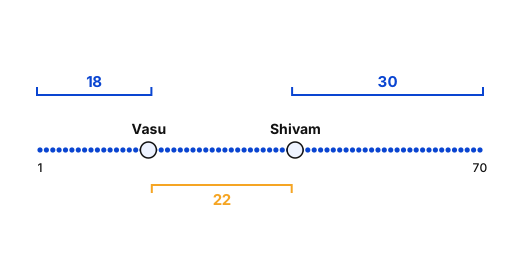
70 students are arranged in a row.
Vasu is 18th from left and Shivam is 30th from right. Find the number of students between Vasu and Shivam .
70 विद्यार्थी एक पंक्ति में व्यवस्थित हैं।
वासु बाएँ से 18वें स्थान पर है और शिवम दाएँ से 30वें स्थान पर है। वासु और शिवम के बीच में कितने विद्यार्थी हैं?
  1. A20
  2. B21
  3. C22
  4. D23
Show answer

Concept: Between = Total − (left rank + right rank), when the two don't overlap.

  1. 18 + 30 = 48 < 70, so no overlap.
  2. Between = 70 − 48 = 22.
  3. Check: Shivam from left = 70 − 30 + 1 = 41; 41 − 18 − 1 = 22.

Trick: Between = N − (a + b) when a + b < N.

Answer: (C) 22

अवधारणा: यदि दोनों के स्थान आपस में नहीं मिलते: बीच = कुल − (बाएँ से स्थान + दाएँ से स्थान)।

  1. 18 + 30 = 48 < 70.
  2. बीच के छात्र = 70 − 48 = 22.
  3. जाँच: शिवम बाएँ से = 70 − 30 + 1 = 41; 41 − 18 − 1 = 22.

ट्रिक: a + b < N हो तो बीच = N − (a + b).

उत्तर: (C) 22

SSC CHSLGeneral IntelligenceRanking – persons betweenSSC CHSL 2025 · 14 Nov Shift 1 →
Q4434.
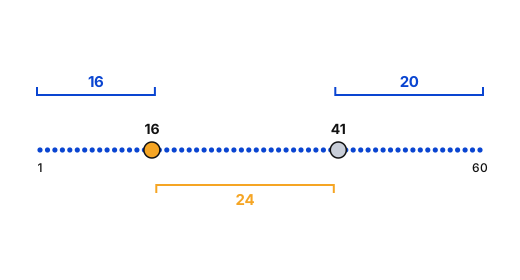
During Navratri, Payal arranges 60 diyas in a row. A golden diya is 16th from the left, and a silver diya is 20th from the right. How many diyas are between them?
नवरात्रि के दौरान, पायल 60 दीये एक पंक्ति में सजाती है। एक सुनहरा दीया बाएँ से 16वें स्थान पर है और एक चाँदी का दीया दाएँ से 20वें स्थान पर है। उनके बीच में कितने दीये हैं?
  1. A22
  2. B30
  3. C26
  4. D24
Show answer

Concept: Between = Total − (left position + right position).

  1. 16 + 20 = 36 < 60 → no overlap.
  2. Diyas between = 60 − 36 = 24.
  3. Check: silver from left = 60 − 20 + 1 = 41; 41 − 16 − 1 = 24.

Trick: Same 10-second formula as persons in a row: N − (a + b).

Answer: (D) 24

अवधारणा: बीच = कुल − (बाएँ से स्थान + दाएँ से स्थान)।

  1. 16 + 20 = 36 < 60.
  2. बीच के दीये = 60 − 36 = 24.
  3. जाँच: चाँदी का दीया बाएँ से = 41; 41 − 16 − 1 = 24.

ट्रिक: सूत्र: N − (a + b).

उत्तर: (D) 24

SSC CHSLGeneral IntelligenceRanking – objects betweenSSC CHSL 2025 · 14 Nov Shift 1 →
Q4435.
In each question below is given a statement followed by two courses of action numbered I and II. You have to assume everything in the statement to be true and on the basis of the information given in the statement, decide which of the suggested courses of action logically follow(s) for pursuing.
Statement : There has been a significant increase in road accidents at a busy traffic junction in a city.
Course of action I : Install traffic signals and deploy traffic police at the junction.
Course of action II : Permanently close the junction for all vehicles.
नीचे दिए गए प्रत्येक प्रश्न में एक कथन दिया गया है जिसके बाद I और II क्रमांकित दो कार्यवाहियाँ दी गई हैं। आपको कथन में दी गई प्रत्येक बात को सत्य मानना है और कथन में दी गई जानकारी के आधार पर यह निर्णय करना है कि सुझाई गई कार्यवाहियों में से कौन-सी कार्यवाही तार्किक रूप से करने योग्य है।
कथन : एक शहर के व्यस्त यातायात चौराहे पर सड़क दुर्घटनाओं में उल्लेखनीय वृद्धि हुई है।
कार्यवाही I : चौराहे पर यातायात संकेतक (सिग्नल) लगाए जाएँ और यातायात पुलिस तैनात की जाए।
कार्यवाही II : चौराहे को सभी वाहनों के लिए स्थायी रूप से बंद कर दिया जाए।
  1. AOnly I followsकेवल I करने योग्य है
  2. BOnly II followsकेवल II करने योग्य है
  3. CBoth followदोनों करने योग्य हैं
  4. DEither I or II followsया तो I या II करने योग्य है
Show answer

Concept: A valid action is practical and tackles the problem without causing a bigger one.

  1. I: signals + traffic police regulate flow → reduces accidents → follows.
  2. II: closing a busy junction permanently is extreme and impractical → does not follow.

Trick: Words like 'permanently / ban / close all' usually mark a weak course of action.

Answer: (A) Only I follows

अवधारणा: सही कार्यवाही व्यावहारिक हो और बड़ी नई समस्या न बनाए।

  1. I: सिग्नल + ट्रैफिक पुलिस से यातायात नियंत्रित → दुर्घटनाएँ कम → सही।
  2. II: व्यस्त चौराहा हमेशा के लिए बंद करना अतिवादी → गलत।

ट्रिक: 'permanently / ban' जैसे शब्द प्रायः कमज़ोर कार्यवाही बताते हैं।

उत्तर: (A) केवल I करने योग्य है

SSC CHSLGeneral IntelligenceCourse of action – road accidentsSSC CHSL 2025 · 14 Nov Shift 1 →
Q4436.
Each question given below consists of a statement, followed by two arguments numbered I and II. You have to decide which of the arguments is a 'strong' argument and which is a 'weak' argument.
Statement: Should the government provide free internet access in rural areas?
Argument I: Yes, it will help students and farmers access educational and market information.
Argument II: No, because some people in cities already have good internet connectivity.
नीचे दिए गए प्रत्येक प्रश्न में एक कथन दिया गया है जिसके बाद I और II क्रमांकित दो तर्क दिए गए हैं। आपको यह निर्णय करना है कि कौन-सा तर्क 'प्रबल' है और कौन-सा तर्क 'दुर्बल' है।
कथन: क्या सरकार को ग्रामीण क्षेत्रों में निःशुल्क इंटरनेट सुविधा उपलब्ध करानी चाहिए?
तर्क I: हाँ, इससे विद्यार्थियों और किसानों को शैक्षिक तथा बाज़ार संबंधी जानकारी प्राप्त करने में सहायता मिलेगी।
तर्क II: नहीं, क्योंकि शहरों में कुछ लोगों के पास पहले से ही अच्छी इंटरनेट कनेक्टिविटी है।
  1. AOnly I is strongकेवल I प्रबल है
  2. BBoth I and II are strongI और II दोनों प्रबल हैं
  3. COnly II is strongकेवल II प्रबल है
  4. DNeither I nor II is strongन तो I और न ही II प्रबल है
Show answer

Concept: A strong argument is relevant and important to the exact proposal.

  1. I: helps students and farmers get information → directly relevant → strong.
  2. II: city connectivity has nothing to do with rural need → weak.

Trick: If an argument talks about a different group/place than the proposal, it is weak.

Answer: (A) Only I is strong

अवधारणा: सशक्त तर्क प्रस्ताव से सीधे जुड़ा और महत्वपूर्ण होता है।

  1. I: छात्रों और किसानों को जानकारी मिलेगी → सीधा लाभ → सशक्त।
  2. II: शहरों का इंटरनेट गाँवों की ज़रूरत से असंबंधित → दुर्बल।

ट्रिक: जो तर्क किसी दूसरे समूह/स्थान की बात करे, वह दुर्बल है।

उत्तर: (A) केवल I प्रबल है

SSC CHSLGeneral IntelligenceStrong & weak arguments – rural internetSSC CHSL 2025 · 14 Nov Shift 1 →
Q4437.
Few of the letters are given followed by a question mark (?) these letters are following a specific pattern you have to give the correct option which can replace the question mark.
Find the missing letter:
S,N,I,D,?
कुछ अक्षर दिए गए हैं जिनके बाद एक प्रश्नवाचक चिह्न (?) है; ये अक्षर एक विशिष्ट पैटर्न का अनुसरण कर रहे हैं। आपको वह सही विकल्प बताना है जो प्रश्नवाचक चिह्न के स्थान पर आ सकता है।
लुप्त अक्षर ज्ञात कीजिए:
S,N,I,D,?
  1. AZ
  2. BA
  3. CB
  4. DY
Show answer

Concept: Convert letters to positions and find the gap.

  1. S=19, N=14, I=9, D=4 → each −5.
  2. Next: 4 − 5 = −1 → 26 − 1 = 25 = Y.

Trick: Going below A? Add 26: 4 − 5 + 26 = 25 → Y.

Answer: (D) Y

अवधारणा: अक्षरों को क्रमांक में बदलकर अंतर देखें।

  1. S=19, N=14, I=9, D=4 → हर बार −5.
  2. अगला: 4 − 5 = −1 → 26 − 1 = 25 = Y.

ट्रिक: A से पीछे जाएँ तो 26 जोड़ें: 4 − 5 + 26 = 25 → Y.

उत्तर: (D) Y

SSC CHSLGeneral IntelligenceLetter series – minus 5SSC CHSL 2025 · 14 Nov Shift 1 →
Q4438.
Few of the letters are given followed by a question mark (?) these letters are following a specific pattern you have to give the correct option which can replace question mark.
What is next:
E, I, N, T, ?
कुछ अक्षर दिए गए हैं जिनके बाद एक प्रश्नवाचक चिह्न (?) है; ये अक्षर एक विशिष्ट पैटर्न का अनुसरण कर रहे हैं। आपको वह सही विकल्प बताना है जो प्रश्नवाचक चिह्न के स्थान पर आ सकता है।
आगे क्या आएगा:
E, I, N, T, ?
  1. AA
  2. BB
  3. CC
  4. DD
Show answer

Concept: Positions with gaps +4, +5, +6 …

  1. E=5, I=9, N=14, T=20 → gaps 4, 5, 6.
  2. Next gap 7: 20 + 7 = 27 → 27 − 26 = 1 = A.

Trick: Beyond Z? Subtract 26 and restart from A.

Answer: (A) A

अवधारणा: क्रमांक के अंतर +4, +5, +6 … बढ़ रहे हैं।

  1. E, I, N, T के क्रमांक 5, 9, 14, 20 → अंतर 4, 5, 6.
  2. अगला अंतर 7: 20 + 7 = 27 → 27 − 26 = 1 = A.

ट्रिक: Z से आगे जाएँ तो 26 घटाएँ।

उत्तर: (A) A

SSC CHSLGeneral IntelligenceLetter series – increasing gapsSSC CHSL 2025 · 14 Nov Shift 1 →
Q4439.
In this question some conditions or circumstances is provided to you, you have to make logical judgement according to mentioned circumstances and mark the correct judgement for question.
A pharmaceutical company has developed a fast-acting vaccine during a health emergency. While the vaccine is effective, its long-term side effects are not fully known. What is the most responsible judgment?
इस प्रश्न में आपको कुछ स्थितियाँ अथवा परिस्थितियाँ दी गई हैं; आपको उल्लिखित परिस्थितियों के अनुसार तार्किक निर्णय करना है और प्रश्न के लिए सही निर्णय चुनना है।
एक दवा कंपनी ने स्वास्थ्य आपातकाल के दौरान एक शीघ्र प्रभाव करने वाला टीका (वैक्सीन) विकसित किया है। यद्यपि यह टीका प्रभावी है, किंतु इसके दीर्घकालिक दुष्प्रभाव पूरी तरह ज्ञात नहीं हैं। सबसे उत्तरदायी निर्णय क्या है?
  1. ARelease the vaccine immediately without informing the publicजनता को सूचित किए बिना टीका तुरंत जारी कर देना
  2. BStop all production until long-term studies are completeदीर्घकालिक अध्ययन पूरे होने तक समस्त उत्पादन रोक देना
  3. CRelease the vaccine with transparent disclosure, limited use, and continuous monitoringपारदर्शी जानकारी, सीमित उपयोग और निरंतर निगरानी के साथ टीका जारी करना
  4. DSell the formula exclusively to private hospitalsसूत्र (फ़ॉर्मूला) को विशेष रूप से केवल निजी अस्पतालों को बेच देना
Show answer

Concept: Balance urgent benefit with honesty about unknown risk.

  1. Disclosure → informed consent; limited use → smaller risk; monitoring → early detection of side effects.
  2. A hides facts, B denies help in an emergency, D is profit-driven and unfair.

Trick: The 'middle path' option with transparency usually wins in ethics questions.

Answer: (C) Release the vaccine with transparent disclosure, limited use, and continuous monitoring

अवधारणा: तत्काल लाभ और अज्ञात जोखिम के बीच ईमानदार संतुलन चाहिए।

  1. पारदर्शिता → सूचित सहमति; सीमित उपयोग → कम जोखिम; निगरानी → दुष्प्रभाव जल्दी पकड़ में।
  2. A तथ्य छिपाता है, B आपात में मदद रोकता है, D केवल मुनाफ़ा।

ट्रिक: नैतिक प्रश्नों में पारदर्शी 'मध्य मार्ग' वाला विकल्प प्रायः सही होता है।

उत्तर: (C) पारदर्शी जानकारी, सीमित उपयोग और निरंतर निगरानी के साथ टीका जारी करना

SSC CHSLGeneral IntelligenceLogical judgement – emergency vaccineSSC CHSL 2025 · 14 Nov Shift 1 →
Q4440.
Four meaningful words are given in the options you have to check that which of the following words cannot be formed from the letters.
'ACCOMPLISHMENTS'?
विकल्पों में चार अर्थपूर्ण शब्द दिए गए हैं; आपको यह जाँचना है कि निम्नलिखित अक्षरों से इनमें से कौन-सा शब्द नहीं बनाया जा सकता।
'ACCOMPLISHMENTS'?
  1. ACOMPUTER
  2. BPOLICE
  3. CNOTICE
  4. DCOAT
Show answer

Concept: A word can be formed only if all its letters (with counts) are in the given word.

  1. ACCOMPLISHMENTS has no U and no R.
  2. COMPUTER needs U and R → cannot be formed.
  3. POLICE, NOTICE, COAT – all letters available.

Trick: Look for an uncommon letter in each option (U, R) and scan the base word.

Answer: (A) COMPUTER

अवधारणा: शब्द तभी बनेगा जब उसके सभी अक्षर (गिनती सहित) मूल शब्द में हों।

  1. ACCOMPLISHMENTS में U और R नहीं हैं।
  2. COMPUTER में U और R चाहिए → नहीं बन सकता।
  3. POLICE, NOTICE, COAT के सभी अक्षर उपलब्ध।

ट्रिक: हर विकल्प के असामान्य अक्षर (U, R) को मूल शब्द में खोजें।

उत्तर: (A) COMPUTER

SSC CHSLGeneral IntelligenceWord formation – missing lettersSSC CHSL 2025 · 14 Nov Shift 1 →