Question bank

Q&A: practice questions with answers

Search questions on any topic. Filter by exam category, exam, subject and topic, try the question, then open the answer and explanation.

Courses – airGurukul

5,000 questions found.

Q4521.
Choose the correct active voice transformation of the sentence:
The diligent student's final thesis will have been submitted by the end of the semester.
  1. AThe diligent student will have been submitting his final thesis by the end of the semester.
  2. BThe diligent student will submit his final thesis by the end of the semester.
  3. CThe diligent student will have submitted his final thesis by the end of the semester.
  4. DThe diligent student has submitted his final thesis by the end of the semester.
Show answer

Concept: Passive 'will have been + V3' → active 'will have + V3'.

  1. The doer (the diligent student) becomes the subject.
  2. 'will have been submitted' → 'will have submitted'.
  3. So the active verb is will have submitted, with 'his final thesis' as object.

Trick: Just drop 'been' – future perfect stays future perfect. A, B, D change the tense.

Answer: (C) The diligent student will have submitted his final thesis by the end of the semester.

अवधारणा: Passive 'will have been + V3' → active 'will have + V3'।

  1. कर्ता (the diligent student) subject बनेगा।
  2. 'will have been submitted' → 'will have submitted'।
  3. Active verb: will have submitted; object: his final thesis।

ट्रिक: बस 'been' हटाएँ – tense वही रहे। A, B, D में tense बदल गया।

उत्तर: (C) The diligent student will have submitted his final thesis by the end of the semester.
SSC CHSLEnglish LanguageVoice – future perfect passive to activeSSC CHSL 2025 · 13 Nov Shift 3 →
Q4522.
Choose the correct passive voice transformation of the sentence: The manager should have warned the staff about the changes in the schedule.
  1. AThe staff should being warned about the changes in the schedule by the manager.
  2. BThe staff should have been warned about the changes in the schedule by the manager.
  3. CThe staff should have been warning about the changes in the schedule by the manager.
  4. DThe staff should have warned about the changes in the schedule by the manager.
Show answer

Concept: Active 'modal + have + V3' → passive 'modal + have been + V3'.

  1. Object 'the staff' becomes the subject.
  2. 'should have warned' → 'should have been warned'.
  3. Doer goes after 'by': …by the manager.

Trick: Passive always needs 'be/been + V3'; C has V-ing and D lacks 'been'.

Answer: (B) The staff should have been warned about the changes in the schedule by the manager.

अवधारणा: Active 'modal + have + V3' → passive 'modal + have been + V3'।

  1. Object 'the staff' subject बनेगा।
  2. 'should have warned' → 'should have been warned'।
  3. कर्ता 'by' के बाद: …by the manager।

ट्रिक: Passive में 'been + V3' ज़रूरी; C में V-ing है, D में 'been' नहीं।

उत्तर: (B) The staff should have been warned about the changes in the schedule by the manager.

SSC CHSLEnglish LanguageVoice – modal perfect active to passiveSSC CHSL 2025 · 13 Nov Shift 3 →
Q4523.
Select the option that expresses the given sentence in direct voice. The director told the staff that their creative input and loyalty had been seen and admired.
  1. AThe director said, "Your creative input and loyalty had been seen and admired."
  2. BThe director said, "Your creative input and loyalty have been seen and admired."
  3. CThe director told the staff, 'Their creative input and loyalty had been seen and admired.'
  4. DThe director said, "Their creative input and loyalty were seen and admired."
Show answer

Concept: Reverse the indirect changes: tense goes forward, pronouns return to the speaker's view.

  1. 'told the staff that' → said, "…".
  2. Past perfect 'had been seen' → present perfect 'have been seen'.
  3. 'their' (the staff's) → 'your', as the director speaks to them.

Trick: Direct speech to listeners uses 'you/your'; options with 'their' or 'had' are out.

Answer: (B) The director said, "Your creative input and loyalty have been seen and admired."

अवधारणा: Indirect के बदलाव उलटें: tense आगे, pronoun वक्ता के अनुसार।

  1. 'told the staff that' → said, "…"।
  2. 'had been seen' → 'have been seen'।
  3. 'their' → 'your', क्योंकि director स्टाफ से सीधे बोल रहा है।

ट्रिक: सामने वाले से बात हो तो 'you/your'; 'their' या 'had' वाले विकल्प हटाएँ।

उत्तर: (B) The director said, "Your creative input and loyalty have been seen and admired."

SSC CHSLEnglish LanguageNarration – indirect to direct (statement)SSC CHSL 2025 · 13 Nov Shift 3 →
Q4524.
Select the option that expresses the given sentence in direct voice. She asked him if he would have been able to solve the puzzle that day if she had not given him the clue, which had been a very subtle hint.
  1. A"Would you have been able to solve the puzzle today if I had not given you the clue, which was a very subtle hint?' she asked him.
  2. B"Will you have been able to solve the puzzle today if I did not give you the clue, which was a very subtle hint?" she asked him.
  3. C"Would you have been able to solve the puzzle that day if I had not given you the clue, which was a very subtle hint?' she asked him.
  4. D"Could you solve the puzzle today if I had not given you the clue, which was a very subtle hint?" she asked him.
Show answer

Concept: 'asked if' signals a yes/no question; reverse pronoun, time and tense shifts.

  1. he → you, she → I, that day → today.
  2. 'Would … have been able' is a conditional modal – it stays as it is.
  3. 'had been a very subtle hint' → 'was a very subtle hint'.

Trick: Check 'today': it removes C; 'Will' in B and 'Could you solve' in D break the conditional.

Answer: (A) "Would you have been able to solve the puzzle today if I had not given you the clue, which was a very subtle hint?' she asked him.

अवधारणा: 'asked if' = हाँ/ना वाला प्रश्न; pronoun, समय और tense के बदलाव उलटें।

  1. he → you, she → I, that day → today।
  2. 'Would … have been able' conditional है – वैसा ही रहेगा।
  3. 'had been a very subtle hint' → 'was a very subtle hint'।

ट्रिक: 'today' देखते ही C हटेगा; B का 'Will' और D का 'Could you solve' conditional तोड़ते हैं।

उत्तर: (A) "Would you have been able to solve the puzzle today if I had not given you the clue, which was a very subtle hint?' she asked him.

SSC CHSLEnglish LanguageNarration – indirect to direct (question)SSC CHSL 2025 · 13 Nov Shift 3 →
Q4525.
Rearrange the following sentence parts to form a meaningful and grammatically correct paragraph:
P. He selected a sunny spot and dug a deep hole in the nutrient-rich soil.
Q. The young tree stood tall and upright, ready to grow in the garden.
R. He carefully positioned the plant and filled the empty space with loose earth.
S. Before placing the sapling inside, he mixed some organic compost into the base.
  1. AS, P, R, Q
  2. BP, S, R, Q
  3. CQ, S, R, P
  4. DR, S, P, Q
Show answer

Concept: Arrange actions in the order they happen.

  1. P: choose a sunny spot and dig a hole – first step.
  2. S: 'Before placing the sapling inside' – refers to that hole.
  3. R: position the plant and fill soil; Q: the tree stands tall – final result.

Trick: Find the opener (P) and the result (Q); only option B starts with P and ends with Q.

Answer: (B) P, S, R, Q

अवधारणा: कामों को उनके होने के क्रम में लगाएँ।

  1. P: धूप वाली जगह चुनकर गड्ढा खोदा – पहला कदम।
  2. S: 'Before placing the sapling inside' – उसी गड्ढे की बात।
  3. R: पौधा रखकर मिट्टी भरी; Q: पेड़ सीधा खड़ा – अंतिम परिणाम।

ट्रिक: शुरुआत (P) और अंत (Q) पहचानें; सिर्फ B में P पहले और Q अंत में है।

उत्तर: (B) P, S, R, Q

SSC CHSLEnglish LanguagePara jumble – planting a saplingSSC CHSL 2025 · 13 Nov Shift 3 →
Q4526.
Each item describes a situation and is followed by four possible responses. Indicate the response you find most appropriate. Choose only one response for each item. The responses will be evaluated based on the level of appropriateness for the given situation. Rohit runs a small manufacturing business that is struggling due to rising costs. A large company offers to partner with him but wants decision-making power in key areas. Rohit values independence but wants the business to survive. What is the most appropriate decision?
प्रत्येक प्रश्न में एक परिस्थिति दी गई है और उसके बाद चार संभावित प्रतिक्रियाएँ दी गई हैं। आप जो प्रतिक्रिया सर्वाधिक उपयुक्त समझते हैं, उसे बताइए। प्रत्येक प्रश्न के लिए केवल एक ही प्रतिक्रिया चुनिए। प्रतिक्रियाओं का मूल्यांकन दी गई परिस्थिति के लिए उनकी उपयुक्तता के स्तर के आधार पर किया जाएगा। रोहित एक छोटा विनिर्माण व्यवसाय चलाता है, जो बढ़ती लागतों के कारण संकट में है। एक बड़ी कंपनी उसके साथ साझेदारी करने का प्रस्ताव देती है, किंतु प्रमुख क्षेत्रों में निर्णय लेने का अधिकार चाहती है। रोहित स्वतंत्रता को महत्व देता है, परंतु चाहता है कि उसका व्यवसाय बना रहे। सबसे उपयुक्त निर्णय क्या है?
  1. AReject the offer and continue alone despite lossesप्रस्ताव अस्वीकार कर दें और घाटे के बावजूद अकेले ही चलते रहें
  2. BAccept all terms without discussionबिना किसी चर्चा के सभी शर्तें स्वीकार कर लें
  3. CNegotiate terms to share control while protecting core interestsनियंत्रण साझा करने के लिए शर्तों पर बातचीत करें और अपने मूल हितों की रक्षा करें
  4. DShut down the business immediatelyव्यवसाय तुरंत बंद कर दें
Show answer

Concept: Best response meets both goals: business survival and Rohit's independence.

  1. Partnership solves the cost problem, but full control would cost his independence.
  2. Negotiating lets him share control only where needed and keep core decisions.
  3. A and D lose the business; B gives away all control.

Trick: In judgement questions, pick the balanced middle path – avoid extremes (reject all / accept all / shut down).

Answer: (C) Negotiate terms to share control while protecting core interests

अवधारणा: सबसे अच्छा उत्तर वह जो दोनों लक्ष्य पूरे करे – व्यवसाय बचे और स्वतंत्रता भी।

  1. साझेदारी से लागत की समस्या हल होगी, पर पूरा नियंत्रण देना ठीक नहीं।
  2. बातचीत (negotiation) से ज़रूरी हिस्सों में ही नियंत्रण साझा होगा।
  3. A, D में व्यवसाय डूबेगा; B में सारा नियंत्रण चला जाएगा।

ट्रिक: ऐसे प्रश्नों में संतुलित बीच का रास्ता चुनें – अतिवादी विकल्प हटाएँ।

उत्तर: (C) नियंत्रण साझा करने के लिए शर्तों पर बातचीत करें और अपने मूल हितों की रक्षा करें

SSC CHSLGeneral IntelligenceSituational judgement – business partnershipSSC CHSL 2025 · 13 Nov Shift 3 →
Q4527.
A colleague often asks you to cover their work but rarely returns the favor, which starts affecting your own deadlines. What is the most appropriate response?
एक सहकर्मी प्रायः आपसे अपना कार्य संभालने के लिए कहता है, किंतु बदले में शायद ही कभी सहायता करता है, जिससे आपकी अपनी समय-सीमाएँ प्रभावित होने लगती हैं। सबसे उपयुक्त प्रतिक्रिया क्या है?
  1. AComplain about them openly in front of othersदूसरों के सामने खुलेआम उसकी शिकायत करें
  2. BRefuse all help and avoid interactionहर प्रकार की सहायता से इनकार कर दें और बातचीत से बचें
  3. CCommunicate boundaries clearly and discuss fair sharing of responsibilitiesसीमाएँ स्पष्ट रूप से बताएँ और उत्तरदायित्वों के उचित बँटवारे पर चर्चा करें
  4. DContinue helping silently to maintain peaceशांति बनाए रखने के लिए चुपचाप सहायता करते रहें
Show answer

Concept: Solve a one-sided work arrangement professionally, without conflict.

  1. The problem: helping has started hurting your own deadlines.
  2. Clearly stating limits and agreeing on fair sharing fixes the cause.
  3. A creates public conflict, B harms teamwork, D lets the issue grow.

Trick: Right answer = calm, direct communication; wrong ones = complaining, avoiding, or silently suffering.

Answer: (C) Communicate boundaries clearly and discuss fair sharing of responsibilities

अवधारणा: एकतरफा काम की समस्या को पेशेवर ढंग से, बिना झगड़े सुलझाना।

  1. समस्या: मदद करने से आपकी अपनी deadlines बिगड़ रही हैं।
  2. साफ़ सीमाएँ बताना और काम का उचित बँटवारा तय करना – सही हल।
  3. A सार्वजनिक झगड़ा, B टीमवर्क खराब, D समस्या बढ़ाता है।

ट्रिक: शांत, सीधी बातचीत वाला विकल्प सही; शिकायत, दूरी या चुप्पी गलत।

उत्तर: (C) सीमाएँ स्पष्ट रूप से बताएँ और उत्तरदायित्वों के उचित बँटवारे पर चर्चा करें

SSC CHSLGeneral IntelligenceSituational judgement – workplace boundariesSSC CHSL 2025 · 13 Nov Shift 3 →
Q4528.
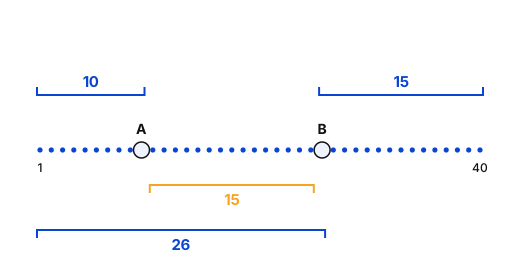
There are 40 cars parked in a row. Car A is 10th from the left side and Car B is 15 th from the right side. Find the number of cars between A and B .
एक पंक्ति में 40 कारें खड़ी हैं। कार A बाईं ओर से 10वीं है और कार B दाईं ओर से 15वीं है। A और B के बीच कारों की संख्या ज्ञात कीजिए।
  1. A10
  2. B15
  3. C12
  4. D14
Show answer

Concept: Position from left = Total − position from right + 1.

  1. A = 10th from left.
  2. B from left = 40 − 15 + 1 = 26th.
  3. Cars between = 26 − 10 − 1 = 15.

Trick: Between = Total − (left rank + right rank) = 40 − (10 + 15) = 15 (works when they don't overlap).

Answer: (B) 15

अवधारणा: बाएँ से स्थान = कुल − दाएँ से स्थान + 1।

  1. A बाएँ से 10वीं।
  2. B बाएँ से = 40 − 15 + 1 = 26वीं।
  3. बीच में कारें = 26 − 10 − 1 = 15।

ट्रिक: बीच की संख्या = कुल − (दोनों rank का योग) = 40 − 25 = 15 (जब ओवरलैप न हो)।

उत्तर: (B) 15

SSC CHSLGeneral IntelligenceRanking – objects between two positionsSSC CHSL 2025 · 13 Nov Shift 3 →
Q4529.
In each question below is given a statement followed by two courses of action numbered I and II. You have to assume everything in the statement to be true and on the basis of the information given in the statement, decide which of the suggested courses of action logically follow(s) for pursuing.
Statement: A large number of road accidents are being reported due to overspeeding in the city.
Course of action I: Ban all vehicles in the city immediately.
Course of action II: Implement stricter traffic rules and run awareness campaigns for drivers.
नीचे दिए गए प्रत्येक प्रश्न में एक कथन दिया गया है, जिसके बाद I और II क्रमांकित दो कार्यवाहियाँ दी गई हैं। आपको कथन में दी गई प्रत्येक बात को सत्य मानना है और कथन में दी गई जानकारी के आधार पर यह निर्णय करना है कि सुझाई गई कार्यवाहियों में से कौन-सी कार्यवाही करने योग्य रूप से तार्किक रूप से अनुसरण करती है।
कथन: शहर में तेज़ गति से वाहन चलाने के कारण बड़ी संख्या में सड़क दुर्घटनाएँ होने की सूचना मिल रही है।
कार्यवाही I: शहर में सभी वाहनों पर तुरंत प्रतिबंध लगा दिया जाए।
कार्यवाही II: कड़े यातायात नियम लागू किए जाएँ और चालकों के लिए जागरूकता अभियान चलाए जाएँ।
  1. AOnly I followsकेवल I अनुसरण करती है
  2. BOnly II followsकेवल II अनुसरण करती है
  3. CBoth followदोनों अनुसरण करती हैं
  4. DEither I or II followsया तो I या II अनुसरण करती है
Show answer

Concept: A valid course of action is practical and targets the cause (overspeeding).

  1. I: banning all vehicles is extreme and unrealistic – does not follow.
  2. II: stricter rules + driver awareness directly control speeding – follows.

Trick: Words like 'ban all', 'immediately', 'completely' usually make a course of action invalid.

Answer: (B) Only II follows

अवधारणा: सही कार्यवाही व्यावहारिक हो और कारण (तेज़ गति) पर असर करे।

  1. I: सभी वाहनों पर प्रतिबंध अतिवादी व अव्यावहारिक – अनुसरण नहीं करता।
  2. II: सख्त नियम + जागरूकता अभियान सीधे तेज़ गति रोकते हैं – अनुसरण करता है।

ट्रिक: 'ban all', 'immediately' जैसे शब्द प्रायः कार्यवाही को अमान्य बना देते हैं।

उत्तर: (B) केवल II अनुसरण करती है

SSC CHSLGeneral IntelligenceCourse of action – overspeeding accidentsSSC CHSL 2025 · 13 Nov Shift 3 →
Q4530.
Few of the letters are given followed by a question mark (?) these letters are following a specific pattern you have to give the correct option which can replace question mark.
What will complete the following:
F, I, L, O, ?
कुछ अक्षर दिए गए हैं जिनके बाद एक प्रश्नवाचक चिह्न (?) है; ये अक्षर एक विशिष्ट पैटर्न का अनुसरण कर रहे हैं। आपको वह सही विकल्प बताना है जो प्रश्नवाचक चिह्न के स्थान पर आ सकता है।
निम्नलिखित को कौन पूरा करेगा:
F, I, L, O, ?
  1. AT
  2. BN
  3. CQ
  4. DR
Show answer

Concept: Convert letters to alphabet positions and find the gap.

  1. F=6, I=9, L=12, O=15 → each +3.
  2. Next = 15 + 3 = 18 = R.

Trick: Use EJOTY (5, 10, 15, 20, 25): O = 15, so 18 = R.

Answer: (D) R

अवधारणा: अक्षरों को उनके क्रमांक में बदलें और अंतर देखें।

  1. F=6, I=9, L=12, O=15 → हर बार +3।
  2. अगला = 15 + 3 = 18 = R।

ट्रिक: EJOTY (5, 10, 15, 20, 25) याद रखें: O = 15, तो 18 = R।

उत्तर: (D) R

SSC CHSLGeneral IntelligenceLetter series – +3 patternSSC CHSL 2025 · 13 Nov Shift 3 →
Q4531.
In this question some conditions or circumstances is provided to you, you have to make logical judgement according to mentioned circumstances and mark the correct judgement for question.
A town is facing frequent water shortages. To address this, the local authorities must act quickly in the public's interest. Which step is the most reasonable first?
इस प्रश्न में आपको कुछ शर्तें अथवा परिस्थितियाँ दी गई हैं; आपको उल्लिखित परिस्थितियों के अनुसार तार्किक निर्णय करना है और प्रश्न के लिए सही निर्णय चिह्नित करना है।
एक कस्बा बार-बार जल की कमी का सामना कर रहा है। इसका समाधान करने के लिए स्थानीय प्रशासन को जनहित में शीघ्र कार्रवाई करनी है। सबसे उचित पहला कदम कौन-सा है?
  1. AOrganize a street festivalएक सड़क उत्सव का आयोजन करें
  2. BImplement water conservation measures and repair pipelinesजल संरक्षण के उपाय लागू करें और पाइपलाइनों की मरम्मत करें
  3. CPlant decorative trees on streetsसड़कों पर सजावटी पेड़ लगाएँ
  4. DOpen new shopping centersनए शॉपिंग सेंटर खोलें
Show answer

Concept: The first step must act directly on the problem – shortage of water.

  1. Conservation cuts wastage; repairing pipelines stops leakage.
  2. Both increase usable water quickly, serving the public.
  3. Festival, decorative trees and shopping centres do nothing for water supply.

Trick: Match the solution to the problem keyword ('water') – only B mentions it.

Answer: (B) Implement water conservation measures and repair pipelines

अवधारणा: पहला कदम सीधे समस्या – पानी की कमी – पर असर करे।

  1. संरक्षण से बर्बादी घटती है; पाइपलाइन मरम्मत से रिसाव रुकता है।
  2. दोनों से तुरंत उपलब्ध पानी बढ़ता है।
  3. त्योहार, सजावटी पेड़, शॉपिंग सेंटर – पानी से कोई संबंध नहीं।

ट्रिक: समस्या के keyword ('water') से मेल खाने वाला विकल्प चुनें – केवल B।

उत्तर: (B) जल संरक्षण के उपाय लागू करें और पाइपलाइनों की मरम्मत करें

SSC CHSLGeneral IntelligenceDecision making – water shortageSSC CHSL 2025 · 13 Nov Shift 3 →
Q4532.
Four meaningful words are given in the options. You have to check which of the following words cannot be formed from the letters of "INSPIRATION".
विकल्पों में चार अर्थपूर्ण शब्द दिए गए हैं। आपको जाँचना है कि निम्नलिखित में से कौन-सा शब्द "INSPIRATION" के अक्षरों से नहीं बनाया जा सकता।
  1. ASTAR
  2. BPAIN
  3. CRAIN
  4. DPIPE
Show answer

Concept: A word can be formed only if each letter is available (in enough count).

  1. INSPIRATION letters: I×3, N×2, S, P×1, R, A, T, O.
  2. STAR, PAIN, RAIN – all letters available.
  3. PIPE needs two P's and an E – there is one P and no E.

Trick: First scan for a letter not present at all – 'E' instantly removes PIPE.

Answer: (D) PIPE

अवधारणा: शब्द तभी बनेगा जब हर अक्षर पर्याप्त संख्या में मौजूद हो।

  1. INSPIRATION में: I×3, N×2, S, P×1, R, A, T, O।
  2. STAR, PAIN, RAIN – सभी अक्षर उपलब्ध।
  3. PIPE में दो P और एक E चाहिए – P एक ही है, E है ही नहीं।

ट्रिक: पहले वह अक्षर खोजें जो शब्द में है ही नहीं – 'E' से PIPE तुरंत बाहर।

उत्तर: (D) PIPE

SSC CHSLGeneral IntelligenceWord formation – INSPIRATIONSSC CHSL 2025 · 13 Nov Shift 3 →
Q4533.
A mirror is placed on the line AB. Out of the option figures, which figure will be the right image of the question figure?
figure
रेखा AB पर एक दर्पण रखा गया है। दी गई विकल्प आकृतियों में से कौन-सी आकृति प्रश्न आकृति का सही प्रतिबिंब होगी?
figure
  1. Afigure
  2. Bfigure
  3. Cfigure
  4. Dfigure
Show answer

Concept: A vertical mirror (AB on the right) swaps left and right; top and bottom stay the same.

  1. Circles in the upper-right part move to the upper-left part.
  2. Small triangles in the upper-left move to the upper-right.
  3. Horizontal lines (upper right) go to upper left; vertical lines (lower left) go to lower right; slanting lines (lower right) go to lower left and their slope reverses.

Trick: Track 2–3 distinctive elements (circles, triangles) and their side – one mismatch eliminates an option.

Answer: (B) Option figure B

अवधारणा: ऊर्ध्वाधर दर्पण (AB दाईं ओर) में बायाँ-दायाँ बदलता है; ऊपर-नीचे वही रहता है।

  1. ऊपर-दाएँ के वृत्त ऊपर-बाएँ आ जाएँगे।
  2. ऊपर-बाएँ के छोटे त्रिभुज ऊपर-दाएँ चले जाएँगे।
  3. बाकी छायांकित भाग भी इसी तरह बाएँ↔दाएँ अदला-बदली करेंगे (तिरछी धारियों का झुकाव उलट जाएगा)।

ट्रिक: 2–3 खास चिह्न (वृत्त, त्रिभुज) की तरफ़ देखें – एक भी गलत हो तो विकल्प हटाएँ।

उत्तर: (B) विकल्प आकृति B

SSC CHSLGeneral IntelligenceMirror image – vertical mirrorSSC CHSL 2025 · 13 Nov Shift 3 →
Q4534.
In this type of questions, question is provided with some issues/ disputes/problem, followed by few methods to resolve the problem in statement choosing the appropriate problem solving method that can be implemented.
A school principal has a limited budget for improving facilities. Students and staff request improvements in all areas. What is the logical first step?
इस प्रकार के प्रश्नों में कोई मुद्दा/विवाद/समस्या दी जाती है, जिसके बाद कथन में उस समस्या को हल करने की कुछ विधियाँ दी जाती हैं; आपको वह उपयुक्त समस्या-समाधान विधि चुननी है जिसे लागू किया जा सके।
एक विद्यालय के प्रधानाचार्य के पास सुविधाओं में सुधार के लिए सीमित बजट है। विद्यार्थी और कर्मचारी सभी क्षेत्रों में सुधार की माँग करते हैं। तार्किक पहला कदम क्या है?
  1. ASpend all the money on the principal's favorite classroomसारा धन प्रधानाचार्य की पसंदीदा कक्षा पर व्यय कर दें
  2. BPostpone the decision indefinitelyनिर्णय अनिश्चित काल के लिए टाल दें
  3. CAllocate funds equally to all areas regardless of needआवश्यकता की परवाह किए बिना सभी क्षेत्रों को समान रूप से धन आवंटित करें
  4. DConduct a survey to identify priority areas and allocate based on importanceप्राथमिकता वाले क्षेत्रों की पहचान के लिए सर्वेक्षण कराएँ और महत्व के आधार पर धन आवंटित करें
Show answer

Concept: With limited money, spend first where the need is greatest.

  1. A survey of students and staff shows which areas are most urgent.
  2. Funds can then go by priority, giving maximum benefit.
  3. A is biased, B avoids the decision, C spreads money too thin.

Trick: 'Identify priorities first' is the standard logical first step in budget questions.

Answer: (D) Conduct a survey to identify priority areas and allocate based on importance

अवधारणा: कम पैसे में पहले वहाँ खर्च करें जहाँ ज़रूरत सबसे ज़्यादा हो।

  1. छात्रों व स्टाफ़ का सर्वे बताएगा कि कौन से क्षेत्र ज़रूरी हैं।
  2. फिर प्राथमिकता के अनुसार धन बाँटें।
  3. A पक्षपाती, B टालना, C में पैसा बहुत बिखर जाएगा।

ट्रिक: बजट वाले प्रश्नों में 'पहले प्राथमिकता तय करें' ही तार्किक पहला कदम है।

उत्तर: (D) प्राथमिकता वाले क्षेत्रों की पहचान के लिए सर्वेक्षण कराएँ और महत्व के आधार पर धन आवंटित करें

SSC CHSLGeneral IntelligenceProblem solving – limited budgetSSC CHSL 2025 · 13 Nov Shift 3 →
Q4535.
In this type of questions, question is provided with some issues/ disputes/problem, followed by few methods to resolve the problem in statement choosing the appropriate problem solving method that can be implemented.
A university library receives many repeated requests for information about opening hours and book availability. The most efficient solution is:
इस प्रकार के प्रश्नों में कोई मुद्दा/विवाद/समस्या दी जाती है, जिसके बाद कथन में उस समस्या को हल करने की कुछ विधियाँ दी जाती हैं; आपको वह उपयुक्त समस्या-समाधान विधि चुननी है जिसे लागू किया जा सके।
एक विश्वविद्यालय के पुस्तकालय में खुलने के समय और पुस्तकों की उपलब्धता के विषय में बार-बार वही पूछताछ आती रहती है। सबसे कुशल समाधान है:
  1. AClose the libraryपुस्तकालय बंद कर दें
  2. BIgnore the repeated requestsबार-बार की जाने वाली पूछताछ की उपेक्षा करें
  3. CPenalize students asking repeatedlyबार-बार पूछने वाले विद्यार्थियों को दंडित करें
  4. DIntroduce a FAQ page and an automated information systemएक FAQ पृष्ठ और स्वचालित सूचना प्रणाली आरंभ करें
Show answer

Concept: Repeated, identical questions are best handled by self-service information.

  1. A FAQ page answers common questions on hours and availability.
  2. An automated system gives instant, up-to-date answers and frees staff.
  3. Closing, ignoring or penalising doesn't meet the users' genuine need.

Trick: 'Most efficient' + 'repeated' → think automation / FAQ.

Answer: (D) Introduce a FAQ page and an automated information system

अवधारणा: बार-बार एक जैसे प्रश्नों का सबसे अच्छा हल – स्वयं-सेवा जानकारी।

  1. FAQ पेज समय और किताबों की उपलब्धता के सामान्य प्रश्नों का उत्तर देता है।
  2. Automated system तुरंत जानकारी देता है और स्टाफ़ का समय बचाता है।
  3. बंद करना, अनदेखा करना या दंड देना – असली ज़रूरत पूरी नहीं करते।

ट्रिक: 'Most efficient' + 'repeated' दिखे तो automation / FAQ सोचें।

उत्तर: (D) एक FAQ पृष्ठ और स्वचालित सूचना प्रणाली आरंभ करें

SSC CHSLGeneral IntelligenceProblem solving – repeated queriesSSC CHSL 2025 · 13 Nov Shift 3 →
Q4536.
In each of the following questions, there is a certain relationship between two given letter pairs on one side of (::) and pair is given on another side of (::) where another pair is to be found from the given alternatives, having the same relationship with this pair as the pairs of the given pair bear. Choose the best alternative.
AD : EH :: JM : ?
निम्नलिखित प्रत्येक प्रश्न में, (::) के एक ओर दिए गए दो अक्षर-युग्मों के बीच एक निश्चित संबंध है तथा (::) की दूसरी ओर एक युग्म दिया गया है, जिसके लिए दिए गए विकल्पों में से ऐसा युग्म ज्ञात करना है जिसका इस युग्म के साथ वही संबंध हो जो दिए गए युग्मों के बीच है। सर्वोत्तम विकल्प चुनिए।
AD : EH :: JM : ?
  1. ANO
  2. BNQ
  3. CQN
  4. DNL
Show answer

Concept: Find how each letter moves from the first pair to the second.

  1. A(1)→E(5), D(4)→H(8): each +4.
  2. J(10)+4 = 14 = N; M(13)+4 = 17 = Q.
  3. Answer pair: NQ.

Trick: Inside each pair the gap is +3 (A→D, E→H, J→M); so the answer must also have gap +3: N→Q.

Answer: (B) NQ

अवधारणा: पहली जोड़ी से दूसरी जोड़ी तक हर अक्षर कितना आगे बढ़ा, देखें।

  1. A(1)→E(5), D(4)→H(8): हर अक्षर +4।
  2. J(10)+4 = 14 = N; M(13)+4 = 17 = Q।
  3. उत्तर: NQ।

ट्रिक: हर जोड़ी के अंदर अंतर +3 है (A→D, J→M); इसलिए उत्तर में भी N→Q (+3)।

उत्तर: (B) NQ

SSC CHSLGeneral IntelligenceLetter analogy – +4 shiftSSC CHSL 2025 · 13 Nov Shift 3 →
Q4537.
Find the next element that replaces the ? Logically.
620, 891, 1222, 1619, ?
वह अगला पद ज्ञात कीजिए जो ? के स्थान पर तार्किक रूप से आएगा।
620, 891, 1222, 1619, ?
  1. A2104
  2. B2095
  3. C2081
  4. D2088
Show answer

Concept: When first differences are unequal, check differences of differences.

  1. First differences: 271, 331, 397.
  2. Second differences: 60, 66 → next 72.
  3. Next first difference = 397 + 72 = 469.
  4. Next term = 1619 + 469 = 2088.

Trick: Last digits check: 1619 + …69 ends in 8 → only 2088 fits.

Answer: (D) 2088

अवधारणा: पहले अंतर बराबर न हों तो अंतरों का अंतर देखें।

  1. पहले अंतर: 271, 331, 397।
  2. दूसरे अंतर: 60, 66 → अगला 72।
  3. अगला अंतर = 397 + 72 = 469।
  4. अगला पद = 1619 + 469 = 2088।

ट्रिक: इकाई अंक: 9 + 9 = 18 → अंत में 8, केवल 2088।

उत्तर: (D) 2088

SSC CHSLGeneral IntelligenceNumber series – second differencesSSC CHSL 2025 · 13 Nov Shift 3 →
Q4538.
In three of the following pairs are same by same pattern except one pair. Which pair does not follow this pattern?
निम्नलिखित में से तीन युग्म एक ही पैटर्न पर आधारित हैं, केवल एक युग्म को छोड़कर। कौन-सा युग्म इस पैटर्न का अनुसरण नहीं करता?
  1. A49, 64
  2. B15,22
  3. C121, 144
  4. D36, 49
Show answer

Concept: Find the rule shared by three pairs.

  1. 49, 64 = 72, 82; 121, 144 = 112, 122; 36, 49 = 62, 72.
  2. Rule: squares of two consecutive numbers.
  3. 15 and 22 are not perfect squares – odd one.

Trick: Know squares 1–30 by heart; non-squares are spotted instantly.

Answer: (B) 15,22

अवधारणा: तीन जोड़ियों में समान नियम खोजें।

  1. 49, 64 = 72, 82; 121, 144 = 112, 122; 36, 49 = 62, 72।
  2. नियम: लगातार दो संख्याओं के वर्ग।
  3. 15 और 22 पूर्ण वर्ग नहीं – यही अलग है।

ट्रिक: 1 से 30 तक के वर्ग याद रखें, ऐसे प्रश्न सेकंडों में हल होंगे।

उत्तर: (B) 15,22

SSC CHSLGeneral IntelligenceOdd pair – consecutive squaresSSC CHSL 2025 · 13 Nov Shift 3 →
Q4539.
In this type of questions, question is provided with substitutes for various mathematical symbols, followed by a question involving calculation of an expression or choosing the correct/ incorrect equation. You have to put the real signs in the given equation and then solve the questions as required.
If '$' stands for '+', '!' stands for ' × ', '*' stands for ' ÷ ', '#' stands for ''., then find the value of: 14∗28$8#24= ?
इस प्रकार के प्रश्नों में विभिन्न गणितीय चिह्नों के स्थान पर प्रतीक दिए जाते हैं, जिसके बाद एक प्रश्न दिया जाता है जिसमें किसी व्यंजक का मान ज्ञात करना अथवा सही/गलत समीकरण चुनना होता है। आपको दिए गए समीकरण में वास्तविक चिह्न रखकर आवश्यकतानुसार प्रश्न हल करना है।
यदि '$' का अर्थ '+' है, '!' का अर्थ ' × ' है, '*' का अर्थ ' ÷ ' है, '#' का अर्थ '-' है, तो निम्नलिखित का मान ज्ञात कीजिए: 14∗28$8#24= ?
  1. A−412
  2. B−312
  3. C−212
  4. D−512
Show answer

Concept: Replace symbols with real signs, then apply BODMAS.

  1. * = ÷, $ = +, # = −: 14÷28+8−24.
  2. 14÷28=12.
  3. 12+8−24=12−16=−312(=−15.5).

Trick: Answer must be −16+12, i.e. −1512=−312.

Answer: (B) −312

अवधारणा: चिह्न बदलकर BODMAS लगाएँ।

  1. * = ÷, $ = +, # = −: 14÷28+8−24।
  2. 14÷28=12।
  3. 12+8−24=12−16=−312(=−15.5)।

ट्रिक: −16+12=−1512=−312।

उत्तर: (B) −312

SSC CHSLGeneral IntelligenceSymbol substitution – BODMASSSC CHSL 2025 · 13 Nov Shift 3 →
Q4540.
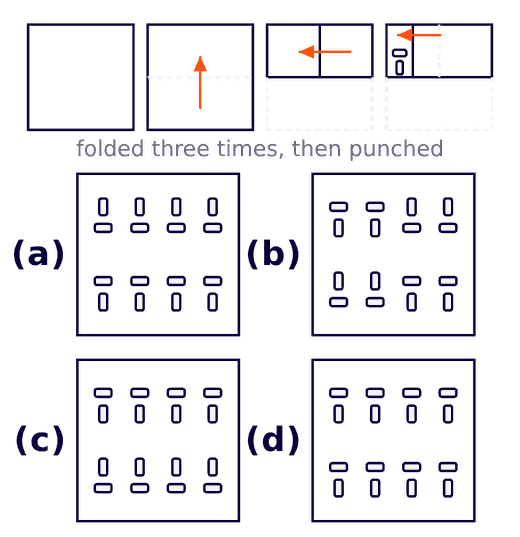
A piece of paper is folded and punched as shown below in the question figures. From the given option figures, indicate how it will appear when opened.
figure
कागज़ के एक टुकड़े को नीचे प्रश्न आकृतियों में दर्शाए अनुसार मोड़ा और छेदा गया है। दी गई विकल्प आकृतियों में से बताइए कि खोलने पर वह कैसा दिखाई देगा।
figure
  1. A
  2. B
  3. C
  4. D
Show answer

Concept: Unfold step by step; each unfold mirrors the punches across the fold line.

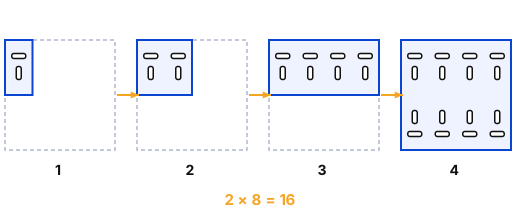
  1. Three folds → 8 layers; 2 punches × 8 = 16 holes.
  2. Undoing the two vertical folds repeats the pair (wide mark above tall mark) across 4 columns in the upper half.
  3. Undoing the first (horizontal) fold mirrors it into the lower half: tall mark above wide mark.

Trick: Count holes first (16), then check order: top half wide-over-tall, bottom half tall-over-wide.

Answer: (C) Option figure C

अवधारणा: एक-एक मोड़ खोलें; हर बार छेद मोड़ की रेखा के पार दर्पण-रूप में बनते हैं।

  1. तीन मोड़ → 8 परतें; 2 छेद × 8 = 16 छेद।
  2. दोनों खड़े मोड़ खोलने पर ऊपर के आधे भाग में 4 कॉलम – चौड़ा निशान ऊपर, लंबा नीचे।
  3. पहला (क्षैतिज) मोड़ खोलने पर नीचे का आधा उल्टा: लंबा ऊपर, चौड़ा नीचे।

ट्रिक: पहले छेद गिनें (16), फिर क्रम देखें: ऊपर चौड़ा-लंबा, नीचे लंबा-चौड़ा।

उत्तर: (C) विकल्प आकृति C

SSC CHSLGeneral IntelligencePaper folding and punchingSSC CHSL 2025 · 13 Nov Shift 3 →