Question bank

Q&A: practice questions with answers

Search questions on any topic. Filter by exam category, exam, subject and topic, try the question, then open the answer and explanation.

Courses – airGurukul

5,000 questions found.

Q4621.
Choose the most suitable option to replace the highlighted part of the sentence:
The trained professionals with the capacity to adapt to changing conditions would be able to delivers consistent result.
  1. Awould be able to deliver consistent results
  2. Bwould able to deliver consistent result
  3. Ccan be able delivering consistent results
  4. Dwould be abled to deliver consistent result
Show answer

Concept: Modal + be + able + to + V1; 'consistent results' needs plural.

  1. 'to delivers' is wrong – after 'to' use V1: deliver.
  2. 'would able' (B) lacks 'be'; 'can be able' (C) and 'abled' (D) are wrong forms.
  3. Repeated outcomes → plural results.
  4. Correct: would be able to deliver consistent results.

Trick: Never write 'can be able' or 'to + verb-s' – both are standard SSC traps.

Answer: (A) would be able to deliver consistent results

अवधारणा: Modal + be + able + to + V1; 'consistent results' बहुवचन होना चाहिए।

  1. 'to delivers' गलत – 'to' के बाद V1: deliver।
  2. B में 'be' नहीं; C का 'can be able' और D का 'abled' गलत।
  3. बार-बार मिलने वाले परिणाम → बहुवचन results।
  4. सही: would be able to deliver consistent results।

ट्रिक: 'can be able' और 'to + verb-s' – दोनों SSC के पुराने जाल हैं।

उत्तर: (A) would be able to deliver consistent results
SSC CHSLEnglish LanguageSentence improvement – would be able to + V1SSC CHSL 2025 · 13 Nov Shift 2 →
Q4622.
Choose the correct passive voice transformation of the sentence:
The researchers are analysing the collected data.
  1. AThe collected data were analysed by the researchers.
  2. BThe collected data are analysed by the researchers.
  3. CThe collected data are being analysed by the researchers.
  4. DThe collected data have been analysed by the researchers.
Show answer

Concept: Present continuous: is/are + V-ing → is/are + being + V3.

  1. Object 'the collected data' becomes subject (plural → 'are').
  2. are analysing → are being analysed.
  3. Doer goes into 'by the researchers'.
  4. A = past, B = simple present, D = present perfect – tense changed.

Trick: Continuous tense in passive must contain 'being' – only C has it.

Answer: (C) The collected data are being analysed by the researchers.

अवधारणा: Present continuous: is/are + V-ing → is/are + being + V3।

  1. Object 'the collected data' कर्ता बनता है (बहुवचन → 'are')।
  2. are analysing → are being analysed।
  3. कर्ता 'by the researchers' में जाता है।
  4. A – past, B – simple present, D – present perfect; tense बदल गया।

ट्रिक: Continuous tense के passive में 'being' अनिवार्य – केवल C में है।

उत्तर: (C) The collected data are being analysed by the researchers.

SSC CHSLEnglish LanguageVoice – present continuous active to passiveSSC CHSL 2025 · 13 Nov Shift 2 →
Q4623.
Select the option that expresses the given sentence in direct voice.
The guide stated that the travellers had been waiting for hours and they had missed the last train that evening.
  1. AThe guide stated, "The travellers were waiting for hours, and we missed the last train this evening."
  2. BThe guide stated, "The travellers have been waiting for hours, and we had missed the last train this evening."
  3. CThe guide stated, "The travellers have been waiting for hours, and we missed the last train this evening."
  4. DThe guide stated, "The travellers had been waiting for hours, and we missed the last train this evening."
Show answer

Concept: Going back to direct speech, reverse each backshift made by the past reporting verb.

  1. had been waiting ← have been waiting (present perfect continuous).
  2. had missed ← missed (simple past).
  3. 'that evening' → 'this evening'; 'they' (guide's group) → 'we'.
  4. Option C has all these; B keeps 'had missed', D keeps 'had been', A uses 'were waiting'.

Trick: Reverse rule: past perfect in indirect can come from past or present perfect – check which fits 'for hours' (ongoing → have been waiting).

Answer: (C) The guide stated, "The travellers have been waiting for hours, and we missed the last train this evening."

अवधारणा: Direct speech बनाते समय past reporting verb के कारण हुए tense परिवर्तन को उलटें।

  1. had been waiting ← have been waiting।
  2. had missed ← missed (simple past)।
  3. 'that evening' → 'this evening'; 'they' → 'we'।
  4. C में सभी बदलाव सही हैं; B में 'had missed', D में 'had been' बचा है।

ट्रिक: Indirect का 'that' direct में 'this' बनता है; tense एक कदम आगे लौटता है।

उत्तर: (C) The guide stated, "The travellers have been waiting for hours, and we missed the last train this evening."

SSC CHSLEnglish LanguageNarration – indirect to directSSC CHSL 2025 · 13 Nov Shift 2 →
Q4624.
Rearrange the following sentence parts to form a meaningful and grammatically correct paragraph:
P. As night fell, the expedition struggled to find shelter in the unfamiliar terrain.
Q. Certain of a smooth journey, the explorers moved forward without adequate preparation.
R. The situation quickly turned critical when unexpected snowfall blocked all routes.
S. Their plan was to cross the region before dawn and avoid harsh weather conditions.
  1. AP, R, Q, S
  2. BQ, S, R, P
  3. CS, Q, P, R
  4. DR, P, S, Q
Show answer

Concept: Find the opener (no reference word), then follow cause → plan → trouble → result.

  1. Q introduces 'the explorers' – a natural start.
  2. S: 'Their plan …' refers back to the explorers → Q-S.
  3. R: the situation turned critical (snow blocked routes).
  4. P: as night fell, they struggled for shelter – the outcome. Order Q, S, R, P.

Trick: Pronoun 'Their' in S needs a noun before it – only Q supplies it; only option B starts with Q.

Answer: (B) Q, S, R, P

अवधारणा: पहले ऐसा वाक्य खोजें जिसमें कोई संदर्भ-शब्द न हो; फिर कारण → योजना → संकट → परिणाम।

  1. Q 'the explorers' का परिचय देता है – प्रारंभ।
  2. S: 'Their plan …' खोजकर्ताओं की ओर संकेत → Q-S।
  3. R: बर्फबारी से रास्ते बंद, स्थिति गंभीर।
  4. P: रात होने पर आश्रय की तलाश – परिणाम। क्रम Q, S, R, P।

ट्रिक: S का 'Their' पहले किसी noun की माँग करता है – वह Q में है; केवल B, Q से शुरू होता है।

उत्तर: (B) Q, S, R, P

SSC CHSLEnglish LanguagePara jumble – explorers' journeySSC CHSL 2025 · 13 Nov Shift 2 →
Q4625.
Rearrange the following sentence parts to form a meaningful and grammatically correct paragraph:
P. As a result, many traditional occupations began to disappear rapidly.
Q. Technological innovations transformed the way goods were produced and distributed.
R. This shift created new opportunities while also demanding fresh skills from workers.
S. Over time, societies were forced to adapt to entirely new economic realities.
  1. AP, Q, R, S
  2. BQ, R, S, P
  3. CR, S, Q, P
  4. DS, Q, P, R
Show answer

Concept: Start with the independent cause, then link words like 'This shift', 'Over time', 'As a result'.

  1. Q states the main event: technology changed production and distribution.
  2. R: 'This shift' refers to that change → Q-R.
  3. S: 'Over time' societies adapted to new economic realities.
  4. P: 'As a result' traditional jobs vanished – closing effect. Order Q, R, S, P.

Trick: Sentences opening with 'This …' or 'As a result' can never be first – eliminates A, C, D quickly.

Answer: (B) Q, R, S, P

अवधारणा: स्वतंत्र कारण वाले वाक्य से शुरू करें, फिर 'This shift', 'Over time', 'As a result' जैसे जोड़ने वाले शब्द देखें।

  1. Q मुख्य घटना बताता है: तकनीक ने उत्पादन व वितरण बदला।
  2. R: 'This shift' उसी बदलाव की ओर → Q-R।
  3. S: 'Over time' समाज नई आर्थिक परिस्थितियों में ढले।
  4. P: 'As a result' पारंपरिक काम खत्म हुए – अंतिम प्रभाव। क्रम Q, R, S, P।

ट्रिक: 'This …' या 'As a result' से शुरू होने वाला वाक्य पहला नहीं हो सकता – B ही बचता है।

उत्तर: (B) Q, R, S, P

SSC CHSLEnglish LanguagePara jumble – technology and economySSC CHSL 2025 · 13 Nov Shift 2 →
Q4626.
If COHERENCE is coded as FRKHUHQFH, then what would EVENNESS be?
यदि COHERENCE को FRKHUHQFH के रूप में कूटबद्ध किया जाता है, तो EVENNESS को किस रूप में कूटबद्ध किया जाएगा?
  1. AHYHQQHVV
  2. BHYIQQHVV
  3. CHYHQQHVU
  4. DHYHQQHUV
Show answer

Concept: Find the fixed shift between each letter and its code letter.

  1. C(3)→F(6), O(15)→R(18), H(8)→K(11): every letter +3.
  2. Apply +3 letter-wise to EVENNESS → H Y H Q Q H V V.
  3. Code = HYHQQHVV.

Trick: Repeated letters get repeated codes: EVENNESS has E at 1, 3, 6 → H at those places and SS → VV. Only A fits.

Answer: (A) HYHQQHVV

अवधारणा: हर अक्षर और उसके code के बीच का स्थिर अंतर खोजें।

  1. C(3)→F(6), O(15)→R(18), H(8)→K(11): हर अक्षर +3।
  2. EVENNESS के हर अक्षर में +3 → H Y H Q Q H V V।
  3. Code = HYHQQHVV।

ट्रिक: एक जैसे अक्षरों का code भी एक जैसा: SS → VV और E की जगह हर बार H – केवल A सही बैठता है।

उत्तर: (A) HYHQQHVV

SSC CHSLGeneral IntelligenceCoding – constant +3 shiftSSC CHSL 2025 · 13 Nov Shift 2 →
Q4627.
In a particular code language, if ACCIDENTALNESS is coded as BDDJEFOUBMOFTT and ACCOMPLISHABLE is coded as BDDPNQMJTIBCMF, then what is the code for ACCOUNTABILITY?
एक विशेष कूट भाषा में, यदि ACCIDENTALNESS को BDDJEFOUBMOFTT के रूप में तथा ACCOMPLISHABLE को BDDPNQMJTIBCMF के रूप में कूटबद्ध किया जाता है, तो ACCOUNTABILITY का कूट क्या होगा?
  1. ABDDPVOUBCJMJVZ
  2. BCDDPVOUBCJMJVZ
  3. CBDDPVOUBCJMJUZ
  4. DBDDQVOUBCJMJVZ
Show answer

Concept: Both examples move every letter one step forward.

  1. ACCIDENT… → BDDJEFOU…: A→B, C→D, I→J (+1).
  2. ACCOUNTABILITY +1: B D D P V O U B C J M J U Z.
  3. Code = BDDPVOUBCJMJUZ.

Trick: All options share the start; check only the differing letters – the 2nd-last letter T→U (not V) picks C.

Answer: (C) BDDPVOUBCJMJUZ

अवधारणा: दोनों उदाहरणों में हर अक्षर एक स्थान आगे गया है।

  1. ACCIDENT… → BDDJEFOU…: A→B, C→D, I→J (+1)।
  2. ACCOUNTABILITY +1: B D D P V O U B C J M J U Z।
  3. Code = BDDPVOUBCJMJUZ।

ट्रिक: सभी विकल्पों की शुरुआत समान है; केवल अलग अक्षर जाँचें – अंत से दूसरा T→U (V नहीं) → C।

उत्तर: (C) BDDPVOUBCJMJUZ

SSC CHSLGeneral IntelligenceCoding – each letter +1SSC CHSL 2025 · 13 Nov Shift 2 →
Q4628.
In a specific coding system, if PHYSICS is coded as QIZTJDT and BIOLOGY is coded as CJPMPHZ, then what is the code for SCIENCE ?
एक विशिष्ट कूट प्रणाली में, यदि PHYSICS को QIZTJDT के रूप में तथा BIOLOGY को CJPMPHZ के रूप में कूटबद्ध किया जाता है, तो SCIENCE का कूट क्या होगा?
  1. ATDJFODF
  2. BTDHFODF
  3. CUDJFODF
  4. DTDJFODG
Show answer

Concept: PHYSICS→QIZTJDT and BIOLOGY→CJPMPHZ: every letter shifted +1.

  1. P→Q, H→I, Y→Z … confirms +1.
  2. Shift SCIENCE by +1 → T D J F O D F.
  3. Code = TDJFODF.

Trick: SCIENCE has two E's – their code letters (3rd-last & last) must be the same F; D fails (ends in G).

Answer: (A) TDJFODF

अवधारणा: PHYSICS→QIZTJDT और BIOLOGY→CJPMPHZ: हर अक्षर +1।

  1. P→Q, H→I, Y→Z … नियम +1।
  2. SCIENCE के हर अक्षर को +1 करें → T D J F O D F।
  3. Code = TDJFODF।

ट्रिक: SCIENCE में दोनों E का code F ही होगा – D (अंत में G) तुरंत हटें।

उत्तर: (A) TDJFODF

SSC CHSLGeneral IntelligenceCoding – each letter +1SSC CHSL 2025 · 13 Nov Shift 2 →
Q4629.
Here some problem or solution of the problem is given in the statement you have to choose the appropriate logical deduction for given statement.
Statement: The rapid growth of artificial intelligence has increased efficiency and innovation in various industries. However, concerns regarding job displacement, data misuse, and lack of accountability have raised ethical and social questions. Experts emphasize the need for regulations and responsible use of AI.
Conclusions:
I. Artificial intelligence (AI) offers advantages as well as challenges.
II. Proper regulations are necessary to ensure responsible use of AI.
III. Artificial intelligence should be stopped completely to avoid future risks.
Which conclusion necessarily follows?
यहाँ कथन में कोई समस्या अथवा समस्या का समाधान दिया गया है, आपको दिए गए कथन के लिए उपयुक्त तार्किक निष्कर्ष चुनना है।
कथन: कृत्रिम बुद्धिमत्ता की तीव्र वृद्धि ने विभिन्न उद्योगों में दक्षता और नवाचार को बढ़ाया है। तथापि, रोज़गार-विस्थापन, आँकड़ों के दुरुपयोग तथा जवाबदेही के अभाव से संबंधित चिंताओं ने नैतिक और सामाजिक प्रश्न खड़े कर दिए हैं। विशेषज्ञ नियमन तथा AI के उत्तरदायी प्रयोग की आवश्यकता पर बल देते हैं।
निष्कर्ष:
I. कृत्रिम बुद्धिमत्ता (AI) लाभ के साथ-साथ चुनौतियाँ भी प्रस्तुत करती है।
II. AI के उत्तरदायी प्रयोग को सुनिश्चित करने के लिए उचित नियमन आवश्यक हैं।
III. भविष्य के जोखिमों से बचने के लिए कृत्रिम बुद्धिमत्ता को पूर्णतः रोक दिया जाना चाहिए।
कौन-सा निष्कर्ष अनिवार्य रूप से निकलता है?
  1. AOnly I followsकेवल I निकलता है
  2. BI and II followI और II निकलते हैं
  3. COnly III followsकेवल III निकलता है
  4. DAll followसभी निकलते हैं
Show answer

Concept: A conclusion follows only if it is supported by the statement, without going beyond it.

  1. I: statement mentions benefits (efficiency, innovation) and problems (jobs, data misuse) → follows.
  2. II: experts call for regulation and responsible use → follows.
  3. III: a total stop is extreme; the statement asks for control, not a ban → does not follow.

Trick: Words like 'stopped completely', 'always', 'only' usually make a conclusion invalid.

Answer: (B) I and II follow

अवधारणा: निष्कर्ष तभी सही है जब कथन उसका समर्थन करे और उससे आगे न जाए।

  1. I: कथन में लाभ (दक्षता, नवाचार) और समस्याएँ (नौकरियाँ, डेटा दुरुपयोग) दोनों हैं → सही।
  2. II: विशेषज्ञ नियमन और जिम्मेदार उपयोग की बात करते हैं → सही।
  3. III: पूरी तरह रोकना अतिवादी है; कथन नियंत्रण चाहता है, प्रतिबंध नहीं → गलत।

ट्रिक: 'पूरी तरह', 'हमेशा', 'केवल' जैसे शब्द वाले निष्कर्ष प्रायः नहीं निकलते।

उत्तर: (B) I और II निकलते हैं

SSC CHSLGeneral IntelligenceStatement and conclusions – AISSC CHSL 2025 · 13 Nov Shift 2 →
Q4630.
Each item describes a situation and is followed by four possible responses. Indicate the response you find most appropriate. Choose only one response for each item. The responses will be evaluated based on the level of appropriateness for the given situation. A team member is consistently missing deadlines, which is affecting the overall project progress. As the team lead, what is the most appropriate action?
प्रत्येक प्रश्न में एक स्थिति का वर्णन है और उसके बाद चार संभावित प्रतिक्रियाएँ दी गई हैं। आपको जो प्रतिक्रिया सर्वाधिक उपयुक्त लगे, उसे बताइए। प्रत्येक प्रश्न के लिए केवल एक ही प्रतिक्रिया चुनिए। प्रतिक्रियाओं का मूल्यांकन दी गई स्थिति के लिए उनकी उपयुक्तता के स्तर के आधार पर किया जाएगा। एक दल-सदस्य लगातार समय-सीमाएँ चूक रहा है, जिससे संपूर्ण परियोजना की प्रगति प्रभावित हो रही है। दल-नायक (team lead) के रूप में सर्वाधिक उपयुक्त कार्रवाई क्या है?
  1. APublicly criticize the team member to set an exampleउदाहरण प्रस्तुत करने के लिए उस दल-सदस्य की सार्वजनिक रूप से आलोचना करना
  2. BIgnore the issue and adjust deadlines internallyमुद्दे की उपेक्षा करना और आंतरिक रूप से समय-सीमाएँ समायोजित कर लेना
  3. CDiscuss the issue privately and help create a realistic planमुद्दे पर निजी तौर पर चर्चा करना और एक व्यावहारिक योजना बनाने में सहायता करना
  4. DReport the team member immediately to senior managementउस दल-सदस्य की तुरंत वरिष्ठ प्रबंधन से शिकायत करना
Show answer

Concept: A good leader finds the cause privately and offers support before escalating.

  1. C: a private talk reveals the reason; a realistic plan fixes future deadlines.
  2. A humiliates and lowers team morale.
  3. B hides the problem; D escalates without first trying to solve it.

Trick: Prefer the option that is private + constructive; reject public shaming, ignoring, or instant reporting.

Answer: (C) Discuss the issue privately and help create a realistic plan

अवधारणा: अच्छा team lead पहले निजी रूप से कारण जानता है और मदद करता है, फिर आगे बढ़ता है।

  1. C: निजी बातचीत से कारण पता चलता है; व्यावहारिक योजना से आगे समय पर काम होगा।
  2. A से अपमान होता है और टीम का मनोबल गिरता है।
  3. B समस्या छिपाता है; D बिना प्रयास के सीधे शिकायत है।

ट्रिक: 'निजी + रचनात्मक' विकल्प चुनें; सार्वजनिक आलोचना, अनदेखी या तुरंत शिकायत को हटाएँ।

उत्तर: (C) मुद्दे पर निजी तौर पर चर्चा करना और एक व्यावहारिक योजना बनाने में सहायता करना

SSC CHSLGeneral IntelligenceSituational judgement – team member missing deadlinesSSC CHSL 2025 · 13 Nov Shift 2 →
Q4631.
In this type of questions, question is provided with substitutes for various mathematical symbols, followed by a question involving calculation of an expression or choosing the correct/incorrect equation. You have to put the real signs in the given equation and then solve the questions as required. If ' n ' stands for ' × ', '%' stands for ' ′ ', '&' stands for '÷', '★' stands for '+', then find the value of:
15%11∗14%16= ?
इस प्रकार के प्रश्नों में विभिन्न गणितीय चिह्नों के स्थान पर प्रतीक दिए जाते हैं, जिसके बाद किसी व्यंजक के मान की गणना करने अथवा सही/गलत समीकरण चुनने से संबंधित प्रश्न पूछा जाता है। आपको दिए गए समीकरण में वास्तविक चिह्न रखकर प्रश्नानुसार हल करना है। यदि ' n ' का अर्थ ' × ' है, '%' का अर्थ ' ′ ' है, '&' का अर्थ '÷' है, '★' का अर्थ '+' है, तो निम्नलिखित का मान ज्ञात कीजिए:
15%11∗14%16= ?
  1. A6
  2. B2
  3. C4
  4. D3
Show answer

Concept: Replace symbols (% = −, ★ = +), then solve left to right.

  1. 15 % 11 ★ 14 % 16 → 15 − 11 + 14 − 16.
  2. Group: (15 + 14) − (11 + 16) = 29 − 27.
  3. = 2.

Trick: With only + and −, add all positives and all negatives separately – one subtraction finishes it.

Answer: (B) 2

अवधारणा: चिह्न बदलें (% = −, ★ = +), फिर बाएँ से दाएँ हल करें।

  1. 15 % 11 ★ 14 % 16 → 15 − 11 + 14 − 16।
  2. (15 + 14) − (11 + 16) = 29 − 27।
  3. = 2।

ट्रिक: केवल + और − हों तो धनात्मक और ऋणात्मक अलग-अलग जोड़ें – एक घटाव में उत्तर।

उत्तर: (B) 2

SSC CHSLGeneral IntelligenceSymbol substitution – + and −SSC CHSL 2025 · 13 Nov Shift 2 →
Q4632.
In this type of questions, question is provided with substitutes for various mathematical symbols, followed by a question involving calculation of an expression or choosing the correct /incorrect equation. You have to put the real signs in the given equation and then solve the questions as required.
If '-' stands for '÷', '?' stands for '+', '%' stands for ''., 'S' stands for ' × ', then find the value of:
6%15 ? 11 $ 16= ?
इस प्रकार के प्रश्नों में विभिन्न गणितीय चिह्नों के स्थान पर प्रतीक दिए जाते हैं, जिसके बाद किसी व्यंजक के मान की गणना करने अथवा सही/गलत समीकरण चुनने से संबंधित प्रश्न पूछा जाता है। आपको दिए गए समीकरण में वास्तविक चिह्न रखकर प्रश्नानुसार हल करना है।
यदि '-' का अर्थ '÷' है, '?' का अर्थ '+' है, '%' का अर्थ '−' है, 'S' का अर्थ ' × ' है, तो निम्नलिखित का मान ज्ञात कीजिए:
6%15 ? 11 $ 16= ?
  1. A167
  2. B164
  3. C168
  4. D166
Show answer

Concept: Substitute signs (% = −, ? = +, S = ×) and apply BODMAS.

  1. 6 % 15 ? 11 S 16 → 6−15+11×16.
  2. Multiply first: 11×16=176.
  3. 6−15+176= 167.

Trick: Unit digit check: 6−5+6 → unit digit 7; only 167 ends in 7.

Answer: (A) 167

अवधारणा: चिह्न बदलें (% = −, ? = +, S = ×) और BODMAS लगाएँ।

  1. 6 % 15 ? 11 S 16 → 6−15+11×16।
  2. पहले गुणा: 11×16=176।
  3. 6−15+176= 167।

ट्रिक: इकाई अंक: 6−5+6 → 7; केवल 167 का इकाई अंक 7 है।

उत्तर: (A) 167

SSC CHSLGeneral IntelligenceSymbol substitution with BODMASSSC CHSL 2025 · 13 Nov Shift 2 →
Q4633.
A new colleague is struggling to adjust to the workplace culture and seems withdrawn during team interactions. What is the best social intelligence response?
एक नया सहकर्मी कार्यस्थल की संस्कृति के साथ तालमेल बिठाने में कठिनाई अनुभव कर रहा है और दल की बातचीत के दौरान अलग-थलग प्रतीत होता है। सर्वोत्तम सामाजिक बुद्धिमत्ता प्रतिक्रिया क्या है?
  1. AAvoid interacting to give them spaceउन्हें स्थान देने के लिए बातचीत से बचना
  2. BEncourage them privately and help them connect with the teamनिजी तौर पर उनका उत्साह बढ़ाना और दल से जुड़ने में उनकी सहायता करना
  3. CPublicly point out their behavior during meetingsबैठकों के दौरान सार्वजनिक रूप से उनके व्यवहार की ओर संकेत करना
  4. DReport them immediately to managementतुरंत प्रबंधन से उनकी शिकायत करना
Show answer

Concept: Social intelligence = sensing someone's discomfort and helping them feel included.

  1. B: private encouragement builds confidence; introducing them to the team builds connection.
  2. A leaves them isolated; C embarrasses them in public.
  3. D treats a normal adjustment issue like misconduct.

Trick: In empathy questions the right choice is supportive, private and inclusive.

Answer: (B) Encourage them privately and help them connect with the team

अवधारणा: Social intelligence का अर्थ है दूसरे की असहजता समझकर उसे टीम में शामिल महसूस कराना।

  1. B: अकेले में हौसला देने से आत्मविश्वास बढ़ता है; टीम से जोड़ने से अपनापन आता है।
  2. A उसे अकेला छोड़ देता है; C सबके सामने शर्मिंदा करता है।
  3. D सामान्य समायोजन समस्या को दुर्व्यवहार मान लेता है।

ट्रिक: सहानुभूति वाले प्रश्नों में 'सहयोगी, निजी, समावेशी' विकल्प सही होता है।

उत्तर: (B) निजी तौर पर उनका उत्साह बढ़ाना और दल से जुड़ने में उनकी सहायता करना

SSC CHSLGeneral IntelligenceSocial intelligence – withdrawn new colleagueSSC CHSL 2025 · 13 Nov Shift 2 →
Q4634.
In a line of 60 children, Geeta is 25th from the beginning and Kavita is 28th from the end. How many children are there between Geeta and Kavita?
60 बच्चों की एक पंक्ति में, गीता आरंभ से 25वें स्थान पर है और कविता अंत से 28वें स्थान पर है। गीता और कविता के बीच कितने बच्चे हैं?
  1. A7
  2. B8
  3. C5
  4. D6
Show answer

Concept: Convert both ranks to the same end: rank from start = Total − rank from end + 1.

  1. Kavita from start = 60 − 28 + 1 = 33.
  2. Geeta = 25th from start.
  3. Between them = 33 − 25 − 1 = 7.

Trick: Between = Total − (sum of opposite-end ranks) = 60 − (25 + 28) = 7, when the two do not cross.

Answer: (A) 7

अवधारणा: पहले दोनों रैंक आगे वाले छोर से लिखें: आगे से रैंक = Total − पीछे से रैंक + 1।

  1. कविता शुरुआत से = 60 − 28 + 1 = 33वीं।
  2. गीता = 25वीं।
  3. बीच में = 33 − 25 − 1 = 7।

ट्रिक: बीच वाले = कुल − (दोनों विपरीत छोर के स्थानों का योग) = 60 − 53 = 7 (जब वे एक-दूसरे को पार न करें)।

उत्तर: (A) 7

SSC CHSLGeneral IntelligenceRanking – persons between two positionsSSC CHSL 2025 · 13 Nov Shift 2 →
Q4635.
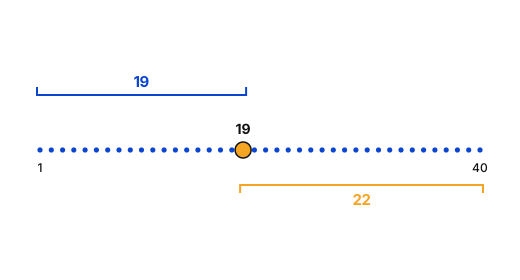
In a temple, 40 oil lamps are lit in a row. What is the position of the 19th lamp from left when counted from the right?
एक मंदिर में, एक पंक्ति में 40 दीपक जलाए गए हैं। बाईं ओर से 19वें दीपक का स्थान दाईं ओर से गिनने पर क्या होगा?
  1. A26th26वाँ
  2. B22th22वाँ
  3. C28th28वाँ
  4. D25th25वाँ
Show answer

Concept: Left rank + right rank = Total + 1.

  1. Right rank = 40 − 19 + 1.
  2. = 22nd.

Trick: Total + 1 − given rank: 41 − 19 = 22 in one step.

Answer: (B) 22th

अवधारणा: बाएँ से स्थान + दाएँ से स्थान = कुल + 1।

  1. दाएँ से स्थान = 40 − 19 + 1।
  2. = 22वाँ।

ट्रिक: (कुल + 1) − दिया स्थान: 41 − 19 = 22, एक ही चरण में।

उत्तर: (B) 22वाँ

SSC CHSLGeneral IntelligencePosition in a row – left to rightSSC CHSL 2025 · 13 Nov Shift 2 →
Q4636.
In each question below is given a statement followed by two courses of action numbered I and II. You have to assume everything in the statement to be true and on the basis of the information given in the statement, decide which of the suggested courses of action logically follow(s) for pursuing.
Statement: Many students in a government school are performing poorly in mathematics due to lack of trained teachers and proper guidance.
Course of action I: Appoint trained mathematics teachers and arrange remedial classes for students.
Course of action II: Shut down the school to prevent further poor academic results.
नीचे दिए गए प्रत्येक प्रश्न में एक कथन दिया गया है, जिसके बाद I और II क्रमांकित दो कार्यवाहियाँ दी गई हैं। आपको कथन में दी गई प्रत्येक बात को सत्य मानना है और कथन में दी गई सूचना के आधार पर यह निर्णय करना है कि सुझाई गई कार्यवाहियों में से कौन-सी कार्यवाही तार्किक रूप से करने योग्य है।
कथन: एक सरकारी विद्यालय के अनेक छात्र प्रशिक्षित शिक्षकों तथा उचित मार्गदर्शन के अभाव के कारण गणित में खराब प्रदर्शन कर रहे हैं।
कार्यवाही I: प्रशिक्षित गणित शिक्षकों की नियुक्ति की जाए और छात्रों के लिए उपचारात्मक कक्षाओं की व्यवस्था की जाए।
कार्यवाही II: आगे और खराब शैक्षणिक परिणामों से बचने के लिए विद्यालय को बंद कर दिया जाए।
  1. AOnly I followsकेवल I अनुसरण करती है
  2. BOnly II followsकेवल II अनुसरण करती है
  3. CBoth followदोनों अनुसरण करती हैं
  4. DEither I or II followsया तो I या II अनुसरण करती है
Show answer

Concept: A valid course of action removes the stated cause and is practical.

  1. Cause: no trained teachers, no proper guidance.
  2. I appoints trained teachers + remedial classes → directly fixes the cause → follows.
  3. II closes the school – harms students and solves nothing → does not follow.

Trick: Drastic steps like shutting down, banning or punishing all are almost never valid actions.

Answer: (A) Only I follows

अवधारणा: वही कार्यवाही मान्य है जो समस्या की जड़ हटाए और अमल में लाई जा सके।

  1. जड़: trained maths teachers और सही guidance की कमी।
  2. I: trained teachers की नियुक्ति + remedial classes → जड़ पर सीधा उपाय → follows।
  3. II: स्कूल बंद करना – छात्रों का नुकसान, समाधान नहीं → गलत।

ट्रिक: बंद करना, प्रतिबंध लगाना जैसे कठोर कदम लगभग कभी सही कार्यवाही नहीं होते।

उत्तर: (A) केवल I अनुसरण करती है

SSC CHSLGeneral IntelligenceCourse of action – poor maths resultsSSC CHSL 2025 · 13 Nov Shift 2 →
Q4637.
Each question given below consists of a statement, followed by two arguments numbered I and II. You have to decide which of the arguments is a 'strong' argument and which is a 'weak' argument.
Statement: Should work-from-home be allowed permanently in private companies?
Argument I: Yes, it increases work-life balance and employee productivity.
Argument II: No, employees might misuse the freedom and avoid work.
नीचे दिए गए प्रत्येक प्रश्न में एक कथन दिया गया है, जिसके बाद I और II क्रमांकित दो तर्क दिए गए हैं। आपको यह निर्णय करना है कि कौन-सा तर्क 'प्रबल' है और कौन-सा तर्क 'दुर्बल' है।
कथन: क्या निजी कंपनियों में घर से कार्य (work-from-home) की अनुमति स्थायी रूप से दी जानी चाहिए?
तर्क I: हाँ, इससे कार्य-जीवन संतुलन और कर्मचारियों की उत्पादकता बढ़ती है।
तर्क II: नहीं, कर्मचारी इस स्वतंत्रता का दुरुपयोग कर सकते हैं और कार्य से बच सकते हैं।
  1. AOnly I is strongकेवल I प्रबल है
  2. BOnly II is strongकेवल II प्रबल है
  3. CBoth I and II are strongI और II दोनों प्रबल हैं
  4. DNeither I nor II is strongन तो I और न ही II प्रबल है
Show answer

Concept: An argument is strong if it is relevant and points to a significant real consequence.

  1. I: better work-life balance and productivity – a major, relevant benefit → strong.
  2. II: risk of misuse and shirking – a genuine, relevant drawback → strong.
  3. Both address the core of the policy → both strong.

Trick: A 'Yes' and a 'No' argument can both be strong when each states a real, major effect.

Answer: (C) Both I and II are strong

अवधारणा: Strong argument वह है जो सीधे मुद्दे से जुड़ा हो और कोई ठोस, बड़ा असर बताए।

  1. I: बेहतर work-life balance और उत्पादकता – बड़ा, प्रासंगिक लाभ → मज़बूत।
  2. II: छूट का गलत फ़ायदा उठाकर काम से बचने का ख़तरा – असली कमी → मज़बूत।
  3. दोनों नीति के मूल मुद्दे से जुड़े हैं → दोनों मज़बूत।

ट्रिक: 'हाँ' और 'नहीं' दोनों तर्क एक साथ मज़बूत हो सकते हैं, यदि दोनों ठोस प्रभाव बताएँ।

उत्तर: (C) I और II दोनों प्रबल हैं

SSC CHSLGeneral IntelligenceStatement and arguments – permanent work-from-homeSSC CHSL 2025 · 13 Nov Shift 2 →
Q4638.
Few of the letters are given followed by a question mark (?) these letters are following a specific pattern you have to give the correct option which can replace question mark. What comes next: D, H, M, S, ?
कुछ अक्षर दिए गए हैं जिनके बाद एक प्रश्नवाचक चिह्न (?) है, ये अक्षर एक विशिष्ट पैटर्न का अनुसरण कर रहे हैं, आपको वह सही विकल्प बताना है जो प्रश्नवाचक चिह्न के स्थान पर आ सके। आगे क्या आएगा: D, H, M, S, ?
  1. AZ
  2. BA
  3. CB
  4. DC
Show answer

Concept: Convert letters to positions and study the gaps.

  1. Positions: 4 (D), 8 (H), 13 (M), 19 (S).
  2. Gaps grow +4, +5, +6 → next +7.
  3. 19 + 7 = 26 = Z.

Trick: Remember EJOTY (5, 10, 15, 20, 25) – S = 19, so 26 is the last letter Z.

Answer: (A) Z

अवधारणा: अक्षरों को स्थान-संख्या में बदलें और अंतर देखें।

  1. स्थान: 4 (D), 8 (H), 13 (M), 19 (S)।
  2. अंतर बढ़ रहा: +4, +5, +6 → अगला +7।
  3. 19 + 7 = 26 = Z।

ट्रिक: EJOTY (5, 10, 15, 20, 25) याद रखें – S = 19, तो 26 = अंतिम अक्षर Z।

उत्तर: (A) Z

SSC CHSLGeneral IntelligenceLetter series – increasing gapsSSC CHSL 2025 · 13 Nov Shift 2 →
Q4639.
Few of the letters are given followed by a question mark (?) these letters are following a specific pattern you have to give the correct option which can replace question mark. In the sequence V,R,N,J, ?
कुछ अक्षर दिए गए हैं जिनके बाद एक प्रश्नवाचक चिह्न (?) है, ये अक्षर एक विशिष्ट पैटर्न का अनुसरण कर रहे हैं, आपको वह सही विकल्प बताना है जो प्रश्नवाचक चिह्न के स्थान पर आ सके। शृंखला में V,R,N,J, ?
  1. AE
  2. BF
  3. CG
  4. DH
Show answer

Concept: Find the common difference of letter positions.

  1. Positions 22 (V), 18 (R), 14 (N), 10 (J) fall by 4 each time.
  2. 10 − 4 = 6 = F.

Trick: Skip-count backward: J, I, H, G, F – miss three letters each time.

Answer: (B) F

अवधारणा: अक्षरों की स्थान-संख्या का समान अंतर खोजें।

  1. स्थान 22 (V), 18 (R), 14 (N), 10 (J) – हर बार 4 कम।
  2. 10 − 4 = 6 = F।

ट्रिक: उल्टा गिनें: J से तीन अक्षर छोड़ें (I, H, G) → F।

उत्तर: (B) F

SSC CHSLGeneral IntelligenceLetter series – constant −4SSC CHSL 2025 · 13 Nov Shift 2 →
Q4640.
In this question some conditions or circumstances is provided to you, you have to make logical judgement according to mentioned circumstances and mark the correct judgement for question.
A school administration has a limited annual budget. It must choose between upgrading computer labs, renovating the playground, organizing a cultural fest, or installing additional drinking water facilities. Recently, several students have complained about unsafe drinking water.
इस प्रश्न में आपको कुछ शर्तें अथवा परिस्थितियाँ दी गई हैं, आपको उल्लिखित परिस्थितियों के अनुसार तार्किक निर्णय करना है और प्रश्न के लिए सही निर्णय अंकित करना है।
एक विद्यालय प्रशासन के पास सीमित वार्षिक बजट है। उसे कंप्यूटर प्रयोगशालाओं के उन्नयन, खेल के मैदान के नवीनीकरण, सांस्कृतिक महोत्सव के आयोजन अथवा अतिरिक्त पेयजल सुविधाओं की स्थापना में से किसी एक को चुनना है। हाल ही में, अनेक छात्रों ने असुरक्षित पेयजल की शिकायत की है।
  1. AUpgrade computer labsकंप्यूटर प्रयोगशालाओं का उन्नयन करना
  2. BRenovate the playgroundखेल के मैदान का नवीनीकरण करना
  3. COrganize a cultural festसांस्कृतिक महोत्सव का आयोजन करना
  4. DInstall additional drinking water facilitiesअतिरिक्त पेयजल सुविधाएँ स्थापित करना
Show answer

Concept: With limited funds, health and safety problems come first.

  1. Only reported problem: unsafe drinking water – a direct health risk.
  2. So install additional drinking water facilities.
  3. Labs, playground, fest are useful but can wait.

Trick: Link the decision to the fact given in the last line ('students complained about unsafe water').

Answer: (D) Install additional drinking water facilities

अवधारणा: पैसा कम हो तो बच्चों की सेहत को ख़तरे वाली समस्या सबसे पहले सुलझाई जाती है।

  1. शिकायत सिर्फ़ गंदे/असुरक्षित पीने के पानी की है – बीमारी का सीधा ख़तरा।
  2. इसलिए पानी की नई व्यवस्था पहले करना उचित।
  3. Lab, खेल मैदान, उत्सव उपयोगी हैं पर इंतज़ार कर सकते हैं।

ट्रिक: निर्णय को प्रश्न की अंतिम सूचना ('पानी की शिकायत') से जोड़ें।

उत्तर: (D) अतिरिक्त पेयजल सुविधाएँ स्थापित करना

SSC CHSLGeneral IntelligenceLogical judgement – priority with limited budgetSSC CHSL 2025 · 13 Nov Shift 2 →