Question bank

Q&A: practice questions with answers

Search questions on any topic. Filter by exam category, exam, subject and topic, try the question, then open the answer and explanation.

Courses – airGurukul

5,000 questions found.

Q4841.
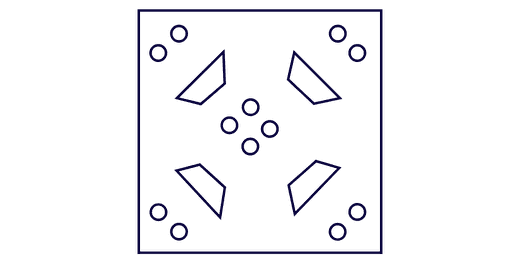
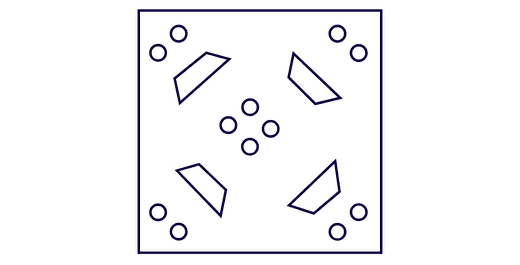
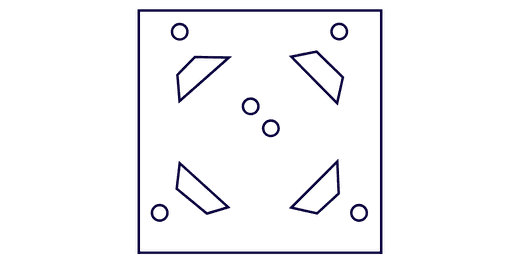
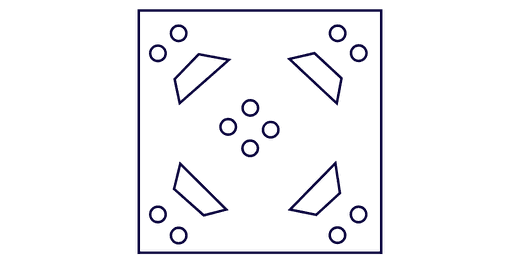
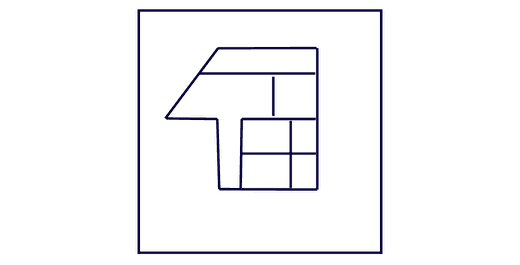
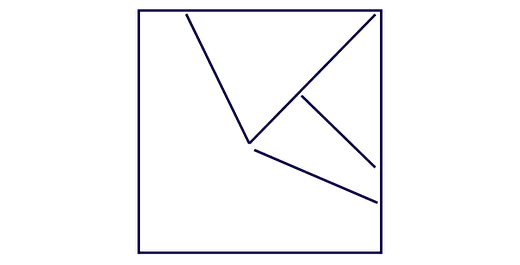
A piece of paper is folded and punched as shown below in the question figures. From the given option figures, indicate how it will appear when opened.
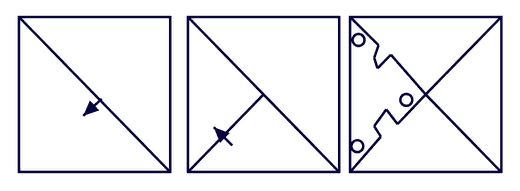
figure
प्रश्न आकृतियों में नीचे दर्शाए अनुसार कागज़ के एक टुकड़े को मोड़ा तथा छेदा गया है। दी गई विकल्प आकृतियों में से बताइए कि खोलने पर वह कैसा दिखाई देगा।
figure
  1. Afigure
  2. Bfigure
  3. Cfigure
  4. Dfigure
Show answer

Concept: Each fold doubles the layers; on opening, cuts reflect across every crease.

  1. Two diagonal folds → 4 layers, so each punch appears 4 times.
  2. 3 holes × 4 = 12 holes; each notch on a crease opens into a symmetric pair → 4 notch shapes.
  3. Final sheet must be symmetric about both diagonals.

Trick: Count holes first: options with 6 holes are out; then check notch direction about the diagonals.

Answer: (D) Figure (D)

अवधारणा: कागज़ जितनी बार मोड़ा जाए, परतें उतनी बार दुगनी; खोलने पर हर निशान मोड़ की लकीर पर प्रतिबिंबित होता है।

हल:

  1. कागज़ दोनों कोनों से तिरछा मोड़ा गया – कुल चार तहें बनीं।
  2. इसलिए खुलने पर तीन छेद बढ़कर बारह हो जाते हैं, और लकीर पर कटे दोनों खाँचे दो-दो बनकर कुल चार।
  3. पूरा डिज़ाइन दोनों तिरछी लकीरों के आर-पार दर्पण जैसा दिखेगा।

ट्रिक: पहले छेद गिनें: बारह से कम वाले विकल्प तुरंत हटाएँ; फिर खाँचों की दिशा देखें।

उत्तर: (D) आकृति (D)

SSC CHSLGeneral IntelligencePaper folding – two diagonal foldsSSC CHSL 2025 · 12 Nov Shift 3 →
Q4842.
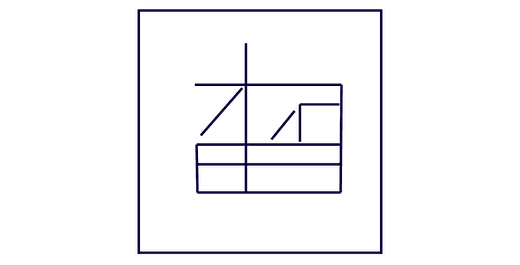
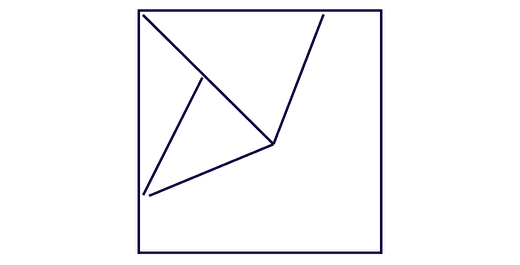
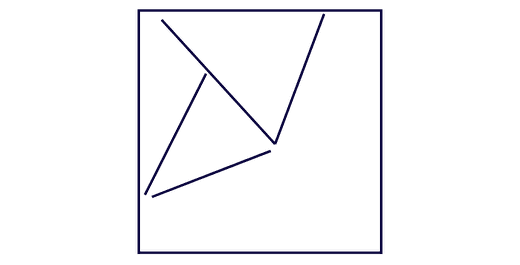
From the given option figures, select the one in which the question figure is hidden/embedded. (Rotation is not allowed)
figure
दी गई विकल्प आकृतियों में से उस आकृति का चयन कीजिए जिसमें प्रश्न आकृति छिपी/अंतर्निहित है। (घुमाने की अनुमति नहीं है)
figure
  1. Afigure
  2. Bfigure
  3. Cfigure
  4. Dfigure
Show answer

Concept: Break the figure into its lines and find all of them, same direction and spacing, in one option.

  1. Parts: a left-to-right slant, a top horizontal, a long right vertical, a lower horizontal and a short upright on it.
  2. No rotation allowed, so each part must keep its direction.
  3. Only option (B) contains all five parts in the same relative positions.

Trick: Start with the most distinctive part (the slant) – options where it falls on blank space are rejected quickly.

Answer: (B) Figure (B)

अवधारणा: आकृति को रेखाओं में बाँटें और सभी रेखाएँ एक ही विकल्प में उसी दिशा व दूरी पर खोजें।

हल:

  1. भाग: बाएँ से दाएँ उठती तिरछी रेखा, ऊपर क्षैतिज रेखा, दाईं लंबी ऊर्ध्व रेखा, नीचे क्षैतिज रेखा और उस पर छोटी खड़ी रेखा।
  2. घुमाना मना है, इसलिए हर भाग की दिशा वही रहेगी।
  3. केवल (B) में पाँचों भाग समान स्थिति में मिलते हैं।

ट्रिक: सबसे विशिष्ट भाग (तिरछी रेखा) से शुरू करें – जहाँ वह न मिले, वह विकल्प हटाएँ।

उत्तर: (B) आकृति (B)

SSC CHSLGeneral IntelligenceEmbedded figureSSC CHSL 2025 · 12 Nov Shift 3 →
Q4843.
In the following question, select the number which can be placed at the sign of question mark (?) from the given alternatives.
निम्नलिखित प्रश्न में, दिए गए विकल्पों में से उस संख्या का चयन कीजिए जिसे प्रश्नवाचक चिह्न (?) के स्थान पर रखा जा सकता है।
  1. A24
  2. B20
  3. C18
  4. D19
Show answer

Concept: Find one rule connecting the top number to the middle number in each column.

  1. Column 1: top 4, middle 15 = 3 × (4 + 1).
  2. Column 3: top 6, middle 21 = 3 × (6 + 1).
  3. Column 2: top 7 → ? = 3 × (7 + 1) = 24.

Trick: Bottom row checks it: 8 × top + 12 → 44, 68, 60 – so the top numbers 4, 7, 6 are right.

Answer: (A) 24

अवधारणा: हर स्तंभ में ऊपर वाली संख्या और बीच वाली संख्या का एक नियम खोजें।

हल:

  1. स्तंभ 1: ऊपर 4, बीच 15 = 3 × (4 + 1)।
  2. स्तंभ 3: ऊपर 6, बीच 21 = 3 × (6 + 1)।
  3. स्तंभ 2: ऊपर 7 → ? = 3 × (7 + 1) = 24।

ट्रिक: नीचे की पंक्ति से जाँच: 8 × ऊपर + 12 → 44, 68, 60।

उत्तर: (A) 24

SSC CHSLGeneral IntelligenceNumber matrix – column ruleSSC CHSL 2025 · 12 Nov Shift 3 →
Q4844.
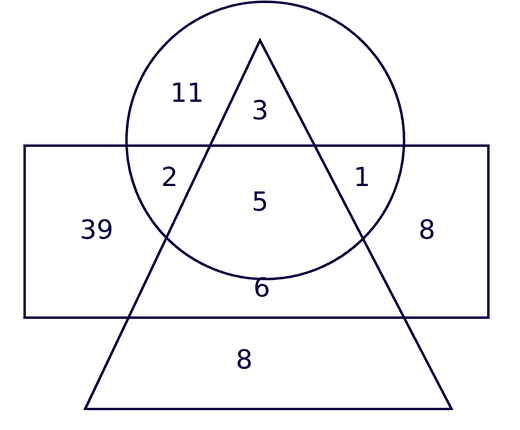
In the figure given below the circle represents lions, the rectangle represents deers and the triangle represents rabbits. Number in each area represents the number of items in that area.
How many rabbits are neither lions nor deers?
figure
नीचे दी गई आकृति में वृत्त शेरों को, आयत हिरणों को तथा त्रिभुज खरगोशों को निरूपित करता है। प्रत्येक क्षेत्र में लिखी संख्या उस क्षेत्र की वस्तुओं की संख्या दर्शाती है।
कितने खरगोश न तो शेर हैं और न ही हिरण हैं?
figure
  1. A5
  2. B8
  3. C1
  4. D3
Show answer

Concept: 'Rabbits that are neither lions nor deers' = part inside the triangle only.

  1. Look for the region inside the triangle but outside both circle and rectangle.
  2. That is the bottom tip of the triangle below the rectangle, marked 8.
  3. The 6 above it is inside the rectangle too (deer), so it is not counted.

Trick: 'Neither… nor' = only that shape's private region.

Answer: (B) 8

अवधारणा: 'जो खरगोश न शेर हैं न हिरण' = केवल त्रिभुज वाला भाग।

हल:

  1. ऐसा हिस्सा चाहिए जो त्रिभुज में हो, पर शेर (वृत्त) और हिरण (आयत) किसी में न आए।
  2. यह आयत के नीचे त्रिभुज का निचला सिरा है, जिसमें 8 लिखा है।
  3. उसके ऊपर का 6 आयत (हिरण) में भी है, इसलिए नहीं गिनेंगे।

ट्रिक: 'न… न' = केवल उसी आकृति का अपना निजी भाग।

उत्तर: (B) 8

SSC CHSLGeneral IntelligenceVenn diagram – only-region countSSC CHSL 2025 · 12 Nov Shift 3 →
Q4845.
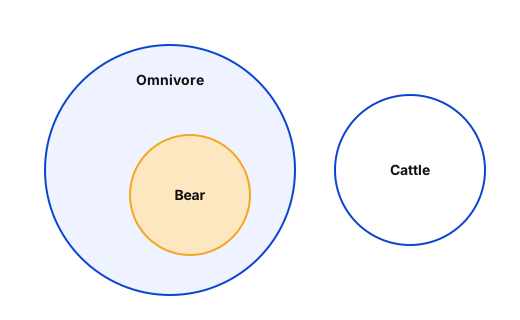
Identify the diagram that best represents the relationship among the given classes.
Omnivore, Bear, Cattle
उस आरेख की पहचान कीजिए जो दिए गए वर्गों के बीच के संबंध का सर्वोत्तम निरूपण करता है।
सर्वाहारी, भालू, मवेशी
  1. Afigure
  2. Bfigure
  3. Cfigure
  4. Dfigure
Show answer

Concept: Draw circles from real-world relations: subset inside, unrelated apart.

  1. Bears eat plants and meat → every bear is an omnivore (Bear inside Omnivore).
  2. Cattle are herbivores → not omnivores, not bears (separate circle).
  3. Needed: one circle inside another + a third circle apart.

Trick: Ask two yes/no questions: 'Is every bear an omnivore?' (Yes) 'Is cattle an omnivore?' (No).

Answer: (B) Figure (B)

अवधारणा: वास्तविक संबंध से वृत्त बनाएँ: उपवर्ग अंदर, असंबंधित अलग।

हल:

  1. भालू पौधे और मांस दोनों खाता है → हर भालू सर्वाहारी (Bear, Omnivore के अंदर)।
  2. मवेशी शाकाहारी हैं → न सर्वाहारी, न भालू (अलग वृत्त)।
  3. आवश्यक: एक वृत्त दूसरे के अंदर + तीसरा अलग।

ट्रिक: दो प्रश्न पूछें: 'क्या हर भालू सर्वाहारी है?' (हाँ) 'क्या मवेशी सर्वाहारी हैं?' (नहीं)।

उत्तर: (B) आकृति (B)

SSC CHSLGeneral IntelligenceVenn diagram – class relationshipSSC CHSL 2025 · 12 Nov Shift 3 →
Q4846.
Select the option that represents the correct order of the given words as they would appear in an English dictionary.
1. Astronomy
2. Astrologer
3. Asteroid
4. Astrological
5. Astronaut
उस विकल्प का चयन कीजिए जो दिए गए शब्दों का वह सही क्रम निरूपित करता है जिसमें वे अंग्रेज़ी शब्दकोश में आएँगे।
1. Astronomy
2. Astrologer
3. Asteroid
4. Astrological
5. Astronaut
  1. A5, 2, 3, 4, 1
  2. B2, 1, 4, 3, 5
  3. C3, 4, 2, 1, 5
  4. D3, 2, 4, 5, 1
Show answer

Concept: Compare letter by letter from the first point where words differ.

  1. Asteroid has 'e' (before 'r') → first: 3.
  2. Astrol… before Astron…: Astrologer (2) before Astrological (4).
  3. Astronaut (5) before Astronomy (1). Order: 3, 2, 4, 5, 1.

Trick: Only options C and D start with 3; in D, 2 comes before 4 (e < i) – done.

Answer: (D) 3, 2, 4, 5, 1

अवधारणा: जिस अक्षर पर शब्द अलग होते हैं, वहीं से तुलना करें।

हल:

  1. Asteroid में 'e' ('r' से पहले) → पहला: 3।
  2. Astrol… पहले Astron… से: Astrologer (2) फिर Astrological (4)।
  3. Astronaut (5) फिर Astronomy (1)। क्रम: 3, 2, 4, 5, 1।

ट्रिक: केवल C और D 3 से शुरू होते हैं; D में 2 पहले 4 से (e < i) – उत्तर।

उत्तर: (D) 3, 2, 4, 5, 1

SSC CHSLGeneral IntelligenceDictionary order – Ast- wordsSSC CHSL 2025 · 12 Nov Shift 3 →
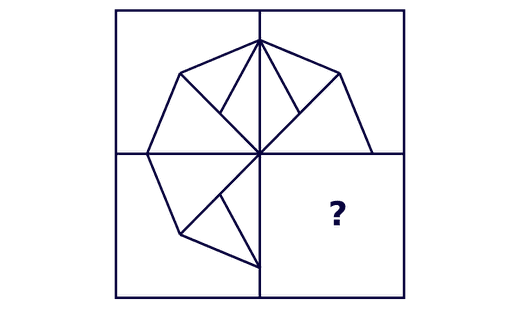
Q4847.
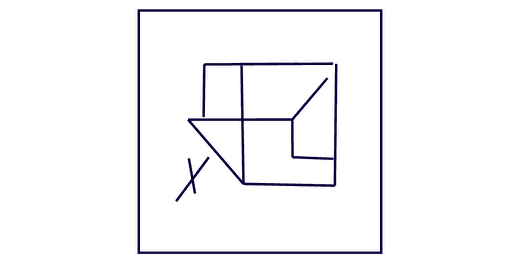
Which option figure will complete the pattern in the question figure? (Rotation is not allowed)
figure
प्रश्न आकृति के प्रतिरूप को कौन-सी विकल्प आकृति पूर्ण करेगी? (घुमाने की अनुमति नहीं है)
figure
  1. Afigure
  2. Bfigure
  3. Cfigure
  4. Dfigure
Show answer

Concept: The figure is symmetric in all four quarters; the missing quarter copies the others in reflected form.

  1. Every quarter repeats the same set: two octagon edges, one diagonal spoke from the middle, and a small link joining an edge point to the middle of that spoke.
  2. For the bottom-right quarter, the slanting line must start exactly at the square's centre (piece's top-left corner).
  3. Option (A) shows all these lines meeting the edges correctly.

Trick: Match where lines touch the edges of the missing piece – one wrong endpoint rejects an option.

Answer: (A) Figure (A)

अवधारणा: आकृति चारों भागों में सममित है; खाली भाग बाकी भागों का प्रतिबिंब होगा।

हल:

  1. चारों चौथाइयों में एक जैसा सेट है: आठ-भुजी आकृति के दो किनारे, बीच से निकली एक तिरछी तीली और उस तीली के बीच तक जाती एक छोटी कड़ी।
  2. नीचे-दाएँ भाग में तिरछी रेखा ठीक केंद्र (टुकड़े का ऊपर-बायाँ कोना) से शुरू होगी।
  3. विकल्प (A) में सभी रेखाएँ सही बिंदुओं पर मिलती हैं।

ट्रिक: खाली टुकड़े के किनारों पर रेखाएँ कहाँ छूती हैं – यही मिलाएँ।

उत्तर: (A) आकृति (A)

SSC CHSLGeneral IntelligencePattern completion – symmetric octagonSSC CHSL 2025 · 12 Nov Shift 3 →
Q4848.
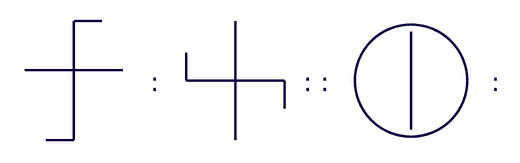
Select the option that is related to the third figure in the same way as the second figure is related to the first figure.
figure
उस विकल्प का चयन कीजिए जो तीसरी आकृति से उसी प्रकार संबंधित है जिस प्रकार दूसरी आकृति पहली आकृति से संबंधित है।
figure
  1. Afigure
  2. Bfigure
  3. Cfigure
  4. Dfigure
Show answer

Concept: Find the change from figure 1 to 2 and apply it to figure 3.

  1. Figure 2 is figure 1 rotated 90° clockwise (upright line with arms becomes horizontal).
  2. Figure 3: a circle with a plain vertical line.
  3. After a 90° turn: circle unchanged, line becomes horizontal.

Trick: A circle never changes on rotation – only the inner line turns; options adding arms are out.

Answer: (A) Figure (A)

अवधारणा: आकृति 1 से 2 में बदलाव पहचानें और वही आकृति 3 पर लगाएँ।

हल:

  1. पहली आकृति को घड़ी की सुई की दिशा में एक चौथाई चक्कर देने पर दूसरी बनती है।
  2. आकृति 3: वृत्त में एक सीधी खड़ी रेखा।
  3. 90° घुमाने पर वृत्त वही, रेखा क्षैतिज हो जाती है।

ट्रिक: वृत्त घूमने पर नहीं बदलता – केवल अंदर की रेखा घूमती है; भुजाएँ जोड़ने वाले विकल्प गलत।

उत्तर: (A) आकृति (A)

SSC CHSLGeneral IntelligenceFigure analogy – 90° clockwise turnSSC CHSL 2025 · 12 Nov Shift 3 →
Q4849.
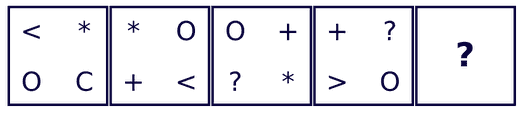
In the following figure series, select the figure which can be placed at the sign of question mark (?) from the given alternatives.
figure
निम्नलिखित आकृति शृंखला में, दिए गए विकल्पों में से उस आकृति का चयन कीजिए जिसे प्रश्नवाचक चिह्न (?) के स्थान पर रखा जा सकता है।
figure
  1. Afigure
  2. Bfigure
  3. Cfigure
  4. Dfigure
Show answer

Concept: Track each corner symbol's movement box to box.

  1. Pattern: top-right → top-left, bottom-left → top-right, top-left → bottom-right; bottom-right symbol leaves and a new one enters bottom-left.
  2. Box 4: TL +, TR ?, BL >, BR O.
  3. Box 5: TL ?, TR >, BR +, O leaves, new '=' at BL.

Trick: Follow just one symbol (e.g. '+': TL → BR) to cut options down fast.

Answer: (C) Figure (C)

अवधारणा: हर कोने के चिह्न की चाल एक खाने से अगले खाने तक देखें।

हल:

  1. नियम: ऊपर-दायाँ → ऊपर-बायाँ, नीचे-बायाँ → ऊपर-दायाँ, ऊपर-बायाँ → नीचे-दायाँ; नीचे-दायाँ बाहर, नया चिह्न नीचे-बाएँ।
  2. चौथा खाना: ऊपर-बायाँ +, ऊपर-दायाँ ?, नीचे-बायाँ >, नीचे-दायाँ O।
  3. पाँचवाँ: ऊपर-बायाँ ?, ऊपर-दायाँ >, नीचे-दायाँ +, O बाहर, नीचे-बाएँ नया '='।

ट्रिक: केवल एक चिह्न ('+') की चाल देखकर विकल्प जल्दी छाँटें।

उत्तर: (C) आकृति (C)

SSC CHSLGeneral IntelligenceFigure series – symbol movementSSC CHSL 2025 · 12 Nov Shift 3 →
Q4850.
In a certain coded language 'CUKT' is coded as 'GYOX' and 'BSEU' is coded as 'FWIY'. How will 'AGSV' be coded in the same code language?
एक निश्चित कूट भाषा में 'CUKT' को 'GYOX' तथा 'BSEU' को 'FWIY' के रूप में कूटबद्ध किया जाता है। उसी कूट भाषा में 'AGSV' को किस प्रकार कूटबद्ध किया जाएगा?
  1. AEZZW
  2. BEKWZ
  3. CEZWZ
  4. DEKZW
Show answer

Concept: Compare positions of word and code letter by letter.

  1. C(3)→G(7), U(21)→Y(25), K(11)→O(15), T(20)→X(24): each +4.
  2. BSEU → FWIY also +4 ✔.
  3. AGSV: A→E, G→K, S→W, V→Z = EKWZ.

Trick: Code just the first two letters: A→E, G→K leaves EKWZ / EKZW; S→W picks EKWZ.

Answer: (B) EKWZ

अवधारणा: शब्द और कोड के अक्षरों के क्रमांक मिलाएँ।

हल:

  1. C(3)→G(7), U(21)→Y(25), K(11)→O(15), T(20)→X(24): हर अक्षर +4।
  2. BSEU → FWIY में भी +4 ✔।
  3. AGSV: A→E, G→K, S→W, V→Z = EKWZ।

ट्रिक: पहले दो अक्षर A→E, G→K से EKWZ/EKZW बचे; तीसरा S→W → EKWZ।

उत्तर: (B) EKWZ

SSC CHSLGeneral IntelligenceCoding – each letter +4SSC CHSL 2025 · 12 Nov Shift 3 →
Q4851.
Three partners share the profit in a business in the ratio 5 : 7 : 3. They invested for 15 months, 21 months, and 6 months, respectively. What is the ratio of their investments?
एक व्यवसाय में तीन साझेदार लाभ को 5 : 7 : 3 के अनुपात में बाँटते हैं। उन्होंने क्रमशः 15 महीने, 21 महीने तथा 6 महीने के लिए निवेश किया। उनके निवेशों का अनुपात क्या है?
  1. A2:2:3
  2. B3:2:3
  3. C2:3:3
  4. D2:3:2
Show answer

Concept: Profit ∝ Investment × Time, so Investment ∝ Profit ÷ Time.

  1. Investments = 515:721:36.
  2. =13:13:12.
  3. Multiply by 6 (LCM of 3, 2) → 2 : 2 : 3.

Trick: First two partners give the same fraction (13), so the first two terms must be equal → only 2 : 2 : 3.

Answer: (A) 2:2:3

अवधारणा: लाभ ∝ निवेश × समय, अतः निवेश ∝ लाभ ÷ समय।

हल:

  1. निवेश = 515:721:36।
  2. =13:13:12।
  3. 6 से गुणा (3 और 2 का LCM) → 2 : 2 : 3।

ट्रिक: पहले दो का अनुपात बराबर (13) है, तो पहले दो पद बराबर होंगे → केवल 2 : 2 : 3।

उत्तर: (A) 2:2:3

SSC CHSLQuantitative AptitudePartnership – investment from profit and timeSSC CHSL 2025 · 12 Nov Shift 3 →
Q4852.
Simplify the expression:
cosec2x−cot2⁡x−cos2⁡x.
व्यंजक को सरल कीजिए:
cosec2x−cot2⁡x−cos2⁡x.
  1. A2
  2. Btan2⁡x
  3. Csin2⁡x
  4. D1
Show answer

Concept: csc2x−cot2x=1 and 1−cos2x=sin2x.

  1. csc2x−cot2x=1.
  2. Expression = 1−cos2x.
  3. =sin2x.

Trick: Put x=90∘: csc2=1, cot2=0, cos2=0 → value 1=sin290∘; x=45∘ gives 2−1−12=12=sin245∘ ✔.

Answer: (C) sin²x

अवधारणा: csc2x−cot2x=1 तथा 1−cos2x=sin2x।

हल:

  1. csc2x−cot2x=1।
  2. व्यंजक = 1−cos2x।
  3. =sin2x।

ट्रिक: x=45∘ रखें: 2−1−12=12=sin245∘ ✔ – विकल्प तुरंत जाँचें।

उत्तर: (C) sin²x

SSC CHSLQuantitative AptitudeTrigonometry – identity simplificationSSC CHSL 2025 · 12 Nov Shift 3 →
Q4853.
The ratio of the profit to the cost price is 4 : 7. What is the ratio of the selling price to the cost price?
लाभ का क्रय मूल्य से अनुपात 4 : 7 है। विक्रय मूल्य का क्रय मूल्य से अनुपात क्या है?
  1. A4 : 11
  2. B11 : 4
  3. C11 : 7
  4. D7 : 11
Show answer

Concept: SP = CP + Profit.

  1. Let CP = 7 units, Profit = 4 units.
  2. SP = 7 + 4 = 11 units.
  3. SP : CP = 11 : 7.

Trick: Add the two terms and keep CP below: (4 + 7) : 7. Option 11 : 4 is SP : Profit – a trap.

Answer: (C) 11 : 7

अवधारणा: SP = CP + लाभ।

हल:

  1. CP = 7 इकाई, लाभ = 4 इकाई मानें।
  2. SP = 7 + 4 = 11 इकाई।
  3. SP : CP = 11 : 7।

ट्रिक: दोनों पद जोड़ें और CP नीचे रखें: (4 + 7) : 7। 11 : 4 (SP : लाभ) जाल है।

उत्तर: (C) 11 : 7

SSC CHSLQuantitative AptitudeProfit & loss – SP : CP from profit ratioSSC CHSL 2025 · 12 Nov Shift 3 →
Q4854.
If a ratio of 5 : 8 represents the number of mangoes and grapes in a basket, and there are 60 mangoes, how many grapes are there?
यदि 5 : 8 का अनुपात किसी टोकरी में आमों तथा अंगूरों की संख्या दर्शाता है और आम 60 हैं, तो अंगूर कितने हैं?
  1. A42
  2. B96
  3. C50
  4. D48
Show answer

Concept: Find the value of one ratio unit, then multiply.

  1. 5 units = 60 mangoes → 1 unit = 12.
  2. Grapes = 8 units = 8×12.
  3. = 96.

Trick: Grapes = 60×85=12×8=96.

Answer: (B) 96

अवधारणा: एक इकाई का मान निकालकर गुणा करें।

हल:

  1. 5 इकाई = 60 आम → 1 इकाई = 12।
  2. अंगूर = 8 इकाई = 8×12।
  3. = 96।

ट्रिक: अंगूर = 60×85=96 – एक पंक्ति में।

उत्तर: (B) 96

SSC CHSLQuantitative AptitudeRatio – find the other quantitySSC CHSL 2025 · 12 Nov Shift 3 →
Q4855.
The difference between the Cl and SI on a sum for 2 years at 12% p.a. is ₹720. What is the principal?
किसी धनराशि पर 2 वर्ष के लिए 12% वार्षिक दर से चक्रवृद्धि ब्याज तथा साधारण ब्याज का अंतर ₹720 है। मूलधन क्या है?
  1. A₹30,000
  2. B₹32,000
  3. C₹40,000
  4. D₹50000
Show answer

Concept: For 2 years: CI−SI=P×(R100)2.

  1. 720=P×(12100)2=P×14410000.
  2. P=720×10000144.
  3. P=5×10000= ₹50,000.

Trick: 720÷144=5, then attach 10000 → ₹50,000 in seconds.

Answer: (D) ₹50000

अवधारणा: 2 वर्ष के लिए: CI−SI=P×(R100)2।

हल:

  1. 720=P×(12100)2=P×14410000।
  2. P=720×10000144।
  3. P=5×10000= ₹50,000।

ट्रिक: 720÷144=5, फिर 10000 लगाएँ → ₹50,000।

उत्तर: (D) ₹50000

SSC CHSLQuantitative AptitudeCI – SI difference for 2 yearsSSC CHSL 2025 · 12 Nov Shift 3 →
Q4856.
An amount of ₹3,00,000 is invested at 20% per annum compound interest. After 1 year, the investor withdraws ₹30,000 from the balance. What will be the total amount remaining in the account at the end of the 2nd year?
₹3,00,000 की राशि 20% वार्षिक चक्रवृद्धि ब्याज पर निवेश की जाती है। 1 वर्ष बाद निवेशक शेष राशि में से ₹30,000 निकाल लेता है। दूसरे वर्ष के अंत में खाते में कुल कितनी राशि शेष रहेगी?
  1. A₹3,48,000
  2. B₹3,96,000
  3. C₹3,46,000
  4. D₹3,60,000
Show answer

Concept: Compound year by year; after a withdrawal only the balance earns interest.

  1. Year 1: 3,00,000×1.2= ₹3,60,000.
  2. Withdraw ₹30,000 → balance ₹3,30,000.
  3. Year 2: 3,30,000×1.2= ₹3,96,000.

Trick: 20% of 3,30,000 = 66,000; 3,30,000+66,000=3,96,000 – no long multiplication needed.

Answer: (B) ₹3,96,000

अवधारणा: हर वर्ष अलग से चक्रवृद्धि करें; निकासी के बाद केवल शेष राशि पर ब्याज।

हल:

  1. वर्ष 1: 3,00,000×1.2= ₹3,60,000।
  2. ₹30,000 निकाले → शेष ₹3,30,000।
  3. वर्ष 2: 3,30,000×1.2= ₹3,96,000।

ट्रिक: 3,30,000 का 20% = 66,000; जोड़ें → 3,96,000।

उत्तर: (B) ₹3,96,000

SSC CHSLQuantitative AptitudeCompound interest with withdrawalSSC CHSL 2025 · 12 Nov Shift 3 →
Q4857.
The average of 40 numbers was calculated as 28. Later it was found that two numbers were wrongly taken as 23 and 17 instead of 13 and 7. What is the correct average ?
40 संख्याओं का औसत 28 निकाला गया। बाद में पाया गया कि दो संख्याएँ 13 और 7 के स्थान पर गलती से 23 और 17 ले ली गई थीं। सही औसत क्या है?
  1. A27.5
  2. B28.5
  3. C30.5
  4. D25.5
Show answer

Concept: Correct average = old average − (excess in sum ÷ n).

  1. Wrong total of the two = 23+17=40; correct = 13+7=20.
  2. Sum was 20 too high.
  3. Change in average = 20÷40=0.5 → 28−0.5=27.5.

Trick: Never find the full sum – just divide the error by n.

Answer: (A) 27.5

अवधारणा: सही औसत = पुराना औसत − (योग में अधिकता ÷ संख्या)।

हल:

  1. गलत ली गई जोड़ी: 23 और 17, जोड़ 40; असली जोड़ी 13 और 7, जोड़ 20।
  2. योग 20 अधिक लिया गया।
  3. औसत में कमी = 20÷40=0.5 → 28−0.5=27.5।

ट्रिक: पूरा योग निकालने की ज़रूरत नहीं – केवल त्रुटि को n से भाग दें।

उत्तर: (A) 27.5

SSC CHSLQuantitative AptitudeAverage – correcting wrong entriesSSC CHSL 2025 · 12 Nov Shift 3 →
Q4858.
When 15827, 16115, and 16703 are divided by the greatest number l, the remainder is n.
What is the value of (l+n) ?
जब 15827, 16115 तथा 16703 को महत्तम संख्या l से विभाजित किया जाता है, तो प्रत्येक बार शेषफल n प्राप्त होता है।
(l+n) का मान क्या है?
  1. A13
  2. B18
  3. C15
  4. D23
Show answer

Concept: Greatest number leaving the same remainder = HCF of the differences.

  1. Differences: 16115−15827=288; 16703−16115=588; 16703−15827=876.
  2. HCF(288,588,876)=12 → l=12.
  3. 15827=12×1318+11 → n=11; l+n=23.

Trick: Two differences are enough: HCF(288,588)=12, then check 876÷12=73.

Answer: (D) 23

अवधारणा: समान शेषफल देने वाली सबसे बड़ी संख्या = अंतरों का HCF।

हल:

  1. अंतर: 16115−15827=288; 16703−16115=588; 16703−15827=876।
  2. HCF(288,588,876)=12 → l=12।
  3. 15827=12×1318+11 → n=11; l+n=23।

ट्रिक: दो अंतर काफी हैं: HCF(288,588)=12, फिर 876÷12=73 से जाँचें।

उत्तर: (D) 23

SSC CHSLQuantitative AptitudeHCF – same remainderSSC CHSL 2025 · 12 Nov Shift 3 →
Q4859.
The price of a car increases by 10% in the first year and then again increases by 12.5% in the second year. If its final price becomes ₹69,300, find the original price of the car.
किसी कार का मूल्य पहले वर्ष में 10% बढ़ता है और फिर दूसरे वर्ष में 12.5% बढ़ जाता है। यदि उसका अंतिम मूल्य ₹69,300 हो जाता है, तो कार का मूल मूल्य ज्ञात कीजिए।
  1. A₹40,000
  2. B₹52,000
  3. C₹56,000
  4. D₹48,000
Show answer

Concept: Each rise is a multiplier: +10%=1110, +12.5%=98.

  1. Original ×1110×98=69,300.
  2. Original ×9980=69,300.
  3. Original =69,300×8099=700×80= ₹56,000.

Trick: 69,300 is divisible by 99 (= 700) – a sign the 9980 route is right.

Answer: (C) ₹56,000

अवधारणा: हर वृद्धि एक गुणक है: +10%=1110, +12.5%=98।

हल:

  1. मूल ×1110×98=69,300।
  2. मूल ×9980=69,300।
  3. मूल =69,300×8099=700×80= ₹56,000।

ट्रिक: विकल्प जाँचें: 56,000×1.1=61,600; ×1.125=69,300 ✔।

उत्तर: (C) ₹56,000

SSC CHSLQuantitative AptitudeSuccessive percentage increaseSSC CHSL 2025 · 12 Nov Shift 3 →
Q4860.
A bus travels to a town at 60km/h and returns at 40km/h. If the total time taken is 15 hours, what is the one-way distance to the town?
एक बस किसी नगर तक 60km/h की चाल से जाती है और 40km/h की चाल से लौटती है। यदि कुल लिया गया समय 15 घंटे है, तो नगर तक एक ओर की दूरी कितनी है?
  1. A330 km
  2. B245 km
  3. C360 km
  4. D720 km
Show answer

Concept: Total time = ds1+ds2.

  1. d60+d40=15.
  2. 2d+3d120=15 → 5d=1800.
  3. d=360 km.

Trick: Average speed = 2×60×4060+40=48 km/h; total distance = 48×15=720 → one way 360. (720 alone is a trap.)

Answer: (C) 360 km

अवधारणा: कुल समय = ds1+ds2।

हल:

  1. d60+d40=15।
  2. 2d+3d120=15 → 5d=1800।
  3. d=360 km।

ट्रिक: औसत चाल = 2×60×40100=48 km/h; कुल दूरी = 48×15=720 → एक तरफ 360। (720 जाल है)

उत्तर: (C) 360 km

SSC CHSLQuantitative AptitudeSpeed – to-and-fro journeySSC CHSL 2025 · 12 Nov Shift 3 →